A girl who once built a homemade roller coaster in her backyard grew up to fly across oceans. Her name still appears on bridges, airports, forests, and even a hillside portrait made of stone and plants.
All of it points back to one small river town in northeastern Kansas, where she was born in 1897 and spent much of her childhood. Kansas has kept her story close, and you can follow it in a single road trip.
The trail includes a Gothic home on a bluff, a hangar that houses the last plane of its kind, and a forest full of trees planted for aviation heroes. There is also a church where she was baptized, a lake with a surprise view, and a statue in the state capital.
Each stop adds a different piece to the picture of a pilot who never stopped asking what came next. Grab a map, pack some curiosity, and get ready to see where a famous flyer first learned to dream big.
The first stop is the place where her story begins.
Amelia Earhart Birthplace Museum, Atchison, Kansas
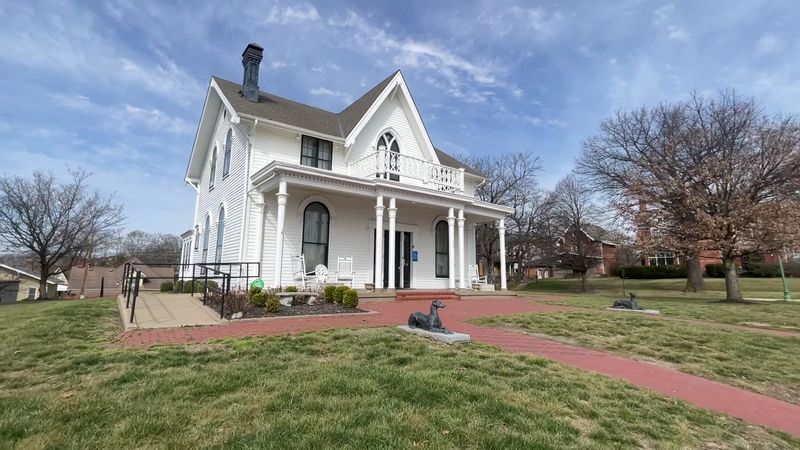
The story starts on a bluff above the Missouri River, in a house built in 1861. Amelia Earhart was born here on July 24, 1897, in the home of her grandfather, Judge Alfred Otis.
She spent much of her childhood in this house because her father’s job kept the family moving. Many people think she lived here longer than anywhere else.
An addition in 1873 gave the home a formal dining room, cook’s quarters, and a back porch. The house joined the National Register of Historic Places in 1971 and became a museum in 1984 under The Ninety-Nines, a group of women pilots.
Earhart was its first elected president.
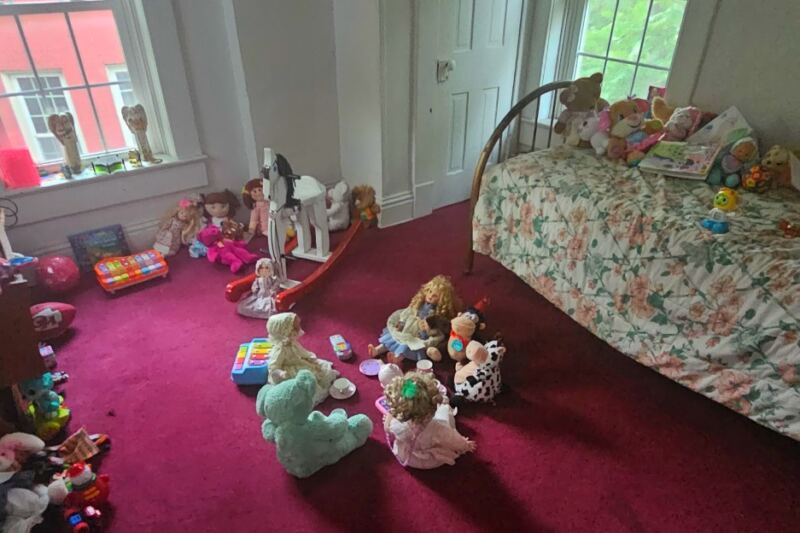
Inside, the rooms are furnished the way they looked over a century ago. The master bedroom holds the bed where she was born.
Exhibits show photographs, family items, and old newspaper stories. Guests can tour on their own or book a guided visit, so check ahead if you want a guide.
Amelia Earhart Hangar Museum, Atchison, Kansas
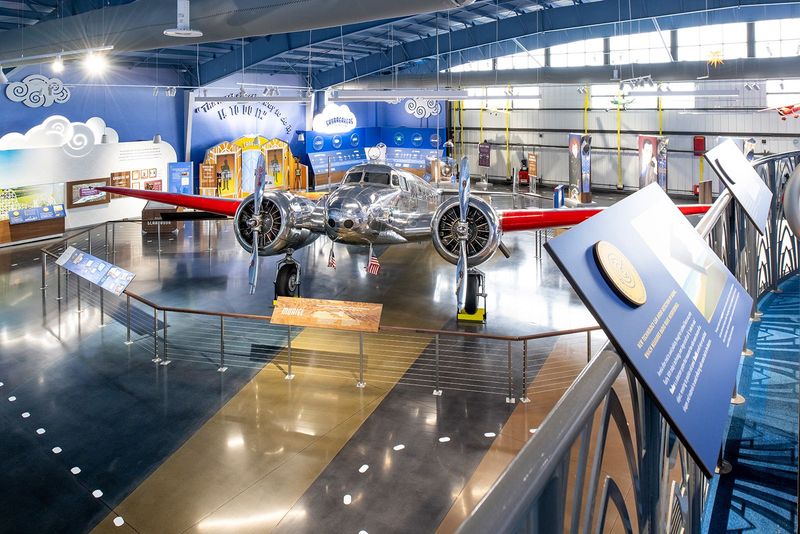
Meet Muriel, a silver plane with a famous family name. She is the last Lockheed Electra 10-E in the world, the same model Earhart flew on her final journey.
Muriel was built in 1935 and only 14 of her kind were ever made. She is named for Amelia’s younger sister, Grace Muriel Earhart Morrissey.
The museum opened in February 2023 inside a 17,000 square foot hangar. It holds 14 hands-on exhibits about flight and Earhart’s life.
Visitors can sit in a full-size cockpit replica and try celestial navigation with a sextant. Others test their riveting skills on a practice panel, a fair challenge since Muriel has nearly 85,000 rivets.
A virtual reality simulator lets guests retrace her 1932 Atlantic flight, and it requires a ticket. The museum is open Wednesday through Sunday and closed Monday and Tuesday.
Amelia Earhart Memorial Airport, Atchison, Kansas
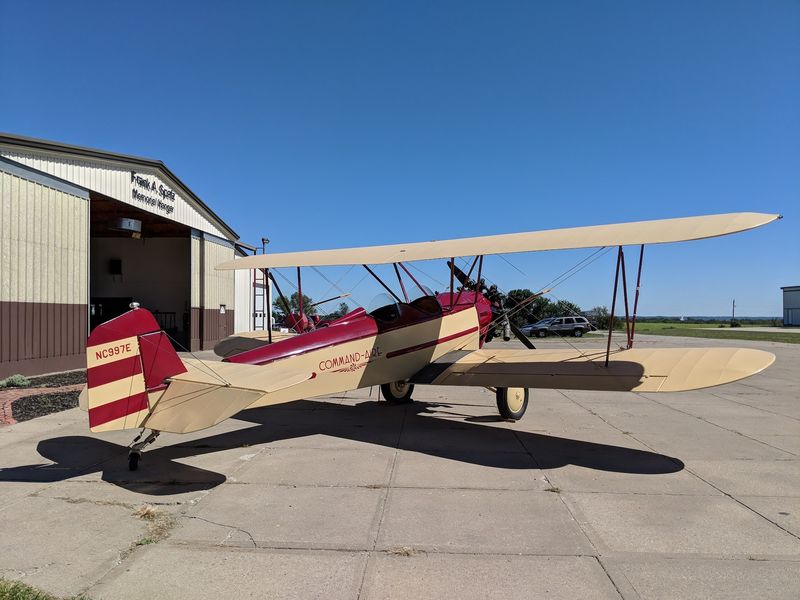
Some tourists arrive by car, but others land right on the doorstep. This airport, coded K59, sits about two miles west of Atchison and welcomes visiting pilots around the clock.
It stays clear of the busy airspace around Kansas City, which makes it a calm place to land. The Amelia Earhart Hangar Museum sits right on the field.
Pilots find fuel, aircraft maintenance, rentals, flight planning stations, a lounge, a courtesy car, and Wi-Fi. The terminal was renovated with Art Deco touches that nod to the 1920s and 1930s, when Earhart became famous.
The field serves business flights, medical transport, law enforcement, and farm aircraft. Its runway is being rebuilt as a new 4,000 foot concrete strip, expected to reopen in spring 2026.
Plan around Memorial Day weekend if you love aircraft. The airport hosts a popular fly-in every year.
International Forest of Friendship, Atchison, Kansas
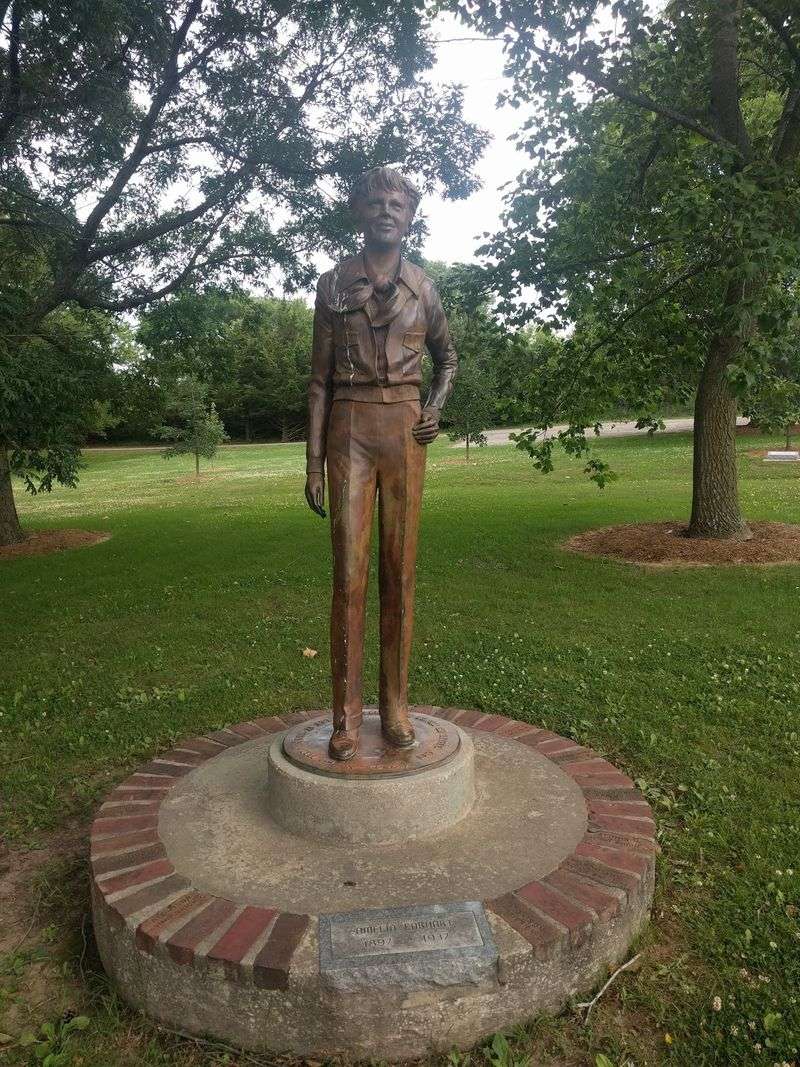
Most memorials use stone, but this one uses saplings. The forest began in 1976 as a bicentennial gift from the City of Atchison, The Ninety-Nines, and the Kansas Forest Service.
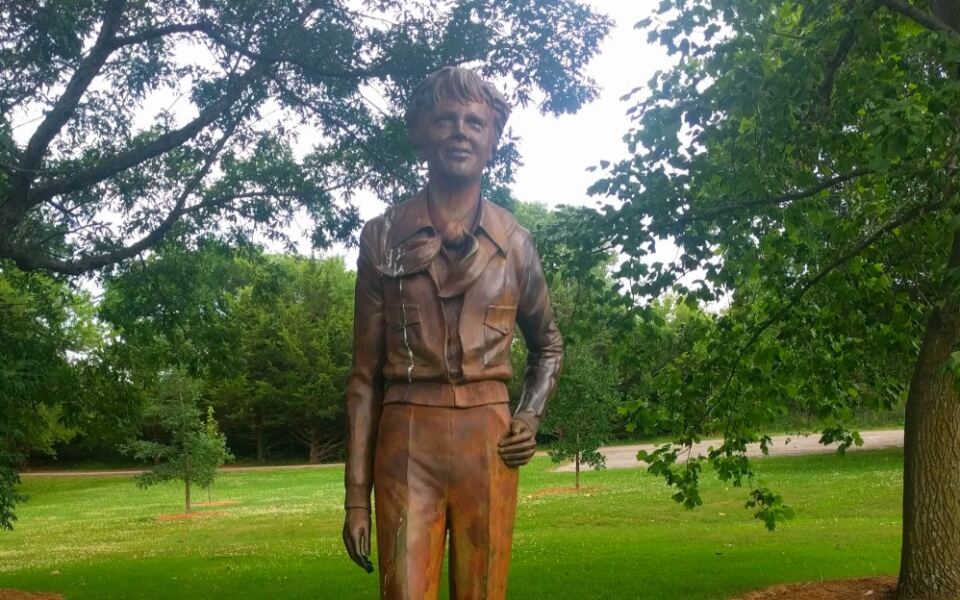
Its purpose is to honor people who helped aviation and space exploration. A life-size bronze statue of Earhart stands among the trees.
Trees here represent all 50 states and more than 35 countries and territories, each marked with a flag. One is a Moon Tree, grown from a seed that flew aboard Apollo 14 with pilot Stuart Roosa.
Wheelchair-friendly walkways five feet wide wind through the grounds. Granite plaques along them list more than 1,500 names, including the Wright Brothers, Charles Lindbergh, Sally Ride, and Chuck Yeager.
The original path, called Memory Lane, became the first National Recreation Trail in Kansas. The forest is open to the public daily.
Amelia Earhart Earthwork, Atchison, Kansas
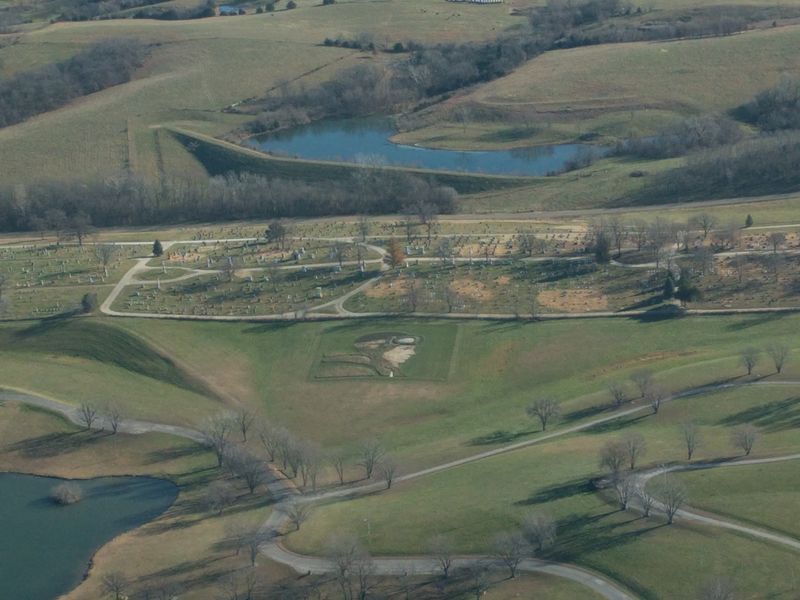
Here is a portrait that would not fit on any wall. Kansas artist Stan Herd created it in 1997 on a hillside above Warnock Lake, and it covers about one acre.
Herd used bluegrass, juniper, and fifty tons of hand-placed stone. The image shows Earhart in her cap and flight goggles.
His tools came from the farm, including tractors, plows, lawn mowers, and weed eaters. Under the surface are drainage tiles, fertilizer, and weed barrier fabric, all set over crushed stone that supports the rock forming her face.
Most of Herd’s earthworks are temporary, but this one was built to last. That makes it a lasting part of the local landscape.
A viewing deck on a nearby hilltop gives the best ground-level look. The full design is easiest to see from the air, which Earhart would probably have appreciated.
Warnock Lake, Atchison, Kansas
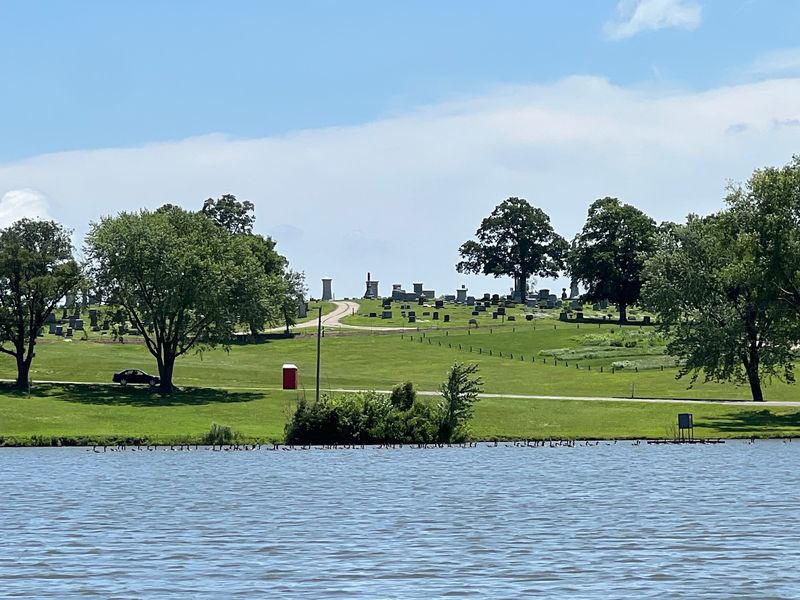
Take a break from museums and let the fishing rods come out. Warnock Lake is a city park a few miles southwest of Atchison, and locals call it a community jewel.
The Earhart portrait rests on the hillside above the water. The International Forest of Friendship sits right next door.
The lake is stocked for anglers and allows no-wake boating. You can bring your own kayak or paddle boat, since none are rented on site, and swimming is allowed.
The campground has RV sites with 30-amp electric hookups and shared water spigots, plus primitive tent spots. Restrooms include showers, though the water pressure is modest.
Families will find picnic tables, reservable shelter houses, charcoal grills, and playgrounds. Disc golf fans can play an 18-hole course.
The park opens daily from 7 am to 11 pm. Camping fees go into an honor box, so carry some cash.
Pets are welcome at campsites.
Atchison County Historical Society Museum, Atchison, Kansas
A freight depot from 1880 now stores the stories that Atchison wants to keep. The museum sits at 200 S. 10th Street and covers the whole history of the county.
Earhart exhibits fit into that larger picture of her hometown. Other displays cover Lewis and Clark, early businesses, Native American artifacts, and old farm tools.
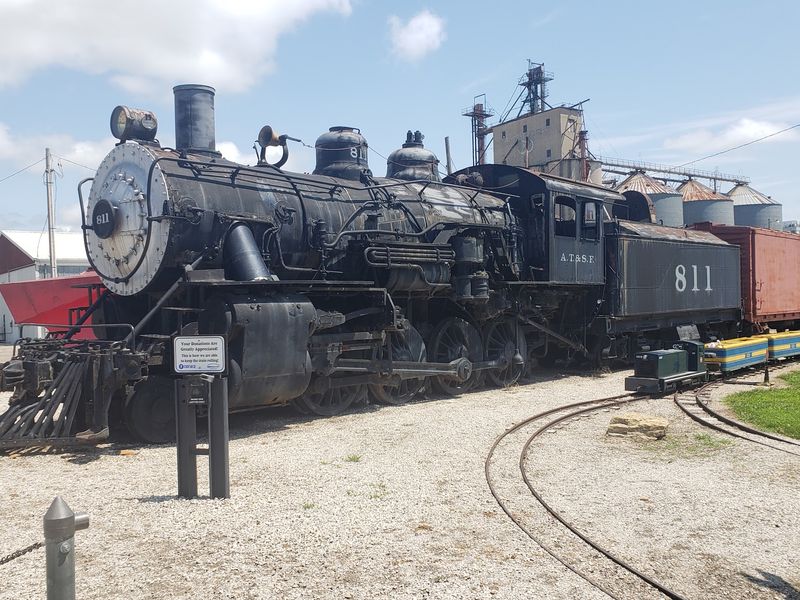
Atchison was the birthplace of the Atchison, Topeka and Santa Fe Railroad, so trains get plenty of space. Kids can even climb into the cab of Engine 811 outside.
One exhibit is called the World’s Smallest Unofficial Presidential Library. It explores the legend that David Rice Atchison, the city’s namesake, was president for a day.
The military collection has more than 200 weapons from the Revolutionary War through both World Wars. Black history displays honor figures such as Jesse Stone and Oscar Heavy Johnson.
The society began in 1967 and moved into the depot in 1989.
Trinity Episcopal Church, Atchison, Kansas
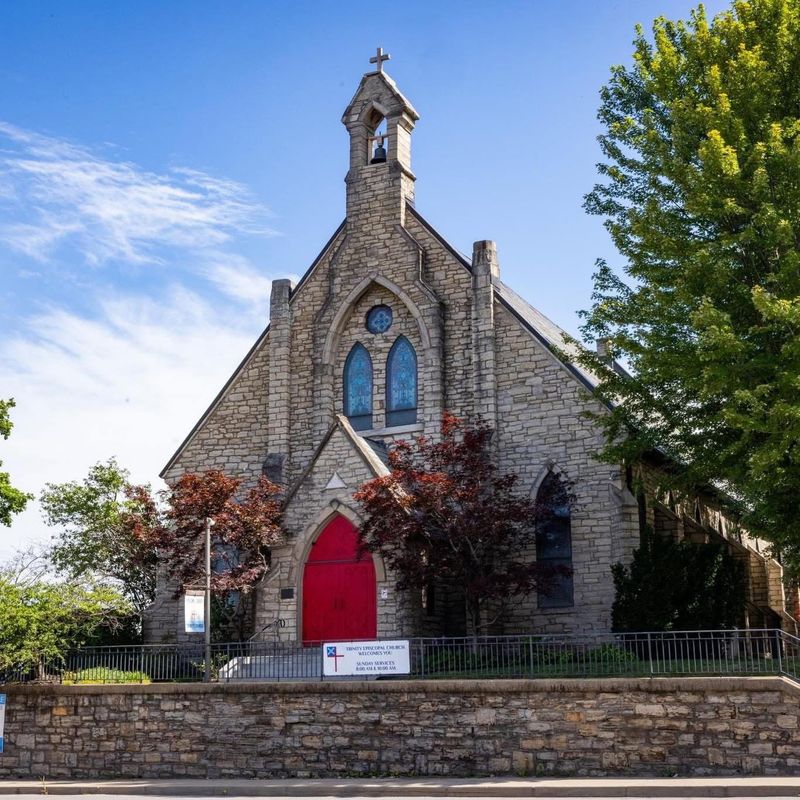
One baptism in 1897 gave this church a permanent place in the Earhart story. Amelia was baptized here as a baby and attended services during childhood visits.
Her grandfather, Alfred G. Otis, served as a vestryman while the building went up.
Her parents, Amy Otis and Edwin Earhart, were married here in 1895.
The church stands at 300 S. 5th Street and was built between 1866 and 1868. Architect James C.
Sidney of Philadelphia designed it in the Early English Gothic style.
Builders used coursed limestone rubble and topped it with a multicolored slate roof. It has no tower or spire, just an open bellcote above the entrance.
Inside, the original black walnut pews and rafters remain, and most windows are memorial stained glass. The congregation dates to 1857.
The building joined the National Register of Historic Places in 1985 and still hosts an active congregation.
Amelia Earhart Memorial Bridge, Atchison, Kansas
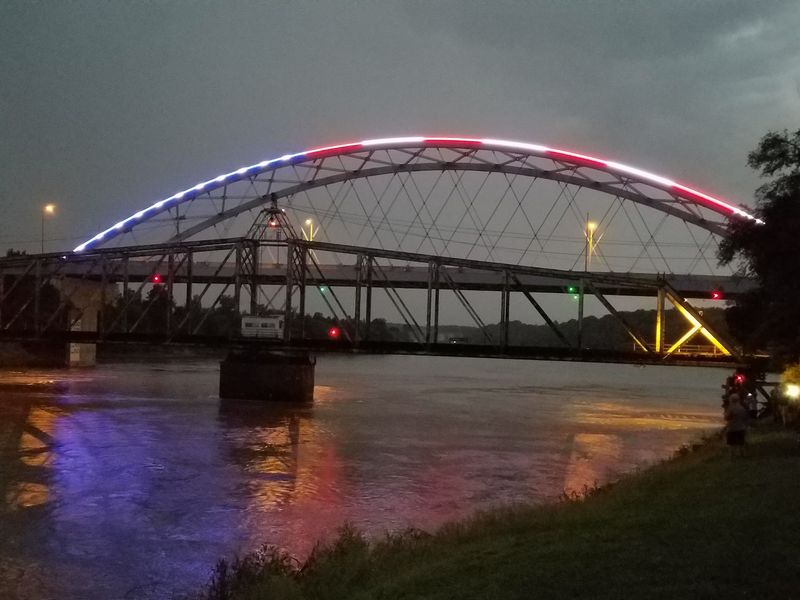
Only one bridge in the state can claim to be a front door for a famous pilot. The Amelia Earhart Memorial Bridge carries U.S.
Route 59 over the Missouri River and links Atchison with Winthrop, Missouri.
The current bridge opened in 2012 as a four-lane tied-arch design about 2,500 feet long. It replaced a two-lane bridge that served for 74 years and was renamed for Earhart in 1997, the centennial of her birth.
HNTB designed it for a 100-year lifespan and up to 12,400 vehicles a day. It uses 625 tons of steel, and the project cost about $59.4 million, shared by Kansas and Missouri.
Its double steel arches carry LED lights. They can show a red, white, and blue pattern that reflects in the river like a waving flag.
Wide shoulders make it friendly to cyclists. Arrive from Missouri and you cross it on the way into her hometown.
Kansas Aviation Museum, Wichita, Kansas
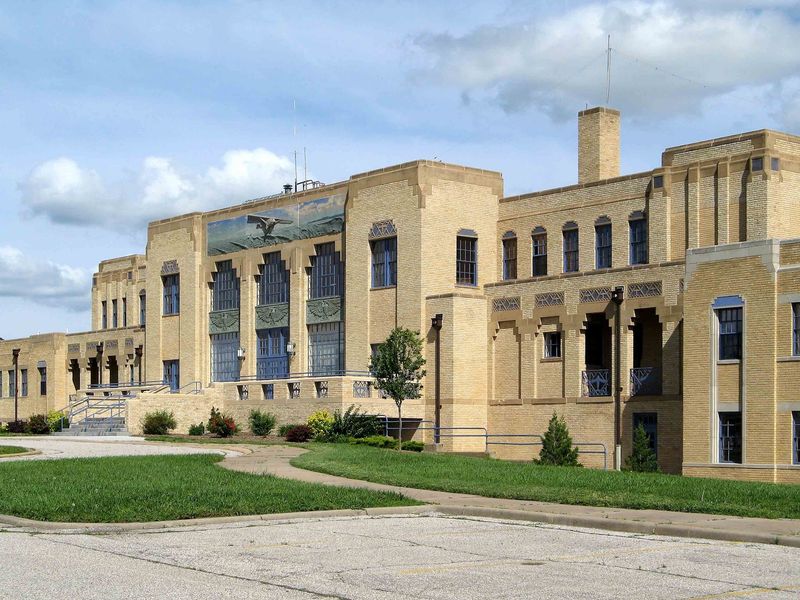
Wichita called itself the Air Capital of the World, and this building shows why. It was the city’s airport terminal from 1935 to 1954, and Earhart passed through it.
So did Charles Lindbergh, Fred Astaire, and Howard Hughes. Construction began in 1929 and finished in 1935 after Great Depression delays.
By 1929, Wichita built about a quarter of the aircraft made in the country. The airport became a military base in 1951 and is now McConnell Air Force Base.
The museum has filled the old terminal since 1991. Indoors you can see a Boeing Model 4D Junior Speedmail, a 1929 Travel Air D-4000, and a Beechcraft D17S Staggerwing.
The outdoor ramp shows more than a dozen aircraft. Exhibits cover Beechcraft, Stearman, Cessna, and a Women of Aviation display that includes Earhart.
Guests can try flight simulators and sit in real cockpits. The museum is closed on Thursdays.
Kansas State Capitol, Topeka, Kansas
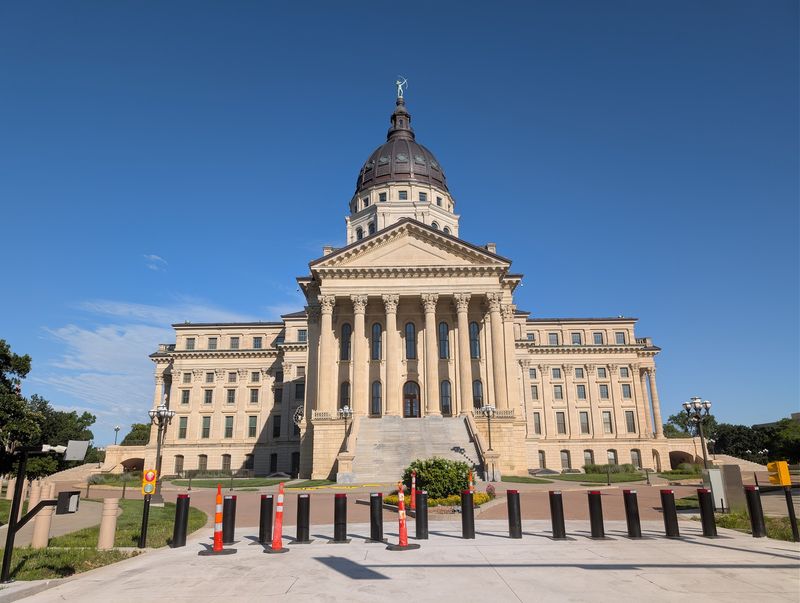
Kansas gave its famous flyer a spot among the state’s leaders. On the second floor of the rotunda, four limestone statues honor notable Kansans.
Earhart stands with President Dwight Eisenhower, publisher William Allen White, and Senator Arthur Capper. Hays artist Pete Felten carved all four and they were installed in 1981.
He chose Silverdale limestone from southeastern Kansas, which he considered the best in the state. Each sculpture weighs about 2,000 pounds.
In June 2024, bronze plaques were added beside them to credit Felten, more than 40 years later.
The Capitol holds more art, including John Steuart Curry’s mural Tragic Prelude. Outside, a Kansa warrior figure on the dome aims at the North Star, illustrating the state motto Ad Astra per Aspera.
A different bronze Earhart statue by Mark and George Lundeen went to the National Statuary Hall in Washington, D.C. in 2022.
Share this story