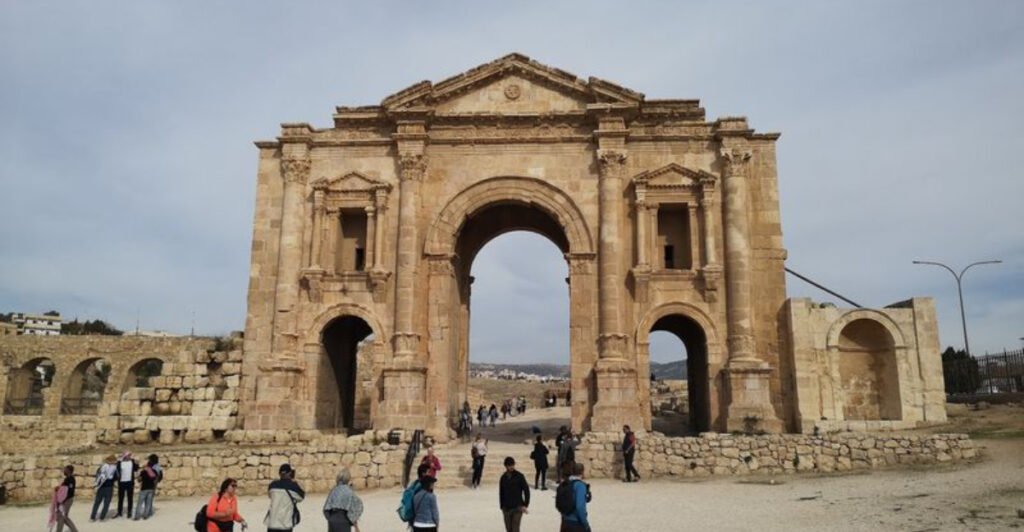
Jordan is home to some of the most remarkable ancient cities on earth, and many of them were not simply built on the land but carved directly into it. Sandstone cliffs, volcanic rock, desert plains, and steep mountain ridges became the raw material for entire civilizations.
From the rose-red canyons of Petra to the basalt ruins of Umm Al-Jimal, these places tell the story of how people adapted to dramatic landscapes across thousands of years. Whether you are a first-time visitor or a seasoned traveler with a long list of ancient sites already behind you, Jordan has a way of surprising everyone.
This list covers 14 of the country’s most significant ancient cities, each shaped by the terrain around it and each offering something genuinely different from the last.
Petra
Few places on earth match the moment when the narrow Siq gorge opens and the Treasury appears, carved directly into rose-red sandstone. Petra served as the Nabataean capital, and its builders shaped an entire city from the mountain itself, cutting tombs, temples, stairways, water channels, and ceremonial facades into the living rock.
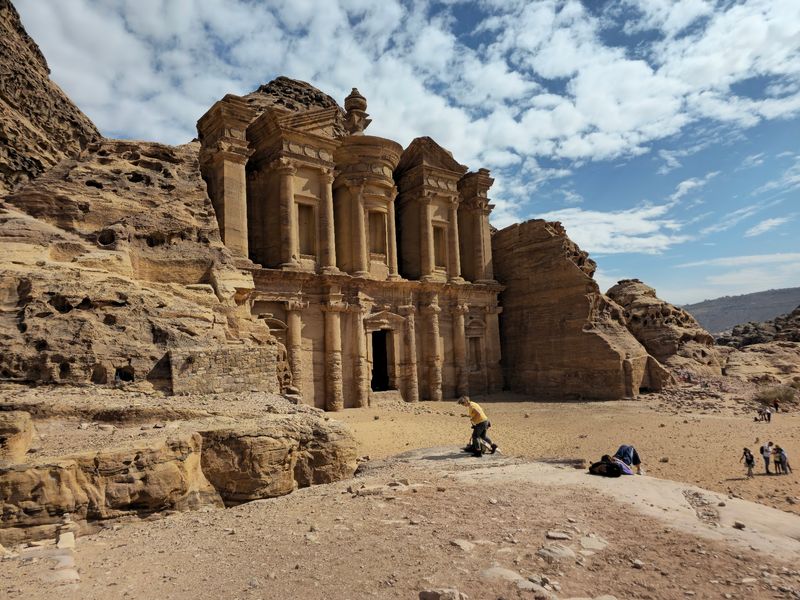
Beyond the Treasury, the main trail leads to the Street of Facades, a rock-cut theater, the Royal Tombs, and the Colonnaded Street. Visitors who push farther up the ridge reach Ad-Deir, the Monastery, one of the largest carved monuments in the entire complex.
UNESCO describes Petra as half-built and half-carved into rock, surrounded by mountains, passages, and gorges. The archaeological park remains Jordan’s leading heritage attraction and is open to ticketed visitors year-round.
Arriving early in the morning gives you the best light and the quietest trails before larger groups arrive.
Little Petra (Siq Al-Barid)
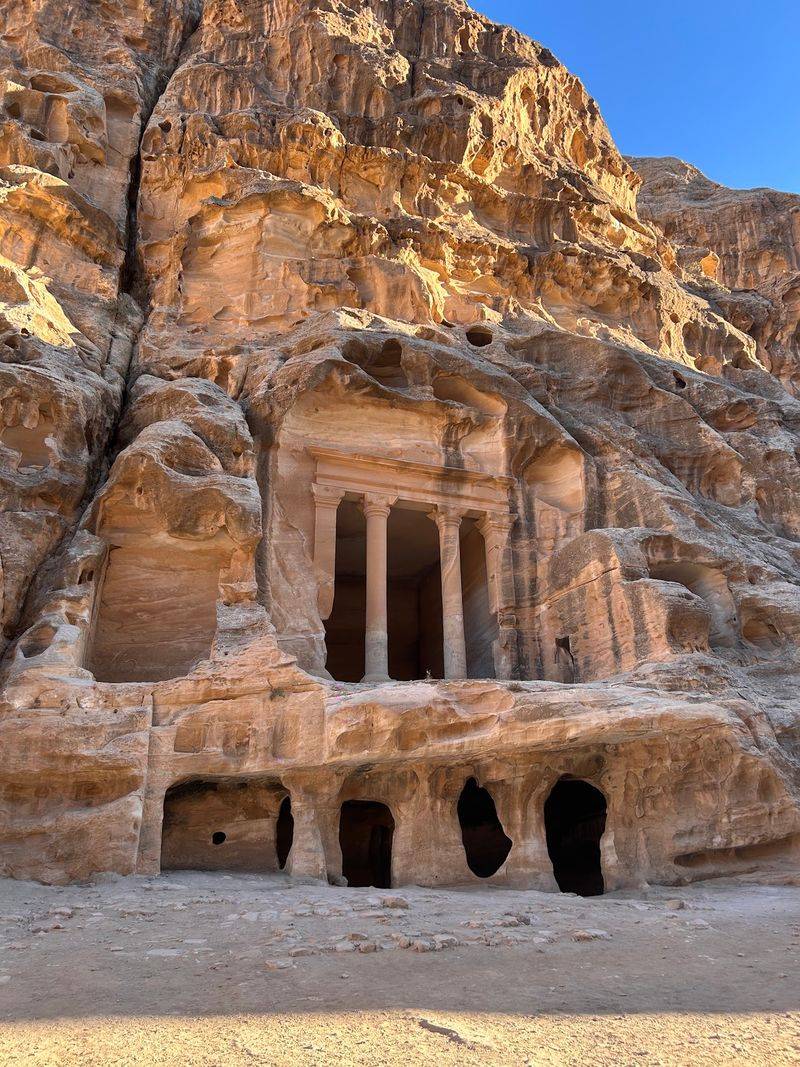
Just a short drive north of Petra’s main entrance, Little Petra offers a noticeably quieter experience inside a narrow sandstone canyon. Its Arabic name, Siq Al-Barid, translates as the Cold Canyon, which refers to the shade produced by the close rock walls on either side of the path.
The complex functioned as a satellite settlement connected to Petra’s caravan trade. Merchants and travelers stopped here before entering the larger capital, using carved dining halls, storage chambers, and water systems cut directly into the sandstone.
One chamber preserves rare traces of Nabataean painted decoration, including images of plants, birds, and grapevines.
Little Petra also connects to official hiking routes through the Beidha area, linking Nabataean sites, Neolithic settlements, water cisterns, and mountain viewpoints. For visitors who want the Nabataean experience without the crowds, this smaller canyon delivers genuine character and architectural detail in a much more relaxed setting.
Jerash
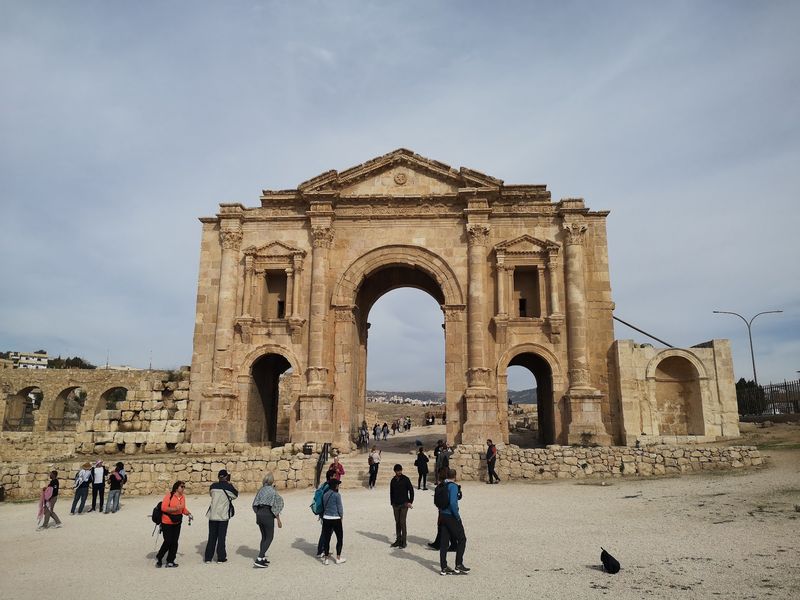
Gerasa, now called Jerash, contains one of the most complete collections of Roman-era ruins anywhere in the Middle East. Its monuments occupy a broad valley in northern Jordan, surrounded by green hills, which sets it apart visually from the desert landscapes associated with many other Jordanian sites.
The Oval Plaza is the first major landmark most visitors encounter, an unusually shaped public square framed by Ionic columns that remains remarkably well-preserved. From there, the Cardo Maximus leads past temples, fountains, churches, and monumental gateways.
Jerash also contains two ancient theaters, the Sanctuary of Zeus, the Temple of Artemis, and the Nymphaeum.
Many columns, paved streets, and building foundations are still easy to read and recognize, which makes the site especially accessible for visitors who are new to Roman archaeology. An on-site museum displays objects from prehistoric times through the Islamic era, adding useful historical context to what you see across the ruins.
Umm Qais
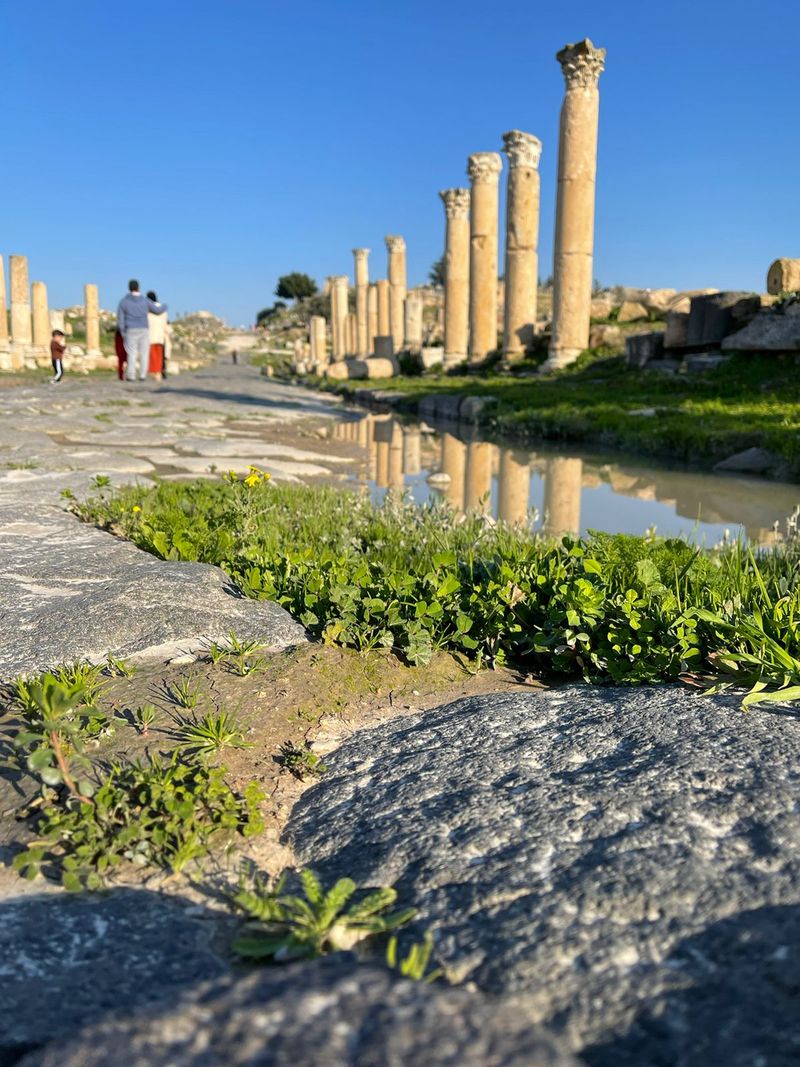
Perched on a hilltop in northwestern Jordan, Umm Qais looks out over three countries at once, with the Jordan Valley, the Sea of Galilee, and the Golan Heights all visible from the ancient ridge. In antiquity, this was Gadara, one of the cities of the Decapolis network that shaped Greco-Roman culture across the region.
What immediately sets Umm Qais apart from other Jordanian sites is its building material. Where Petra used sandstone and Jerash used limestone, Gadara was built largely from dark volcanic basalt.
The contrast between black stone and pale limestone creates a distinctive visual character across the theater, colonnaded street, vaulted terraces, and tomb complexes.
Gadara was also known as a center of philosophy, literature, and learning in the ancient world. The on-site archaeological museum occupies a historic Ottoman-era residence within the ancient acropolis.
The elevated setting and the sweeping views make Umm Qais one of Jordan’s most atmospheric and underappreciated historical stops.
Pella
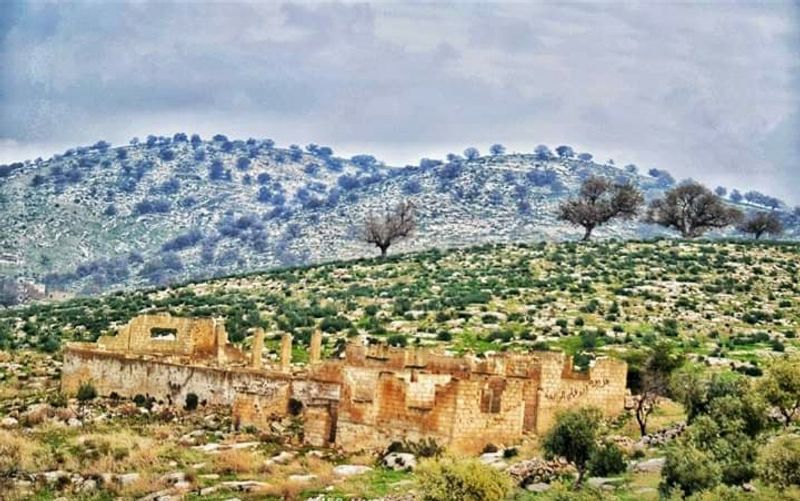
Pella, known in archaeology as Tabaqat Fahl, has one of the longest occupation histories of any site in Jordan. Evidence of human settlement here spans an extraordinary range of civilizations and time periods, layered across hills and terraces above the fertile northern Jordan Valley.
The city joined the Roman Decapolis alongside Jerash, Gadara, and Philadelphia. Surviving structures include a theater, baths, a nymphaeum, churches, and later Islamic remains.
Unlike Jerash, where the monuments are concentrated and reconstructed, Pella’s ruins spread organically across natural slopes and spring-fed terraces, giving the site a different kind of presence.
For travelers interested in reading archaeological layers rather than walking through restored columns, Pella is genuinely rewarding. Roman, Byzantine, and early Islamic structures appear alongside evidence of Bronze Age and earlier communities.
The site remains listed among Jordan’s official ticketed attractions and rewards visitors who take time to move slowly across its terraced landscape.
Amman Citadel
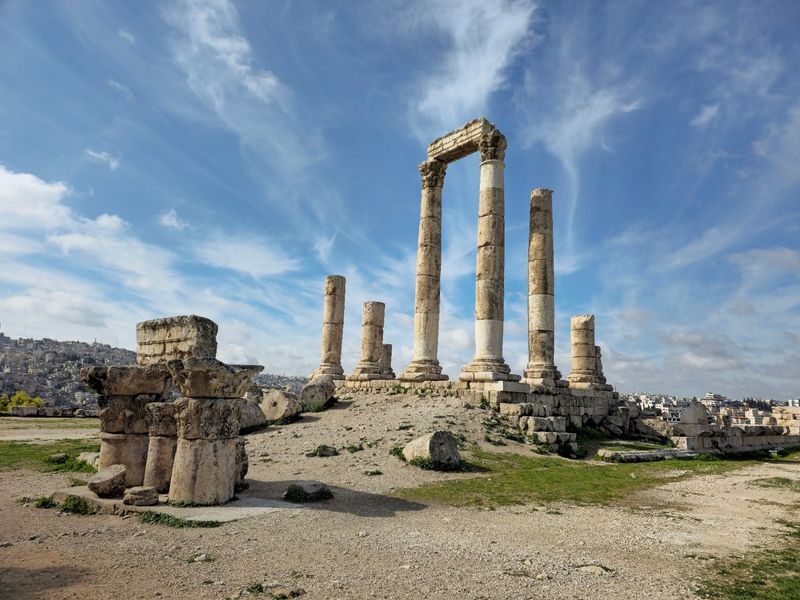
Standing on Jabal Al-Qal’a at the center of modern Amman, the Citadel has been a seat of power for thousands of years before the surrounding capital ever existed. Ancient Rabbath-Ammon occupied this hill, followed by Roman Philadelphia, then Byzantine and Umayyad builders who each left their mark on the same commanding position.
The most visible surviving elements include the columns of the Temple of Hercules, the foundations of a Byzantine church, and the Umayyad Palace complex. Each period reused the elevated location for the same basic reason: security and visibility across the valleys below.
Today those views extend over downtown Amman toward the Roman Theater built into an opposing hillside. Because the ruins sit inside a living capital, the Citadel offers something no desert site can replicate: the experience of watching an ancient city and a modern one occupy the same ground simultaneously.
Admission is ticketed and the site is open to visitors throughout the year.
Madaba Archaeological Park
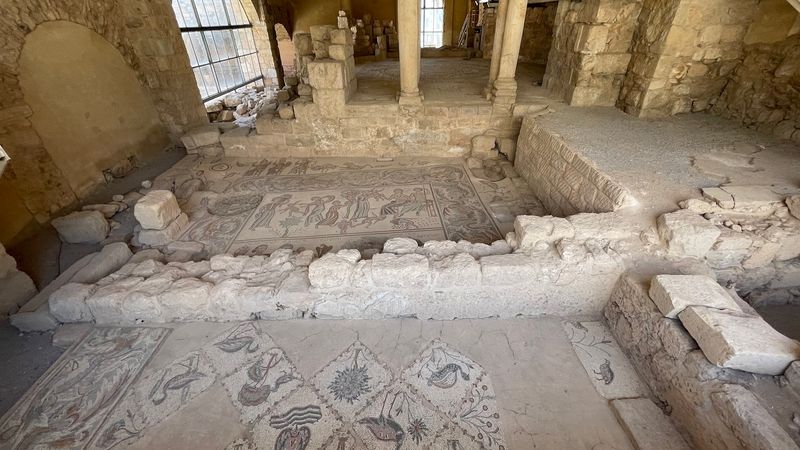
Modern Madaba grew directly over an ancient city, and the archaeological park at its center preserves several important remains within the active town. Visitors can see a section of the ancient Roman road, the Church of the Virgin Mary, the Church of the Prophet Elias, Hippolytus Hall, and a collection of Byzantine mosaic floors, all accessible without leaving the city’s modern streets.
Madaba became especially significant during the Byzantine period, when churches and civic buildings were decorated with elaborate mosaic compositions. The most famous of these is not inside the park itself but nearby in St. George’s Church, where a sixth-century mosaic map of Jerusalem and the Holy Land remains partially intact.
The combination of the archaeological park and Madaba’s city museum allows visitors to examine the ancient city while still surrounded by working shops, restaurants, and neighborhoods. For travelers driving the King’s Highway, Madaba is a natural and worthwhile stop with more depth than a quick visit might suggest.
Umm Ar-Rasas
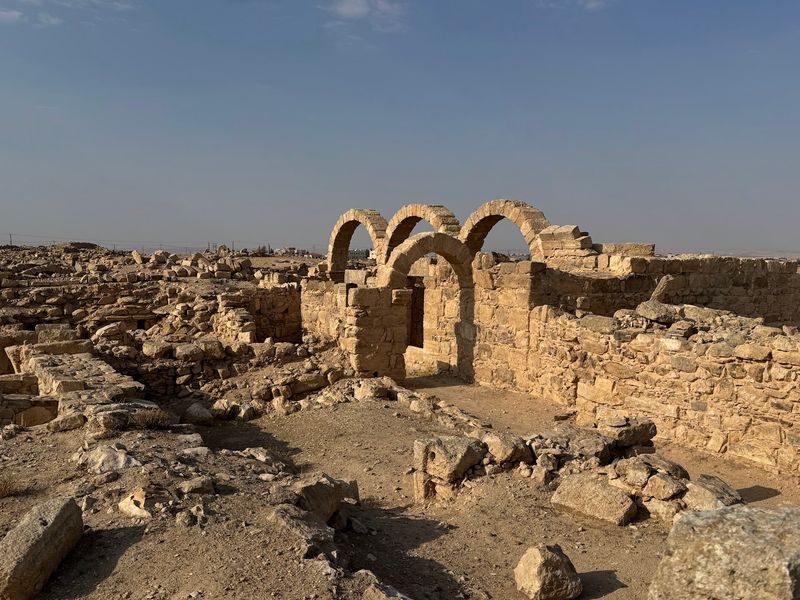
Umm Ar-Rasas started as a Roman military settlement and gradually expanded into a town with Roman, Byzantine, and early Islamic buildings layered across a walled enclosure in central Jordan. Much of the settlement is now ruined, but the churches inside preserve some of the most significant mosaic floors in the entire country.
The Church of Saint Stephen contains an eighth-century mosaic floor that depicts cities from across the region, including Jerusalem, Madaba, Gaza, and several others, each labeled by name. The level of detail and geographic scope in that single floor is genuinely impressive.
Outside the main ruins stands a tall square tower connected to early Christian ascetic traditions. Researchers believe it may have been used by a stylite, a religious figure who lived and prayed at an elevated height above the ground.
UNESCO added Umm Ar-Rasas to the World Heritage List in 2004, and the site remains accessible with the Jordan Pass.
Umm Al-Jimal
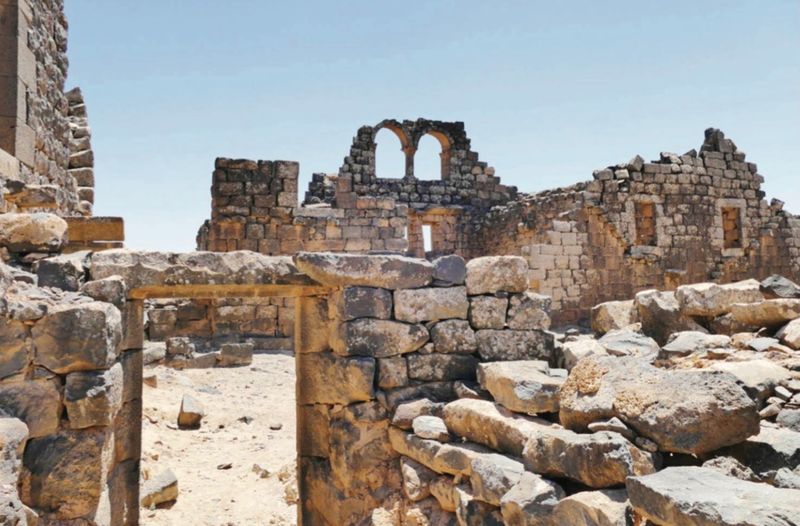
Umm Al-Jimal looks unlike any other ancient city in Jordan. Built almost entirely from volcanic basalt, the settlement appears nearly black against the surrounding desert plain in northern Jordan, creating an instantly striking visual impression even from a distance.
The site contains houses, churches, reservoirs, military buildings, courtyards, towers, and multi-story structures. Because timber was scarce in the region, builders used basalt not only for walls but also for door frames, lintels, stairways, and roofing supports.
The engineering solutions required to build in this material, without wood, are part of what makes Umm Al-Jimal architecturally fascinating.
The settlement grew from an earlier Nabataean community and continued developing through Roman, Byzantine, and early Islamic periods. Its extensive water collection system, including cisterns and basins, shows how residents managed survival in a dry volcanic landscape.
UNESCO inscribed Umm Al-Jimal on the World Heritage List in 2024, and the site is included with the Jordan Pass.
Machaerus (Mukawir)
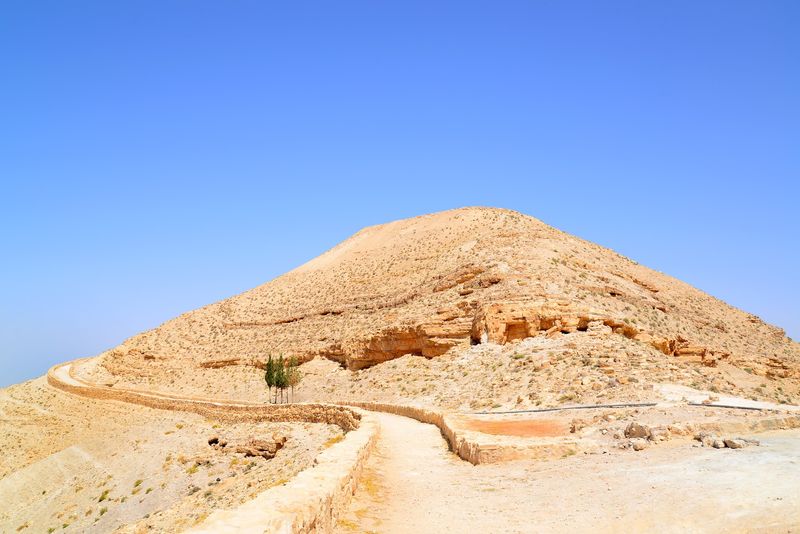
Rising above the rugged hills southeast of the Dead Sea, the hilltop fortress of Machaerus occupies a steep ridge that offered commanding views and natural defensive advantages to every ruler who held it. Known locally as Mukawir, the site is associated with both the Hasmonean and Herodian periods of regional history.
Machaerus is traditionally linked to the imprisonment and execution of John the Baptist, giving it significance for visitors with religious as well as archaeological interests. The surviving remains are more limited than those at Petra or Jerash, but foundations, columns, defensive walls, courtyards, and traces of the palace complex are still visible across the summit.
Reaching the top requires a climb, and the effort clarifies immediately why ancient rulers valued this location so highly. The ridge drops dramatically toward the Dead Sea on one side, reinforcing the site’s natural isolation and defensive logic.
Jordan’s official tourism itineraries continue to include Mukawir as a visitable destination in the Madaba region.
Iraq Al-Amir
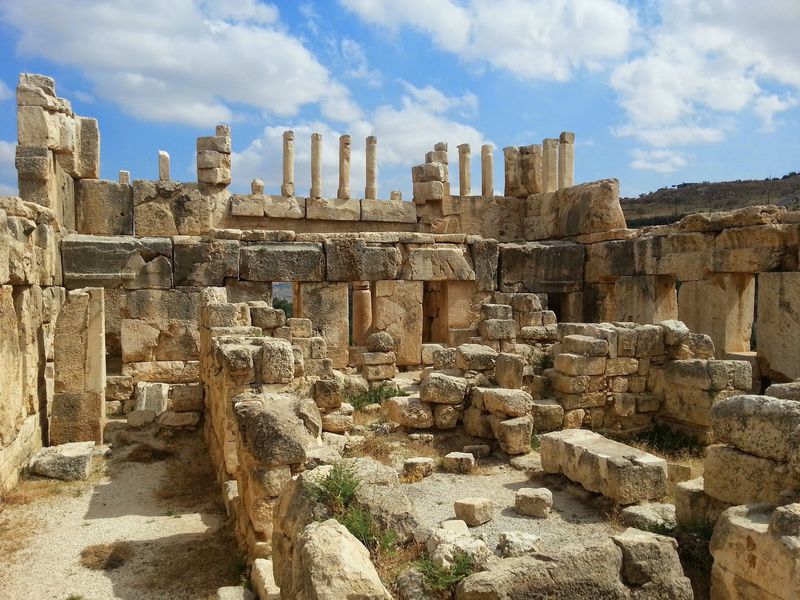
Tucked into a green valley west of Amman, Iraq Al-Amir feels like a different Jordan entirely. Springs, agricultural fields, limestone cliffs, and rock-cut caves define the landscape here, and the area’s name translates roughly as the Caves of the Prince, a reference to the chambers carved into the valley walls.
Some cave entrances carry inscriptions connected to the ancient Tobiad family, and the chambers may have served different purposes across different periods. The valley’s most substantial monument is Qasr Al-Abd, a large Hellenistic-period structure built from enormous limestone blocks.
Carved animal sculptures, including lions, remain among its most unusual surviving features.
Although Qasr Al-Abd was constructed rather than cut entirely into rock, its architecture is closely connected to the valley’s stone, springs, and surrounding cave system. Iraq Al-Amir sits on Jordan’s official Ancient Ruins Trail and can be paired with community-based experiences in the nearby village, making it a good option for travelers who want history alongside local character.
Al-Humayma
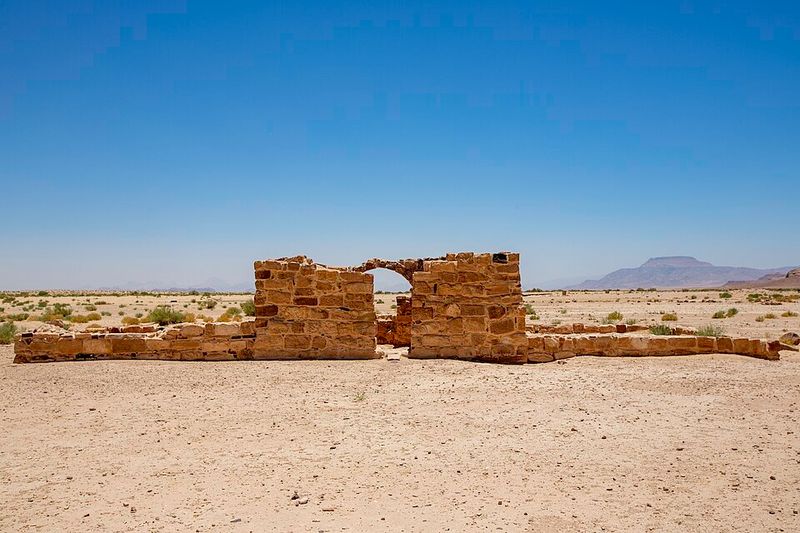
Al-Humayma sits quietly in southern Jordan along ancient routes that once connected Petra to the Arabian Peninsula. Its desert position made water management the central challenge and the central achievement of every community that lived here across several centuries.
The site holds remains from Nabataean, Roman, Byzantine, and early Islamic periods. Archaeologists have identified houses, churches, military structures, reservoirs, cisterns, and sections of a carefully engineered water system.
The Nabataeans developed channels and storage facilities that allowed the settlement to function in an environment with very limited annual rainfall.
Al-Humayma also carries political history. The Abbasid family, who would go on to establish one of the most significant caliphates in Islamic history, were associated with this settlement before their rise to power.
Fewer visitors make it here than to Petra, but Al-Humayma is listed as an official Jordan Pass attraction with published visitor hours, which makes it accessible for travelers planning a southern Jordan itinerary.
Ancient Ayla
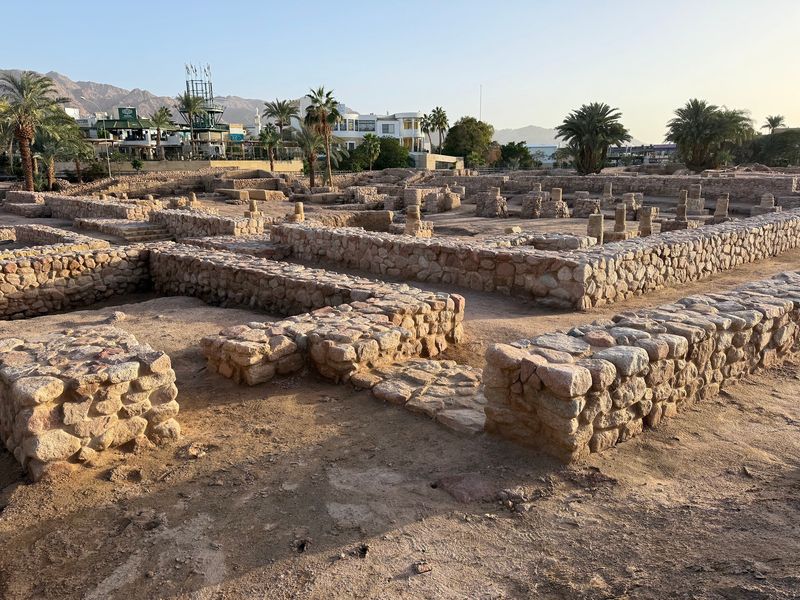
Most visitors come to Aqaba for the Red Sea, but within the modern city sit the excavated remains of ancient Ayla, one of the earliest planned Islamic cities in the region. Established during the early Islamic period, Ayla developed into an important port connecting Arabia, Africa, Egypt, and the Levant through Red Sea trade routes.
Archaeologists uncovered sections of the city walls, gates, streets, residential areas, towers, and a congregational mosque, all laid out within a fortified enclosure that followed a deliberate urban plan. The organized structure of the settlement reflects the ambitions of its founders rather than gradual organic growth.
Ayla’s coastal position illustrates that Jordan’s ancient cities were shaped by maritime geography as well as desert mountains. Goods arriving through the Red Sea could continue north toward Petra, the Levant, and broader regional markets.
The site provides a low-key historical stop among Aqaba’s hotels and beaches, and official Jordan tourism material identifies Ayla as central to the city’s early commercial story.
As-Salt
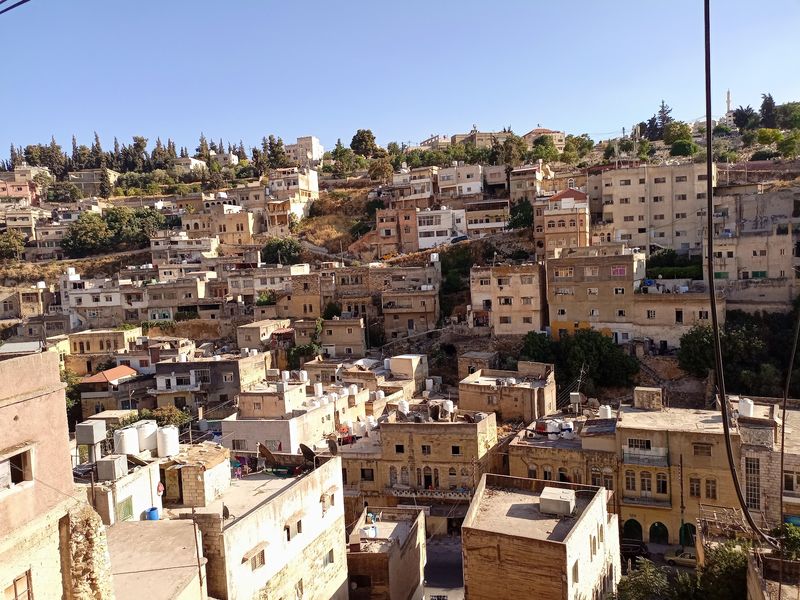
As-Salt is not a ruin and not a desert site, but it belongs on this list because its entire urban form was shaped by the challenge of building across three steep limestone hills northwest of Amman. The town became an important trading and administrative center during the Ottoman period, connecting the Jordan Valley with the eastern desert through mountain routes.
The historic core is dense and layered, with limestone buildings, arched windows, stairways, narrow lanes, markets, mosques, and churches packed together across the hillsides. Walking through the old town requires moving up and down constantly, which gives visitors a physical sense of how the terrain dictated every decision about where buildings went and how streets connected.
UNESCO inscribed As-Salt in 2021 under the designation “Place of Tolerance and Urban Hospitality,” recognizing its history of cooperation among religious communities and its distinctive urban character. Unlike the other sites on this list, As-Salt is still fully lived-in, and that ongoing daily life is exactly what makes it worth visiting.
Share this story