A Texas house covered in an estimated 50,000 beer cans, a French palace built by a mail carrier, and a Finnish garden filled with hundreds of concrete figures are among the world’s most unusual art attractions.
Their creators included a retired lumberjack, a road inspector, a priest, and a railroad worker. Many spent decades turning discarded bottles, broken dishes, scrap metal, and concrete into extraordinary landmarks.
Some of these creations nearly disappeared because of demolition orders, property disputes, or neglect. Today, visitors can explore these remarkable sites across the United States, France, India, and Finland and discover the stories behind the people who built them.
1. Philadelphia’s Magic Gardens, Philadelphia, Pennsylvania, USA
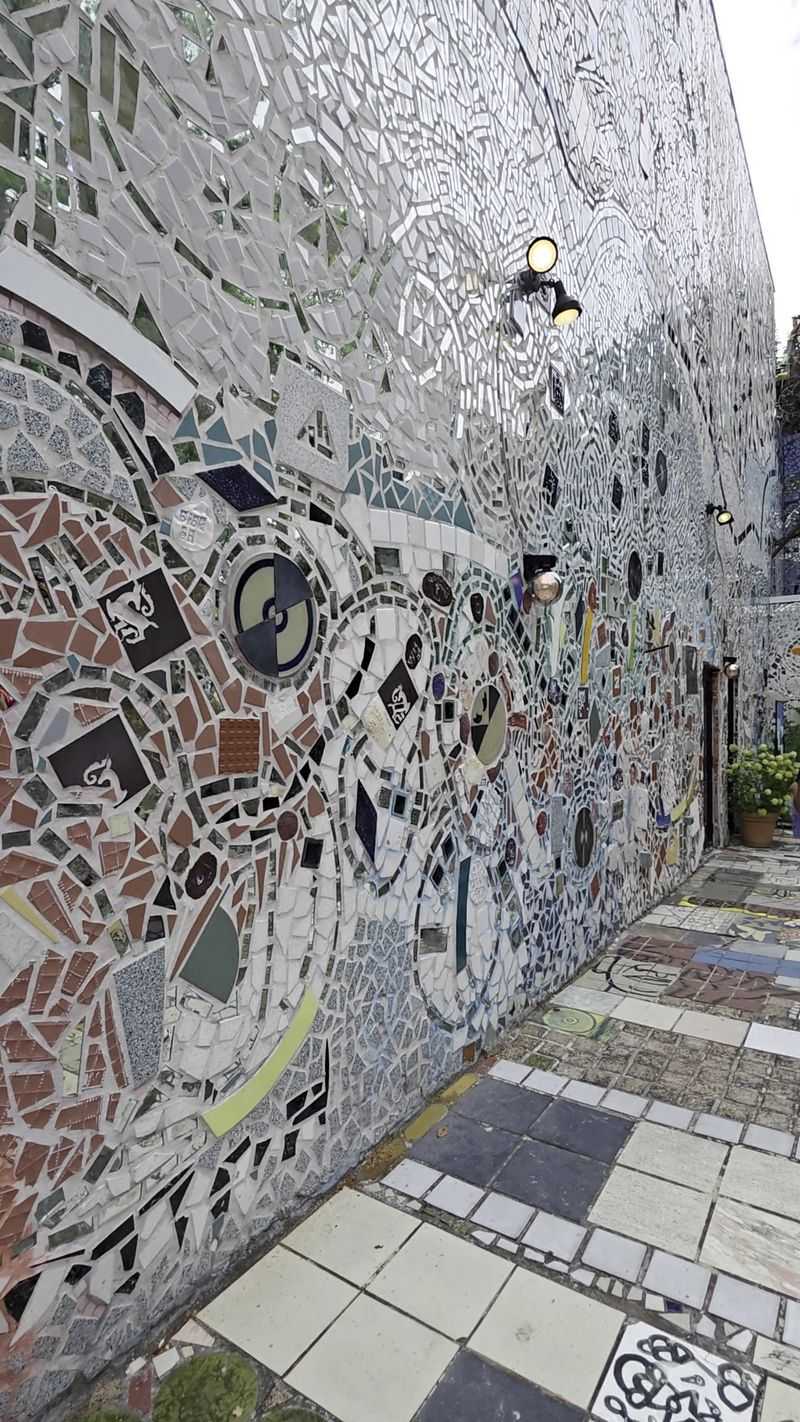
Isaiah Zagar never met a blank wall he could leave alone. Starting in 1968, he and his wife Julia helped revive Philadelphia’s South Street, and he covered hundreds of local walls with mosaics.
In 1994, he started work on a vacant lot near his studio. Fourteen years later, it had become the Magic Gardens, a maze spread over three city lots.
Zagar used handmade tiles, cobalt blue bottles, bicycle wheels, broken dishes, and folk art from around the world. He treated the walls like a diary, adding names of friends and family into the patterns.
When the land went up for sale in 2002, neighbors rallied and formed a nonprofit to buy it. The site opened to the public in 2008.
Plan around the schedule, since it usually opens Wednesday through Monday. Some narrow stairs make parts hard for wheelchairs, so check ahead.
2. Salvation Mountain, Niland, California, USA
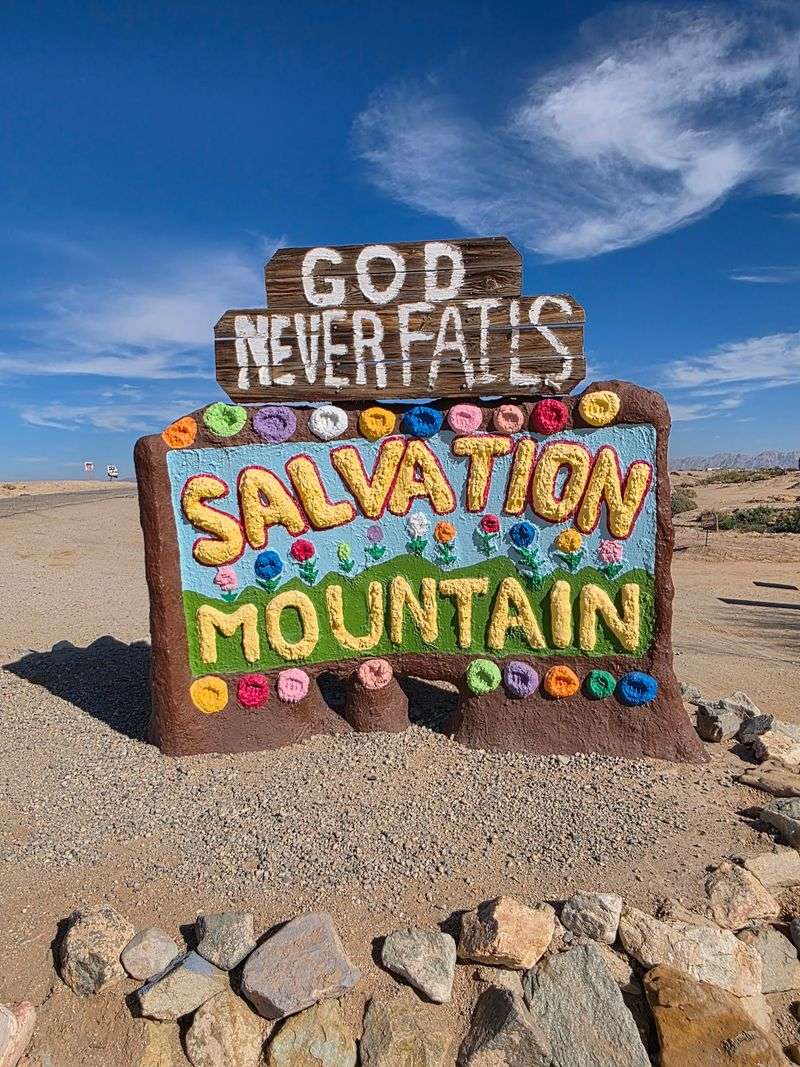
A hot air balloon that refused to fly started it all. Leonard Knight wanted to share the message God Is Love, and when his balloon plan failed, he turned to the desert near Niland instead.
His first version, made of concrete and sand, collapsed around 1989. Knight simply started over and built smarter, using adobe clay and straw.
For roughly three decades, he worked almost every day and lived in his truck at the base. The finished hill stands about 50 feet high and 150 feet wide.
Thousands of gallons of donated paint cover hearts, flowers, bluebirds, and Bible verses. That paint also shields the clay from the harsh weather.
Visit from dawn to dusk for free, and stay on the marked paths. Peek inside the domed Museum and the Hogan, both packed with Knight’s personal touches.
3. S. P. Dinsmoor’s Garden of Eden, Lucas, Kansas, USA
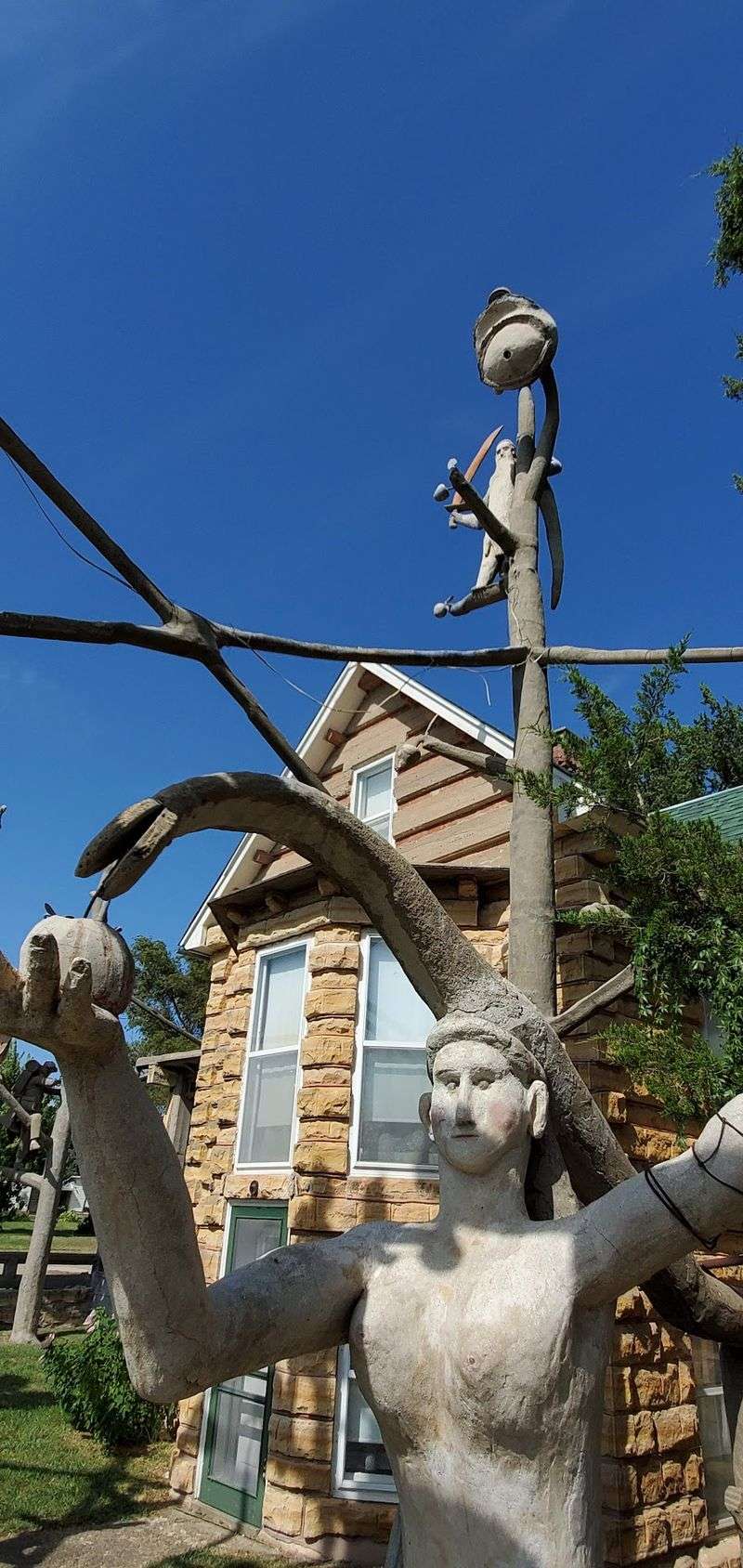
Retirement plans for most people involve fishing. Samuel Perry Dinsmoor, a Civil War veteran, chose 113 tons of concrete instead, starting in 1907 at age 64.
He built a twelve-room home from local post rock limestone. Around it, he raised concrete trees up to 40 feet tall that hold more than 150 sculptures.
The figures mix Bible stories like Cain and Abel with fiery political opinions. One scene, called Labor Crucified, shows workers being held down by a lawyer, doctor, preacher, and banker.
Dinsmoor also loved gadgets. He added light bulbs to an All-Seeing Eye and ran a speaking tube to an angel so he could chat with free viewers.
Guided tours run on-site, and over 10,000 visitors come each year. Ask the guide about the limestone mausoleum, which remains the most talked-about stop.
4. Fred Smith’s Wisconsin Concrete Park, Phillips, Wisconsin, USA
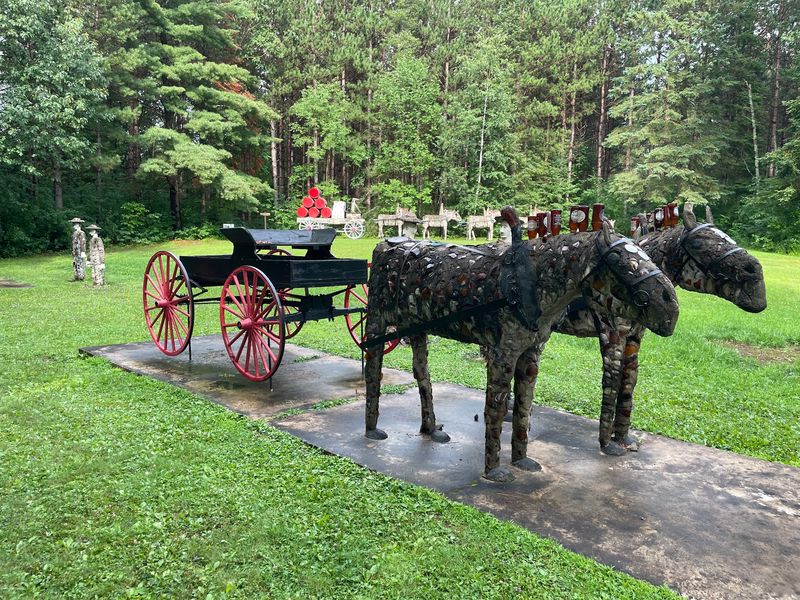
Paul Bunyan, Abraham Lincoln, and Ben Hur all share a lawn in northern Wisconsin. Their creator was Fred Smith, a retired lumberjack who could not read or write.
He began in 1948, in his sixties, and kept going until a stroke stopped him in 1964. By then he had made over 200 life-size concrete figures.
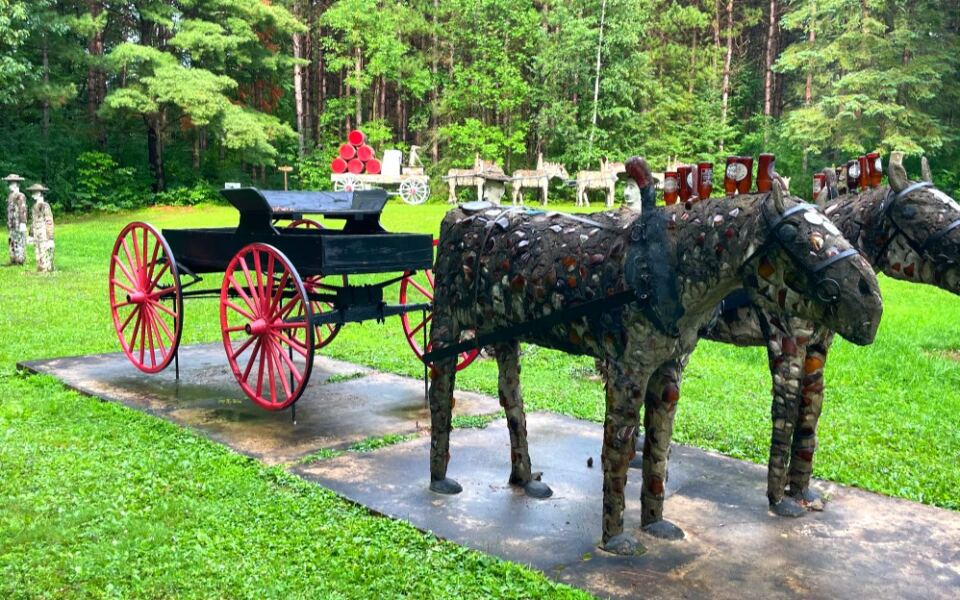
Smith built each one around a wood frame, then covered it with hand-mixed cement. Broken glass, mirror bits, and reflectors added sparkle, and visitors often donated pieces.
His last finished work shows a wagon pulled by Clydesdale horses. Other scenes feature Sacajawea, Kit Carson, deer, and local legends.
After a windstorm damaged many sculptures, the Kohler Foundation restored them and gave the park to Price County. Admission is free, and the old family home now holds a seasonal gallery and gift shop.
5. Watts Towers, Los Angeles, California, USA
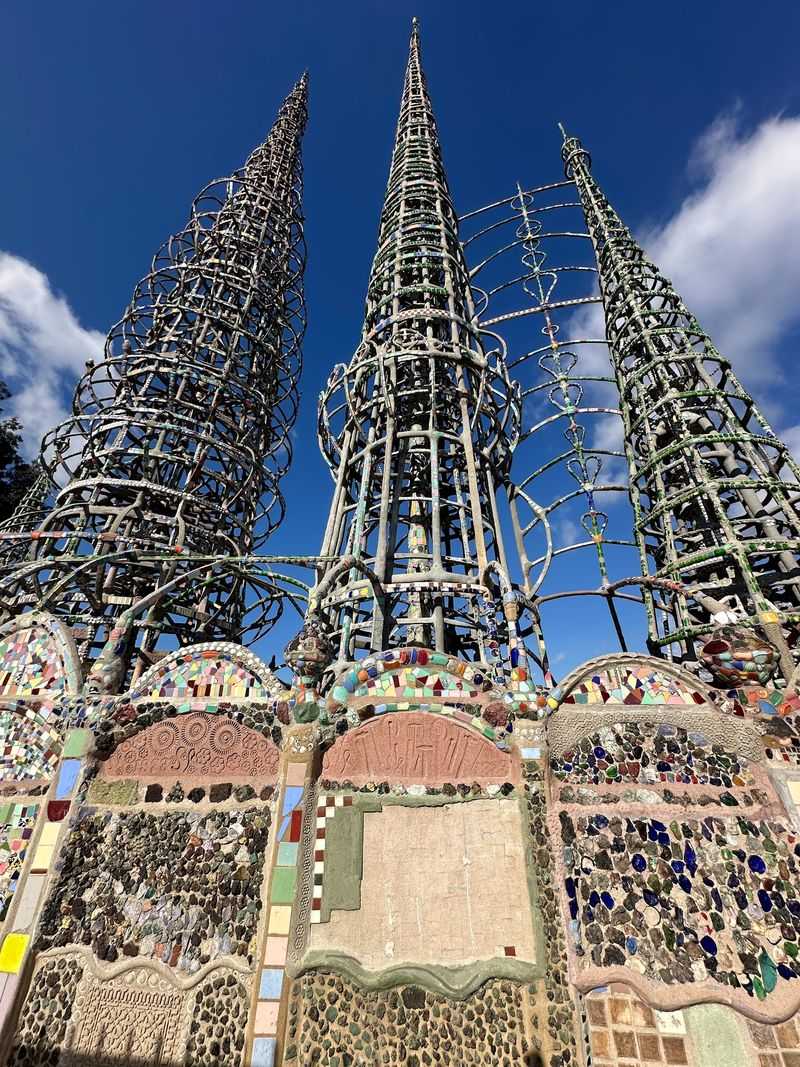
No scaffolding, no blueprints, and no welding torch. Simon Rodia, an Italian immigrant tile setter, still managed to build 17 connected structures by hand between 1921 and 1954.
He called the project Nuestro Pueblo, meaning Our Town. The tallest tower reaches 99.5 feet.
Rodia bent steel rods, wrapped them in wire mesh, and coated them in mortar. Then he pressed in seashells, soda bottle glass, broken dishes, and tiles from famous California potteries.
After he left, the city ordered the towers torn down. In 1959, supporters ran a public stress test, and the towers did not budge.
That win helped protect folk art sites across America. Today, guided tours are the only way inside the fence, so book ahead.
The neighboring arts center runs exhibits and classes year-round.
6. Rock Garden of Chandigarh, Chandigarh, India
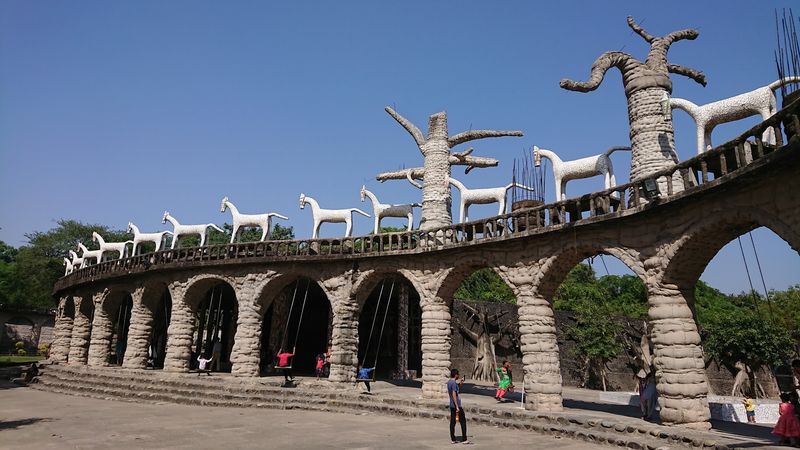
Keeping a secret for 18 years takes real skill. Nek Chand, a road inspector, did exactly that while building a hidden kingdom in a protected forest area near Sukhna Lake.
He started in 1957, collecting junk from demolition sites in his free time. Broken bangles, sinks, tiles, and even old toilets became dancers, soldiers, queens, and animals.
Officials found the project in 1975. Instead of tearing it down, the city backed it, and the garden opened in 1976.
Chand even got a new job title and 50 workers to help. The garden now covers about 40 acres with waterfalls, bridges, and connected courtyards.
Thousands of figures fill three separate phases. Wear comfy shoes, since the winding paths take time, and the small entry fee helps pay for upkeep.
7. Palais Idéal du Facteur Cheval, Hauterives, France
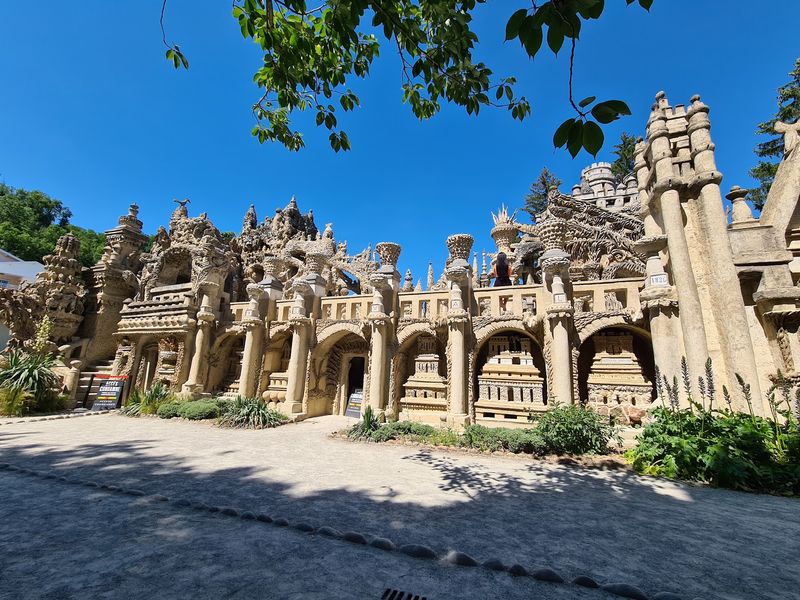
One clumsy trip changed a mail carrier’s life forever. In 1879, Ferdinand Cheval stumbled over an oddly shaped stone on his 18-mile route.
He was 43 and had dreamed of a palace for years. That rock pushed him to begin.
For 33 years, he collected stones during his rounds. First they went in his pockets, then a basket, and finally a wheelbarrow.
He had no architect and no machines, just lime, cement, and late nights by oil lamp. The finished palace reaches about 10 meters high.
Ideas came from postcards he delivered, so you will spot Hindu temples, Egyptian shapes, and Swiss chalets. Look for carved poems and phrases on the walls.
Picasso admired it, and France named it a historic monument in 1969. It opens year-round, with a small museum on-site.
8. Vollis Simpson Whirligig Park, Wilson, North Carolina, USA
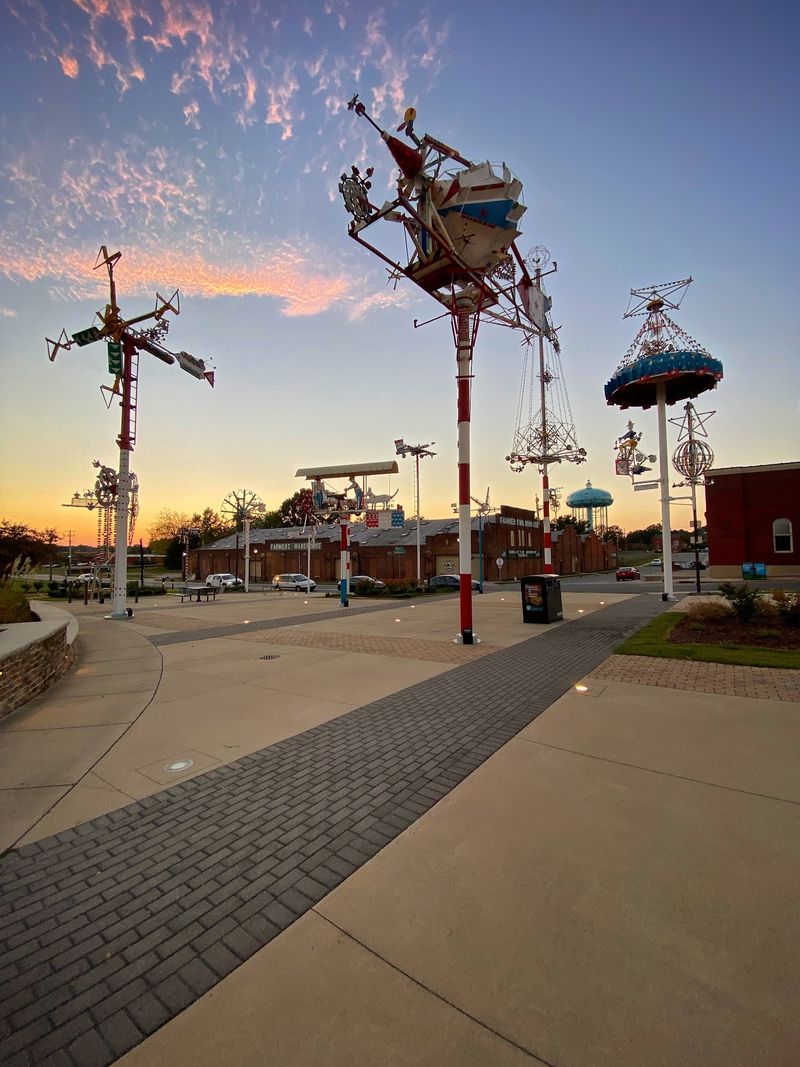
During World War II, Vollis Simpson built a washing machine powered by wind using spare bomber parts. That clever streak never left him.
After retiring at 65 around 1984, the machinist began making giant whirligigs on his farm near Lucama. He kept building almost daily until shortly before he passed at 94.
His supplies came from scrapyards: road signs, ceiling fans, bicycles, ball bearings, and old textile mill rollers. Some pieces weigh over 3 tons and stand above 50 feet.
The sculptures show farm animals, airplanes, and a guitar player. Reflective bits catch car headlights and streetlights at night.
In 2010, a plan moved 30 restored pieces to a two-acre park downtown. It opens daily from 5 AM to midnight for free, so an evening stop is easy to fit in.
9. Shrine of the Grotto of the Redemption, West Bend, Iowa, USA
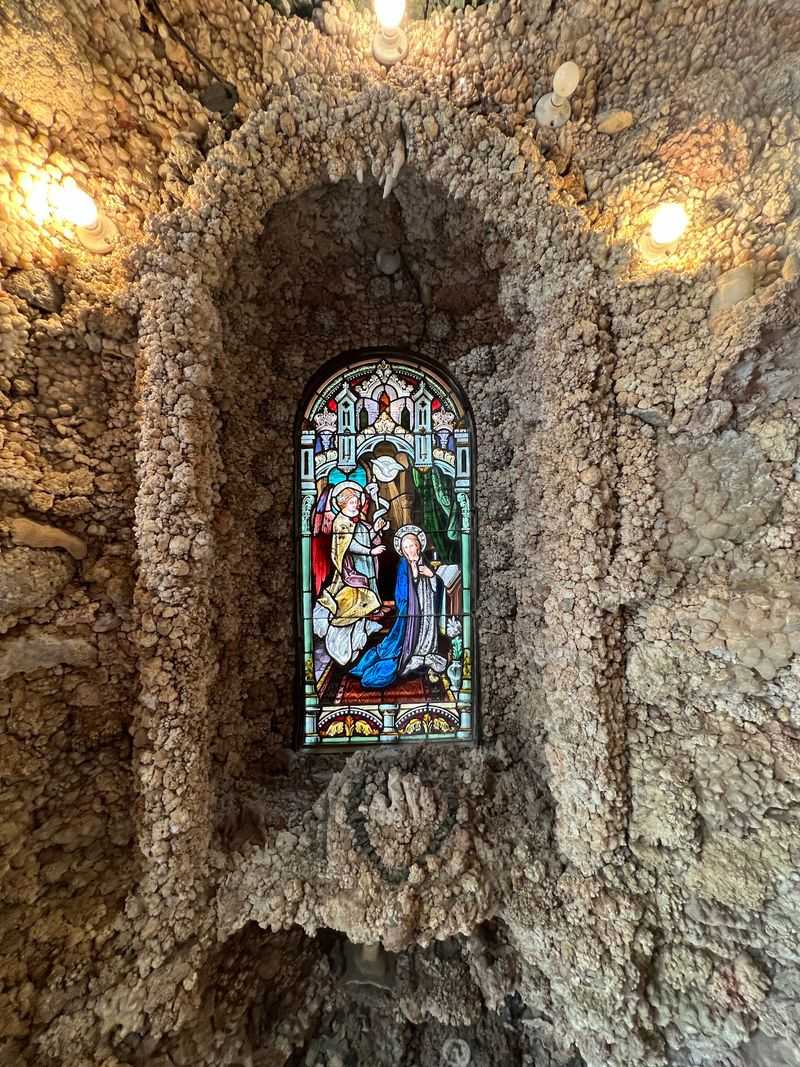
A promise made from a sickbed turned into the largest grotto of its kind. Young seminarian Paul Dobberstein became very ill with pneumonia and vowed to build a shrine to Mary if he recovered.
He did, and arrived in West Bend in 1898. He then spent over ten years gathering rocks before starting work in 1912.
For 42 years, he set minerals, fossils, shells, and petrified wood into concrete. The Stable in Bethlehem alone uses 65 tons of petrified wood.
Nine connected grottos fill a whole city block and tell the Bible story from Eden to the Resurrection. Experts value the stones at over 4.3 million dollars.
The grounds stay open around the clock with no required fee. Peek inside the church for the 300-pound Brazilian amethyst.
10. Ed Galloway’s Totem Pole Park, Chelsea, Oklahoma, USA
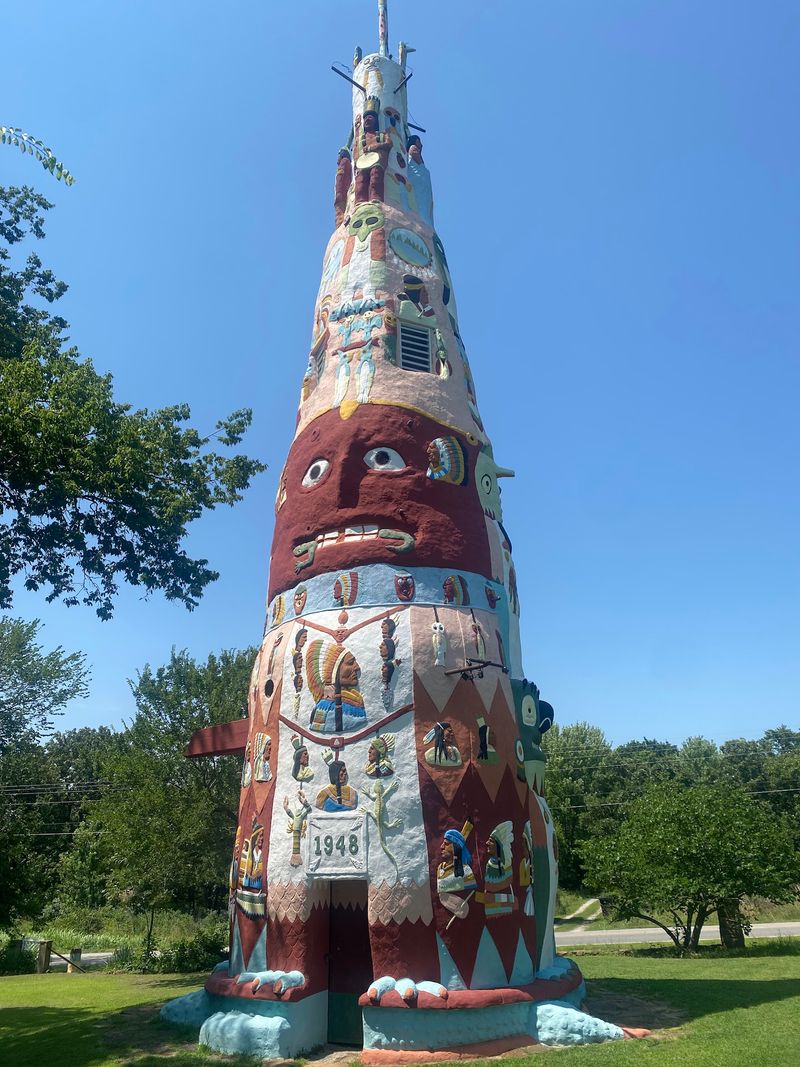
Six tons of steel, 28 tons of cement, and 100 tons of sand and rock. Ed Galloway needed all of it for the main attraction at his Oklahoma farm.
The former teacher spent 22 years teaching woodworking at an orphanage. After retiring in 1937, he started building a tribute to Native Americans, inspired by postcards and magazines.
His 90-foot totem pole took eleven years. It sits on a giant carved turtle, a symbol of the Earth in many Native creation stories.
Leaders like Sitting Bull and Geronimo appear near the top. Inside, the hollow pole holds painted murals.
Don’t skip the eleven-sided Fiddle House, which once held over 300 handmade fiddles. Grounds open dawn to dusk, about 3.5 miles east of Route 66.
11. Parikkala Sculpture Park, Parikkala, Finland
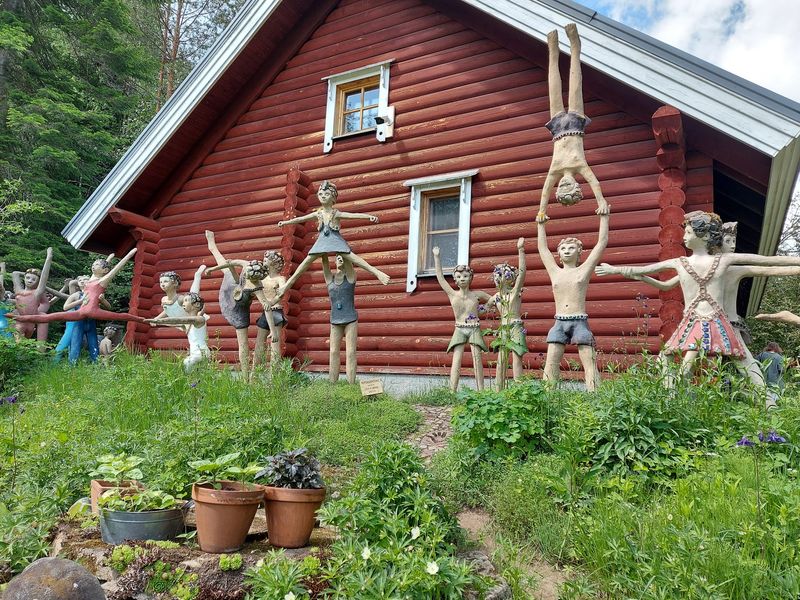
More than 250 concrete people are doing yoga in a Finnish garden, and none of them ever needs a break. Their maker, Veijo Rönkkönen, practiced yoga himself.
Rönkkönen worked at a paper mill and spent his first paycheck on apple seedlings and concrete. He made his first sculpture in 1961.
For nearly 50 years, he kept going, reaching around 500 figures. Even in his last summer, he finished 15 more.
Besides the yoga crowd, you will meet playful children, owls, frogs, and kangaroos. Many faces look surprised or a bit spooky.
He was shy, yet he kept over a hundred guestbooks for visitors. The park opens all day and night, but bring a light after dark.
The entry fee pays for upkeep, and touching or climbing the statues is not allowed.
12. Dickeyville Grotto, Dickeyville, Wisconsin, USA
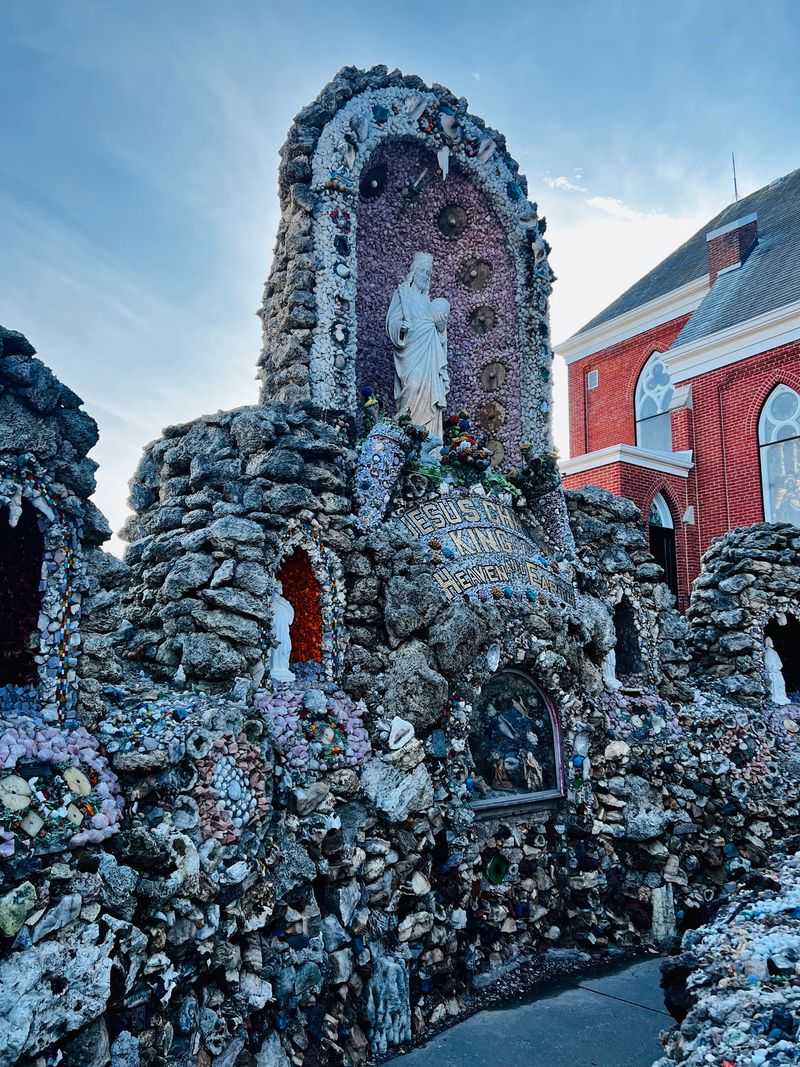
Old car gearshift knobs and starfish ended up in the same wall here. Father Matthias Wernerus, the local pastor, gathered treasures from everywhere to decorate his shrines.
He began in the early 1920s and did most of the work between 1925 and 1930. He reportedly used no blueprints, just volunteers and a helpful cousin.
More than 200 tons of stone arrived from the Dakotas, Iowa, and nearby quarries. He added coal, amethyst, corals, fossils, and colored glass.
His theme was love of God and love of country. One shrine shows Columbus, Washington, and Lincoln near a Liberty Bell.
The main grotto holds a marble statue of Mary from Italy. Grounds stay open all year for free, and a 2023 restoration freshened the details.
Visit on a sunny day for the best view.
13. Beer Can House, Houston, Texas, USA
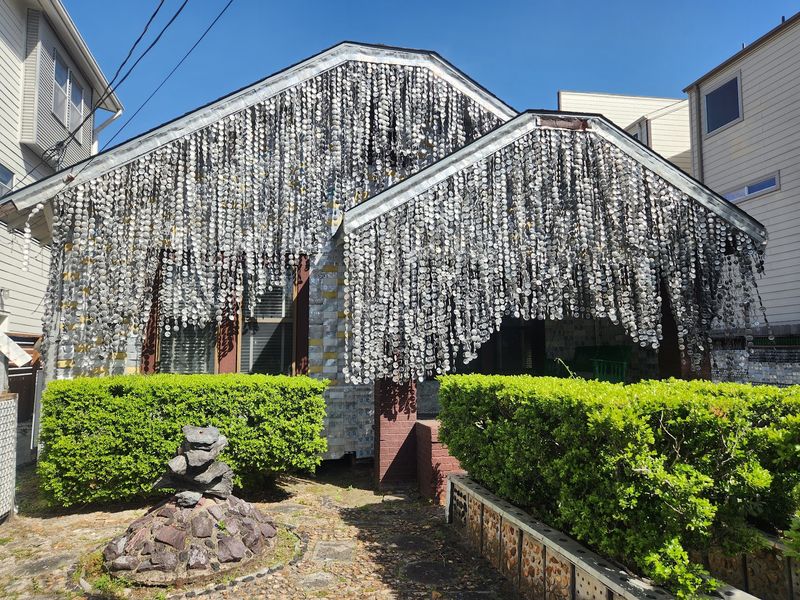
Mowing the lawn annoyed John Milkovisch so much that he paved it with marbles. The retired railroad upholsterer started that project in 1968 and never really stopped.
He set over 28,000 marbles, rocks, and metal bits into concrete patios, fences, and flower boxes. Then he moved on to the house itself.
Thousands of flattened cans became siding in quilt-style patterns. Garlands made from can tops and pull-tabs hang from the roof edges and help shade the walls.
He worked for 18 years and simply hated throwing things away. In 2001, the Orange Show Center for Visionary Art bought the home to protect it.
Time magazine later named it a top roadside stop. Walking around outside is free, and paid tours show the pull-tab lampshades indoors.
Check hours, usually Wednesday through Sunday.
14. The Heidelberg Project, Detroit, Michigan, USA
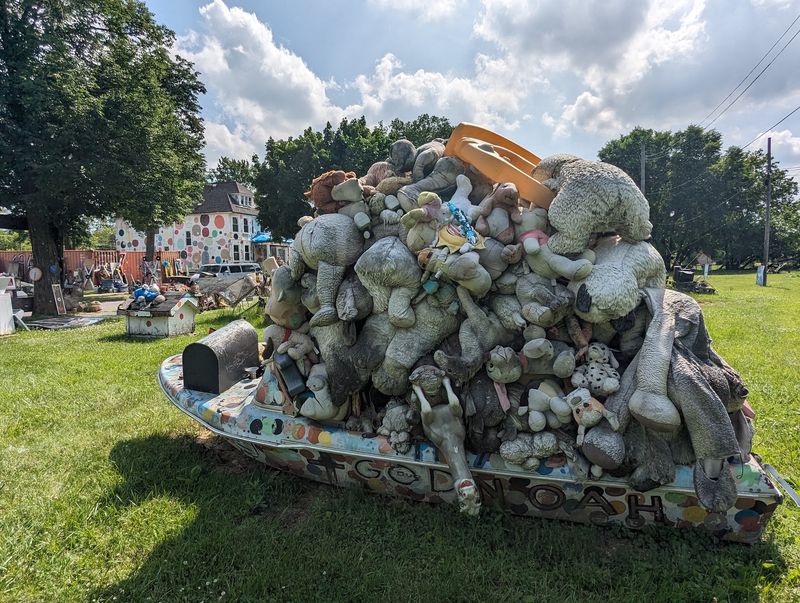
Polka dots became a form of protest on one Detroit street. In 1986, artist Tyree Guyton returned to the neighborhood where he grew up and found empty houses and littered lots.
His grandfather, Sam Mackey, urged him to answer with art. Guyton and local kids cleaned the lots and turned the trash into installations.
Shoes, dolls, clocks, old TVs, and stuffed animals soon covered houses and trees. The Numbers House and the Dotty-Wotty House became famous stops.
The project faced city demolitions in 1991 and 1999, then fires that ruined 12 art houses. It kept going anyway.
Visitors from over 140 countries have come to see it. Entry is free, but daylight hours work best, and tours or workshops add helpful background.
15. Cathedral of Junk, Austin, Texas, USA
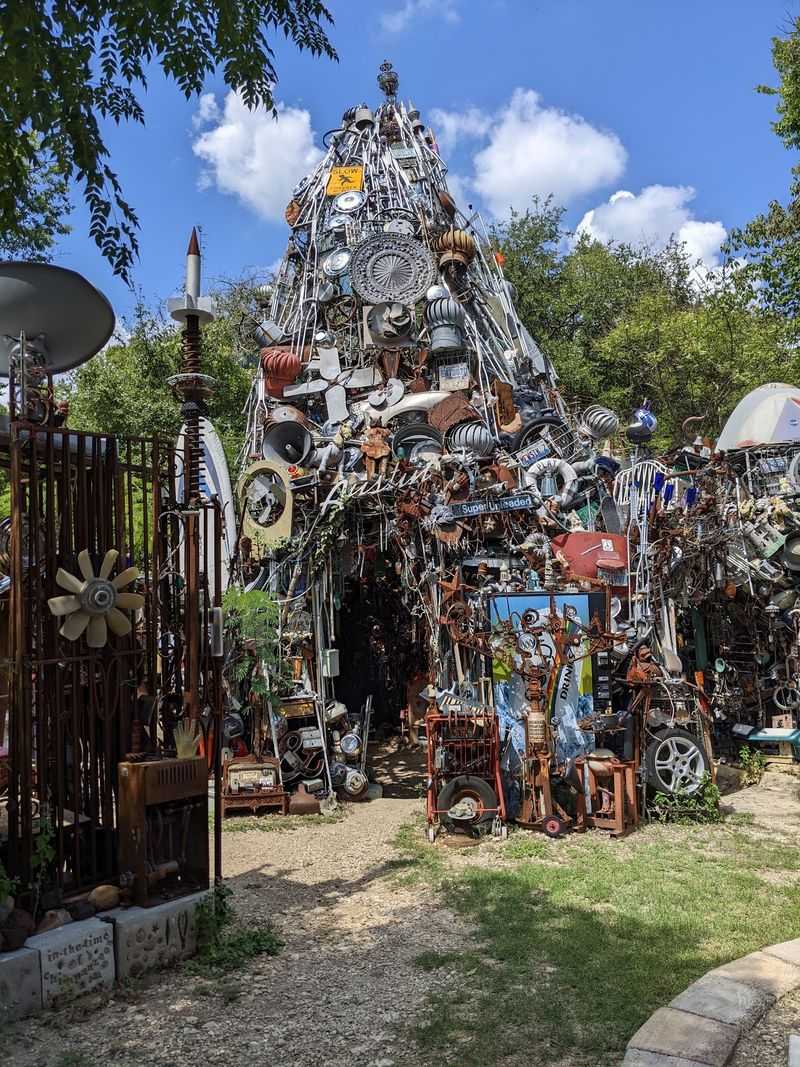
A few hubcaps on a fence grew into roughly 50 tons of stuff. Vince Hannemann, known locally as the Junk King, began this backyard project in 1988 with no plan at all.
Bicycles, surfboards, toilets, shopping carts, crutches, and TVs are all wired, welded, or stacked together. Parts of it rise about 30 feet high.
In 2010, a neighbor complaint brought city inspectors. With help from lawyers, an architect, and an engineer, Hannemann got a permit but had to remove a big chunk, including a TV pyramid.
Inside, stairs and paths lead to platforms and a Throne Room. It has even appeared in a Spy Kids movie.
Call ahead, since visits are by appointment only at a private home. A donation of about 5 dollars per adult is appreciated.
Share this story