Many European cities are known for a signature cake that locals have enjoyed for generations. Each one reflects the history, ingredients, and baking traditions of its home.
From chocolate layers to honey sponge and creamy cheesecake, there is a sweet treat for every taste. Here is a look at fifteen cakes worth knowing about before your next trip.
1. Vienna, Austria: Sachertorte
In 1832, a sixteen-year-old apprentice named Franz Sacher had to create a dessert for a prince’s guests, and a legend was born. His dense chocolate cake became the pride of Vienna.
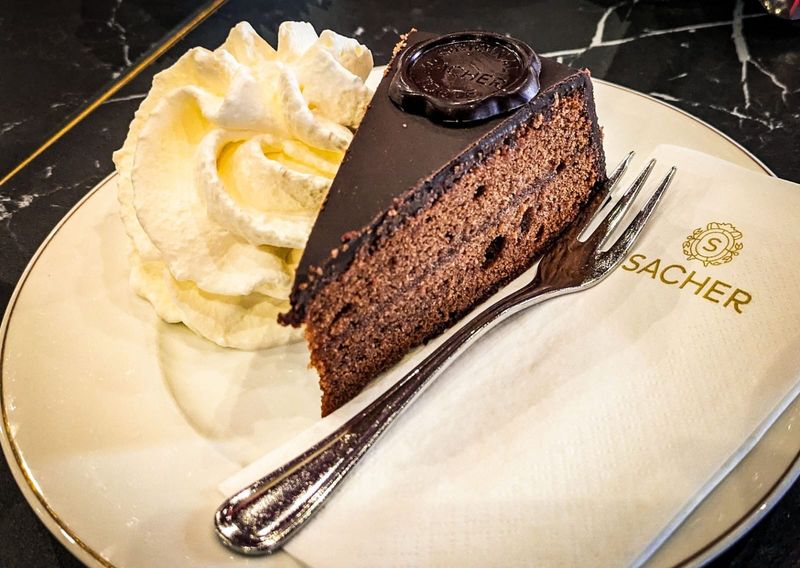
Sachertorte has a moist chocolate sponge, a thin layer of apricot jam, and a smooth dark chocolate glaze. The jam keeps the cake from drying out and adds a gentle tartness that balances the bittersweet coating.
Viennese cafes almost always serve it with a spoonful of unsweetened whipped cream, called Schlagobers. The cream softens the richness and makes each bite lighter.
Fans of the cake have debated for decades about which bakery makes the original recipe. The Hotel Sacher and the pastry shop Demel once even fought in court over the title.
Today, you can try both and pick your own favorite.
2. Paris, France: Opéra Cake
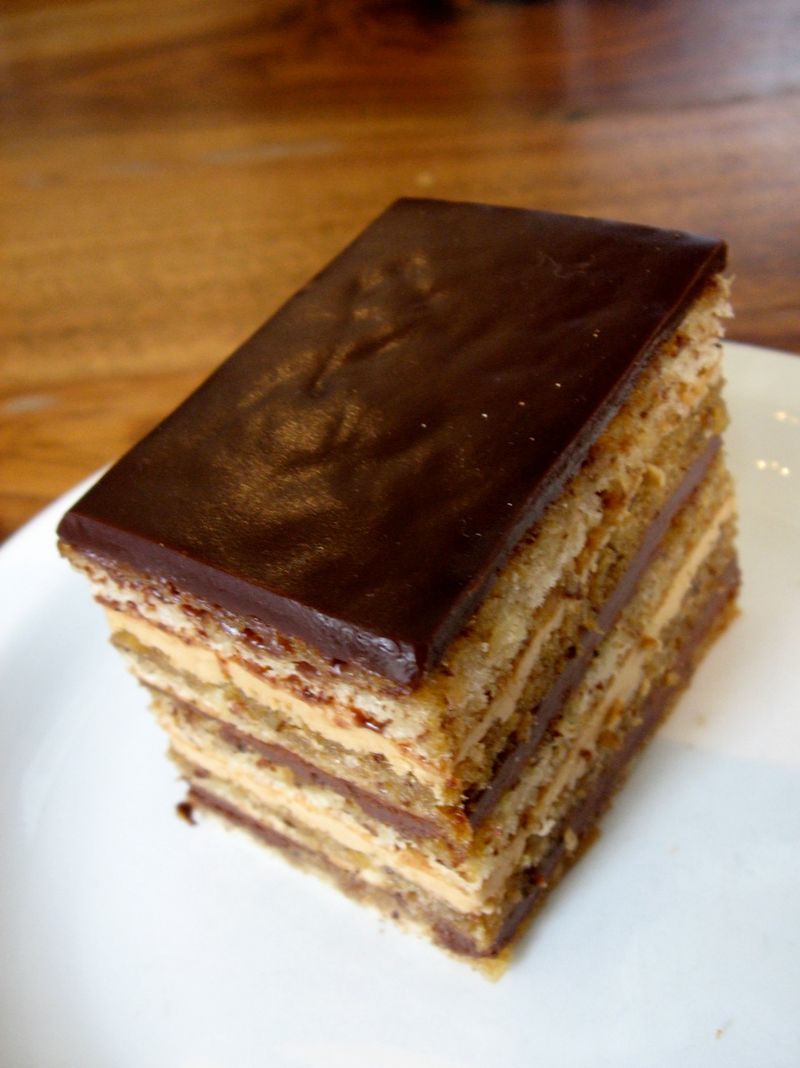
Picture a perfectly straight stack of thin layers, shining with a mirror-like chocolate top. That is the Opéra cake, a favorite in Parisian pastry shop windows.
It is built from almond sponge soaked in coffee syrup, then layered with coffee buttercream and dark chocolate ganache. Each layer is very thin, so every forkful includes all the flavors at once.
The cake is often linked to the Paris Opera, though pastry historians still disagree about who first created it. Many credit the famous house Dalloyau, which began selling it in the 1950s.
Look for a clean, sharp cut when you buy a slice, since that shows the layers were made with care. A small cup of black coffee is the classic partner, and it brings out the roasted notes in the cake.
3. London, England: Victoria Sponge Cake
Queen Victoria reportedly loved a slice of this cake with her afternoon tea, and the name has stuck ever since. It remains a staple of British tea tables.
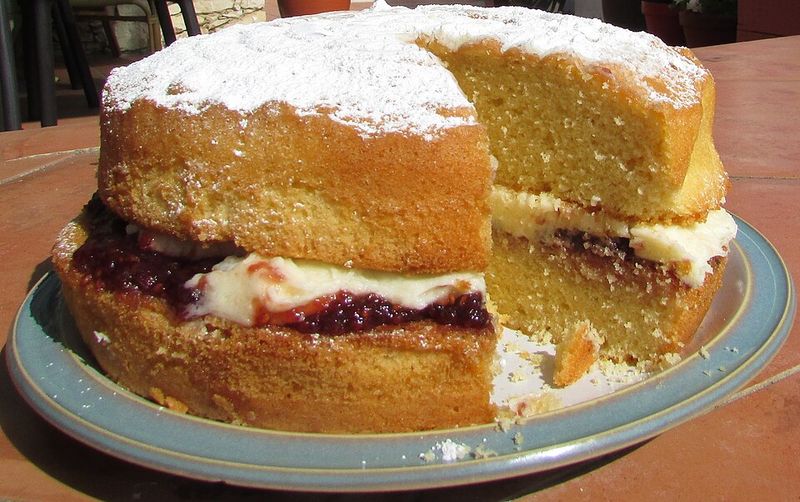
The recipe is wonderfully simple. Equal weights of butter, sugar, flour, and eggs make two light sponges, which are sandwiched with raspberry or strawberry jam and sometimes fresh cream.
Top it with just a dusting of powdered sugar, and nothing more is needed. The plain look is part of its charm.
Bakers in Britain take the cake seriously, and village fairs often hold contests to find the best one. A good sponge should be even in color, soft in texture, and slightly springy to the touch.
Try it in a London tearoom with a hot pot of black tea for the full experience.
4. Istanbul, Turkey: Ağlayan Pasta
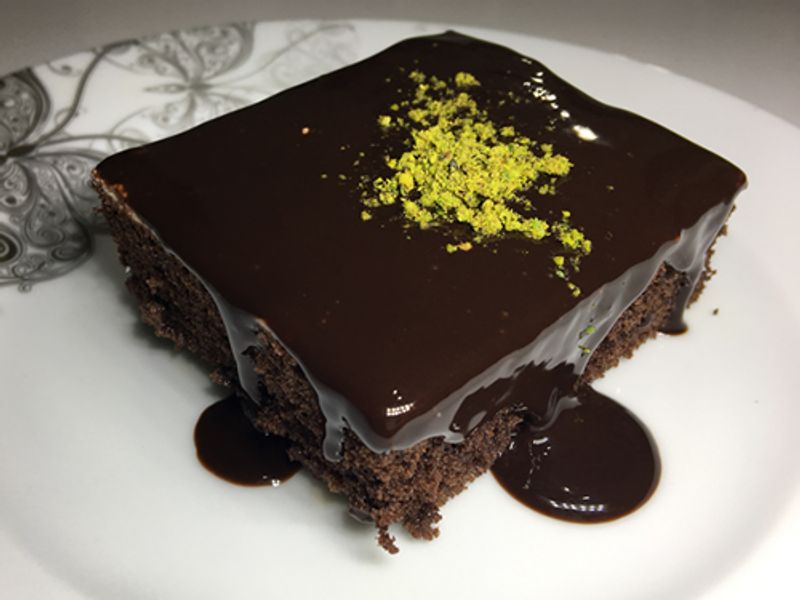
The name means crying cake, and one look at it explains why. The soft chocolate sponge is soaked in so much sauce that it seems to weep.
Bakers in Istanbul pour a warm mixture of milk, cocoa, and sugar over a freshly baked cake. The sponge drinks it up, becoming incredibly moist and fudgy.
Some versions are topped with whipped cream or a thin chocolate glaze, and a few shops add a sprinkle of crushed walnuts. The result is closer to a pudding cake than a dry sponge.
You will find it in pastry shops across the city, often served in neat squares. Pair it with a small glass of strong Turkish tea to cut through the sweetness.
It is an easy cake to make at home, which helps explain its popularity.
5. Budapest, Hungary: Dobos Torte
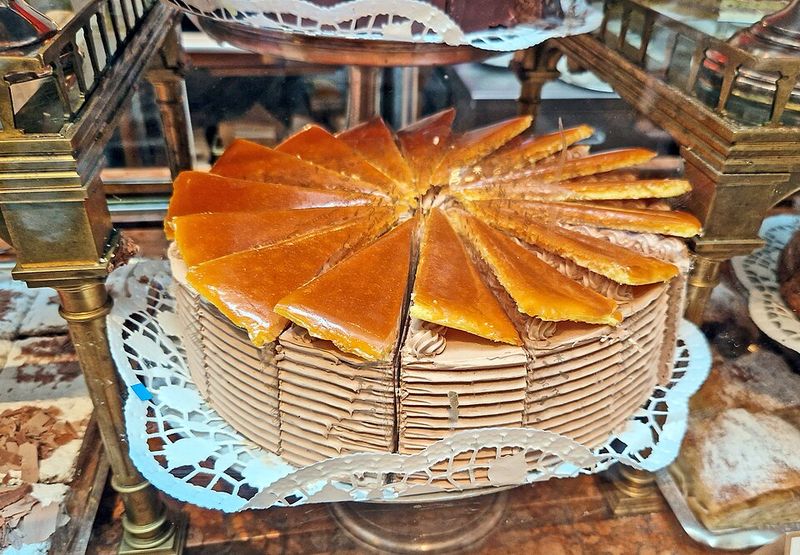
A crisp sheet of caramel sits on top like a pane of golden glass. Break through it, and you find the layers of Hungary’s most celebrated cake.
Pastry chef József C. Dobos introduced the torte in 1885 at a national exhibition in Budapest.
Emperor Franz Joseph and his wife Elisabeth were among those who tasted it.
The cake has five or six thin sponge layers, joined by smooth chocolate buttercream. The caramel topping is cut into wedges before it hardens, so it can be sliced neatly.
Dobos used the buttercream to keep the cake fresh longer, which was unusual for the time. Many traditional coffeehouses in Budapest still serve it, and the golden top makes it easy to spot in any display case.
6. Prague, Czech Republic: Medovník
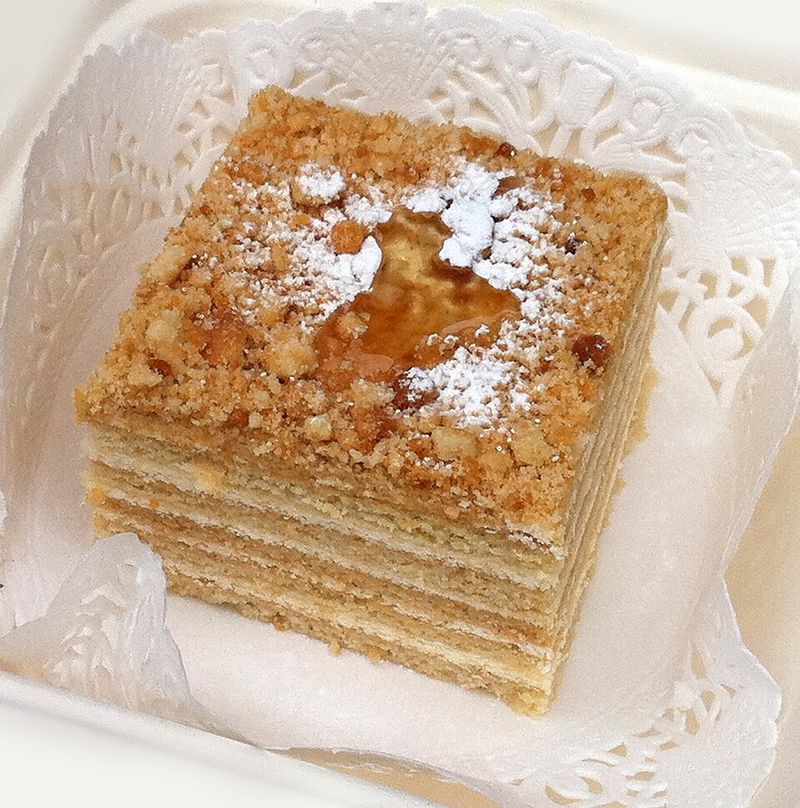
Honey is the star here, and it shows in every soft, amber layer. Medovník is a comforting cake that tastes like a warm kitchen on a cold day.
The dough is made with honey, so the thin layers bake up fragrant and slightly chewy. They are stacked with a creamy filling, often made from sour cream, condensed milk, or caramel.
After assembly, the cake rests for a day or two. This time lets the layers absorb the cream and become tender.
It is popular across Central and Eastern Europe, and Czech bakeries have their own gentle version. The top is usually covered with fine crumbs made from baked layer scraps.
Enjoy a slice with coffee after a walk across Charles Bridge.
7. Stockholm, Sweden: Prinsesstårta
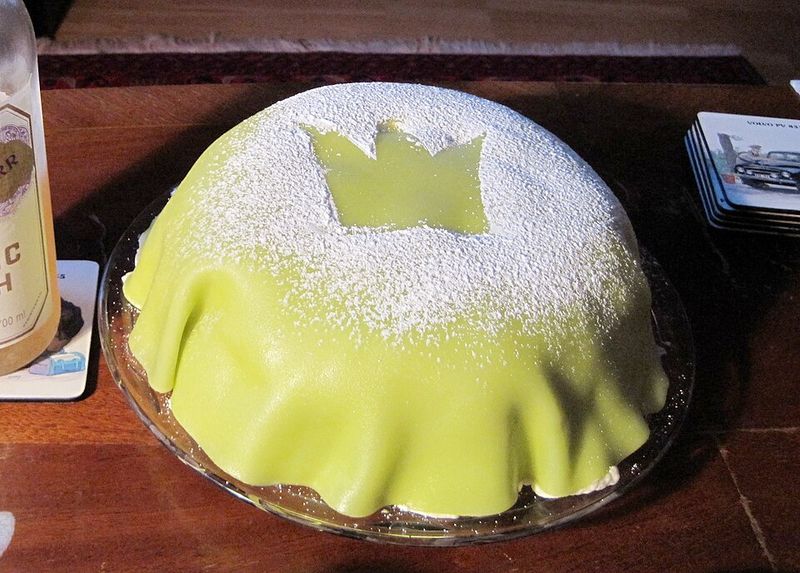
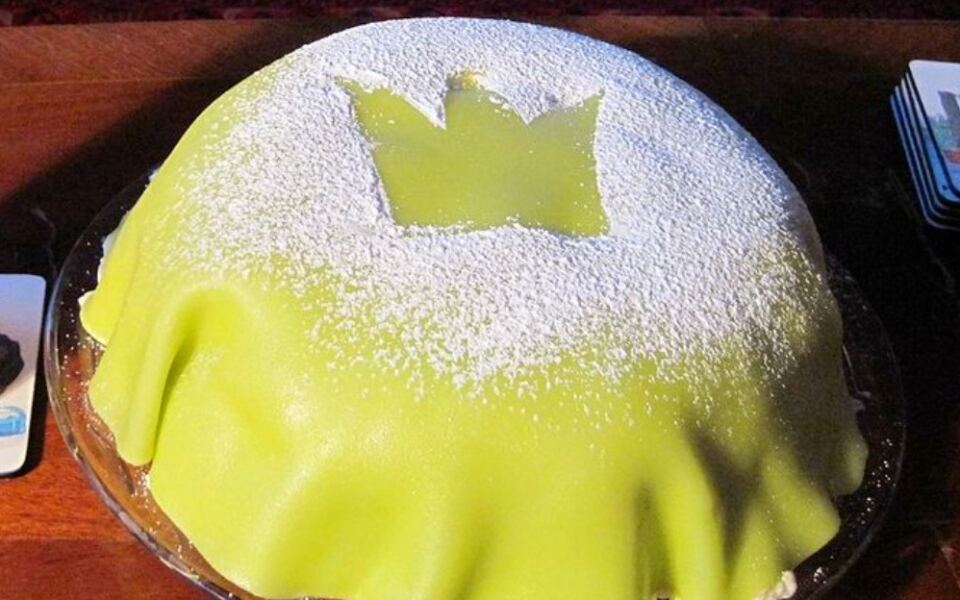
Few cakes are as easy to recognize as this soft green dome topped with a pink rose. Swedes eat it at birthdays, graduations, and on special Sundays.
Inside, you will find layers of sponge, raspberry jam, and vanilla pastry cream. A thick mound of whipped cream sits on top, and a sheet of green marzipan covers everything.
The cake grew from recipes by Jenny Åkerström, a teacher who taught the Swedish princesses to cook in the 1920s. Her cookbook gave the dessert its royal name.
Every September, Sweden marks Prinsesstårtans Dag, or Princess Cake Day, with special treats in bakeries. If you visit Stockholm, try a slice at a traditional konditori with a cup of coffee.
8. Amsterdam, Netherlands: Dutch Appeltaart
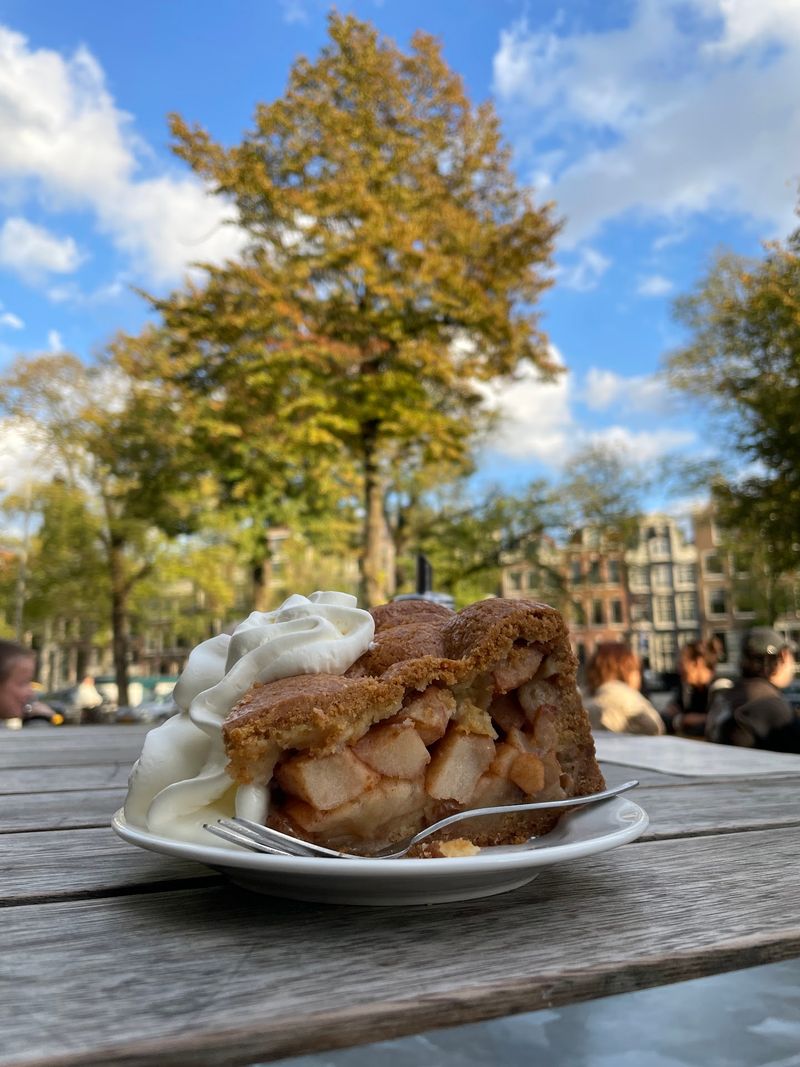
Walk into a cozy Amsterdam cafe, and a warm smell of cinnamon will likely greet you. The Dutch appeltaart is a tall, hearty cake that locals enjoy all day long.
It has a buttery crust, either closed or topped with a lattice, and a thick filling of tart apples. Raisins, lemon juice, and cinnamon give it a lively flavor.
Records of apple pie in the Netherlands go back to the fifteenth century, and a famous painting by Johannes Vermeer era artists hints at long traditions. Today, the cake is a national comfort food.
Order it with a large spoonful of whipped cream, called slagroom. A famous spot is Cafe Winkel 43, known for its generous slices near the Noordermarkt.
9. Warsaw, Poland: Wuzetka
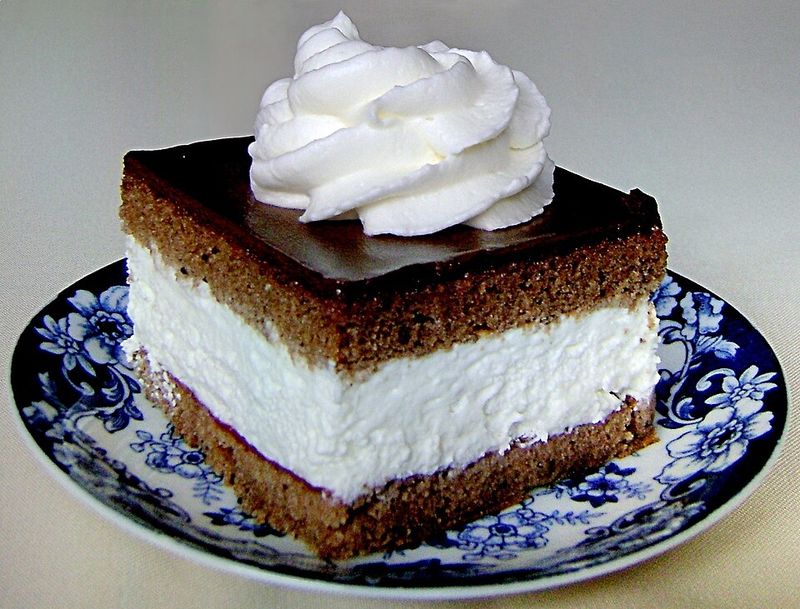
This cake is named after a road. In 1950s Warsaw, the new W-Z route linked two parts of the city, and a local pastry shop named a chocolate cake after it.
Wuzetka is made of airy cocoa sponge layers, soaked lightly with syrup and filled with whipped cream. A glossy layer of chocolate glaze covers the top.
The cream makes it lighter than many chocolate cakes, so it is easy to eat a whole slice. Some bakeries add a touch of vanilla or fruit jam to the middle.
Older residents often remember eating it in milk bars and cafes during their childhood. You can still find it in classic bakeries around the capital, where it appears next to cheesecake and poppy seed rolls.
10. Lisbon, Portugal: Bolo-Rei
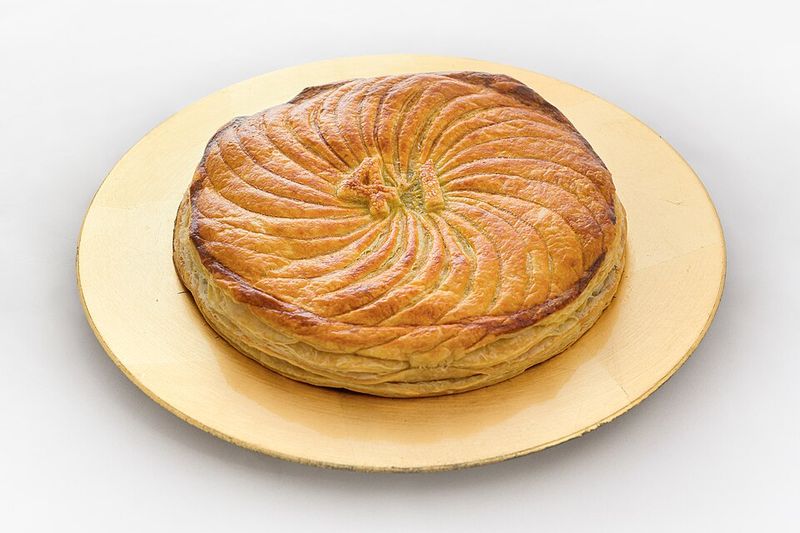
Shaped like a crown and covered in jewel-colored fruit, Bolo-Rei is the centerpiece of a Portuguese Christmas table.
The soft, sweet bread is studded with candied fruits, raisins, pine nuts, and walnuts. Its flavor often has a hint of orange and port wine.
The cake arrived in Lisbon in 1869, when a pastry maker named Baltazar Castanheiro brought the idea back from France. His shop, Confeitaria Nacional, still sells it near Praça da Figueira.
Traditionally, a dried fava bean was hidden inside, and whoever found it had to buy next year’s cake. A small toy prize was also tucked inside.
Today, the bean tradition is less common, but the cake is still a holiday favorite.
11. Copenhagen, Denmark: Drømmekage
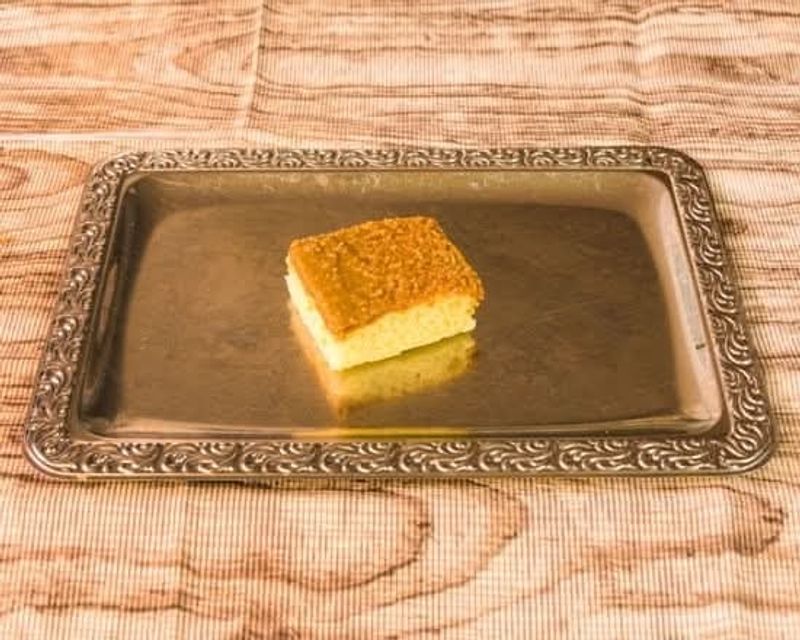
Danish for dream cake, Drømmekage lives up to its name with a soft, buttery sponge and a crunchy, toasted topping.
The topping is made from melted butter, brown sugar, milk, and shredded coconut. It is spread over the warm cake and put back in the oven until it turns golden and sticky.
Home bakers in Denmark love it because it needs simple pantry ingredients and little effort. It often appears at birthday gatherings and school bake sales.
The cake is cut into squares and tastes best slightly warm, when the coconut still has a chewy bite. In Copenhagen, you may see it in neighborhood bakeries alongside cinnamon swirls and rye bread.
A glass of cold milk makes a fine match.
12. Brussels, Belgium: Misérable Cake
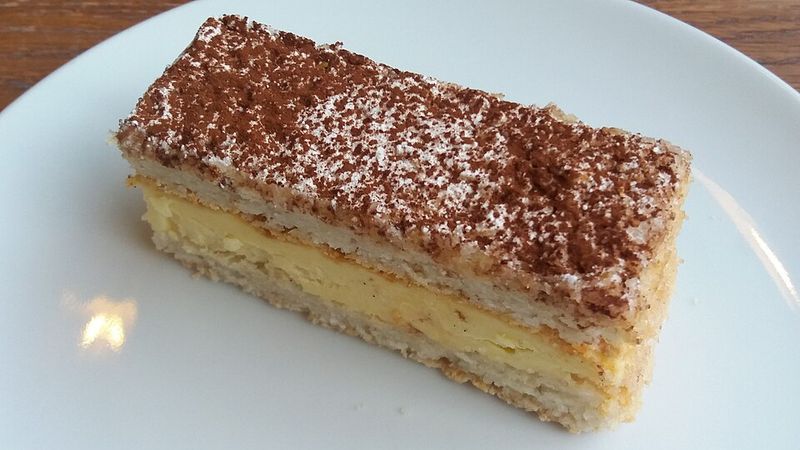
With a name meaning miserable, this cake has a surprisingly happy flavor. It is moist, nutty, and full of almond fragrance.
The recipe is thought to have started in Belgium as a frugal treat made with simple ingredients. Ground almonds, sugar, butter, and egg whites form a tender center with a slightly crisp crust.
Some bakers add a splash of almond extract or a little orange zest. The cake keeps well for several days, making it a handy snack to carry around the city.
Brussels is better known for waffles and chocolate, so this cake feels like a quiet local secret. Look for it in small family bakeries, often sold as a slice or a small loaf.
It goes well with a cup of tea or a strong espresso.
13. Berlin, Germany: Käsekuchen
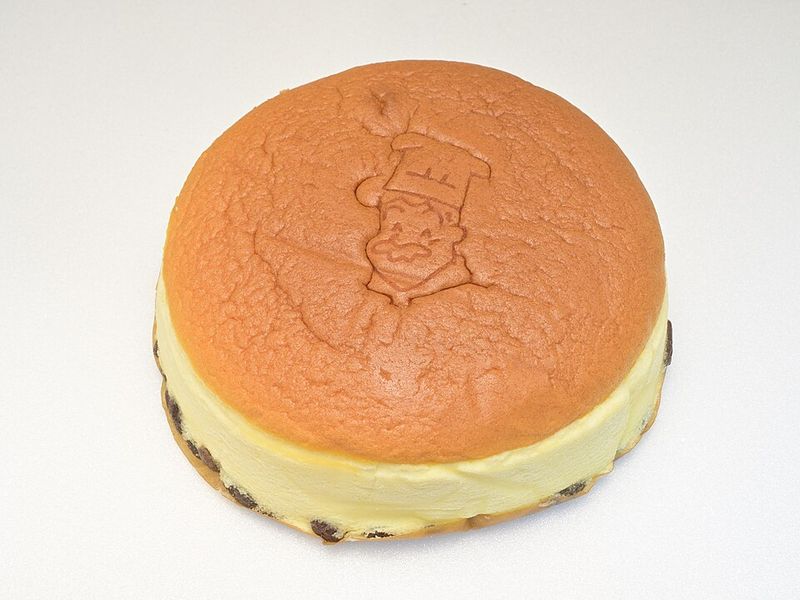
Forget the heavy cream cheese version you may know. Berlin’s Käsekuchen is lighter, tangier, and made with quark, a fresh German dairy product.
The filling is soft and slightly lemony, set in a thin shortcrust base. When baked, the top turns a warm golden brown, and it sometimes cracks slightly in the center.
Many German families serve it for Kaffee und Kuchen, the afternoon coffee break that happens around three or four o’clock. Grandmothers often have their own treasured recipes.
Some bakers add raisins or mandarin oranges, while others keep it plain. A slice is not too sweet, so it fits nicely with strong filter coffee.
Try it in a Berlin bakery or a neighborhood cafe, where the cheesecake is often baked fresh each morning.
14. Naples, Italy: Pastiera Napoletana
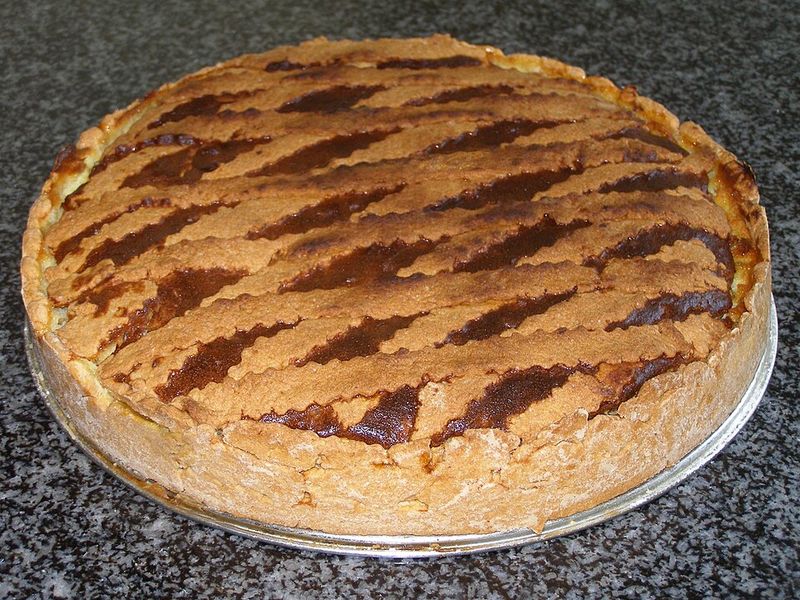
Every spring, kitchens across Naples fill with the scent of orange blossom and warm spices. That fragrance means Easter is near, and the pastiera is on its way.
This tart has a crisp pastry shell and a creamy filling made from ricotta, cooked wheat berries, eggs, and candied citrus. Orange flower water gives it a floral note.
Legend says a mermaid named Parthenope inspired the recipe, when local people offered her gifts of wheat, ricotta, eggs, flowers, and spices. Bakers say the offerings were blended into a single cake.
Many Neapolitans bake it days before Easter, since the flavors deepen as it rests. It is sliced in small wedges and enjoyed with espresso.
Pastry shops sell it in the weeks around the holiday.
15. Frankfurt, Germany: Frankfurter Kranz
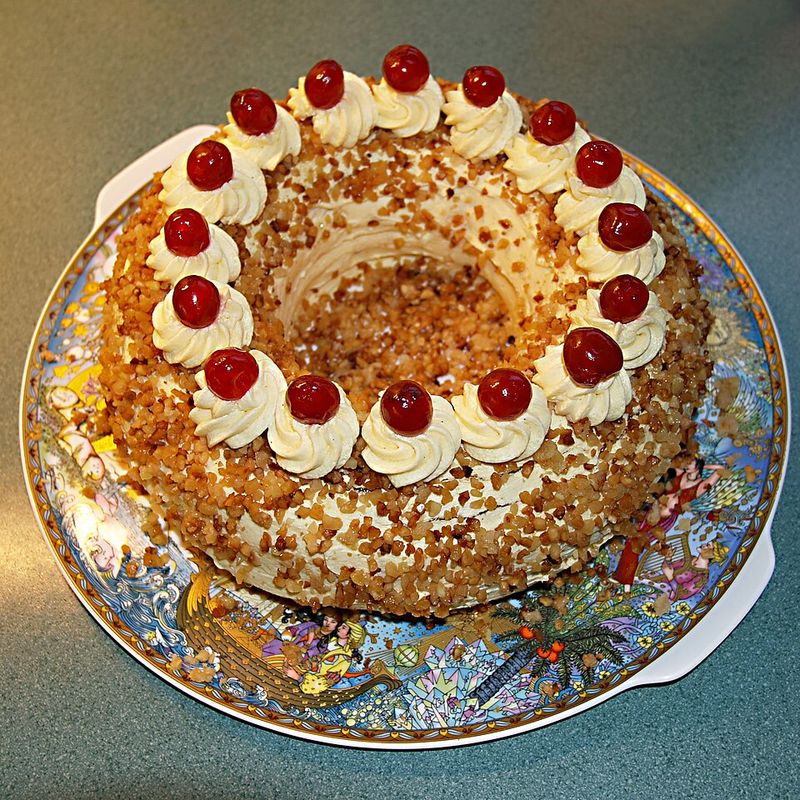
This ring-shaped cake is a showpiece, covered in golden crunch and decorated with bright cherries. It is one of Frankfurt’s best-known sweets.
The base is a light sponge, cut into layers and filled with buttercream and red jam, often cherry or currant. The outside is coated with more buttercream and a crust of caramelized nuts called krokant.
Tradition says the cake was first made in 1735, and early versions were said to represent the crown of a ruler. The ring shape stayed popular through the centuries.
After World War II, a shortage of butter and sugar made it hard to bake, but the cake returned as ingredients became available again. Today, bakeries in Frankfurt offer slices for coffee time.
The crunchy topping is a lovely contrast to the creamy middle.
Share this story