Kutná Hora looks like a storybook town, but it hides a wild past full of silver, kings, and bones. Long ago, its mines made it one of the richest cities in Europe.
Today you can walk through tunnels, climb church towers, and even meet a chapel decorated with skulls. Here are 15 places that make this city unforgettable.
St. Barbara’s Church
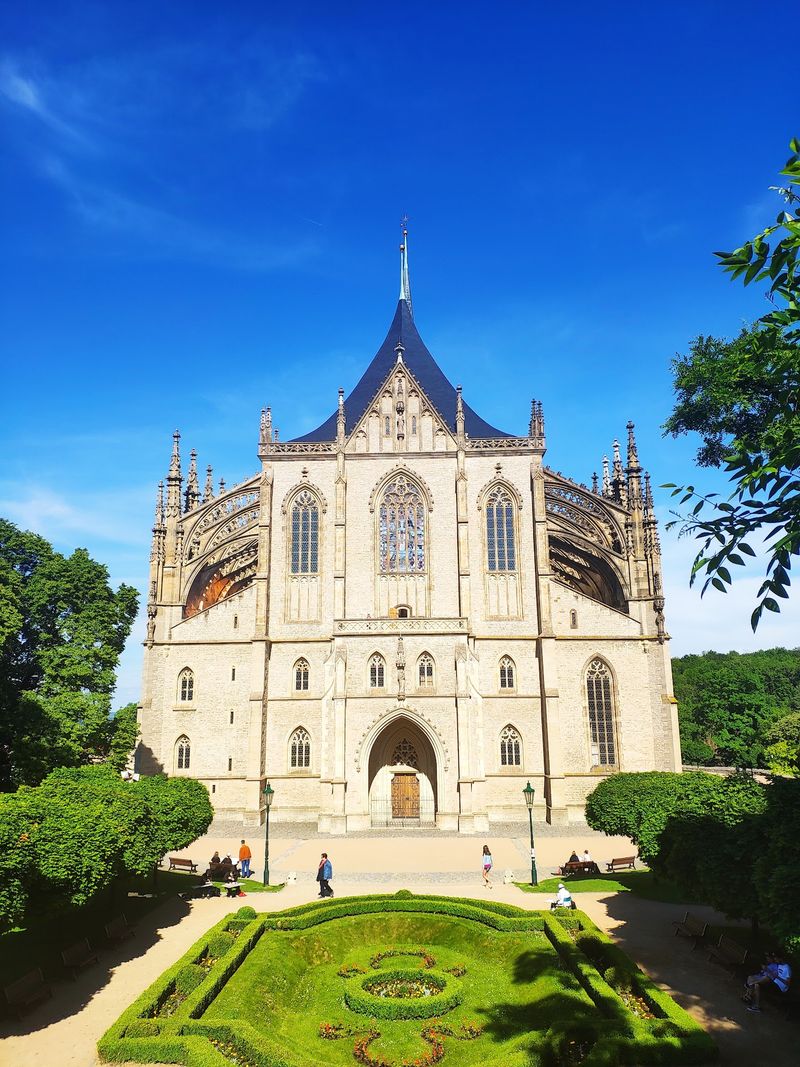
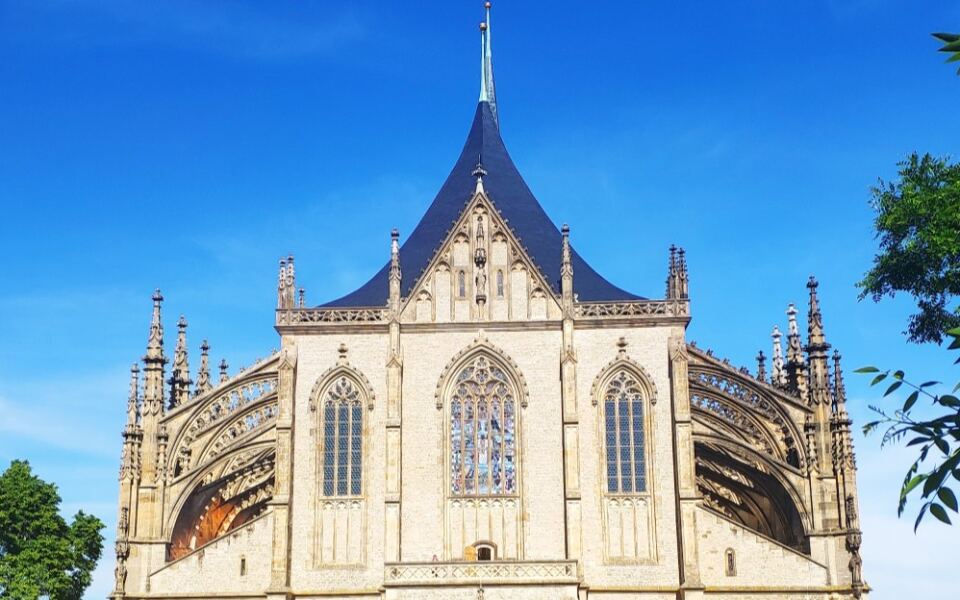
Spires that look like a circus tent crown this giant church, and that is only the start of the surprise. Miners built it to honor Saint Barbara, their patron saint, who protected them underground.
Construction began in 1388 and stopped for long stretches. Wars and money troubles slowed the work, and the church was only finished in 1905.
Step inside and look up. The ceiling is covered in stone ribs that spread like branches, and painted coats of arms show which families paid for the work.
Some wall paintings show miners at work and coin makers stamping silver. It is a rare peek at everyday medieval jobs, shown in glowing color.
Walk to the terrace outside for the best photos. The view across the valley takes in the town rooftops and the cathedral far below.
Plan about an hour for your visit, and wear comfy shoes because the streets leading up are cobbled and steep.
Sedlec Ossuary
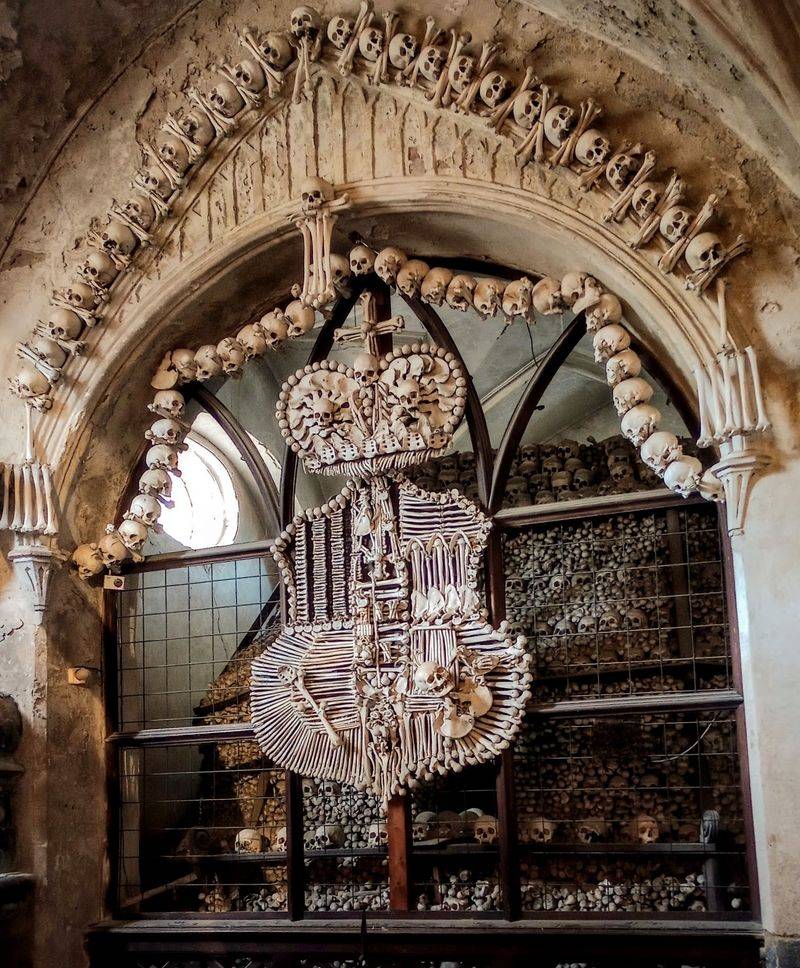
Bones hang from the ceiling like party decorations, and nobody is laughing at the joke. This small chapel holds the remains of roughly 40,000 people, arranged into art.
The story goes back to the 1200s. An abbot brought soil from Jerusalem and sprinkled it on the cemetery, so everyone wanted to be buried there.
Plague and war filled the graveyard fast. Monks stacked old bones in the chapel, and in 1870 a woodcarver named Frantisek Rint turned them into the display you see today.
The chandelier is the star. It uses every bone in the human body, at least once, and it hangs right in the middle of the room.
Look for the coat of arms made of bones, too. Go early in the morning to beat tour groups, and keep your voice low, since this is still a place of rest.
Cathedral of the Assumption of Our Lady at Sedlec
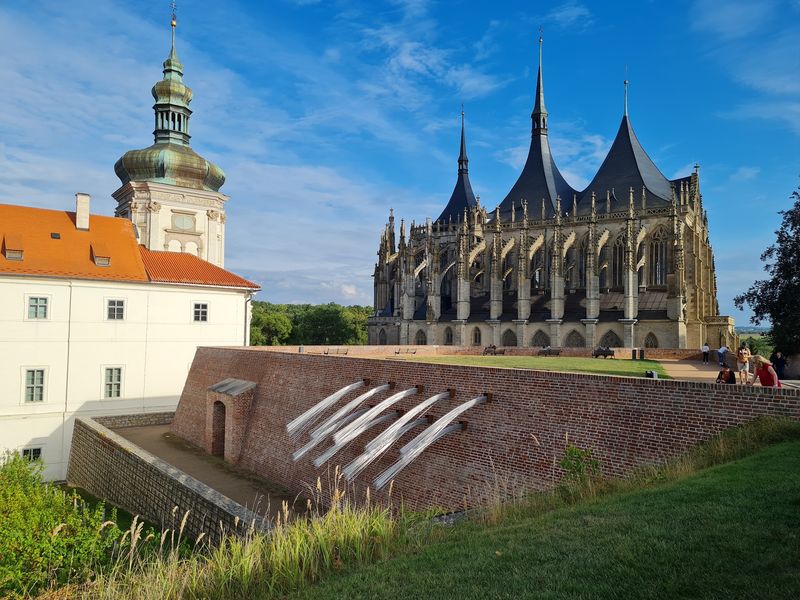
Few churches have survived a fire, a war, and a long stretch as a tobacco factory. This one did all three and still looks stunning.
It started as part of a Cistercian monastery in the 1290s. Hussite armies burned it in 1421, and it sat in ruins for almost three centuries.
Architect Jan Santini Aichel then rebuilt it in a quirky style called Baroque Gothic. He mixed pointed arches with soft curves, and the result feels airy and bright.
Inside, the pale walls and tall windows fill the space with light. It is a calm break after the crowds at the nearby ossuary.
Your ticket can often cover both places, so buy a combined one. The walk between them is short and flat, which makes it easy for kids and grandparents alike.
Czech Museum of Silver
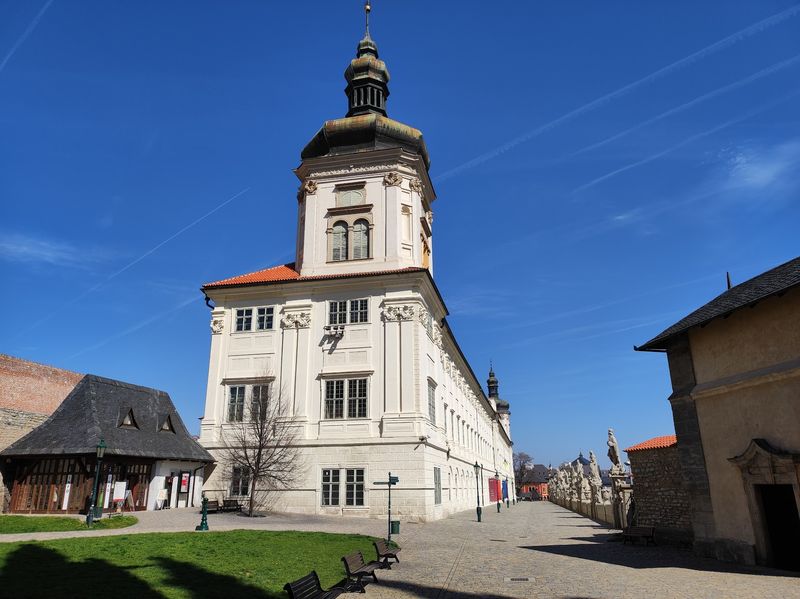
Grab a helmet, because you are going underground. The Czech Museum of Silver lets you walk through real tunnels that miners dug over 600 years ago.
The museum sits in a building called the Hrádek, a former fortress. Its rooms explain how silver turned a small village into a powerhouse that rivaled Prague.
The mine tour is the highlight. You wear a white coat and hard hat, then squeeze through narrow passages where the ceiling gets low and the air feels cool.
Guides point out old tools, drainage systems, and spots where silver veins once glittered. You can almost hear the picks tapping.
Bring a light jacket, even in July. Choose a tour length based on your energy, since the longer route has plenty of stairs.
Italian Court (Vlašský dvůr)
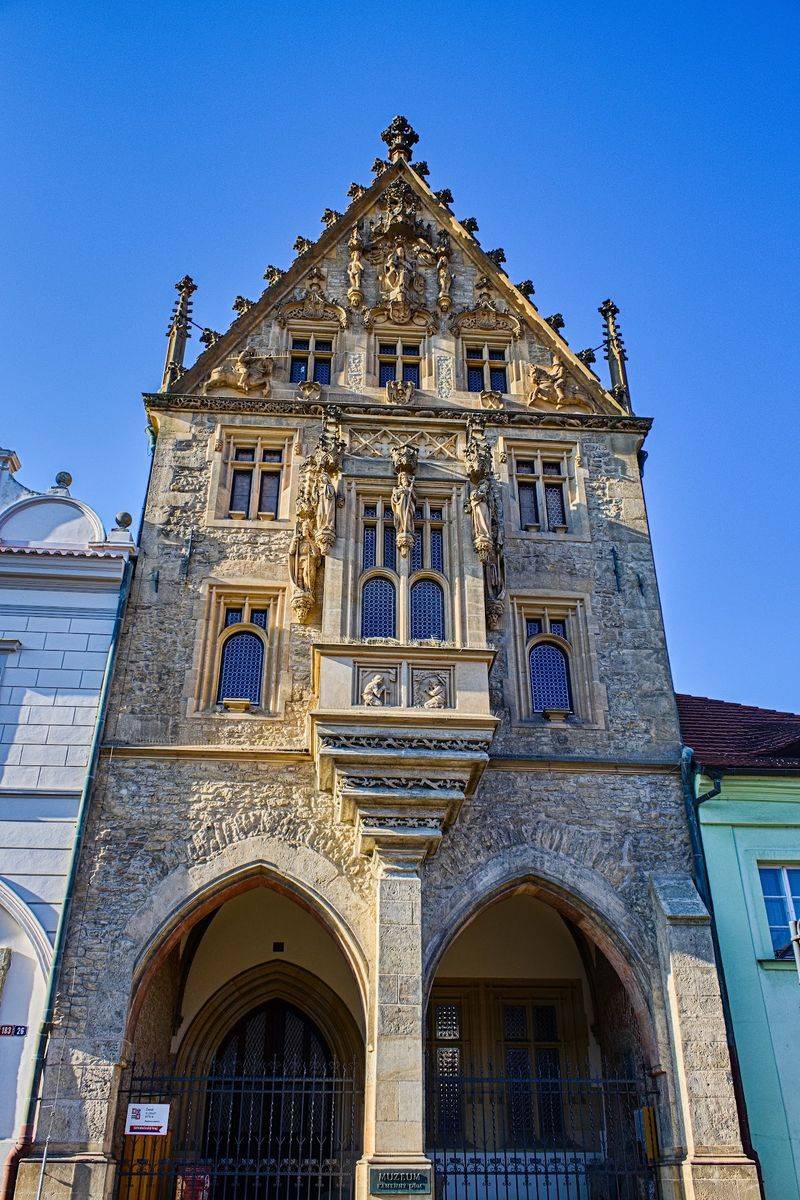
Money literally got made here. The Italian Court served as the royal mint, where silver coins called Prague groschen were stamped for much of Europe.
Italian coin makers from Florence came to run the place in the 1300s, which explains the name. King Wenceslas II hired them to bring order to the coin business.
Inside, you can see the Mint Hall, where a display explains each step of coin making. A fun hands-on moment lets visitors try striking a coin themselves.
Upstairs, the Royal Chapel glows with Art Nouveau paintings, and the Audience Hall shows off a gorgeous Gothic ceiling.
Time your visit for a guided tour if you can. The guides share juicy stories about kings who stayed here, and a few of those stories get a little dramatic.
Hrádek
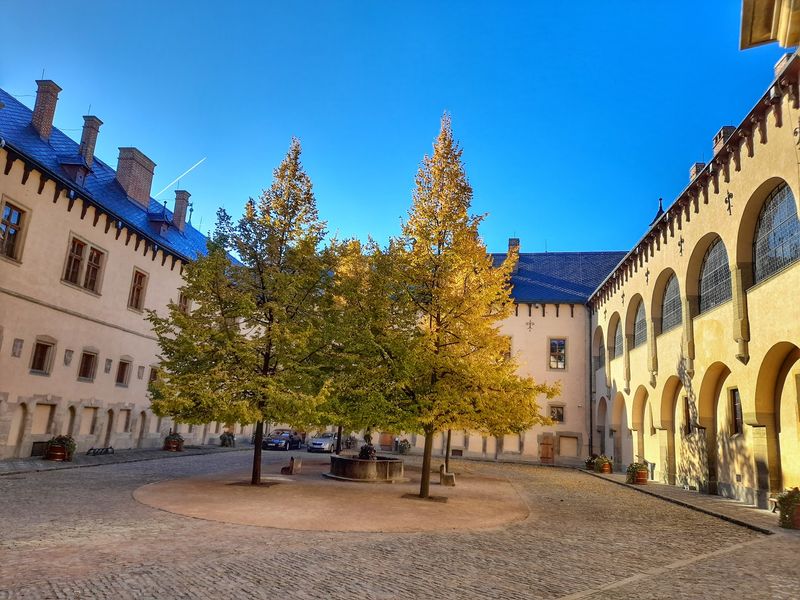
Medieval bankers once lived in this stone building, and it shows. The Hrádek began as a small fortress and later became a rich townhouse.
Today it hosts the Czech Museum of Silver, but the building itself deserves a glance. Its thick walls, narrow windows, and old courtyard tell stories of defense and wealth.
Exhibits inside include silver treasures, old coins, and models that show how the town grew. A clever display explains how miners hauled ore up from deep below.
Check the view from the upper floors. Rooftops and church towers spread out in every direction, and you can spot St. Barbara’s from here.
Visit in the morning for fewer crowds. Pair it with a nearby cafe stop for a warm pastry afterward.
Stone Fountain (Kamenná kašna)
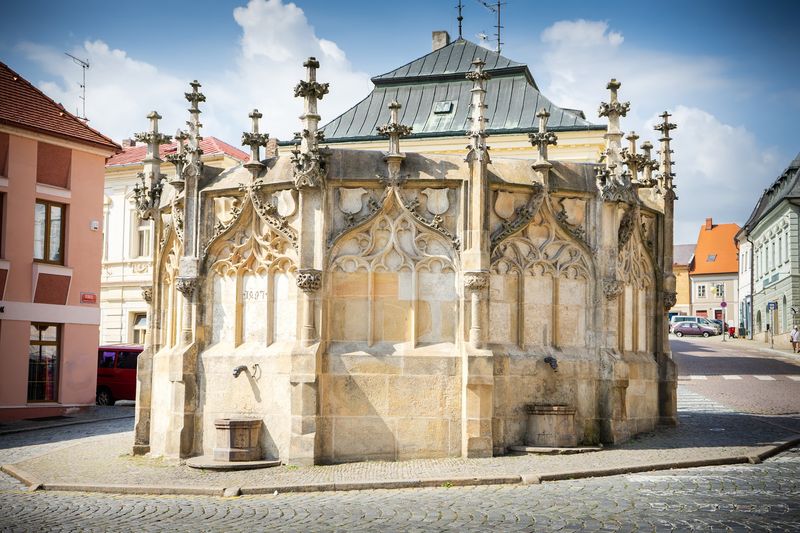
Picture a thirsty town, and a clever fountain that solved the problem. The Stone Fountain was built between 1493 and 1495 to bring fresh water to the people.
Look closely and you will see a tall, pointed stone tower rising from an eight-sided base. Its carved details are very delicate, with tiny figures and pretty patterns.
Water once flowed from a pipe network that ran underground. Experts think the design came from the same builder who worked on the great church.
Sadly, the fountain no longer works, but it still looks marvelous. It sits near Husova Street, so it is easy to spot as you wander.
Stop for a quick photo, then keep walking. The best light comes in late afternoon, when the stone turns golden.
Church of St. James
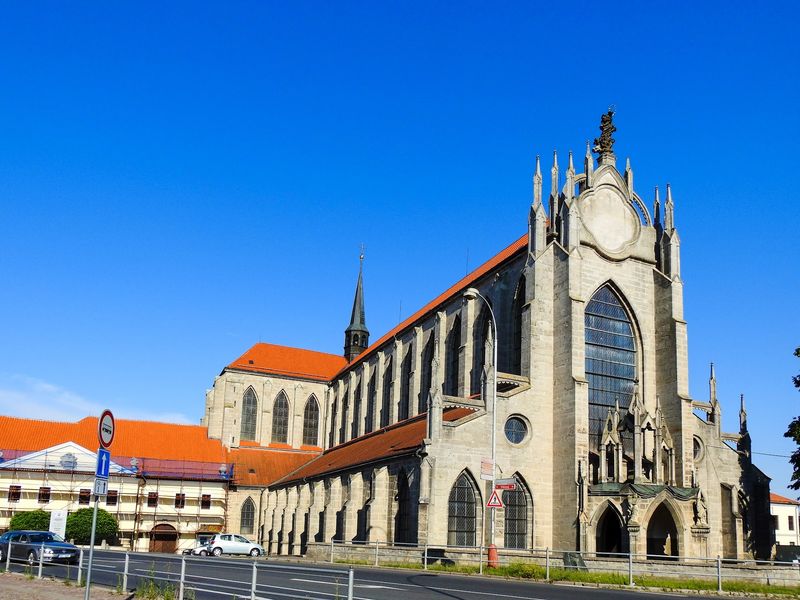
Look up, because this tower is tall enough to spot from far across town. The Church of St. James has watched over Kutná Hora since the 1300s.
Its tower reaches about 82 meters. Inside, the nave is wide and calm, with high arches and simple stone walls.
Merchants and miners filled the pews long ago, and the church shows how the city balanced wealth with faith. Stories say that the builders paid for the work with silver from nearby mines.
Visitors can sometimes climb the tower for a sweeping view. It is a good workout, but the reward is a panorama of rooftops and rolling hills.
Check opening hours before you go, because the church may close during services. A short stop fits well on the way to the Stone Fountain.
Stone House (Kamenný dům)
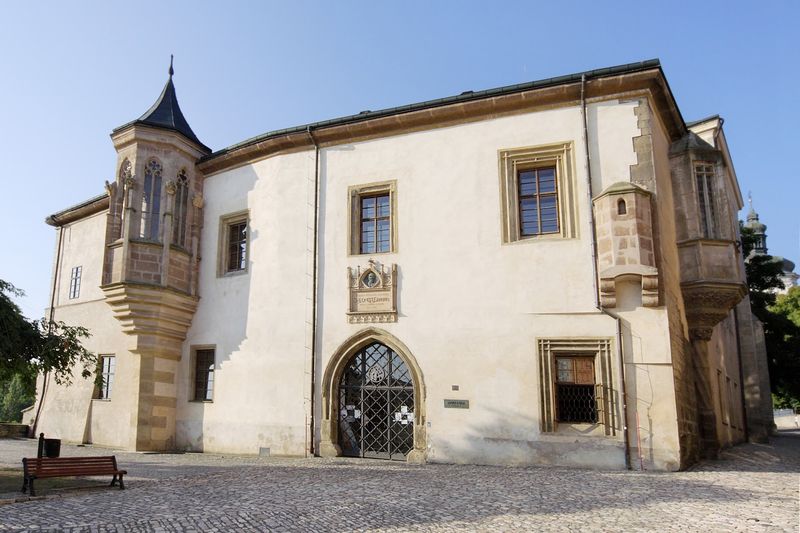
This house has more drama than a soap opera. The Stone House was built in the late 1400s by a wealthy burgher, and its carved front still shows off his taste.
Look at the windows and stone details. The Late Gothic style gives the building a sharp, elegant look, like a small palace on a town street.
Inside, the Museum of Kutná Hora shows what life was like in the city across the centuries. Rooms hold furniture, tools, paintings, and old documents.
One highlight is the collection of medieval items that tell how miners, merchants, and craftsmen lived. You can learn what people ate, wore, and traded.
Give it about an hour. If you love history, ask staff for details about the building’s secret past, because they enjoy sharing it.
Jesuit College
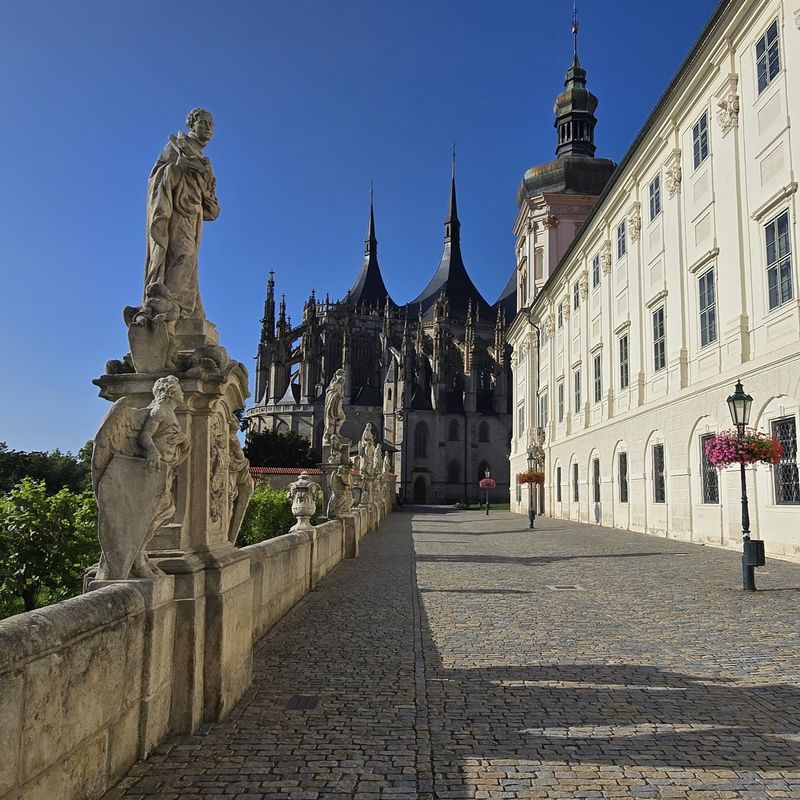
Thirteen stone saints stand guard along a terrace, and they are a lot more fun than they sound. The Jesuit College faces St. Barbara’s Church, and the two buildings seem to gaze at each other.
Jesuits built it in the late 1600s as a school. The statues on the terrace were inspired by the famous Charles Bridge in Prague.
Today the building houses the Gallery of Central Bohemia (GASK), a modern art space. You can stroll through exhibits of paintings and sculptures from today’s artists.
The terrace is free to walk. It gives a fantastic view of the church and the valley, and it is a favorite photo spot at sunset.
Bring a snack and sit on the wall for a while. Locals do the same, and it is a relaxed way to end a busy day.
Plague Column (Morový sloup)
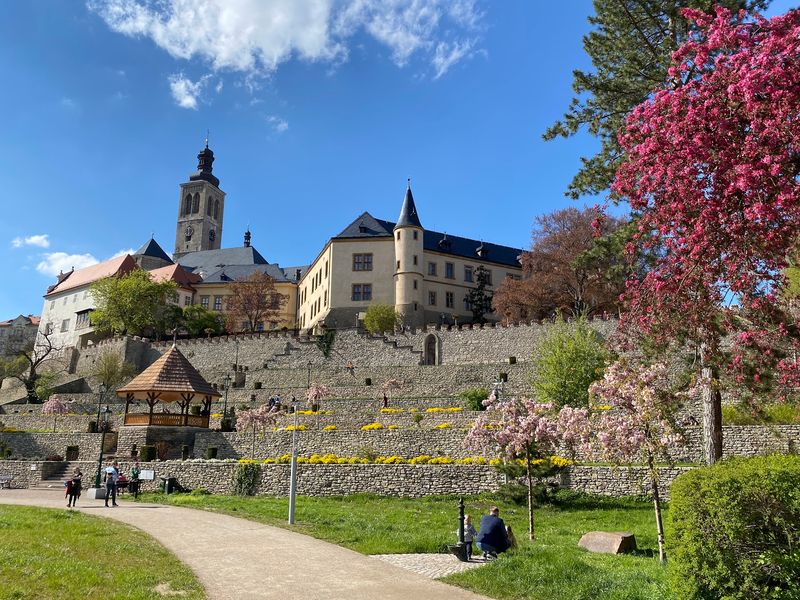
Gratitude can look pretty impressive in stone. The Plague Column was built in the early 1700s to thank heaven for ending a terrible outbreak.
Sculptors carved saints and angels into its tall shape, and each figure has a story. The column rises in the old town like a quiet reminder of hard times.
Many Czech towns have similar monuments, but this one feels especially graceful. Its curves and detailed carvings catch the light in the afternoon.
Take a moment to walk around it slowly. You will spot new faces and small details from every angle, and it makes a great photo subject.
It sits near the town center, so you can combine it with a coffee break at a nearby cafe. Early evening gives the softest glow.
Church of St. John of Nepomuk
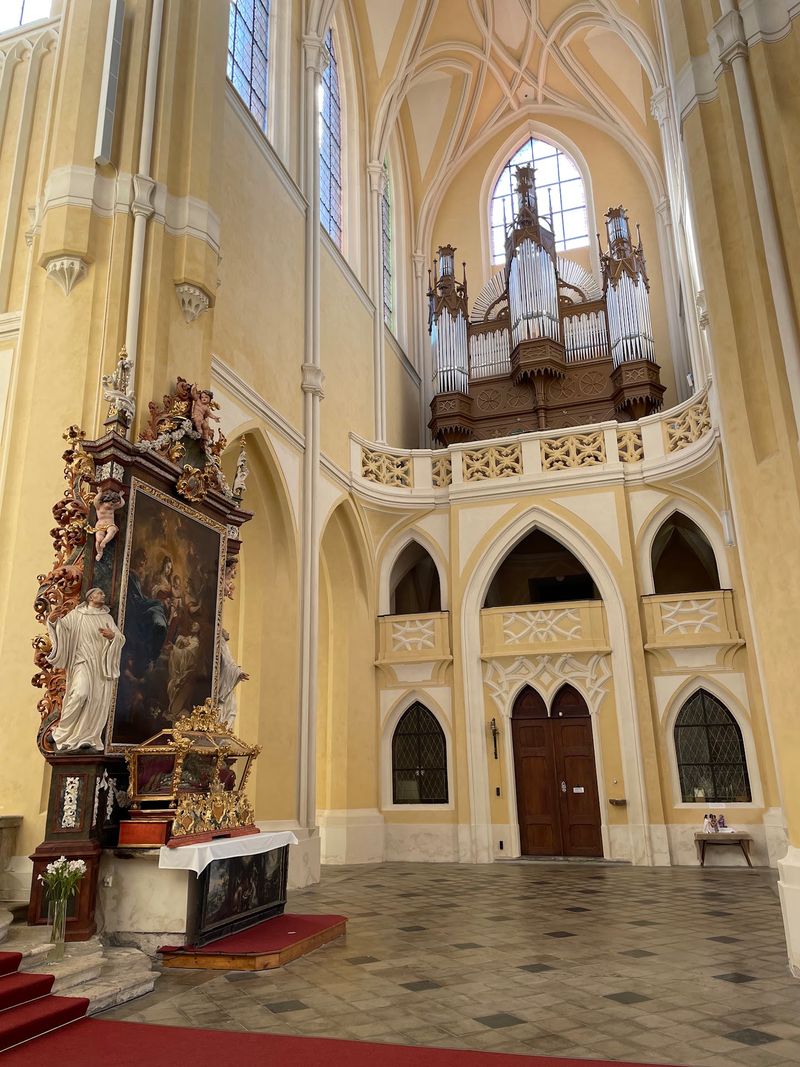
Some churches whisper, and this one practically hums. The Church of St. John of Nepomuk was designed by Santini, the same architect behind the cathedral at Sedlec.
Built in the 1700s, it follows a lovely plan with soft curves. The building honors Saint John, a priest said to keep secrets so well that he was silenced for it.
The pale walls and clean lines create a peaceful space. It is smaller than the grand churches nearby, so it feels cozy.
The setting also helps. The church sits on a gentle slope with a view over the valley, and it is rarely crowded.
Check the hours before heading out, since it may open only on certain days. It is a calm stop for architecture fans.
Church of the Assumption of Our Lady at the Náměšť
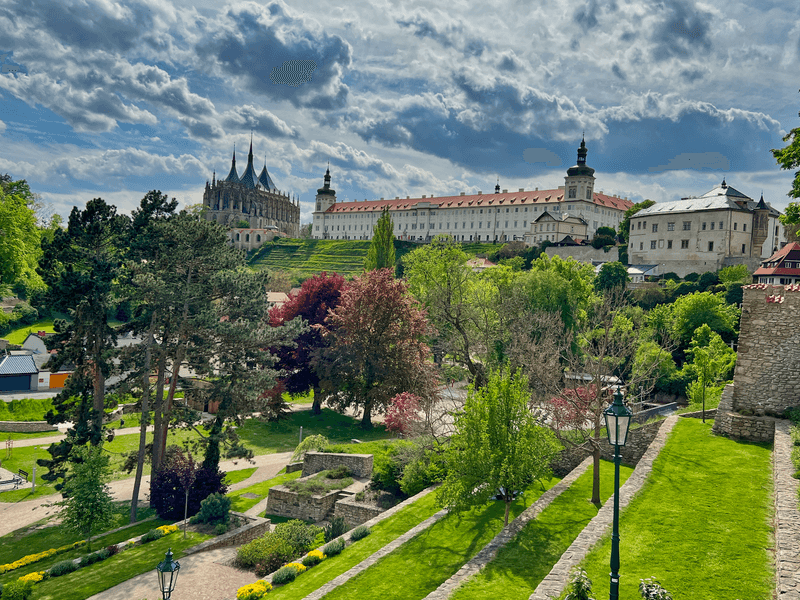
Cobblestones, pastel walls, and church towers make a stroll here feel like a movie scene. The old town of Kutná Hora is a UNESCO World Heritage site, and it rewards slow walkers.
Begin on Palackého Square, where cafes spill onto the pavement. From there, head along Barborská Street, lined with statues and good views.
Each corner shows a new detail: carved doorways, painted signs, tiny courtyards. Many buildings date back to the 1400s and 1500s.
Pop into a bakery and try a trdelník or a local pastry. Prices are lower than in Prague, so lunch will be easy on your wallet.
Give yourself at least two hours for wandering. Comfortable shoes are a must, because the stones can be uneven.
Church of St. Gotthard
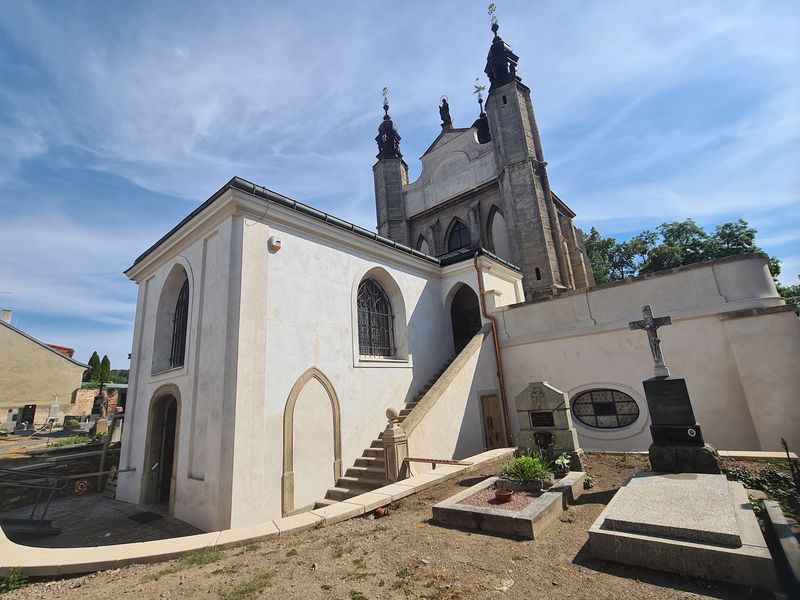
A small church with a big attitude, St. Gotthard stands just outside the busiest streets. Locals love it because it keeps its quiet charm.
It was founded in the 1300s and rebuilt several times. The slender tower and the gentle stone walls give it a friendly look.
Stories say the church once served the people of a village that grew into a part of the city. That makes it a true neighborhood landmark.
Step inside to see simple decoration and a calm atmosphere. There are fewer tourists here, so you can stand in silence for a bit.
If you like hidden spots, this is a good pick. Walk there after the big sights, and enjoy the quieter side of Kutná Hora.
Sankturinovský House
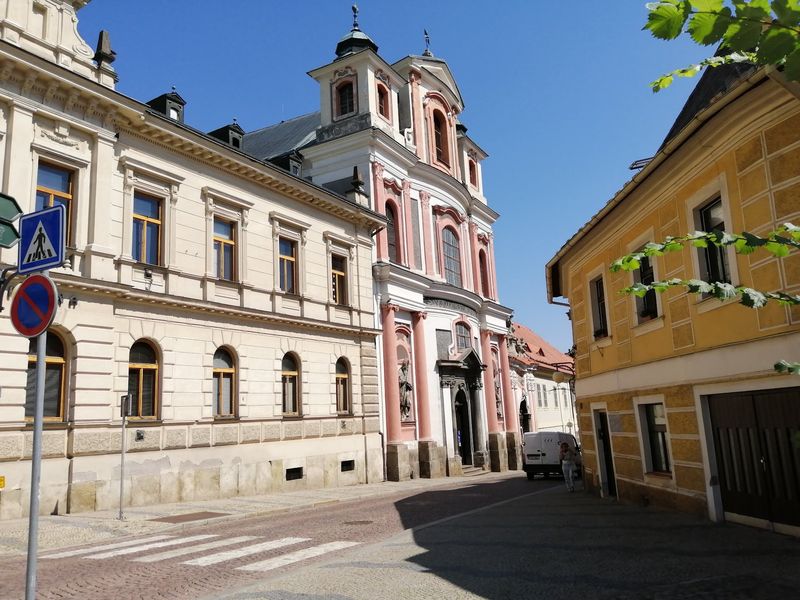
Take a good look at the walls here, because they might surprise you. The Sankturinovský House is a Renaissance building with beautiful decoration on its front.
It once belonged to a wealthy local family, and its design shows their pride. Sgraffito patterns, a type of scratched plaster art, cover parts of the facade.
Such houses reveal how rich the city grew in the silver age. Merchants and officials wanted homes that matched their status.
You can admire the building from the street while strolling to the main sights. It sits close to other landmarks, so it fits an easy walking route.
Bring a camera for detail shots. Morning light brings out the texture of the plaster, and the street is calm at that hour.
Kutná Hora Main Railway Station and Day Trip from Prague
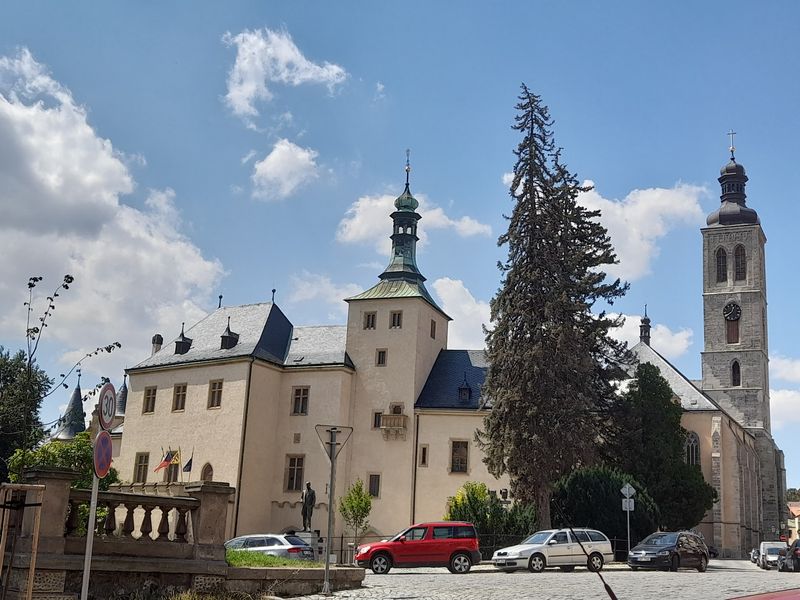
Start here, and your day gets simpler. Trains from Prague reach Kutná Hora in about an hour, which makes it one of the easiest day trips in Czechia.
The main station sits a bit outside the old center. Many visitors hop off at Kutná Hora hlavní nádraží, then take a short walk or a local bus to the Sedlec sights.
For a smoother plan, see Sedlec first. Then walk or ride toward the old town, and finish with St. Barbara’s Church and the views.
Buy return tickets in advance or on your phone, and check the timetable for the last train home. Weekend trains can be busy, so arrive early.
Pack water, a snack, and comfy shoes. With a little planning, you can see the highlights and still be back in Prague for dinner.
Share this story