Wagon wheels cut deep grooves into the Kansas prairie, and somebody had to keep the mail, the freight, and the travelers moving. That job fell to a chain of military posts scattered across the plains, each one built near a river crossing, a trail junction, or a rail line.
Some of those posts still have sandstone barracks, parade grounds, and guardhouses you can walk right up to. Others are now open grass with a sign and a good story.
Their history also includes the hard truth that these routes pushed into the homelands of Plains tribes, so the full picture is complicated. In this list, you will find nine places where you can see that history for yourself.
You will learn which ones are active Army posts, which ones became retirement homes for veterans, and which one has a fossil connection that nobody expects. Keep reading to find out where to park, what to look for, and which stop works best for a trail-themed road trip.
1. Frontier Army Museum at Fort Leavenworth, Fort Leavenworth, Kansas
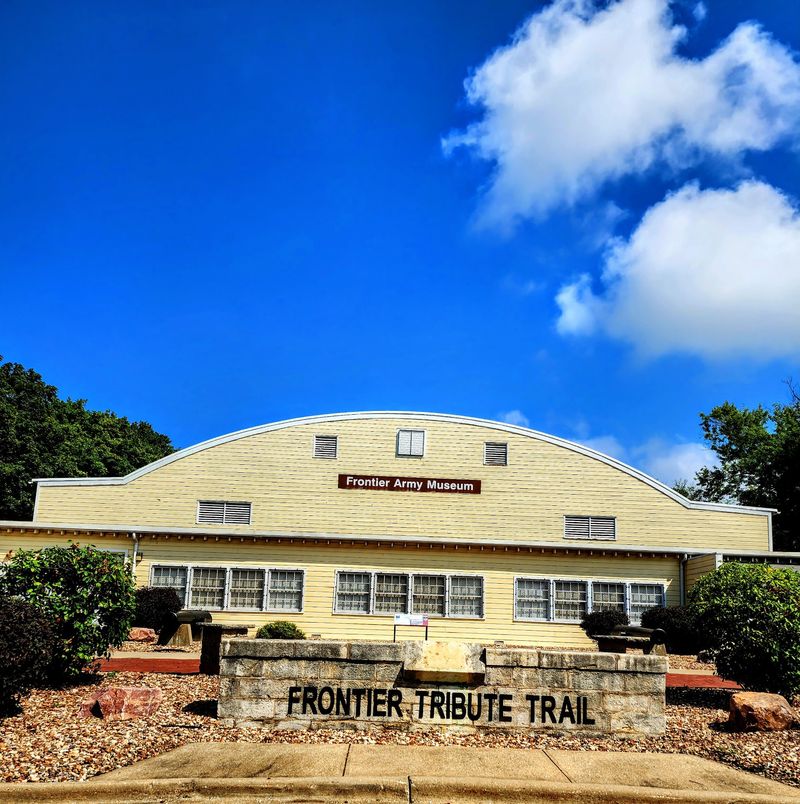
Call it the Post that opened the West, because that is the nickname Fort Leavenworth earned.
Colonel Henry Leavenworth founded it in 1827, and it is the oldest continuously operating military installation west of the Mississippi River. It is also the oldest permanent settlement in Kansas.
Troops from here protected travelers on the Santa Fe and Oregon Trails. The fort also served as a hub for military wagon trains that supplied posts farther west.
Here is a fun record to know. Even through the Civil War, the fort was never attacked.
The 10th US Cavalry, one of the original Buffalo Soldier regiments, was formed in connection with this post in 1866.
The Frontier Army Museum is the best place to start. Its collection traces Army exploration and everyday life along the growing western frontier, with exhibits on the challenges soldiers faced in the 1800s.
Because this is an active Army installation, plan ahead. Visitors need a government-issued photo ID, and an online visitor registration portal helps you get a pass before you arrive.
The fort also sits along the Frontier Military Scenic Byway, which makes the drive part of the outing.
2. US Cavalry Museum at Fort Riley, Fort Riley, Kansas
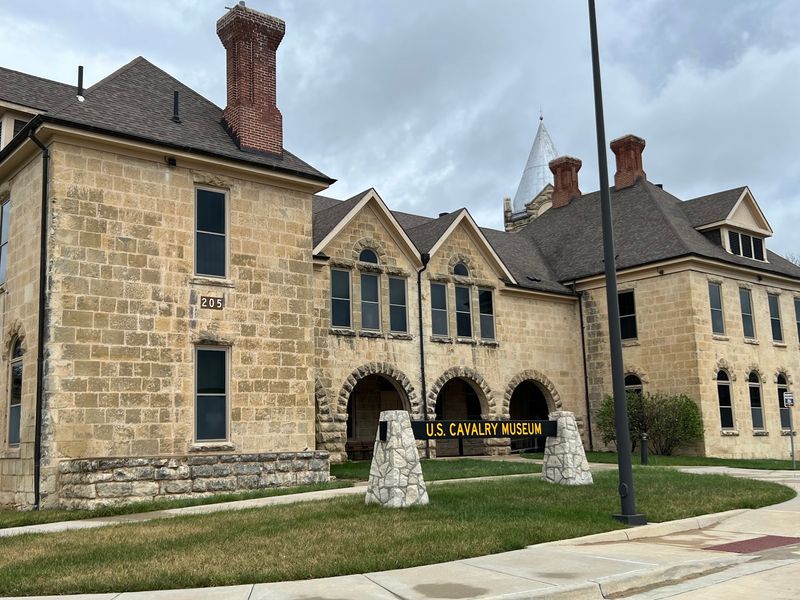
Few posts can claim a mounted color guard that still rides for special occasions.
Fort Riley started in 1853 as Camp Center, then took its name from Major General Bennett C. Riley.
The site was picked near the meeting point of the Republican and Smoky Hill rivers.
From there, troops guarded settlers and traders on the Oregon, Santa Fe, and California Trails. Soldiers were soon sent out to escort mail trains and protect the overland routes.
Native limestone was the building material of choice, and it still gives the historic district its look.
Fort Riley remains an active Army post and is home to the 1st Infantry Division.
The US Cavalry Museum sits in the historic main post district. Its limestone building went up in 1855 as a hospital, and it became the Cavalry Museum home in 1957.
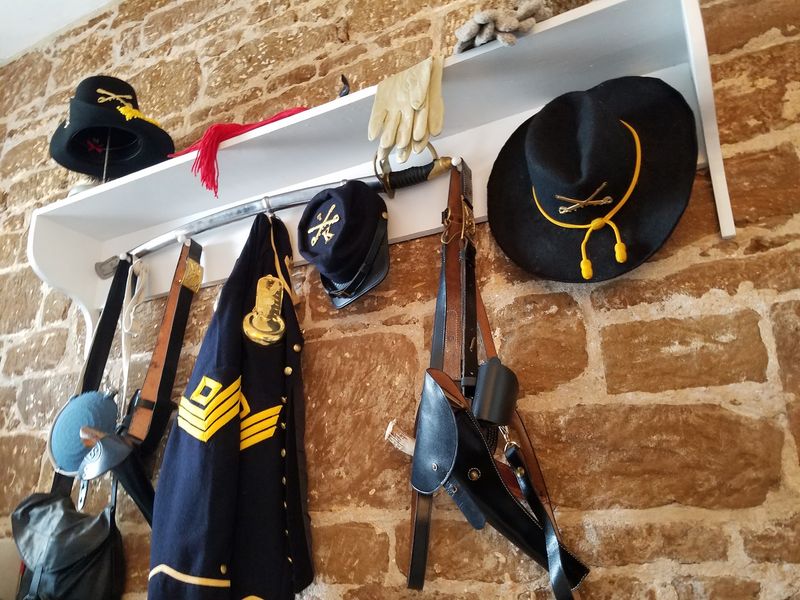
Exhibits follow cavalry history from the Revolutionary War to its inactivation in 1950. You will find artifacts, uniforms, and artwork, plus stories of the Buffalo Soldiers of the 9th and 10th Cavalry and Teddy Roosevelt’s Rough Riders.
Hours are limited each week, so check before you go.
3. Fort Harker Museum, Kanopolis, Kansas
Finding Fort Harker is a bit like a scavenger hunt, and that is half the fun.
The post began in June 1864 as Fort Ellsworth near the Smoky Hill River. It protected traders and travelers on the Santa Fe and Smoky Hill Trails, and it became Fort Harker in November 1866.
In 1867, the fort moved about a mile northeast to be closer to the end of the Union Pacific Railroad, Eastern Division. That move turned it into a major supply point for posts farther west.
Goods arrived by rail and then rolled on by wagon. Soldiers guarded railroad crews, stagecoaches, and wagon trains.
The railroad kept pushing west, and the army left in October 1872.
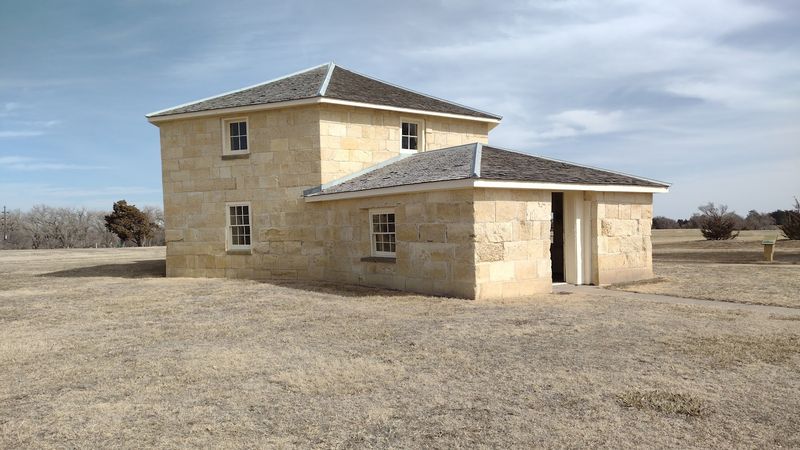
Today the Ellsworth County Historical Society runs the museum complex. Four original 1867 sandstone buildings survive: the guardhouse, the commanding officer’s quarters, and two junior officers’ quarters.
Look closely at how they sit. They follow magnetic north, so they angle slightly against the modern town grid.
The guardhouse holds the museum. The relocated 1905 Kanopolis Union Pacific Depot nearby covers local history, including salt mines.
4. Fort Hays State Historic Site, Hays, Kansas
Flood waters once forced this fort to pack up and move, which is not the usual reason for a relocation.
Fort Hays started as Fort Fletcher in October 1865. Its mission was to guard Butterfield Overland Despatch stage and freight traffic on the Smoky Hill Trail toward Denver.
It became Fort Hays in November 1866, named for Brigadier General Alexander Hays. After a big flood in June 1867, the post moved about 15 miles northwest, next to the planned Union Pacific crossing of Big Creek.
The new spot made it a key supply depot for Forts Larned and Dodge, and a protector of railroad workers.
Visitors can see four original buildings: the 1867 blockhouse, the 1872 guardhouse, and two frame officers’ quarters. A visitor center adds exhibits on military life, Plains Indian history, weapons, and clothing.
Soldiers of the 9th and 10th Cavalry, the Buffalo Soldiers, served here, as did the 7th Cavalry under General George Armstrong Custer.
Metal silhouettes and signs across the grounds tell the stories of the people who lived and worked here. The fort closed in 1889.
5. Fort Larned National Historic Site, Larned, Kansas
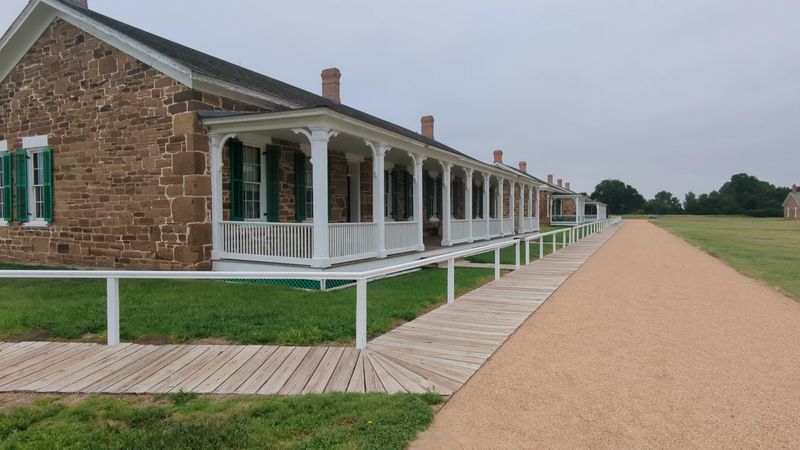
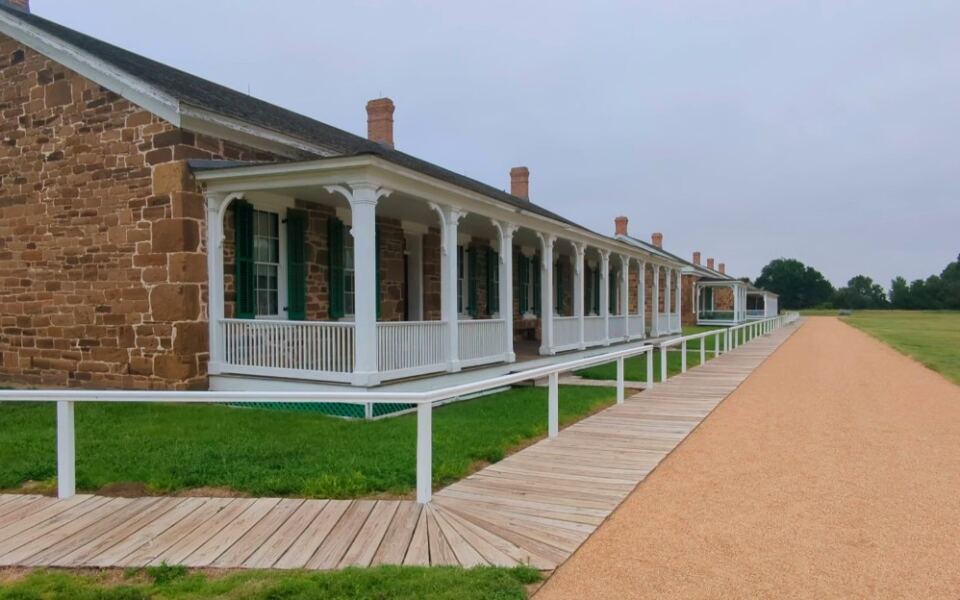
Nine sandstone buildings still stand here, which is a pretty big deal for a frontier post.
The fort began in 1859 as the Camp on Pawnee Fork and became Fort Larned in May 1860. Its job was to protect mail coaches, freight wagons, and other travelers on the Santa Fe Trail, the trade road linking Missouri and Santa Fe.
Between 1866 and 1868, the temporary buildings were replaced with the sandstone ones visitors see now. That makes this one of the best preserved military posts from the Indian Wars era in Kansas.
The post also served as an Indian Agency. Staff handed out annuities that had been promised in treaties, so the fort was part diplomacy office and part army base.
The 10th US Cavalry, made up of African American soldiers known as Buffalo Soldiers, was stationed here from 1867 to 1869. The fort closed in 1878 after the railroad made the trail unnecessary.
Plan a side trip to the detached site about 5.5 miles away on gravel roads. There you can see actual wagon ruts left by generations of Santa Fe Trail traffic, and the grooves are surprisingly easy to spot.
6. Fort Wallace Museum, Wallace, Kansas
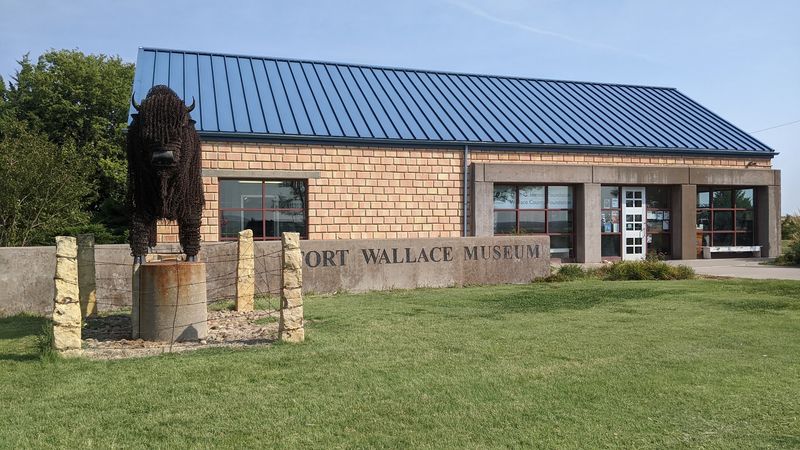
A plesiosaur cast stands inside a frontier fort museum, and yes, the fort’s surgeon found the fossil in 1867.
Fort Wallace began in June 1865 as Camp Pond Creek, a home station for the Butterfield Overland Despatch stage line. Travelers got food, shelter, and fresh horses there.
It marked the westernmost point on the Smoky Hill Trail between the Missouri River and Denver. The post was renamed in 1866 for General W.H.L.
Wallace.
Its soldiers guarded trail travelers and Kansas Pacific Railway crews. The area was contested, since Cheyenne, Kiowa, and Arapaho people defended hunting grounds against growing westward traffic.
Frontier figures such as Wild Bill Hickok and William F. Cody are tied to the region’s story.
The original fort buildings are gone, but the museum tells the tale of the trail, Plains tribes, homesteaders, and soldiers. You can climb aboard a stagecoach and see lifelike figures plus that 40-foot plesiosaur cast.
The grounds hold relocated buildings, including the 1865 Pond Creek Stagecoach Building, one of only two surviving BOD stations. The fort cemetery is nearby too.
7. Kansas Soldiers’ Home at Fort Dodge, Fort Dodge, Kansas
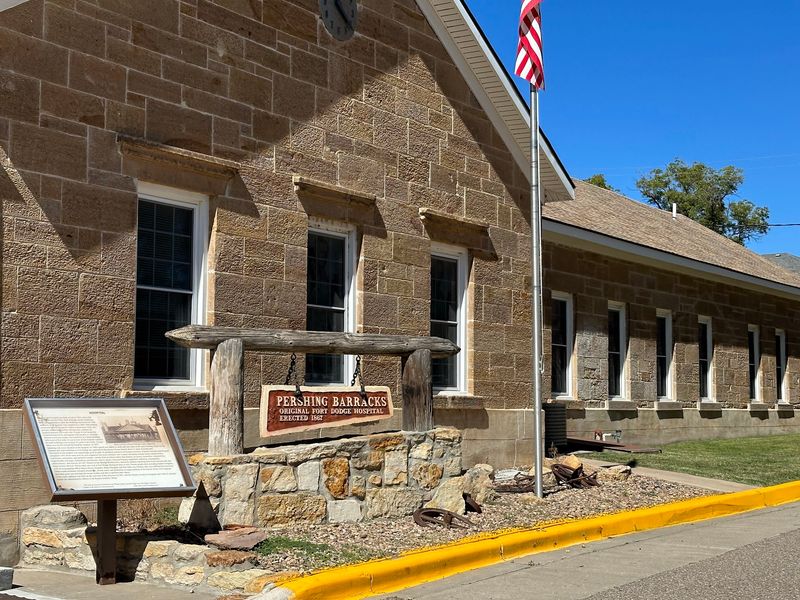
Some old forts fade away, but this one found a second career helping veterans.
The army set up Fort Dodge in 1865 beside the Santa Fe Trail. It gave traders and bison hunters a supply and rest stop in southwestern Kansas.
The post sits about five miles east of Dodge City and is the oldest permanent settlement in that part of the state. Early buildings were sod and adobe, with wooden ones added in 1866.
The army left in 1882.
In 1889, President Grover Cleveland signed a bill giving the fort to the State of Kansas. It opened as the Kansas Soldiers’ Home in 1890.
It still works as a retirement community and nursing facility for Kansas veterans. Many original fort buildings are in daily use.
Early residents included veterans of the Mexican-American War, the Indian Campaigns, and both sides of the Civil War. African American veterans were admitted later.
Visitors can stop at the historic library and small museum, open daily for limited hours. A self-guided walking tour then leads past the surviving original buildings.
8. Fort Zarah State Park, Great Bend, Kansas
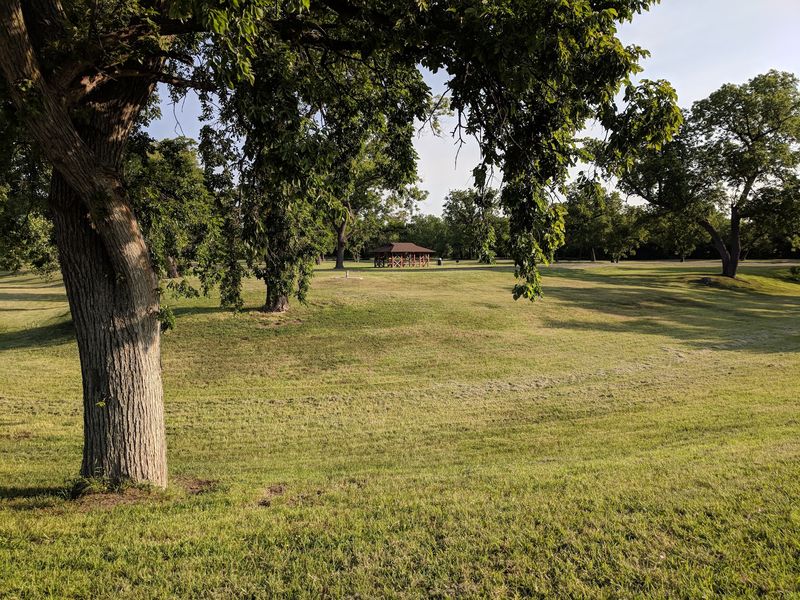
This fort is a no-show on purpose, and the story is the main attraction.
It began in 1864 as Camp Dunlap near Walnut Creek, at a busy crossing of the Santa Fe Trail and the Smoky Hill Military Road. By July, it was Fort Zarah, named for General Curtis’s son.
The spot made sense because of rising tension between traders and Indigenous communities. It was also close to the Rath Ranch Trading Post.
The first fort was abandoned in April 1866. By June, a second and sturdier one went up about half a mile northwest.
It had thick Dakota sandstone walls and hexagonal two-story towers with rifle ports.
Even so, the army left in December 1869, since the railroad was replacing trail traffic. The buildings were taken apart afterward.
At the state park, you will find open prairie and historical markers instead of standing structures. Archaeologists have uncovered remains, which hint at what the post once looked like.
Bring some imagination. Picture the wagon trains rolling toward Walnut Creek, one of the chain of posts built to protect Santa Fe Trail commerce.
9. Fort Scott National Historic Site, Fort Scott, Kansas
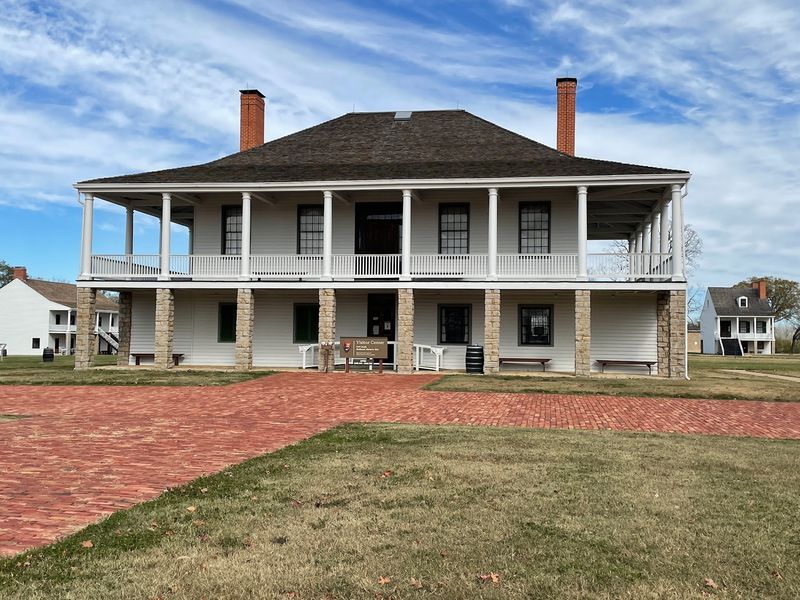
Ride 2,200 miles in 99 days, and you will understand what the dragoons from Fort Scott did in 1845.
Those mounted soldiers patrolled the Oregon Trail as far west as South Pass, then returned by the Santa Fe Trail. The fort opened in 1842 along the Permanent Indian Frontier to prevent conflict between relocated Native tribes and white settlers.
Dragoons escorted travelers and made long patrols on both trails. In 1843 they patrolled against attacks from Texans, and in 1844 they visited Pawnee camps to encourage peace.
The fort was a peacekeeping post and never came under direct attack. It had no walls or stockade, which gave soldiers wide views of the open prairie.
The army left in 1853 and sold the buildings, which became the start of the city. During the Civil War, the army returned and used it as a supply depot, hospital, and training ground.
Today the National Park Service preserves 20 structures around the parade ground. Eleven are original, and nine are reconstructions on original foundations.
Pick up a brochure for a self-guided tour, watch the 23-minute film, or try the cell phone tour. Guided tours and living history programs are offered too.
Share this story