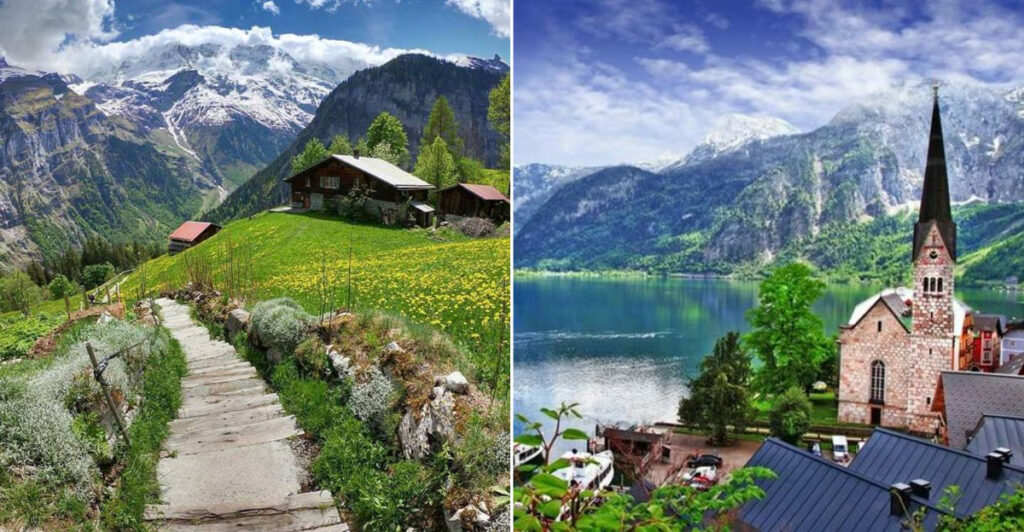
Some places look so beautiful that your first instinct is to wonder if the photo has been edited. Mountain villages have a way of doing that, sitting at the edge of cliffs, beside glacial lakes, or above winding valleys in ways that feel too dramatic to be real.
From the Swiss Alps to the rice terraces of Vietnam, these villages offer scenery that sticks with you long after you leave. Whether you are planning a trip or just building your dream travel list, these 15 spots are worth knowing about.
Hallstatt, Austria
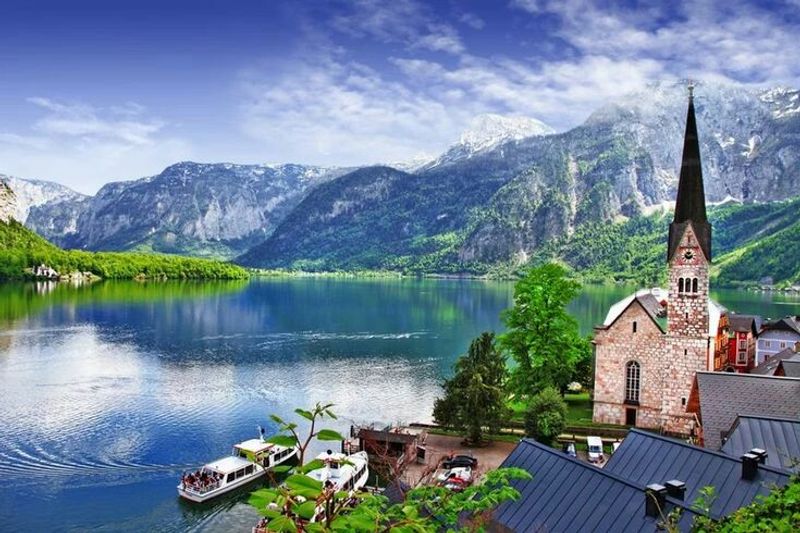
Few villages in the world stop people in their tracks the way Hallstatt does. Sitting between Lake Hallstatt and the Dachstein mountains, this Austrian village looks almost painted onto the landscape.
Its lakeside houses, church tower, and steep alpine backdrop create a scene that photographers and travelers keep returning to year after year.
Hallstatt is part of the Hallstatt-Dachstein Salzkammergut UNESCO World Heritage region, which adds historical weight to its visual appeal. The village has one of the oldest salt mines in the world, and that mining history shaped everything from its economy to its architecture over thousands of years.
The village center is compact and walkable, which makes exploring it on foot easy and enjoyable. Because it draws large crowds, visiting early in the morning or during the off-season gives you a calmer, more personal experience.
Current visitor details are available through local tourism offices for those planning a trip.
Wengen, Switzerland
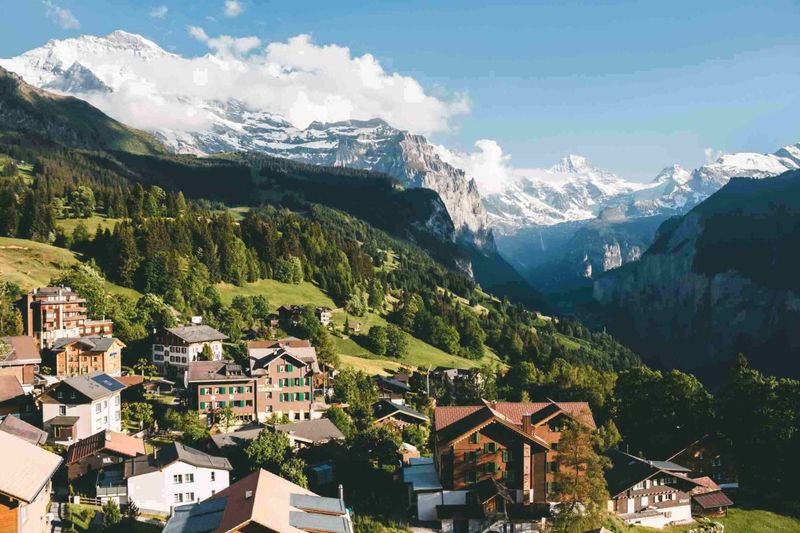
Perched above the Lauterbrunnen Valley at the foot of the Jungfrau, Wengen offers the kind of wide-open mountain view that makes you stop mid-sentence. Switzerland Tourism describes it as a car-free mountain village with wooden chalets, abundant sunshine, and sweeping views across the Bernese Alps.
That combination of quiet streets and enormous scenery is exactly what draws people here.
Without car traffic moving through the village, the pace slows down in a way that feels intentional. You can walk the lanes, sit on a terrace, and simply watch the mountains without distraction.
It is also a strong base for day trips toward Kleine Scheidegg and Jungfraujoch, two of the most famous viewpoints in all of Switzerland.
Wengen has hotels, restaurants, outdoor activities, and active tourism planning resources, so it functions as a real working alpine destination. For travelers who want mountain views paired with a genuine village atmosphere, this is one of the classic choices in the region.
Zermatt, Switzerland
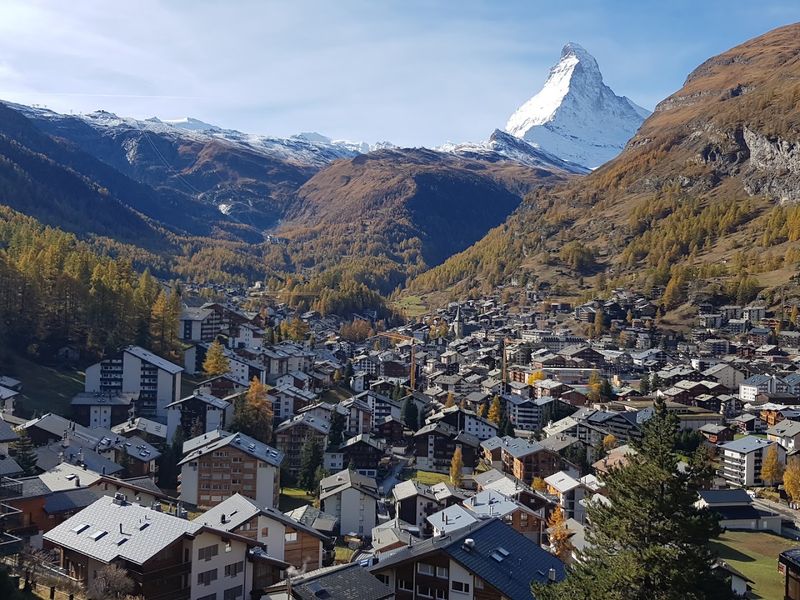
The Matterhorn appears between rooftops, at the end of streets, and above cable car stations in Zermatt so often that it starts to feel like a constant companion on any walk through town. That mountain, one of the most recognized peaks on Earth, is the centerpiece of everything Zermatt offers.
Switzerland Tourism lists it among the country’s most popular holiday destinations specifically because of that dramatic, ever-present view.
Zermatt is car-free, so visitors arrive by train after parking in the nearby town of Tasch or connecting via public transport. That choice keeps the village quieter and cleaner than many high-traffic alpine destinations.
Viewpoints like Sunnegga and Rothorn give travelers elevated perspectives that make the Matterhorn look even more extraordinary.
The village runs year-round, with skiing in winter and hiking in summer keeping the calendar full. Hotels, mountain railways, and official visitor planning resources are all active and well-organized.
Zermatt earns its reputation not through hype but through sheer visual impact at every turn.
Mürren, Switzerland
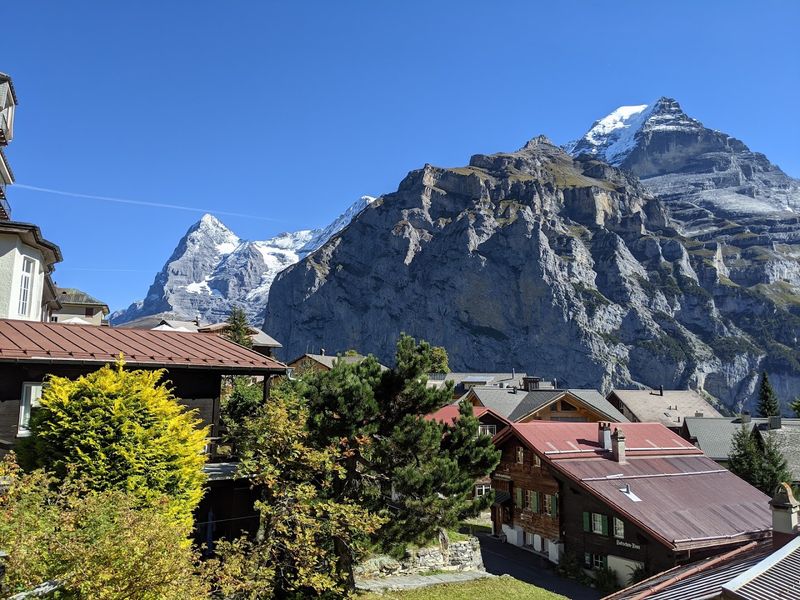
Getting to Mürren requires an aerial cableway or a hike up from Lauterbrunnen or Stechelberg, and that limited access is a big part of what makes arriving feel rewarding. Switzerland Tourism confirms the village can only be reached those ways, which means no through-traffic, no road noise, and no sense of rush once you step off the cable car.
The village feels genuinely suspended above the valley below.
From the village edge, the Eiger, Monch, and Jungfrau sit directly across the horizon in a line that looks almost theatrical. Switzerland Tourism describes the view as incomparable, and that word choice is hard to argue with when you are standing there looking at three iconic peaks at once.
Hiking trails, winter sports, and waterfalls fill out the activity options beyond the views.
Mürren sits near the Schilthorn, which offers its own panoramic platform for those who want an even higher vantage point. For a car-free Swiss mountain experience with serious alpine drama, Mürren delivers consistently across every season.
Gimmelwald, Switzerland
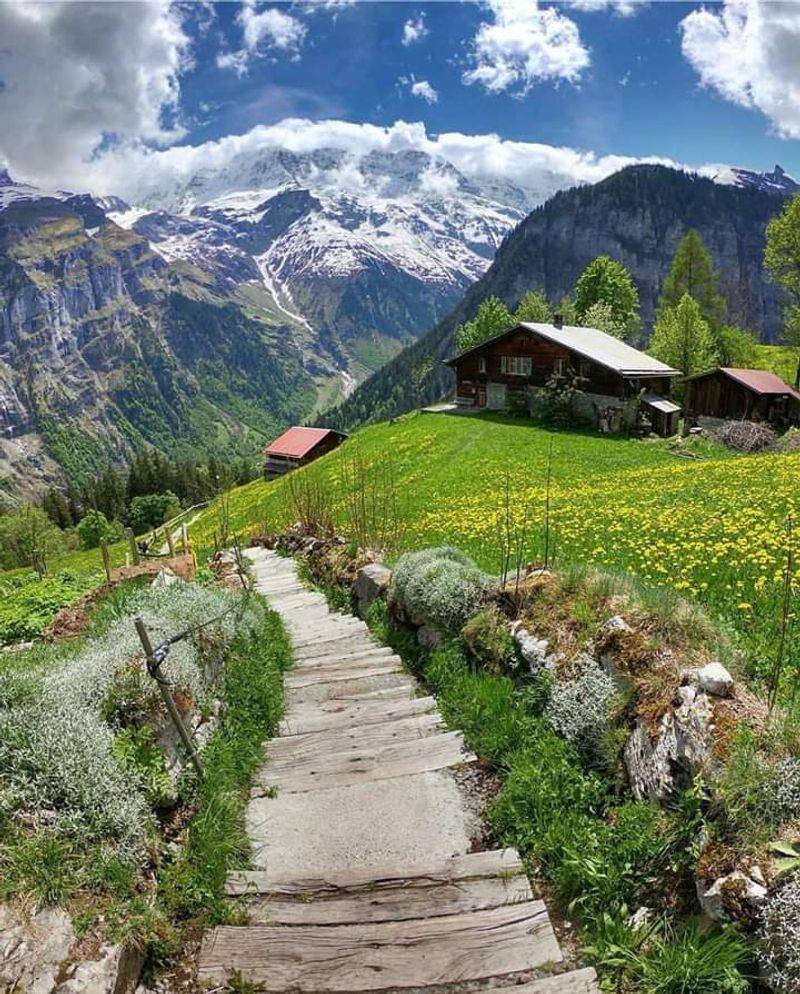
Gimmelwald sits at 1,367 meters on the edge of a cliff in the Lauterbrunnen Valley, reachable only by cable car. Switzerland Tourism describes it as an unspoilt, car-free mountain village, and the word unspoilt is accurate.
There are no large resort hotels or crowded tourist shops here, just a small alpine community with a straightforward and honest mountain feel.
The village overlooks the Jungfrau-Aletsch-Bietschhorn UNESCO World Heritage area, which means the scenery below and across the valley carries serious natural significance. Gimmelwald’s own tourism site describes it as a pedestrian village perched high above the valley, which gives you a clear picture of what to expect before you even arrive.
For travelers who want hiking access, mountain air, and big valley views without the polish of a larger resort town, Gimmelwald is a genuinely good fit. It is smaller and quieter than its famous neighbors, but its cliff-edge position and open views make it one of the most memorable spots in the entire Lauterbrunnen region.
Reine, Norway
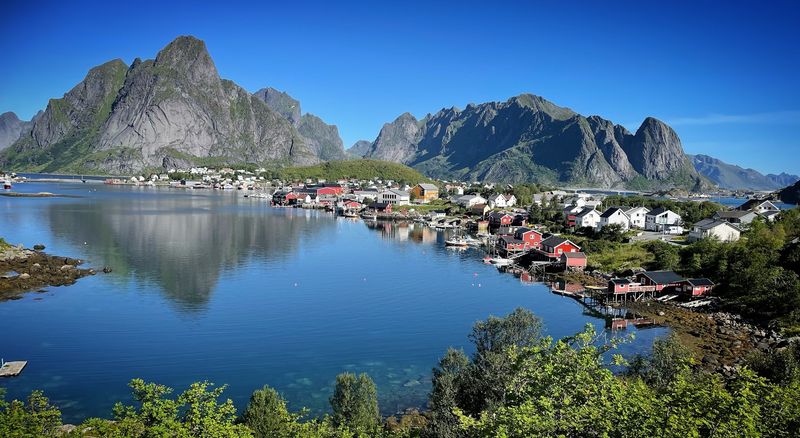
Sharp mountain peaks rise straight out of the water around Reine, a fishing village in Norway’s Lofoten Islands where the scenery feels almost confrontational in the best way. Red wooden cabins line the shore, and the reflections on calm days double the visual impact.
Visit Lofoten describes Reine as one of the most beautiful places in Norway, which is a significant claim given how much of Norway qualifies for that description.
The village sits with Vestfjord on one side and Reinefjord on the other, with mountains pressing in from multiple directions. The view from Reinehalsen above the village is especially well-known, but even walking through the village itself puts you in the middle of peak-and-sea scenery from nearly every angle.
Islands in the area are connected by bridges and roads, making it accessible despite feeling remote.
Reine is also a working fishing village, not just a scenic backdrop. That active community presence adds authenticity to a visit and gives the place a grounded, real-world energy that purely tourist-focused destinations sometimes lack.
Manarola, Italy
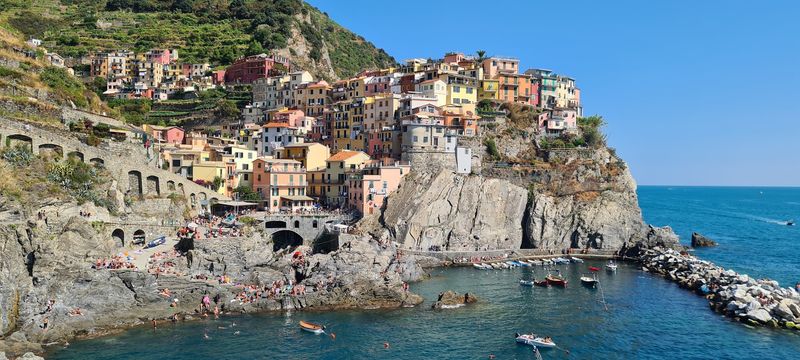
Manarola earns its place on a mountain-view list even though the sea is part of the picture. The village clings to steep cliffs above the Ligurian Sea, with pastel houses stacked up the hillside in layers that look almost architecturally impossible.
The terraced hills behind the village and the rocky coastline below create a setting where every direction offers something worth looking at.
Manarola is one of the five Cinque Terre villages, and the national park’s welcome centers continue to provide visitor information, Cinque Terre Cards, train cards, and trail access details. Checking current trail conditions before visiting is a good idea, since paths between the villages can close for maintenance or weather-related reasons.
The village is genuinely popular, which means timing matters. Early mornings and shoulder seasons tend to give visitors more breathing room on the narrow lanes and viewing platforms.
Manarola’s cliff-and-sea combination, with the terraced mountain backdrop rising behind it, makes it one of the most visually layered villages on this entire list.
Eze, France
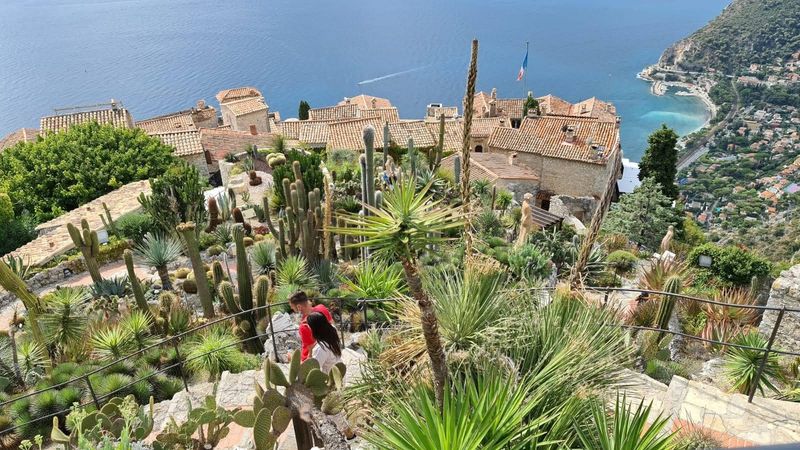
At 650 meters above the Mediterranean, Eze is the kind of place where you round a corner and suddenly the entire French Riviera is spread out below you. The Nice Cote d’Azur tourist office confirms that elevation, and the view it produces is exactly why so many travelers make the detour up the hillside.
Stone lanes, old walls, and garden terraces open toward the coastline in ways that feel genuinely surprising even when you expect them.
The official Eze tourism site lists visitor information for the village’s exotic garden, restaurants, accommodations, guided walking tours, and local services, so planning a visit is straightforward. The exotic garden at the top of the village is particularly worth the entry, offering both botanical interest and the highest viewpoints in the area.
Eze is not an alpine village with snow and glaciers, but its position high above the Cote d’Azur earns it a firm spot on any mountain-view list. The combination of medieval stone architecture and sweeping sea-and-cliff scenery creates a completely different kind of dramatic that is hard to forget.
Gordes, France
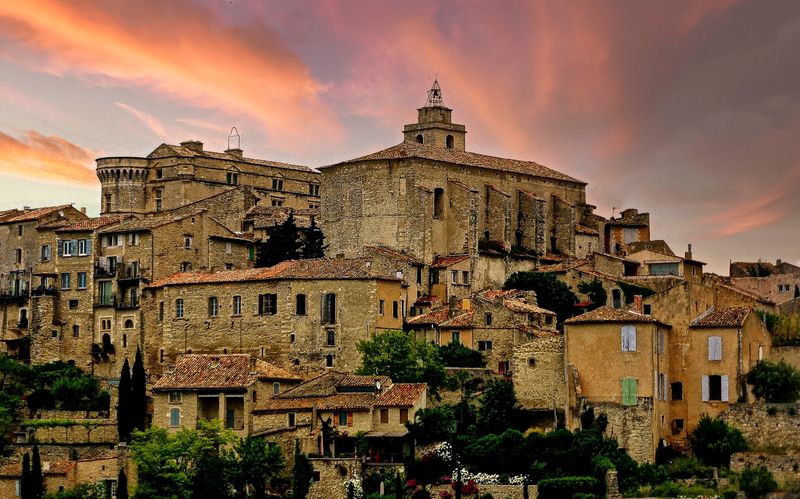
Gordes has a famous viewpoint on the road from Cavaillon that frames the entire village in one shot: layered stone houses, pale limestone cliffs, and the rolling Provencal landscape stretching out behind it. The village’s official website calls it a major tourist destination because of its history, exceptional geographical location, cultural activities, restaurants, and hotels.
That combination of natural setting and cultural depth gives Gordes staying power beyond a single impressive photograph.
The village sits in the Vaucluse Mountains of Provence, where the surrounding landscape shifts with the seasons. Lavender fields nearby bloom in summer, and the stone village takes on a warmer, more golden tone in afternoon and evening light.
For an article about mountain views, Gordes brings a sunlit, Mediterranean alternative to the snow-and-glacier imagery that dominates alpine destinations.
The historic center includes a Renaissance chateau, a Romanesque church, and narrow streets that reward slow walking. Gordes is the kind of place where the view from the road is spectacular, but the village itself offers plenty of reasons to stay longer than a quick photo stop.
Albarracin, Spain
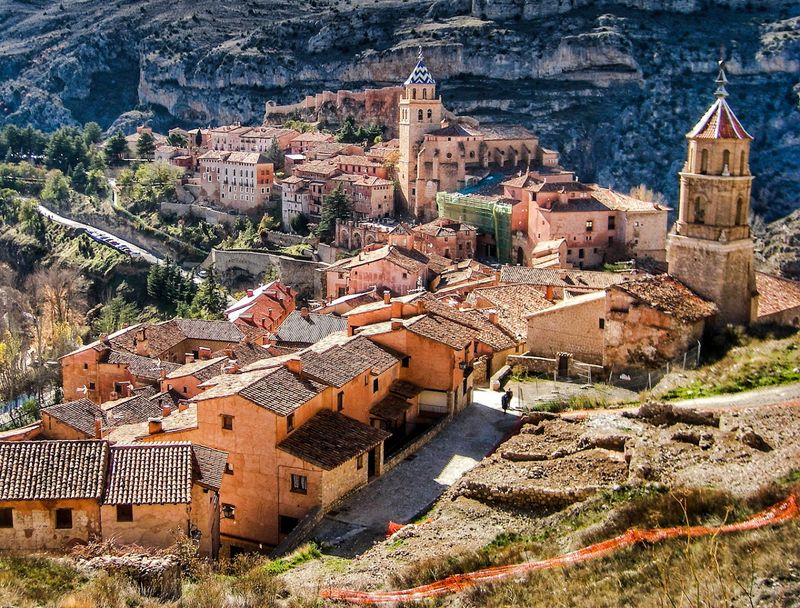
Albarracin looks like it grew directly out of the reddish rock it sits on. This historic town in Spain’s Aragon region is built from warm-toned stone that blends into the surrounding hills so naturally that the boundary between village and landscape is genuinely hard to define.
Turismo de Aragon describes walking through its walls and monuments as feeling like traveling back to the Middle Ages, and the atmosphere supports that description completely.
Spain’s official tourism site provides current visitor information on things to see and do in Albarracin, including its medieval walls, cathedral, castle, and narrow streets that wind unpredictably through the hillside. The views here are not about glaciers or sea cliffs but about rugged terrain, defensive architecture, and an old-town silhouette that sits dramatically against open sky and rocky hills.
For travelers who want mountain scenery mixed with strong historical character, Albarracin offers something genuinely different from the alpine resorts and coastal cliffs on this list. Its visual identity is earthy, ancient, and specific in a way that makes it stand apart from almost anywhere else in Europe.
Shirakawa-go, Japan
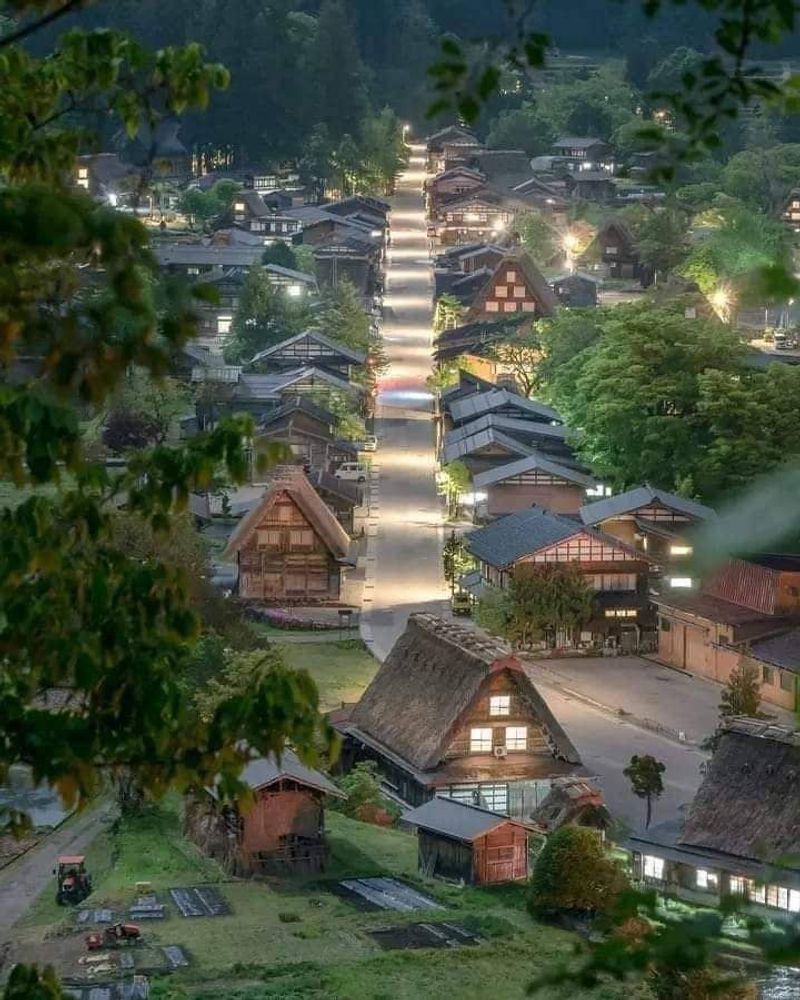
Shirakawa-go is the kind of place that looks different in every season but is never ordinary. The village is best known for its gassho-style farmhouses, which have steep thatched roofs designed to handle the region’s notoriously heavy snowfall.
In winter, those roofs disappear under deep snow while the surrounding mountains close in, creating one of the most iconic rural winter landscapes in all of Japan.
UNESCO recognizes the historic villages of Shirakawa-go and nearby Gokayama as located in a river valley surrounded by the rugged high-mountain Chubu region. Shirakawa Village’s official website describes the settlement as shaped by high mountains and heavy snow, which explains both the architecture and the way the landscape feels so defined by its natural conditions.
The village remains an active visitor destination with official tourism information and cultural preservation programs. Travelers can visit year-round, with spring greenery and autumn color offering their own quieter versions of the scenery.
Winter draws the largest crowds, but the off-season visit has a calm and unhurried quality that many travelers prefer.
Sapa, Vietnam
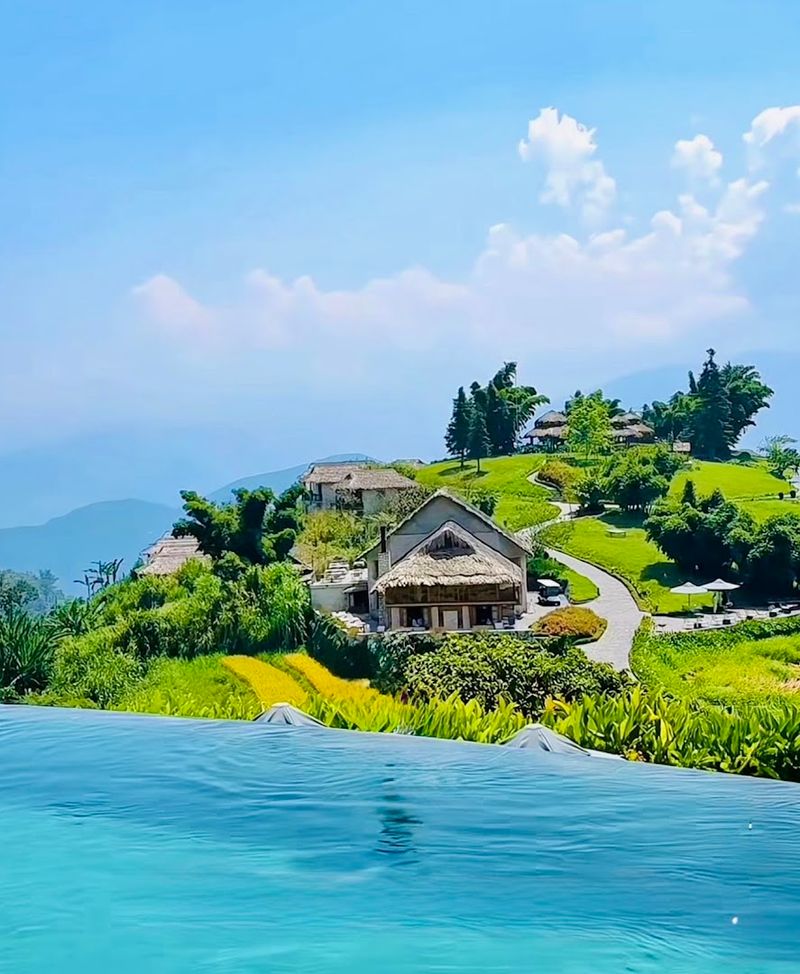
Sapa’s landscape is not about one dramatic peak but about layer after layer of green rice terraces rolling down steep hillsides while clouds drift through the valleys below. That scale and texture, combined with the mist that frequently settles over the region, gives Sapa a visual character unlike almost anywhere else on this list.
Vietnam’s official tourism board provides a current Sapa travel guide covering attractions, local dishes, and activities for those planning a visit.
The Sapa Tourist Information Center also maintains an official website for visitors, making practical planning straightforward. Beyond the scenery, Sapa serves as a gateway for trekking and mountain biking routes that pass through ethnic minority villages in the surrounding hills.
Those communities bring cultural depth to the destination that goes well beyond landscape photography.
The rice terraces are especially dramatic during the growing season, when the fields are bright green and fully flooded. Sapa is a strong destination for travelers who want both scenery and physical activity in a mountain setting, with enough infrastructure to make the trip comfortable without losing its raw, high-altitude character.
Lake Louise Village, Alberta, Canada
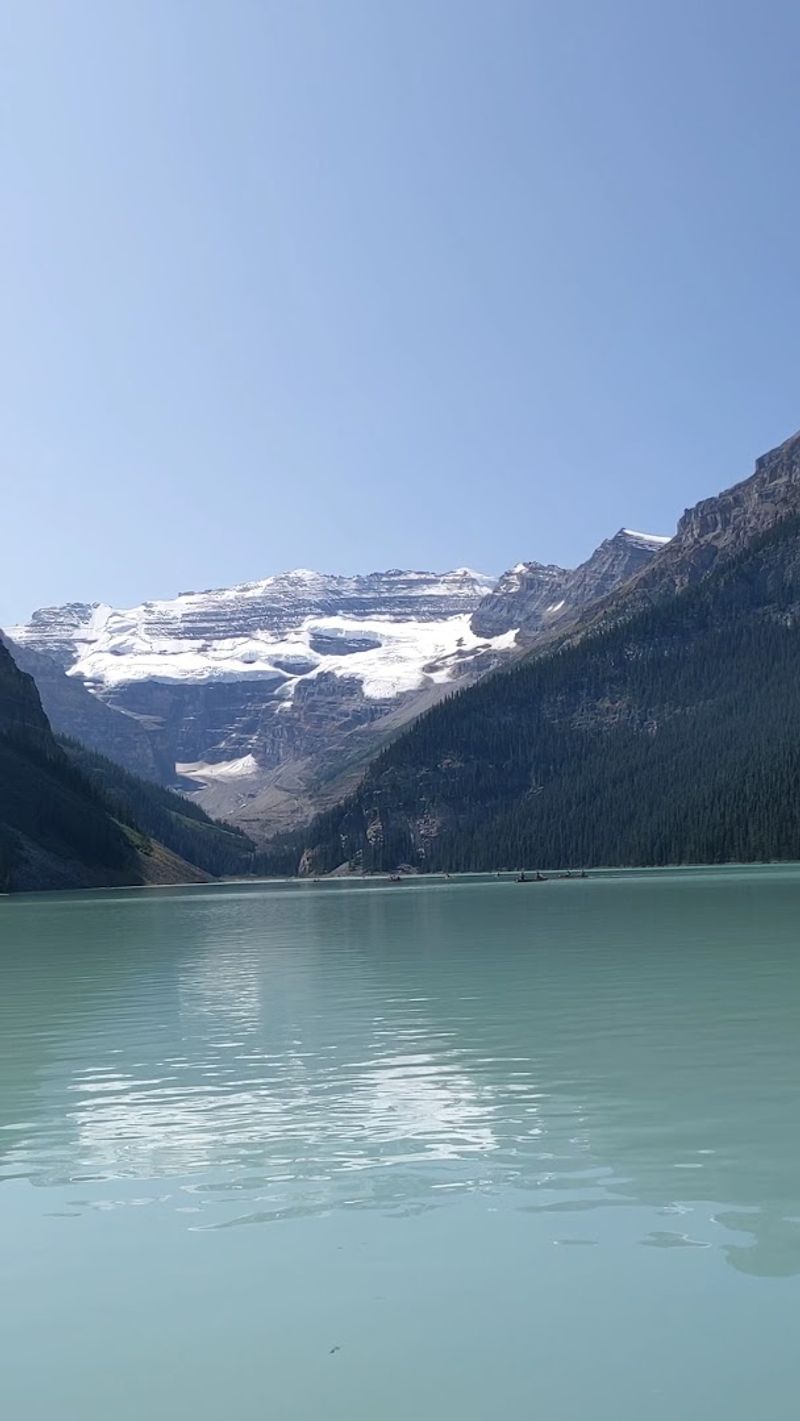
Lake Louise Village sits inside Banff National Park, which means the scenery surrounding it operates at a different scale than most places. Banff and Lake Louise Tourism describes the village as smaller than Banff town, with restaurants, accommodations, a grocery store, bakery, sporting goods store, and a visitor information center.
It is compact and functional, but what sits around it is anything but ordinary.
Parks Canada confirms that Banff National Park has two townsites, Banff and Lake Louise, both offering services, accommodations, dining, shops, and points of interest. From the village, Lake Louise itself is a short drive, and Moraine Lake is nearby, both ringed by glacier-framed peaks that rank among Canada’s most photographed landscapes.
Hiking trails, ski terrain, and wildlife viewing opportunities extend the visit well beyond the famous lake views. The village works as a practical base for exploring the broader Banff region, and the surrounding mountain scenery makes even the short drive between attractions feel like its own reward.
Few national park villages anywhere in the world come with this level of alpine scenery built into the address.
Telluride, Colorado
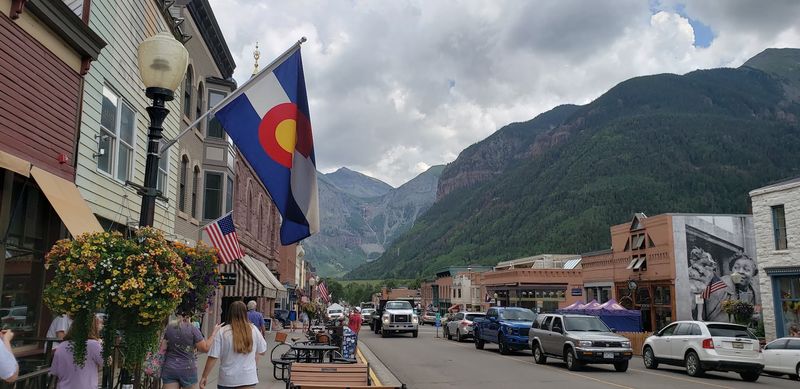
Telluride sits at the end of a box canyon in the San Juan Mountains, with peaks rising so steeply on three sides that the mountains feel almost vertical from the main street. That enclosed, dramatic geography is what separates Telluride from other scenic Colorado mountain towns.
Colorado tourism describes it as known for spectacular scenic beauty, heritage, culture, and mountain views, but the box canyon setting is what makes the first visit feel genuinely surprising.
The official Telluride tourism website remains active with lodging, activities, webcams, resort information, flight details, maps, and visitor planning resources. A free gondola connects the historic downtown to Mountain Village above, giving visitors a moving panoramic view of the canyon and surrounding peaks without any additional cost or reservation.
Waterfalls drop from the cliffs above the town, and the combination of Victorian-era downtown architecture with raw mountain scenery directly overhead creates a visual contrast that stays with you. Telluride works in every season, with skiing, hiking, festivals, and fall foliage all drawing visitors throughout the year.
Leavenworth, Washington
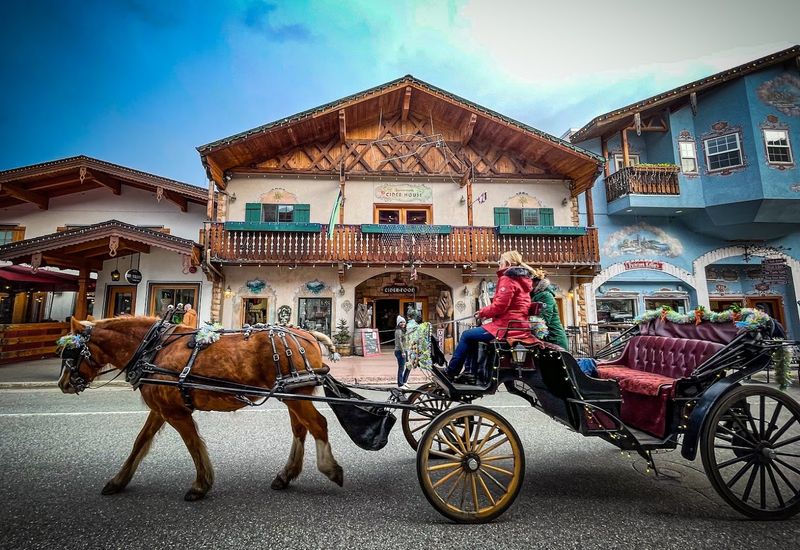
Leavenworth pulls off something unusual: a Bavarian-themed village in Washington’s Cascade Mountains where the alpine architecture and the actual mountain scenery behind it line up so well that the whole thing feels coherent rather than kitschy. The official visitor website describes it as Washington’s Bavarian village with hotels, restaurants, festivals, and Cascade Mountain adventures.
Visit Chelan County adds that the village is known for alpine charm, German-inspired architecture, cultural events, shops, and outdoor activities.
The real Cascade peaks rising behind the village streets give Leavenworth a visual credibility that a themed town in flat terrain could never achieve. The mountains are not decoration; they are the backdrop that makes the entire aesthetic work.
Snow-capped peaks in winter especially reinforce the alpine feel in a way that goes beyond the painted storefronts.
Outdoor activities including hiking, river rafting, and skiing keep the destination active across all four seasons. Leavenworth is a strong option for U.S. travelers who want a mountain-village atmosphere without an international flight, and the surrounding Cascades deliver genuine high-country scenery to match the village’s visual ambitions.
Share this story