There is a place in Virginia where the streets feel like they belong to another century. Horse-drawn carriages roll past candlelit taverns, costumed tradespeople hammer away in open workshops, and the air carries the faint smell of woodsmoke and fresh-baked bread.
This is not a theme park or a movie set. It is a real, living town where American history did not just happen once and get framed behind glass.
Williamsburg, Virginia holds the largest living-history museum in the country, and once you walk its brick-lined paths, you will understand why people return year after year. The stories told here shaped the nation, and the details that bring those stories to life will surprise even the most seasoned traveler.
Colonial Williamsburg: Where History Walks the Streets
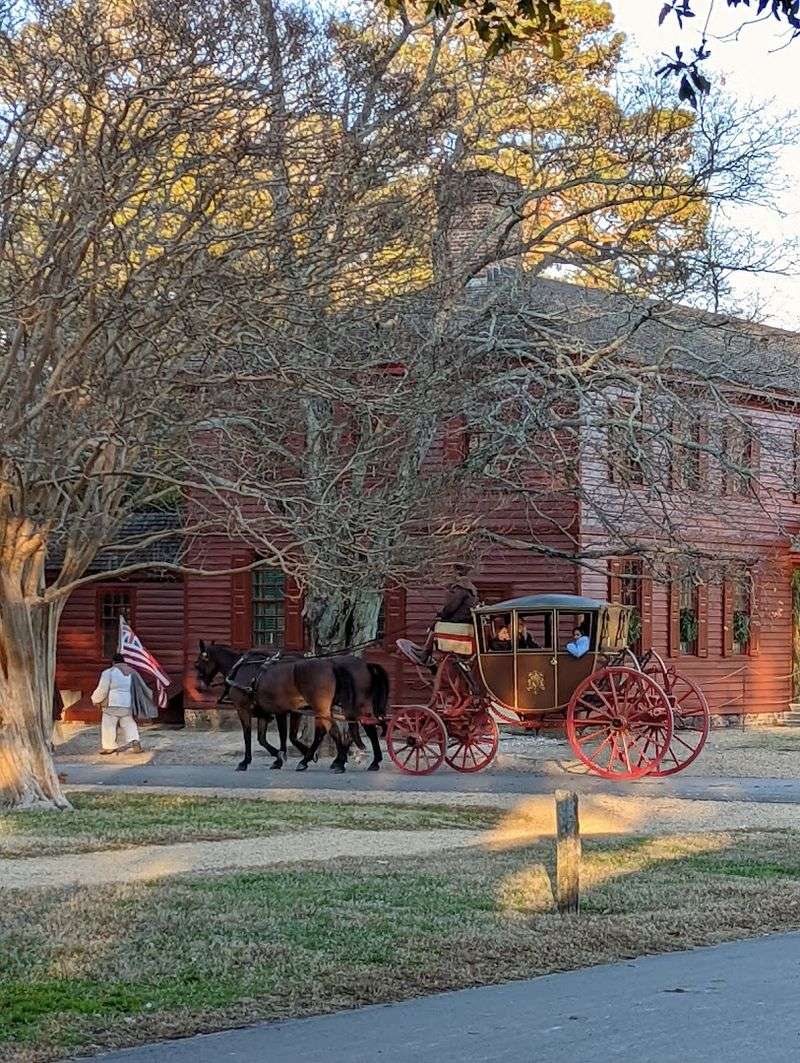
Most history museums ask you to stand behind a velvet rope and look. Colonial Williamsburg hands you a front-row seat to the whole show.
This living-history museum stretches across the heart of Williamsburg, Virginia, located along Duke of Gloucester Street in Williamsburg, VA 23185, United States. Actors portraying real historical figures argue politics in the streets, demonstrate crafts in period workshops, and cook meals over open hearths using recipes from the 1700s.
The sheer scale of the place catches most first-time visitors off guard. More than 500 restored and reconstructed buildings fill the historic area.
Blacksmiths, wigmakers, printers, and wheelwrights all work in character, answering questions as though the year is still 1776. You are not watching history.
You are standing inside it, and that feeling does not fade quickly.
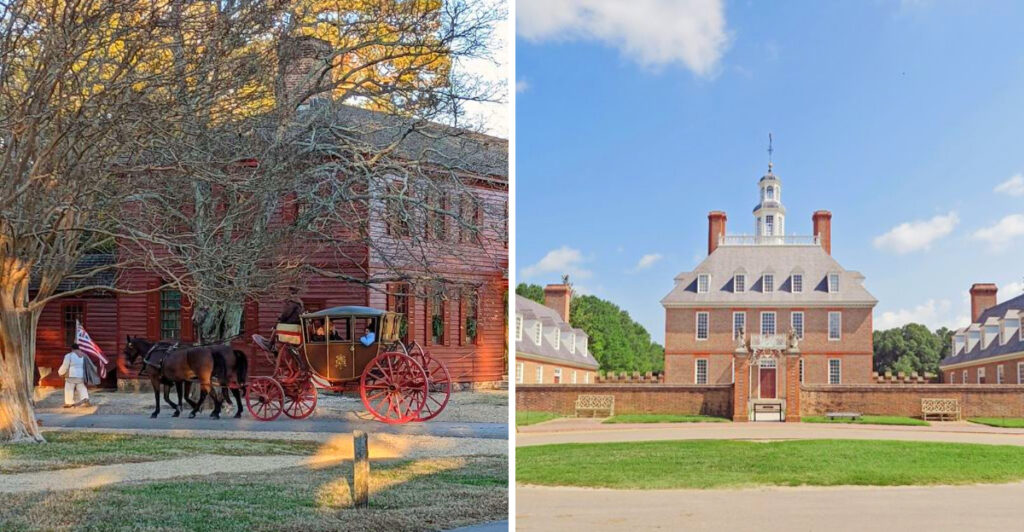
Horse-Drawn Carriages Rolling Through the 18th Century
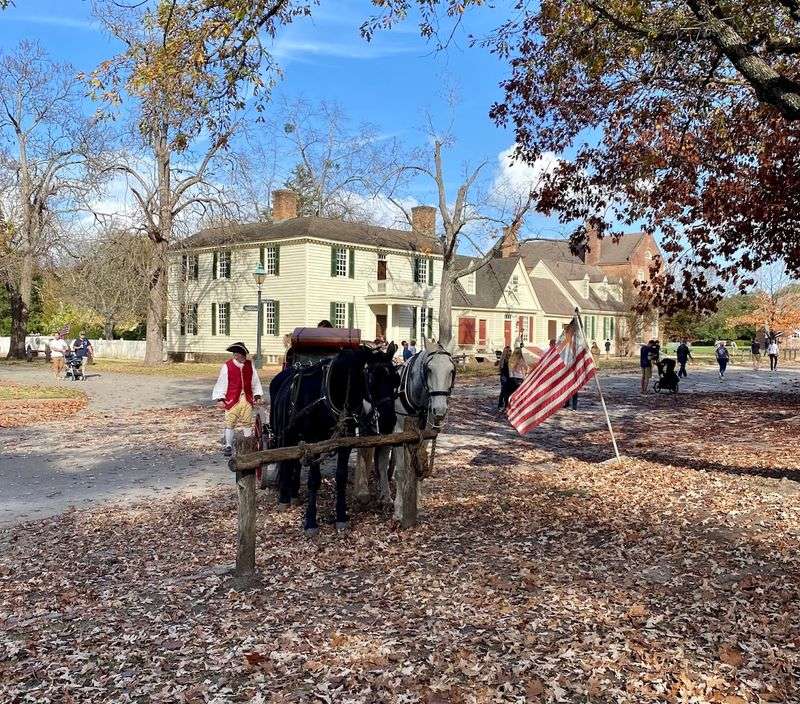
Few things signal that you have arrived somewhere truly different like the sound of hooves on a cobblestone street. In Colonial Williamsburg, horse-drawn carriages are not a novelty added for tourists.
They are part of the fabric of daily life in the historic area.
Carriage rides offer one of the most relaxed ways to take in the scenery. Sitting above street level, you get a completely different view of the historic buildings, gardens, and passing townspeople in period dress.
The horses themselves are well cared for and handled by knowledgeable coachmen who share stories about colonial transportation and daily life. Children especially love the experience, but adults tend to go quiet in the best possible way, momentarily forgetting what decade they live in.
It is the kind of slow, unhurried travel that modern life rarely allows, and it suits Williamsburg perfectly.
The Historic Taverns That Fed a Revolution
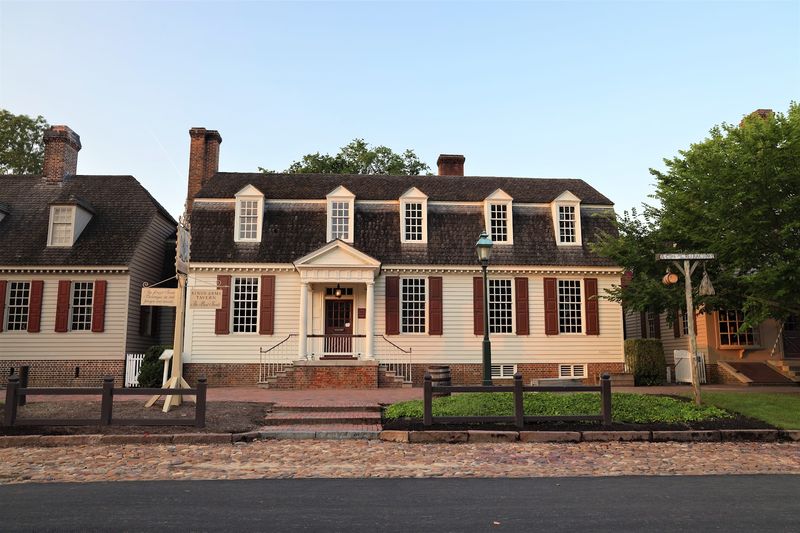
Colonial taverns were not simply places to eat. They were the social hubs of the 18th century, where merchants, politicians, and travelers gathered to swap news, debate ideas, and plan the future of a young nation.
Williamsburg preserves several of these taverns in working form. Chowning’s Tavern, Shields Tavern, Christiana Campbell’s Tavern, and King’s Arms Tavern all serve period-inspired meals in restored colonial settings.
The menus draw from recipes of the era, featuring dishes like peanut soup, Brunswick stew, and game pie.
Eating at one of these taverns is not just dinner. It is a full sensory experience.
The low ceilings, candlelit tables, and servers dressed in colonial attire create an atmosphere that no modern restaurant can replicate. Booking a table in advance is strongly recommended, especially during busy seasons, because these spots fill up fast and for very good reason.
The Capitol Building and the Birth of American Democracy
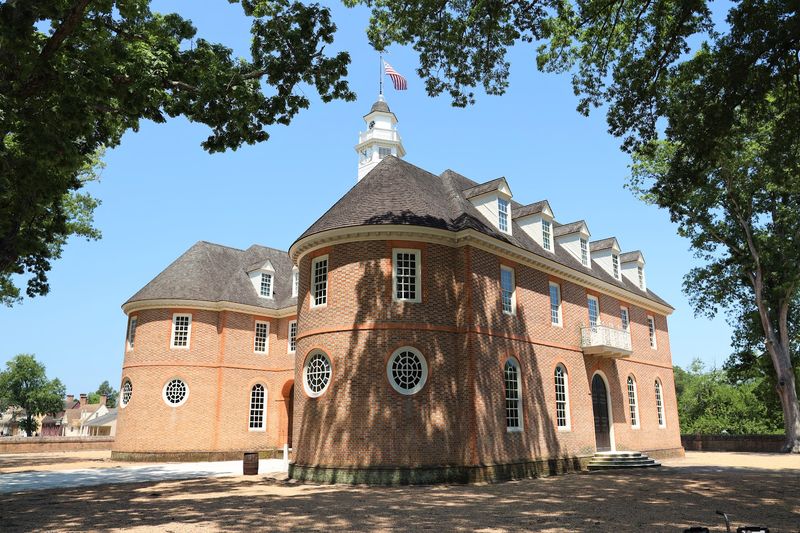
Long before Philadelphia became the symbol of American independence, Williamsburg was where the arguments that sparked a revolution were being made out loud.
The reconstructed Capitol building at the end of Duke of Gloucester Street is where Virginia’s colonial legislature met to debate the rights of colonists. Patrick Henry delivered some of his most fiery speeches within these walls.
The building itself is an impressive reconstruction, built on the original foundation and restored with painstaking attention to period accuracy.
Guided tours walk visitors through the chambers where real debates took place, explaining how the Virginia model of self-governance influenced the founding documents of the United States. Standing in the room where those arguments unfolded gives you a concrete sense of how fragile and bold the whole experiment of American democracy really was.
History feels far less abstract when you are standing on its original floor.
The Governor’s Palace: Power, Beauty, and Intrigue
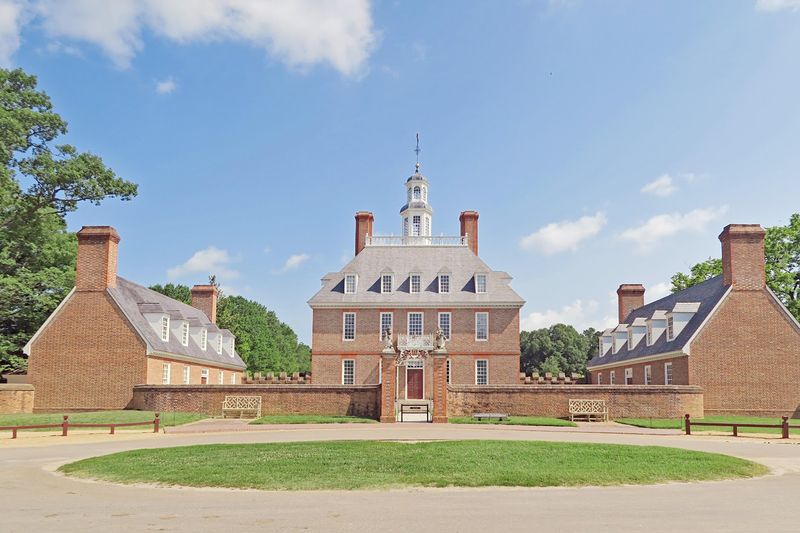
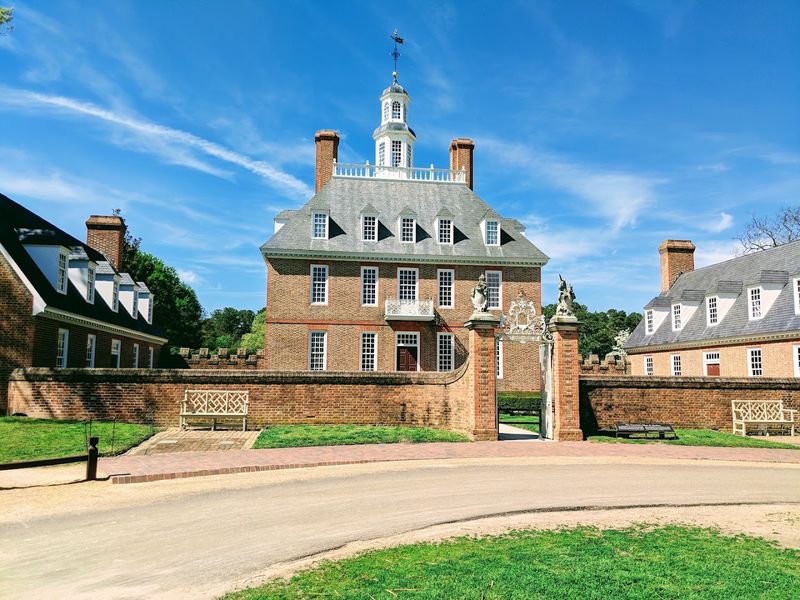
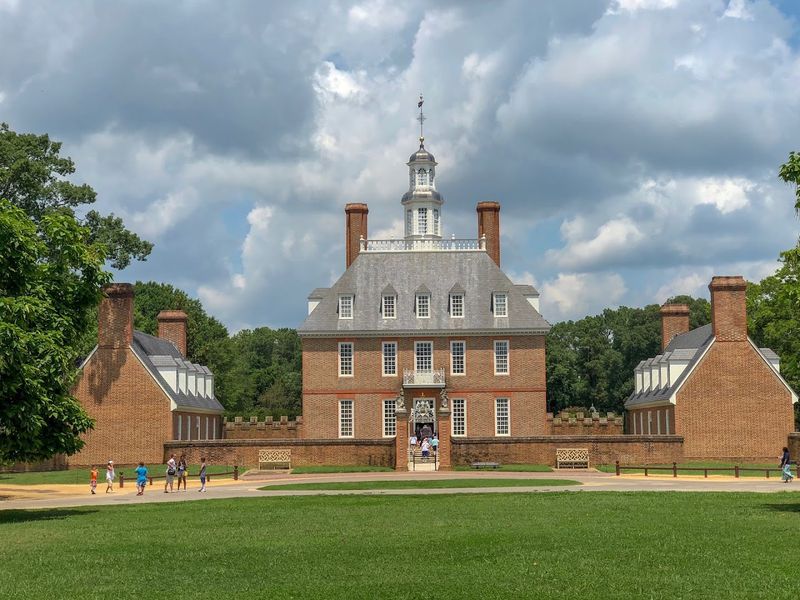
The Governor’s Palace was built to impress, and more than three centuries later, it still does.
Originally constructed in the early 1700s as the official residence of Virginia’s royal governors, the palace served as a symbol of British authority in the colonies. The building was later used by the first two governors of the Commonwealth of Virginia, Patrick Henry and Thomas Jefferson.
The current structure is a careful reconstruction completed in the 20th century, guided by detailed historical records and archaeological findings.
The formal gardens behind the palace are as striking as the building itself. Geometric hedgerows, a canal garden, and a maze of hornbeam trees stretch behind the main house in classic 18th-century English style.
Most visitors spend more time in the gardens than they expect to. The combination of grand architecture and quiet green space makes this one of the most photogenic spots in all of Colonial Williamsburg.
Colonial Crafts and Trades Still Practiced Today
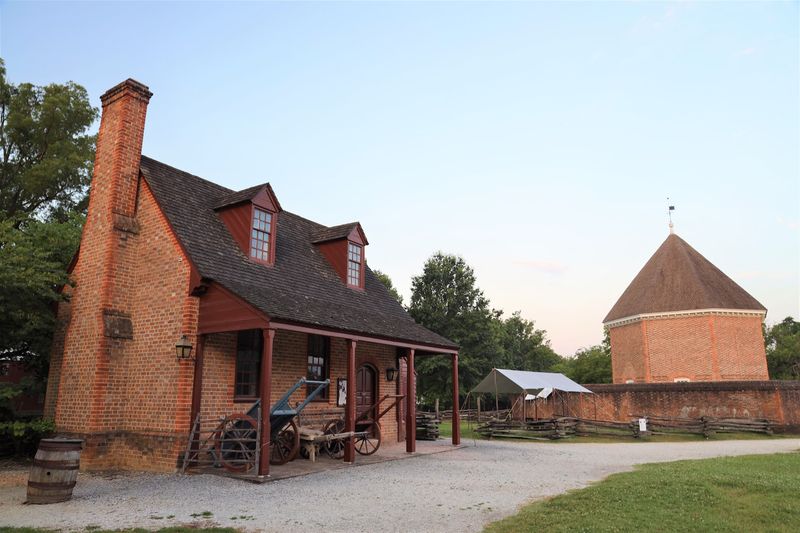
There is something genuinely fascinating about watching a person make something by hand using only the tools available in the 1700s.
Colonial Williamsburg maintains working trade shops staffed by skilled artisans who practice their crafts the old-fashioned way. The silversmith shapes metal without modern machinery.
The bookbinder stitches pages together by hand. The apothecary prepares remedies using herbs and methods that predate modern medicine by centuries.
Each shop is open to visitors, and the artisans welcome questions.
What makes these demonstrations more than just performance is that the finished products are real. The furniture being built will actually be used.
The shoes being cobbled will actually be worn. This commitment to authentic production gives the whole experience a weight that purely theatrical reenactments lack.
Spending an hour moving from shop to shop, watching these trades come alive, is one of the most memorable ways to spend a morning in Williamsburg.
The College of William and Mary: America’s Second-Oldest University
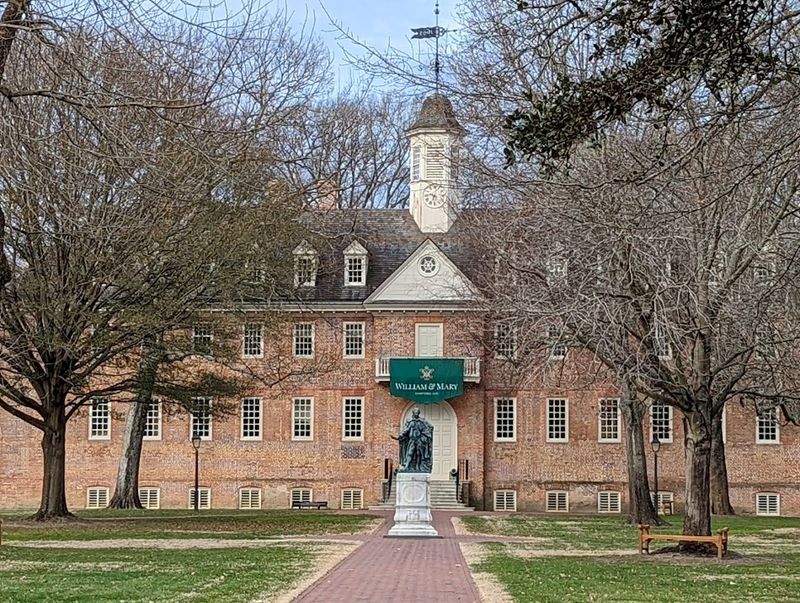
Right at the western end of Duke of Gloucester Street stands one of the most quietly remarkable institutions in American higher education.
The College of William and Mary was chartered in 1693, making it the second-oldest university in the United States. The Wren Building, its oldest structure, dates to the late 1600s and still serves the college today.
Thomas Jefferson, James Monroe, and John Tyler all studied here, along with 15 other signers of the Declaration of Independence and the Articles of Confederation.
The campus blends seamlessly into the colonial streetscape, which makes walking between the historic area and the college feel natural rather than jarring. Even if you are not a history enthusiast, the architecture alone is worth a slow walk through the grounds.
The Wren Building’s brick facade and formal courtyard carry a quiet gravity that reminds you just how old and consequential this small Virginia town really is.
The Duke of Gloucester Street: The Main Stage of Colonial Life
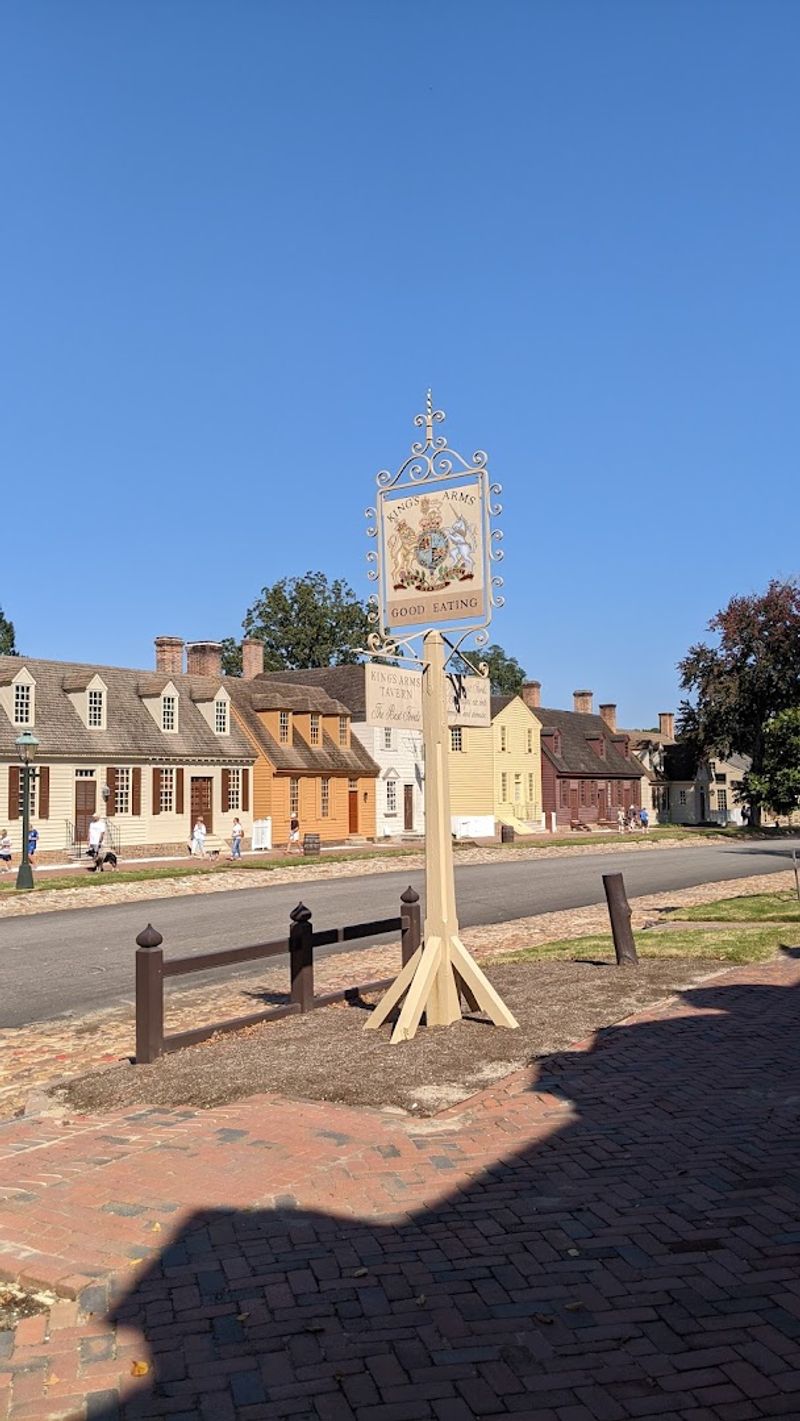
If Colonial Williamsburg has a heartbeat, it pulses along Duke of Gloucester Street.
This broad, mile-long avenue runs from the College of William and Mary at one end to the Capitol building at the other. Along the way, it passes the Courthouse, the Magazine, Bruton Parish Church, and dozens of shops, homes, and public buildings that together form one of the most complete preserved colonial streetscapes in the country.
Walking the full length of the street at a relaxed pace takes about 20 to 30 minutes, but most people end up taking much longer because something always catches your eye. A printer cranking out a colonial newspaper.
A group of militia members drilling on the green. A town crier reading a proclamation.
The street operates as both a public thoroughfare and a living stage, and the line between visitor and participant blurs in the most enjoyable way.
Bruton Parish Church: A Congregation Since 1674
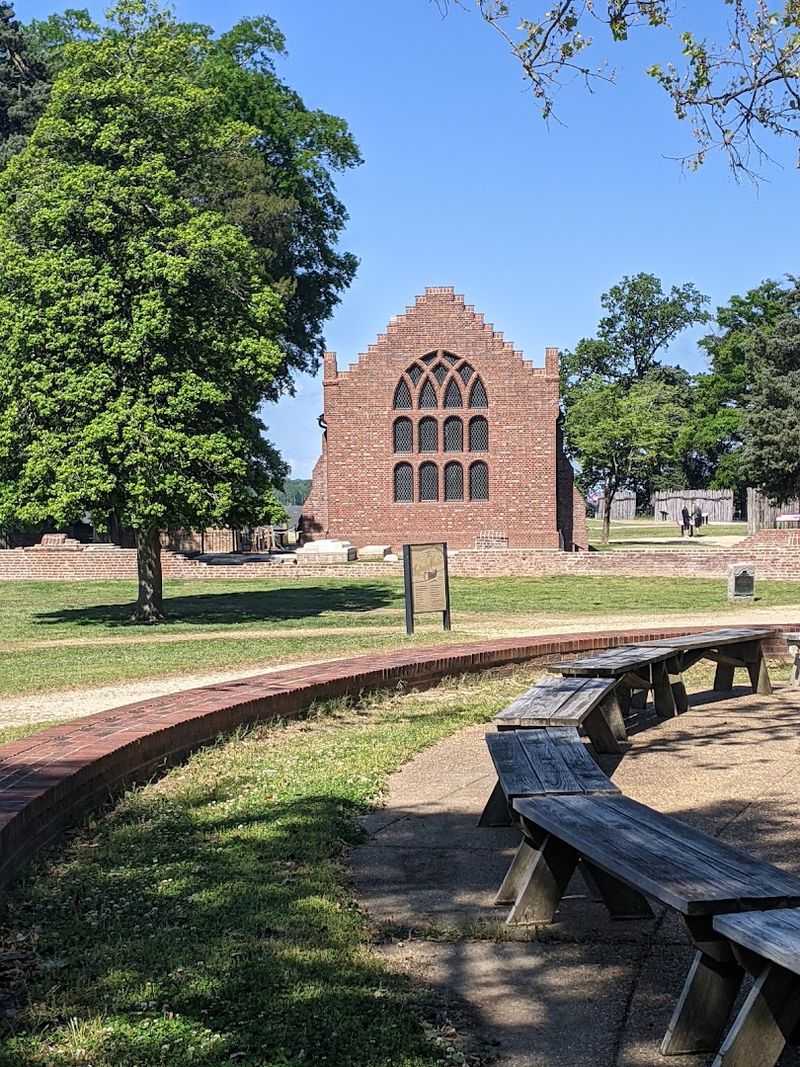
Some buildings carry centuries of human experience in their walls, and Bruton Parish Church is one of them.
This Episcopal church has held continuous services since 1674, making it one of the oldest active churches in the United States. The current building dates to 1715.
George Washington, Thomas Jefferson, and other founding figures all worshipped here during their time in Williamsburg. The churchyard contains graves dating back to the early colonial period, and the inscriptions on the oldest stones are worn but still legible.
The interior is simple and dignified, with high box pews, clear glass windows, and a wooden gallery above. Services are still held weekly, which means the building functions as both a living place of worship and a historic site.
Visitors are welcome to tour the church during designated hours. Few places in Williamsburg carry the same quiet sense of unbroken continuity that this church provides.
The Historic Triangle: Williamsburg, Jamestown, and Yorktown
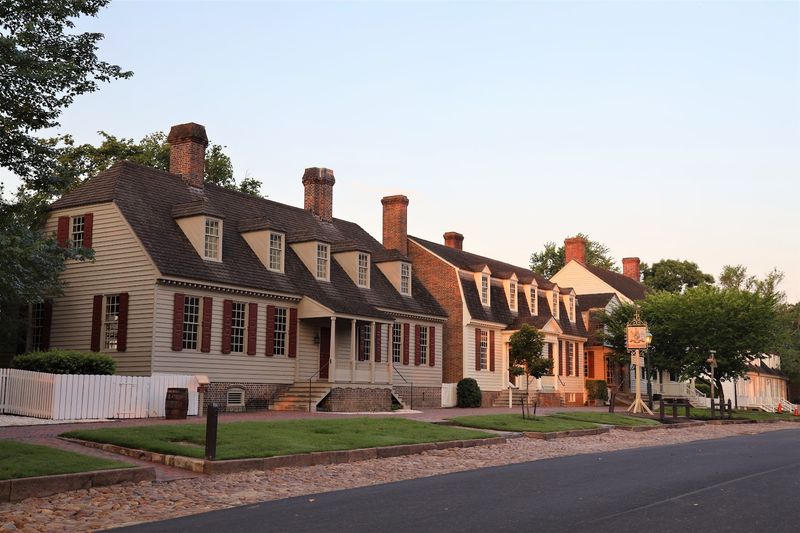
Williamsburg does not stand alone. It anchors one corner of what historians call Virginia’s Historic Triangle, a grouping of three sites that together tell the full arc of early American history.
Jamestown, just a short drive west, marks the site of the first permanent English settlement in America, established in 1607. Yorktown, to the east, is where the final major battle of the American Revolution ended British rule.
The Colonial Parkway connects all three sites in a scenic, uninterrupted drive that passes through forests, marshes, and river views without a single commercial billboard in sight.
Spending a single day at each site gives you a remarkably complete picture of how America went from a struggling colonial outpost to an independent nation in less than 200 years. Most visitors underestimate how much these three places complement each other, and how much richer each one feels when experienced as part of the larger story.
Colonial Williamsburg at Night: A Different Kind of History
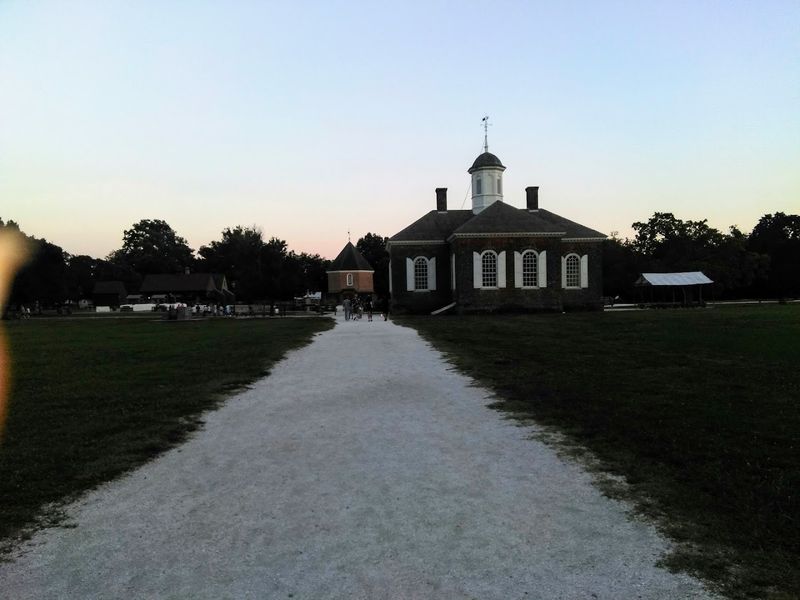
Most visitors wrap up their day in Colonial Williamsburg as the sun goes down, and that is genuinely their loss.
After dark, the historic area transforms into something altogether different. Candlelight tours and evening programs run regularly throughout the year, offering a side of colonial history that daytime visits cannot replicate.
The lantern-lit streets take on a moody, atmospheric quality that makes the 18th-century setting feel even more convincing.
Evening ghost tours are also popular, drawing on Williamsburg’s long and well-documented history of unusual events and colonial-era lore. These tours are led by knowledgeable guides who balance historical accuracy with genuinely entertaining storytelling.
Whether you believe in the supernatural or not, the combination of dark streets, old buildings, and skilled narration makes for a memorable evening. The night version of Williamsburg deserves its own visit, separate from whatever you do during the day.
The DeWitt Wallace Decorative Arts Museum
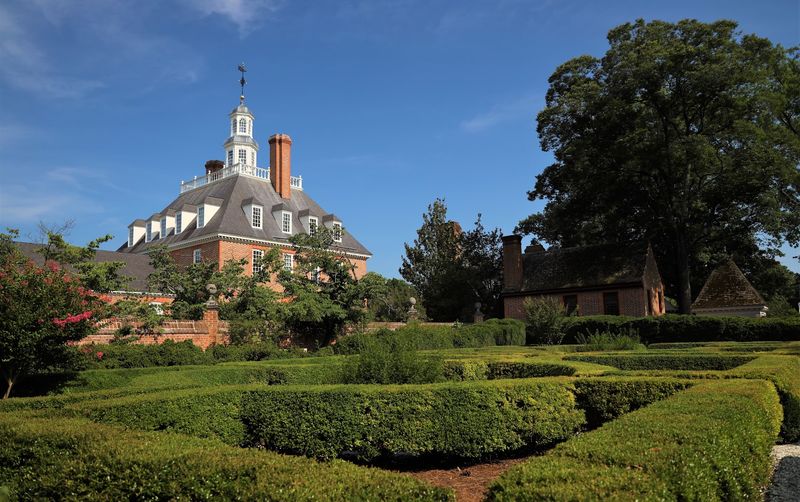
Not everything worth seeing in Williamsburg is outdoors. One of the most underrated stops in the entire historic area sits just off the Palace Green.
The DeWitt Wallace Decorative Arts Museum houses one of the finest collections of 17th and 18th-century American and British decorative arts in the world. The galleries include furniture, ceramics, textiles, paintings, silver, and metalwork, all displayed in a thoughtfully designed underground museum that manages to feel both modern and historically grounded at the same time.
What sets this collection apart is its depth. These are not generic period pieces pulled together for display.
Many objects have direct connections to colonial Virginia, and the curatorial notes are detailed enough to satisfy serious history enthusiasts without losing casual visitors. Plan to spend at least an hour here.
Most people find they stay considerably longer, especially in the galleries dedicated to colonial portraiture and imported British ceramics.
Seasonal Events That Bring Colonial History to Life
Williamsburg has a way of surprising visitors no matter what time of year they arrive, and that is largely by design.
The historic area hosts a full calendar of seasonal programs and special events throughout the year. The Grand Illumination in early December is one of the most beloved, drawing large crowds to watch the historic area lit by candles and lanterns as the holiday season begins.
Colonial militia musters, court days, and harvest celebrations bring different crowds and different energy across the fall months.
Spring and summer bring outdoor theatrical performances, military drills on the Palace Green, and extended evening programs. Each season reframes the same streets and buildings in a slightly different light, which is one reason so many people return to Williamsburg multiple times rather than treating it as a one-visit destination.
There is genuinely always something new happening here, and the programming team clearly takes that seriously.
Shopping in the Historic District: More Than Souvenirs
Shopping in Colonial Williamsburg is a different experience from picking up a magnet at a gift shop counter.
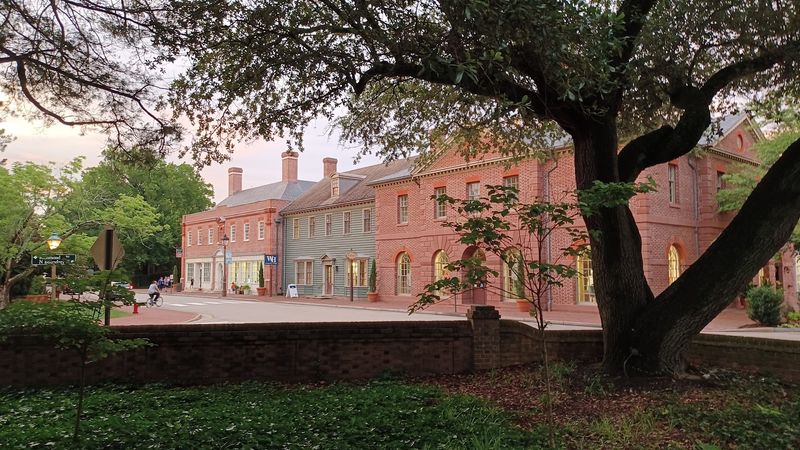
The stores throughout the historic area sell items made by the artisans working on-site. Hand-thrown pottery, hand-bound books, pewter goods, herbal preparations, and reproductions of period prints are all available for purchase.
Buying something made by a craftsperson you watched work an hour earlier gives the object a story that mass-produced souvenirs simply cannot match.
The Prentis Store and other retail spaces in the historic area stock a range of goods that lean toward quality over quantity. Outside the historic district, Merchants Square offers a more contemporary shopping experience with independent boutiques and specialty shops just steps from the colonial streetscape.
The combination of handmade and modern retail options means most visitors find something worth bringing home, whether they came looking for it or not.
Planning Your Visit: What to Know Before You Go
A little planning goes a long way in Williamsburg, and the difference between a rushed day and a genuinely satisfying visit often comes down to a few simple decisions made in advance.
The Colonial Williamsburg Visitor Center is the best starting point. Staff there can orient you to the day’s programming schedule, which changes regularly.
Purchasing a multi-day pass is worth considering because the historic area rewards slow exploration, and one day rarely feels like enough. Comfortable walking shoes are essential.
The brick and cobblestone surfaces are charming but uneven.
Arriving early on weekends helps you beat the larger crowds and catch morning demonstrations before the streets fill up. Many of the most popular tavern reservations book out days in advance, so checking availability before your trip is a smart move.
The historic area is largely walkable, and the distances between major sites are shorter than most first-time visitors expect.
Share this story