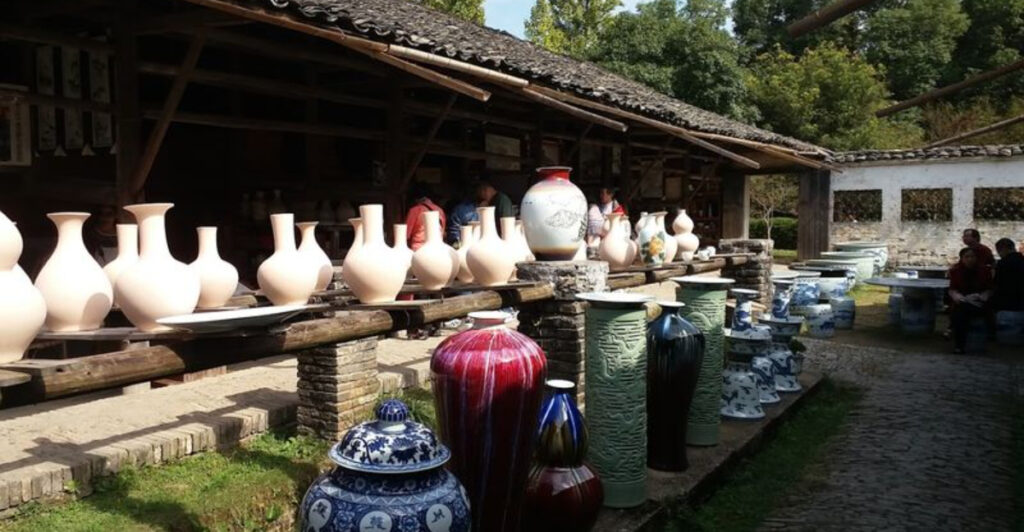
Some towns are built around factories. Others are built around clay, thread, and hand tools.
Around the world, there are communities where making things by hand is not a hobby or a weekend market attraction but a way of life that has been passed down through generations. These towns have shaped their entire identities around a single craft or a collection of them, and visiting one feels completely different from a typical tourist stop.
Whether you are drawn to the earthy weight of a handmade ceramic bowl, the intricate geometry of a woven rug, or the clean lines of carved wood, these 15 artisan towns offer something real and worth the trip.
Seagrove, North Carolina

Clay is practically in the air in Seagrove. This small North Carolina town has one of the strongest pottery traditions in the entire country, and what makes it special is that the craft is still active, not just displayed behind glass in a single museum.
The North Carolina Pottery Center gives visitors a solid introduction to the region’s ceramic history, covering potters from past generations all the way to contemporary artists working today. But the real experience happens when you drive through the area and find working studios and galleries open to the public.
Discover Seagrove highlights a range of styles that includes functional, sculptural, folk, contemporary, and historical pottery, which means there is genuine variety here rather than one repetitive aesthetic. For anyone who collects handmade ceramics or simply appreciates the skill behind them, Seagrove is one of those rare places where the craft feels central to the town’s daily identity rather than a marketing angle.
Berea, Kentucky

Berea has built a reputation as one of Appalachia’s most craft-focused towns, and the Kentucky Artisan Center is the clearest reason why. The center is free to enter and open every day from 9 a.m. to 6 p.m., which makes it one of the most accessible craft destinations in the region for travelers passing through on any schedule.
Inside, the retail selection rotates regularly and covers pottery, glassware, jewelry, textiles, quilts, fine art, and Kentucky Proud foods. That range matters because it means you are not looking at one narrow craft tradition but at a broad picture of what Kentucky makers are producing right now.
A cafe on-site is open daily from 9 a.m. to 4 p.m., so this works well as a mid-trip stop rather than a rushed detour. For travelers who want one efficient place where many craft traditions come together under one roof, Berea delivers that without requiring a full day of planning.
Paducah, Kentucky

Paducah goes by the nickname Quilt City, USA, and the National Quilt Museum is the anchor behind that identity. The museum showcases contemporary quilt art at a level that surprises many first-time visitors who expect traditional patchwork and find instead large-scale, highly technical textile work that belongs in any serious art conversation.
What separates Paducah from other craft towns is the scale of its recognition. It is one of only a handful of UNESCO Creative Cities in the United States, a designation that reflects the depth of its commitment to textile culture rather than a one-season festival or a single attraction.
Admission is available on arrival or online, and current public hours are listed on the museum’s visitor page. For travelers interested in textiles specifically, Paducah makes a strong case for itself because the quilt tradition here connects art, history, and community in a way that goes well beyond a single exhibit or display room.
Gatlinburg, Tennessee

Most people think of Gatlinburg as the town you drive through on the way to Great Smoky Mountains National Park. What many travelers miss is that Gatlinburg is also home to the Great Smoky Arts and Crafts Community, which describes itself as the largest independent organization of artisans in the United States.
The community covers a wide range of crafts, including pottery and ceramics, needlework, quilts and textiles, woodworking, woodcarving, baskets, leather, glass, and jewelry. Shops offer free parking, and visitors can often speak directly with artists about their techniques and the history of their craft, which turns a shopping loop into something closer to a working studio tour.
For a traveler who wants both outdoor scenery and a genuine craft experience in the same trip, Gatlinburg handles both without requiring much extra planning. The artisan loop gives the mountain visit a creative layer that most national park gateway towns simply do not offer.
Harrisville, New Hampshire

Harrisville is the kind of small New England town that carries a big textile story. Harrisville Designs operates its retail store out of the original 1830s Harris Mill, and the building itself is part of the experience.
Walking into a working shop inside a mill that has been connected to textile production for nearly two centuries puts the craft in a completely different context than a modern showroom would.
The company produces American-made woolen-spun yarns, handcrafted looms, and custom spinning services, and also runs workshops and classes for visitors who want hands-on experience rather than just browsing. Current retail store hours run Tuesday through Saturday, 8:30 a.m. to 5:30 p.m.
For travelers interested in textile heritage, Harrisville is a strong choice because the setting and the craft reinforce each other. The mill is not a backdrop for a gift shop.
It is a functioning part of a 200-year textile tradition that the town has preserved through active production rather than passive display.
Channapatna, Karnataka, India

Channapatna has earned the title Toy Town of Karnataka, and the name fits. Karnataka Tourism describes a centuries-old tradition where wooden blocks are transformed into toys, puzzles, and decorative pieces, often finished with vegetable-based dyes that give the items their signature bright, clean colors.
The lacquerware industry here is described by Incredible India as a thriving small-scale business that keeps the handcrafted toy tradition alive and commercially active. That distinction matters for travelers.
This is not a craft that survives only in a museum exhibit or an annual festival. It is a daily practice carried out by artisan families in workshops throughout the town.
For anyone traveling the route between Bengaluru and Mysuru, Channapatna is a logical and rewarding stop. The craft is specific, the products are portable, and the connection between the town and the woodwork is genuine.
You leave with something that was actually made there, not imported and repackaged for tourist shelves.
Chinchero, Peru
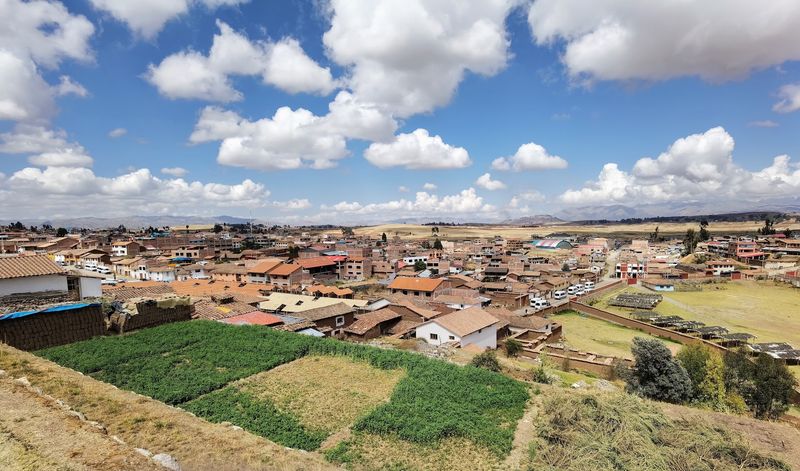
Chinchero sits near Cusco at high Andean altitude, and it is one of the most accessible textile communities for travelers exploring the Sacred Valley region. The Center for Traditional Textiles of Cusco notes that the Chinchero weaving association offers live demonstrations and runs a small shop selling textiles from its partner weaving communities.
Visitors can stop by any day of the week between 8:30 a.m. and 4 p.m. to meet the weavers directly. That open-door access is what makes Chinchero genuinely useful rather than just historically interesting.
The weaving tradition here is not a performance staged for tour groups. It is an organized, community-run operation where travelers can watch the process and purchase textiles with a clear sense of where they came from.
For anyone building a craft-focused itinerary through Peru, Chinchero offers the rare combination of current visitor access, direct artisan contact, and textiles with a documented regional identity. It earns its place on any serious list.
Teotitlán del Valle, Oaxaca, Mexico

East of Oaxaca City, Teotitlán del Valle has built its identity almost entirely around Zapotec wool rugs, and the craft is still the center of daily life for many families in the village. Current Oaxaca travel guides describe it as a day-trip destination where visitors can shop for textiles, watch rug-making demonstrations, and learn about the natural dye process that produces the rugs’ distinctive colors.
Oaxaca Auténtico calls it Oaxaca’s famous weaving village, and the description holds up. Hand-woven wool rugs and textiles are not a niche side business here.
They are the reason the village is on the map and the reason travelers make the short drive from the city specifically to see them.
Individual workshops vary in what they offer, but the town’s craft identity is active and visitor-facing across multiple family operations. For travelers who want to connect a specific place with a specific handmade tradition, Teotitlán del Valle is one of the clearest examples Mexico has to offer.
Bhujodi, Gujarat, India

Bhujodi is a small village near Bhuj in Gujarat’s Kutch region, and it has become one of India’s most recognized handloom destinations for travelers interested in sustainable craft tourism. Recent travel coverage describes a community where artisan families maintain a 300-year-old weaving tradition and actively welcome visitors into their homes and workshops.
The experience here is different from a museum or a curated craft center. You walk through the village and find looms operating inside family homes, natural dyeing happening in small courtyards, and finished textiles displayed in workshop spaces connected to the people who made them.
The craft is not separated from the rhythms of daily life.
For textile-focused travelers, Bhujodi works because the route through the village and the workshops all point back to weaving as the organizing principle of the place. There is no confusion about what this town values or what it wants visitors to understand.
The handloom is the story.
Mashiko, Tochigi, Japan

Mashiko is one of Japan’s most recognizable pottery towns, and its reputation is built on more than history. Japan’s official tourism site notes that Mashiko ware began in the 19th century and helped put the town on the international pottery map, partly through the influence of mingei, the Japanese folk craft movement.
With around 250 workshops and 50 pottery stores according to Mashiko’s tourism site, the town is organized around ceramics in a way that makes browsing natural rather than planned. A traveler does not need a specific studio on the itinerary.
The concentration of shops and workshops makes discovery easy at a comfortable pace.
Visitors come from across Japan and from abroad specifically for ceramic ware, which gives the town a focused energy that general craft markets rarely match. For pottery lovers, Mashiko offers the combination of active production, accessible retail, and a town identity shaped by clay that has been consistent for well over a century.
Tokoname, Aichi, Japan
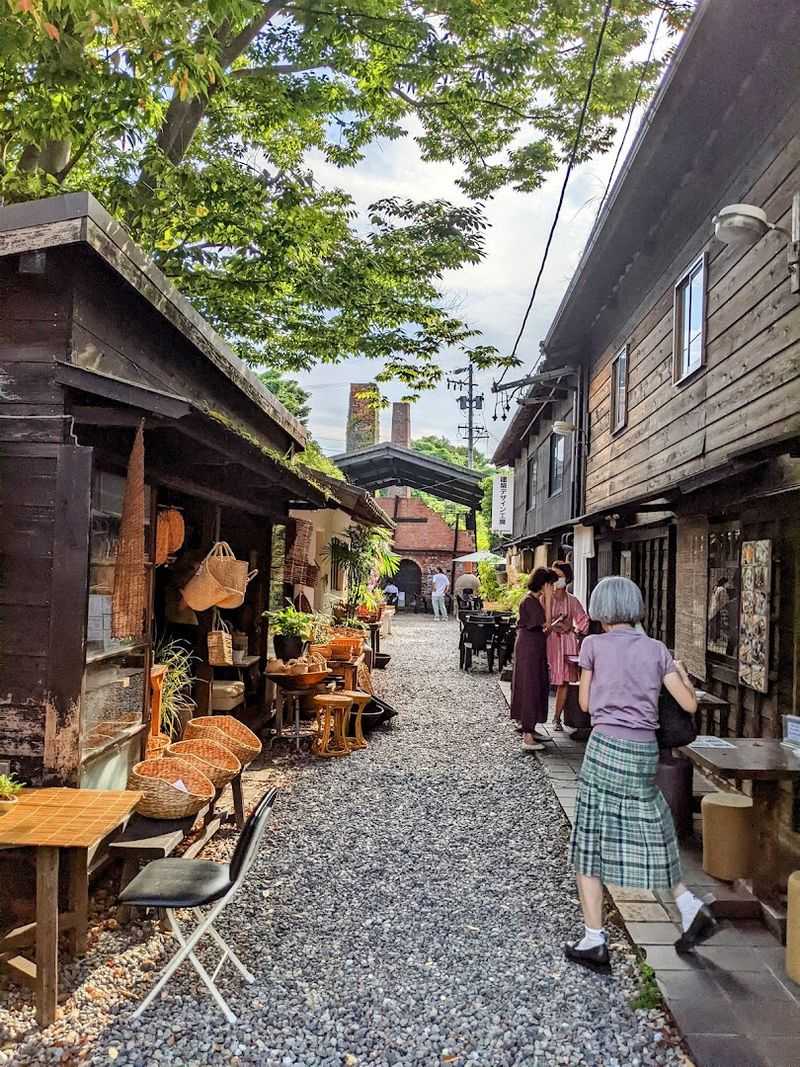
Tokoname has more than 1,000 years of pottery history, and its Pottery Footpath turns that heritage into something a traveler can experience on foot rather than just read about. Aichi’s official tourism site describes Tokoname as one of Japan’s famous pottery locations, with a retro walking route that passes old kilns, chimneys, shops, and natural scenery.
Tokoname’s official tourism site explains that the Pottery Footpath has two routes, both beginning at Tokoname Tojiki Kaikan, the Ceramics Hall. That starting point makes the walk easy to navigate even without a guide or a detailed map.
The route does the organizing work for you.
What makes Tokoname particularly appealing for craft travelers is the combination of age and accessibility. The town’s ceramic tradition is genuinely ancient, and yet the infrastructure around it, including walkable routes, a central starting point, and active shops, makes it feel current and visitor-ready rather than preserved only for specialists or academics.
Arita, Saga, Japan
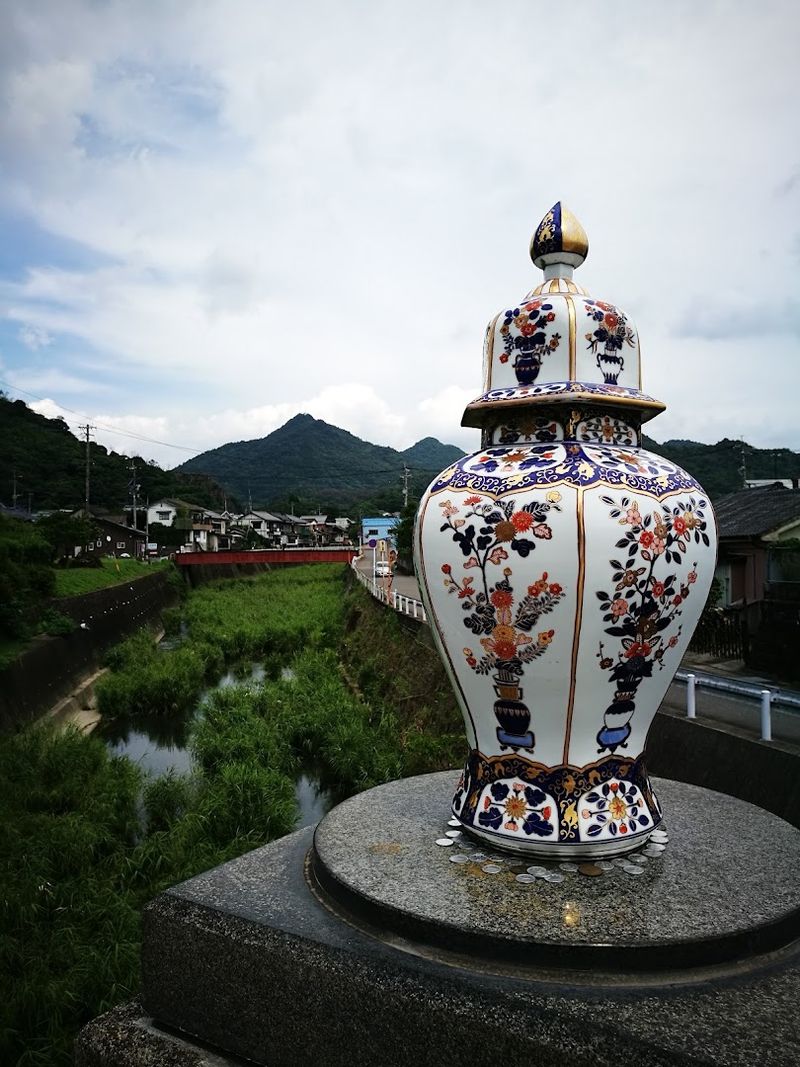
Arita is Japan’s porcelain town, and the craft identity here runs deep into the town’s layout, architecture, and tourism infrastructure. Japan Guide notes that Arita’s attractions and shops are concentrated around Kami-Arita Station, which makes the town easy to explore without a car or a complicated itinerary.
The Kyushu Ceramic Museum focuses on local Arita pottery and provides historical context for visitors who want more than just shopping. Japan’s national tourism site also lists Arita Porcelain Park, which includes a pottery kiln, garden, restaurants, and a gift shop, giving the destination a range of entry points depending on how much time a traveler has available.
For those drawn to refined ceramic traditions, Arita offers a town-scale porcelain experience where history, active production, and practical shopping exist in the same small area. The combination of museum depth and retail access makes it one of the most complete ceramics destinations in all of Japan, regardless of how much prior knowledge a visitor brings.
Jingdezhen, Jiangxi, China
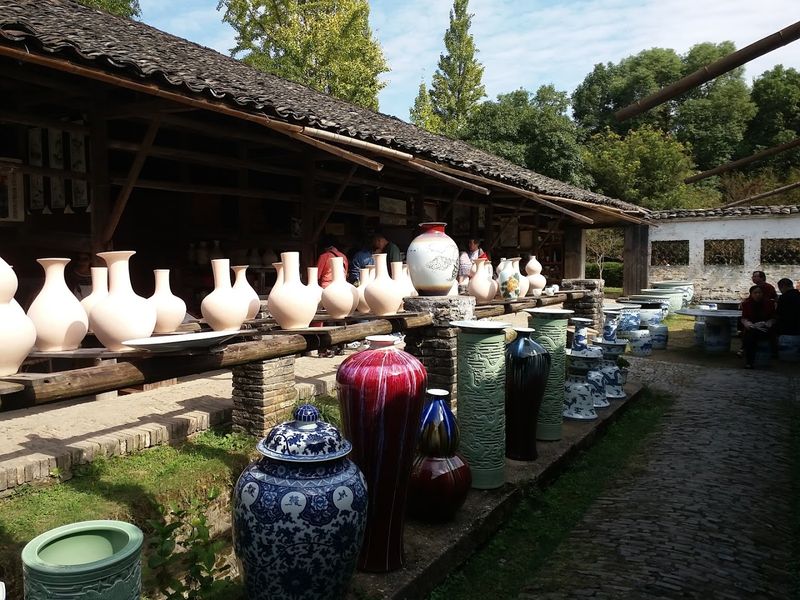
Jingdezhen is not a small artisan village. It is a full city, and porcelain is the reason it exists in the form it does today.
A Chinese government tourism page describes Jingdezhen as the pride of China’s ceramics industry, with a two-millennia history of pottery production and more than a thousand years as an official imperial kiln site serving the Ming and Qing dynasties.
Current travel guides focus on its ceramic museums, kiln heritage sites, creative districts, and open markets where visitors can find everything from reproduction antique pieces to contemporary studio work. The range of what is available makes Jingdezhen useful for collectors, casual shoppers, and craft history enthusiasts equally.
For a craft travel list, Jingdezhen belongs not because it is quaint or compact but because porcelain is not a side attraction here. It is the center of the city’s global identity, its economy, and its cultural story.
No other place on earth has the same relationship with ceramic production at this scale and depth.
Oberammergau, Bavaria, Germany

Oberammergau is most widely known for its Passion Play, performed every ten years, but the town’s woodcarving tradition is a daily reality rather than a decade-long event. The Ammergau Alps tourism site notes that numerous workshops and shops in the town center sell both traditional and modern wood art, with many pieces crafted on-site rather than imported for retail.
The Oberammergau Museum places the craft in historical context, noting that woodcarvings have been produced in the town for more than 500 years and displaying handmade objects from the 17th century through to today. That timeline gives the craft a depth that is easy to feel when walking through the streets and seeing carved figures in shop windows alongside freshly finished contemporary pieces.
For travelers with an interest in woodwork, Oberammergau offers both active production and museum context in a Bavarian Alpine setting. The craft feels connected to the town’s streets rather than stored away in a single building waiting to be discovered.
Brienz, Switzerland

Brienz sits along a lake in the Swiss Alps, and the scenery alone would make it worth a stop. But the town’s woodcarving story is substantial enough to stand on its own merit.
The Swiss Woodcarving Museum, located in the heart of Brienz, describes the village as the national center for woodcarving in Switzerland, which is a specific claim backed by the museum’s collection and the town’s history.
Interlaken’s tourism site describes the Swiss Woodcarving Museum as the first museum in the world dedicated solely to the art of woodcarving, and notes that the craft has a long and documented tradition in Brienz specifically. That distinction separates Brienz from other scenic Swiss villages that simply happen to sell carved souvenirs.
For travelers building a craft-focused European itinerary, Brienz offers carved wood, museum exhibits, and a village identity that is genuinely shaped by craftsmanship rather than tourism branding. The lakeside setting makes the visit pleasant, but the woodcarving tradition is what makes it memorable.
Share this story