Some objects carry more than just history. They carry warnings. Across museums, castles, and curiosity cabinets around the world, certain artifacts have earned reputations so dark and strange that even skeptics tend to keep their distance. A doll that receives apology letters.
A diamond that has outlasted empires. A skull bricked into a wall to stop it from screaming. These are not props from a horror film; they are real objects, sitting in real display cases, waiting for real visitors to get just a little too close. What makes these items so fascinating is not just the legends themselves, but the fact that people across centuries and cultures kept believing in them, fearing them, and passing the stories on.
Whether you think curses are genuine or just very good storytelling, the thirteen places on this list will make you think twice before reaching out to touch the glass.
1. Zak Bagans’ Haunted Museum, Las Vegas, Nevada – Dybbuk Box
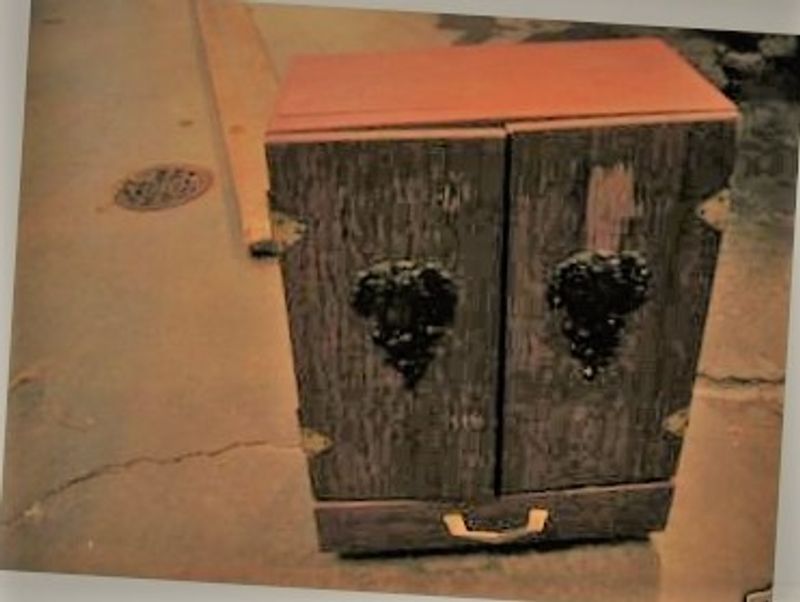
A plain wooden wine cabinet should not be capable of ruining lives, and yet the Dybbuk Box has spent the past two decades doing exactly that, at least according to everyone who has come near it. The box found its current home behind protective glass at Zak Bagans’ Haunted Museum in Las Vegas.
Its story began in 2003 when owner Kevin Mannis listed it on eBay with a vivid backstory involving a Holocaust survivor, a malevolent spirit from Jewish folklore, and a cascade of nightmares, illness, and electrical failures experienced by anyone who touched it.
Subsequent owners reported rashes, shadow figures, and exploding lightbulbs. Celebrity visitors to the museum have linked their post-visit misfortunes to the box. Mannis eventually admitted in 2021 that the backstory was a fictional creation, yet visitors still report headaches and unease near the cabinet, proving that a well-crafted story has a shelf life far longer than the truth.
2. British Museum, London, England – The Unlucky Mummy
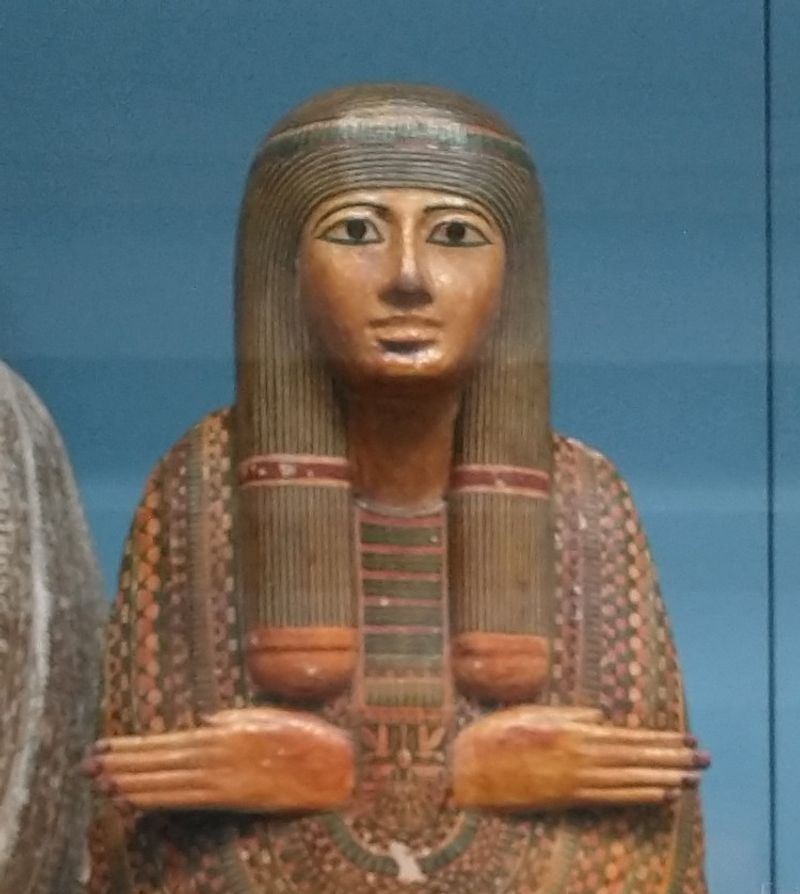
Despite the nickname, the “Unlucky Mummy” at the British Museum is not actually a mummy. It is a painted wooden inner coffin lid, catalog number EA 22542, dating to around 950 to 900 BC and believed to depict a priestess of Amen-Ra from ancient Thebes.
Acquired by the museum in 1889, the board quickly accumulated a reputation for bringing misfortune to anyone who handled or owned it. Early accounts described injuries, financial ruin, and unexplained events among those who interacted with the artifact before it was donated.
The most dramatic claim tied to this object is the persistent myth that it traveled aboard the RMS Titanic in 1912, somehow causing the disaster. Museum records confirm the board has never left the building since its acquisition, making this particular story entirely fictional. Still, the legend endures, which says a great deal about how powerfully a spooky reputation can attach itself to an object and refuse to let go.
3. Fort East Martello Museum, Key West, Florida – Robert the Doll
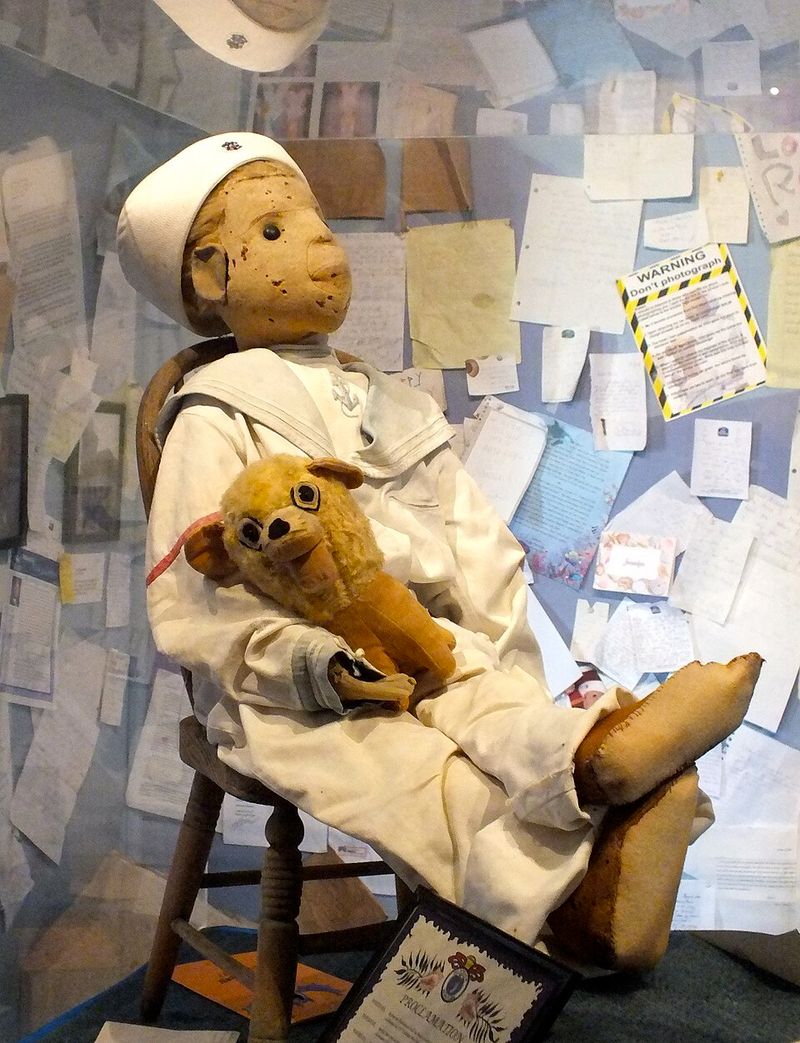
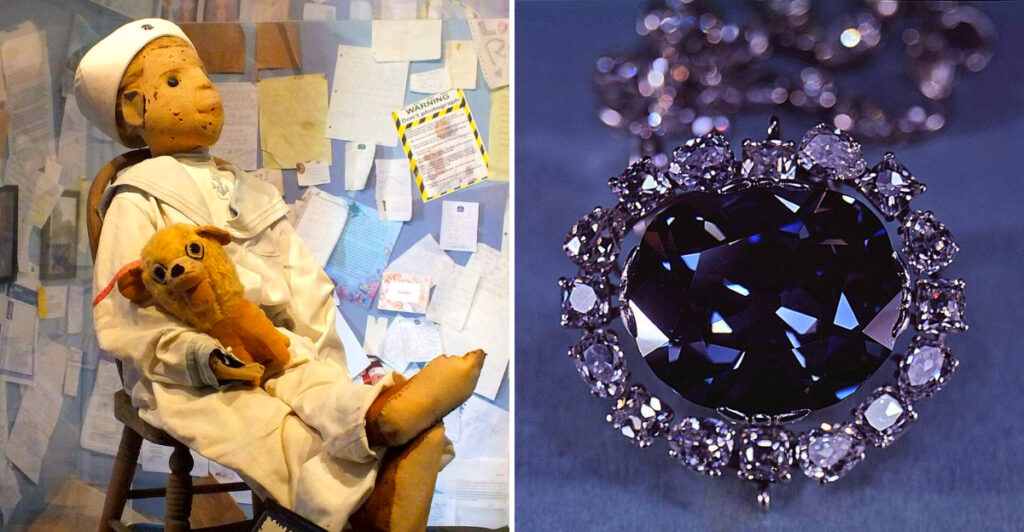
Not every museum exhibit comes with a recommended etiquette guide, but Robert the Doll is not your average exhibit. This 40-inch figure, stuffed with wood wool and dressed in a sailor suit, has lived at Fort East Martello Museum since 1994, after decades of unsettling behavior at his former home.
Originally gifted to a young boy named Robert Eugene Otto around 1904, the doll quickly became the household scapegoat for every broken item and unexplained mishap. Gene would insist, with complete sincerity, that Robert had done it.
Visitors today are strongly advised to ask Robert’s permission before photographing him. Those who skip this step reportedly face a run of bad luck ranging from job loss to illness. The museum displays an entire wall covered in handwritten apology letters from people begging Robert to lift his alleged curse, which may be the most unusual gallery feature in all of Florida.
4. South Tyrol Museum of Archaeology, Bolzano, Italy – Ötzi the Iceman
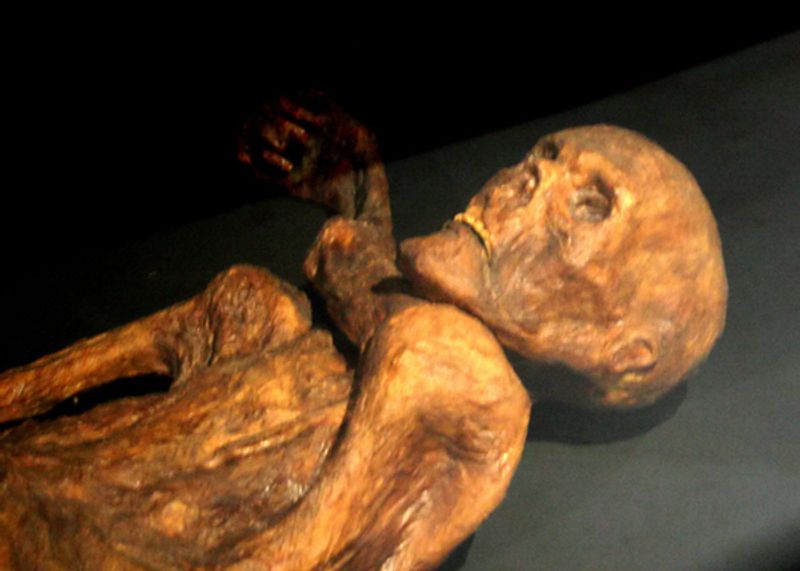
Discovered by hikers in the Ötztal Alps in 1991, Ötzi the Iceman had been frozen in a glacier for over 5,300 years before the modern world decided to study him. He now rests in a specialized cold cell at the South Tyrol Museum of Archaeology in Bolzano, kept at a steady minus six degrees Celsius and viewable through a small window.
Ötzi stands as one of the most scientifically significant finds in human history, offering detailed evidence of Copper Age life, from his 61 tattoos to the flint arrowhead lodged in his shoulder that revealed how his life ended.
Yet a peculiar pattern surrounds those connected to his discovery. The forensic expert who first handled the body perished in a car accident. The guide who led the team to the site was caught in an avalanche. The journalist who filmed the excavation passed away from a brain tumor at 47.
Coincidence or curse, the list keeps growing, and researchers keep working with one eye over their shoulder.
5. Smithsonian National Museum of Natural History, Washington, D.C. – Hope Diamond
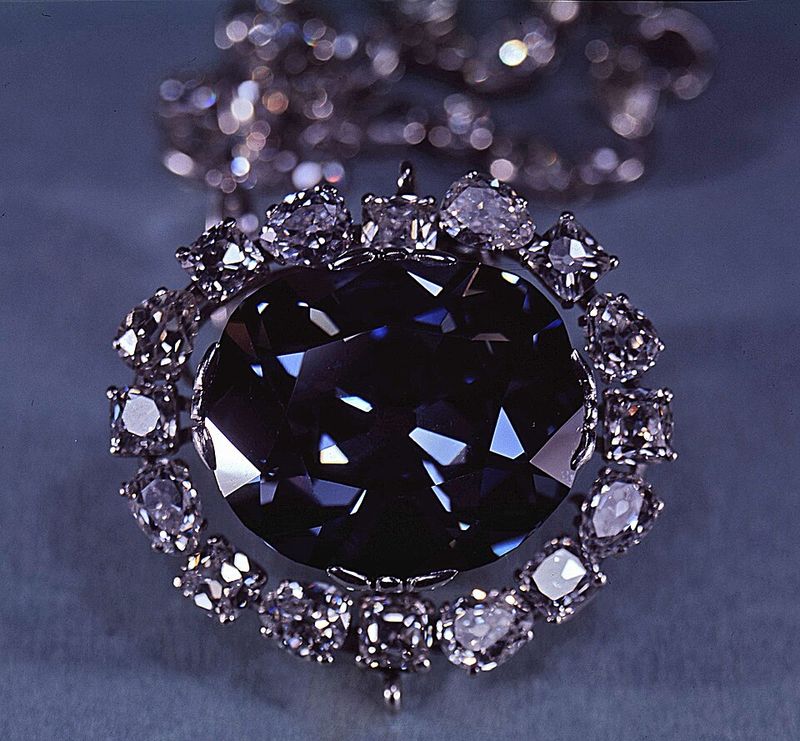
At 45.52 carats and a deep, saturated blue that borders on violet, the Hope Diamond is genuinely one of the most striking objects on Earth. It sits inside the Harry Winston Gallery at the Smithsonian National Museum of Natural History, drawing millions of visitors every year.
Its journey began in India’s Kollur Mine before passing to French merchant Jean-Baptiste Tavernier in the 17th century, who sold it to King Louis XIV. The stone was later recut, stolen during the French Revolution, and eventually resurfaced with a new name and an even darker reputation.
Owners including Louis XVI, Marie Antoinette, and American socialite Evalyn Walsh McLean all experienced significant personal tragedies, which journalists eagerly tied to the gem’s supposed curse. Since Harry Winston donated it to the Smithsonian in 1958, the museum reports nothing but good fortune, suggesting the diamond may have finally found a home it approves of.
6. Natural History Museum, London, England – Delhi Purple Sapphire
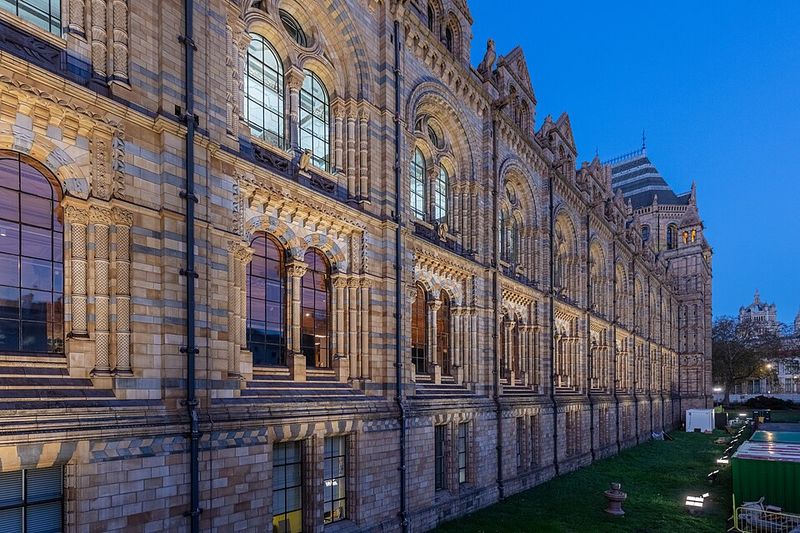
Despite its grand name, the Delhi Purple Sapphire is not a sapphire at all. It is a cabochon-cut amethyst, believed to have been looted from a temple dedicated to the Hindu deity Indra during the Indian Mutiny of 1857, and its misidentification seems almost fitting for a stone with such a talent for deception.
Edward Heron-Allen, a rational Victorian scientist, acquired the gem in 1890 and promptly blamed it for a string of personal setbacks. He tried giving it away; recipients returned it. He threw it into the Regent’s Canal; a street dealer brought it back months later.
In desperation, Heron-Allen sealed the amethyst inside seven nested boxes wrapped with protective charms and left a stern written warning not to open them for three years after his passing. When a museum curator rediscovered the package in 1972, he reportedly suffered severe storms and kidney stones during transport. The stone now rests in the Natural History Museum’s Vault Collection, warning letter included.
7. Thirsk Museum, Thirsk, North Yorkshire, England – Busby Stoop Chair
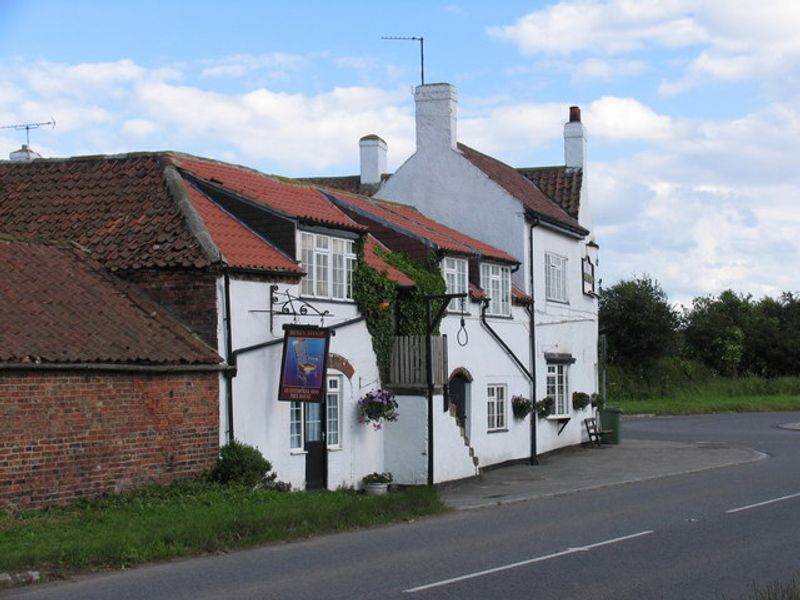
Most chairs are meant to be sat in. This one is deliberately hung on a wall to make sure nobody can. The Busby Stoop Chair has resided at Thirsk Museum since 1978, suspended high enough that no accidental contact is possible, which is exactly how the museum wants it.
The story behind this precaution dates to 1702, when coin-forger Thomas Busby was sentenced to hanging for the violent attack on his father-in-law. On his way to the gallows, Busby reportedly placed a curse on his favorite chair, declaring that anyone who sat in it would meet a swift and violent end.
Over the following centuries, the chair accumulated a grim list of alleged victims, including wartime pilots who never returned from missions and 1970s motorists who crashed shortly after sitting in it. The landlord of the nearby Busby Stoop Inn eventually donated the chair to the museum with one firm condition: keep it off the floor, and keep it out of reach.
8. Grand Egyptian Museum, Giza, Egypt – Tutankhamun’s Treasures and the Curse of the Pharaohs
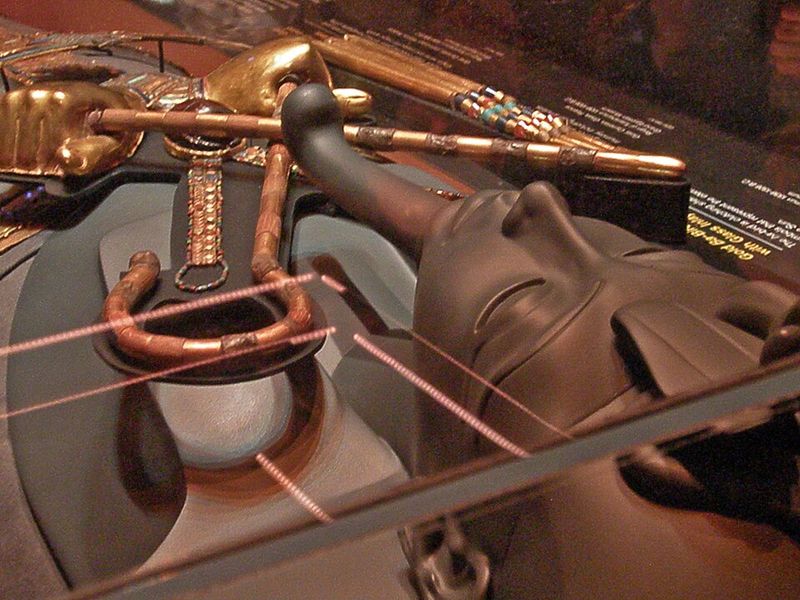
Few archaeological discoveries have captured the world’s imagination quite like the 1922 opening of Tutankhamun’s tomb in the Valley of the Kings. The Grand Egyptian Museum near the Giza Pyramids now houses all 5,398 treasures recovered from that burial, offering the most complete presentation of the boy king’s legacy ever assembled.
Lord Carnarvon, who funded the excavation, passed away months after the tomb was opened from an infected mosquito bite. Newspapers ran wild with stories of a pharaoh’s curse, claiming Cairo’s lights extinguished at the moment of his passing and that his dog howled and expired back in England.
Researchers have since pointed out that many people present at the opening lived long, healthy lives, and that the dramatic stories were largely manufactured by an eager press. The GEM, which opened fully in 2025, presents these treasures with the historical context they deserve, allowing visitors to appreciate the artistry and significance of the collection without needing a curse to make it compelling.
9. Prague Castle, Prague, Czech Republic – Saint Wenceslas Crown
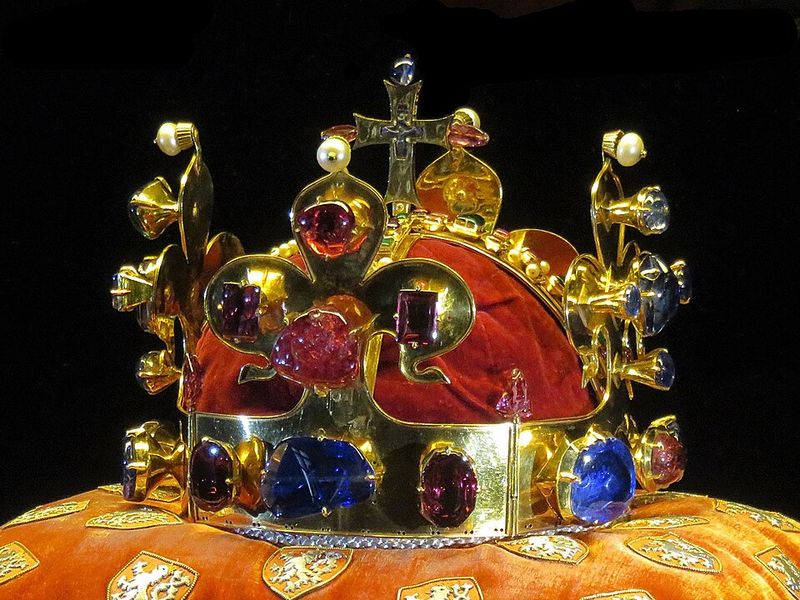
Seven locks stand between the public and the Saint Wenceslas Crown, and each key is held by a different senior Czech official. This level of security is not purely about theft prevention; legend insists that any illegitimate wearer of the crown will be dead within the year.
Commissioned by Charles IV in 1346 and crafted from 21 to 22-carat gold set with 91 precious stones, the crown is considered the personal property of Saint Wenceslas, Bohemia’s patron saint. It is displayed only on rare ceremonial occasions, making a sighting genuinely unusual.
The curse gained its most chilling modern chapter during World War II, when Nazi Deputy Protector Reinhard Heydrich allegedly placed the crown on his own head during an inspection of St. Vitus Cathedral. Within a year, he was assassinated by Czech resistance fighters. Concrete proof of the crown-wearing incident remains scarce, but the story has been repeated so persistently across decades that it has become inseparable from the crown’s identity.
10. Imperial Treasury (Hofburg), Vienna, Austria – Holy Lance (Spear of Destiny)
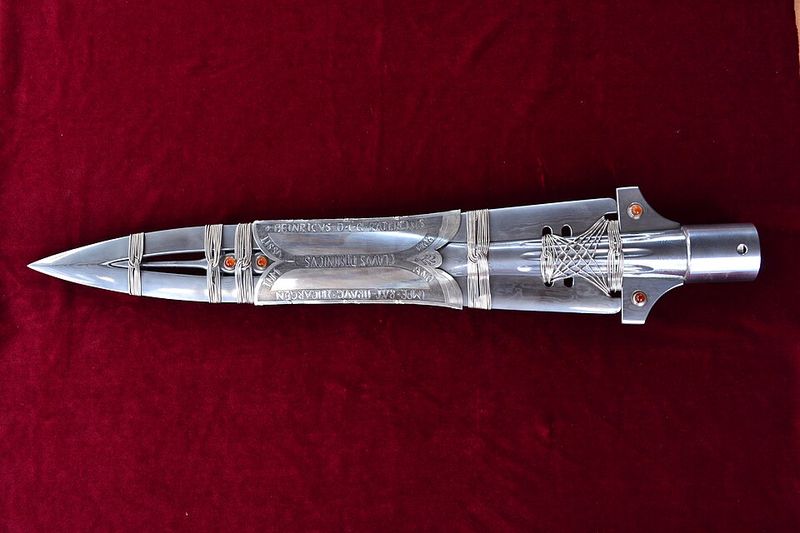
Kept inside the Imperial Treasury at Vienna’s Hofburg Palace, the Holy Lance has one of the most extraordinary ownership histories of any object on Earth. Also called the Spear of Destiny, it is believed by many to be the lance that pierced Christ’s side during the Crucifixion, an act said to have healed the Roman soldier Longinus of an eye condition.
Constantine the Great, Charlemagne, and a succession of Holy Roman Emperors all reportedly possessed the lance, each associating it with military victory and supreme authority. The lance dates to Carolingian times and features a golden sleeve added by Charles IV in 1350, inscribed with the words “Lancea et clavus Domini,” meaning Lance and Nail of the Lord.
Adolf Hitler’s documented obsession with the lance added a darker chapter to its legend, as he reportedly believed it held the power to determine world events. Today it sits in the Secular Treasury alongside the Imperial Crown and Imperial Sword, a centerpiece of a collection spanning more than a thousand years of European history.
11. Tower of London, London, England – Koh-i-Noor Diamond
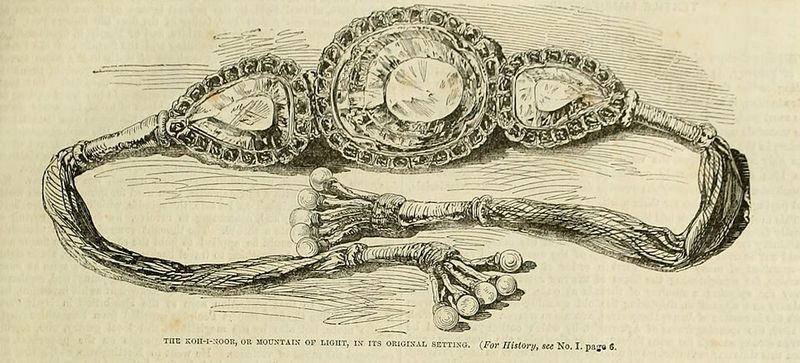
Persian for “Mountain of Light,” the Koh-i-Noor’s name suggests brilliance and grandeur, which it certainly delivers at 105.6 carats. What the name does not mention is the ancient warning attached to the stone, which states that male rulers who possess it will know the world’s misfortunes, while only God or a woman can wear it safely.
The diamond’s path through history is marked by a pattern of deposed rulers and violent endings among its male owners. Mughal emperor Shah Jahan was imprisoned by his own son while the stone was in his possession. Persian ruler Nadir Shah, who gave the diamond its current name, was later assassinated.
When the British East India Company acquired the gem in 1849, royal advisors took the warning seriously enough to recommend it be worn exclusively by female members of the royal family. Queens Victoria, Alexandra, Mary, and Elizabeth the Queen Mother all wore it, each enjoying a notably long life. The diamond now sits in the Tower of London as part of the Crown Jewels, its legend intact and its curse apparently well managed.
12. Burton Agnes Hall, Burton Agnes, East Yorkshire, England – The Screaming Skull
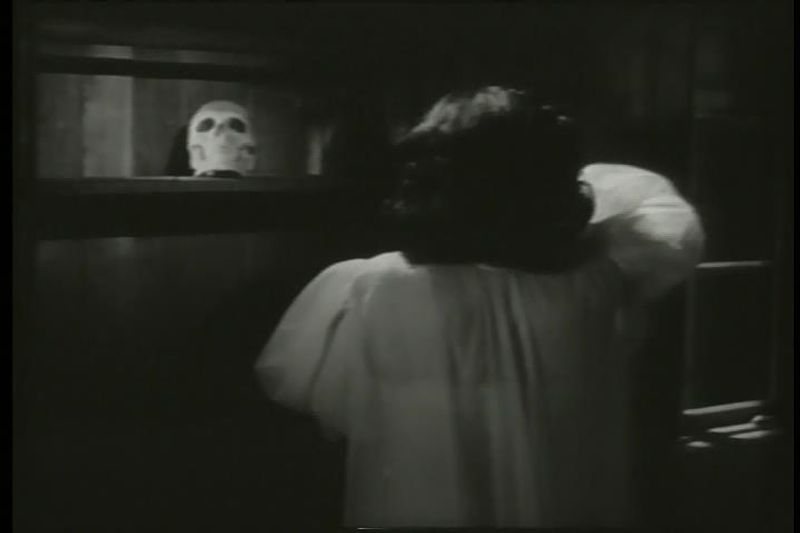
Burton Agnes Hall is a stunning Elizabethan manor in East Yorkshire that has stood since the early 17th century, and somewhere inside its walls, bricked up and hidden from view, is a human skull that the house reportedly cannot function without.
The skull belonged to Anne Griffith, one of three sisters who loved the newly built hall with fierce devotion. After suffering a brutal attack near the estate, Anne made her sisters swear on her deathbed that her head would remain within the walls of the house she cherished so deeply.
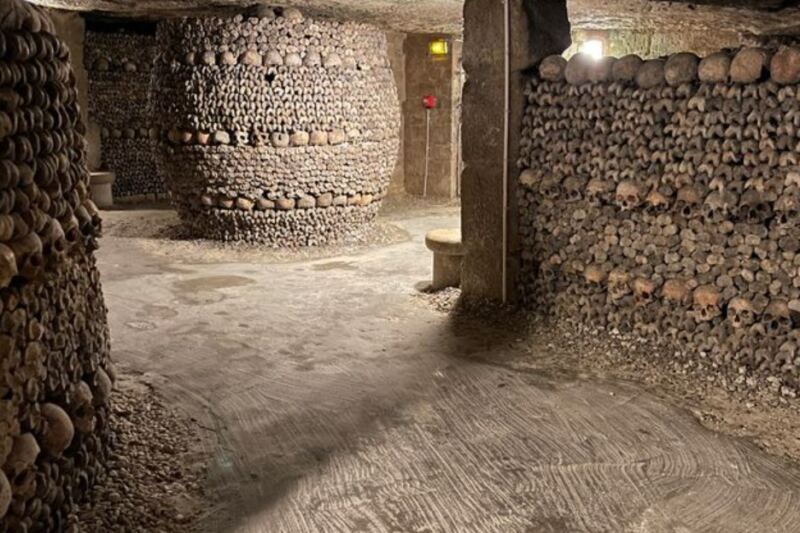
Her sisters initially buried her intact. The disturbances that followed, including violent crashes, slamming doors, and thundering footsteps, convinced them to reconsider. When they exhumed the coffin, they found the skull already separated and decayed while the rest of the body remained preserved. Every subsequent attempt to remove the skull from the hall reportedly triggered terrifying wailing and shaking walls, until it was finally bricked up permanently, keeping Anne, known locally as Owd Nance, exactly where she always wanted to be.
13. National Library of Sweden, Stockholm, Sweden – Codex Gigas (the Devil’s Bible)
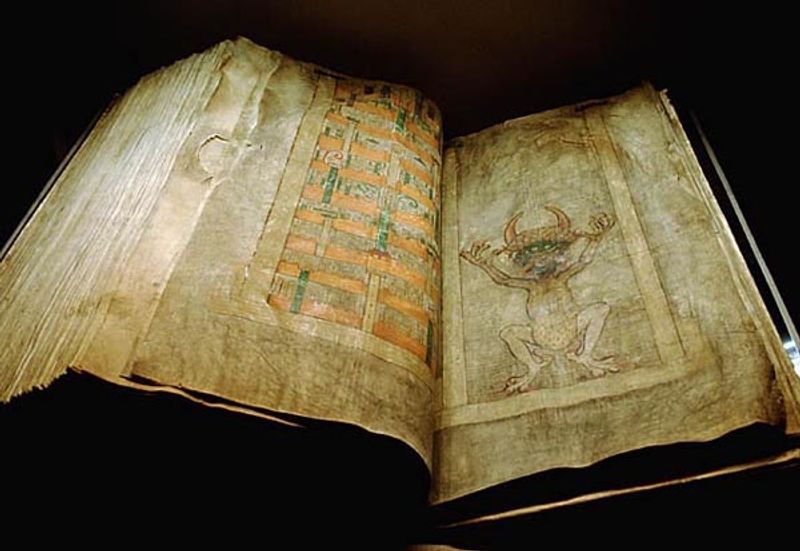
At 92 centimeters tall and weighing nearly 75 kilograms, the Codex Gigas does not sit quietly on a shelf. This medieval manuscript, the largest of its kind in the world, lives at the National Library of Sweden in Stockholm, where it has been on display since arriving as Swedish war spoils in 1648.
Created in a Bohemian Benedictine monastery in the early 13th century, the manuscript contains the complete Latin Vulgate Bible alongside historical texts, medical treatises, and practical exorcism formulas. Its origin legend claims a condemned monk summoned the Devil to help him write the entire volume in a single night, sealing the pact with a full-page portrait of Satan.
Scholars estimate the consistent handwriting suggests one person working steadily for 20 to 30 years, which is arguably more impressive than a supernatural shortcut. The devil portrait, depicted squatting with upraised arms opposite an illustration of the Heavenly City, remains the manuscript’s most recognizable feature. During a castle fire in 1697, the book was reportedly thrown from a window to safety, injuring a bystander in the process.
Share this story