Croatia has a coastline that stretches for thousands of miles, but most travelers only see the same few spots near Dubrovnik, Split, and Hvar. Beyond those busy hubs lies a quieter world of small islands where stone houses have stood for centuries, fishing boats still outnumber tourists, and the water runs so clear you can count the rocks on the bottom.
These islands are not hidden secrets, but they are genuinely off the beaten path compared to the mainland resorts. If you are looking for a slower pace, old architecture, and swimming coves without the crowds, this list gives you fourteen real options worth saving before your next trip to Croatia.
Lastovo
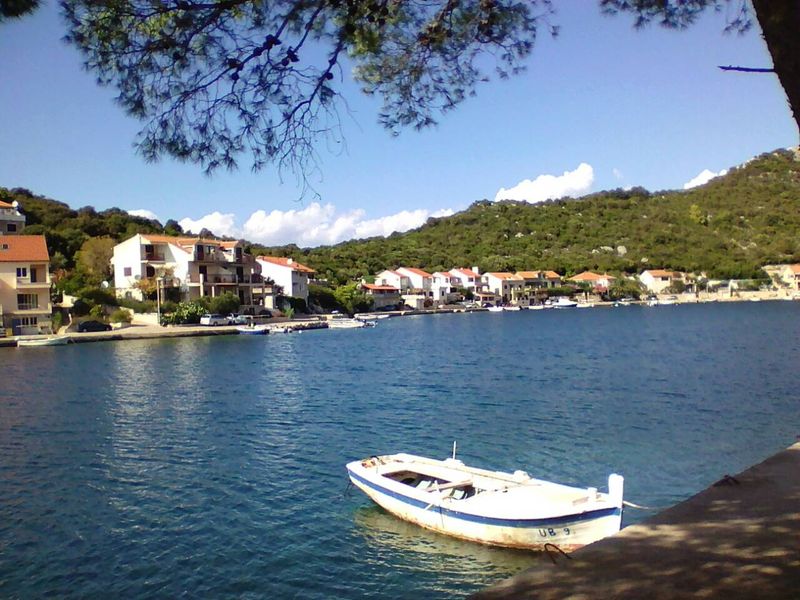
Few islands in the Adriatic feel as genuinely removed from modern tourism as Lastovo. Its main settlement sits inland, built across a natural hillside amphitheater where stone houses climb upward in tight rows.
What makes the architecture immediately distinctive are the “fumari,” elaborately decorated chimney structures found almost nowhere else in Croatia.
The island and its surrounding archipelago form a protected nature park, which keeps the wooded hills, rocky coves, and remarkably dark night skies largely intact. Coastal hamlets like Zaklopatica, Pasadur, and Lucica place traditional houses right beside sheltered bays where the water shifts from green to deep blue depending on the angle of the sun.
Getting here takes more planning than a standard island hop from Split, but Jadrolinija operates a route through Vela Luka and Ubli on a 2026 schedule. That extra effort is exactly what keeps Lastovo as quiet as it is.
Vis
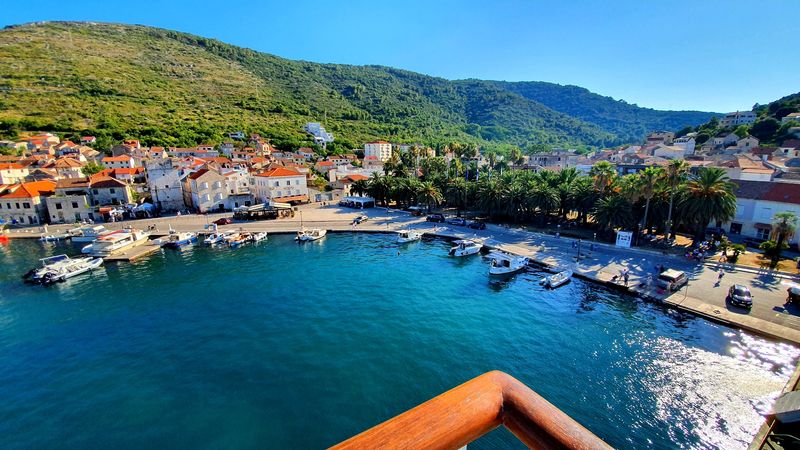
Vis carries a long history in a compact island frame. The town that shares its name combines stone lanes, waterfront houses, and archaeological remains from Greek and Roman settlements that once made this one of the most strategically important islands in the Adriatic.
On the opposite side of the island, Komiza wraps around a working fishing harbor beneath steep hills. Beaches like Stiniva, Stoncica, and Zaglav are closely associated with the intensely blue water and rocky coastal scenery that photographers and swimmers return to year after year.
July and August bring more visitors, but the island’s inland vineyards, stone villages, and distant bays still offer noticeably calmer alternatives. The Split to Vis car ferry runs year-round under a published 2026 schedule, so planning a shoulder-season visit is straightforward.
Vis rewards travelers who slow down and explore beyond the most photographed beaches.
Mljet
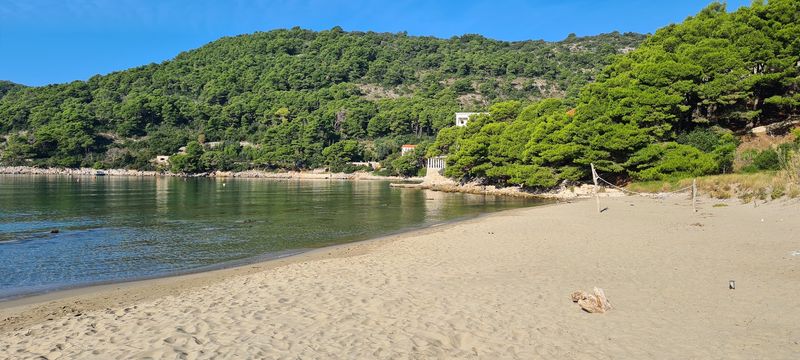
Mljet is one of the greenest islands in all of Croatia. Pine and holm-oak forests cover much of its narrow landscape, giving the island a lush character that feels different from the drier, rockier islands further north along the coast.
The western portion is protected within Mljet National Park, where visitors can walk or cycle alongside Veliko Jezero and Malo Jezero, two saltwater lakes that stay connected to the open sea. A small monastery sits on an island within the larger lake, accessible by boat.
Stone settlements including Govedari, Pomena, and Polace, which holds Roman-era ruins, give the island its historical texture.
Outside the park, secluded bays and beaches continue along a deeply indented coastline known for clean water and rich marine life. Jadrolinija’s 2026 network includes the Prapratno to Sobra vehicle ferry, with seasonal passenger services adding more connection options throughout the warmer months.
Solta
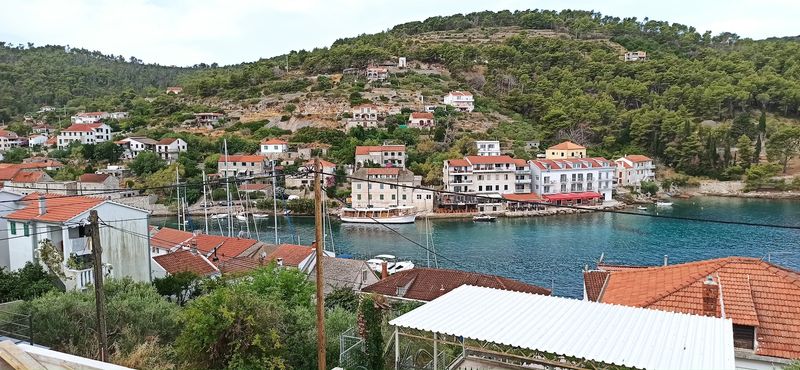
Just about an hour from Split by ferry, Solta consistently gets overlooked in favor of its more famous neighbors, Hvar and Brac. That oversight works in the island’s favor, keeping its stone villages, olive groves, and small fishing ports refreshingly calm even during peak summer weeks.
Maslinica offers one of the most picturesque harbors on any Croatian island, framed by stone houses and a historic castle that dates back centuries. Stomorska curves around a traditional waterfront where fishing boats share space with small pleasure craft.
Inland settlements like Grohote, Gornje Selo, and Donje Selo reveal old lanes, churches, and agricultural landscapes that reflect how the island has operated for generations.
The southern shore holds numerous rocky bays and turquoise swimming coves that rarely appear in mainstream travel guides. Frequent ferries connect Split with Rogac under Jadrolinija’s 2026 timetable, making Solta one of the most accessible quiet islands on this entire list.
Silba
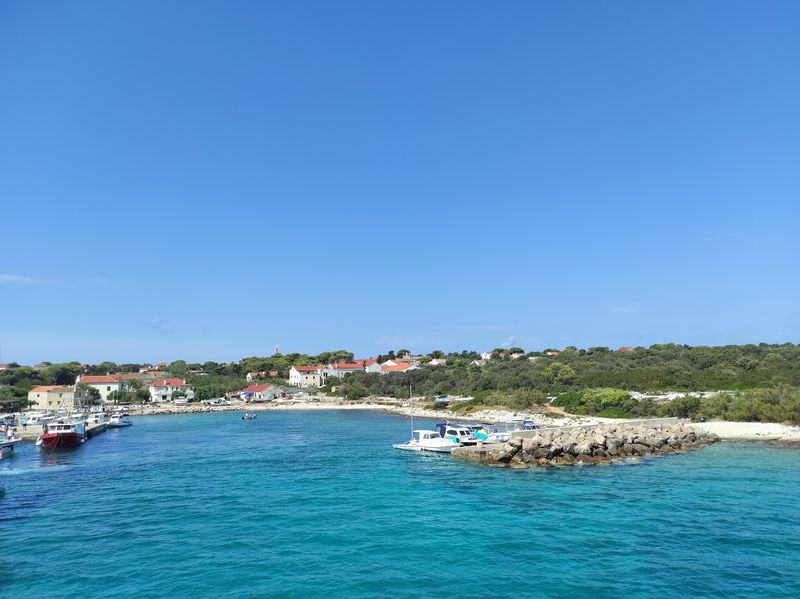
Silba operates on a different frequency from most Croatian islands. Cars are completely absent here, and the pace of daily life reflects that absence in a way that feels almost immediate when you step off the ferry.
Footpaths cross the island between two opposite shores, letting visitors walk from the main harbor to quiet beaches without hearing a single engine. The settlement is composed of stone houses, gardens, churches, and narrow lanes shaded by Mediterranean vegetation.
Its most distinctive landmark is the Toreta, a slender spiral staircase tower traditionally connected to a local love story that has been passed down through generations.
Silba’s tourism board actively promotes its peace, untouched nature, and clear blue sea, positioning the island for travelers who prefer swimming and walking over organized nightlife. Jadrolinija lists Silba on its active 2026 routes from Zadar and Mali Losinj, keeping the island well connected despite its deliberate quietness.
Olib
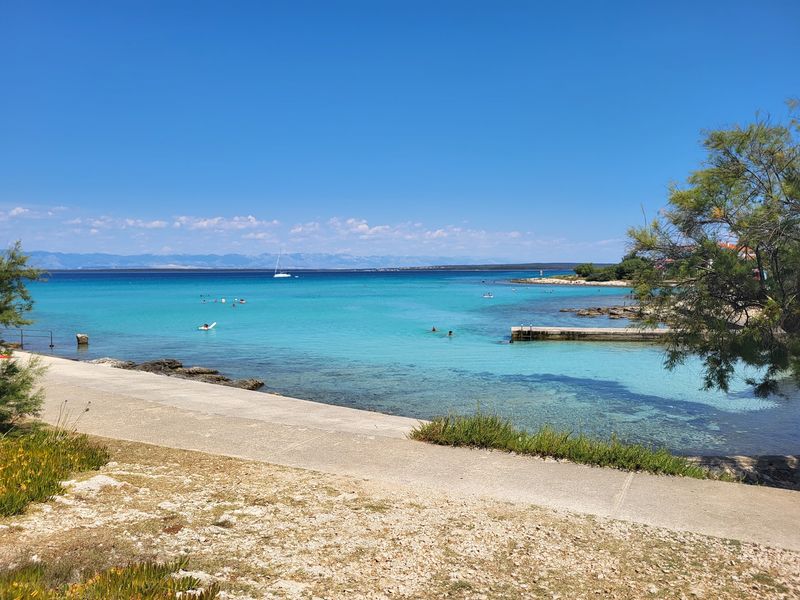
Olib sits close to Silba in the northern Zadar archipelago, and the two islands share a similar commitment to simplicity. Open landscapes, old dry-stone walls, and unusually shallow sandy bays define the character of this small, unhurried island.
The main settlement gathers around a broad harbor and the parish church, with traditional houses arranged in the compact style common to islands where building materials had to be sourced locally from stone. Slatinica Bay is the island’s best-known swimming area, with pale sand beneath clear, shallow water that stays warm well into September.
Smaller bays and rocky entry points offer alternatives when the main beach draws more visitors.
Olib has long traditions in sheep farming, olive growing, and Glagolitic culture, traces of which survive in its churches and rural landscape. Jadrolinija connects it to Zadar through the line serving Ist, Olib, Silba, Premuda, and Mali Losinj, with a published 2026 schedule.
Dugi Otok
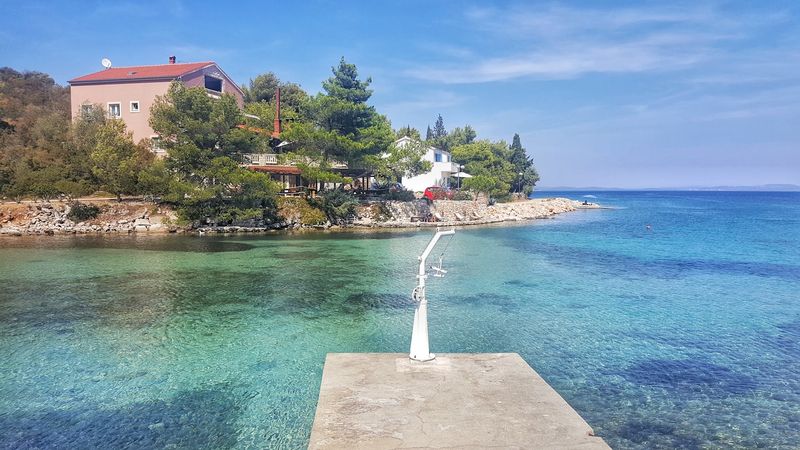
Dugi Otok is longer and wider than most islands on this list, yet its scattered villages and extended coastline make uncrowded corners easy to find. Stone settlements like Sali, Bozava, Brbinj, and Veli Rat retain the character of old fishing and farming communities that have changed little in outward appearance over the past century.
The island’s landscapes shift considerably depending on which direction you face. Telascica Nature Park protects a deep natural harbor, a salt lake, and high coastal cliffs on the southern end.
Sakarun, on the northern tip, is known for pale pebbles, sand, and water that turns a luminous turquoise in clear weather.
Visitors seeking solitude can explore smaller coves away from the best-known beaches without much effort. Jadrolinija’s 2026 vehicle ferry links Zadar’s Gazenica port with Brbinj throughout the year, giving travelers a reliable and consistent way to reach the island across all seasons.
Prvic
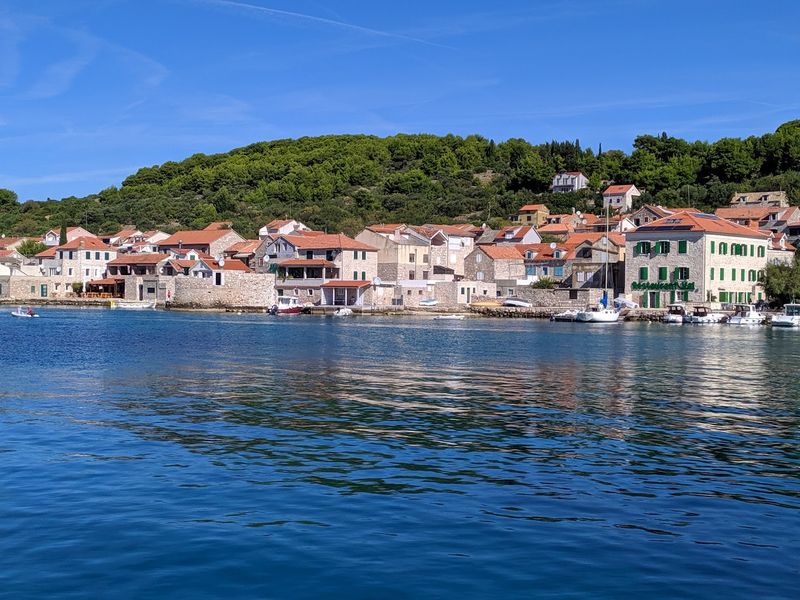
Compact islands sometimes pack more character per square meter than larger ones, and Prvic fits that observation well. This small island in the Sibenik archipelago has two inhabited settlements, Prvic Luka and Prvic Sepurine, both built in the traditional Dalmatian style with stone waterfront houses, terracotta roofs, and narrow lanes where boats substitute for road traffic.
Prvic Luka carries a specific historical connection as the birthplace of Faust Vrancic, a Renaissance-era inventor whose designs included an early parachute concept. A memorial center in the village interprets his life and work.
Sepurine offers an especially photogenic waterfront and a maze of old alleys that climb uphill from the sea in tight, irregular patterns.
Intimate beaches and coves sit around the island, and the short walking distances make full exploration possible without any transportation beyond your own feet. Current Jadrolinija services connect Prvic with Sibenik, Zlarin, and Vodice on a regular schedule.
Zlarin
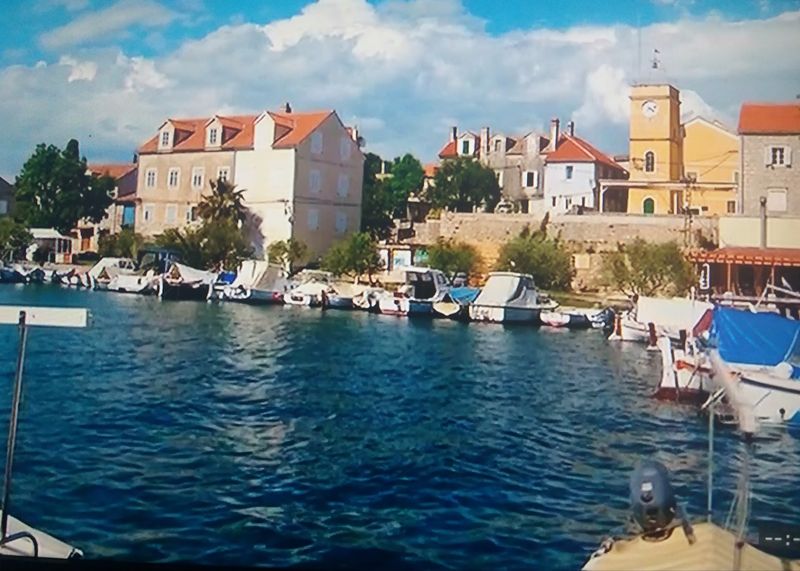
Red coral has shaped Zlarin’s identity for centuries. The island lies just offshore from Sibenik but carries a distinct character built around the harvesting and crafting of coral that once made Zlarin craftsmen known across the Mediterranean.
The island is car-free, and its main village stretches around a long harbor backed by stone houses, gardens, and forested hills. That heritage is interpreted through the Croatian Coral Center, while local shops continue to display coral-inspired jewelry and decorative designs that connect the present village to its long maritime past.
Pebble beaches and rocky swimming areas sit within easy walking distance of the settlement, with clear water surrounding much of the island’s perimeter. The car-free environment gives the waterfront a particularly relaxed atmosphere, especially on summer afternoons when the ferry traffic from Sibenik slows down.
Regular passenger boats operate between Sibenik, Zlarin, Prvic, and Vodice, including services listed in Jadrolinija’s current route network.
Kaprije
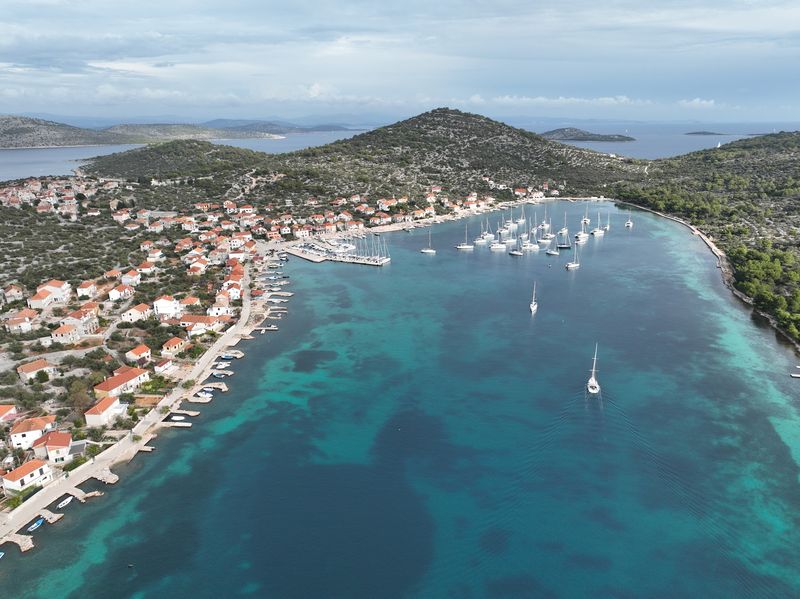
Kaprije does not advertise itself loudly, and that restraint suits the island perfectly. One of the quieter permanently inhabited islands in the Sibenik archipelago, it has a single main village arranged around a protected bay where stone houses, small boats, and waterfront restaurants create an understated maritime setting.
Cars are largely absent from daily life here, and footpaths cross the island through olive groves, scrubland, and dry-stone landscapes that look much as they have for generations. Visitors can swim close to the village or walk toward less-developed coves where the sea transitions from transparent green to deep blue as the water deepens.
Croatia’s national tourism board describes Kaprije as an island suited to peaceful holidays in nature, which is an accurate summary without much exaggeration. Jadrolinija’s active Sibenik route passes through Zlarin, Obonjan, and Kaprije before continuing to Zirje, keeping the island accessible on a regular schedule throughout the year.
Zirje
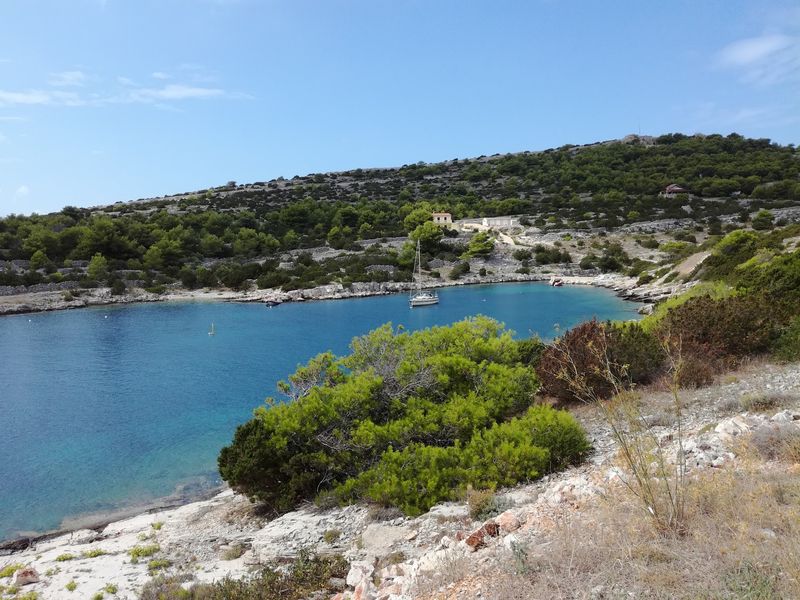
Zirje holds the distinction of being the most distant permanently inhabited island in the Sibenik archipelago. That position farther from the mainland has helped protect a rugged landscape of low hills, olive trees, stone walls, and quiet bays that see relatively little visitor traffic even during the busiest summer months.
The island’s main settlement sits inland rather than directly on the water, while small coastal hamlets and boat moorings appear around coves including Muna and Koromasna. Historical remains include Byzantine-era hilltop fortifications built to monitor maritime routes through the Adriatic, giving the island a layer of history that goes well beyond its current population size.
Clear water, rocky beaches, and limited development make Zirje particularly attractive to swimmers, hikers, and boaters who prefer finding their own space over sharing a beach with a crowd. Croatia’s tourism board promotes Zirje for nature and outdoor activities, and Jadrolinija serves it on the operating route from Sibenik.
Ilovik
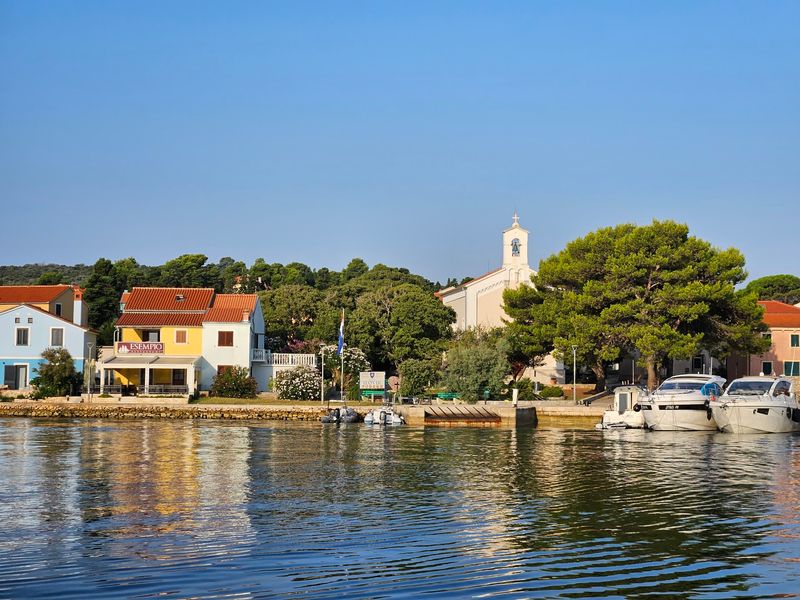
Ilovik earned its nickname, the Island of Flowers, through the Mediterranean plants, oleanders, and well-tended gardens that line its settlement and give the harbor an unusually colorful character compared to more austere stone island villages elsewhere in Croatia.
The village faces a narrow, sheltered channel separating Ilovik from the smaller island of Sveti Petar. Stone houses with colorful shutters line the waterfront, while paths lead through the village toward beaches and rocky swimming places.
Parzine Bay is the island’s best-known beach, but quieter shoreline spots sit farther from the center for visitors willing to walk a bit.
Ilovik’s small size and absence of heavy vehicle traffic naturally encourage a slow rhythm based on walking, swimming, and watching boats move through the channel throughout the day. Jadrolinija’s 2026 passenger route links Ilovik with Mali Losinj, Susak, Unije, Cres, and Rijeka, making it reachable from several points along the northern Adriatic.
Kolocep
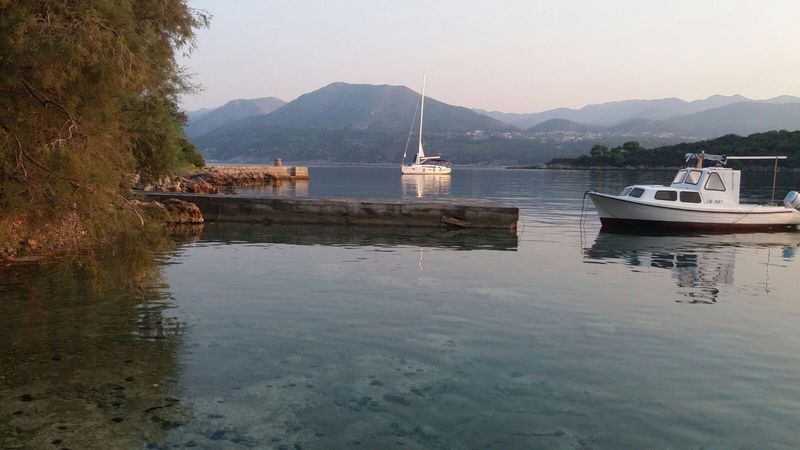
Just a short ferry ride from Dubrovnik, Kolocep belongs to a completely different world from the walled city’s crowded limestone streets. The closest of the inhabited Elaphiti Islands to Dubrovnik, it offers a dramatically calmer setting that becomes most apparent once the daytime excursion boats return to the mainland.
The island has two principal settlements, Gornje Celo and Donje Celo, connected by paths that cross pine forest and Mediterranean vegetation. Traditional stone houses, small churches, and fishing boats give both villages a genuinely local character.
The coastline holds pebble beaches, rocky platforms, sea caves, and clear coves that can be reached on foot or by boat without much planning.
Kolocep is car-free, which makes an overnight stay here particularly appealing after the day visitors leave and the island returns to its natural quiet. Jadrolinija’s Dubrovnik service currently connects Kolocep with Lopud and Sipan on a regular schedule.
Sipan
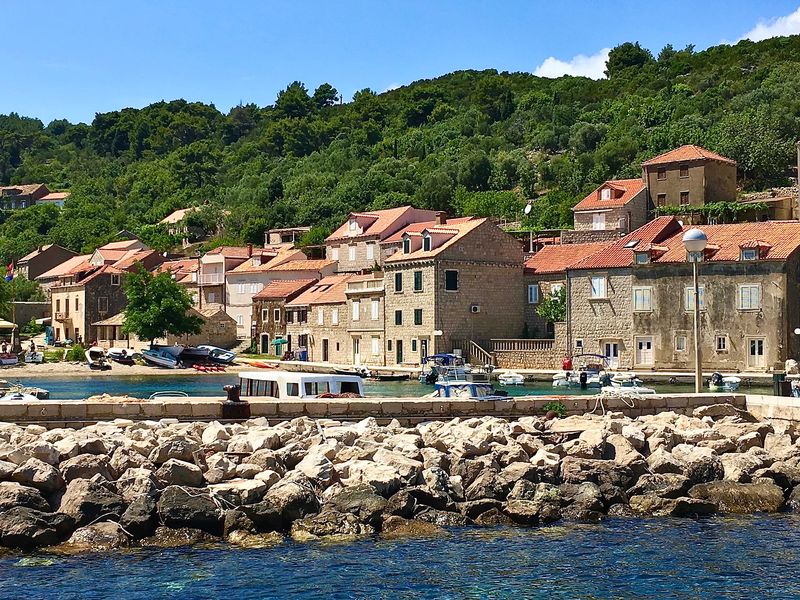
Sipan is the largest of the Elaphiti Islands, but size has not translated into crowds. Outside its two main settlements, Sipanska Luka and Sudurad, the island moves at a pace that feels closer to the fifteenth century than the twenty-first.
Both settlements contain stone houses, old churches, and remnants of summer residences built by noble families from the former Dubrovnik Republic. Those fortified residences give Sudurad a compact waterfront with a notably historic atmosphere.
Sipanska Luka curves around a sheltered bay where the surrounding hills and Mediterranean vegetation create a natural enclosure that keeps the water calm.
Olive groves and vineyards cover much of the interior, and small beaches and rocky coves provide swimming opportunities around both villages. Jadrolinija’s current Dubrovnik routes serve Sudurad, keeping Sipan connected to the city as an established destination rather than a seasonal stop.
For travelers finishing a Dubrovnik trip, Sipan offers a genuinely satisfying final chapter.
Share this story