Some corners of the world seem to have skipped the memo about being ordinary. Turquoise lakes cascade into one another, ancient trees twist into cathedral-like tunnels, and entire villages perch between mountains and mirrors of water as if a fantasy novelist designed them on a lunch break. These 13 real places carry that unmistakable quality of somewhere that should not exist but absolutely does. Each one has been drawing wide-eyed visitors for years, and each one delivers a landscape so striking that reaching for a camera feels almost instinctive.
From a Croatian park where wooden boardwalks float above crystal-clear water to a New Zealand fjord so dramatic it has its own nickname, this list covers destinations that blur the line between the world you know and the one you wish existed. Pack your curiosity, because this is a tour worth taking.
1. Plitvice Lakes National Park, Plitvički Ljeskovac, Croatia
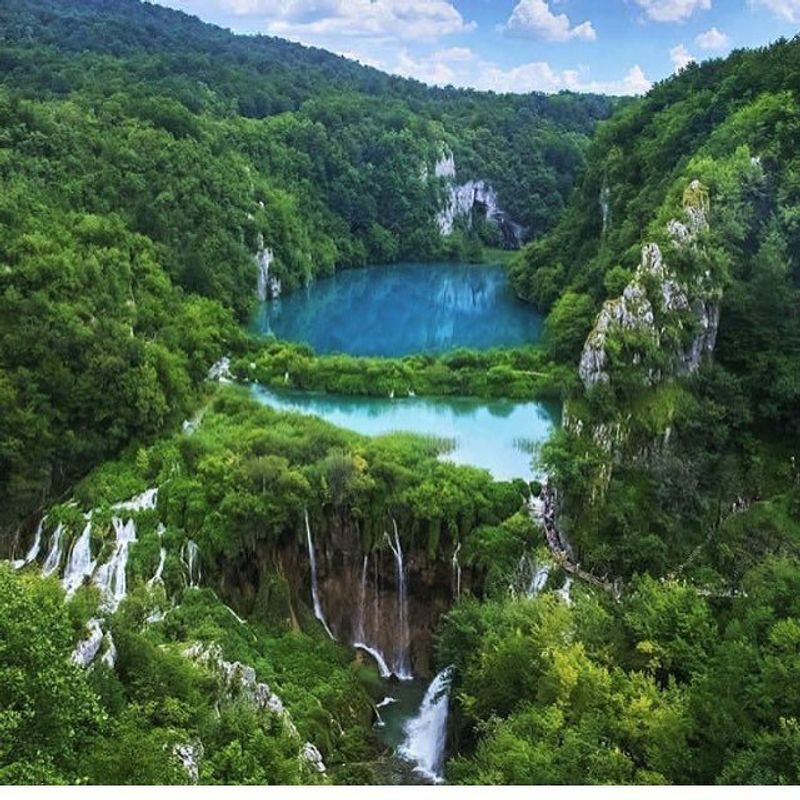
Croatia is hiding one of the most jaw-dropping natural systems on the planet, and it goes by the name Plitvice Lakes National Park.
Sixteen terraced lakes connect through dozens of waterfalls, including Veliki Slap, Croatia’s tallest waterfall at 255 feet. The water shifts between vivid azure and deep emerald depending on minerals and microorganisms present, not on the mood of the day.
Wooden boardwalks guide visitors directly over the crystal-clear water, making it possible to look straight down at submerged logs and rocks below the surface. The park covers over 73,000 acres of ancient beech and fir forest, home to brown bears and wolves.
Autumn turns the surrounding trees copper and gold, while winter delivers frozen waterfalls and snow-dusted banks. This UNESCO World Heritage site earns its reputation with every season it shows up.
2. Hallstatt, Hallstatt, Austria
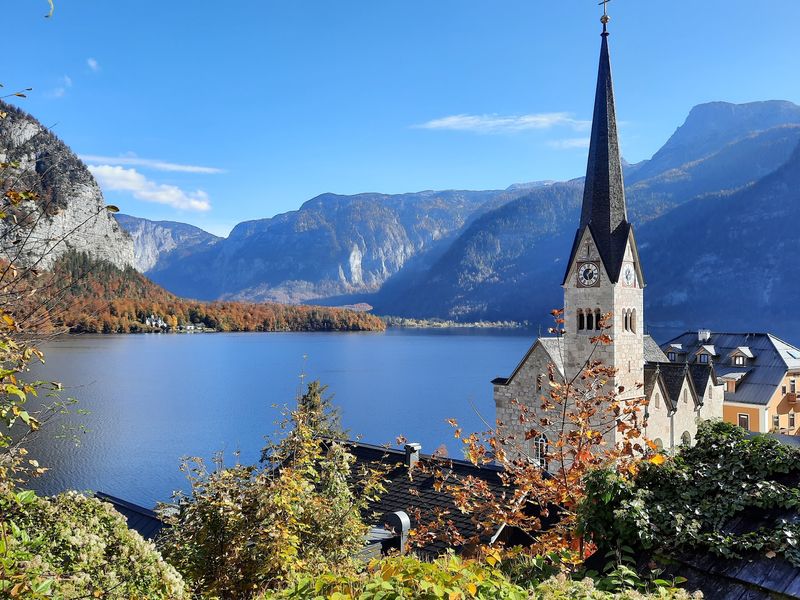
Hallstatt looks like someone drew a perfect alpine village and then forgot to mention it was a real place.
Colorful 16th-century wooden and stone houses climb a steep hillside between the Dachstein mountains and Lake Hallstatt, with barely enough flat ground to fit a market square. That square, the Marktplatz, features a Holy Trinity sculpture and is flanked by cafes and small shops that have been operating for generations.
Church spires reflect in the lake below with remarkable clarity, and morning mist regularly drifts across the water, making the whole scene feel quietly theatrical. The village has over 7,000 years of history rooted in salt mining, which explains the unusual vertical layout of its buildings.
Visitors park outside and walk in, which keeps the streets pleasantly calm and gives the approach an appropriately ceremonial feel.
3. Neuschwanstein Castle, Schwangau, Bavaria, Germany
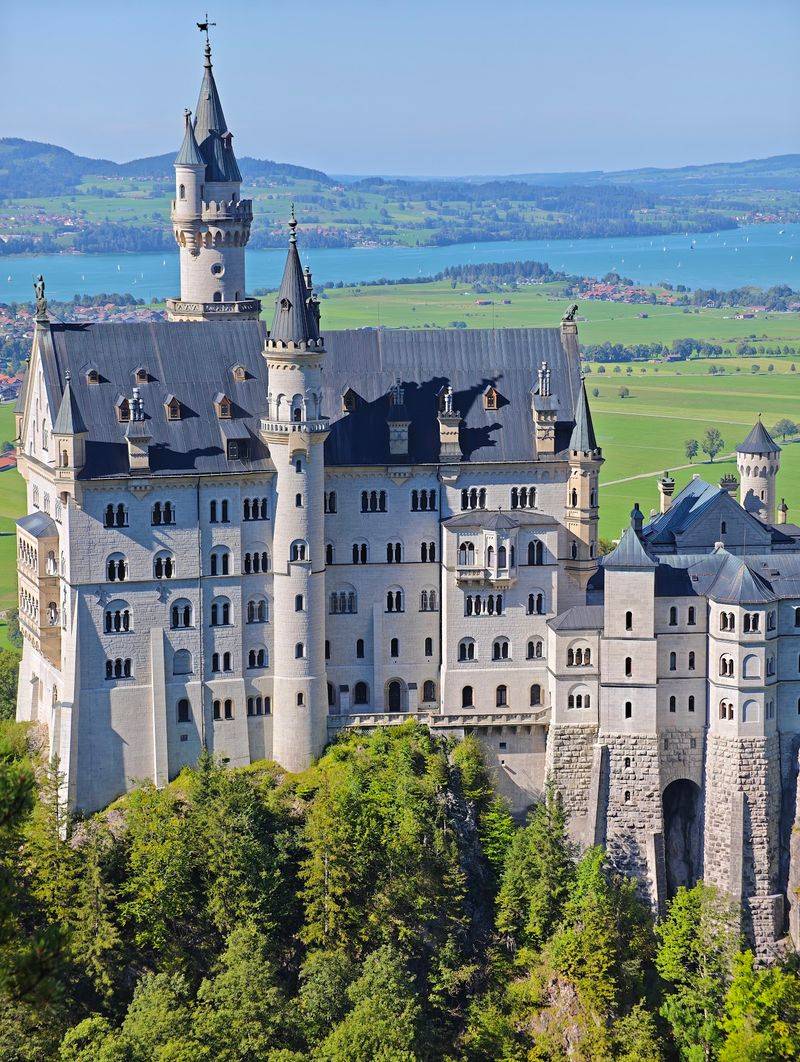
King Ludwig II of Bavaria wanted a castle that looked like a fantasy, and he got exactly what he asked for.
Neuschwanstein rises roughly 660 feet above the village of Hohenschwangau, its white limestone towers contrasting sharply against dark forest and alpine peaks. The 19th-century Romanesque Revival design includes numerous turrets, ornate stonework, and interior rooms decorated with scenes from German mythology.
The Marienbrücke, a wooden bridge spanning the Pollat Gorge nearby, provides the most photographed view of the castle’s southern facade. From that vantage point, the structure looks almost too precise to be real, especially when snow covers the surrounding Alps.
The Tegelberg cable car offers an alternative aerial perspective that includes Lake Alpsee and Schwansee in the background. Neuschwanstein directly inspired the design of Sleeping Beauty’s castle at Disneyland, a fact that closes the loop on its fairy-tale reputation rather neatly.
4. Jiuzhaigou National Park, Jiuzhaigou County, Sichuan, China
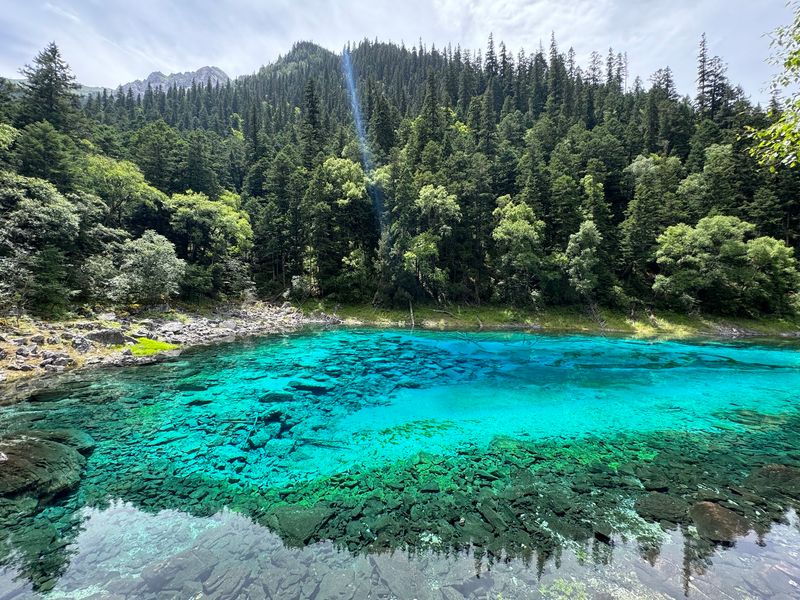
Five-Flower Lake in Jiuzhaigou is so clear that fallen tree trunks are visible resting on the bottom, like furniture left behind in an abandoned underwater room.
The park contains dozens of jewel-toned alpine lakes, each with water so transparent that the name “fairy-tale world” gets thrown around constantly and, for once, without exaggeration. The vivid blue-green colors result from mineral content and the way light interacts with the water at different depths.
Autumn is peak season, when maples, birches, and smoke trees ignite in gold, orange, and crimson between mid-October and early November. The park’s elevation ranges from 6,600 to 14,800 feet, which means the color change happens gradually across different zones, extending the visual display.
Lakeside boardwalks and viewing platforms connect the main attractions, keeping foot traffic organized while ensuring visitors get clear, unobstructed views of the formations below the surface.
5. Glen Coe, Highland, Scotland
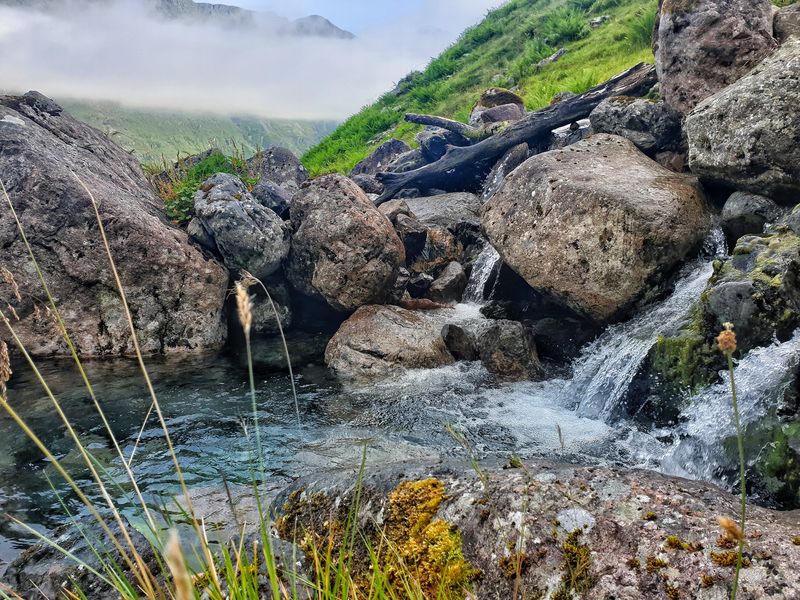
Glen Coe was carved by volcanic eruptions 400 million years ago and then reshaped by glaciers, and the landscape has never quite recovered its composure since.
The valley features the Three Sisters, three massive rocky spurs that dominate the view from the main road, along with deep glens and ridges that challenge even experienced hikers. Weather changes so rapidly here that sunshine and low cloud can alternate within the same hour, creating shifting dramatic contrasts across the peaks.
The glen carries a heavy historical weight from the 1692 Massacre of Glencoe, when members of the MacDonald clan were killed by government troops, an event that still shapes how locals and visitors relate to the landscape. Walking trails range from accessible woodland paths to serious ridge routes.
Film crews have used Glen Coe as a backdrop for major productions, which confirms what most visitors already suspect the moment they arrive.
6. Hoh Rain Forest, Forks, Washington, USA
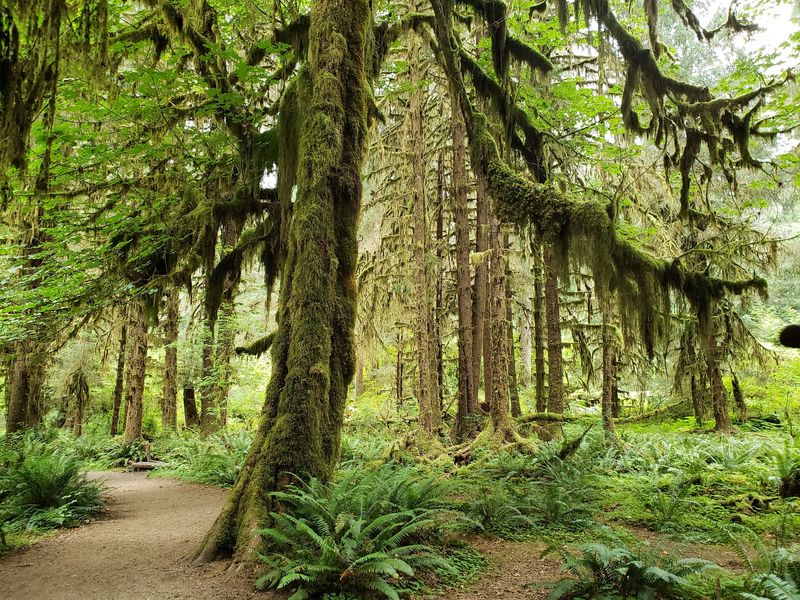
The Hoh Rain Forest in Olympic National Park operates on a scale that makes ordinary forests feel modest by comparison.
Sitka Spruce and Western Hemlock reach over 300 feet tall, and nearly every surface, from branches to boulders, is covered in thick moss and ferns. The moss acts as a natural acoustic absorber, creating a quiet that visitors consistently describe as unlike anywhere else they have been.
Up to 14 feet of rain falls here annually, which keeps the ecosystem extraordinarily lush and the canopy permanently dense. The Hall of Mosses trail is the most visited route, offering a short loop through some of the most dramatically draped trees in North America.
Roosevelt elk move through the area regularly, and river otters are active along nearby waterways. The forest is a UNESCO World Heritage Site and Biosphere Reserve, which tells you everything about its significance.
7. Lake Bled, Bled, Slovenia
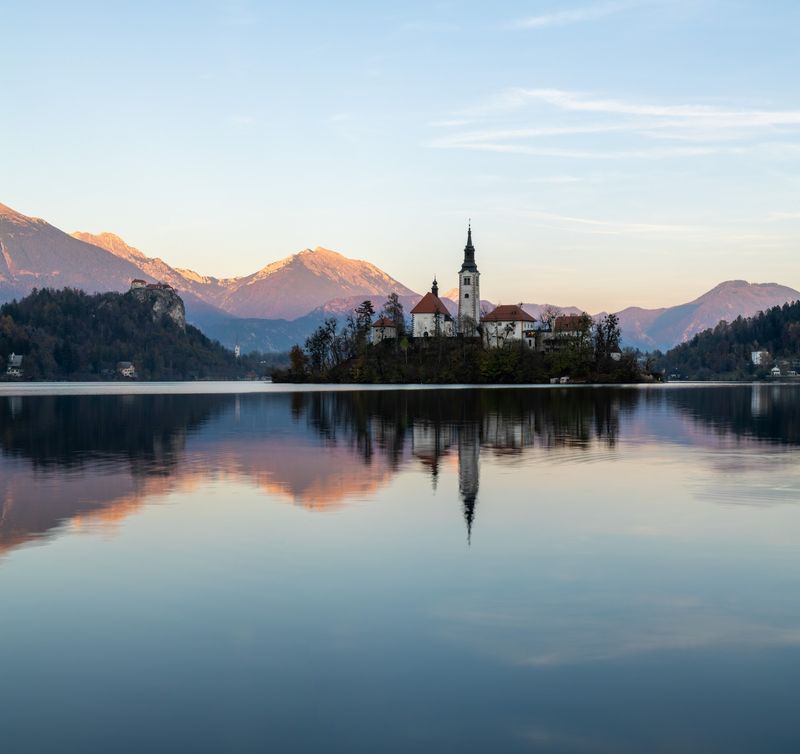
A church on an island in the middle of an alpine lake, with a medieval castle on a cliff above, sounds like the opening line of a story someone made up.
Lake Bled’s Pilgrimage Church of the Assumption of Mary has occupied its island position for centuries, and visitors reach it aboard Pletna boats, flat-bottomed wooden vessels that have been handmade from larch since the 1500s. A tradition of ringing the church bell while making a wish has been practiced by visitors for generations.
Bled Castle, perched on a sheer cliff above the northern shore, dates to the 11th century and offers panoramic views of the lake, island, and Julian Alps beyond. The full path around the lake takes about 90 minutes on foot.
Early mornings bring mist over the water that gives the scene an added layer of quiet drama, and the 99-step staircase up from the island dock keeps things suitably adventurous.
8. The Dark Hedges, Armoy, County Antrim, Northern Ireland
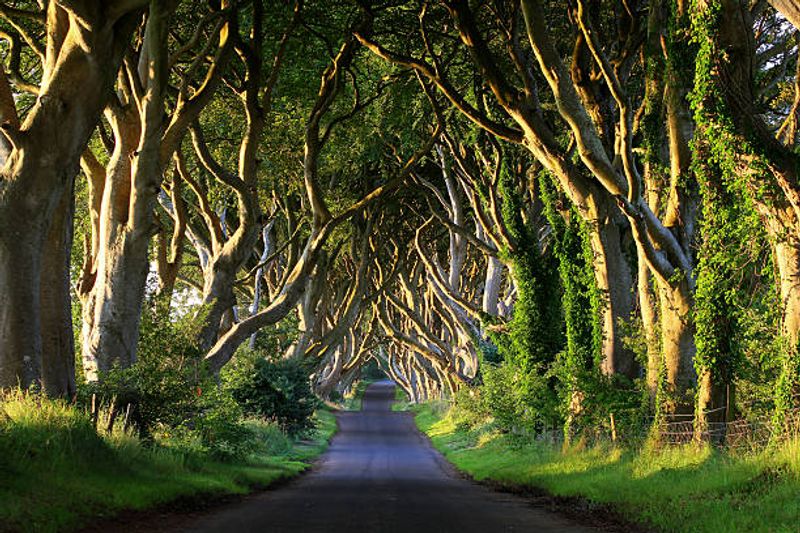
The Stuart family planted these beech trees in the 18th century as a dramatic entrance to their estate, and the trees have spent the centuries since doing exactly what was expected of them.
Hundreds of ancient beeches now line Bregagh Road in Armoy, their branches twisting together overhead to form a continuous natural tunnel. The road itself is now pedestrianized, meaning visitors walk the full length of the avenue rather than passing through quickly by car.
The canopy shifts character depending on the time of year. Autumn brings golden foliage, while winter strips the branches bare, creating a skeletal overhead pattern that many photographers prefer for its stark geometry. Early morning visits in spring and autumn offer the calmest conditions and the most atmospheric results.
The Dark Hedges became internationally recognized after appearing in a popular television series, though the trees themselves were remarkable long before any camera crew showed up.
9. Erawan National Park, Si Sawat, Kanchanaburi, Thailand
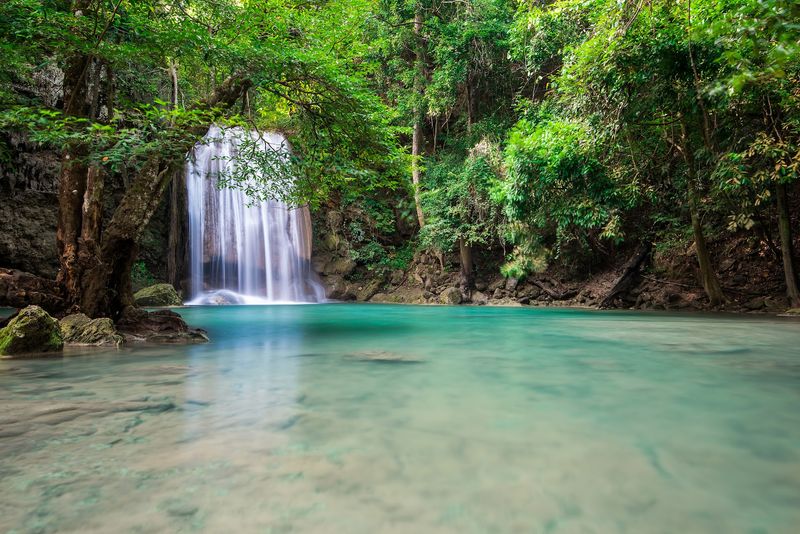
Named after the three-headed white elephant of Hindu mythology, Erawan National Park delivers seven levels of waterfalls that tumble through tropical forest into pools of vivid emerald-green water.
The trail connecting all seven tiers runs through mixed deciduous forest that makes up around 80 percent of the park’s total area. Lower levels have concrete paths and gentle stairs, while higher tiers involve tree roots, rocks, and a bit more effort, rewarding those who push on with the most striking pools and the fewest fellow visitors.
Levels four, five, and six are consistently noted as the most visually impressive, with wide cascades and natural swimming areas that stay popular throughout the dry season. The top tier, level seven, is said to resemble the head of the mythological Erawan elephant when viewed from the right angle.
The combination of jungle canopy, cascading water, and vivid pool color makes this park feel genuinely remote, even during busy visitor periods.
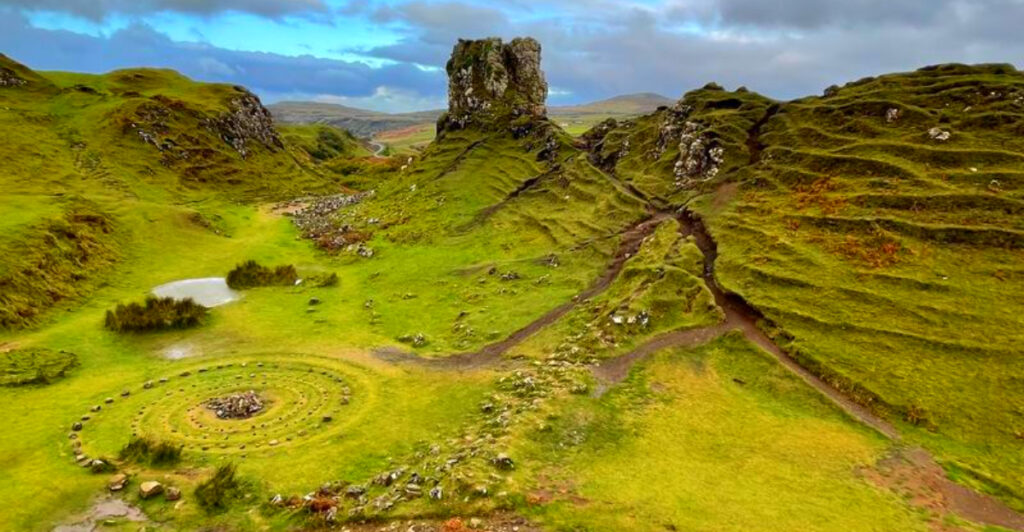
10. Fairy Glen, Uig, Isle of Skye, Scotland
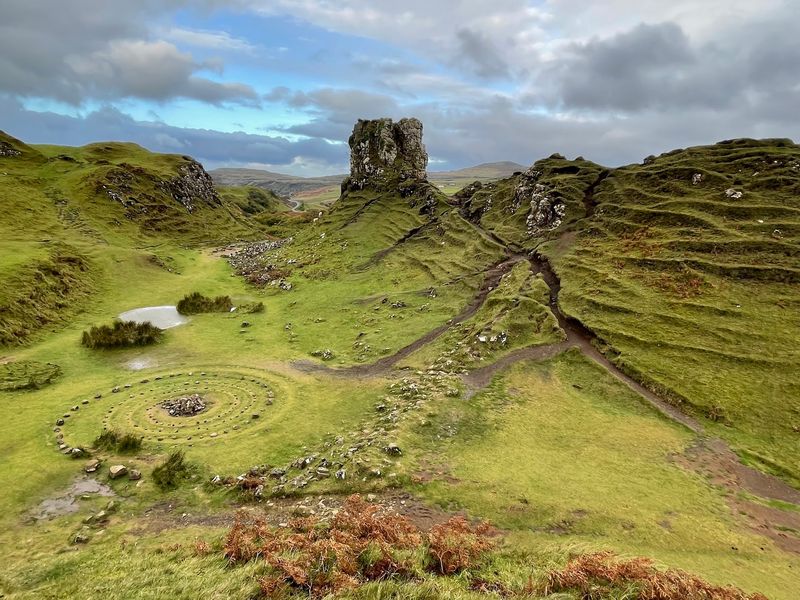
While the rest of Skye goes big with dramatic sea cliffs and jagged ridges, Fairy Glen quietly does something far stranger on a much smaller scale.
Ancient landslips caused by volcanic activity, later softened by glaciers, produced a series of rounded grassy hills, unusual basalt formations, and tiny lochans that together create a miniature landscape unlike anything else on the island. The area has never been formally developed, so visitors wander freely along informal paths through the hills.
Castle Ewen, a natural rock formation that resembles a crumbling tower, stands near the center of the glen and provides elevated views across the surrounding terrain. Low cloud and soft evening light change the character of the place considerably, making the same landscape feel entirely different depending on when you visit.
Some visitors arrange stones into spiral patterns on the ground, though locals regularly restore the natural state of the glen by removing them. The name fits, even if no one can quite explain why.
11. Shirogane Blue Pond, Biei, Hokkaido, Japan
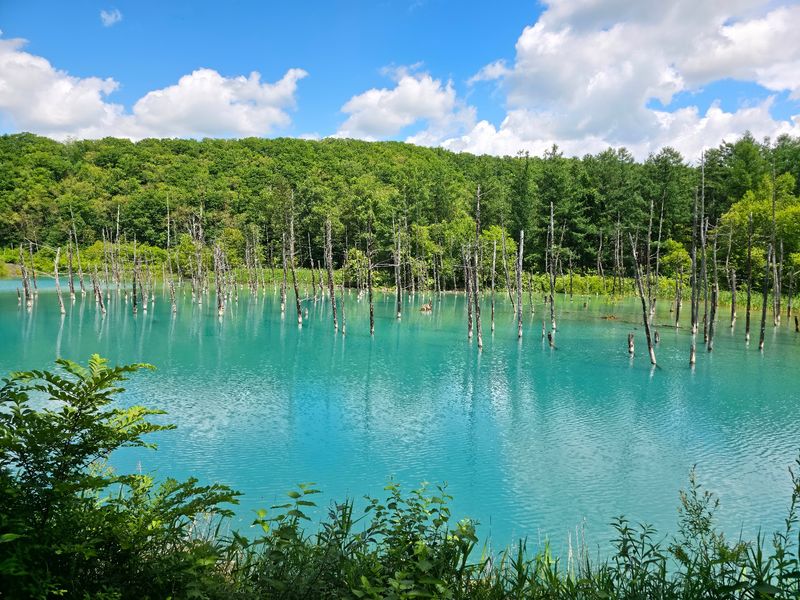
The Shirogane Blue Pond was never meant to exist as a tourist destination. It formed as a side effect of dam construction designed to protect Biei from volcanic mudflows from Mount Tokachi.
Mineral-rich groundwater from Shirahige Falls mixes with the Biei River and enters the pond, where microscopic particles scatter incoming sunlight and produce the distinctive electric-blue color that has made this spot famous worldwide. The exact shade changes depending on the season, the cloud cover, and the angle of observation.
Pale larch and birch trees stand within the water, their trunks rising from the blue surface and reflecting back into it on calm days. In winter, snow blankets the surrounding forest and sometimes the frozen pond surface, while nighttime illumination events transform the scene into something entirely different from its daytime appearance.
The pond sits within a peaceful forest setting near Biei town, accessible year-round and genuinely different on every visit.
12. Rakotzbrücke, Kromlau, Saxony, Germany
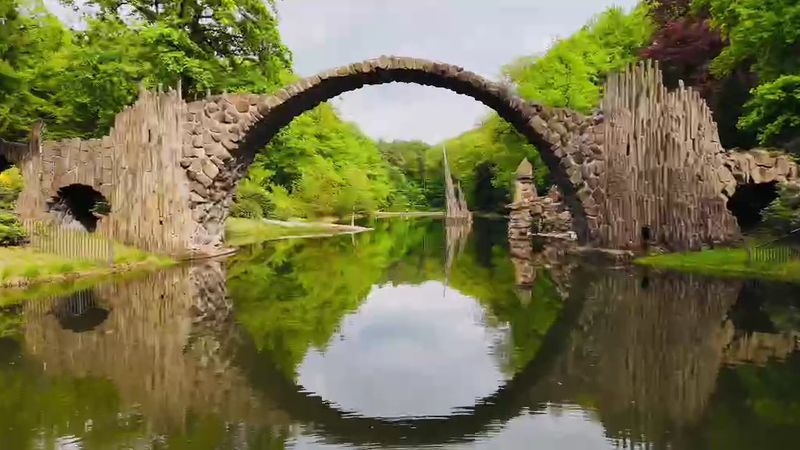
Most bridges are built to get people from one side to the other. Rakotzbrücke was built purely to look spectacular, and it has been succeeding at that single task since the 1860s.
Commissioned between 1860 and 1875 by a local landowner, the stone arch was designed as exactly one half of a perfect circle, so that its reflection in the still water below completes the shape. The effect works best on calm days when the water surface is undisturbed, producing a flawless geometric illusion.
Thin rock spires crafted to resemble natural basalt columns decorate both ends of the bridge, adding to its otherworldly appearance. The structure sits within Kromlauer Park, surrounded by woodland that shifts from spring blooms to rich autumn color, giving the bridge a different backdrop across the seasons.
Walking on the bridge is no longer permitted, as the aging stonework needs protection. Visitors observe it from the banks, which is honestly the better vantage point anyway.
13. Fiordland National Park, Southland, New Zealand
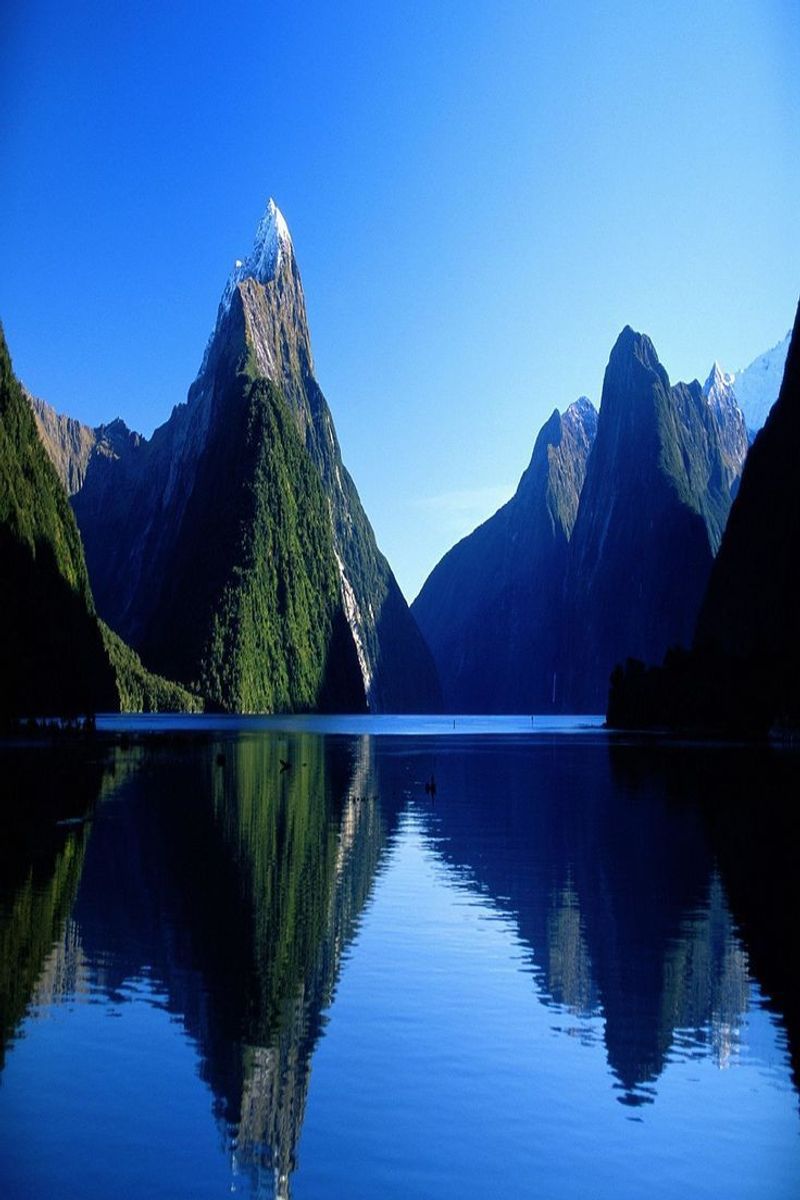
Fiordland National Park is New Zealand’s largest national park, and it holds 14 fjords carved by glaciers into some of the most dramatic terrain on Earth.
Milford Sound, the most visited of these fjords, features sheer cliffs rising up to 1,200 meters from dark water, with waterfalls appearing along the cliff faces after rain. The area receives around 7 meters of rainfall annually, which keeps the surrounding temperate rainforest extraordinarily dense and feeds a near-constant supply of cascading water down the rock faces.
Visitors explore Milford Sound by cruise or kayak, both of which put the scale of the cliffs into immediate perspective. The Milford Track, one of New Zealand’s three officially designated Great Walks, cuts through alpine terrain and moss-carpeted valleys over four days, offering a ground-level encounter with the park’s interior.
Frequent mist and rapidly changing weather are standard features of Fiordland, not inconveniences. They are precisely what gives the landscape its reputation for feeling like a place that operates by its own rules.
Share this story