
America’s economy does not run evenly across all 50 states. A small group of them produces a huge share of everything the country makes, sells, and ships.
Using the latest full-year GDP numbers from the Bureau of Economic Analysis, here are the 12 biggest engines. Some will feel familiar, and a few might surprise you.
California

Picture a state whose economy is bigger than most countries. California produced nearly $4.3 trillion in 2025, and no other state comes close.
That is the kind of number that makes calculators sweat.
Silicon Valley gets most of the headlines, and for good reason. The state’s high-tech sector added roughly $580 billion to the national economy in 2025.
California also leads the country in venture-capital investment, so many new software, AI, and internet companies start here.
Still, tech is only one slice of the pie. Hollywood films, Central Valley farms, busy ports, aerospace factories, and biotech labs all work at a giant scale.
Tourists add even more, flocking to beaches, theme parks, and national parks.
That wide mix is the secret. When one industry slows down, another often speeds up.
For anyone studying the American economy, California is the starting point, the main course, and a big chunk of dessert too.
Texas
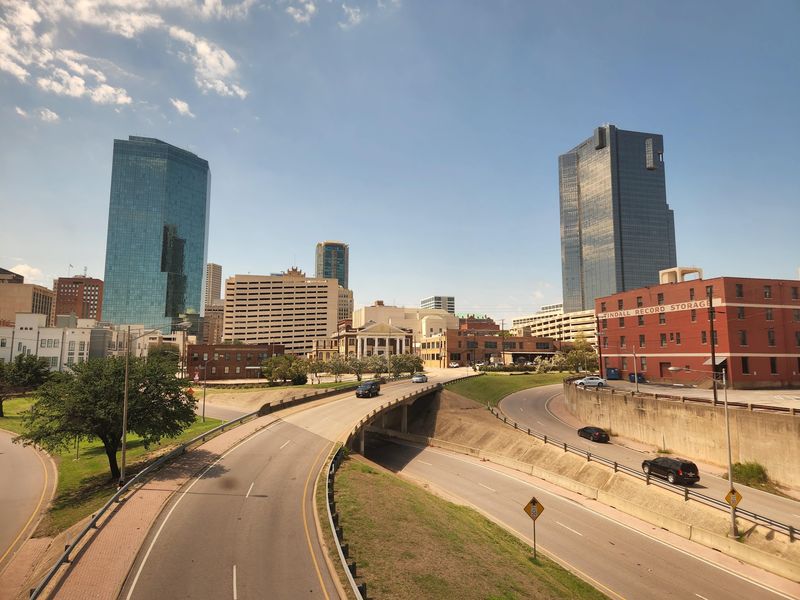
Everything is bigger in Texas, and that includes its paycheck. The state’s 2025 GDP reached about $2.93 trillion.
That puts it firmly in second place nationwide.
Energy built the legend. Texas leads the country in oil and natural gas, and it also ranks first in wind power and utility-scale solar.
So the state pumps out both old-school fuel and new-school electricity.
Then come the factories and labs. Semiconductors, aerospace, cars, finance, healthcare, and construction have all grown fast.
Texas sends out roughly 20 percent of U.S. exports and makes about 11 percent of the goods built at home.
Those figures explain why news from Texas can ripple across the whole country. A busy year there can lift national numbers, and a rough patch can shake them.
Few states hold that much sway over what America builds and burns.
New York

Ring the bell on Wall Street and the whole world listens. New York’s economy hit about $2.47 trillion in 2025, making it the third largest in the nation.
Finance sits at the center of it all.
Banking, stock trading, and insurance fill towers across Manhattan. Yet the state’s strength runs wider than one famous street.
Media, tech, healthcare, real estate, and tourism all add big numbers.
Head upstate and you will find more. Biotechnology, semiconductors, cybersecurity, farming, and advanced manufacturing all have clusters outside the city.
Here is a recent headline. In the second quarter of 2026, New York posted the fastest growth in the country at 4.0 percent, measured as an annual rate.
Finance and insurance led that jump. Not bad for a place where the pizza slices are bigger than some tablets.
Florida
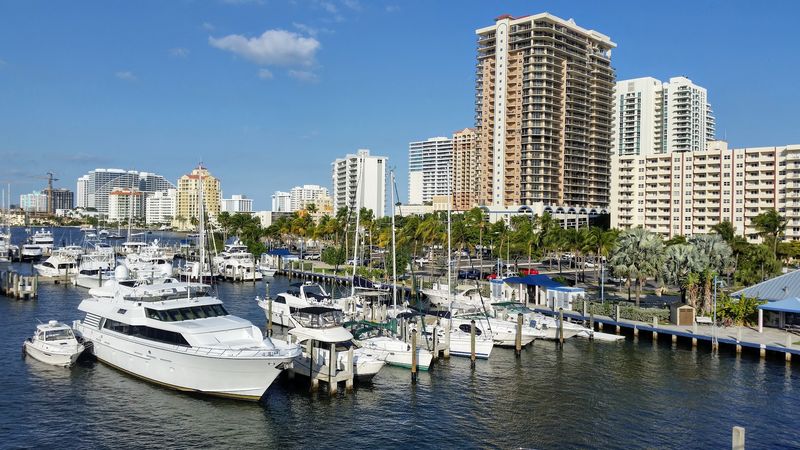
Sunshine sells, but Florida has more going on than beaches. Its 2025 output came to about $1.81 trillion.
Tourism is still big, yet it no longer tells the whole story.
Growing population keeps the building crews busy. New neighbors need homes, doctors, banks, and shipping routes.
That demand boosts construction, healthcare, real estate, and logistics.
State leaders now focus on aerospace, aviation, financial services, IT, life sciences, maritime trade, and defense. More than 3,000 aerospace and aviation sites operate in the state.
Miami and Jacksonville are also growing as finance and fintech hubs.
Shoppers pitched in too. Consumer spending rose 7.0 percent in 2025, the fastest jump of any state.
So while visitors fill the theme parks, locals are filling their carts, and the economy keeps humming along.
Illinois

Ask any freight train where the middle of America is, and it will probably point to Illinois. The state’s 2025 GDP was around $1.24 trillion.
That makes it the Midwest’s top performer.
Chicago leads the way. Trading floors, insurance offices, law firms, and corporate headquarters pack its downtown.
Planes, trucks, barges, and railroads all pass through the region, which makes it a national shipping crossroads.
Outside the city, farms and factories add serious weight. Corn and soybeans roll out of the fields, while plants turn out machinery and processed food.
State officials also back newer fields like clean energy, life sciences, quantum computing, and microelectronics. Having so many different industries is a safety net.
If one sector stumbles, others can hold the line, and Illinois keeps moving.
Pennsylvania

Pennsylvania just crossed the trillion-dollar line, with about $1.06 trillion in 2025. Old steel town grit met new lab coat brains, and the mix worked.
Factories and energy still matter here. The state is a big natural gas producer, which gives it a seat at the table in U.S. energy markets.
Meanwhile, Philadelphia and Pittsburgh have changed fast. Hospitals, universities, robotics firms, and life science labs now drive a lot of growth.
Banks and tech companies have joined the party too.
In 2026, state leaders put extra focus on robotics, life sciences, technology, farming, and energy. New venture-capital and commercialization programs aim to turn research into real businesses.
That blend of heavy industry and smart ideas makes Pennsylvania one of the most balanced economies in the Northeast.
Ohio
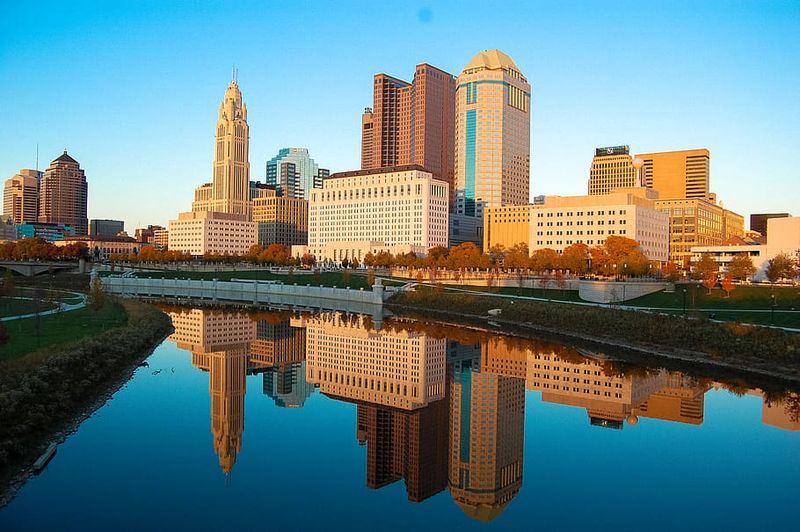
Within a day’s drive of Ohio live a huge number of Americans. That handy spot turned the state into a warehouse and delivery champion.
Total output sits close to $1 trillion.
Factories remain the heart of it. Cars, metal parts, machinery, chemicals, and aerospace gear all roll out of Ohio plants.
Food processing and healthcare add steady strength.
Finance and logistics fill in more of the picture. Trucks leave distribution centers all day, carrying goods to nearby big cities.
New chip factories and advanced manufacturing projects are also changing the story. Supply chains that matter to national security now run through Ohio sites.
The state links the proud industrial past to a high-tech factory future, and it does so without losing its practical, get-it-done spirit.
Georgia
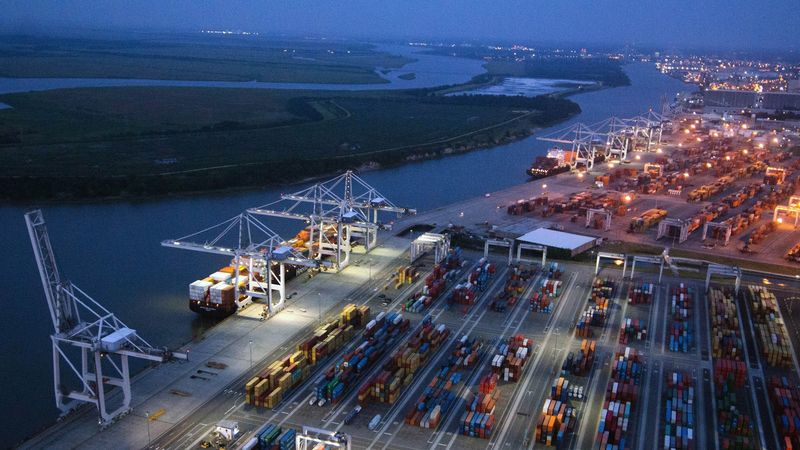
Georgia shipped out a record $60.2 billion in goods in 2025, up 12.7 percent. That is a lot of boxes.
The state’s GDP reached about $936 billion.
Two giants carry much of the load. The Port of Savannah links factories and stores to global trade routes.
Atlanta’s airport ranks among the busiest in the world, moving people and cargo nonstop.
Atlanta also brings in finance, fintech, media, and tech jobs. Railroads and interstates tie everything together, so goods move fast.
Newer industries are joining in. Electric vehicles, batteries, aerospace, and food processing have attracted heavy investment.
Film and TV crews add some glamour, too. Between the planes, ships, and cameras, Georgia keeps plenty of action rolling.
North Carolina
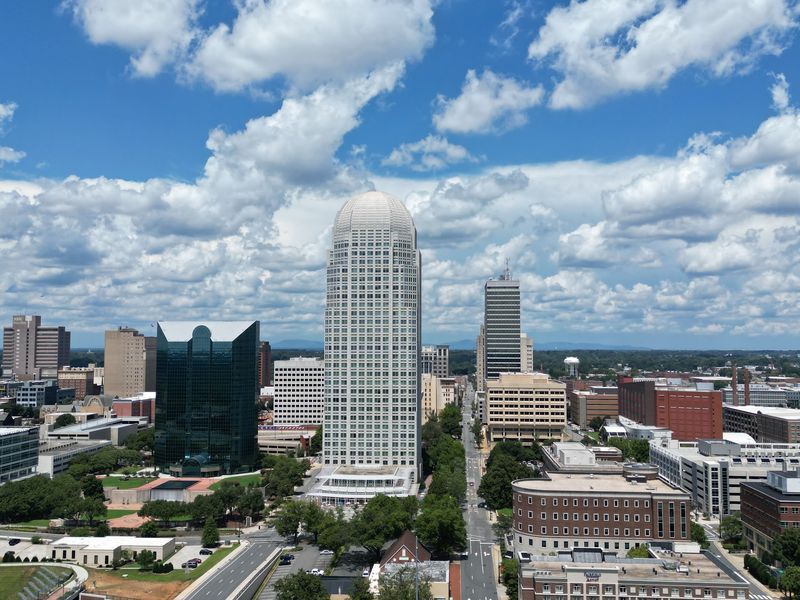
Tobacco fields and furniture mills once defined North Carolina. Now bankers and lab scientists share the spotlight.
The state’s 2025 GDP landed near $896 billion.
Charlotte ranks as the third-largest banking center in the country. Down the road, the Research Triangle hums with biotech, drug companies, software teams, and university researchers.
Key sectors also include aerospace, cars, chemicals, information technology, food manufacturing, and energy. Factories still matter a lot.
Food, drinks, tobacco, chemicals, and medicine make up much of the state’s industrial output.
What stands out is balance. Few fast-growing Southeastern states spread their strengths across so many fields.
That mix helps North Carolina handle bumps in the road while still attracting new companies and new residents.
Washington

Fewer than eight million people live in Washington, yet they produce about $892 billion a year. That is serious output per person.
Software, cloud computing, and online shopping lead the way.
Microsoft and Amazon turned Seattle into a global tech capital. Boeing and its web of suppliers made the state a top aerospace manufacturing center.
Ships and ports tie the region to Pacific trade.
Farms matter as well. Washington grows hundreds of crops, and apples are only the start.
Early 2026 brought a bright note. Washington had the fastest growth among states in the first quarter, at 4.5 percent annualized.
Information services pushed it the most. Rain may be common in Seattle, but the economic forecast has looked sunny.
New Jersey

Squeezed between two giant cities, New Jersey turned location into a superpower. Its economy reached roughly $888 billion in 2025.
Medicine, money, and moving stuff all play big roles.
Drug makers and biotech firms crowd the state. Its life sciences cluster had about 2,400 establishments and 85,000 workers in 2024.
Finance, telecom, chemicals, and healthcare add more muscle.
The numbers on factories and freight are eye-opening. Manufacturing contributed more than $70.9 billion in 2024.
Transportation, distribution, and logistics added nearly $100 billion in 2023.
Ports, airports, rail lines, and highways make delivery quick. Millions of shoppers live nearby, so goods do not travel far.
New Jersey may be small on the map, but it is a heavyweight on the scoreboard.
Massachusetts

Brains are the main export in Massachusetts. Its economy reached about $820 billion in 2025, built on research and high-value services.
Greater Boston buzzes with ideas.
Biotech and life sciences lead the charge. Universities, hospitals, drug researchers, and investors sit within a short ride of each other.
That closeness helps new discoveries become new companies fast.
Finance, software, robotics, healthcare, and clean technology add plenty more. Advanced manufacturing keeps a foothold too.
In 2026, state programs keep pushing AI, climate tech, robotics, biomanufacturing, and medical devices. Massachusetts is smaller than California or Texas in raw dollars.
Even so, few places pack so much research talent and specialized know-how into such a tight space, which is a smart way to finish the list.
Share this story