Penguins have a way of making even the most remote corners of the planet feel worth visiting. From a tiny Australian island where thousands of small birds shuffle home each night, to frozen Antarctic outposts where entire mountainsides seem to move with life, the world’s most famous penguin islands offer wildlife encounters that are genuinely hard to top. Some of these destinations sit close to the equator, which sounds like a terrible idea for a penguin but somehow works out brilliantly. Others require a serious expedition just to reach them, yet travelers keep coming back with stories they repeat for the rest of their lives.
This list covers 13 islands across the globe that have earned their reputations as penguin hotspots, each with its own mix of species, scenery, and access options. Whether you are planning a trip or simply enjoy learning about remarkable wildlife places, there is plenty here to keep you reading.
1. Phillip Island, Summerlands, Victoria, Australia
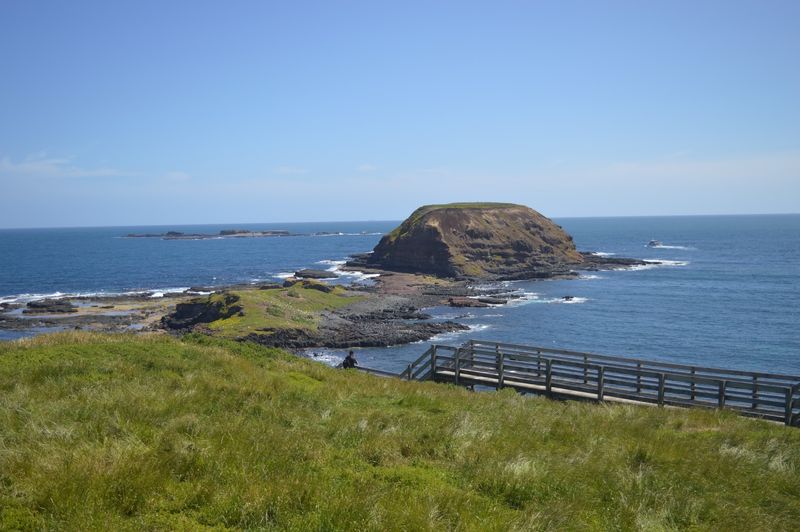
Every single evening, without fail, hundreds of little penguins emerge from the ocean at Summerland Beach and make their way home across the sand. This nightly event, known as the Penguin Parade, has made Phillip Island one of the most visited wildlife destinations in all of Australia.
The little penguin, also called the fairy penguin or little blue penguin, is the smallest penguin species on Earth, standing just 40 cm tall and weighing around 1.2 kg. Phillip Island hosts the world’s largest colony of this species, with an estimated 32,000 to 40,000 breeding adults.
The viewing experience is carefully organized, with boardwalks, platforms, and specialized underground hides ensuring visitors can watch without disturbing the birds. Arriving about an hour before the penguins appear is recommended. Breeding season runs from August to February, and the birds consume roughly 25 percent of their body weight in fish and squid each day.
2. Isla Martillo, Ushuaia, Tierra del Fuego, Argentina
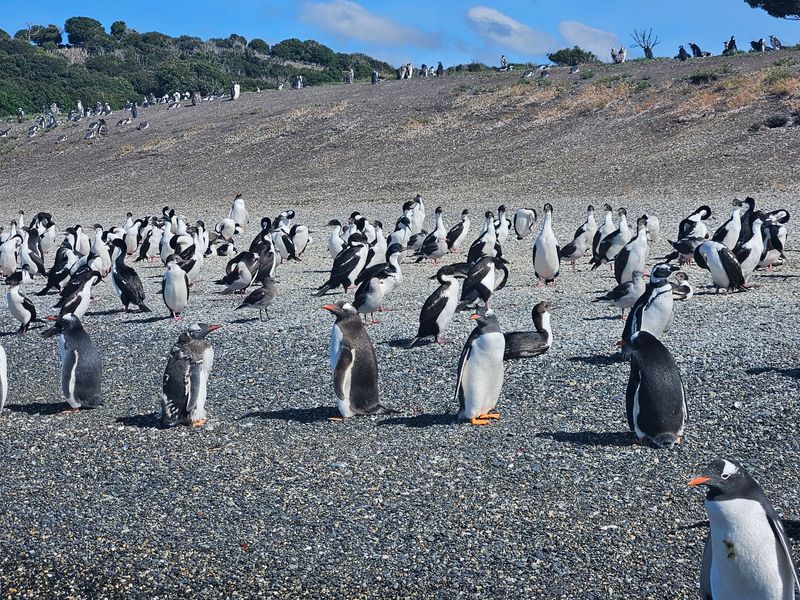
Tucked into the Beagle Channel about 85 kilometers southeast of Ushuaia, Isla Martillo is a penguin island with a genuinely impressive claim to fame. The Gentoo colony here represents the only known breeding population of that species in all of South America.
Around 10,000 Magellanic penguins and approximately 70 Gentoo penguin couples breed on the island during the austral summer, which runs from October through March or April. Magellanic penguins arrive to dig burrows up to six feet deep, while Gentoo penguins build open rock nests and stay on the island year-round, even if in smaller numbers during winter.
Access is strictly managed through guided tours, and only one company, Piratour, is currently permitted to land visitors directly on the island. Other operators offer close-up views from boats. The mix of species, the mountain backdrop, and the cold blue waters of Tierra del Fuego make this one of South America’s most memorable wildlife stops.
3. Isabela Island, Galápagos Islands, Ecuador
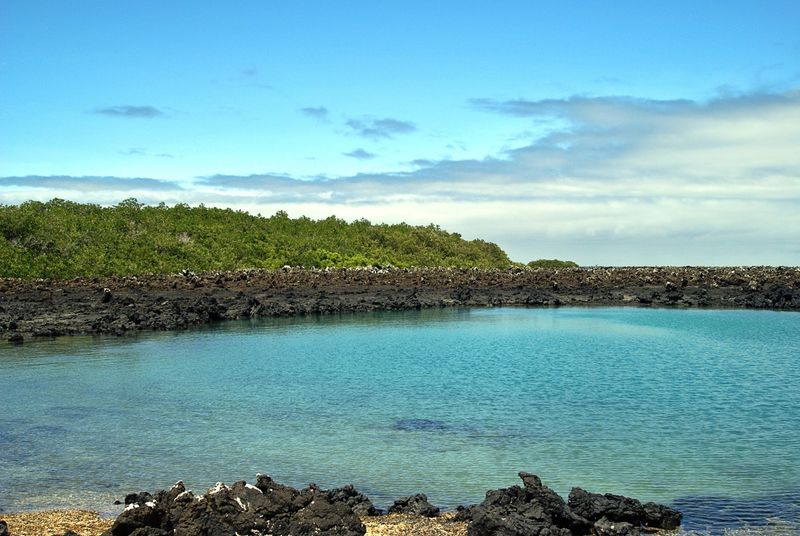
The idea of penguins living on a tropical island sounds like a geography mistake, but Isabela Island pulls it off with remarkable style. The Galápagos penguin is the only penguin species found north of the equator, and the second smallest penguin in the world, making it one of the more unusual birds on the planet.
About 90 percent of the Galápagos penguin population lives on Fernandina Island and the western coast of Isabela. Key spots around Isabela include Elizabeth Bay, the Mariela Islets, and Tagus Cove, where penguins can be spotted along the shoreline or swimming in the cool currents.
The Humboldt and Cromwell currents keep the waters cold enough to support these birds despite the equatorial location. To manage the heat, they pant, extend their flippers, and shelter in lava crevices, which also serve as nesting sites. Unlike most penguins, they breed opportunistically when food is plentiful, typically between May and December.
4. Saunders Island, Falkland Islands
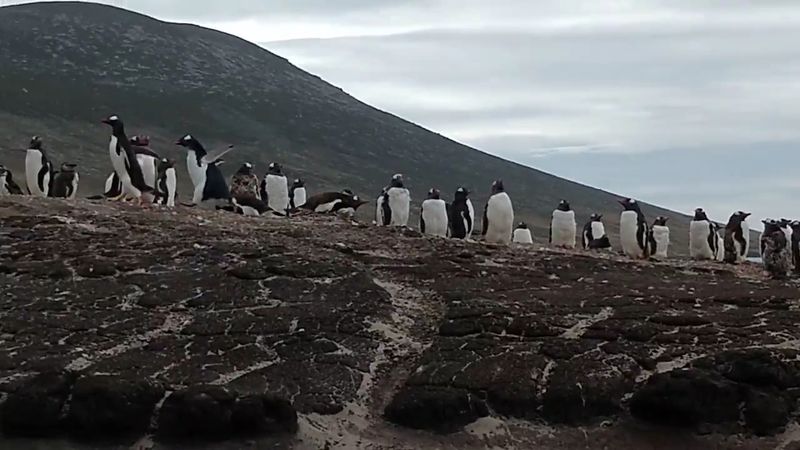
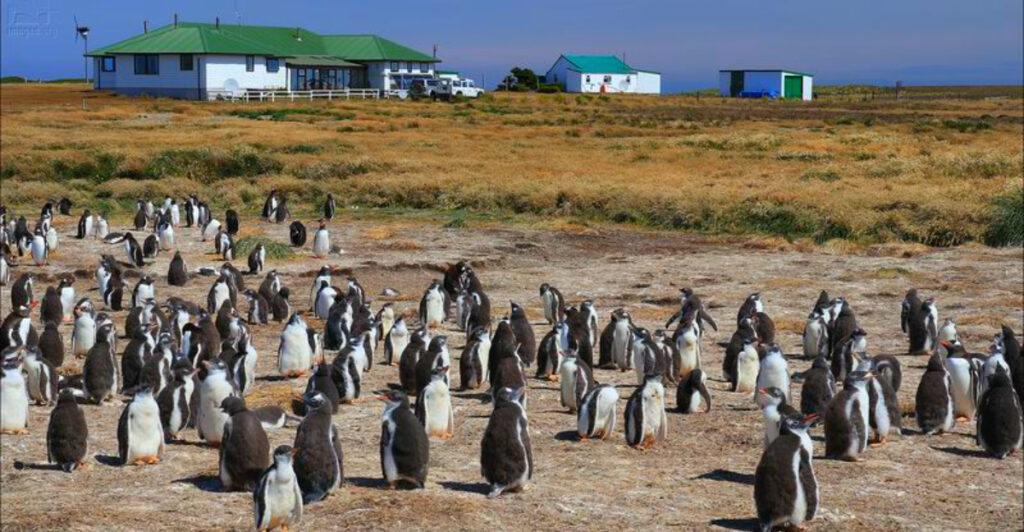
Saunders Island manages to feel like a wildlife documentary set that someone forgot to close down. Remote, grassy, and edged by brilliant white beaches, it supports four penguin species in one relatively compact location, which is not something many islands can claim.
Gentoo, Southern Rockhopper, and Magellanic penguins all breed here, joined by a smaller colony of King penguins. The dramatic cliffs around The Neck and the island’s northern coast are particularly well known for their Southern Rockhopper colonies, which share the cliff-side habitat with black-browed albatrosses.
The Falkland Islands as a whole are globally critical for penguin conservation. The archipelago supports approximately 36 percent of the world’s Southern Rockhopper Penguin population and around 34 percent of the world’s Gentoo Penguin population. King penguins here follow a breeding cycle that lasts over a year, meaning they are active at different times than the island’s other nesting species.
5. Sea Lion Island, Falkland Islands
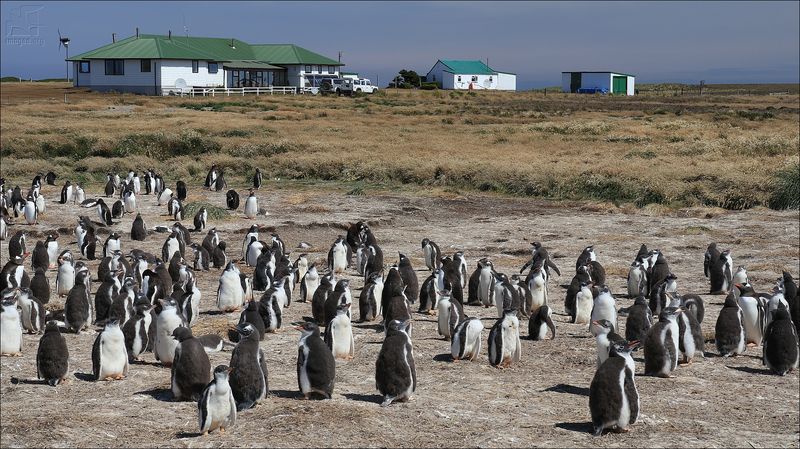
Do not let the name mislead you. Sea Lion Island is every bit as celebrated for its penguins as it is for its more obviously named residents, and the concentration of wildlife on this small landmass is genuinely striking.
Gentoo penguins live on the island year-round, making it a reliable spot at any time of year. Magellanic penguins arrive in September to breed in underground burrows and head north by April, while Southern Rockhopper penguins congregate on cliff tops to breed, typically appearing in October with their distinctive spiky yellow crests.
Sea Lion Island is recognized as having some of the best-preserved native habitat in the Falklands, partly because it has no introduced predators such as rats. This makes it an important location for a wide range of small bird species and marine mammals alongside the penguins. The Falkland Islands overall support a significant share of the global Gentoo penguin population, and Sea Lion Island contributes meaningfully to that count.
6. Bleaker Island, Falkland Islands
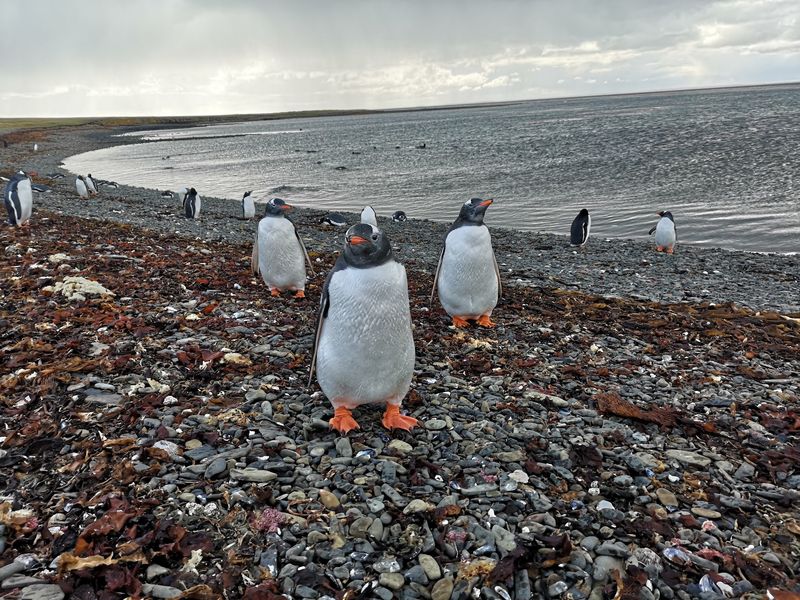
Long and narrow with a working farm at its center, Bleaker Island has a split personality that somehow works perfectly. The same island where cattle graze also hosts three different penguin species and an enormous colony of Imperial Shags, all within easy walking distance of each other.
About 2,000 pairs of Gentoo penguins nest on Penguin Hill above Sandy Bay, while Magellanic penguins burrow widely across the coastal areas. Southern Rockhopper penguins establish their noisier colonies near Long Gulch, in the island’s more rugged terrain.
The breeding calendar here runs on a tight schedule. Gentoo penguins start laying eggs in mid-October, Magellanic penguins follow in early October after arriving in September, and Rockhopper males appear at the end of September with females arriving a week or so later. Fledglings from Magellanic nests are typically ready to leave by early January. The combination of dramatic cliffs, windswept beaches, and multiple species makes Bleaker a rewarding stop for serious wildlife visitors.
7. Pebble Island, Falkland Islands
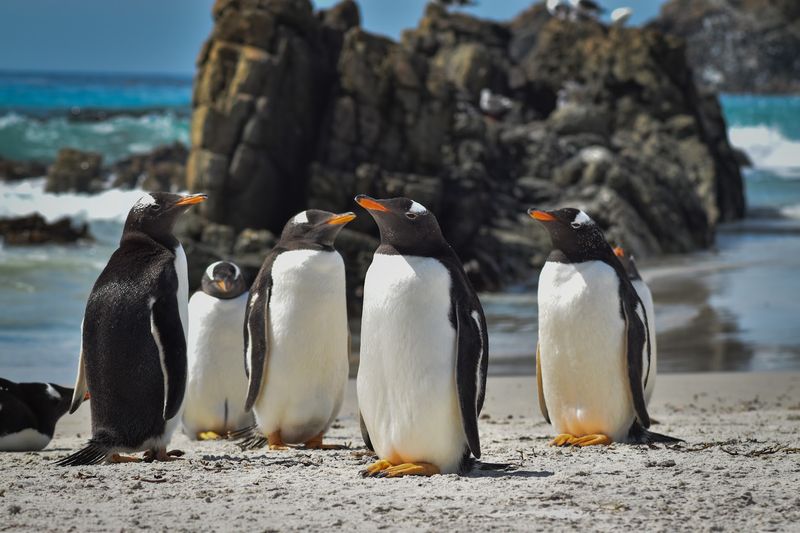
At roughly 19 miles long, Pebble Island has enough variety packed into its landscape to keep a wildlife enthusiast busy for days. Ponds, moorland, broad sandy beaches, and rocky headlands all provide different habitats, and the penguins take full advantage of all of them.
During the southern summer, thousands of Gentoo, Southern Rockhopper, and Magellanic penguins breed across the island, creating one of the Falklands’ most rewarding multi-species penguin experiences. Having three different species in one location gives visitors a natural opportunity to compare behaviors, nesting styles, and personalities up close.
Gentoo penguins tend to occupy more open ground near the beaches, Magellanic penguins disappear into their burrows across the softer soil, and Rockhoppers scramble up the rockier sections with their characteristic determined energy. The island’s size means the colonies are spread across genuinely varied terrain rather than packed into a single point, giving the whole experience a more expansive and natural feel than many other wildlife destinations in the region.
8. New Island, Falkland Islands
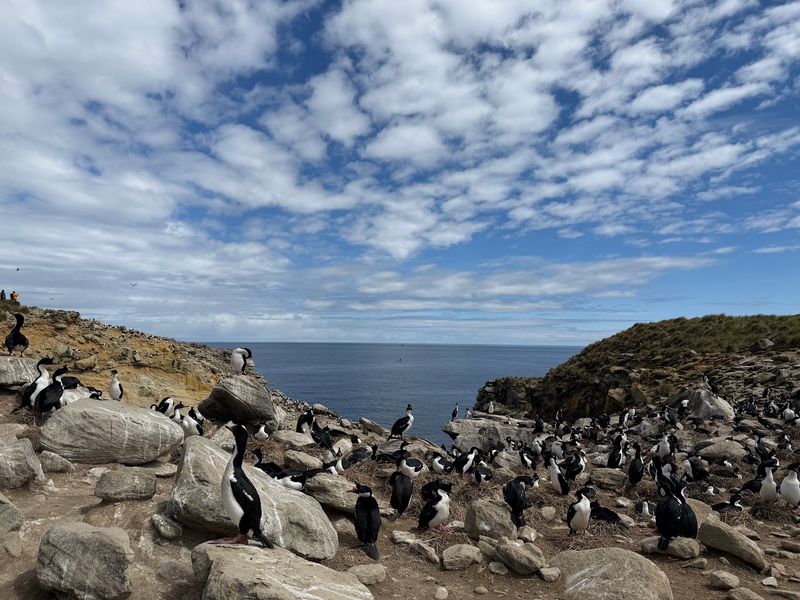
Perched on the far western edge of the Falklands, New Island is the kind of place that rewards the effort it takes to reach it. The Atlantic scenery here is raw and dramatic, and the wildlife colonies are stacked right up against some of the most striking sea cliffs in the archipelago.
Gentoo, Magellanic, and Southern Rockhopper penguins all breed on New Island, with the Rockhoppers occupying spectacular cliff-side nesting areas that they share with black-browed albatrosses. Watching Rockhoppers navigate the steep rocky slopes while albatrosses tend to their own nests on the same cliff face is a wildlife scene that genuinely tests your camera battery.
New Island has been managed as a nature reserve for decades, and the lack of significant human disturbance shows in the density and confidence of the wildlife. Conservation research has been conducted here for many years, contributing to the broader understanding of seabird populations across the South Atlantic. It is a remote destination, but one that consistently delivers.
9. South Georgia Island, South Georgia and the South Sandwich Islands
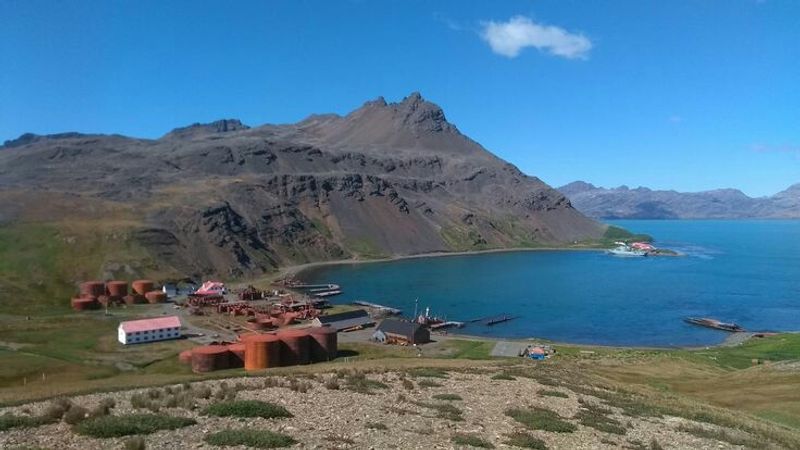
South Georgia is the kind of destination that makes wildlife travelers go quiet for a moment before they start trying to describe it. The scale here is simply unlike anything else, with snow-covered mountains, glacier-carved bays, and penguin colonies so large they alter the color of the landscape.
The island supports four penguin species: King, Macaroni, Gentoo, and Chinstrap. King penguins are the headline act, with an estimated 450,000 breeding pairs, representing roughly half the world’s population. St. Andrews Bay alone holds around 150,000 breeding pairs. Macaroni penguins are even more numerous, with approximately three million breeding pairs making them the most abundant species on the island.
Gentoo penguins number around 100,000 breeding pairs and remain year-round, nesting among tussac grass inland. Chinstrap penguins, with roughly 12,000 breeding pairs, are the least common species here. King penguins have a 14 to 16 month breeding cycle, so colonies are active at all times of year. Access is strictly regulated, with most visitors arriving by expedition cruise.
10. Deception Island, South Shetland Islands, Antarctica
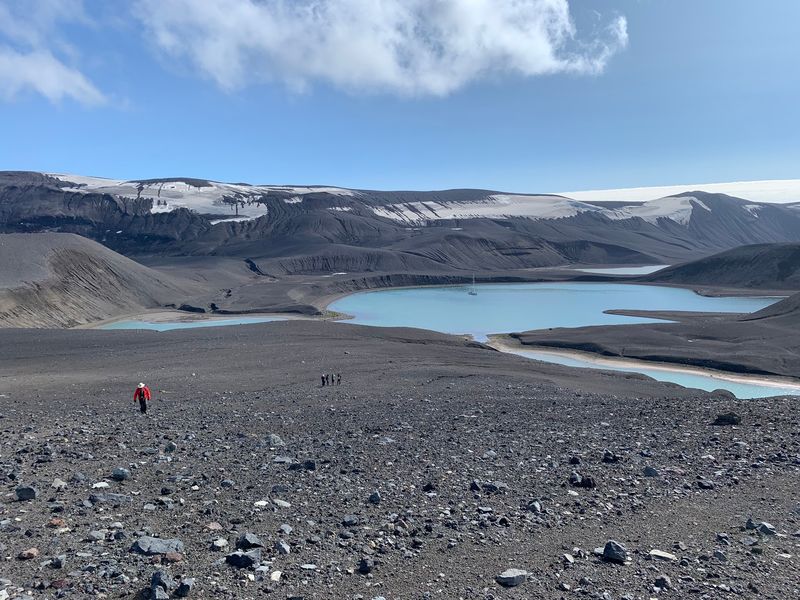
Deception Island earns its dramatic name. An active volcano whose crater has been flooded by the sea, it creates one of the most visually unusual landscapes in Antarctica, and it happens to host the Antarctic Peninsula’s largest chinstrap penguin colony at Baily Head.
The black volcanic ground provides a stark contrast to the surrounding ice and snow, giving the colony a look that photographers consistently describe as unlike anything else they have seen. Well-worn penguin routes cross the volcanic terrain, tracing the paths birds take between their nests and the water on a daily basis.
Chinstrap penguins get their name from the thin black line running under their chins, which gives them a faintly official appearance, as though they are wearing a tiny helmet strap. The colony at Baily Head is enormous, and the constant activity, birds arriving from the sea, others heading out, chicks waiting in nests, creates a scene that is genuinely difficult to leave. The island’s volcanic character adds a layer of geological interest that most penguin destinations simply cannot offer.
11. Half Moon Island, South Shetland Islands, Antarctica
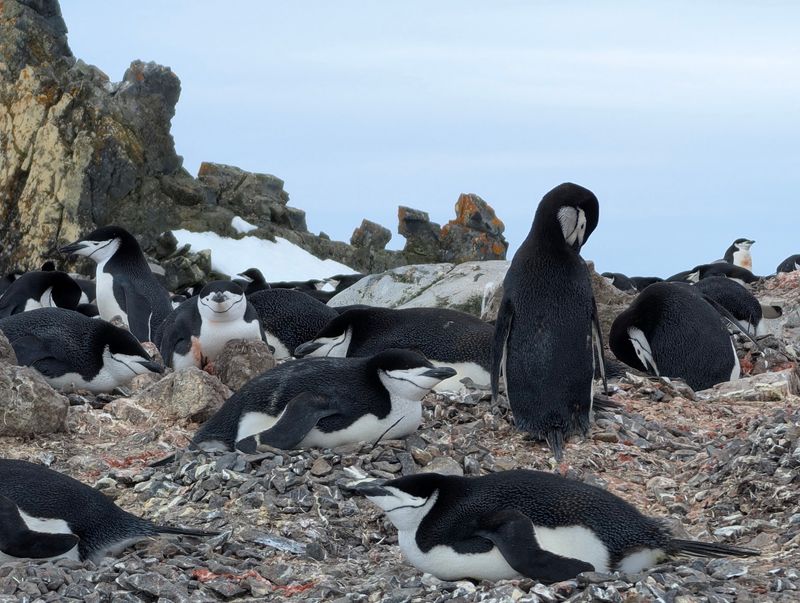
Half Moon Island earns its name honestly. The crescent-shaped landmass curves through the Southern Ocean with cobbled beaches, rocky outcrops, and snow-dusted slopes, and it manages to pack a serious amount of wildlife into a relatively modest footprint.
Chinstrap penguins breed across the slopes and rocky areas, nesting among the uneven terrain with the focused determination that makes this species so entertaining to watch. Antarctic terns and storm petrels add aerial activity above, while Weddell seals and fur seals frequently haul out on the shores, rounding out the cast of characters considerably.
Half Moon Island is a popular stop on expedition cruises through the South Shetland Islands, partly because its sheltered bay allows landings in a range of weather conditions. The island also has a long-established Argentine scientific station, Cámara Base, which has been operating since 1953. Visitors who spend time here often find that the combination of accessible wildlife, varied terrain, and classic Antarctic scenery makes it one of the more memorable stops on any Peninsula itinerary.
12. Cuverville Island, Antarctic Peninsula, Antarctica
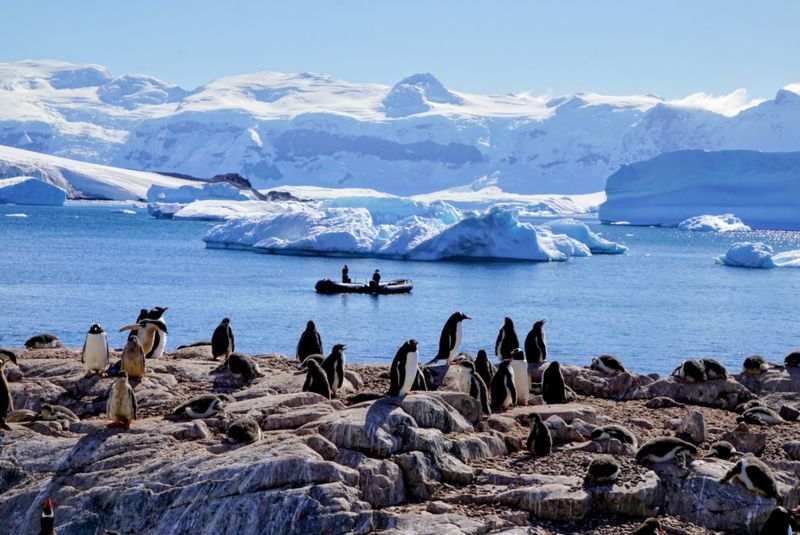
Cuverville Island rises sharply from the Errera Channel, surrounded by the kind of Antarctic mountain and glacier scenery that makes it look like it was designed specifically as a backdrop for a nature documentary. The island is small, but what it lacks in size it more than compensates for in penguin density.
Cuverville hosts one of the largest Gentoo penguin colonies on the entire Antarctic Peninsula, with estimates ranging from around 4,400 to 6,500 breeding pairs. The broad northern beaches and exposed rocky slopes provide the ideal conditions for nesting, and the birds build their nests from carefully collected stones, which they guard with notable intensity.
Expedition vessels frequently include Cuverville as a landing site precisely because the wildlife activity is so concentrated and accessible. Visitors are asked to maintain a precautionary distance of at least five meters from nesting birds to avoid disrupting natural behavior. The combination of one of Antarctica’s biggest Gentoo colonies and some of the Peninsula’s most photogenic mountain scenery makes Cuverville a consistent highlight of any western Antarctic itinerary.
13. Macquarie Island, Tasmania, Australia
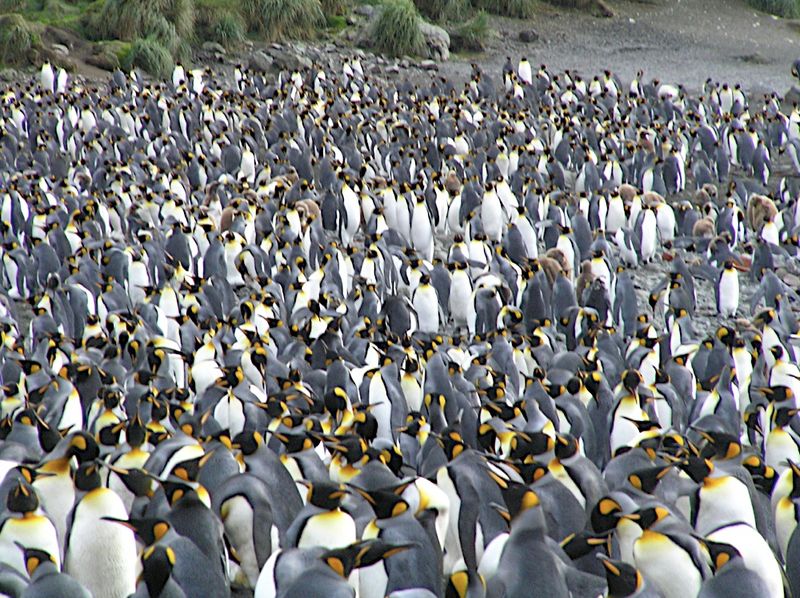
Roughly halfway between Tasmania and Antarctica, Macquarie Island sits in one of the most isolated stretches of ocean on Earth, and it has used that isolation well. The World Heritage-listed island supports four penguin species, making it one of the most penguin-rich islands in the Southern Hemisphere.
Royal penguins are endemic to Macquarie Island and the nearby Bishop and Clerk Islets, breeding nowhere else on Earth. The colony at Hurd Point alone contains around 500,000 breeding pairs, contributing to an estimated total of over 850,000 breeding pairs spread across 57 colonies. King penguins, the second largest penguin species globally, breed along the east coast, while Gentoo penguins nest year-round in small coastal tussock colonies. Eastern Rockhopper penguins establish their colonies around boulders and along tussock-covered slopes.
Royal penguins arrive in September, with eggs appearing in October and November. Access to Macquarie Island is tightly controlled under Tasmanian Parks and Wildlife Service regulations, and visitor numbers are strictly limited to protect the island’s extraordinary ecosystem.
Share this story