Maps can be deceiving. What looks like a fixed, permanent world has actually been reshuffled dozens of times over the centuries, with entire countries vanishing from the map through wars, revolutions, peaceful agreements, and political collapse.
Some of these lost nations lasted centuries, while others barely made it a few years before disappearing. Get ready to explore 15 countries that were once very real, very recognized, and are now completely gone.
Soviet Union
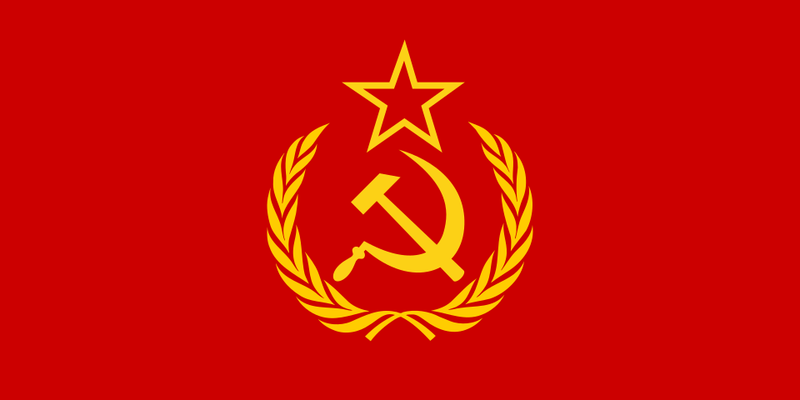
At its peak, the Soviet Union was so massive it spanned eleven time zones. Stretching from Eastern Europe all the way across northern Asia, the USSR was one of the two great superpowers of the Cold War era, locked in a decades-long rivalry with the United States.
Its red flag, hammer and sickle symbol, and five-year plans became known around the world.
The final collapse came faster than almost anyone predicted. In December 1991, Russia, Ukraine, and Belarus signed a declaration saying the USSR no longer existed.
Mikhail Gorbachev resigned on Christmas Day, and the Soviet flag was lowered over the Kremlin for the very last time. It was a moment that left millions of people stunned.
Fifteen separate republics emerged from the wreckage, each becoming its own independent country. Russia was recognized internationally as the main successor state, inheriting the Soviet seat at the United Nations.
The Cold War was officially over, and the world map had to be reprinted almost overnight.
Yugoslavia
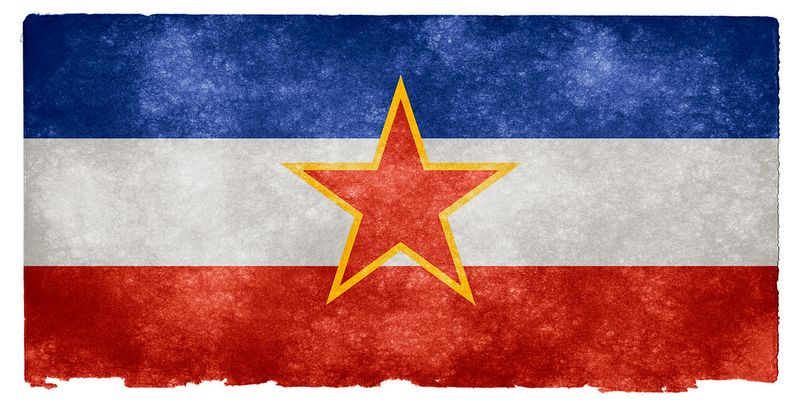
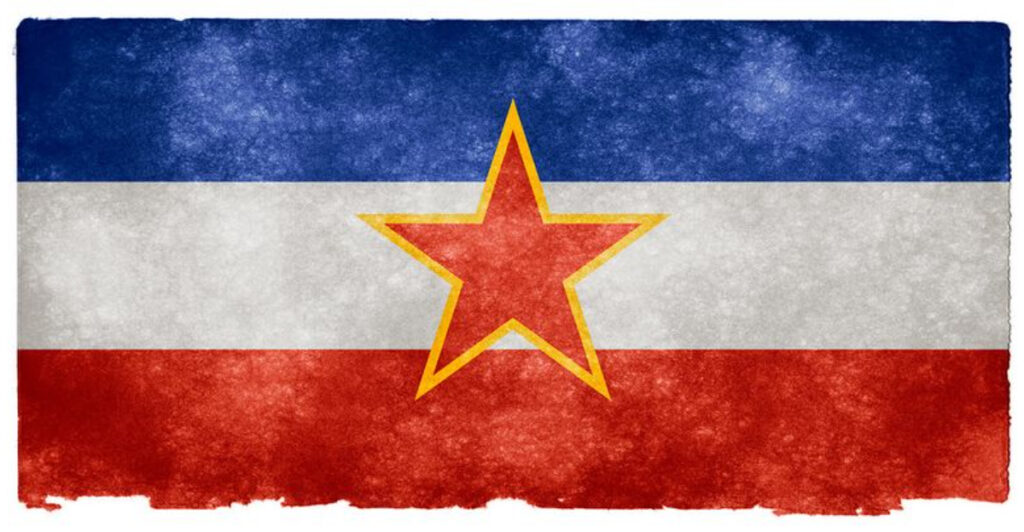
Yugoslavia was basically a political experiment held together by one man’s iron will. After World War II, Josip Broz Tito governed a socialist federation of six republics, keeping a lid on deep ethnic and religious tensions through a combination of charm, force, and clever political balancing.
When Tito died in 1980, the glue started dissolving.
Economic troubles, rising nationalism, and the collapse of communism across Eastern Europe all piled on at once. By early 1992, Slovenia, Croatia, Bosnia and Herzegovina, and Macedonia had all declared independence.
The breakup was not peaceful everywhere. Bosnia in particular suffered a brutal war that shocked the international community and left lasting scars.
Serbia and Montenegro kept calling their new joint state Yugoslavia for a while, but the international community did not treat it as simply a continuation of the old federation. Eventually even that arrangement dissolved.
What had once been one country became seven separate nations. It remains one of the most dramatic and painful national breakups of the modern era.
Czechoslovakia

Not every country disappears in fire and chaos. Czechoslovakia managed to pull off something remarkably rare: it split into two separate nations without a single shot being fired.
People called it the Velvet Divorce, a nod to the earlier Velvet Revolution that had peacefully ended communist rule in 1989. Friendly breakups between countries are so unusual that this one still gets studied in political science classes.
The roots of the split go back to real tensions between Czech and Slovak political leaders who simply could not agree on how to share power in the new democratic system. Rather than fight it out, they negotiated a clean separation.
On January 1, 1993, Czechoslovakia officially ceased to exist, replaced by the Czech Republic and Slovakia as two fully independent countries.
Both nations have since thrived. The Czech Republic, now often called Czechia, joined the European Union and NATO.
Slovakia did the same. The two countries actually maintain friendly relations today, which makes their split feel more like an amicable parting than a painful divorce.
Sometimes the cleanest endings make for the best new beginnings.
East Germany
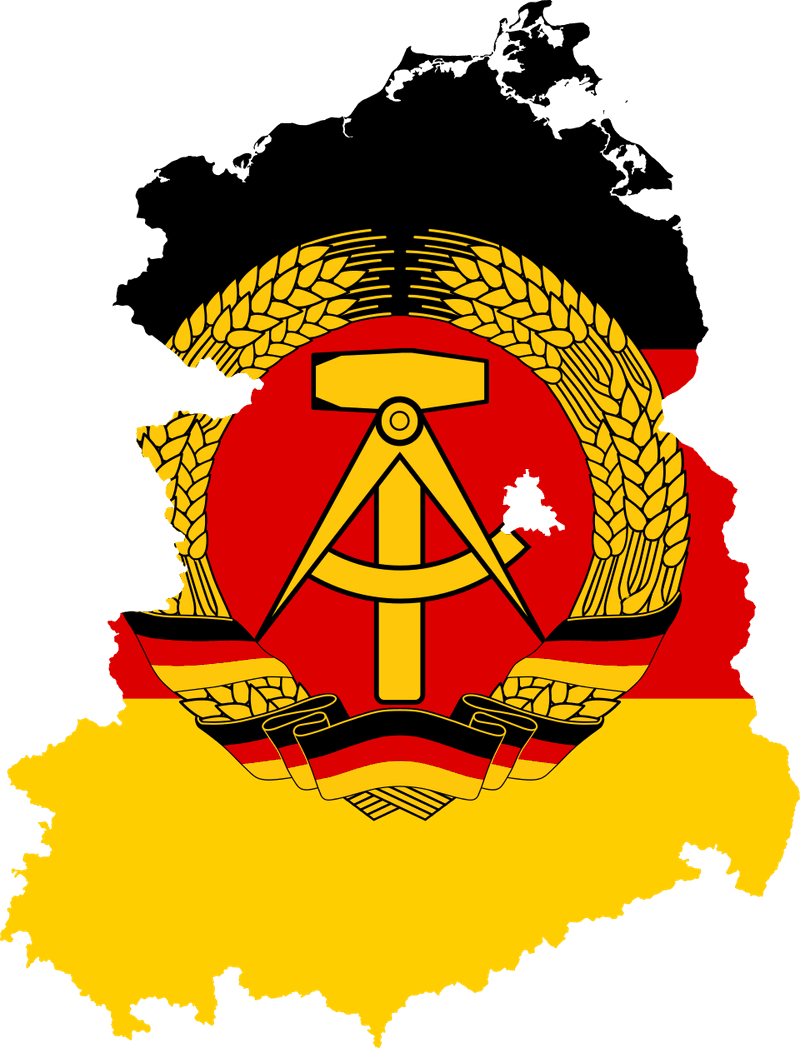
Few countries have disappeared quite so dramatically on live television. East Germany, officially the German Democratic Republic, spent four decades as a Soviet-aligned socialist state separated from West Germany by the most famous wall in history.
Citizens who tried to cross without permission risked being shot. The contrast between the two Germanys became a symbol of the entire Cold War divide.
Then came November 9, 1989. East German authorities announced that citizens could cross the border freely, and within hours crowds were literally chipping away at the Berlin Wall with hammers.
The images went around the world instantly. What followed was a rapid political process that most experts had not expected to happen so quickly.
On October 3, 1990, East Germany formally dissolved and its territory was absorbed into the Federal Republic of West Germany, creating the reunified Germany that exists today. The reunification cost enormous amounts of money and created social tensions that lingered for years.
But the GDR itself was gone forever, leaving behind a complicated legacy that Germans continue to debate, study, and sometimes even feel nostalgic about.
South Vietnam
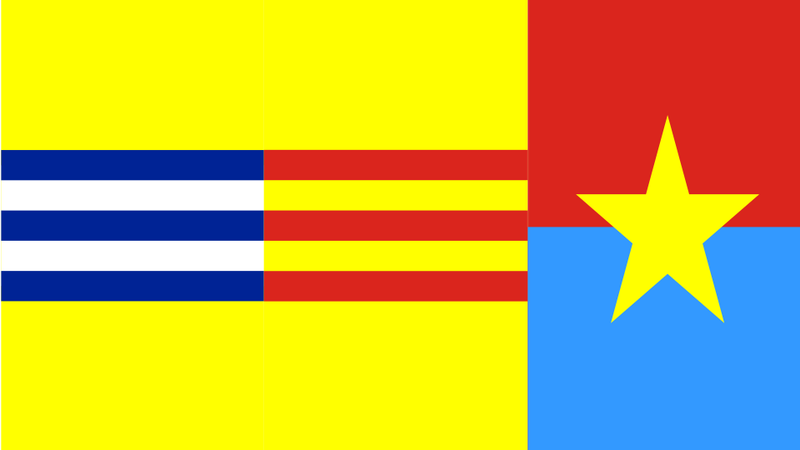
The image is one of the most recognizable in modern history: a helicopter perched on a Saigon rooftop, lifting off as the city below descended into chaos. On April 29, 1975, American Embassy personnel were evacuated from South Vietnam in a frantic last-minute operation as North Vietnamese forces closed in.
The Republic of Vietnam, which had existed since 1955, had just hours left.
South Vietnam had fought alongside American and allied forces through one of the 20th century’s most divisive wars. Billions of dollars in military aid, hundreds of thousands of troops, and years of fighting had not been enough to prevent the government in Saigon from collapsing.
When the final offensive came, the fall was swift and overwhelming.
North and South Vietnam were formally reunified in 1976, creating the Socialist Republic of Vietnam that exists today. Saigon was renamed Ho Chi Minh City.
For the millions of South Vietnamese who had built their lives under the old government, reunification meant profound upheaval. The country that had defined a generation of American foreign policy simply ceased to exist, leaving behind questions that historians still argue about today.
North Yemen
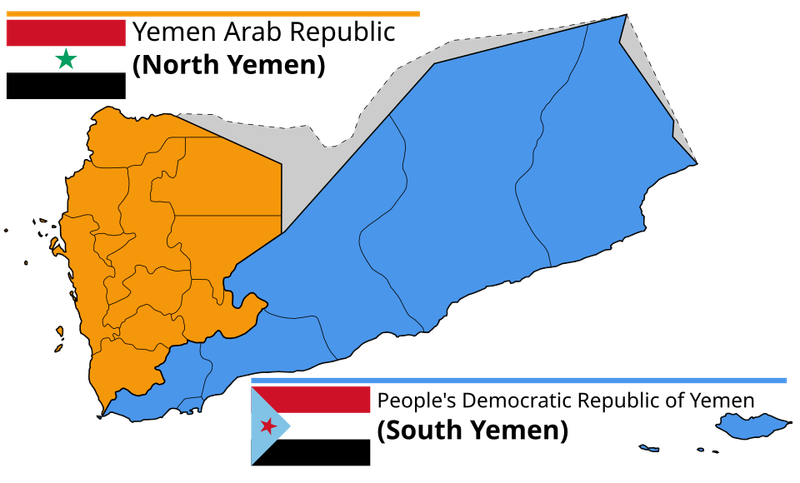
Yemen was once two countries, and North Yemen had quite a turbulent path to even becoming a republic. The Yemen Arab Republic was born in 1962 after a revolution overthrew the old Mutawakkilite Kingdom, which had been one of the more isolated and conservative monarchies in the Arab world.
The transition was messy and involved years of civil conflict before the republic firmly established itself.
Once it did, North Yemen followed a very different political direction from its southern neighbor. While South Yemen leaned hard into Marxist ideology and Soviet connections, the north maintained a more traditional Arab nationalist stance.
The two countries even fought a brief border war in 1972, which makes their eventual peaceful merger all the more surprising.
On May 22, 1990, North Yemen and South Yemen officially united to form the Republic of Yemen. The unification was welcomed with real optimism at the time.
Unfortunately, the new unified Yemen faced enormous political and economic challenges that have continued ever since. North Yemen as a separate country quietly disappeared that day, replaced by a unified state that has struggled to find lasting stability.
South Yemen
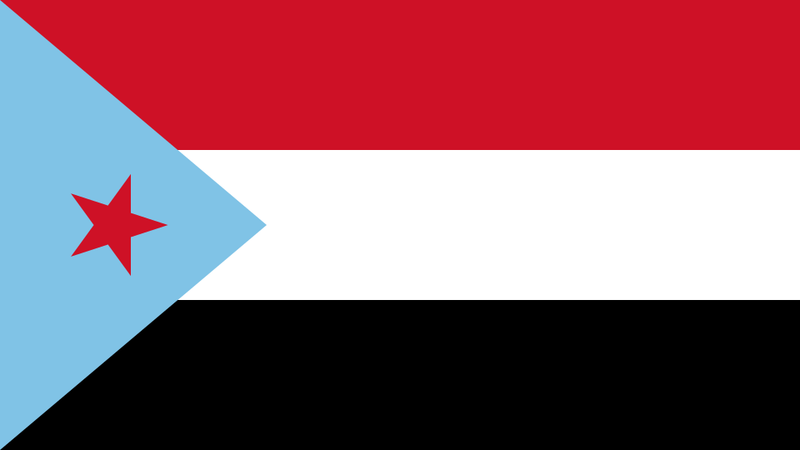
South Yemen holds a genuinely unusual distinction: it was the only country in the Arab world to officially adopt Marxism as its governing ideology. The People’s Democratic Republic of Yemen, as it was formally known after 1970, aligned itself firmly with the Soviet bloc, collectivized agriculture, nationalized businesses, and even had its own internal communist party purges.
For a country in the Arabian Peninsula, that was a remarkable political identity.
The roots go back to the British colonial port of Aden, which became independent in November 1967 after a violent struggle against British rule. The new government initially called itself the People’s Republic of Southern Yemen before adopting the more explicitly Marxist name in 1970.
Soviet advisors, Cuban support, and strong ties with Eastern Europe defined the country’s brief existence.
South Yemen’s economy never thrived under socialist management, and by the late 1980s the Soviet Union itself was weakening, taking South Yemen’s main patron with it. Unification with the north became the practical solution.
On May 22, 1990, South Yemen merged with North Yemen and vanished as an independent state. Its Marxist experiment had lasted just over two decades.
Tanganyika

Tanganyika had one of the shortest runs as an independent country on record, and yet its story is genuinely fascinating. Located on the East African mainland, the territory had passed through German colonial rule and then British administration under League of Nations and United Nations mandates before finally gaining independence in December 1961.
The United States and other governments quickly recognized the new state.
Julius Nyerere became the country’s first prime minister and later president, quickly establishing himself as one of Africa’s most respected independence leaders. His vision for the country emphasized African socialism and self-reliance, ideas that would shape the region’s politics for decades.
Tanganyika seemed set for its own distinct path forward.
But that path lasted barely two and a half years. In April 1964, Tanganyika united with the island nation of Zanzibar, which had just gone through its own dramatic revolution.
The merged country needed a new name, and the solution was creative: combine parts of both names to get Tanzania. Tanganyika’s name disappeared from maps, but its mainland territory forms the larger part of Tanzania today.
Nyerere led the new country until 1985.
Zanzibar
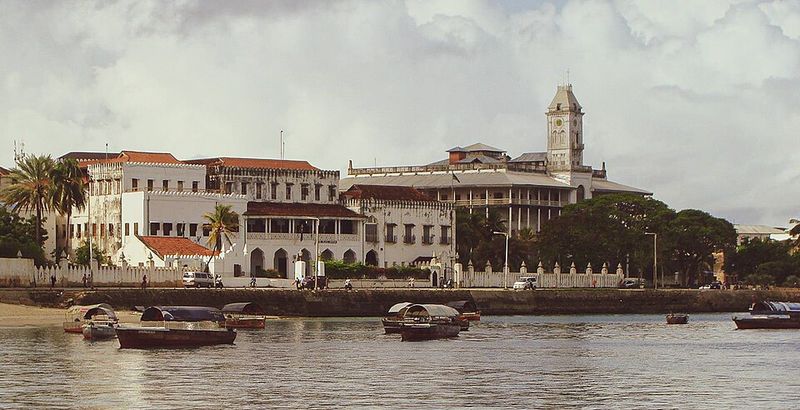
Zanzibar’s history reads like an adventure novel crammed into a very small island. For centuries it was a hub of the Indian Ocean spice and slave trade, ruled by Arab sultans and later colonized by Britain.
When it finally gained independence in December 1963, the world expected a quiet transition to self-governance. What happened instead was a violent revolution just weeks later in January 1964, which overthrew the sultan and installed a new revolutionary government.
The revolution was swift and brutal. The new Zanzibari leadership quickly sought to consolidate power and almost immediately began talks with Tanganyika about political union.
The motivations on both sides were practical: Zanzibar needed stability and support, while Tanganyika’s Nyerere saw value in a broader East African union.
The two countries formally merged on April 26-27, 1964, ending Zanzibar’s brief independent existence of just a few months. The island did not simply vanish into Tanzania, however.
Zanzibar retains significant autonomy within Tanzania, with its own president, parliament, and government handling local affairs. Its Stone Town is now a UNESCO World Heritage Site, and the spice-scented streets still feel like a world apart from the mainland.
United Arab Republic

Imagine two countries deciding to literally merge into one, sharing a single government, a single flag, and a single president. That is exactly what Egypt and Syria did in 1958 when they created the United Arab Republic, one of the boldest and most ambitious political experiments in modern Arab history.
Egyptian President Gamal Abdel Nasser was the driving force, and Arab nationalist enthusiasm was at an all-time high.
The practical problems showed up almost immediately. Egypt and Syria do not even share a border, which made governing a unified state logistically awkward.
Egyptian officials dominated the joint government, which frustrated Syrian politicians and military officers who felt sidelined in their own country. Resentment built steadily beneath the surface of pan-Arab unity.
A military coup in Syria on September 28, 1961 ended the experiment abruptly. Syria walked out and restored itself as the Syrian Arab Republic.
The union had lasted just three years and eight months. Egypt kept using the United Arab Republic name until 1971, even though the actual union was dead.
The whole episode is a cautionary tale about the gap between inspiring political ideas and the messy reality of actually running a government.
Gran Colombia
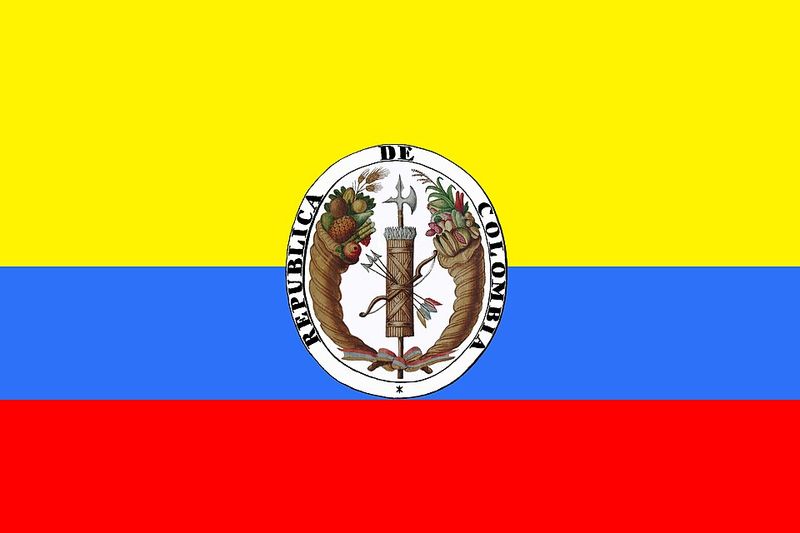
Simon Bolivar dreamed of a united South American republic, and for a brief, remarkable period he actually had one. Gran Colombia, as historians call it to distinguish it from modern Colombia, brought together the territories of present-day Colombia, Venezuela, Ecuador, and Panama under a single government starting in 1819.
Bolivar himself served as its first president, and the republic became the centerpiece of his grand vision for Latin American independence.
The geography alone made governing it nearly impossible. Vast mountain ranges, dense jungles, and enormous distances separated the different regions, making communication and administration a constant struggle.
Regional leaders developed their own power bases and had little interest in taking orders from a distant central government. Bolivar spent much of his presidency trying to hold the whole thing together by sheer force of personality.
It did not work. Venezuela and Ecuador both broke away in 1830, the same year Bolivar died, exhausted and disillusioned.
Gran Colombia dissolved, leaving behind the successor states that would eventually become modern Colombia, Venezuela, Ecuador, and Panama. Bolivar reportedly called his life’s work like plowing the sea.
Gran Colombia lasted barely a decade, but its legacy shaped an entire continent.
Federal Republic of Central America
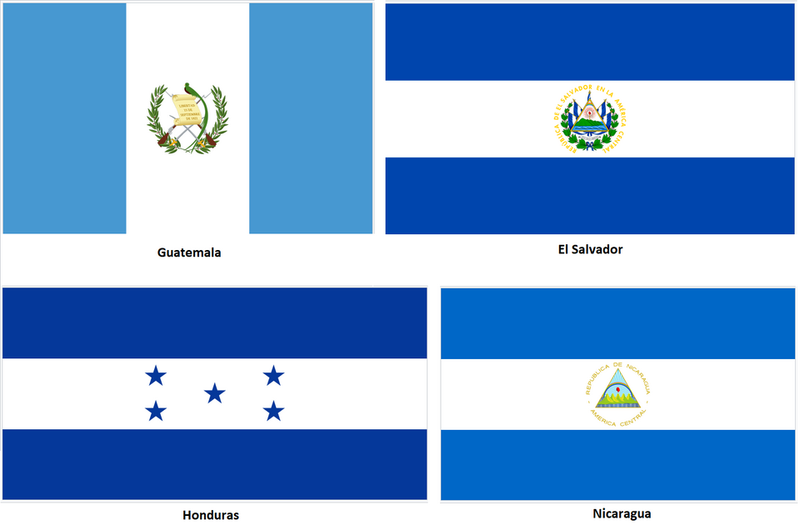
Right after winning independence from Spain in 1821, five Central American provinces faced a big question: go it alone or stick together? They chose together, forming what became the Federal Republic of Central America.
The United States recognized the new federation in 1824, and for a moment it looked like Central America might follow a path similar to the United States, a federation of distinct states under a shared government.
The comparison flatters the reality. Unlike the U.S. founding, the Central American federation was torn apart almost immediately by fierce conflicts between conservative and liberal factions, between wealthy landowners and poorer rural communities, and between regions that had almost nothing economically in common.
A devastating epidemic and a charismatic but destabilizing military leader named Rafael Carrera added further chaos to the mix.
The federation began falling apart in 1838, and by the early 1840s it had completely dissolved. Guatemala, Honduras, El Salvador, Nicaragua, and Costa Rica each went their own separate ways.
Interestingly, attempts to reunify Central America popped up several more times during the 1800s, but none succeeded. The five countries that emerged from the federation’s collapse are essentially the same five countries that occupy Central America today.
Kingdom of Hawaii
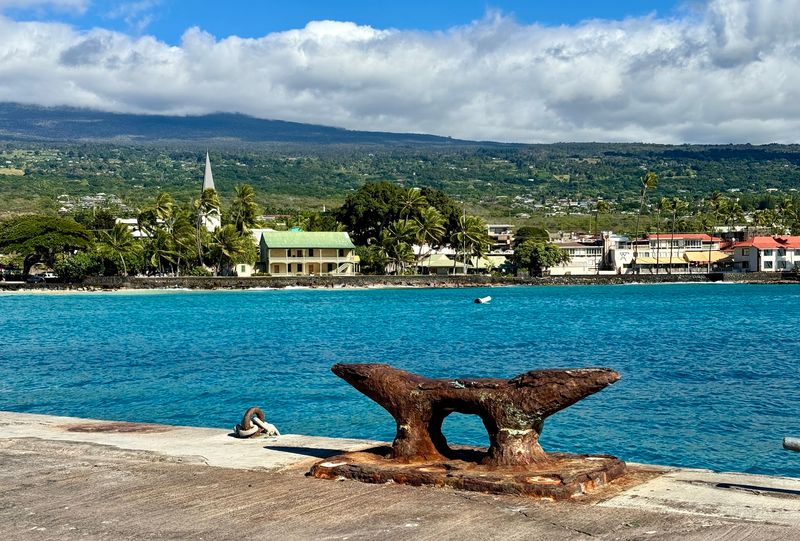
Before Hawaii was a vacation destination or an American state, it was an internationally recognized kingdom with its own royal family, diplomatic relationships, and seat at the table of 19th-century world affairs. Queen Liliuokalani, Hawaii’s last monarch, was a respected figure who composed music, including the beloved song Aloha Oe, and worked to protect her people’s rights against growing American economic influence on the islands.
The overthrow came in January 1893, engineered largely by American sugar plantation owners and businessmen with support from U.S. Marines who conveniently landed nearby.
Queen Liliuokalani surrendered under protest to avoid bloodshed, explicitly stating she expected the United States government to correct the injustice once it learned the full story. President Grover Cleveland actually agreed with her and called the overthrow illegal, but Congress refused to restore the monarchy.
A provisional government and then the short-lived Republic of Hawaii followed before the islands were formally annexed by the United States on August 12, 1898. The U.S.
State Department’s own historical records note that Hawaiian independence and bilateral diplomatic relations ended on that date. Hawaii became the 50th U.S. state in 1959, though discussions about Hawaiian sovereignty continue to this day.
Austria-Hungary
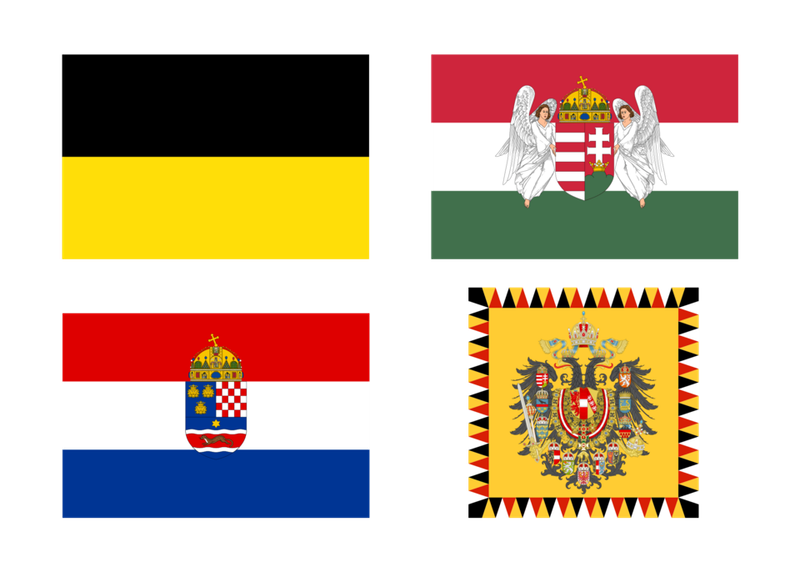
Austria-Hungary was basically a patchwork quilt of languages, ethnicities, religions, and cultures crammed under one imperial roof. At its peak before World War I, the Dual Monarchy governed territories that today make up Austria, Hungary, Czechia, Slovakia, Croatia, Slovenia, Bosnia and Herzegovina, and chunks of several other countries.
Roughly a dozen major languages were spoken across its lands. Holding it all together required constant political juggling.
Emperor Franz Joseph I ruled for an astonishing 68 years, from 1848 until his death in 1916, personally symbolizing the empire’s continuity even as it creaked under nationalist pressures. The assassination of his heir, Archduke Franz Ferdinand, in Sarajevo in 1914 triggered World War I, a war that would ultimately destroy the empire that started it.
By 1918, with military defeat looming, the whole structure came apart rapidly.
Czechs, Slovaks, Poles, South Slavs, and others declared independence or joined neighboring states. Postwar treaties formally recognized the dissolution of the Dual Monarchy and redrew the map of Central Europe completely.
Austria and Hungary became small, separate republics. The empire that had dominated Central Europe for centuries was gone in a matter of weeks, replaced by a cluster of new and struggling nations.
Ottoman Empire
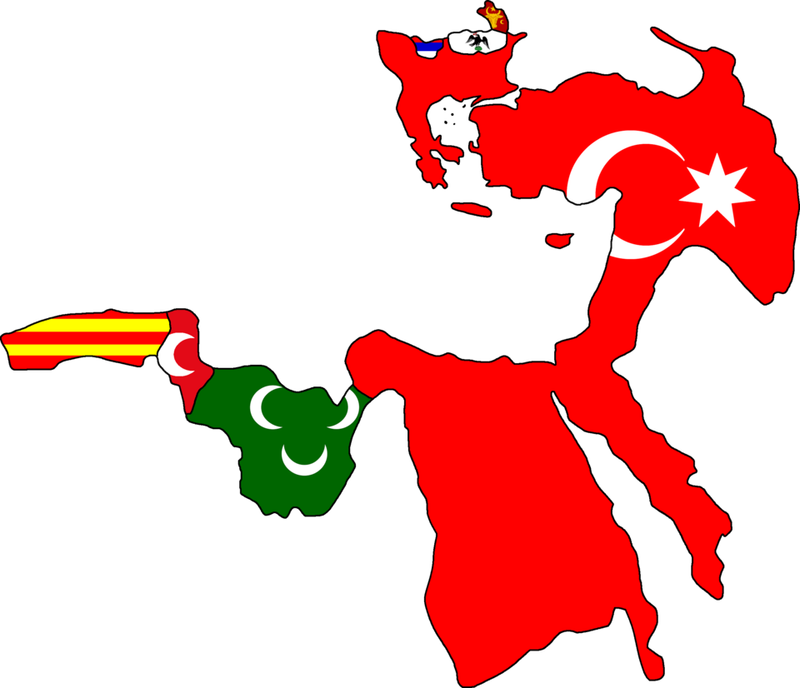
Six hundred years is a remarkable run for any political entity, and the Ottoman Empire managed just that. At its height in the 16th and 17th centuries, it controlled southeastern Europe, Anatolia, the entire Middle East, and a large stretch of North Africa.
The city of Constantinople, renamed Istanbul after the Ottomans captured it in 1453, became one of the world’s great imperial capitals, a meeting point of East and West.
The slow decline started well before World War I. The empire lost territory steadily throughout the 1800s as nationalist movements broke away and European powers chipped at its edges.
By the time World War I began, the Ottomans had already lost most of their European territory. Joining the losing side in that war accelerated the collapse dramatically, with Allied powers carving up former Ottoman lands across the Middle East and North Africa.
The final blow came from within. Turkish nationalist leader Mustafa Kemal led a successful resistance movement in Anatolia, abolished the Ottoman sultanate in 1922, and proclaimed the Republic of Turkey in 1923.
The U.S. State Department describes the transition simply: after World War I, the Ottoman Empire dissolved and modern Turkey arose in its place.
An era stretching back to 1299 had finally ended.
Share this story