Scandinavia’s capitals are great, but they are not the whole story. Plenty of travelers book a flight to Oslo, Stockholm, or Copenhagen, spend a few days ticking off the main sights, and head home without realizing they missed the best parts. The truth is, once you get outside the capitals, Scandinavia opens up in ways that are genuinely hard to believe. We are talking about UNESCO-listed medieval walls, Arctic wilderness that stretches farther than the eye can follow, coastal villages that look like they were painted by hand, and history so layered that a single afternoon visit barely scratches the surface.
From the tip of Denmark’s northern coast to the Swedish mountains near the Arctic Circle, this list covers thirteen destinations that give the capitals a serious run for their money. Read on, and you might find yourself rerouting your next trip entirely.
1. Geirangerfjord, Geiranger, Møre og Romsdal, Norway
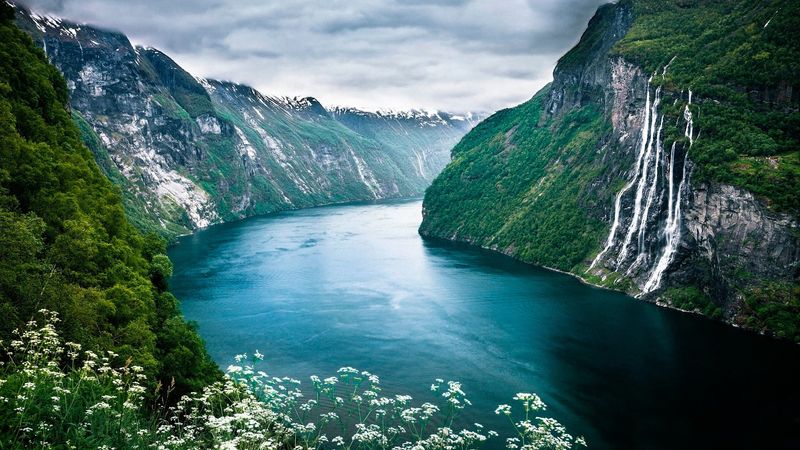
A UNESCO World Heritage Site since 2005, Geirangerfjord stretches 15 kilometers through some of the most dramatic mountain scenery Norway has to offer. The fjord reaches depths of 700 meters, carved out by ancient glaciers that retreated thousands of years ago and left behind sheer cliff walls and plunging waterfalls.
The Seven Sisters waterfall drops an average of 250 meters across seven separate streams, and across the fjord, the Suitor waterfall has a dry gap in the middle shaped like a bottle. Local legend says it has been trying to win the sisters over for centuries, without much luck.
Historic cliff farms like Skageflå and Knivsflå cling to the mountainside and can be reached by boat, offering a glimpse into the isolated lives of fjord farmers from earlier centuries. The Eagle Road, completed in 1954, connects Geiranger to Eidsdal via sharp switchbacks and is one of the most photographed drives in Norway.
2. Lofoten Islands, Reine, Nordland, Norway
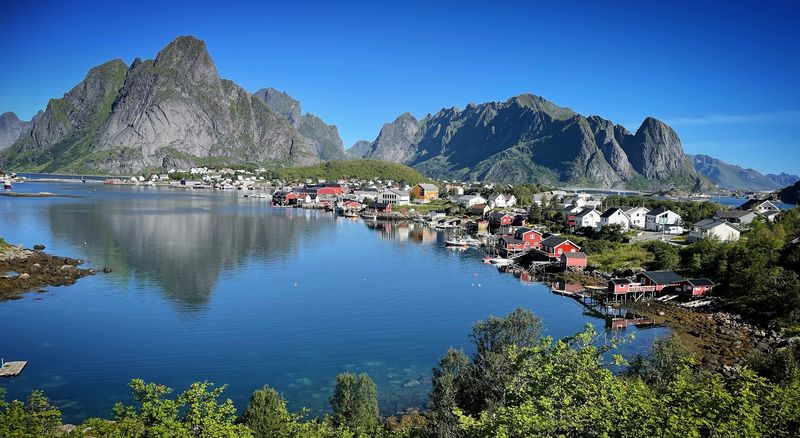
People have been fishing these waters for over 6,000 years, and the Lofoten Islands have not lost a single bit of that deep connection to the sea. The world’s largest Viking Age longhouse, measuring 83 meters, was discovered at Borg, confirming that this archipelago was already a place of serious importance long before modern tourism arrived.
Reine is the most recognized village in the islands, and the hike up Reinebringen rewards those willing to put in the effort with a sweeping view across jagged peaks and glittering water below. Traditional fishermen’s cabins called rorbuer, once housing up to twelve men sharing just four bunks, have been converted into some of the most distinctive accommodation in Norway.
The Lofoten Museum near Kabelvåg preserves well-maintained historic farms and covers the full history of the seasonal cod fishery that still defines much of the region’s identity. Oslo simply does not have anything that comes close to this combination of wilderness and living history.
3. Bergen, Bergen, Vestland, Norway
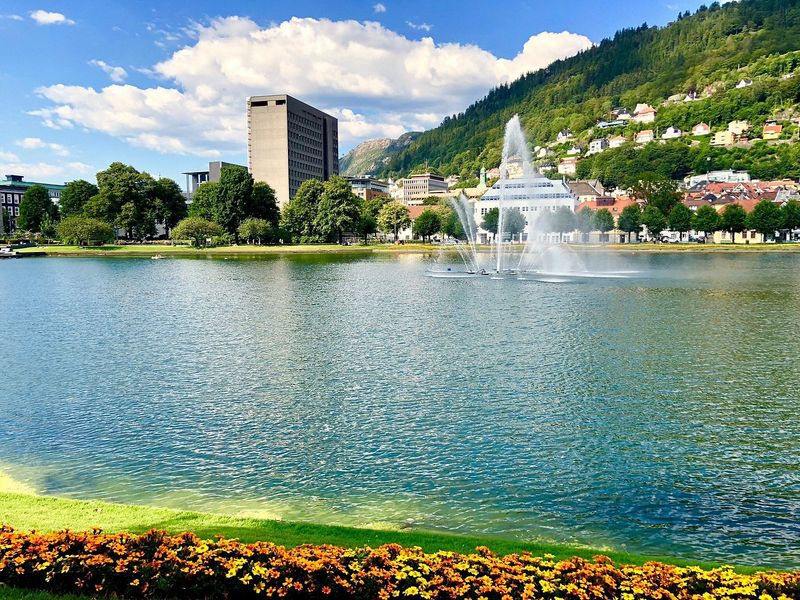
Bergen has been doing its own thing since the 12th century, and it shows. The Bryggen waterfront earned UNESCO World Heritage status for good reason: its rows of colorful wooden buildings date back to the era when Bergen was one of the Hanseatic League’s most important trading posts, connecting Norway to markets across Europe from the 14th to the 16th centuries.
The Fløibanen funicular carries visitors up Mount Fløyen, where the view across the city, harbor, and surrounding islands makes it clear why Bergen locals tend to be quietly smug about where they live. The Bergen Fish Market has anchored local commerce for centuries and remains one of the city’s most lively public spaces.
KODE Art Museums and Composer Homes manages several cultural sites, including Edvard Grieg’s home at Troldhaugen, which adds a musical layer to an already rich cultural picture. Bergen works as a base for exploring western Norway’s fjords, but it is also completely worth visiting on its own terms.
4. Tromsø, Tromsø, Troms, Norway
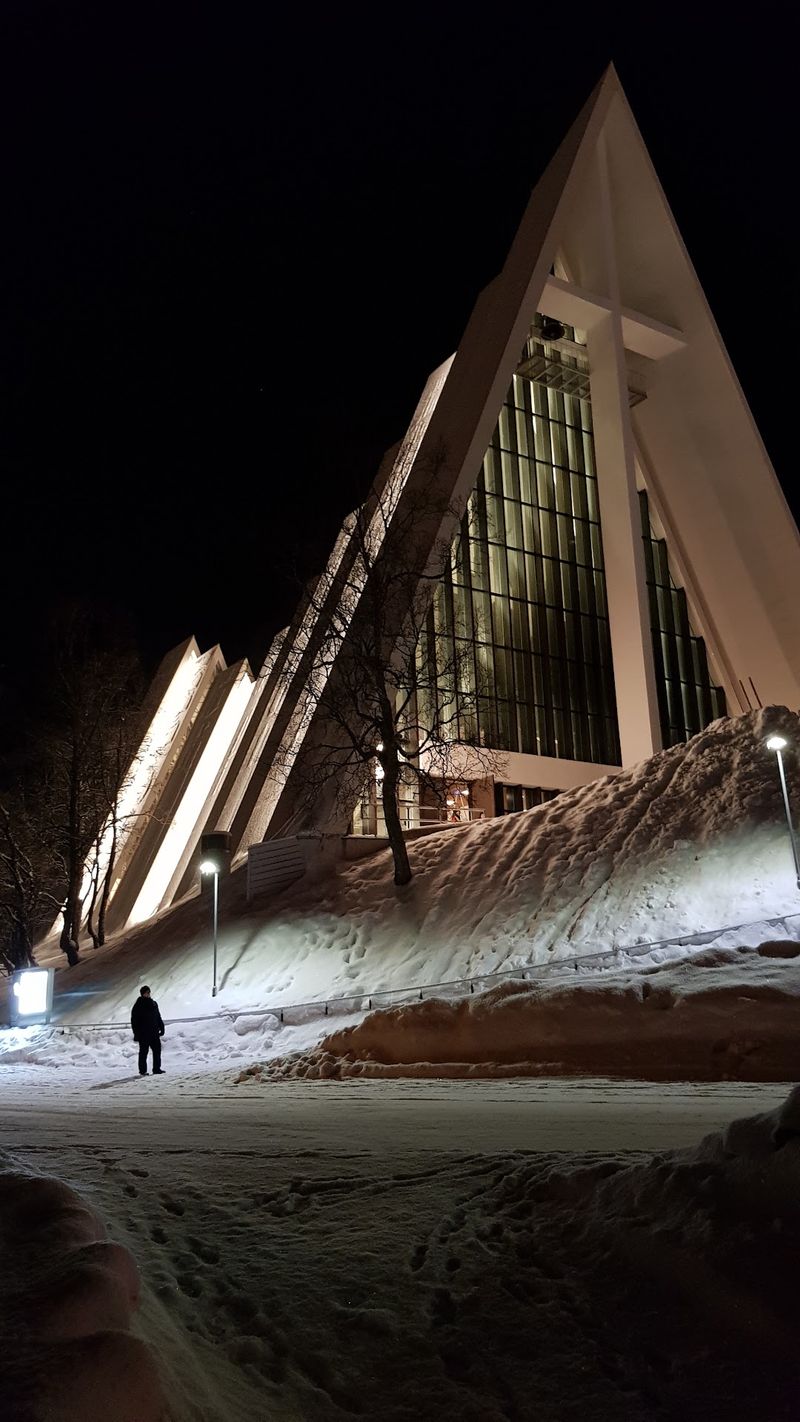
Tromsø earned the nickname “Gateway to the Arctic” by serving as the launch point for countless polar expeditions, and that spirit of heading somewhere genuinely remote still defines the city’s character. It sits well above the Arctic Circle, which means summer brings midnight sun and winter brings the kind of dark skies that make the northern lights easier to spot.
The Arctic Cathedral, consecrated in 1965 with its bold triangular design, stands on the opposite side of the water from the city center and is one of Norway’s most recognizable modern buildings. The Fjellheisen cable car lifts visitors up Storsteinen mountain for broad views of islands, water, and the city spread out below.
Polaria, the world’s northernmost aquarium, focuses on Arctic marine life and ongoing polar research, making it more than just a standard aquarium visit. The Arctic University of Norway, also the world’s northernmost university, gives Tromsø a lively academic energy that keeps it from feeling like a remote outpost.
5. Ålesund, Ålesund, Møre og Romsdal, Norway
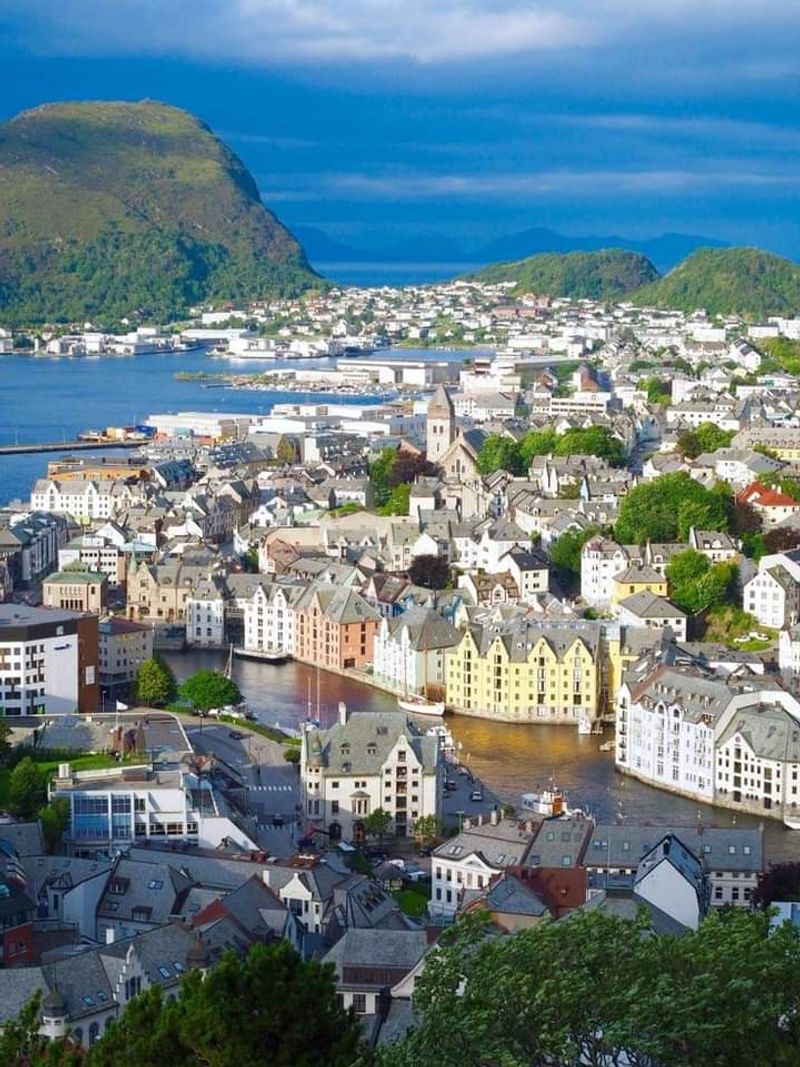
In January 1904, a fire tore through Ålesund in a single night and left more than 10,000 people without homes. What followed was one of the most remarkable rebuilding projects in European history: between 1904 and 1907, over 50 architects rebuilt the entire city in the Art Nouveau style, producing more than 320 buildings that still stand today.
Kaiser Wilhelm II of Germany, a regular visitor to the region, sent warships loaded with relief supplies during the crisis, and a street in Ålesund still carries his name as a nod to that unusual moment of international goodwill. The Jugendstilsenteret, housed in the original Swan Pharmacy building from 1907, tells the full story of the fire and reconstruction through period interiors and an immersive exhibit called the Time Machine.
The climb up Aksla Viewpoint covers 418 steps from the city park and delivers a panorama across rooftops, islands, and surrounding waterways that makes every step worth it. Ålesund is part of the Réseau Art Nouveau Network, connecting it to other European cities celebrated for this distinctive architectural style.
6. Aarhus, Aarhus, Central Denmark Region, Denmark
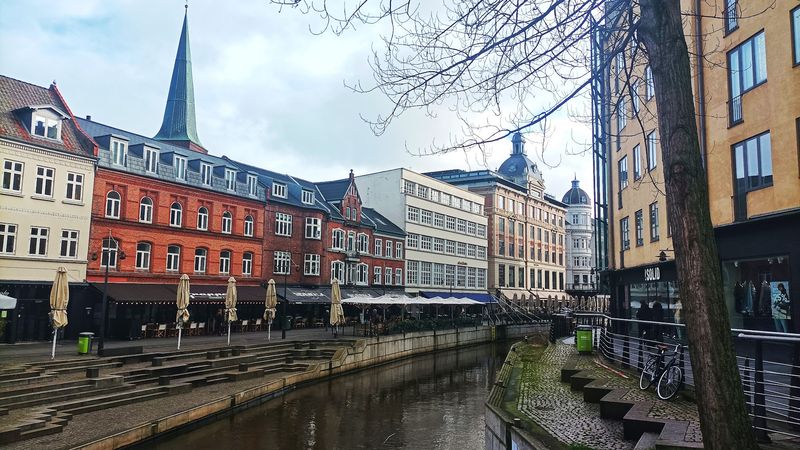
Denmark’s second-largest city has been quietly building a case for itself that Copenhagen’s tourism board probably finds a little inconvenient. Aarhus traces its roots to a Viking settlement from the 8th century, and that long history is woven into neighborhoods like the Latin Quarter, where cobblestone streets and well-preserved buildings give the city a texture that feels genuinely old.
Den Gamle By is an open-air museum of urban history that brings together 75 historic buildings relocated from across Denmark, recreating daily life from the 17th through the 20th century with a level of detail that goes well beyond typical museum displays. The ARoS Aarhus Art Museum tops its building with Olafur Eliasson’s circular rainbow panorama walkway, a multicolored glass corridor that frames the city in shifting hues depending on where you stand.
Moesgaard Museum, just outside the center, covers archaeology and ethnography through hands-on, interactive exhibitions that make ancient history feel immediately relevant. Aarhus moves at a pace that Copenhagen rarely allows, and that alone makes it worth the trip.
7. Skagen, Skagen, North Jutland Region, Denmark
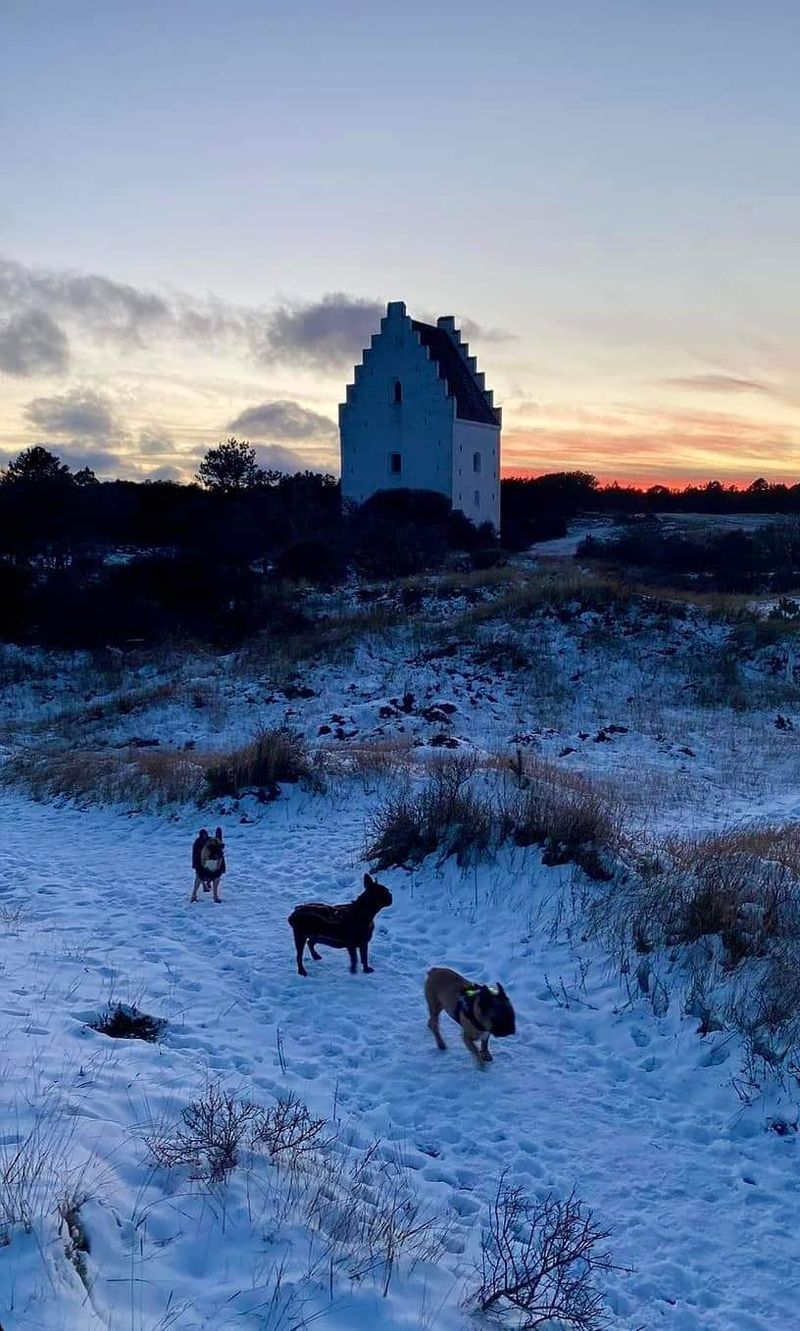
Denmark ends at Skagen, and it does so in the most dramatic way possible. At Grenen, the country’s northernmost point, the Skagerrak and the Kattegat meet in a visible line of competing currents, and visitors can literally stand with one foot in each sea. It is one of those geographical facts that sounds made up until you are actually standing there watching the water collide.
The landscape around Skagen has a stark, windswept quality that drew a colony of artists in the late 19th and early 20th centuries. Known as the Skagen Painters, they were captivated by the coastal light and the open dune scenery, and the Skagens Museum now preserves their work in a dedicated collection.
Råbjerg Mile, Denmark’s largest migrating dune, moves several meters eastward every year, a slow but unstoppable natural process that has already buried the local church up to its tower. The Grey Lighthouse at Skagen Fyr offers panoramic views of the coastline and the famous meeting point of the seas below. Copenhagen simply cannot offer this kind of raw, elemental geography.
8. Odense, Odense, Region of Southern Denmark, Denmark
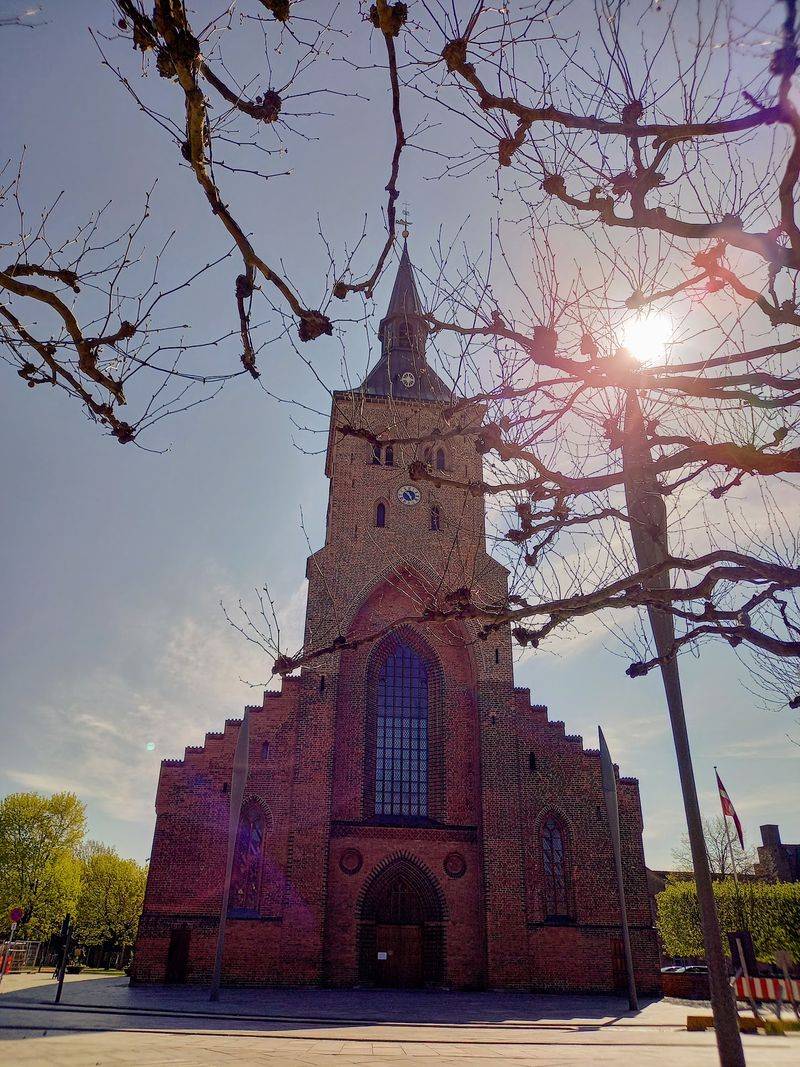
Hans Christian Andersen was born here, and Odense has built a thoughtful, layered relationship with that fact rather than simply plastering his name on every available surface. H.C. Andersen’s House, designed by Japanese architect Kengo Kuma, is a fully modern museum experience that uses the writer’s life and stories as a starting point for something genuinely imaginative and well-curated.
Both Andersen’s birthplace and his childhood home are preserved in the city, giving visitors two distinct points of direct connection to the writer’s early years. The Funen Village, Den Fynske Landsby, operates as an open-air museum of rural island life from the 18th and 19th centuries, with authentic farmsteads and working demonstrations that make the historical period feel tangible.
Brandts Museum of Art and Visual Culture occupies a former textile factory and covers art, photography, and new media across a complex of gallery spaces. Odense is one of Denmark’s oldest cities, with origins in the Viking Age, and it carries that history without feeling like a museum piece itself.
9. Roskilde, Roskilde, Region Zealand, Denmark
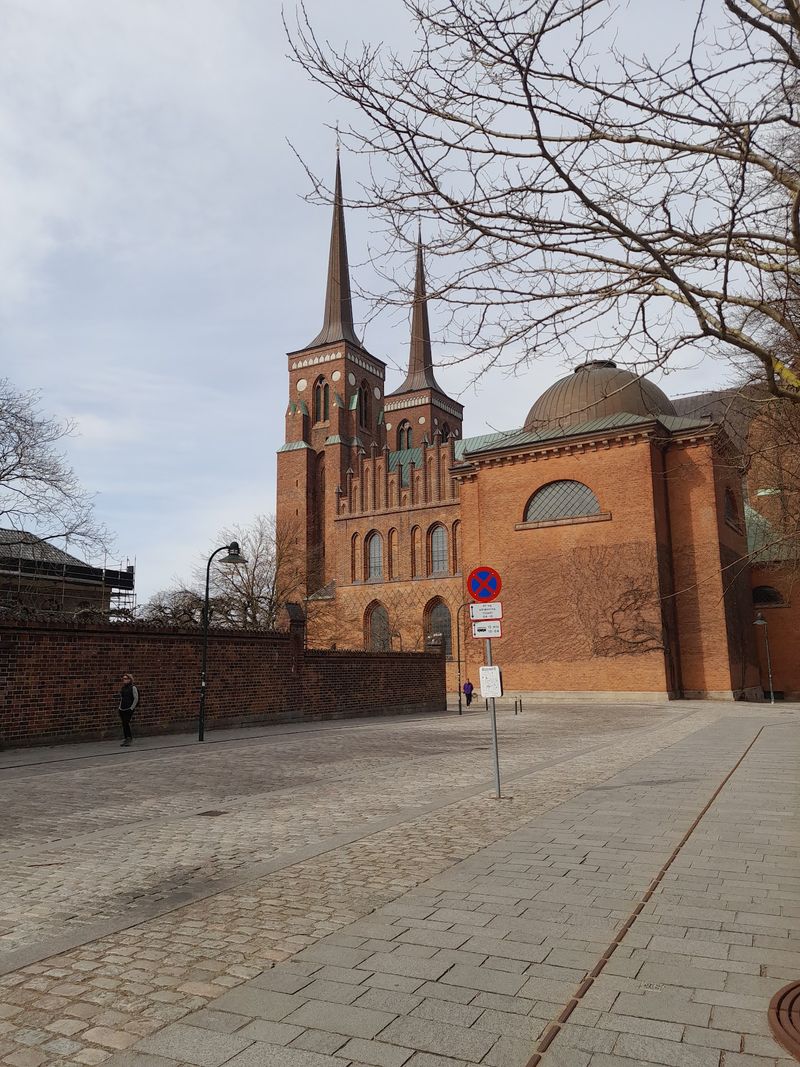
Roskilde served as Denmark’s capital from the 11th century until 1443, and the city has not exactly let people forget it. Roskilde Cathedral, a UNESCO World Heritage Site, is one of the earliest brick churches in Northern Europe and has functioned as the royal burial church for 40 Danish kings and queens, a tradition stretching back to the 15th century.
The interior holds ornate chapels including Christian IV’s chapel, notable for its vaulted blue ceiling decorated with stars and trompe l’oeil artistry that rewards a close look. Viking King Harald Bluetooth is traditionally associated with the cathedral, though that connection remains historically debated, adding a layer of intrigue to an already historically loaded building.
The Viking Ship Museum houses five original 11th-century ships recovered from Roskilde Fjord, offering concrete, tangible insight into how Viking seafarers actually built and used their vessels. Roskilde Palace, next to the cathedral, now holds the Museum of Contemporary Art, giving the city an unexpected modern counterpoint to all that medieval weight.
10. Gothenburg, Gothenburg, Västra Götaland County, Sweden
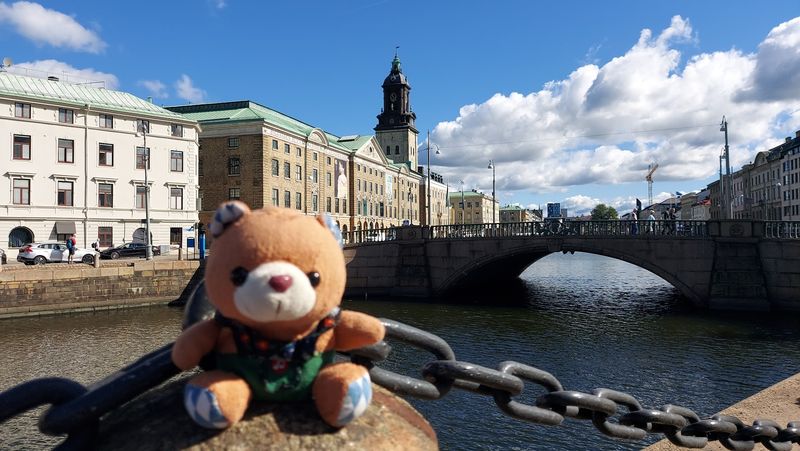
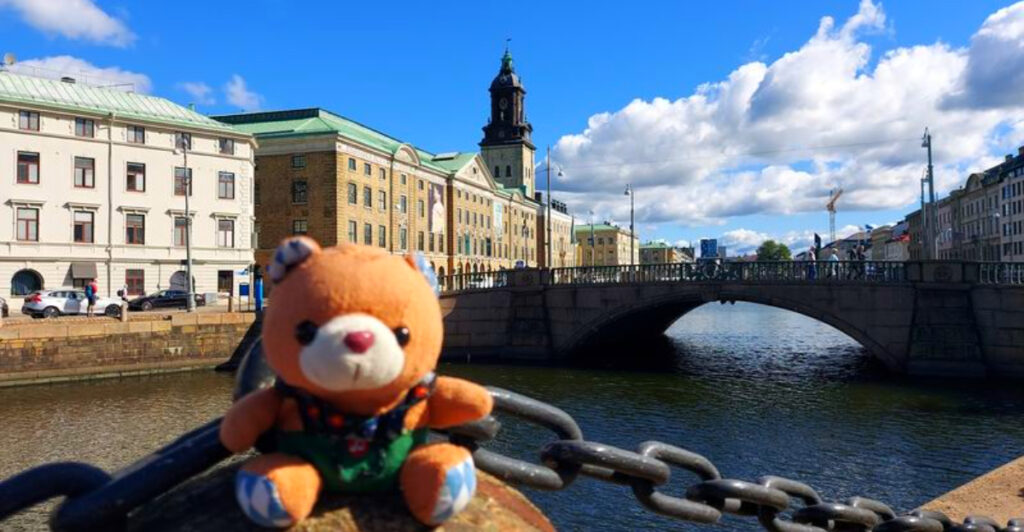
Gothenburg’s canal system is a direct result of 17th-century Dutch urban planning influence, and that layered, international history gives the city a character that feels distinct from Stockholm’s more self-consciously grand capital energy. The canals thread through a city that is large enough to have real cultural depth but compact enough to navigate without a detailed strategy.
Haga is the neighborhood that tends to win people over quickly. Its landshövdingehus buildings, a unique architectural style featuring wooden upper floors on stone ground levels, date mostly from the 19th century and line pedestrian-friendly streets that encourage exactly the kind of aimless afternoon wandering that makes a city feel livable rather than just visitable.
Liseberg is one of Scandinavia’s largest amusement parks and draws a broad mix of visitors, while Universeum combines a rainforest, an oceanarium, and interactive science exhibits under one roof. The Gothenburg Museum of Art holds a substantial Nordic art collection that makes a strong case for the city’s cultural credentials beyond its reputation for relaxed, easygoing street life.
11. Visby, Visby, Gotland County, Sweden
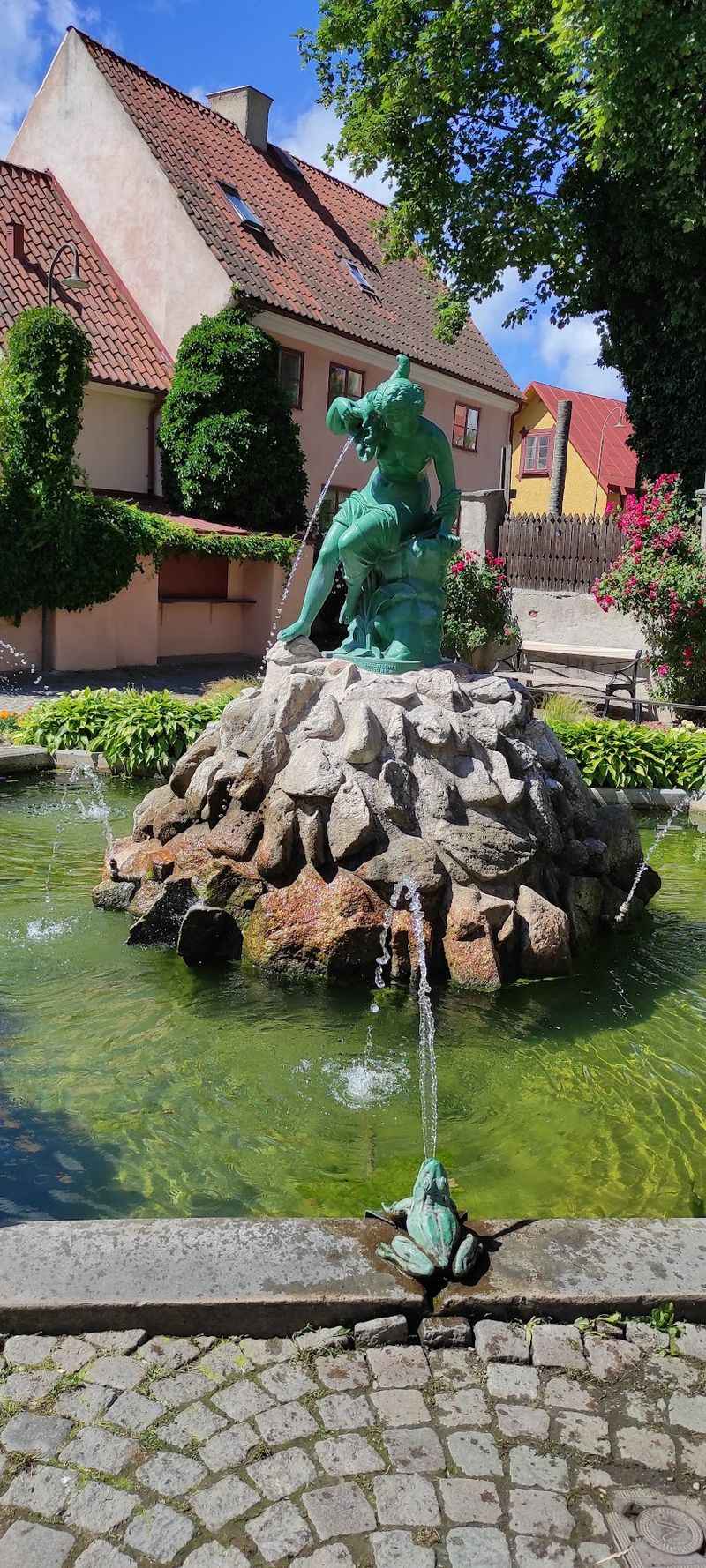
Medieval walls do not get much more intact than Ringmuren, Visby’s town wall that still wraps around most of the historic area for over 3.4 kilometers, with more than 50 towers still standing. The whole ensemble earned UNESCO World Heritage status and stands as one of the best-preserved medieval defensive structures in all of Scandinavia.
Visby rose to prominence as a major Hanseatic League trading center during the Middle Ages, accumulating enough wealth to build the kind of fortifications that still define its skyline today. Medieval church ruins are scattered throughout the town, each one adding a quiet point of historical interest to walks through the old streets.
The Gotland Museum fills in the island’s long story through Viking hoards, archaeological discoveries, and medieval artifacts that span centuries of Baltic trade and conflict. The Botanical Garden, tucked inside the historic walls, provides a calm, green contrast to the stone towers and ruins surrounding it. Visby on a quiet afternoon, away from peak season crowds, can feel genuinely unlike anywhere else in Sweden.
12. Abisko, Abisko, Norrbotten County, Sweden
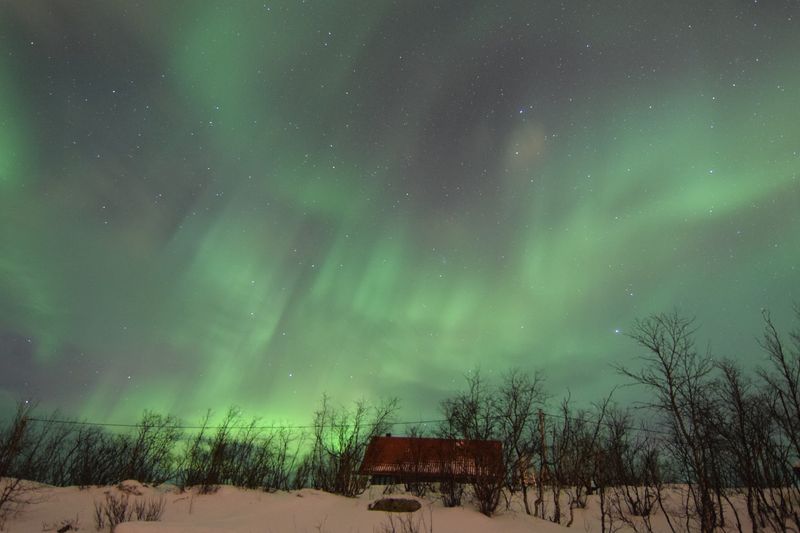
Abisko has a meteorological quirk that aurora hunters travel specifically to take advantage of: a localized patch of clear sky, known as the blue hole, tends to appear above the park even when surrounding areas are covered in cloud. That unusual microclimate, combined with minimal light pollution, makes the Aurora Sky Station on top of Mount Nuolja one of the most reliable northern lights viewing locations anywhere on the planet.
Abisko National Park covers a dramatic northern landscape of mountains, valleys, and birch woodland that draws hikers in summer and a different crowd of winter travelers when snow transforms the terrain entirely. A significant section of the Kungsleden, Sweden’s most celebrated long-distance hiking route, passes through Abisko, making it a natural starting point for serious backcountry trips.
The Abisko Scientific Research Station has been conducting Arctic environmental research here since 1903, adding a layer of scientific significance to what already feels like a place operating on its own terms. The region is also part of the traditional lands of the indigenous Sami people, whose reindeer herding culture remains an active and important part of life in Swedish Lapland.
13. Malmö, Malmö, Skåne County, Sweden
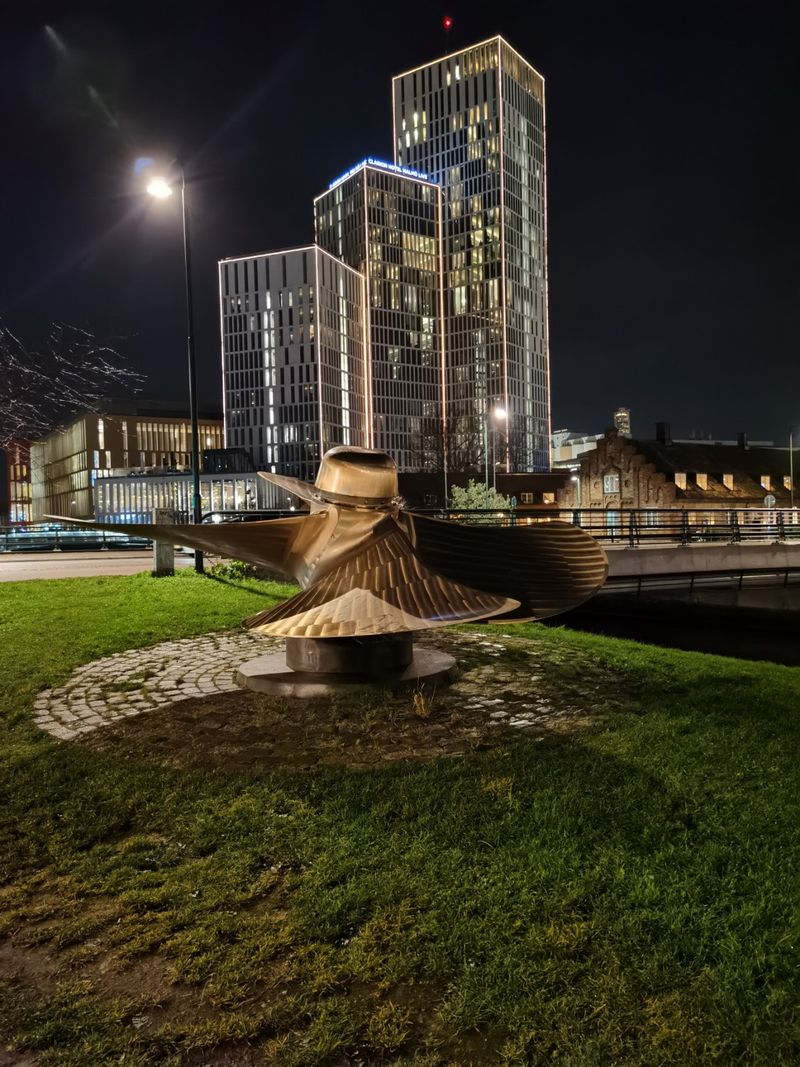
Malmö spent centuries as a Danish city before becoming Swedish, and that dual identity still shows up in the layout of the old town, Gamla Väster, and in the architecture of streets that predate the current national border. The city is connected to Copenhagen by the Öresund Bridge, but it has developed a personality entirely its own rather than simply functioning as the capital’s quieter neighbor.
Malmöhus Slott, Scandinavia’s oldest preserved Renaissance castle dating from the 16th century, now houses a complex of museums covering art, natural history, and city history, making it a surprisingly extensive half-day destination that many visitors underestimate until they are actually inside. Lilla Torg, a cobblestone square framed by half-timbered historic buildings, provides the old town with a central gathering point that feels lived-in rather than staged for tourists.
The Turning Torso, designed by Santiago Calatrava and inspired by the form of a human torso, is Sweden’s tallest building and the world’s first twisting skyscraper. The Western Harbour district surrounding it was built on reclaimed industrial land and is recognized as a leading example of sustainable urban development in Europe.
Share this story