Pennsylvania is filled with spectacular libraries that look more like palaces, grand estates, and architectural landmarks than ordinary places to borrow books. Ornate reading rooms, stained-glass skylights, soaring rotundas, and elaborate historic facades make these buildings destinations in their own right.
These 15 beautiful libraries showcase remarkable architecture from Philadelphia to western Pennsylvania. Each offers book lovers, history enthusiasts, and architecture fans a fascinating reason to step inside.
1. Linderman Library, Bethlehem, Pennsylvania
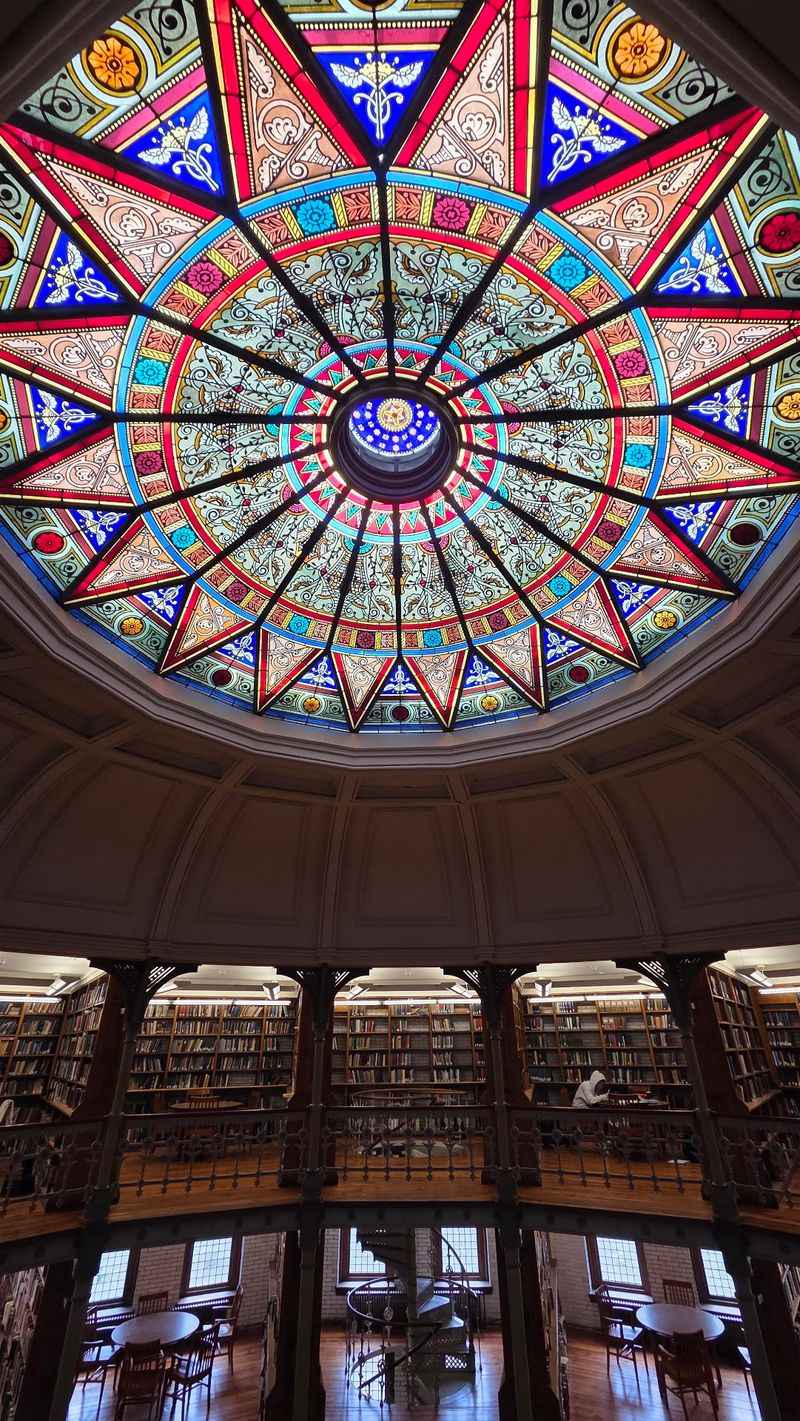
Few campus libraries can make you forget you came to study, but Linderman Library at Lehigh University has that effect. Dedicated in 1878 and designed by architect Addison Hutton, it opens into a High Victorian rotunda featuring a winding iron-railed staircase beneath a stained-glass skylight.
The 1929 reading room addition raised the bar even further, introducing rich oak paneling and an ornate coffered ceiling that gives the space a formal, almost parliamentary dignity. Asa Packer, Lehigh’s founder, commissioned the original building in honor of his daughter, Lucy Packer Linderman.
Later renovations carefully preserved the original aesthetic while adapting the building for modern academic use. The result is a library that feels less like a study destination and more like a carefully curated architectural time capsule that happens to have very good Wi-Fi.
2. Albright Memorial Library Building Scranton Public Library, Scranton, Pennsylvania
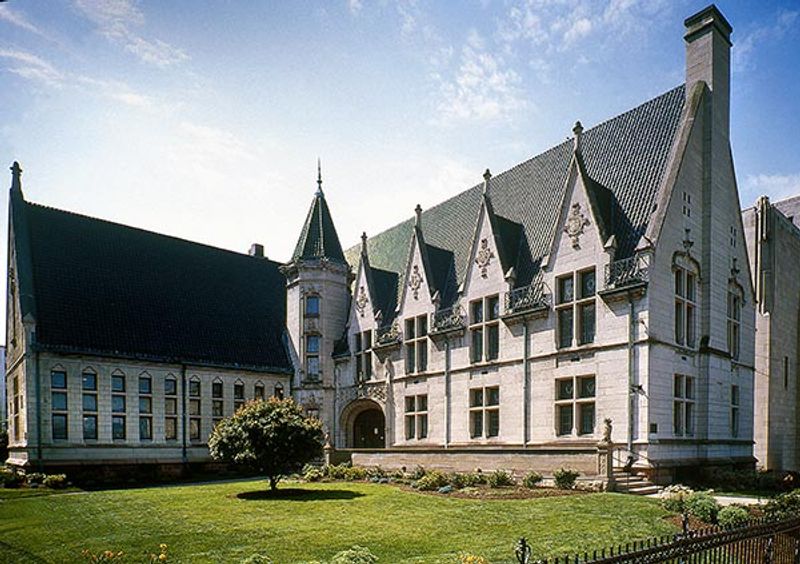
Scranton’s Albright Memorial Library looks like it was airlifted from a Parisian arrondissement and set down on a Pennsylvania street corner. Designed by the firm Green and Wicks and opened in 1893, it draws directly from the French Renaissance style of Paris’s Musee de Cluny, complete with stone walls, steep rooflines, and elaborate carved details.
The interior keeps pace with the exterior, featuring stained woods, marble mosaics, classical columns, ornate fireplaces, and a soaring vaulted ceiling that makes every visit feel like a cultural event. Industrialist John Joseph Albright funded the building as a public gift to the community.
Added to the National Register of Historic Places in 1978, the building remains an active public library. Its combination of European-inspired design and genuine civic purpose makes it one of northeastern Pennsylvania’s most rewarding architectural stops.
3. Parkway Central Library, Philadelphia, Pennsylvania
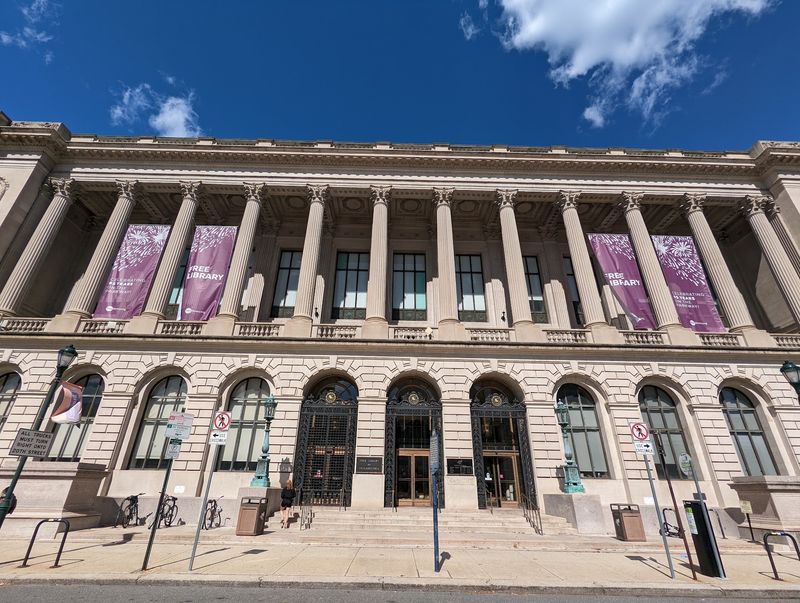
Designed by Horace Trumbauer’s office and opened in 1927, the Parkway Central Library took direct inspiration from the Hotel de la Marine on Paris’s Place de la Concorde. The result is a building that makes picking up a library card feel like a civic ceremony.
Indiana limestone, brick, and concrete form the exterior, while inside, grand staircases, a sweeping main hall, and expansive reading rooms reinforce the Beaux-Arts commitment to order and scale. A 2019 renovation refreshed the children’s department, added a teen space, and expanded the culinary literacy center, all without disturbing the building’s historic bones.
The library also holds notable special collections, anchoring its role as a major research institution. Positioned along the Benjamin Franklin Parkway among major cultural landmarks, it is one of the few places where a trip to the library genuinely feels monumental.
4. Carnegie Library of Pittsburgh – Main, Pittsburgh, Pennsylvania
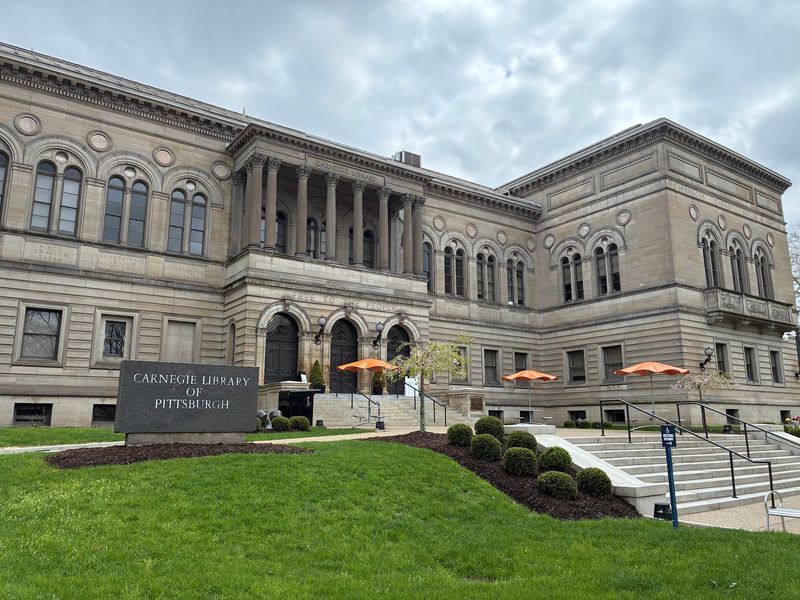
Pittsburgh’s Carnegie Library main branch in Oakland does not stand alone. It shares an enormous complex with the Carnegie Museums, and the combined effect is something closer to a cultural campus than a neighborhood library. Longfellow, Alden and Harlow designed the original structure, which opened to the public in the 1890s.
The long stone facade and commanding proportions reflect the Beaux-Arts ambition that defined civic building during Pittsburgh’s industrial peak. Andrew Carnegie envisioned the complex as a comprehensive public institution, placing learning and culture side by side under one extended roof.
Expansions and renovations over the decades have updated services without erasing the building’s historic presence. The main branch continues to anchor the Carnegie Library of Pittsburgh system, drawing visitors who come as much for the architecture as for the collections housed within its substantial walls.
5. Carnegie One Braddock, Braddock, Pennsylvania
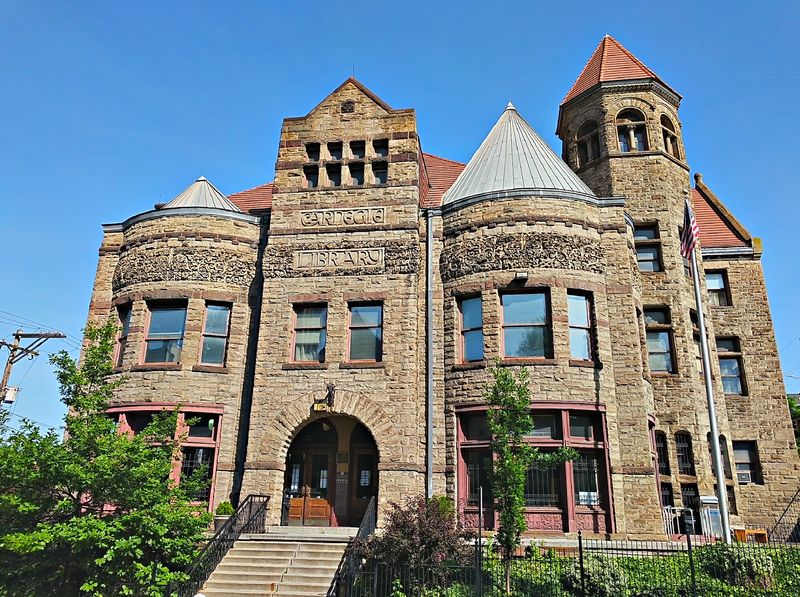
No Carnegie library in America carries more historical weight than this one. Established in 1889 in Braddock, it was the very first Carnegie library in the United States, built as a direct gift from Andrew Carnegie to the workers of his nearby steel mills.
The Romanesque Revival design features robust stone masonry, prominent arches, and carved details that signal the ambition of an era when industrial wealth was being channeled into public institutions. The original complex included not just books but also a music hall, swimming pool, and gymnasium, making it a full community center from day one.
Braddock has changed enormously since 1889, but this building has remained. It continues to operate as an active community resource, offering a rare chance to visit a living piece of American philanthropic and architectural history rather than simply reading about it.
6. Carnegie of Homestead, Munhall, Pennsylvania
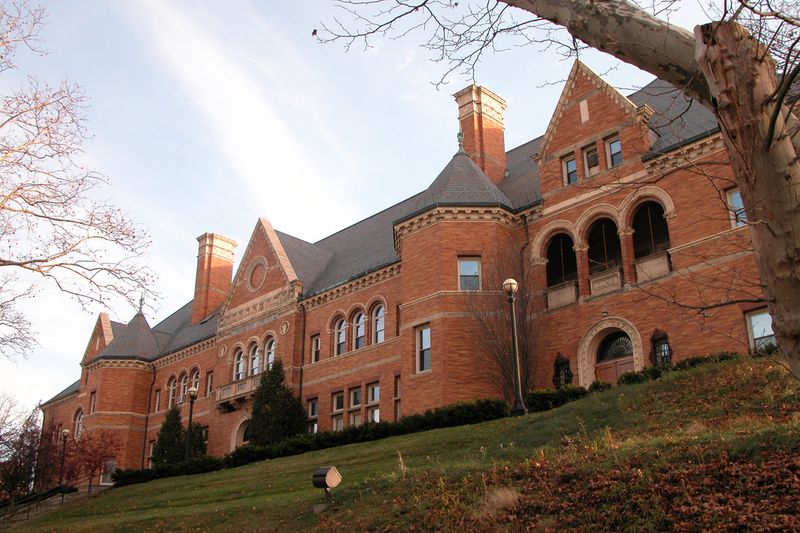
Hilltop location, French Renaissance design, and a footprint that includes a library, music hall, and athletic facilities: the Carnegie Library of Homestead in Munhall was never thinking small. Architects Frank Alden and Alfred Harlow delivered the complex in the late 1890s as a comprehensive community institution for Homestead’s steelworkers.
The building’s elevated position above the Monongahela Valley gives it the visual authority of a civic monument, which is precisely what Carnegie intended. Detailed stone masonry and classical architectural elements reinforce that impression at every angle.
The music hall within the complex still hosts performances today, keeping the building’s original cultural mission alive alongside its library functions. For visitors interested in how industrial-era philanthropy translated into permanent architecture, this site offers one of the most complete and well-preserved examples anywhere in western Pennsylvania.
7. Fisher Fine Arts Library, Philadelphia, Pennsylvania
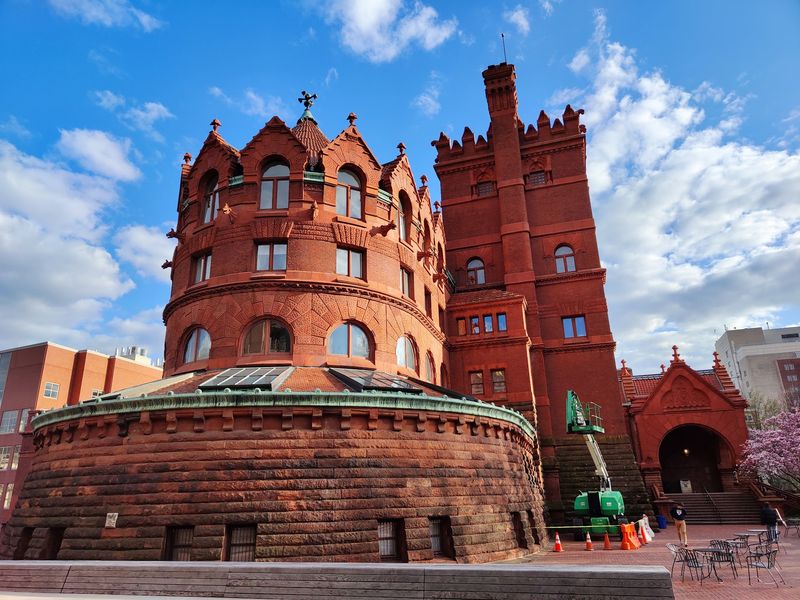
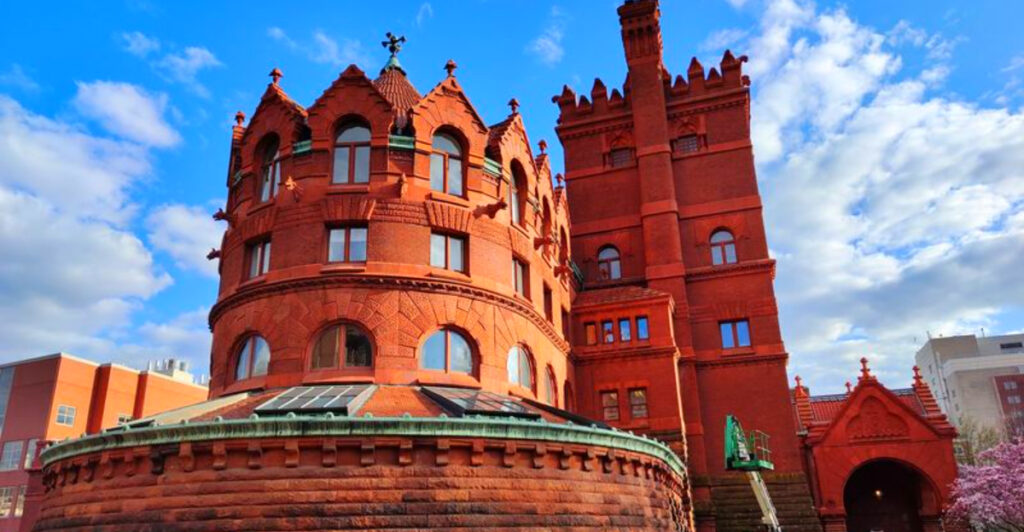
Frank Furness did not play by the rules, and the Fisher Fine Arts Library at the University of Pennsylvania is proof. Completed in 1891, this National Historic Landmark mixes red brick, sandstone, and terra-cotta in a way that critics of the era called gaudy but history has called brilliant.
The dramatic reading room draws the eye upward toward an expansive ceiling, while leaded-glass windows add visual interest throughout the space. The library served as Penn’s primary collection from 1891 to 1962 and today houses the Architectural Archives and the Arthur Ross Gallery.
A $17.8 million exterior restoration is running from spring 2025 through fall 2026, covering sandstone cleaning, roof repairs, and facade work. The library stays open for most of the project, so visitors can watch history being preserved in real time.
8. Andrew Carnegie Free Library & Music Hall, Carnegie, Pennsylvania
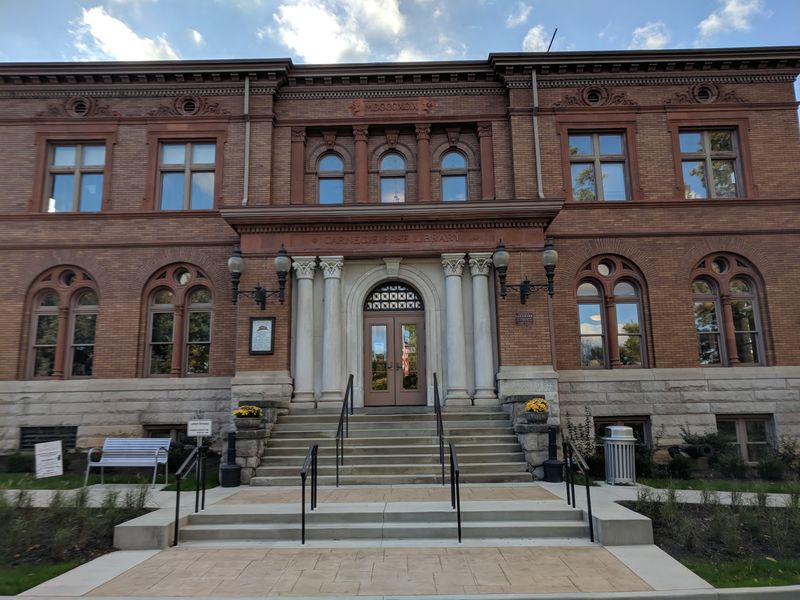
The town of Carnegie, Pennsylvania, is named after Andrew Carnegie, so it makes sense that the library he built here carries an especially personal quality. Completed in 1899 by the firm Struthers and Hannah, the building presents an Italianate exterior combining russet brick, terra-cotta trim, arched windows, Corinthian columns, and a strong symmetrical composition.
Carnegie intended the complex as a gift to his adopted hometown, and the adjoining music hall ensures the building has always served more than one purpose. The dual-function design reflects a broader philosophy: that a true community institution should offer both intellectual and cultural opportunities under one roof.
Interior preservation efforts have maintained much of the original character, allowing visitors to move between the quieter library spaces and the more theatrical music hall. As civic landmarks go, this one has a satisfying sense of place and a story that begins with the man whose name is literally on the street signs outside.
9. Athenaeum of Philadelphia, Philadelphia, Pennsylvania
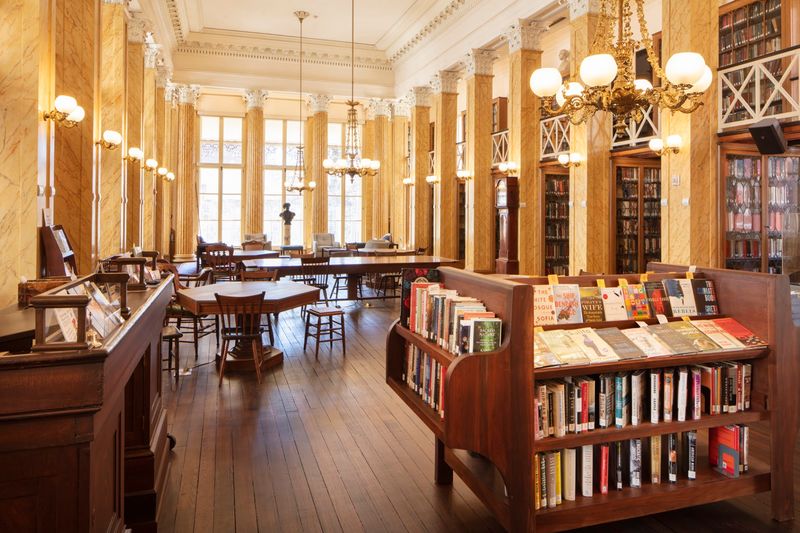
Do not let the understated brownstone exterior fool you. The Athenaeum of Philadelphia, designed by architect John Notman in the 1840s, is considered one of the earliest and most influential examples of the Italianate Revival style in the United States, and the interior makes that reputation easy to believe.
Ceilings in some rooms reach approximately 24 feet high, and the spaces are detailed with intricate woodwork, elegant plasterwork, and preserved period furnishings that place visitors squarely in the 19th century. The institution itself predates the building, having been founded in 1814 as a center for literary and scientific pursuits.
Designated a National Historic Landmark in 1977, the Athenaeum now functions as a membership library and museum, with collections focused on American architecture, design, and history. It is one of those Philadelphia destinations that rewards the visitor who takes a moment to look past the quiet facade.
10. Carnegie Library of Pittsburgh – Homewood, Pittsburgh, Pennsylvania
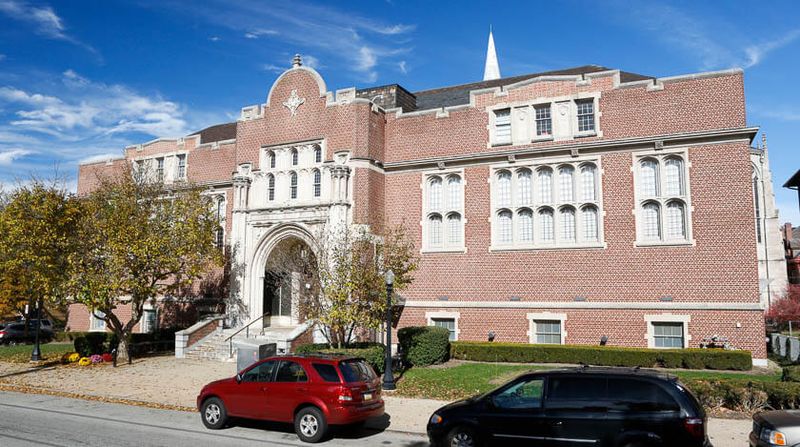
Built in 1910 and designed by Alden and Harlow, the Homewood branch holds the distinction of being the last of Andrew Carnegie’s original neighborhood libraries in Pittsburgh. Its scale is more intimate than the main Oakland branch, but the architectural care put into it is no less apparent.
A later renovation reopened the main floor, restored the original skylight, and uncovered the building’s original windows, all of which dramatically changed how natural light moves through the interior. The result is a space that feels both historically grounded and genuinely pleasant to spend time in.
The Homewood branch remains an active community library, offering programs and services to local residents while maintaining its architectural identity. For visitors exploring Pittsburgh’s neighborhood libraries, it offers a quieter and more personal counterpoint to the grandeur of the Carnegie system’s flagship location across town.
11. Carnegie Library of McKeesport, McKeesport, Pennsylvania
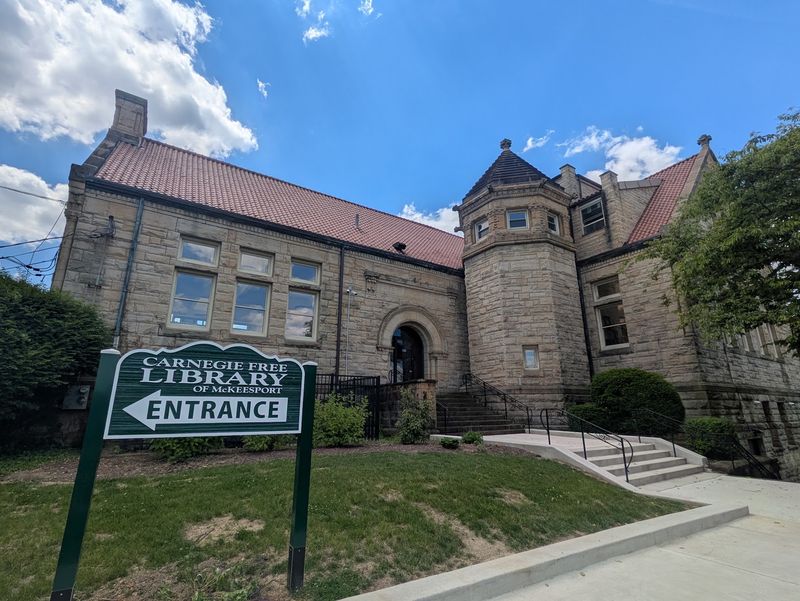
A hillside position, stone construction, and a design by Pittsburgh architect William J. East: the Carnegie Library of McKeesport was built in 1902 with the clear intention of making a lasting impression on the community around it. The building’s elevated placement means it can be seen from a good distance, giving it the visual authority of a proper civic institution.
The stone exterior has been carefully maintained, and the building is recognized for its architectural significance within the broader Carnegie library legacy of western Pennsylvania. Its solid proportions and traditional detailing reflect the design principles that Carnegie’s funded libraries consistently applied across the region.
Today the building continues to operate as a public library, blending its historic character with contemporary services. For anyone tracing the Carnegie library trail through western Pennsylvania, McKeesport is a stop that rewards the detour with a genuinely handsome and historically meaningful building.
12. Carnegie Free Library of Beaver Falls, Beaver Falls, Pennsylvania
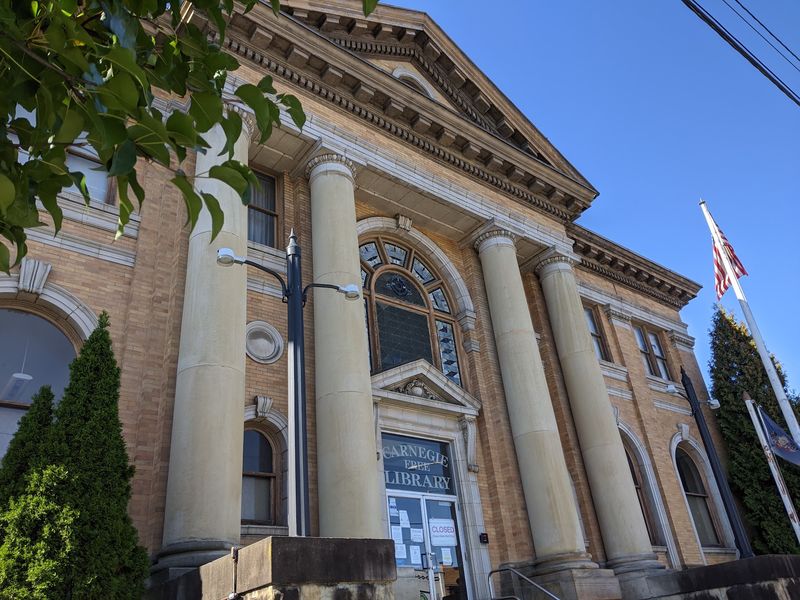
Pittsburgh architect Frederick J. Osterling gave Beaver Falls something far more formal than a typical neighborhood reading room. The Carnegie Free Library here applies Neoclassical design with Palladian influences, presenting an imposing columned entrance, a prominent pediment, and large windows that give the building both presence and proportion.
The interior continues the theme with richly crafted woodwork that complements the stately exterior, creating an experience that feels consistent from the moment you approach the front steps. The attention to material quality and decorative detail is a hallmark of the era in which it was constructed.
Listed on the National Register of Historic Places in 1985, the building still serves the Beaver Falls community as an active public library. Its combination of formal classical design and ongoing public utility makes it a strong example of how Carnegie’s philanthropic architecture has managed to remain both beautiful and genuinely useful more than a century later.
13. Carnegie Library of Pittsburgh – Lawrenceville, Pittsburgh, Pennsylvania
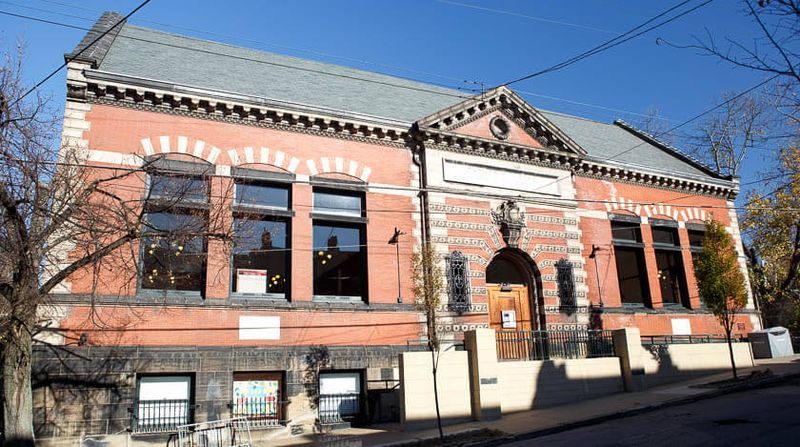
Lawrenceville has become one of Pittsburgh’s most talked-about neighborhoods, but the Carnegie branch library on its streets has been quietly anchoring the community long before the area’s recent wave of attention. The building has the sturdy, dignified character typical of Carnegie-era civic construction, without the monumental scale of the main Oakland branch.
Its design fits naturally into Lawrenceville’s fabric of older industrial and residential buildings, contributing historical depth to a neighborhood that is constantly evolving around it. The architectural approach here prioritizes clarity and solid construction over decorative excess, which gives the building an honest, unpretentious quality.
The branch remains an active community library, which means its architecture is not preserved behind velvet ropes but experienced daily by the people who live nearby. That sense of continuity, a building still doing exactly what it was designed to do, is part of what makes it worth a visit.
14. Carnegie Library of Pittsburgh – West End, Pittsburgh, Pennsylvania
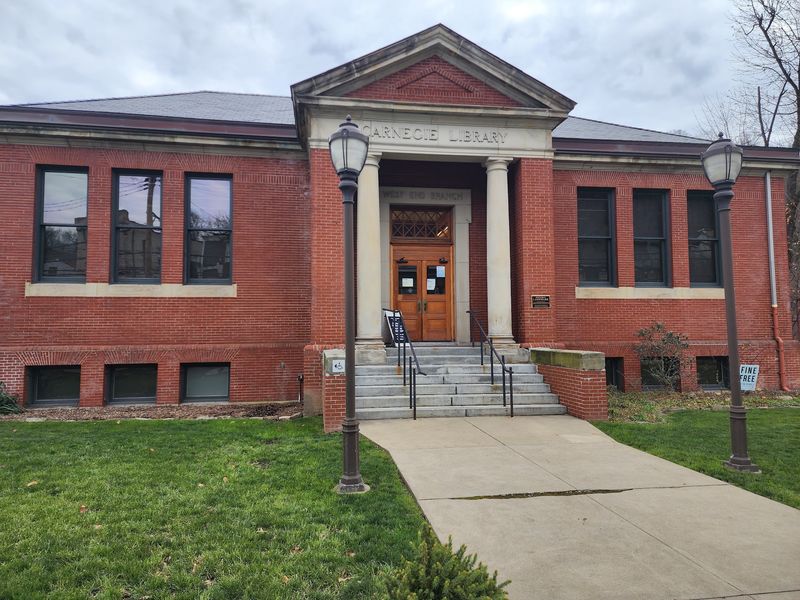
Pittsburgh’s most architecturally interesting buildings are not always the ones that appear on the tourist maps, and the West End Carnegie branch is a good example of that. Compact and firmly rooted in its neighborhood, the library has the functional, dignified aesthetic that characterizes Carnegie’s community-scale buildings across the city.
What sets this branch apart beyond its architecture is its dedicated local history collection, which documents the West End and surrounding communities in detail. That specialized archive makes the building a resource not just for readers but for anyone curious about the history of the area it serves.
The branch remains active and well-used, connecting its historic design to a present-day purpose that keeps the building relevant. For architecture travelers willing to venture beyond Pittsburgh’s downtown core, the West End library offers a compact but genuinely rewarding stop in a part of the city with real historical character.
Share this story