Our planet and the universe around it are far older than most of us can truly imagine. From microscopic grains that formed around ancient stars to living trees that have survived for thousands of years, Earth holds an incredible collection of ancient wonders.
These remarkable things give scientists clues about how our world, and even our Solar System, came to be. Get ready to explore some of the most awe-inspiring old things ever discovered on Earth.
1. Presolar Grains: Up to 7 Billion Years Old
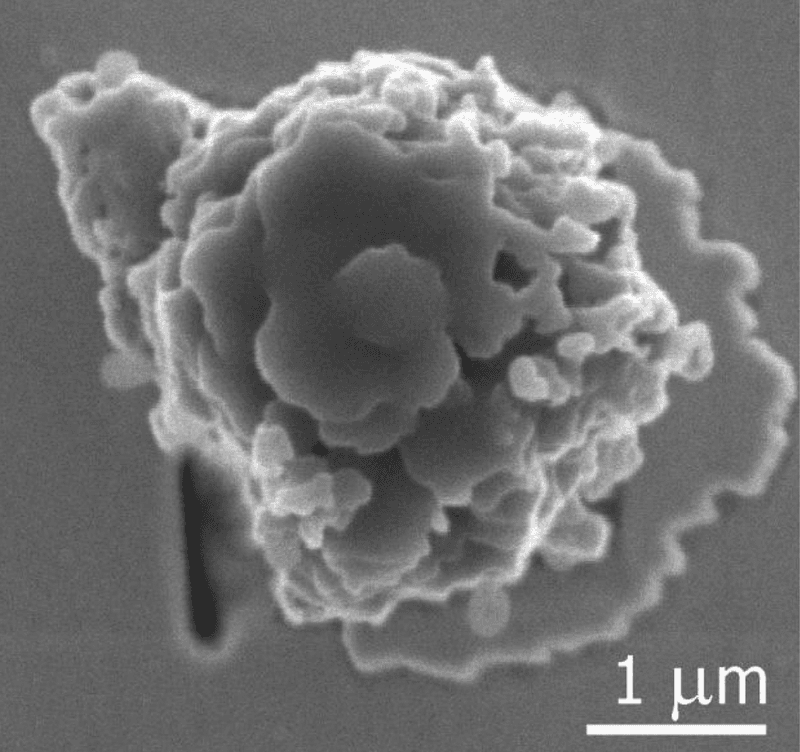
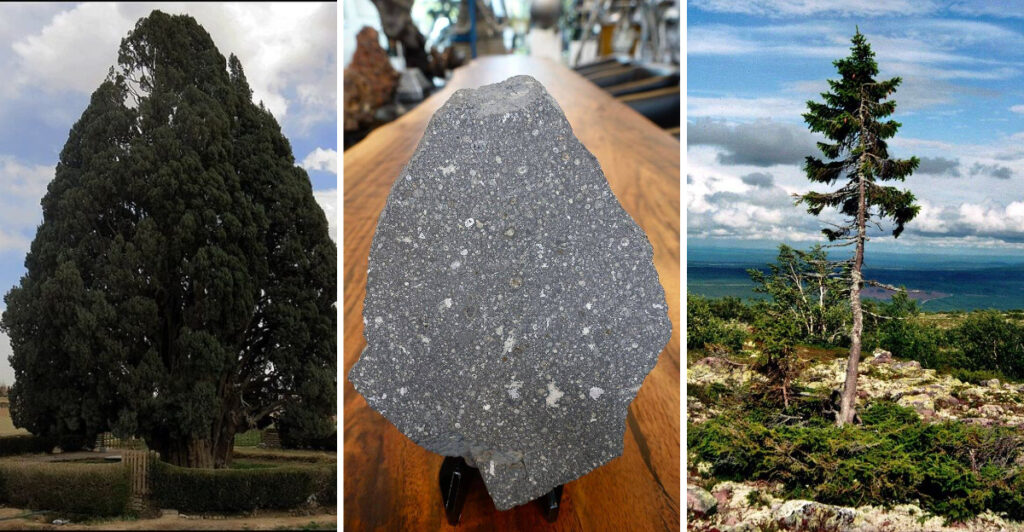
Long before our Sun existed, dying stars scattered tiny grains of material across space. Some of those grains eventually ended up inside meteorites that fell to Earth, like the famous Murchison meteorite discovered in Australia in 1969.
Scientists identified these presolar grains by studying their unusual chemical signatures, which are unlike anything formed inside our own Solar System. Some grains have been dated to nearly 7 billion years old, making them the oldest physical material ever found on Earth.
Holding one of these grains would be like holding a piece of a star that burned out billions of years before our Sun was even born. They are incredibly small, often just a few micrometers wide, but their scientific value is enormous.
They help researchers understand how stars live, age, and ultimately seed the universe with the building blocks of new worlds.
2. CAIs in Meteorites: About 4.567 Billion Years Old
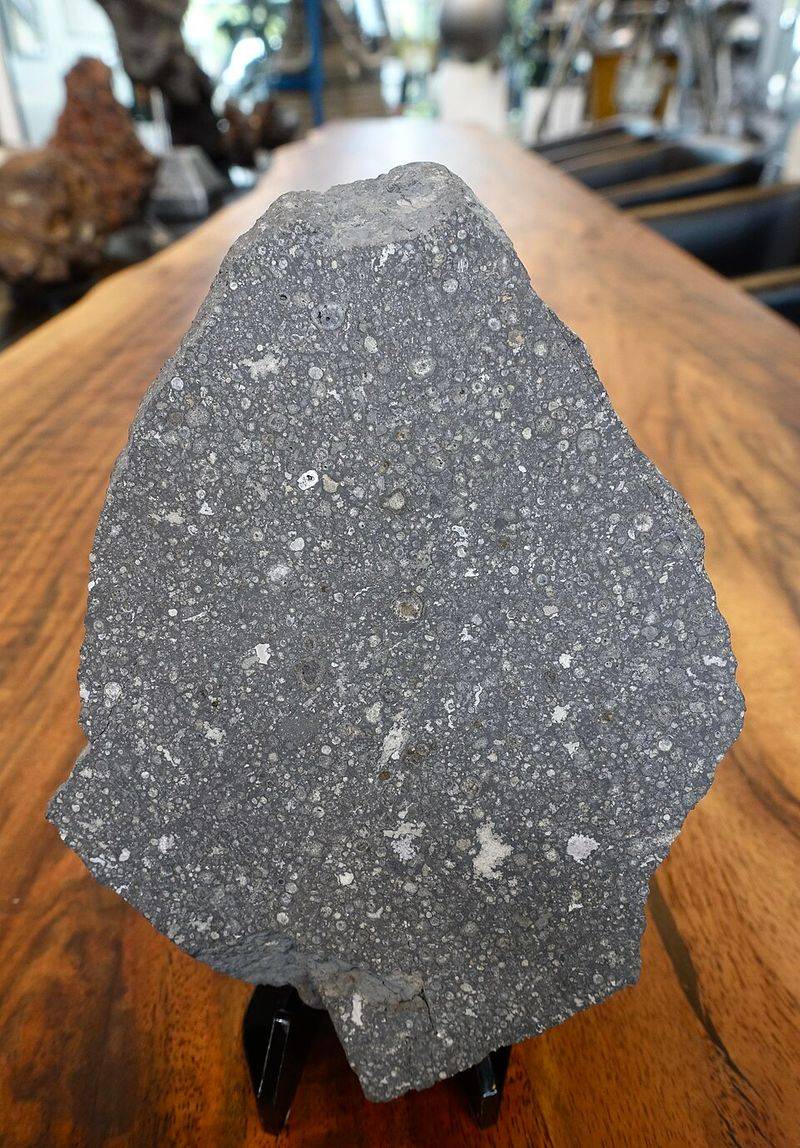
Calcium-aluminum-rich inclusions, commonly called CAIs, are the first solid objects known to have formed inside our young Solar System. Found inside a special class of meteorites called chondrites, these tiny white or light-colored mineral clumps formed about 4.567 billion years ago.
Scientists treat CAIs as the official starting clock for our Solar System. When researchers want to figure out how old something from the early Solar System is, they compare its age to that of CAIs.
That makes them one of the most scientifically important materials ever studied.
What is remarkable is that these inclusions formed at extremely high temperatures, likely near the young Sun, before being scattered outward through the early Solar System. Finding them inside meteorites today is like receiving a time capsule from the very beginning of everything we call home.
Few objects carry such deep cosmic meaning in such a small package.
3. Jack Hills Zircons: Up to 4.4 Billion Years Old
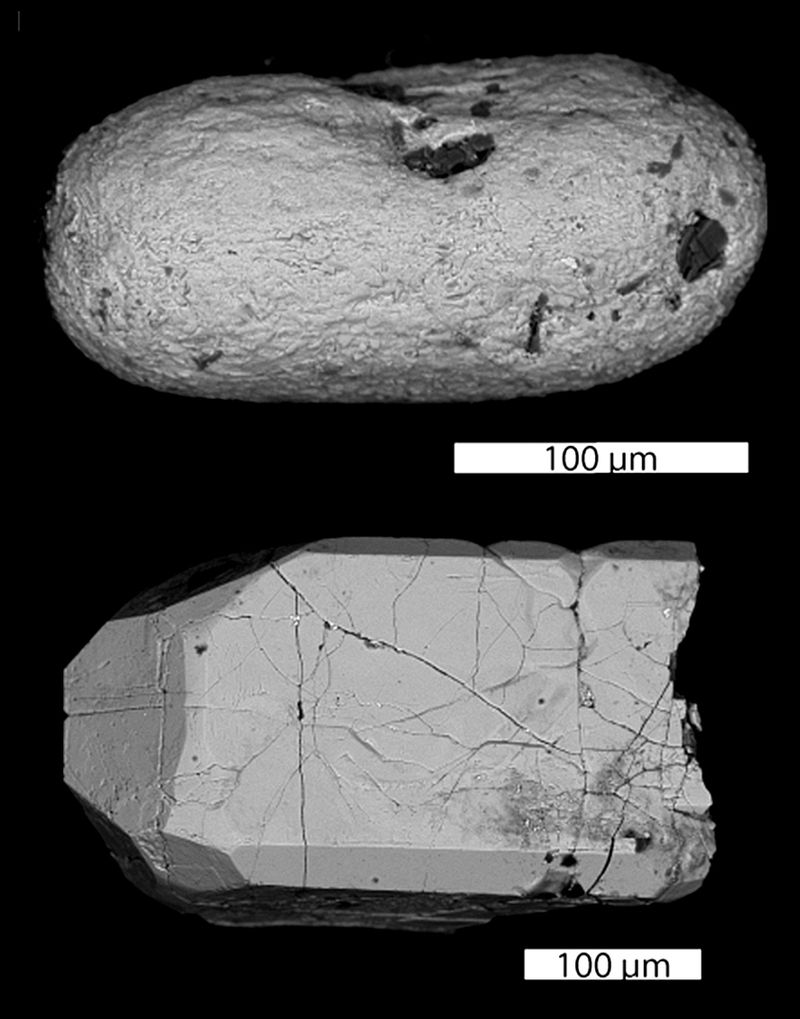
Tiny crystals called zircons, collected from the Jack Hills region of Western Australia, hold the record as the oldest known mineral grains formed on Earth itself. Some of these crystals date back roughly 4.4 billion years, a time when Earth was still a very young and chaotic world.
What makes zircons so special is their durability. Unlike most minerals, zircon resists erosion and chemical breakdown extremely well, allowing it to survive billions of years of geological change.
Scientists use uranium-lead dating to determine their precise ages with impressive accuracy.
These crystals also contain chemical clues suggesting that liquid water may have existed on Earth’s surface much earlier than previously thought. That idea was once considered surprising, since the early Earth was believed to be a hot and hostile place.
Jack Hills zircons continue to reshape our understanding of what early Earth was actually like.
4. Acasta Gneiss: About 4.03 Billion Years Old
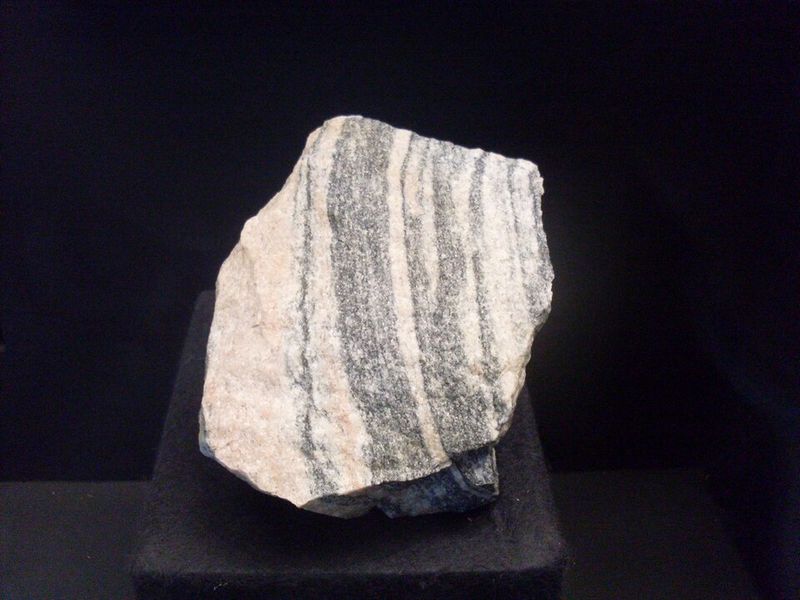
Tucked away in Canada’s remote Northwest Territories, the Acasta Gneiss is one of the oldest intact rock formations known anywhere on Earth. Dating back roughly 4.03 billion years, these banded metamorphic rocks have survived an almost unimaginable length of time.
Metamorphic rocks like gneiss form when existing rocks are subjected to intense heat and pressure deep within the Earth. The fact that the Acasta Gneiss survived billions of years of tectonic activity, erosion, and geological change makes it extraordinarily rare and scientifically precious.
Geologists travel to this remote region specifically to study these rocks because they offer a direct window into Earth’s earliest crust. Most rocks from that era were destroyed long ago by the constant recycling of Earth’s plates.
The Acasta Gneiss stands as one of the few surviving witnesses to conditions on a planet that was still figuring out what it wanted to be.
5. Nuvvuagittuq Greenstone Belt: At Least 3.8 Billion Years Old
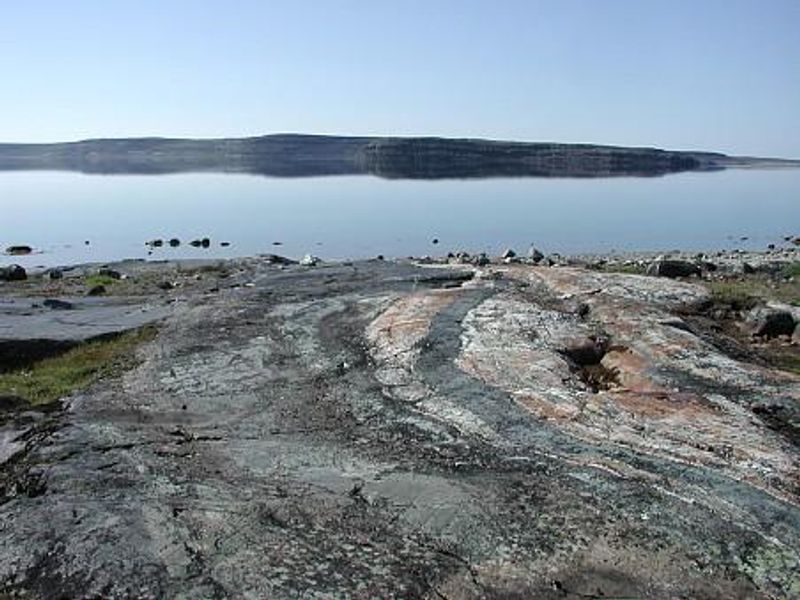
Along the eastern shore of Hudson Bay in northern Quebec, Canada, lies a striking formation of ancient rocks known as the Nuvvuagittuq Greenstone Belt. Scientists broadly agree these rocks are at least 3.8 billion years old, placing them among the oldest geological formations on the planet.
Some researchers have proposed that parts of the belt could be even older, possibly exceeding 4.2 billion years. However, that older estimate remains actively debated among geologists, and the scientific community has not yet reached a firm consensus on it.
What is not debated is the formation’s importance. These rocks may contain some of the earliest evidence of hydrothermal vent systems, environments that many scientists believe could have supported some of the first life on Earth.
Whether or not the most extreme age estimates hold up, the Nuvvuagittuq Greenstone Belt continues to be a fascinating and fiercely studied piece of our planet’s deep history.
6. Isua Greenstone Belt: About 3.7 to 3.8 Billion Years Old
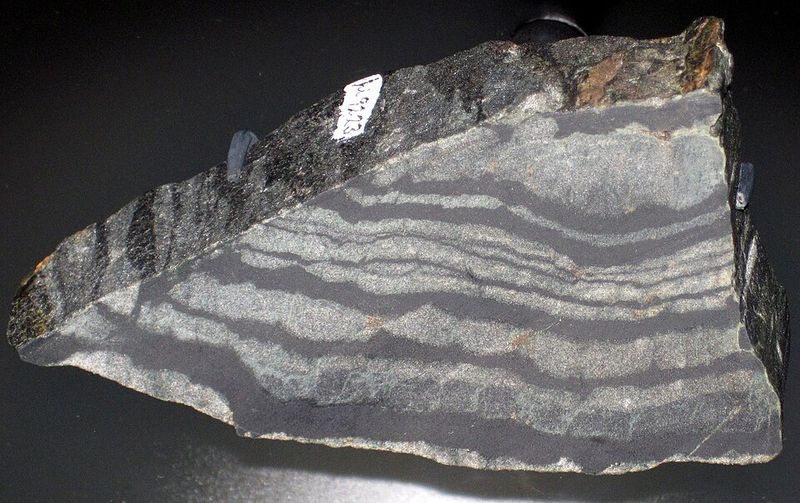
Greenland is not just famous for its massive ice sheet. Hidden beneath and alongside that ice are some of the oldest surviving rocks on Earth, found in a region called the Isua Greenstone Belt in the southwestern part of the island.
Dating back roughly 3.7 to 3.8 billion years, the Isua rocks have provided scientists with fascinating clues about what conditions were like on the young Earth. Some researchers believe the formation contains chemical hints of ancient biological activity, though that interpretation is still being studied and discussed.
Getting to Isua is no small feat. The area is remote and challenging to reach, yet geologists continue making the journey because the rocks are simply too important to ignore.
They represent a rare surviving record of Earth’s earliest chapter, a time when our planet was cooling, water was gathering, and the stage was being set for life to eventually emerge.
7. Dresser Formation Stromatolites: About 3.48 Billion Years Old
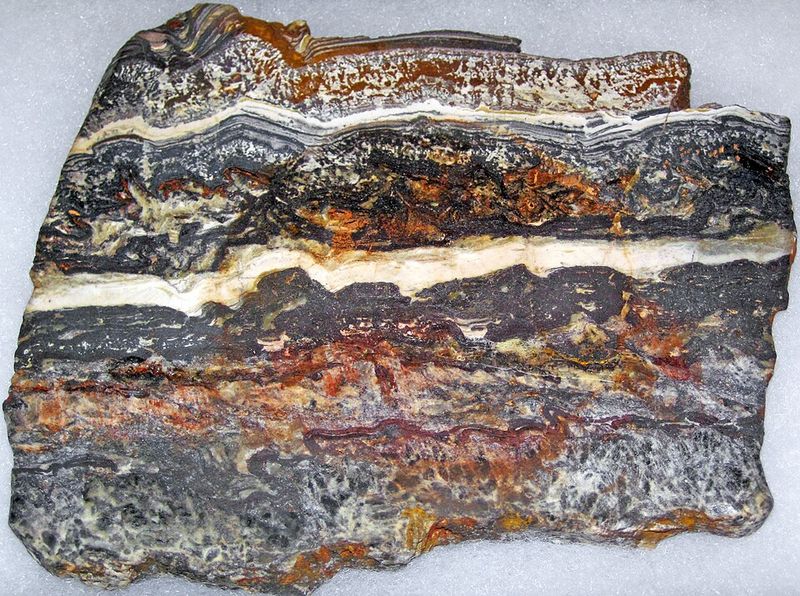
Out in the Pilbara region of Western Australia, ancient rocky structures called stromatolites tell one of the earliest stories of life on Earth. The Dresser Formation contains some of the oldest known stromatolite-like structures, estimated to be around 3.48 billion years old.
Stromatolites are layered formations built up over time by communities of microorganisms, particularly cyanobacteria. As these tiny life forms grow and trap sediment, they create distinctive dome-shaped or layered rock structures that can preserve evidence of biological activity across enormous stretches of time.
Finding structures this old is genuinely exciting for scientists because it pushes the known record of life on Earth further back into deep time. While researchers continue to study whether these specific formations were definitely made by living organisms, the evidence is compelling.
The Pilbara region has become one of the most important destinations on Earth for scientists studying the origins of life.
8. Strelley Pool Stromatolites: About 3.43 Billion Years Old
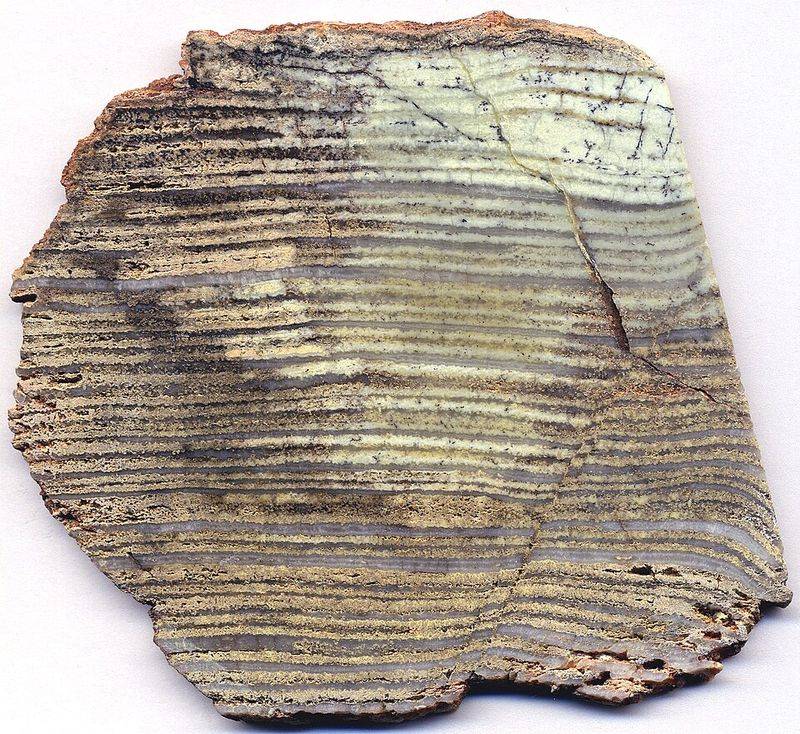
A short distance from the Dresser Formation, another set of ancient stromatolites sits preserved in the rocks of the Strelley Pool Chert in Western Australia. These formations date back approximately 3.43 billion years and are considered some of the most convincing early fossil evidence for microbial life on Earth.
What sets the Strelley Pool stromatolites apart is the quality of their preservation and the variety of their shapes. Scientists have documented multiple different stromatolite morphologies at this site, which suggests that microbial communities were already fairly diverse by this point in Earth’s history.
The sheer age of these structures is hard to wrap your head around. When these microbial mats were growing, Earth had no plants, no animals, and no breathable oxygen atmosphere.
Yet tiny living things were already building layered communities in shallow water. The Strelley Pool stromatolites stand as quiet, rocky proof that life found a way remarkably early on our planet.
9. Oldest Fossil Forest Near Cairo, New York: About 386 Million Years Old
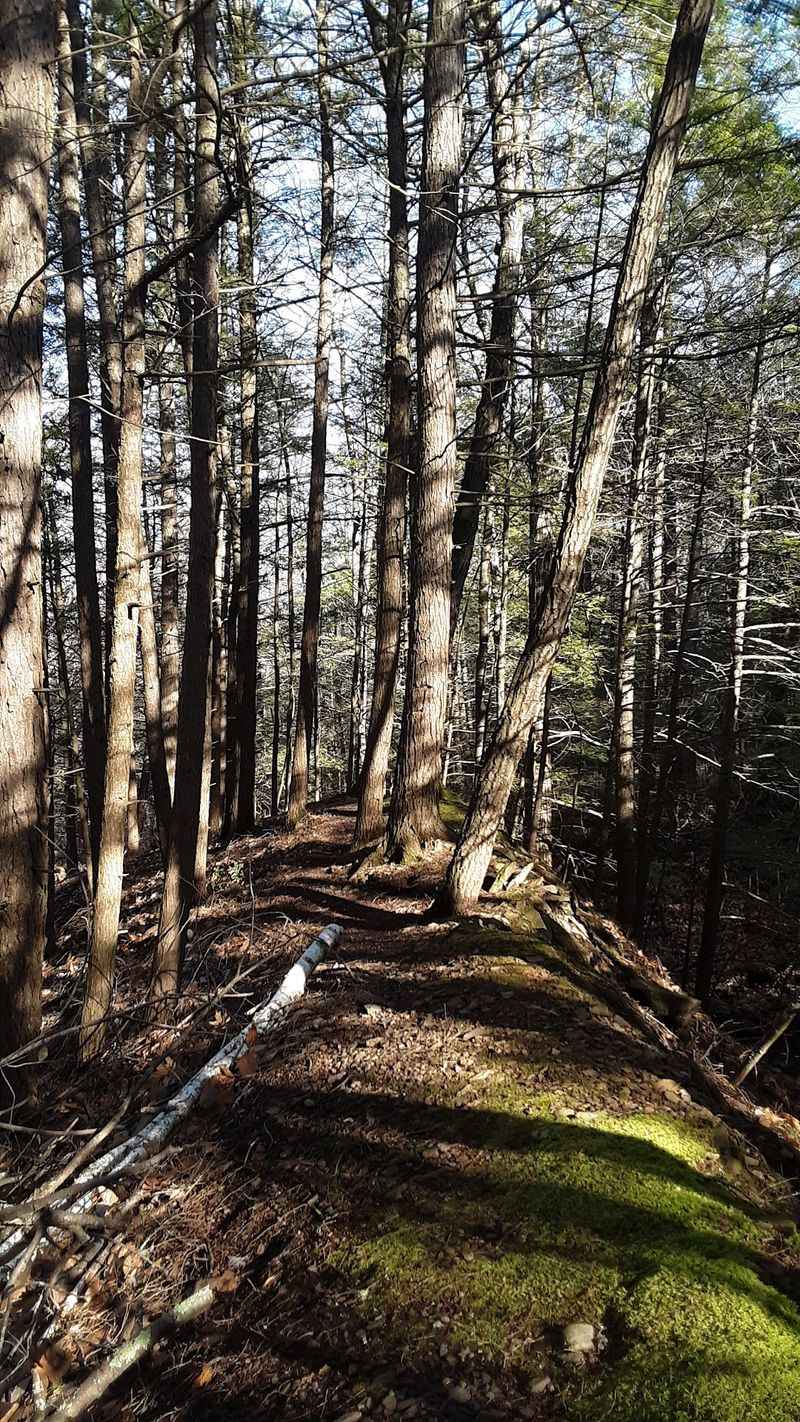
Near the small town of Cairo in New York State, researchers uncovered something remarkable preserved in sandstone: the fossilized root systems of one of the oldest complex forests ever found. Dating back roughly 386 million years to the Devonian Period, this ancient forest predates the dinosaurs by well over 100 million years.
The root systems belong to several types of ancient trees, including early relatives of modern ferns and lycopsids. The discovery revealed that forests in this period were more structurally complex and ecologically diverse than scientists had previously assumed.
Ancient forests like this one played a huge role in shaping Earth’s atmosphere. As trees spread and grew during the Devonian Period, they pulled carbon dioxide out of the air and helped cool the planet.
The Cairo fossil forest is not just a curiosity from the past. It is a reminder that forests have been quietly running Earth’s climate system for an extraordinarily long time.
10. Antarctic Ice Cores: At Least 1.2 Million Years Old
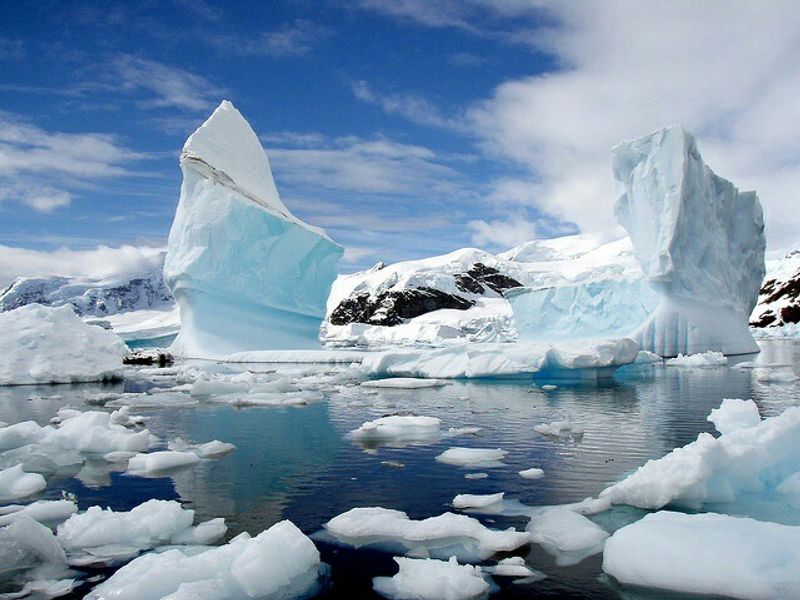
Antarctica’s ice sheet is not just frozen water. It is an archive.
Each layer of ice holds tiny bubbles of ancient air, trapping samples of Earth’s atmosphere from thousands to over a million years ago. In 2025, scientists announced the recovery of a continuous ice core stretching back roughly 1.2 million years.
By analyzing the gases trapped in these bubbles, researchers can reconstruct what Earth’s climate looked like long before humans existed. They can measure ancient carbon dioxide levels, temperature shifts, and even traces of volcanic eruptions from hundreds of thousands of years past.
This kind of climate record is invaluable for understanding how Earth’s atmosphere naturally changes over time, and what those changes mean for the future. The ice core essentially lets scientists read a history book written by nature itself, one frozen page at a time.
Few scientific tools offer such a direct connection to Earth’s deep climate past.
11. Antarctic Bottom Water and Ancient Ice Deposits: Millions of Years Old
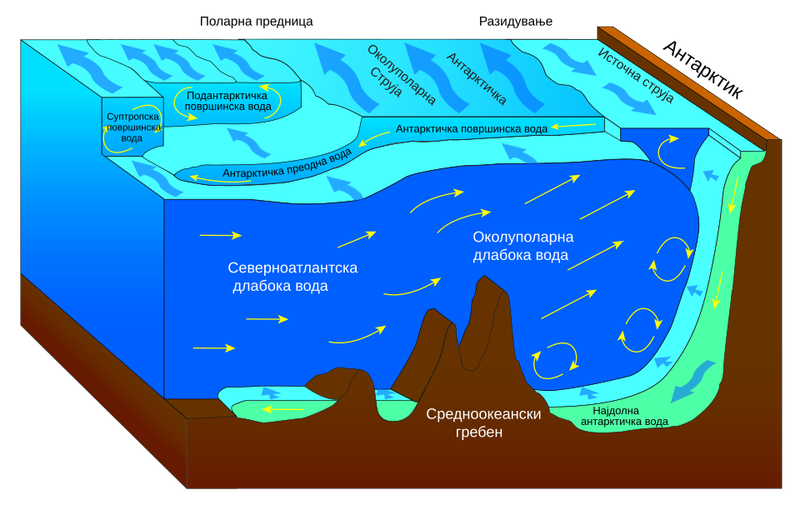
Antarctica holds more ancient secrets than just its famous ice cores. Across different parts of the continent, geologists have identified buried ice deposits and subglacial environments that are millions of years old in some locations.
These are not part of one single continuous ice sheet but rather distinct pockets of incredibly preserved ancient material.
Some of these buried environments contain ancient water, sediment, and even microorganisms that have been isolated from the outside world for an extraordinarily long time. Scientists study these environments with great care, hoping to learn about past climate conditions and the limits of life in extreme settings.
Ages vary dramatically from one location to another, so it would be inaccurate to describe Antarctica’s ancient ice as one unified ancient record. Instead, think of it as a patchwork of frozen time capsules, each revealing something different about what our planet looked like long before modern humans arrived on the scene.
12. Pando Aspen Clone: Thousands of Years Old
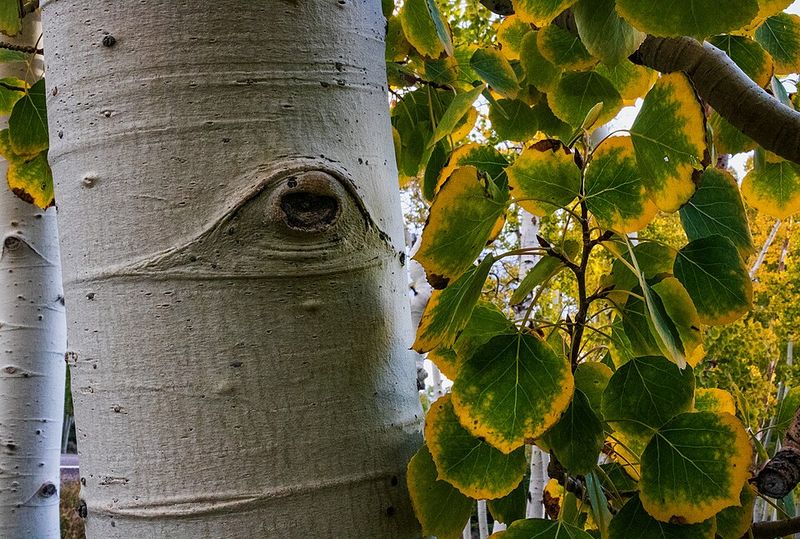
At first glance, the Pando forest in Utah’s Fishlake National Forest looks like a typical grove of white-barked aspen trees. Look closer, and you will find something extraordinary: every single tree in this 106-acre grove is genetically identical, all connected underground by one massive shared root system.
Pando, which means “I spread” in Latin, is considered a single living organism. Scientists estimate its root system is thousands of years old, making it one of the oldest and heaviest known living things on Earth.
Some popular sources have claimed ages of 80,000 years or more, but those figures are not firmly established by current science.
What is certain is that Pando is ancient, vast, and currently under threat. Overgrazing by deer and elk is preventing young stems from surviving long enough to replace older ones.
Conservation efforts are underway to protect this remarkable organism, which has been quietly spreading across the Utah landscape for an enormous stretch of time.
13. Old Tjikko: About 9,550 Years Old
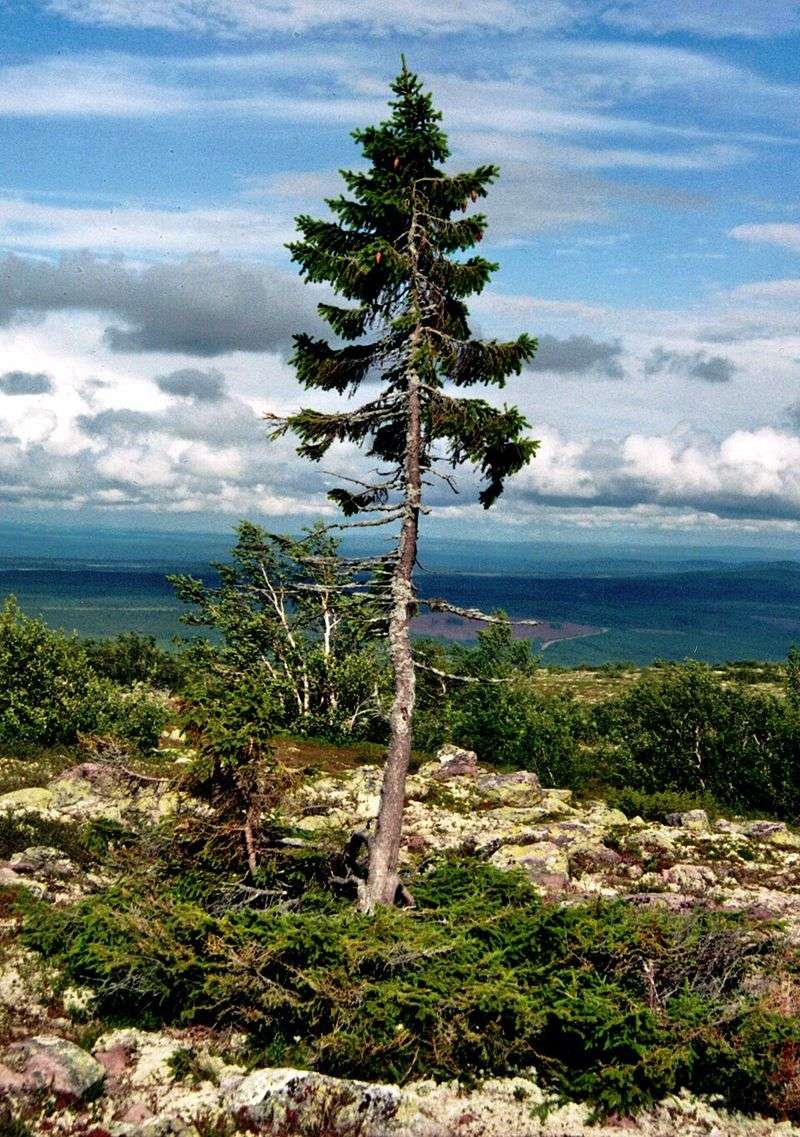
Standing alone on a windswept hillside in Dalarna, Sweden, a small and somewhat scraggly-looking Norway spruce called Old Tjikko holds a remarkable distinction. Its root system has been radiocarbon dated to approximately 9,550 years old, making it one of the oldest known individual trees on Earth.
The visible trunk and branches you see today are not nearly that old. Old Tjikko regenerates itself over time, sending up new stems from its ancient root system as older trunks die off.
This clonal survival strategy has allowed the tree to persist through thousands of years of changing climate and environmental conditions.
Old Tjikko was discovered in 2004 by scientist Leif Kullman, who named it after his late dog. Despite its modest appearance, this small tree has witnessed the end of the last Ice Age, the rise of human civilizations, and countless centuries of Scandinavian winters.
Sometimes the most extraordinary things come in surprisingly humble packages.
14. Jurupa Oak: About 13,000 Years Old
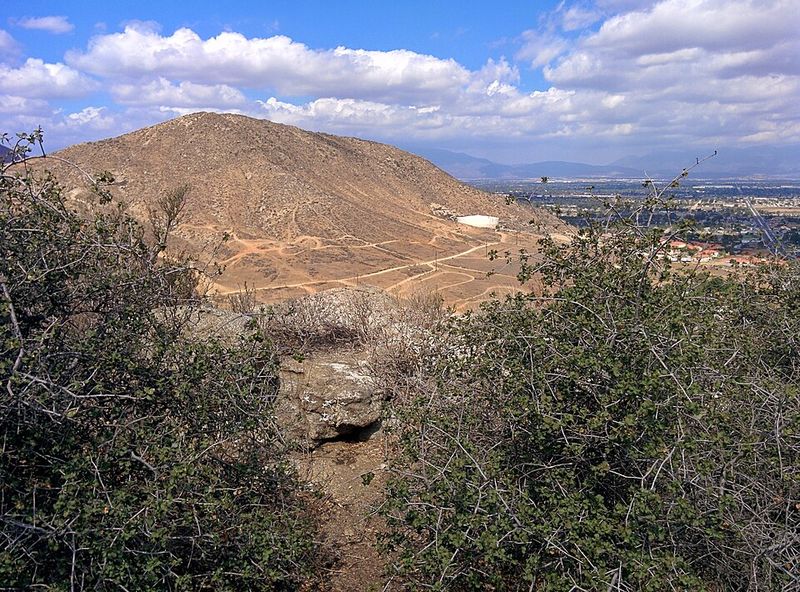
Tucked into the Jurupa Hills of Riverside County, California, a low-growing shrub called the Jurupa Oak does not look like much at first. But this Palmer oak clone is estimated to have been continuously regenerating from the same root system for roughly 13,000 years, placing its origins near the end of the last Ice Age.
Palmer oaks normally rely on acorns to reproduce and spread. What makes the Jurupa Oak unusual is that it sits far outside the normal range where acorns could have established a new tree in the current climate.
Scientists believe the original plant took root during a cooler, wetter period and has since survived by repeatedly cloning itself from its root system.
The Jurupa Oak was identified and studied by researchers from the University of California, Riverside. Its survival story is a testament to the quiet resilience of plant life, persisting through dramatic climate shifts by refusing to give up on the same patch of California soil.
15. King Clone Creosote Bush: About 11,700 Years Old
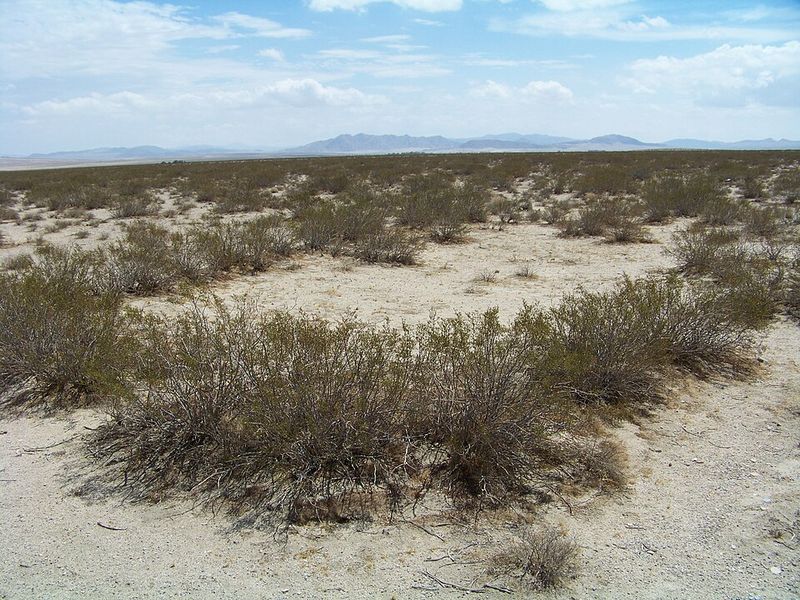
In California’s Mojave Desert, a ring of creosote bushes quietly holds a staggering record. Known as King Clone, this circle of genetically identical shrubs is estimated to be approximately 11,700 years old, making it one of the oldest known living organisms on Earth.
Creosote bushes spread outward from a central plant by sending up new stems around the perimeter as the inner stems gradually die. Over thousands of years, this process creates an ever-widening ring.
Scientists estimated King Clone’s age by measuring its growth rate and the diameter of the ring, which spans roughly 45 feet across.
The Mojave Desert is not exactly a hospitable place, with scorching temperatures and minimal rainfall. Yet King Clone has survived there since the end of the last Ice Age, outlasting countless civilizations and geological events.
It is a striking reminder that some of the most enduring life forms on Earth are not dramatic or flashy. They are simply patient.
16. Methuselah Bristlecone Pine: More Than 4,850 Years Old
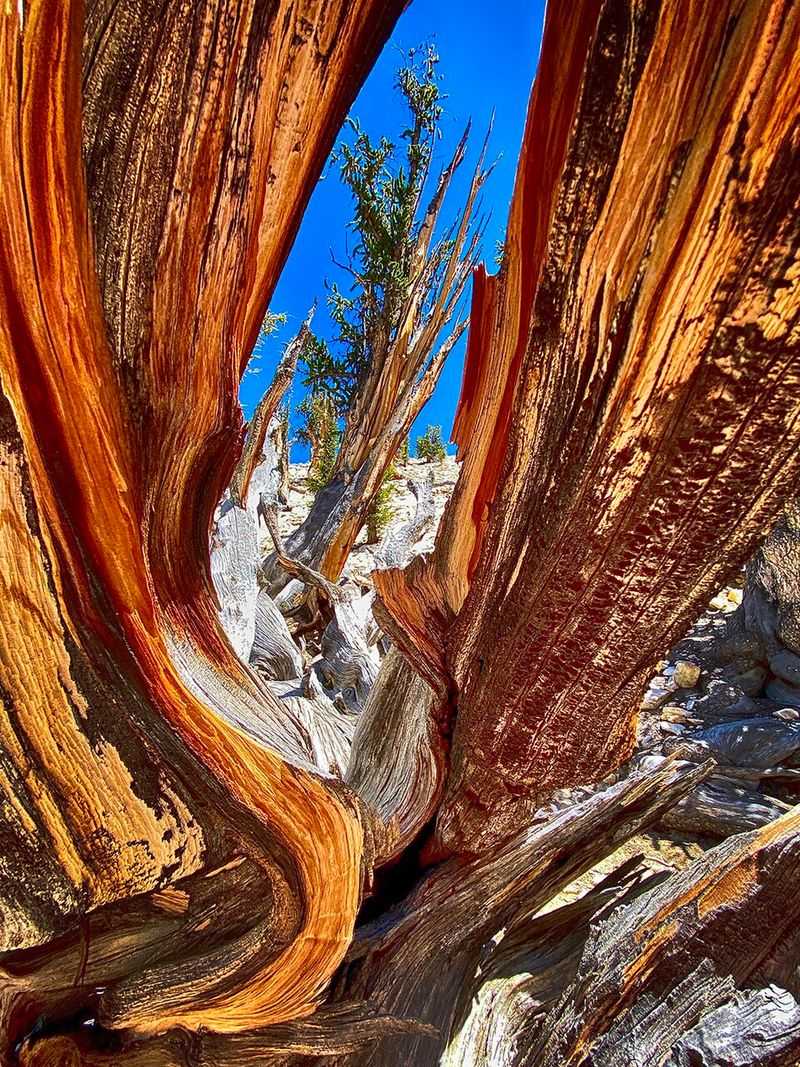
High up in California’s White Mountains, a single bristlecone pine named Methuselah has been growing for more than 4,850 years. To put that in perspective, this tree was already old when the ancient Egyptians were building the pyramids.
It is one of the oldest precisely dated individual non-clonal trees known to science.
Bristlecone pines thrive in harsh, high-altitude environments where few other trees can survive. The cold temperatures, thin soil, and dry conditions actually slow their growth and help preserve their wood, allowing them to live for thousands of years.
Their twisted, ancient trunks look almost sculptural against the rocky mountain landscape.
Methuselah’s exact location within the Inyo National Forest is kept secret by the U.S. Forest Service to protect it from vandalism.
Visitors can hike through the Ancient Bristlecone Pine Forest and see many of these remarkable trees without knowing exactly which one holds the record. That mystery somehow makes it even more special.
17. Sarv-e Abarkuh: Possibly Over 4,000 Years Old
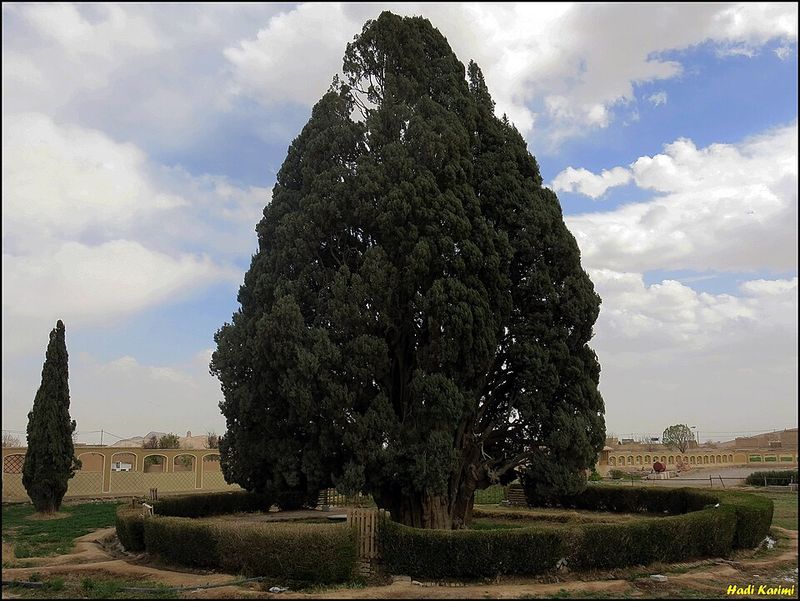
Standing in the city of Abarkuh in central Iran, the Sarv-e Abarkuh is a Mediterranean cypress of truly jaw-dropping proportions. With a trunk circumference that requires multiple people to embrace it and a canopy that towers above the surrounding landscape, this tree is widely estimated to be several thousand years old, possibly exceeding 4,000 years.
Unlike the Methuselah pine, the Sarv-e Abarkuh has not been precisely dated through complete tree-ring analysis. Its age is largely based on estimates, historical records, and the sheer scale of its growth.
That means the exact number remains somewhat uncertain, though few people who stand beneath it doubt its extraordinary antiquity.
The tree is a protected national monument in Iran and draws visitors from around the world who come simply to stand in its presence. Local legend even connects it to the biblical figure of Zoroaster.
Whatever its precise age, the Sarv-e Abarkuh is a living landmark that has watched centuries of human history unfold from the same patch of Persian soil.
18. Greenland Shark: Potentially Several Centuries Old
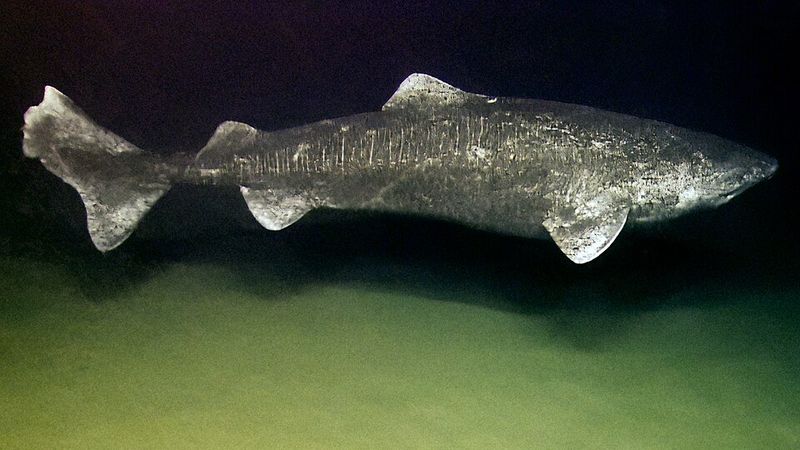
The Greenland shark is one of the ocean’s most mysterious creatures, and it may also be one of the longest-lived vertebrates on Earth. A landmark 2016 study used radiocarbon dating of proteins in the sharks’ eye lenses to estimate their ages, suggesting the largest individual examined was approximately 392 years old, though the uncertainty range in that estimate was quite wide.
These sharks grow extremely slowly, adding only about one centimeter in length per year. They live in the cold, deep waters of the North Atlantic and Arctic Oceans, where their sluggish pace of life appears to contribute to their extraordinary longevity.
Scientists believe Greenland sharks may not even reach sexual maturity until they are around 150 years old.
Because radiocarbon dating of sharks carries inherent uncertainties, researchers continue refining their methods. Still, the evidence strongly suggests these slow-moving, deep-sea giants routinely live for centuries, making every Greenland shark encountered in the wild a potential living relic from the distant past.
19. Ocean Quahog Clam Ming: 507 Years Old
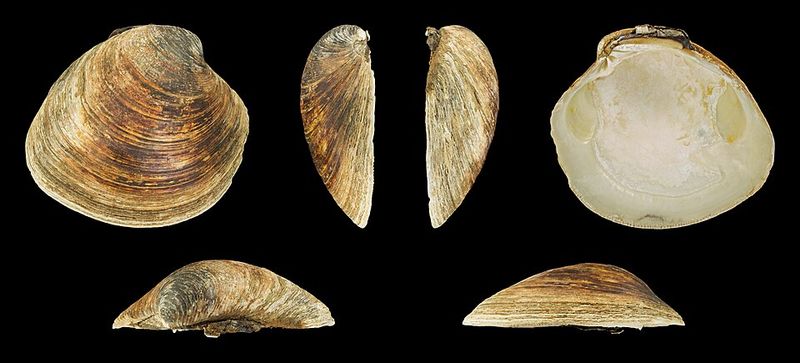
In 2006, marine biologists collected an ocean quahog clam from the seafloor near Iceland. When scientists counted the growth rings on its shell, much like counting tree rings, they determined the clam had lived for 507 years.
They named it Ming, after the Chinese dynasty that was ruling when the clam was born around 1499.
Ocean quahogs are already known to be long-lived clams, but Ming shattered previous records and became the oldest accurately aged individual non-colonial animal ever reported. Unfortunately, the clam did not survive the aging process.
Researchers had to open the shell to count the rings, which ended Ming’s remarkably long life.
Ming’s story sparked both scientific excitement and public conversation about longevity in the animal kingdom. Its shell rings offered a perfectly reliable biological clock, each one representing a single year of growth.
Few animals carry such a precise and readable record of their own age written right into their bodies.
20. Antarctic Glass Sponge Communities: Possibly Thousands of Years Old
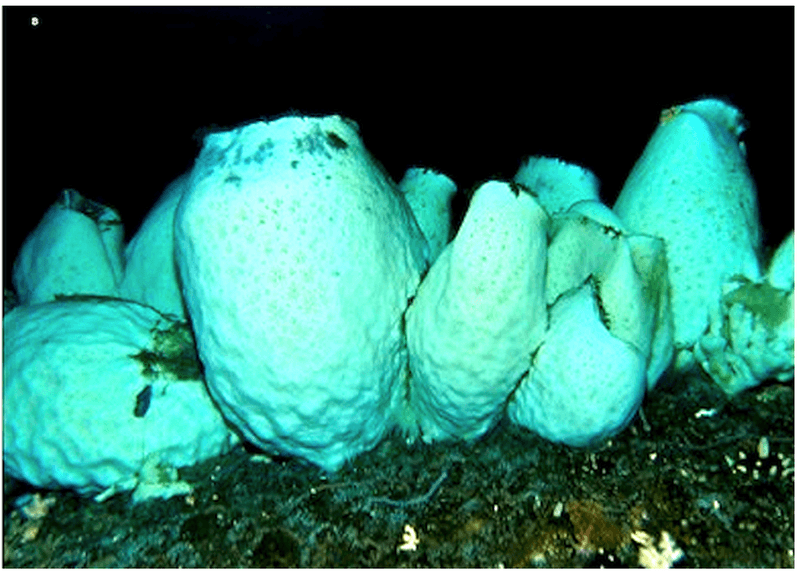
Far beneath the frigid waters surrounding Antarctica, communities of glass sponges grow in almost total darkness. These remarkable animals, made of delicate silica lattice structures, are believed to be among the longest-lived creatures on Earth, with some individuals potentially surviving for thousands of years.
Glass sponges grow at an exceptionally slow pace in the cold, nutrient-limited deep sea. Their low metabolic rate and stable environment allow them to persist far longer than most animals could.
Some researchers have proposed that certain individuals may be thousands of years old, though pinpointing exact ages for these animals remains scientifically challenging.
Because precise age verification is difficult, glass sponges are better described as strong candidates for extreme longevity rather than definitively dated record holders. What is clear is that these quiet, alien-looking creatures represent a remarkable form of life that has mastered the art of endurance.
In the deepest, coldest corners of our ocean, they have been growing, slowly and steadily, for an extraordinary length of time.
Share this story