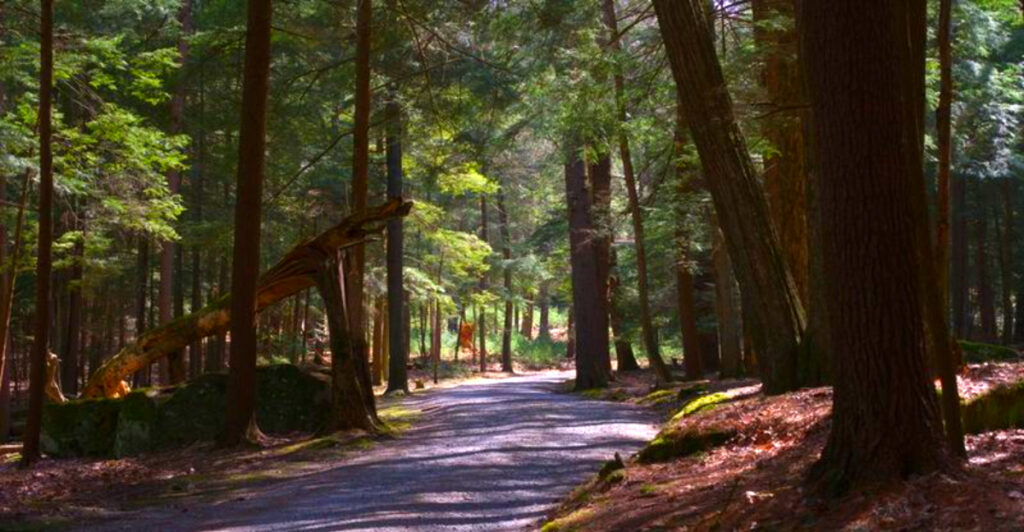
Deep in the Pennsylvania Wilds, an ancient forest shelters towering white pines and hemlocks that were already centuries old before the American Revolution. Some trees rise more than 170 feet overhead, creating a breathtaking old-growth canopy known as the Forest Cathedral.
Protected through an early conservation effort that helped shape Pennsylvania’s state park system, this remarkable landscape offers a rare glimpse of the forests that once covered the region. Walking beneath these giants feels less like an ordinary hike and more like stepping hundreds of years into the past.
Where the Giants Begin: Address, Location, and First Impressions
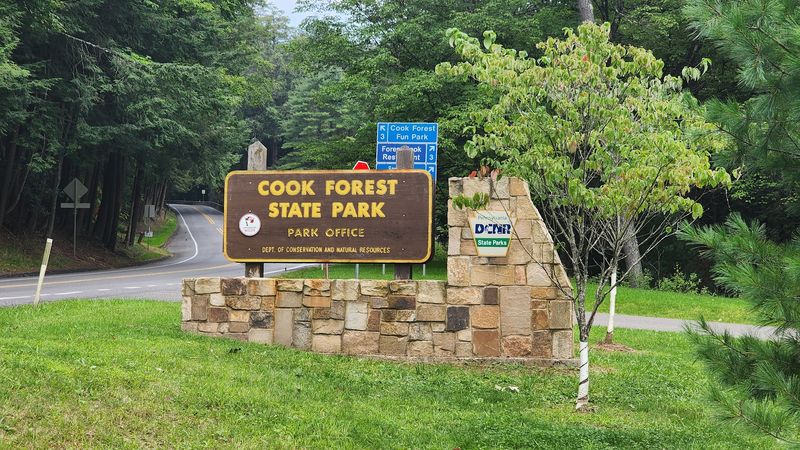
Cook Forest State Park greets you at 100 PA-36, Cooksburg, Pennsylvania 16217, tucked into the Pennsylvania Wilds region of the state, roughly equidistant from Pittsburgh and Erie. The park spans approximately 8,500 acres, and the moment you pull off the road and cut your engine, something shifts. The noise of everyday life simply stops.
The park office sits near the Log Cabin Inn area, where trail maps are available and staff are genuinely helpful. A quick conversation there can save you from missing the best spots. The Forest Cathedral natural area is the crown jewel, and finding the trailhead near the Log Cabin Inn is straightforward once you have a map in hand.
First-time visitors often describe a feeling of pleasant disorientation, not because the park is confusing, but because the scale of the trees challenges every expectation. You arrive thinking you know what a forest looks like, and Cook Forest quietly proves you wrong within the first five minutes of walking.
How a Conversation in the Woods Saved These Trees Forever
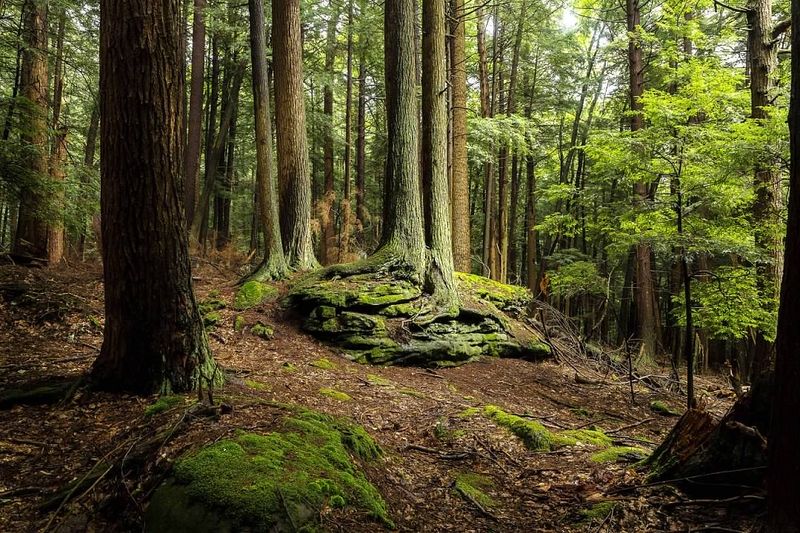
The story behind Cook Forest’s survival is the kind that belongs in a history book, and honestly, it almost did not happen. The Cook family arrived in this region in 1828, built a timber business, and accumulated vast landholdings over generations. By the early 1900s, much of Pennsylvania’s old-growth had already been cleared, and these ancient stands were dangerously close to the same fate.
Then came a pivotal moment in 1910 when businessman and conservation advocate M. Israel McCreight walked through what he called the “silent cathedral” alongside Anthony Wayne Cook. McCreight reportedly told Cook that destroying these trees would be an unforgivable act against humanity. That conversation ignited a movement.
The Cook Forest Association formed in the 1920s, raised $200,000, and persuaded the Commonwealth of Pennsylvania to purchase 6,055 acres in 1927 for $640,000. Cook Forest thus became the first Pennsylvania state park acquired specifically to preserve a natural area, setting a conservation precedent that still echoes through the state’s land management policies today.
The Forest Cathedral: A National Natural Landmark in Every Sense
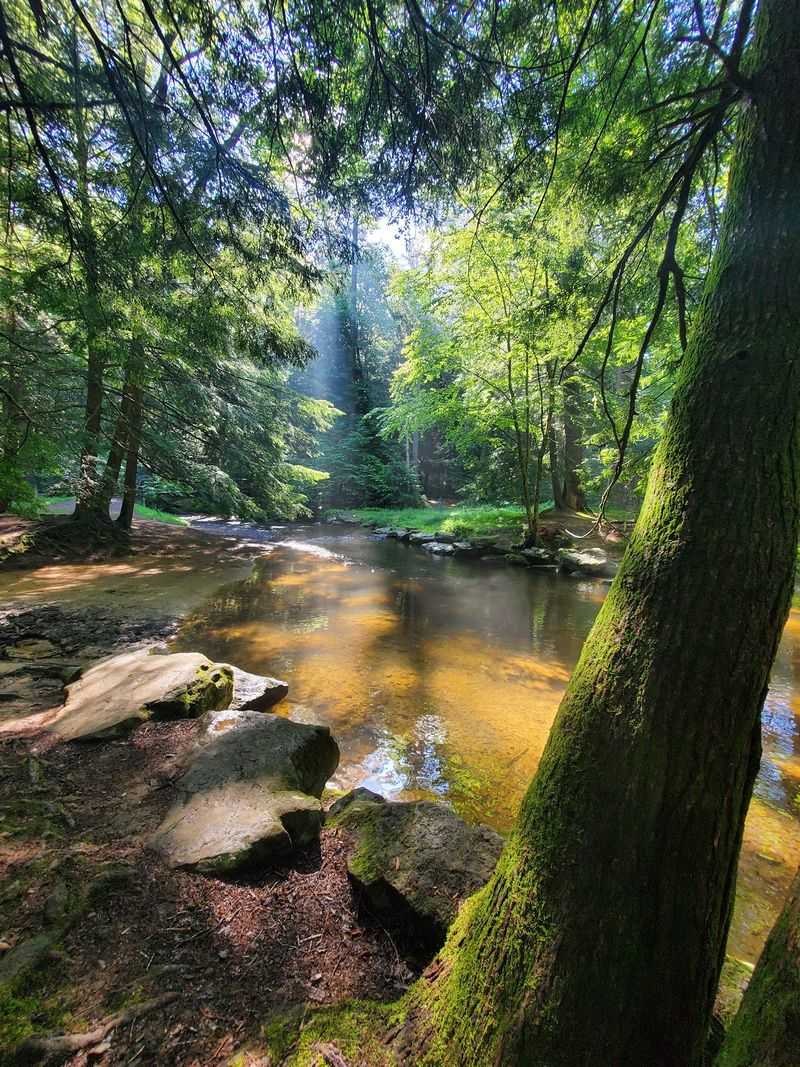
The term “Forest Cathedral” is not just poetic branding. The approximately 315-acre core of the park’s 448-acre natural area earned designation as a National Natural Landmark, recognized for ecological significance that is genuinely rare in the eastern United States. On April 19, 2012, it also became the very first forest inducted into the Old-Growth Forest Network, a distinction that carries real scientific weight.
Walking beneath the canopy here, you understand the cathedral comparison immediately. The trunks rise like columns, the branches meet far overhead like vaulted arches, and the light filters down in soft, shifting shafts. Sound behaves differently here too, muffled and reverent, as if the forest itself enforces a kind of quiet.
Pennsylvania’s largest old-growth forest sits right here, largely untouched since before European settlement, and the sheer density of ancient trees in one place makes it extraordinary. Most forests this old were logged long ago, which is precisely why conservation advocates fought so hard to protect this one, and why it continues to draw visitors seeking something genuinely irreplaceable.
Record-Breaking Pines and the Trees That Defy Expectations
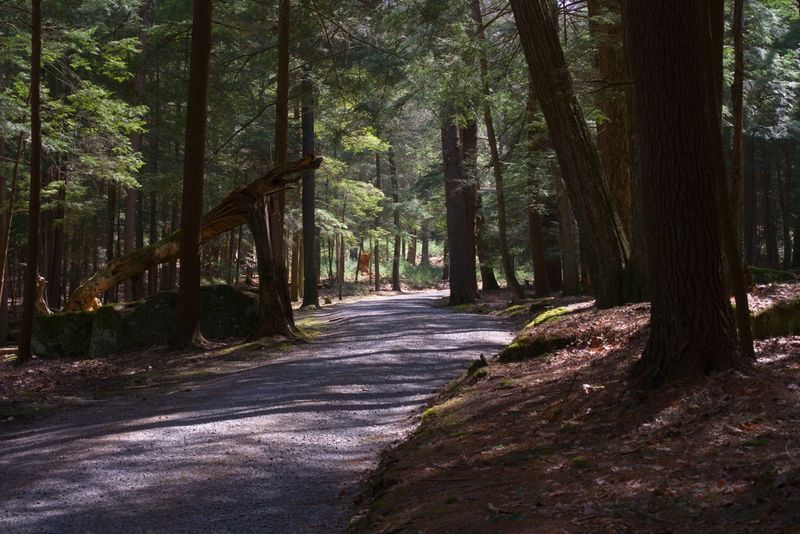
Cook Forest holds some staggering tree records that stop even seasoned naturalists in their tracks. The tallest known eastern white pine in the entire Northeast stands here, soaring to an astonishing 180 feet. Three additional pines in the park exceed 170 feet, and a remarkable thirty white pines reach or surpass 160 feet, a concentration of truly massive conifers unmatched anywhere north of the Great Smoky Mountains.
The hemlocks are equally impressive. With the hemlock woolly adelgid devastating stands elsewhere in the Appalachians, Cook Forest has become the premier location in the eastern United States to experience a dense, thriving grove of ancient hemlocks. Some of these trees are estimated to be between 250 and 450 years old.
The oldest confirmed trees in the park include a 439-year-old cucumber tree and an even more venerable 471-year-old hemlock, both quietly standing as living historians. Beyond the star species, the forest also shelters old-growth white oak, American beech, black cherry, tuliptree, and yellow birch, many exceeding 150 years in age.
The Longfellow Trail and the Best Paths Through the Ancient Canopy
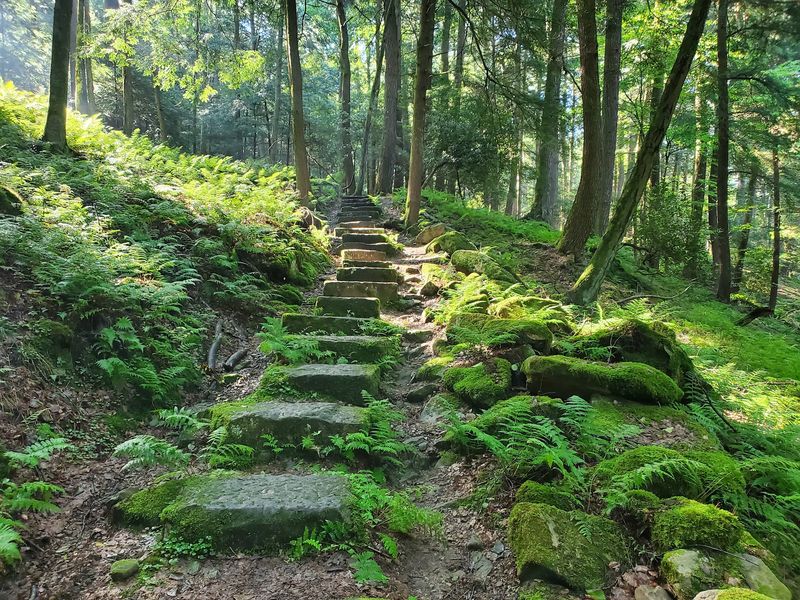
The Longfellow Trail is the trail most people come to Cook Forest specifically to walk, and it earns that reputation without any exaggeration. This roughly 1.9-mile loop starts near the Log Cabin Inn, winds directly through the heart of the Forest Cathedral, and delivers hikers into the thickest concentration of old-growth trees in the park. The elevation gain of 272 feet keeps it moderately challenging without being punishing.
The Cook Trail offers a slightly different experience, running approximately two miles through dense eastern hemlock stands that create a deep, green tunnel effect even on bright days. For those wanting maximum old-growth immersion in less time, the Ancient Forest Trail cuts across the Longfellow route and keeps you surrounded by towering trunks throughout its length.
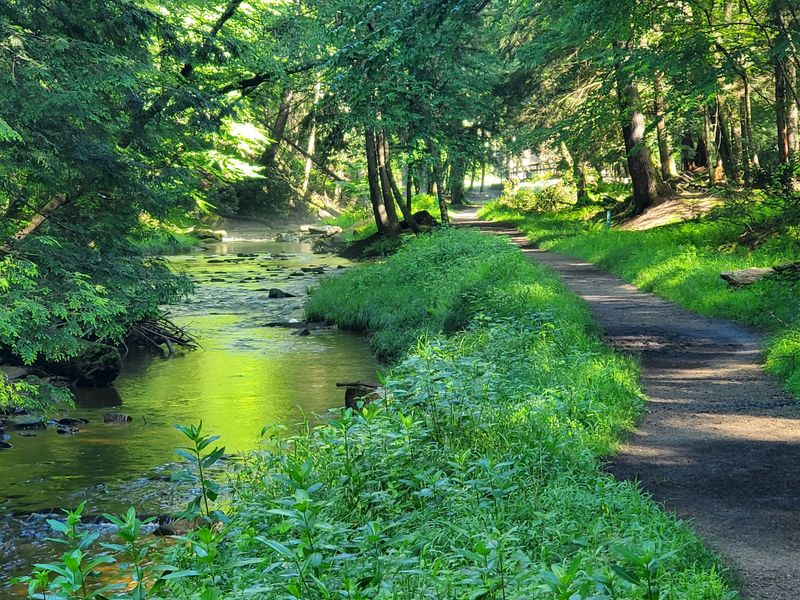
Tom’s Run Trail provides a gentler, wider path that follows a charming stream, ideal for families or anyone who prefers a more relaxed pace. The North Country National Scenic Trail also passes through the park, connecting Cook Forest to a vast network of backcountry routes for hikers with multi-day ambitions and a taste for extended wilderness.
Seneca Point Overlook and the Fire Tower That Changes Your Perspective
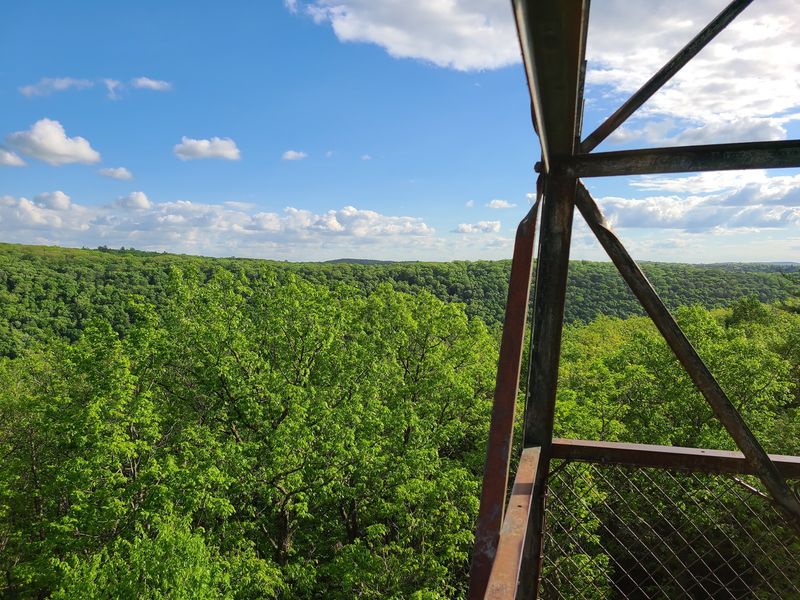
After spending time among the trees at ground level, climbing above the canopy at Seneca Point Overlook delivers a completely different kind of awe. The overlook offers sweeping views of the Clarion River Valley, where the river winds through a corridor of forested ridges that stretch as far as you can see. It is one of those views that makes you genuinely grateful you made the effort to get there.
Adjacent to the overlook stands the Cook Forest Fire Tower, originally constructed in 1929. No longer used for active fire spotting, the tower is open for visitors to climb, and the view from the top is worth every step. From that height, the sea of green extending in every direction makes the park’s scale suddenly, powerfully real.
The combination of the overlook and the tower creates a satisfying contrast to the enclosed, intimate feeling of the Forest Cathedral trails below. You spend the morning feeling wonderfully small among ancient trunks, then climb the tower and realize just how vast the landscape actually is, a perspective shift that stays with you long after you descend.
The Clarion River: A Wild and Scenic Waterway Runs Through It
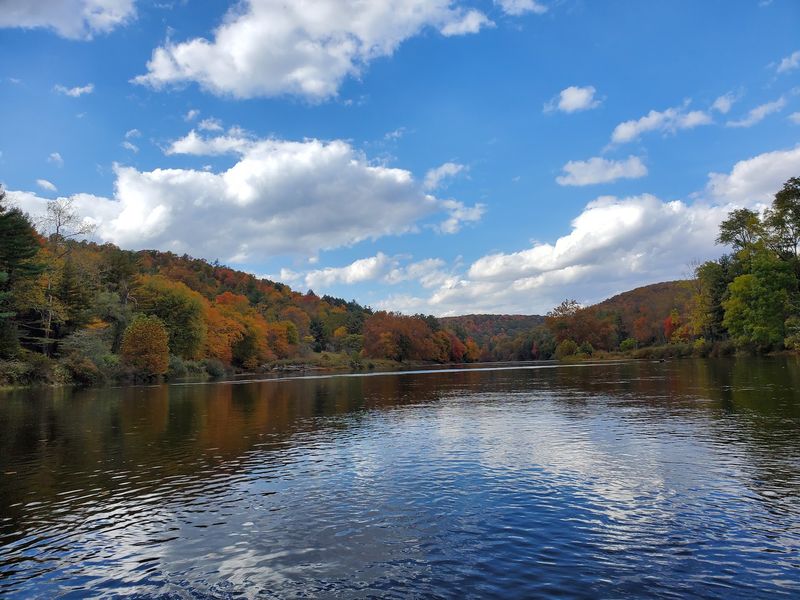
The Clarion River earns its federal designation as a National Wild and Scenic River without any difficulty. This pristine waterway flows directly through Cook Forest State Park, and the 13-mile stretch within park boundaries is a hub for water recreation that complements the forest trails beautifully. Canoeing, kayaking, tubing, and rafting are all popular choices during the warmer months.
The river can run shallow in spots during drier periods, so wearing water shoes is a smart call if you plan to paddle or tube, since you may need to walk your craft through a shallow section or two. Multiple picnic areas along River Road provide easy access to the banks, making a riverside lunch a perfectly reasonable part of your day.
Fishing is another draw here, with the river and its tributary streams offering solid opportunities for anglers. The overall experience of floating or paddling the Clarion, with forested banks rising on both sides and the occasional great blue heron lifting off from a gravel bar, adds a completely different dimension to a park visit that is already rich with natural variety and quiet pleasures.
When to Visit: Seasons, Colors, and the Mountain Laurel Surprise
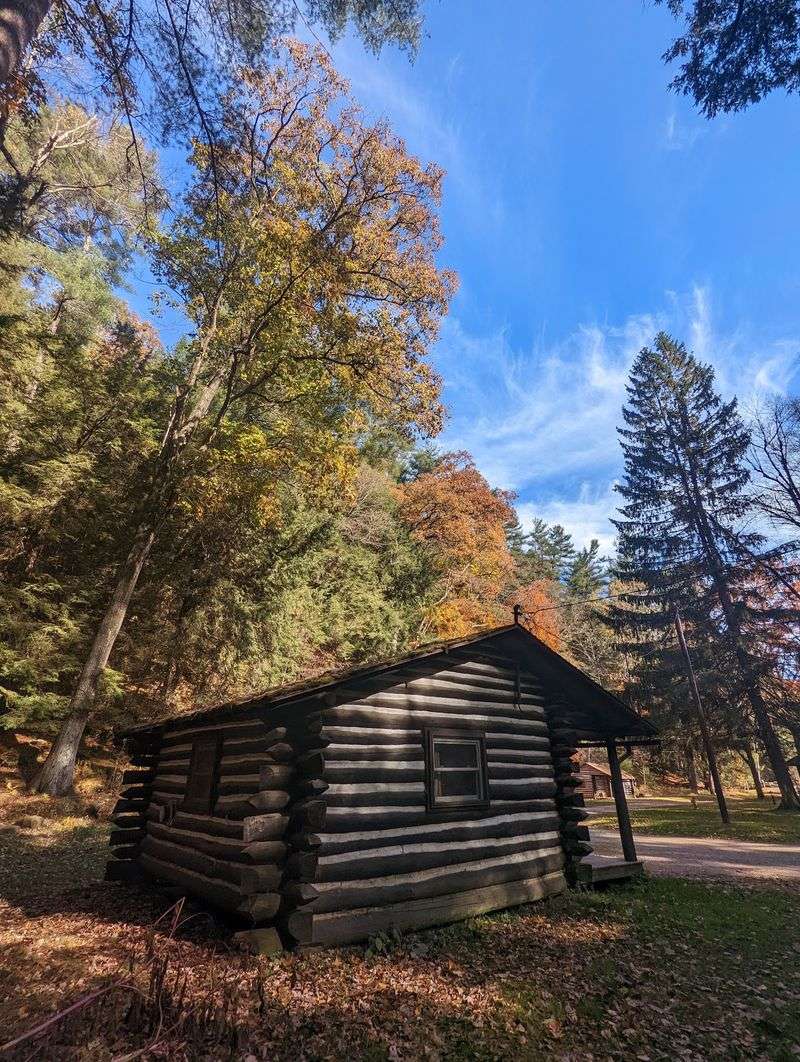
Cook Forest rewards visitors in every season, but each time of year offers a genuinely distinct experience worth planning around. Mid to late October is the sweet spot for fall color, when the deciduous trees surrounding the old-growth stands ignite in reds, oranges, and golds that contrast dramatically with the evergreen canopy of the pines and hemlocks overhead. Fewer crowds in autumn make the trails feel almost private.
June brings Pennsylvania’s state flower, the Mountain Laurel, into full bloom throughout the forest understory. Clusters of delicate pink and white blossoms appear along trails and stream banks, adding a layer of beauty that surprises many first-time summer visitors who come expecting only towering trees.
Winter visits are genuinely underrated here. The dense conifer canopy stays green even in January, and a fresh snowfall transforms the Forest Cathedral into something hushed and otherworldly. Trails can become icy in shaded sections, so traction devices on your boots are worth packing. Summer is the busiest season, and reservations for cabins or campsites fill up quickly, so planning ahead is essential if you want a warm-weather visit.
Camping, Cabins, and the CCC Legacy That Shelters Visitors Today
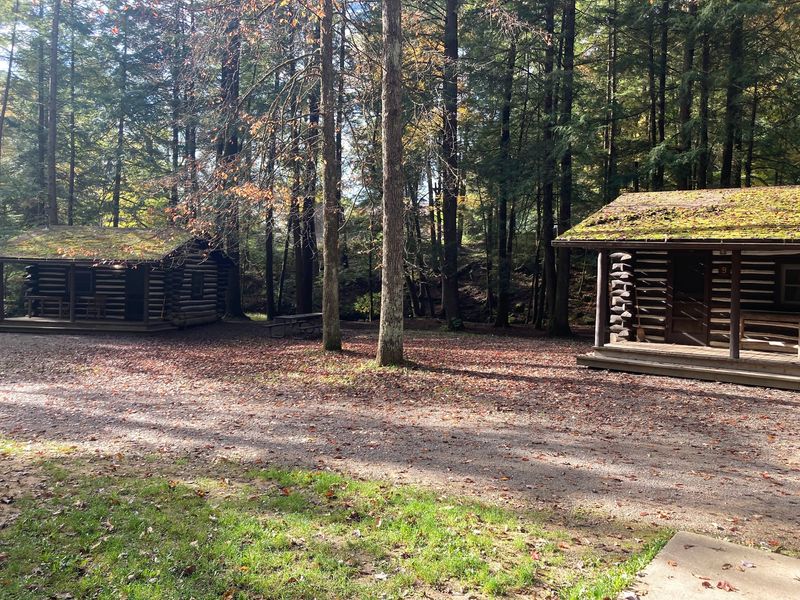
The Civilian Conservation Corps left a lasting physical mark on Cook Forest between 1934 and 1937, constructing the Indian and River cabin clusters along with trails, roads, and other park infrastructure. These rustic log cabins remain in use today, and staying in one of them adds a layer of historical texture to a visit that already runs deep with stories. They are described as genuinely cozy, with the kind of rustic comfort that makes a rainy evening feel atmospheric rather than inconvenient.
The campground offers sites of generous size, with both electric and non-electric options. Dog-friendly sites are available, though they are grouped in separate loops, which is worth knowing if you are coordinating with a larger group. Facilities are functional, though some show their age, so calibrating expectations accordingly is wise.
One practical note: the park prohibits bringing out-of-state firewood, a biosecurity measure that protects native species from invasive insects. Firewood is available for purchase within the campground. For those who prefer private accommodations, the surrounding Cooksburg area offers additional cabin rental options, giving visitors flexibility in how they choose to experience an overnight stay among the giants.
Practical Tips for Making the Most of Your Visit
A few practical details can make the difference between a smooth visit and an avoidable frustration at Cook Forest. Cell service throughout the park is unreliable at best, and on most trails, including Tom’s Run and the Ancient Forest Trail, you will have no signal at all. Downloading park maps to your device before you arrive is genuinely important, not just a suggestion. A physical map from the park office works perfectly well too.
Sturdy footwear is non-negotiable. Even well-maintained trails have roots, rocks, and occasional muddy patches, particularly after rain. The Longfellow Loop involves real elevation change, and slick soles are a recipe for a difficult afternoon. Layered clothing is smart in any season, since the dense canopy keeps the forest noticeably cooler than surrounding open areas.
Arrive early on summer weekends to secure parking near the Forest Cathedral trailhead. The park is popular, and the most convenient lots fill up faster than you might expect. Reservations for cabins and campsites should be made well in advance for any summer or peak fall weekend. Wi-Fi is reportedly available near the park office at 113 River Road if you need connectivity before heading into the forest.
The Lasting Pull of a Forest That Refuses to Be Forgotten
There is a particular kind of quiet that settles over you after a few hours among the old-growth trees of Cook Forest, a stillness that does not feel empty but rather full, as if the forest has been accumulating something over centuries and now simply radiates it. The sensory experience here is layered: the resinous scent of pine, the cool air that persists even on warm days, the soft give of a deep needle bed underfoot.
Cook Forest earned the Pennsylvania Parks and Forests Foundation’s Park of the Year award in 2018, recognition that reflects both its ecological significance and the quality of the visitor experience it consistently delivers. A rating of 4.8 stars from hundreds of visitors speaks to how reliably it exceeds expectations.
Coming back here feels less like revisiting a familiar place and more like returning to check on old friends who happen to be 400 years old and 180 feet tall. The Forest Cathedral does not demand anything from you except your presence and your willingness to look up, and in return, it offers a perspective on time and scale that very few places in the eastern United States can match.
Share this story