Buildings do not just provide shelter or beauty. Throughout history, rulers, regimes, and empires have used architecture as a direct tool of power, designing structures so massive, so symmetrical, and so overwhelming that ordinary people would feel small just by standing near them. A colossal gate, a fortress-like prison, a parade ground the size of several city blocks: these were not accidents of design. They were calculated choices meant to remind citizens who was in charge.
The places on this list span continents and centuries, but they share one thing in common: their builders understood that stone and scale could say what words sometimes could not. Some of these sites have been converted into museums, some house governments, and some remain deeply controversial. All of them tell a story about how architecture can be turned into a political statement that outlasts the regime that built it. Keep reading to see which landmarks made the list.
1. Palace of Parliament, Bucharest, Romania
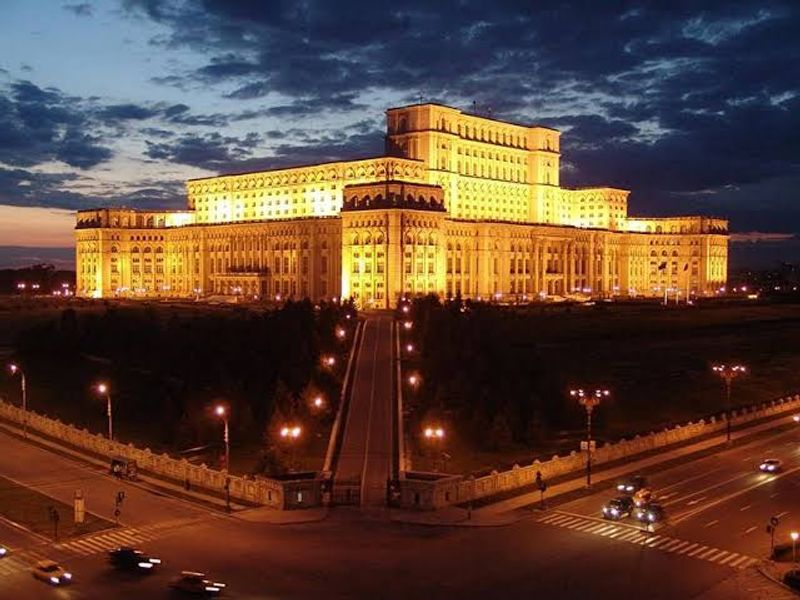
Romania’s Palace of Parliament holds the title of the world’s heaviest building, and that fact alone tells you something about the ambitions of the man who ordered it built. Nicolae Ceausescu launched construction in 1984 after a visit to North Korea inspired him to reshape Bucharest into a monument to his own power.
Thousands of workers operated in round-the-clock shifts to complete it, using marble, oak, crystal, and hand-woven carpets sourced entirely from within Romania. Before a single foundation was laid, thousands of homes, churches, and historic buildings were demolished to clear space for the complex.
The vast formal halls and oversized corridors were deliberately designed to make visitors feel physically small against the scale of the state. Today the building houses Romania’s parliament and runs guided tours, giving visitors a firsthand look at what ambition, control, and a truly staggering construction budget look like when combined into one address.
2. Olympiastadion Berlin, Berlin, Germany
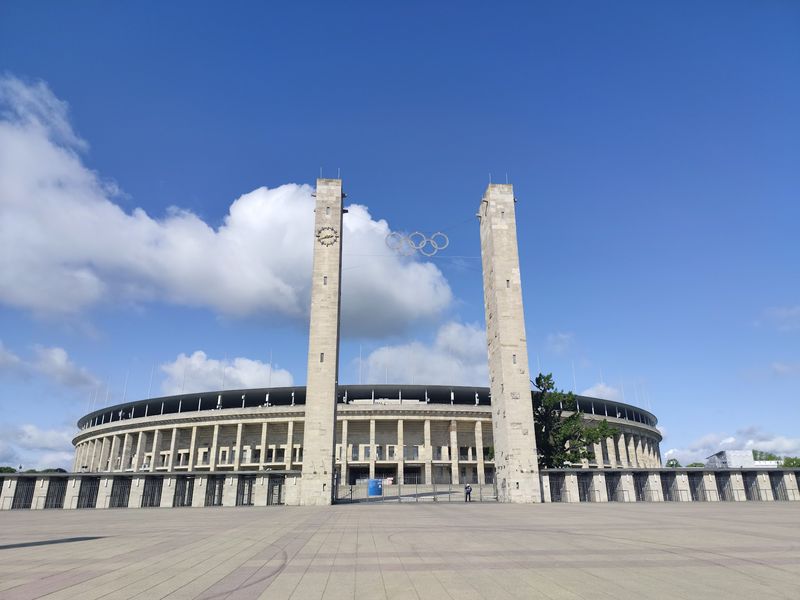
The 1936 Berlin Olympics were never just about sport. Adolf Hitler and his government saw the games as a global showcase, and the stadium built to host them was designed to project an image of German strength, order, and permanence to an international audience.
Architect Werner March drew on classical forms and monumental stone construction to give the complex a timeless, imperial character. The surrounding Olympic grounds included a bell tower, a vast field, and ceremonial axes that reinforced the idea of Germany as a civilization at its peak.
What makes the Olympiastadion particularly striking today is that it still functions as a major venue, hosting Bundesliga football matches and large concerts. Fans filling the same stands that once provided the backdrop for a regime’s self-promotion creates a layered historical experience that most stadiums simply cannot offer. The stone exterior has barely changed, which keeps the original architectural intention visible to anyone paying attention.
3. Palazzo della Civiltà Italiana, Rome, Italy
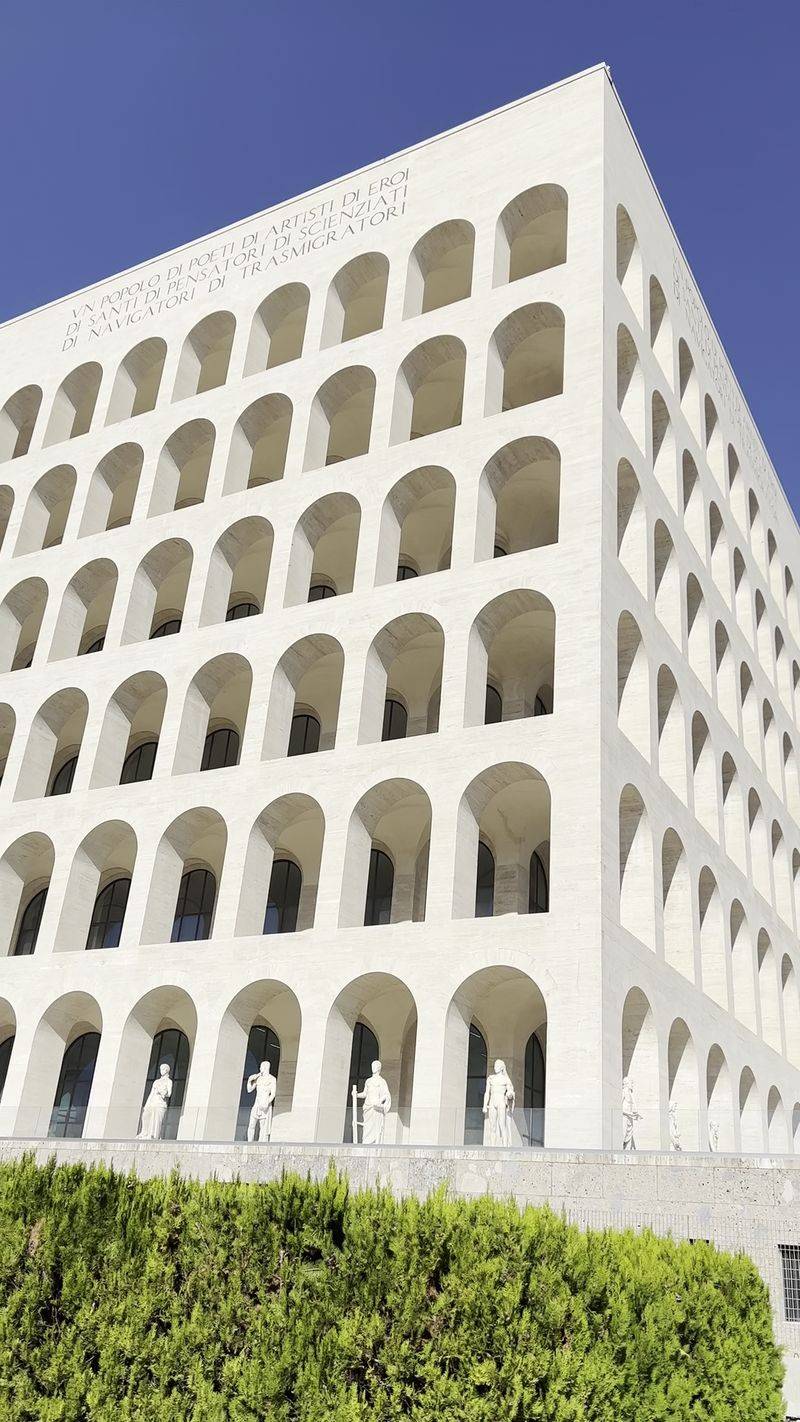
Nicknamed the Square Colosseum, this building near Rome’s EUR district is one of the most visually striking pieces of Fascist-era architecture anywhere in Italy. Mussolini’s government commissioned it for the planned 1942 World’s Fair, which was intended to celebrate twenty years of Fascist rule and the supposed rebirth of Roman imperial greatness.
The structure features six stories of identical arched openings on every facade, totaling 216 arches in all. Its elevated position, blinding white travertine surface, and perfect geometric regularity were designed to feel both ancient and modern at once, a visual argument that Fascism was the natural heir to Rome’s imperial legacy.
The fair never happened, but the building survived and was eventually adopted by fashion house Fendi as its global headquarters. The contrast between its authoritarian origins and its current role as a luxury brand base is genuinely strange, though the architecture itself remains as uncompromising and attention-commanding as its creators intended.
4. Tiananmen, Beijing, China
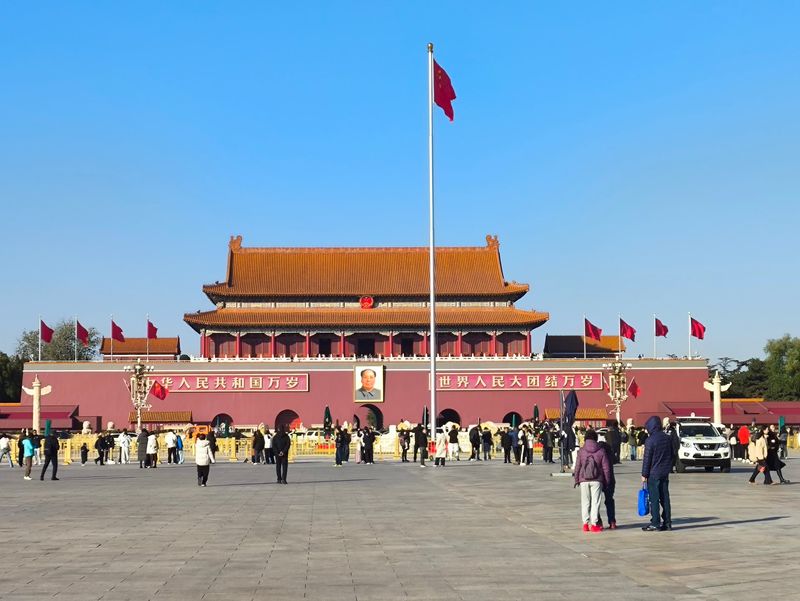
For centuries, the Gate of Heavenly Peace served as the formal southern entrance to the imperial palace complex, and access to it was strictly controlled by rank, ceremony, and the emperor’s will. Ordinary citizens were not permitted anywhere near the spaces reserved for court ritual, and the gate’s elevated position made it physically clear who held authority over the city below.
Imperial proclamations were read from its upper platform, literally projecting the ruler’s voice downward over the population. The deliberate separation between those above the gate and those standing far below was not accidental urban planning; it was hierarchy made visible in brick and tile.
After 1949, Tiananmen became the ceremonial heart of the People’s Republic, with Mao Zedong’s portrait mounted above the central arch. The square in front of it was expanded into one of the world’s largest public plazas, continuing the tradition of using scale and symbolic placement to communicate state authority to anyone who crosses it.
5. Moscow Kremlin, Moscow, Russia
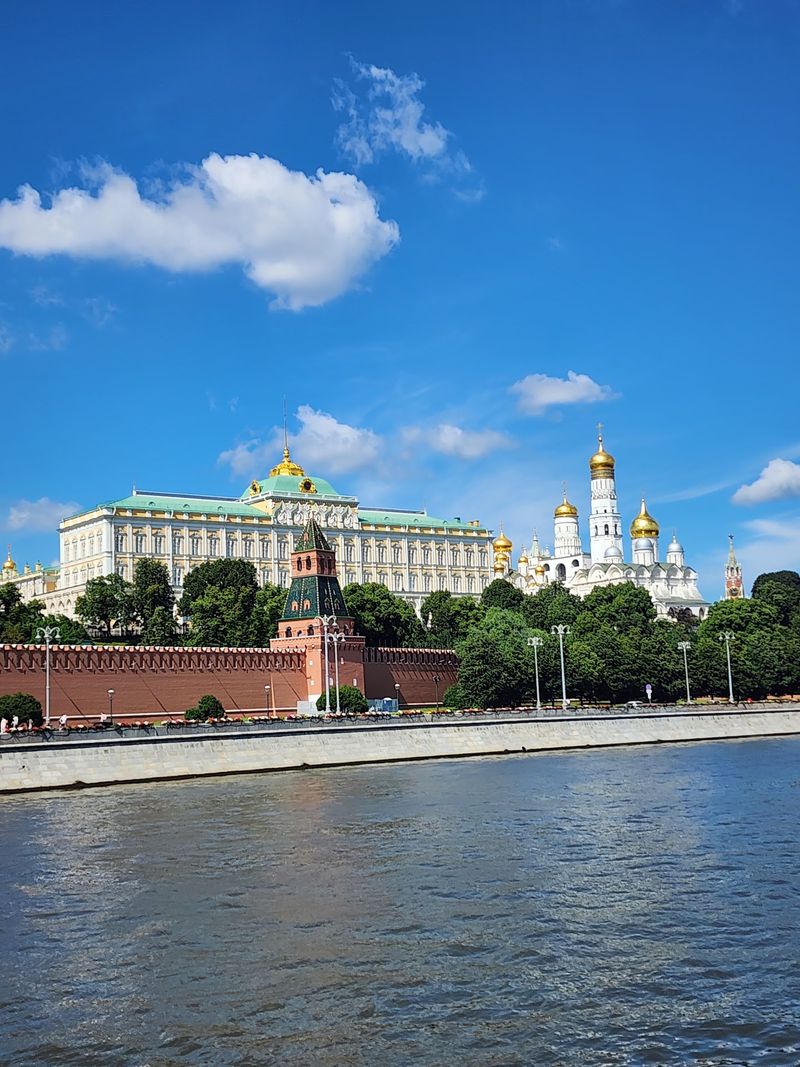
No single building in Russia has projected authority for as long or as consistently as the Kremlin. The red brick walls stretch for more than two kilometers around a complex that contains palaces, cathedrals, government offices, and military monuments, all gathered inside a fortified perimeter that has been updated and expanded by successive rulers since the 15th century.
Russian tsars used the Kremlin as the symbolic seat of imperial power, and Soviet leaders later maintained that association by placing the Communist Party’s central operations behind the same walls. The combination of religious grandeur, military fortification, and government function in one location made it uniquely effective as an architectural statement about who controlled the country.
Visitors today can enter the grounds and explore several cathedrals and museums, though significant portions remain restricted as active government space. The physical experience of moving through the towers and along the interior paths gives a concrete sense of how layered security and ceremonial architecture were combined to project authority across centuries.
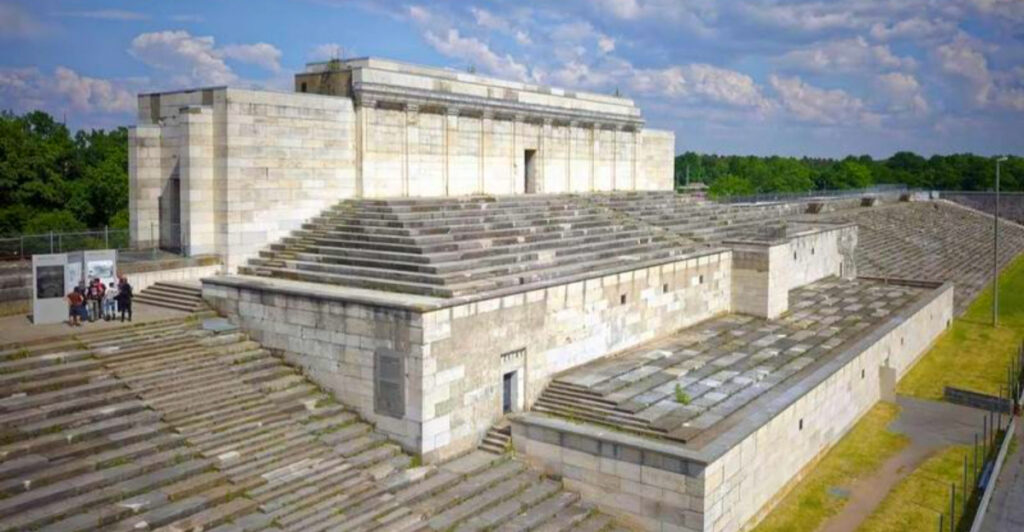
6. Documentation Center Nazi Party Rally Grounds, Nuremberg, Germany
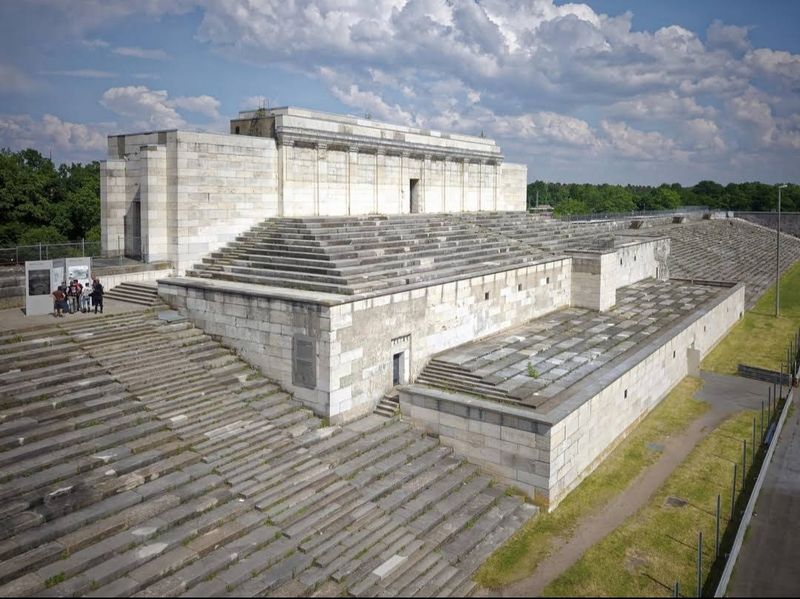
Few places on earth make the relationship between architecture and political theater as clear as the Nazi Party Rally Grounds in Nuremberg. Massive grandstands, enormous open fields, and monumental stone structures were designed not simply to hold crowds but to transform them into a visual spectacle of discipline and power.
Albert Speer, the regime’s chief architect, planned structures on a scale meant to dwarf individual human figures, making the state appear permanent and the individual appear irrelevant. Hundreds of thousands of supporters gathered here each year during the 1930s for carefully choreographed rallies that were as much about architecture and staging as they were about speeches.
The Documentation Center now occupies part of the unfinished Congress Hall on the grounds, using the site itself as a teaching tool. Visitors can walk through exhibits explaining how design, ceremony, and propaganda worked together, which makes this one of the most intellectually honest historic sites in Europe.
7. Arc de Triomphe, Paris, France
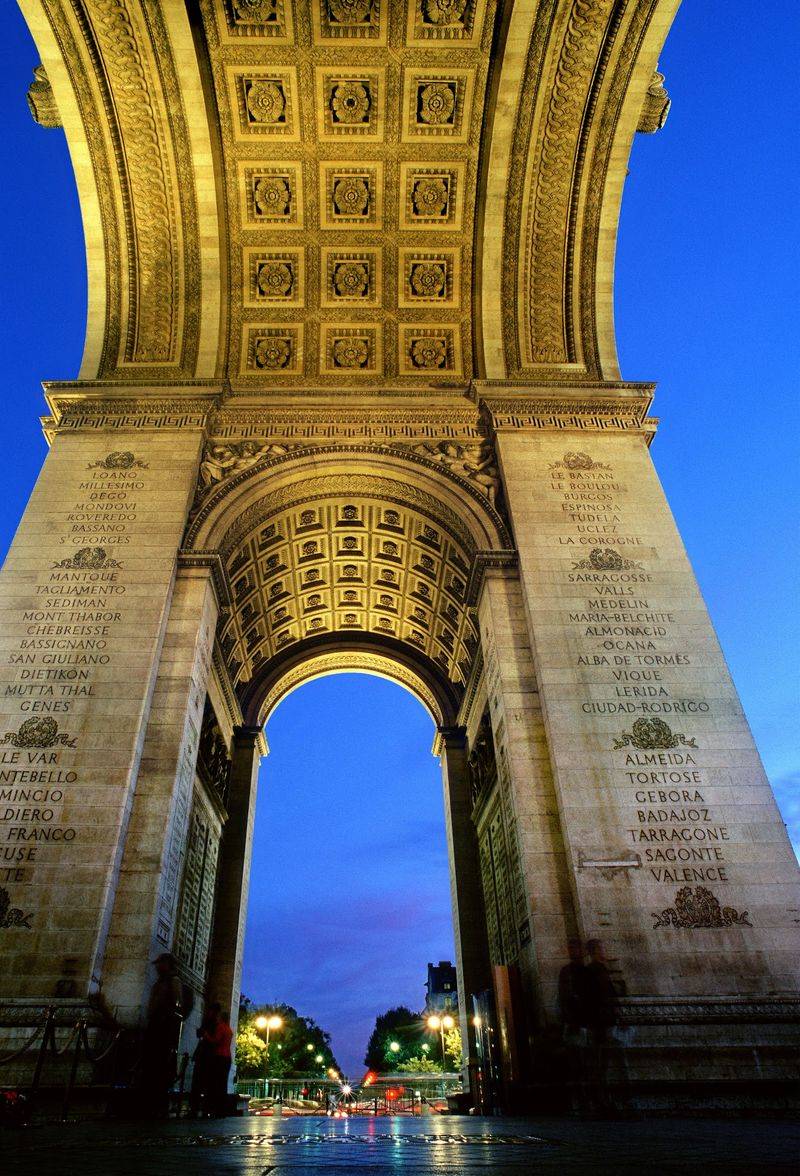
Napoleon ordered the Arc de Triomphe constructed in 1806, right after his decisive victory at the Battle of Austerlitz, and the timing was entirely deliberate. A monument of this scale, placed at the top of the most prominent avenue in Paris, was meant to tell the city and the world that French military power was at its height.
The arch stands nearly 50 meters tall and is decorated with large sculpted reliefs depicting battle scenes and allegorical figures. Its position at the center of twelve radiating avenues means it is visible from multiple directions across the city, which amplifies its presence far beyond what a single street-level monument could achieve.
Napoleon himself never actually saw the completed arch, as it was not finished until 1836, fifteen years after his passing. The Tomb of the Unknown Soldier was added beneath it after World War One, adding a layer of collective national memory to what began as one man’s celebration of his own military achievements.
8. Palace of Versailles, Versailles, France
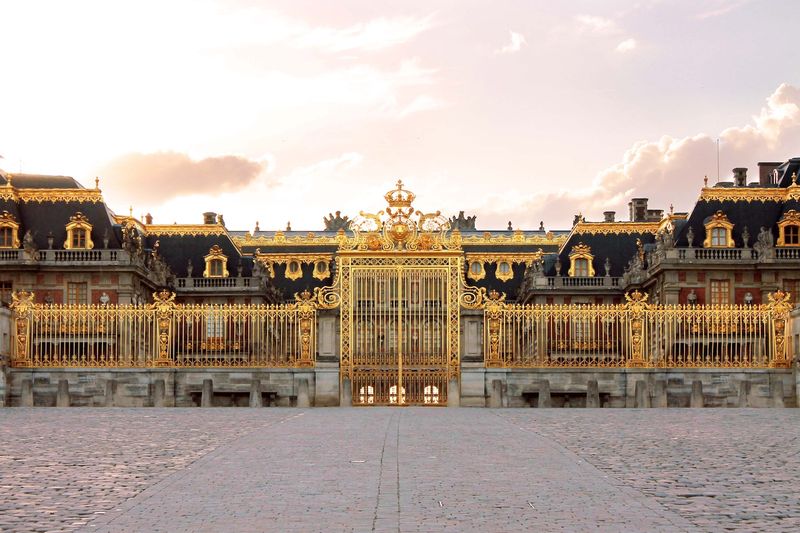
Louis XIV did not build Versailles simply because he wanted a bigger house. He built it because he understood that controlling where powerful people lived, ate, and spent their time was one of the most effective ways to control them politically. By relocating the French court from Paris to Versailles in 1682, he forced nobles to orbit around him rather than build independent power bases in the capital.
Access to different rooms within the palace corresponded directly to rank and royal favor. Being admitted to the king’s bedchamber for his morning rising ceremony was considered a significant political privilege, turning an ordinary daily routine into a carefully managed display of hierarchy.
The gardens, fountains, and formal axes extending from the palace reinforced the idea that the entire landscape existed to reflect the king’s order and authority. Today Versailles receives millions of visitors annually, which means that a building designed to impress a few hundred courtiers now impresses millions of ordinary tourists every year.
9. Eastern State Penitentiary, Philadelphia, Pennsylvania
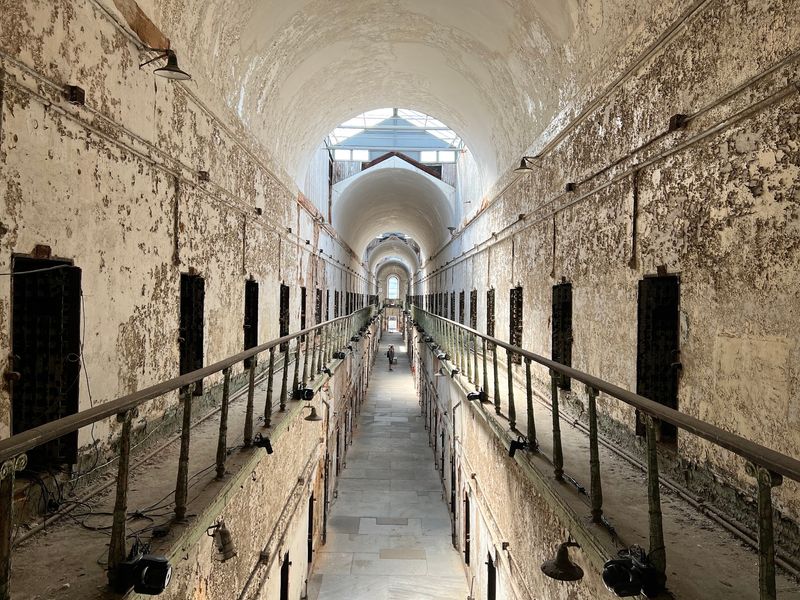
Eastern State Penitentiary opened in 1829 with a design philosophy that was as much about psychological pressure as physical confinement. The architects chose a radial layout, with cell blocks extending outward from a central surveillance hub, so that guards could theoretically observe every corridor from a single point.
The exterior walls were built thick, tall, and castle-like, with a deliberate Gothic character intended to signal to anyone passing on the street that punishment happened inside and that it was serious. The building was meant to be seen as well as used, projecting the idea of justice and state authority outward into the surrounding neighborhood.
Inmates were kept in solitary confinement for much of the prison’s early history, a practice that was considered progressive reform at the time but was later widely criticized as psychologically damaging. The penitentiary closed in 1971 and is now a museum, with crumbling cell blocks preserved largely as they were found, giving visitors an unfiltered look at what punitive architecture actually looked like from the inside.
10. Constitution Hill Human Rights Precinct, Johannesburg, South Africa
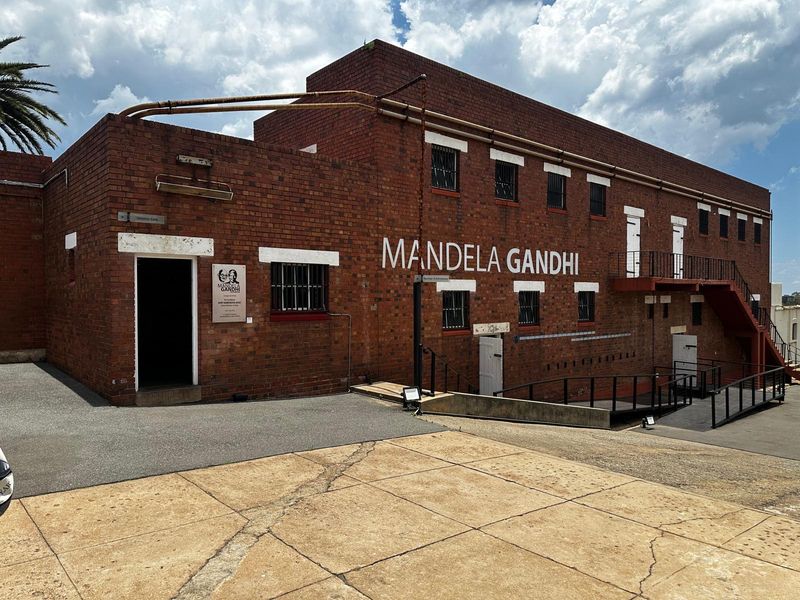
Before it became a symbol of human rights, Constitution Hill was a place people feared being sent to. The Old Fort prison complex on this site held ordinary criminals, political prisoners, and people detained under apartheid-era laws, making it one of the more direct examples of how a building can be used as a tool of state intimidation and control.
Notable figures including Mahatma Gandhi and Nelson Mandela were among those held here at different points in history. The physical conditions and the arbitrary power exercised within the walls made the complex a concrete expression of what political repression looked like in practice.
After South Africa’s democratic transition, the decision to build the new Constitutional Court directly adjacent to the old prison was deliberate and powerful. The contrast between the spaces of coercion and the institution designed to protect citizens’ rights creates one of the most thought-provoking architectural conversations anywhere in the world, and the site is open to the public for tours and reflection.
11. Stasi Museum, Berlin, Germany
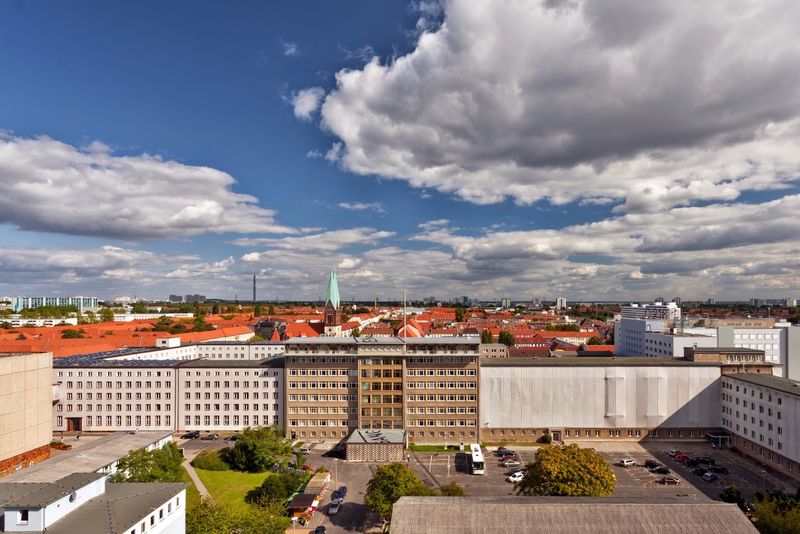
There is nothing visually grand about the former headquarters of East Germany’s secret police, and that ordinariness is part of what makes it so disturbing. The Stasi operated out of a sprawling complex of plain administrative buildings in Berlin’s Lichtenberg district, which at its peak employed tens of thousands of officers and managed a network of informants estimated to number in the hundreds of thousands.
Unlike the theatrical grandeur of a palace or a triumphal arch, the Stasi’s architecture communicated power through bureaucratic scale and anonymity. The sheer number of offices, filing rooms, and operational departments conveyed that the state’s reach into everyday life was systematic, organized, and extensive rather than dramatic.
The preserved offices of Stasi chief Erich Mielke remain largely intact, complete with original furniture and personal objects. Visitors to the museum can move through rooms where decisions about surveillance, detention, and coercion were made in a setting that looks almost mundane, which is arguably the most unsettling architectural lesson the building has to offer.
12. Basilica of the Holy Cross of the Valley of Cuelgamuros, San Lorenzo de El Escorial, Madrid, Spain
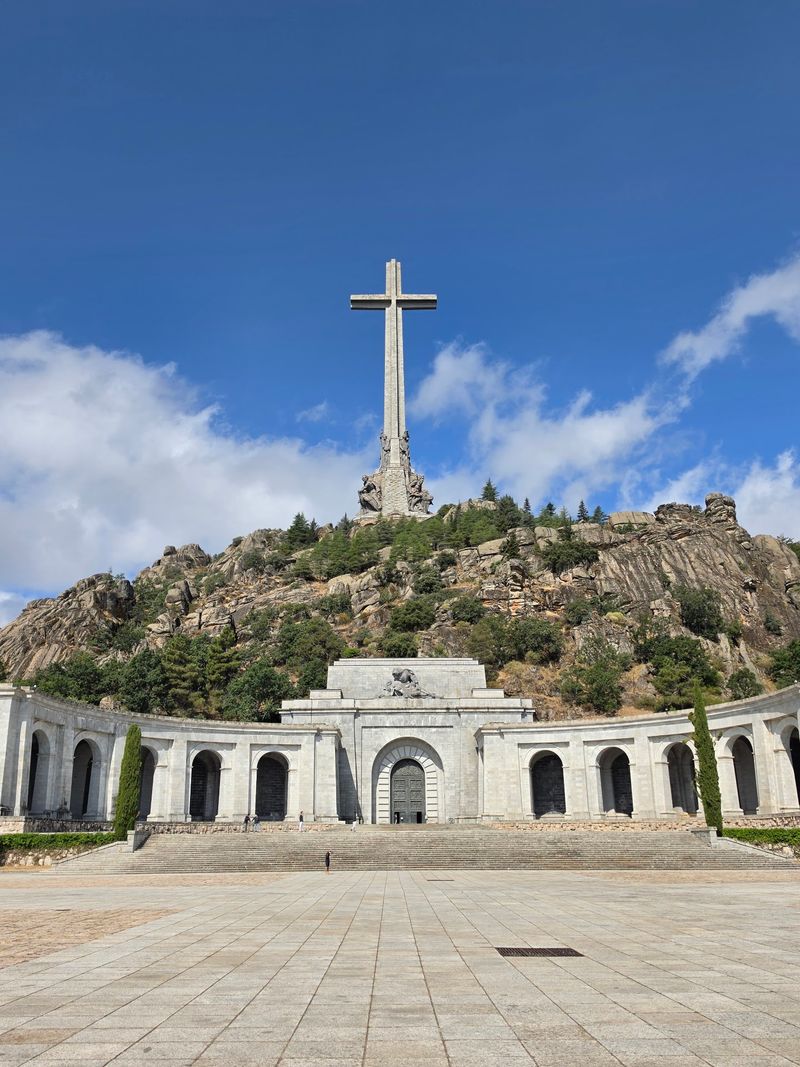
A cross so large it can be seen from more than 30 kilometers away might sound like a geographic landmark, but this one was built by a dictatorship to memorialize its own victory in a brutal civil war. Francisco Franco ordered the construction of this mountainside complex after his forces prevailed in the Spanish Civil War, and political prisoners were used as forced labor to build it.
The basilica itself is carved directly into a granite mountain, giving it a scale and permanence that few 20th-century structures can match. The architectural ambition was to create something that would outlast Franco’s lifetime and cement his regime’s place in Spanish history as both powerful and divinely sanctioned.
Spain officially renamed the site the Valley of Cuelgamuros as part of ongoing efforts to reframe its significance, and debates about what the complex represents continue today. The monument remains open to visitors, but the conversation around it is very much alive, making it one of Europe’s most contested pieces of political architecture.
13. Brandenburg Gate, Berlin, Germany
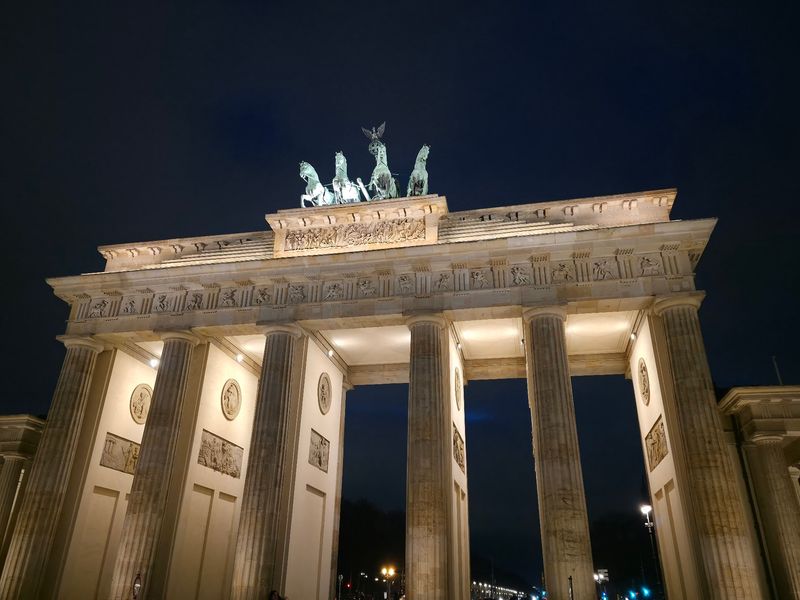
Originally completed in 1791 as a symbol of Prussian peace, the Brandenburg Gate spent much of the 20th century being used for purposes that had nothing to do with peaceful intentions. Its monumental classical columns and commanding position at the end of Unter den Linden made it an ideal backdrop for military parades and political demonstrations, and the Nazi government exploited that quality thoroughly.
When the Berlin Wall was built in 1961, the gate ended up sitting in the restricted border zone between East and West Berlin, closed to everyone and visible to neither side’s residents in any meaningful way. For nearly three decades it stood as an unintentional monument to division rather than the civic symbol it was built to be.
The gate’s current role as a gathering point for public celebrations, political demonstrations, and New Year’s events represents one of the more complete symbolic turnarounds in architectural history. A structure once co-opted for authoritarian pageantry is now most commonly associated with crowds celebrating unity, which is a more interesting ending than most buildings get.
Share this story