Not every country measures success by how many hours its workers clock in. Some of the world’s most prosperous nations have figured out how to keep economies humming while their employees enjoy more time away from the office.
These countries report the lowest average annual working hours among OECD members, based on the latest 2024 dataset. If you have ever wondered where in the world people work the least, read on.
Germany

Germany tops this list with a jaw-dropping 1,334 annual working hours per worker, the lowest in the entire OECD 2024 dataset. Spread across a full year, that works out to roughly 25.7 hours per week on average.
Keep in mind, though, that this figure already bakes in vacations, public holidays, and part-time schedules.
What makes Germany’s position so fascinating is its reputation as a global industrial powerhouse. The country exports cars, machinery, and chemicals by the shipload while somehow clocking fewer hours than almost anyone else.
That is a productivity story worth paying attention to.
Back in 2010, German workers averaged 1,425 annual hours. By 2024, that number had dropped to 1,334, a meaningful decline over roughly 14 years.
American workers, by comparison, averaged 1,796 hours in the same year. Germany is living proof that working smarter, not longer, is a real and achievable strategy.
Denmark
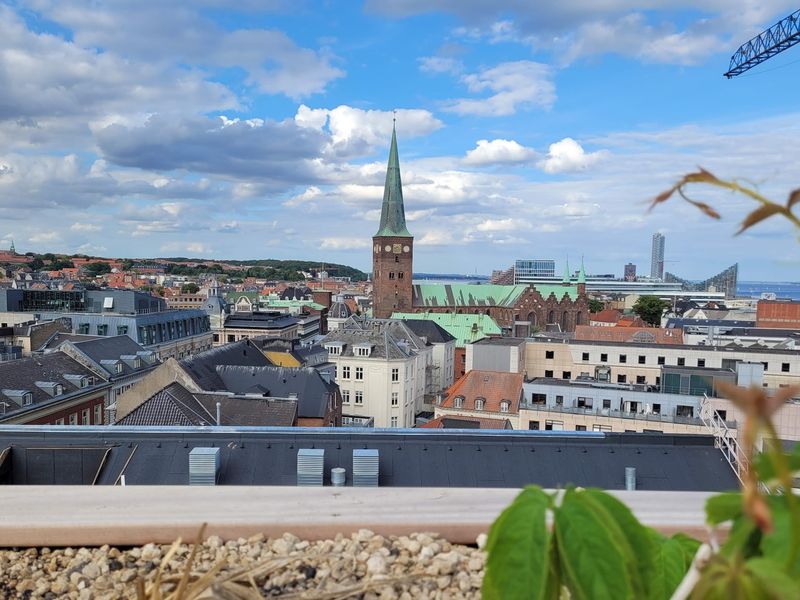
Ask anyone who studies work-life balance and Denmark will come up almost immediately. The country records approximately 1,372 annual working hours per employed person, placing it second on the list.
That figure is hundreds of hours below the OECD-wide average of roughly 1,741 hours in 2024.
Denmark’s numbers have stayed impressively consistent over the years. The OECD reported around 1,422 hours in 2010, and that figure has gently drifted downward ever since.
A preliminary 2025 figure of 1,369 hours suggests the trend is not stopping anytime soon.
What the annual figure captures is the full picture of Danish employment, including part-time workers, people on parental leave, and those taking generous vacation allowances. Full-time Danish employees still follow fairly standard schedules, but the overall workforce composition pulls the average down.
The result is a country where the boundary between professional life and personal time is treated as genuinely important, not just something printed in an employee handbook.
Norway
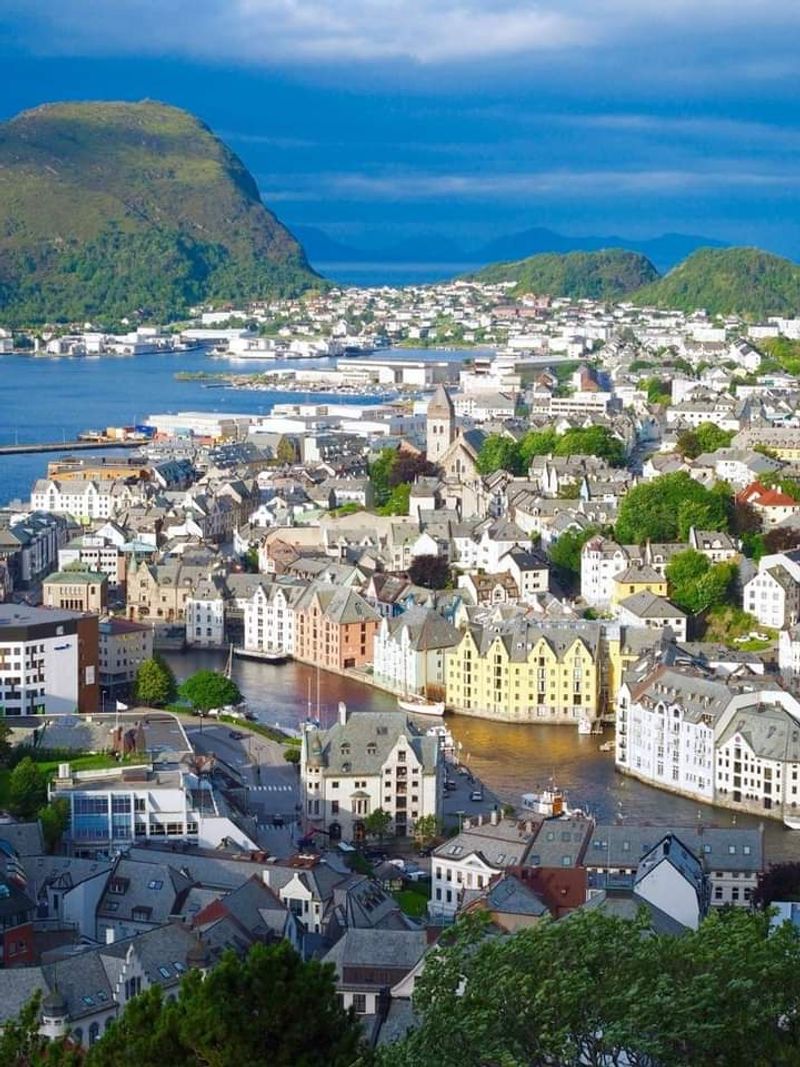
Norway slots in third place with approximately 1,388 annual working hours per employed person in 2024. For a country consistently ranked among the wealthiest in the world, that number challenges the old assumption that rich nations are built on endless labor.
The figures have been remarkably stable over time. The OECD recorded 1,420 hours in 2010, 1,399 in 2019, and 1,388 in 2024.
That steady, gradual decline speaks to a labor culture that values efficiency over sheer time spent at a desk.
Here is a figure worth sitting with: a Norwegian worker logs roughly 350 fewer hours annually than the OECD average. Over the course of a year, that gap adds up to more than eight full 40-hour working weeks of extra free time.
Norway combines strong employee protections, generous welfare provisions, and a high-output economy into a package that most countries can only admire from a distance. Working less here is not a sign of laziness, it is practically a national policy.
Sweden
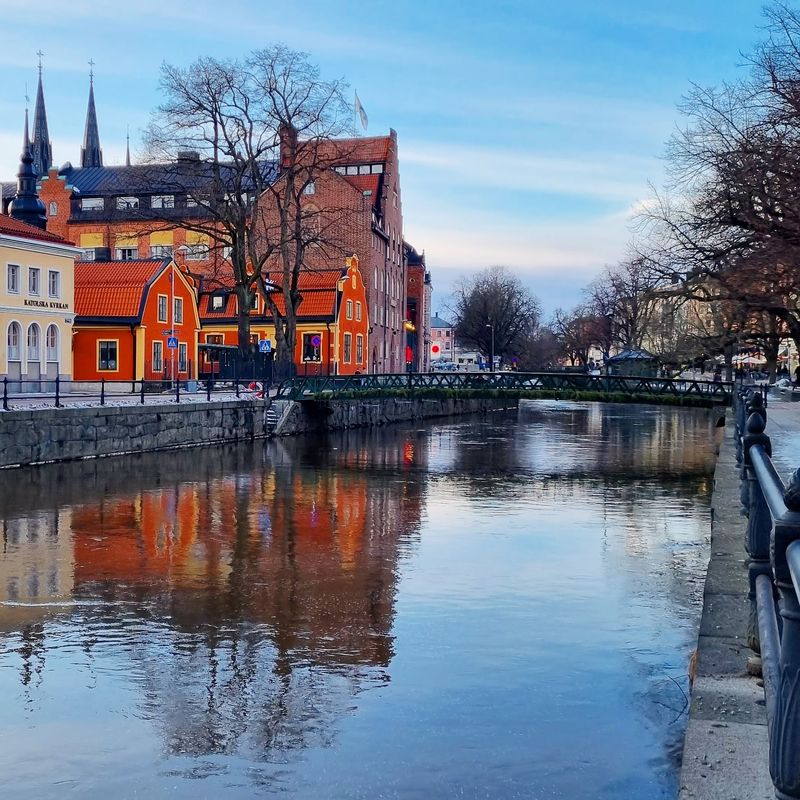
Sweden recorded 1,433 annual working hours per worker in 2024, continuing a gradual downward trend that stretches back years. In 2010, the figure sat at around 1,486 hours.
By 2019 it had eased to 1,451, and 2024 brought it down further still.
Sweden’s labor model is well-known for generous leave provisions and a cultural expectation that employees actually use their vacation time. The concept of separating work life from personal life is taken seriously here, not treated as a perk reserved for senior managers.
Still, placing Sweden this high on the list is not a statement that every Swede finishes work at noon. Part-time employment, parental leave, and workforce composition all shape the annual average.
What the data genuinely show is that, across an entire employed population, Swedes accumulate substantially fewer working hours than colleagues in most other OECD economies. For a country that also produces globally recognized companies, that balance is quite the achievement.
Austria
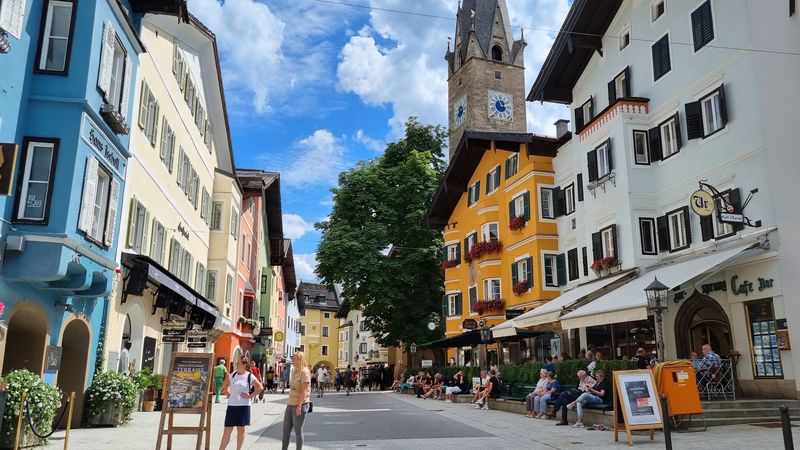
Just two hours behind Sweden sits Austria, recording 1,435 annual working hours per employed person in 2024. That slim gap between the two countries shows how tightly clustered some of these top performers really are.
The longer historical view is more dramatic. Austria clocked around 1,554 annual hours in 2010, meaning the country has shed roughly 120 hours of annual labor per worker over the past 14 years.
The pandemic caused a sharp temporary dip in 2020, but even after hours recovered, they settled well below pre-decade levels.
Austria also illustrates how differently neighboring European economies can operate. Workers in Czechia, right next door, averaged 1,805 annual hours in 2024, a gap of approximately 370 hours.
That is nearly ten extra 40-hour working weeks every year. Both countries are Central European, both are advanced economies, yet their working-hour cultures diverge sharply.
Austria has clearly decided that fewer hours at work does not mean fewer results, and the data seem to back that up.
Iceland

Iceland might surprise you here. Visitors often associate the island with eye-watering prices and a buzzing tourism industry that seems to run around the clock.
Yet Iceland recorded approximately 1,447 annual working hours per employed person in 2024, placing it comfortably among the OECD’s lowest-hour economies.
The country’s working-hour decline has been substantial. Annual hours stood at about 1,528 in 2010 and had dropped below 1,500 before the end of that decade.
A preliminary 2025 OECD figure of around 1,421 hours pushes Iceland even lower, which would place it very close to the top of this list if those numbers prove final.
Iceland also gained attention in the early 2020s for its large-scale government trials of four-day working weeks. Those experiments reported maintained or improved productivity alongside better worker wellbeing.
Whether the trials directly influenced the national average is debatable, but they reflect a cultural openness to questioning how work is structured. Iceland is a small country with big ideas about labor, and the hours data suggest those ideas are having a real effect.
Netherlands
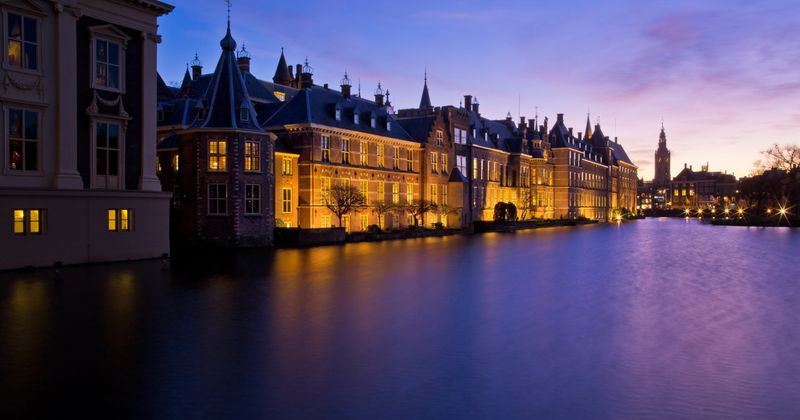
The Netherlands recorded 1,452 annual working hours per employed person in 2024, earning its place among the world’s shortest-hours economies. One key reason behind that figure is the structure of the Dutch labor market itself.
The Netherlands has one of the highest rates of part-time employment in the OECD. Because the annual-hours measure includes both full-time and part-time workers, countries where many people choose part-time arrangements naturally report lower averages.
That does not mean full-time Dutch employees are slacking, it means the workforce is genuinely diverse in its working patterns.
What is especially interesting is how stable the figure has been. The OECD’s comparable series shows approximately 1,430 hours in 2010 and 1,452 in 2024, a near-flat line over 14 years.
The Netherlands has essentially held its position near the bottom of the working-hours table without major swings in either direction. For a country that also runs one of Europe’s busiest ports and a sophisticated agricultural export sector, maintaining low annual hours is no small feat.
Luxembourg
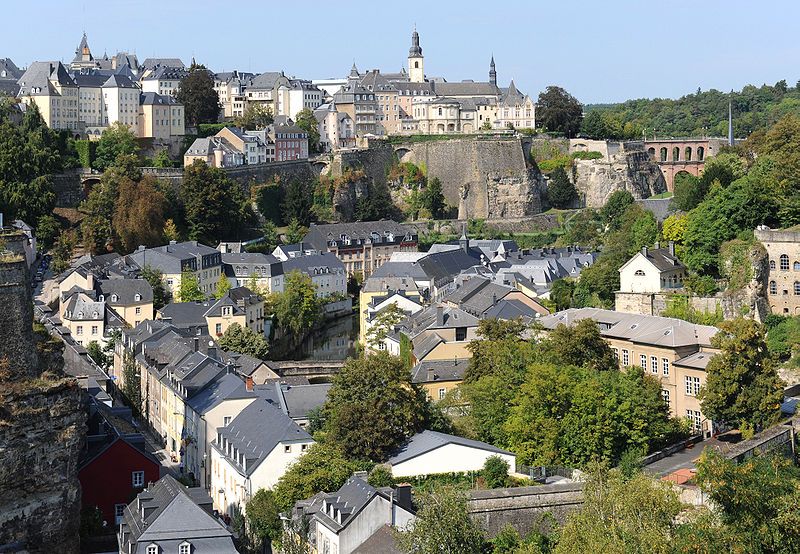
Tiny Luxembourg packs a significant economic punch. One of Europe’s wealthiest countries by GDP per capita, it recorded just 1,467 annual working hours per employed person in 2024.
That places it firmly among the OECD’s most time-efficient economies.
Annual hours here have fallen from approximately 1,521 in 2010 to below 1,500 in recent years, with a preliminary 2025 OECD figure of around 1,459. The downward trend mirrors what many of its European neighbors have experienced, though Luxembourg’s economic context is quite different from most.
Luxembourg’s workforce has some unusual characteristics worth noting. A large share of workers commute daily from neighboring France, Belgium, and Germany, and the economy leans heavily on financial services rather than manufacturing.
Those structural quirks can influence how national labor statistics look compared to larger, more diversified economies. Even accounting for that, Luxembourg’s placement on this list is a clear signal: enormous wealth and short working hours are not opposites.
Sometimes they go hand in hand, especially when productivity and smart economic organization take center stage.
Finland
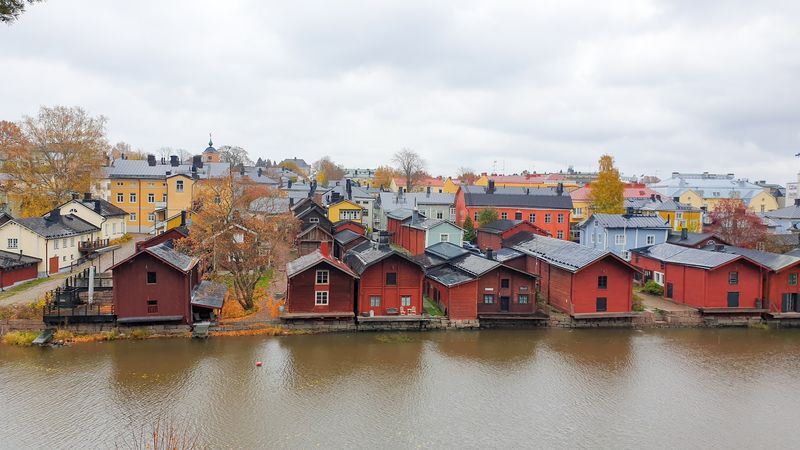
Finland just crosses the 1,500-hour mark, recording 1,502 annual working hours per employed person in 2024. It is the fifth Nordic country to appear on this list, which says something striking about the region as a whole.
The trend over time is clearly downward. Finnish workers averaged around 1,588 annual hours in 2010, that figure eased to approximately 1,536 by 2019, and a preliminary 2025 OECD estimate puts it at 1,492.
Finland is edging closer to the 1,400s, territory currently occupied by its Nordic neighbors Denmark and Norway.
All five Nordic countries, Denmark, Norway, Sweden, Iceland, and Finland, appear among the lowest-hour economies in the OECD dataset. Their labor-market rules and social systems differ in meaningful ways, but a shared cultural attitude toward work and rest seems to run through all of them.
Finland in particular has experimented with flexible working arrangements and has a strong tradition of employee autonomy. The data suggest those values translate into measurably fewer hours spent at work each year, without sacrificing economic performance.
France

France recorded 1,509 annual working hours per employed person in 2024. The country is famously associated with its statutory 35-hour workweek, a rule introduced in 2000 that still sparks debate inside and outside the country’s borders.
Using that legal limit alone to calculate how much France works would be misleading, though. The OECD’s annual-hours measure captures the full reality: overtime, second jobs, self-employed workers, and part-time arrangements all count, while vacations, public holidays, and leave periods are subtracted.
The result is a much richer picture than any single legal threshold can provide.
France still lands near the bottom of the global working-hours table, and a preliminary 2025 OECD figure of approximately 1,498 hours suggests it may soon dip below the 1,500 mark officially. French workers also benefit from some of the most generous statutory vacation entitlements in the world, typically five weeks of paid leave per year.
Those weeks off directly reduce the annual total, helping explain why a country known for its productive economy also consistently ranks among those where workers spend relatively little time on the clock.
Switzerland
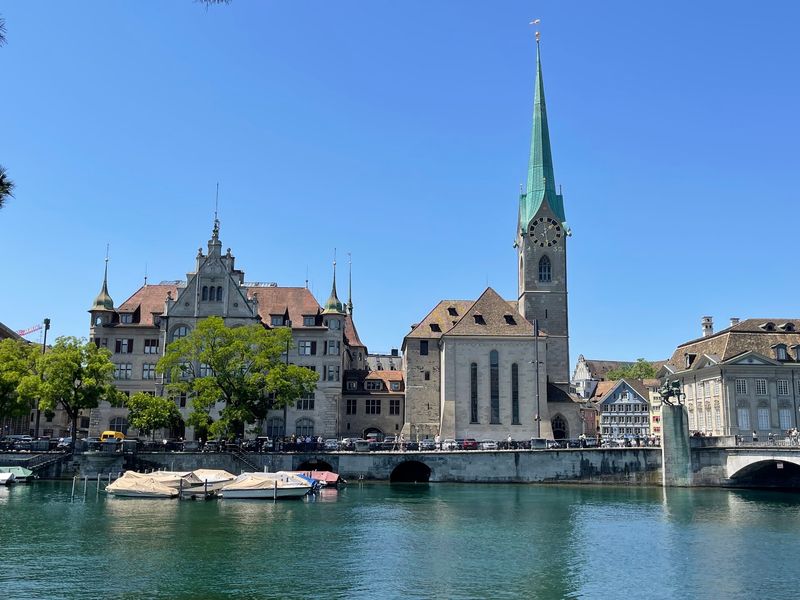
Switzerland recorded 1,519 annual working hours per employed person in 2024. For a country famous for precision, high wages, and some of the world’s most productive corporations, that number is almost poetic in its efficiency.
The decline over time has been steady and significant. OECD data place Swiss annual hours at approximately 1,611 in 2010, 1,549 in 2019, and 1,528 in 2023, before settling at 1,519 in 2024.
That represents a drop of roughly 90 hours per worker annually since the start of the 2010s.
Despite working fewer hours with each passing year, Switzerland continues to maintain one of the highest living standards on the planet. Its workers are among the best-paid in the OECD, and the economy consistently ranks near the top of global competitiveness indexes.
Switzerland quietly dismantles the argument that prosperity requires exhaustion. The country’s position on this list is not a fluke or a quirk of data collection.
It reflects a labor market that has, over many years, shifted toward doing more with less time, and succeeding at it.
United Kingdom

The United Kingdom recorded approximately 1,538 annual working hours per employed person in 2024, sitting around 200 hours below the OECD-wide average. That places it comfortably in the lower tier of working-hours countries, even if it does not grab the same headlines as its Nordic counterparts.
British annual working time has been relatively stable outside the pandemic years. The OECD reports roughly 1,507 hours in 2010, 1,537 in 2019, and 1,538 in 2024, a nearly flat trajectory over 14 years.
Unlike Germany or Finland, the UK has not seen a clear downward trend over the same period.
The UK’s placement stands out partly because it sits outside the cluster of continental European economies most often associated with short working hours. Britain has its own distinct labor traditions, including a historically longer-hours culture in finance and professional services.
Yet the national average, which includes everyone from part-time retail workers to full-time bankers, lands well below what many people might expect. The data serve as a useful reminder that averages can hide a lot of variation within a single country’s workforce.
Belgium

Belgium records 1,583 annual working hours per employed person in 2024, placing it 13th among the lowest-hour countries in the OECD dataset. What makes Belgium stand out on this list is not dramatic change but remarkable consistency.
Belgian workers averaged around 1,578 hours in 2010 and approximately 1,587 just before the pandemic in 2019. The 2024 result sits close to both figures, meaning Belgium has held its position with very little movement over 14 years.
That stability contrasts sharply with countries like Germany or Finland, where annual working time has fallen more noticeably across the same period.
Belgium also made headlines in 2022 when it became one of the first European countries to give workers a legal right to a four-day workweek without a reduction in pay. Whether that policy will eventually push annual hours lower remains to be seen in future OECD data.
For now, Belgium sits comfortably below the OECD average and significantly below countries such as the United States, Poland, Greece, and South Korea. Quiet and steady, Belgium does not always get credit for its relaxed working culture, but the numbers tell the story clearly.
Latvia
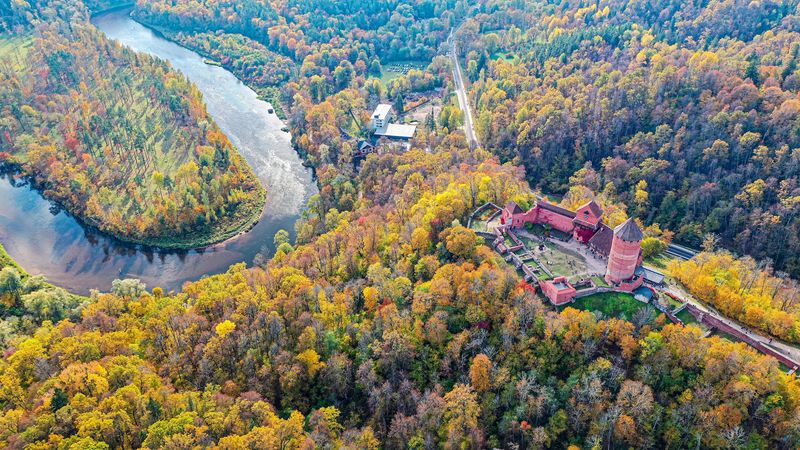
Latvia closes out this list with 1,611 annual working hours per employed person in 2024. There is a small statistical footnote here: Estonia recorded the exact same figure in 2024, making the cutoff technically a tie.
Latvia earns its spot as the final entry, but Estonia deserves an honorable mention for matching it precisely.
Latvia’s longer-term trajectory is genuinely impressive. The OECD placed its annual average at approximately 1,692 hours in 2010 and 1,661 in 2019, before it fell to around 1,600 in recent years.
A preliminary 2025 figure of roughly 1,588 hours suggests the downward trend is continuing.
Latvia works more annual hours than the Western European leaders at the top of this list, but it remains well below many other OECD economies. Countries like Mexico, Costa Rica, and South Korea regularly exceed 2,000 annual hours per worker, making Latvia’s position look notably relaxed by comparison.
For a Baltic nation that has undergone significant economic transformation since the 1990s, landing among the world’s shortest-working-hours countries is a sign of how far its labor market has evolved over a relatively short period of time.
Share this story