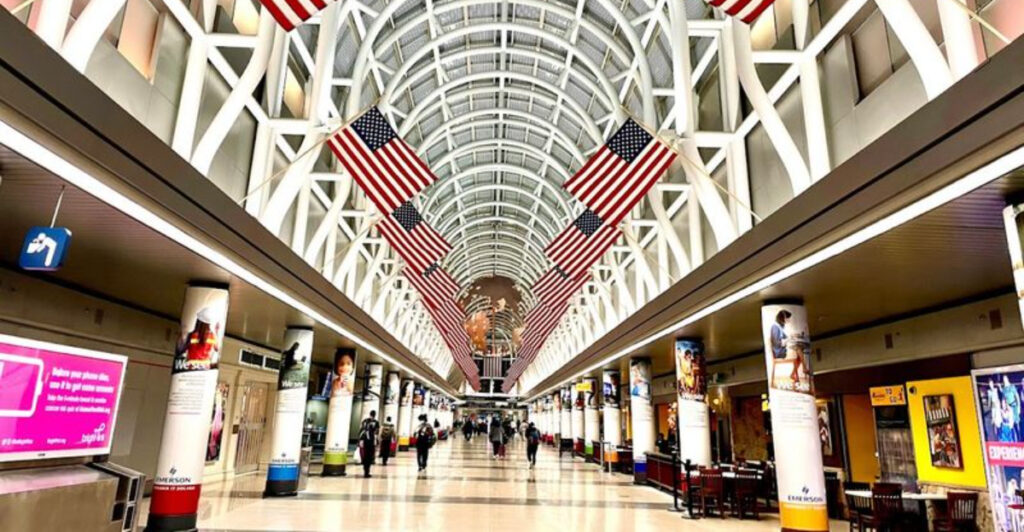
Airports are the beating heart of global travel, and some of them are so busy they feel like entire cities. Every year, hundreds of millions of passengers rush through terminals, grab coffee, sprint to gates, and connect to flights that crisscross the planet.
The world’s busiest airports shape how people travel, where airlines fly, and how countries connect to the global economy. Get ready to explore the 15 airports that handled the most passengers in 2025, from a Georgia giant that refuses to give up its crown to Asian hubs bouncing back stronger than ever.
Hartsfield-Jackson Atlanta International Airport, Atlanta, United States
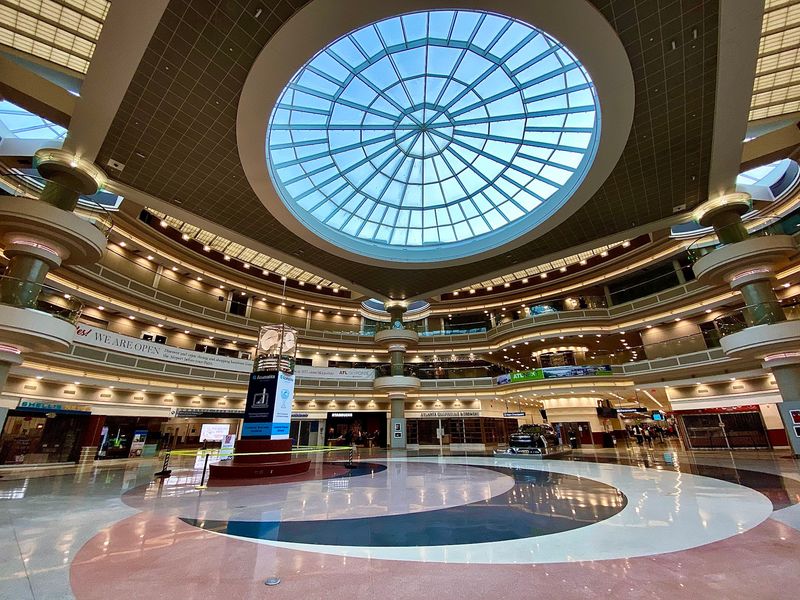
Over 106 million passengers walked through Atlanta’s doors in 2025, and no other airport on Earth came close to crossing that 100-million mark. Hartsfield-Jackson has held the title of world’s busiest airport for decades, and it is not giving it up without a fight.
Even with a 1.6% dip from 2024, Atlanta stayed comfortably ahead of every competitor.
The secret sauce is geography. Sitting smack in the middle of the southeastern United States, Atlanta acts as a giant connector between cities across the east, south, and beyond.
Domestic travelers make up the overwhelming majority of its traffic, which is a pattern shared by most top U.S. airports.
Atlanta is also a powerhouse connecting hub, funneling passengers onto international routes after they arrive from smaller American cities. Interestingly, 2025 traffic was still 3.8% below Atlanta’s 2019 peak, meaning the airport’s best days may still be ahead.
No single airport defines American aviation quite like this one.
Dubai International Airport, Dubai, United Arab Emirates
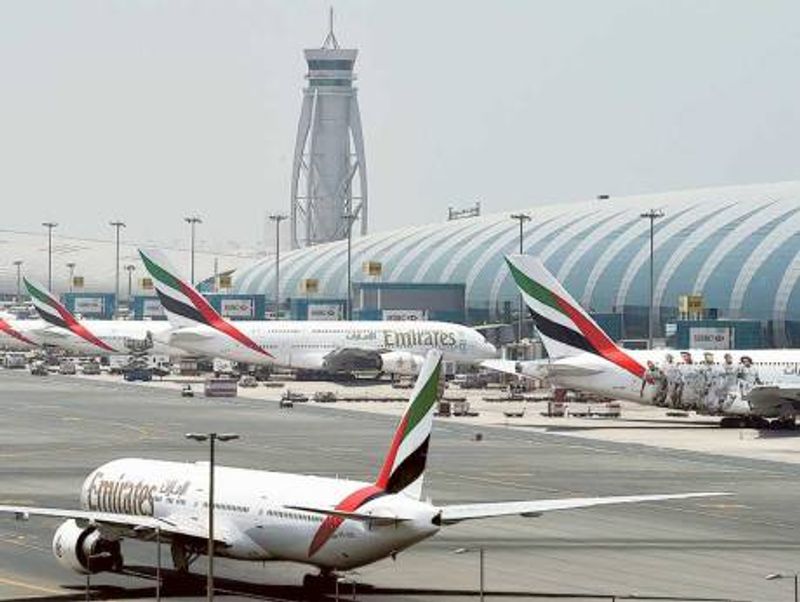
Picture a crossroads between three continents, and you have Dubai International Airport in a nutshell. Handling a record 95.2 million passengers in 2025, Dubai secured second place globally while holding onto its undisputed title as the world’s busiest airport for international travelers.
Almost every single passenger here is flying internationally, which sets it apart from most rivals.
Emirates airline is the engine behind much of this traffic, operating one of the broadest international networks on the planet from this single base. Dubai’s location between Europe, Asia, and Africa makes it a natural layover point for passengers flying in almost any direction.
Traffic grew 3.1% in 2025 and sits 10.2% above pre-pandemic levels.
The gap between Dubai and Atlanta narrowed to roughly 11 million passengers in 2025, the closest it has been in years. If current growth trends continue, this rivalry will only get more exciting.
For aviation watchers, Dubai vs. Atlanta is the matchup worth following closely.
Tokyo Haneda Airport, Tokyo, Japan
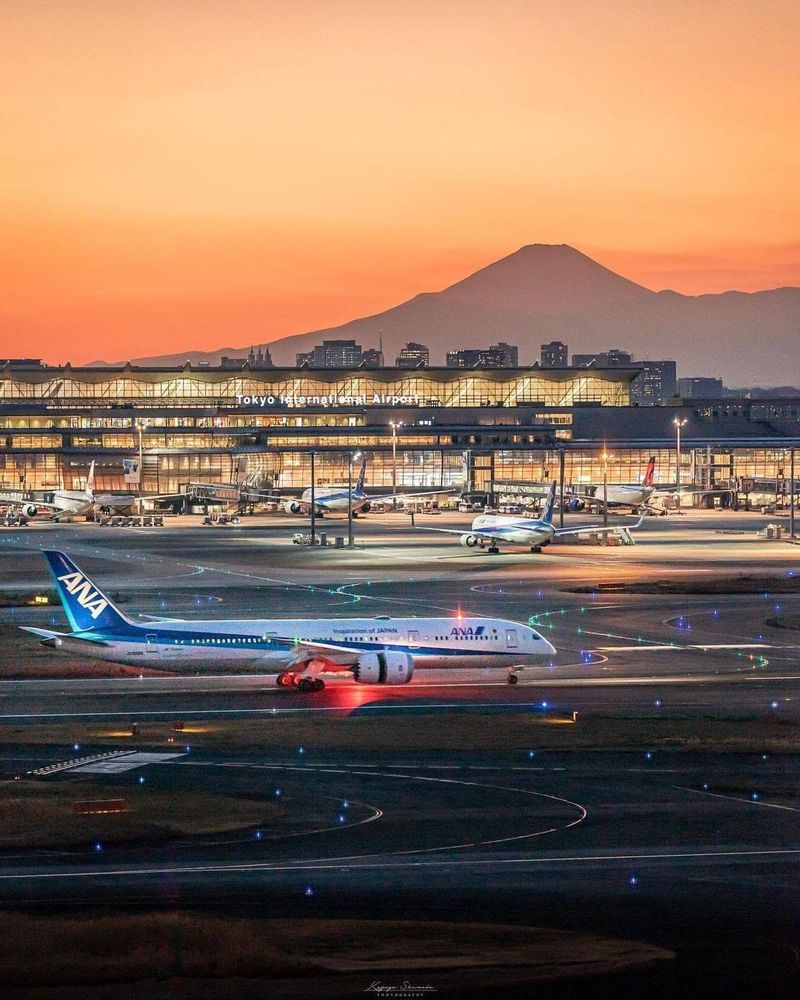
Haneda jumped from fourth to third place in 2025, and the numbers tell a compelling story. Nearly 91.7 million passengers passed through Tokyo’s closer, more convenient airport, representing a strong 6.7% year-over-year increase.
That kind of growth far outpaced both Atlanta and Dubai, signaling that Asia’s aviation comeback is very much real.
What makes Haneda genuinely fascinating is its double life. It runs one of Japan’s largest domestic networks while simultaneously growing into a serious international hub.
Most huge airports specialize in one or the other, but Haneda manages both with impressive efficiency.
Traffic is now 7.2% above 2019 levels, and the airport has climbed from fifth place globally before the pandemic to third today. For travelers visiting Tokyo, Haneda also wins on pure convenience, sitting much closer to the city center than rival Narita Airport.
Fun fact: Haneda opened in 1931, making it one of Asia’s oldest airports still operating at massive scale today.
Dallas Fort Worth International Airport, Texas, United States
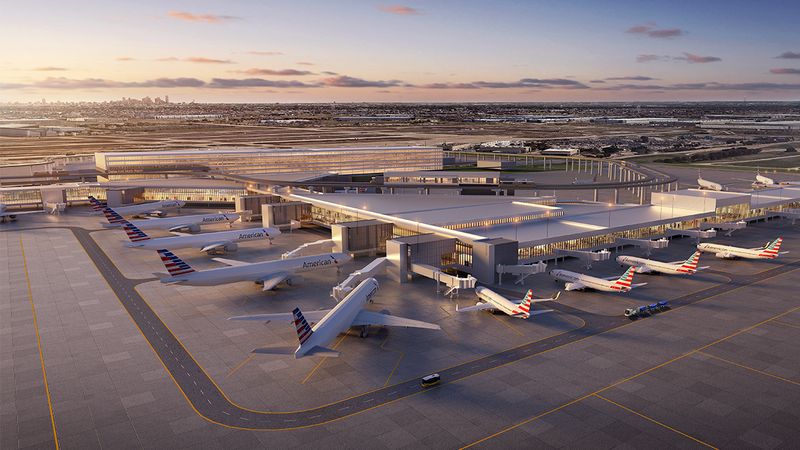
Everything really is bigger in Texas, and Dallas Fort Worth Airport is no exception. DFW slipped one spot to fourth after handling approximately 85.7 million passengers in 2025, with traffic falling 2.5% from the previous year.
But zoom out a little, and the long-term picture looks far more impressive.
Compared with 2019, DFW’s passenger volumes are up a remarkable 14.1%. Back then, the airport ranked only 10th globally.
Six years later it is firmly in the top five, a climb that reflects both the explosive growth of American Airlines operations and the booming population of the Dallas-Fort Worth metro area.
The airport’s central U.S. location makes it incredibly effective for connecting east-to-west domestic routes, while also feeding a growing number of international destinations. DFW is also physically enormous, with five terminals spread across a campus larger than Manhattan.
If you have ever had a tight connection here, you already know exactly how big that campus feels when you are sprinting for a gate.
Shanghai Pudong International Airport, Shanghai, China
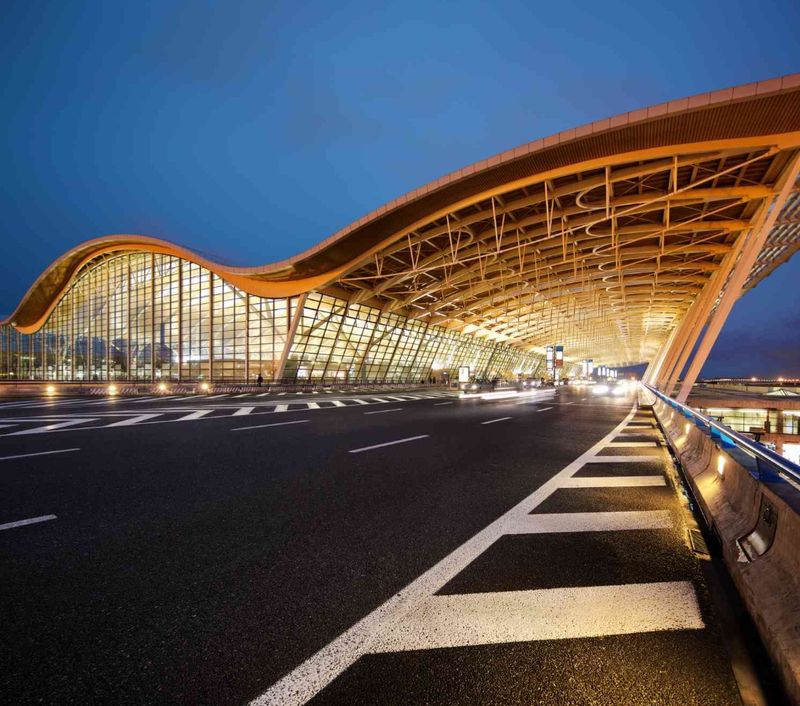
The biggest mover in the entire top 10 was not a U.S. giant or a Middle Eastern hub. Shanghai Pudong rocketed from 10th place in 2024 all the way to fifth in 2025, handling just under 85 million passengers and growing 10.7% in a single year.
That kind of leap is almost unheard of at this scale.
Three forces drove the surge: recovering international travel, relaxed visa policies, and an expanded global route network as China’s aviation sector continued reopening after years of pandemic-related restrictions. Pudong’s traffic is now 11.6% above its 2019 level, meaning the airport has fully recovered and then some.
Shanghai’s rise is one of the clearest signs that the geographic center of global aviation is shifting back toward Asia-Pacific. For years after the pandemic, U.S. airports dominated the upper rankings simply because domestic travel recovered faster.
Now Chinese airports are making up for lost time at a breathtaking pace. Pudong’s story is far from over.
Chicago O’Hare International Airport, Chicago, United States
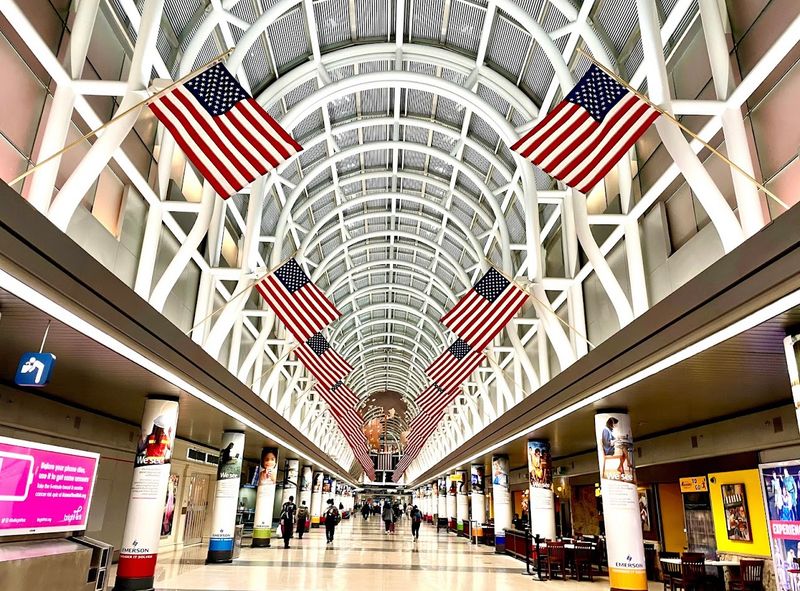
Sixth place sounds modest until you realize O’Hare finished just 138,000 passengers behind fifth-place Shanghai Pudong out of nearly 85 million handled by each airport. That is a margin of roughly 0.16%, making this one of the tightest finishes anywhere in the global top 10.
O’Hare ended 2025 with approximately 84.86 million passengers, up a solid 6% year over year.
Passenger volume is now 0.2% above its 2019 level, meaning O’Hare has essentially fully recovered from the pandemic. But here is the twist: while Atlanta won on passenger count, Chicago claimed a different world title entirely.
ACI ranked O’Hare No. 1 globally for aircraft movements in 2025, with 857,392 takeoffs and landings, overtaking Atlanta in that category.
More flights, fewer passengers per flight on average, which reflects O’Hare’s role as a hub for shorter domestic routes. The airport’s two main carriers, United and American, both operate extensive connecting banks here.
Chicago may not wear the overall crown, but it is undeniably one of aviation’s most essential engines.
London Heathrow Airport, London, United Kingdom
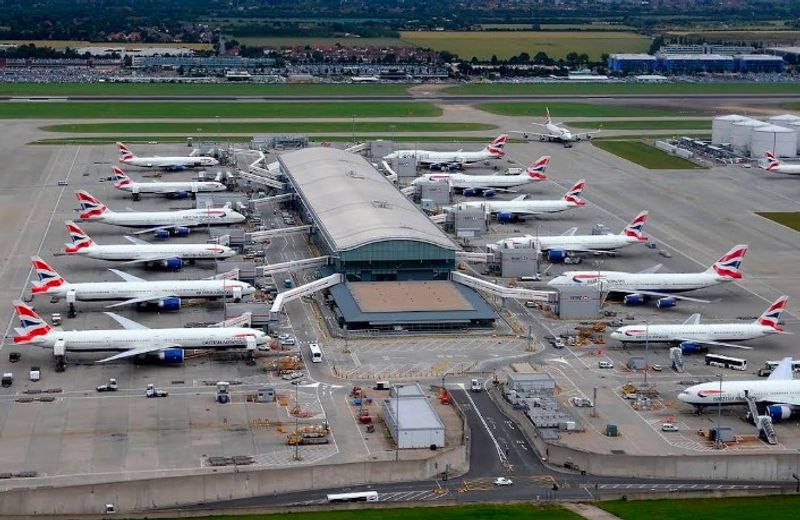
Few airports carry the same sense of history and global importance as London Heathrow. Handling about 84.5 million passengers in 2025, Heathrow placed seventh worldwide for total traffic.
Growth was a modest 0.7%, reflecting the reality that this airport is running very close to its physical limits.
Where Heathrow truly shines is in international passenger rankings. ACI placed it second in the world for international-only traffic in 2025, behind only Dubai.
That means London remains one of the most important intercontinental gateways on the planet, connecting the United Kingdom to virtually every corner of the globe.
Traffic is 4.4% above 2019 levels, which sounds healthy until you compare it to the double-digit growth posted by Asian rivals. Runway and slot capacity are heavily utilized, leaving Heathrow with far less room to expand quickly than newer mega-airports in Asia and the Middle East.
The long-running debate over a third runway has never felt more relevant. For now, Heathrow does extraordinary things within tight constraints.
Istanbul Airport, Istanbul, Turkiye
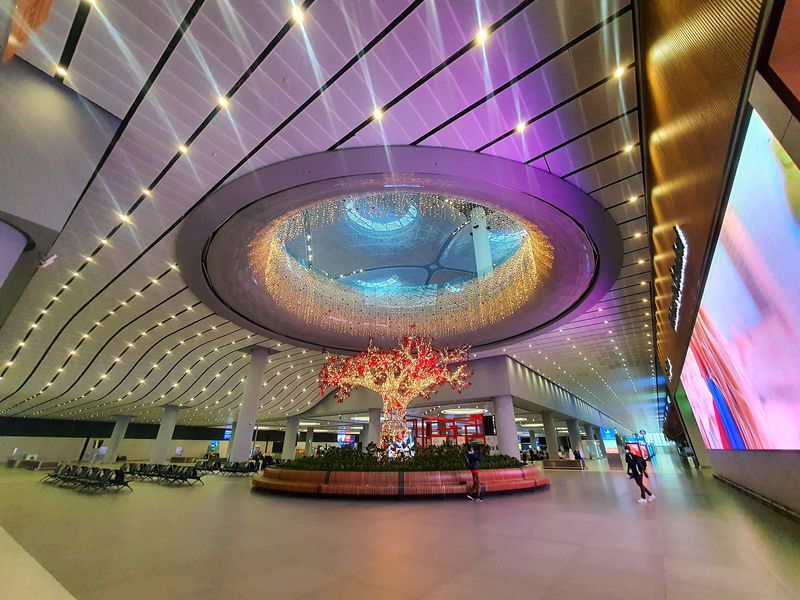
Forty-four thousand passengers. That is all that separated Istanbul Airport from seventh-place Heathrow in 2025, out of more than 84 million passengers handled by each.
Istanbul finished eighth with approximately 84.4 million passengers, growing 5.5% in a year. But the bigger story is the airport’s jaw-dropping long-term trajectory.
Compared with 2019, Istanbul’s passenger traffic has climbed an astonishing 61.8%. No other airport in the current top 15 comes close to that growth rate.
Part of the explanation is simple: the current Istanbul Airport is a relatively new mega-hub that opened in 2018 and was specifically designed to handle enormous connecting volumes.
Its geographic position is almost perfectly calibrated for global connecting traffic, linking Europe with Asia, Africa, and the Middle East in a single convenient stop. Turkish Airlines operates one of the widest international route networks of any airline in the world, and Istanbul is its home.
Among today’s largest airports, few have reshaped their global standing as dramatically or as quickly as this one has.
Guangzhou Baiyun International Airport, Guangzhou, China
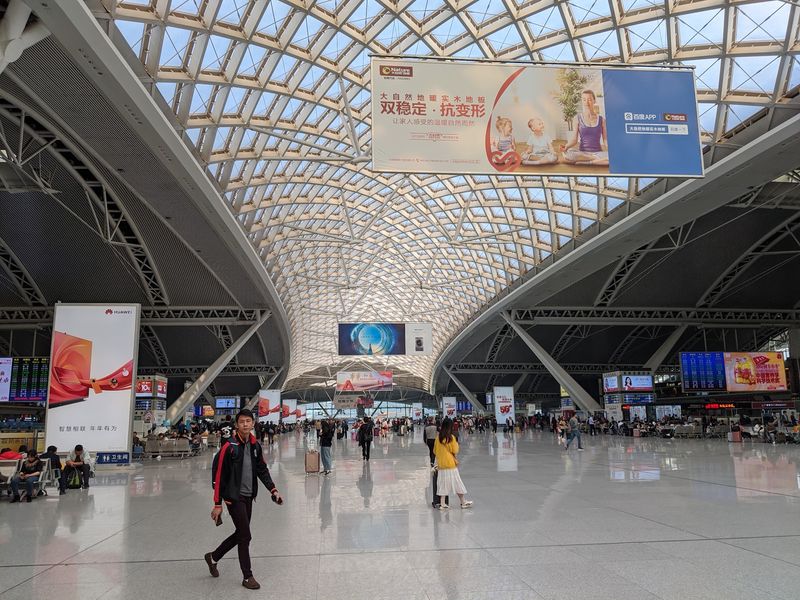
Guangzhou Baiyun has one of the wildest rollercoaster stories in modern aviation history. During the pandemic in 2020, it briefly became the world’s busiest airport as international traffic collapsed everywhere else.
Then it tumbled all the way to 57th place globally in 2022 as restrictions hit Chinese aviation hard. By 2025, it was back at No. 9.
The airport handled approximately 83.6 million passengers in 2025, up 9.5% in a single year and 13.9% above its 2019 level. ACI specifically highlighted Guangzhou as a standout example of China’s aviation recovery speed and scale.
Alongside Shanghai Pudong’s equally impressive rebound, it helped make Asia-Pacific the most dynamic region in the entire 2025 ranking.
Guangzhou sits in the Pearl River Delta, one of the most densely populated and economically active regions on Earth. The airport serves as a key gateway for southern China and handles a strong mix of domestic routes and growing international connections.
Its story proves that aviation rankings can shift dramatically in just a few years when the right conditions align.
Denver International Airport, Denver, United States
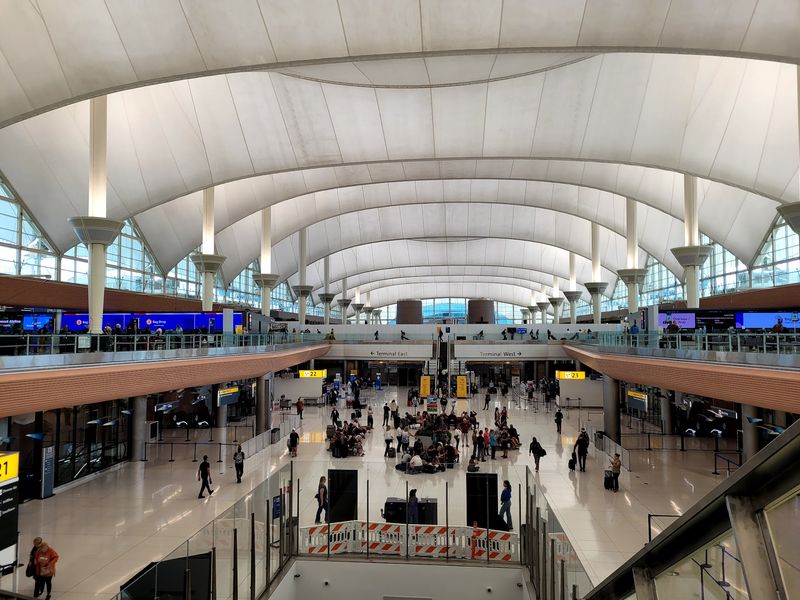
Denver’s famous tent-like roof, designed to echo the Rocky Mountains, is one of the most recognizable airport silhouettes in the world. The airport rounded out the global top 10 with approximately 82.4 million passengers in 2025, though its year-over-year growth was essentially flat at just 0.1%.
That near-standstill caused Denver to slip from sixth to tenth as Asian airports expanded at a much faster pace.
Zoom out to a longer timeframe, though, and Denver’s growth story looks genuinely strong. Passenger volumes were 19.4% above 2019 levels, one of the most impressive long-term gains among the entire top 10.
That kind of sustained growth reflects the booming population of Colorado and the surrounding Mountain West region.
Denver’s central position in the continental United States makes it a natural bridge between eastern and western cities, and it handles an enormous volume of domestic connecting traffic as a result. Unlike some of its U.S. rivals, Denver has invested heavily in expanding terminal and gate capacity to keep pace with demand.
Its flat growth in 2025 looks more like a pause than a permanent plateau.
Indira Gandhi International Airport, Delhi, India
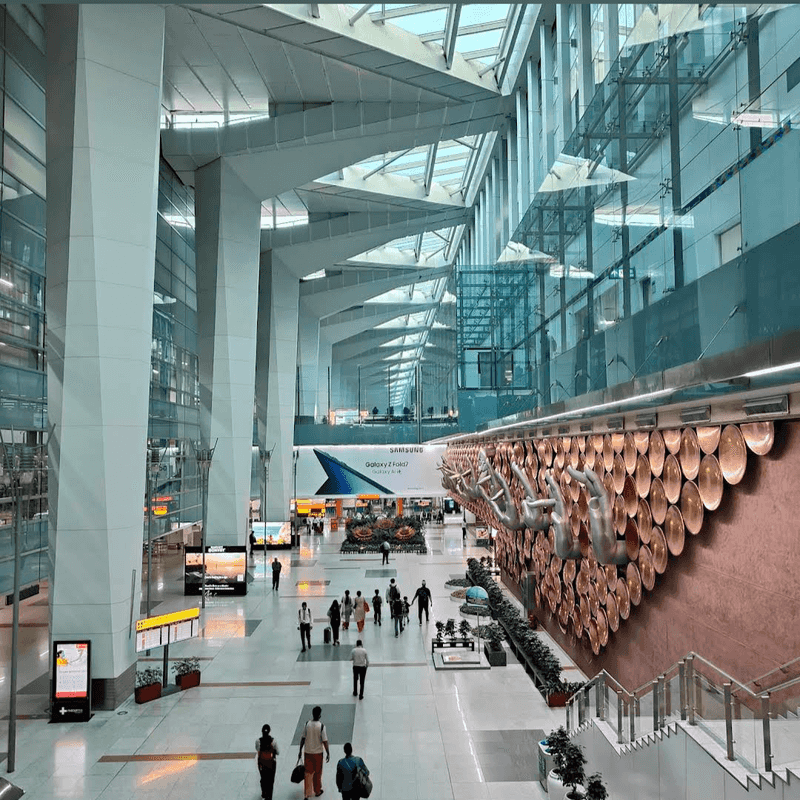
Delhi came agonizingly close to the top 10, finishing 11th with approximately 78.1 million passengers in 2025. Growth was a quiet 0.4% year over year, but the six-year trajectory tells a much more exciting story.
Traffic is 14.1% above 2019 levels, when Delhi ranked 17th worldwide. Climbing six spots in six years is a serious achievement.
India’s enormous domestic aviation market gives Indira Gandhi Airport a rock-solid passenger base that keeps growing as more Indians take to the skies for the first time. Low-cost carriers have played a huge role in making air travel accessible to a much wider slice of India’s 1.4-billion population.
International connectivity is also expanding steadily alongside the country’s wider economic rise.
The airport’s infrastructure has been under constant pressure to keep up with soaring demand, and capacity upgrades have been ongoing for years. A new terminal is in development to handle future growth.
Delhi’s position on the global aviation map will only become more important as India continues its trajectory as one of the world’s fastest-growing aviation markets. The best is likely still ahead.
Incheon International Airport, Seoul, South Korea
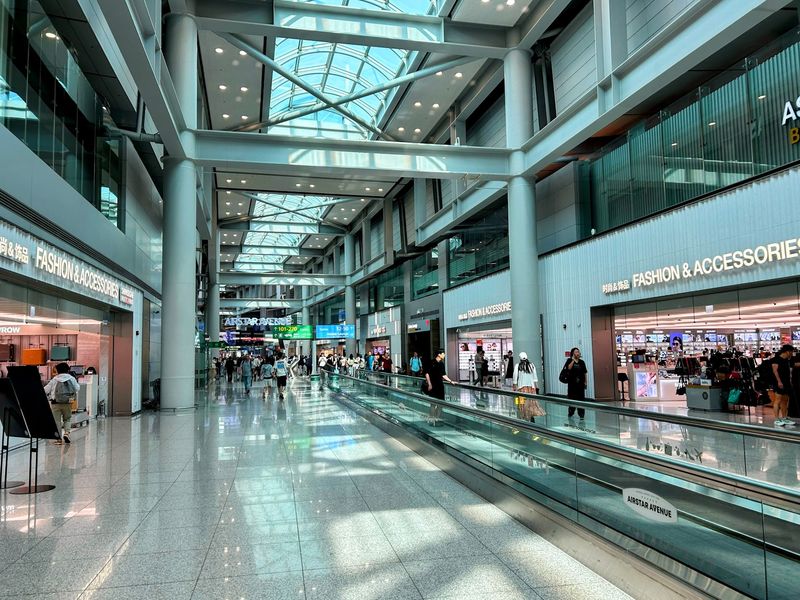
Seoul’s Incheon Airport has a reputation that goes well beyond raw passenger numbers. Consistently rated among the world’s best airports for cleanliness, efficiency, and passenger experience, it handled approximately 74.1 million passengers in 2025, placing it 12th globally.
Traffic grew 4.1% during the year and ended almost exactly 4.1% above its 2019 level too, a tidy coincidence in the data.
What truly sets Incheon apart from most high-ranked airports is its passenger mix. ACI ranked it third in the world for international-only traffic in 2025, behind Dubai and Heathrow.
While U.S. airports rely heavily on domestic routes, Incheon runs almost entirely on international travelers, making it one of the world’s premier intercontinental connecting points.
There is already a notable 2026 development worth mentioning. Preliminary first-half data suggests Incheon moved ahead of both Dubai and Heathrow in international passenger traffic amid disruptions affecting Middle Eastern aviation.
Those figures are not part of this full-year 2025 ranking and remain subject to final validation, but the direction of travel is clear. Incheon is quietly becoming one of aviation’s most important hubs.
Los Angeles International Airport, Los Angeles, United States

LAX occupies a unique position among major U.S. airports because it looks noticeably different on the inside of the data. While Atlanta, Chicago, and Dallas Fort Worth draw 80% to 95% of their traffic from domestic routes, Los Angeles gets roughly 32% of its passengers from international flights.
That makes LAX far more of a genuine global gateway than most of its American rivals.
The airport handled approximately 73.7 million passengers in 2025, down 3.8% from the previous year. That decline pushed it to 13th place globally.
The longer-term comparison is even more striking. LAX ranked third worldwide in 2019, but 2025 traffic was still 16.3% below that level, leaving it further from its pre-pandemic peak than almost any other airport in this top 15.
Major infrastructure upgrades are underway at LAX, including a new automated people mover system connecting the terminals to nearby transit stations. The airport is also preparing for the 2028 Los Angeles Olympics, which is expected to generate a significant passenger surge.
If LAX can close even part of that 16% gap before the Games begin, it will be a remarkable recovery story.
Paris Charles de Gaulle Airport, Paris, France
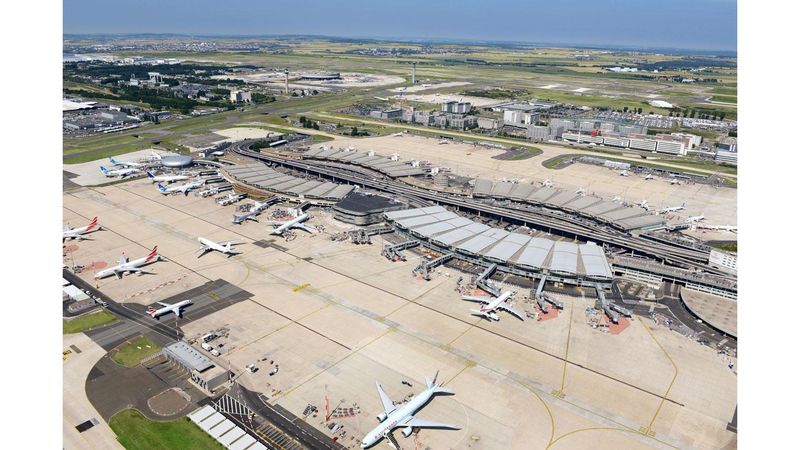
Charles de Gaulle Airport has a personality all its own, starting with its famously futuristic circular Terminal 1, which opened in 1974 and still looks like something from a science fiction film. The airport handled just over 72 million passengers in 2025, keeping Paris among the world’s top intercontinental gateways.
Traffic grew 2.5% year over year, a steady if unspectacular pace.
The longer-term comparison reveals a tougher reality. CDG remains 5.4% below its 2019 passenger volume and has slipped from ninth place globally before the pandemic to 14th in 2025.
European airports in mature markets face real structural challenges when it comes to rapid expansion, from infrastructure costs to environmental regulations and community opposition to growth.
Air France uses CDG as its primary hub, connecting Paris to an extensive network of European, transatlantic, and African routes. The airport’s enormous international operation keeps it relevant as a top-tier global connecting point even as its overall ranking has softened.
Paris remains a city the world wants to visit, and CDG remains the door through which most of those visitors arrive. Its recovery still has room to run.
Beijing Capital International Airport, Beijing, China
Beijing Capital’s current ranking tells only half the story. In 2019, this airport was the second-busiest in the entire world.
Six years later, 2025 traffic remains a striking 29.3% below that level, a decline unlike anything seen at any other airport in this top 15. Understanding why requires knowing about one major change to Beijing’s aviation landscape.
The opening of Beijing Daxing International Airport gave China’s capital a second enormous commercial hub, splitting traffic that previously flowed entirely through Capital. That redistribution, combined with pandemic-era restrictions that hit Chinese international travel particularly hard, explains much of the dramatic volume difference.
Still, Beijing Capital grew 5% in 2025 and climbed from 16th to 15th globally, a sign that momentum is returning.
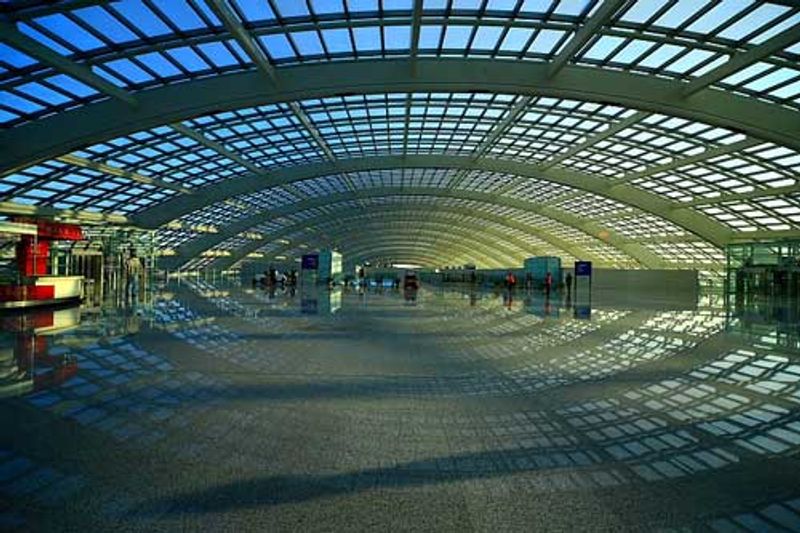
Terminal 3 at Beijing Capital, designed by architect Norman Foster and opened for the 2008 Olympics, remains one of the largest airport buildings in the world. Its distinctive red and gold roof structure draws on traditional Chinese architectural themes at a breathtaking scale.
As China’s international travel continues recovering, Beijing Capital’s trajectory should keep heading in a more encouraging direction through 2026 and beyond.
Share this story