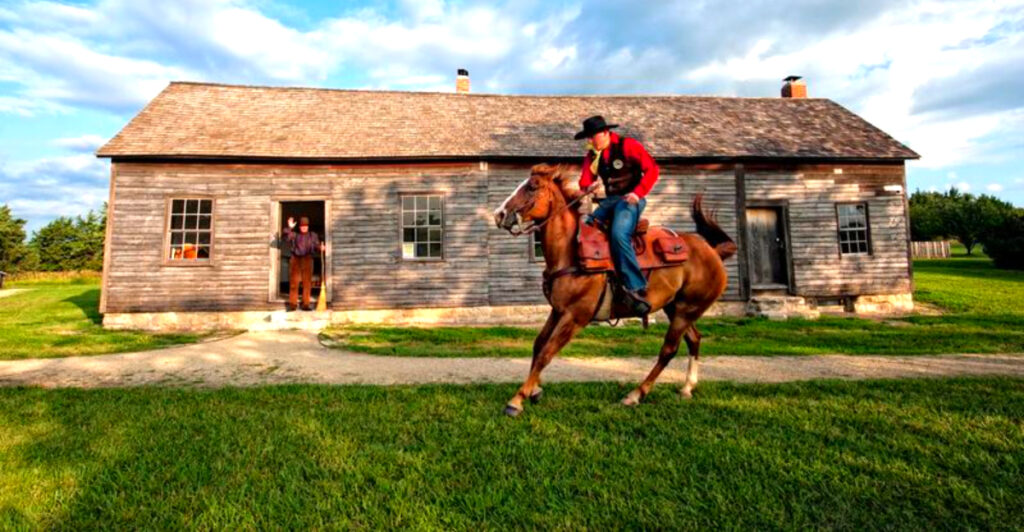
Kansas has a Wild West reputation built on cattle drives and dusty main streets, but the real stories are hiding in plain sight. Old hotels, stage stops, stone stores, and territorial meeting halls hold some of the most gripping chapters of frontier history anywhere in the country.
A restaurant where church services once competed with trade, a hotel sitting above a hidden underground world, a log cabin tied to one of the most explosive political conflicts in American history. These 13 places are not just pretty old buildings.
Each one carries a specific, documented story that changed lives, shaped Kansas, and in some cases, helped push an entire nation toward a turning point. Read on, because Kansas history is a lot wilder than most people expect.
1. Hays House 1857 Restaurant & Tavern, Council Grove, Kansas
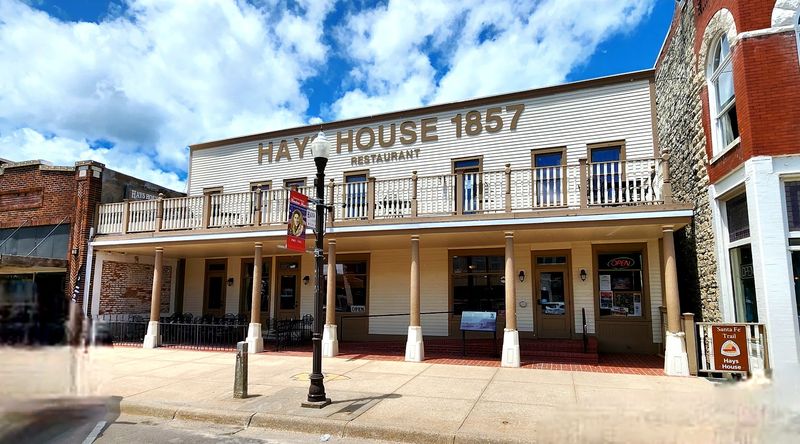
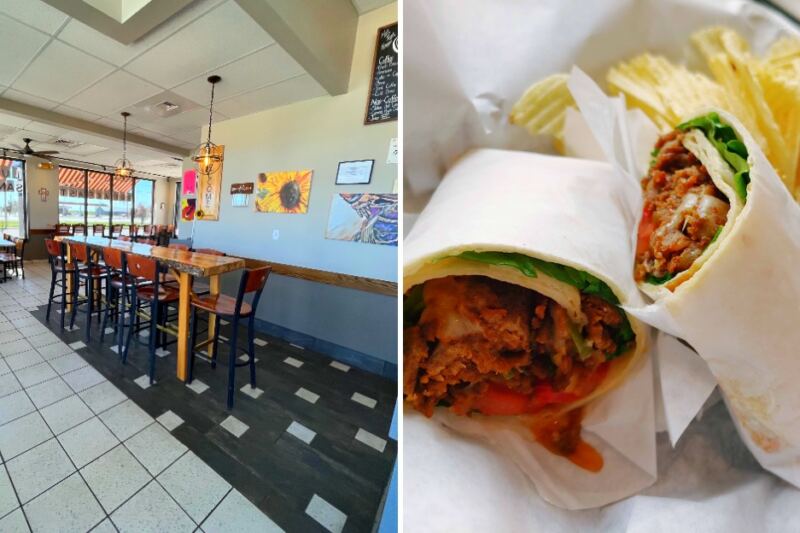
Few restaurants in the United States can honestly claim to have been operating since before the Civil War, but Hays House has been feeding people since 1857. Seth Hays, the great-grandson of Daniel Boone, built this Council Grove landmark as a trading post, courthouse, mail stop, and community hall rolled into one.
On Sundays, the bottles were covered with a sheet so the building could double as a church. A fire in 1886 damaged the roof, but locals formed a bucket brigade and saved the structure.
Scorched hardwood beams are still visible in the Seth Room today.
The cellar, once a dirt-floored root cellar for storing food, now hosts banquets. A 2019 ownership change kept the traditions intact.
Visitors can order chicken fried steak while sitting inside a genuine piece of Santa Fe Trail history.
2. The Historic Wolf Hotel and Events Center, Ellinwood, Kansas
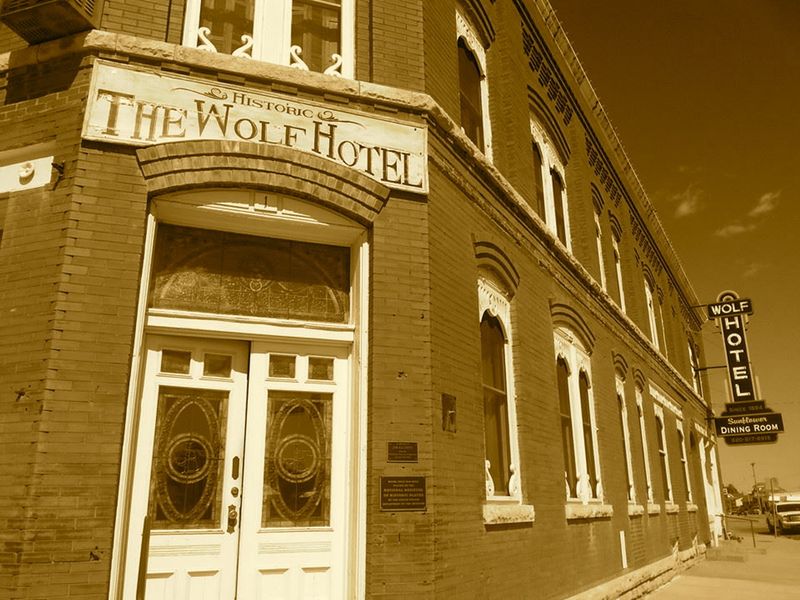
John Wolf built this Victorian hotel in 1894 right across from the Atchison, Topeka and Santa Fe Railroad station, and the building has been surprising visitors ever since. The real draw is what lies beneath the street: an extensive underground tunnel system originally built to connect main street businesses.
Those underground passages once housed a bathhouse, a barbershop, and retail spaces. During Prohibition, they served other purposes that locals preferred not to advertise too loudly.
Today, guided tunnel tours recreate spaces like Tom Drake’s Harness Shop and Jung’s Barber Shop.
Owner Chris McCord began restoring the property in 2013 after years of varied use, including a stint as an antique store. The hotel now offers five period-decorated rooms with modern conveniences, plus comedy shows and escape rooms for visitors who want their history with a side of entertainment.
3. Midland Railroad Hotel & Restaurant, Wilson, Kansas
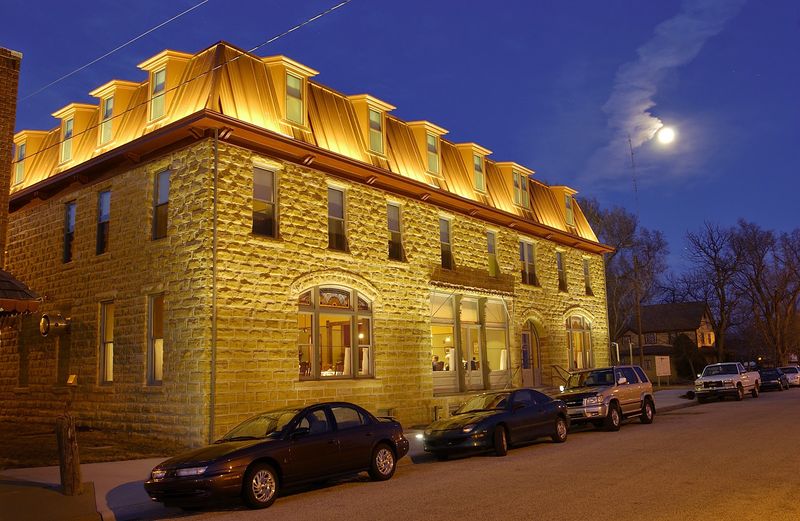
Built in 1899 as the Power Hotel, this three-story limestone building in Wilson was designed to impress railroad passengers rolling between Kansas City and Denver on the Union Pacific line. Its basement Sample Room was where traveling salesmen spread out their goods for local buyers.
A fire gutted the building in 1902, but it came back even grander. The Depression brought creative solutions, including chickens reportedly kept on the third floor to supply the restaurant kitchen.
The hotel also appeared as a filming location in the 1973 movie “Paper Moon.”
After closing in 1988, the Wilson Foundation raised $3.2 million to restore it to 1920s style. Today the hotel offers 28 Mission-style rooms, a complimentary European breakfast, and dining at the Sample Room Tavern.
The 1906 stable next door became “The Barn,” now an event venue.
4. Historic Elgin Hotel, Marion, Kansas
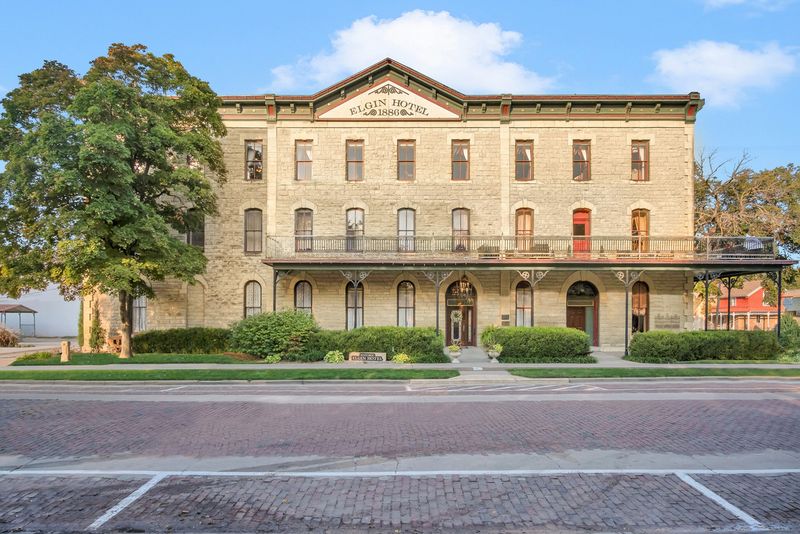
When outside investors could not be found to fund a grand hotel for Marion, local residents simply financed it themselves. The Elgin opened in 1886 as the finest lodging west of Topeka, built from limestone and loaded with Victorian detail.
The oil boom of the 1950s packed the hotel with drilling promoters and lease agents. Then came decline, a near-demolition in 1974, and a conversion to apartments before a $1.9 million restoration in 2006 brought it back to hotel use.
Current owners Jeremy and Tammy Ensey added fresh antiques and replicas after taking over in 2016.
Today the Elgin operates as a 12-suite boutique hotel with private bathrooms, five elegant living rooms, an outdoor veranda, and a fitness center. Its restaurant, Parlour 1886, features a vintage barbershop backbar and a restored 1800s piano as part of the dining room decor.
5. Mahaffie Stagecoach Stop-Farm, Olathe, Kansas
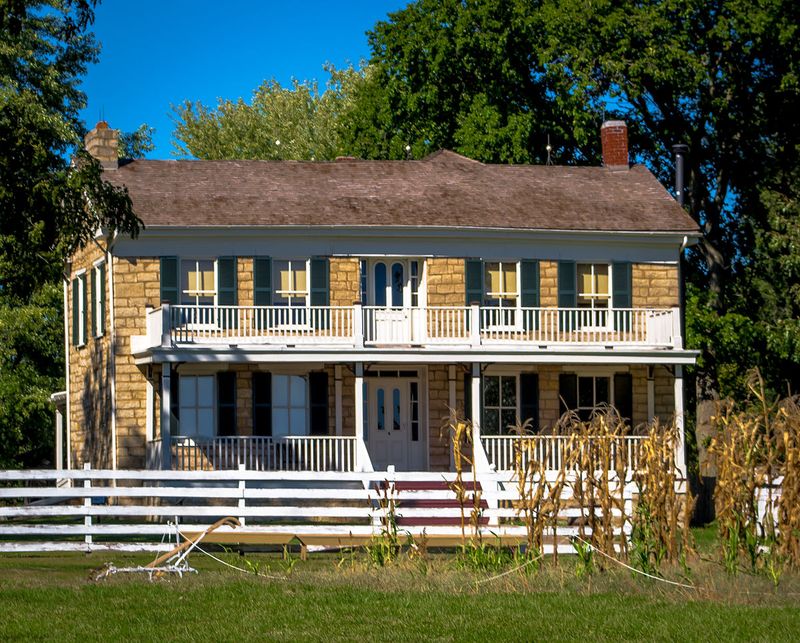
James and Lucinda Mahaffie settled near Olathe in 1857, and within a few years their farm had become one of the busiest meal stops on the Santa Fe Trail. By 1867, Lucinda and her daughters were preparing between 50 and 100 meals a day for stagecoach passengers.
Those passengers ate in the basement while fresh horse teams were readied outside. The 1865 limestone farmhouse is the only surviving authentic working stagecoach stop on the Santa Fe Trail, which makes it genuinely rare even by Kansas standards.
The railroad arrived in 1870 and ended the stage operation, but the house survived. The City of Olathe acquired the 12-acre property in 1979, and it is now a state historic site.
Visitors today can take seasonal stagecoach rides, watch blacksmith demonstrations, and participate in farm chores that bring 1860s trail life into clear focus.
6. Hollenberg Pony Express Station State Historic Site, Hanover, Kansas
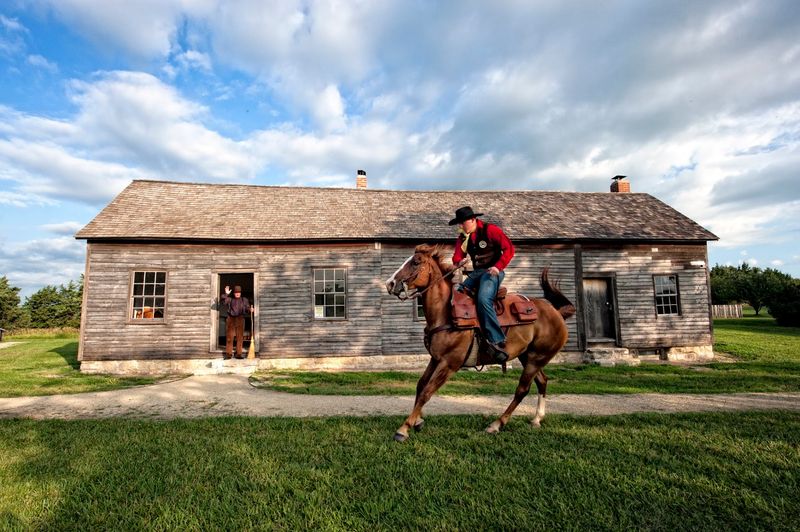
No other surviving Pony Express station in the country sits on its original ground in as complete a condition as this one. Gerat Hollenberg built the 1.5-story Cottonwood frame structure in 1858 to serve travelers on the Oregon and California Trails, combining a family home, general store, post office, and tavern under one roof.
The loft served as a communal sleeping area for riders and guests. When the Pony Express launched in 1860, Hollenberg’s station became a home station and the westernmost Pony Express stop in Kansas during the service’s 18-month run.
The state of Kansas acquired the property in 1941, and it was designated a National Historic Landmark in 1961. A modern visitor center now complements the original building with exhibits and videos about 1860s overland travel.
The surrounding landscape, largely unchanged, helps visitors picture riders crossing the open prairie at full speed.
7. Grinter Place State Historic Site, Kansas City, Kansas
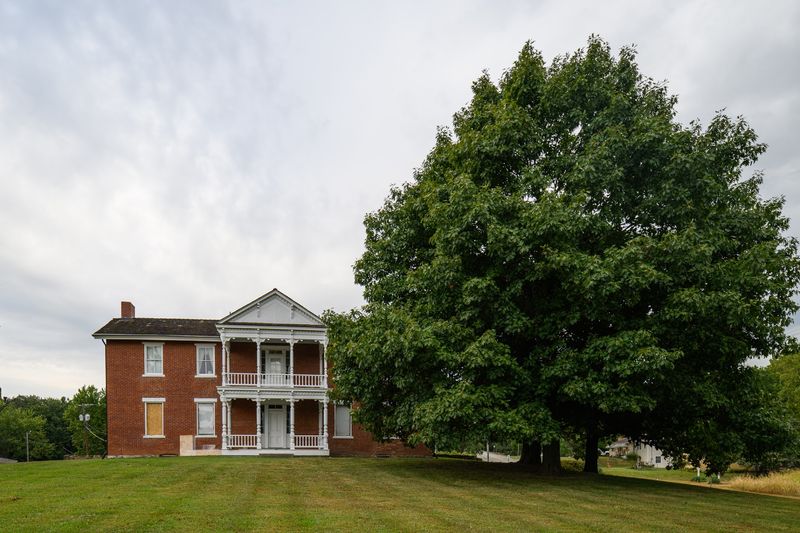
Moses Grinter arrived in what is now Kansas around 1829 and set up the first ferry crossing of the Kansas River by 1831, making his farm a natural hub for traders, soldiers, and westward travelers. His marriage to Annie Marshall, a Lenape woman, placed the household at a genuine cultural crossroads.
The two-story brick house completed in 1857 is considered the oldest surviving home in Wyandotte County and possibly the oldest farmhouse in all of Kansas. Moses also ran a trading post from 1855 to 1860, exchanging goods with Delaware communities for furs and cash.
The property housed Kansas’s first non-military post office and briefly served as a chicken dinner restaurant before the state acquired it in 1971. The Kansas Historical Society now manages Grinter Place, offering guided tours that cover frontier life, river commerce, and the cultural exchanges that shaped the region.
8. Constitution Hall State Historic Site, Lecompton, Kansas
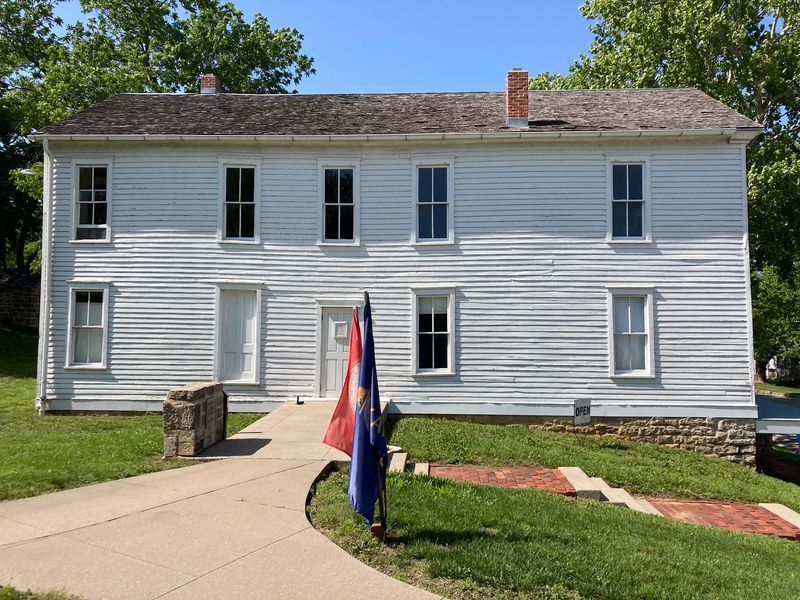
A plain white building in a small Kansas town does not look like the site of a national crisis, but Constitution Hall earned that distinction in 1857 when a proslavery constitutional convention gathered upstairs to draft the Lecompton Constitution. The debate that followed helped accelerate the path to the Civil War.
Constructed in 1856, the building is recognized as the oldest wood-frame civilian structure in Kansas still standing on its original site. While the convention worked upstairs, the federal land office operated on the ground floor, processing thousands of settler claims.
After the territorial capital shifted, the building served as an Odd Fellows Lodge meeting hall before becoming a state historic site and National Historic Landmark. Visitors can examine a box used for fraudulent ballots and an original office safe, making the political chaos of Bleeding Kansas feel surprisingly concrete and close.
9. First Territorial Capitol State Historic Site, Fort Riley, Kansas
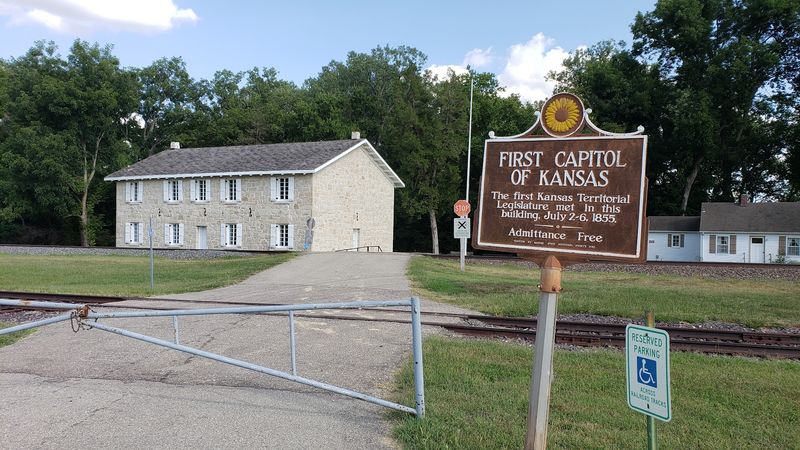
Built in 1855, this compact limestone building was the only structure completed in the short-lived town of Pawnee, which territorial leaders optimistically planned as Kansas’s permanent capital. The first Kansas Territorial Legislature convened here from July 2 through July 6, 1855, under Governor Andrew Reeder.
The legislature lasted less than a week before deep divisions over slavery caused the assembly to scatter. Historians connect the events, and the quick collapse, of this early session to the broader Bleeding Kansas turmoil that followed.
After its brief political role, the building spent decades as a warehouse, carpentry shop, and soldier canteen. A windstorm damaged the roof in 1877.
The Union Pacific Railroad funded a rebuild in 1928, and the Kansas Historical Society now operates it as a museum. Compared to the state’s larger frontier attractions, this one is compact and often overlooked, which makes its outsized story even more striking.
10. Shawnee Indian Mission State Historic Site, Fairway, Kansas
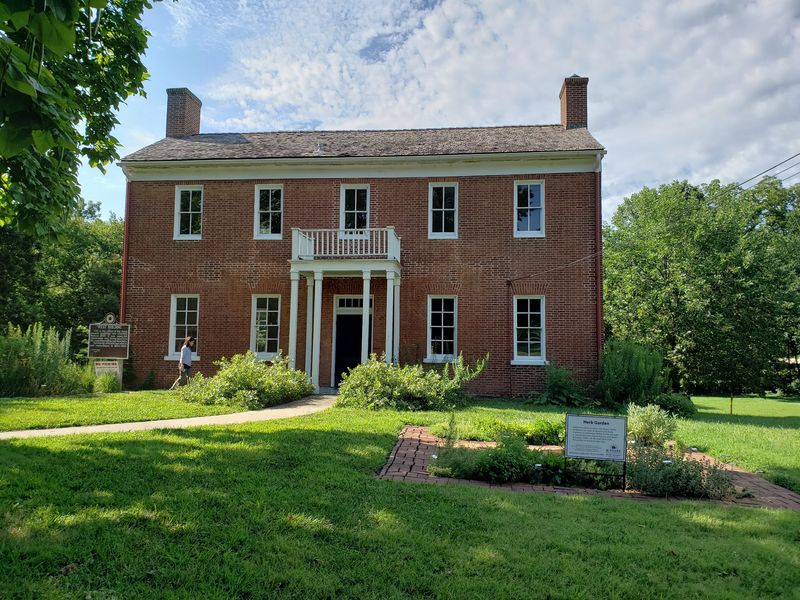
Methodist missionary Thomas Johnson established this mission in 1839 as a manual training school for Native American children from the Shawnee, Delaware, and other tribal nations. Boys learned furniture-making and wagon construction while girls were taught sewing, cooking, and soap production.
The mission’s political role is easy to overlook but hard to overstate. Governor Andrew Reeder maintained offices here, and the territorial legislature convened in the East building from July 16 to August 7, 1855, making it briefly the second capital of Kansas Territory during one of the most volatile periods in American political history.
The grounds also served as a campground for travelers on the Santa Fe, California, and Oregon Trails, and as a Union soldier encampment during the Civil War. The Kansas Historical Society now manages the 12-acre National Historic Landmark in partnership with the City of Fairway, with exhibits covering Native history, trail life, and territorial politics.
11. John Brown Museum State Historic Site, Osawatomie, Kansas
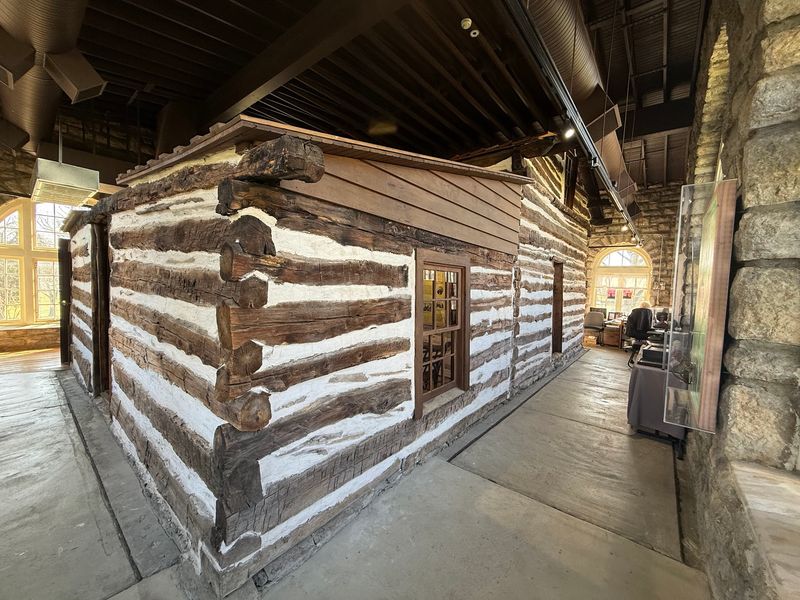
The Adair cabin is one of the smallest structures on this list and one of the most historically loaded. Built in 1854, it belonged to Reverend Samuel Adair and his wife Florella, who was John Brown’s half-sister.
Brown used the cabin as a base during his 20 months in Kansas, earning the nickname “Old Osawatomie Brown.”
The cabin also functioned as a stop on the Underground Railroad, sheltering freedom-seekers including those Brown liberated during a raid into Missouri in 1858. The site sits within John Brown Memorial Park, on the ground where the Battle of Osawatomie took place on August 30, 1856.
To protect the cabin, it was moved into the park and enclosed within a stone pavilion built in 1928. The Kansas Historical Society administers the museum, which displays original furnishings and Civil War artifacts that bring the Bleeding Kansas era into sharp relief for visitors.
12. Last Chance Store, Council Grove, Kansas
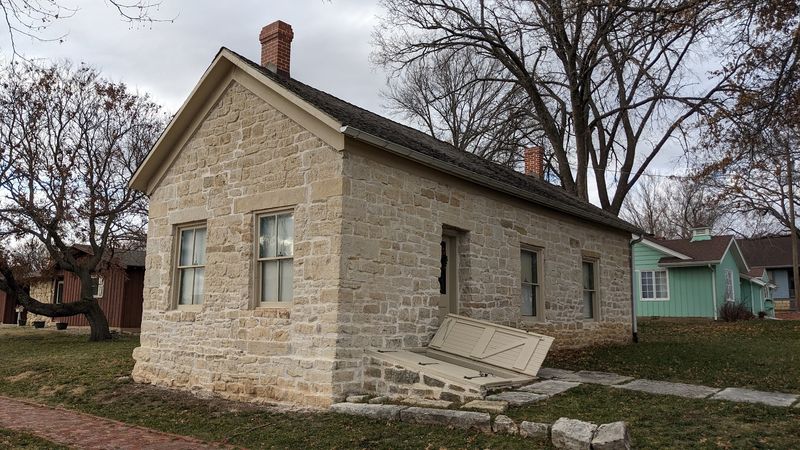
Tom Hill built this stone store in 1857, and the name he gave it was not clever marketing. It was a practical warning.
Travelers heading west on the Santa Fe Trail knew this was one of the last places to buy salt, kerosene, tools, and supplies before facing more than 600 miles of open prairie to Santa Fe, New Mexico.
Beyond selling goods, the building served as a post office and a polling place, and historians have documented its use as a shelter for freedom-seekers during the territorial period. It is recognized as the oldest surviving commercial building in Council Grove.
The Kansas Historical Society received the store as a donation in 2015. A 2016 archaeological dig before restoration uncovered more than 26,000 artifacts beneath the floorboards, including musket balls, eyeglasses, and 266 trade beads.
The restored store now operates as a museum focused on frontier travel logistics and the Santa Fe Trail economy.
13. Pawnee Indian Museum State Historic Site, Republic, Kansas
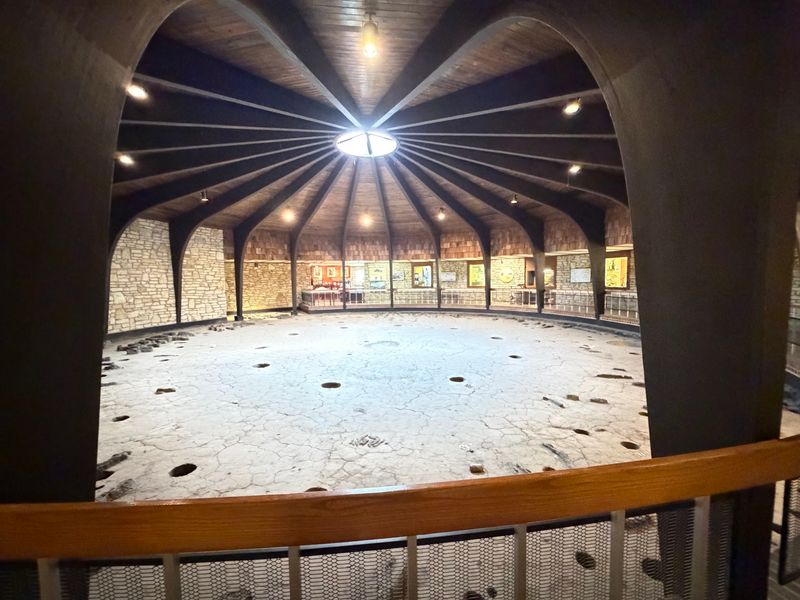
Long before the first cattle drive crossed Kansas, the Kitkehahki band of the Pawnee tribe had already built a fortified village of 40 to 50 earth lodges in what is now Republic County. The village was occupied from the late 1700s to the 1820s, with a winter population that could reach 1,500 people.
The Pawnee followed a seasonal pattern of farming in spring and fall and communal bison hunting in summer and winter. The village was abandoned around 1830 as resources declined and the band relocated further west.
Kansas’s first state historic site, preserved starting in 1901, now features a museum building constructed in 1967 directly over the excavated floor of one of the original earth lodges. Visitors walk around artifacts including tools, pottery shards, and corn kernels left exactly where archaeologists found them.
A nature trail outside winds through depressions marking other lodge sites and former fortification walls.
Share this story