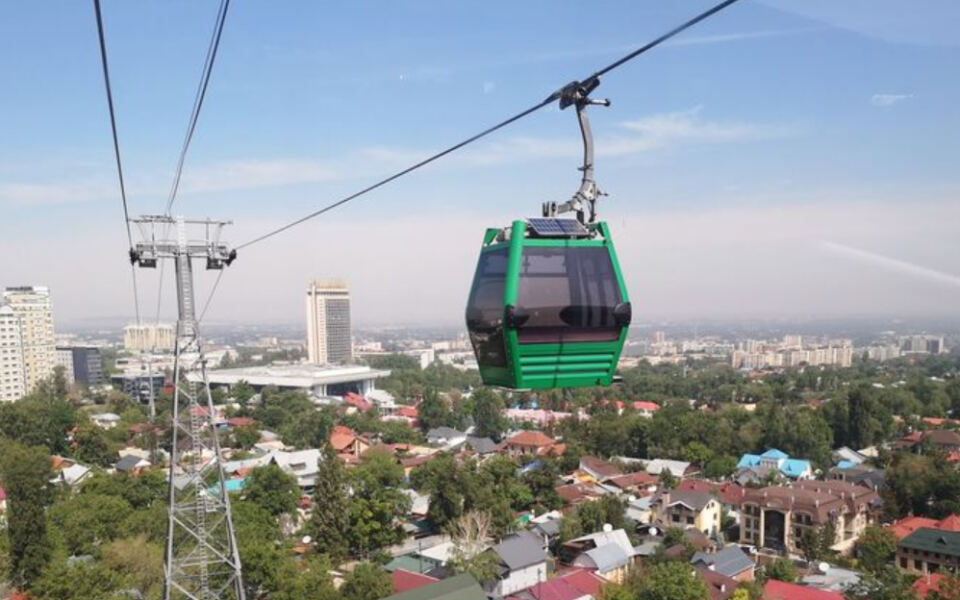
Some cities offer a mountain view from one special lookout spot. Others seem to have mountains following you everywhere you go, popping up at the end of streets, behind rooftops, and across sparkling lakes.
The cities on this list belong firmly in that second group, where mountains are not just scenery but a full part of daily life. From the Austrian Alps to the Himalayas of Nepal, these 20 cities prove that sometimes nature builds the most breathtaking skylines.
Innsbruck, Austria
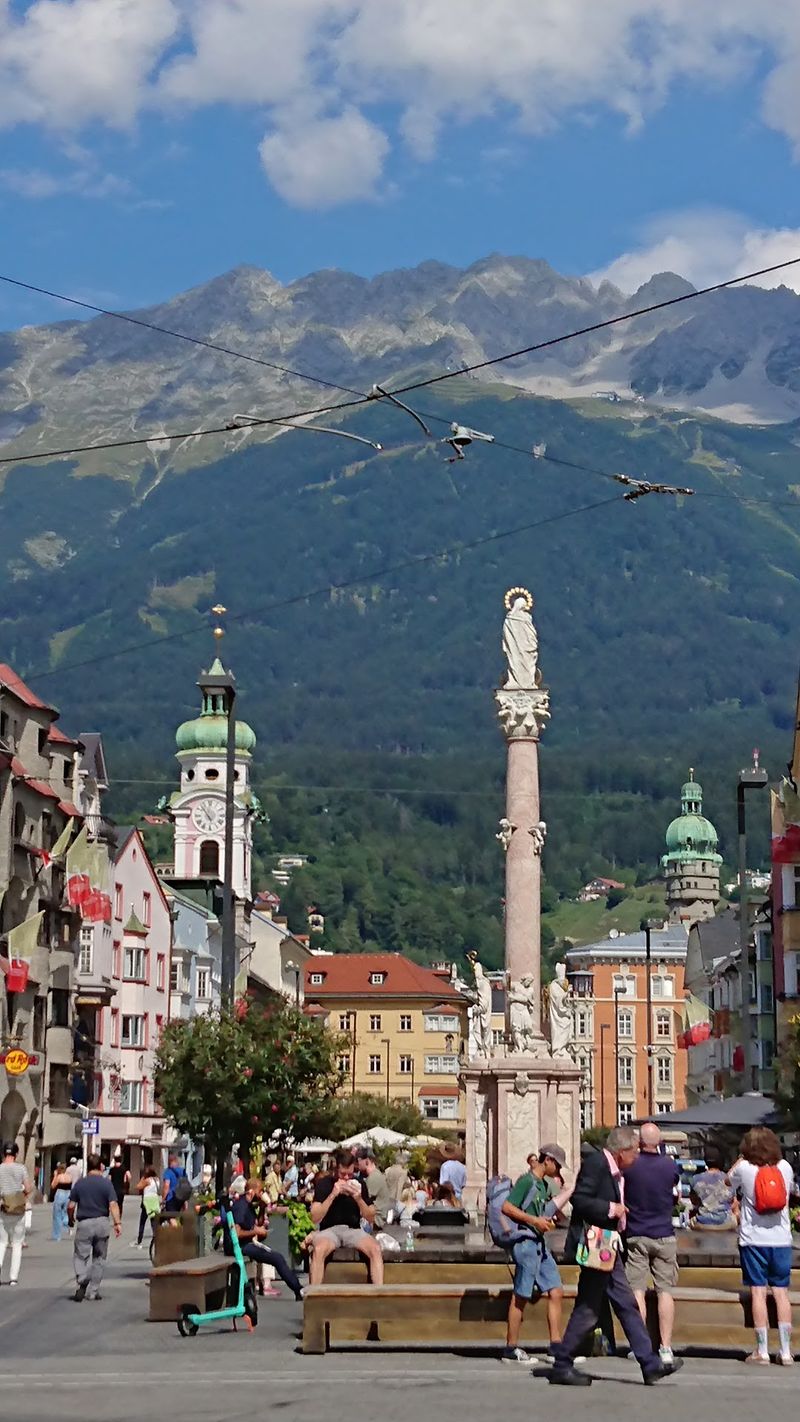
Walk any street in Innsbruck and the mountains are not in the distance. They are right there, practically leaning over the rooftops.
Austria’s Tyrolean capital sits in the Inn Valley with peaks rising sharply on both sides, and the Nordkette reaches roughly 2,300 meters almost directly above the city center.
The famous Hungerburgbahn funicular connects downtown Innsbruck to the mountain slopes in a surprisingly short trip. From there, cable cars continue higher, meaning a visitor can start the morning under the Golden Roof and be standing on a high alpine ridge before lunch is even on the table.
Patscherkofel dominates the southern skyline, while the Nordkette handles the north. Innsbruck Tourism confirms that mountain panoramas are visible on all four sides of the city.
The mountains here do not feel like a backdrop. They feel like neighbors who never quite respect your personal space, and honestly, nobody is complaining.
Cape Town, South Africa
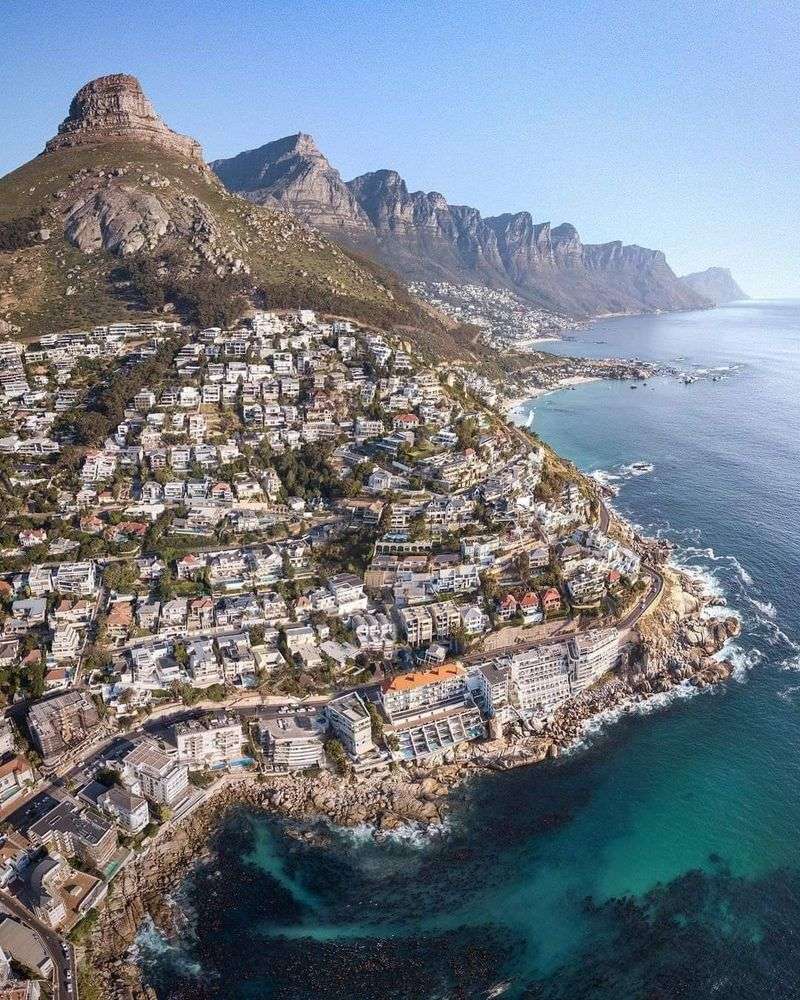
Table Mountain is one of those landmarks that makes you stop mid-sentence. Rising directly behind Cape Town’s City Bowl, it forms part of a dramatic natural amphitheater alongside Lion’s Head and Signal Hill.
Cape Town Tourism describes the city as nestled between the Atlantic Ocean and its mountains, and that description earns its keep every single day.
The variety of viewpoints is genuinely impressive. From the V&A Waterfront, Table Mountain fills the background behind boats and buildings.
From Bloubergstrand across Table Bay, the entire flat-topped massif creates the classic postcard image that has appeared on more refrigerators than almost any other mountain.
Climb Lion’s Head and the whole relationship flips. Suddenly Table Mountain is beside you rather than above you, and Cape Town spreads below.
The cable car to the Table Mountain summit adds yet another angle. Few cities on Earth have a natural landmark this commanding, this close, and this consistently photogenic from so many different directions.
Vancouver, Canada
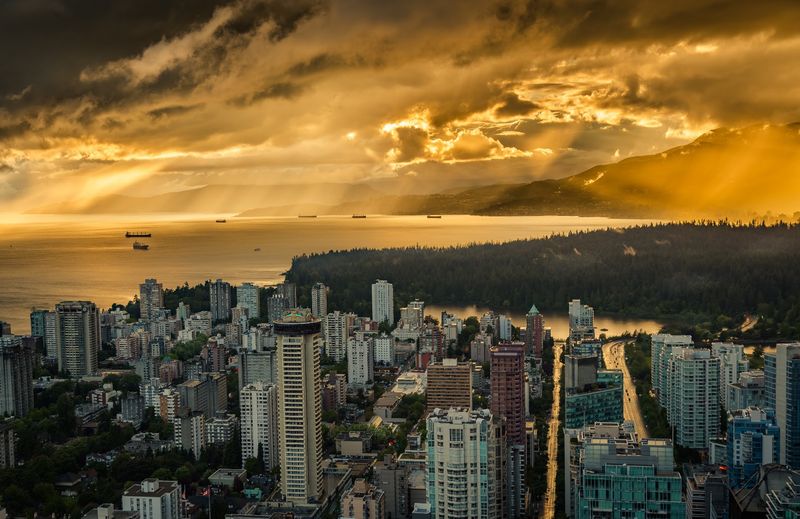
Locals in Vancouver joke that they never get lost because the mountains are always north. The North Shore Mountains rise immediately across Burrard Inlet, creating one of the most photographed urban skylines in the world: glass towers backed by jagged, snow-dusted peaks.
Destination Vancouver calls them the city’s guiding landmark, visible from neighborhoods across the entire metro area.
The view shifts constantly depending on where you stand. From downtown streets, peaks appear between high-rises like they are photobombing every shot.
From Stanley Park’s seawall, forested slopes reflect in the harbor. From Kitsilano beach, the skyline, water, and mountains stack up in layers that look almost too good to be real.
What makes Vancouver special is that the mountains are not just decorative. Grouse Mountain, Cypress, and Mount Seymour offer skiing, hiking, and mountain biking within a short drive of the city core.
You can finish a downtown business meeting and be riding a gondola through old-growth forest before rush hour ends. That combination of urban energy and immediate wilderness is genuinely hard to beat.
La Paz, Bolivia
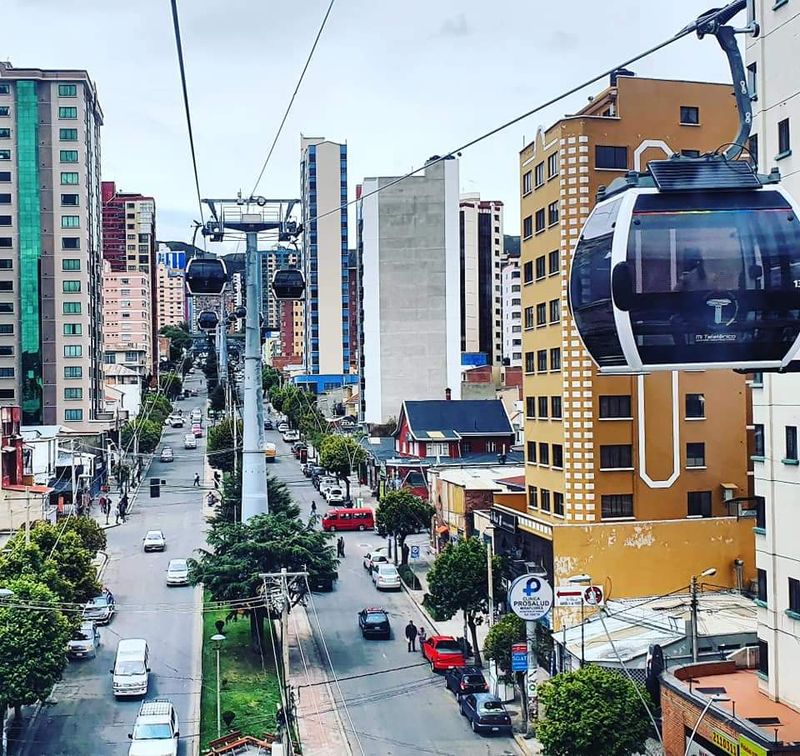
La Paz does not just sit near mountains. It occupies an entire Andean canyon, with neighborhoods climbing steep slopes in every direction and the snow-covered summit of Illimani rising to roughly 6,462 meters on the southeastern horizon.
The sheer scale of the surrounding Cordillera Real, stretching for around 150 kilometers, is almost impossible to process from street level.
The Mi Teleferico cable-car network changes everything. Ride it and entire districts fall away beneath you, revealing a dense patchwork of brick buildings packed into the canyon while white mountain walls appear beyond.
It is one of the most dramatic urban transit rides anywhere in the world, and it costs very little.
At street level, Illimani appears suddenly between buildings, framed by laundry lines and market stalls. From higher neighborhoods, the city itself becomes the foreground of a mountain photograph.
La Paz is loud, chaotic, colorful, and completely entangled with extreme terrain in a way that no other major city quite replicates. The mountains here are not scenery.
They are the city’s architecture.
Queenstown, New Zealand
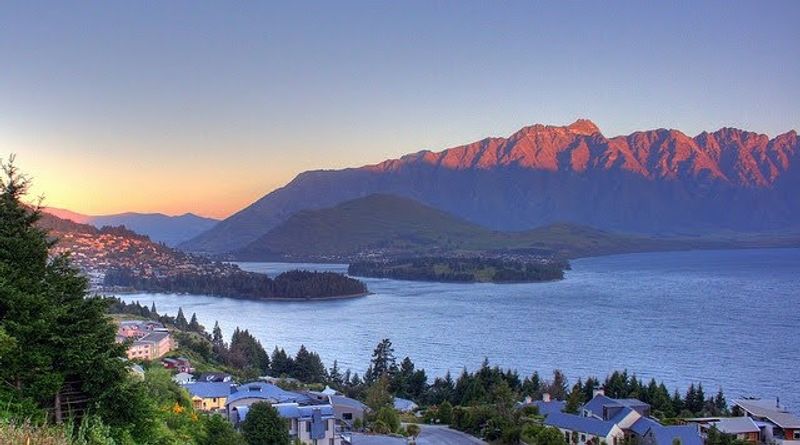
Queenstown sits in a landscape that seems almost overqualified for a town of its size. Lake Wakatipu fills the foreground with blue-green water, while the Remarkables, Cecil Peak, Walter Peak, and the wider Southern Alps create a mountain ring in nearly every direction.
The scenery is so consistently dramatic that first-time visitors often spend their first hour just rotating slowly and taking pictures.
The Remarkables deserve their name. New Zealand’s Department of Conservation describes the range as extremely steep and rugged, rising to 2,234 meters and forming a defining visual element of the Queenstown landscape.
Their nearly vertical eastern face catches the afternoon light in a way that turns the whole skyline orange and pink.
Almost every viewpoint in town delivers. Walk the waterfront, ride the gondola to Bob’s Peak, or drive toward Glenorchy and the scenery just keeps escalating.
Even landing at Queenstown Airport is a theatrical experience, with mountains appearing through the plane window right up to touchdown. The town itself is lively and full of adventure options, but the mountains are always the main event.
Chamonix, France
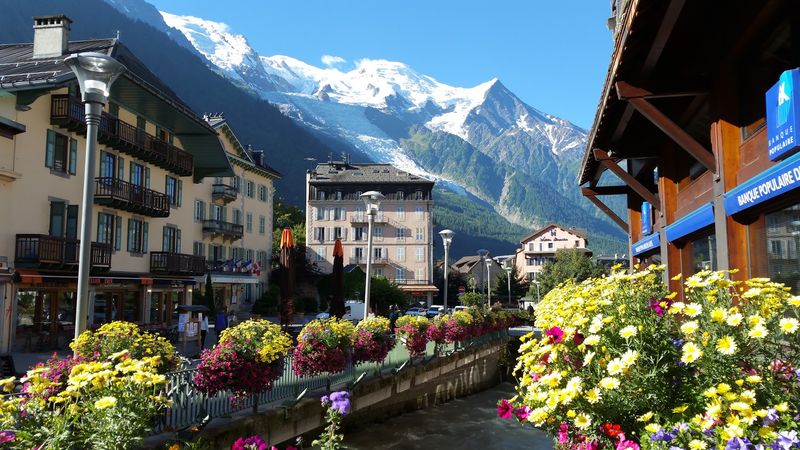
Chamonix is not a city with mountain views. It is a town built directly beneath one of Europe’s most imposing mountain walls, and the difference matters.
The Chamonix-Mont-Blanc Valley sits below glaciers and some of the highest summits in the Alps, with Mont Blanc measured at 4,807 meters. From ordinary streets, ice and rock fill the sky above hotel roofs in a way that feels slightly unreal.
The local tourism office puts it plainly: wherever you are in the Chamonix valley, Mont Blanc is the star. Cable cars rise toward the Aiguille du Midi at 3,842 meters.
The Montenvers railway climbs toward the Mer de Glace. The Brévent side provides enormous views directly across the massif from a completely different angle.
Chamonix helped launch modern mountaineering in the 18th century, and once you see the skyline, the reason is immediately obvious. The mountains here do not just impress.
They create a physical sensation, a kind of altitude-adjacent feeling even at valley level. Restaurants, shops, and cafes run normally below summits that look like they belong in a different world entirely.
Santiago, Chile
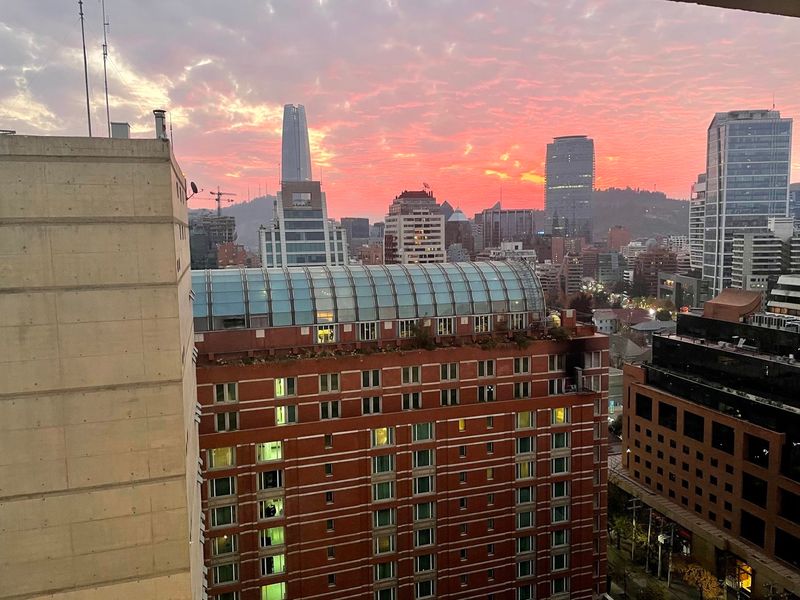
On hazy days, Santiago looks like any other modern South American capital. Then a cold front sweeps through, the smog clears, and the Andes completely rewrite the skyline.
The mountains appear suddenly behind downtown towers, snow-covered and enormous, close enough to look almost touchable. Chile Travel describes Santiago as a metropolis at the foot of the Andes, and that description hits differently once you see it firsthand.
San Cristobal Hill is one of the best urban vantage points. The Metropolitan Park covers more than 720 hectares, and its summit viewpoints look across the entire capital toward the Andean wall.
The elevation difference between city and mountain summit is staggering, and it all becomes visible from one spot.
Santiago’s official tourism resources call it a mountain capital, noting that hiking areas and ski resorts sit roughly 30 minutes from central neighborhoods. In winter, fresh snow can make the peaks look almost impossibly crisp behind the glass towers of the financial district.
The city’s tree-lined streets and lively food scene are genuinely worth exploring, but those mountains lurking behind every clear-day skyline are what make Santiago unforgettable.
Banff, Canada
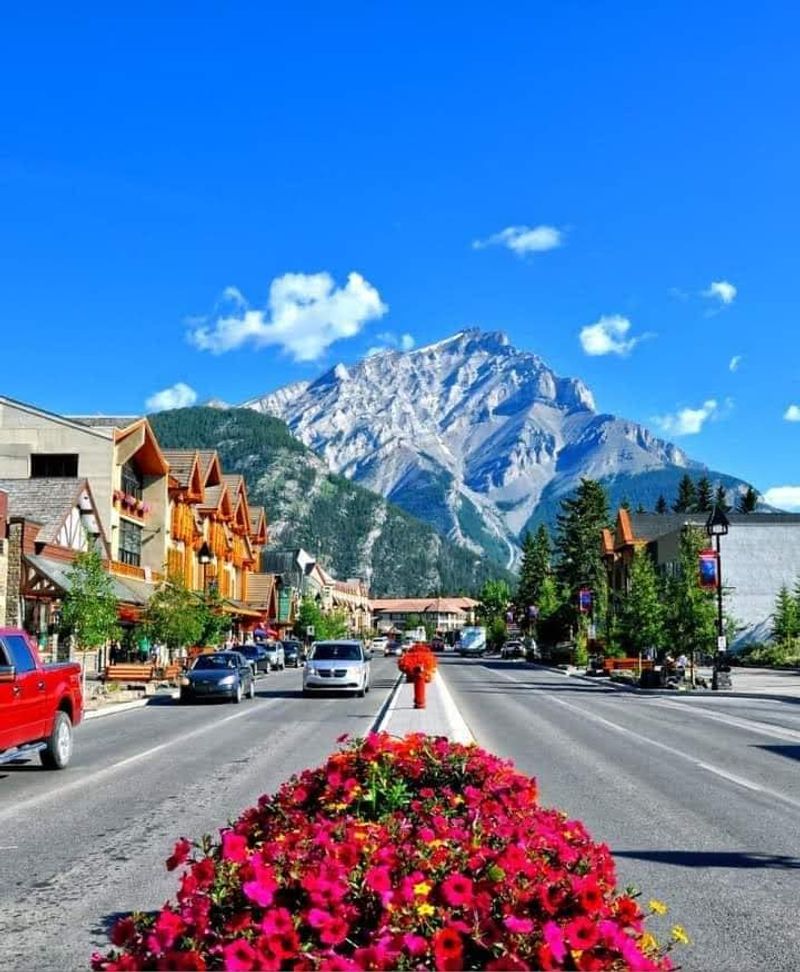
Banff might have the simplest mountain-view formula on this entire list. Take a valley road, surround it completely with the Canadian Rockies, and build a small town in the middle.
The result is a place where even a grocery run comes with a mountain backdrop that most cities would trade their entire downtown for.
The classic image is Banff Avenue, where Cascade Mountain rises almost directly at the end of the main street like a painted backdrop that someone forgot to remove. But the effect works in every direction.
Sulphur Mountain rises to the south, Mount Rundle stretches eastward, and Norquay towers above the northern edge of town. Vermilion Lakes add reflections of surrounding peaks at sunset for bonus drama.
Banff and Lake Louise Tourism describes the town as flanked on all sides by towering mountains inside Banff National Park. Because the town is small enough to walk comfortably, the mountain experience is constant rather than occasional.
One block is shops and restaurants. The next offers a direct sightline into a Rocky Mountain wall.
Few places blend everyday life and spectacular wilderness this seamlessly.
Lucerne, Switzerland
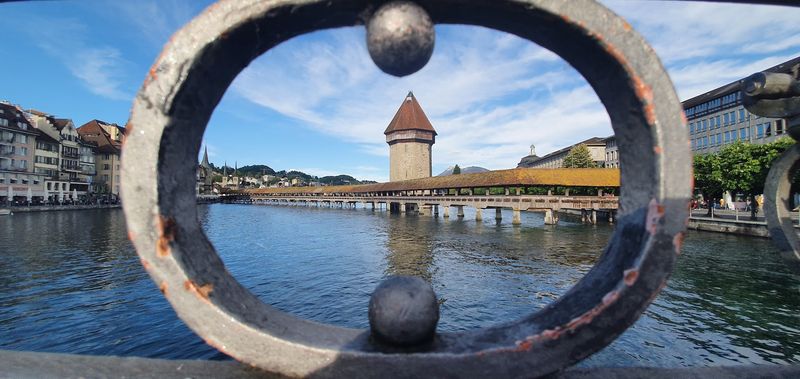
Lucerne figured out something clever: if you place a beautiful lake between a historic city and its mountains, everything doubles in beauty. The waterfront frames Mount Pilatus, the Rigi, Burgenstock, and broader Alpine ranges, with the lake acting as a giant mirror on calm mornings.
The result is one of Switzerland’s most satisfying combinations of architecture and natural scenery.
Mount Pilatus is the visual centerpiece. Its jagged summit reaches 2,132 meters, and visitors can reach it by cogwheel railway or gondola depending on the season.
Either way, the ride up reveals Lucerne shrinking below while the Alpine panorama expands in every direction.
From the old Chapel Bridge, mountains sit beyond river water and terracotta rooftops. Walk to the lakefront and the skyline opens completely.
Board one of the lake steamers and Lucerne becomes a compact historic cluster beneath enormous natural geometry. Switzerland certainly has higher mountain towns.
Very few of them combine Alpine views with a foreground this polished, this historic, and this genuinely pleasant to spend time in. Lucerne earns its reputation every single clear day.
Interlaken, Switzerland
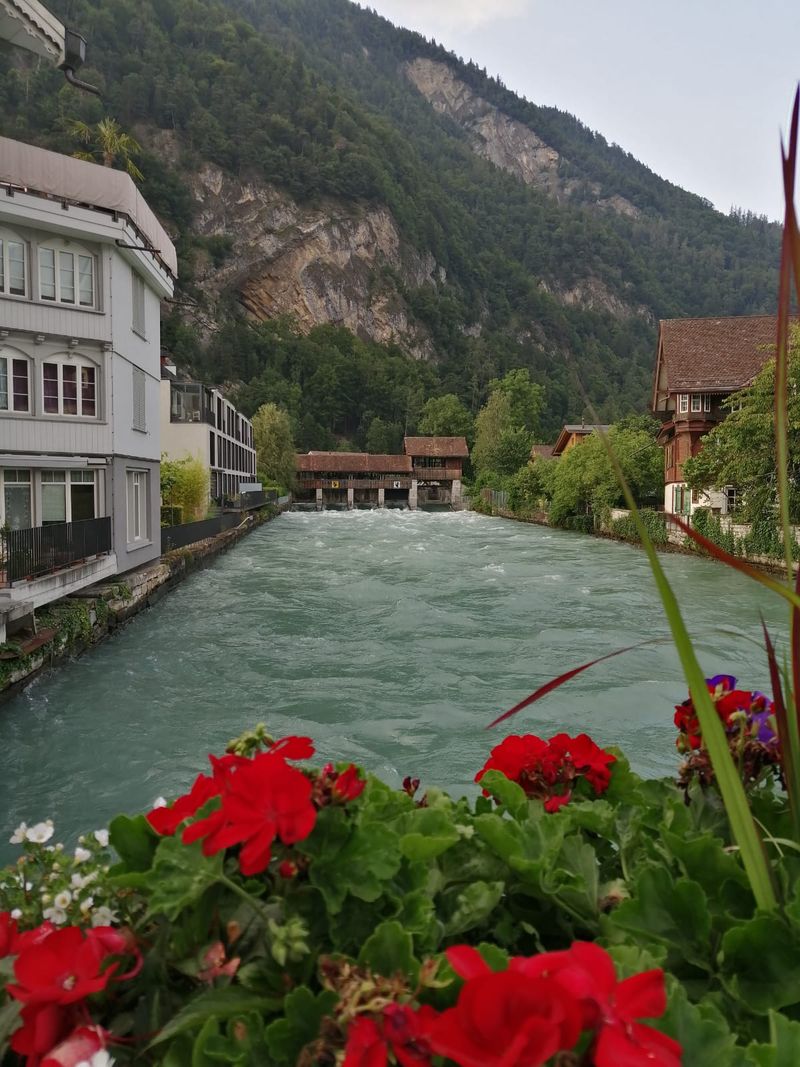
Most cities have to settle for one famous peak on the horizon. Interlaken gets three.
The Eiger, Monch, and Jungfrau form the iconic Bernese Oberland skyline directly south of town, their snow-covered summits visible from much of the wider region on clear days. Interlaken Tourism notes that mountain railways make these summits unusually accessible, which is a polite way of saying you can ride a train to 3,454 meters for breakfast.
The town’s flat geography actually works in its favor. Because Interlaken sits on level ground between Lake Thun and Lake Brienz, the mountains appear even more dramatic by contrast.
Walk through Hohematte park and the Jungfrau appears at the far end of an open green corridor, framed like a painting someone left at the edge of the lawn.
Go up Harder Kulm and the perspective widens to include both lakes and the full mountain chain. The combination of cafes, adventure sports, lake boats, and immediate access to one of the world’s most famous mountain railways makes Interlaken genuinely hard to leave.
The views from the main street alone are enough to make most other destinations feel slightly ordinary.
Quito, Ecuador
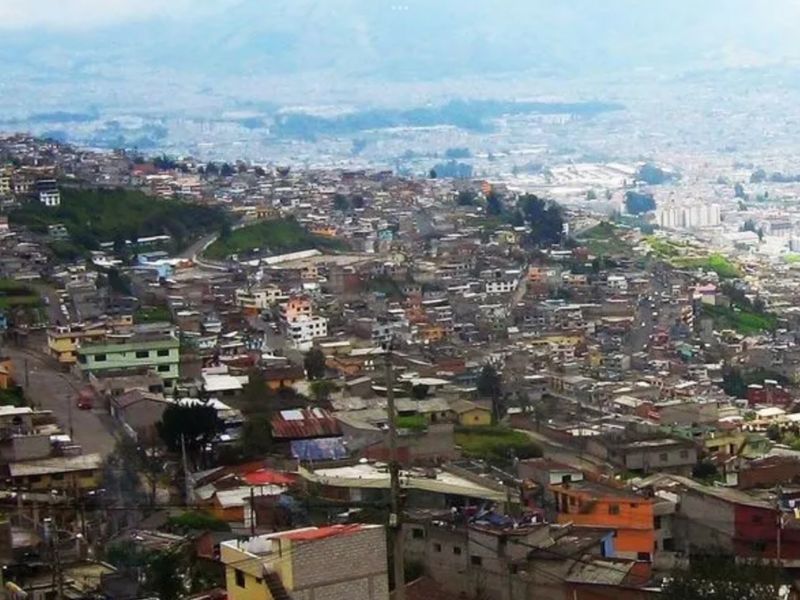
Quito proves that being close to the equator does not mean flat, tropical, or mountain-free. Ecuador’s capital sits at around 2,850 meters above sea level in a narrow Andean basin, making it one of the highest official capital cities on the planet.
Pichincha volcano rises immediately to the west, and on clear days, snow-capped volcanoes appear on the horizon in multiple directions.
Ecuador’s tourism authority describes the surrounding region as an Avenue of the Volcanoes containing more than 70 peaks. Quito sits squarely inside that landscape.
The city stretches lengthwise between ridges, which means the mountains are not just visible at one end of town but running alongside the entire urban corridor.
The Teleferico cable car makes the scale undeniable. It climbs from the city toward the slopes of Pichincha, and from above, Quito looks impossibly long and narrow, squeezed elegantly between mountain walls.
Even walking through the colonial historic center, volcanic slopes appear between baroque churches and colorful facades. Quito is a UNESCO World Heritage city with extraordinary architecture, but the mountain geography is what gives it its particular, slightly breathless character.
Bergen, Norway
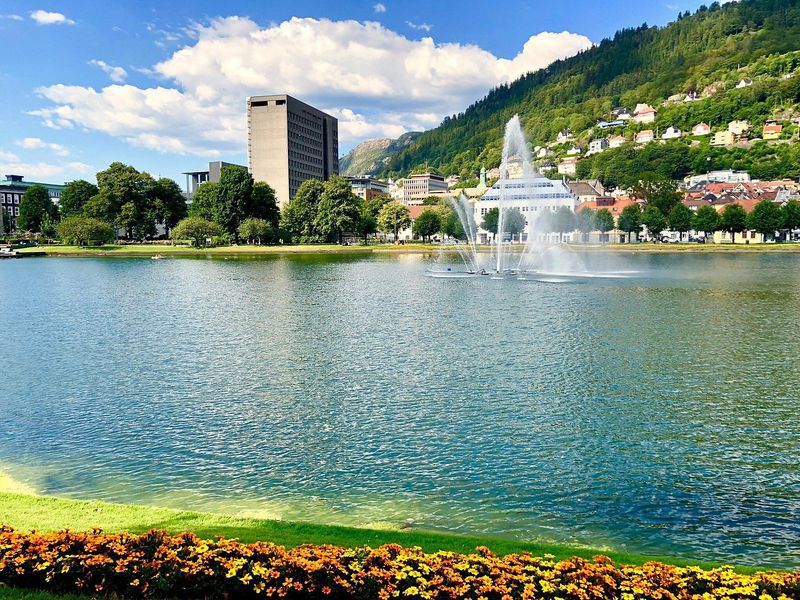
Bergen has a nickname that doubles as a geographic fact: the city between seven mountains. Visit Bergen names them all: Ulriken, Floyen, Rundemanen, Sandviksfjellet, Lovstakken, Damsgardsfjellet, and Lyderhorn.
That is not a scenic backdrop. That is a full encirclement, and it shapes everything from Bergen’s weather to its neighborhoods to how locals spend their weekends.
The Floibanen funicular reaches Mount Floyen from near the city center in just minutes, opening broad views across Bergen’s harbor, islands, and surrounding ridges. Ulriken, the tallest of the seven at 643 meters, has its own cable car and a panoramic restaurant at the top.
Both are genuinely worth the trip, especially on the days when Bergen’s famous rain decides to take a break.
Bergen also sits between Hardangerfjord and Sognefjord, placing some of Norway’s most dramatic mountain-and-fjord scenery within easy reach. The colorful Bryggen wharf is a UNESCO site and the city’s most photographed spot, but the mountains framing it from above are what give the whole scene its layered, cinematic quality.
Rain hides them occasionally. When the clouds lift, they seem to surround you from every angle.
Salzburg, Austria
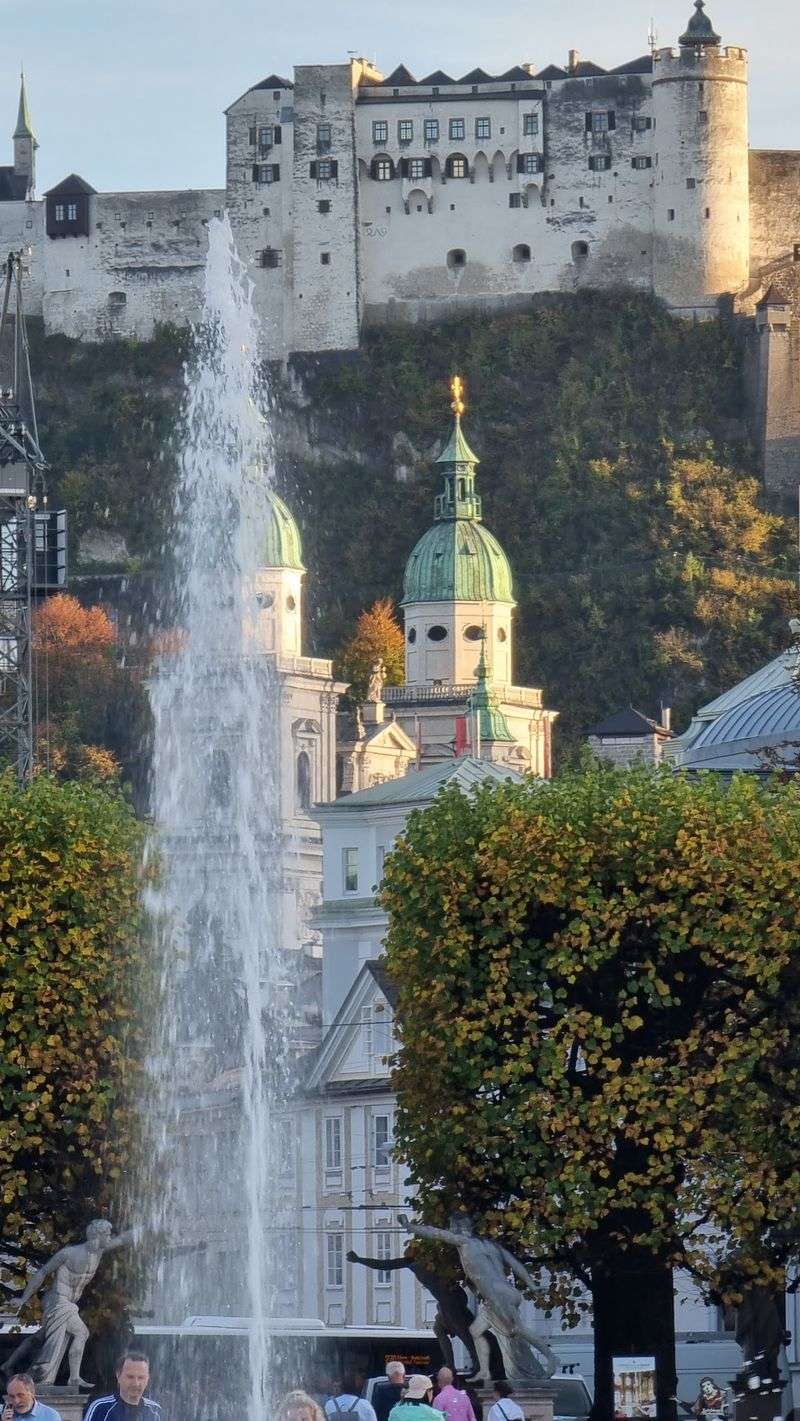
Salzburg’s skyline is already doing a lot of heavy lifting before the mountains even show up. Baroque domes, church towers, and Hohensalzburg Fortress stack up in layers above the Salzach River, creating one of Central Europe’s most theatrical historic cityscapes.
Then the Alps appear behind all of it, and the whole composition tips from impressive into genuinely extraordinary.
The city sits near the northern edge of the Alps, with Untersberg rising prominently to the south and mountain terrain surrounding the broader region. That layering effect, historic architecture in front, fortress above it, mountains behind everything, becomes especially clear from the Monchsberg or from the fortress itself.
The view from up there is the kind that makes people quietly put their phones away and just look.
Salzburg works particularly well because the mountains never compete with its cultural identity. Mozart, coffee houses, festival halls, and Baroque palaces remain entirely central to the experience.
The Alps simply make the background unnecessarily beautiful. For a city this compact and this walkable, the combination of world-class culture and Alpine scenery is almost unfairly good.
Sarajevo, Bosnia and Herzegovina
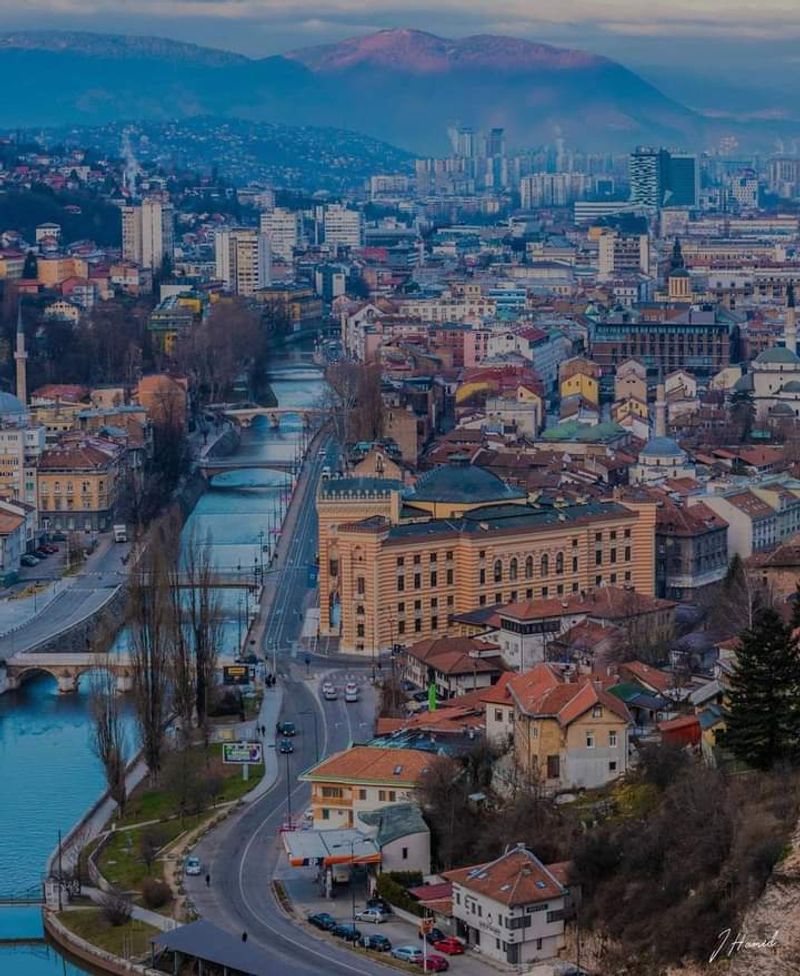
Sarajevo sits inside a bowl of mountains, and that geography has shaped its history more than almost any other factor. Trebevic rises immediately southeast of the city, while Igman, Bjelasnica, Jahorina, and other ranges close in around the wider basin.
Visit Sarajevo notes that Trebevic’s 1,629-meter summit sits roughly 15 minutes from the city center, which is a remarkably short distance for such a dramatic elevation change.
The cable car makes that transition vivid. One moment you are near the Bascarsija bazaar and the Miljacka River, surrounded by minaret calls and coffee aromas.
Shortly afterward, Sarajevo lies compressed beneath you, filling the valley between green ridges like a city that someone carefully folded into the landscape.
Winter adds another layer entirely. Surrounding Olympic mountains turn white while the city remains active below, creating a contrast that locals seem to take completely in stride.
Sarajevo hosted the 1984 Winter Olympics, and the mountains that made that possible are still visible and still accessible. For a city with such a complex and layered history, the mountains feel like a constant, grounding presence above it all.
Pokhara, Nepal
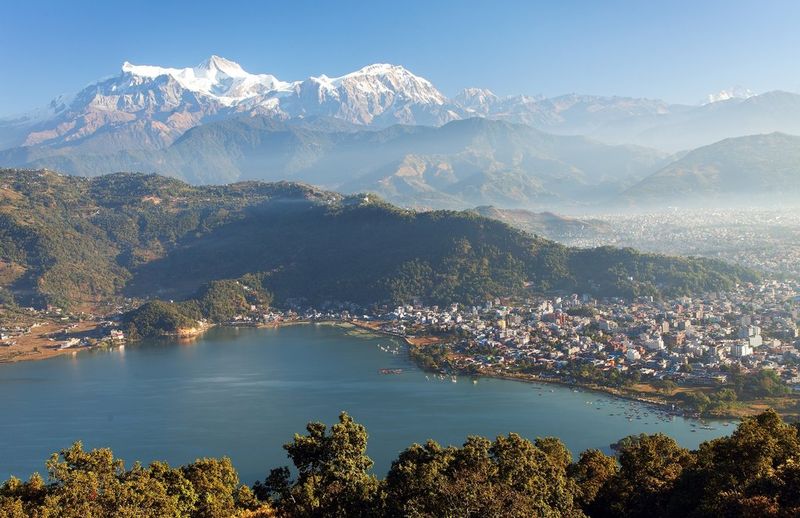
Very few cities receive a mountain backdrop as extravagant as Pokhara. The Annapurna massif rises north of the city, and on clear mornings the snow-covered skyline includes Machapuchare, Annapurna South, Hiunchuli, and other Himalayan giants that seem to belong in a different atmospheric layer entirely.
The sheer height difference between the lakeside city and the peaks behind it is staggering.
Phewa Lake makes everything even more dramatic. On calm mornings, the Himalayas reflect in the water, doubling the spectacle and creating the kind of scene that makes photographers set three alarms to catch the light.
The contrast between subtropical vegetation along the lakefront and permanent glaciers directly above it is one of the more visually disorienting things a traveler can experience.
Sunrise viewpoints like Sarangkot provide the classic panorama, but the title’s idea of mountains around every corner applies here too. Cafes, hotel terraces, side roads, and random stretches of lakefront can suddenly reveal massive white peaks the moment clouds part.
Pokhara is relaxed, affordable, and genuinely beautiful at street level, but the Himalayas above make it feel like the universe is showing off.
Mendoza, Argentina
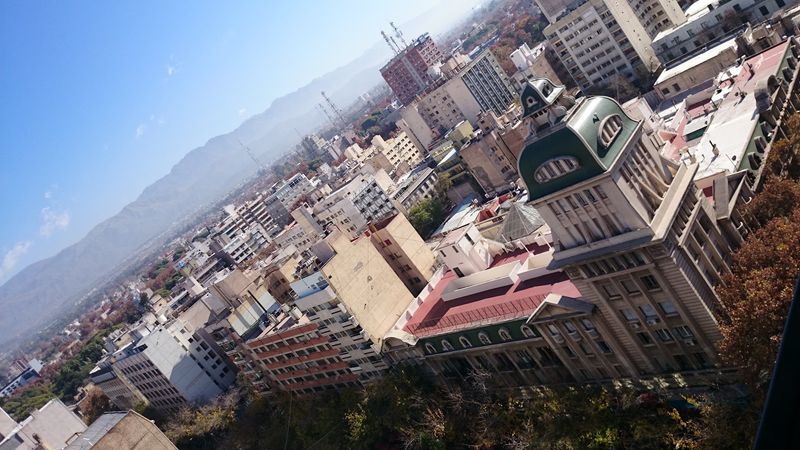
Mendoza is internationally famous for Malbec, but the mountains are why those vineyard photographs look so good. Argentina’s wine capital sits on the eastern side of the Andes, and when the air is clear, the snow-covered range fills the western horizon in a way that makes the city feel like it is leaning against something very large and very old.
Argentina’s national tourism authority describes Mendoza as surrounded by the snowy landscapes of the Andes, and the city serves as the main urban base for exploring the country’s highest mountain terrain. The High Mountain Route leads toward Puente del Inca and Aconcagua Provincial Park, home to the highest peak outside Asia at roughly 6,961 meters.
Day trips to Potrerillos and Cordon del Plata provide mountain scenery without a full expedition commitment.
Mendoza’s tree-lined streets and leafy plazas can hide the skyline more effectively than a broader city like Santiago. Then a gap appears between buildings and the Andes suddenly fill the frame.
The combination of vineyards, olive groves, and snow-covered peaks in a single photograph is the region’s most instantly recognizable visual signature, and it never quite gets old.
Granada, Spain
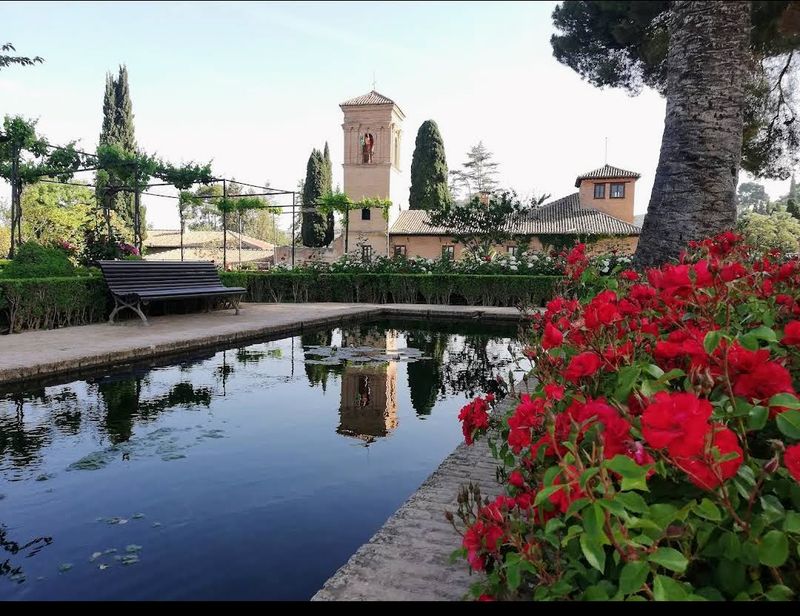
Granada already has one of Europe’s most remarkable hilltop landmarks. The Alhambra palace complex sits above the city like a red-walled crown, drawing visitors from every corner of the world.
Then the Sierra Nevada appears behind it, adding an entire mountain range to a skyline that was already overperforming by most standards.
Spain’s highest mountains outside the Canary Islands rise southeast of the city, and snow can remain visible on the upper summits well into spring and sometimes beyond. From the Albayzin neighborhood, the Nasrid palaces occupy the foreground while the Sierra Nevada forms the horizon behind.
The layered view, rooftops, then fortress, then snow-capped mountains, is one of those compositions that photographers return to repeatedly without ever quite capturing it perfectly.
The proximity creates unusual flexibility for visitors. A morning can begin inside the Alhambra exploring 14th-century Islamic architecture, and the same afternoon can include high-elevation hiking or skiing, depending on the season.
Granada is already famous for its food, flamenco, and history. The mountain backdrop behind all that culture is the detail that separates it from every other Andalusian city on the list.
Almaty, Kazakhstan
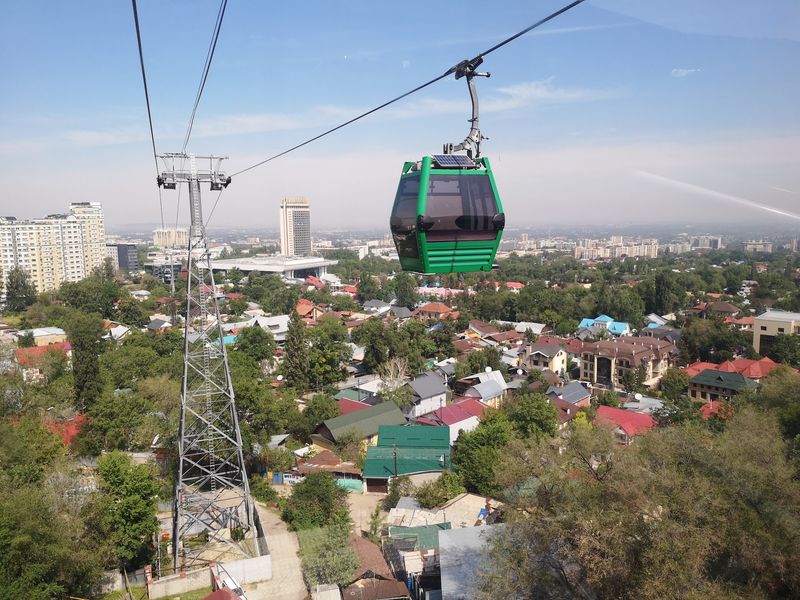
Almaty has one of the most dramatic urban mountain walls in Central Asia, and it does not get nearly enough credit for it. The snow-covered Trans-Ili Alatau, part of the northern Tian Shan range, rises immediately south of the city.
Wide avenues seem to terminate visually in jagged alpine peaks, creating the unusual effect of a large modern city pointing directly toward serious mountain terrain.
Medeu, the famous high-altitude skating rink, sits in a valley above Almaty. Shymbulak ski resort rises further still.
Both are reachable by road and cable car, making skiing, hiking, and mountain visits straightforward additions to a city stay. The altitude difference between leafy downtown avenues and the peaks above is dramatic enough to feel genuinely adventurous.
Almaty was the Soviet Union’s largest city in Kazakhstan and still carries traces of that era in its wide boulevards, green parks, and eclectic architecture. Today it combines a lively food and cafe scene with Tian Shan scenery that rivals anything in the region.
Travelers who overlook it in favor of more familiar destinations are missing one of Central Asia’s most visually striking and underrated urban experiences.
Tbilisi, Georgia
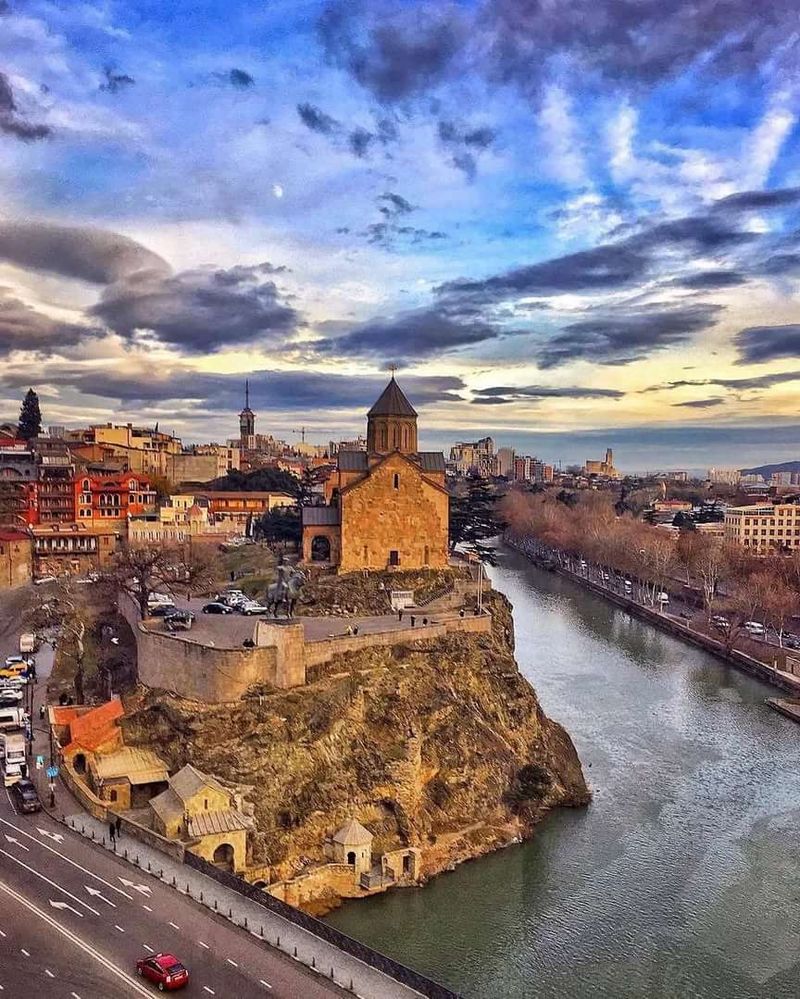
Tbilisi’s mountains do not arrive with glaciers and dramatic snowfields. They do something more intimate: they squeeze the city into a narrow river valley and force every neighborhood to climb.
The Georgian capital occupies the Mtkvari River corridor, with steep ridges rising immediately on both sides of the historic center, giving the whole city a vertical, layered quality that changes dramatically with every block.
Narikala Fortress sits on a rocky outcrop above Old Tbilisi, visible from most of the city center. Mtatsminda rises on the opposite ridge, with a funicular connecting it to the lower neighborhoods.
Traditional balconied houses stack up the hillsides between churches, sulfur bathhouses, and narrow alleys that twist upward without much warning.
Walk along the river and buildings climb above you on both sides. Take the cable car toward Narikala and Old Tbilisi spreads beneath the ridge in a way that reveals how tightly the city is folded into its terrain.
Beyond the city, the Caucasus grows considerably larger and more dramatic, but Tbilisi itself already feels unmistakably shaped by mountains before any excursion begins. The city is warm, strange, and beautiful in ways that take a few days to fully appreciate.
Brasov, Romania
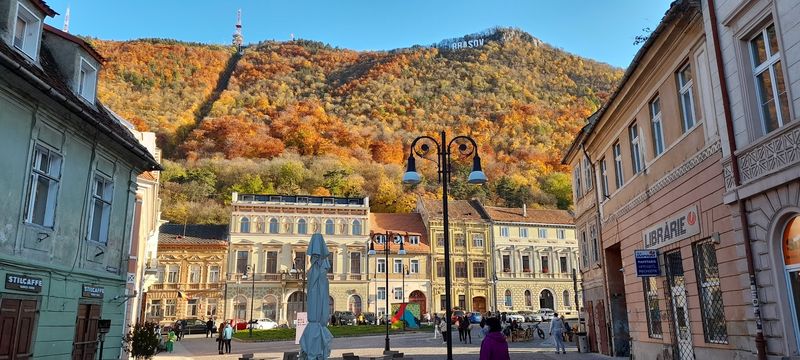
Brasov might offer Europe’s most satisfying combination of medieval streetscapes and immediate mountain scenery. The old city sits beneath Mount Tampa, whose forested slopes rise directly behind Council Square and the Gothic Black Church.
The mountain does not hover in the middle distance. It appears to grow out of the city’s own rooftops, which is both visually dramatic and slightly surprising the first time you notice it.
The wider setting adds the Carpathians, with mountain resorts, dense forests, hiking trails, and famous castles scattered throughout the surrounding region. From Brasov’s central streets, Tampa can appear almost vertical behind terracotta and red rooftops.
A cable car and walking routes climb toward viewpoints where the entire historic center becomes visible below, laid out like a medieval map.
In winter, nearby Poiana Brasov turns the city into a ski gateway, with slopes accessible in a short drive. In autumn, surrounding forests shift through gold, orange, and red while the medieval center stays framed in warm color.
Brasov is proof that a city does not need enormous altitude or famous peaks to feel completely surrounded by mountains. Sometimes a single forested slope rising directly behind a Gothic church is more than enough.
Share this story