In October 1973, a decision made thousands of miles away changed how Americans drove, shopped, and even decorated for the holidays. Arab oil-producing nations, working through OAPEC, cut production and stopped oil shipments to the United States during the Yom Kippur War.
By March 1974, world oil prices had jumped from about 3 dollars to nearly 12 dollars a barrel. For a country built on cheap fuel, big sedans, and growing suburbs, that was a serious shock.
Suddenly, buying gas took planning, patience, and sometimes a calendar. Washington asked people to drive slower and keep their homes cooler.
States made new rules about who could buy fuel and when. Gas station owners tried to keep customers calm while their tanks ran low.
Some of the habits people picked up in those months seem almost made up today. A few lasted for decades, while others disappeared as soon as the embargo ended.
Below, you will find the real rules, routines, and workarounds that shaped daily life during that winter. You will also learn which changes stuck around and still affect the cars we drive and the clocks we set.
The details might surprise you, especially if you have never had to wait more than five minutes at a pump.
1. Waited for Hours Just to Buy a Few Gallons
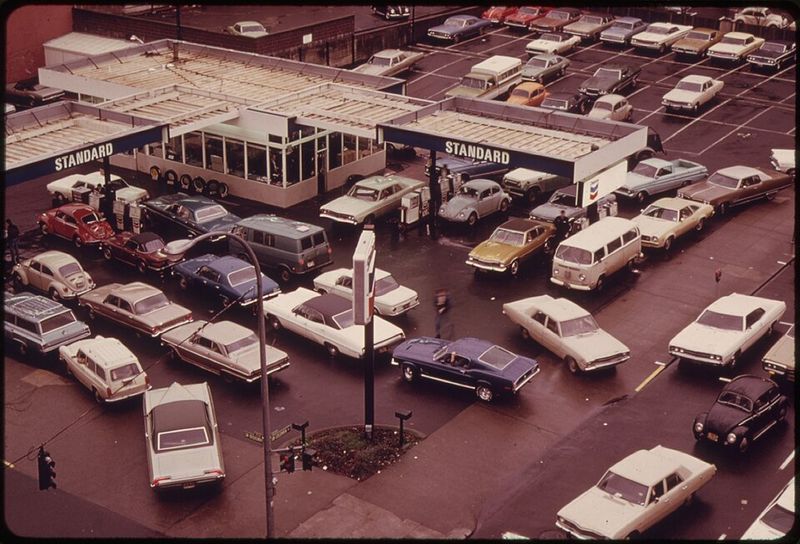
Picture a line of cars wrapped around a city block, and nobody is going to a concert. That was a normal weekday at many gas stations in the winter of 1973 and 1974.
Drivers often arrived before stations opened, hoping to beat the crowd. Some waited one hour.
Others waited two or three.
The worst part was the gamble. A driver could reach the front of the line and learn the pumps were empty.
Having cash in your wallet meant nothing if the station had nothing left to sell.
Panic made things worse. People who still had half a tank joined the lines anyway, afraid the next chance might never come.
Many drivers brought newspapers, homework, or knitting to pass the time. Today, a three-minute wait at the pump feels long, which shows just how strange those mornings really were.
2. Watched Gas Stations Close on Sundays
Sunday was once the favorite day for a family drive. In late 1973, it became the day the pumps went quiet.
President Nixon asked gas stations to stop selling fuel on Sundays as part of his November 1973 conservation plan. A large share of stations agreed, and some reports put the number near 90 percent.
That one request reshaped weekends. Families had to fill up on Saturday or skip their trip completely.
Visits to grandparents, picnics in the country, and drives to the lake suddenly needed careful timing. Running low on Sunday night could leave a commuter stuck on Monday morning.
Many people started treating Saturday errands like a race against the clock. The relaxed Sunday cruise did not vanish forever, but for a few months it felt like a luxury few could afford.
3. Bought Gas Only on Certain Days Based on License Plates
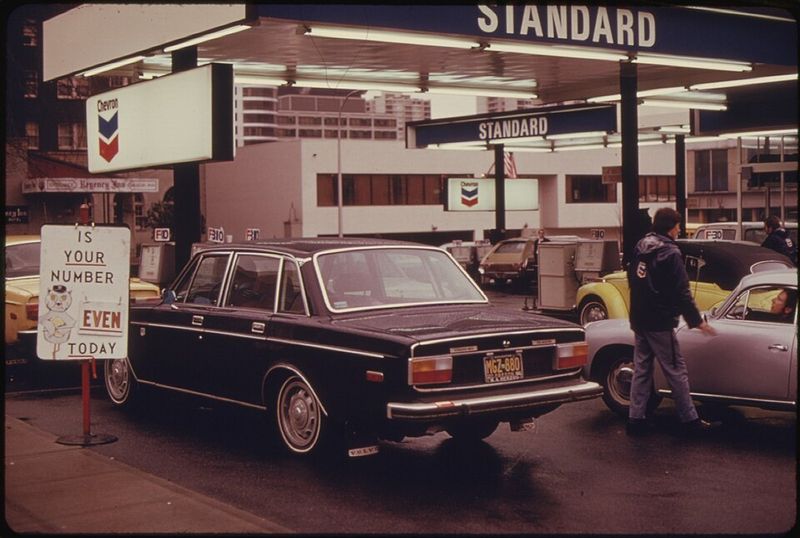
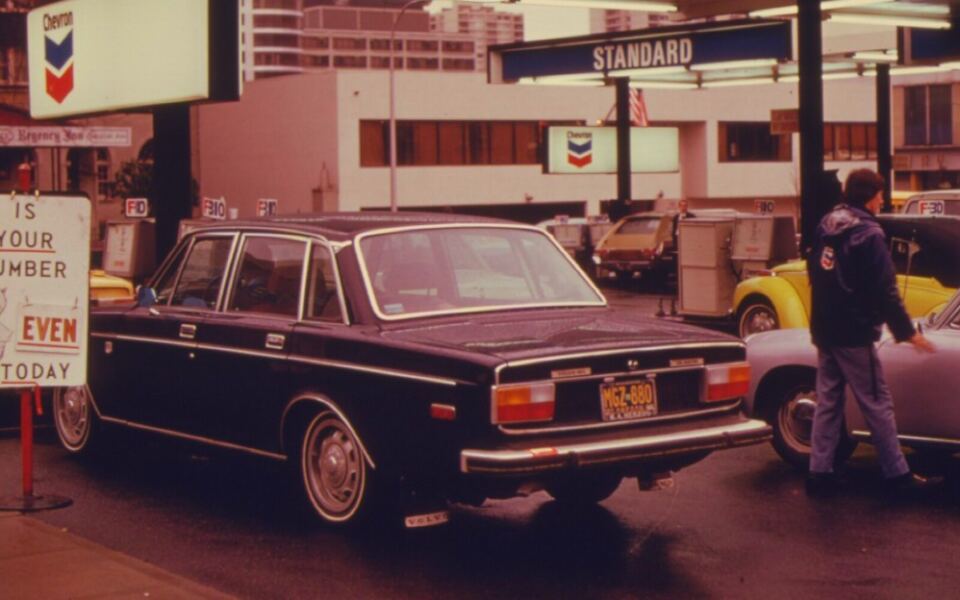
Your license plate used to be your fuel ticket. In several states, the last digit decided which days you could buy gas.
The rule was simple on paper. Plates ending in an odd number could buy on odd dates, and even plates got even dates.
New Jersey adopted the system in 1974, and other states followed with their own versions. New York added a twist by letting drivers buy only part of a tank on their assigned days.
Vanity plates caused headaches. Some had no number at all, so officials had to decide which group they belonged to.
The goal was to calm panic buying and shorten lines. Results were mixed, and lines still formed in many towns.
Forgetting the date could mean a wasted trip. Plenty of families taped a reminder note to the dashboard just to keep track.
4. Drove at 55 MPH Even on Wide-Open Highways
Empty interstate, no traffic, and the speedometer still stuck at 55. That was the law of the land starting in January 1974.
President Nixon signed the Emergency Highway Energy Conservation Act, which set a national maximum speed of 55 miles per hour. States that refused risked losing federal highway money, so they all fell in line.
The thinking was simple. Cars burn less fuel at lower speeds.
Drivers used to cruising at 65 or 70 were not thrilled. Long trips across Texas or Nevada suddenly took a lot longer.
There was an unexpected bonus, though. Road safety improved noticeably in the year after the law began.
The limit lasted far longer than the embargo. Congress did not fully repeal it until 1995, which inspired at least one famous rock song complaining about driving 55.
5. Faced Limits on How Much Gas They Could Purchase
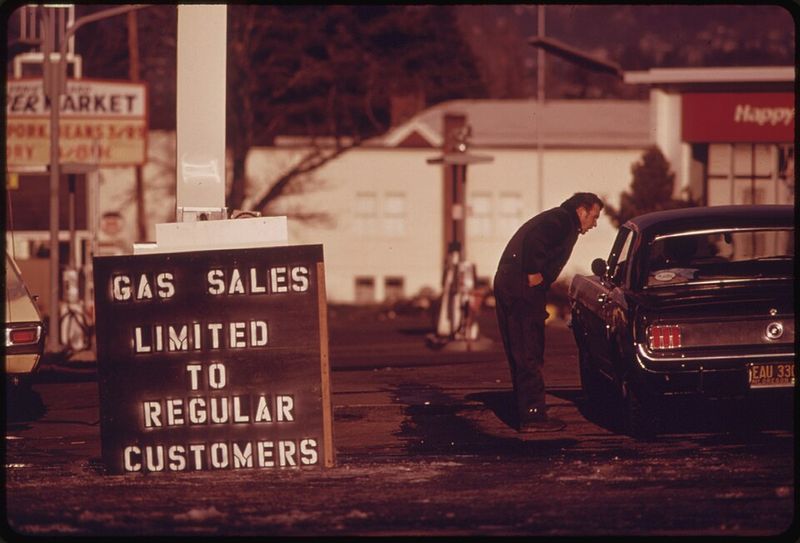
Finally reaching the pump did not mean you could fill the tank. Many station owners posted signs limiting each customer to a certain amount.
Some set the cap in gallons, such as five or ten. Others used dollar amounts, like three dollars per car.
The idea was fairness. If every driver took a little, more people could leave with something.
The rules changed from station to station and town to town. A driver might get ten gallons in one place and only half that a mile away.
That unpredictability turned planning into a puzzle. Commuters with long drives sometimes had to visit several stations in one week just to get by.
A handy tip from the era still holds up today. Keeping your tank above half full means you are rarely caught off guard when supplies get tight.
6. Saw Gas Stations Run Completely Out of Fuel
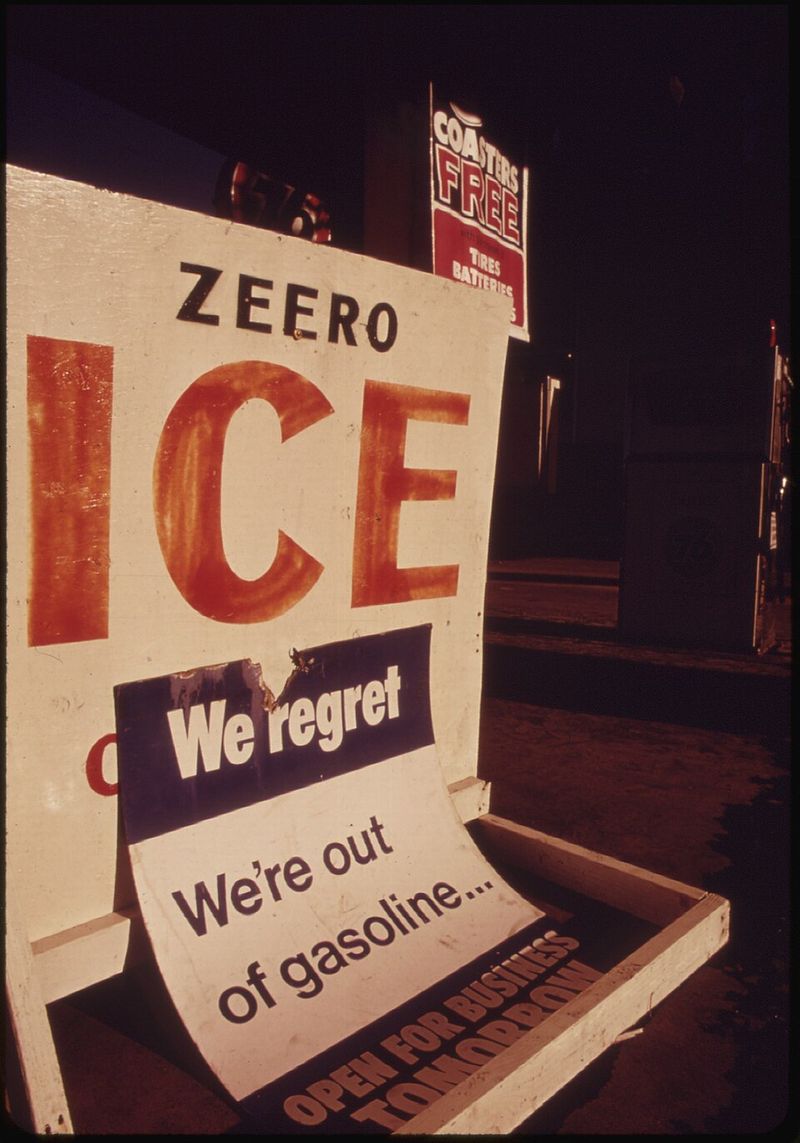
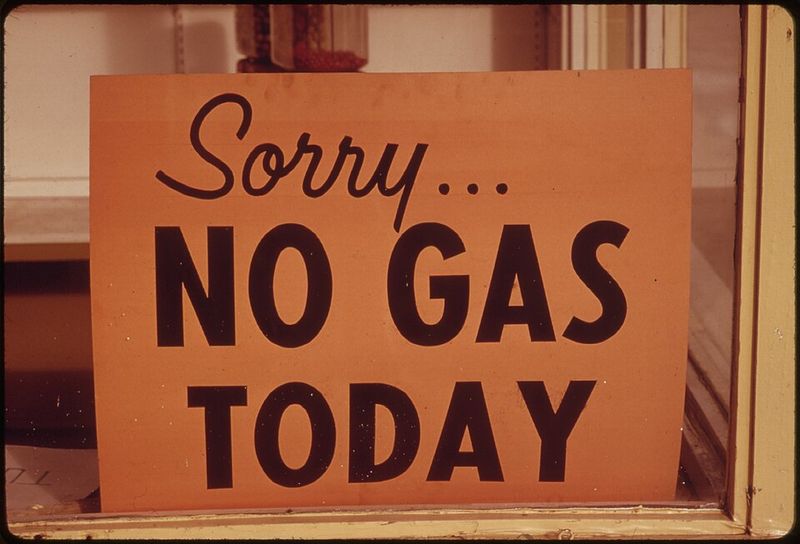
Sorry, No Gas Today. Few signs were more common in late 1973, or more dreaded.
Some areas used a color-coded flag system so drivers could tell supply levels from the road. Green meant gas for anyone, yellow meant limited sales, and red meant the tanks were dry.
Price was only part of the problem. A federal allocation system sent fuel to regions based on old patterns, so some places got too little while others had extra.
Deliveries arrived unevenly, and stations often sold out within hours. Word of mouth became a valuable tool.
Neighbors traded tips about which station got a truck that morning. Drivers sometimes passed three or four closed stations before spotting a green flag.
The empty station became a symbol of the decade. It still shows up in history books about the 1970s.
7. Carried Extra Gasoline in Portable Containers
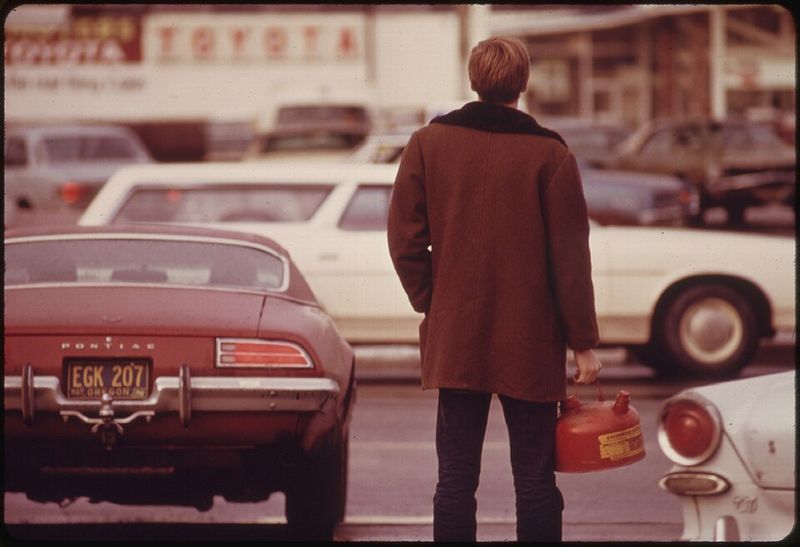
When the next fill-up is a mystery, a spare can of gas starts to look like a smart idea. Plenty of Americans thought so in 1973.
Drivers bought extra fuel whenever they found an open station. They stored it in garages, basements, and car trunks.
The reasoning made sense. Nobody wanted to get stranded on the way to work.
The method, however, often did not. Some people used containers that were never designed for gasoline, and others kept them in hot or enclosed spaces.
Fire officials issued warnings about these risky habits. They urged people to use approved cans and keep them out of living areas.
The trend showed how fast a normal purchase had turned into something people hoarded. Today, safety rules for fuel cans are much stricter, partly because of lessons learned during shortages like this one.
8. Started Carpooling With Neighbors and Coworkers
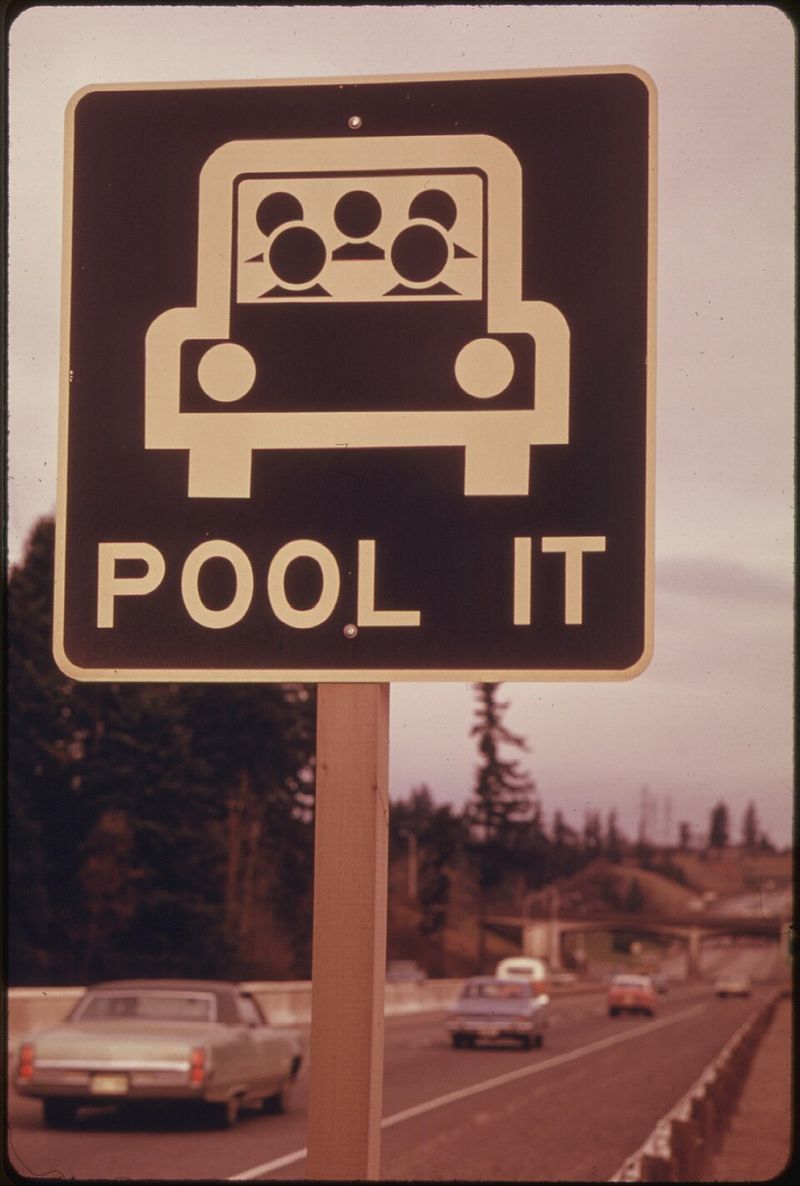
Driving alone to work was practically an American right by 1973. The fuel shortage made sharing a ride suddenly sensible.
Employers posted sign-up sheets so workers living near each other could team up. Government offices and community groups pushed the idea too, with posters and radio messages.
Carpooling was nothing new. During World War II, Americans had been told to share rides to save rubber and fuel.
What changed in 1973 was the urgency. With lines at every pump, four people in one car meant three fewer cars waiting for gas.
Neighbors who barely knew each other ended up chatting every morning. Some carpools lasted for years after the crisis faded.
The idea also helped inspire carpool lanes on highways in later decades. If you have ever seen an HOV sign, you are looking at part of that legacy.
9. Turned Down Their Thermostats to 68 Degrees
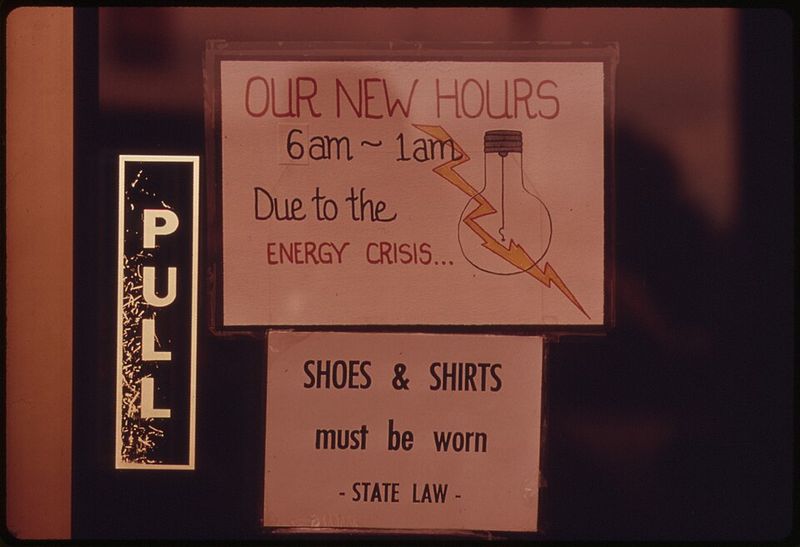
Grab a sweater. That was the official advice from the White House in the winter of 1973.
The crisis hit more than cars. Heating oil was also in short supply, especially in the Northeast where many homes depended on it.
President Nixon asked Americans to set home thermostats around 68 degrees during the day. He suggested going even lower at night while people slept.
Offices, schools, and government buildings were asked to follow along. Some federal workers noticed their workplaces getting chillier almost overnight.
Families who liked a toasty living room had to adjust. Cardigans and wool socks became everyday indoor wear.
The 68-degree rule had staying power. Energy companies and government agencies still recommend that setting today as a smart way to cut winter heating bills, so the 1973 advice never really went away.
10. Watched Christmas Lights and Decorative Displays Go Dark
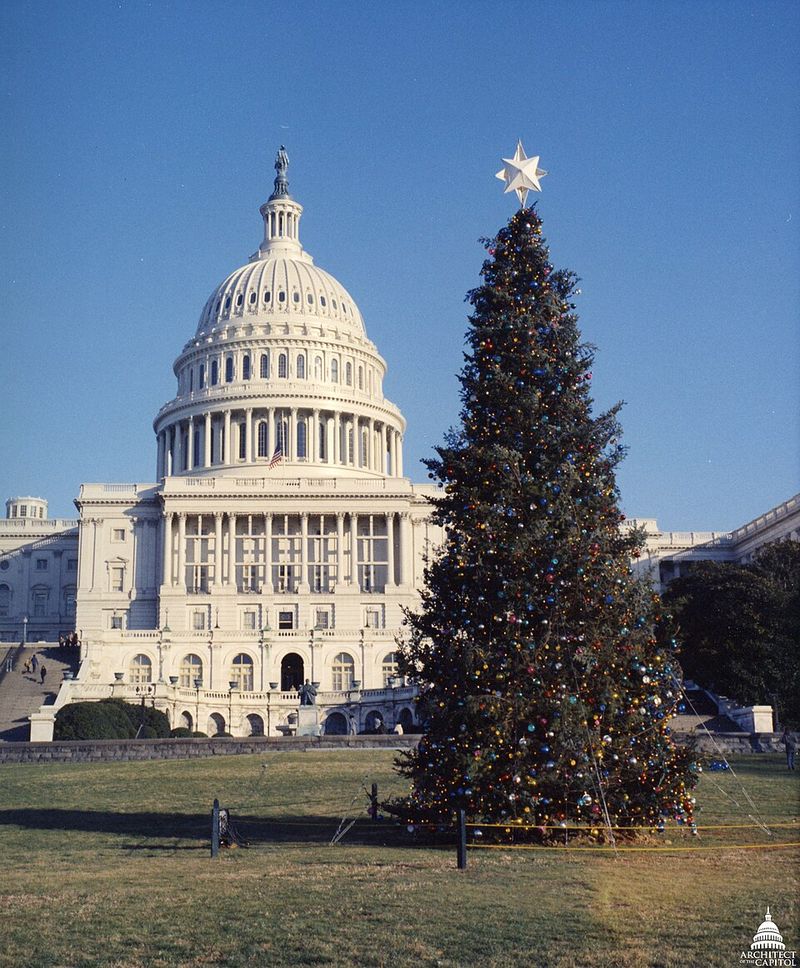
Holiday cheer came with a power budget in December 1973. Americans were asked to cut back on decorative lighting during the Christmas season.
Oregon took the request further than most. The state banned Christmas and commercial display lighting altogether that year.
In Washington, D.C., the National Christmas Tree also joined the effort. Its lighting was scaled back sharply, and only the star on top was fully lit during much of the season.
Towns trimmed their downtown displays. Many families hung fewer strings of bulbs on their houses.
Old-style bulbs used much more electricity than modern LED lights, so the savings were real. A full yard display in 1973 could add a noticeable amount to a power bill.
That modest Christmas became a talking point for years. It showed that the crisis had reached even the most loved traditions.
11. Saw Cities Turn Off Unnecessary Street and Building Lights
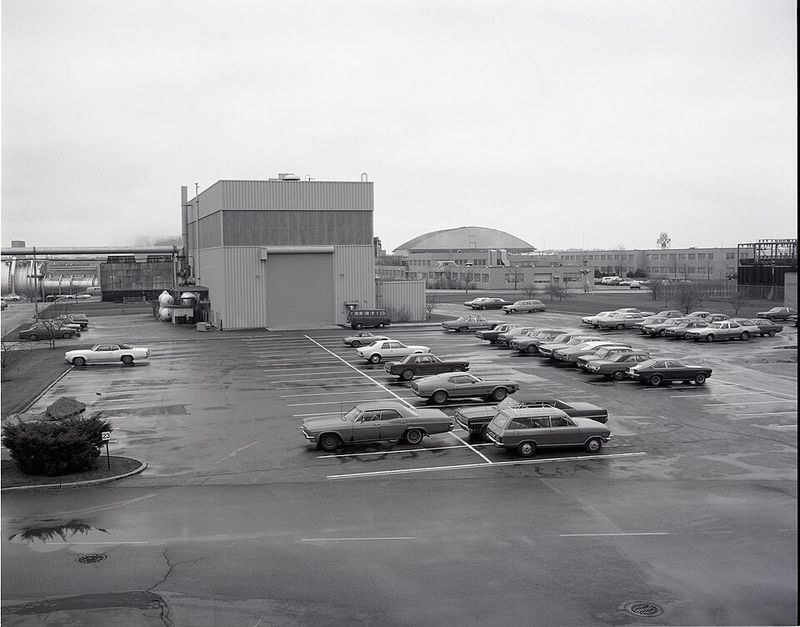
Skyscrapers once kept their lights on all night just to look impressive. During the energy crisis, that habit came under fire.
Officials urged office towers, stores, and public buildings to switch off lights that were not needed after closing time. Glowing advertising signs were among the first targets.
Some cities reduced decorative lighting on bridges and monuments. Others dimmed lights in public spaces where safety was not a concern.
Important lighting stayed on. Streetlights at busy intersections and lights near hospitals and transit stations were kept running.
The changes made the crisis easy to spot. Even people who rode buses or walked everywhere could see that something had shifted.
Many businesses discovered they saved real money. Timers and automatic switches grew more popular in the years that followed, and they remain common in commercial buildings today.
12. Faced Gasoline Theft and Locked Their Gas Caps
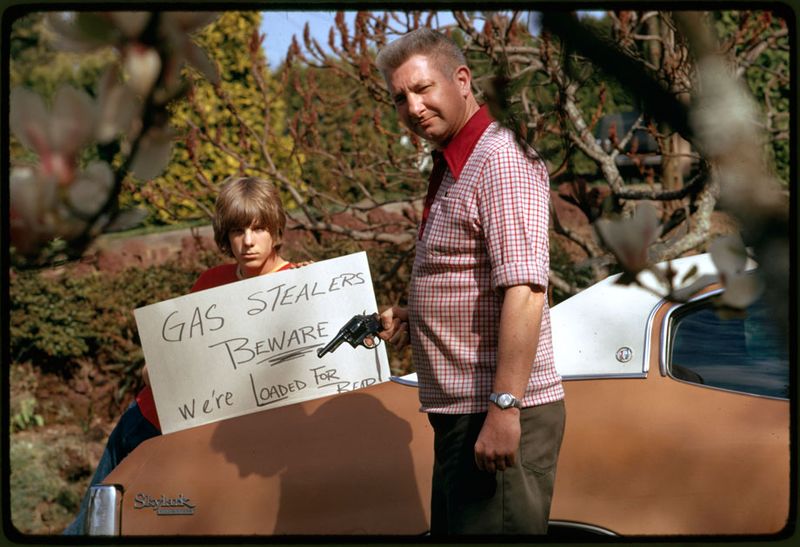
A full tank could make your car a target. As gas became scarce, stories about siphoning thieves spread across the country.
Siphoning meant using a hose to pull fuel out of someone else’s tank. It was quick, quiet, and hard to prove.
Drivers responded by changing where they parked. Many chose well-lit spots, garages, or driveways close to the house.
Locking gas caps also flew off store shelves. These simple caps needed a key to open, and they cost only a few dollars.
Auto parts shops reported strong sales during the shortage. For many families, a small purchase felt like cheap insurance.
Losing just a few gallons could mean another long wait in line. Protecting what you already had became nearly as important as finding more.
Today, many cars still have locking fuel doors as standard equipment.
13. Considered Trading Their Big Cars for Smaller Models
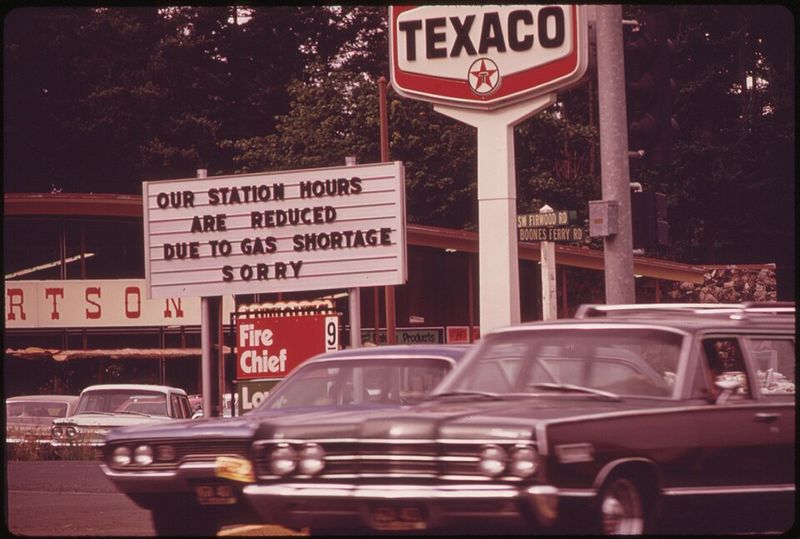
In 1972, a giant sedan with a V8 engine was a sign you had made it. A year later, it was a sign you would be spending lots of time at the pump.
Many big American cars got around 10 to 13 miles per gallon. With fuel scarce, that number suddenly mattered a lot.
Small imports looked much smarter. Volkswagen, Toyota, Honda, and Datsun saw strong interest as buyers searched for better mileage.
Detroit felt the pressure. Automakers began working on smaller, lighter models to compete.
Change was gradual, and large cars did not disappear overnight. Still, the crisis helped lead to federal fuel economy standards in 1975.
Those rules required carmakers to improve average mileage over time. The fuel sticker on a new car window today traces part of its story back to this moment.
14. Watched President Nixon Announce a National Energy Emergency
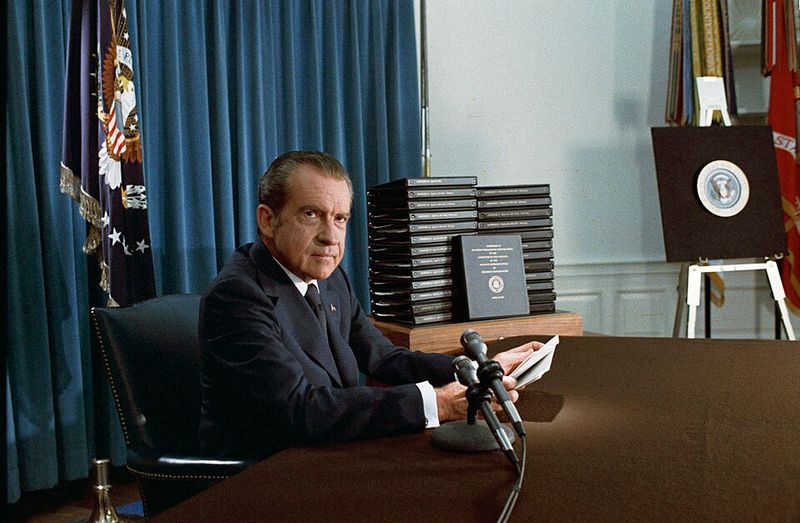
Families gathered around the television on November 7, 1973, to hear a message few expected. President Richard Nixon told the country it faced a serious energy shortage.
He asked Americans to make sacrifices. His list included lower speed limits, cooler homes and offices, and less unnecessary energy use.
Nixon also introduced Project Independence. Its goal was to make the United States energy self-sufficient by 1980.
He compared the effort to the Manhattan Project and the Apollo space program. That showed how big he wanted the plan to sound.
The 1980 target was never reached. Still, the speech set the tone for years of energy policy.
The Strategic Petroleum Reserve, created in 1975, grew out of this same push for security. It still stores emergency oil today, a lasting reminder of that November evening.
Share this story