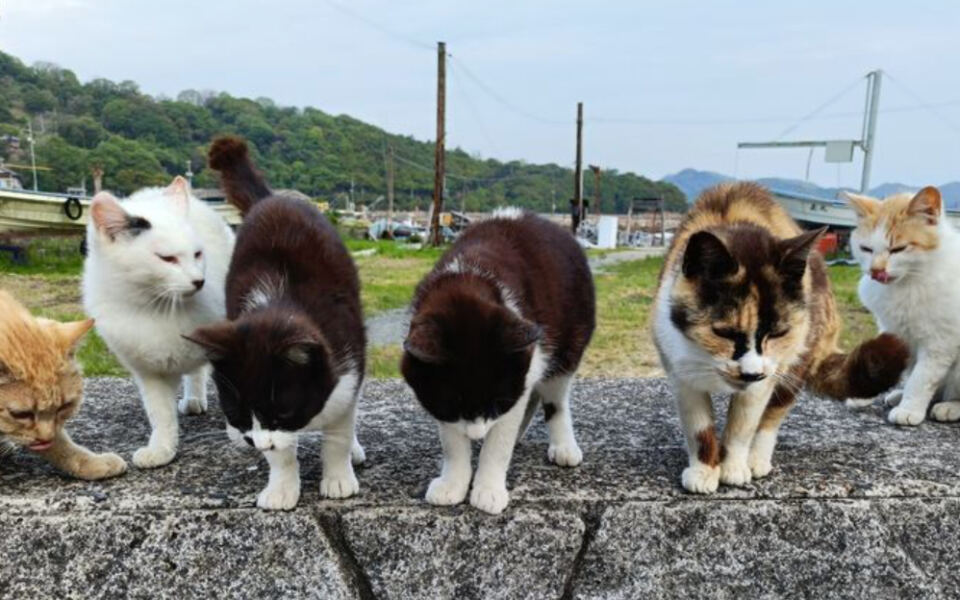
Some islands are famous for their beaches or history, but a handful have earned a reputation for something far more charming: their cats. On these islands, cats are not tucked away in apartments or backyards.
They wander harbors, nap beside fishing boats, patrol village lanes, and accept chin scratches from total strangers as if it is simply part of the job. Japan alone has an impressive collection of these places, where cats can outnumber people by a wide margin and residents treat the animals as genuine community members.
Beyond Japan, islands across the Mediterranean, the Pacific, and the United States have their own remarkable feline stories. Whether a centuries-old shrine, a converted coal-mining village, or a famous writer’s historic home, each place on this list has made cats a real and recognizable part of daily island life.
Read on to find out which islands made the cut.
1. Tashirojima, Ishinomaki, Miyagi, Japan
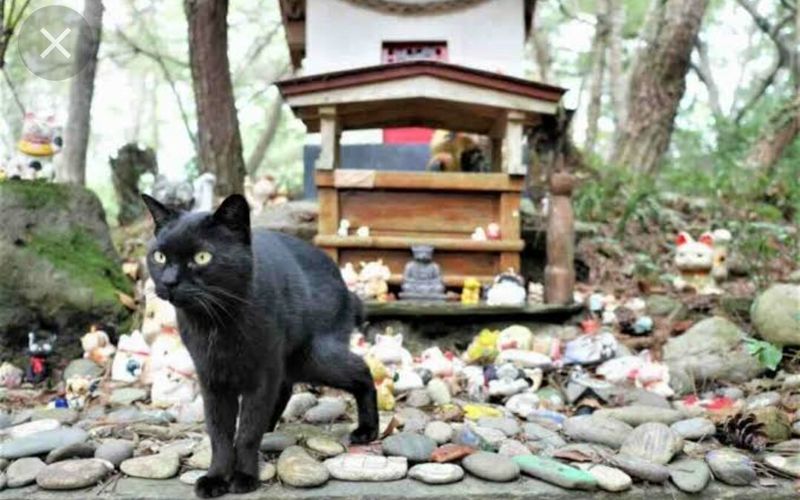
No island on earth has quite the same reputation for feline reverence as this small patch of land off the coast of Miyagi. Cats on Tashirojima originally earned their place by protecting silk-making operations from rodents, and fishermen came to associate them with good fortune, even reading the animals’ behavior as a guide for weather and fishing conditions.
Today, cats comfortably outnumber the island’s human population, with estimates ranging from two to as many as nine cats per person. They wander freely around Nitoda Port, where they often greet arriving ferries as if checking the passenger list.
A small Cat Shrine sits in the island’s interior, built in memory of a cat that lost its life when a rock fell during silkworm operations. The island also offers cat-shaped camping cabins, making it clear that the feline residents here are not just tolerated but genuinely celebrated.
2. Aoshima, Ozu, Ehime, Japan
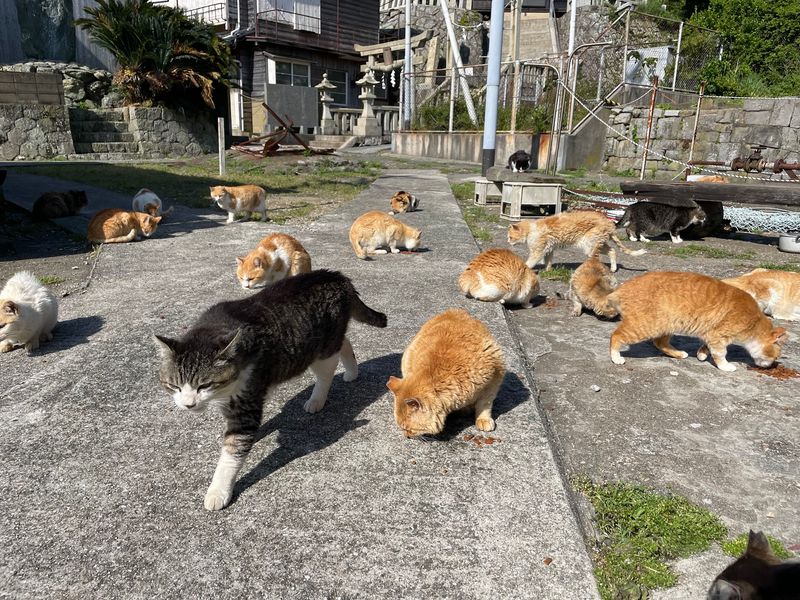
At one point, Aoshima became arguably the most viral cat island in the world, and the numbers behind that fame are genuinely hard to believe. The cat population here grew so dramatically that felines outnumbered humans by ratios that left visitors doing double-takes at every doorstep.
Cats arrived on the island during its active fishing days, when they helped keep rodents away from boats and stored supplies. That practical relationship eventually became something much more embedded in the island’s identity.
Both the human and cat populations have aged and decreased since those headline-grabbing years, so today’s Aoshima is quieter than the photographs from a decade ago suggest. Fewer than a dozen permanent residents remain, and the cat count has also dropped.
Still, cats continue to appear around the port and village lanes, making Aoshima a genuinely interesting stop in the Seto Inland Sea for anyone curious about this unusual island dynamic.
3. Sanagishima, Tadotsu, Kagawa, Japan
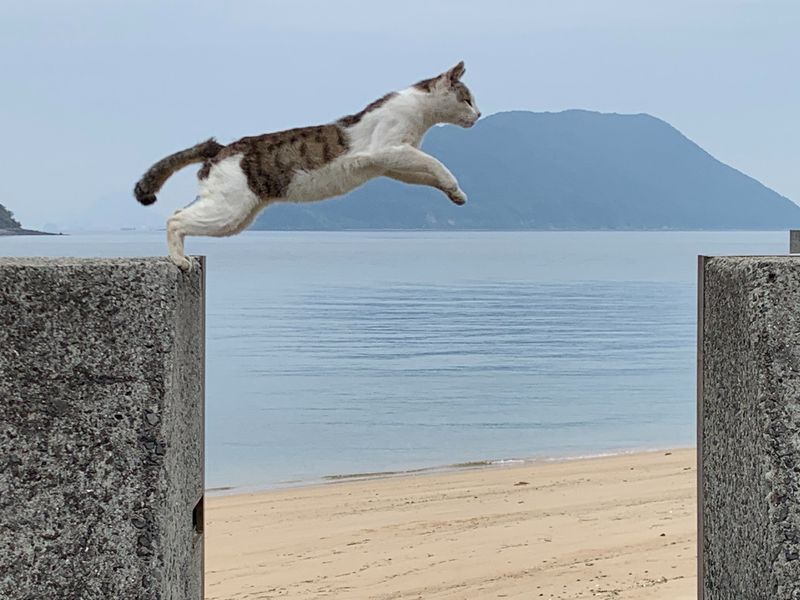
Sanagishima offers a refreshingly uncommercialized version of the Japanese cat-island experience. There are no souvenir shops stacked with cat plushies here, and no purpose-built photo spots with cute signs.
The cats simply exist as part of the landscape, resting beside harbor walls and watching ferry arrivals with the calm authority of longtime locals.
The island gained national attention partly through photographs of cats leaping between gaps in the breakwaters, an image that circulated widely online and put Sanagishima on the map for cat enthusiasts across Japan.
Around Honura Port, visitors can observe cats going about their routines alongside residents who treat the animals as a natural part of neighborhood life. Because the island lacks the tourist infrastructure of better-known cat destinations, the experience feels more like an accidental discovery than a planned attraction.
That unscripted quality is precisely what makes Sanagishima worth the ferry ride.
4. Ainoshima, Shingu, Fukuoka, Japan

A short ferry ride from Shingu deposits visitors on an island where cats and fishing boats share the harbor in a surprisingly harmonious arrangement. Ainoshima is well known among Japan’s cat-island enthusiasts, drawing visitors who come specifically to observe the free-roaming feline population that has settled into the rhythms of a working waterfront community.
Unlike some of Japan’s more remote cat islands, Ainoshima has retained a functional fishing identity. Boats come and go, residents carry on daily tasks, and the cats fit naturally into that backdrop rather than being the sole reason the island exists.
An afternoon here can involve wandering old lanes with sea views on one side and cats stretched out on doorsteps on the other. The combination of working harbor atmosphere and relaxed feline residents gives Ainoshima a character that feels earned rather than engineered for tourism purposes.
5. Fukashima, Saiki, Oita, Japan
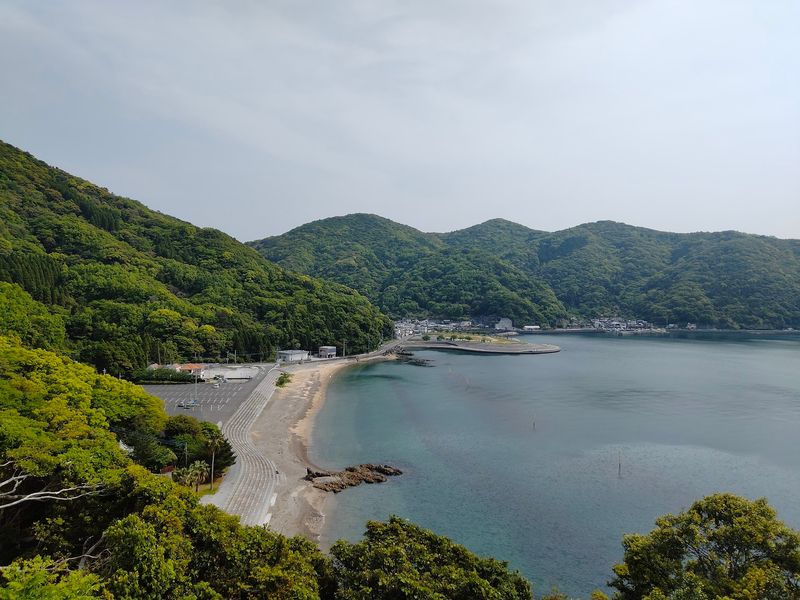
Roughly 60 cats live on Fukashima alongside approximately 11 permanent human residents, which means the cats are not just a feature of this island, they are practically half the population. Every single cat on the island has a name, which might be the most charming detail in this entire list.
Residents actively participate in feeding and monitoring the animals, treating them as community cats rather than strays. Visitors may find groups of cats near the small village settlement, each one identifiable to the people who care for them daily.
Beyond the cats, Fukashima is also known for traditional miso production, giving the island a dual identity as both a culinary heritage site and an unlikely feline haven. The combination of a tiny human population, a named cat community, and a centuries-old food tradition makes Fukashima one of the most quietly remarkable islands on this entire list.
6. Manabeshima, Kasaoka, Okayama, Japan
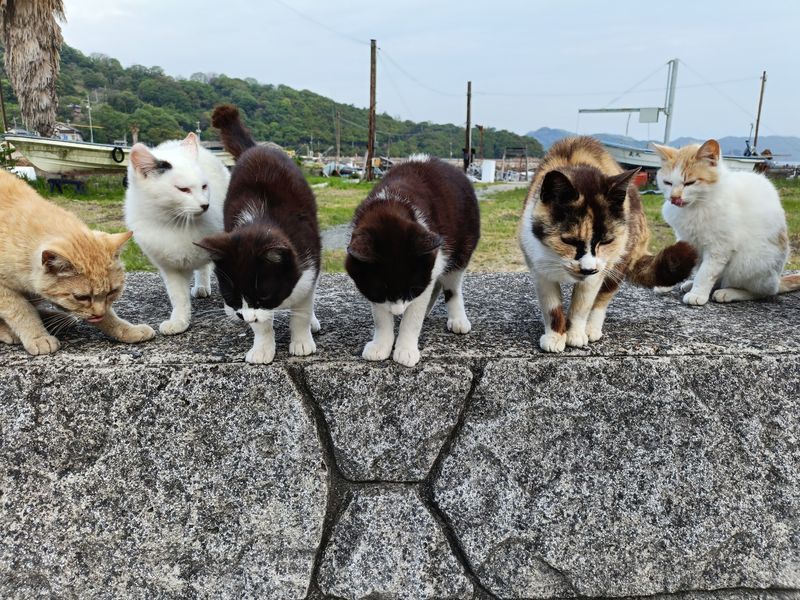
Old fishing villages and photogenic cats are a combination that almost writes itself, and Manabeshima delivers both without any theatrical effort. The island sits in the Seto Inland Sea and retains the character of a genuinely lived-in community, with narrow lanes, weathered houses, harbor walls, and fishing equipment that have not been tidied up for tourist consumption.
Cats have reportedly come to outnumber people here, appearing in both of the island’s main settlements and becoming an unmistakable part of the visual texture of daily life. They rest against doorways, wander between parked bicycles, and occupy whatever patch of ground suits them.
What separates Manabeshima from more commercialized cat destinations is that it still feels primarily like a place where people live and work. The cats are abundant, but they share the stage with a community that has its own independent history and identity beyond its feline reputation.
7. Ogijima, Takamatsu, Kagawa, Japan
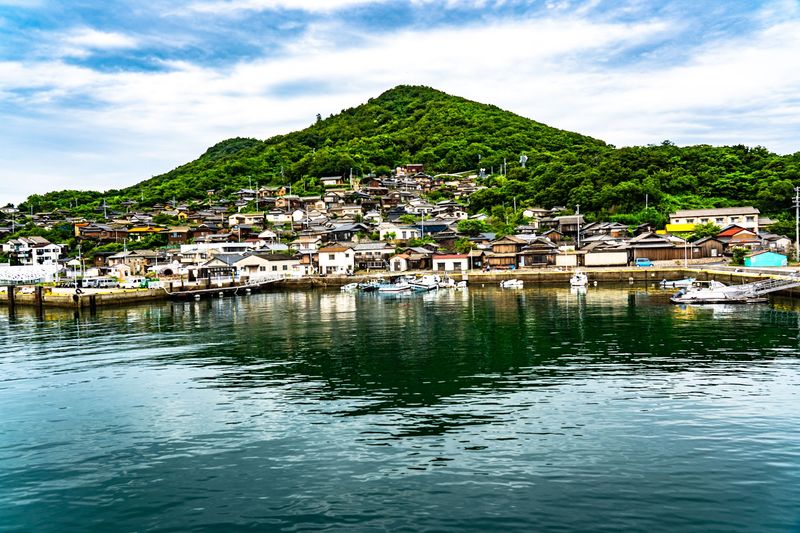
Ogijima rises sharply from the Seto Inland Sea, its houses stacked onto steep hillsides above a compact harbor that gives the island an almost vertical personality. Cats became so associated with this place that Ogijima built a national reputation as a cat destination, though sterilization efforts introduced in recent years have meaningfully reduced the population.
Cats are still regularly encountered around the port, along village streets, and on the route toward Toyotamahime Shrine. They navigate the island’s inclines with the practiced ease of residents who have been doing so for generations.
Ogijima also participates in the Setouchi Triennale, an international art festival that has placed contemporary artworks across the island’s public spaces. The result is an unusual combination: a working hillside village, an outdoor contemporary art gallery, and a resident cat population that wanders through all of it without the slightest concern for art criticism.
8. Yushima, Kamiamakusa, Kumamoto, Japan
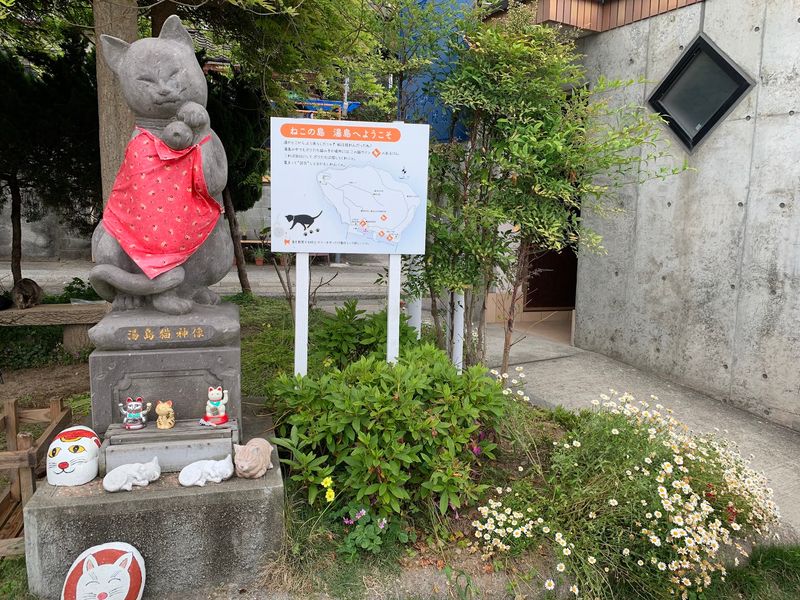
Most cat islands leave visitors to discover the animals by chance, but Yushima has taken a more organized approach. Local visitor information actually maps where specific cats tend to appear around the island, giving visitors a kind of unofficial neighborhood directory for its estimated 200 feline residents.
Many cats concentrate in the southern village, where they wander narrow lanes and gather near the waterfront in loose clusters. Individual animals have names and recognized territories, documented well enough that a walk around the island can feel like a genuine introduction rather than a random encounter with anonymous strays.
That level of familiarity between residents and cats reflects how deeply the animals are woven into the island’s daily routine. Yushima sits off the coast of Kumamoto Prefecture and is accessible by ferry, making it reachable for visitors willing to venture beyond the more widely advertised cat islands of the Seto Inland Sea.
9. Enoshima, Fujisawa, Kanagawa, Japan
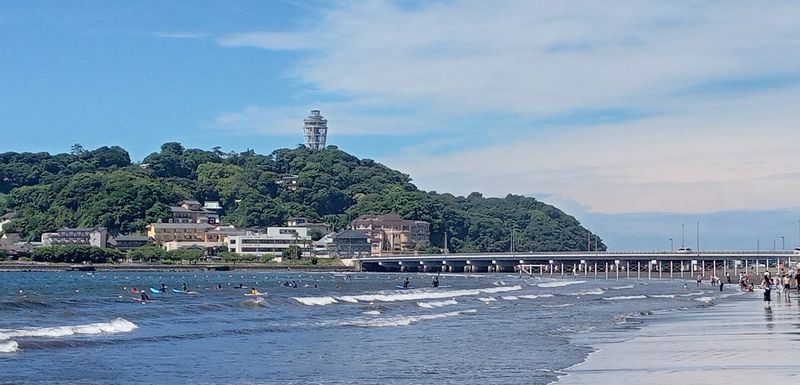
Enoshima is a different kind of cat island, busy with shrines, seafood restaurants, souvenir shops, and crowds of day-trippers from the greater Tokyo area. Yet cats have long been a quieter and more understated part of the island’s character, particularly in lanes away from the main tourist corridor.
Their numbers have declined from earlier decades, so visitors expecting cats around every corner will need to adjust expectations. The cats that remain are generally treated as community animals, cared for by local residents who feed and monitor them as a matter of neighborhood routine rather than organized tourism.
Finding them requires a bit of patience and a willingness to explore the less-trafficked parts of the island. For visitors already making the trip for the shrines and coastal views, spotting one of Enoshima’s resident cats in a quiet corner adds a small but genuinely satisfying bonus to an already worthwhile excursion.
10. Syros, Cyclades, Greece
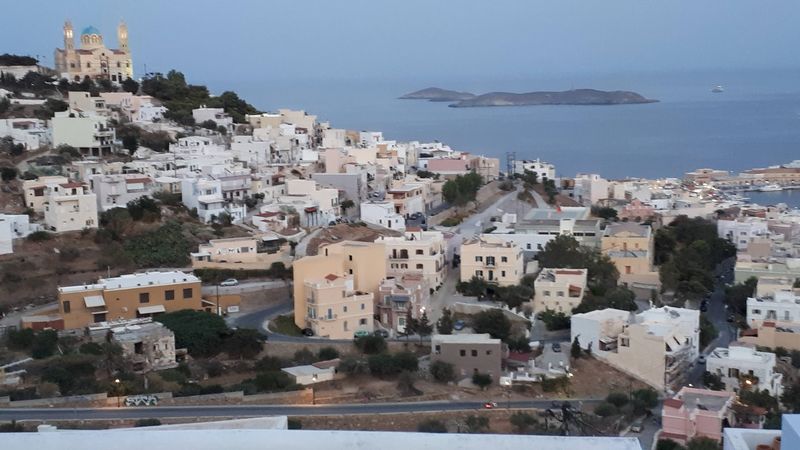
Syros is not the first Greek island most travelers think of, but cat lovers have good reason to pay attention. Cats appear throughout the island, from busy waterfront settlements to quieter whitewashed village lanes, and their presence is substantial enough to support organized volunteer welfare programs.
The group Syros Cats manages feeding, sterilization, veterinary care, and medication for a large portion of the island’s stray population, including a significant colony in the coastal area of Kini. Many cats depend on individual residents and volunteer guardians rather than a centralized shelter, which means their care is distributed across the community.
That community-based approach reflects how deeply cats are woven into everyday life here. Syros has its own distinct island identity, with a well-preserved neoclassical capital and a year-round population that gives it a lived-in character.
The cats are simply part of that picture, recognized and cared for as familiar neighborhood residents.
11. Malta, Malta
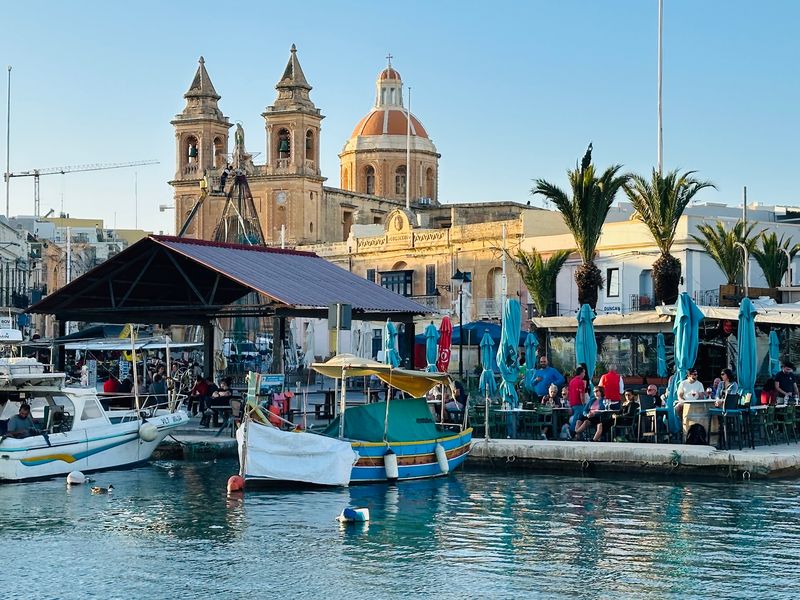
Across Malta, cats appear in city streets, rural corners, harbor towns, and seaside neighborhoods with a consistency that makes them feel like an unofficial part of the island’s infrastructure. Many are community cats, regularly fed and watched over by residents who do not own them in any formal sense but consider their welfare a local responsibility.
Informal feeding stations and loosely organized colonies reflect how visible and accepted the animals are in Maltese neighborhoods. The relationship between residents and free-roaming cats has developed over centuries, shaped by the island’s maritime history and the practical role cats once played around ports and grain stores.
Welfare organizations continue working on population management through trap-neuter-return programs and adoption initiatives. The situation is not without challenges, but cats remain a remarkably recognizable feature of the Maltese streetscape.
Visitors who spend any meaningful time on the island are almost certain to encounter them, usually lounging in a patch of afternoon sun without a care in the world.
12. Taiwan, Taiwan

Taiwan earns its place on this list largely because of one remarkable village tucked into the hills of New Taipei City. Houtong was a coal-mining community that declined sharply after the mines closed, leaving behind empty buildings and a shrinking population.
What changed its trajectory was cats.
Local residents began caring for abandoned cats in the early 2000s, and the colony grew. Word spread, visitors arrived, and Houtong gradually transformed into one of Taiwan’s most unusual destinations.
Cats now wander stairways, rooftops, lanes, and spaces beside the railway line that still runs through the village.
A dedicated bridge was built to give cats safe passage over the tracks, and cat-themed shops have followed. The animals are not decorative mascots placed there for effect.
Their long-term presence and the community’s commitment to their care are what created the village’s modern identity, making Houtong a genuinely cat-shaped success story.
13. Key West, Florida, United States
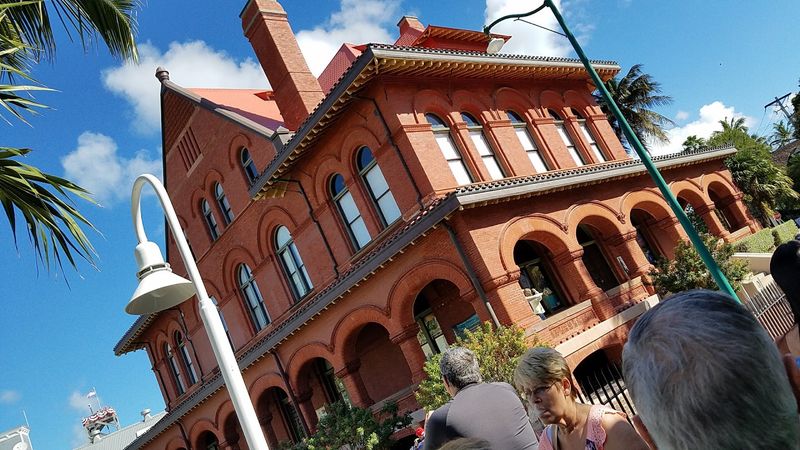
Key West has many claims to fame, but its most distinctive feline residents live behind the walls of one of the island’s most visited historic properties. The Hemingway Home and Museum is home to dozens of cats, with roughly half displaying polydactyly, a genetic trait that gives them extra toes on their paws.
These cats have remarkable freedom within the property. They appear on pathways, lounge on period furniture, and occupy shady corners while visitors tour the house and gardens.
Each cat carries a name connected to a historical or literary figure, continuing a tradition that has become as much a part of the property’s identity as the building itself.
The cats are so closely associated with Key West that they have become almost as recognizable as the writer whose former home they occupy. Whether a visitor arrives for the literary history or the polydactyl paws, the cats reliably deliver something memorable on every tour.
14. Lanai, Hawaii, United States

Lanai approaches the cat question from a practical and conservation-minded angle. The island is home to the Lanai Cat Sanctuary, a large open-air refuge that provides a humane home for free-roaming cats while also protecting the native birds that free-ranging cats would otherwise threaten.
The sanctuary gives its residents space to climb, nap, socialize, and approach visitors on their own terms. All cats receive veterinary care, and many are available for adoption.
Volunteers and staff manage the facility, which has grown into one of Lanai’s most distinctive visitor experiences.
The setup reflects a broader challenge that many island communities face: genuine affection for cats combined with the ecological reality that unmanaged feline populations can seriously harm native wildlife. Lanai’s solution is not perfect, but it is thoughtful and ongoing.
For visitors, the sanctuary offers a surprisingly moving experience, part animal refuge, part conservation project, and entirely worth an afternoon on one of Hawaii’s quietest islands.
Share this story