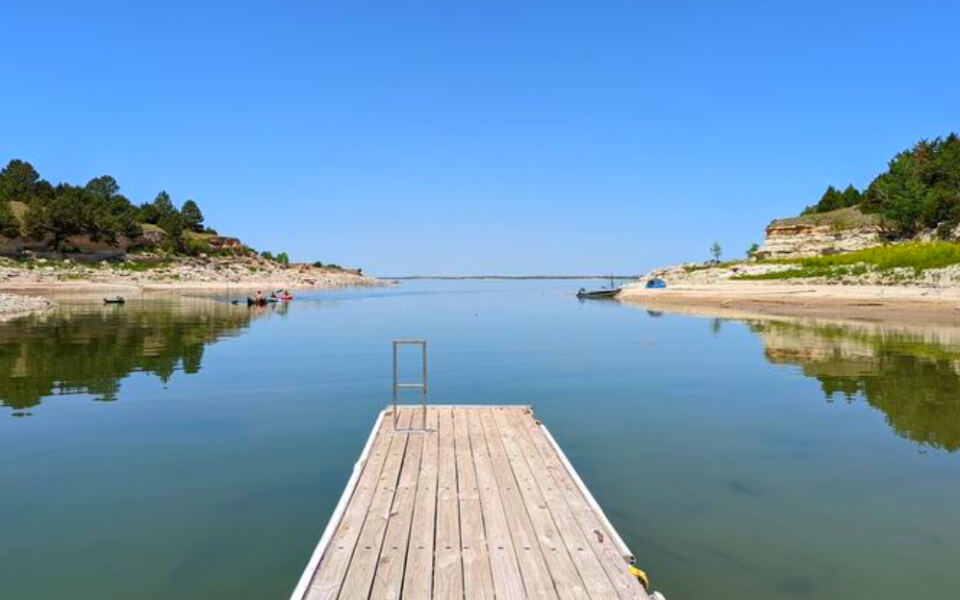
One of Nebraska’s most popular summer destinations is undergoing a dramatic change. The state’s largest reservoir, famous for broad white-sand beaches and clear water, has seen its shoreline retreat as drought and heavy water demands reduce the amount stored behind Kingsley Dam.
The numbers make the change difficult to ignore. According to the figures cited in the article, the reservoir held roughly 61 percent of capacity in May 2025, but by mid-2026 that figure had fallen to around 27.5 percent.
The problem is bigger than one dry summer. Reduced snowmelt and runoff from the North Platte watershed are limiting what flows into the reservoir, while irrigation and groundwater use continue pulling on the same water system.
The result is now visible from shore, where exposed lakebed and mineral-stained rocks mark places that were underwater not long ago.
The Grand Scale of Big Mac: Nebraska’s Inland Sea
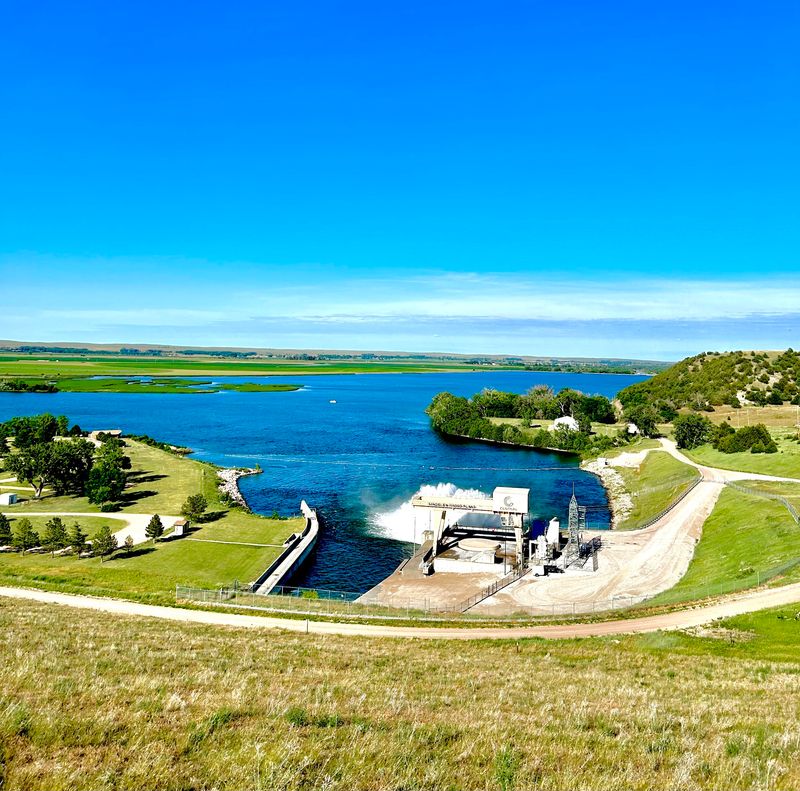
My first glimpse of Lake McConaughy from the top of Kingsley Dam stopped me cold. The water stretches in every direction like a misplaced ocean, and for a split second, the Nebraska prairie behind me feels like a different planet entirely.
Officially, Lake McConaughy sits about nine miles north of Ogallala, Nebraska, with its State Recreation Area office at 1475 NE-61, Ogallala, NE 69153. At full capacity, it covers 35,700 acres, runs 22 miles long, and reaches up to four miles wide, making it Nebraska’s largest reservoir by a significant margin.
The lake’s 76 miles of shoreline are lined with fine, sugary sand carried in by the North Platte River over many years. The water clarity here surprises almost everyone who visits for the first time, with visibility reaching several feet down on calm days.
That combination of wide beaches and clear water is exactly why locals call it “Big Mac” with such obvious affection.
Kingsley Dam: The Engineering Story Behind the Lake
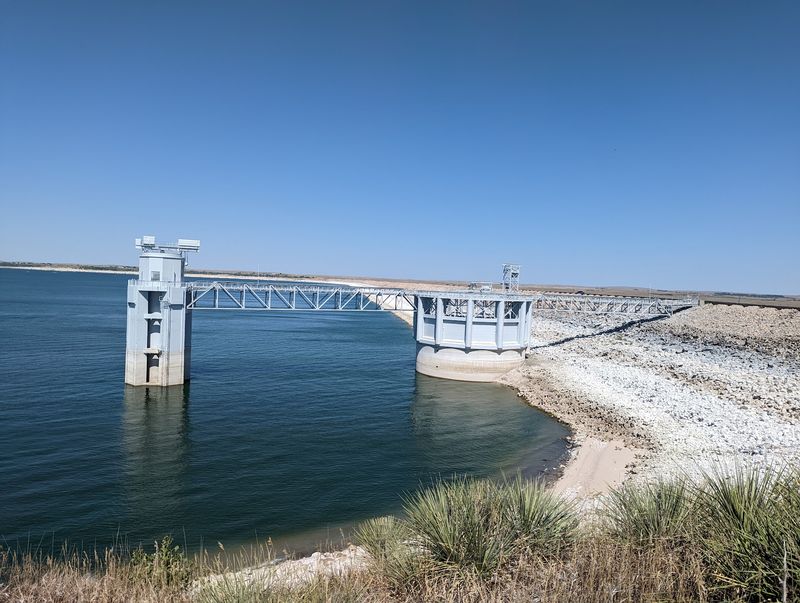
Before there was a lake, there was an idea born out of desperation. Nebraska farmers in the early twentieth century watched spring floodwaters pour down the North Platte River and disappear, while their summer fields cracked and dried without enough irrigation to survive.
Construction of Kingsley Dam began in 1936 and wrapped up in 1941, costing an estimated 43 million dollars and employing thousands of workers during the Great Depression. At the time of its completion, it ranked as the second largest hydraulically filled earthen dam in the world, a remarkable achievement for a landlocked state.
Workers pumped sand and gravel from the riverbed to build up the dam’s sides, using local Brule Clay as a watertight core material. The project was championed by Charles W.
McConaughy, a grain merchant and former mayor, and George P. Kingsley, a banker, whose names now mark both the lake and the dam forever.
Their combined vision reshaped the agricultural future of central Nebraska in ways that still ripple outward today.
Why the Lake Is Shrinking: Drought Meets Growing Demand
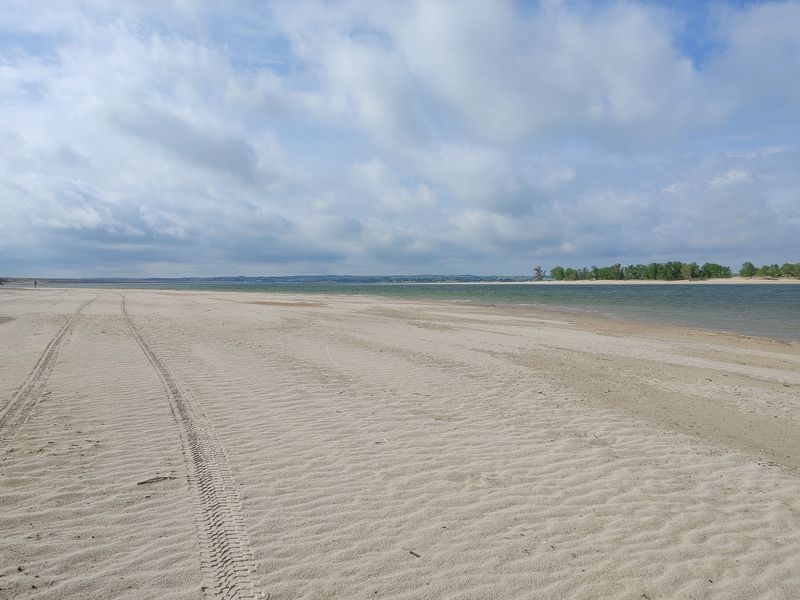
The numbers tell a sobering story. In May 2025, Lake McConaughy sat at roughly 61 percent of its total capacity.
By mid-2026, that figure had fallen to around 27.5 percent, a dramatic drop that left wide stretches of pale lakebed exposed where water once covered everything.
Two forces are squeezing the lake simultaneously. Persistent drought across the North Platte River watershed, which stretches into Wyoming and Colorado, has dramatically reduced the snowmelt and runoff that feed the reservoir each spring.
At the same time, increased groundwater pumping from wells connected to surface water streams intercepts water before it ever reaches the lake.
Agriculture accounts for a major share of the water released from the reservoir, since the lake’s primary purpose has always been irrigation for downstream farmlands. That means even during dry years, water must flow out to keep crops alive, often faster than natural inflows can replace it.
The white calcium crust visible on rocks near the dam is a quiet, visible record of just how far the waterline has retreated in recent years.
Ancient Ground: The Geology Hiding Beneath the Sand
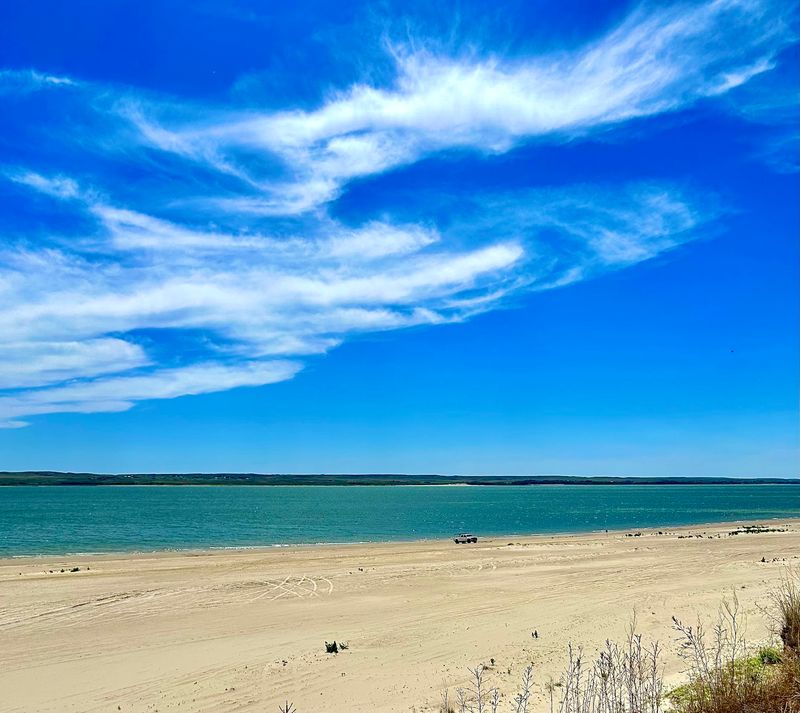
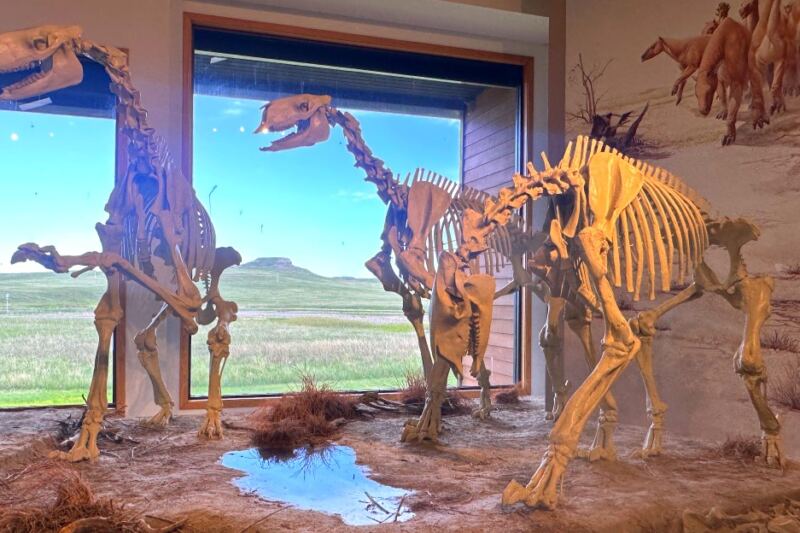
The sand beneath your beach towel at Lake McConaughy has a much older story than most visitors ever suspect. The fine grains underfoot are connected to the Miocene epoch of the Tertiary period, a time when rhinoceroses, horses, ancient elephants, and camels roamed the Great Plains.
Outcroppings along the North Platte River valley reveal excellent exposures of the Ogallala Group, continental sedimentary rocks that serve as a geological window into Nebraska’s deep past. Occasional fossilized remains from those prehistoric animals have been discovered embedded within these ancient deposits, turning a simple beach walk into something closer to a time machine.
The broader Nebraska Sandhills region surrounding the lake is the largest sand dune area in the Western Hemisphere, formed by windblown sediment from rivers that dried up thousands of years ago. Those same water-saturated gravel and sandstone layers beneath the surface now function as a critical aquifer, supplying irrigation water, livestock needs, and drinking water for communities across a wide region.
The ground here does a lot more work than it looks like from the shoreline.
On the Water: Boating, Fishing, and Pure Aquatic Freedom
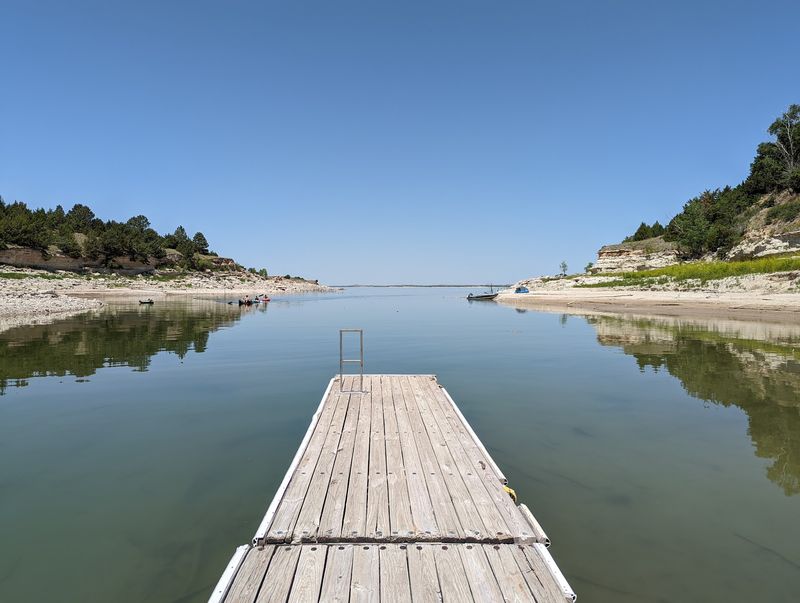
There is a particular kind of joy that comes from being out on Lake McConaughy on a clear summer morning, with the water flat and the horizon wide open in every direction. The lake’s sheer size means that even on busy holiday weekends, there is always room to spread out and find your own patch of water.
Boating, jet skiing, tubing, and wakeboarding are all popular here, and rental equipment is available for visitors who do not bring their own watercraft. Fishing draws a dedicated crowd year-round, with the lake known for healthy populations of walleye, channel catfish, Northern pike, wiper, smallmouth bass, and white bass.
Even with lower water levels in recent years, officials have maintained access through low-water boat ramps at locations like Martin Bay and Divers Bay, keeping anglers and boaters on the water when possible. Paddleboarding and kayaking offer quieter alternatives, and when the wind picks up, kite surfers and windsurfers turn the lake’s surface into a spectacular display of color and speed.
The water here has a way of pulling you back every summer.
Beach Camping Like Nowhere Else in the Midwest
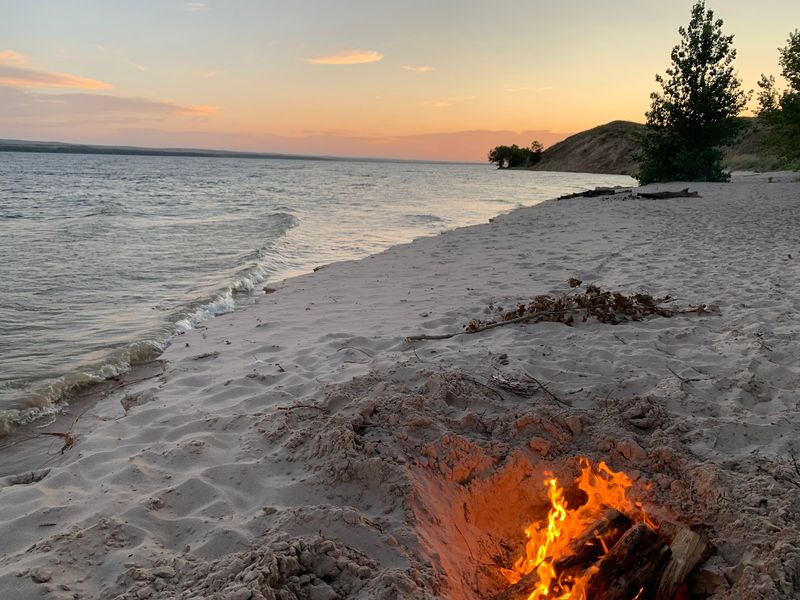
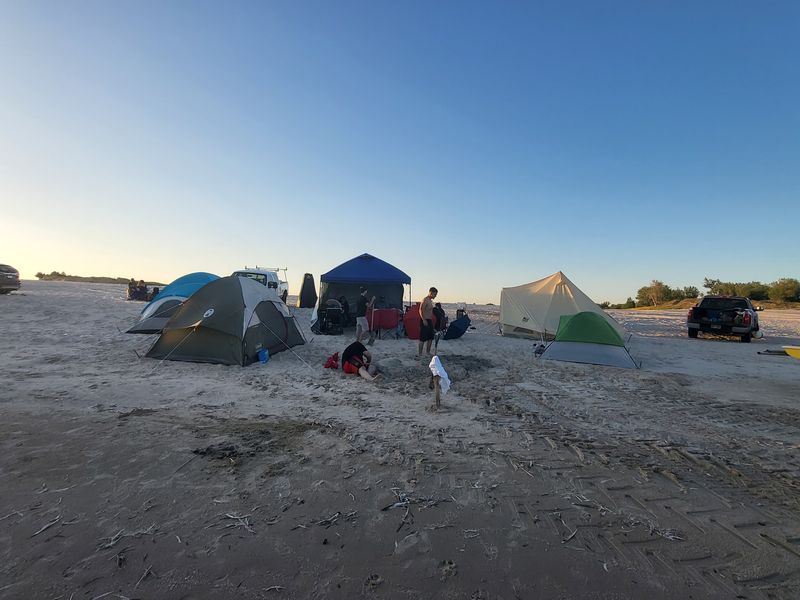
Camping right on the beach at Lake McConaughy is one of those experiences that sounds too good to be true until you actually do it. You drive your vehicle down onto the sand, park as close to the water as conditions allow, and wake up the next morning with the lake just a few steps from your door.
The recreation area includes 18 designated beach camping zones, where primitive spots can be reserved 30 days in advance. Modern campgrounds with electric, water, and sewer hookups are available at locations like Little Thunder Bay, Lone Eagle Bay, and Cedar Vue, with those sites bookable up to 180 days ahead during busy summer months.
Evening campfires crackle against a backdrop of stars that feel impossibly bright out here, far from city light pollution. Kids at dusk are busy counting frogs and toads that emerge near the shoreline, which turns out to be surprisingly effective entertainment.
A heads-up for first-timers: coin-operated showers are available, and if the sand feels especially soft near your campsite, park staff can send a tractor to help you out.
Ogallala’s Old West Roots: Cowboys, Boot Hill, and Frontier History
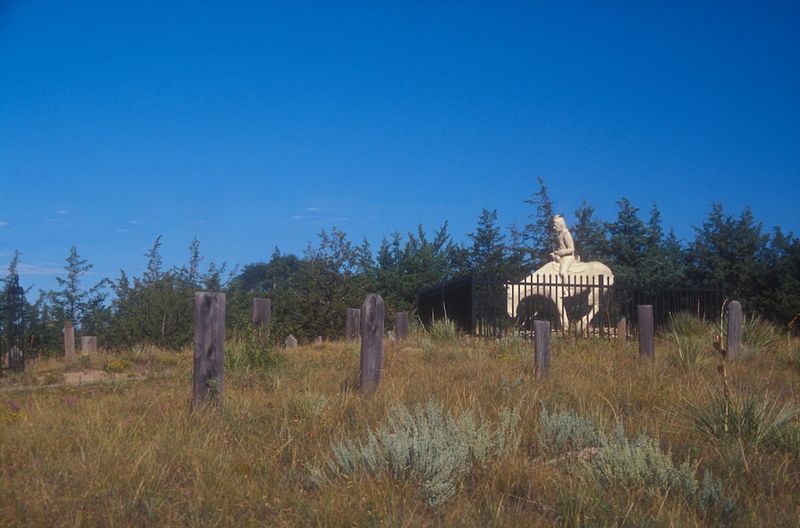
A short drive south from the lake’s sandy shores brings you into Ogallala, a town that wears its frontier identity without any apology. Known historically as the Cowboy Capital of Nebraska, Ogallala served as a major cattle trading hub during the late 1800s, and that heritage is woven into almost every corner of the downtown area.
Boot Hill cemetery, dating to the 1880s Texas Trail era, is one of the most evocative stops in town, a small hilltop plot where cowboys who met sudden ends were reportedly buried still wearing their boots. The Front Street Crystal Palace Revue nearby offers a lively Old West shoot-out performance and a summer stock theatre production that has reportedly been running longer than any other in Nebraska.
History buffs will want to add Ash Hollow State Historical Park, located just west of the lake, to their itinerary. This protected site marks an important rest stop along the Oregon and California Trails, where wagon ruts are still visible in the earth and prehistoric cave dwellings offer a glimpse of life in the region thousands of years before the pioneers arrived.
Ogallala earns its reputation as more than just a gateway to the lake.
Planning Your Visit: Permits, Ramps, and Practical Tips
A little advance planning makes a big difference at Lake McConaughy, especially during summer when the recreation area fills up fast and boat ramp availability can change with water levels. The Lake McConaughy Visitor and Water Interpretive Center, located about a quarter mile south of Kingsley Dam on Highway 61, is the single best first stop for any visitor.
Inside, you will find interactive exhibits covering the Platte River system, the High Plains Aquifer, and the full history of Kingsley Dam’s construction. Two 1,000-gallon aquariums display native Nebraska fish species, and a 50-seat theater screens documentary footage of the dam’s original construction.
Nebraska Park Entry Permits, required for all vehicles entering the recreation area, are sold here along with fishing licenses and camping registrations.
The center’s phone number is 308-284-8800, and the website at outdoornebraska.gov/lakemcconaughy carries current information on ramp closures and drought-related access changes. Beach camping reservations open 30 days before arrival, while modern electric sites can be booked up to 180 days in advance.
Pack sunscreen, drinking water, and sturdy footwear, because the sun and sand here are both serious business.
The Bigger Picture: Water, Agriculture, and an Uncertain Future
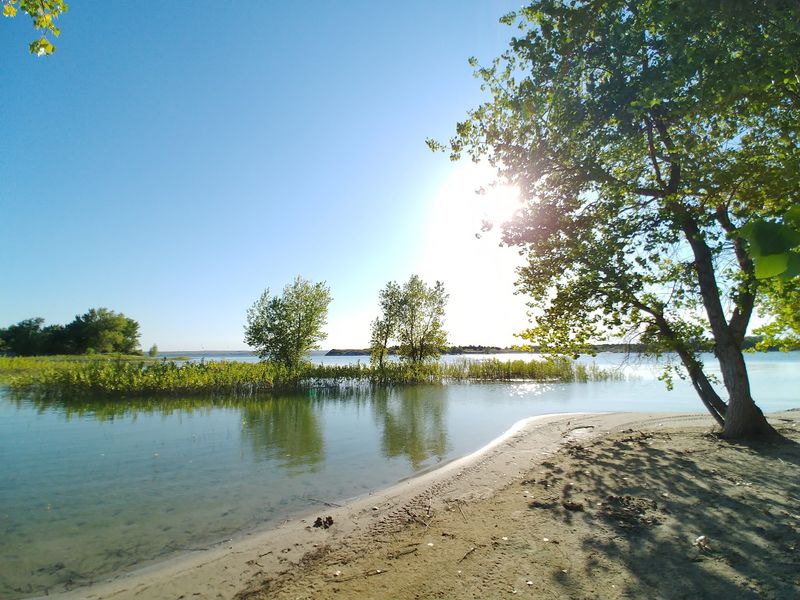
Lake McConaughy has never been just a recreational destination. Its original purpose, storing North Platte River water for irrigation and generating hydroelectric power, remains central to the economy of a large swath of Nebraska, and that purpose shapes every decision made about how the reservoir is managed.
The current drought cycle affecting the lake’s watershed has persisted since the early 2000s, reducing the Rocky Mountain snowpack and spring runoff that historically refilled the reservoir each year. Combined with increased groundwater pumping from connected aquifer systems, the result is a lake that releases more water for agriculture than it currently receives from natural inflows during dry periods.
Conservation efforts are ongoing, with water managers working to balance irrigation commitments against the need to preserve reservoir storage for future dry years. Protecting nesting habitat for endangered least terns and piping plovers on exposed beaches adds another layer of complexity to an already difficult equation.
Visiting the lake today means witnessing a real-time story about water scarcity, agricultural necessity, and environmental stewardship playing out across one of the most visually stunning landscapes in the American heartland. The lake’s future is still being written, one dry season at a time.
Share this story