Humans have always built things meant to outlast them. From ancient stone temples carved into cliffsides to soaring modern towers that pierce the clouds, the landmarks we leave behind tell the story of our ambitions, beliefs, and creativity.
Some of these structures took decades or even centuries to complete, while others were engineered with a speed and precision that still impresses experts today. Whether ancient or modern, each of these 15 man-made landmarks represents something extraordinary about what people are capable of building.
Great Wall of China
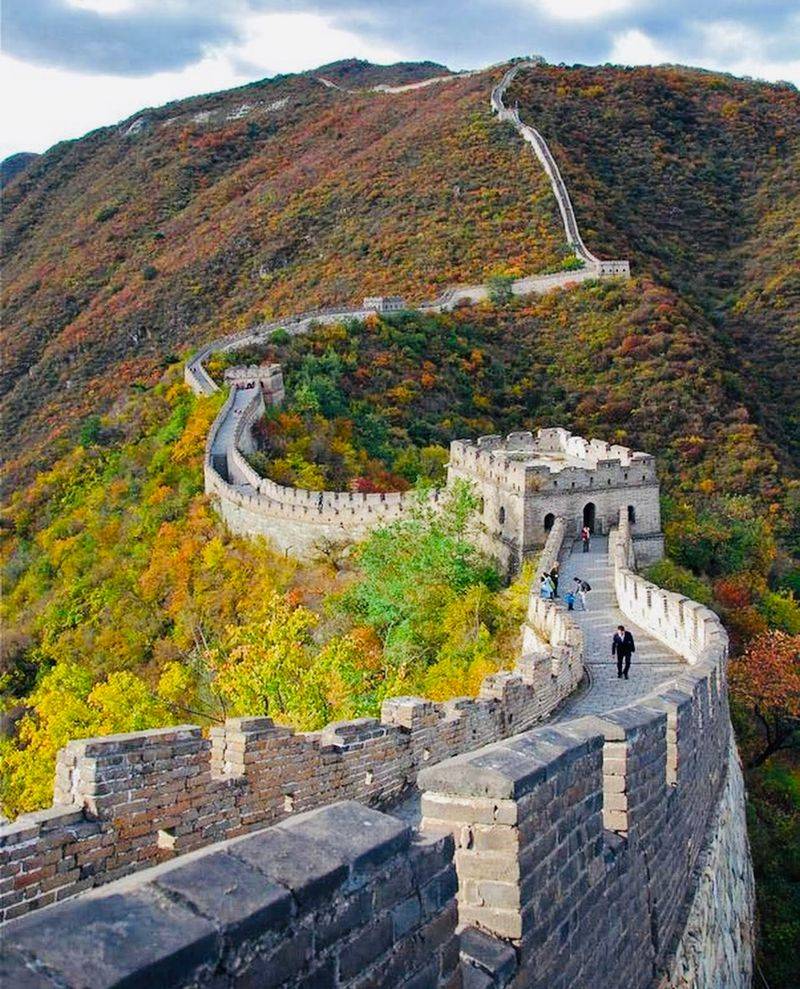
Stretching over 20,000 kilometers across mountains, deserts, and plains, the Great Wall of China is less a single wall and more an entire military universe built in stone and brick. Construction happened in phases spanning roughly 2,000 years, from the third century BC all the way through the Ming dynasty in the 17th century.
Earlier earthen barriers were connected and reinforced over generations until the system became something almost impossible to summarize.
Standing on one ridge and watching the wall climb and dip across the next several peaks is the moment when the numbers finally hit home. Watchtowers appear every few hundred meters, each one once staffed by soldiers responsible for signaling danger using smoke or fire.
The logistics of supplying those remote posts alone would have been a massive organizational challenge.
Sections near Beijing attract most tourists, but remote stretches show the wall in its rawest, most dramatic form. UNESCO calls it the world’s largest military structure, and nobody who has hiked a steep section is likely to argue.
The wall does not just cross the Chinese landscape. It conquers it, ridge by ridge, stone by stone.
Great Pyramid of Giza
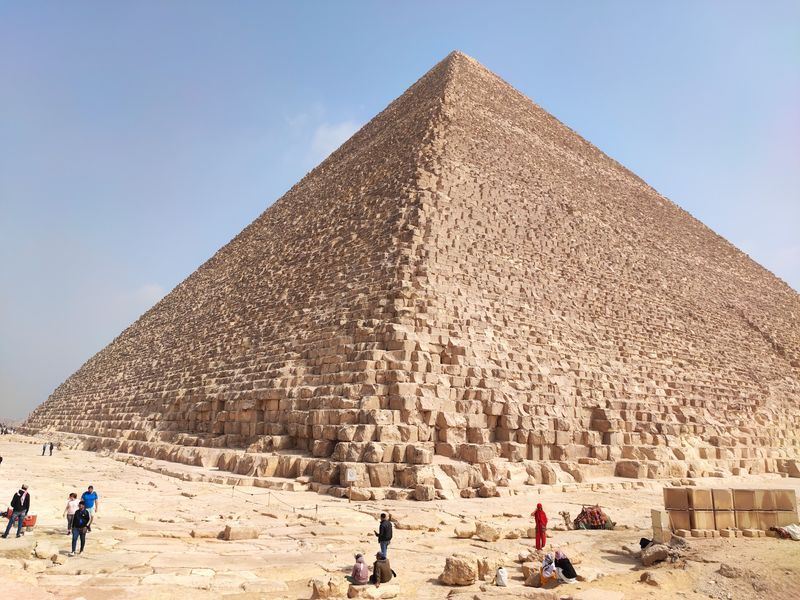
The Great Pyramid of Giza is the only surviving member of the original Seven Wonders of the Ancient World, and after 4,500 years it is still winning the competition. Built during the reign of Pharaoh Khufu around 2560 BC, the pyramid was constructed using an estimated 2.3 million stone blocks, some weighing as much as 80 tonnes.
Historians and engineers still debate the exact methods used to place them with such precision.
Photographs tend to isolate the pyramid against a clean desert backdrop, but the reality is richer. The structure belongs to a sprawling necropolis that includes the Great Sphinx, smaller pyramids, temples, causeways, and hundreds of tombs.
The full archaeological landscape makes it clear this was not just a burial chamber but an entire ceremonial city built for the afterlife.
Walk up close and the familiar triangular silhouette vanishes entirely. You are suddenly staring at a mountain of enormous stone blocks stacked at a slight inward angle, rising higher than you can comfortably track with your eyes.
The scale becomes genuinely disorienting. No photograph fully prepares a first-time visitor for what it feels like to stand at the base of something this old and this enormous.
Petra, Jordan
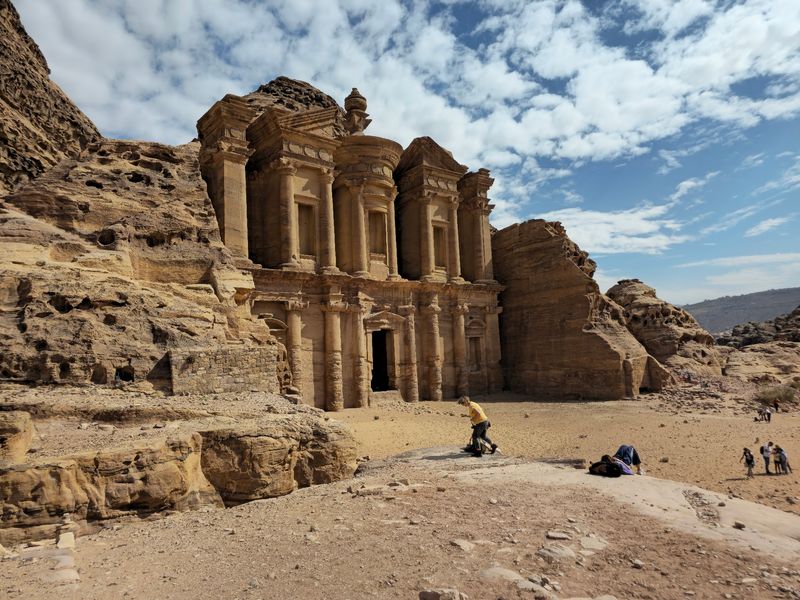
Petra pulls off one of the greatest architectural reveals in the world. Visitors walk through the Siq, a narrow gorge with walls rising up to 80 meters high, for about 1.2 kilometers before the passage opens and the Treasury suddenly fills the frame.
The rose-red sandstone facade is carved directly into the cliff, not constructed in front of it, which makes the whole thing feel like the mountain itself decided to become a monument.
The Nabataean civilization built Petra at a crossroads between Arabia, Egypt, and Syria, growing wealthy from trade routes carrying incense, spices, and silk. But the Treasury is just the beginning.
The wider city contains a Roman-style theater, royal tombs, high places of worship, colonnaded streets, and an elaborate system of channels, pipes, and reservoirs that kept a desert city supplied with water year-round.
That hydraulic engineering is easy to overlook when the carved facades are stealing all the attention. Petra is both a work of art and a work of survival engineering.
The Nabataeans figured out how to make one of the driest environments in the region support a thriving urban population. Carving beautiful facades into cliffs was impressive.
Solving the water problem was arguably even more clever.
Taj Mahal, Agra, India
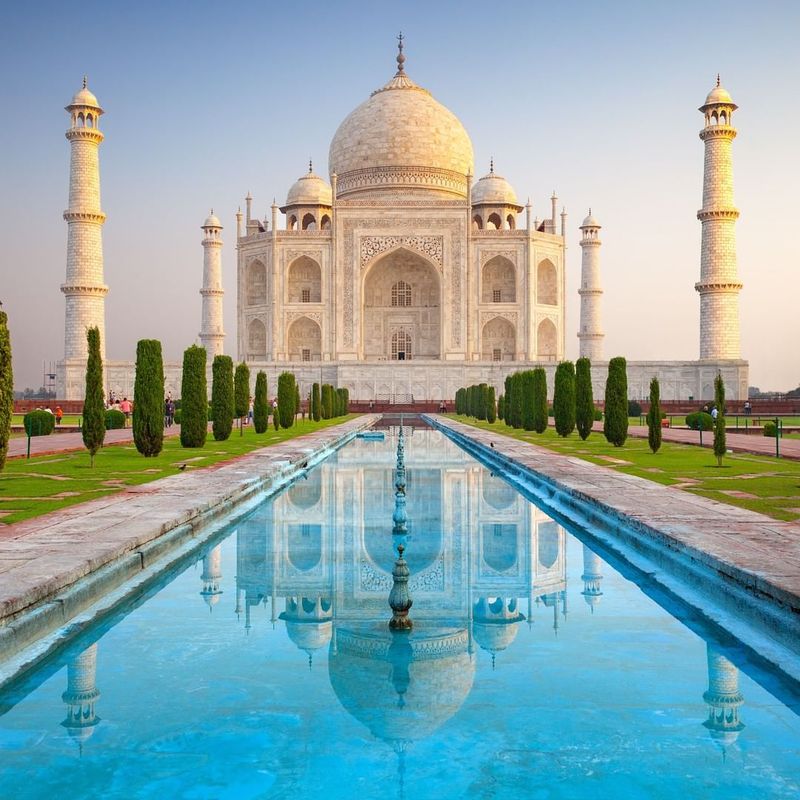
Shah Jahan built the Taj Mahal as a tribute to his late wife, Mumtaz Mahal, who died in 1631. The emperor commissioned the white marble mausoleum to be built on the banks of the Yamuna River, and construction took roughly 17 years with an estimated 20,000 workers contributing to its completion.
The result is widely considered the finest example of Mughal architecture ever produced.
The symmetry is the first thing visitors notice, and it extends far beyond the central dome. Minarets, reflecting pools, garden pathways, a mosque, a guest house, and decorative gateways all contribute to a composition that feels mathematically perfect from almost every angle.
Intricate inlay work using semi-precious stones covers interior and exterior surfaces in floral and geometric patterns of extraordinary delicacy.
Early morning is the best time to visit. The white marble shifts through shades of grey, soft pink, and warm cream as the light changes, and the long central pool reflects the entire monument on calm days.
UNESCO calls the Taj Mahal the greatest architectural achievement within the whole range of Indo-Islamic architecture. It was built for remembrance and ended up becoming one of the most universally recognized buildings on the planet.
Machu Picchu, Peru
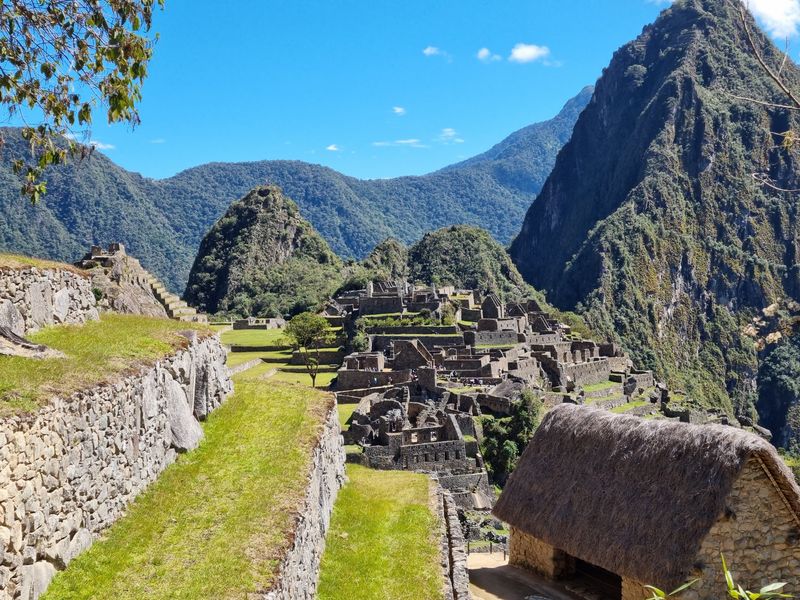
Before you even process the architecture, you have to deal with the location. Machu Picchu sits on a steep ridge more than 2,400 meters above sea level in the Peruvian Andes, tucked between dramatic mountain peaks with cloud forest dropping away on nearly every side.
The Inca built their 15th-century complex here, and the setting alone is enough to make your brain pause for a moment.
Then the engineering kicks in. Around 200 structures including temples, residences, ceremonial spaces, and storage buildings are arranged across the ridge using precisely fitted stone blocks that required no mortar.
Agricultural terraces cascade down the slopes, managing both farming and drainage across terrain where flat ground barely exists. The Incas worked with the mountain rather than against it, and the result is a settlement that feels organically grown from the landscape.
UNESCO ranks Machu Picchu among the greatest artistic, architectural, and land-use achievements anywhere on Earth. The famous panoramic view from above is genuinely spectacular, but walking through the site at ground level changes the experience.
Each doorway frames another peak. Each terrace reveals another layer of planning.
The complexity only becomes visible once you are inside it, and by then it is very hard to leave.
Angkor Wat and Angkor, Cambodia
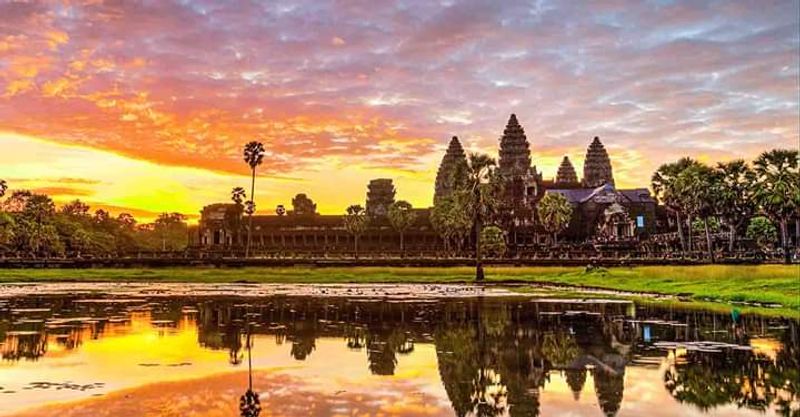
Angkor Wat is the most photographed temple in the world, and it still manages to exceed expectations in person. Built in the early 12th century under Khmer king Suryavarman II, the temple was dedicated to the Hindu god Vishnu before later becoming a Buddhist site.
Its five central towers, surrounded by a massive moat and approached via a long causeway, represent the mountain home of the gods in Hindu cosmology.
But calling Angkor just a temple complex is like calling the Amazon just a river. The UNESCO World Heritage property covers around 400 square kilometers and contains the remains of successive Khmer Empire capitals, including Angkor Thom with its famous Bayon temple covered in giant stone faces.
Ta Prohm, where massive tree roots grow directly through ancient stone walls, offers one of the most visually striking examples of nature reclaiming architecture anywhere.
The hydraulic engineering of Angkor is just as impressive as the temples. A network of reservoirs, canals, and embankments supported one of the largest pre-industrial urban populations in history.
Sunrise at Angkor Wat, with the towers reflected in the moat, provides the iconic image. Spending several days across the wider site reveals something much larger: the ghost of an entire civilization.
Forbidden City, Beijing, China
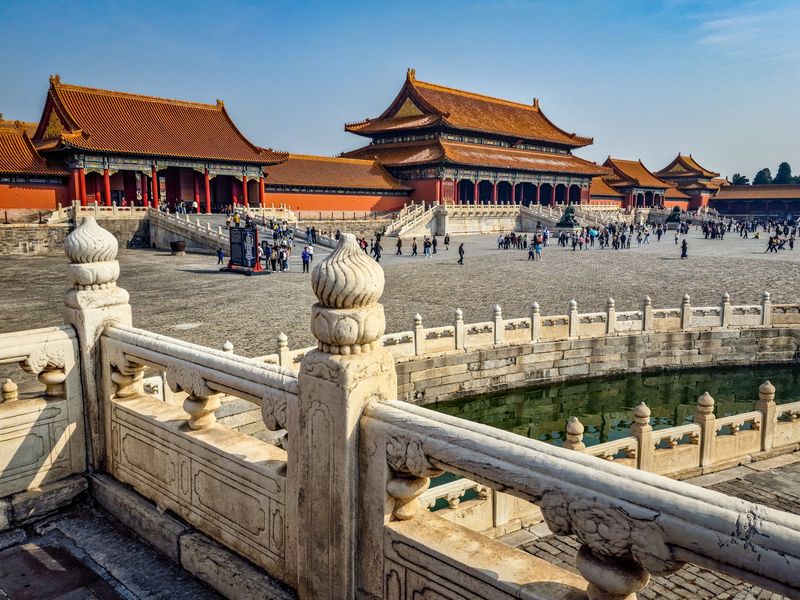
Nearly 600 years old and still the largest palace complex on Earth, the Forbidden City is a place where architecture was used as a political statement. Built between 1406 and 1420 during the Ming dynasty, the palace served as the home of Chinese emperors and the center of imperial government for over five centuries.
Twenty-four emperors lived and ruled from within its walls.
The layout follows a strict central axis running north to south, with halls, gates, and courtyards arranged in a precise hierarchy that physically reflected the structure of imperial power. The further you move from the outer courtyards toward the inner palace, the more restricted and intimate the spaces become.
UNESCO describes the complex as the supreme model of ancient Chinese palace design and notes its lasting influence on official architecture across East Asia.
The sheer repetition of the design becomes its own spectacle. One enormous courtyard leads to a gate, which opens onto another courtyard, which reveals another hall.
The sequence keeps going for nearly a kilometer along the central axis. Older accounts often describe the palace as containing close to 10,000 rooms.
Whether or not that exact count holds up, the number captures something real about a place where the built environment was designed to make every visitor feel appropriately small.
Abu Simbel, Egypt
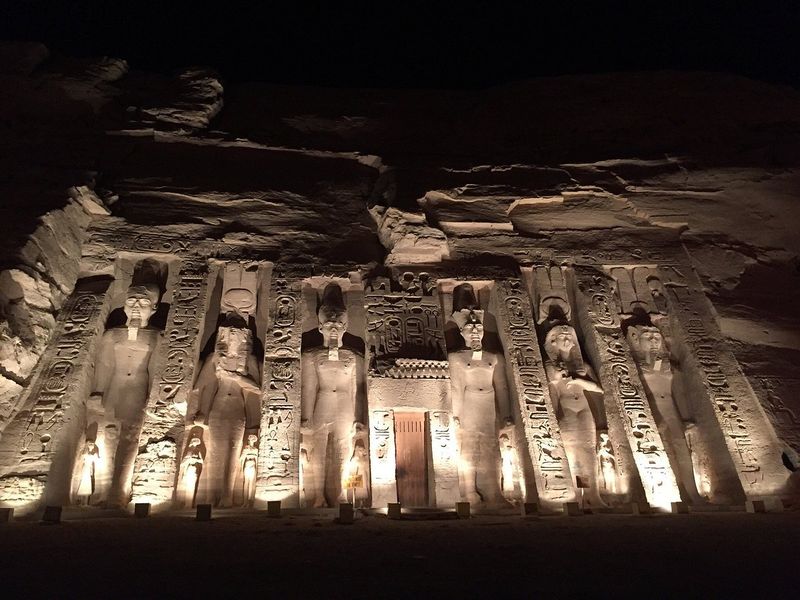
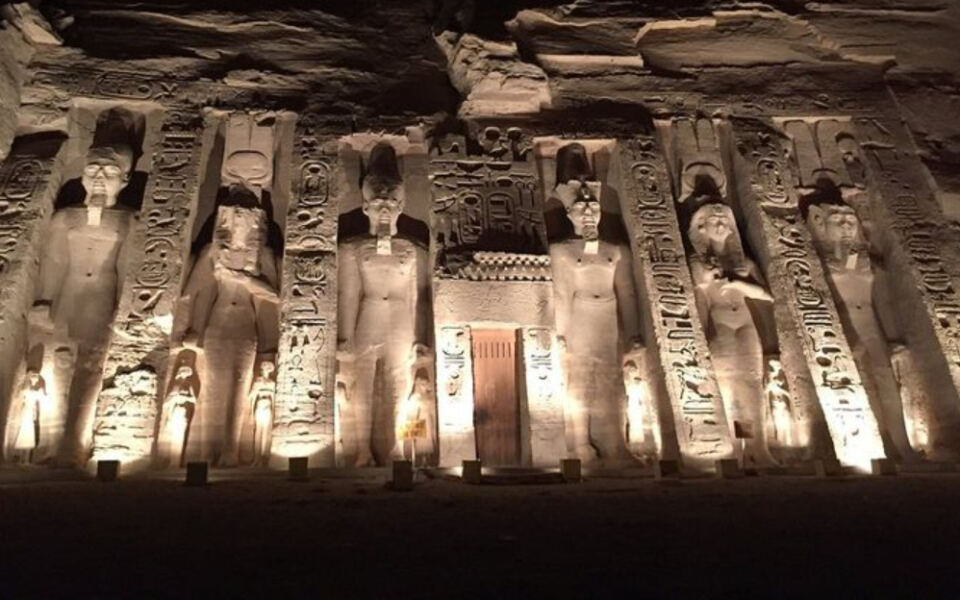
Abu Simbel is the story of two engineering miracles separated by about 3,200 years. The first happened in the 13th century BC when Pharaoh Ramses II ordered two massive temples carved directly into a sandstone cliff in what is now southern Egypt.
Four colossal seated statues of the pharaoh, each standing roughly 21 meters tall, guard the entrance to the Great Temple. The interior was oriented so that sunlight penetrated all the way to the inner sanctuary twice a year.
The second miracle came in the 1960s. When the Aswan High Dam was built, rising waters from the new Lake Nasser threatened to permanently submerge Abu Simbel.
UNESCO coordinated an international rescue campaign that ran from 1960 to 1980. Engineers cut both temples into approximately 1,000 massive blocks and reassembled them on higher ground, 65 meters above their original position.
The result is almost surreal. Visitors today see the temples in roughly the same relationship to the surrounding landscape, even though the entire complex was physically relocated piece by piece.
Ramses built something meant to last forever. Modern engineering made sure it actually would.
Standing before those four enormous seated figures as the sun lights up the cliff is one of those experiences that makes ancient history feel genuinely close.
Sagrada Familia, Barcelona, Spain
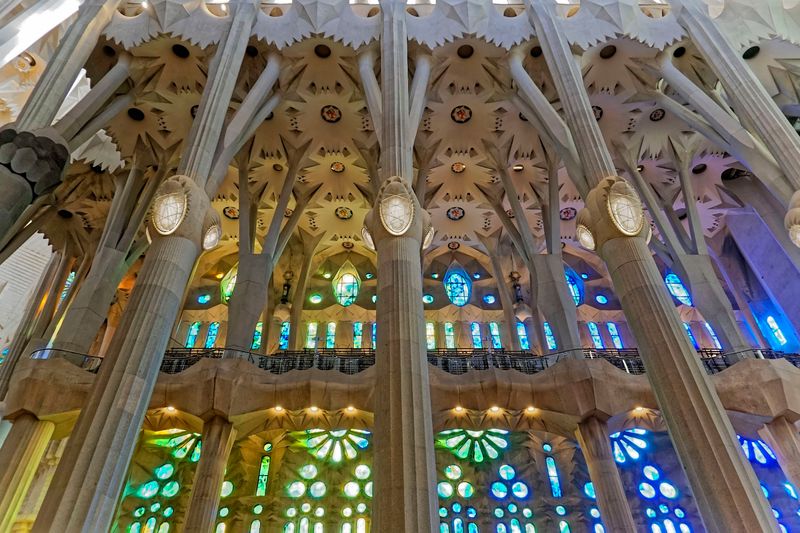
Construction began on the Sagrada Familia in 1882, and it still is not finished. That fact alone makes it unique among the world’s great landmarks.
Antoni Gaudi took over the project in 1883 and spent the rest of his life redesigning it into something far beyond the original neo-Gothic plan. He died in 1926 after being struck by a tram, having seen only a small fraction of his vision completed.
Generations of architects and engineers have been working from his original models and drawings ever since.
From the outside, the basilica looks almost alive. Towers rise like eroded limestone formations, and facades are covered in dense layers of sculpture depicting biblical scenes.
The Nativity facade and the Passion facade tell completely different visual stories with completely different artistic styles, which makes walking around the exterior feel like visiting multiple buildings at once.
Inside, the effect shifts completely. Columns branch upward like a stone forest, spreading into the ceiling in a way that floods the interior with colored light from stained glass windows on every side.
The Sagrada Familia is still under construction, with a projected completion date sometime in the 2030s. Somehow, that ongoing process makes it feel more alive than most finished buildings.
It is a monument that has been becoming itself for over 140 years.
Eiffel Tower, Paris, France
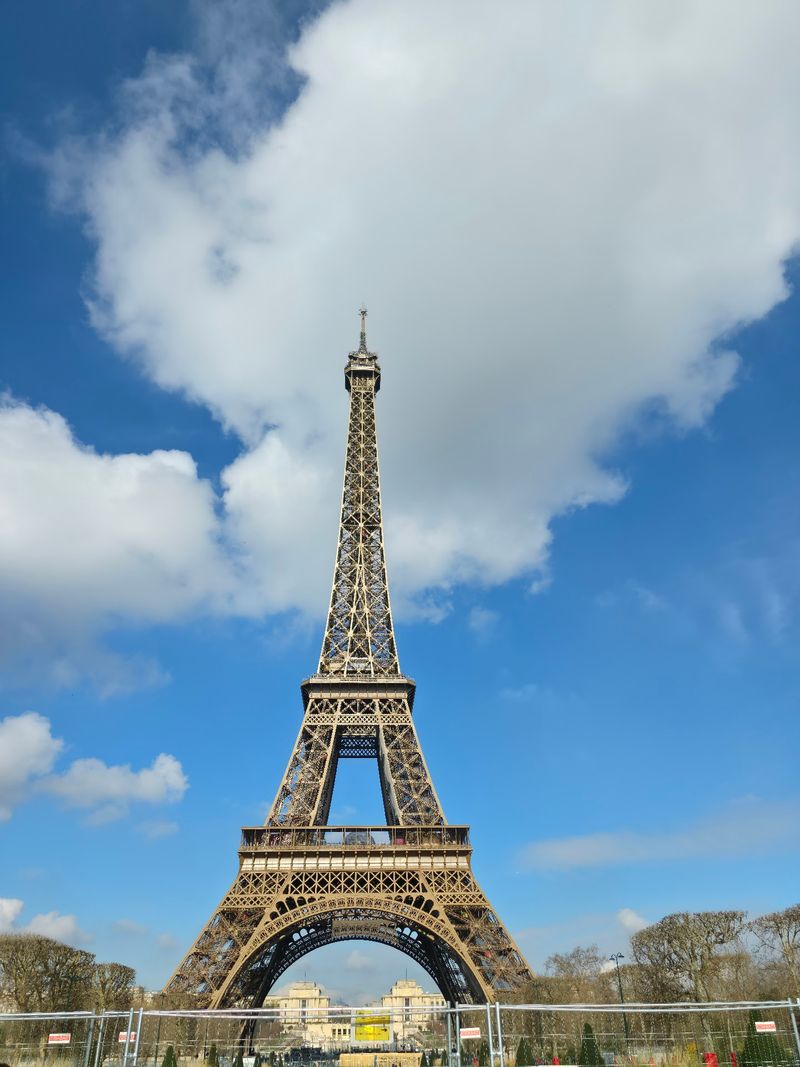
When Gustave Eiffel’s iron tower was completed for the 1889 Exposition Universelle, critics called it an eyesore and demanded it be torn down after the fair ended. Paris kept it anyway, first as a radio transmission tower, and eventually as the most visited paid monument on Earth.
The temporary structure became permanent, and the permanent structure became France.
The numbers behind the Eiffel Tower are quietly staggering. Over 18,000 individual metallic parts are joined with approximately 2.5 million rivets.
The tower sways slightly in strong winds, by design, and actually grows taller in summer heat as the iron expands. It is repainted every seven years using roughly 60 tonnes of paint to protect the ironwork from rust.
From across the Seine the tower looks almost delicate, a lacy grid rising above the Parisian rooftops. Stand directly underneath it and the engineering becomes the entire spectacle.
The four curved legs converge overhead into an increasingly intricate lattice, and the scale becomes hard to process without a reference point. The Eiffel Tower succeeded at something very few engineering projects ever manage: it stopped being infrastructure and became a symbol so widely recognized that even people who have never visited Paris feel a connection to it.
Burj Khalifa, Dubai, UAE
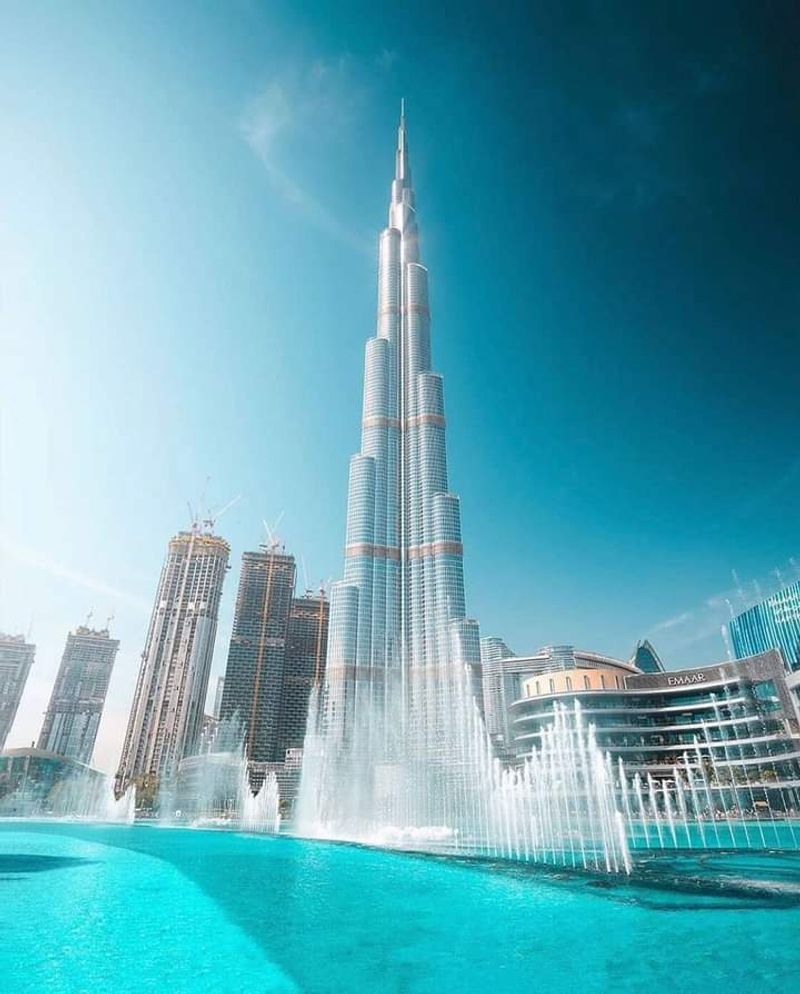
At 828 meters tall, the Burj Khalifa does not just dominate Dubai’s skyline. It makes every other building in the skyline look like it belongs in a different category.
Inaugurated in January 2010, the tower holds the record for the world’s tallest building and is likely to hold it for some time. Its 200 floors include residences, offices, hotels, restaurants, and observation decks at dizzying heights.
The construction statistics are almost comically large. About 330,000 cubic meters of concrete were poured.
Around 39,000 tonnes of reinforcing steel were used. An estimated 22 million working hours went into the project.
The tower’s narrowing stepped form was not purely aesthetic; the shape helps reduce wind loads on the structure, one of the most serious engineering challenges facing any supertall building.
Ground level is actually one of the more disorienting places to experience the Burj Khalifa. The surrounding development is so dense that there is no clear sightline to take in the full height at once.
Move farther away and the effect clicks into place: other skyscrapers that looked impressive from the road suddenly appear modest. Ancient rulers built pyramids to demonstrate the reach of their power.
Dubai built vertically until the rest of the skyline started looking like a miniature.
Sydney Opera House, Australia
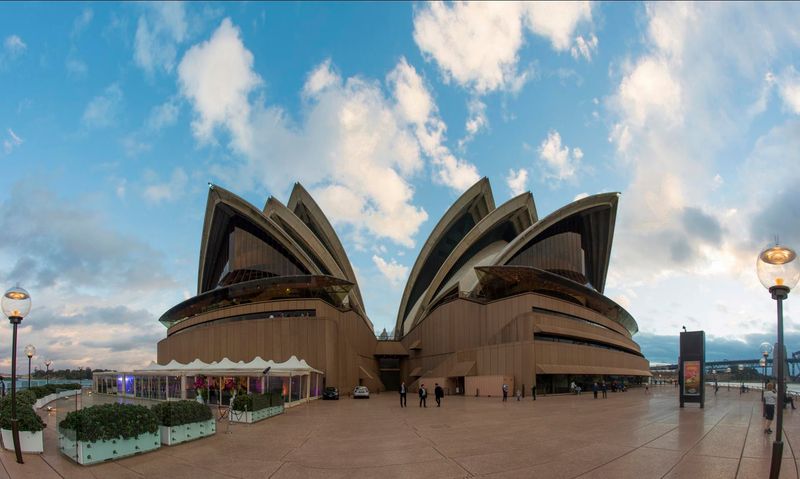
Danish architect Jorn Utzon submitted his competition entry for the Sydney Opera House in 1957 on a set of sketches that the initial judging panel nearly discarded. A senior judge rescued them from the rejection pile, and those sketches eventually became one of the most recognizable buildings ever constructed.
The Opera House opened in 1973 after a construction process that required engineers to invent new methods for building its complex roof geometry.
The roof is the signature. Groups of interlocking vaulted shells rise above a broad platform on Bennelong Point, surrounded on three sides by Sydney Harbour.
Depending on the angle and the light, the shells can look like sails, breaking waves, or stacked pieces of abstract sculpture. The white ceramic tiles covering the shells are designed to keep the surface clean through a self-washing effect when it rains.
UNESCO added the Sydney Opera House to the World Heritage List in 2007, describing it as one of the great architectural works of the 20th century. That is a significant claim for a building less than 60 years old.
But few modern structures have done what the Opera House managed: completely redefine the identity of a city. Sydney existed before 1973.
After 1973, it had a new face, and that face was a cluster of white shells floating above the harbor.
Moai of Rapa Nui, Easter Island, Chile
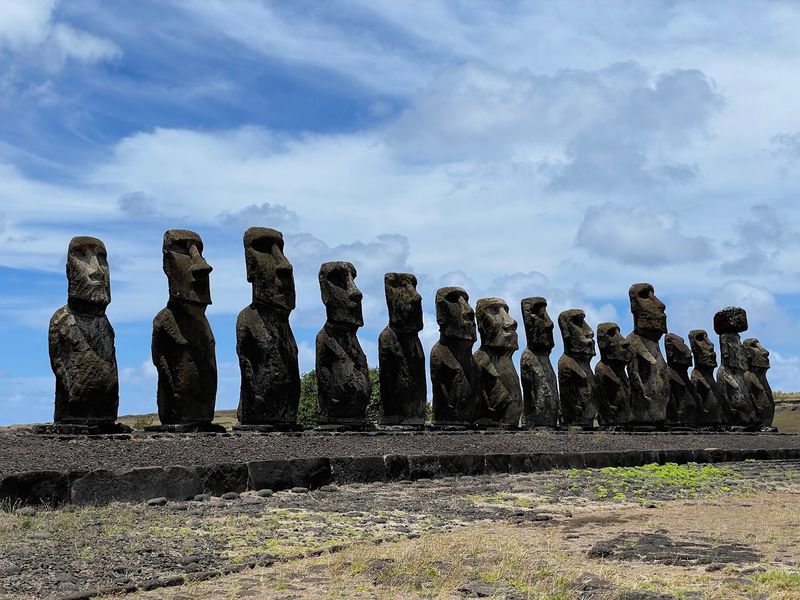
Rapa Nui sits roughly 3,700 kilometers off the coast of Chile, making it one of the most remote inhabited islands on the planet. Yet somehow the Polynesian society that settled there between the 10th and 16th centuries produced nearly 1,000 enormous stone figures, some standing over 10 meters tall and weighing up to 80 tonnes.
They carved them from compressed volcanic ash at the quarry of Rano Raraku and transported them across rugged terrain without wheels, metal tools, or large animals.
The moai represent ancestors, and they were placed on ceremonial stone platforms called ahu facing inland, watching over the communities they were meant to protect. Many still stand at Rano Raraku in various stages of completion, embedded in the hillside as if the island simply stopped mid-sentence.
The unfinished statues offer an eerie glimpse into a production process that was suddenly abandoned.
Researchers have proposed several plausible theories for how the statues were moved, including rocking them upright on wooden sledges or walking them forward using ropes. Experiments have demonstrated that small teams can move a moai using these techniques.
Knowing the method is possible is one thing. Watching the statues stand against the open Pacific horizon with no other land in sight makes the whole achievement feel quietly extraordinary.
Statue of Liberty, New York, USA
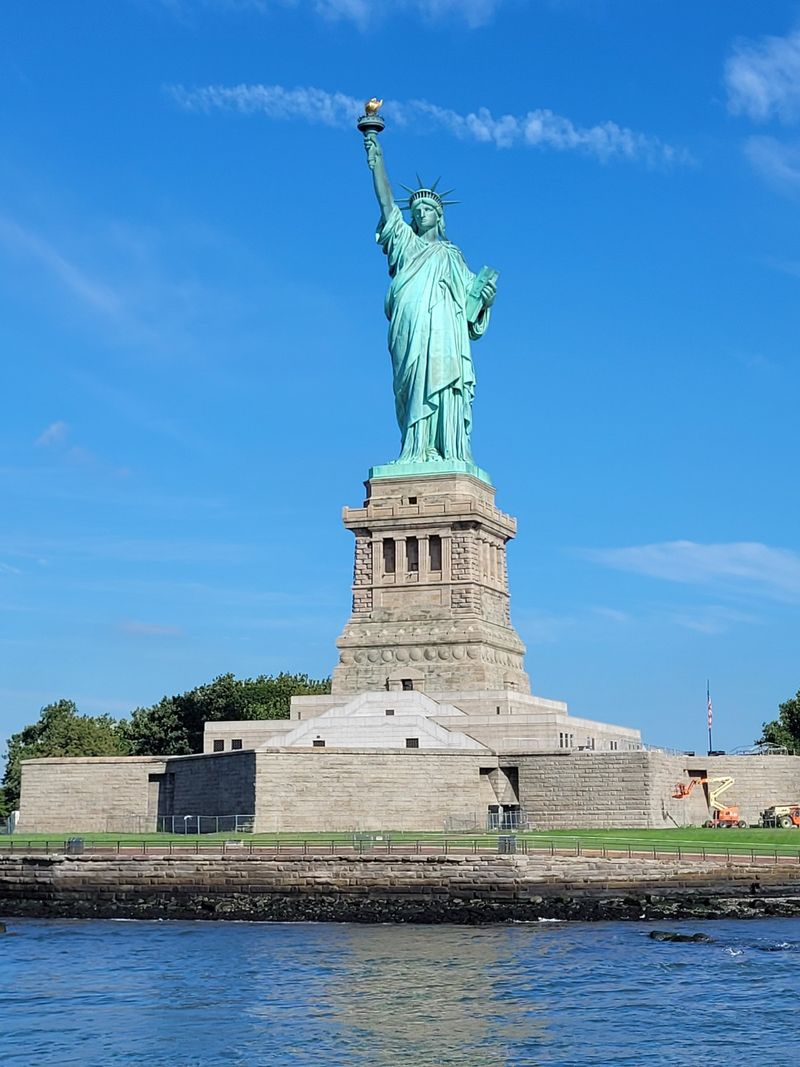
France gave the United States the Statue of Liberty as a gift marking the friendship between the two nations, and it was dedicated in New York Harbor in October 1886. Sculptor Frederic Bartholdi designed the figure, and Gustave Eiffel, who later built his famous tower in Paris, engineered the internal framework that holds the copper skin in place.
The structure was technically innovative for its time.
Rather than making the copper shell rigid, Eiffel designed a flexible internal framework that allowed the outer skin to expand and contract with temperature changes and move slightly in wind. The copper itself was only about 2.4 millimeters thick, roughly the thickness of two pennies stacked together.
Over time, the original shiny copper surface oxidized into the famous blue-green patina that visitors recognize today.
UNESCO describes the Statue of Liberty as a major 19th-century achievement bridging art and engineering. But its cultural meaning grew well beyond its physical construction.
For the millions of immigrants who arrived through New York Harbor between the 1880s and the 1950s, the statue was often the first monumental image of the United States they encountered. Some landmarks represent rulers or gods.
This one came to represent the idea of arrival, of starting over, of reaching somewhere new after a very long journey.
Millau Viaduct, France
Most people do not expect a motorway bridge to stop them in their tracks. The Millau Viaduct does exactly that.
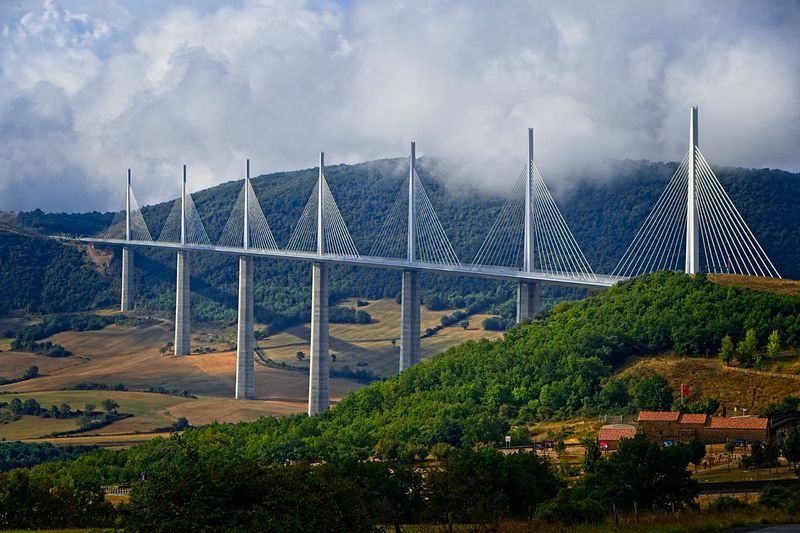
Crossing the Tarn Valley in southern France for 2,460 meters, the cable-stayed bridge carries its road deck approximately 270 meters above the river, with the tallest structural point reaching 343 meters. That makes the viaduct’s highest point taller than the Eiffel Tower, which is a remarkable fact for something that is fundamentally a road.
French engineer Michel Virlogeux and British architect Norman Foster designed the structure with an unusually slender profile. Seven tall concrete piers support the deck, each topped with a cable-stayed pylon that fans out to hold the road surface.
The whole thing was designed to look light rather than heavy, which is a bold choice for a bridge carrying full motorway traffic across a massive gorge. Construction took roughly three years after years of planning, and the viaduct opened in December 2004.
The most memorable view comes from the valley floor, looking up. On mornings when mist fills the gorge, the deck floats above the cloud layer with only the pylons rising through it, creating a scene that looks more like a science fiction concept than a functioning piece of infrastructure.
Millau proved that engineering does not have to choose between being practical and being beautiful. Sometimes it can be both at exactly the same time.
Share this story