England has a remarkable talent for turning fictional worlds into real places you can actually visit. From the foggy streets of Victorian London to the wild moors of Yorkshire, the country is packed with spots that brought some of literature’s most beloved characters to life.
Whether you grew up reading about a young wizard boarding a train or a bear who arrived with a suitcase and a love of marmalade sandwiches, chances are there is a real English destination tied to that story. This list covers 13 places where the line between fiction and reality gets wonderfully blurry, and every single one of them is worth putting on your travel radar.
Paddington Station, London, Paddington Bear
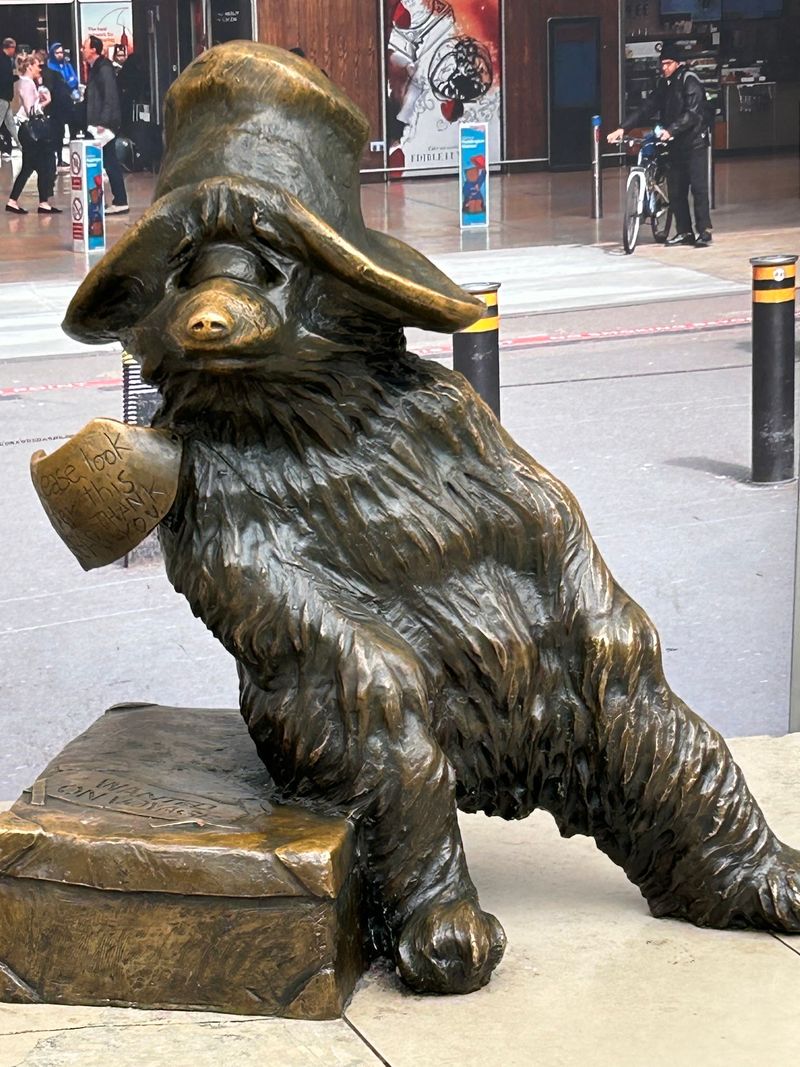
Michael Bond introduced Paddington Bear to readers in 1958 with a simple but charming premise: a small bear from Peru is found sitting alone at Paddington Station with a label around his neck and a battered suitcase at his side. The Browns take him home, and the rest is children’s literature history.
The real Paddington Station honours that connection with a bronze statue of the bear positioned near Platform 1. The sculpture shows Paddington in his classic red hat and blue duffle coat, and it has become one of the most photographed spots in the station.
Nearby, a permanent Paddington-themed shop carries books, plush toys, and souvenirs.
What makes this stop particularly charming is that it requires no ticket or special access. Anyone passing through the station can find the statue and the shop with ease.
It is a quiet but genuinely warm tribute to one of England’s most enduring fictional characters.
Ashdown Forest, East Sussex, Winnie-the-Pooh
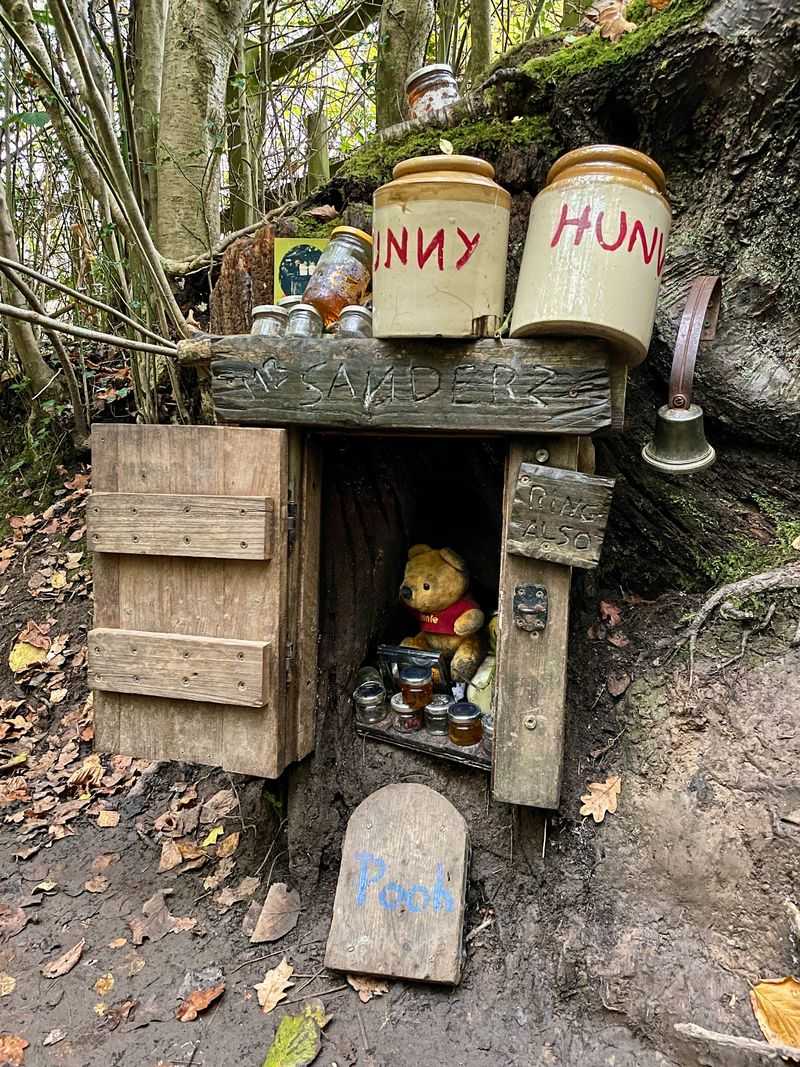
A.A. Milne lived near Ashdown Forest in East Sussex, and the landscape around his home shaped the Hundred Acre Wood in ways that are still recognizable today.
The gentle hills, open heathland, and scattered woodland of this real forest became the backdrop for Pooh, Piglet, Eeyore, and Christopher Robin.
Poohsticks Bridge is probably the most visited spot, and it sits within a reasonable walk from a designated car park. Galleon’s Lap, Roo’s Sandy Pit, and several other locations from the stories also have identifiable counterparts within the forest.
The connections are not always obvious without a map, but the Ashdown Forest Centre near Wych Cross provides helpful guidance.
The forest is publicly accessible and free to explore on foot. It covers around 2,600 acres, so there is plenty of room to wander without feeling crowded.
Families with younger children tend to make Poohsticks Bridge the centerpiece of their visit, and it rarely disappoints on that front.
Hill Top, Near Sawrey, Cumbria, Peter Rabbit and Beatrix Potter’s Characters
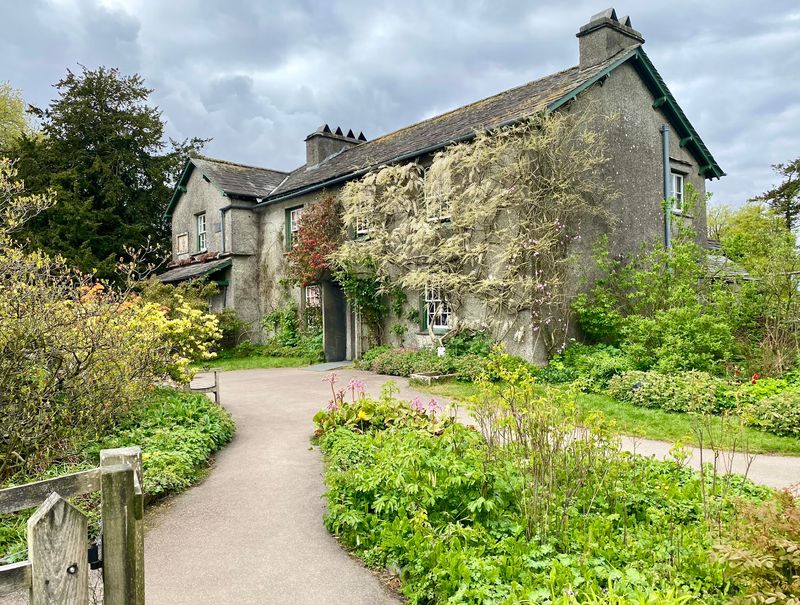
Beatrix Potter bought Hill Top farmhouse in 1905 using royalties from The Tale of Peter Rabbit, and the property immediately began appearing in her work. The farmhouse, its garden, and the surrounding village of Near Sawrey show up in The Tale of Tom Kitten, The Tale of Jemima Puddle-Duck, and several other books in ways that readers can still identify today.
The National Trust operates Hill Top as a visitor attraction, and the house is presented largely as Potter left it, with her furniture, china, and personal belongings still in place. The garden she designed and maintained is also kept up carefully and reflects the style visible in her illustrations.
Timed entry tickets are recommended, especially during summer, because the house is small and visitor numbers are managed closely. The surrounding village and the nearby Beatrix Potter Gallery in Hawkshead add further context for anyone wanting a fuller picture of her life and creative process in the Lake District.
Platform 9 3/4 at King’s Cross Station, London, Harry Potter
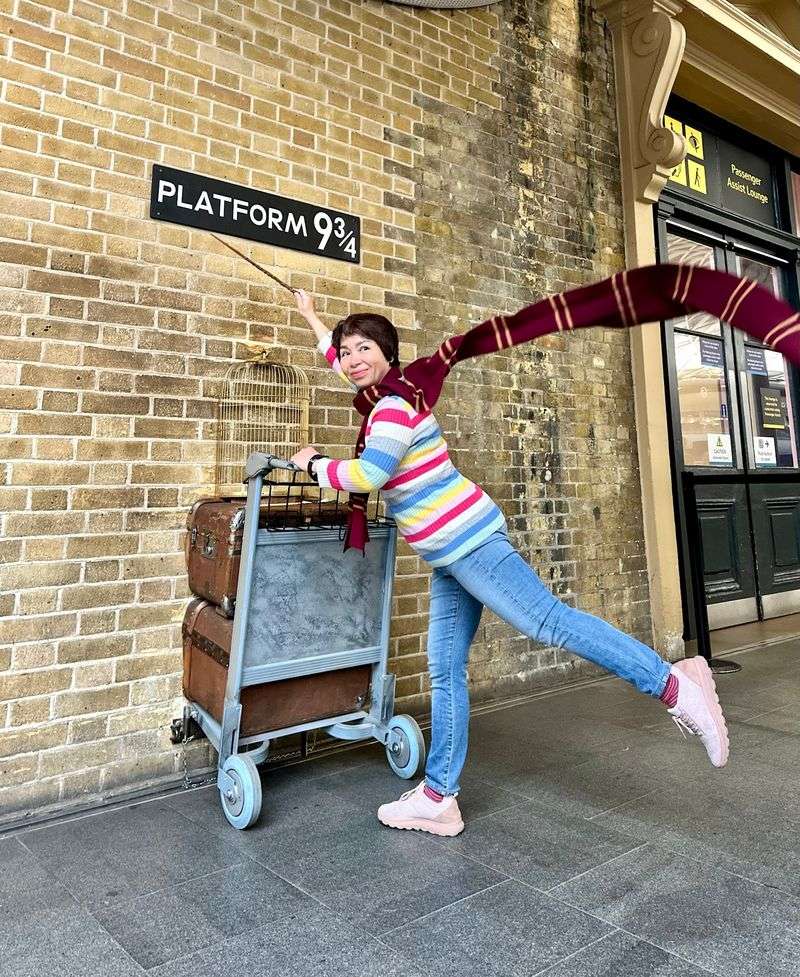
King’s Cross Station in London has been a working railway hub since 1852, but for a generation of readers, it will always be the place where Harry Potter boarded the Hogwarts Express. J.K.
Rowling placed the magical Platform 9 3/4 between two ordinary platforms, and that detail alone turned a busy commuter station into a pilgrimage site.
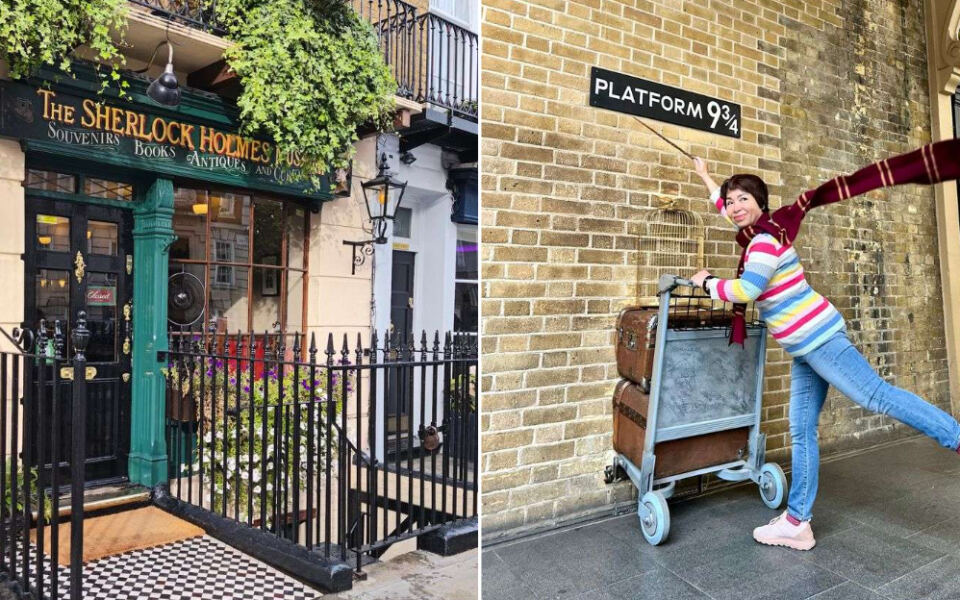
Today, the station features a dedicated photo spot in the main concourse where a luggage trolley appears to vanish straight into a brick wall. A sign marks the platform number above it, and a small shop nearby sells official Harry Potter merchandise.
Lines form regularly, especially on weekends and during school holidays, so visiting on a weekday morning tends to give you a more relaxed experience. The photo spot is free to use, and the surrounding station is genuinely worth a look on its own, with its dramatic arched roof and constant activity.
The Sherlock Holmes Museum, London, Sherlock Holmes
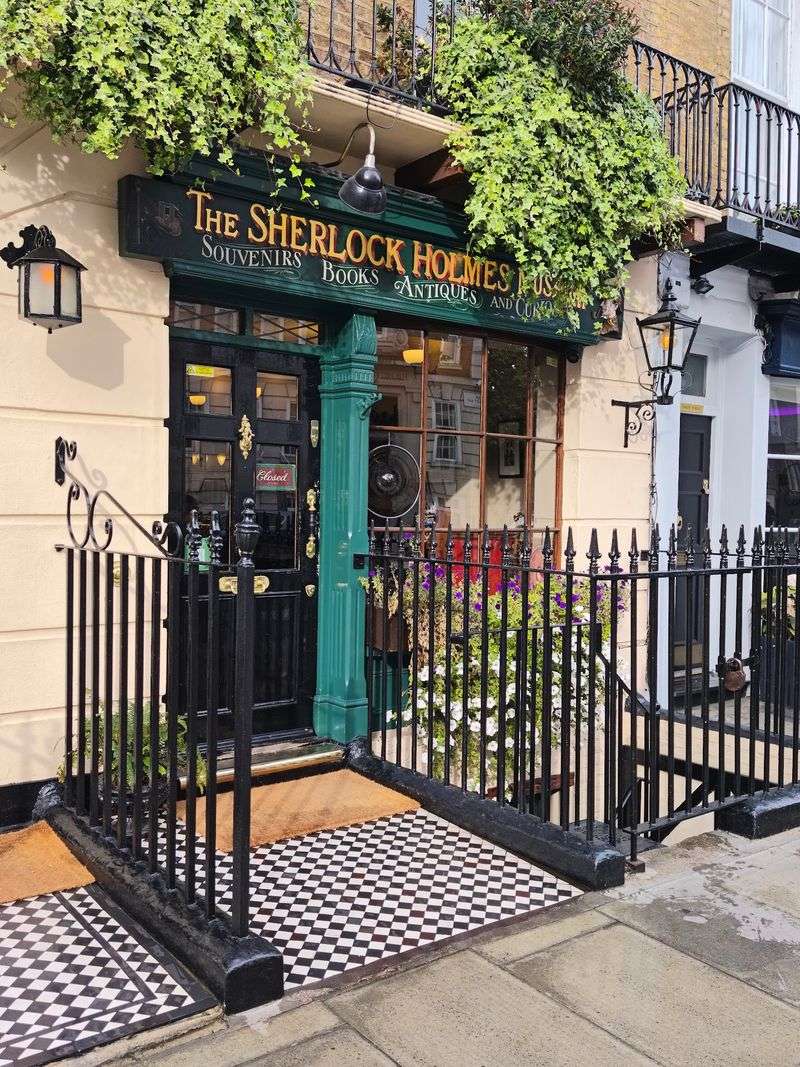
Few fictional addresses in the world carry as much name recognition as 221B Baker Street. The Sherlock Holmes Museum sits right on that street in London and faithfully recreates the Victorian rooms that Arthur Conan Doyle described across his famous detective stories.
Visitors walk through the study shared by Holmes and Watson, complete with period furnishings, scientific instruments, and props directly inspired by the original stories. The rooms are arranged as though the residents simply stepped out for a moment, which gives the whole experience an unusual sense of immediacy.
The museum spans several floors of a genuine Victorian terraced house, and each room adds another layer to the world Conan Doyle built. Outside, a uniformed doorman often stands guard, adding to the theatrical atmosphere.
For fans of the stories, the films, or the TV adaptations, this is about as close as you can get to stepping inside the fiction itself.
The Cobb, Lyme Regis, Dorset, Anne Elliot and Captain Wentworth
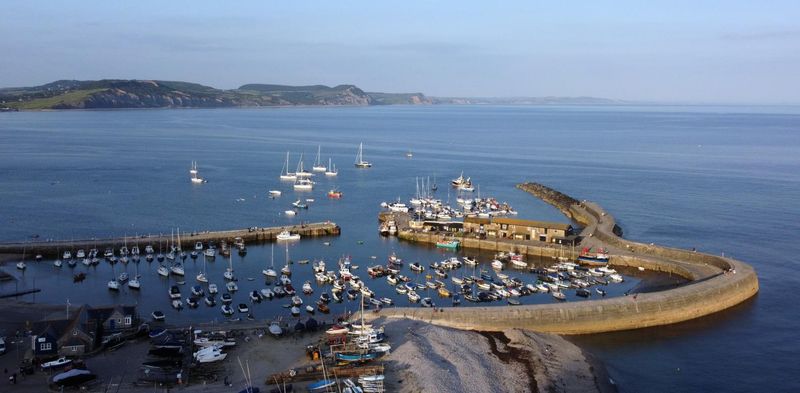
Jane Austen visited Lyme Regis in 1804, and the town left enough of an impression that she placed one of Persuasion’s most dramatic scenes there. Anne Elliot, Captain Wentworth, and their companions walk the Cobb, the long curved harbour wall that has protected Lyme Regis for centuries, and it is on the Cobb’s steps that Louisa Musgrove takes her famous fall.
The Cobb is one of the most directly usable Austen locations in England because the structure itself has changed very little since the early 19th century. Walking it gives you a clear sense of what Austen’s characters would have experienced, with the open sea on one side and the town behind you.
Lyme Regis is also well known for fossil hunting along its beaches, so the town offers plenty beyond its literary connection. The Cobb is free to walk and accessible year-round, though the lower walkway can be slippery in wet conditions and deserves some caution.
The Pump Room, Bath, Catherine Morland and Anne Elliot
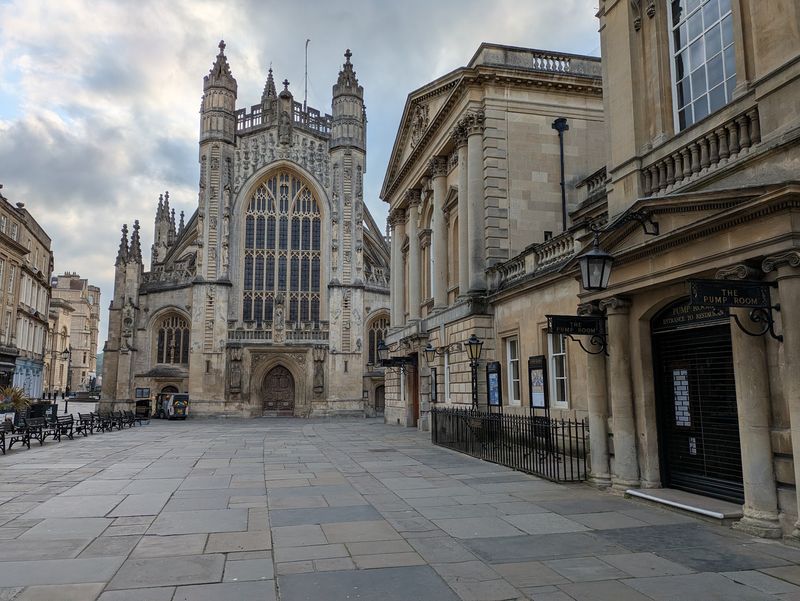
Bath is Jane Austen country in the most literal sense. She lived in the city for several years, and two of her novels, Northanger Abbey and Persuasion, use Bath as a primary setting.
The social rituals of Regency Bath, the concerts, the promenades, and the public gatherings, form the backdrop against which Catherine Morland and Anne Elliot navigate their very different stories.
The Pump Room sits at the heart of that world. It was the fashionable meeting place of Georgian Bath, where visitors came to drink the mineral waters and be seen by the right people.
Austen knew the room well, and her characters move through spaces exactly like it.
Today the Pump Room operates as a restaurant and tearoom beside the Roman Baths, and the interior retains its original Georgian character. Visiting alongside a tour of the Roman Baths next door makes practical sense, and the Jane Austen Centre nearby on Gay Street rounds out the experience nicely for dedicated fans.
Greenway, Devon, Hercule Poirot
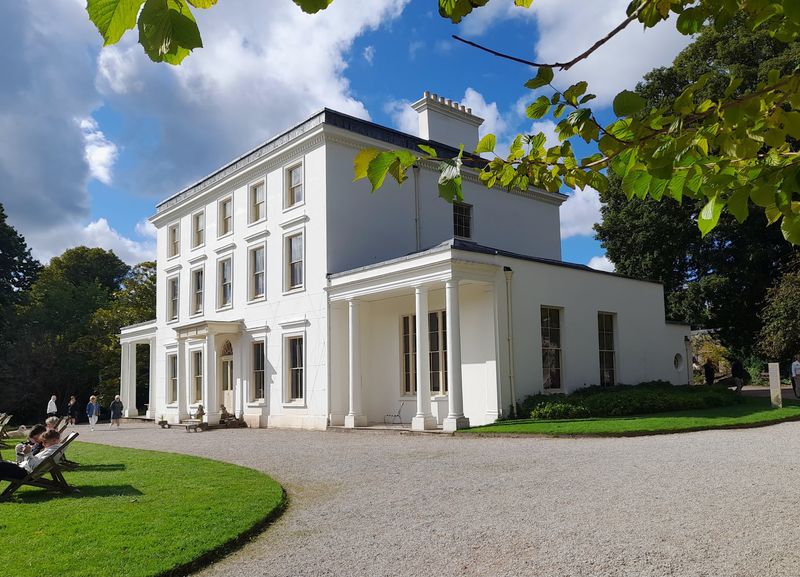
Agatha Christie described Greenway, her holiday home on the River Dart in Devon, as the most beautiful place in the world. She used it as a setting too, placing it at the center of Dead Man’s Folly, one of her Hercule Poirot novels.
In that story, the boathouse by the river becomes the scene of the central crime.
The National Trust took over Greenway after Christie’s family donated it, and the house is presented much as it was during her ownership, with her books, personal items, and collections still visible throughout the rooms. The gardens slope down through mature woodland to the river, covering around 30 acres in total.
The boathouse that featured in Dead Man’s Folly still stands near the water and is one of the most photographed spots on the property. Greenway is accessible by road, but arriving by ferry from Dartmouth or Totnes adds a particularly scenic approach.
Timed entry is required for the house interior.
Sherwood Forest, Nottinghamshire, Robin Hood
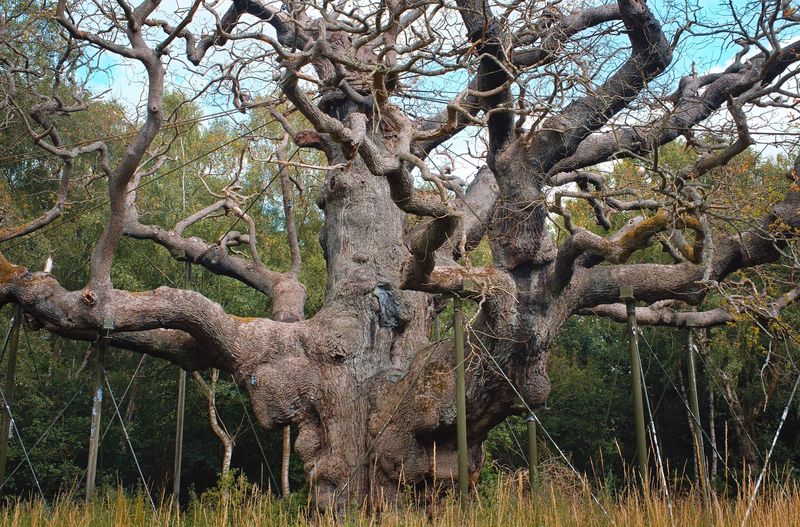
Robin Hood has existed in English storytelling since at least the 13th century, appearing in ballads, poems, plays, and eventually novels and films. Sherwood Forest is the constant in every version of the legend, and the real forest in Nottinghamshire has carried that connection for hundreds of years.
The Sherwood Forest National Nature Reserve covers around 1,000 acres and is home to the Major Oak, an ancient tree estimated to be between 800 and 1,000 years old that legend links to Robin Hood’s band. The visitor centre interprets the Robin Hood story alongside the genuine natural history of the forest, which includes some of England’s oldest and most impressive oak trees.
Entry to the forest itself is free, with charges applying for car parking. The Robin Hood Festival, held annually in the forest, draws visitors from across the country and features archery, medieval crafts, and costumed performances.
It is a lively and family-friendly event worth timing a visit around if possible.
Alice’s Shop, Oxford, Alice
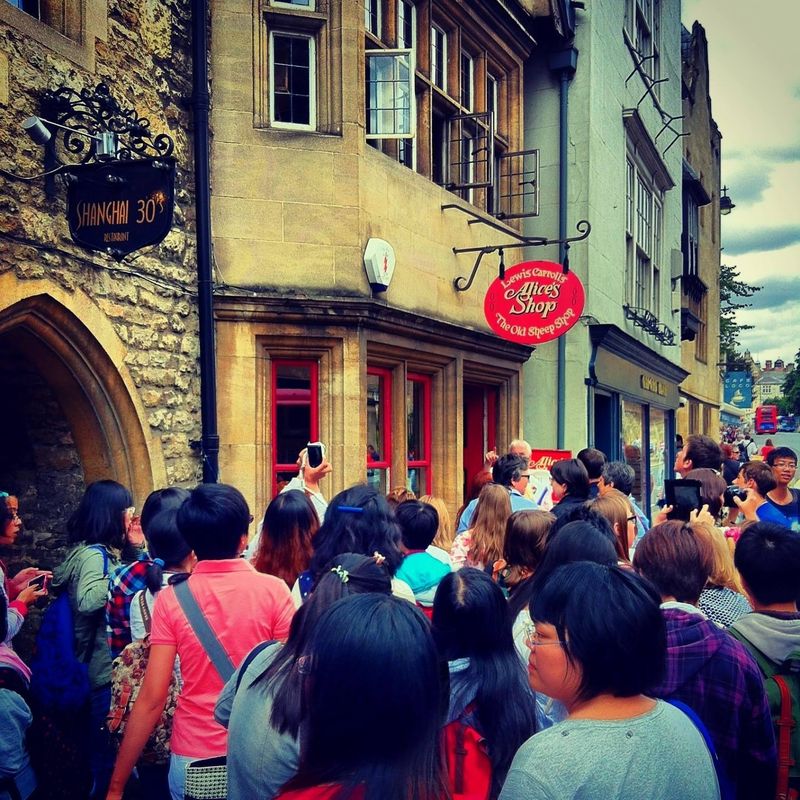
This small shop on St Aldate’s Street in Oxford has a genuinely unusual claim to literary history. Alice Liddell, the real girl who inspired Lewis Carroll’s Alice, knew the building when it operated as a Victorian sweet shop.
She and her sisters would cross from Christ Church to buy sweets there, and Carroll used the shop as the model for the Old Sheep Shop in Through the Looking-Glass.
In the story, Alice enters a curious shop run by a knitting sheep, and the shelves keep rearranging themselves whenever she tries to look directly at them. The real building that inspired that scene still stands directly opposite Christ Church, and it now operates as an Alice-themed gift shop.
The shop carries books, prints, games, and collectibles related to both Carroll’s stories and their Oxford origins. It is compact but well stocked, and its location makes it a natural stop for anyone already visiting Christ Church or the surrounding area.
Christ Church, Oxford, Alice in Wonderland
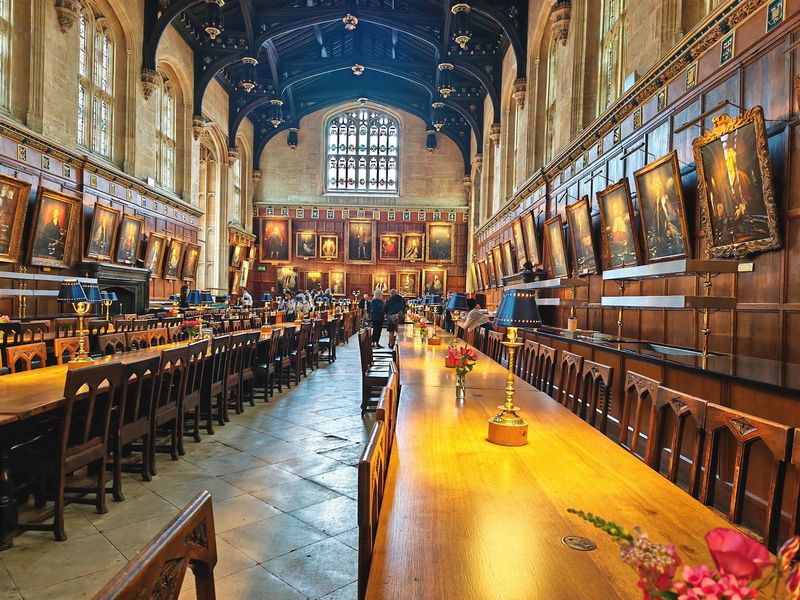
Lewis Carroll, whose real name was Charles Dodgson, spent most of his adult life at Christ Church, one of Oxford University’s most prominent colleges. He worked there as a mathematics lecturer, and it was his friendship with the family of the college dean, Henry Liddell, that eventually led to the Alice stories.
Alice Liddell and her sisters were the dean’s daughters, and Carroll entertained them with stories during boat trips on the River Thames. Those stories were eventually written down and expanded into Alice’s Adventures in Wonderland, published in 1865.
The college’s grand hall, its staircase, and its cathedral are all part of the institution that shaped Carroll’s daily life.
Christ Church opens to visitors on specific sightseeing days and charges an admission fee. The hall staircase, which reportedly influenced the look of Hogwarts in the Harry Potter films, means the college draws fans of two major literary worlds at once.
Booking ahead is advisable during peak season.
Haworth and the Bronte Moors, West Yorkshire, Heathcliff and Catherine Earnshaw
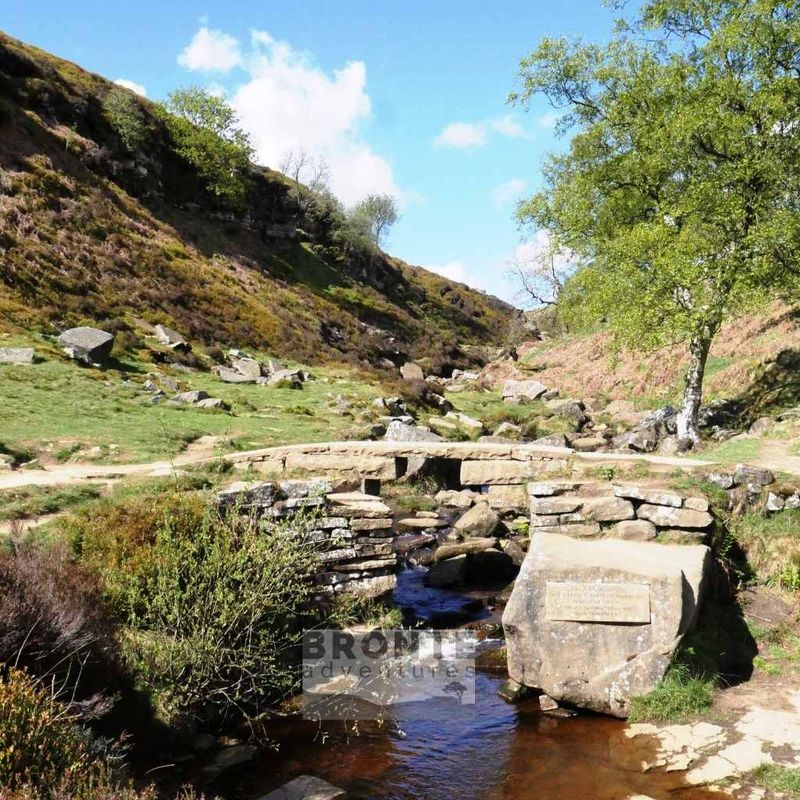
Emily Bronte grew up in Haworth, a village on the edge of the West Yorkshire moors, and the landscape surrounding the village shaped Wuthering Heights in ways that feel almost unavoidable once you have stood on those moors yourself. The bleakness, the wind, and the sheer openness of the terrain match the novel’s atmosphere with striking accuracy.
Top Withens, a ruined moorland farmhouse reachable by a roughly three-mile walk from Haworth, has long been associated with the fictional Earnshaw home. The Bronte Society is careful to note that the building’s architecture does not match Bronte’s descriptions, but the location and surrounding landscape clearly connect to the spirit of the novel.
The Bronte Parsonage Museum in Haworth village preserves the family home where Emily, Charlotte, and Anne all lived and wrote. It contains original manuscripts, personal belongings, and period furnishings.
Haworth’s steep main street, lined with independent shops and cafes, makes the village worth a full day rather than a quick stop.
Tintagel Castle, Cornwall, King Arthur
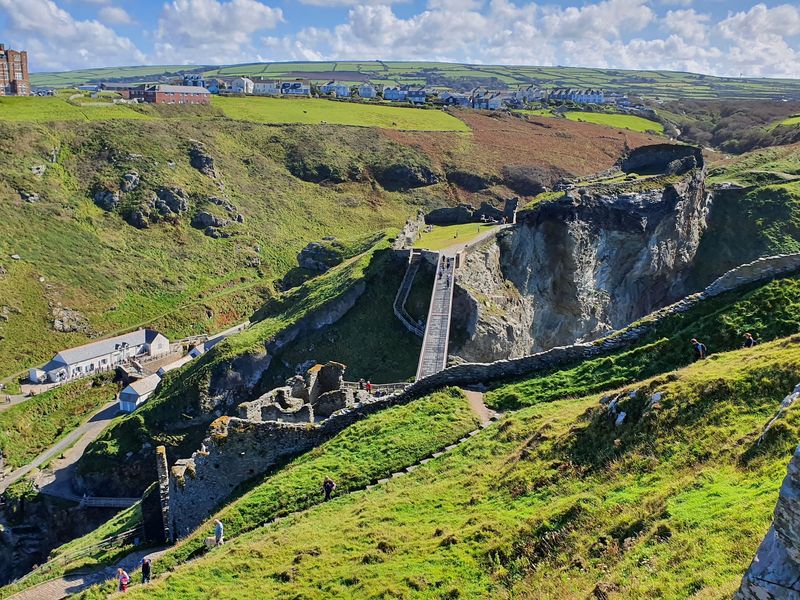
Geoffrey of Monmouth put Tintagel on the Arthurian map in the 12th century when he described it as the place where Arthur was conceived. Later writers including Thomas Malory built on that connection, and Tintagel has been tied to Arthurian legend ever since.
The dramatic clifftop setting in Cornwall makes the association feel entirely believable.
English Heritage operates the site, and the ruins themselves span both the mainland and a rocky island headland connected by a modern footbridge. The remains include great hall foundations, a medieval courtyard, and a series of stone structures that date back centuries.
Merlin’s Cave, accessible at low tide beneath the headland, adds another layer of legend to the visit.
A large bronze sculpture called Gallos, depicting a cloaked figure inspired by Arthurian tradition, stands on the island portion of the site and has become one of the most photographed features. The surrounding village of Tintagel has shops and cafes to extend the visit, and the coastal scenery alone makes the journey worthwhile.
Share this story