Europe is home to some of the most jaw-dropping coastlines on the planet, and not all of them look the way you might expect. From pink-tinged lagoons in Greece to black volcanic shores in Iceland, the variety is truly staggering.
Whether you are planning a summer trip or just love dreaming about faraway places, these beaches will make your jaw drop. Get ready to add some serious destinations to your bucket list.
Cala Goloritzè, Sardinia, Italy
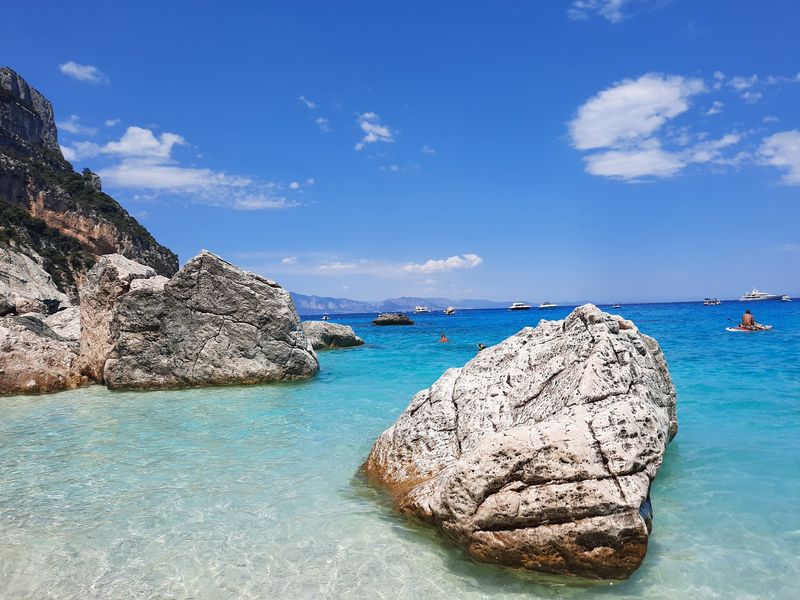
In 2025, the World’s 50 Best Beaches ranked Cala Goloritzè number one on the entire planet, and one look at this place tells you exactly why. Tucked into the Gulf of Orosei on Sardinia’s eastern coast, this tiny inlet is one of those locations that genuinely looks better in real life than in photos.
That is a very high bar to clear.
Instead of conventional sand, the shore is blanketed with smooth, pale pebbles that crunch satisfyingly underfoot. The water above them is so clear you can see the bottom even at surprising depths.
Towering above it all is Monte Caroddi, a 143-meter limestone pinnacle that gives the cove its unmistakable skyline.
Protected as a natural monument since 1995, access here is deliberately limited to keep the environment intact. You can hike down on foot via a scenic trail, or arrive by boat, though vessels must anchor outside the protected zone.
The combination of controlled access, extraordinary geology, and water so clear it almost looks fake makes Cala Goloritzè not just Sardinia’s finest beach, but genuinely one of the world’s most remarkable coastal spots.
Ses Illetes, Formentera, Spain
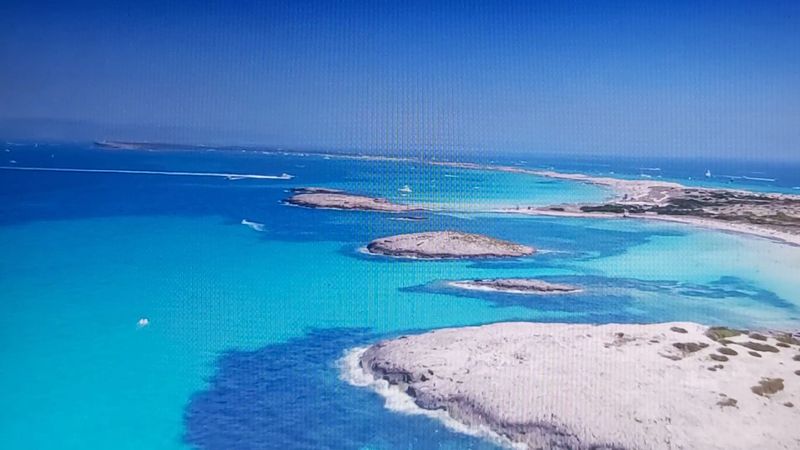
Formentera is one of those places that makes people question whether they accidentally booked a flight to the Caribbean. Ses Illetes, at the island’s northern tip, is the main reason for that confusion.
The water here is so shallow and so transparent that boats appear to float on air rather than sea.
Spain’s official tourism site describes the beach as roughly 450 meters long, with white sand and calm swimming conditions that make it ideal for families and snorkelers alike. Small islands dot the horizon offshore, while Ibiza is visible in the distance on clear days, adding a theatrical backdrop to an already cinematic setting.
The surrounding environment is carefully protected, and the underwater Posidonia seagrass meadows beneath the surface form part of a UNESCO-listed marine ecosystem. These meadows are largely responsible for the extraordinary water clarity that Ses Illetes is famous for.
Yes, it gets busy in summer, but the narrow sandy shoreline and almost unreal water color continue to justify every bit of its international reputation. A visit here feels less like a beach trip and more like stumbling into a postcard that somehow came to life.
Elafonissi Beach, Crete, Greece
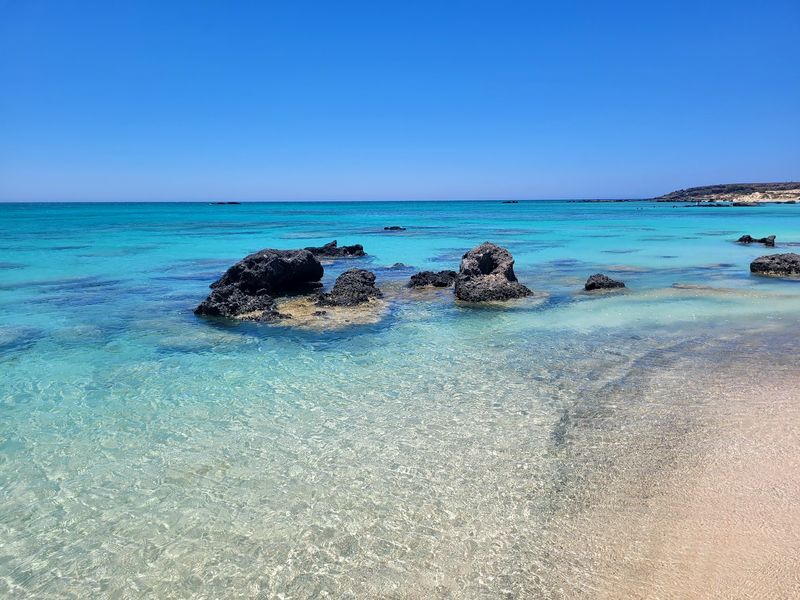
Pink sand sounds like something invented for a fantasy novel, but Elafonissi Beach on Crete’s southwestern coast is the real deal. The rosy tones scattered across the shoreline come from crushed shell fragments mixed into the pale sand, creating a color palette that genuinely stops people in their tracks.
No filters required.
The beach sits within a lagoon-island environment, meaning visitors can often wade through ankle-deep water to reach the outer island area. That shallow crossing gives the whole place a playful, adventurous feel that families particularly love.
The water is warm, calm, and ranges from nearly transparent at the edges to a rich turquoise farther out.
Elafonissi falls within the Natura 2000 protected network, which covers its dunes and rare plant species including sea daffodils. Viewed from above, the lagoon’s color gradients are extraordinary, shifting from white sand through pale green to vivid blue.
The trade-off for all this natural beauty is summer crowds, which can be significant. Arriving early in the morning or visiting in late spring gives you the best chance of experiencing Elafonissi at something closer to its serene, unhurried best.
Praia da Marinha, Algarve, Portugal
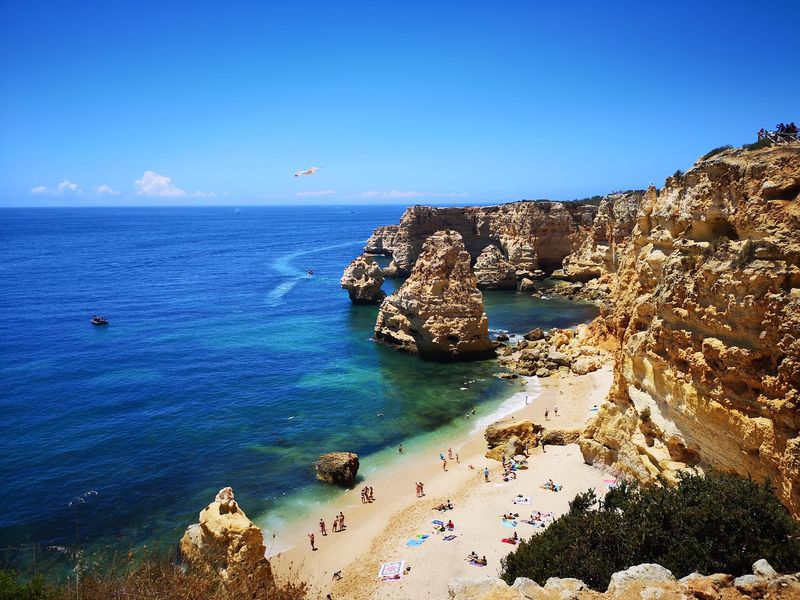
Portugal’s Algarve coast is packed with beautiful beaches, but Praia da Marinha consistently stands out as the one that looks most like a geology textbook cover. The surrounding limestone has been carved by Atlantic waves into an extraordinary collection of arches, pillars, caves, and isolated rock formations.
Every angle offers a completely different composition.
Portugal’s official tourism authority recommends stopping at the cliff-top viewpoint before heading down the long staircase to the shore. That advice is worth following.
The view from above gives you a full sense of the scale and complexity of the rock formations before you are standing among them. The descent is steep but manageable for most visitors.
Once on the beach, the water is typically calmer than at many exposed Atlantic spots, with summer temperatures averaging around 20 to 22 degrees Celsius. The sand is compact and golden, framed on all sides by the warm orange tones of the surrounding rock.
Snorkeling around the base of the formations reveals a surprisingly rich underwater world. Praia da Marinha earns its place on virtually every best-of list for the Algarve, not through size, but through sheer geological drama packed into a relatively compact stretch of coastline.
Haukland Beach, Lofoten, Norway
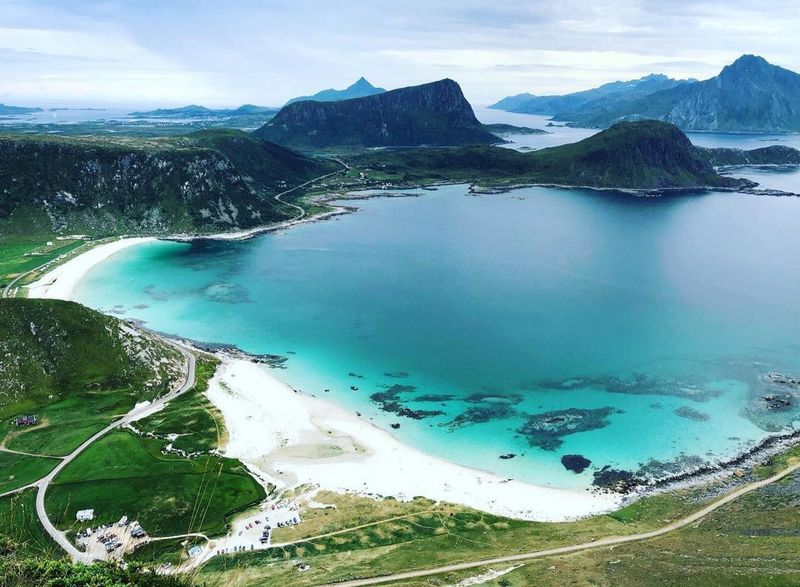
Most people picture palm trees when they think of a beautiful beach. Haukland Beach on Norway’s Lofoten Islands has something considerably more dramatic: sheer Arctic mountains rising straight out of the ground directly behind the shoreline.
The contrast between that pale sand, the blue-green water, and the jagged peaks overhead is genuinely unlike anywhere else in Europe.
Visit Lofoten notes that Haukland has been voted Norway’s best beach on multiple occasions, and it sits just a short ten-minute drive from the town of Leknes. Walking routes connect the beach with nearby Uttakleiv and climb toward viewpoints like Mannen, making it a great base for hikers who want to combine coastal and mountain scenery in a single day.
Summer here brings the extraordinary experience of visiting a beach beneath the midnight sun, when the sky stays bright well past midnight and the light turns golden for hours. The water is cold by Mediterranean standards, but that barely matters when the landscape around you is this spectacular.
Haukland is proof that Europe’s most beautiful beaches are not all about turquoise warmth. Sometimes, wild Arctic grandeur is the whole point.
Zlatni Rat, Brač, Croatia
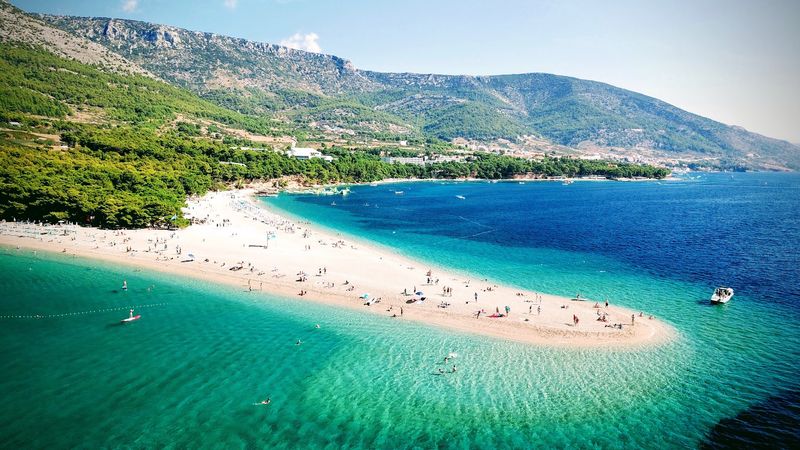
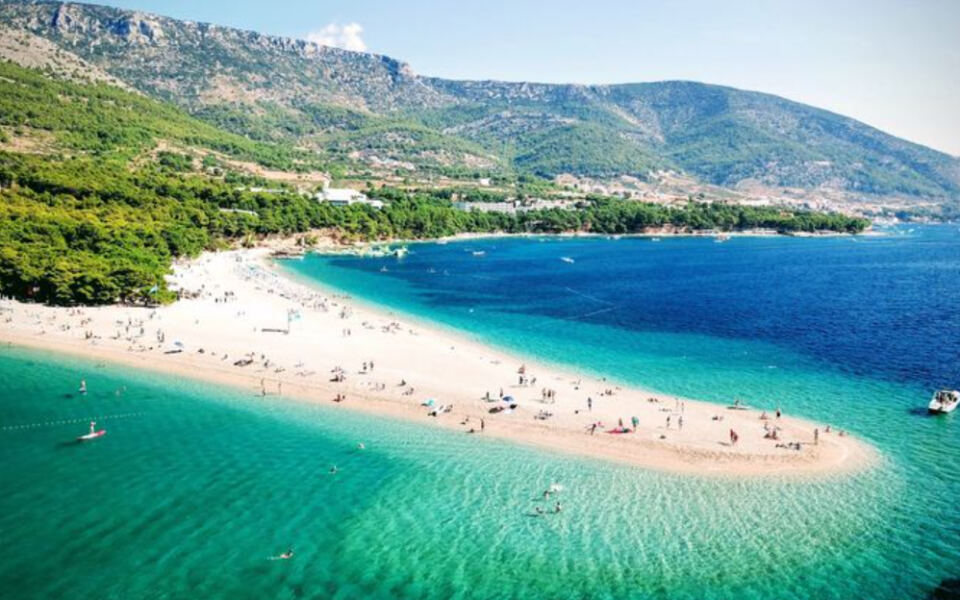
Zlatni Rat, which translates as the Golden Horn, is one of those beaches that looks completely different from above than it does at ground level. From the air, the long pebble spit extending into the Adriatic looks almost like a natural arrow pointing out to sea.
From the beach itself, it simply feels like a very pleasant place to swim on both sides simultaneously.
The official Zlatni Rat site describes the cape as roughly one kilometer long and one of Croatia’s most recognized landmarks. What makes it genuinely unusual is that its shape actually changes over time.
Waves, currents, and seasonal winds gradually shift the pebbles around the tip, meaning the exact outline of the spit is never quite the same twice.
Clear water wraps around both sides of the beach, while a dense cover of pine trees shades the broader peninsula behind it. The combination of green pines, blue sea, and that distinctive tapering shape creates one of the most photographed aerial views in Croatian tourism.
Brač is easily accessible by ferry from Split, making Zlatni Rat a popular but well-organized destination. Windsurfers are particularly fond of the conditions around the tip, where the breeze tends to be reliably strong.
Palombaggia Beach, Corsica, France
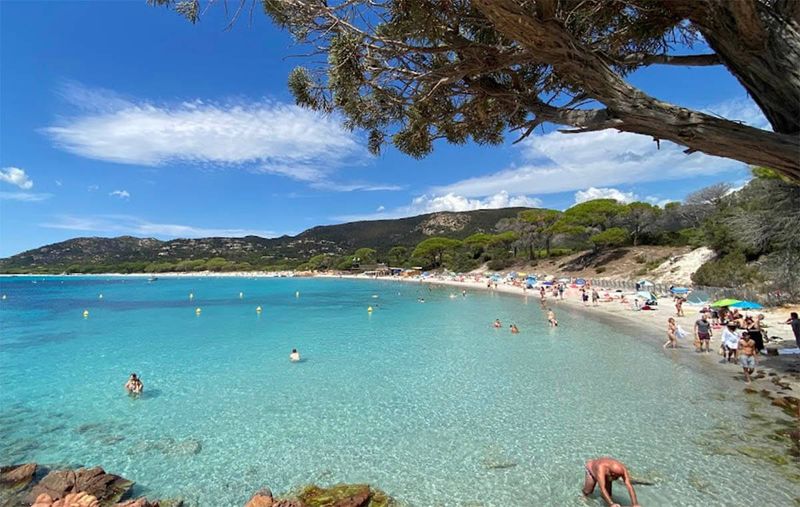
Corsica has a reputation for being a little wild and a little proud of it, and Palombaggia fits that personality perfectly. The beach near Porto-Vecchio is one of the most beautiful in France, combining fine pale sand, clear shallow water, and a backdrop of umbrella pines that lean casually over the shore as if they have been posing for photographs their entire lives.
France’s official tourism portal notes that Palombaggia stretches for more than 1.5 kilometers, with the Cerbicales Islands sitting offshore to complete the view. Those pine trees behind the beach are a key part of what makes it feel so different from heavily developed Mediterranean resorts.
They provide natural shade, a pleasant scent, and a sense that the landscape here has been left largely as nature intended.
On calm days, the water near shore takes on bright turquoise tones that shift gradually to deeper blue farther out. The beach is popular, particularly in July and August, but the natural setting absorbs the crowds better than most.
Arriving in the early morning or late afternoon rewards visitors with softer light and fewer people. Palombaggia is the kind of beach that earns its reputation not through superlatives, but through simple, well-balanced coastal beauty.
Playa de las Catedrales, Galicia, Spain
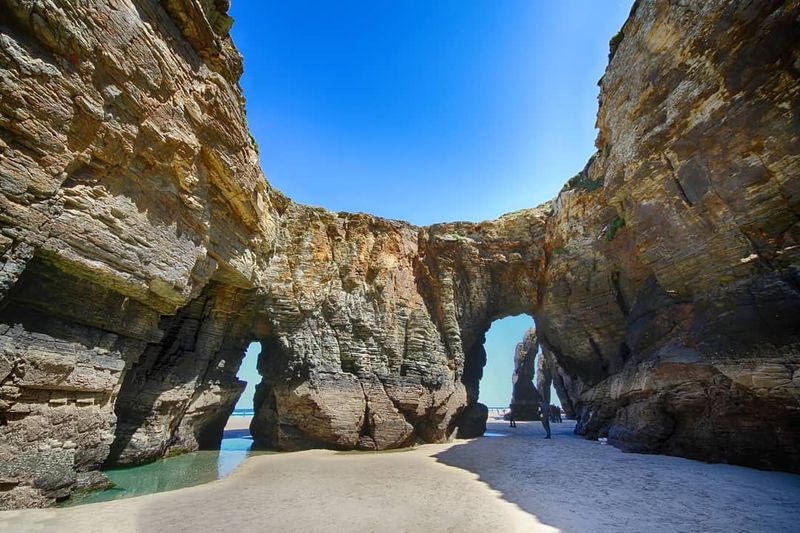
The name translates as Beach of the Cathedrals, and the rock formations here genuinely earn that title. Near Ribadeo on Spain’s rugged Galician coast, the Cantabrian Sea has spent thousands of years carving arches, tunnels, and towering vaults into the coastal rock.
Some of those formations reach approximately 30 meters high, creating corridors that feel more like ancient architecture than anything shaped by water alone.
The catch is that you need the right timing. The most dramatic landscape is only accessible around low tide, when the receding water reveals the full network of arches and sandy passages beneath.
At high tide, much of the beach simply disappears. Checking the tide tables before visiting is not optional here, it is essential planning.
Galicia’s cooler, greener Atlantic character gives Playa de las Catedrales a very different mood from Spain’s southern beaches. The sky tends to be dramatic, the sea churns with real energy, and the light on the rock faces changes constantly.
A reservation system is required during peak summer months to manage visitor numbers. The beach rewards those who plan carefully with one of the most genuinely unusual coastal landscapes anywhere in Europe.
Raw, powerful, and completely unforgettable.
Porto Katsiki, Lefkada, Greece
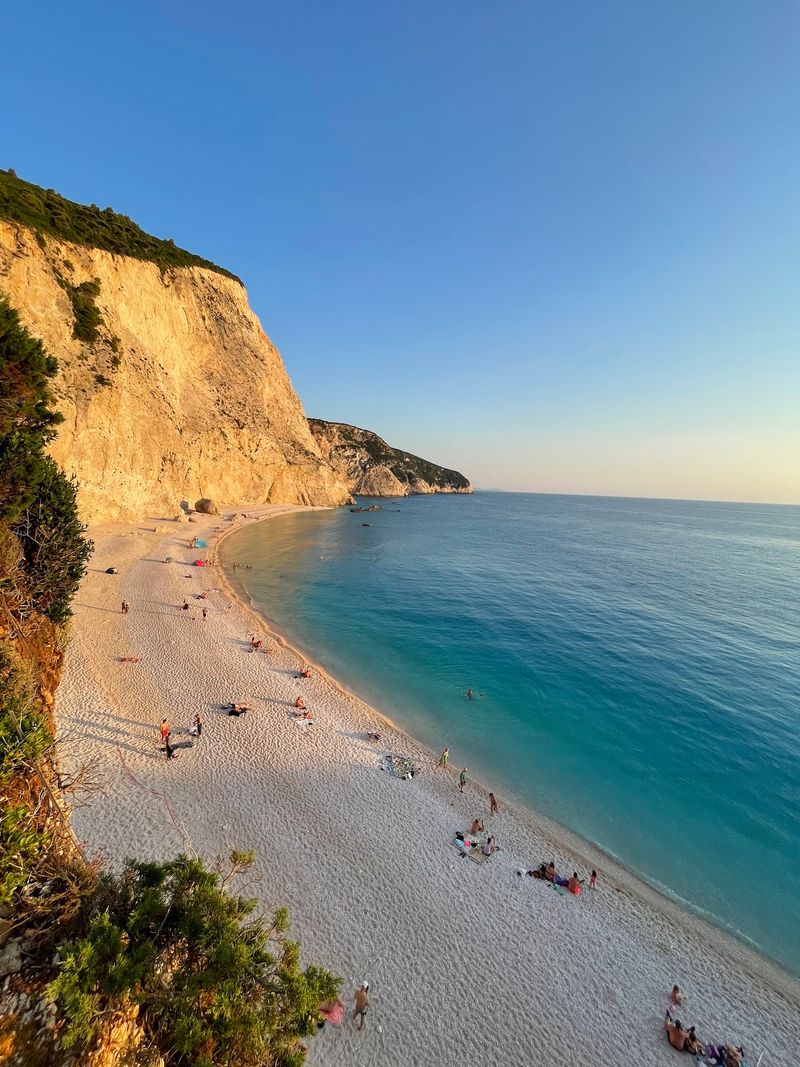
Standing at the top of the staircase that leads down to Porto Katsiki is a moment that tends to produce genuine gasps. Below, a narrow pale shore sits at the base of an enormous white limestone escarpment.
Ahead, the Ionian Sea stretches out in shades that shift from turquoise near the shore to a rich, almost electric blue farther out. It is an absurdly dramatic setting for a beach.
Greece’s official tourism authority lists Porto Katsiki among Lefkada’s most celebrated and award-winning beaches. The cliffs above provide a sense of isolation that feels almost theatrical, even when other visitors are present.
The beach itself combines coarse sand with pebbles, and the water is clear and generally calm, though the open Ionian exposure means conditions can change.
Lefkada has an interesting geographical quirk worth mentioning: it is connected to mainland Greece by a road bridge, making it one of the most accessible Greek islands for travelers arriving by car. That accessibility puts spectacular Ionian beaches like Porto Katsiki within reach of visitors who might not be planning a full island-hopping trip.
Getting down to the beach requires navigating a long staircase, but the view from the bottom makes every step worthwhile.
Nissi Beach, Cyprus
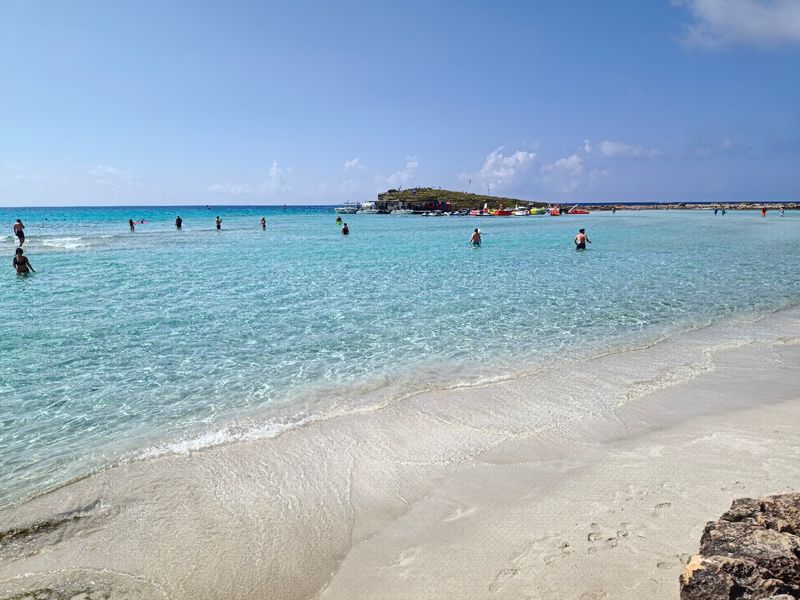
Nissi Beach is not trying to be a hidden gem, and it makes no apologies for that. Near Ayia Napa in Cyprus, this is a full-energy summer beach with water sports, beach bars, hotels, and crowds that arrive ready to have a good time.
But beneath all that activity, the natural setting is genuinely impressive and worth looking past the loungers to appreciate properly.
Cyprus’s official tourism authority describes the main beach as approximately 600 meters long, with fine golden sand and shallow, calm water protected from strong winds by the natural shape of the bay. The name Nissi comes from the Greek word for island, referring to the small rocky islet offshore that gives the beach its signature feature.
During summer, a shallow sandy strip sometimes emerges that allows visitors to wade across to the islet.
The water around that sandbar area is extraordinarily pale and transparent, creating a visual contrast with the darker blue of the open sea beyond. Early morning visits before the crowds arrive reveal a surprisingly serene side to Nissi that most daytime visitors never see.
The combination of easy facilities, warm Mediterranean water, and that photogenic sandbar-and-islet combination explains why Nissi Beach has remained one of Cyprus’s most visited and most photographed coastal spots.
Simos Beach, Elafonisos, Greece
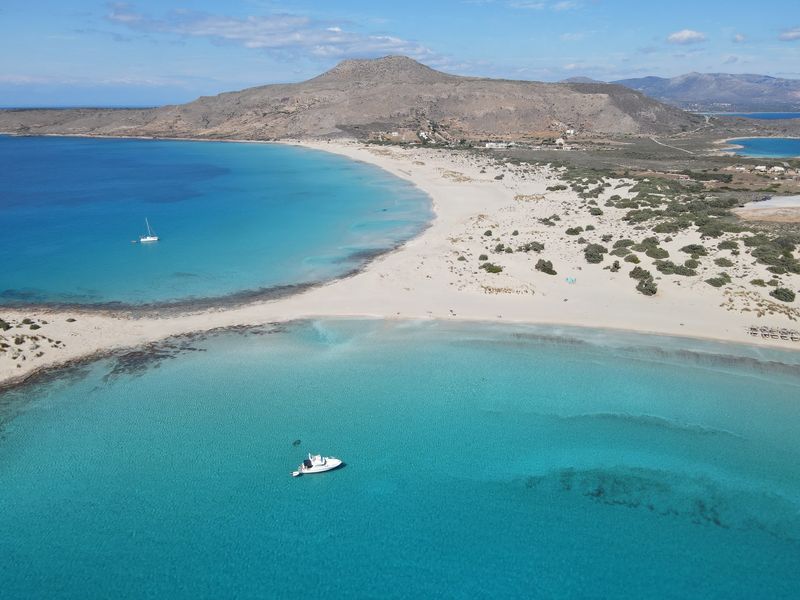
Elafonisos is a tiny Greek island that most tourists completely overlook, which is exactly what makes it such a great find. Its signature beach, Simos, looks like it was borrowed from the Bahamas and relocated to the southern Peloponnese.
The sand is almost white, the water shifts through every shade of turquoise imaginable, and the whole scene has a wide-open, unhurried quality that is increasingly rare in the Mediterranean.
Visit Greece highlights the twin beaches of Simos-Megali Ammos and Sarakiniko as the island’s defining attraction. Sand dunes rise behind portions of the shoreline, adding an unexpected layer of texture to a landscape that already has plenty going for it.
The beach sits between two small peninsulas on the southeastern side of the island, which helps shelter it from stronger winds.
Unlike many Greek beaches that are backed by dramatic cliffs, Simos feels broad, low, and expansive. The water near the shore is nearly transparent, then gradually intensifies into deeper blues as the seabed drops away.
Elafonisos is reachable by a short ferry crossing from the Peloponnese mainland, making it a manageable day trip or a quiet overnight escape. Either way, Simos Beach consistently surprises visitors who were not quite expecting something this beautiful.
Praia da Falésia, Algarve, Portugal
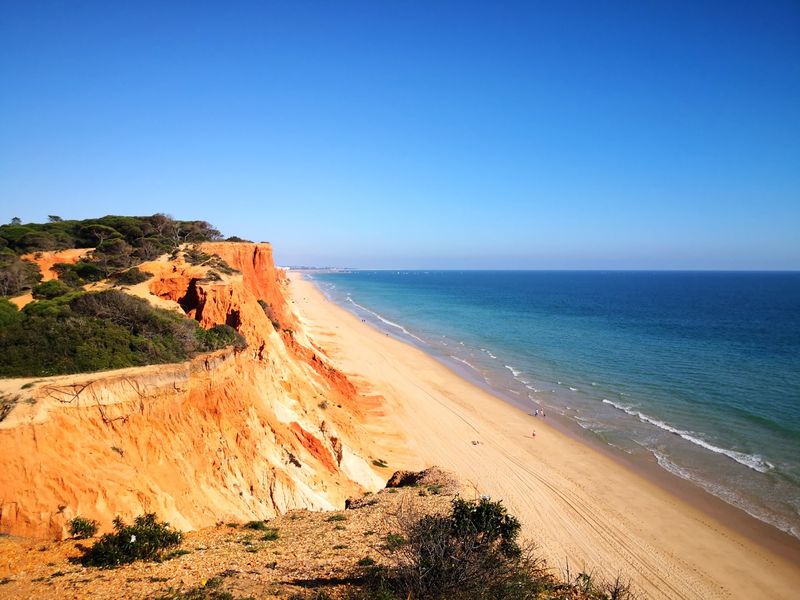
Forget the usual beach color palette of blue and beige. Praia da Falésia brings an entirely different set of tones to the Algarve, with cliffs layered in copper, burnt orange, deep red, and gold stretching for kilometers above the sand.
The effect is almost overwhelming, particularly in the late afternoon when the sun hits the rock face directly and the colors intensify to something close to surreal.
According to Visit Portugal, the sandy shoreline runs between the areas of Olhos de Agua and Vilamoura, making it one of the longer continuous beach stretches in the Algarve. Unlike smaller coves enclosed by tight rock formations, Falésia feels genuinely expansive.
A broad ribbon of sand runs along the full length of the cliff base, wide enough to feel comfortable even on busy summer days.
Pine trees line the clifftop above, adding contrasting green to the warm tones of the rock. Cliff-top walking paths offer elevated views along the beach that are worth seeking out for photography.
The Atlantic water here is clear and refreshing, if typically cooler than the Mediterranean. Praia da Falésia rewards visitors who take the time to walk its full length, because the cliff colors and formations change noticeably from one end to the other.
Durdle Door Beach, England
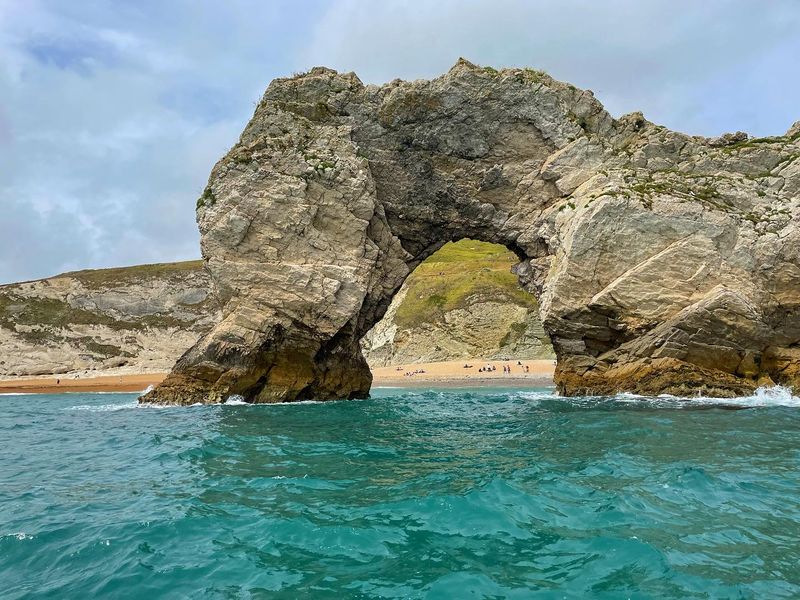
Durdle Door is arguably the most recognizable piece of coastline in England, and it earns that status through pure geological showmanship. The enormous natural limestone arch extending into the sea has been shaped by millions of years of marine erosion, and it sits above a sweeping shingle beach in a way that feels almost impossibly cinematic.
This is the Jurassic Coast doing its absolute best work.
The beach below the arch is a mix of shingle and sand, backed by steep chalk and limestone cliffs that form part of the UNESCO World Heritage Jurassic Coast. Facilities are limited, and there is no lifeguard on duty, so visitors need to be sensible about swimming conditions.
Local visitor information also warns people to keep clear of cliff edges and cave entrances, where rockfalls can occur without warning.
What makes Durdle Door special is that it offers dramatic coastal scenery without requiring a plane ticket or a Mediterranean climate. It sits near Lulworth in Dorset, reachable by a walk from the car park at Lulworth Cove.
The arch will eventually collapse as erosion continues, which gives every visit a slightly poignant quality. Seeing it now, while it still stands in full dramatic form, feels like a genuine privilege.
Cala d’Hort, Ibiza, Spain
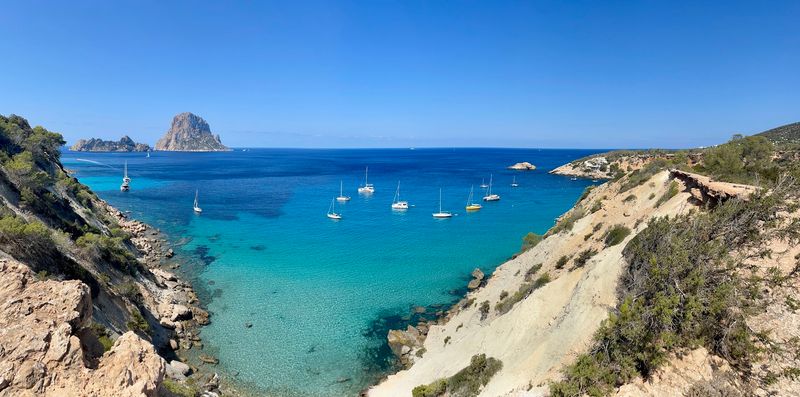
Cala d’Hort is the kind of beach that makes you forget you came to Ibiza for anything else. It is small, slightly rocky underfoot, and surrounded by rugged coastal slopes rather than hotel terraces.
But facing it from the shore is Es Vedra, a massive rocky island that rises abruptly from the Mediterranean like something out of a myth. The view is spectacular enough to stop a conversation mid-sentence.
Spain’s official tourism information highlights Cala d’Hort specifically for this extraordinary offshore setting and confirms that the beach sits within a protected natural environment. Es Vedra and the smaller Es Vedranell beside it dominate the seaward view completely, their dark rocky silhouettes contrasting sharply with the blue water around them.
The beach itself combines sand and pebbles, sloping gently into clear, calm water.
Sunset here has developed a devoted following. As the light fades, the silhouette of Es Vedra against an orange and pink sky creates one of Ibiza’s most photographed moments, and it costs nothing beyond the effort of getting there.
Compared with the island’s larger resort beaches, Cala d’Hort feels much quieter and more connected to the rugged natural character that defines Ibiza’s less commercial side. It is genuinely one of the island’s finest spots.
Reynisfjara, Iceland
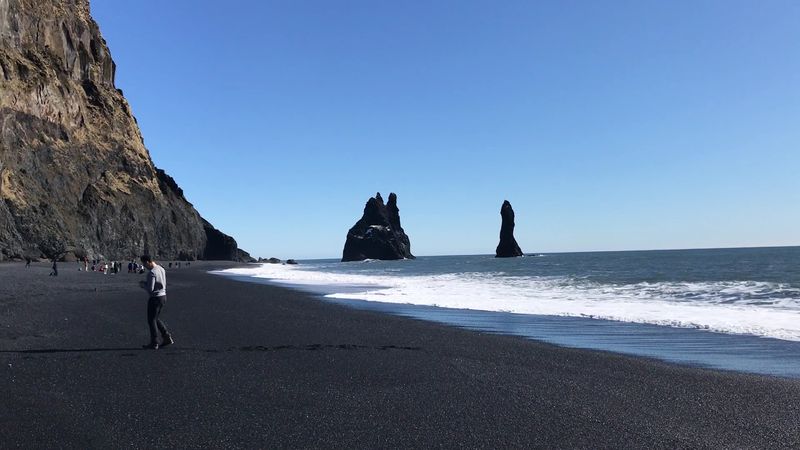
Black sand, geometric basalt columns, roaring North Atlantic waves, and offshore sea stacks that look like they belong in a fantasy film. Reynisfjara near Vik on Iceland’s south coast is easily the most dramatically different beach on this entire list, and it is genuinely one of the most visually striking stretches of coastline anywhere on Earth.
No tropical warmth required.
Visit Iceland notes that the unusual black volcanic shoreline has made Reynisfjara a popular filming location for international productions, and it is easy to see why. The hexagonal basalt columns stacked along the cliff face look almost engineered, though they formed naturally through the slow cooling of ancient lava flows.
The contrast between those precise geometric shapes and the raw, churning sea in front of them is remarkable.
Safety here is not optional. Reynisfjara is genuinely dangerous.
Powerful sneaker waves can surge unexpectedly far up the beach, and Icelandic tourism authorities explicitly warn visitors to stay well back from the water’s edge and follow the site’s safety system. People have been seriously injured here by underestimating the ocean.
The beauty is undeniable, but Reynisfjara demands respect. Visiting with awareness and caution allows you to fully appreciate one of Europe’s most extraordinary natural landscapes without taking unnecessary risks.
Share this story