Long before steel cables, reinforced concrete, and computer modeling, builders were already creating bridges capable of surviving floods, earthquakes, warfare, and centuries of daily use. Some of the finest survivors come from the Roman world, but remarkably old crossings also remain in Greece, China, Iran, and Turkey.
Their survival does not mean every stone is untouched, as many have undergone repairs or partial reconstruction, but substantial ancient fabric and original engineering can still be seen today. These 17 bridges offer an extraordinary look at how early engineers solved problems that still challenge bridge builders right now.
Pons Fabricius, Rome, Italy
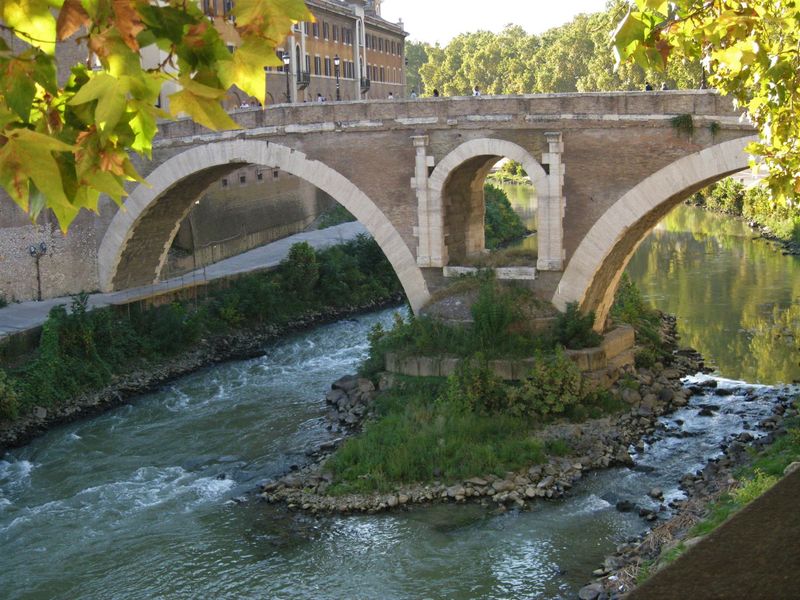
Standing since 62 BCE, Pons Fabricius is the kind of bridge that makes modern engineers quietly impressed. It connects central Rome to Tiber Island and was built by a Roman official named Lucius Fabricius to replace an earlier wooden crossing.
His name is still carved into the stone, readable after more than two thousand years.
The bridge suffered flood damage even in ancient times, and later popes ordered restorations over the centuries. Despite those repairs, the core Roman structure remains impressively intact.
Turismo Roma describes it as the best-preserved Roman bridge in the city and one of the oldest still in daily use.
What makes Pons Fabricius genuinely special is how ordinary it feels. Pedestrians cross it without much fanfare, grabbing a coffee, chatting on phones, heading to the island’s hospital.
The ancient arches frame a perfectly normal Roman morning. For a structure older than Christianity itself, that everyday usefulness feels like the greatest compliment any engineer could ever receive.
Visiting it means standing on stone that Julius Caesar himself would have recognized.
Pont du Gard, France
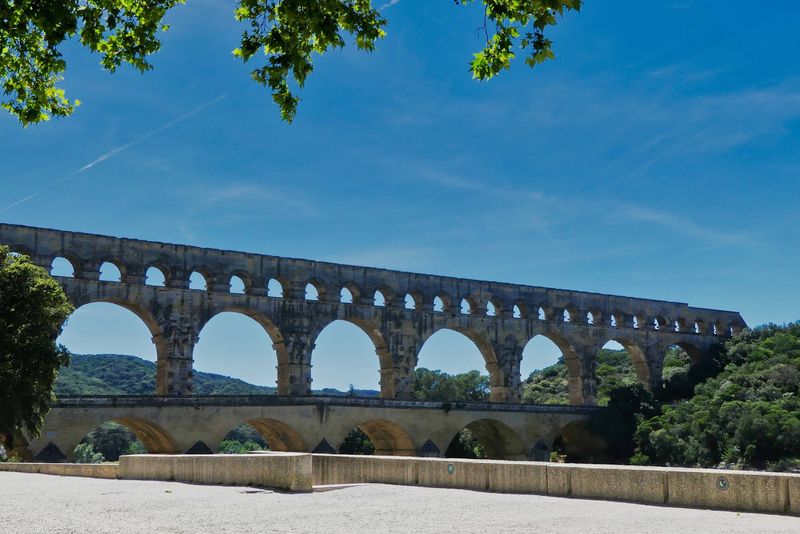
Picture three stacked rows of Roman arches rising almost 49 meters above a French river, built without modern cranes or power tools. That is exactly what the Pont du Gard looks like, and it has looked that way since the first century CE.
Roman engineers constructed it as part of a 50-kilometer aqueduct system that carried water to the city of Nemausus, modern-day Nimes.
The entire system relied on gravity, sloping just barely enough to keep water moving over its full length. UNESCO calls the structure a masterpiece of Roman engineering and praises its remarkable state of preservation.
The precision required to maintain that slope across such a long distance still impresses hydraulic engineers today.
Water stopped flowing through its channels centuries ago, but the physical structure refuses to quit. Visitors can walk across the lower level of the bridge and look up at the towering rows of arches above them.
The golden limestone glows beautifully in afternoon sun. Swimming in the Gardon River below the bridge is also popular in summer, giving the ancient monument a surprisingly festive, beach-day atmosphere that Roman aqueduct engineers probably never anticipated.
Alcantara Bridge, Spain
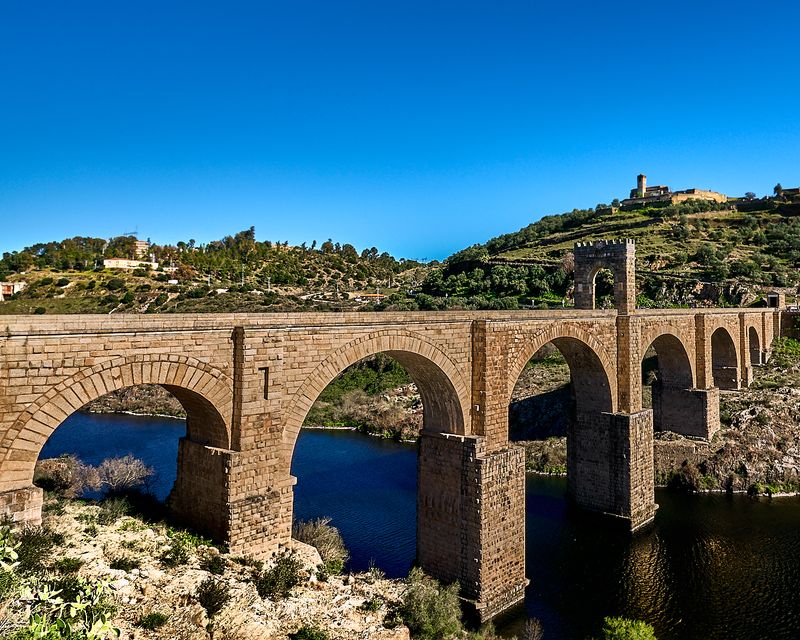
Six massive stone arches leap across a dramatic gorge in western Spain, carrying a road that Roman engineers finished around 106 CE. The Alcantara Bridge was built during the reign of Emperor Trajan, and a triumphal arch honoring Trajan still rises from its center like a stone exclamation point.
An inscription on the bridge once boasted that it would last forever, which, so far, has proven surprisingly accurate.
Human conflict turned out to be far more dangerous to the bridge than any flood or earthquake. Individual arches were deliberately destroyed during various wars, including one blown apart in 1810.
Each damaged section was later reconstructed, meaning the bridge is a mix of original Roman work and careful historical restoration.
Even with those repairs factored in, Alcantara remains one of the most dramatic surviving Roman bridges on the planet. The sheer height above the Tagus River gives the crossing a genuinely breathtaking quality.
Standing on it means looking down into a rocky gorge while standing on stones that Roman legions once marched across. Few ancient structures deliver that combination of visual power and historical weight quite as effectively.
Zhaozhou Bridge, China
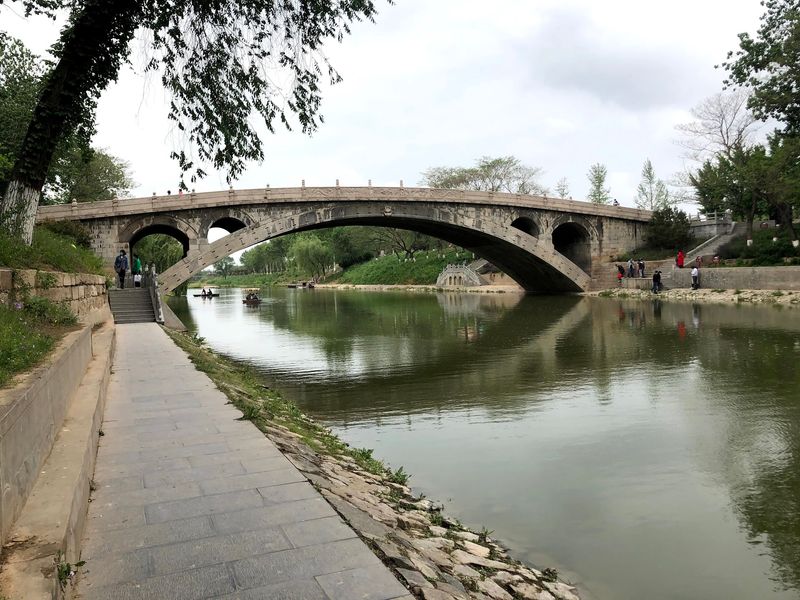
Completed around 605 CE during the Sui dynasty, the Zhaozhou Bridge introduced a structural idea so clever that European engineers would not catch up for centuries. Designer Li Chun built a remarkably flat stone arch across the Jiao River in Hebei Province, then added smaller openings in the triangular sections above the arch to reduce weight and let floodwater pass freely.
That combination of ideas defines what engineers now call an open-spandrel arch bridge.
The American Society of Civil Engineers recognizes it as the world’s oldest surviving open-spandrel arch bridge and China’s oldest standing bridge overall. Its main span stretches roughly 37 meters, with a total length of about 51 meters.
The whole structure sits so low and flat that the arch looks almost casual, hiding the engineering intelligence underneath.
Decorative carvings of dragons and geometric patterns still appear on the bridge’s railings and keystones, showing that ancient builders cared about beauty as much as function. After more than 1,400 years of floods, earthquakes, and heavy use, the bridge stands intact.
Visiting Zhaozhou means seeing a structure that solved engineering problems centuries ahead of its time, built by a single designer whose name history actually remembered.
Bridge of Tiberius, Rimini, Italy
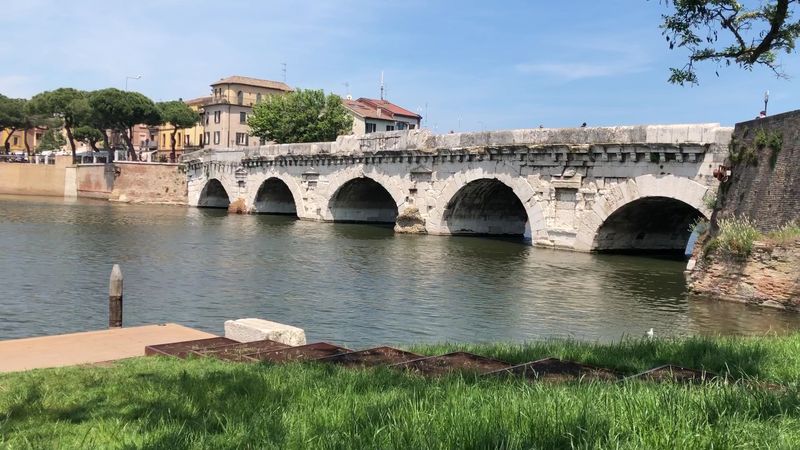
Construction started under Emperor Augustus and finished under Emperor Tiberius around 21 CE, giving this Rimini landmark a name that splits credit between two emperors. Five rounded arches cross what was historically the Marecchia River, supported by chunky limestone and travertine piers that have shrugged off nearly two thousand years of river flow.
The bridge was not just decorative; it anchored the northern end of the Roman road network radiating from ancient Ariminum.
What makes the Bridge of Tiberius particularly striking is how well it survived a century that destroyed much of the city around it. Rimini suffered catastrophic bombing during World War II, and the historic center was heavily damaged.
The Roman bridge stood through all of it, emerging from the rubble looking essentially as it had for centuries.
Italia.it describes the bridge as beautifully preserved and still in active use today. Pedestrians, cyclists, and the occasional scooter still cross it regularly.
The surrounding area has been cleaned up into a pleasant riverside park, making the ancient crossing a popular spot for evening strolls. Standing on its worn stones while watching the river move underneath feels genuinely timeless, and the Roman craftsmanship overhead makes the whole experience feel almost unreal.
Roman Bridge of Merida, Spain
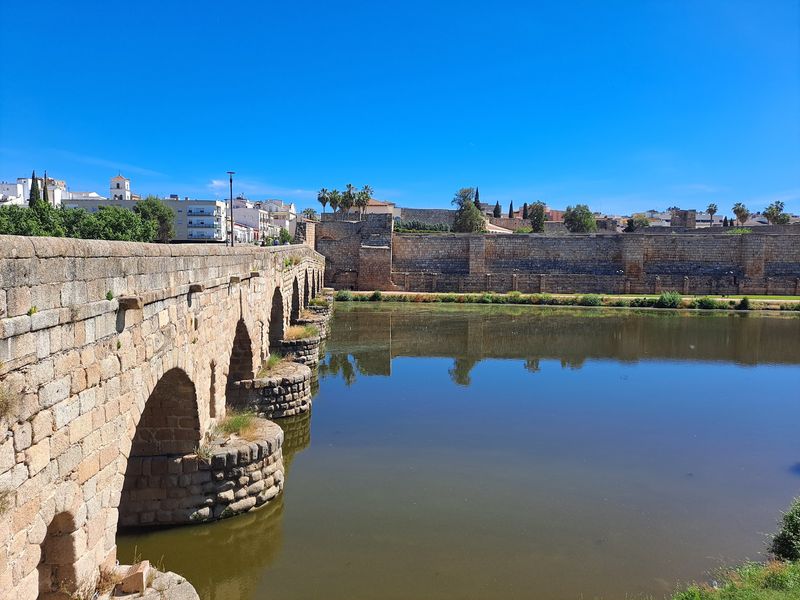
Ancient Augusta Emerita was one of the most important cities in Roman Spain, and its bridge across the Guadiana helped tie the provincial capital of Lusitania into the wider empire’s road network. The Roman Bridge of Merida forms part of the city’s UNESCO-listed archaeological ensemble, recognized alongside its theater, amphitheater, and temples as a collection of outstanding Roman remains.
The bridge stretches for hundreds of meters across the river, making it one of the longest surviving Roman bridges in the world. Centuries of repairs and alterations have changed portions of the crossing considerably, as any structure used continuously for two millennia inevitably collects layers of modification.
UNESCO specifically acknowledges that Merida’s historic bridges have retained their significance despite those changes.
Today the crossing serves pedestrians rather than motor vehicles, which gives visitors the chance to walk its full length at a relaxed pace. Looking back toward the city from the bridge reveals a skyline still dominated by Roman-era structures, creating an unusually coherent view of ancient urban planning.
Few cities anywhere in the world offer such a direct, walkable connection between their Roman past and their living present. Merida earns its UNESCO status every single day.
Arkadiko Bridge, Greece
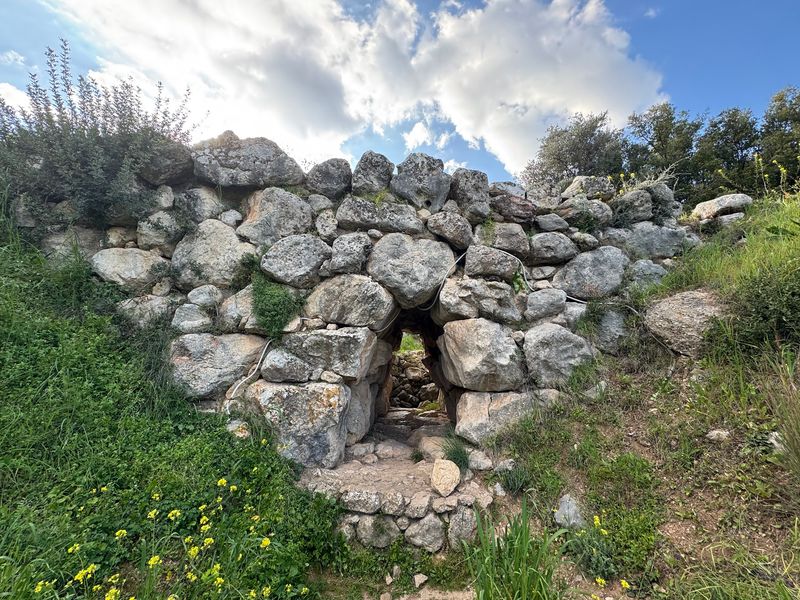
Somewhere in the hills of Argolis, a bridge has been standing since the Bronze Age, and people can still walk across it today. The Arkadiko Bridge, also called the Kazarma Bridge, dates to the Mycenaean period around the second millennium BCE.
Greek cultural records describe it as the oldest preserved bridge in Europe that remains in use.
Its builders stacked enormous uncut stones using a technique called Cyclopean masonry, forming a corbelled arch without a single drop of mortar. The name “Cyclopean” comes from the ancient Greek belief that only giants called Cyclopes could have lifted stones so heavy.
Remarkably, the arch has held together through sheer weight and careful stacking alone.
The bridge was once part of a road network connecting major Mycenaean centers across the Peloponnese. Its unusually wide roadway suggests that wheeled vehicles, not just foot traffic, once used it regularly.
Thousands of years later, hikers and history lovers still cross this prehistoric marvel on a quiet rural path, making it one of the most accessible ancient structures anywhere in Greece.
Ponte Sant Angelo, Rome, Italy
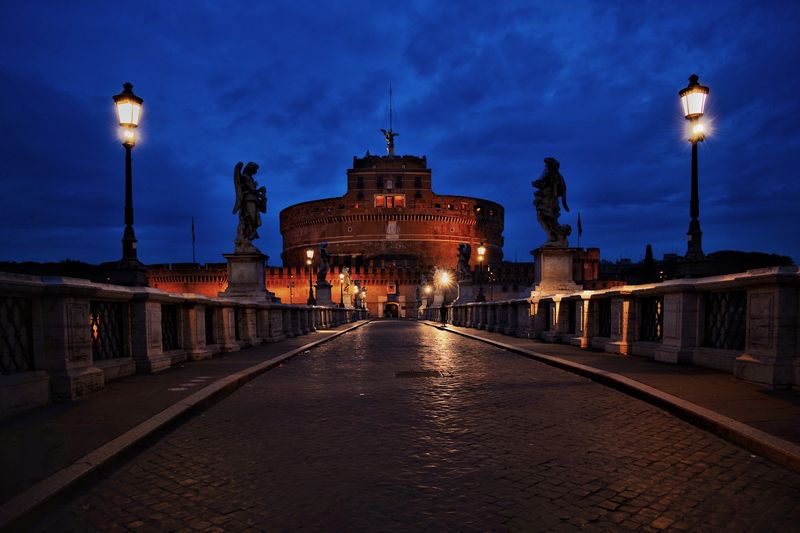
Emperor Hadrian wanted a grand entrance to his enormous new mausoleum, so around 136 CE he built a bridge across the Tiber specifically for that purpose. Originally called Pons Aelius, it served as the formal approach to what is now known as Castel Sant’Angelo.
Nearly 1,900 years later, pedestrians still use it for exactly the same purpose, which has to count as one of history’s most successful design briefs.
The bridge’s appearance changed dramatically over the centuries. Towers were removed, access points were altered, and in the 17th century ten famous angel statues were added under the artistic direction of Gian Lorenzo Bernini.
Those Baroque additions are now so associated with the bridge that many visitors do not realize there is a Roman structure underneath them.
Beneath the dramatic angel sculptures and the tourist crowds, the original Roman engineering quietly persists. The ancient arches still carry the load.
The bridge still connects the same two points across the same river. On a clear evening, with the castle glowing behind the angel-lined parapet and the Tiber reflecting the sky below, Ponte Sant’Angelo delivers a scene that has impressed visitors for nearly two thousand years.
Some backdrops simply never go out of style.
Cendere Bridge, Turkiye
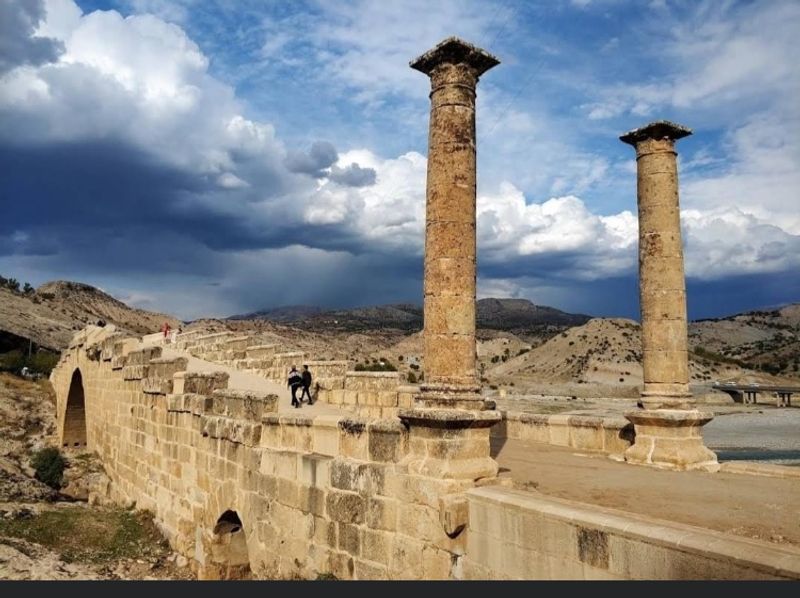
Roman soldiers built this bridge, and the story carved into its stones is genuinely dramatic. Around 198 to 200 CE, legionaries of Rome’s XVI Legion constructed the Cendere Bridge near Mount Nemrut in what is now southeastern Turkey.
Its main arch spans more than 32 meters without any support underneath, a bold structural move that has held for over 1,800 years.
Four columns originally stood at both ends of the bridge, honoring Emperor Septimius Severus and members of his imperial family. Three columns remain today.
The missing one honored Geta, the emperor’s son, whose memory was officially erased after his brother Caracalla had him killed. That absent column is now a small stone monument to ancient political grudges.
Turkey’s official tourism resources describe Cendere as one of the country’s best-preserved Roman bridges, and the setting amplifies the experience considerably. The surrounding landscape of rocky hills and the nearby ruins of Arsameia make it feel genuinely remote and ancient.
Vehicle traffic was stopped after restoration work in 1997, protecting the structure from further wear. Visiting on foot gives travelers the chance to stand on a bridge built by Roman soldiers and look out at a landscape that has changed surprisingly little since they were here.
Ponte Milvio, Rome, Italy
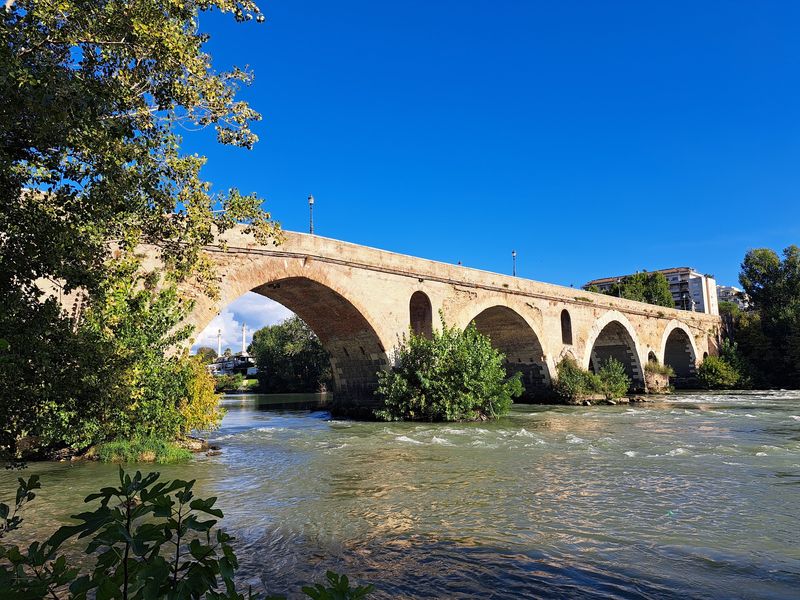
History changed near this bridge in 312 CE, when Constantine defeated Maxentius at the Battle of the Milvian Bridge and began his path to sole rule over the western Roman Empire. The crossing had already been standing since 109 BCE, making it one of the older Roman bridges in the city at that point.
Its position where major northern roads approached Rome gave it enormous strategic importance for centuries.
The bridge has been rebuilt, repaired, and significantly altered many times over its long life. A medieval tower was added at one end, and various restorations changed the appearance of different sections.
Turismo Roma notes that three central arches survive from the original Roman structure, preserving a physical link to a crossing more than two thousand years old.
Today Ponte Milvio has a lively, almost festive character. Vendors set up nearby, young Romans gather on weekends, and the bridge has become known in recent decades for the tradition of attaching padlocks to its lampposts as a romantic gesture.
The combination of ancient stone arches, a medieval tower, and modern Roman social life makes it feel layered and alive in a way that purely preserved monuments sometimes lack. History here is still very much in use.
Roman Bridge of Cordoba, Spain
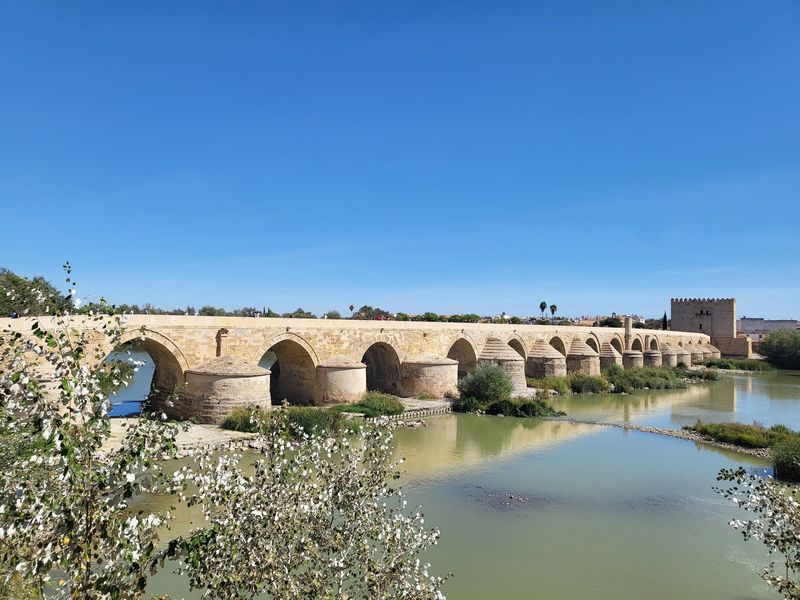
Walking across the Roman Bridge of Cordoba means crossing a structure with layers of history stacked so deep that separating them becomes almost impossible. The bridge is believed to have originated during the reign of Augustus, when Cordoba served as the capital of the Roman province of Hispania Baetica.
Over the following centuries, it became a gateway for Roman legions, Islamic traders, and medieval Christian pilgrims alike.
Today the bridge has 16 arches, though centuries of major renovations mean that much of the visible masonry is later than the original Roman construction. UNESCO identifies the crossing as part of Cordoba’s visible Roman legacy, acknowledging its role in the city’s long history even as it recognizes the layers of modification.
The bridge connects the historic center to the Calahorra Tower on the opposite bank.
Reserved now for pedestrians, the bridge offers one of the most memorable walks in southern Spain. The Mezquita-Cathedral looms behind you, the river stretches wide and calm below, and the Calahorra Tower rises ahead.
On warm evenings, the scene fills with locals, tourists, street musicians, and the kind of relaxed energy that ancient public spaces seem to generate naturally. Few bridges anywhere in Europe carry quite this much accumulated history in such a walkable package.
Roman Bridge of Salamanca, Spain
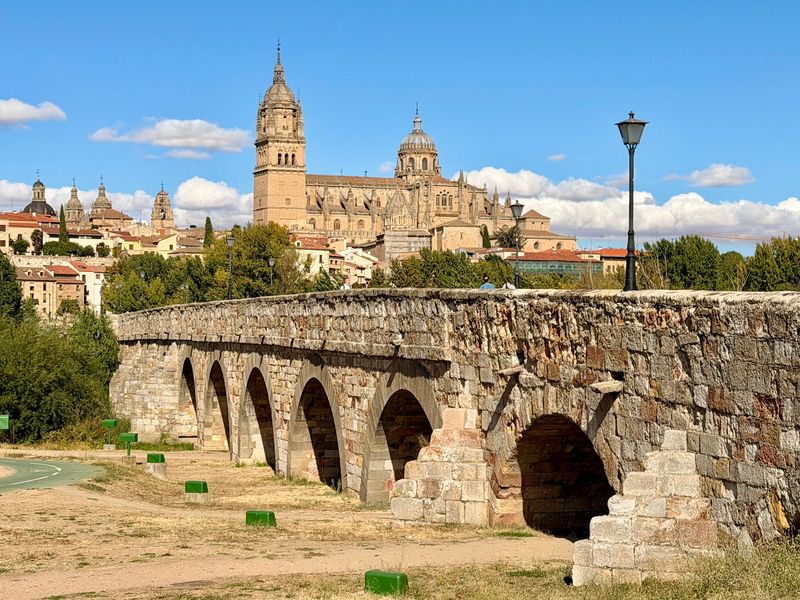
For centuries, travelers following the Via de la Plata, the ancient Silver Route, crossed the Tormes River at Salamanca using this bridge. Historians commonly date its origins to the first century CE, possibly during the reign of Emperor Trajan.
Spain’s official tourism authority describes the bridge as approximately 176 meters long, with 26 rounded arches carrying the road above the river.
Not all those arches are Roman. Flooding and centuries of reconstruction changed substantial sections of the crossing, and the visible stonework reflects many different periods of repair.
The ancient portion is concentrated in the section nearest the historic city, where the original Roman engineering is most clearly preserved. What makes Salamanca’s bridge special is partly the bridge itself and partly the view it frames.
Walking across it toward the city reveals one of Spain’s finest urban panoramas, with the golden sandstone towers and domes of Salamanca’s UNESCO-listed historic center rising above the riverbank. The warm-colored stone of the bridge matches the warm-colored stone of the city behind it, creating an unusually harmonious visual connection between ancient infrastructure and later architecture.
Few Roman bridges anywhere in the world have a more beautiful destination waiting at the far end.
Trajan Bridge of Chaves, Portugal
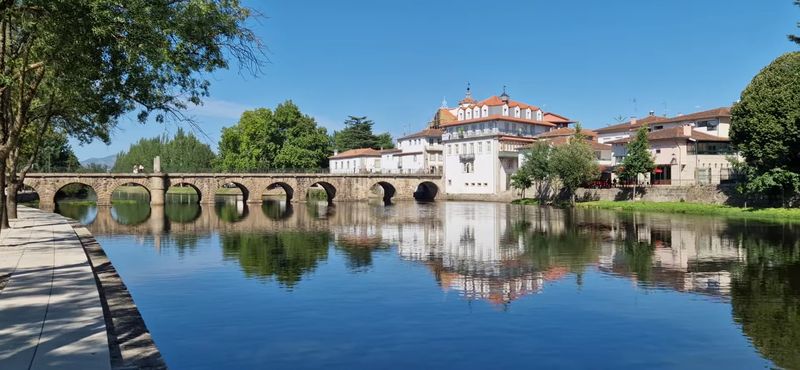
The Portuguese city of Chaves was once called Aquae Flaviae by the Romans, and the bridge Emperor Trajan ordered built across the Tamega River is the most recognizable piece of that ancient identity still standing. Portugal’s official tourism authority dates the bridge to between the late first and early second centuries CE.
Roman milestones incorporated into the structure still carry inscriptions connecting it to the ancient road network that once passed through the settlement.
Like most bridges that remained useful for many centuries, Chaves’s crossing has undergone alterations and restoration rather than surviving completely untouched. The repairs are part of its story, reflecting how each generation that depended on the crossing felt responsible for maintaining it.
That continuity of care is itself a kind of historical record.
Chaves sits in the Tras-os-Montes region of northern Portugal, an area known for its thermal springs, local sausages, and unhurried pace of life. The Roman bridge fits naturally into that atmosphere, neither fenced off nor dramatically spotlit, just quietly present in the middle of a working town.
Locals cross it on daily errands. Visitors stop to read the ancient inscriptions.
The Tamega flows underneath. It is one of the most important Roman monuments in northern Portugal, and it still earns that title every day.
Ponte Pietra, Verona, Italy
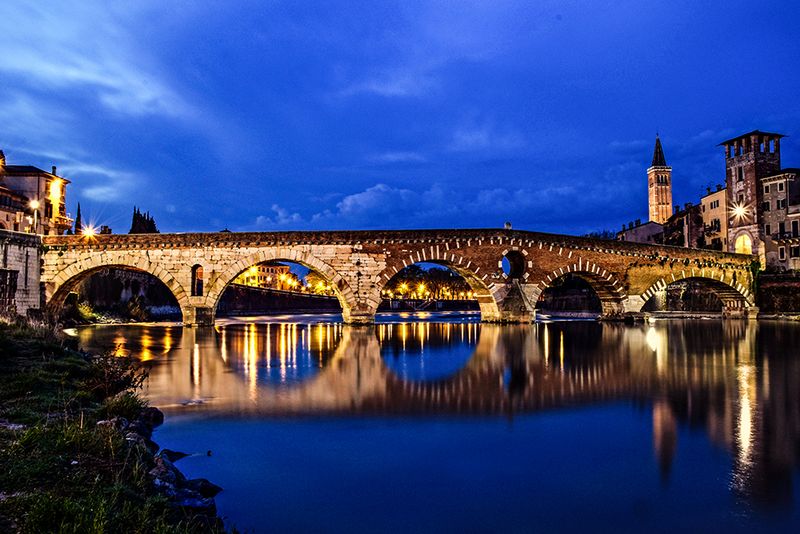
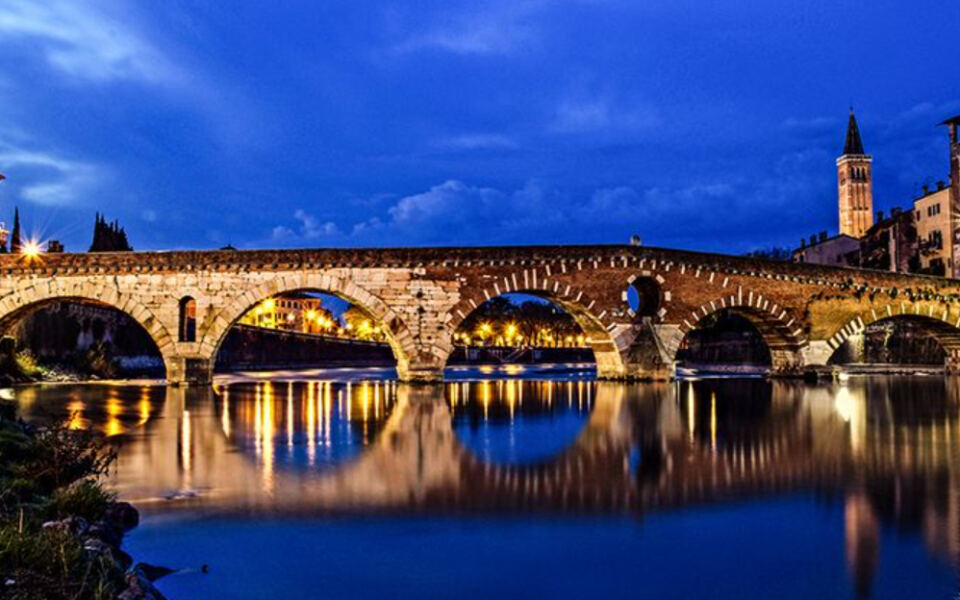
Verona’s Ponte Pietra has survived floods, centuries of neglect, and deliberate wartime destruction, which makes its current existence feel almost stubborn. The bridge occupies the site of an ancient Roman crossing over the Adige River and remains the only bridge of Roman origin still standing in the city.
Its history, however, is a clear reminder that surviving and remaining unchanged are two very different things.
Retreating German forces blew up much of the bridge in 1945 as they withdrew from Verona. After World War II, the city painstakingly recovered stones from the riverbed and used historical evidence to reconstruct the damaged sections.
Roman portions now stand alongside later masonry, and the layers of different stone tell the story of the bridge’s complicated survival without a single word of explanation needed.
Italia.it identifies Ponte Pietra as the only bridge remaining in Verona from the Roman era and notes that it is now reserved for pedestrians. Crossing it means walking above the Adige with the Roman theater rising on the hillside ahead and the city’s famous red-roofed skyline stretching behind.
The bridge’s mixed history, ancient, destroyed, rebuilt, and still standing, makes it unexpectedly moving for visitors who take a moment to think about what it survived.
Taskopru, Adana, Turkiye
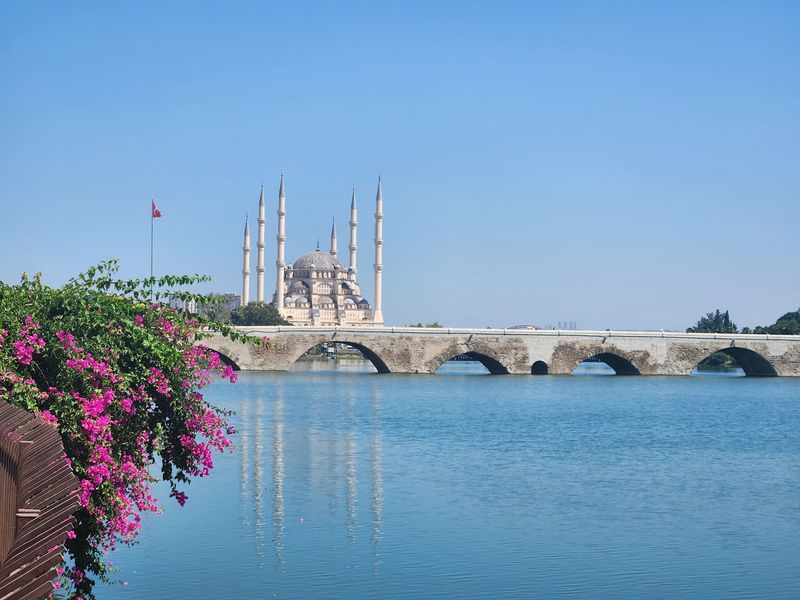
The name Taskopru simply means Stone Bridge in Turkish, which is both accurate and a slight understatement for a structure this impressive. Stretching approximately 319 meters across the Seyhan River in Adana, Turkey’s official tourism resources date it to roughly 1,700 years ago and attribute its construction to a Roman-era architect named Auxentios.
The bridge originally featured 21 rounded arches, of which 14 remain visible today.
At more than 11 meters wide, Taskopru was built to handle serious traffic volume, not just foot passengers. It continued carrying vehicles into the modern era, finally losing motor traffic only in 2006 when restoration work prompted authorities to close it to cars.
That decision helped protect the ancient stonework from further vibration damage.
Standing at river level and looking up at the surviving arches gives a clear sense of the bridge’s original scale. The Seyhan River moves steadily underneath while the city of Adana buzzes around it, a modern Turkish metropolis that has simply grown up around its ancient crossing.
Pedestrians now have the bridge mostly to themselves, which makes walking its length a surprisingly peaceful experience given the urban energy surrounding it. Taskopru is one of Turkey’s finest surviving pieces of Roman infrastructure, and it still earns daily foot traffic to prove it.
Bridge of Justinian, Sakarya, Turkiye
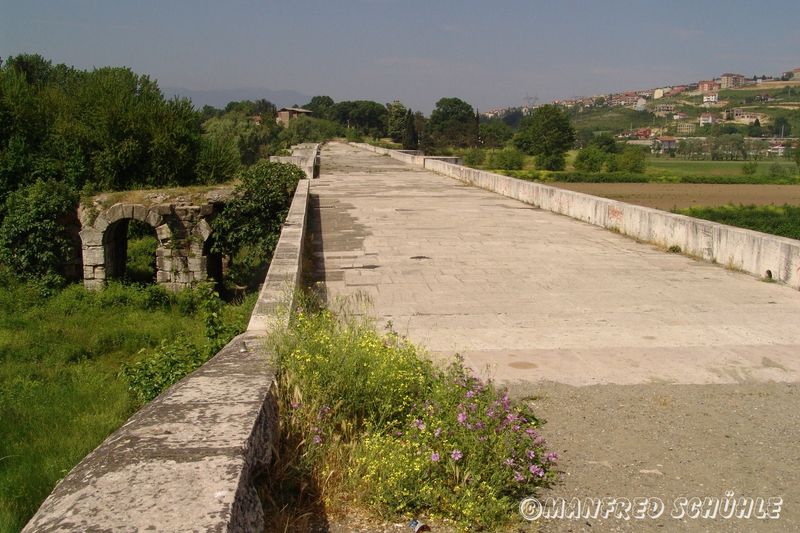
Emperor Justinian I had enormous ambitions for his building program across the Eastern Roman Empire, and the bridge he commissioned across the Sangarius River near modern Adapazari was one of its most impressive results. Completed during the sixth century CE, the structure stretches hundreds of meters and consists of multiple masonry arches supported by massive stone piers.
The scale reflects Justinian’s characteristic tendency to build things larger than strictly necessary.
The Sangarius River eventually shifted course away from the bridge, meaning it no longer performs the crossing function for which it was designed. That geographical change may have actually saved it, since a bridge carrying no traffic receives no wear.
UNESCO describes the Bridge of Justinian as one of the most outstanding and intact late Roman bridges, noting that it has preserved much of its physical and visual integrity across nearly fifteen centuries.
Visiting the bridge today means walking alongside a structure that stands in a somewhat surreal setting, a massive ancient crossing in a landscape that no longer needs crossing. The dry riverbed below and the enormous stone arches above create an oddly melancholy atmosphere, like finding a grand front door with no house attached.
For students of late Roman engineering, however, the intact construction details visible throughout the structure make it an exceptionally valuable and rarely visited monument.
Shadorvan Bridge-Dam, Shushtar, Iran
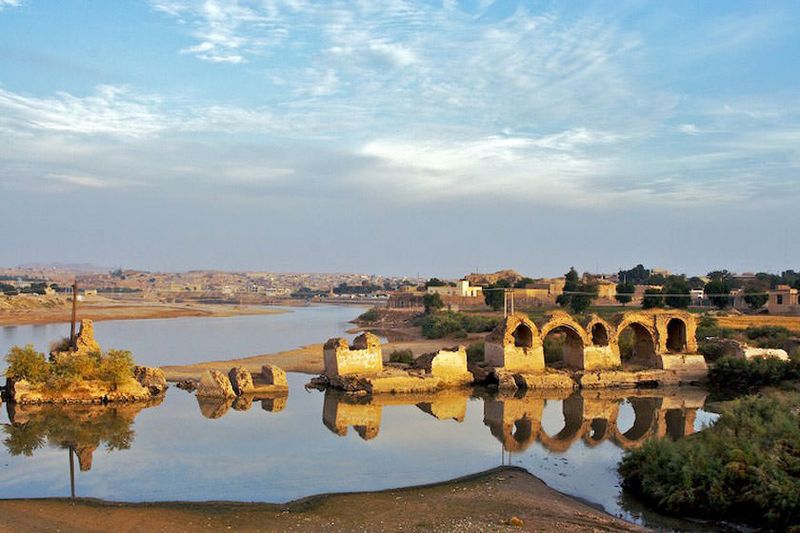
Most ancient engineers built bridges to cross rivers. The builders at Shushtar built a bridge to control an entire river system, and then kept going.
The Shadorvan is part of a vast hydraulic landscape in Khuzestan Province, Iran, that includes canals, dams, tunnels, mills, and water-control structures working together as a single integrated system. UNESCO dates the developed form of this system mainly to the third century CE, while acknowledging hydraulic traditions at the site reaching much further back.
The Shadorvan itself combined the functions of a bridge and a dam, regulating water for irrigation, urban supply, transportation, and industrial milling simultaneously. Roman technical influence has been suggested for some elements, possibly introduced through the use of Roman prisoners of war captured by Sasanian rulers.
That cross-cultural engineering exchange, if accurate, makes the structure even more historically fascinating.
UNESCO notes that the Shadorvan was celebrated as a wonder by later Persian and Arab-Muslim writers, which means its reputation survived long after the empire that built it had disappeared. Substantial remains of the wider system are visible today, and the site as a whole earned UNESCO World Heritage status in 2009.
Shushtar’s hydraulic system represents ancient engineering at its most ambitious, solving not just one problem but an entire landscape’s worth of water management challenges at once.
Share this story