Most people assume that to see a genuine medieval cloister, they need to book a flight to Europe, navigate cobblestone streets, and argue with their GPS in a foreign language. The truth is far more convenient.
Scattered across the United States are some genuinely astonishing cloisters, ranging from actual medieval stone structures shipped piece by piece across the Atlantic to Spanish colonial mission courtyards that have stood for nearly three centuries. A few are tucked inside world-class museums, others are active churches still in daily use, and some are hidden inside eccentric private estates that feel more like movie sets than real places.
Whether you live near Manhattan, Miami, Boston, or the California coast, at least one of these architectural surprises is probably closer than you think. The 13 places featured here prove that remarkable Old World architecture is not just a transatlantic flight away.
The Met Cloisters, New York City, New York
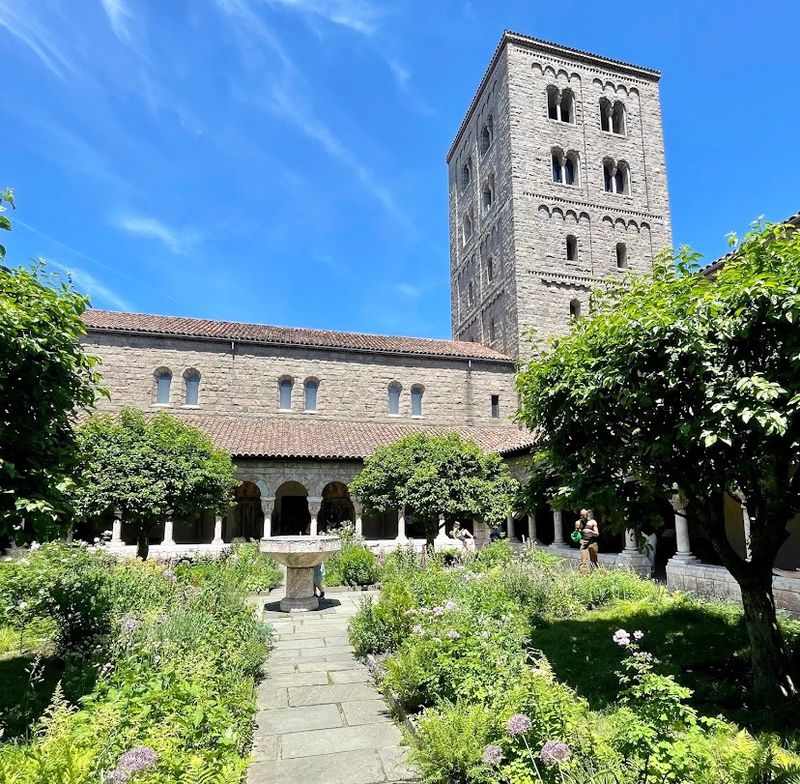
Most New Yorkers have heard of The Met, but a surprising number have never made the trip uptown to its medieval branch perched above the Hudson River in Fort Tryon Park.
Opened in 1938, The Met Cloisters incorporates actual architectural elements from five medieval French cloisters, including Cuxa, Bonnefont, and Trie, assembled into a single cohesive museum devoted to European art from 800 to 1600 CE.
The collection holds over 5,000 objects, and the reconstructed cloisters serve as connecting pathways between galleries rather than mere display cases.
Three of the cloisters feature gardens planted with species documented in medieval herbals and tapestries, chosen for historical accuracy rather than visual effect alone.
The views toward the New Jersey Palisades from the museum’s terraces were deliberately framed during construction, giving the whole complex a sense of deliberate seclusion that makes Manhattan feel genuinely distant.
The Ancient Spanish Monastery, North Miami Beach, Florida
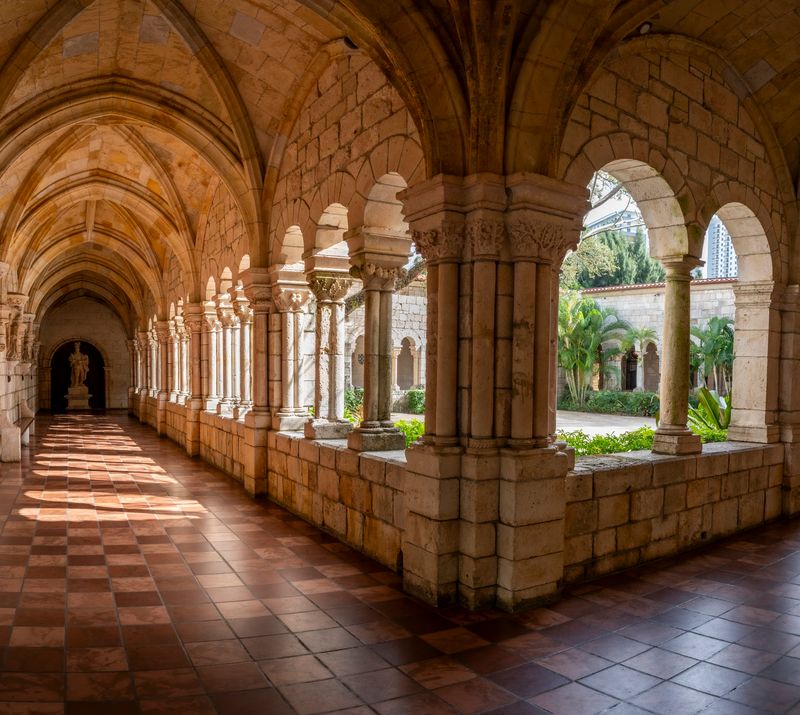
Originally constructed in Sacramenia, Spain, between 1133 and 1141 AD, this monastery spent centuries as a Cistercian retreat before being dismantled stone by stone and shipped across the Atlantic in more than 11,000 wooden crates.
William Randolph Hearst purchased the structure in 1925, but a hoof-and-mouth disease scare caused authorities to burn the protective hay packing, scattering and mislabeling hundreds of stones and earning the eventual reassembly the nickname “the biggest jigsaw puzzle in history.”
After sitting in a Brooklyn warehouse for 26 years, the stones were finally reconstructed in North Miami Beach during the 1950s at a cost of nearly 1.5 million dollars.
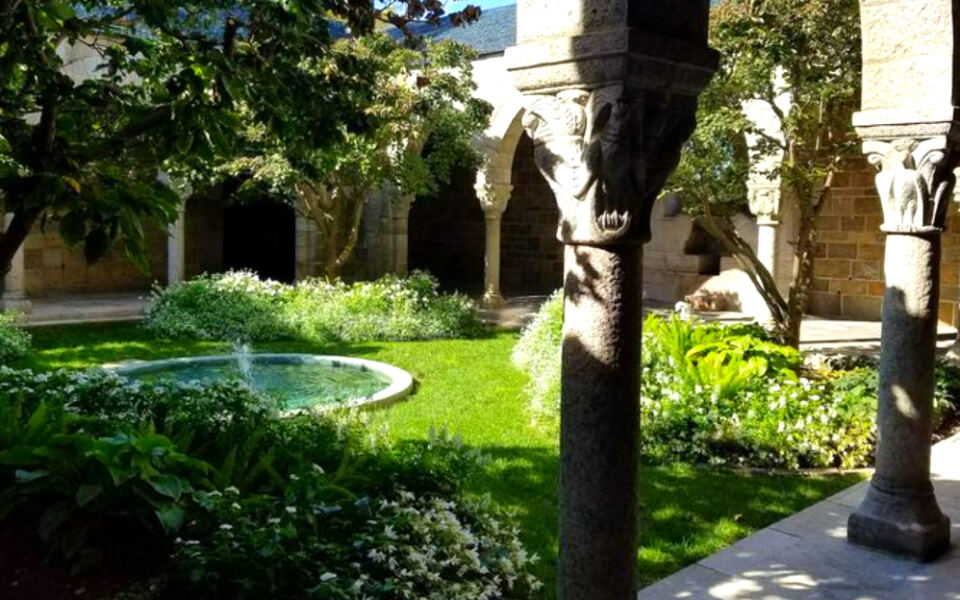
The cloister is the centerpiece of the site today, with genuine medieval stone arches surrounding a garden and original well.
The monastery now serves as an active Episcopal parish, a museum, and an event venue, adding a living dimension to its remarkable history.
Bryn Athyn Cathedral, Bryn Athyn, Pennsylvania
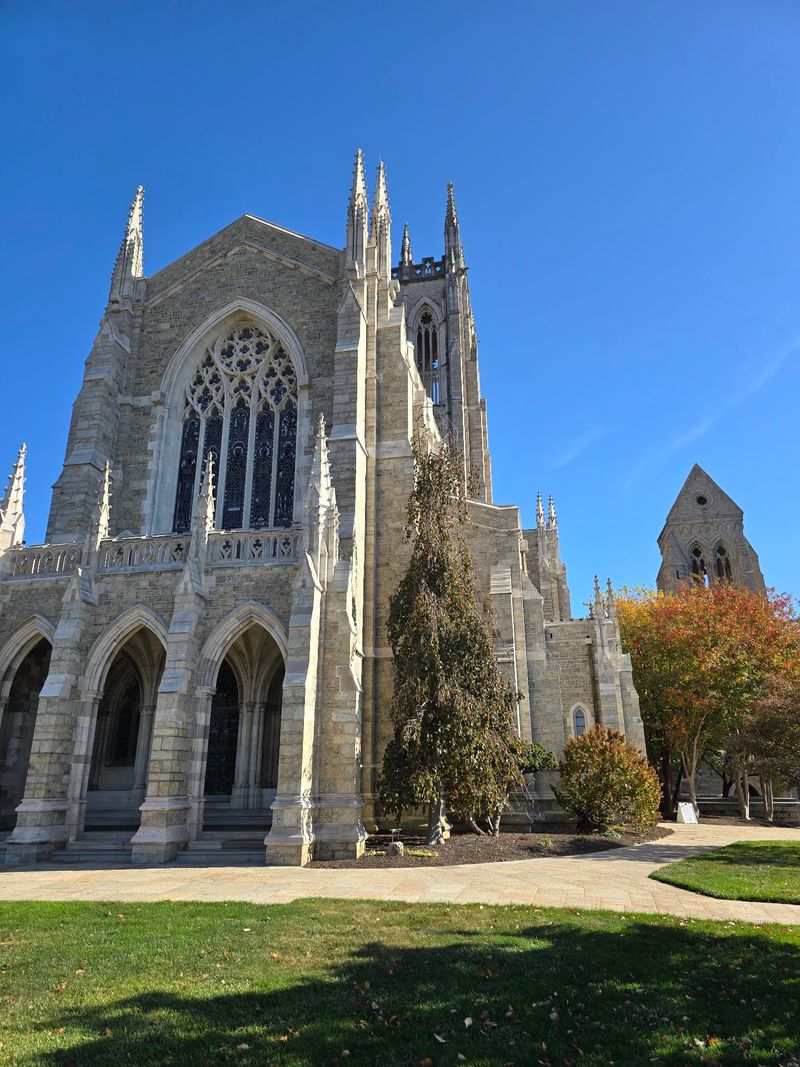
Just a short walk from Glencairn, Bryn Athyn Cathedral manages to look convincingly medieval despite being built primarily between 1913 and 1928, which says a great deal about the commitment of the craftsmen involved.
Over 300 local artisans worked on-site using an Arts and Crafts Guild system, with dedicated workshops for stone, wood, metal, and stained glass all operating simultaneously to keep design and craftsmanship in constant dialogue.
The pink and green granite used throughout the building was quarried less than a mile from the site, and oak trees felled on the property were milled into ceiling timbers, giving the structure an unusually direct connection to its landscape.
Craftsmen even revived lost medieval techniques for producing stained glass, recreating colors and textures found in European windows centuries older than the cathedral itself.
The cloister arcade opening toward the landscaped grounds is especially photogenic, framing garden views through graceful stone arches that reward slow exploration rather than a quick glance.
Franciscan Monastery of the Holy Land in America, Washington, D.C.
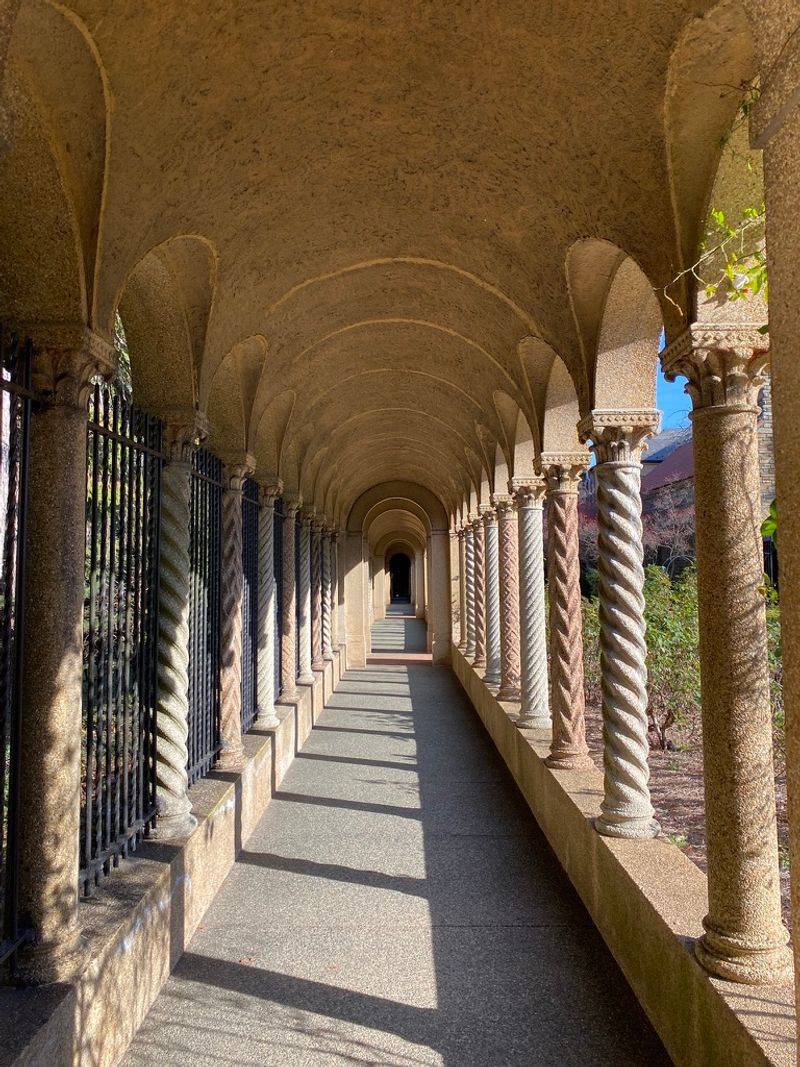
Hidden behind an imposing Byzantine-style church in Washington’s Brookland neighborhood, the Franciscan Monastery of the Holy Land in America offers one of the capital’s most quietly surprising architectural experiences.
The monastery complex, completed around the turn of the 20th century, includes a cloister walk that connects a series of contemplative garden spaces filled with roses, trees, religious monuments, and carefully crafted replicas of Holy Land shrines.
The Rosary Portico, which forms the primary cloister arcade, was designed with an unmistakably Italian character, recalling the covered walkways found in famous European monastery complexes rather than anything typically associated with American church architecture.
The surrounding gardens extend the cloister’s sense of enclosure outward, creating a layered sequence of outdoor spaces that rewards visitors who take time to move slowly through the grounds.
For a city better known for marble monuments and government buildings, this monastery represents a genuinely unexpected pocket of Old World religious architecture.
Glencairn Museum, Bryn Athyn, Pennsylvania
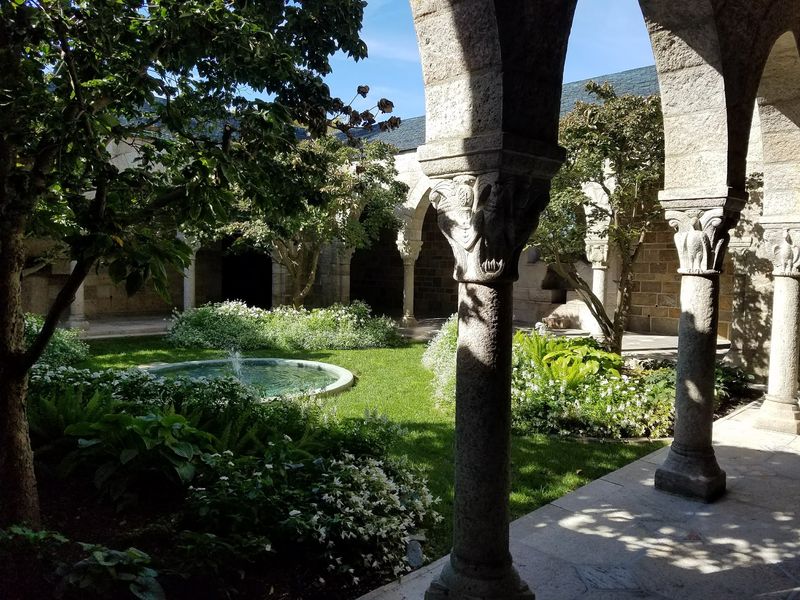
Raymond Pitcairn had no formal architectural training when he set out to build a medieval-style castle in suburban Pennsylvania between 1928 and 1939, yet the results are convincing enough to make visitors do a double take at the driveway entrance.
The museum’s cloister reproduces key features of a Western medieval monastery, with a garden court open to the sky and a covered arcade of pointed stone arches surrounding it.
A particularly engaging detail is the series of carved bird capitals topping the cloister columns, each species chosen for its symbolic meaning by craftsmen who also worked on the nearby Bryn Athyn Cathedral.
The cloister also features a granite bench with carved rams and ewes, part of a family-themed decorative program woven throughout the building.
Glencairn became a public museum in 1982, and the cloister remains one of its most photographed and historically layered spaces for visitors interested in medieval art and architecture.
Isabella Stewart Gardner Museum, Boston, Massachusetts
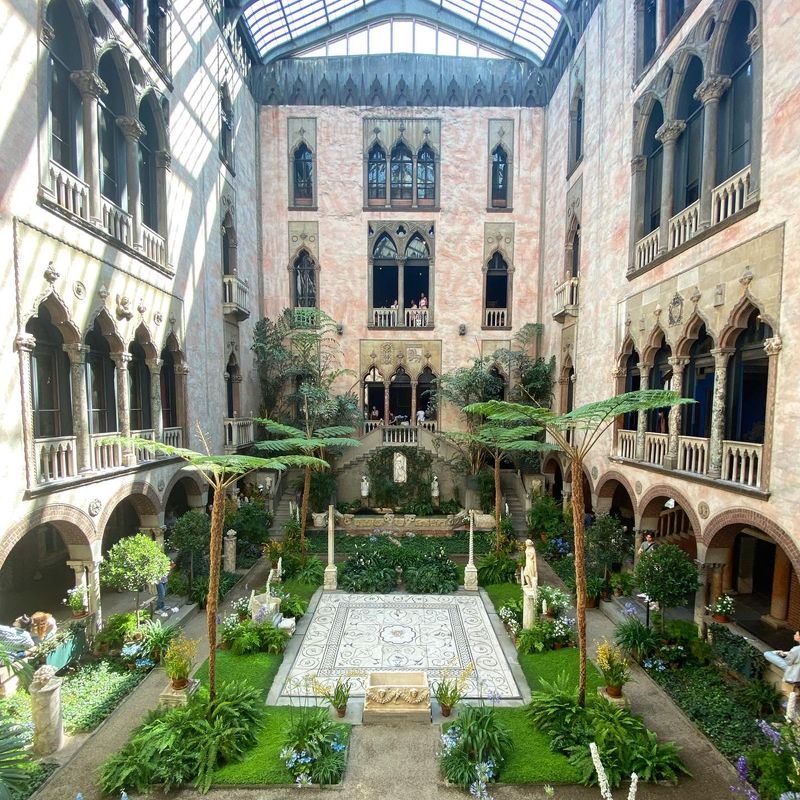
Isabella Stewart Gardner did not simply collect art; she engineered an entire architectural experience designed to make visitors feel as though they had wandered into a centuries-old Venetian palace rather than a Boston museum opened in 1903.
The famous interior courtyard is bordered by arcades and columns, densely planted throughout the year, and filled with classical sculpture and mosaic fragments arranged to suggest accumulation over time rather than deliberate curation.
The Spanish Cloister is a separate highlight, its walls covered with nearly 2,000 brightly glazed Mexican ceramic tiles acquired by Gardner in 1909 from the Church of San Agustin in Atlixco, Puebla.
These tiles depict floral patterns, geometric designs, mythological creatures, birds, and figural scenes in vivid shades of black, yellow, orange, green, and blue.
At the far end of the Spanish Cloister, behind a decorative iron gate, a small chapel completes the sequence, making this one of the most deliberately theatrical architectural progressions in any American museum.
Hammond Castle Museum, Gloucester, Massachusetts
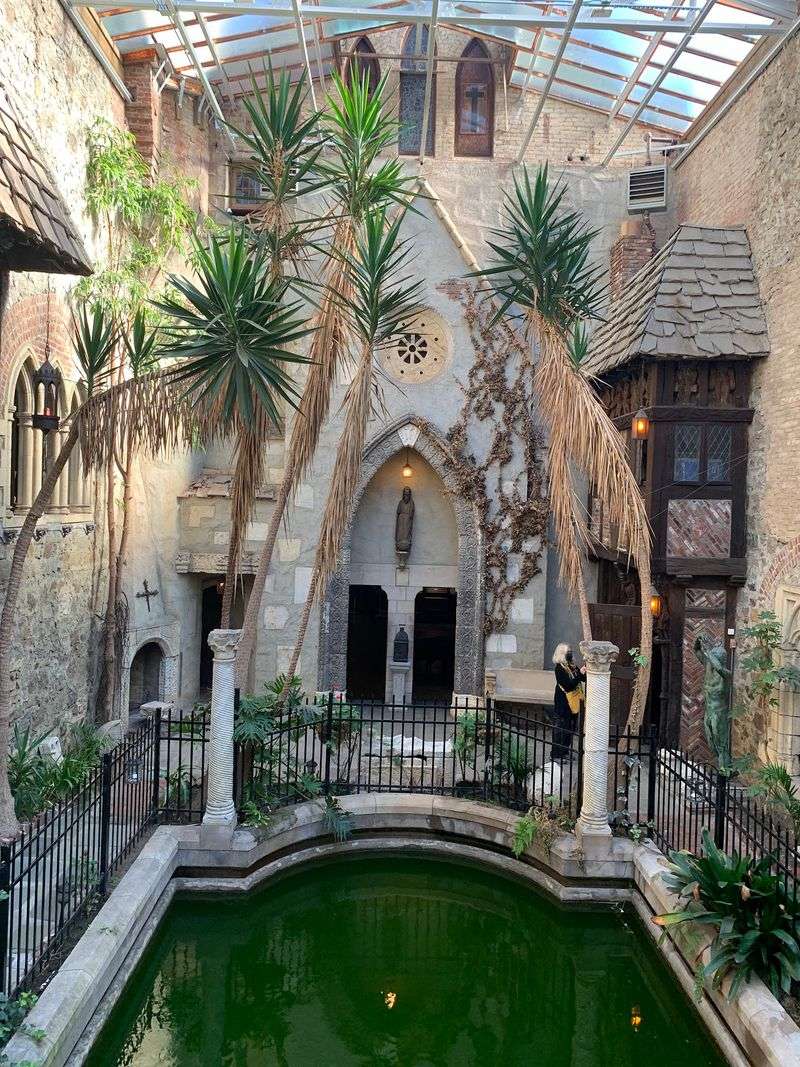
John Hays Hammond Jr. held over 400 patents, making him one of the most prolific inventors in American history, but his most eccentric creation was arguably the medieval castle he built overlooking the Atlantic in Gloucester during the late 1920s.
Hammond collected genuine architectural fragments during European travels and incorporated them directly into the structure, giving the castle an authenticity that purely imitative buildings tend to lack.
The cloister courtyard is among the most memorable spaces, featuring stonework, columns, greenery, and a central pool arranged around a genuine 11th-century archway believed to have originated in Ravello, Italy.
That single archway, over 900 years old and relocated thousands of miles from its original setting, makes the courtyard something considerably more interesting than a period recreation.
Visitors can explore the cloister as part of a full museum tour, which also covers Hammond’s inventions, his personal collections, and the castle’s remarkable great hall with its enormous pipe organ.
Mission Espiritu Santo, Goliad, Texas
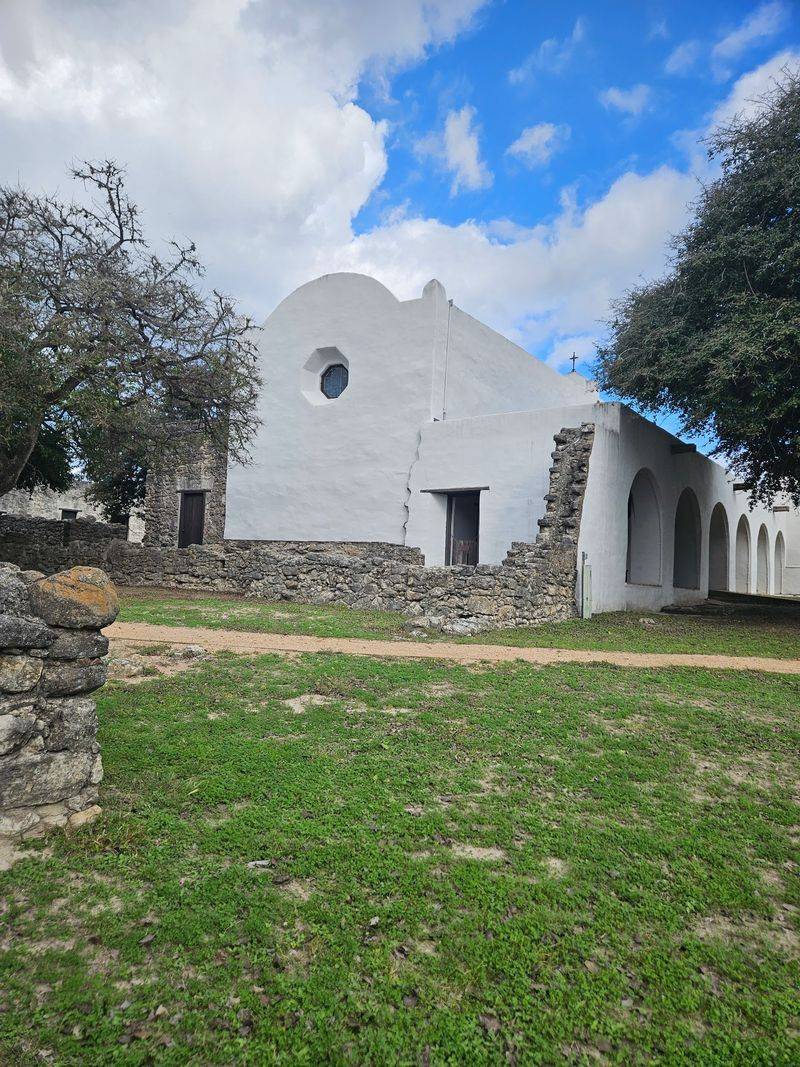
The whitewashed walls of Mission Espiritu Santo inside Goliad State Park represent one of the more ambitious reconstruction projects of the 1930s, when Civilian Conservation Corps crews rebuilt the church, granary, workshop, and cloister based on extensive historical and archaeological research.
The mission was originally established in 1722, making it one of the older Spanish colonial foundations in Texas, though the structures visible today reflect the careful CCC work rather than uninterrupted survival from the 18th century.
The cloister here reads very differently from the elaborate Gothic examples found in northeastern museums, favoring the simpler, functional lines that characterized Spanish colonial architecture in the region.
Its enclosed courtyard fits naturally into the surrounding South Texas landscape, with the open sky above the garden providing the primary sense of light and space rather than ornamental stonework.
The mission complex sits within a state park, making it accessible to visitors who can combine the architectural tour with the park’s broader natural setting along the San Antonio River.
Mission Concepcion, San Antonio, Texas
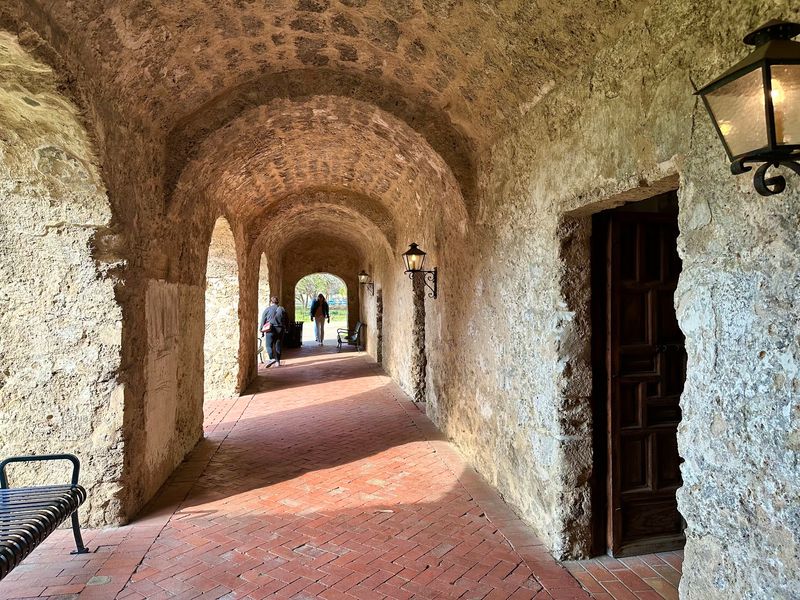
Mission Concepcion holds a distinction that tends to surprise first-time visitors: it is the oldest unrestored stone church in the United States, meaning the 18th-century construction has never been significantly rebuilt or altered.
Formally known as Mission Nuestra Senora de la Purisima Concepcion de Acuna, it was relocated to its present San Antonio site in 1731 and developed into a substantial religious and residential complex over the following decades.
The convento includes a cloister whose stone arches and courtyard spaces reflect the daily rhythms of the religious community that lived and worked here throughout the colonial period.
Traces of original frescoes, featuring geometric patterns in vivid colors, survive on the facade and in portions of the convento interior, with some sections restored in the late 1980s and early 2010s.
The mission also marks the site of the 1835 Battle of Concepcion, considered the first major engagement of the Texas Revolution, layering military history directly onto its architectural and religious significance.
Mission San Jose, San Antonio, Texas
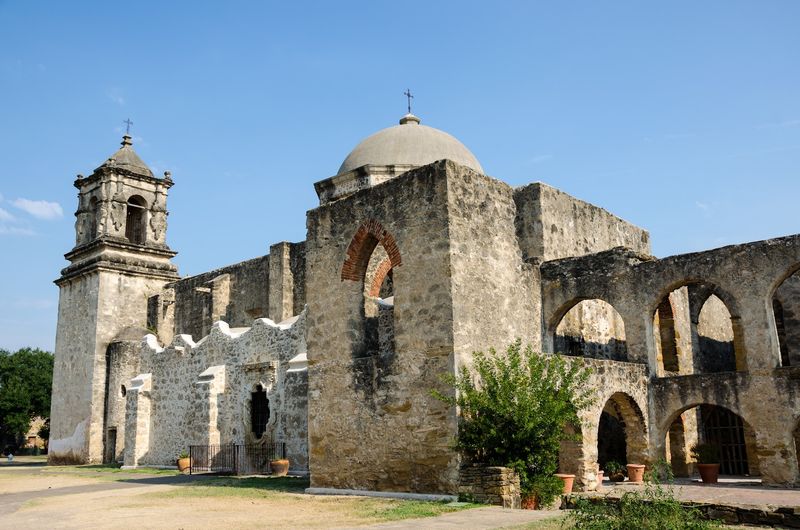
The famous carved facade of Mission San Jose draws most of the photography, but the convent area beside the church tells an equally compelling story about the scale and complexity of Spanish mission life in 18th-century Texas.
Historical records from the period describe a two-story convent featuring a gallery and a cloister corridor connecting the church to other key spaces throughout what was once the largest and best-defended mission in Texas.
The broad stone walls, reconstructed arches, and courtyard spaces visible today give visitors a genuine sense of how much ground the original complex covered, encompassing residential quarters, workshops, a granary, and a mill in addition to the church itself.
That combination of sacred, residential, and agricultural functions within a single fortified compound makes Mission San Jose feel less like a historic church and more like a small, self-sufficient community that happened to be built around a very impressive piece of stonework.
The mission is part of San Antonio Missions National Historical Park and remains an active parish today.
Old Mission Santa Barbara, Santa Barbara, California
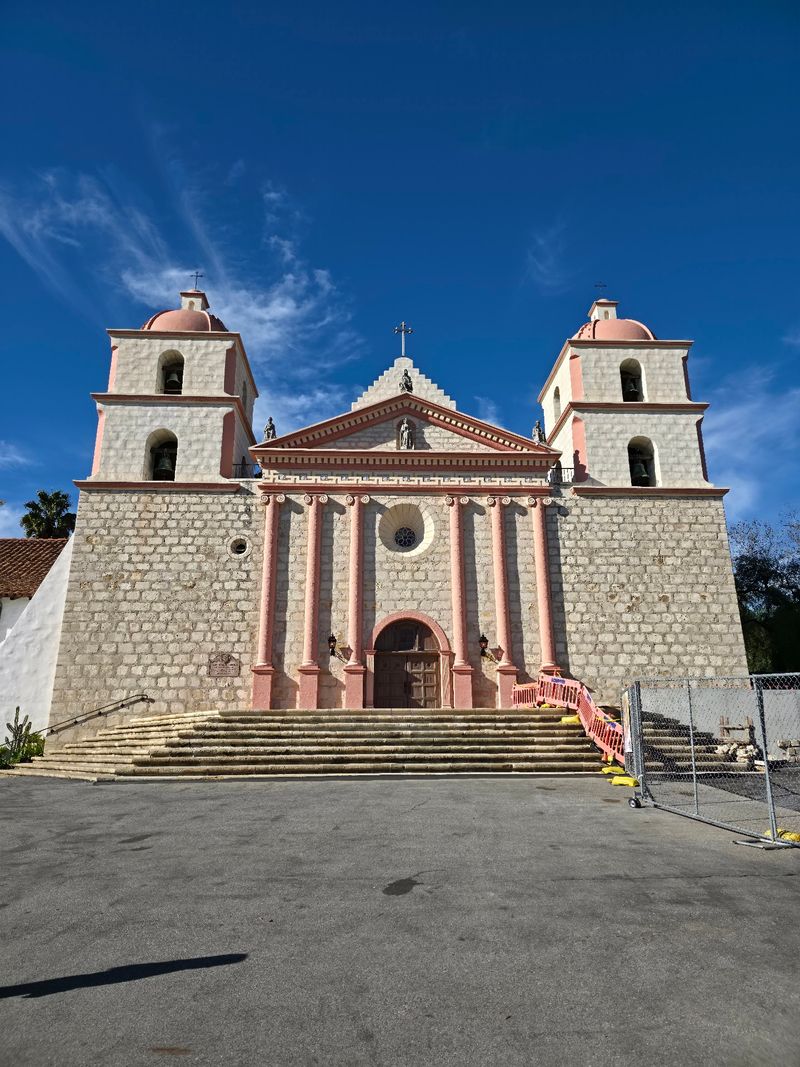
Founded in 1786 by Fray Fermin Francisco de Lasuen, Old Mission Santa Barbara is the 10th in California’s chain of 21 missions and holds a notable distinction among them: Franciscan Friars have maintained a continuous presence here since the day it opened.
Behind the well-known neoclassical facade with its twin bell towers, the mission complex includes a cloister garden that evolved over the 19th century into a geometrically planned space influenced by European horticultural traditions, eventually becoming known as the Sacred Garden.
The quadrangle originally served as a gathering and working area during the active mission period, making its later transformation into an ornamental garden a reflection of the site’s changing role over time.
Shaded walkways border the garden on multiple sides, connecting the historic buildings in a way that preserves the spatial logic of the original mission layout.
Visitors can also explore the museum, cemetery, and additional historic gardens, all while the active Franciscan community continues its work on the grounds around them.
Mission San Juan Bautista, San Juan Bautista, California
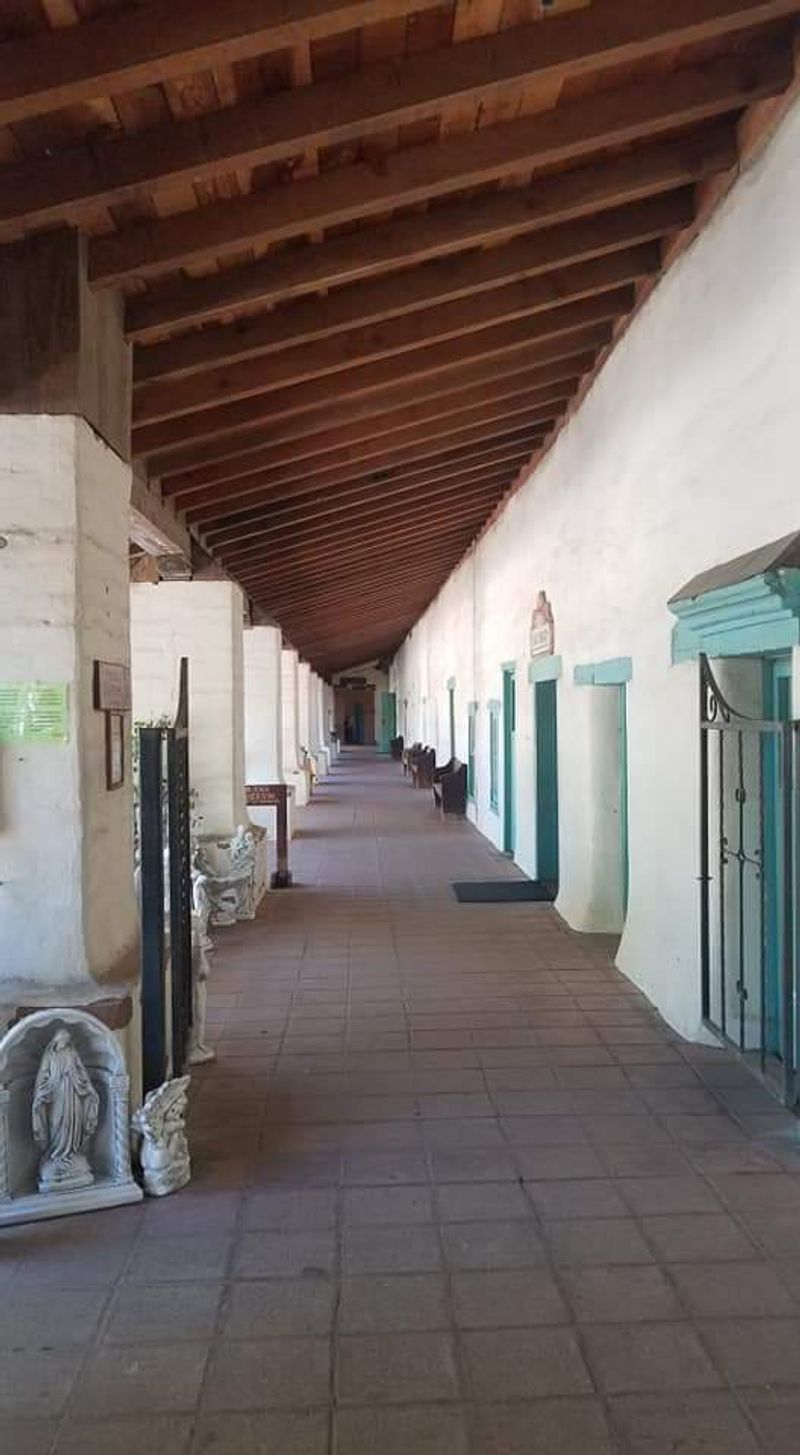
There are not many historic missions in California where you can stand in the cloister arcade and look out over a plaza that has changed remarkably little since the 19th century, but Mission San Juan Bautista is one of them.
Established in 1797 by Father Fermin Lasuen, it is the 15th of California’s 21 missions and carries an unusual geological footnote: the mission grounds sit directly adjacent to the San Andreas Fault.
Historic photographs document the cloister and its garden clearly, showing how the long arcade of arches and tiled roof have defined the mission’s visual character across multiple generations of visitors and worshippers.
The mission has not been absorbed into a major urban center, which means the arches, tiled rooflines, and courtyard spaces retain much of their original relationship to the surrounding historic town rather than competing with modern development.
The complex remains an active church and museum, allowing visitors to experience both the architectural heritage and the continuing community life that has kept the mission relevant for over two centuries.
Mission San Luis Rey, Oceanside, California
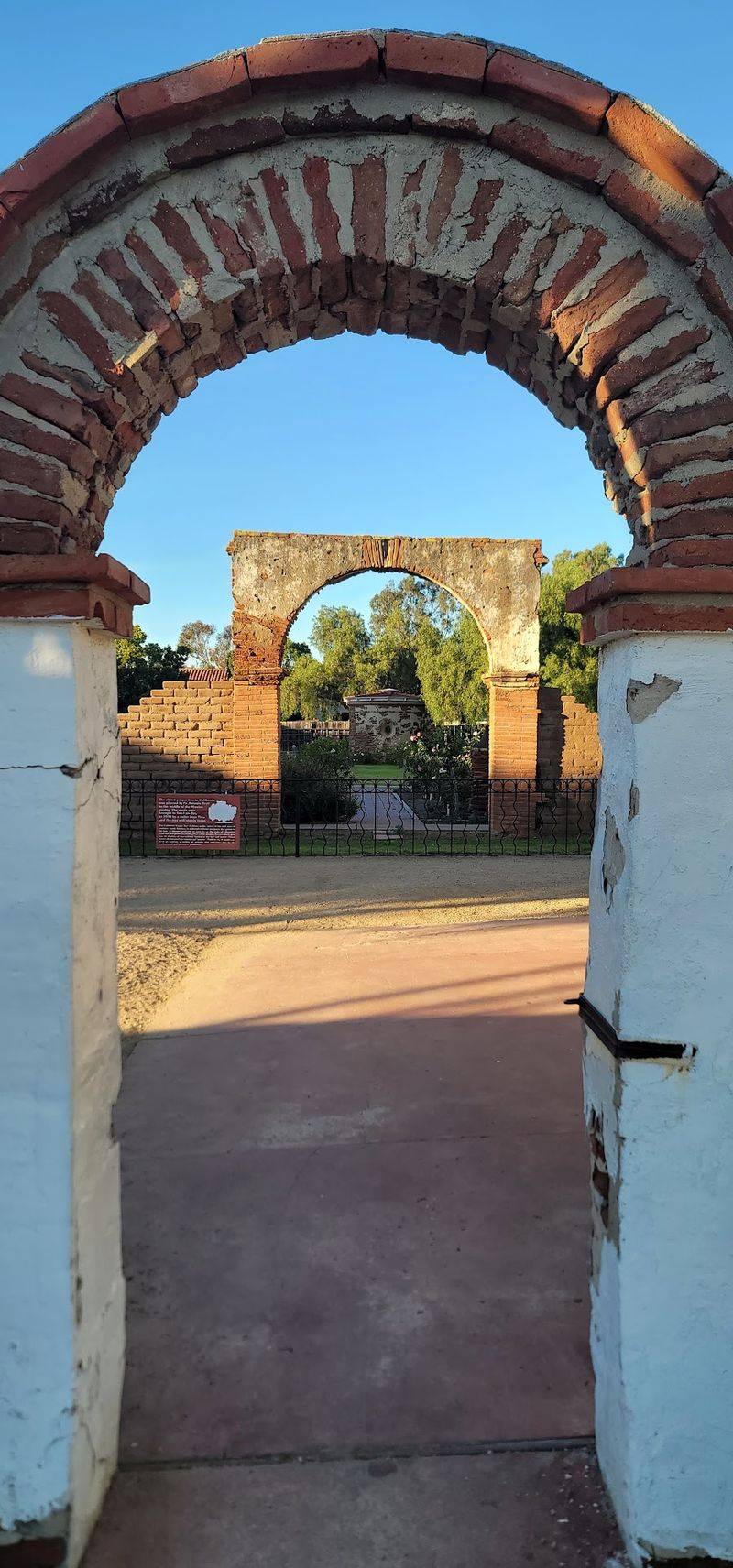
Known historically as the King of the Missions, Mission San Luis Rey was founded on June 13, 1798, by Father Fermin Lasuen and grew faster than almost any other California mission, becoming the most populous and agriculturally productive in the chain within a few decades.
At its peak, the mission surrounded an enormous quadrangle, with the friars’ convento fronted by a continuous arcade of 32 arches that gave the complex an imposing, palace-like scale.
Twelve of those original arches survive today, and historic architectural records specifically document surviving cloister brick arches at the site, giving these remnants a documented significance beyond their visual appeal alone.
The modern mission complex preserves the historic church, which was completed in 1815 and remains the only surviving California mission church built on a cruciform floor plan, featuring a wooden cupola and dome unique among its peers.
The museum, gardens, and cemetery round out a visit that rewards anyone curious about why San Luis Rey earned its royal nickname in the first place.
Share this story