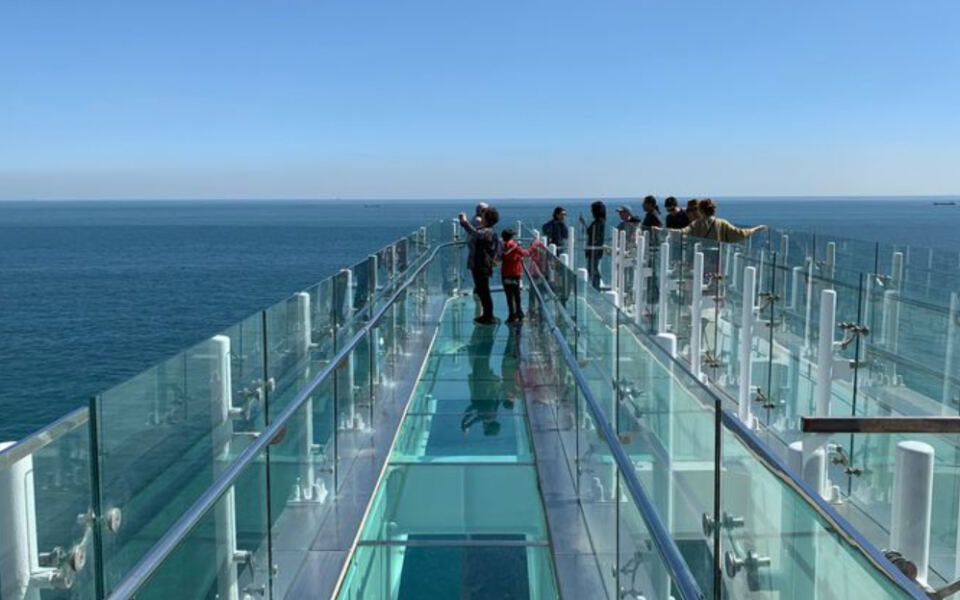
Some places are built to make your knees wobble and your heart race. Around the world, engineers have bolted walkways onto cliff faces, stretched glass bridges across canyon gaps, and pushed observation decks far beyond the edges of skyscrapers and mountain peaks.
These attractions are not just about the view, they are about what it feels like to stand in mid-air with nothing but glass or steel between you and a very long drop. If you have ever wondered what it takes to step out over the edge, these 15 destinations are ready to find out.
Grand Canyon Skywalk, Arizona
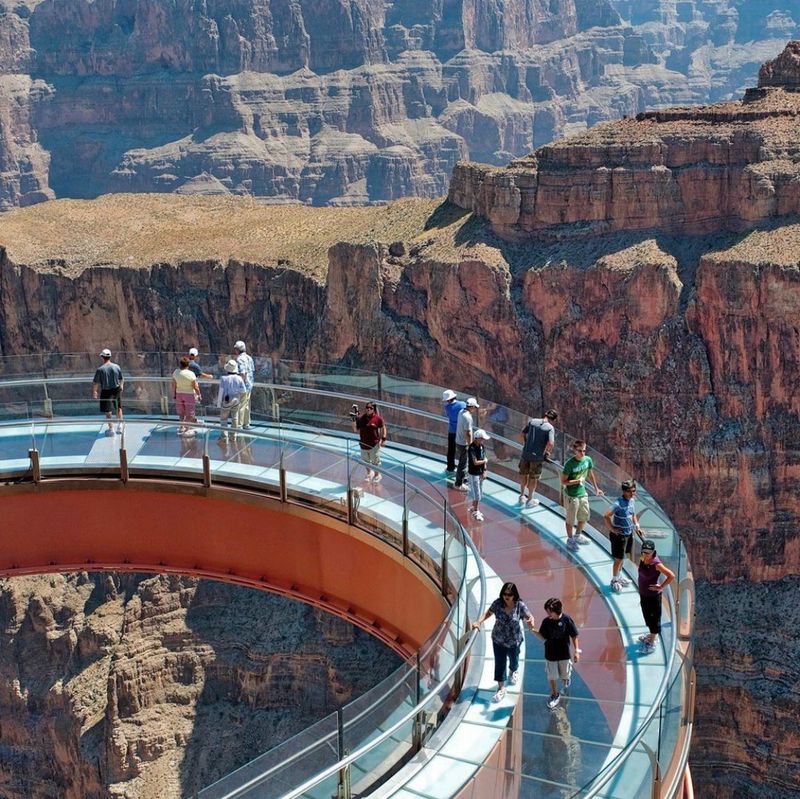
Glass underfoot, 4,000 feet of nothing beneath you, and the Grand Canyon stretching in every direction. That is exactly what the Grand Canyon Skywalk delivers, and it has been doing so since it opened in 2007 on Hualapai tribal land at Grand Canyon West.
The horseshoe-shaped bridge extends roughly 70 feet beyond the rim without any supporting columns underneath its outer section, which means you are genuinely cantilevered over the canyon.
The bridge is about 10 feet wide, giving visitors enough room to walk comfortably while still feeling completely exposed. Visitors must wear shoe covers to protect the glass surface, which adds a slightly surreal shuffle to the whole experience.
The canyon floor sits approximately 4,000 feet below, and on a clear day that depth is impossible to miss through the transparent panels.
Unlike typical observation platforms built upward from below, this one reaches outward from the edge, putting the void directly under your feet rather than beside you. Tickets are sold through Grand Canyon West, and the Skywalk is one of several attractions available in the area.
Few man-made viewpoints anywhere on Earth make the scale of the Grand Canyon feel quite this immediate or quite this personal.
Step Into the Void, Aiguille du Midi, France
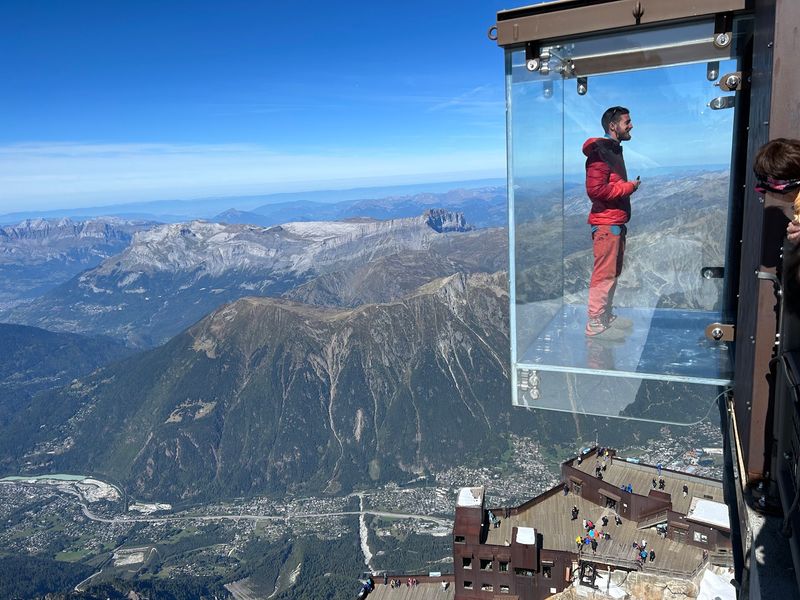
Standing inside a glass box with more than 1,000 meters of empty air below your feet sounds like something from a nightmare, but at the Aiguille du Midi above Chamonix it is a real ticketed attraction. The mountain station sits at roughly 3,842 meters elevation, reached by cable car from the valley floor.
Step Into the Void is a transparent enclosure that projects from the station structure, removing every visual barrier between visitors and the drop below.
The walls and floor are fully transparent, so looking in any direction means looking at the sky, the glacier, or the valley far beneath you. The Mont Blanc massif surrounds the station, making the scenery extraordinary even before the glass box is factored in.
Reaching this altitude already involves a cable-car journey into serious alpine conditions, so the experience starts long before anyone steps inside the enclosure.
Cold temperatures, high altitude, and the sheer exposure of the mountain environment add layers of intensity that a purpose-built theme park could never replicate. Visitors who are comfortable with heights often describe the sensation as unlike anything else.
For those who are not, the panoramic views from the station terraces are already impressive enough to justify the trip up the mountain.
Dachstein Stairway to Nothingness, Austria
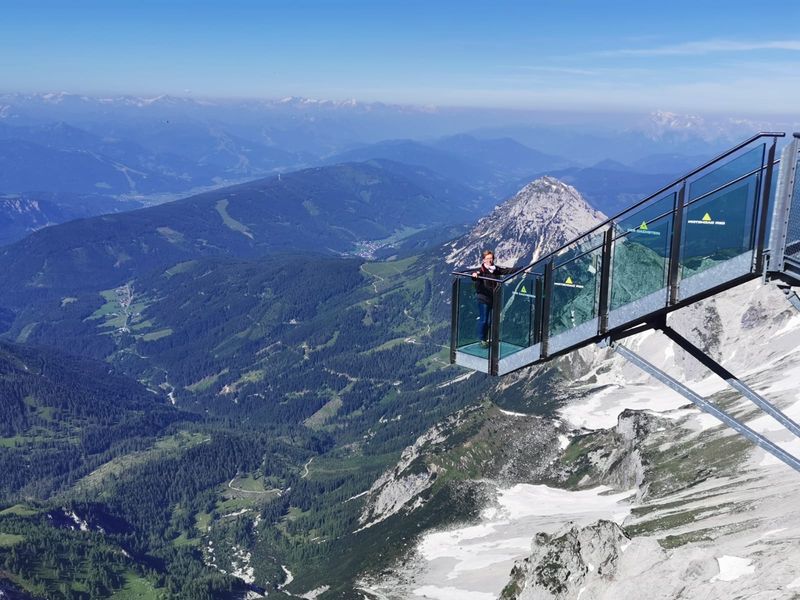
The name alone is enough to make most people pause before booking. The Stairway to Nothingness at Austria’s Dachstein Glacier lives up to its dramatic title by sending visitors down 14 narrow steps from a suspension bridge to a glass platform embedded directly into the rock face.
The platform sits roughly 400 meters above the base of the cliff and holds a maximum of four people at one time, which keeps things from feeling crowded, though perhaps not calm.
Completed in 2013, the stairway is part of a larger glacier complex sitting around 2,700 meters above sea level. The descent is short but deliberate, and the endpoint is not another path or viewing terrace.
It is transparent flooring facing straight into the mountain landscape with nothing beneath it but a very long drop.
The Dachstein complex includes several high-altitude attractions, but the Stairway to Nothingness stands out for the way it uses architecture to strip away any sense of safety. Most viewpoints let you stand beside the drop.
This one puts it directly underneath you. The surrounding glacier scenery adds to the overall scale, and the four-person limit means every visit feels personal, quiet, and slightly terrifying in the best possible way.
Caminito del Rey, Spain
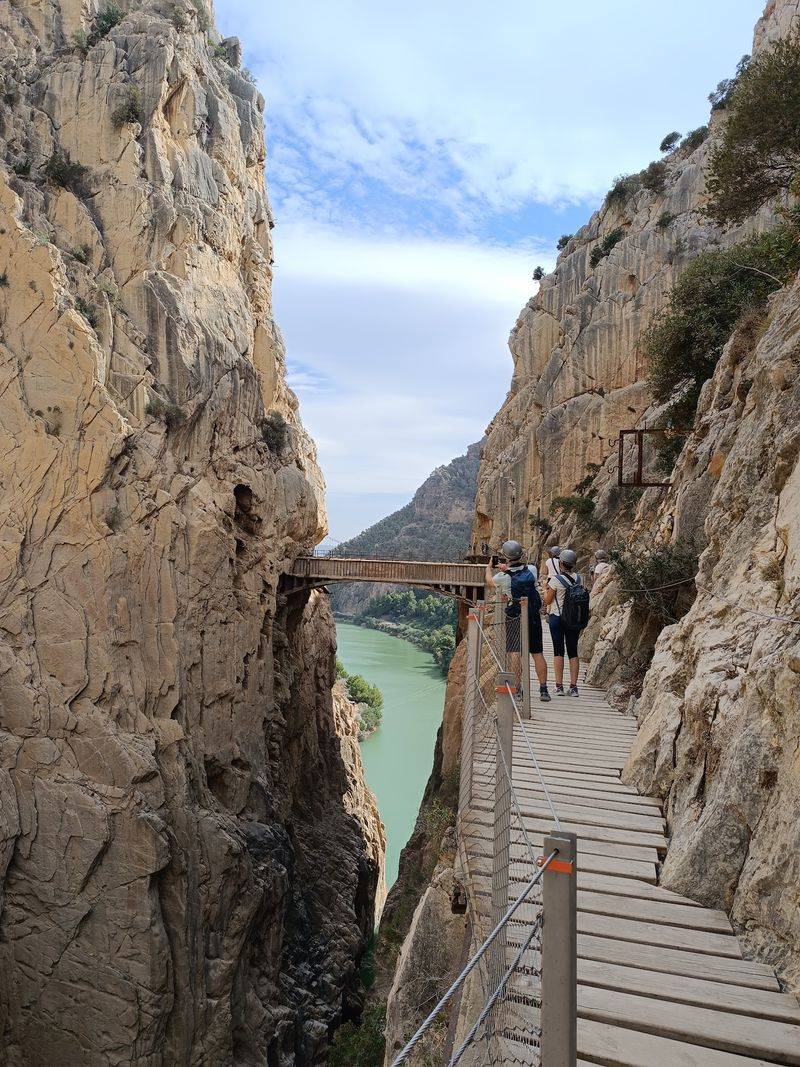
Workers originally built this path in the early 20th century so they could service hydroelectric facilities tucked inside the limestone gorges of Malaga province. For decades after those workers stopped using it, the crumbling walkway became notorious among thrill-seeking climbers who tackled it without any safety measures at all.
The modern Caminito del Rey that reopened in 2015 is a completely different proposition, comprehensively restored and fitted with helmets, guardrails, and proper visitor management.
The route follows narrow gorges on boardwalks attached directly to vertical rock walls, with portions rising more than 100 meters above the river running below. Near the end, a 35-meter suspension bridge anchored about 105 meters above the ground connects two sections of the canyon.
The full experience covers almost three kilometers of boardwalks and natural trails between the entrance and exit gates.
Helmets are required throughout, and visitor numbers are controlled to keep the route from becoming overcrowded. The limestone walls of the gorge press close on both sides for much of the walk, creating a feeling of being enclosed while simultaneously exposed.
Few cliff walks in Europe combine this much history, this much scenery, and this much genuine exposure to the drop below all in a single afternoon outing.
Zhangjiajie Grand Canyon Glass Bridge, China
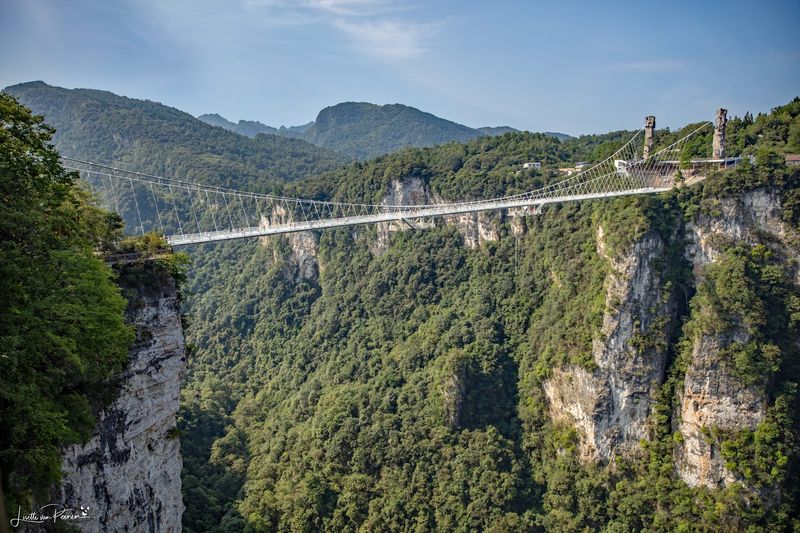
Transparency is the whole point here. The Zhangjiajie Grand Canyon Glass Bridge stretches 430 meters between two cliff faces, measures six meters wide, and lets visitors see the valley floor roughly 300 meters below through the glass panels beneath their feet.
When it opened in 2016, it was promoted as the longest and highest glass-bottomed bridge of its kind anywhere in the world, and the scale of the structure makes that claim feel entirely believable.
The surrounding Zhangjiajie region is already one of China’s most dramatic landscapes, famous for its towering sandstone formations that rise from dense forest like enormous pillars. The bridge adds a deliberately engineered element to that scenery by placing visitors in the open middle of the canyon rather than simply at its rim.
Walking across means spending several minutes directly above the valley with nothing between you and the view but glass.
The panels are built to handle the weight and traffic of thousands of visitors, but that engineering confidence does not necessarily make the crossing feel any less exposed. Bungee jumping is also available from the bridge for visitors who feel the walk across was not quite enough.
The combination of extraordinary natural scenery and transparent engineering makes this one of the most photographed bridges anywhere in Asia.
TITLIS Cliff Walk, Switzerland
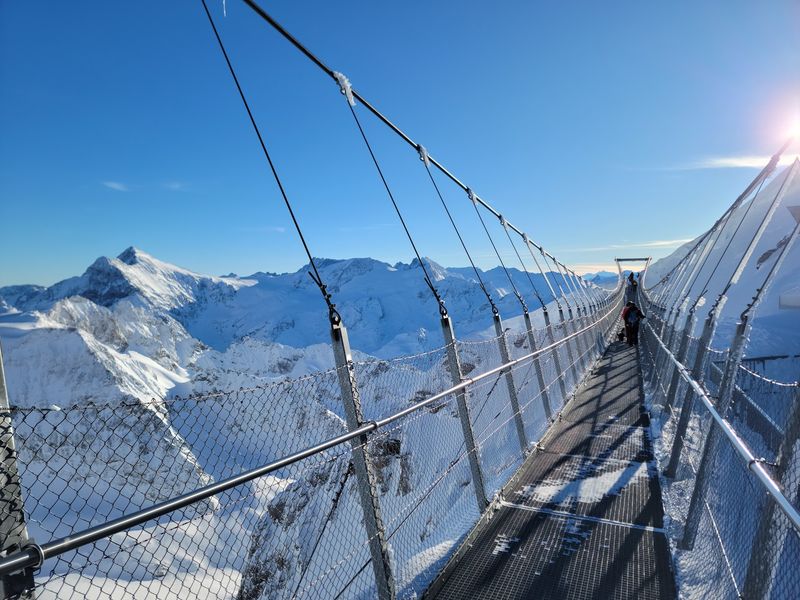
No transparent floor, no glass panels, just an open suspension bridge at 3,041 meters above sea level with ice, rock, and high Alpine peaks in every direction. The TITLIS Cliff Walk does not rely on clever engineering tricks to create its effect.
It relies on altitude, exposure, and the fact that the terrain surrounding it is genuinely remote and unforgiving. TITLIS describes it as Europe’s highest suspension bridge, and the setting makes that title feel earned.
Visitors cross roughly 150 steps to get from one side to the other, a crossing that takes about a minute under normal conditions. The mountain station is reached by cable car from Engelberg in central Switzerland, and the Cliff Walk is included for visitors making the journey up.
The surrounding scenery includes glaciers and peaks rather than trees or canyon walls, giving the bridge a stripped-back, exposed feeling that sets it apart from forest suspension bridges.
The attraction operates year-round, subject to mountain conditions, which means snow and ice are frequent companions on the crossing. Wind at this altitude can be a serious factor too, adding movement to the bridge that no amount of engineering can eliminate entirely.
Short, bracing, and surrounded by some of the most dramatic scenery in the Alps, the Cliff Walk earns its reputation without needing a glass floor to do it.
Sky Bridge 721, Czechia
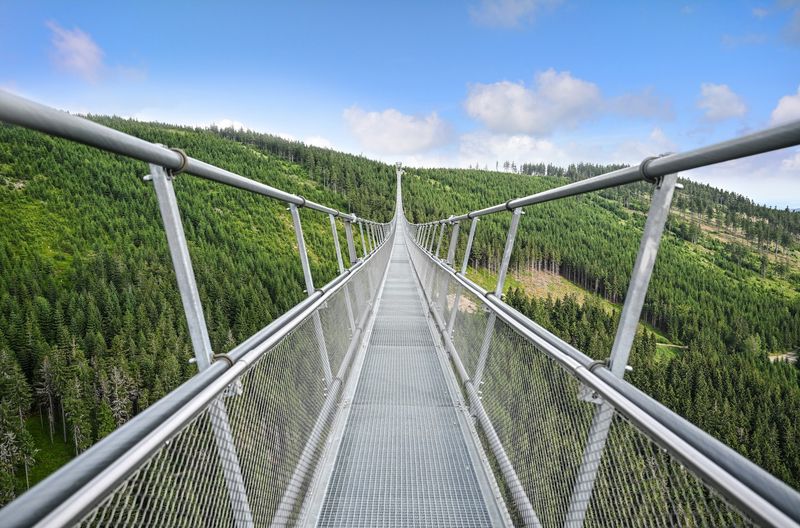
Seven hundred and twenty-one meters. That number is not a coincidence.
Sky Bridge 721 at Dolni Morava in northeastern Czechia was designed to claim a world record, and when it opened in May 2022 it did exactly that, surpassing Portugal’s Arouca 516 as the longest suspension footbridge in the world. The name simply states the measurement, which is a refreshingly honest way to market an attraction that needs very little additional selling.
The bridge connects two mountain ridges across the Mlynicky Valley, reaching approximately 95 meters above the valley floor at its highest point. Visitors enter at roughly 1,125 meters elevation before beginning the crossing.
From the center of the span, the narrow deck and long cables make the structure appear almost delicate against the surrounding mountain landscape, which is a slightly alarming optical effect when you are standing on it.
The bridge weighs hundreds of tons and is engineered to handle significant visitor loads, but the design deliberately preserves a sense of openness and movement. Wind crossing the valley below can sway the deck noticeably, which is either thrilling or unsettling depending entirely on your perspective.
The Dolni Morava resort area offers additional activities nearby, but for most visitors the record-breaking bridge is the main reason to make the trip to this corner of Czechia.
Capilano Cliffwalk, Canada
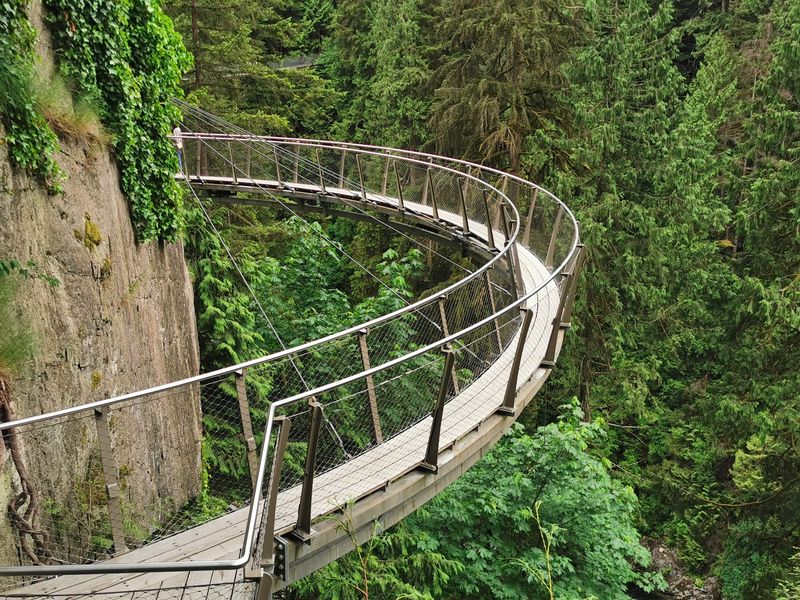
Most people visit Capilano for the famous suspension bridge, but the Cliffwalk is the attraction that actually attaches itself to the canyon wall. Opened in 2011, it uses a sequence of narrow walkways, staircases, and cantilevered platforms drilled directly into the granite face of Capilano Canyon in North Vancouver.
The official park describes the route as approximately 213 meters long and reaching heights equivalent to 30 storeys above the Capilano River below.
What makes Cliffwalk feel different from a bridge crossing is the way it follows the contours of the rock. Visitors are not walking from one side of a gap to the other.
They are moving along the face of the cliff itself, with grated metal flooring offering a clear view of the drop at every step. Only 16 anchor points drilled into the granite hold the entire structure in place, though the engineering supports around 45 tonnes.
The surrounding forest adds a lush green backdrop that softens the visual drama slightly, but the exposure of the cantilevered sections is very real. Capilano Canyon may not reach the altitudes of Switzerland or China, but it delivers genuine height combined with the unusual sensation of walking on, rather than across, a vertical rock face.
The Cliffwalk is included with general Capilano admission.
Peak Walk by Tissot, Switzerland
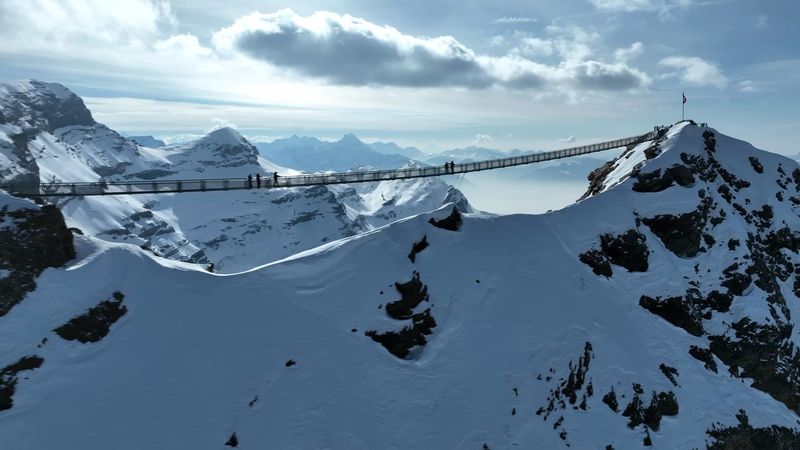
One mountain summit is usually enough for most people. Glacier 3000 in Switzerland decided that two summits connected by a narrow bridge was a better idea, and the Peak Walk by Tissot was the result.
The bridge measures 107 meters long and just 80 centimeters wide, linking View Point with the slightly higher Scex Rouge summit. Glacier 3000 describes it as the only suspension bridge in the world connecting two mountain peaks, which is a distinction that no other attraction is currently challenging.
The 80-centimeter width is worth pausing on. That is narrower than most doorways, meaning visitors cross single file above a significant alpine drop with very little surface beneath them.
On clear days the views include the Matterhorn, Mont Blanc, Eiger, Monch, and Jungfrau, an extraordinary lineup of famous peaks visible from a single narrow span.
The bridge operates year-round when mountain weather allows, and snow and ice are common companions during winter crossings. The surrounding terrain at around 3,000 meters elevation is all rock, snow, and sky, with no trees or lower terrain to soften the sense of height.
Glacier 3000 is accessible by cable car from Col du Pillon, and the Peak Walk is included with the mountain access ticket for visitors making the journey up.
Skywalk Biokovo, Croatia
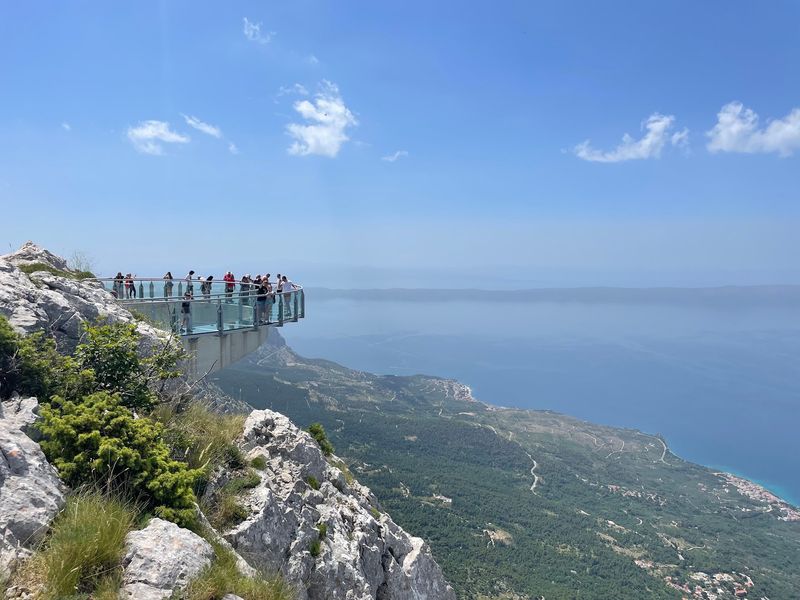
Croatia is not the first country most people associate with glass-floored mountain platforms, but the Skywalk Biokovo has been changing that impression since it opened in Biokovo Nature Park. Built at the Ravna Vlaska viewpoint, the horseshoe-shaped platform measures approximately 23 meters long and three meters wide, with a floor made entirely from glass.
The transparent surface sits above exposed limestone terrain while the Adriatic Sea and Dalmatian islands spread across the horizon in the opposite direction.
Engineering this particular platform was not straightforward. The site presented strong winds, challenging geological conditions, nearby fault lines, and earthquake risk, all of which had to be factored into the design.
The result is a structure built to handle serious environmental stress while still delivering unobstructed views straight through the floor.
Access adds its own drama before visitors ever reach the platform, because the park road climbs steeply onto the mountain through a landscape of bare limestone and scrub vegetation. The contrast between the rugged terrain underfoot and the blue expanse of the Adriatic below is genuinely striking.
The platform itself is relatively compact, but the combination of transparent flooring, coastal panorama, and mountain exposure makes the Skywalk Biokovo one of the most visually distinctive viewpoints anywhere along the Dalmatian coast.
Langkawi Sky Bridge, Malaysia
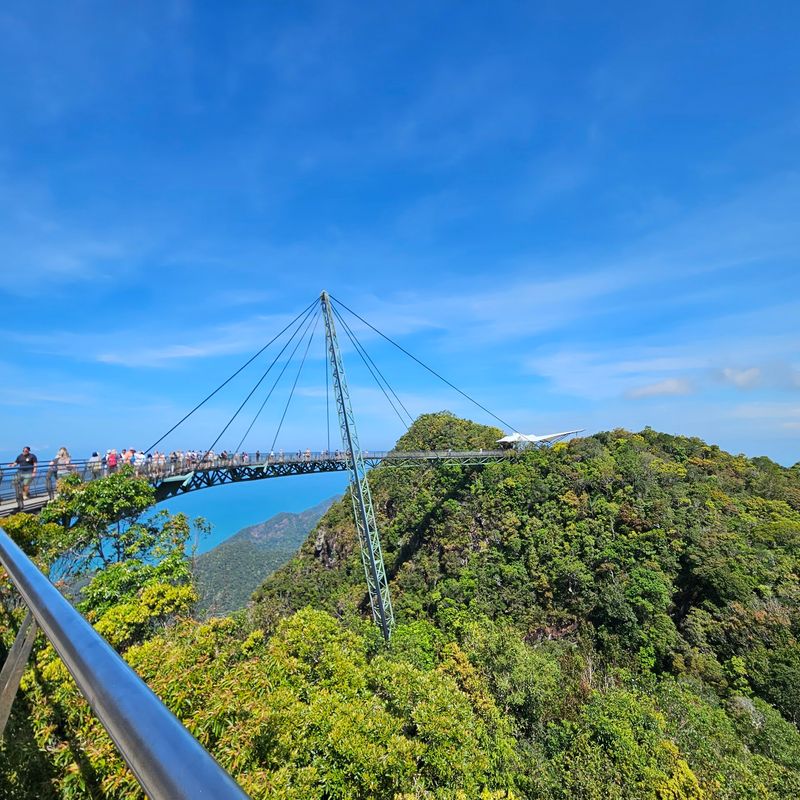
Most suspension bridges go straight. The Langkawi Sky Bridge curves through the mountain landscape of Mount Machinchang on a deliberately unusual arc, supported by a single central pylon rather than the twin-tower design used by most large bridges.
That pylon stands 82 meters high, allowing the walkway to sweep around the mountain rather than cutting straight across a gap. The result is a structure that looks genuinely different from almost every other elevated walkway in the world.
Malaysia’s Langkawi tourism information places the bridge at about 700 meters above sea level, with sections hanging roughly 100 meters above the ground below. Visitors generally reach it after riding the steep SkyCab gondola toward the summit of Machinchang, which is itself one of the oldest rock formations in Southeast Asia.
The ascent through dense tropical forest is a sharp contrast to the open exposure of the bridge at the top.
From the walkway, the view extends across rainforest, surrounding peaks, and islands scattered through the Andaman Sea. The tropical setting gives the Sky Bridge a completely different character from European alpine skywalks.
There are no glaciers or snow-covered peaks here, just layers of green forest, warm humid air, and a long drop into the canopy below. The curved design makes it photogenic from almost every angle.
Edge, New York City
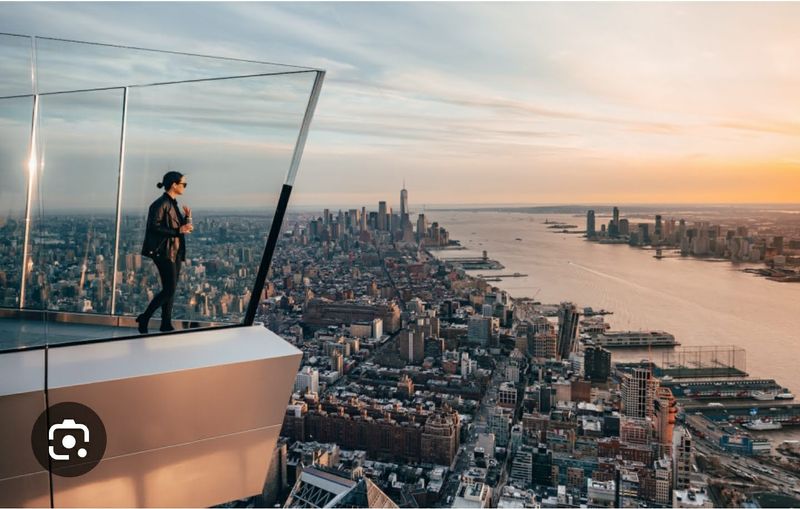
No mountain required. Edge at 30 Hudson Yards uses Manhattan itself as the drop, projecting an outdoor sky deck from the 100th floor approximately 1,100 feet above the city streets.
The structure extends outward from the skyscraper rather than sitting flush with its facade, putting visitors beyond the building’s footprint and directly over the gap between it and the ground far below. Edge identifies itself as the highest outdoor sky deck in the Western Hemisphere.
The defining design features include sharply angled transparent walls that lean outward over the city, a glass floor section offering a direct view toward the streets below, and an outdoor staircase connecting the main deck to additional viewing areas above it. Standing on the glass section means looking straight down through the floor at vehicles, sidewalks, and buildings that appear very small and very far away.
The surrounding New York skyline is spectacular from this height, but the real draw is the physical sensation of being outside on a platform that projects into open air above one of the world’s most recognizable cities. The combination of height, transparency, and outward projection creates a feeling that indoor observation decks simply cannot match.
Tickets are timed, and the experience is available year-round, weather permitting, at Hudson Yards on Manhattan’s west side.
Oryukdo Skywalk, South Korea
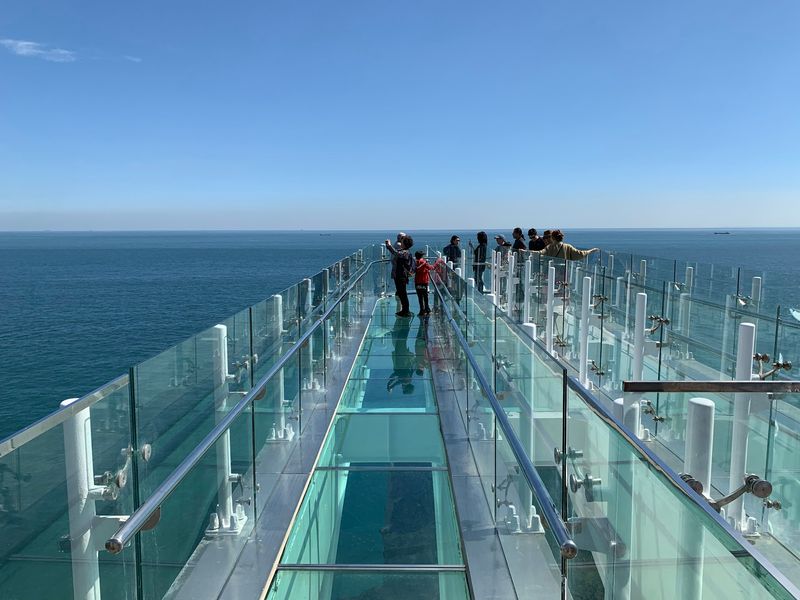
Free admission, ocean views, and a transparent floor above crashing waves make the Oryukdo Skywalk in Busan one of the most accessible high-exposure attractions anywhere in South Korea. VisitKorea describes the structure as sitting above a 35-meter-high coastal cliff and including a 15-meter glass bridge shaped roughly like a horseshoe.
The floor consists of 24 glass plates built from multiple laminated layers, creating a surface strong enough to handle regular visitor traffic while remaining fully transparent.
From the far end of the bridge, visitors look toward the Oryukdo islets and the open sea rather than into an enclosed canyon or valley. The combination of surf, exposed rock, and ocean horizon gives the Skywalk a breezy coastal character that sets it apart from mountain-based attractions.
Operations can be affected by bad weather, which is a reasonable precaution when the structure sits directly above an active coastline.
The walk itself is short, but the transparent flooring above the waves and rocks below makes every step feel significant. Visitors who might hesitate at the entrance of a much longer glass bridge often find this compact version approachable enough to complete.
The Oryukdo islets visible from the platform are a protected natural monument, adding ecological interest to what is already a visually striking coastal stop on the outskirts of Busan.
Thrill Walk at Birg, Switzerland
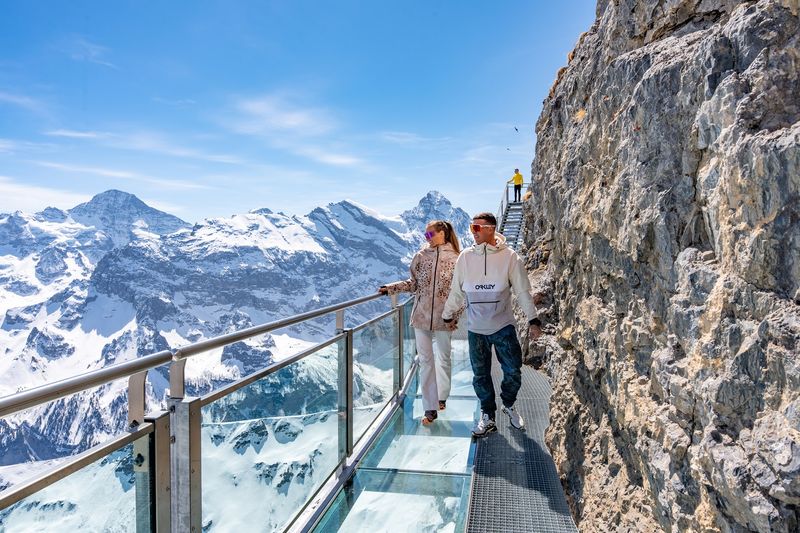
Going up the mountain is the normal part. The Thrill Walk at Birg takes visitors underneath the cable-car station and out onto the face of the mountain itself, which is a direction most people do not expect.
Located around 2,677 meters above sea level between Murren and the Schilthorn, the attraction follows a 200-meter cliff pathway that mixes steel grating, glass sections, and exposed stretches close to the vertical rock face. The scenery is already extraordinary before any engineering is involved.
The Eiger, Monch, and Jungfrau are visible from this section of the mountain, three of Switzerland’s most iconic peaks lined up across the valley. The Skyline Walk platform nearby adds another transparent element, projecting over a steep drop with views emphasizing the depth below.
Together the two features turn the Birg station into something far more interesting than a simple cable-car stop.
The grated steel sections of the pathway are particularly effective at conveying height because they let visitors look straight down through the floor without providing the solid visual reassurance of a wooden or metal deck. The rock face stays close throughout, but that proximity does not make the exposure feel smaller.
Birg sits on the route to the Schilthorn summit, so visitors can combine the Thrill Walk with the full mountain journey or stop here on the way back down.
Dachstein Suspension Bridge, Austria
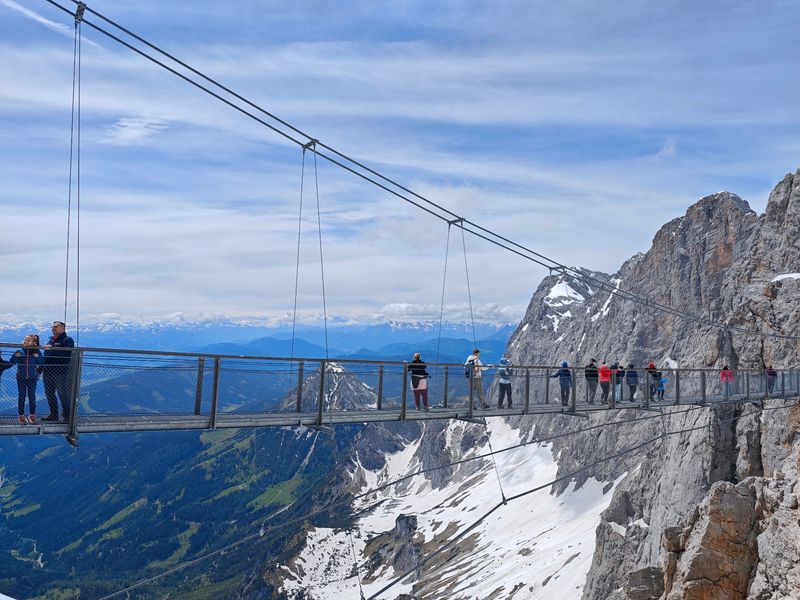
Crossing the Dachstein Suspension Bridge is technically the beginning of the experience, not the highlight. The official Dachstein site describes it as Austria’s highest suspension bridge, offering an unobstructed view approximately 400 meters down the rock face of the Dachstein Massif.
Engineers used heavy steel cables along with dozens of tons of steel and concrete to build the bridge and its connected features, creating a structure that handles serious alpine conditions year-round.
Unlike suspension bridges in forested valleys, there is almost no visual shelter here. The surroundings are glacier, bare rock, open sky, and distant peaks, which means the drop on either side of the bridge is visible and uninterrupted for the entire crossing.
The exposed setting gives the bridge a severity that forest walkways rarely achieve, regardless of how high they technically sit above the ground.
The Stairway to Nothingness waits at the far end for visitors willing to continue past the bridge. That connection makes the suspension bridge feel like an opening act rather than the main event, which is a remarkable thing to say about a span hanging above a 400-meter cliff face.
Together the two features make the Dachstein complex one of the most layered and genuinely intense high-altitude visitor experiences in the entire Alpine region.
Share this story