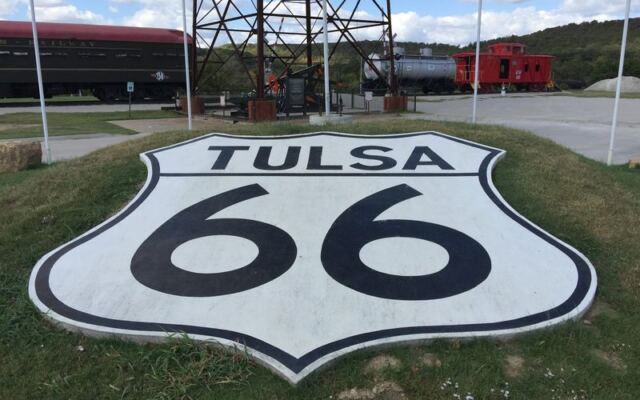
Oklahoma holds some of the most authentic stretches of Route 66 left anywhere in the country, and most of the magic hides in towns so small you might blink and miss them. Old neon signs still flicker, vintage motor courts still stand, and the smell of old asphalt and nostalgia hangs in the air like something you almost remember.
Road-tripping through these little communities feels less like sightseeing and more like stepping through a door that the rest of the world forgot to close. Pack a camera, slow down, and get ready to discover why Oklahoma’s small towns are the real heartbeat of the Mother Road.
1. Chandler, Oklahoma
Chandler sits at a comfortable pace that most of the modern world has long since abandoned. The town’s Lincoln Motel sign is one of the most photographed pieces of neon on the entire Oklahoma stretch of Route 66, and for good reason.
Standing beneath it at dusk, watching the colors wash over the cracked sidewalk, feels genuinely cinematic.
Beyond the neon, Chandler has a walkable downtown lined with brick storefronts that date back to the early 1900s. The Route 66 Interpretive Center here is one of the better small-town museums on the whole corridor, packed with artifacts and photographs that trace the road’s rise and long, slow fade.
It punches well above its weight for a town this size.
What makes Chandler different from other stops is the sense that preservation here was never really a project. The old buildings survived because the community simply kept using them.
That kind of organic continuity is rare, and it gives the whole town a lived-in authenticity that staged tourist destinations rarely capture.
2. Arcadia, Oklahoma
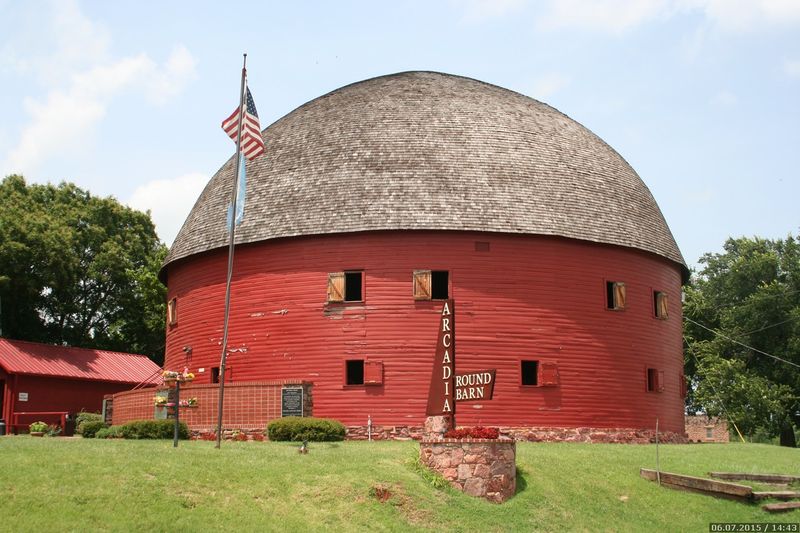
Round barns are unusual anywhere, but Arcadia’s 1898 curved-wall landmark has become one of the most recognizable structures on the entire Mother Road. The barn was built by William Odor using green bur oak lumber, which was bent into shape before it dried.
The result is a perfectly circular two-story building that somehow still stands after more than a century of Oklahoma weather.
Arcadia is a blink-and-miss-it community, but the round barn draws visitors from across the country who pull off just to confirm that yes, it really is round. A small gift shop inside the barn keeps the place lively, and volunteers from the local preservation society are usually on hand to share the full story of how the structure was saved from collapse in the 1980s.
Just down the road sits POPS, the futuristic soda ranch with its giant illuminated bottle sculpture out front. The contrast between the century-old barn and the gleaming modern roadside stop captures something essential about Route 66 itself: old and new have always shared the same ribbon of asphalt.
3. Stroud, Oklahoma
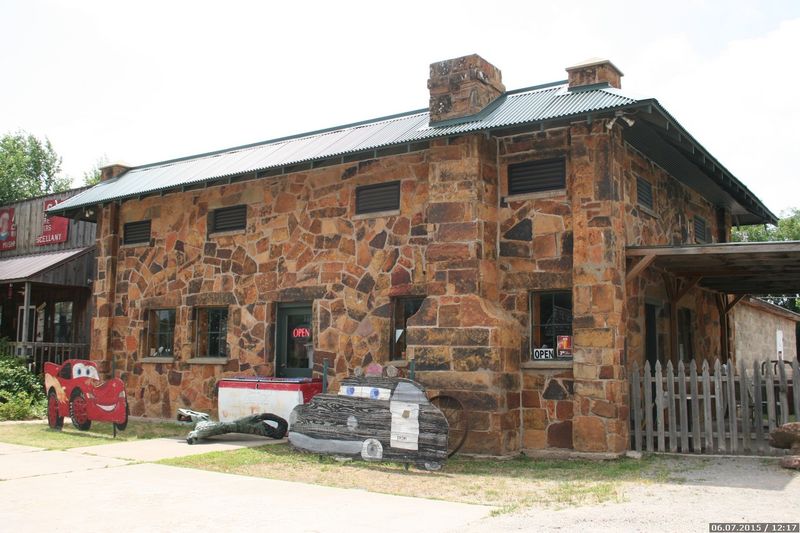
Stroud earned its Route 66 credentials the hard way. During the road’s golden age in the 1940s and 1950s, it was a busy stop with motor courts, diners, and service stations competing for every traveler’s dollar.
The town’s Rock Cafe is one of the oldest continually operating restaurants on Oklahoma’s stretch of the highway, built from local sandstone in 1939 and still serving road-trippers today.
The Rock Cafe became famous in a different way when its longtime owner Dawn Welch inspired the character of Sally in the Pixar film Cars. That bit of Hollywood history gives Stroud a quirky pop-culture layer that sits comfortably on top of its genuine historic bones.
Visitors often arrive for the movie connection and stay because the town itself is quietly fascinating.
Stroud’s downtown has held onto an impressive number of original storefronts, and the surrounding creek-cut landscape gives the area a rugged, unhurried beauty. It rewards slow walkers and people willing to peer into windows and read the old painted signs still fading on brick walls.
4. Bristow, Oklahoma
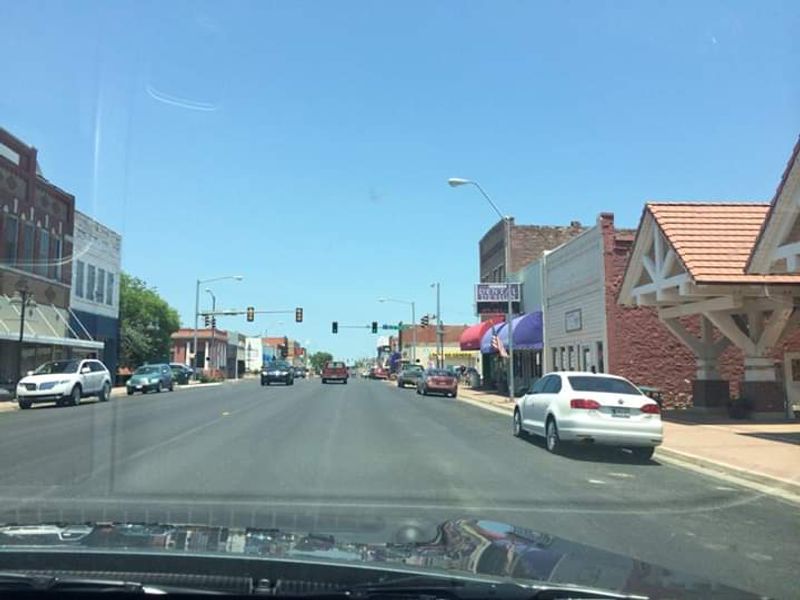
Bristow is the kind of Route 66 town that architecture lovers quietly obsess over. The downtown commercial district is remarkably intact, with a concentration of Art Deco and Mission Revival buildings that date from the oil boom years of the 1920s.
Walking the main drag here is like flipping through a textbook on early 20th-century commercial design, except the buildings are real and still in use.
The town grew fast during Oklahoma’s oil rush, and that prosperity left behind a built environment that outlasted the boom itself. Several of the original filling stations still stand, their canopies and tile work preserved well enough to suggest what a busy Route 66 stop looked like when the road was new.
Bristow doesn’t market itself as aggressively as some of its neighbors, and that low-key quality is actually part of the appeal. Fewer tour buses mean more space to wander, more chances to chat with locals, and a stronger sense that you’ve found something on your own rather than been directed to it.
5. Davenport, Oklahoma
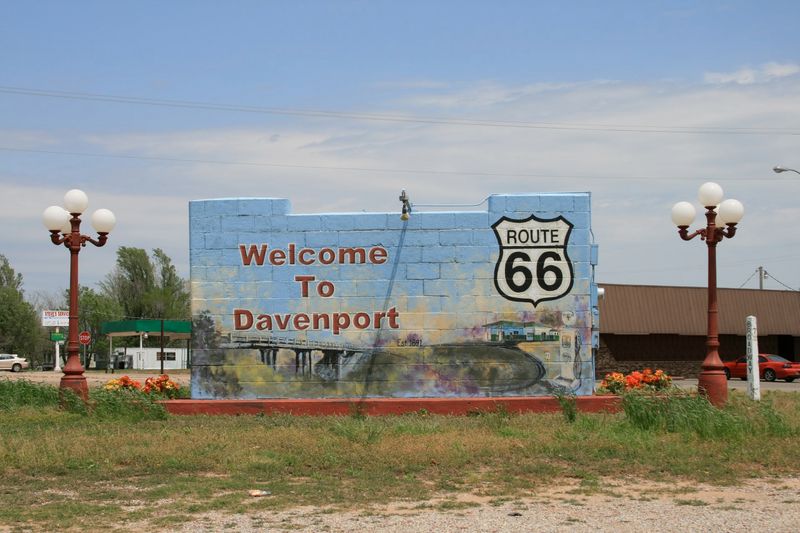
Davenport is one of those Route 66 towns where the passage of time feels almost physical. The old brick commercial buildings along the main street have aged with a kind of stubborn dignity, and several original filling stations remain standing in various states of beautiful decay.
Photographers who specialize in Americana make pilgrimages here specifically for the textures: rust, peeling paint, and sun-bleached wood that tell the road’s story without a single word.
The town sits in a stretch of Oklahoma that feels particularly remote, with wide open fields pressing in on both sides of the old highway. That isolation is part of what kept Davenport from being overly developed, and it’s exactly what makes the place feel so genuine today.
The original alignment of Route 66 runs right through town, and following it at low speed is one of the more meditative drives on the whole Oklahoma corridor.
A handful of local businesses have started using the Route 66 heritage as a draw, and small signs of revitalization are appearing alongside the lovingly preserved decay. Davenport is at that interesting tipping point where a town starts to rediscover what it always had.
6. Sapulpa, Oklahoma
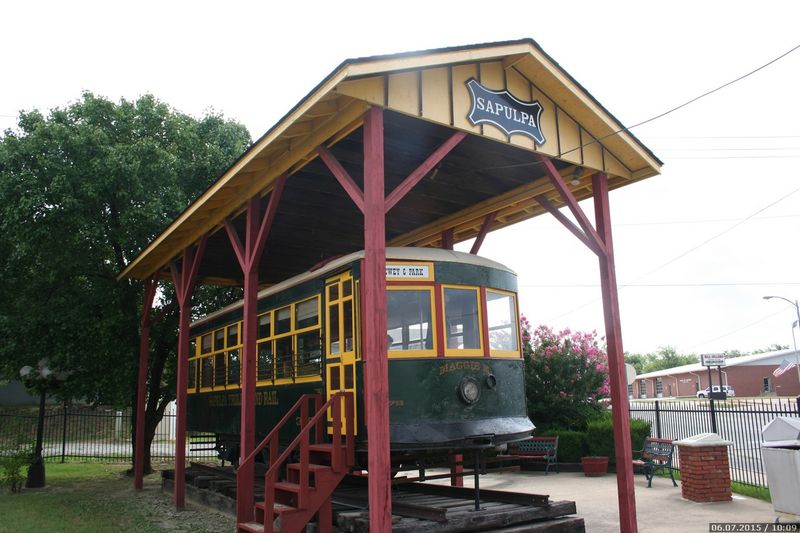
Sapulpa has a legitimate claim to being one of the most underrated Route 66 towns in Oklahoma. The city was a major stop during the road’s commercial peak, and it developed a strong industrial identity through its glass manufacturing heritage that still shapes the local character today.
The Frankoma Pottery legacy and the glassworks history give Sapulpa a creative, craft-focused identity that sets it apart from purely nostalgia-driven stops.
The original Route 66 alignment through Sapulpa passes some genuinely striking architecture, including a collection of early motor courts and commercial buildings that have survived with their bones intact. The Harvey House era of American travel left traces here that are worth seeking out, and local history enthusiasts have done good work documenting the town’s role in the road’s story.
Sapulpa also benefits from being close enough to Tulsa to draw day-trippers, but far enough away to feel like its own place. The combination of craft history, Route 66 architecture, and a working downtown that hasn’t been entirely turned over to tourism makes it one of the more textured stops on the Oklahoma corridor.
7. Catoosa, Oklahoma
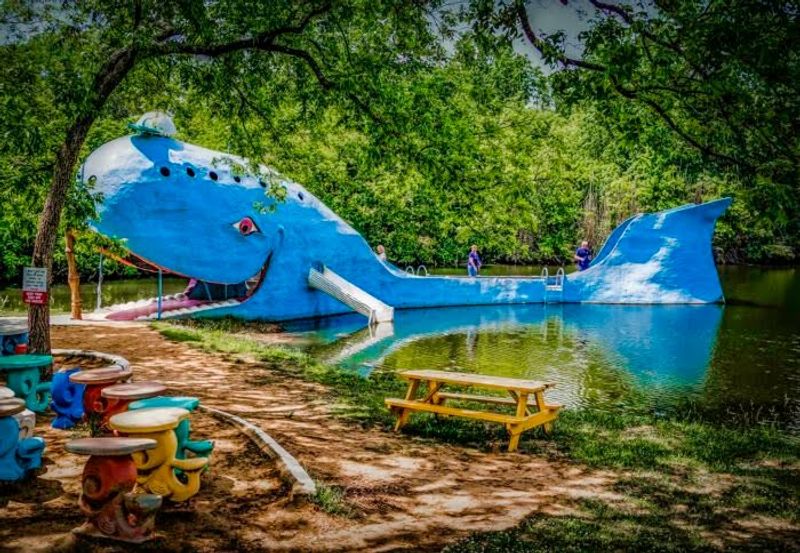
Catoosa’s Blue Whale is one of the most joyful things you will ever see beside a highway. Hugh Davis built the enormous smiling whale sculpture in a small pond as a surprise anniversary gift for his wife, Zelta, who collected whale figurines.
The concrete whale is about 80 feet long, painted a cheerful aqua blue, and it sits on the edge of a pond that the Davis family once operated as a small swimming hole for the community.
The whale fell into disrepair after the Davis family could no longer maintain it, but local volunteers and the Catoosa Historical Society stepped in to restore the landmark and keep it open to visitors free of charge. Today it draws a steady stream of road-trippers who climb on its back, peer through its mouth, and take the kind of photographs that make other people immediately want to visit.
Beyond the whale, Catoosa has a quiet charm that rewards a short wander. The town sits near the Verdigris River and has a handful of original Route 66 structures still standing.
But honestly, the whale alone is worth the stop, because very few roadside attractions manage to be both completely absurd and genuinely heartwarming at the same time.
8. Foyil, Oklahoma
Folk art and Route 66 have always had a natural affinity, and Foyil is where that relationship reaches its most spectacular expression. Ed Galloway’s Totem Pole Park, located just outside town, features the world’s largest totem pole: a 90-foot concrete and tile structure that Galloway spent 11 years carving by hand.
The surrounding grounds are filled with smaller totem poles, a folk art cabin, and a 11-sided fiddle house, all built by one retired school teacher with extraordinary patience and vision.
Galloway completed the main totem pole in 1948, and the structure has since been recognized by the Kansas Grassroots Art Association as a significant work of American folk art. The colors are vivid even after decades of Oklahoma sun and rain, and the detail work up close is astonishing.
Getting there requires a short detour off the main Route 66 alignment, but every traveler who makes the turn reports the same thing: total disbelief that something this ambitious exists in a field this quiet.
Foyil itself is tiny, and the totem pole park is very much the main event. But that focused singularity is actually a strength.
Arriving here feels like discovering a secret, and few Route 66 stops deliver that particular feeling as reliably as this one.
9. Commerce, Oklahoma
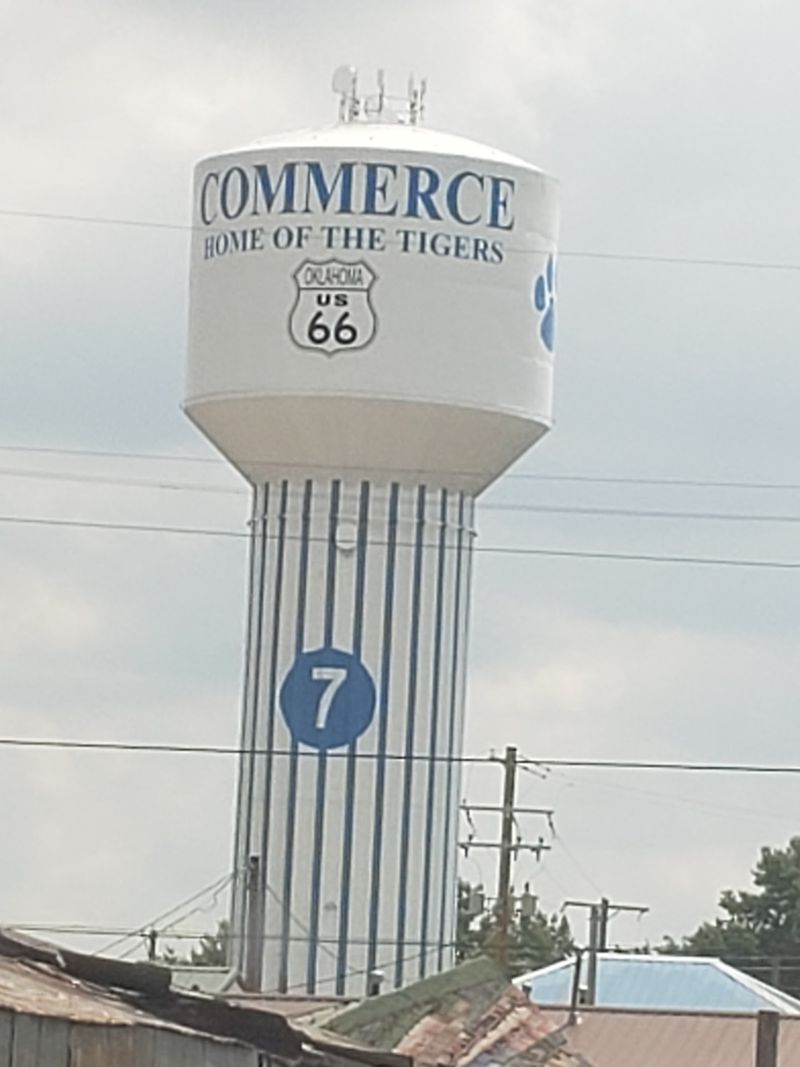
Commerce carries a remarkable amount of American history for a town of its modest size. Mickey Mantle was born here in 1931, and the modest white house where he grew up still stands on a quiet residential street.
Baseball fans make regular pilgrimages to Commerce just to stand in front of that house and think about how a kid from this tiny Oklahoma mining town became one of the greatest players the sport has ever seen.
The town’s Route 66 heritage is layered on top of an even older mining history. The Tri-State Mining District, which covered parts of Oklahoma, Kansas, and Missouri, made Commerce a working-class hub in the early 20th century.
That industrial past left behind a landscape of chat piles, old headframes, and a community identity rooted in hard physical labor rather than tourism. Walking through Commerce, you feel the weight of that history in a way that’s different from the neon nostalgia of other Route 66 stops.
Original Route 66 infrastructure is still visible throughout town, and the combination of baseball legend, mining heritage, and Mother Road history gives Commerce a depth that rewards curious visitors willing to look past the surface. A small Mantle museum in town helps tie the threads together for anyone who wants the full story.
Share this story