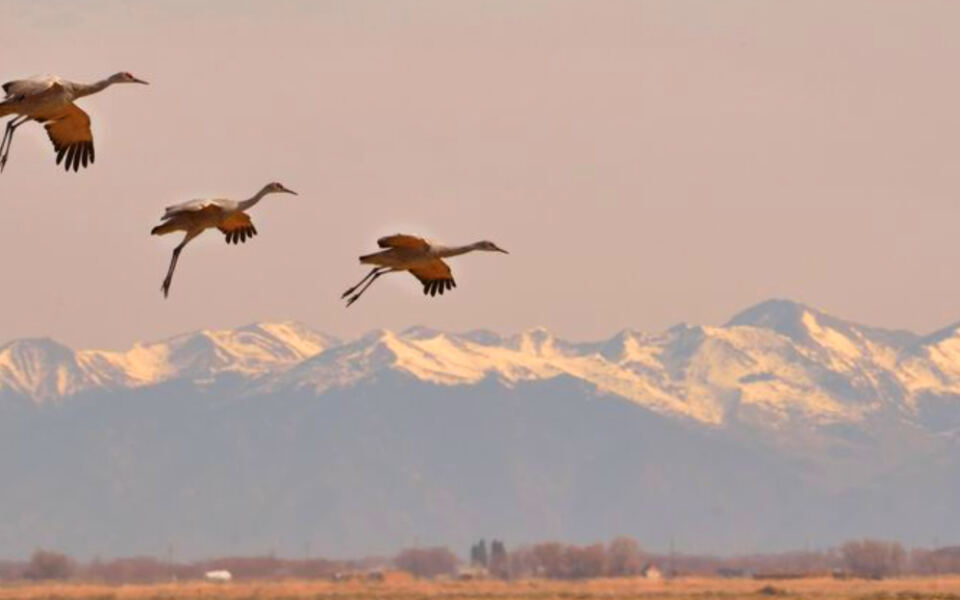
Every year, one of North America’s most jaw-dropping wildlife events plays out across a handful of carefully chosen landscapes, and most people have no idea it exists. Sandhill cranes, standing nearly four feet tall with their distinctive red foreheads, travel in groups that can swell to hundreds of thousands of birds.
They pick their stops carefully, favoring river valleys, shallow wetlands, and agricultural fields where food and safe overnight roosting conditions overlap. The places on this list range from a sun-baked Texas refuge that shelters a huge chunk of an entire subspecies, to a Tennessee riverside where patient visitors sometimes spot one of the rarest birds in the world hiding in plain sight.
Whether you are a dedicated birder or simply someone who enjoys a good spectacle, the locations below deliver on a scale that is genuinely hard to believe until you see it for yourself.
1. Rowe Sanctuary, Gibbon, Nebraska
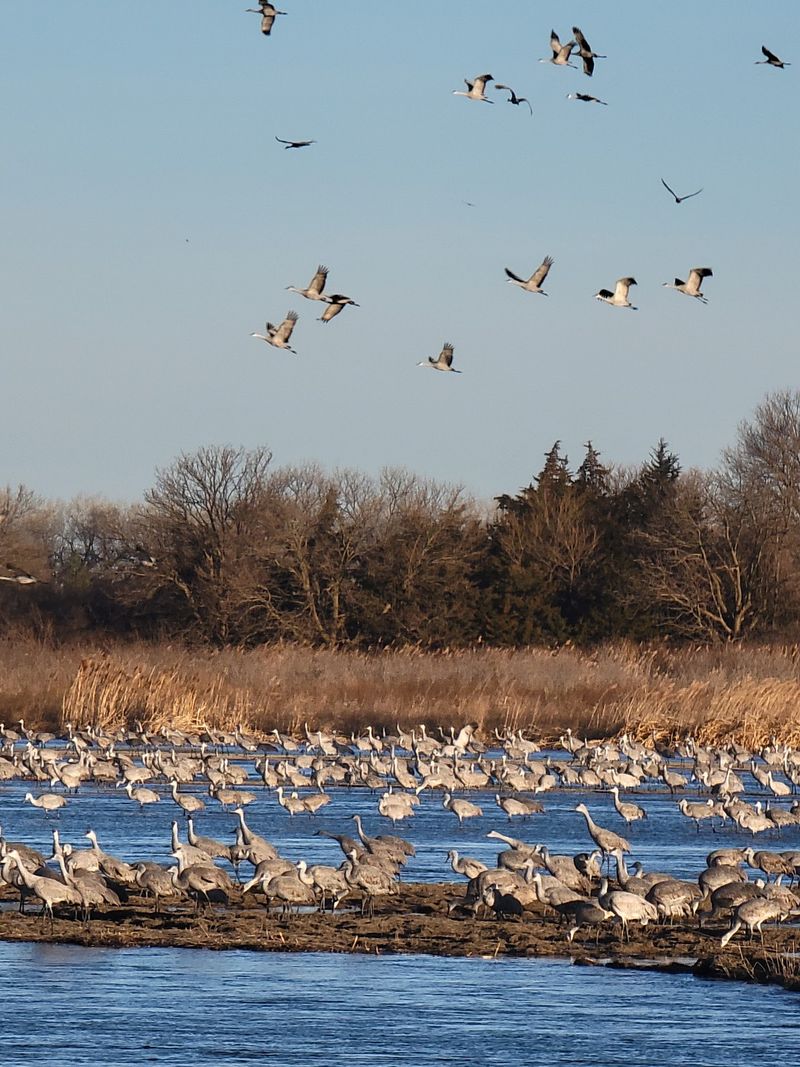
A record set in March 2025 tells you everything you need to know about Rowe Sanctuary: aerial surveys counted approximately 736,000 sandhill cranes between Chapman and Overton along the Platte River, the highest total ever recorded in the Central Platte corridor.
The Iain Nicolson Audubon Center runs guided tours at sunrise and sunset during the spring migration, which runs from mid-February through April. Tours are designed around periods when at least 30,000 cranes are actively using the river, so visitors are virtually guaranteed a meaningful encounter.
Viewing blinds called discovery stations are placed directly along the riverbank, giving close-up perspectives that open viewing areas simply cannot match. General access to the visitor center and trails is free, but guided tours and photography blinds require reservations and a fee.
Early April visitors also stand a reasonable chance of spotting a whooping crane passing through.
2. Crane Trust Nature & Visitor Center, Wood River, Nebraska
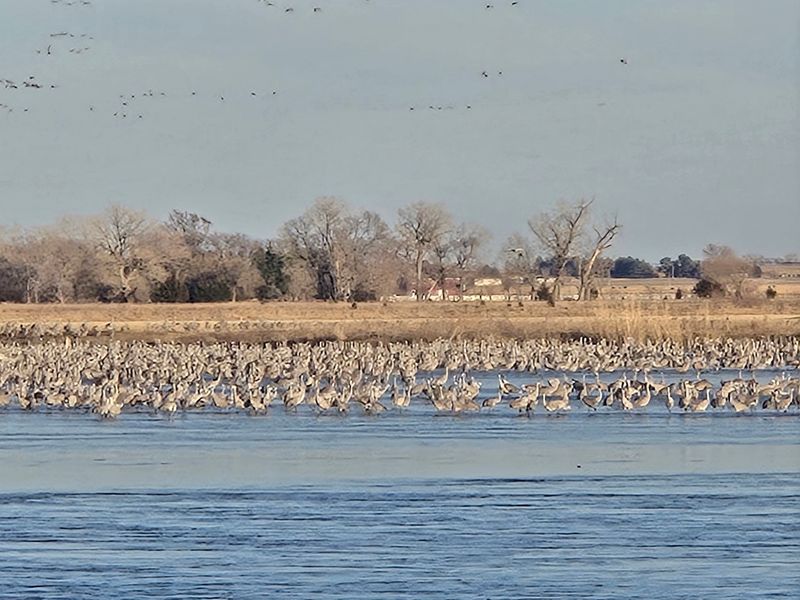
The migration window here runs from Valentine’s Day to Tax Day, which is either a charming coincidence or nature’s way of making sure you remember the dates. Crane Trust protects a prime section of the Platte River corridor west of Grand Island, where tens of thousands of cranes roost at dawn and dusk while spreading across nearby fields during daylight hours to feed.
The organization’s science team flies weekly aerial surveys covering an 80-mile stretch of the Central Platte River Valley. On March 15, 2026, that count came in at approximately 429,000 cranes, following the all-time record of 736,000 counted on March 17, 2025.
March is the most reliable month for large numbers, with concentrations continuing into early April. The combination of river roosts and daytime feeding flocks means the spectacle shifts dramatically between morning, midday, and evening, rewarding visitors who stay for more than a single viewing session.
3. Fort Kearny State Recreation Area, Kearney, Nebraska
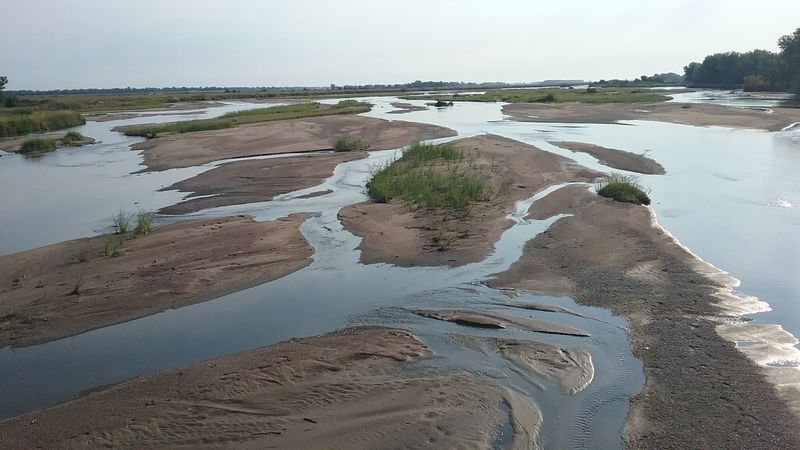
No reservation required, no guided tour necessary. Fort Kearny State Recreation Area offers one of the most accessible entry points into Nebraska’s legendary crane migration, and the hike-bike trail bridge has become a landmark viewing spot during peak season.
The Central Platte River Valley holds the title of the world’s largest concentration of sandhill cranes each spring, and Fort Kearny sits right in the middle of that corridor. Around dawn and dusk, cranes pass overhead in continuous streams as they move between feeding fields and Platte River roosts, turning the bridge into a front-row seat for the action.
Late March visitors have an added incentive beyond the sandhill spectacle. Whooping cranes, which migrate later in the season, pass through the same corridor and have been spotted from this area.
Nebraska Game and Parks Commission manages the site, and a park entry permit is required for vehicle access during the season.
4. Bosque del Apache National Wildlife Refuge, San Antonio, New Mexico
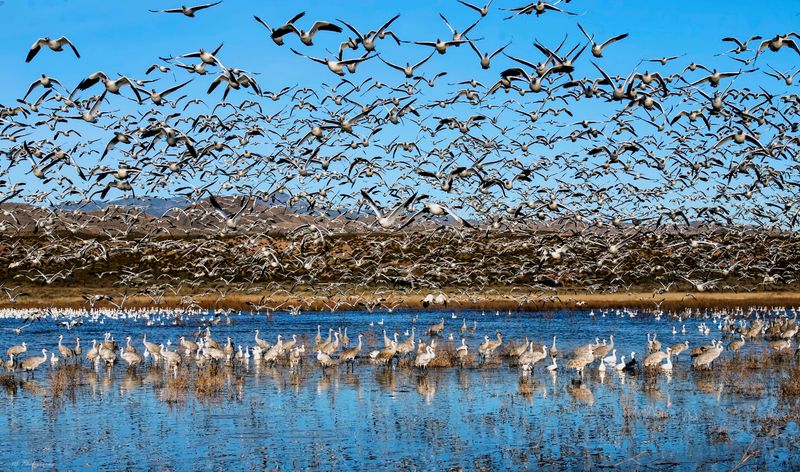
Bosque del Apache has a reputation that precedes it by several time zones. Bird photographers and wildlife enthusiasts from across the country make annual pilgrimages to this Rio Grande refuge, and the winter crane gatherings are a central reason why.
Thousands of sandhill cranes spend the colder months here alongside enormous numbers of snow geese and ducks, all using the refuge’s carefully managed wetland cells and surrounding agricultural fields. The driving loop allows visitors to cover the key areas without leaving their vehicles, moving between ponds, fields, and dedicated pullout areas at their own pace.
Early morning and late afternoon are the most productive times, when large groups shift between feeding areas and overnight roosts. The Festival of the Cranes, held each November, adds guided programs, photography workshops, and expert talks to an experience that is already rich on its own.
Admission requires a federal recreation pass or daily fee.
5. Whitewater Draw Wildlife Area, McNeal, Arizona
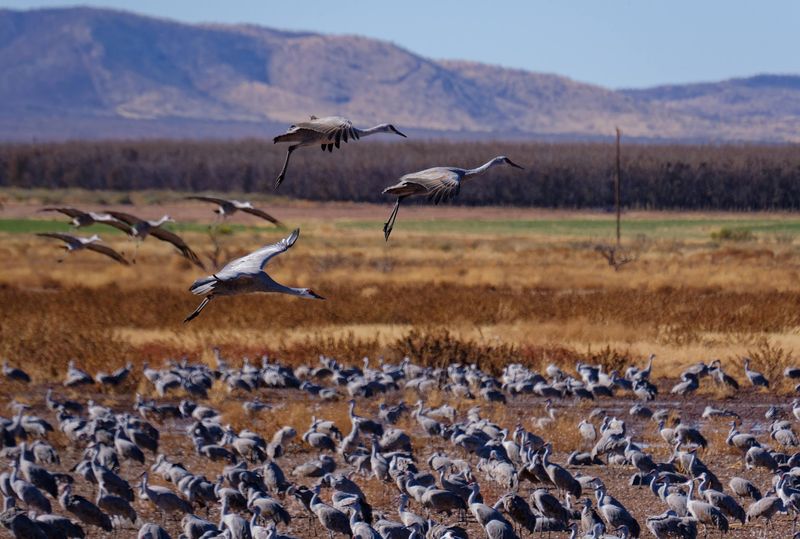
Most people picture saguaro cacti when they think of Arizona wildlife, not tens of thousands of cranes packed around a shallow desert wetland. Whitewater Draw flips that expectation entirely, drawing over 20,000 sandhill cranes to a quiet corner of Cochise County every winter season.
Birds typically arrive in autumn and begin departing between late February and mid-March. Morning brings some of the most dramatic activity as cranes lift off from their overnight roosting areas in large numbers, but Whitewater Draw has a behavioral quirk that sets it apart from most other crane sites.
The birds frequently return before noon, meaning visitors can encounter enormous concentrations well outside the standard dawn viewing window. That extended daily presence makes the site more forgiving for those who cannot arrive at first light.
Access is free, the viewing platform is open year-round, and the surrounding Sulphur Springs Valley adds additional birding opportunities for anyone willing to explore the back roads.
6. Woodbridge Ecological Reserve, Lodi, California
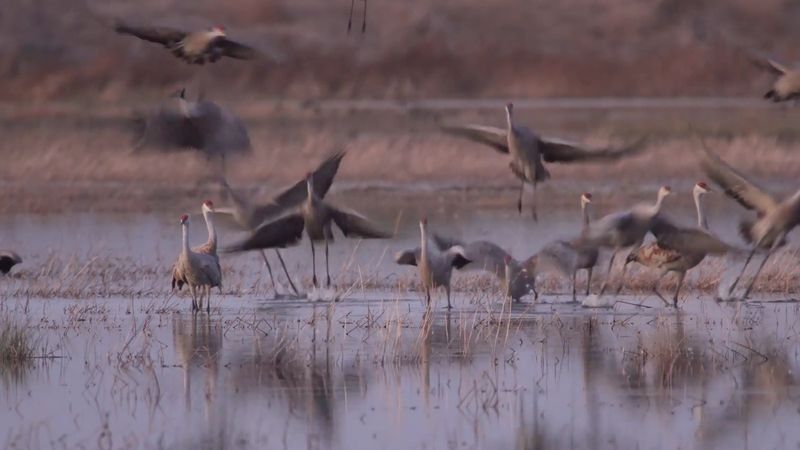
California’s agricultural Delta is not the first landscape that comes to mind for crane watching, but Woodbridge Ecological Reserve quietly hosts one of the state’s most accessible winter crane gatherings. The South Unit protects freshwater marsh habitat that cranes begin using in fall, combining that with surrounding agricultural fields for daytime foraging.
The evening return flight is the headline event. Around sunset, thousands of cranes converge on the reserve’s flooded roosting areas, creating a sustained aerial display that rewards patient visitors who time their arrival correctly.
The viewing area along Woodbridge Road provides a clear sightline without requiring any trail hiking.
The California Department of Fish and Wildlife offers seasonal crane tours that add structure and expert commentary to the experience, making this one of the more visitor-friendly crane destinations on the West Coast. Peak numbers are typically present from November through February, and the tours are often scheduled for weekend evenings during that window to maximize viewing opportunities.
7. Monte Vista National Wildlife Refuge, Monte Vista, Colorado
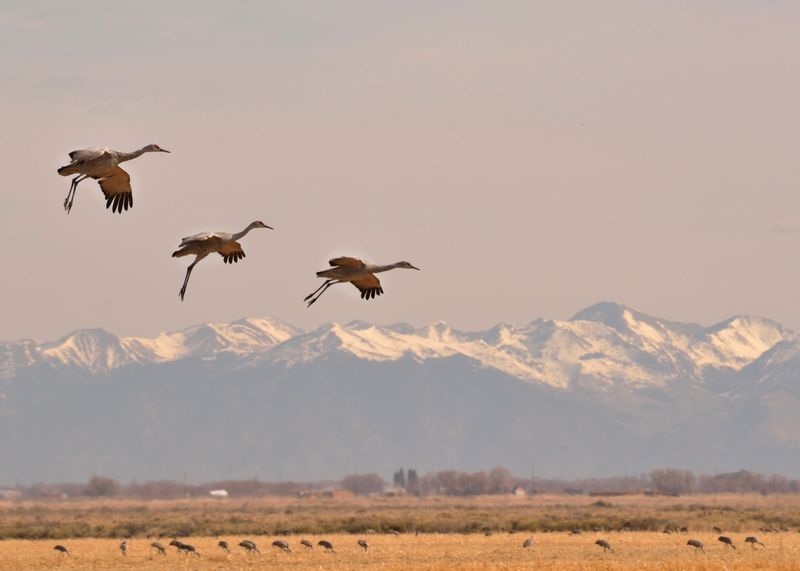
Colorado does not usually top the list when people think of crane destinations, but Monte Vista National Wildlife Refuge makes a strong case for reconsideration. Twice a year, the San Luis Valley becomes a major staging ground for migrating cranes, and the numbers here are genuinely impressive.
Spring brings roughly 18,000 to 21,000 greater sandhill cranes along with an additional 5,000 to 6,000 lesser sandhill cranes, creating a combined gathering that fills the refuge’s wetlands and surrounding agricultural fields. Roadside pullouts throughout the area make observation straightforward without requiring any hiking.
Peak spring movement clusters around early March, while fall migration peaks around the second week of October, giving flexible travelers two separate windows to catch the show. The Monte Vista Crane Festival, held annually in March, draws visitors from across the region and adds guided tours and educational programming to an already compelling natural attraction.
8. Columbia National Wildlife Refuge, Othello, Washington
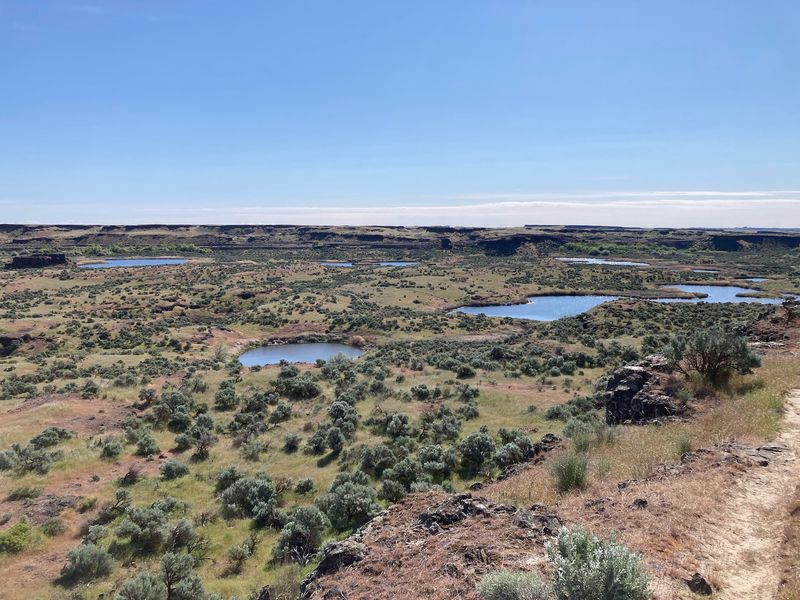
Eastern Washington’s Columbia Basin looks like a landscape designed by a geologist with strong opinions. Dramatic basalt formations, sprawling wetlands, and open shrub-steppe create a backdrop that makes crane watching feel like a completely different experience compared to the flat river valleys of the Great Plains.
Columbia National Wildlife Refuge sits along an important stretch of the Pacific Flyway, and an estimated 35,000 lesser sandhill cranes pass through the broader refuge and Hanford Reach landscape during spring and fall migrations. The combination of wetland habitat and surrounding agricultural fields provides reliable stopover conditions for birds refueling mid-journey.
Spring is the more popular season for visitors, as cranes pause here before pushing north toward breeding grounds in Alaska and Canada. The refuge also supports a long list of other wildlife, including mule deer, coyotes, and a wide variety of waterfowl, meaning a crane-focused trip rarely feels like a one-note experience.
Access is generally free on public refuge lands.
9. Lower Klamath National Wildlife Refuge, Dorris, California
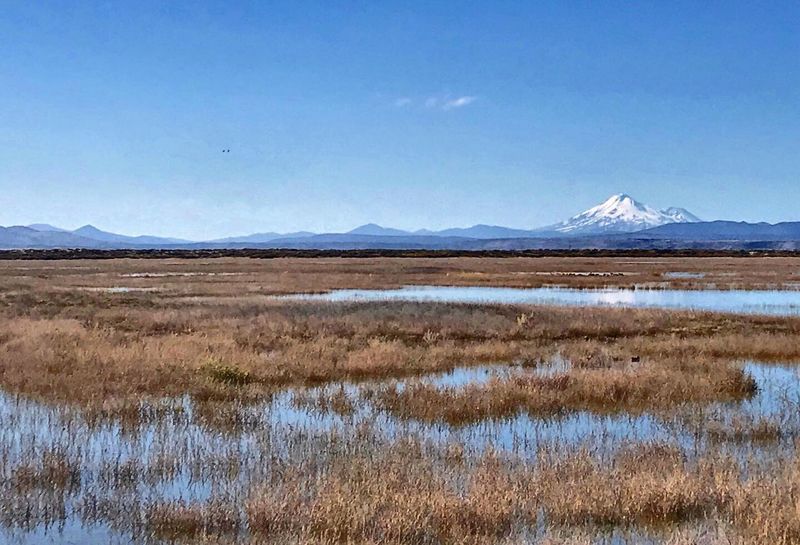
The California-Oregon border does not have many landmarks that stop travelers in their tracks, but Lower Klamath National Wildlife Refuge is one of them. As a cornerstone of the Pacific Flyway’s wetland network, this refuge functions as a critical fall staging area for an estimated 20 to 30 percent of the entire Central Valley sandhill crane population.
The landscape itself earns attention independent of the cranes. Shallow marshes, active croplands, grassy uplands, and open water spread across a broad basin with Mount Shasta rising in the distance, providing one of the more visually distinctive backdrops of any crane-watching location in North America.
Crane numbers fluctuate depending on migration timing and available habitat conditions, but the Klamath Basin consistently ranks as a major waypoint along the western route. The refuge is part of a larger complex of six national wildlife refuges in the area, giving visitors who arrive during peak fall movement multiple sites to explore within a single day trip.
10. Jasper-Pulaski Fish & Wildlife Area, Medaryville, Indiana
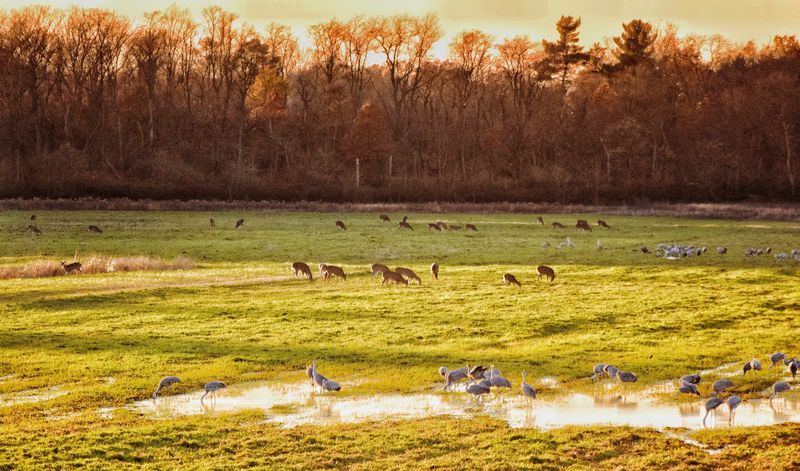
Indiana is not a state that typically generates wildlife bucket-list conversations, but Jasper-Pulaski Fish and Wildlife Area changes that conversation every autumn without fail. The refuge hosts one of the Midwest’s most dependable fall crane gatherings, drawing visitors from surrounding states who arrive specifically for the spectacle.
Cranes begin arriving between mid-October and mid-December, with peak numbers generally building toward late November and early December. The counts shift dramatically from week to week.
Indiana’s official survey recorded 16,400 cranes on December 2, 2025, while the 2023 peak reached nearly 33,000 birds, illustrating the variability that keeps repeat visitors coming back to check the current numbers.
The observation platform at the refuge provides an elevated view over the fields where cranes gather in the late afternoon before settling for the night. Indiana DNR posts weekly count updates during the season, making it easy to track when numbers are building toward their peak and plan a visit accordingly.
11. Wheeler National Wildlife Refuge, Decatur, Alabama
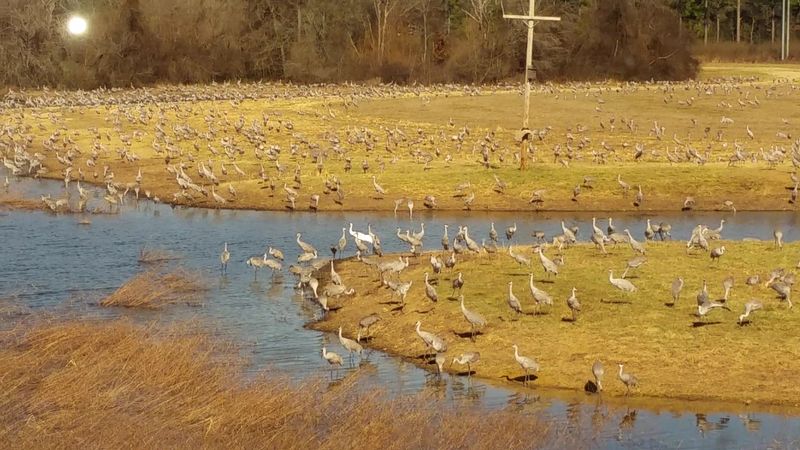
A few decades ago, seeing thousands of sandhill cranes in Alabama would have seemed like a misprint on a field guide map. Today, Wheeler National Wildlife Refuge in the Tennessee River Valley has become one of the most significant winter destinations for the Eastern population of sandhill cranes, and the numbers keep growing.
The refuge’s combination of managed wetlands, agricultural fields, and reliable food sources creates conditions that cranes find difficult to pass up. Numbers build gradually through late fall and reach their peak during the heart of winter, providing a sustained viewing window rather than a brief seasonal spike.
The refuge recorded a peak count of approximately 20,000 sandhill cranes during the 2017-2018 season, a figure that would have seemed extraordinary just a generation earlier. The visitor center offers indoor viewing areas with large windows overlooking key fields, making Wheeler particularly comfortable for winter visits when temperatures in northern Alabama can drop below what most crane enthusiasts expect from the Deep South.
12. Hiwassee Wildlife Refuge, Birchwood, Tennessee
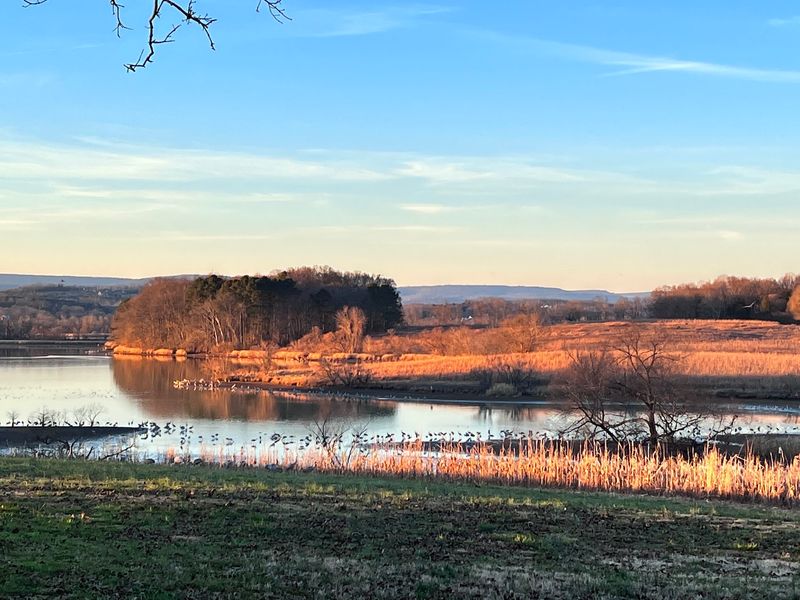
Tennessee holds a title that surprises most people who hear it for the first time: Hiwassee Wildlife Refuge supports the largest winter flock of sandhill cranes in the entire southeastern United States outside of Florida. That distinction alone makes the drive to Birchwood worth planning.
Peak numbers arrive around January, and thousands of cranes can sometimes be visible simultaneously from the refuge’s observation platform overlooking the Hiwassee River bottomlands. The population begins building in November and remains strong through February, giving visitors a generous window that extends well beyond a single weekend opportunity.
Patient observers have a compelling bonus reason to keep their binoculars raised. Endangered whooping cranes have been spotted among the sandhill flocks at Hiwassee on multiple occasions, making careful scanning a worthwhile habit rather than an idle exercise.
The Tennessee Wildlife Resources Agency manages access, and the site hosts an annual Hiwassee Wildlife Refuge Sandhill Crane Festival each January that draws guided tours and expert speakers to the area.
13. Muleshoe National Wildlife Refuge, Muleshoe, Texas
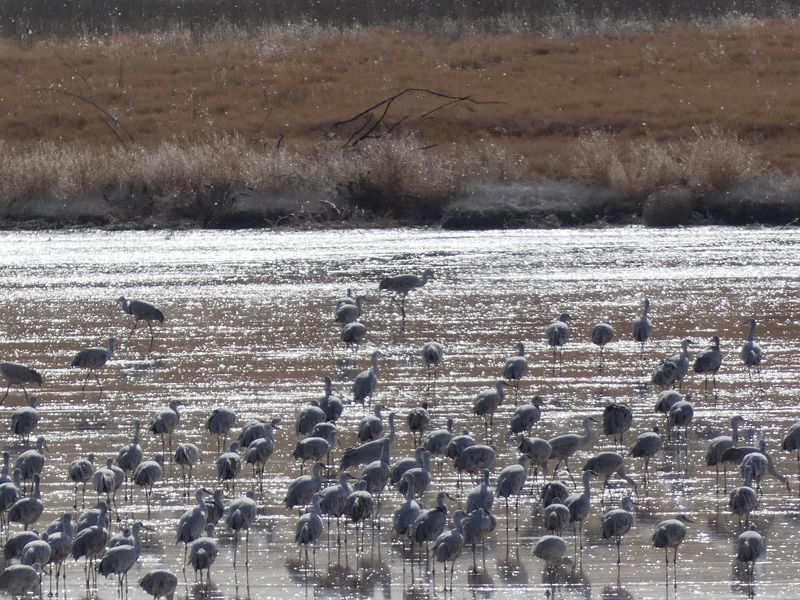
Texas has a lot of superlatives attached to it, and Muleshoe National Wildlife Refuge adds a genuine one to the list: it is the oldest national wildlife refuge in the state, established in 1935, and it remains one of the most important wintering areas for lesser sandhill cranes anywhere in North America.
The U.S. Fish and Wildlife Service estimates that roughly 15 percent of the entire lesser sandhill crane population depends on this refuge between fall and spring, a figure that puts its conservation significance into sharp perspective.
The refuge’s saline playa lakes and surrounding High Plains agricultural landscape provide the combination of shallow roosting water and accessible food that cranes require through the winter months.
In favorable years, daily crane counts exceed 70,000, and totals have frequently surpassed 100,000 birds at a single site. That scale places Muleshoe in a category shared by very few wildlife destinations on the continent, making it a compelling final destination for anyone serious about experiencing sandhill cranes at their most concentrated.
Share this story