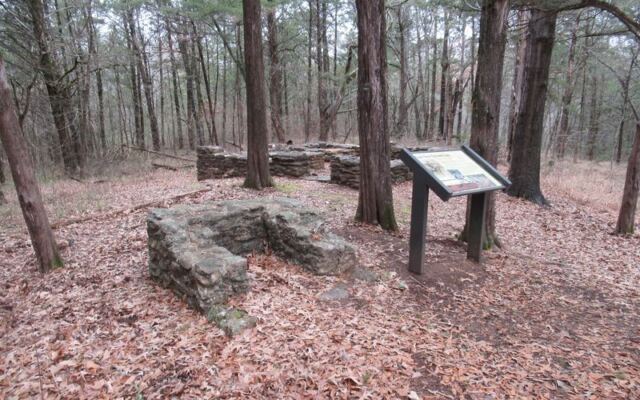
Somewhere in southeastern Oklahoma, a trail begins quietly at the edge of a cemetery, asks you to climb over an old rock wall, and then leads you straight into a town that time forgot. The Old Doaksville Townsite History Trail is one of those rare places where the ground beneath your feet carries centuries of layered stories, from Choctaw Nation history to Civil War hardship.
Most people driving through Choctaw County have no idea it exists, and that is exactly what makes finding it feel so rewarding. If you love history, mystery, and the kind of adventure that does not require a crowd, this trail belongs on your Oklahoma bucket list.
Where the Trail Begins and What It Actually Is
Tucked along Red Road near Fort Towson in Choctaw County, the Old Doaksville Townsite History Trail is one of Oklahoma’s most quietly remarkable historical landmarks. There are no grand entrance gates, no gift shop, and no tour buses idling in the parking lot.
Just a trail, some weathered signs, and a whole lot of layered history waiting to be uncovered.
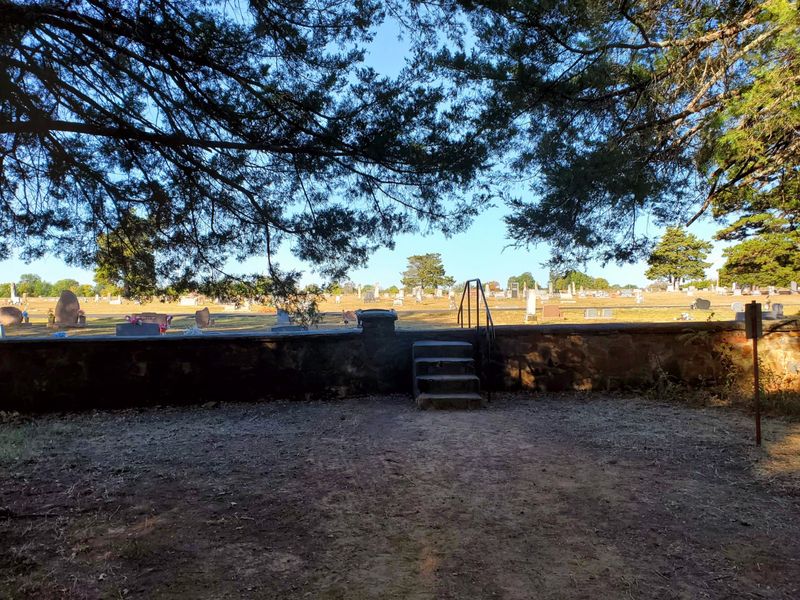
The trail begins at the north end of Fort Towson Cemetery and heads east, guiding visitors toward the old townsite of Doaksville. It is classified as a historical landmark, and the journey itself is more of a contemplative walk than a strenuous hike.
Visitors spend their time reading interpretive signs, examining stone foundations, and soaking in an atmosphere that feels genuinely removed from the modern world.
What makes this starting point so memorable is that crossing from the cemetery into the townsite requires climbing over an old rock wall. That single moment, stepping over weathered stone from a graveyard into a ghost town, sets the tone for everything that follows.
Visitors consistently describe the sensation as crossing through a portal into another era entirely.
The Rise of Doaksville – From Trading Post to Choctaw Capital
Before it became a ghost town, Doaksville was a place of real consequence. The settlement began its life as a trading post, drawing commerce and people to a corner of what is now southeastern Oklahoma.
Its location near Fort Towson made it a natural gathering point, and the community grew steadily through the early decades of the nineteenth century.
The Choctaw Nation arrived in the region through one of American history’s most painful chapters, the forced removal known as the Trail of Tears. Doaksville served as the endpoint of the Choctaw Trail of Tears, receiving the displaced Nation as they were pushed westward from their ancestral homelands in Mississippi.
For a time, the settlement functioned almost like a refuge, absorbing people who had lost nearly everything on the journey west.
By the mid-1830s, Doaksville had grown into something far more significant. The Choctaw Nation established it as their first capital in Indian Territory, a meaningful designation that reflected the community’s political and cultural importance.
At its peak, the town was a genuine hub of activity, home to businesses, government functions, and a sizable population with deep roots and real ambitions for the future.
The Choctaw Trail of Tears Connection
Few places in Oklahoma carry the emotional weight that Doaksville does as the endpoint of the Choctaw Trail of Tears. The forced removal of the Choctaw people from their Mississippi homelands during the 1830s was a grueling and heartbreaking journey across hundreds of miles.
Thousands endured brutal conditions, and Doaksville was where that harrowing trek finally came to a close.
Standing on the townsite today, knowing what the ground witnessed, changes how you experience the place. The interpretive signs along the trail acknowledge this history directly, helping visitors understand the human cost behind the political decisions of that era.
For many visitors, this context is the most moving part of the entire experience.
The Choctaw Nation did not simply survive this removal. They rebuilt, organized, and established governance in a new land, with Doaksville as their first capital.
That resilience is part of what makes the townsite so worthy of attention. Visitors who come expecting a simple nature walk often leave with a much deeper appreciation for the strength and determination that shaped this corner of Oklahoma’s history.
The trail honors that story without dramatizing it, letting the landscape speak for itself.
Fort Towson’s Role in the Town’s Fortune and Fall
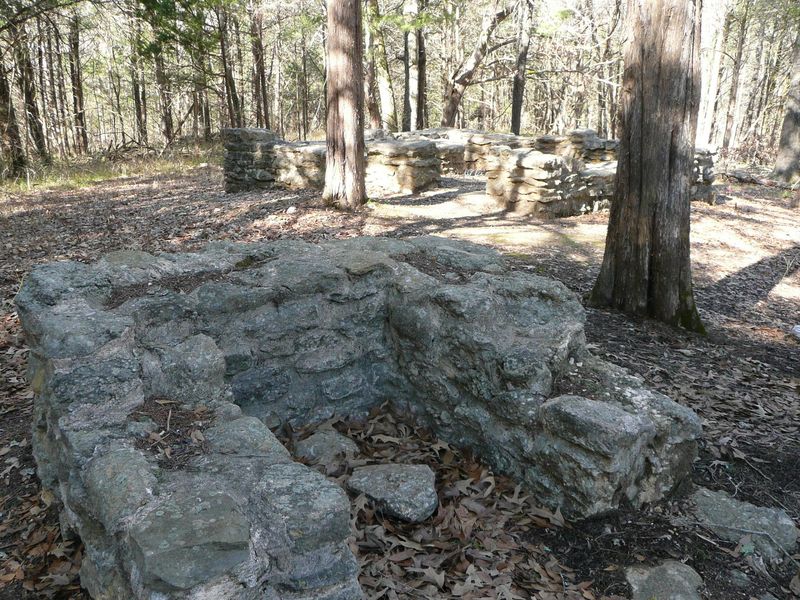
Doaksville’s fortunes were tightly bound to those of nearby Fort Towson, and when the fort’s star faded, the town’s trajectory followed. Fort Towson was established as a U.S. military installation to maintain order in the region during the early years of Indian Territory.
Its presence brought soldiers, supply chains, and economic activity that helped sustain the growing community of Doaksville just to its east.
When Fort Towson was closed, the reliable flow of military commerce that had helped anchor the local economy dried up. Businesses that had depended on fort-related traffic found themselves without customers, and the ripple effects moved through the community quickly.
The closure was not the only blow Doaksville absorbed, but it was a significant early wound.
The fort’s closure also signaled a broader shift in how the federal government was managing the region. Priorities were changing, and Doaksville was not positioned to adapt easily.
The symbiotic relationship between the military post and the civilian settlement had worked well during prosperous times, but it also meant the town had little buffer when that support disappeared. Understanding Fort Towson’s history is essential to understanding why Doaksville eventually became the quiet, overgrown ruin that visitors explore today.
Civil War Devastation and the Town’s Slow Decline
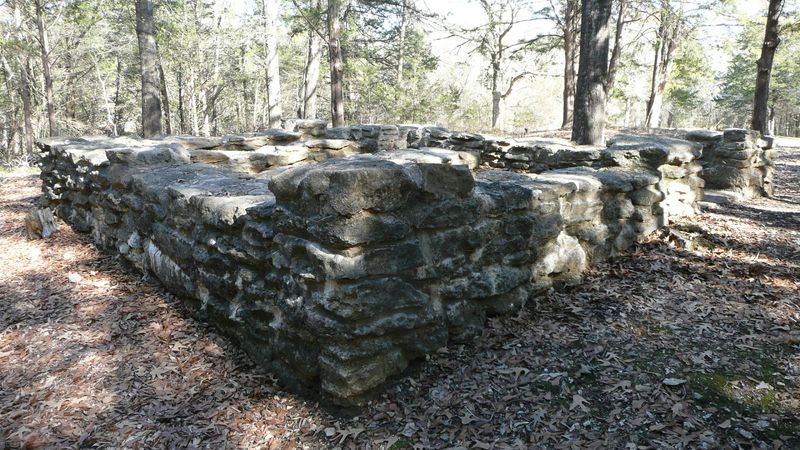
By the time the Civil War arrived, Doaksville was already facing economic headwinds from Fort Towson’s closure. The war added catastrophic pressure to a community that had little resilience left.
The Choctaw Nation, like many Native nations in Indian Territory, was drawn into the conflict on the Confederate side, and the consequences were severe. Crops were destroyed, the plantation-based economy that had taken root in the region was shattered, and the social fabric of the community frayed under years of conflict.
The trail’s interpretive signs touch on this period, helping visitors understand just how thoroughly the war reshaped the landscape. Fields that had once supported an economy were left in ruin.
Families scattered or struggled to survive on what little remained after years of disruption. Doaksville, which had once been a center of Choctaw governance and commerce, found itself hollowed out.
In 1863, with the capital needing to be in a more stable location, the Choctaw Nation moved their seat of government to Chahta Tamaha. Losing the capital designation removed the last major anchor holding Doaksville together.
The community continued to shrink from that point forward, with each passing decade erasing a little more of what had once been a thriving and historically significant town.
The Railroad That Sealed Doaksville’s Fate
Sometimes a town does not fall dramatically. Sometimes it simply gets bypassed.
That is essentially what happened to Doaksville when railroad developers chose a route that ran south of the old townsite, through the community surrounding Fort Towson rather than through Doaksville itself. That decision, made by engineers and investors with no particular attachment to the town’s history, effectively ended whatever slim chance Doaksville had of recovering.
Railroads in the late nineteenth century were economic lifelines. Towns along the tracks flourished.
Towns left off the map withered. Doaksville found itself in the second category, watching commerce and population shift toward communities that had rail access.
Merchants and residents who might have stayed began relocating to places where goods could move efficiently and opportunity felt more certain.
The irony is striking when you walk the trail today. The very infrastructure that was supposed to modernize and connect the region contributed directly to erasing one of its most historically significant communities.
Doaksville had survived removal, the closure of a military post, and a brutal war, only to be undone by a railway route drawn on a map. Visitors who learn this detail often find it one of the most quietly sobering parts of the entire site’s story.
Climbing the Rock Wall – The Trail’s Most Memorable Moment
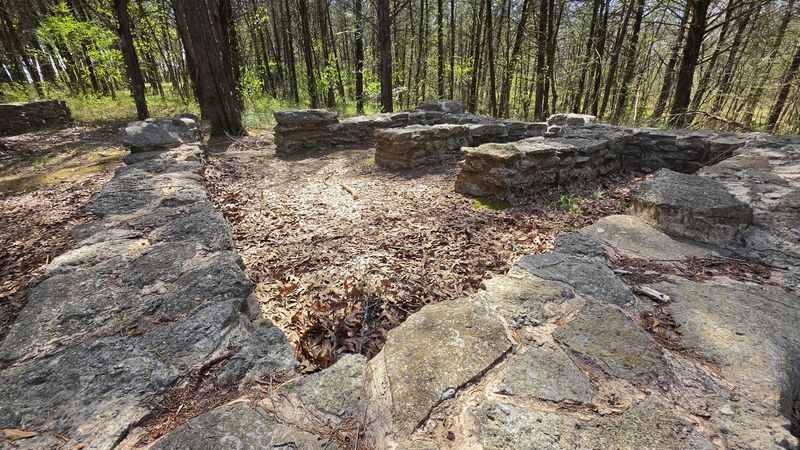
Ask anyone who has walked this trail what they remember most, and the answer comes quickly: climbing over the rock wall. The trail begins at the north end of Fort Towson Cemetery, and to enter the old Doaksville townsite, visitors must physically climb up and over a historic rock fence that separates the cemetery from the former settlement.
There are no gates, no stiles, and no clever workarounds. You simply climb over.
That moment is genuinely hard to describe without experiencing it firsthand. One side holds the quiet permanence of a cemetery.
The other side opens into the overgrown remnants of a ghost town. Stepping from one to the other feels charged with meaning in a way that even the most detailed historical sign cannot replicate.
Visitors frequently describe the crossing as feeling like stepping through a portal into a different era.
The rock wall itself is old and worn smooth in places where many hands and boots have found their footing. It is not a difficult climb by any measure, but it is a deliberate one.
You have to choose to go over. That small physical act of commitment seems to prepare visitors mentally for what they are about to encounter on the other side, a landscape where an entire world once existed and now only foundations remain.
Stone Foundations and the Footprint of a Forgotten Town
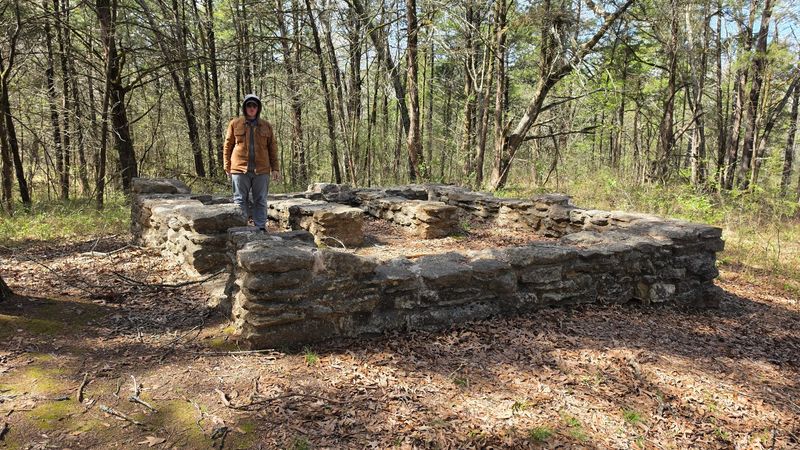
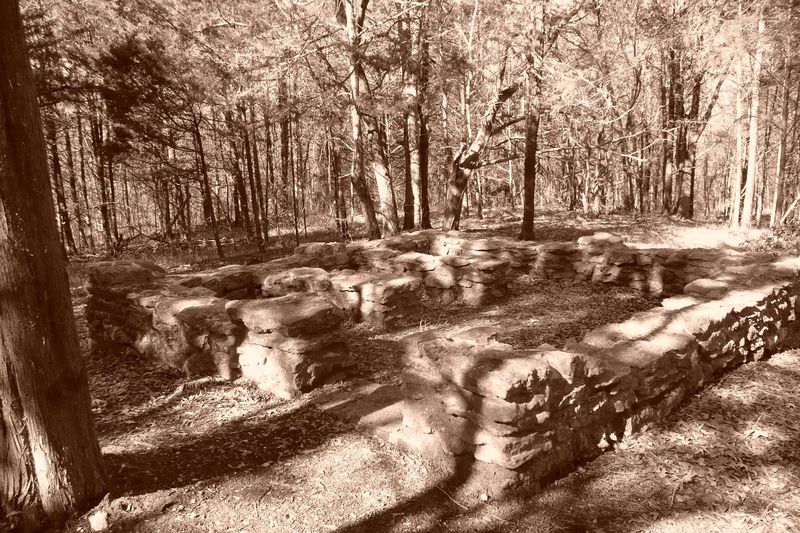
Once you are on the townsite side of the wall, the scale of what Doaksville once was starts to become clear. Scattered across the landscape are stone foundations, the skeletal remains of buildings that once housed businesses, homes, and government functions.
Nature has done considerable work reclaiming the space, but the outlines of those old structures are still visible and surprisingly numerous.
Walking between the foundations is a strange and absorbing experience. You find yourself mentally sketching in walls, rooflines, and doorways, trying to reconstruct the town from its bones.
Visitors who spend time here report staying far longer than they expected, partly because each new foundation raises fresh questions about who lived there and what daily life looked like in a nineteenth-century Choctaw capital.
One review noted that a visit easily stretched to over an hour just from walking among the many foundations and reading the interpretive signs placed throughout the site. The sheer number of structural remains spread across the area communicates something that words alone cannot: Doaksville was not a small outpost.
It was a real town, with real ambitions, and its disappearance from the landscape is one of those quiet historical losses that deserves far more attention than it typically receives.
Interpretive Signs Along the Trail – History Written in the Open Air
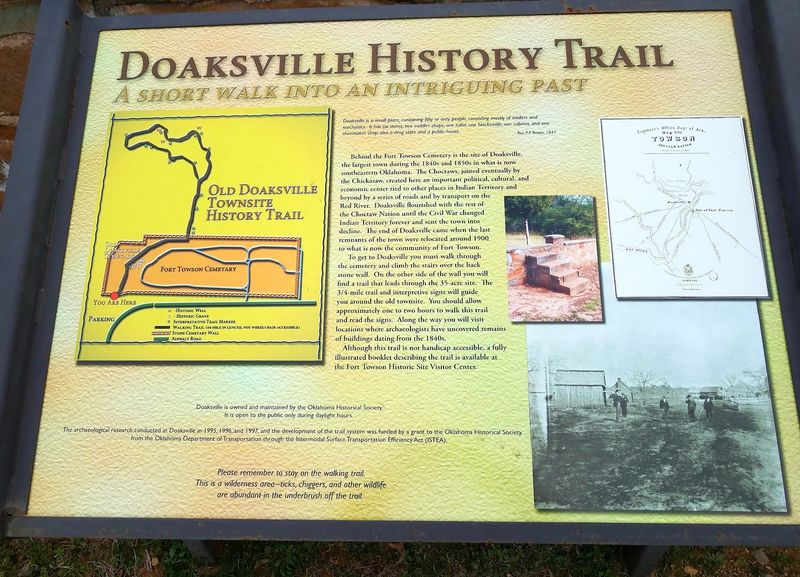
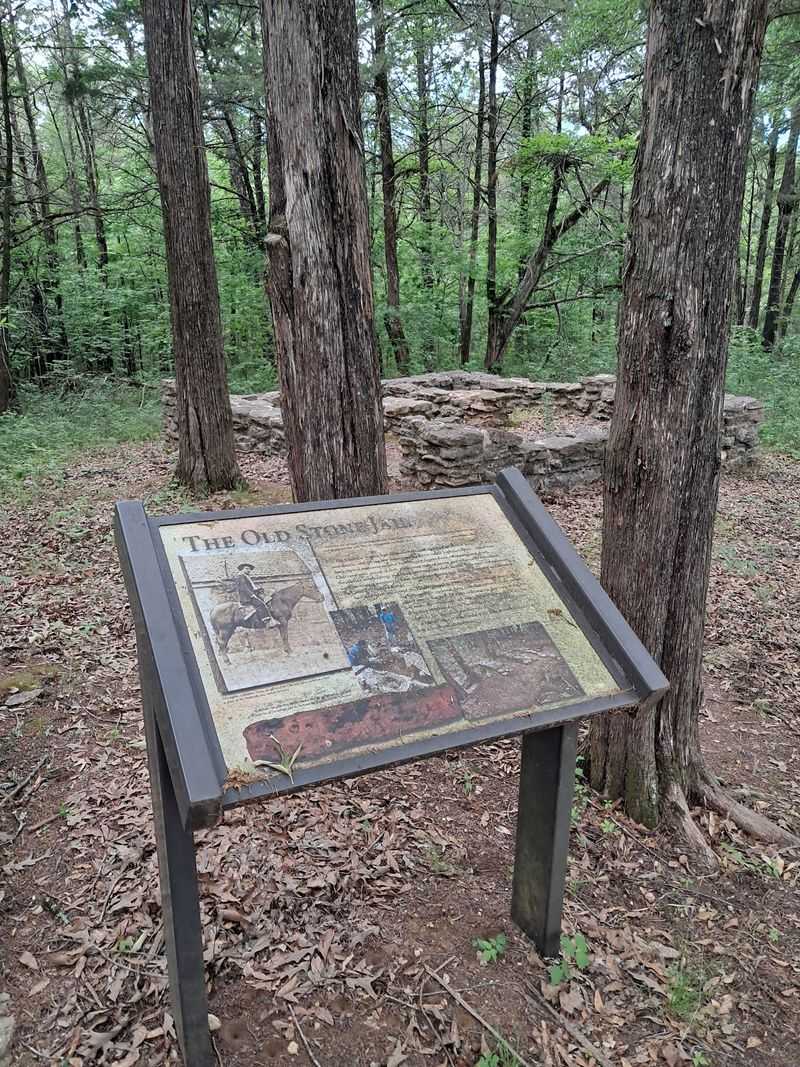
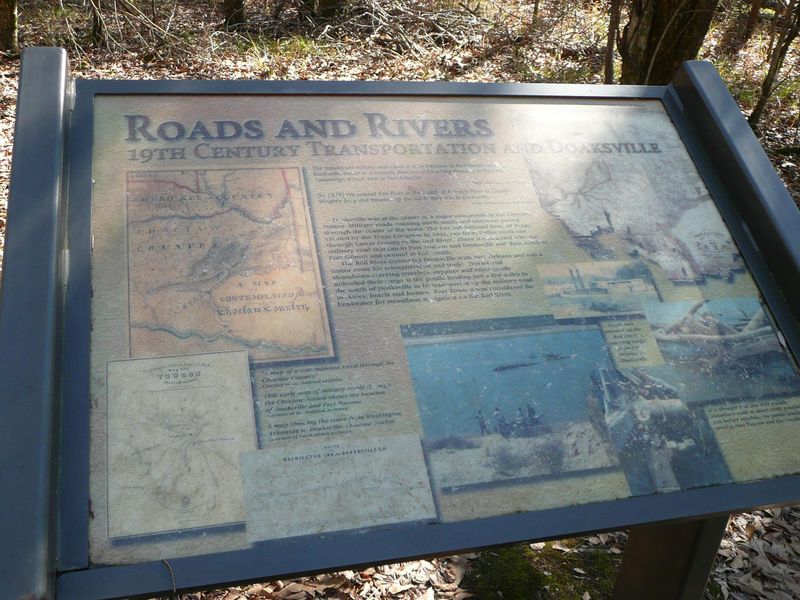
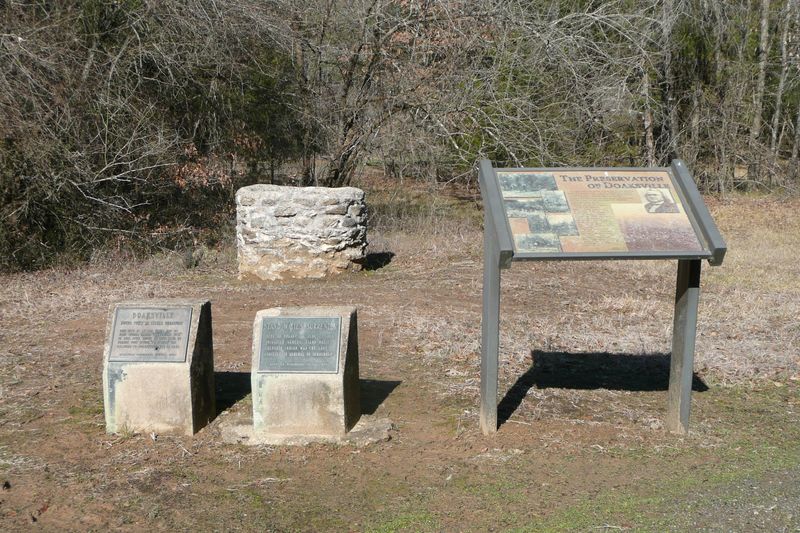
Throughout the townsite, a series of interpretive signs work to fill in the historical context that the landscape alone cannot fully provide. Each sign covers a different aspect of Doaksville’s story, from its origins as a trading post to its role as the Choctaw capital, the impact of the Civil War, and the eventual abandonment of the settlement.
For visitors who enjoy reading as they walk, the trail offers a genuinely educational experience.
However, it is worth knowing upfront that the signs have seen better days. Weather and time have taken a real toll on the printed content, and some signs have become partially or fully unreadable.
The photographs and text on several panels have faded to the point where key details are difficult or impossible to make out. It is a practical limitation that affects the experience, particularly for visitors who rely heavily on those signs to guide their understanding.
The good news is that the signs that remain legible are informative and well-written, offering enough context to make the walk genuinely worthwhile. Visitors who supplement the trail with some background reading beforehand, perhaps from the site’s associated website at redriverhistorian.com, tend to get the most out of their time on the grounds.
A little preparation goes a long way here.
The Atmosphere of the Place – Quiet, Overgrown, and Oddly Moving
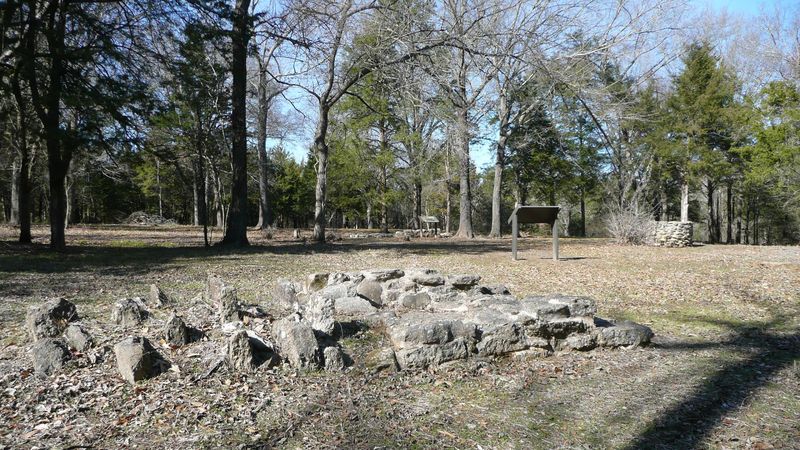
There is a particular kind of stillness that settles over places where a lot of living once happened and then stopped. Doaksville has that quality in abundance.
The overgrown vegetation, the silent foundations, the absence of any commercial noise or tourist infrastructure, all of it contributes to an atmosphere that feels genuinely removed from everyday life. Spending time here has a way of slowing you down without you quite realizing it is happening.
The setting in southeastern Oklahoma adds to the mood. The landscape is lush and wooded compared to the open plains that most people associate with the state, and the greenery presses close to the trail in a way that feels almost intentional.
Birdsong fills the gaps where conversation might otherwise go, and the rustling of grass in a light wind provides a soft, continuous backdrop.
Visitors consistently describe the experience as both peaceful and thought-provoking. The combination of natural beauty and historical weight creates something that is hard to categorize neatly.
It is not exactly a nature walk, and it is not exactly a museum visit. It occupies its own particular space, one that rewards visitors who are willing to slow down, pay attention, and let the place tell its story at its own pace.
Who Will Love This Trail and Who Should Know What to Expect
History enthusiasts are the obvious audience for the Old Doaksville Townsite History Trail, and they tend to leave genuinely satisfied. Anyone with a particular interest in Choctaw Nation history, Indian Territory, or the Civil War’s impact on Native communities will find the site deeply relevant and moving.
The trail offers a kind of hands-on historical engagement that books and documentaries simply cannot replicate.
Casual walkers and curious road-trippers also tend to enjoy the experience, especially those who appreciate offbeat destinations with real substance behind them. The walk is not physically demanding, and the open-air setting makes it comfortable for most visitors.
Families with older children who have some interest in history will likely find it a worthwhile stop, particularly given how unusual and memorable the rock wall crossing tends to be for younger visitors.
That said, a few practical realities are worth keeping in mind. The trail is not a manicured park experience.
Vegetation can be thick, and the condition of the interpretive signs means that some historical context may be harder to access than you might hope. Wearing sturdy shoes is a sensible choice, and visiting during cooler months may make the walk more comfortable.
Anyone expecting polished visitor amenities will need to recalibrate their expectations before arriving.
Visiting Hours, Access, and How to Get There
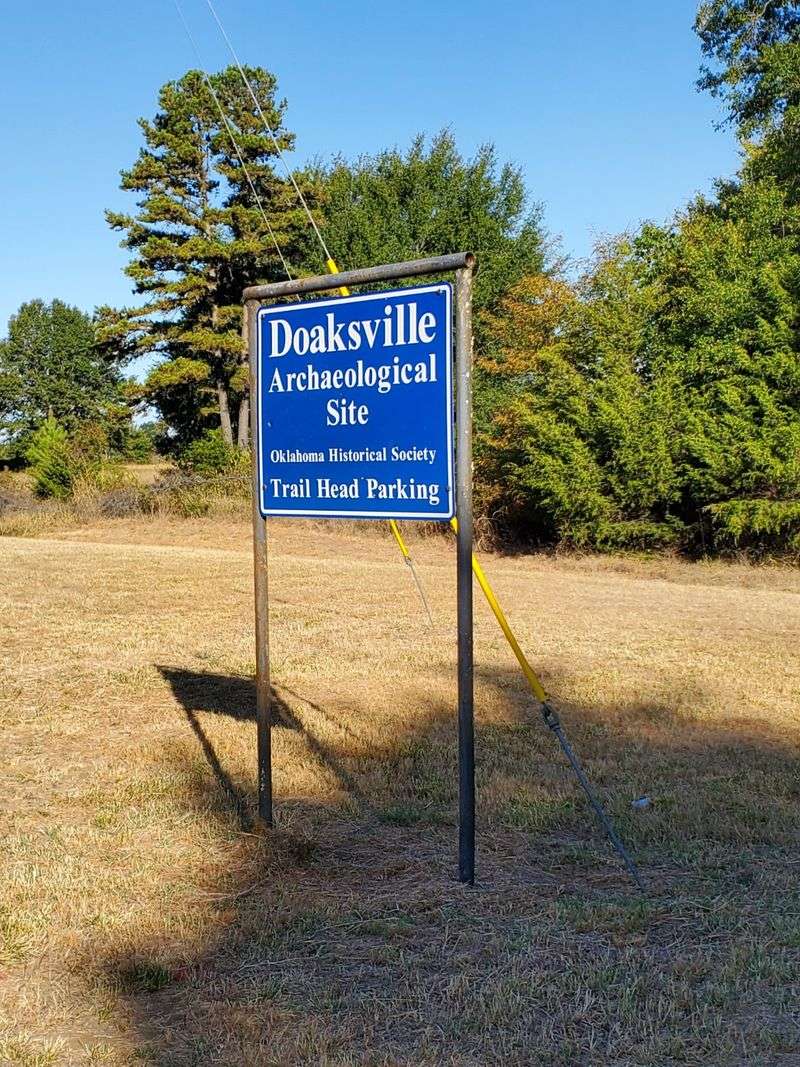
One of the most visitor-friendly aspects of the Old Doaksville Townsite History Trail is that it is open around the clock, every day of the week. There are no scheduled hours to work around, no seasonal closures to check, and no ticket booth to navigate.
The site is accessible whenever you want to visit, which makes it an easy addition to a road trip itinerary at almost any time of day.
The trail is located on Red Road near Fort Towson in Choctaw County, Oklahoma. Fort Towson itself is a small community in the southeastern corner of the state, not far from the Red River.
The address places it within reach of travelers exploring the region, and the site can be found using standard navigation apps by searching for the trail by name or plugging in the Red Road, Fort Towson coordinates directly.
There is no admission fee associated with the trail, making it one of those rare historical experiences that costs nothing beyond the time and fuel to get there. For additional context before or after your visit, the website redriverhistorian.com offers supplementary information about the site’s history.
If you have questions, the listed phone number for the site is 405-521-2491. Cell service in the area may be limited, so downloading offline maps ahead of time is a practical precaution worth taking.
Share this story