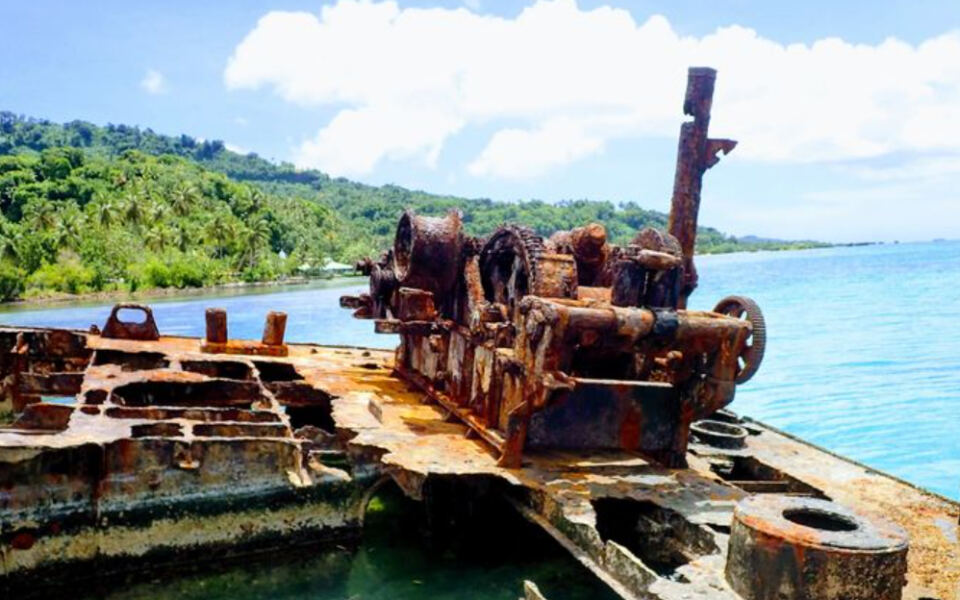
The Pacific Ocean holds an extraordinary amount of World War II history, and much of it is still visible today. From sunken ships lying beneath crystal-clear lagoons to jungle-covered bunkers and abandoned airfields, these relics connect the present to one of history’s most significant conflicts.
Whether you are a history enthusiast, an adventurous traveler, or simply curious about the past, the Pacific offers a remarkable range of sites worth exploring. This list covers 13 destinations where wartime remains are not just preserved in museums but are genuinely part of the landscape, the coastline, and in some cases, the ocean floor itself.
Pearl Harbor, Oahu, Hawaii
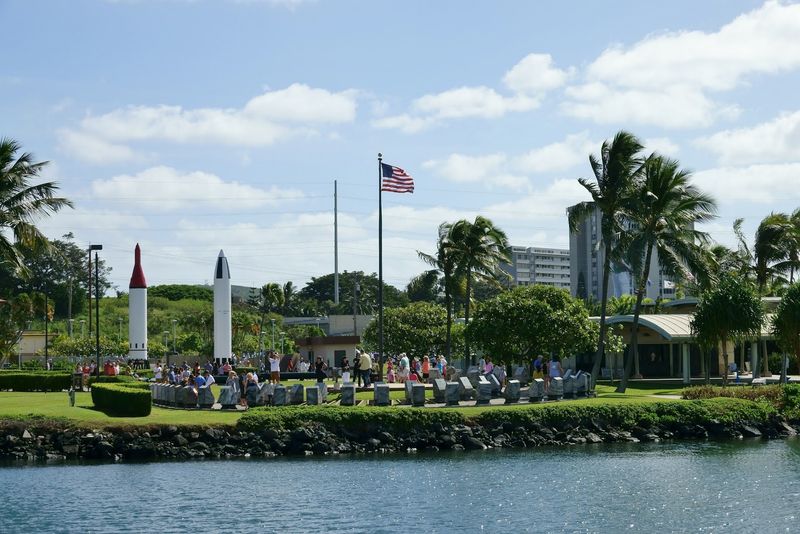
No other site in the Pacific carries the same immediate weight as Pearl Harbor. The USS Arizona still rests beneath the surface of the harbor, its hull visible below the water near the iconic white memorial structure that spans above it.
The ship became a permanent resting place for many of the 1,177 sailors and Marines who were aboard during the December 7, 1941 attack.
Beyond the memorial itself, the surrounding area offers additional wartime history that many visitors overlook. The USS Bowfin submarine, the Battleship Missouri, and the Pearl Harbor Visitor Center all sit nearby, giving travelers a broader picture of the Pacific War.
Ford Island hangars, visible from the water, still carry physical marks from that morning.
Pearl Harbor National Memorial is open most days of the week, though some programs and memorial access require advance reservations. Booking ahead, especially during peak travel seasons, makes the experience considerably smoother.
War in the Pacific National Historical Park, Guam
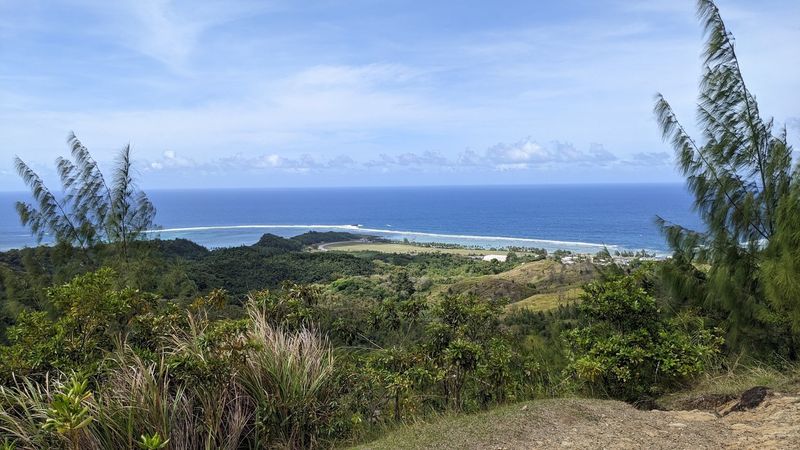
Guam holds one of the most concentrated collections of accessible Pacific battlefield remains anywhere in the region. When American troops returned to the island in July 1944, they faced Japanese forces that had spent years building an elaborate network of caves, bunkers, trenches, pillboxes, and gun positions across the landscape.
A remarkable number of those structures still exist today.
War in the Pacific National Historical Park protects many of these sites across several separate units. At Ga’an Point, Japanese guns and concrete fortifications sit right along the shoreline, close enough to examine in detail.
Asan Beach preserves remnants of defensive positions, including a partially submerged pillbox that remains visible at low tide.
The park advises visitors to avoid climbing on or entering historic structures because of their age and fragile condition. Most park units are publicly accessible, though vehicle access and facility hours vary by location.
Checking the National Park Service website before visiting is a practical first step.
Saipan, Northern Mariana Islands
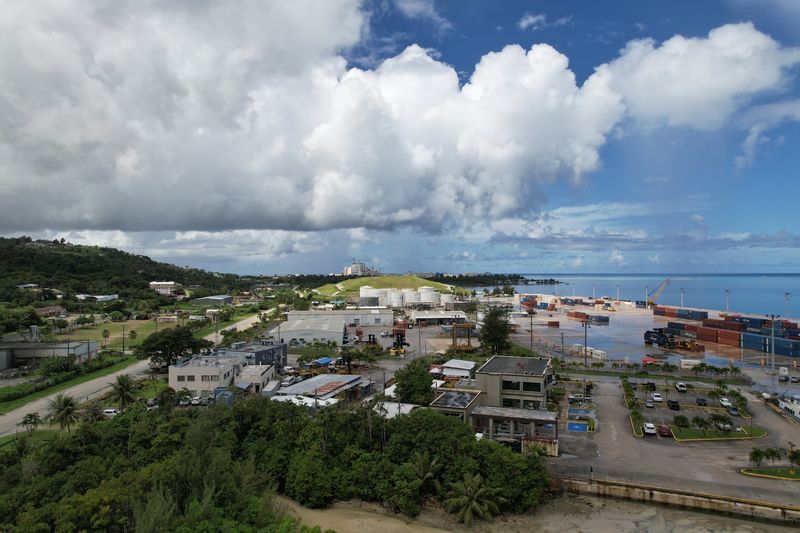
Saipan saw some of the fiercest combat of the entire Mariana Islands campaign in 1944, and the island has never fully erased those marks. American Memorial Park provides one of the most organized starting points for exploring this history, with a visitor center that explains the Battle of Saipan before travelers head out to see the physical remains scattered across the island.
The park itself contains surviving wartime structures, including Japanese pillboxes, bunkers, fuel-storage facilities, and other remnants that remained largely in place after the fighting ended. Beyond the park boundaries, the broader island holds caves, gun positions, former military zones, and memorial sites associated with both American and Japanese forces.
American Memorial Park recommends setting aside at least an hour or two to take in the exhibits, monuments, and outdoor grounds. For travelers who want more context, local tour operators offer guided battlefield excursions that cover sites not easily found without local knowledge.
The combination of accessible park facilities and island-wide relics makes Saipan a genuinely layered destination.
Tinian, Northern Mariana Islands
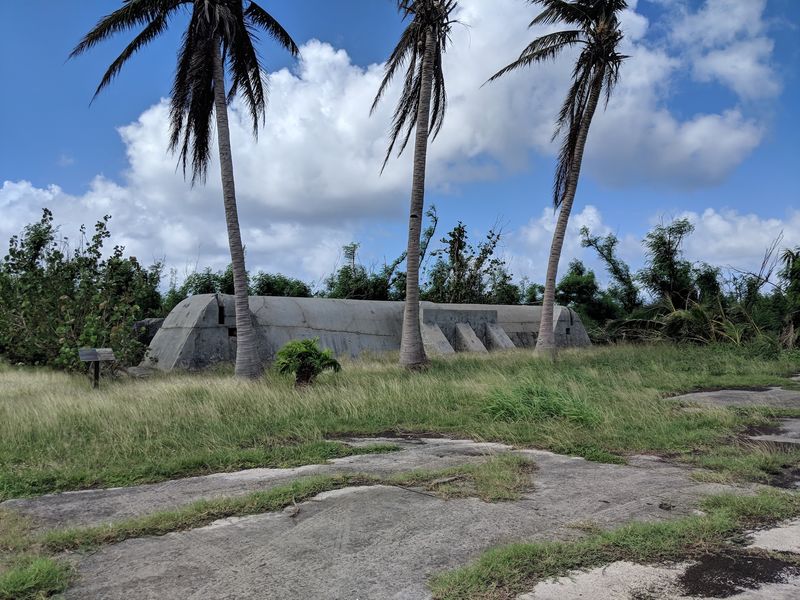
Tinian looks like a quiet agricultural island today, but its wartime footprint is still enormous. After American forces captured the island in 1944, they transformed it into one of the largest B-29 bomber bases ever constructed.
North Field’s runways were among the longest in the world at the time, and they remain visible, cracked and overgrown, stretching across the northern part of the island.
Beyond the runways, Tinian contains preserved atomic bomb loading pits associated with the missions flown against Hiroshima and Nagasaki in August 1945. These pits are among the most historically significant physical relics in the entire Pacific theater, and they can be visited today.
Other WWII remains around the island include ruins, caves, abandoned military structures, and underwater artifacts at locations such as Dump Cove.
North Field is still used periodically for military training exercises, so access restrictions and local signage should be respected when visiting. The Marianas Visitors Authority is a useful resource for planning a trip that takes in Tinian’s wartime history responsibly.
Peleliu, Palau
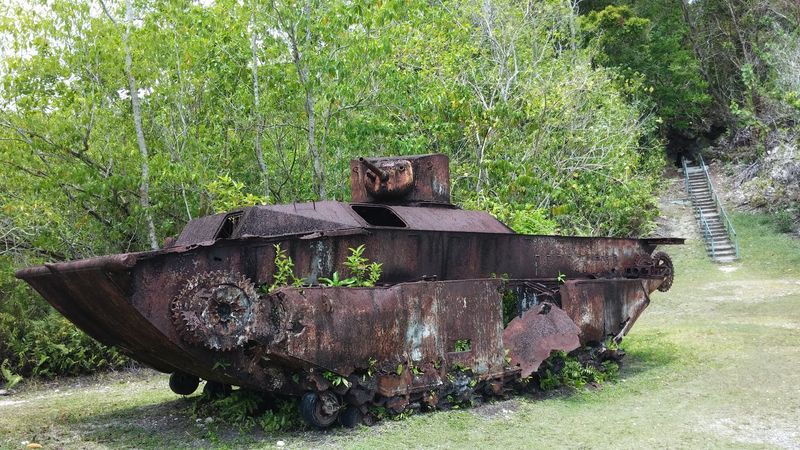
Peleliu is the kind of place that stops history travelers in their tracks. The 1944 battle lasted far longer than American commanders originally planned, largely because Japanese defenders used the island’s jagged limestone ridges and deep cave systems as fortified positions that proved extremely difficult to clear.
The landscape itself shaped the fighting, and that same landscape still holds the evidence.
Gun emplacements, abandoned tanks, aircraft wreckage, defensive positions, and scattered military debris remain across the island. Major historic stops include Bloody Nose Ridge, the former Japanese airfield, Orange Beach, the Thousand Man Cave, and numerous other defensive sites that have changed little since the war ended.
Guided WWII tours operate from Palau and typically include full-day excursions covering the most significant battlefield locations.
Unexploded ordnance is still a genuine concern on Peleliu, which is why staying on recognized routes and traveling with experienced local guides is strongly advised. Independent exploration of isolated caves or remote jungle areas carries real risk and should be avoided.
Guadalcanal, Solomon Islands
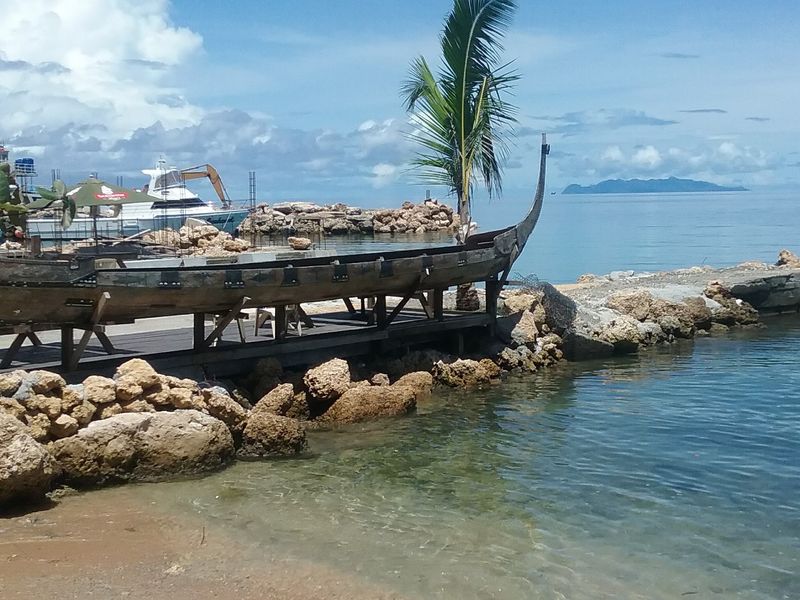
The Guadalcanal campaign began in August 1942 and became the first major Allied ground offensive against Japanese forces in the Pacific. More than eight decades later, physical evidence of that brutal, months-long struggle is still scattered across the island in ways that can genuinely surprise first-time visitors.
Foxholes, rusting vehicles, tanks, amphibious equipment, and other artifacts remain in jungle-covered areas, some remarkably untouched by the decades that have passed. The Solomon Islands’ official tourism organization notes that certain battle sites have seen very little disturbance, which makes them unusually evocative for travelers interested in wartime history.
Offshore, shallow wrecks of aircraft and ships can be explored by snorkelers, while deeper vessels require proper scuba experience.
Local WWII tour operators around Guadalcanal are the most practical way to find these sites and understand what happened at each location. Without local guidance, many of the most historically significant spots are easy to miss or difficult to reach safely.
Rabaul and Kokopo, Papua New Guinea
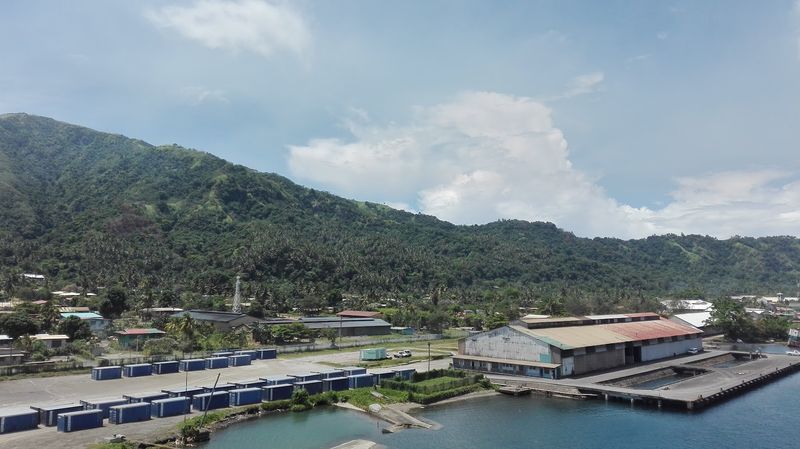
Rabaul became one of Japan’s most strategically important bases in the South Pacific after its capture in early 1942. What makes the area particularly remarkable is not just the scale of the military presence that once existed here, but the way Japanese forces adapted to the volcanic landscape.
Rather than relying on surface structures, they excavated an extensive network of tunnels through the volcanic rock surrounding the harbor.
Portions of those tunnel systems survive today around Rabaul and nearby Kokopo. Visitors on organized historical excursions can explore barge tunnels, caverns, and sites where military equipment and defensive positions remain.
At Karavia Bay, tunnels were specifically constructed to conceal barges and other equipment from Allied aircraft flying overhead.
Papua New Guinea tourism authorities continue to promote East New Britain for its WWII history, and the combination of volcanic scenery and surviving military infrastructure makes the Rabaul-Kokopo area genuinely unlike any other historical destination in the Pacific. Organized tours are the most reliable way to access the best-preserved sites.
Espiritu Santo, Vanuatu
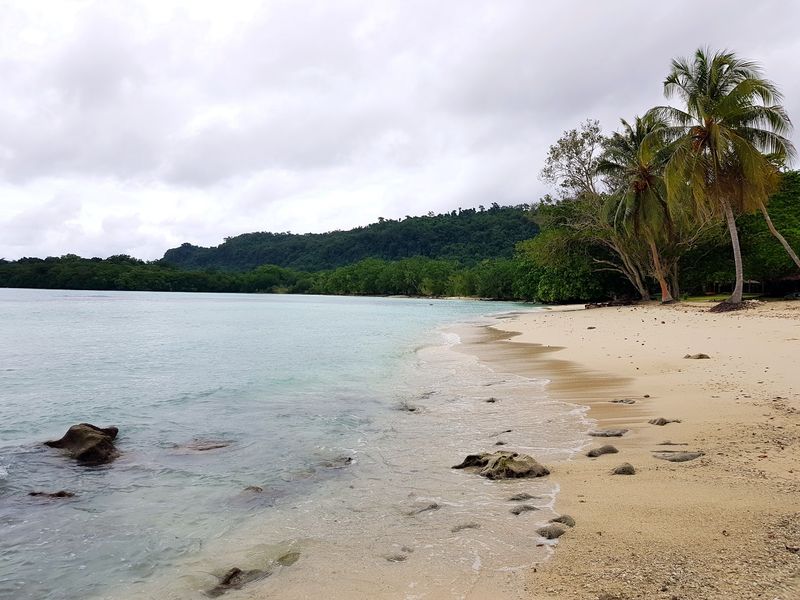
Espiritu Santo never became a major land battlefield, but the American military presence here during the war was enormous. What happened after the war ended is what makes this island particularly unusual.
At Million Dollar Point near Luganville, American forces dumped trucks, bulldozers, heavy machinery, and other military equipment directly into the sea rather than sell it at low prices to local authorities.
That material remains underwater today, and it has become one of the more accessible WWII relic sites in the Pacific. Some wreckage lies close enough to the surface for snorkelers to explore, while divers can descend among larger pieces of machinery sitting at greater depths.
Nearby, the SS President Coolidge offers an entirely different kind of experience. The former luxury liner turned troopship sank after striking mines in 1942 and remains one of Vanuatu’s most well-known wreck-diving attractions.
Established dive operators on Espiritu Santo run regular trips to both sites and can accommodate different experience levels. The two locations together make for a genuinely memorable day on the water.
Chuuk Lagoon, Federated States of Micronesia
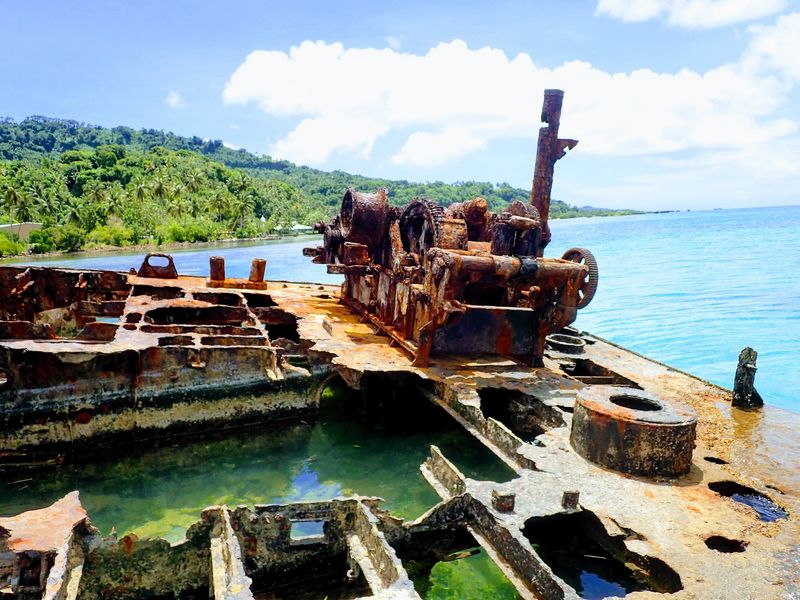
Chuuk Lagoon holds one of the most extraordinary collections of WWII wreck sites anywhere in the world, and most of them are underwater. The lagoon served as a major Japanese naval base until February 1944, when American carrier aircraft launched Operation Hailstone.
The assault destroyed or sank more than 60 Japanese ships and numerous aircraft in a matter of days, leaving behind a vast underwater landscape of wartime artifacts.
Wrecks containing guns, aircraft components, vehicles, machinery, and other wartime material rest throughout the lagoon at varying depths. Some shallower wrecks can be viewed while snorkeling, making the site accessible even to non-divers.
Deeper vessels require appropriate scuba certification and experience. Chuuk’s visitors bureau actively promotes wreck diving and WWII history tours as the island’s primary draw.
Land-based history is also worth exploring. Japanese bunkers, tunnels, command installations, and gun positions survive on several of the islands surrounding the lagoon, providing a more complete picture of what the base looked like before Operation Hailstone changed everything.
Betio, Tarawa, Kiribati
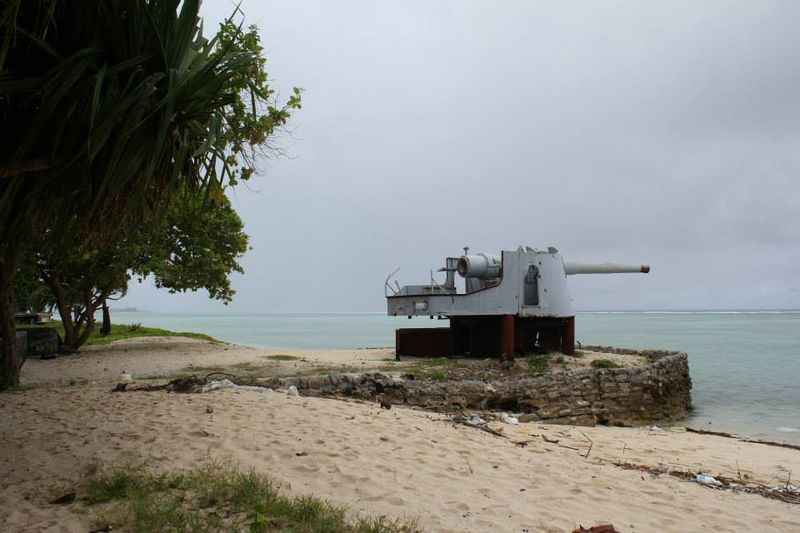
The tiny island of Betio is where the Battle of Tarawa took place in November 1943, one of the most intense and costly engagements in the Pacific War. Despite decades of development, tropical weather, and the pressures of a growing local population, physical reminders of the battle remain present in ways that are genuinely striking.
Kiribati tourism authorities describe Betio as essentially a living WWII museum. Japanese coastal-defense guns, concrete bunkers, tanks, fortifications, and landing beaches associated with the battle are scattered across an island that is only a few square kilometers in size.
Some surviving structures stand within meters of homes and modern roads, making wartime history part of the everyday landscape rather than a cordoned-off attraction.
Parts of Betio can be explored independently, though local guides add significant historical context that transforms what you see. Kiribati has also undertaken efforts to catalogue surviving relics across the island nation.
For travelers willing to make the journey to this remote part of the central Pacific, Betio is a genuinely affecting destination.
Corregidor Island, Philippines
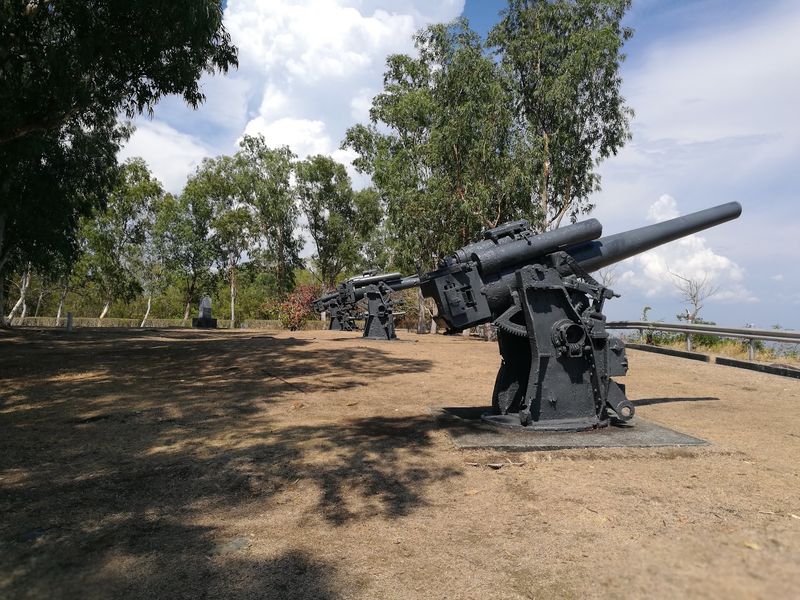
Corregidor guarded the entrance to Manila Bay and became one of the most heavily fortified and fiercely contested battlefields of the Pacific War. American and Filipino forces held the island under siege before surrendering to Japan in May 1942.
Allied forces fought to retake it in early 1945, leaving the island with layers of wartime history from both phases of the conflict.
Much of that infrastructure is still standing. Bomb-damaged barracks, gun batteries, fortifications, and tunnel systems are spread across the island, giving visitors a physical sense of how extensively the site was developed and how hard it was fought over.
The Philippine Department of Tourism continues to list Corregidor as a significant historical destination.
Access arrangements changed considerably after the pandemic, and the previous regular ferry service from Manila did not return in its original form. Corregidor has reopened on a more limited basis through organized tours using alternative routes.
Confirming transportation arrangements well in advance is essential before planning a visit, as assuming daily ferry availability could leave travelers stranded.
Okinawa, Japan
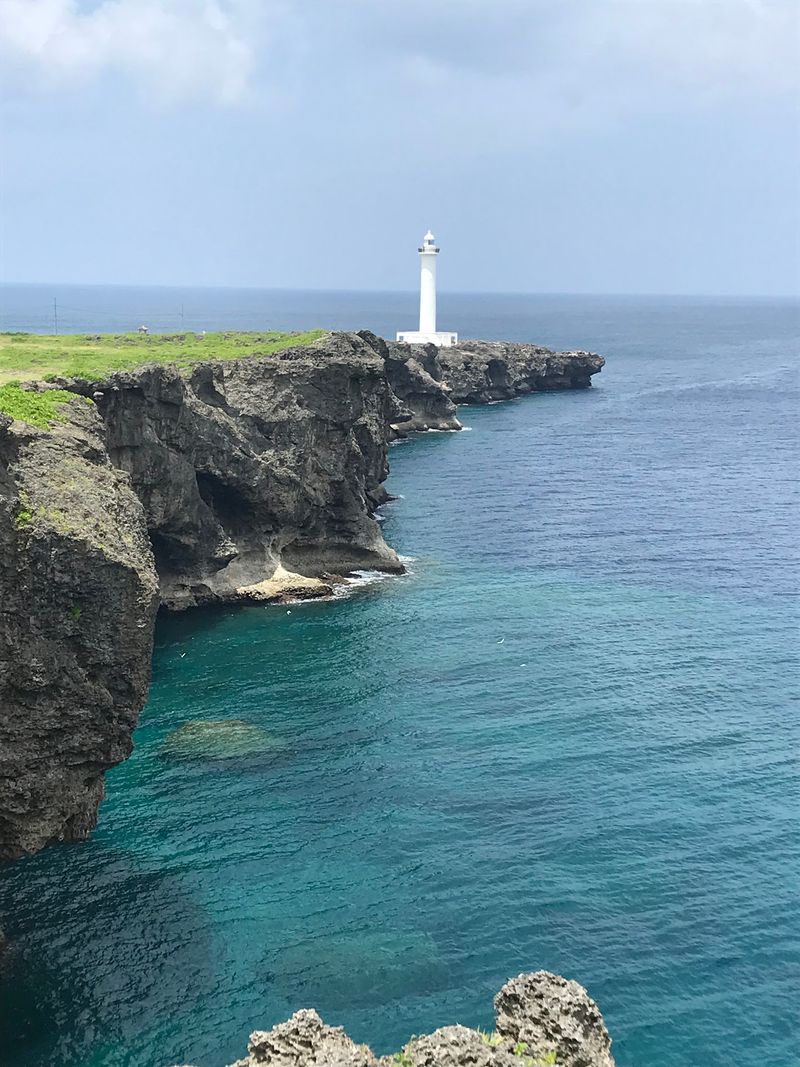
Modern Okinawa, with its resort beaches and busy cities, does not immediately suggest a place shaped by one of the largest and most costly battles of the Pacific War. Yet the 1945 Battle of Okinawa left marks that the island has never fully erased, and many of those marks have been deliberately preserved as part of a broader commitment to peace education and collective memory.
Southern Okinawa contains the highest concentration of significant sites. The area around Mabuni was among the final battlefields, and Okinawa Peace Memorial Park now occupies this historically weighted landscape.
Its museum holds photographs, artifacts, and relics from the battle, while outdoor monuments commemorate everyone who lost their lives, regardless of nationality or military affiliation.
Other wartime locations around the island include former Japanese underground headquarters that visitors can tour. Okinawa is particularly valuable for travelers interested in how a modern, densely populated destination has managed to integrate battlefield preservation, civilian memory, and peace-focused interpretation into a coherent public experience that continues to evolve.
Milne Bay, Papua New Guinea
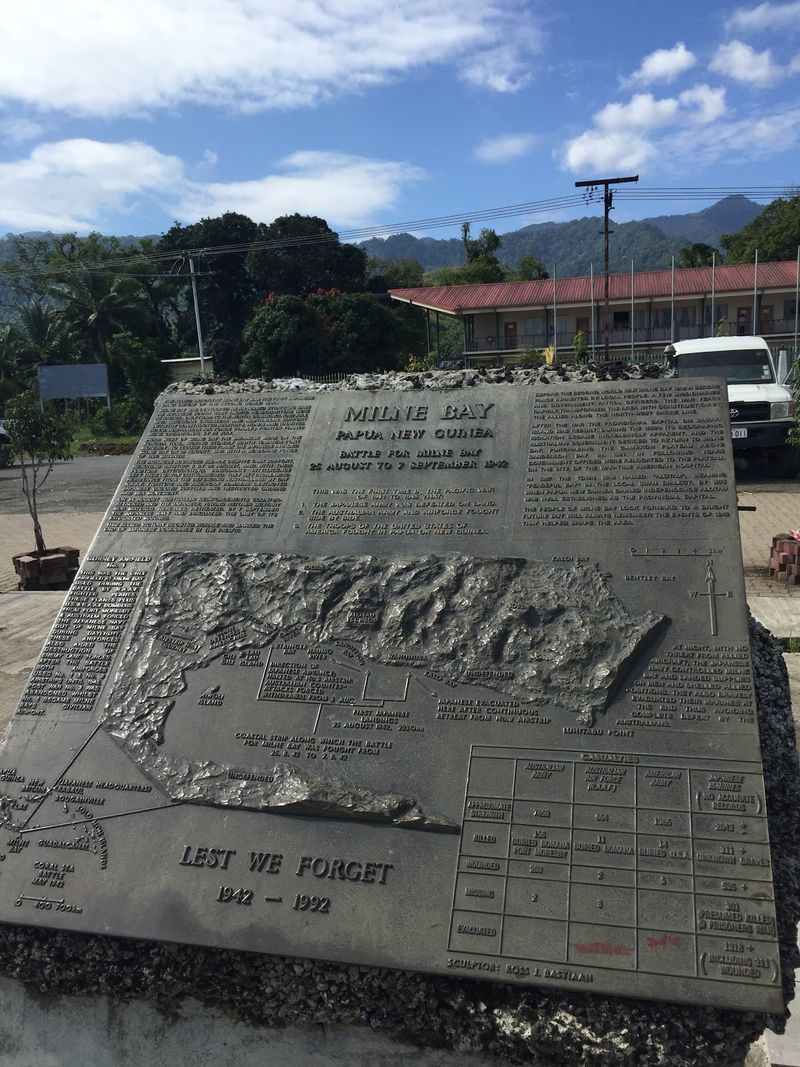
Milne Bay may not have the same international recognition as Guadalcanal or Peleliu, but its role in the New Guinea campaign of 1942 was genuinely significant. Allied forces stopped a Japanese attempt to seize strategically important airfields in the area around what is now Alotau, marking one of the first successful ground defenses against Japanese forces in the Southwest Pacific.
Remnants of that campaign are still spread across the province. Papua New Guinea’s tourism authority identifies former airstrips, defensive positions, bunkers, military infrastructure, and aircraft remains as features visitors can encounter around Milne Bay.
Some underwater wrecks in the area have also become established dive sites, adding a marine dimension to the history.
Alotau serves as the practical base for exploring the province and has air connections from Port Moresby. Travelers combining battlefield exploration with visits to the Milne Bay Memorial and Turnbull Field Memorial will come away with a fuller understanding of the fighting that unfolded across this otherwise peaceful and scenic coastal landscape.
Share this story