Gothic architecture has a way of stopping people dead in their tracks. With soaring towers, pointed arches, and windows that seem to glow from within, these buildings were designed to inspire awe and wonder.
Built across Europe from the Middle Ages onward, Gothic structures range from towering cathedrals to grand civic palaces. Whether medieval originals or bold 19th-century revivals, each one tells a story carved in stone, glass, and ambition.
Notre-Dame de Paris, France
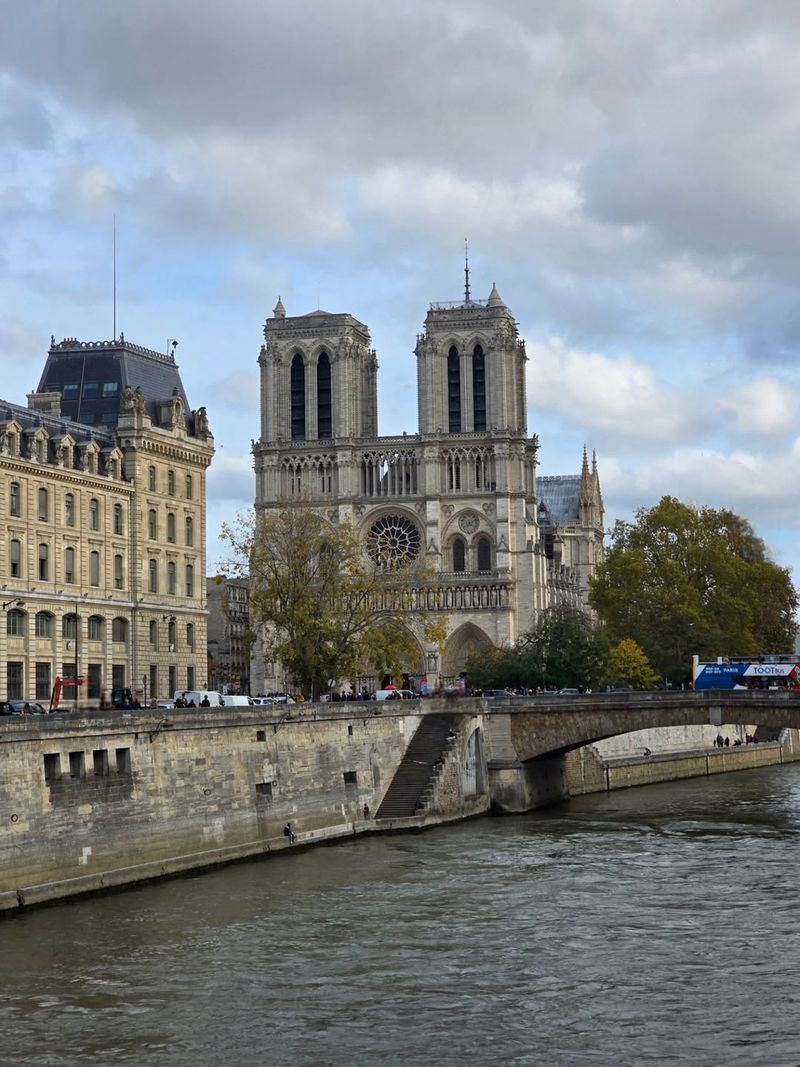
If walls could talk, Notre-Dame de Paris would have stories going back nearly a thousand years. Construction started in 1163 and stretched across two full centuries, with builders constantly pushing the design further as techniques improved.
Flying buttresses were added to support increasingly thin walls, opening up space for enormous stained-glass windows that flood the interior with color.
The western facade is a masterpiece all by itself, featuring twin towers, three sculpted portals, and a spectacular rose window. When fire tore through the cathedral in April 2019, the world watched in shock as the spire collapsed.
Restoration crews worked tirelessly, and Notre-Dame reopened in December 2024, more celebrated than ever.
Walking inside today feels like stepping into a living history lesson. Every arch, every carving, and every glowing window represents centuries of craftsmanship layered on top of each other.
Few buildings on Earth carry this much meaning packed into a single structure.
Cologne Cathedral, Germany
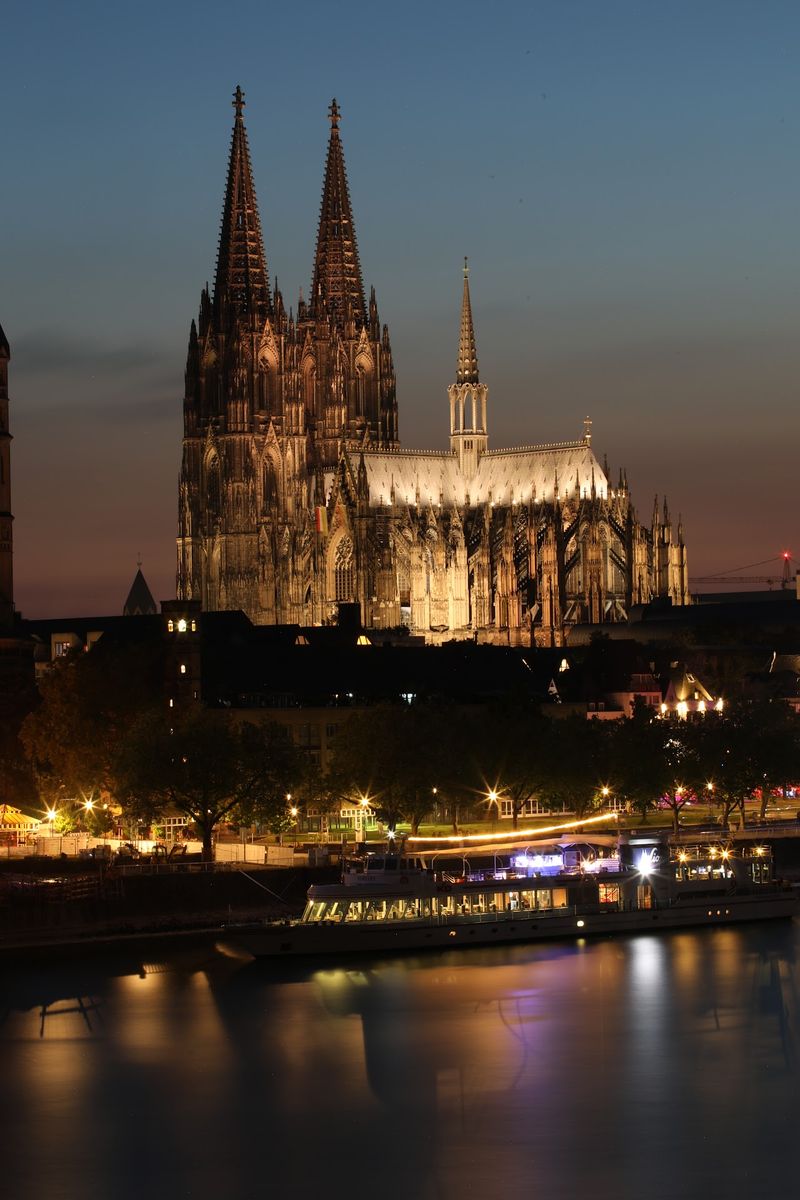
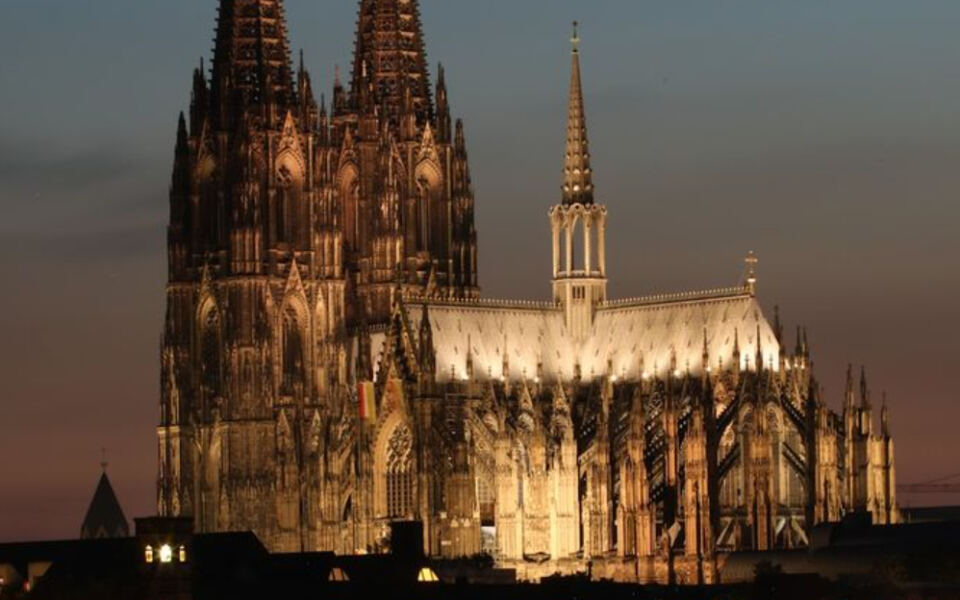
Standing beneath Cologne Cathedral for the first time tends to make people go completely quiet. The twin western towers climb approximately 157 meters into the sky, and the sheer scale of the building makes everything around it feel tiny.
Construction began in 1248, but work halted for centuries before finally resuming and finishing in 1880 using the original medieval plans.
That long building history is part of what makes Cologne so remarkable. Medieval craftsmen and 19th-century builders worked toward essentially the same vision, producing a cathedral that feels almost impossibly consistent.
UNESCO recognized it as a masterpiece of High Gothic architecture, pointing to its five-aisled basilica, soaring nave, and extraordinary collection of medieval furnishings.
Inside, early 14th-century choir stalls, vibrant stained glass, and detailed sculptures reward anyone willing to slow down and look carefully. The cathedral also houses the Shrine of the Three Kings, one of the most famous reliquaries in medieval Europe.
Six centuries of construction, one magnificent result.
Milan Cathedral, Italy
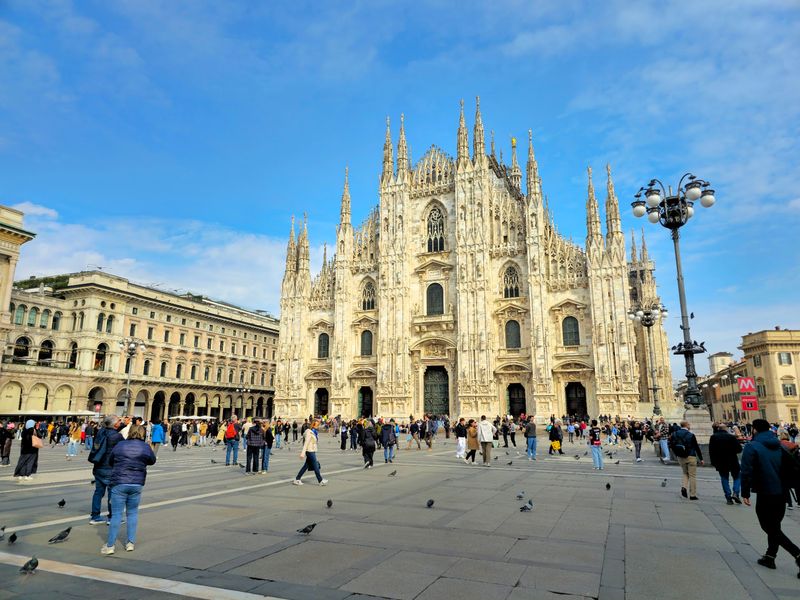
Imagine a building so covered in spires, statues, and carved marble that it looks less like architecture and more like a forest made of stone. That is Milan Cathedral in a nutshell.
Construction started in 1386 under Duke Gian Galeazzo Visconti and continued for nearly five centuries, with artisans from across Europe contributing to its extraordinary exterior.
The pale marble used throughout was quarried specifically for the project, giving the building a luminous, almost otherworldly quality on sunny days. YesMilano describes it as Italy’s largest and most elaborate Gothic building, and one glance at its 135 spires and roughly 3,400 statues makes that claim easy to believe.
The central spire reaches about 108.5 meters and is topped by the golden Madonnina statue.
One of the best experiences at Milan Cathedral is walking across its rooftop terraces. Visitors can weave between pinnacles and sculptures at close range, getting a perspective on Gothic stonework that most cathedrals simply cannot offer.
The city stretches out below, making the whole visit feel genuinely unforgettable.
Chartres Cathedral, France
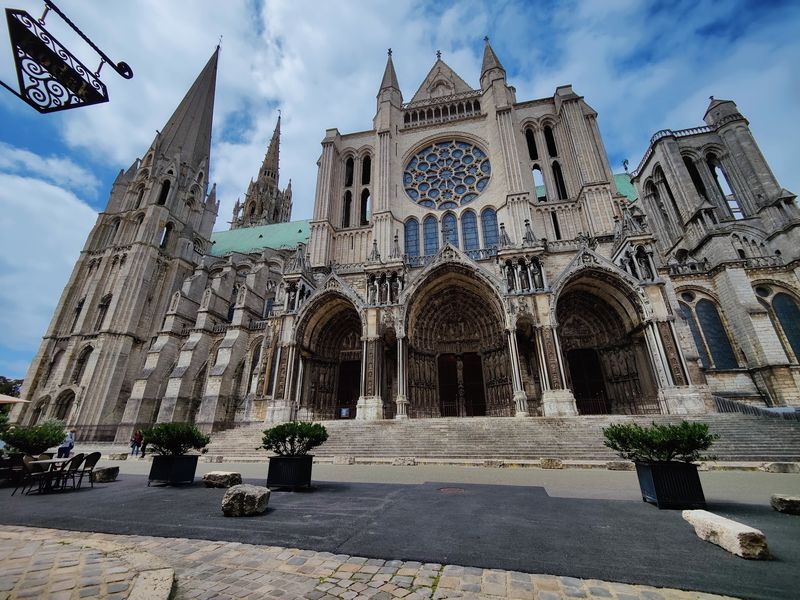
Speed-building a Gothic cathedral in just 26 years sounds almost impossible, yet that is essentially what happened at Chartres after fire devastated the earlier structure in 1194. Most of the cathedral visitors see today rose with remarkable speed, and that concentrated effort produced an architectural consistency rare among medieval churches.
Parts of the original 1145 building also survived, making Chartres a layered record of Gothic development.
UNESCO called it a high point of French Gothic art, and the stained glass alone justifies that praise. Nearly the entire medieval glazing program survives intact, including famous rose windows and dozens of tall lancet windows filled with 12th and 13th-century glass.
The colors, particularly the rich blues, remain stunning after eight centuries.
Chartres also served as a design school for later builders. Cathedrals at Reims, Amiens, and Cologne all absorbed lessons from Chartres, spreading its influence across medieval Europe.
The sculpted Royal Portal at the western entrance is equally impressive, featuring hundreds of carved figures arranged with careful symbolic meaning. Few medieval buildings pack this much artistic importance into one place.
Palace of Westminster, England

Most people assume the Palace of Westminster is a genuine medieval building, and that reaction is exactly what its architects intended. When fire destroyed much of the old parliamentary complex in 1834, architect Charles Barry seized the moment to design something spectacular.
He worked closely with Augustus Welby Pugin, whose obsessive knowledge of Gothic decorative detail transformed the building into one of the finest Gothic Revival structures anywhere in the world.
Barry cleverly wove surviving medieval elements into the new design, including the magnificent Westminster Hall and the Undercroft Chapel. The result blends authentic medieval fabric with 19th-century craftsmanship so smoothly that the joins are almost invisible to casual visitors.
Long horizontal river facades, steep roofs, carved pinnacles, and pointed arches all contribute to the unmistakably Gothic character.
The clock tower, whose bell is commonly associated with the name Big Ben, has become one of London’s most recognized silhouettes. Gothic Revival and British democratic identity became permanently linked through this building.
It proves that a historical style, applied with enough skill and conviction, can feel completely natural even centuries after its original peak.
Sainte-Chapelle, Paris, France
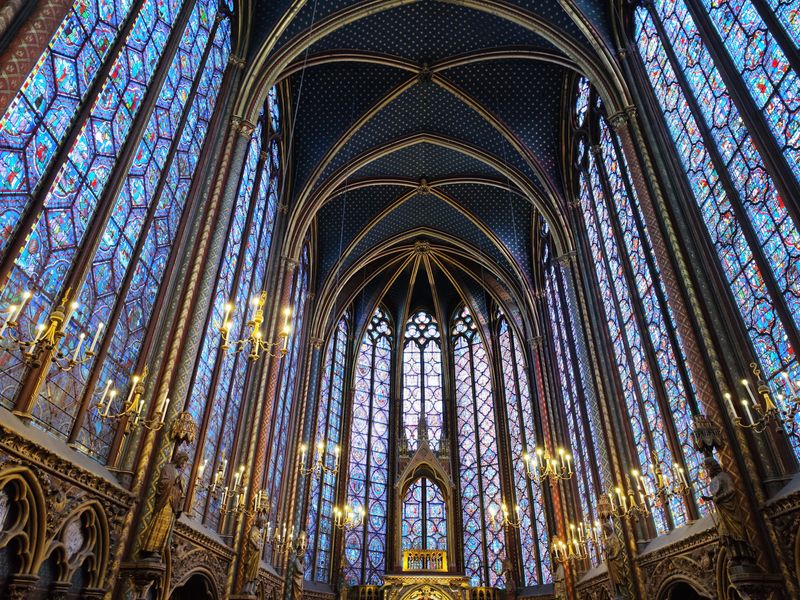
Walking into the upper chapel of Sainte-Chapelle feels less like entering a building and more like stepping inside a giant jewel box. Slender stone columns replace what would normally be solid walls, and between them stretch enormous panels of stained glass covering virtually every surface.
The effect is breathtaking, especially on a bright day when color floods across the floor and vaults.
King Louis IX commissioned the chapel in the 13th century to house prestigious Christian relics he had acquired, including what was believed to be the Crown of Thorns. The architecture was designed to communicate both royal power and deep religious devotion through sheer luminous beauty.
Its Rayonnant Gothic style pushed the boundaries of how much glass a stone building could hold, and Sainte-Chapelle pushed them further than almost anyone else dared.
The chapel contains 1,113 individual stained-glass windows, and the upper vault rises roughly 20.6 meters. Despite its relatively small footprint compared to full cathedrals, Sainte-Chapelle delivers an emotional punch that much larger buildings sometimes struggle to match.
The concentration of color and light in such a compact space makes it one of Gothic architecture’s most perfectly achieved moments.
Doge’s Palace, Venice, Italy
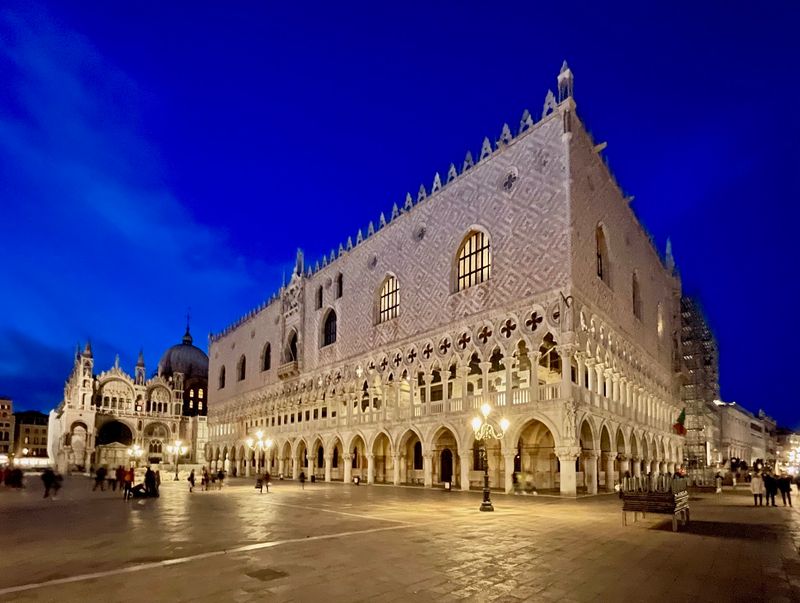
Venice has always done things differently, and the Doge’s Palace is proof. Instead of presenting a solid, fortress-like exterior, the building appears almost weightless.
Its massive upper walls, covered in pink and white diamond-pattern marble, float above two levels of delicate open arcades and intricate stone tracery. The effect is unlike anything else in Gothic architecture.
The palace served as the official residence of the Doge and as the governmental heart of the Venetian Republic for centuries. Its oldest surviving main wing, facing St. Mark’s Basin, was rebuilt from 1340 onward, while the wing facing St. Mark’s Square took its present form beginning in 1424.
Renaissance and later elements were added as the complex grew, but the Gothic character of the exterior remains dominant and instantly recognizable.
Inside, the palace contains some of the largest oil paintings in the world, council chambers decorated with gold, and the notorious prison cells connected by the famous Bridge of Sighs. The official museum describes the building as a masterpiece of Gothic art.
Venice’s version of Gothic feels uniquely theatrical, designed as much to impress visiting ambassadors as to shelter its government.
Burgos Cathedral, Spain
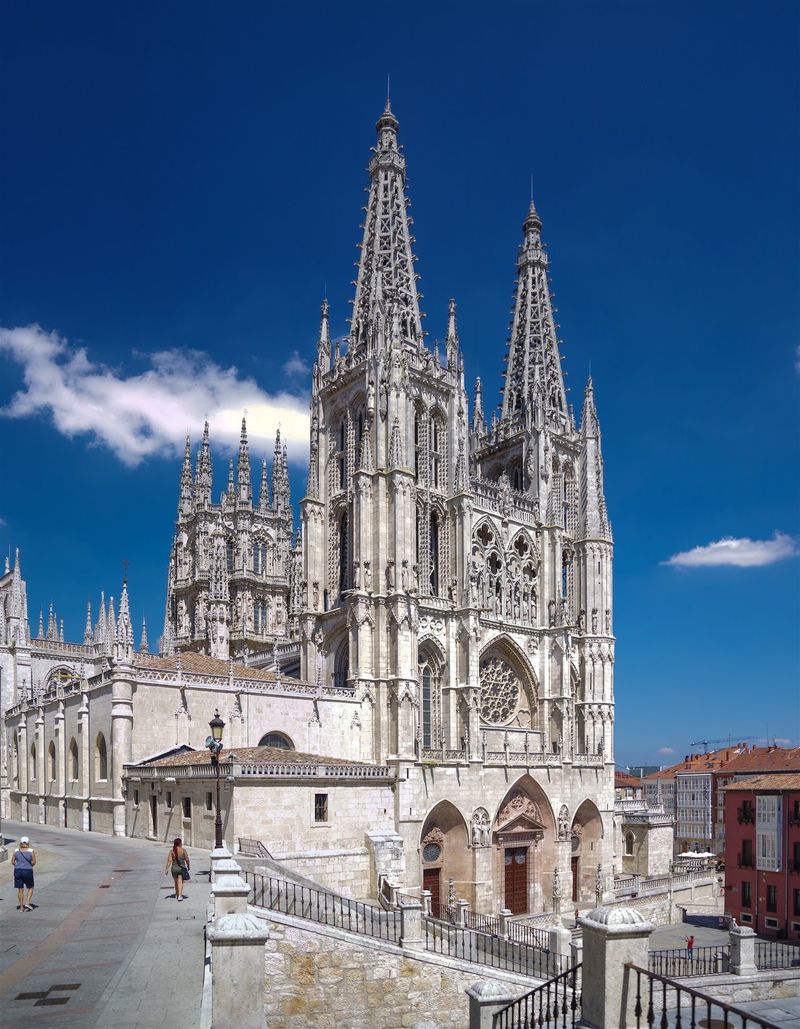
Gothic architecture rarely stayed still, and Burgos Cathedral shows exactly how much it could evolve over several centuries. Construction started in 1221, heavily influenced by French Gothic cathedrals of the time, and major building campaigns continued well into the 15th and 16th centuries.
Each generation of architects added their own interpretation, making Burgos a layered record of how the style developed across Spain.
The famous openwork spires are among the most intricate in Europe, created by the Colonia family of architects who brought German Gothic sensibility to Castile. Their lacy stone towers seem almost impossibly delicate for structures that have stood for centuries.
UNESCO described the cathedral as a remarkable summary of the entire history of Gothic art, a description that feels completely earned when you walk around the building.
Later additions include the Constable’s Chapel, richly decorated with heraldic carvings and an extraordinary star-shaped vault, and the stunning crossing vault completed in 1567. The cathedral also holds the tomb of El Cid, the legendary Castilian warrior, giving the building a connection to Spanish medieval history that goes well beyond architecture.
Burgos is beautiful, historically loaded, and endlessly interesting.
Reims Cathedral, France
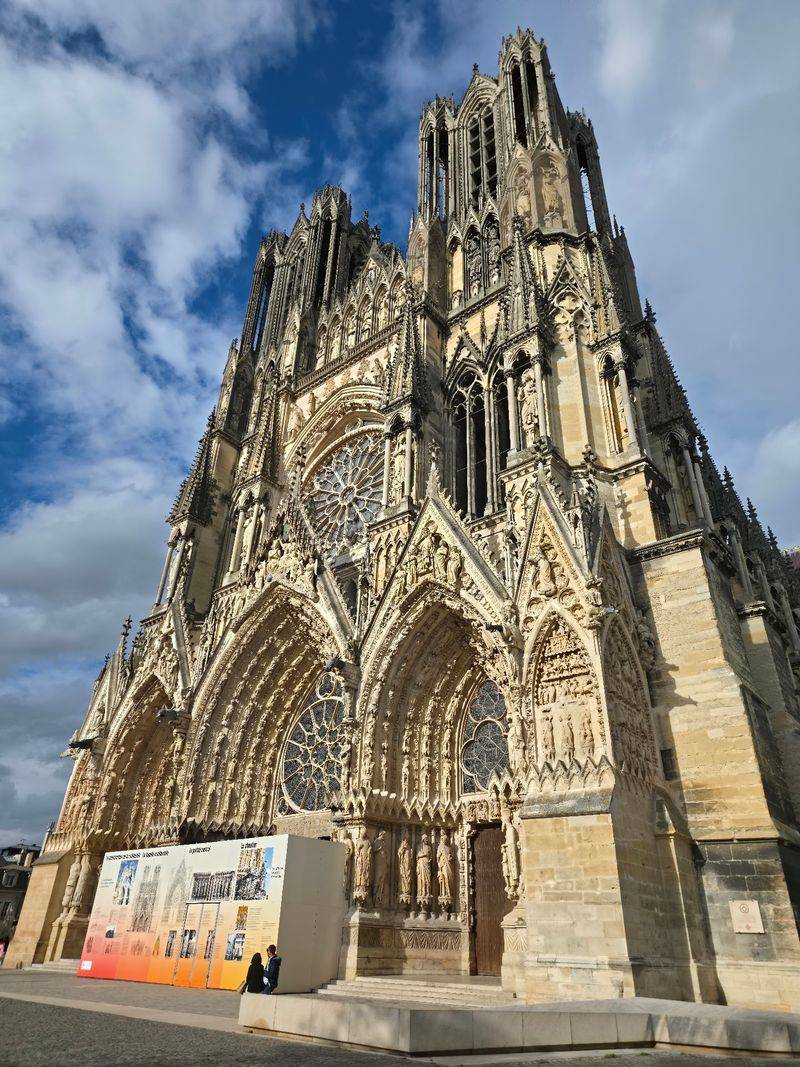
For centuries, the kings of France made their way to Reims to be crowned, giving this cathedral a ceremonial importance that set it apart from almost every other church in the country. The building itself lives up to that prestige.
Most of the present structure dates from the 13th century, and UNESCO praised its sophisticated use of Gothic building techniques and the remarkable way sculpture and architecture were woven together.
The western facade is covered in hundreds of carved figures, and among them is the Smiling Angel, one of the most charming and famous sculptures from the entire Middle Ages. That single smiling face has become a symbol of Reims itself.
Inside, enormous windows and high vaults create a strong sense of upward movement, drawing the eye toward the heavens in classic Gothic fashion.
Reims was heavily damaged during World War One, making its careful restoration a major cultural achievement of the 20th century. The connection between the cathedral and the nearby Palace of Tau, where coronation banquets were held, adds another layer of historical richness.
Architecture, ceremony, sculpture, and national memory all come together at Reims in a way that is genuinely hard to match.
Canterbury Cathedral, England
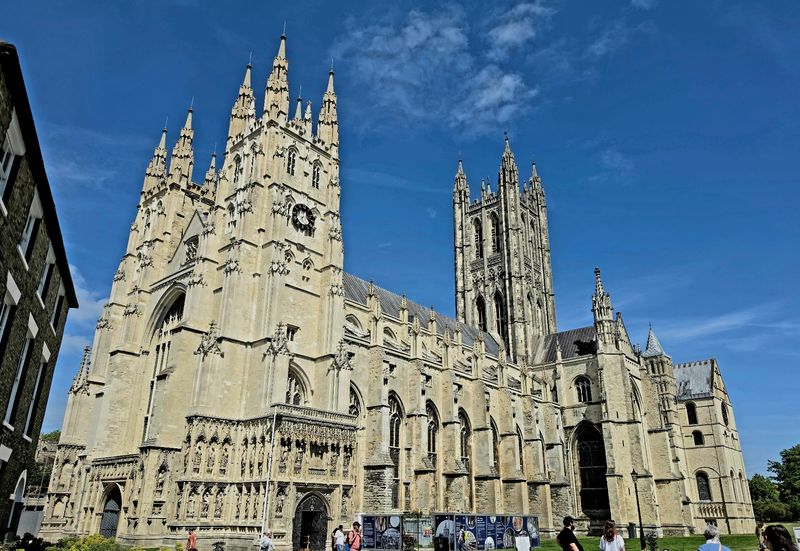
Murder, miracles, and medieval pilgrimage all converge at Canterbury Cathedral, giving it a backstory dramatic enough for a novel. After Archbishop Thomas Becket was killed inside the cathedral in 1170, Canterbury quickly became one of the most visited pilgrimage sites in medieval Europe.
Geoffrey Chaucer even used the journey to Canterbury as the entire framework for his Canterbury Tales, cementing the cathedral’s place in English literature as well as history.
A fire in 1174 led to the rebuilding of the choir and eastern sections in an Early Gothic style strongly shaped by French influences. Later additions brought increasingly English characteristics, including the Perpendicular Gothic style that gave English medieval architecture its distinctive horizontal emphasis and elaborate fan vaults.
UNESCO recognized the cathedral as an exceptional combination of Romanesque, Early Gothic, and Late Gothic architecture.
The stained glass is equally remarkable, featuring some of the richest surviving medieval glazing in Britain. Windows depicting biblical scenes and the life of Thomas Becket still glow with color after centuries.
Canterbury manages to be simultaneously a working cathedral, a UNESCO World Heritage Site, and one of England’s most compelling historical destinations all at once.
Amiens Cathedral, France
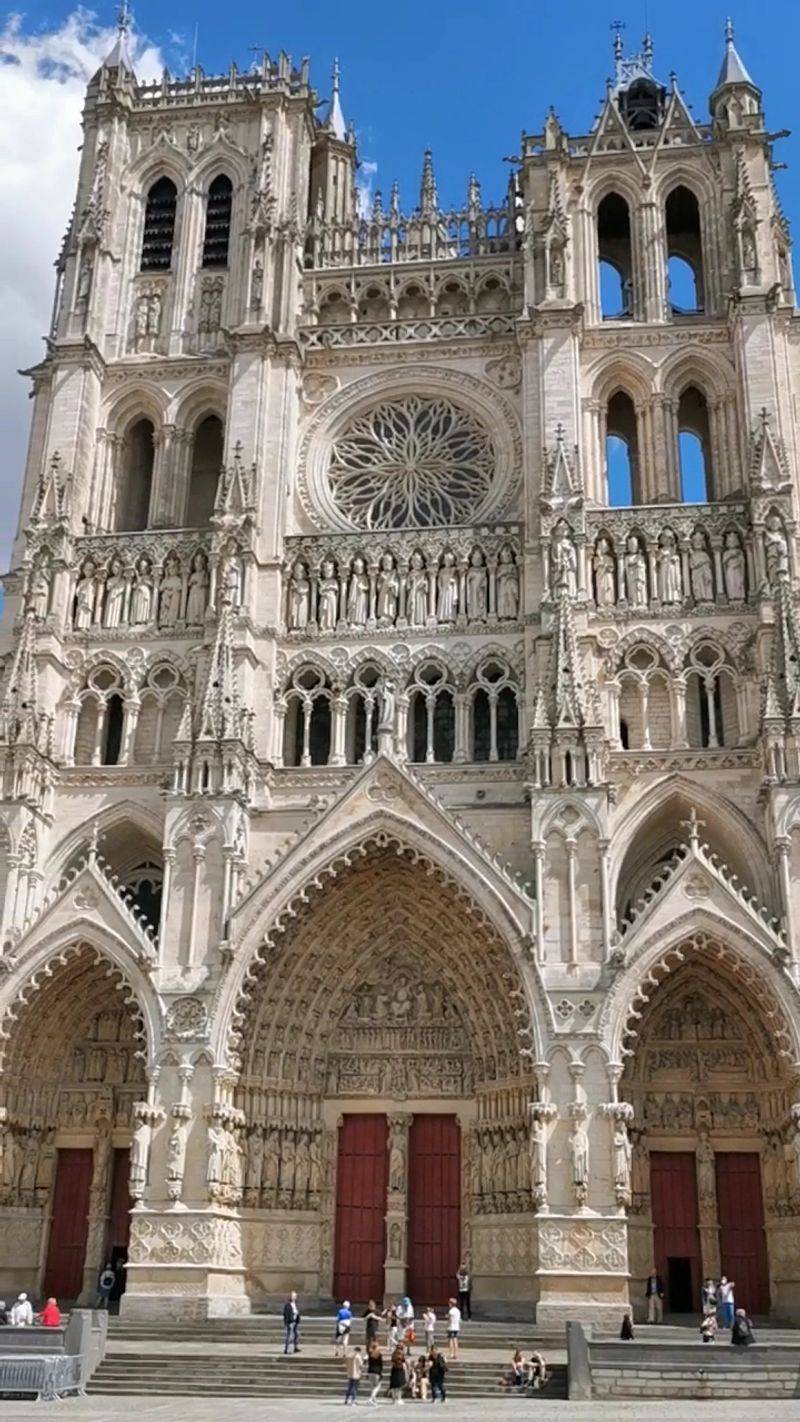
Amiens Cathedral achieved something unusual in Gothic architecture: it was built fast, and it shows in the best possible way. Most construction happened between 1220 and 1288, a concentrated period that produced a building of striking consistency and refinement.
Rather than showing the awkward joints that come from centuries of piecemeal construction, Amiens feels like a single unified idea carried through with confidence.
The high central vaults rise to about 42 meters, creating an interior that genuinely makes visitors crane their necks upward. UNESCO highlighted the three-level elevation, remarkable structural lightness, stained glass, and the extensive sculptural program as reasons for the building’s exceptional status.
The western facade functions almost like a stone encyclopedia, packed with biblical figures and narrative scenes that medieval visitors could read like a visual Bible.
Amiens also pushed Gothic architecture toward its theoretical limits. By maximizing height and reducing wall mass, the builders created a structure that later architects studied closely when pushing the style even further.
The cathedral influenced Gothic buildings across France and beyond, helping drive the style toward greater elegance and decorative complexity. A visit to Amiens is a masterclass in medieval ambition made real in stone.
Vienna City Hall, Austria
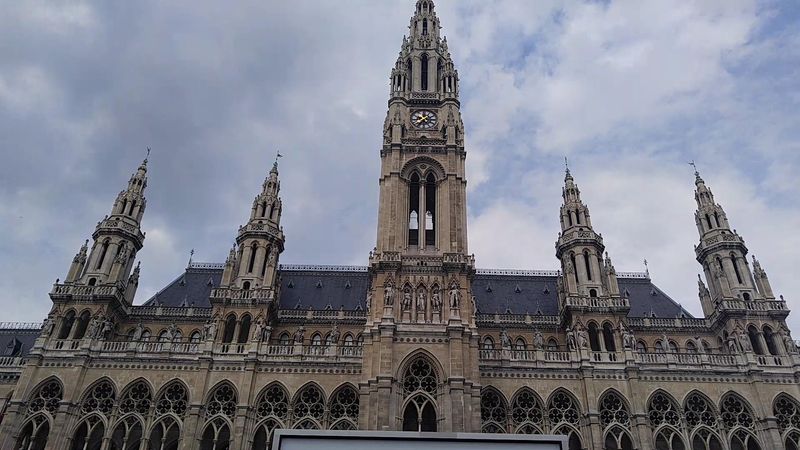
Gothic architecture made a confident comeback in the 19th century, and Vienna’s City Hall is one of its most impressive second acts. Architect Friedrich Schmidt designed the Rathaus, which was built between 1872 and 1883 as part of the sweeping redevelopment of Vienna’s grand Ringstrasse boulevard.
While neighboring buildings mixed various historical styles, Schmidt committed fully to Gothic forms for the city’s main municipal building.
Pointed arches, elaborate tracery, steep roofs, pinnacles, and a soaring central tower give the building an appearance closer to a cathedral than a government office. That similarity was entirely intentional.
Gothic architecture had historically been associated with the rise of European cities and the growth of civic power, making it a symbolically fitting choice for a major city hall seeking to project authority and civic pride.
Today, Vienna City Hall serves as a year-round venue for public events, including a famous Christmas market and an outdoor film festival in summer. The building’s neo-Gothic exterior provides a spectacular backdrop for both.
Schmidt’s design proved that Gothic Revival, when handled with genuine skill and conviction, could produce buildings that feel monumental rather than merely nostalgic. Vienna’s Rathaus earns its place among Europe’s finest Gothic-inspired civic buildings.
Palma Cathedral, Mallorca, Spain
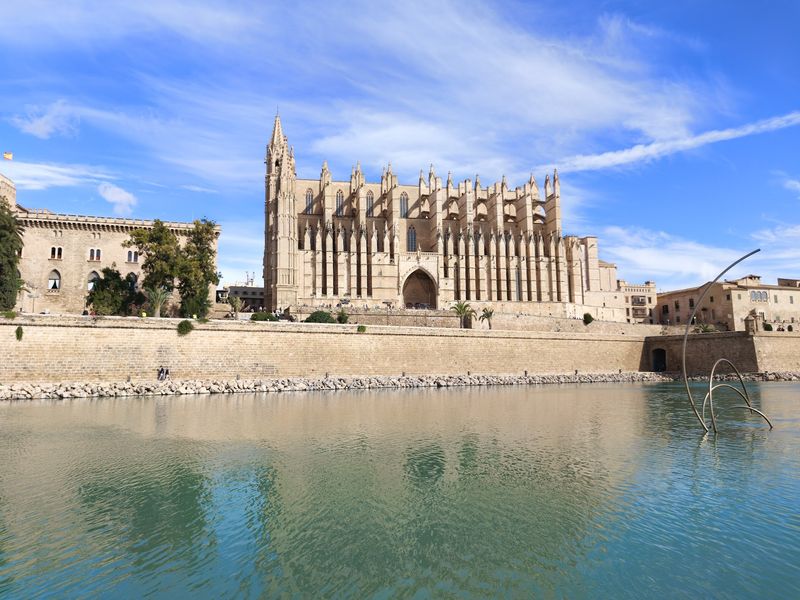
Rising directly above the Mediterranean waterfront, Palma Cathedral has one of the most dramatic settings of any Gothic building in existence. The cathedral, known locally as La Seu, dominates the Mallorca coastline with its massive buttresses, soaring towers, and warm golden limestone that glows beautifully at sunset.
Arriving by sea and seeing it loom into view must have made quite an impression on medieval sailors.
The building is particularly famous for its enormous rose window, which Visit Palma describes as the largest of its kind in the Gothic world. Measuring about 11 meters across and containing more than a thousand pieces of colored glass, the window floods the interior with spectacular light on sunny mornings.
The effect is theatrical and completely unforgettable for anyone lucky enough to be inside at the right moment.
In the early 20th century, Antoni Gaudi was invited to rework parts of the interior, and he opened up sightlines, repositioned liturgical elements, and enhanced the sense of light and space throughout. The result is a building that layers medieval Gothic architecture with later artistic interventions in a way that feels surprisingly harmonious.
La Seu is Mallorca’s defining landmark, and it earns that status every single day.
Share this story