When most people think of historic properties in France, their minds jump straight to grand royal châteaux like Versailles or Chambord. But France’s architectural and cultural heritage runs much deeper than its most famous castles.
Across the country, there are villas, abbeys, country houses, and coastal retreats that tell equally fascinating stories about artists, writers, scientists, politicians, and families who shaped French history. Some of these estates are tucked along the Mediterranean coast, others sit quietly in the French countryside, and a few challenge everything you thought you knew about what a historic residence could look like.
This list covers 13 remarkable properties that go well beyond the typical château experience, giving travelers a richer, more personal look at how France’s most interesting figures actually lived.
Villa Kérylos, Beaulieu-sur-Mer
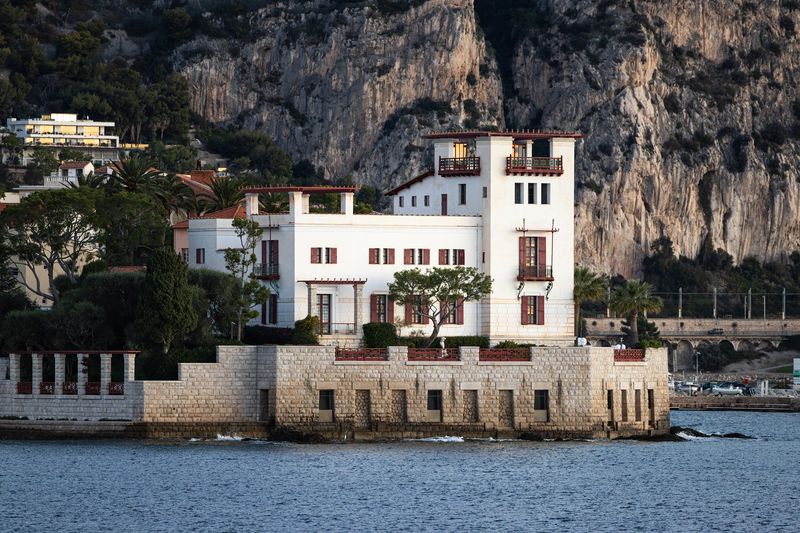
Not every historic French residence looks French. Villa Kérylos, completed in the early 20th century along the Riviera coastline at Beaulieu-sur-Mer, was designed from the ground up to resemble an ancient Greek home.
Scholar and archaeologist Théodore Reinach worked with architect Emmanuel Pontremoli to create an interior filled with marble, mosaics, and furnishings modeled directly on classical Greek design.
The level of detail inside is genuinely impressive. Every room draws from a specific aspect of ancient Greek domestic life, with painted decoration, handcrafted furniture, and materials chosen to match historical sources as closely as possible.
It feels more like an archaeological experiment than a typical period home.
A Mediterranean garden and a gallery facing the sea complete the property. Visitors can explore both floors and the outdoor areas, with guided visits available for those who want deeper context about the architecture and its ancient references.
The villa operates daily during its main season and offers special evening events at select times throughout the year.
Maison et Jardins de Claude Monet, Giverny
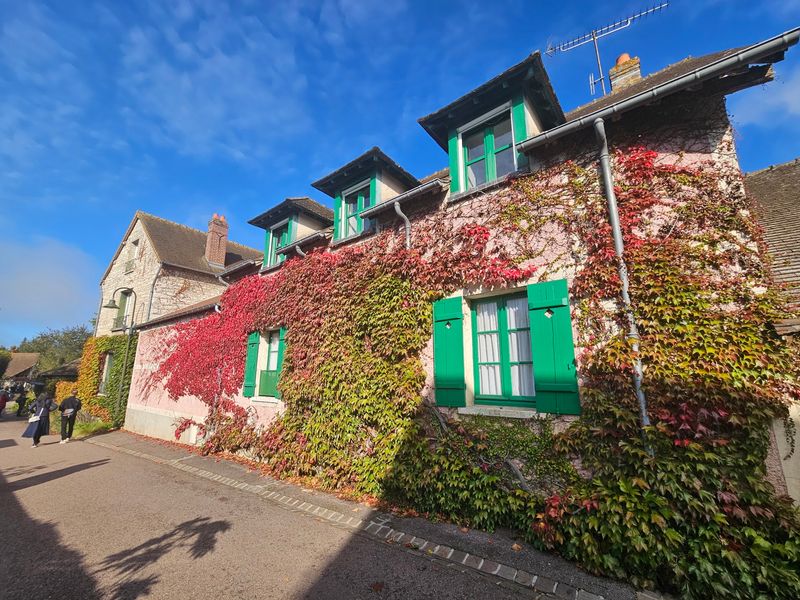
Claude Monet did not just paint gardens. He designed them, obsessed over them, and then painted them for decades.
At Giverny in Normandy, where Monet lived from 1883 until his passing in 1926, visitors can walk through the exact landscapes that inspired some of the most recognized paintings in art history.
The Clos Normand garden in front of the house bursts with flowers arranged in dense, colorful rows that shift with the seasons. Beyond the road, the water garden centers on a tranquil pond crossed by a Japanese-inspired bridge, surrounded by willows and water lilies.
The pink house itself has been carefully restored, with rooms open to visitors that reflect how Monet organized his daily life.
The property is open every day from April 1 through November 1, 2026, making it a seasonal destination worth planning around. Spring visits during peak bloom offer the most dramatic flower displays, but the gardens hold interest well into autumn.
Giverny sits about 75 kilometers from Paris, making it a manageable day trip.
Propriété Caillebotte, Yerres
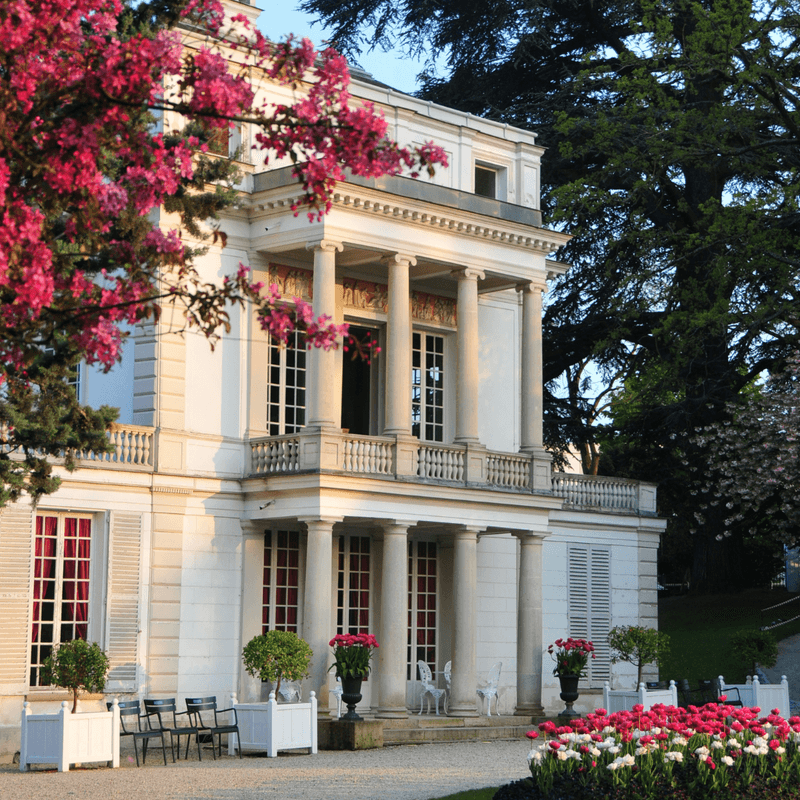
Gustave Caillebotte is sometimes overshadowed by his Impressionist peers, but his former family estate in Yerres makes a strong case for paying closer attention. Between 1860 and 1879, Caillebotte spent summers at this property and produced more than 80 paintings inspired by the house, park, river, and daily life he observed here.
The estate covers 11 hectares and includes a landscaped park, an orangery, a kitchen garden, ornamental structures, and the restored Maison Caillebotte. Inside, the rooms have been furnished to reflect the atmosphere of a prosperous 19th-century French family residence, giving visitors a genuine sense of the environment that shaped his paintings.
One practical advantage here is that the park is free to enter throughout the year, while the house hosts rotating temporary exhibitions. The Maison Caillebotte is currently open every day except Monday.
Yerres sits southeast of Paris in the Essonne department, making this an accessible and often uncrowded alternative to more famous Impressionist destinations.
Villa Ephrussi de Rothschild, Saint-Jean-Cap-Ferrat
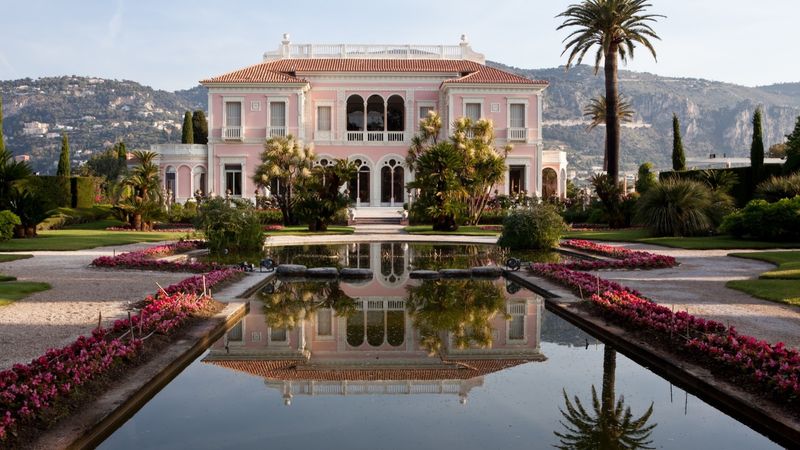
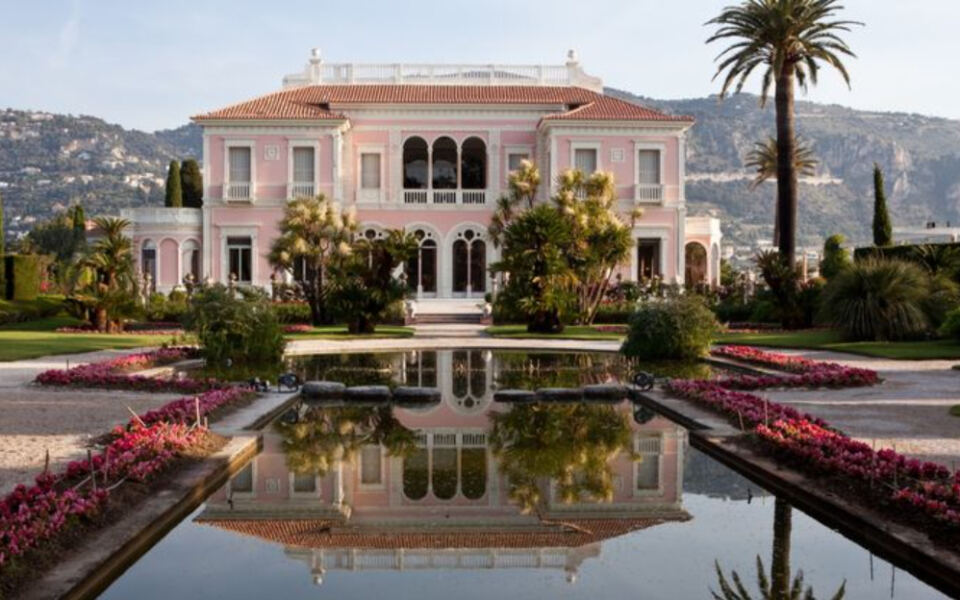
Painted in a shade of rose pink that practically glows against the blue Mediterranean sky, Villa Ephrussi de Rothschild is one of the most visually striking historic properties on the French Riviera. Baroness Béatrice de Rothschild commissioned and built this extraordinary estate in the early 20th century, filling every room with porcelain, paintings, furniture, and decorative art she gathered throughout her life.
The gardens are just as memorable as the interior. Nine themed garden spaces surround the villa, drawing inspiration from French formal design, Japanese tradition, Spanish style, Florentine landscapes, and more.
From nearly every angle on the grounds, the sea is visible below.
Visitors can tour the furnished rooms and wander the terraced gardens at their own pace. The property is open to visitors throughout most of the year, though specific closure dates are scheduled during September 2026.
It sits on a narrow peninsula between Villefranche and Beaulieu, making it easy to combine with other Riviera stops.
Maison de George Sand, Nohant-Vic
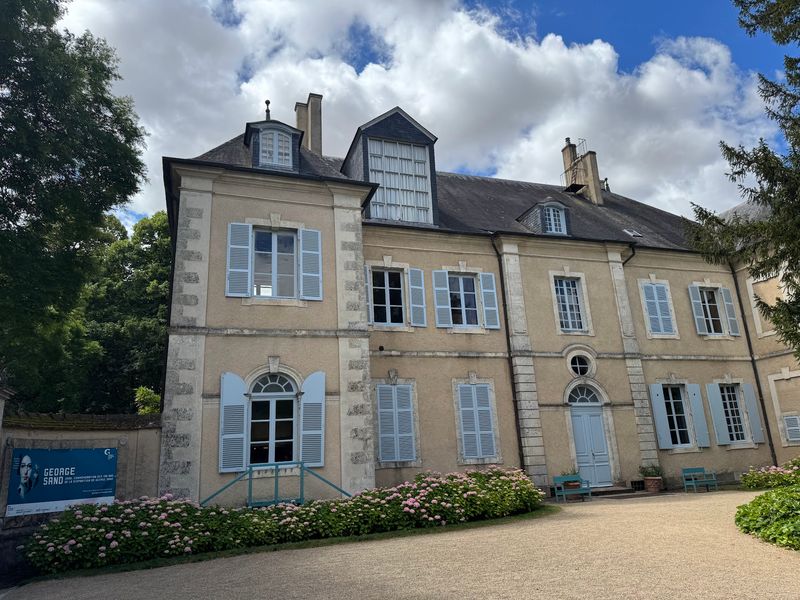
George Sand turned her inherited country home in Nohant into something more than a residence. Throughout the 19th century, the property became a gathering place for some of Europe’s most creative minds, with composer Frédéric Chopin among the most famous long-term guests who stayed and worked here.
Sand wrote prolifically at Nohant while also hosting painters, musicians, and writers who found the rural Berry setting conducive to creative work. The house has been preserved with collections connected to Sand, her family, and the cultural life that surrounded her.
A permanent exhibition explores her son Maurice Sand’s fascination with puppetry and theatrical performance.
Visitors can tour the furnished rooms and explore the garden and grounds. The property operates as an active Centre des monuments nationaux site with regular public opening hours throughout most of the year.
For readers who enjoy literary history alongside beautiful countryside, Nohant offers a specific kind of quiet satisfaction that more crowded heritage sites rarely provide.
Maison et Jardins de Georges Clemenceau, Saint-Vincent-sur-Jard
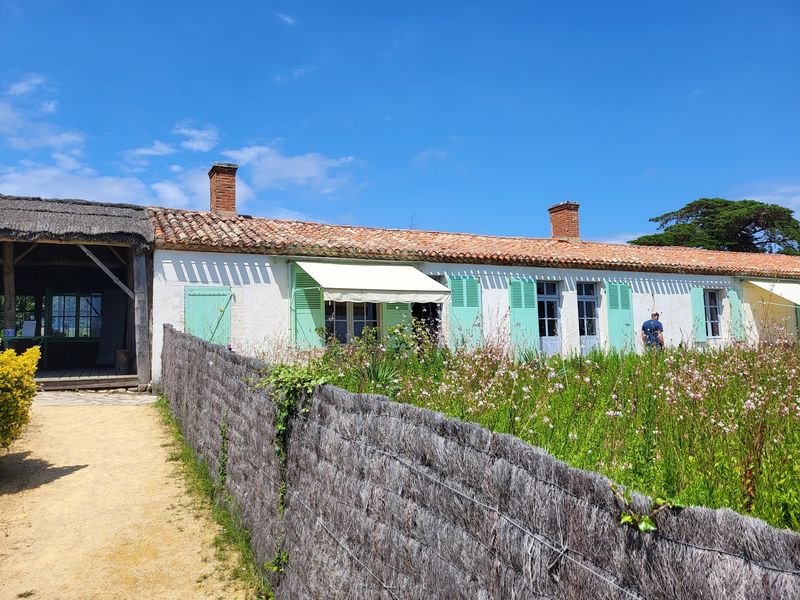
Georges Clemenceau led France through the final years of World War One and helped negotiate the Treaty of Versailles, yet his home on the Vendée coast tells a very different story about the man. After stepping back from public life, Clemenceau rented a modest house near the Atlantic and spent his later years close to the sea, writing and tending his garden.
What makes the garden particularly interesting is its connection to Claude Monet. The two were close friends, and Monet contributed to the design of the grounds.
Rather than imposing a formal structure, the garden was developed to blend naturally with the coastal vegetation and windswept setting.
Visitors can explore both the house and garden while learning about Clemenceau’s quieter final chapter. The site is open in 2026, generally operating Tuesday through Sunday with seasonal hours.
Saint-Vincent-sur-Jard sits on the southern Vendée coast, making it a natural stop along a longer Atlantic road trip through the Pays de la Loire region.
Abbaye de Royaumont, Asnières-sur-Oise
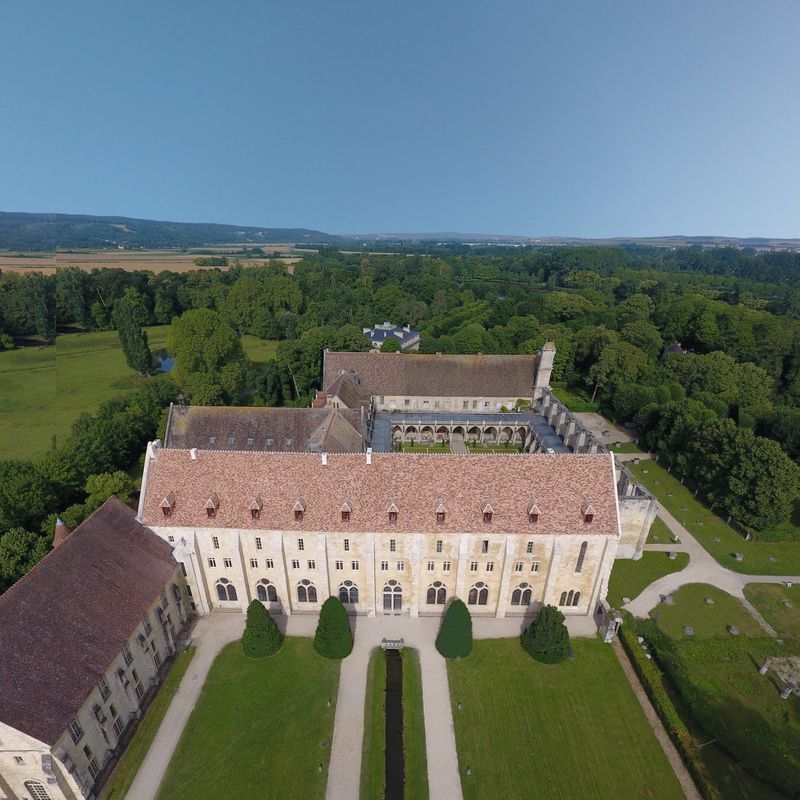
King Louis IX, later canonized as Saint Louis, founded Royaumont Abbey in the 13th century, and the medieval architecture that survives today gives a genuine sense of how impressive the original complex must have been. The former Cistercian abbey includes stone cloisters, historic buildings, waterways, and landscaped grounds that reward unhurried exploration.
Over the centuries, Royaumont passed through various purposes before becoming home to the Fondation Royaumont, which now focuses on music, cultural research, and artistic residencies. That ongoing creative mission adds a living dimension to what might otherwise feel like a purely historical monument.
Visitors can explore the grounds independently or join guided tours on selected days. From April through October, the abbey operates seven days a week, while a reduced schedule applies during the colder months.
Royaumont sits about 30 kilometers north of Paris in the Oise Valley, making it an easy half-day excursion from the capital for travelers who want medieval atmosphere without a long drive.
Domaine du Rayol, Rayol-Canadel-sur-Mer
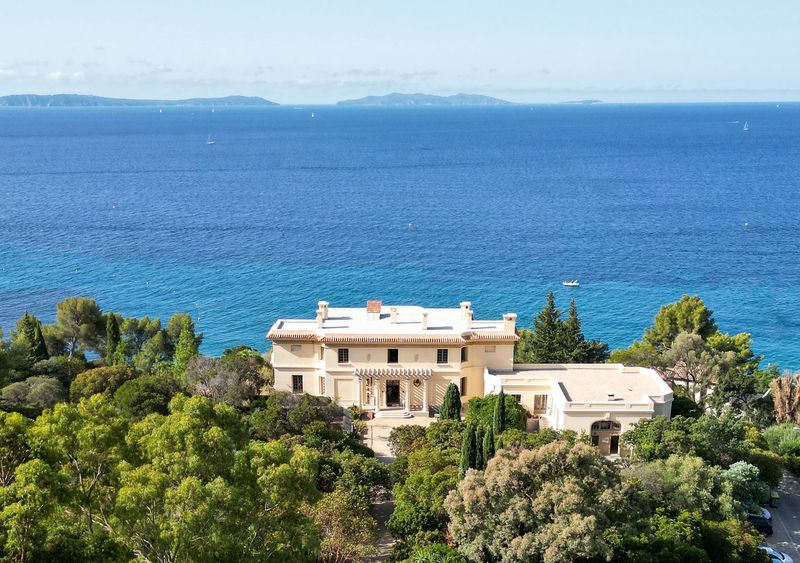
Most historic estates put their architecture at the center of the experience. At Domaine du Rayol on the Var coast, the landscape is the main event.
The property is home to the Jardin des Méditerranées, a garden created by landscape designer Gilles Clément that represents plant communities from Mediterranean climate zones across the globe.
California, Chile, South Africa, Australia, and the Mediterranean basin itself all have dedicated garden sections, each planted with species native to that region’s specific climate. The result is an ecological garden that feels exploratory rather than decorative, with pathways leading through dramatically different plant environments within a single coastal property.
Visitors can join guided visits, stop at the on-site nursery, and use the estate’s café during operating periods. Domaine du Rayol is open every day of the year except December 25, which makes it one of the most reliably accessible estates on this list.
Its position between Le Lavandou and Saint-Tropez puts it within reach of several other Var coastal destinations.
Domaine de Courson, Courson-Monteloup
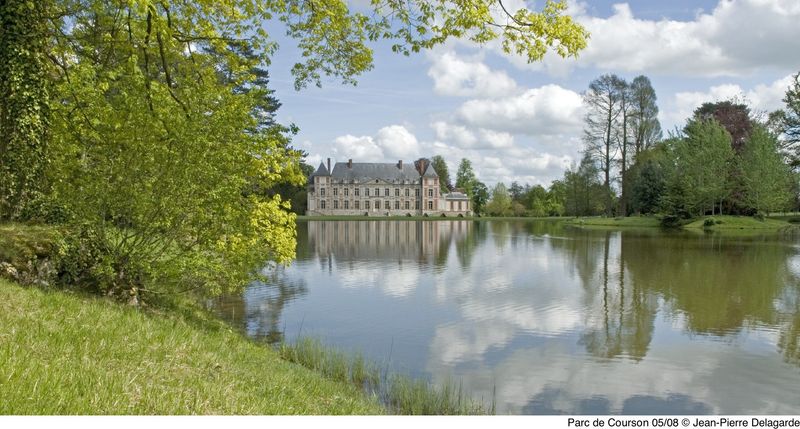
Roughly 35 kilometers southwest of Paris, Domaine de Courson offers the kind of layered French country estate experience that usually requires traveling much farther from the capital. The historic residence developed over several centuries and was associated with the Duke of Padua, a general of the French Empire and a cousin of Napoleon Bonaparte.
Guided interior visits lead through furnished salons while covering the property’s architectural evolution and family history. Outside, a substantial landscaped park features mature specimen trees and seasonal plantings that change considerably throughout the year.
The estate has also developed accommodations in cottages on the grounds, making an overnight stay possible for visitors who want more than a day visit.
The château and park are open from April 1 through November 1, 2026, with interior visits offered on scheduled days. Private events are hosted here as well, so checking the calendar before visiting is a practical step.
Courson-Monteloup is easily reachable by car from Paris or Versailles.
Domaine de Chaumont-sur-Loire, Chaumont-sur-Loire
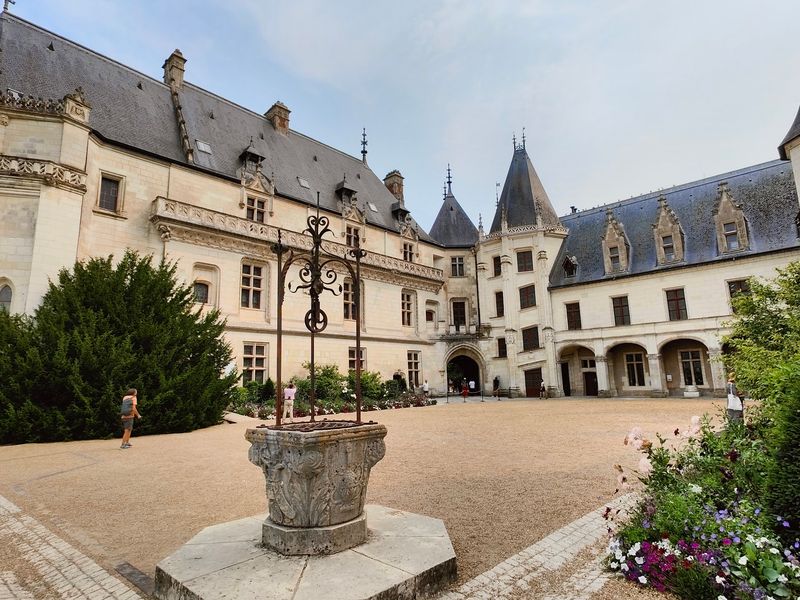
Chaumont-sur-Loire has a château, but the real reason to visit in 2026 might be everything surrounding it. The 32-hectare estate has built a reputation as one of Europe’s most forward-thinking heritage properties, combining historic architecture with contemporary art installations and an internationally recognized garden festival that transforms the grounds each season.
The International Garden Festival brings dozens of experimental garden designs to the estate annually, turning the landscape into a rotating showcase of ideas about planting, ecology, and outdoor space. Contemporary artworks are also installed throughout the historic stables and other estate buildings, adding another layer of visual interest beyond the château itself.
Visitors can easily spend several hours working through the complete domain without feeling rushed. The estate is open through the 2026 season, with hours that shift across the calendar.
Chaumont-sur-Loire sits in the heart of the Loire Valley, making it straightforward to include alongside other regional heritage stops between Blois and Amboise.
Domaine de Villarceaux, Chaussy
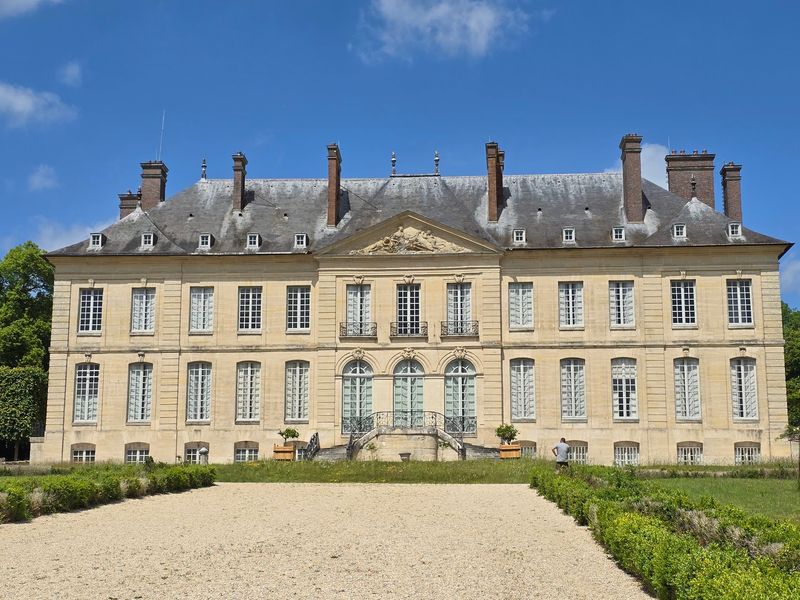
Villarceaux is the kind of place that rewards visitors who arrive without knowing much about it. Spread across roughly 70 hectares in the Vexin region north of Paris, the estate contains medieval remains, a Renaissance-era manor, an 18th-century residence, formal gardens, reflective ponds, and open countryside that together create an unusually complete picture of French heritage across multiple periods.
The water features are a defining characteristic of the property. Numerous natural springs feed the estate’s ponds and waterways, giving the landscape a quietly dramatic quality that changes with the light and season.
Villarceaux is also connected to historical figures including the celebrated 17th-century intellectual Ninon de Lenclos, who reportedly stayed at the estate.
Today the domain is managed with environmental considerations built into its heritage mission, balancing conservation with public access. It remains an important destination in the Île-de-France region for visitors interested in landscape history and multi-period French architecture outside the more crowded tourist circuits around Paris and Versailles.
Domaine de Chaalis, Fontaine-Chaalis
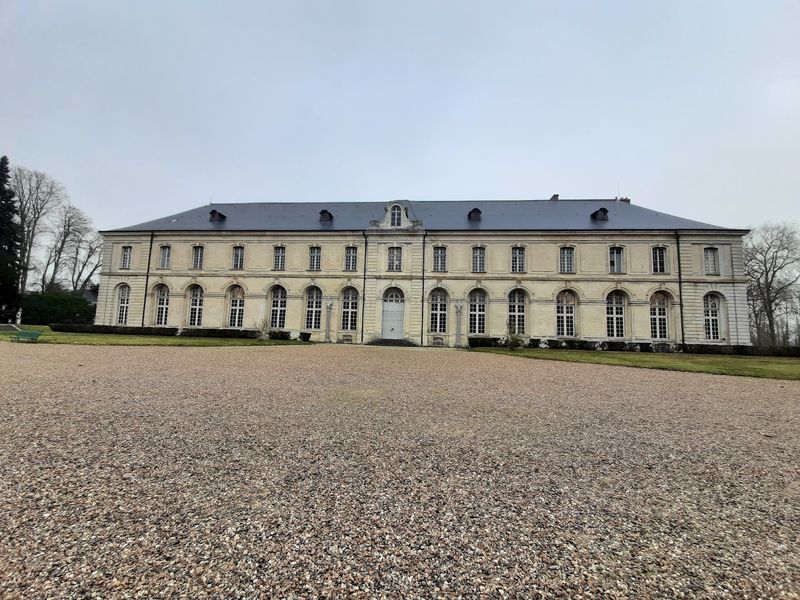
Chaalis packs nearly nine centuries of history into a single property. The estate includes the atmospheric ruins of a 12th-century Cistercian abbey church, the Sainte-Marie chapel featuring Renaissance frescoes by the Italian artist Primaticcio, a rose garden, and extensive landscaped grounds with walking routes connecting the various historic structures.
The château-museum is currently undergoing restoration, but that has not closed the property to visitors. Guided behind-the-scenes visits provide access to areas normally reserved for conservation teams, which makes Chaalis a particularly interesting stop for anyone curious about how historic preservation actually works in practice.
It is a genuinely unusual way to engage with a heritage site.
Seasonal cultural events and family programming run throughout the year. From April 1 through September 30, 2026, the estate is open daily from 10 a.m. to 6 p.m.
Chaalis sits in the Oise department within the Ermenonville forest, about 50 kilometers northeast of Paris, and pairs well with a visit to the nearby Mer de Sable park.
Villa Savoye, Poissy
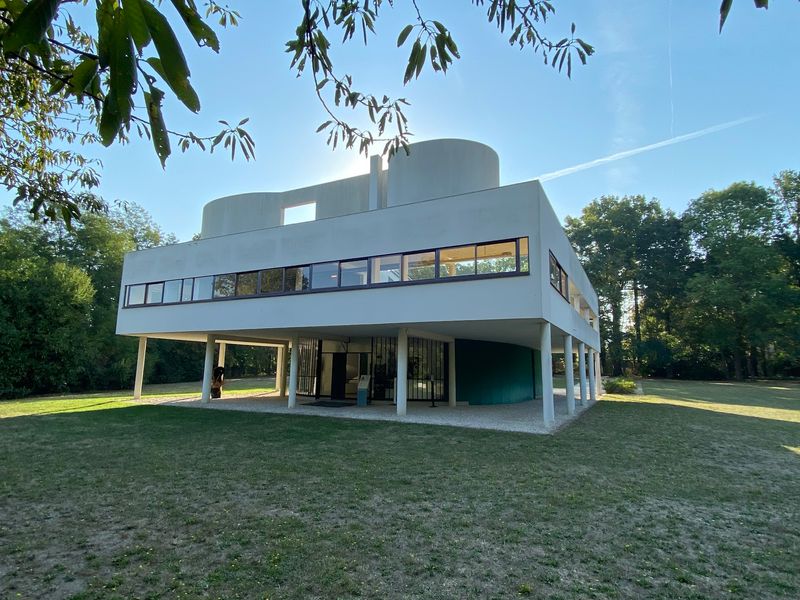
Built between 1928 and 1931, Villa Savoye does not look like any other historic property in France, and that is precisely the point. Le Corbusier and Pierre Jeanneret designed this white geometric residence outside Paris as a working demonstration of modernist principles, and it became one of the most influential buildings of the 20th century.
The villa was commissioned as a weekend retreat for the Savoye family and was conceived around five architectural ideas Le Corbusier was developing at the time: pilotis raising the building off the ground, an open floor plan, a facade freed from structural walls, horizontal ribbon windows, and a usable roof garden. Walking through the house, visitors can see how those ideas were applied in a real residential setting.
Self-guided and audio-guided visits are available. Villa Savoye is part of the UNESCO-listed Architectural Work of Le Corbusier, a designation shared with 16 other buildings across seven countries, and continues to welcome visitors in 2026.
Poissy is about 30 kilometers west of central Paris.
Share this story