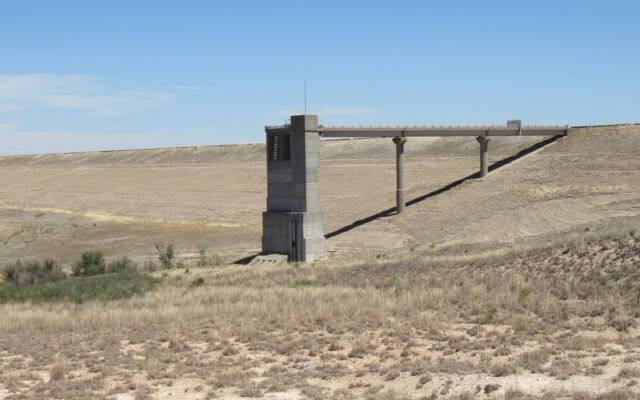
Somewhere in the far western corner of Oklahoma, a $46.1-million federal project sits quietly unfinished, a concrete dam rising over a lakebed that never quite became a lake. Optima Lake was supposed to be a shimmering recreational getaway for the Oklahoma panhandle, complete with boat ramps, campgrounds, and open water stretching across the horizon.
Instead, the Beaver River ran dry before the dream could take shape, leaving behind a hauntingly empty basin that feels like a place time forgot. What visitors find today is equal parts fascinating and surreal, a ghost lake that is somehow more memorable than a full one would have been.
Where Optima Lake Actually Sits on the Map
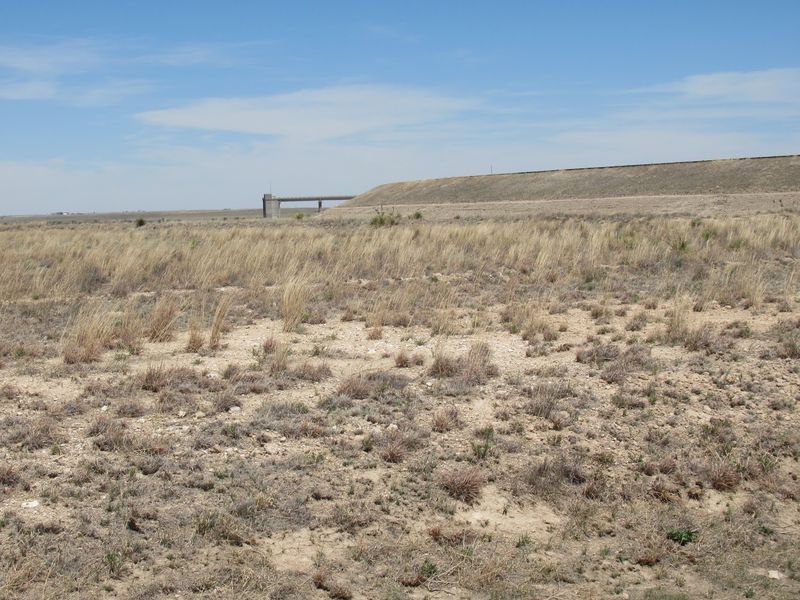
Tucked into the far western tip of Oklahoma, near the small community of Optima in Texas County, this site occupies one of the most remote corners of the state. The surrounding landscape is classic panhandle country: flat, wind-swept, and enormous under a sky that goes on forever.
Getting here requires commitment, and that remoteness is part of what makes the place feel so otherworldly.
The coordinates place the site at roughly 36.66 degrees north latitude, deep in a region better known for wheat fields and cattle ranches than for tourist attractions. The nearest sizable town is Guymon, which sits a manageable drive to the east along Highway 270.
Most travelers passing through the panhandle never realize they are close to one of Oklahoma’s strangest and most thought-provoking landmarks.
Optima Lake is not a destination that appears on most road trip itineraries, and that is precisely its appeal. Visitors who make the effort to track it down often describe a feeling of genuine surprise, as though they have stumbled onto a secret the rest of the state forgot to mention.
The isolation amplifies everything about the experience, from the silence to the scale of what was attempted here.
The Original Vision Behind the Dam
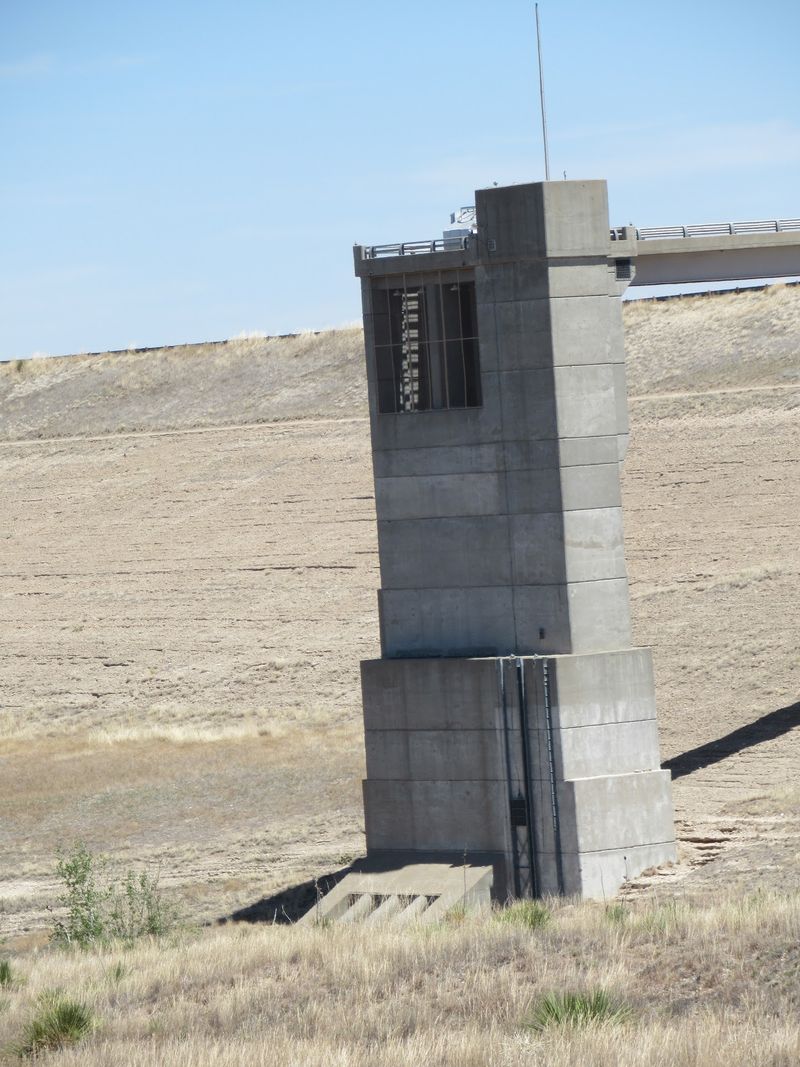
Back in the mid-twentieth century, federal planners looked at the Oklahoma panhandle and saw a region that desperately needed water infrastructure. The Beaver River, which winds through the area, seemed like a reasonable source to tap.
Engineers drew up plans for a large earthen dam that would hold back enough water to create a meaningful reservoir, one capable of supporting recreation, flood control, and regional water supply all at once.
Construction on the Optima Dam began in earnest and was completed in 1978, representing a significant federal investment of $46.1 million. The project was ambitious by any measure, and local communities had reason to feel optimistic.
A new lake in the panhandle would have been a genuine regional asset, offering swimming, boating, fishing, and camping in an area that had few such amenities.
Campground pads were graded, boat ramps were poured, and infrastructure was installed with full confidence that the water would come. The Army Corps of Engineers oversaw the construction, and by all engineering standards, the dam itself was a success.
The only problem was the river it was built to capture had other ideas, and the aquifer feeding it was already in serious trouble long before the ribbon was cut.
Why the Water Never Arrived
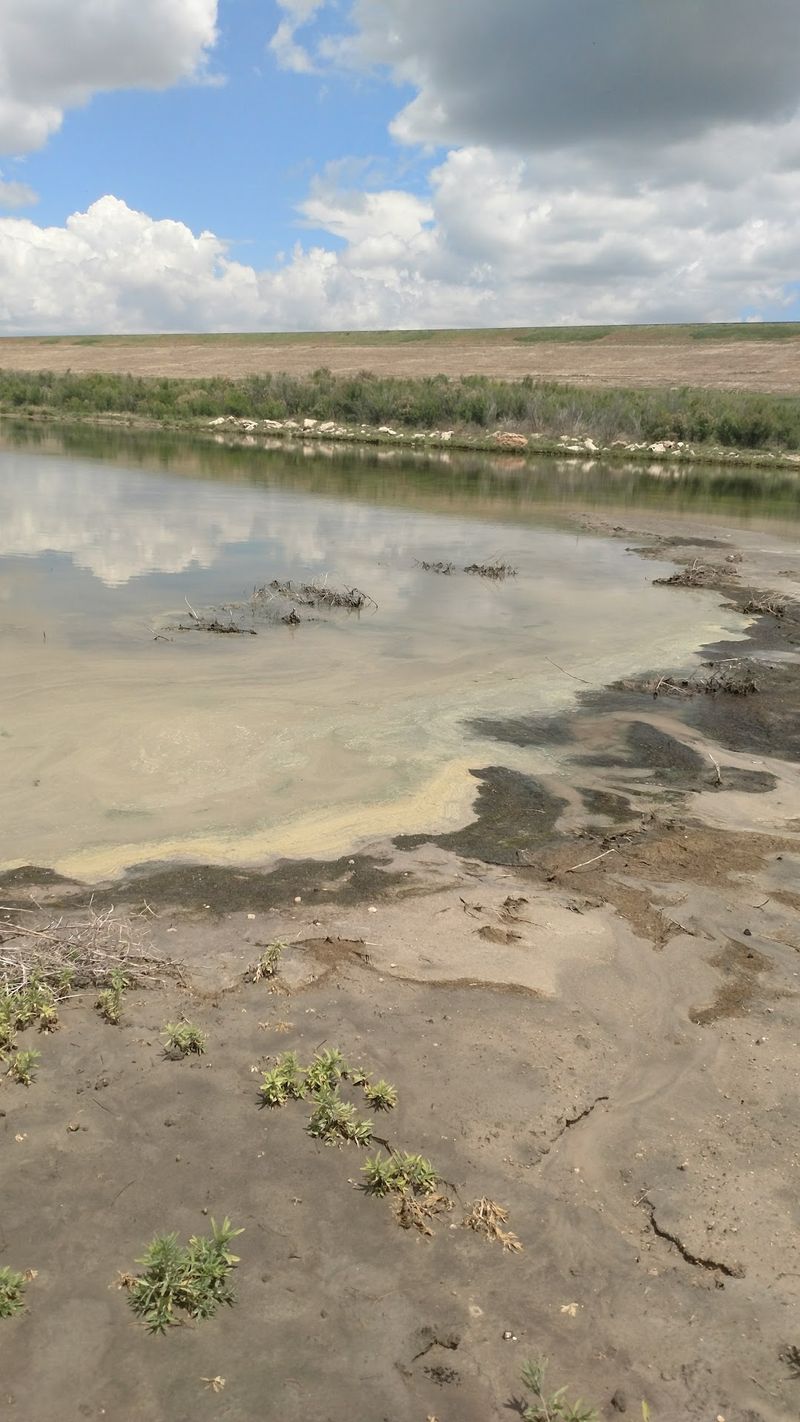
Groundwater depletion is at the heart of Optima Lake’s story, and it is a cautionary tale worth understanding. The Ogallala Aquifer, one of the largest underground water reserves in North America, had been pumped heavily for agricultural irrigation across the Great Plains for decades before the dam was even finished.
By the time Optima Dam was completed, the Beaver River’s flow had already dropped dramatically.
Without sufficient inflow from the river, the reservoir simply never filled. Seasonal rains brought temporary pools, and occasional wet years raised hopes, but the basin never held enough water to function as the lake it was designed to be.
The federal government eventually acknowledged that the project could not achieve its intended purpose under current and projected conditions.
What makes this particularly striking is the timeline. The dam was finished in 1978, and within a relatively short period it became clear the aquifer decline had fundamentally changed the equation.
One visitor noted that the situation stands as a vivid illustration of how much water is being pulled from the ground across the region. The Optima story is now frequently cited in discussions about sustainable water use in the American plains, making this empty lakebed something of an unintentional monument to resource management lessons learned the hard way.
The Concrete Dam Standing Over Nothing
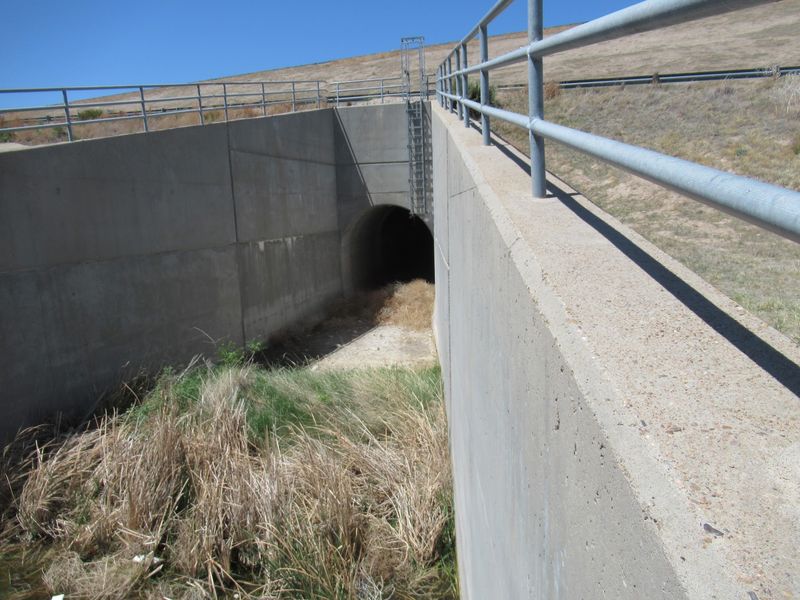
Standing beside the Optima Dam is a genuinely humbling experience. The structure is substantial, built to hold back a reservoir that was meant to stretch for miles.
Its scale makes the emptiness below it feel even more dramatic. You look up at the dam and then look out at where the water should be, and the contrast is almost cinematic.
The dam itself remains structurally sound. Engineers built it well, and there is no crumbling or obvious deterioration that would signal neglect or failure in the conventional sense.
The failure here was not of construction but of circumstance, which makes it stranger and more melancholy than a simple case of poor engineering would be.
Visitors who walk along the top of the dam or near its base often remark on how surreal it feels to see boat ramps leading down to dry grass and packed earth. The infrastructure of a thriving lake recreation area is all present, just without the lake.
Parking areas, access roads, and concrete launch points sit ready and waiting for boats that have never come and likely never will. The whole scene has a post-apocalyptic quality that one reviewer openly suggested would make a perfect filming location for end-of-the-world movies, and it is hard to argue with that assessment.
Boat Ramps Leading to Dry Ground
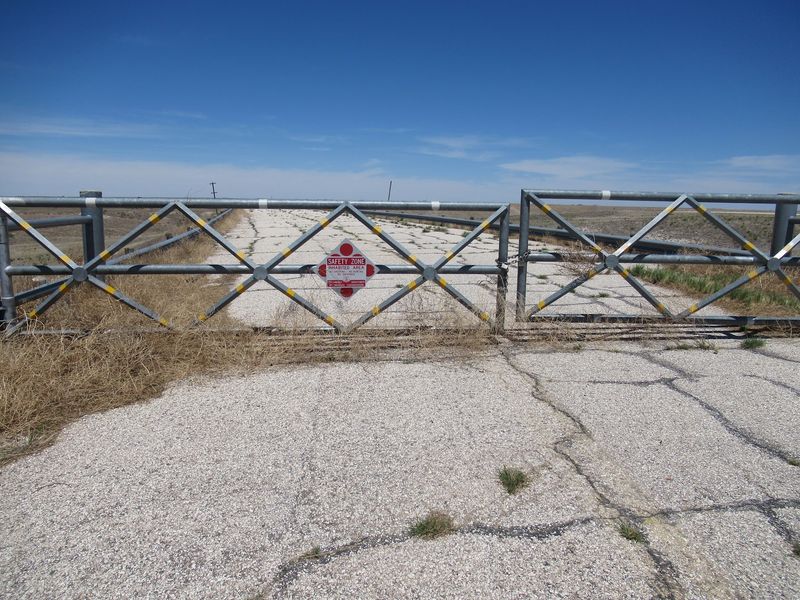
Few sights in Oklahoma are quite as disorienting as a perfectly built boat ramp that ends in a field of grass. At Optima Lake, that is exactly what you find.
The ramps are well-constructed, sloped at the correct angle, and finished with the kind of textured concrete designed to give boat trailers traction. They were built to last, and they have, just not for their intended purpose.
Walking down one of these ramps and stepping off the end onto dry, cracked earth carries a strange emotional weight. Your brain keeps expecting to hear water, to feel the ground soften into mud, to see the shimmer of a lake surface.
Instead, there is silence and stillness, broken only by wind moving through the sparse vegetation that has taken root where the water was supposed to be.
The boat ramps have become something of a symbol for the entire Optima Lake story. They represent optimism, planning, and investment, all pointing toward a future that never materialized.
Photographers and curious travelers have made a point of capturing these ramps specifically because of the jarring visual contrast they create. A ramp built for water, now framed by dry panhandle prairie, tells the whole story of this place without requiring a single word of explanation.
The Eerie Atmosphere That Draws Curious Visitors
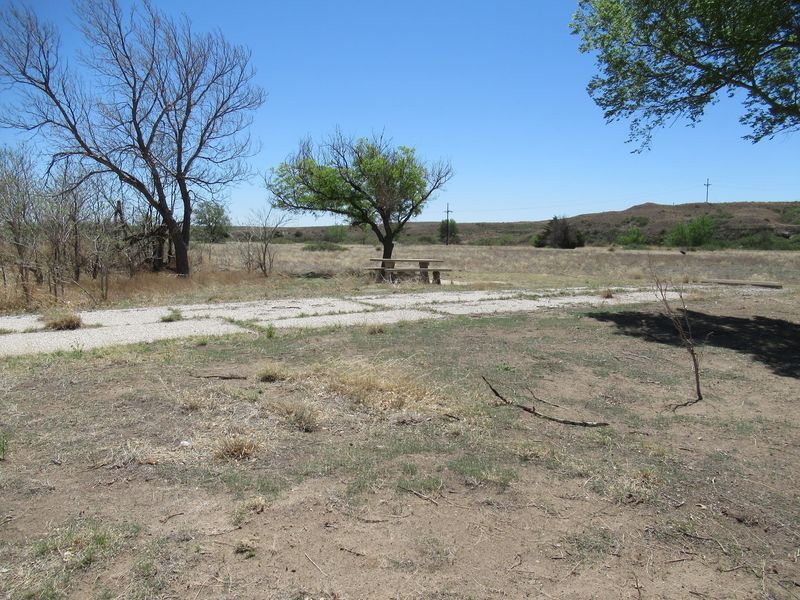
There is something about Optima Lake that gets under your skin in the best possible way. The silence out here is not the comfortable quiet of a forest trail.
It is the heavy, pressing silence of a place that was built for crowds and noise and splashing water, and has received none of those things. It registers differently, almost like the landscape itself is holding its breath.
The visual atmosphere shifts dramatically depending on the time of day and season. Early morning light turns the empty basin into a study in soft golds and grays, with long shadows emphasizing every contour of the dry lakebed.
Late afternoon brings a sharper, more dramatic quality, the kind of light that photographers chase. On overcast days, the whole scene takes on an almost cinematic bleakness that feels staged, even though it is completely real.
Visitors who lean toward the mysterious and offbeat consistently report that Optima Lake exceeded their expectations. The place has a gravitational pull for anyone drawn to landscapes that carry a story bigger than what is immediately visible.
It is not spooky in a supernatural sense, but it is genuinely atmospheric in a way that few Oklahoma locations can match. The feeling lingers long after you have driven back down the access road and rejoined the highway.
Wildlife That Moved In After the Water Moved Out
Nature has a way of filling vacuums, and at Optima Lake, the creatures that moved in are worth noting. Wild turkeys are a standout feature of the area, with visitors frequently reporting large flocks moving through the grasslands around the empty basin.
One camper described the turkey population as impressive, which is a polite way of saying you are likely to encounter them whether you are looking for them or not.
The surrounding habitat, a mix of dry grass, scrub brush, and occasional cottonwood trees near the Beaver River channel, supports a variety of plains wildlife. Deer are spotted regularly, and birdwatchers have found the area productive for species adapted to open, semi-arid environments.
The absence of heavy recreational traffic means animals move through the area with a confidence you would not find at a busier park.
Raptors are another highlight, with hawks and the occasional eagle using the elevated dam structure and surrounding open country as hunting grounds. The Optima area offers the kind of undisturbed wildlife viewing that requires patience and quiet, both of which the location provides in abundance.
For visitors who arrive hoping to see something unexpected, the animal life around this empty lake often delivers a genuine and memorable reward.
Camping in One of Oklahoma’s Quietest Spots
Solitude seekers, take note. Camping near Optima Lake offers a level of quiet that is genuinely rare in the modern world.
Visitors who have spent a night here describe waking up to nothing but wind and birdsong, with no traffic noise, no neighboring campers, and no light pollution to interrupt the night sky. The panhandle sky after dark is extraordinary, and Optima Lake puts you right under it.
The campground infrastructure that was installed as part of the original lake development remains in place, though the facilities are basic. Expect flat, graded camping pads, open space, and not much else in the way of amenities.
This is a spot for self-sufficient campers who bring their own water, their own entertainment, and a genuine appreciation for wide-open spaces.
The experience suits a specific kind of traveler: someone who finds a crowded state park campground exhausting and craves the feeling of having a place almost entirely to themselves. On most nights, Optima Lake delivers exactly that.
Regulars who have discovered the spot tend to keep it quietly to themselves, which is part of why the campground remains so consistently uncrowded. If you are the type who considers a campground with fewer than five other groups to be ideal, this panhandle ghost lake might become your new favorite Oklahoma secret.
A Monument to Water Use in the American West
Few places in Oklahoma make the abstract concept of groundwater depletion feel as immediate and concrete as Optima Lake. Standing at the edge of an empty basin built to hold millions of gallons of water, the scale of what the Ogallala Aquifer’s decline has meant for the region becomes impossible to ignore.
This is not a statistic on a chart. It is a $46.1-million federal project sitting idle in the sun.
The Ogallala Aquifer stretches beneath eight states and has been a critical water source for agriculture across the Great Plains for generations. Decades of intensive irrigation pumping, particularly for crops like corn and wheat, have drawn the aquifer down at rates far exceeding natural recharge.
The Beaver River, which was supposed to fill Optima Lake, is one of many waterways that have seen dramatically reduced flows as a direct result.
Educators, environmentalists, and water policy researchers have pointed to Optima Lake as a case study that is difficult to argue with. You cannot dismiss an empty dam.
The site functions as an unintentional open-air classroom, one that teaches its lesson not through signage or interpretation, but through sheer visual impact. Visiting with that context in mind transforms the experience from curiosity to something genuinely meaningful and worth reflecting on long after you leave.
Photography Opportunities at an Unlikely Subject
Photographers have quietly discovered that Optima Lake is one of the more compelling subjects in the Oklahoma panhandle. The visual contrasts here are remarkable: polished concrete against cracked earth, engineered infrastructure against raw prairie, human ambition against natural limitation.
Every frame tells a layered story without requiring any manipulation or staging.
Golden hour is particularly rewarding. The low-angle light of early morning or late afternoon rakes across the empty lakebed, throwing every texture into sharp relief and turning the dry grass into a warm, luminous carpet.
The dam itself becomes a dramatic silhouette against wide panhandle skies that are frequently decorated with towering cumulus clouds. Storm light, when it appears, is extraordinary.
Wide-angle lenses suit the landscape well, capturing the full scale of the empty basin and the surrounding flatlands. Detail shots of the boat ramps, the weathered concrete, and the encroaching vegetation also reward closer inspection.
Drone photography, where permitted and safe, offers a perspective that emphasizes just how vast and empty the reservoir footprint really is. Visitors who arrive with cameras often stay longer than planned, working the light as it shifts and finding new compositions in a landscape that initially seemed simple but reveals increasing depth the more time you spend with it.
How Optima Lake Compares to Other Oklahoma Reservoirs
Oklahoma is home to more than 200 reservoirs, many of them thriving recreational destinations with marinas, fishing tournaments, and packed campgrounds on summer weekends. Lake Eufaula, Tenkiller, and Keystone are household names for Oklahoma outdoor enthusiasts, drawing hundreds of thousands of visitors each year.
Optima Lake occupies an entirely different category, one that has no real parallel in the state.
Where other Oklahoma lakes offer water sports, fishing, and beach access, Optima offers absence. That sounds like a disadvantage, and for anyone seeking a conventional lake experience, it absolutely is.
But for a growing number of travelers who are specifically drawn to places with unusual backstories and unconventional atmospheres, the comparison actually works in Optima’s favor.
The contrast also raises interesting questions about the future of water resources across the region. If the Ogallala Aquifer continues to decline at current rates, other western Oklahoma water projects could eventually face similar challenges.
Optima Lake is not just a curiosity. It is a preview of what happens when the water runs out before the infrastructure does.
That context makes a visit here feel weightier and more thought-provoking than an afternoon at a crowded boat ramp ever could, and that is genuinely worth something.
Practical Notes for Planning Your Visit
Getting to Optima Lake requires some advance planning, particularly because the panhandle is genuinely remote by Oklahoma standards. The site is located near the community of Optima in Texas County, with Guymon serving as the nearest hub for fuel, food, and supplies.
Travelers coming from the east will find Highway 270 a reasonable approach route. From the west, connections through the Texas and New Mexico panhandles are possible but add distance.
There are no admission fees reported for accessing the site, and the area is managed by the Army Corps of Engineers. Because facilities are minimal and the location is remote, self-sufficiency is important.
Bring your own water, snacks, and anything else you might need for a comfortable visit. Cell service in the panhandle can be unreliable, so downloading offline maps before you leave is a smart move.
The best seasons to visit are spring and fall, when temperatures are moderate and the light is beautiful. Summer panhandle heat can be intense, and winter winds in this part of Oklahoma are not to be underestimated.
There are no formal operating hours posted for the open areas of the site, though visitors should exercise common sense about access and respect any posted signage. Early morning arrivals tend to have the entire place to themselves, which is the ideal way to experience it.
Whether a Visit to Optima Lake Is Worth the Drive
Honest answer: it depends entirely on what you are looking for. Visitors expecting a lake experience will find none here.
There is no swimming, no fishing in any meaningful sense, no boat rentals, and no concession stand. Anyone who makes the trip without understanding what Optima Lake actually is will leave puzzled and probably a little annoyed at the distance they traveled.
For the right traveler, though, this place is something close to unforgettable. History buffs, photographers, environmental thinkers, and anyone with a genuine appreciation for places that carry a complicated story will find Optima Lake deeply rewarding.
The combination of massive infrastructure, complete absence of its intended purpose, and stunning panhandle scenery creates an experience that is genuinely unlike anything else in Oklahoma.
Adding Optima Lake to a broader panhandle road trip makes the drive feel more justified. Guymon offers enough to anchor a day, and the surrounding region has its own quiet appeal for travelers willing to slow down and pay attention.
Visitors who have made the effort consistently describe a lingering impression, the kind that surfaces in conversation months later when someone mentions water conservation or ambitious government projects. That is the mark of a place that actually matters, empty lakebed and all.
Share this story