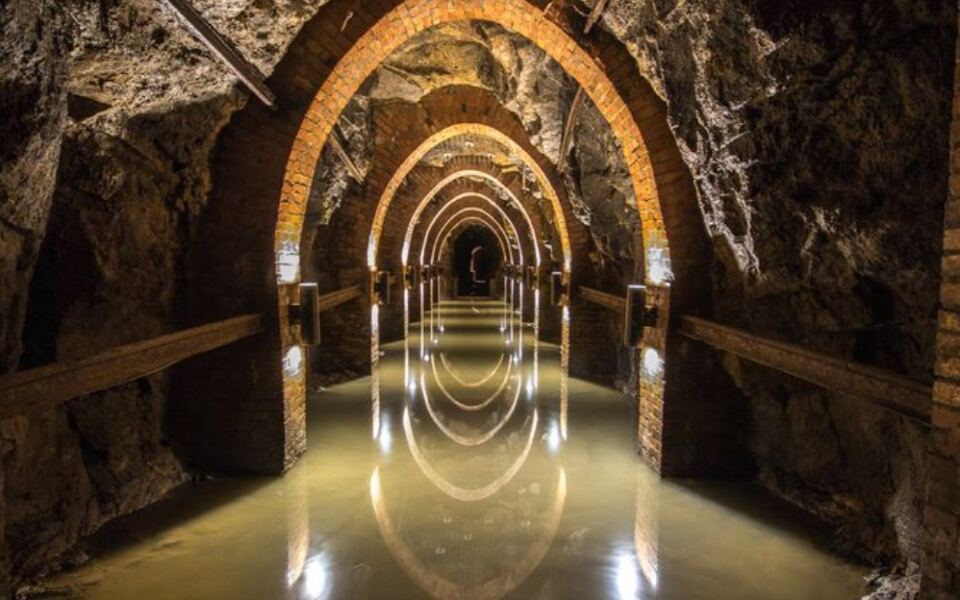
Poland has a lot going on above ground, but what lies beneath its streets, mountains, and old towns is just as remarkable. From UNESCO-listed salt mines to medieval cellars and wartime tunnels, the country’s underground world spans centuries of history and geology.
These subterranean spaces tell stories that museums on the surface simply cannot match. Whether you are planning a family trip, a history-focused journey, or just looking for something genuinely different, this list gives you 13 underground destinations worth adding to your Poland itinerary.
Wieliczka Salt Mine, Wieliczka
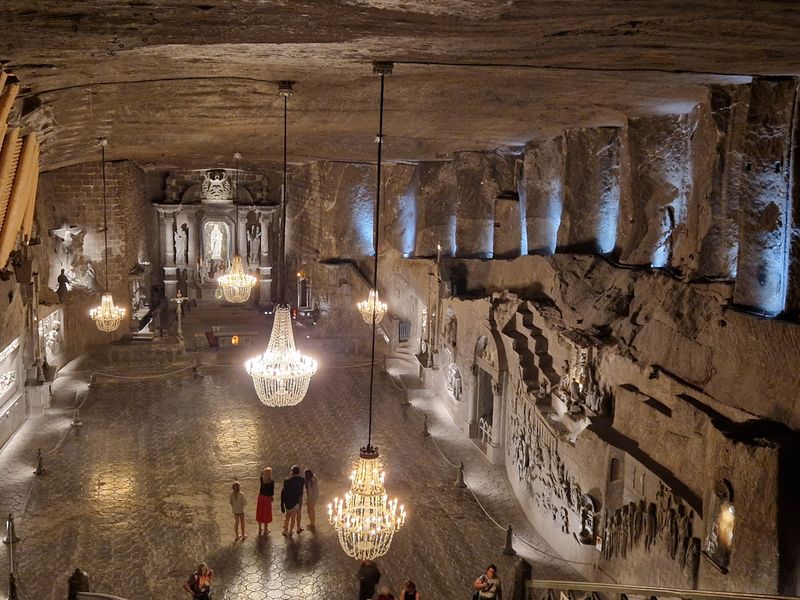
Few underground attractions anywhere in Europe can match the sheer scale of the Wieliczka Salt Mine. Located just outside Krakow, this working mine turned heritage site has been drawing visitors for centuries, and its reputation is completely justified.
The standard Tourist Route descends to about 135 meters below the surface, passing through carved chambers, saline lakes, and wooden mining structures that date back hundreds of years. Around 800 stairs are part of the journey down, though visitors return to the surface by lift.
The undisputed centerpiece is St. Kinga’s Chapel, a full-sized underground sanctuary where chandeliers, floor tiles, and wall reliefs are all carved from salt. Guided tours run daily in Polish and several foreign languages, lasting roughly two to three hours.
Wieliczka holds UNESCO World Heritage status, which tells you everything about how significant this place really is. Book tickets in advance during peak travel months.
Bochnia Salt Mine, Bochnia
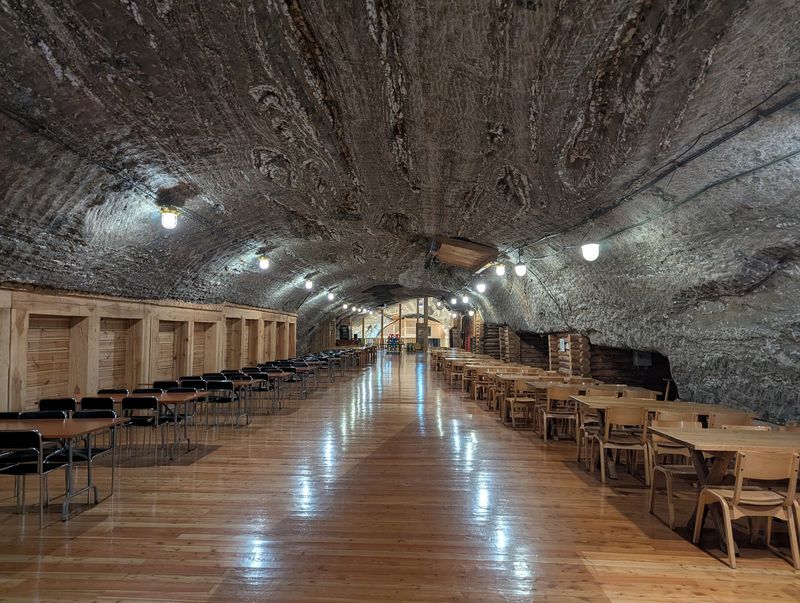
Wieliczka gets most of the headlines, but Bochnia has been quietly operating since the 13th century and deserves serious attention from anyone interested in Poland’s salt-mining heritage. It is actually the older of the two famous mines, and its underground world has its own distinct character.
Visitors descend by mining elevator before exploring chambers that blend historic features with multimedia presentations covering different periods of the mine’s long history. Depending on the tour selected, the experience can include a mining train ride, a boat crossing through a brine-filled passage, and a walk along the old Horse Path.
The enormous Ważyn Chamber even contains recreational facilities and a restaurant, which makes Bochnia feel more like an underground village than a simple museum. Standard tours typically last around three hours.
The underground temperature holds steady at roughly 15 to 17 degrees Celsius, so a light jacket is a practical addition to your bag.
Guido Mine, Zabrze
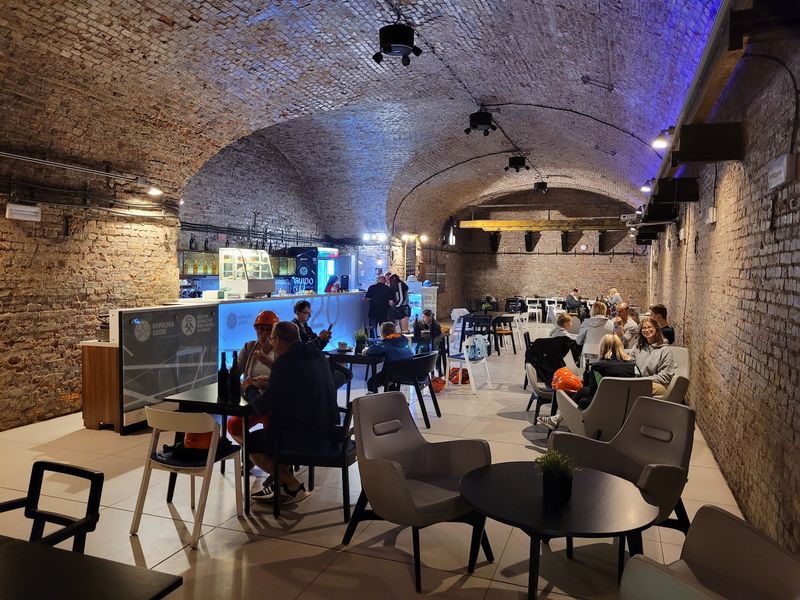
Guido Mine in Zabrze is not a recreation or a themed exhibit. It is an authentic former coal mine, and that distinction matters when you are trying to understand what industrial work in Silesia actually looked like.
The Underground Mining Walk takes visitors approximately 320 meters below the surface, making it one of the deepest tourist experiences connected with coal mining anywhere in Poland. Guides explain how miners worked while visitors move through tunnels that still contain original machinery and industrial infrastructure from active mining days.
Several ticket options exist, including the standard Underground Mining Walk, the Mroki Kopalni experience, and the more physically demanding Underground Shift route. The standard walk lasts about two hours and has a minimum visitor age of six.
Guido also hosts special events underground, including concerts, which gives the space an unexpectedly cultural dimension. The Coal Mining Museum manages ticketing, and advance booking is recommended for weekend visits.
Queen Louise Adit, Zabrze
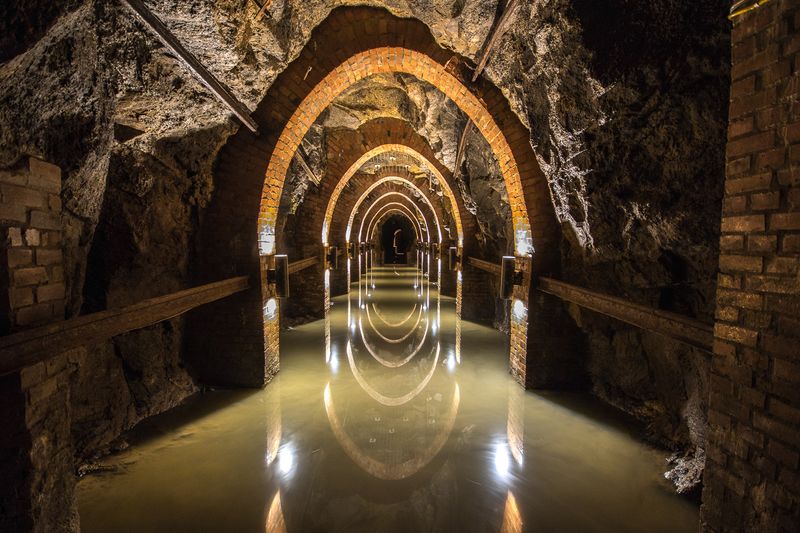
Zabrze earns a second spot on this list because the Queen Louise Adit, known in Polish as Sztolnia Królowa Luiza, offers a completely different underground experience from Guido Mine just a short distance away.
The defining feature here is transportation. Rather than simply walking through tunnels, visitors can choose routes that combine coal-mining history with underground boat travel or a ride on a mining railway.
The Underground Journey Through Time passes through workings more than 200 years old, while the Underground Boat Trip carries visitors by boat through historic passages beneath the city.
The attraction forms part of the Coal Mining Museum complex, and the boat route is described as one of Europe’s longest underground boat journeys through preserved coal-mining passages. Most major routes last around two and a half hours.
If you are already planning a stop at Guido Mine, building the Queen Louise Adit into the same day makes excellent geographic sense.
Historic Silver Mine, Tarnowskie Góry
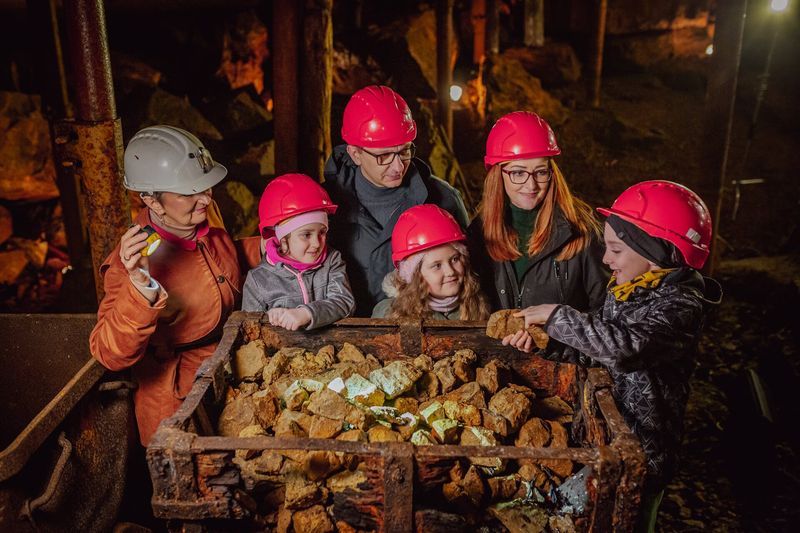
The Historic Silver Mine in Tarnowskie Góry is part of a UNESCO World Heritage property, recognized specifically for its historic underground water-management systems. That distinction puts it in rare company among European mining sites.
The mine traces centuries of silver, lead, and zinc extraction, and the visitor experience goes beyond walking through tunnels. A boat ride through flooded mine passages is part of the standard tour, giving the attraction a dimension that sets it apart from more conventional underground routes.
Visitors learn how miners worked in difficult underground conditions while moving through excavated passages that reveal the engineering challenges of keeping a working mine functional over hundreds of years. The Historic Silver Mine accepts individual visitors throughout the year, though opening hours vary by season.
A related site, the Black Trout Adit, also offers underground boat tours on its own schedule. Checking both seasonal calendars before visiting is a practical step.
Underground City Osówka, Sierpnica
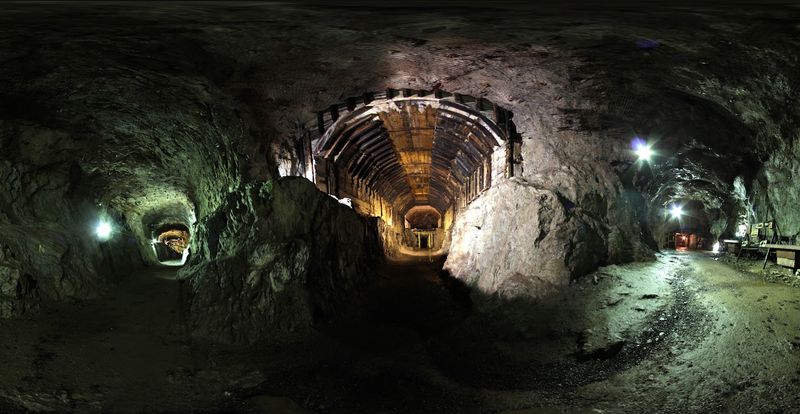
Project Riese is one of World War II’s most debated construction mysteries, and Osówka sits at the center of that story. Built in Lower Silesia’s Owl Mountains using forced labor, the complex was left unfinished when the war ended, and its intended purpose has never been definitively confirmed.
That unresolved history is part of what makes Osówka so compelling. Visitors can explore substantial sections of the tunnels through several guided routes, ranging from historical and educational tours to more adventurous options that require advance reservations and have minimum age requirements.
The unfinished concrete chambers, raw tunnel walls, and layers of wartime mystery create an atmosphere that is genuinely difficult to replicate anywhere else. Unlike polished museum spaces, Osówka feels like a place where history was interrupted mid-sentence.
For travelers who find incomplete stories more interesting than tidy conclusions, this site in the Owl Mountains delivers something few other attractions in Poland can offer.
Bear Cave, Kletno
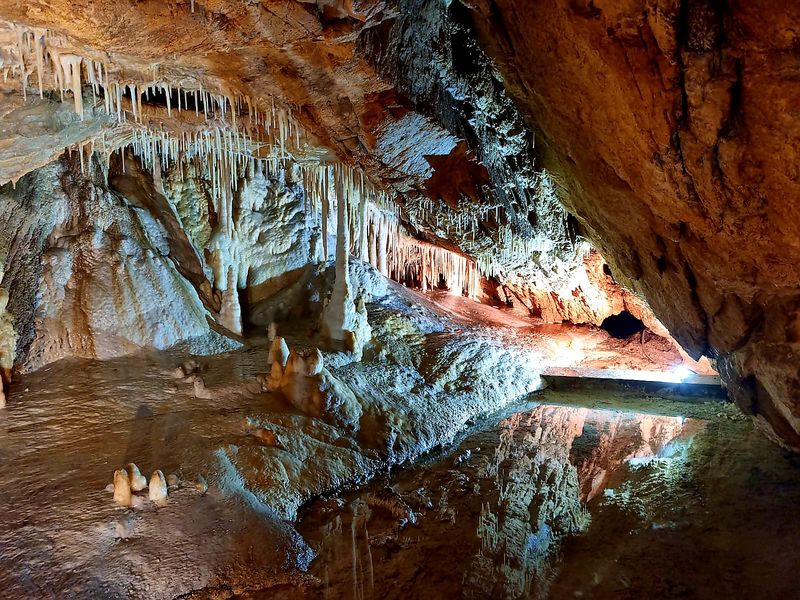
Not everything underground in Poland was built by human hands. Bear Cave in Kletno is a natural karst cave in the Sudeten Mountains, and its geological formations have been developing for millions of years without any mining equipment involved.
The tourist route takes roughly 45 minutes and passes through corridors decorated with stalactites, stalagmites, flowstone, and other calcite structures. The cave gets its name from the remains of cave bears discovered inside, though fossils from other Ice Age animals have also contributed to its scientific significance.
Because the cave is protected as a nature reserve, visitor numbers are strictly limited. The temperature inside stays around 6 degrees Celsius year-round, so warm clothing is genuinely useful even during summer months.
Bear Cave continues to operate in 2026, but advance ticket purchase or reservation is strongly recommended, particularly during the busier summer travel season. It is a grounding reminder that Poland’s underground world is not entirely man-made.
Raj Cave, Near Chęciny
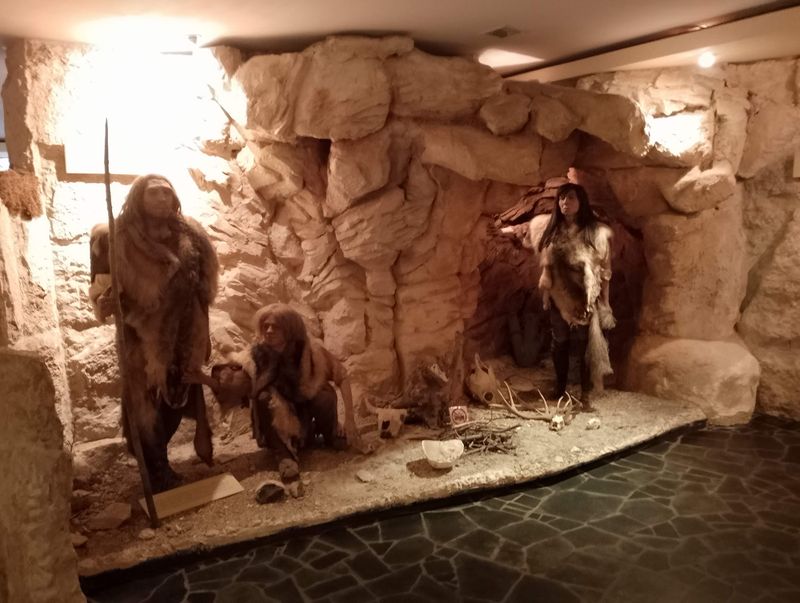
The name translates to Paradise Cave, and the concentration of calcite formations inside makes that description feel earned. Raj Cave near Chęciny is one of Poland’s best-known natural caves, and its compact chambers pack in an impressive density of stalactites, stalagmites, and other mineral structures.
Discovered in the 1960s, the cave was later adapted for controlled tourism with illuminated pathways that highlight the formations without overwhelming them. The experience is visually distinct from any mine or military tunnel on this list, offering a quieter, more geological kind of underground encounter.
Raj Cave operates a reservation system for its tours and continues to welcome visitors in 2026. The attraction also organizes special events, including a 2026 Night in Paradise program, which confirms active tourist operations.
Conservation requirements limit how many visitors can enter at one time, so booking ahead is the practical move during busy periods. The cave is located near the town of Chęciny in the Świętokrzyskie region.
Rynek Underground, Kraków
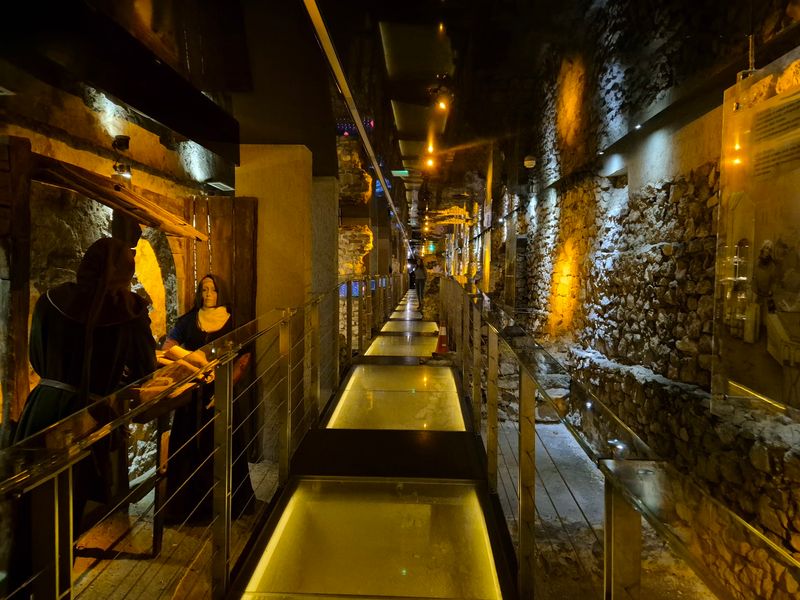
Kraków’s Main Market Square is one of the most visited public spaces in Europe, and most people walking across it have no idea what lies directly beneath their feet. Rynek Underground is a museum built into the archaeological spaces discovered during renovation work beneath the square.
Excavations revealed medieval streets, commercial structures, and everyday objects connected with the city’s long history as a major trading center. The museum combines original archaeological features with multimedia displays that explain how Kraków grew and changed over centuries.
Getting here requires no detour from the Old Town. The Museum of Krakow lists Rynek Underground as open throughout the week, with the exception of specific closing days and the second Monday of each month.
Free-admission Tuesdays attract larger crowds, so entry numbers are limited on those days and advance booking becomes more important. For anyone already spending time in central Kraków, this underground stop fits naturally into a single day of Old Town sightseeing.
Szczecin Underground Routes, Szczecin
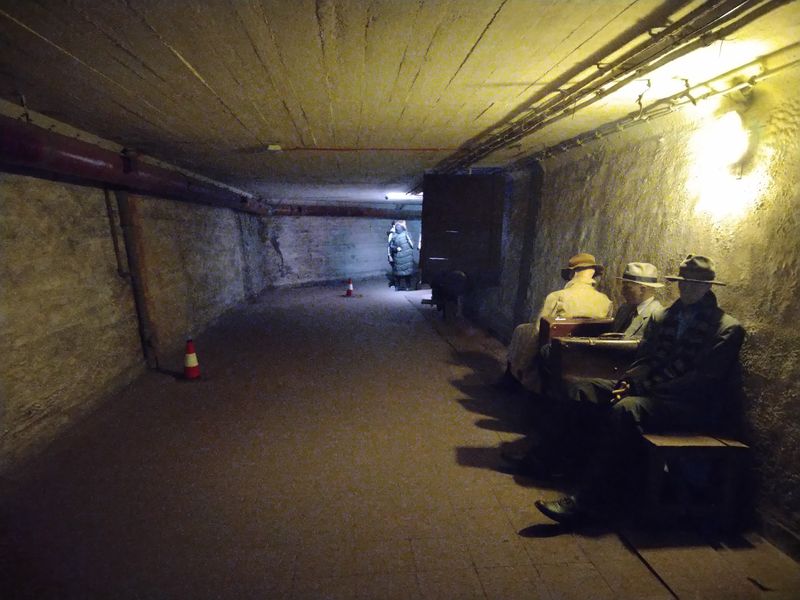
Beneath Szczecin’s main railway station is a network of concrete corridors that once functioned as an underground shelter, and the exhibitions now installed inside cover some of the most turbulent chapters in the city’s modern history.
The Szczecin Underground Routes address World War II, the Cold War period, and Poland’s communist era through photographs, objects, films, sound effects, and recreated scenes. It is a layered experience that works through different historical periods as visitors move through the connected spaces.
One ticket currently provides access to three self-guided routes, with descriptions available in Polish, English, and German. The underground temperature stays at roughly 14 degrees Celsius, which is noticeably cool compared to the street above.
Individual visitors can enter without reservations during regular opening periods, though from September the attraction closes to individual tourists on Tuesdays and Wednesdays. Szczecin is often overlooked on Poland travel itineraries, and this underground attraction is one of the stronger arguments for including it.
Kłodzko Underground Tourist Route, Kłodzko
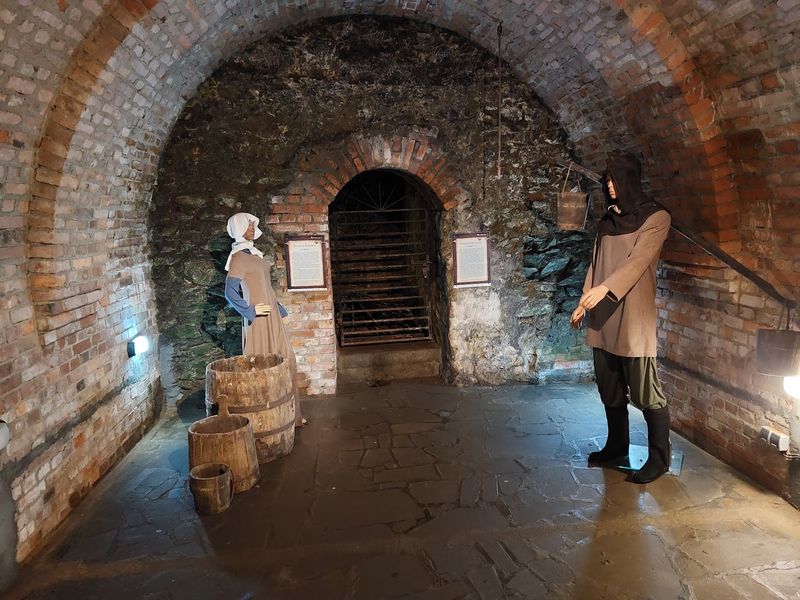
Kłodzko is a picturesque Lower Silesian town with a lot of history packed into a relatively small area, and a significant portion of that history is located underground. Beginning in the Middle Ages, residents dug cellars, storage rooms, and connecting tunnels beneath their homes, and over time these spaces grew into a complicated subterranean network.
The Kłodzko Underground Tourist Route follows approximately 600 meters of that network beneath the Old Town. Exhibits and staged scenes introduce visitors to everyday life, local laws, commerce, and some of the less comfortable episodes in the town’s past.
The route is currently open seven days a week. Published hours from April through October run from 9 a.m. to 6 p.m., with shorter winter hours from November through March.
Kłodzko also has the fortress underground labyrinth nearby, which means this town can reasonably fill an entire afternoon of underground exploration without repeating itself.
Kłodzko Fortress Underground Labyrinth, Kłodzko
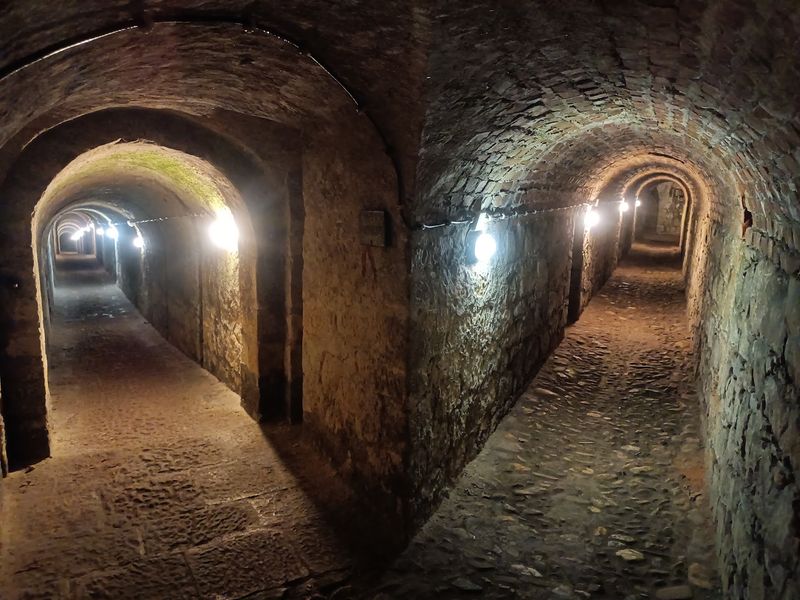
Kłodzko’s second underground entry is a completely different experience from the medieval cellars beneath the Old Town. The Kłodzko Fortress, which dominates the town from an elevated rocky promontory, conceals approximately seven kilometers of narrow counter-mine galleries beneath its fighting slope.
These tunnels were not built for storage or commerce. Soldiers used them to detect enemy tunneling operations and protect the fortifications from attacks launched below ground.
The engineering is precise and purposeful, and walking through the narrow passages gives a clear sense of the defensive logic behind the design.
Visitors can enter part of the labyrinth on a dedicated tour, which runs alongside the fortress’s above-ground sightseeing route. Conditions inside are cool, generally around 8 to 10 degrees Celsius, and the corridors are sometimes narrow and uneven.
Comfortable footwear and a light layer are both practical choices. The attraction remains open in 2026, making Kłodzko an easy double-underground destination in a single visit.
Rzeszów Cellars, Rzeszów
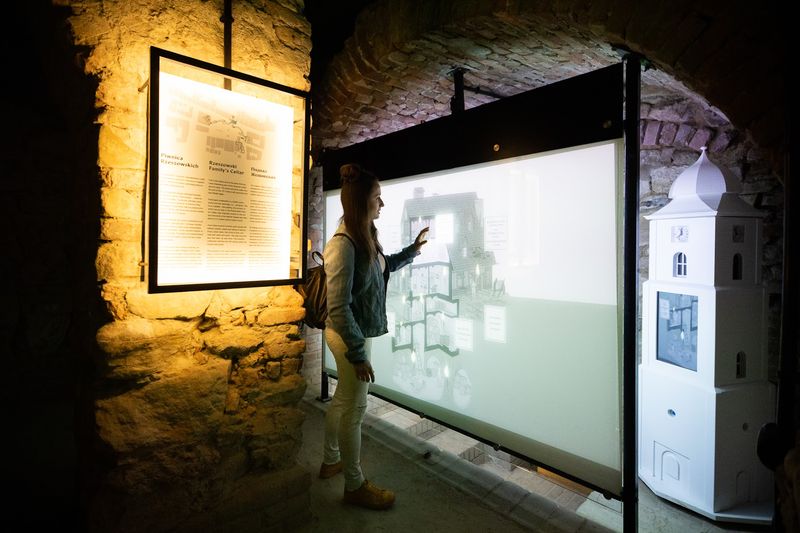
Rzeszów does not always appear at the top of Poland travel lists, but the underground network beneath its Market Square is a genuinely worthwhile reason to spend time in this southeastern city. The cellars were originally used by merchants who lived and traded in the buildings above.
Known today as Rzeszowskie Piwnice, the attraction combines preserved historical spaces with multimedia storytelling that explains how the passages developed and how residents used underground storage over the centuries. The Pictures of History route uses displays and a short introductory film to guide visitors through Rzeszów’s story as they move through the subterranean chambers.
The attraction continues to operate in 2026 with both guided and selected self-guided touring formats. Recent schedules show extended opening dates and online ticket sales, making advance planning straightforward.
For travelers crossing southeastern Poland, Rzeszów’s underground cellars offer an accessible and genuinely informative stop that connects city history to a tangible physical space visitors can actually walk through.
Share this story