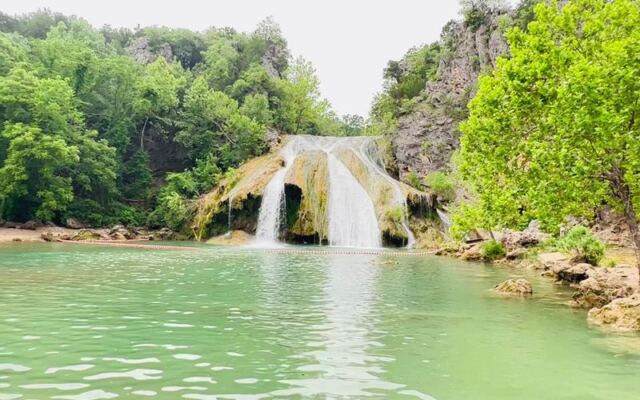
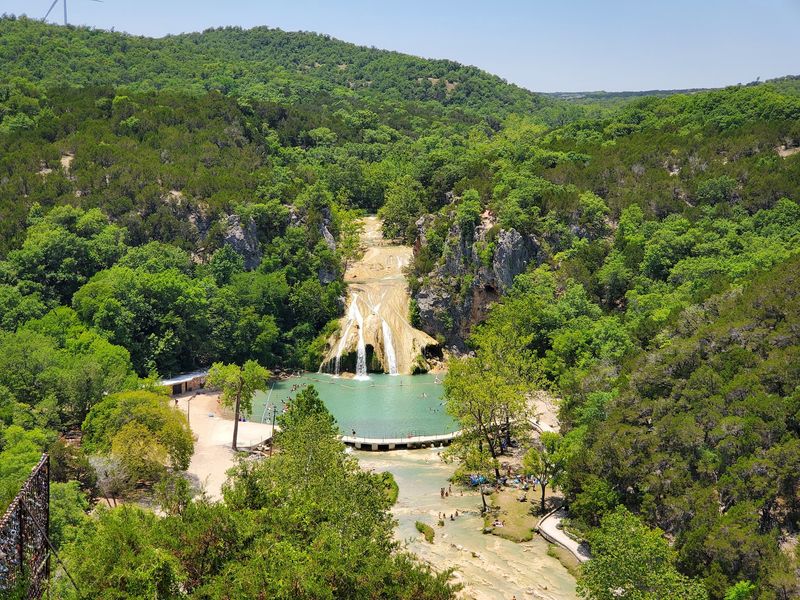
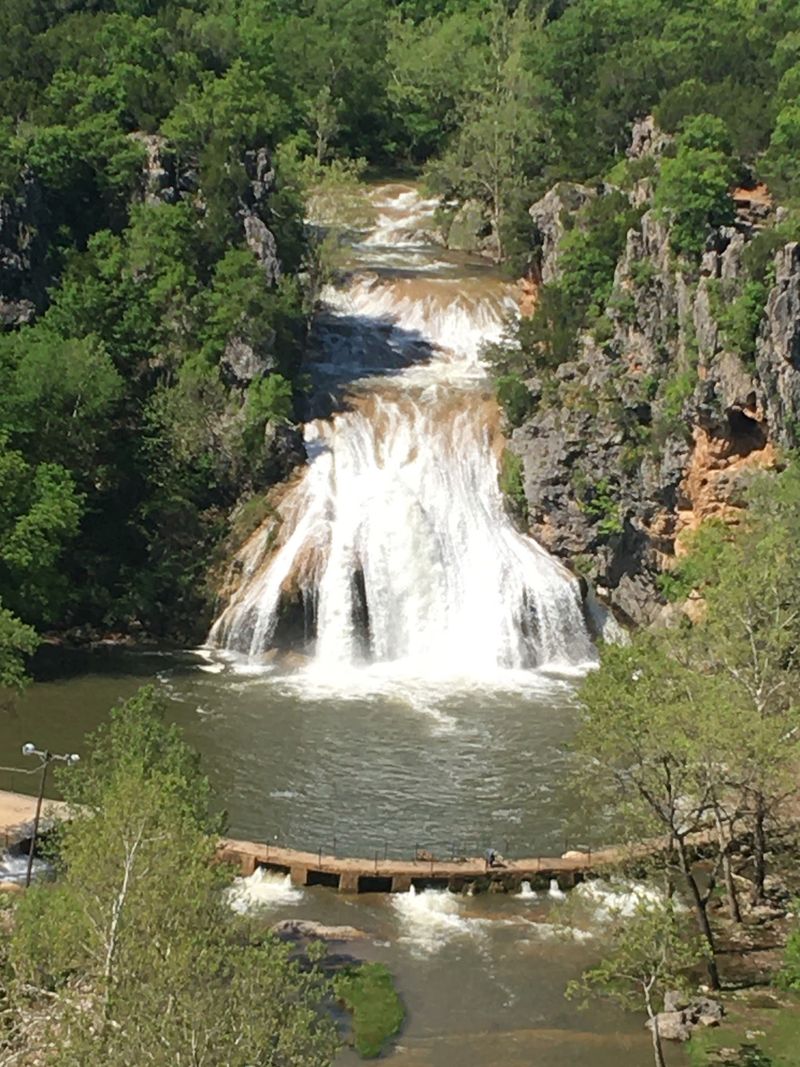
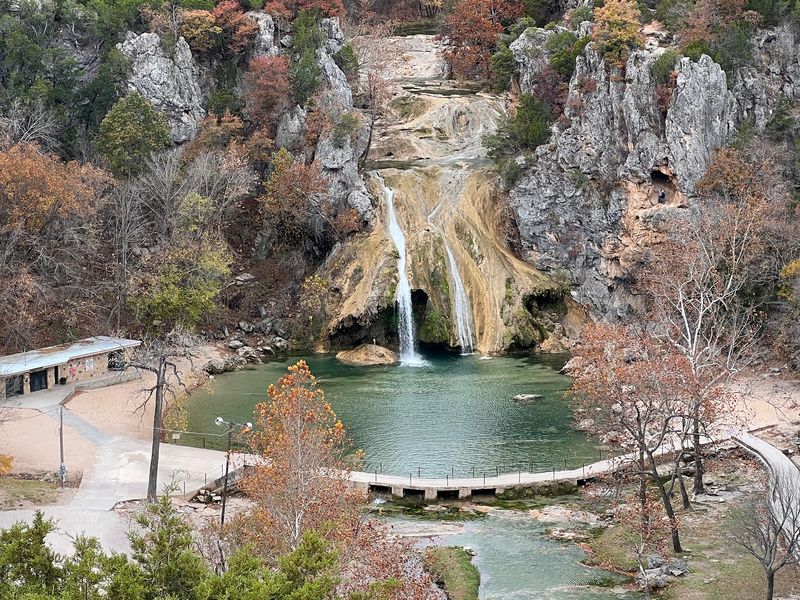
Somewhere in the rolling hills of Oklahoma, a 77-foot waterfall crashes into a crystal-clear natural swimming pool, and most people outside the state have never heard of it. Once you pull up to the entrance and catch your first glimpse of the falls framed by limestone bluffs and lush greenery, you quickly realize this place is something special.
Whether you came for a quick dip or a full day of exploring, Turner Falls has a way of turning a casual visit into a full-blown adventure. Pack your water shoes and a sense of curiosity because this park rewards every kind of visitor.
Where Turner Falls Fits on the Oklahoma Map
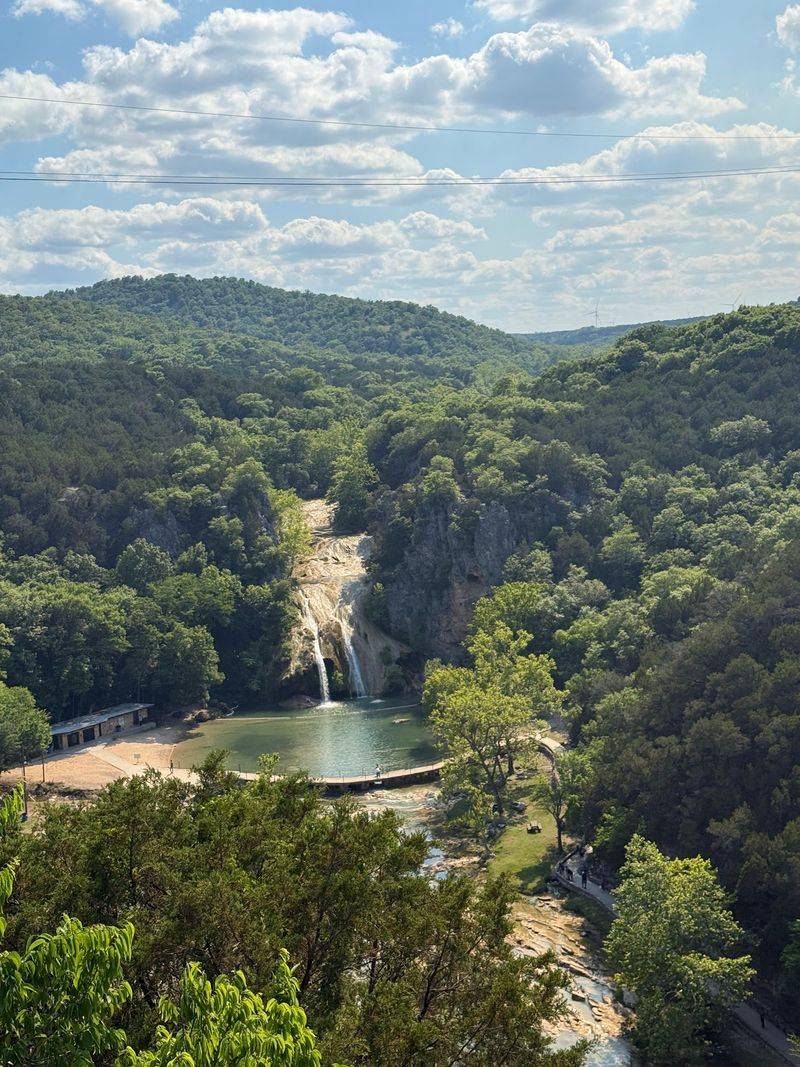
Tucked into the Arbuckle Mountains near the small town of Davis, Oklahoma, Turner Falls Park sits along Interstate 35, making it one of the most accessible natural wonders in the entire state. The drive from Oklahoma City takes roughly an hour and a half, and road-trippers coming from Dallas can reach it in about two hours.
That kind of convenience puts it squarely on the radar for weekend getaways and spontaneous summer day trips.
The park is set within a rugged landscape carved by Honey Creek, a spring-fed waterway that stays refreshingly cool even during the hottest stretches of an Oklahoma summer. Limestone bluffs rise dramatically on either side of the creek, creating a natural corridor that feels surprisingly remote despite its easy highway access.
Davis itself is a quiet town, so Turner Falls is genuinely the main attraction pulling visitors off the interstate. Knowing roughly where you are helps you plan your visit, since the park spans multiple levels connected by roads, trails, and a free shuttle service that moves guests between parking areas and the falls.
The Story Behind Oklahoma’s Tallest Waterfall
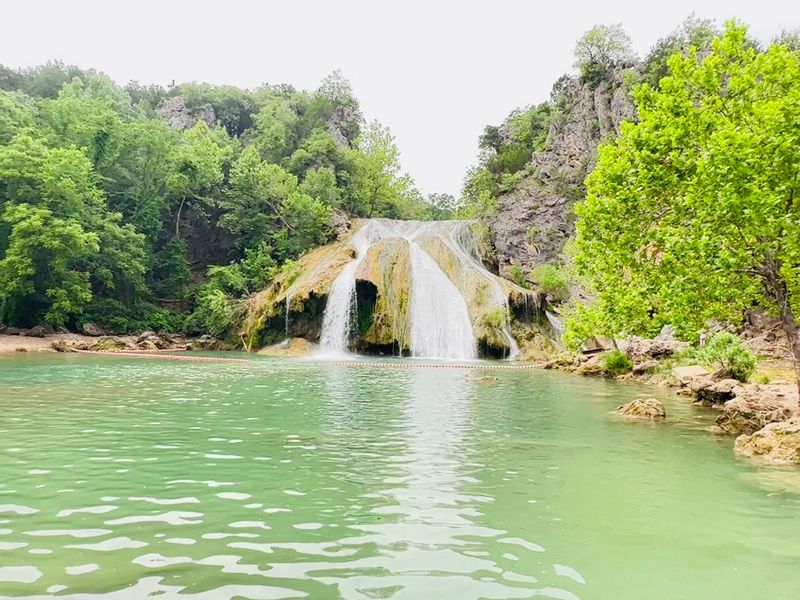
Standing 77 feet tall, Turner Falls holds the title of the tallest waterfall in Oklahoma, a fact that surprises plenty of visitors who assumed the state was too flat to produce anything this dramatic. Honey Creek feeds the falls year-round, sourced from natural springs that keep the water cool and relatively clear regardless of the season.
The creek’s spring-fed origin is a big part of what makes swimming here feel so different from a muddy river dip.
The park carries the name of Mazeppa Thomas Turner, a physician who purchased the land in the 1880s and recognized its recreational potential early on. Over the decades, the property changed hands and eventually became a public park managed by the City of Davis, which still operates it today.
That long history gives Turner Falls a layered character you do not always find at state-run parks. Generations of Oklahoma families have been coming here for decades, and the park has grown to accommodate everything from tent camping to cabin stays.
The waterfall itself, though, remains the anchor, drawing first-timers and repeat visitors alike with the same reliable rush of falling water and cool mist on a hot afternoon.
The Natural Swimming Pool at the Base of the Falls
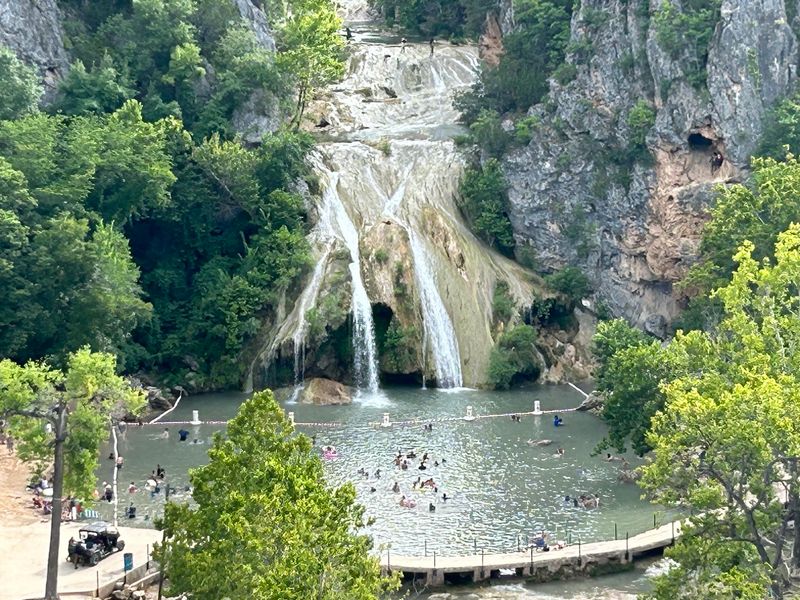
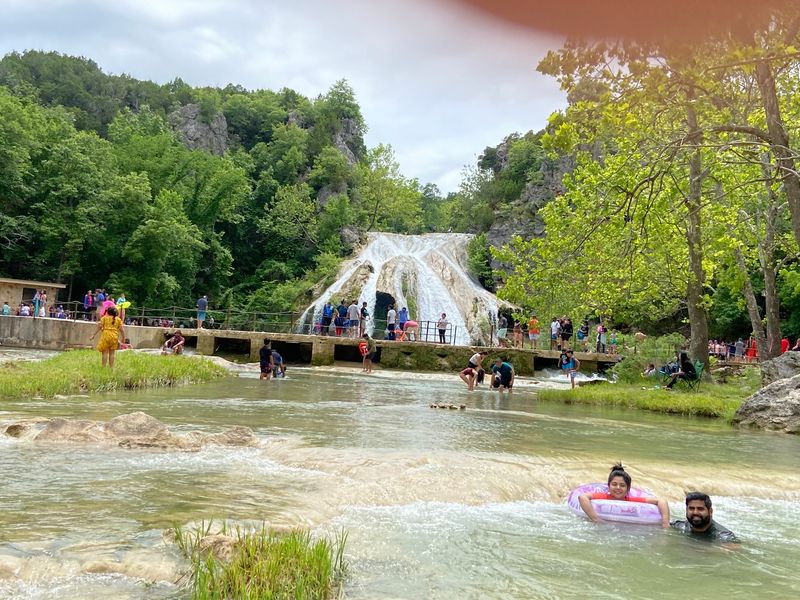
Few swimming experiences in Oklahoma compare to standing waist-deep in the pool at the base of Turner Falls while 77 feet of water roars down the limestone face above you. The pool is carved naturally into the rock, fed constantly by the cold spring water of Honey Creek, and it has a character that no chlorinated pool could replicate.
Smooth boulders line the edges, and the sound of the falls fills the air with a steady, almost meditative rush.
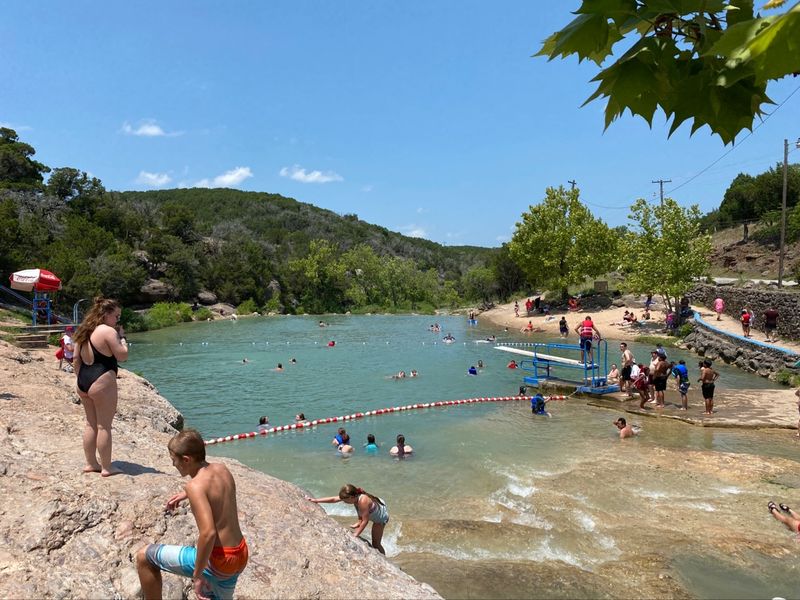
Visitors consistently mention how refreshing the water feels, especially on a scorching summer afternoon when the temperature climbs well above 90 degrees. The cooler temperatures near the base of the falls make it a favorite gathering spot, though it does get crowded on peak summer weekends.
Arriving early in the morning gives you the best chance of snagging a comfortable spot before the crowds fill in.
Children 12 and under are required to wear life jackets while swimming, and the park has them available at the onsite shop, so you do not need to haul your own from home. The rocky bottom means water shoes are a smart call for every member of the group, regardless of age or swimming ability.
Three Levels of Water Play Along Honey Creek
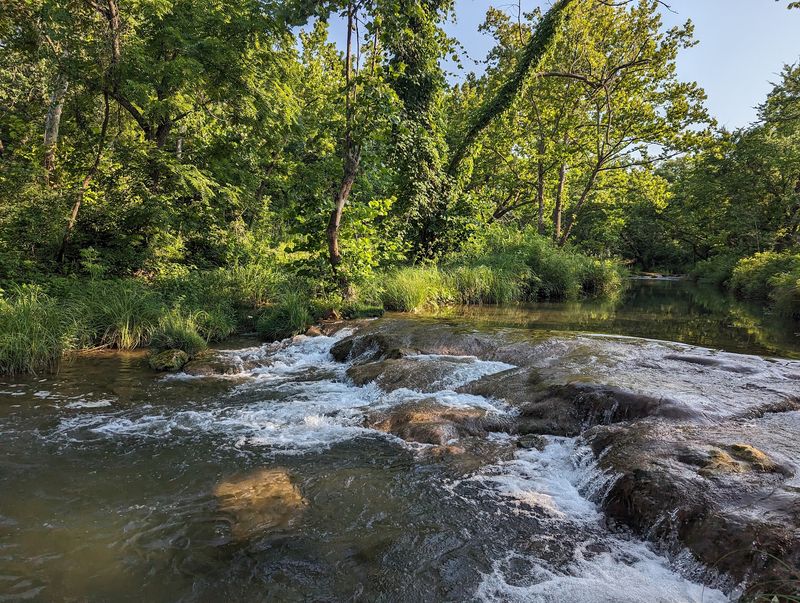
One of the most pleasant surprises at Turner Falls is discovering that the fun does not stop at the main waterfall. The park is organized into three distinct levels along Honey Creek, each offering its own swimming and relaxation experience with a noticeably different vibe from the others.
Level three, located near the upper parking area, tends to be the quietest and least crowded of the three. Visitors who make the effort to explore this section often find pristine water and plenty of room to spread out without competing for space.
The creek here runs clear and cool over smooth rocks, and the atmosphere feels more like a secluded swimming hole than a busy public park.
Closer to the main falls, the energy picks up considerably, with families, groups of friends, and curious explorers all converging on the most photographed stretch of the creek. A free shuttle runs between the upper parking areas and the falls, which is a genuine lifesaver on hot days when the last thing anyone wants is a long uphill hike back to the car.
Each level rewards a bit of wandering, and visitors who take the time to explore all three almost always leave with a favorite spot they want to return to.
The Castle That Nobody Expects to Find
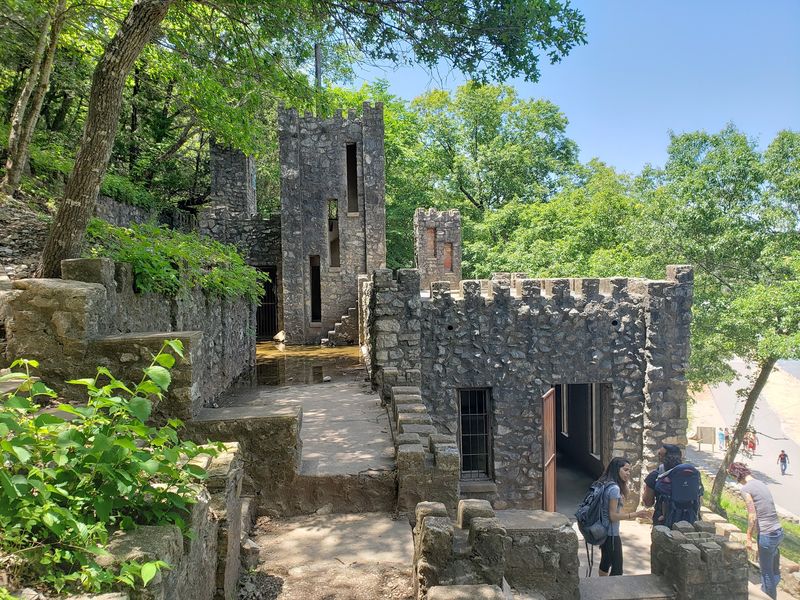
Somewhere between the waterfall and the upper trails, visitors stumble upon something that stops them in their tracks: a stone castle built into the hillside. The structure is not a ruin from some forgotten era of European settlement.
It was actually constructed by a former park owner, and its origin story adds a layer of quirky charm to an already interesting place.
The castle comes up in visitor conversations more than almost any other feature at the park, racking up mentions that rival even the waterfall itself. Families tend to gravitate toward it because kids absolutely love climbing the steep, slightly eroded stone stairs and poking their heads into the various rooms and alcoves.
The views from the upper portions of the structure offer a solid perspective on the surrounding landscape and the creek below.
Fair warning: the stairs are uneven in places, and a little caution goes a long way, especially with younger children in tow. One trail from the castle also connects to the second parking level, which can be handy for navigation if you are trying to move between sections of the park without backtracking.
The castle is free to explore once you have paid the park entrance fee, and it is genuinely one of those unexpected highlights that makes Turner Falls feel like more than just a waterfall.
Cave Exploration Above the Falls
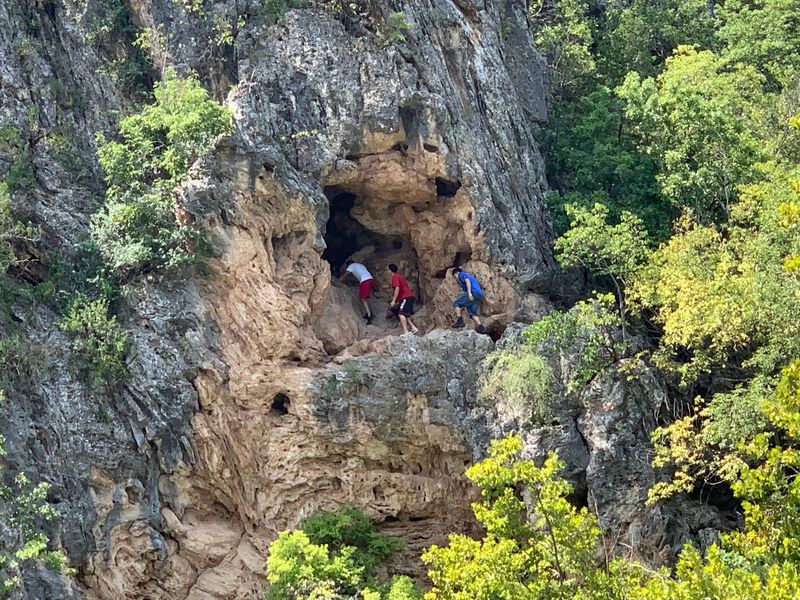
Hikers willing to push past the main swimming area and follow the trails uphill are rewarded with one of the park’s most talked-about secrets: a cave that sits above the waterfall. Getting there involves a trail that leads to a rock formation with a narrow gap at the base, just wide enough for a person to squeeze through.
On the other side, you emerge from a small cave opening positioned above the falls, which delivers one of the more dramatic viewpoints in the park.
The cave itself is not a deep or technical spelunking experience, but the novelty of squeezing through the gap and popping out on the other side with a bird’s-eye view of the waterfall below makes it genuinely memorable. Visitors mention it as a highlight that feels like a hidden reward for those willing to do a little extra legwork.
Caves are among the most frequently mentioned features in visitor feedback, suggesting that plenty of people discover this spot and want to tell others about it. The trails leading to the cave are rated easy to moderate, making them accessible to most visitors with reasonable fitness.
Sturdy shoes are a must since the rocky terrain can be slick, and the path is not always clearly marked, so a little patience with navigation pays off.
The Zip Line Adventure Over the Park
For visitors who want an adrenaline boost on top of the natural scenery, the zip line at Turner Falls delivers exactly that. Running through the park and offering elevated views of the surrounding landscape, the zip line has built up a loyal following among adventure-seekers who want to see the park from a completely different angle.
Zip line mentions pop up consistently in visitor conversations, sitting comfortably alongside the castle and caves as one of the park’s standout activity options. The experience adds an element of pure fun that goes well beyond passive sightseeing, and it tends to be a crowd-pleaser for groups that include teenagers or adults looking for something a little more exciting than a leisurely wade in the creek.
The zip line is a paid activity, separate from the general park entrance, so budget accordingly if you plan to add it to your visit. Availability can vary by season, and it is worth checking current operating conditions before you make it a centerpiece of your trip.
That said, visitors who have done it consistently describe it as worth the extra cost, especially when paired with the other outdoor activities the park offers. Combining the zip line with a swim and a hike makes for a genuinely full and satisfying day outdoors.
Hiking Trails Through the Arbuckle Mountains
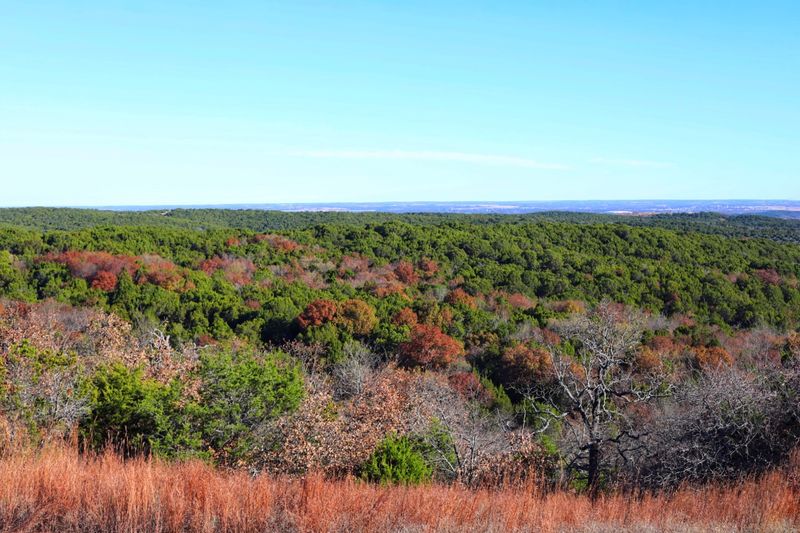
Beyond the swimming holes and the castle, Turner Falls Park contains a solid network of hiking trails that wind through the Arbuckle Mountains and offer a quieter, more contemplative side of the park. The trails range from easy walks along the creek to moderate climbs that reward hikers with panoramic views of the surrounding hills and valleys.
A married couple who visited on a Sunday described spending the morning hiking the trails on level three before cooling off at the river, which captures the natural rhythm of a well-paced visit to the park. The upper trails tend to stay less crowded than the main swimming areas, making them ideal for anyone who wants to absorb the scenery without the background noise of a busy summer crowd.
Signage throughout the park has drawn some criticism from visitors who found navigation confusing, particularly when trying to locate specific trails or transition between levels. Picking up a map at the entrance is helpful, though even that has received mixed reviews for clarity.
Treating the trails as an opportunity for genuine exploration rather than a structured route tends to produce a more enjoyable experience. Cedar trees, limestone formations, and occasional wildlife sightings make the hiking here consistently rewarding for those who take their time.
Camping Options From Tent Sites to Cabins
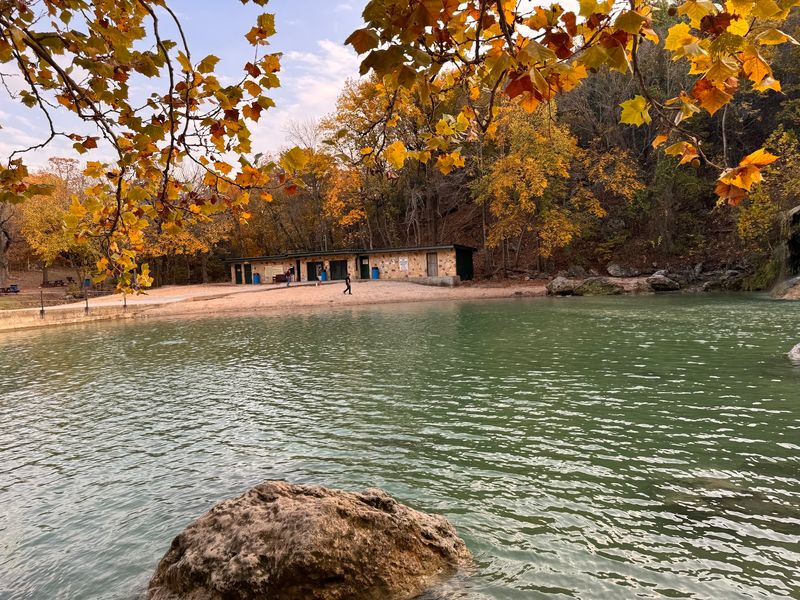
Spending a single day at Turner Falls is satisfying, but staying overnight transforms the visit into something altogether different. The park offers a range of overnight options that span from basic tent camping and teepee spots to fully equipped cabins, giving visitors the flexibility to choose an experience that matches their comfort level and budget.
Cabins come up frequently in visitor conversations among people who enjoyed their day trip and immediately started thinking about a return visit with a longer stay. The idea of waking up inside the park, stepping outside to the sound of Honey Creek, and having the trails and swimming areas available before the day-trippers arrive has obvious appeal.
Camping spaces are plentiful, and the park includes restroom facilities throughout the grounds.
The campground at level three tends to offer a more peaceful setting compared to the busier areas near the main falls. Visitors have noted that bringing a canopy, folding chairs, and a cooler makes for a comfortable setup whether you are camping or just spending a long day at the park.
Grills and charcoal are welcome, which adds a classic outdoor cookout dimension to the overnight experience. For families or groups looking for a budget-friendly Oklahoma getaway, Turner Falls camping checks a lot of the right boxes.
Snack Bars, Food Trucks, and Refreshment Stops
Nobody should show up to Turner Falls expecting a full-service dining experience, but the park’s snack options do a solid job of keeping energy levels up during a long day of swimming and hiking. Food trucks and a small snack bar operate within the park, offering basics like snow cones and water at prices that visitors consistently describe as reasonable given the setting.
Snow cones in particular have earned genuine affection from visitors who welcomed the cold, sweet relief on a hot afternoon. Getting a lot of refreshment for a small amount of money is a recurring theme in visitor feedback about the park’s food and drink offerings, which is a welcome contrast to the sometimes steep entrance fees.
For visitors planning to spend an entire day at the park, bringing your own food and drinks is a smart strategy. The park permits coolers, and having your own setup gives you more control over meal timing and food quality.
Some visitors have spotted others bringing portable grills, which speaks to how relaxed the overall atmosphere is around food. The gift shop near the falls also offers a small selection of snacks and souvenirs, so you will not be completely out of options if hunger strikes unexpectedly between activities.
Planning ahead just makes the day run more smoothly.
Entrance Fees and What You Get for the Price
Admission pricing at Turner Falls has been a recurring topic among visitors, with fees that have shifted over the years and vary depending on the source you consult. Some visitors have reported paying anywhere from $9 to $25 per adult depending on the season, the day of the week, and what was being charged at the gate.
Checking the official park website before your visit is the most reliable way to confirm current pricing and avoid surprises at the entrance.
The park’s entrance fee covers access to the waterfall, all three creek levels, the castle, the cave trails, the hiking paths, and the shuttle service between parking areas. When you add up everything included in that single admission price, most visitors conclude the value is fair, even if the upfront cost gives some people pause.
On busy summer weekends and holidays, expect to wait in line at the entrance. One visitor mentioned arriving early on July 4th and still waiting about an hour to get in, which underscores the importance of timing your arrival.
Weekday visits and off-peak hours tend to move much faster and reward early arrivers with a more spacious, relaxed experience throughout the park. Bringing cash or confirming payment options in advance is always a safe move when visiting smaller parks like this one.
Safety Tips for Rocky Terrain and Slippery Surfaces
Water shoes are not optional at Turner Falls. They are genuinely necessary.
The rocky creek bottom and the stone surfaces surrounding the falls are notoriously slippery when wet, and multiple visitors have flagged this as something to take seriously before you arrive. Smooth-soled sandals or bare feet significantly increase the risk of a slip, especially on the steeper paths near the waterfall.
The descent toward the main pool involves a rocky path that can feel precarious, particularly when it is crowded and people are moving in both directions. Caution and patience go a long way here, and keeping a hand free to steady yourself against the rock face is a smart habit.
Some bridge sections within the park also experience water overflow, so watching your footing extends beyond just the swimming areas.
Children 12 and under are required to wear life jackets in the water, a rule the park enforces for good reason given the current and the rocky environment. Life jackets are available for rental or loan at the onsite shop, so you do not need to bring your own.
For visitors with mobility considerations, the paved paths near the main parking areas are manageable, but much of the park involves uneven terrain that requires solid footing and reasonable physical confidence. Knowing what to expect helps everyone have a safer, more enjoyable visit.
Getting There and Navigating the Park
Turner Falls sits right off Interstate 35 near Davis, Oklahoma, which makes it one of the easiest major natural attractions in the state to reach without any complicated back-road navigation. From Oklahoma City, the drive runs about 90 minutes south on I-35.
Visitors coming from Dallas can expect roughly a two-hour drive heading north on the same highway, making it a natural midpoint stop for anyone traveling between the two cities.
Once inside the park, navigation gets a little trickier. The park spans multiple levels connected by a road that loops through the property, and some visitors have found the signage less than intuitive when trying to locate specific areas or trails.
Picking up a map at the entrance helps, though the maps themselves have drawn some criticism for not being detailed enough to fully orient first-time visitors.
A free shuttle service runs between the upper parking areas and the falls, which is a major convenience especially when the lower lots fill up on busy days. The shuttle driver assists passengers getting on and off, which is particularly helpful for families with young children or anyone carrying a lot of gear.
Arriving before 10 a.m. on a summer weekend significantly improves your parking situation and gives you a head start on the crowds before the main rush arrives.
Who Will Love Turner Falls Most and When to Visit
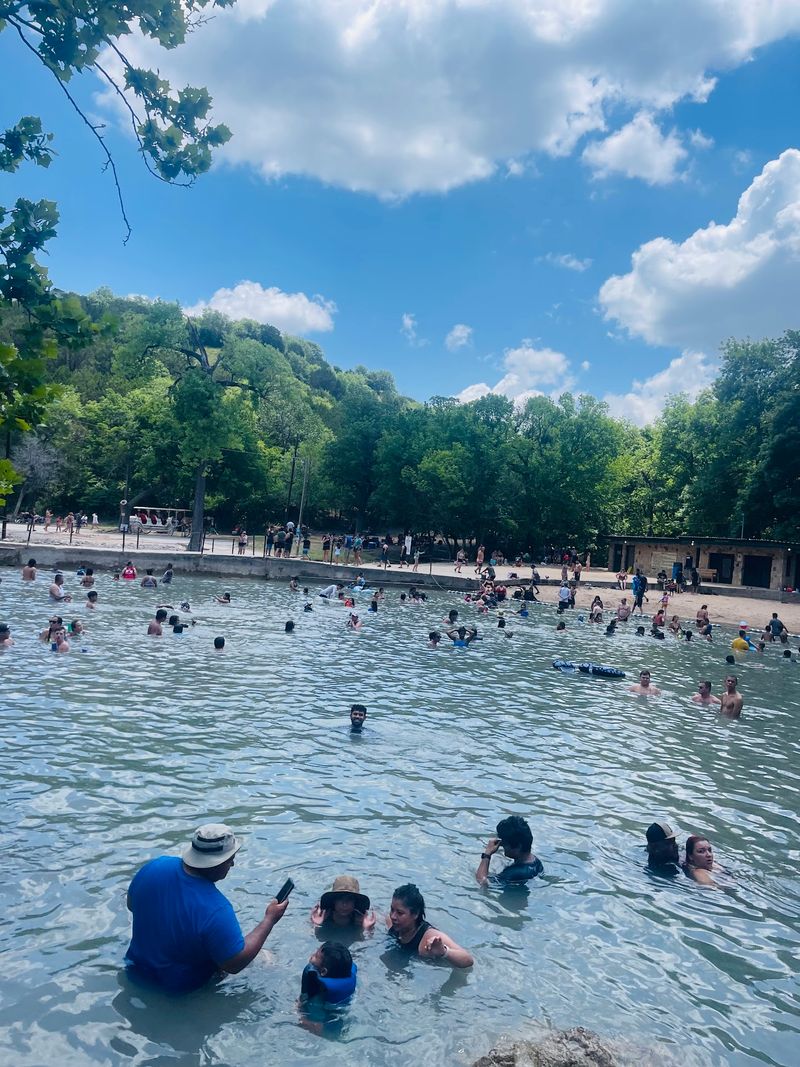
Families with kids tend to get the most out of Turner Falls, and the park clearly caters to that audience with its combination of shallow swimming areas, life jacket requirements, castle exploration, and easy shuttle access. Young children who are not strong swimmers still have plenty to enjoy in the shallower stretches of the creek near the castle, where the water stays calm and the rocky banks provide natural seating.
Adventure-oriented visitors who want more than a swim will find the cave trail, the zip line, and the hiking network more than enough to fill a day. Groups of friends looking for a fun outdoor escape consistently rate the park as a satisfying destination, particularly those who appreciate natural scenery paired with a handful of activity options.
Couples who enjoy hiking and scenic spots have found the upper trails and quieter creek sections especially appealing.
Summer is peak season, and the park earns its crowds during those months. Visiting on a weekday or arriving right at opening gives you the best experience during the busy season.
Spring and fall offer a noticeably quieter atmosphere, and the park can be genuinely beautiful in cooler weather when the foliage shifts and the crowds thin out considerably. A rainy day visit even has its advocates, since the waterfall runs fuller and the paths stay relatively uncrowded.
Share this story