Oklahoma has a way of hiding its most fascinating stories behind quiet country roads and rusted fence lines. Somewhere east of Stillwater, a cluster of weathered old buildings sits on a private stretch of land, almost invisible to anyone who doesn’t know where to look.
Pull up to the right spot and you’ll find yourself face to face with the remnants of a frontier town that once buzzed with outlaws, lawmen, and legendary confrontations. Few places in the state pack this much history into this little space.
Where Ingalls Stands Today
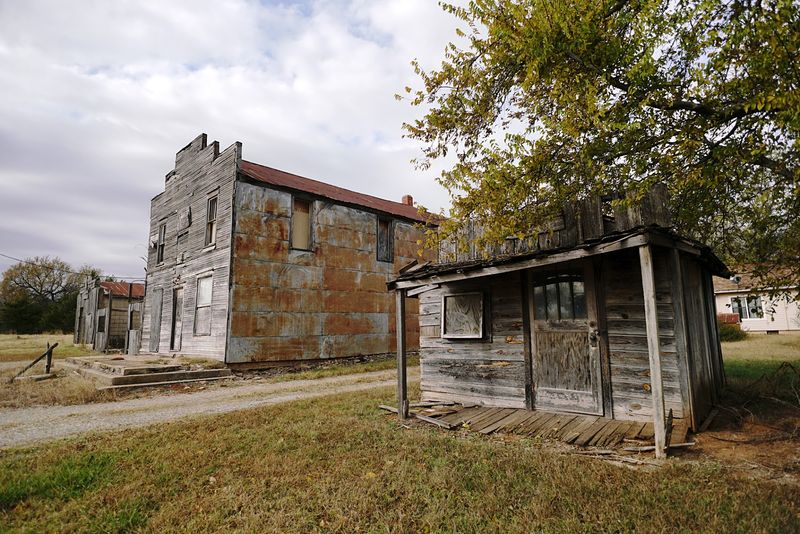
East of Stillwater along a quiet stretch of rural Payne County, the old buildings of Ingalls sit tucked against the Oklahoma landscape like a secret the prairie has been keeping for over a century. The address puts you on East 19th Avenue, accessible by either a dirt road or paved route, depending on which way you navigate in.
Either path eventually brings you face to face with structures that feel entirely out of place with the surrounding farmland.
Ingalls was once a small but lively frontier settlement, and what remains today is a handful of historic buildings sitting on private property. Visitors can pull right up and look around, but respectful distance matters here since the site sits in what amounts to someone’s backyard.
A no-trespassing sign makes the boundaries clear.
The coordinates place the site at roughly 36.10 degrees north latitude, well within easy reach of Stillwater for a half-day road trip. For history buffs chasing Oklahoma’s forgotten corners, just finding the spot feels like its own small victory.
The location alone carries a quiet, eerie weight that starts the experience before you’ve even stepped out of the car.
The Frontier Town That Disappeared
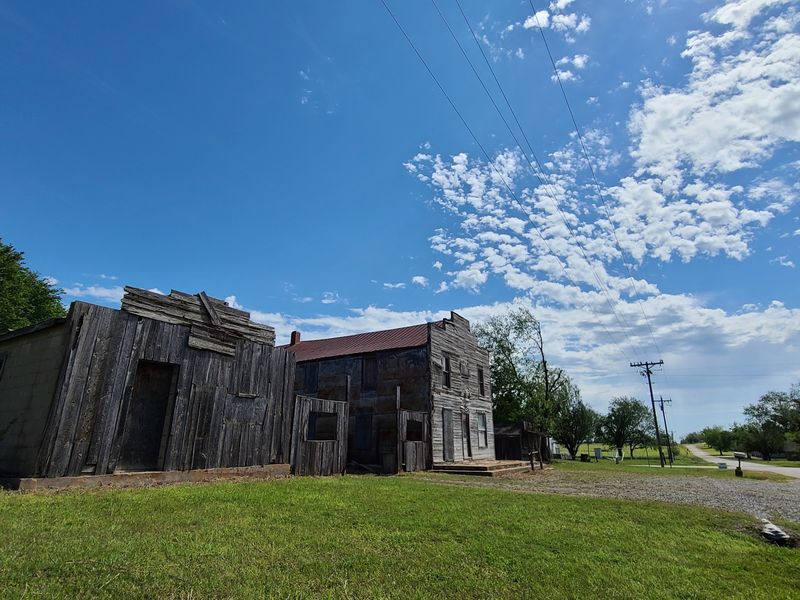
Ingalls once had all the hallmarks of a booming Oklahoma Territory settlement. During the early 1890s, it served as a regular stop for cowboys, traders, and travelers moving through the region, and its central location made it attractive to people on both sides of the law.
The town had a post office, saloons, a general store, and enough foot traffic to keep things lively on any given afternoon.
Like many small frontier towns of its era, Ingalls never quite grew into the city its early residents may have imagined. The arrival of railroads in nearby communities pulled commerce and population away, and Ingalls slowly faded from the map.
By the early twentieth century, it had largely been abandoned, leaving behind only a few structures and a whole lot of local legend.
What makes Ingalls different from other forgotten Oklahoma settlements is the weight of a single event that cemented its name in territorial history. A confrontation between a notorious outlaw gang and a team of deputy marshals in 1893 put the town on the historical record permanently.
That story is why people still make the drive out here today, camera in hand and curiosity running high.
The 1893 Confrontation That Defined the Town
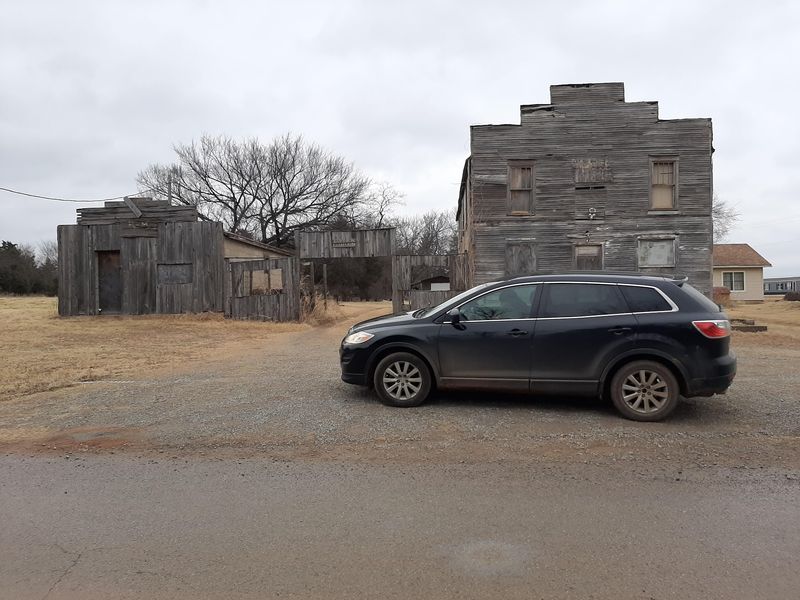
Few moments in Oklahoma territorial history hit as hard as the confrontation that unfolded in Ingalls on September 1, 1893. A group of deputy U.S. marshals rode into town hoping to catch members of the Dalton-Doolin outlaw gang, who had been using Ingalls as a resting point between their various escapades across the territory.
What followed was one of the most intense and widely discussed lawman-outlaw encounters of the entire frontier era.
The Dalton-Doolin gang, sometimes called the Wild Bunch, had built a reputation for bold and brazen activity across the Oklahoma Territory and surrounding states. Ingalls gave them a relatively safe place to lay low, and the local population had grown somewhat accustomed to their presence.
When the marshals arrived in covered wagons trying to blend in, the gang was already well settled inside the hotel and nearby establishments.
The resulting confrontation involved roughly twenty lawmen squaring off against the outlaw group in the open streets of the tiny town. Visitors who know this backstory feel it the moment they step out of their vehicle.
Standing in the approximate space where it all happened, with nothing but open Oklahoma sky overhead, has a way of making history feel very immediate and very real.
The Buildings and Their Complicated History
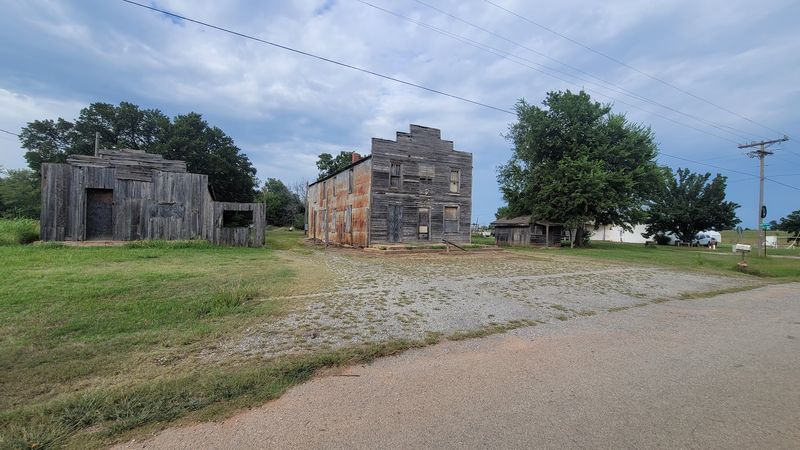
Sorting out exactly what you’re looking at when you arrive at Ingalls takes a little patience, because the history of the structures themselves is layered and occasionally debated among visitors. The most detailed account from someone with firsthand knowledge explains that the standing buildings are original but were not the ones involved in the 1893 confrontation.
A local resident built them in the 1920s to house workers from nearby oil fields, calling the establishment the Ingalls Hotel.
Decades later, when the Owens family acquired the property around forty to fifty years ago, they repurposed the buildings to serve as replicas of the hotel and saloon connected to the famous shootout. They hosted historical reenactments on the grounds until around 2011, which brought a steady stream of visitors and kept the legend alive for a new generation of Oklahoma history enthusiasts.
A small set of plaques near the buildings offers some context, though visitors frequently note they wish there were more detailed signage explaining the full story. Three structures still stand on the property, each carrying its own quiet character.
The general store sits alongside the hotel, and together they create a scene that feels authentically frontier even if the full picture is more nuanced than a single glance suggests.
What the Grounds Actually Look Like Up Close
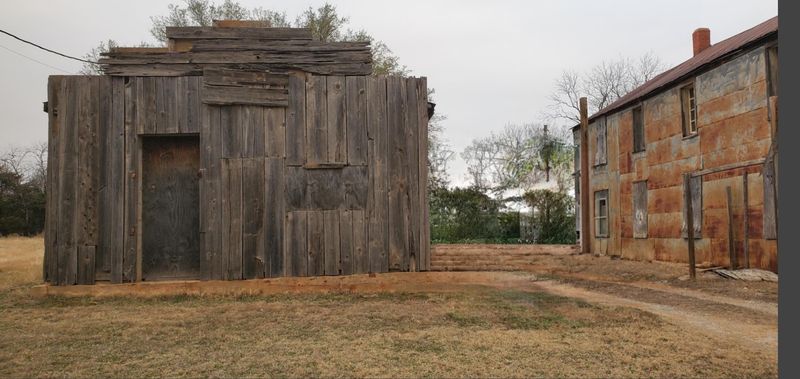
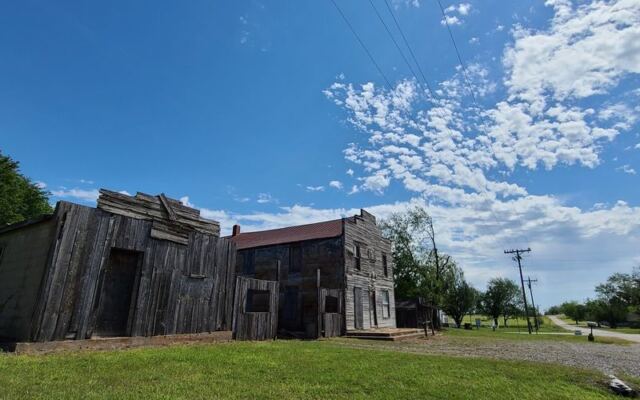
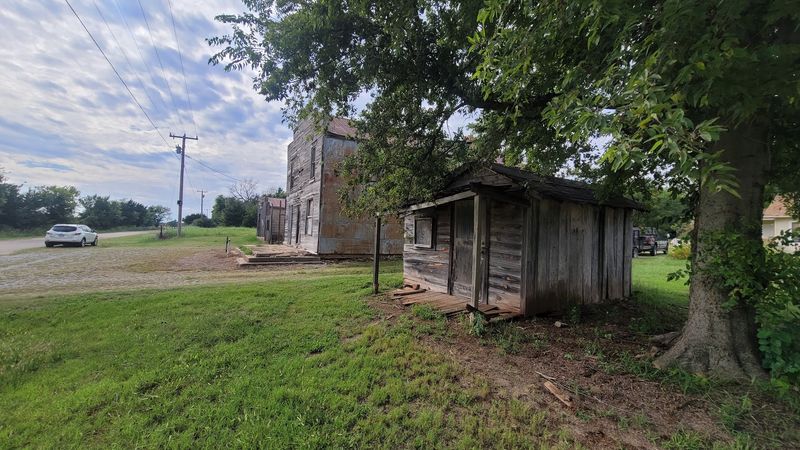
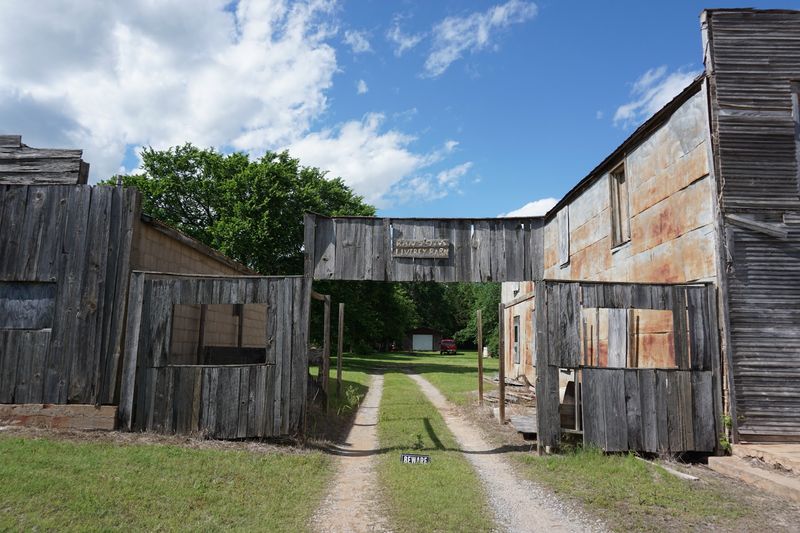
Arriving at Ingalls for the first time is a genuinely striking experience, even if the site is modest by most tourist-destination standards. Three old buildings cluster together on a stretch of open land, their weathered wooden facades worn down by decades of Oklahoma sun and wind.
The structures have a rough, honest beauty that polished historic restorations rarely manage to replicate.
Visitors can pull right up to the buildings from the road, which makes casual observation easy even for those who prefer to stay near their vehicle. The surrounding landscape is flat and open, with the kind of wide prairie horizon that makes you feel like time has genuinely slowed down.
On a clear day, the scene photographs beautifully, especially in the slanted light of late afternoon.
A small cemetery is also located nearby, which some visitors mention as an added layer of historical atmosphere. The combination of aged buildings, open grassland, and the adjacent burial ground gives the site a layered, contemplative mood that goes beyond simple curiosity.
People who love old structures, frontier aesthetics, and the visual texture of genuinely aged wood tend to find Ingalls quietly captivating, even without any formal exhibits or guided interpretation on offer.
Visitor Experience and What to Expect
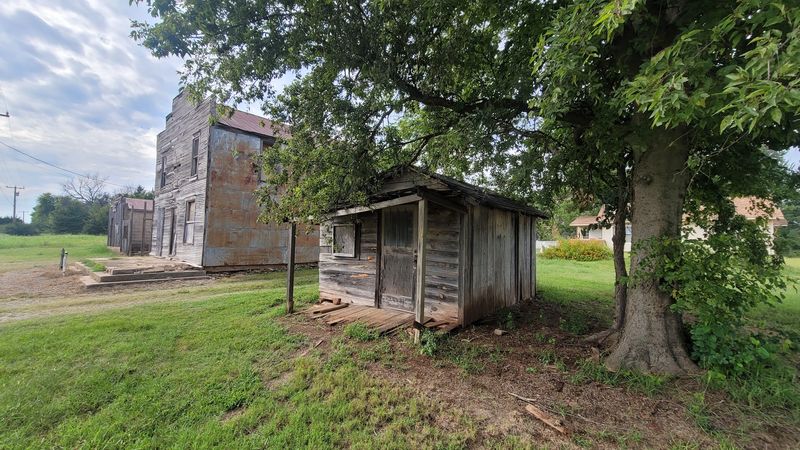
Managing expectations before making the drive is genuinely useful advice for anyone planning a trip to Ingalls. The site does not have a visitor center, admission booth, gift shop, or guided tours of any kind.
What you get is a free, self-guided look at historic structures on private property, with a small set of plaques providing the only on-site interpretation. For some visitors, that minimalism is part of the appeal.
Access is open around the clock, every day of the week, which gives road-trippers a lot of flexibility when scheduling a stop. Whether you arrive at dawn for golden-hour photography or pull in on a Sunday afternoon between other Stillwater-area activities, the site is technically accessible at any hour.
That said, being mindful of the property boundaries and the people who live nearby is strongly encouraged by those who have visited before.
Visitors consistently mention that the experience rewards those who arrive with some historical knowledge already in hand. Reading up on the 1893 confrontation and the Dalton-Doolin gang before you go transforms the visit from a puzzling roadside stop into something genuinely moving.
Showing up cold, without context, tends to leave people underwhelmed, while arriving informed tends to make the whole trip feel worthwhile and memorable.
Who Will Get the Most Out of a Visit
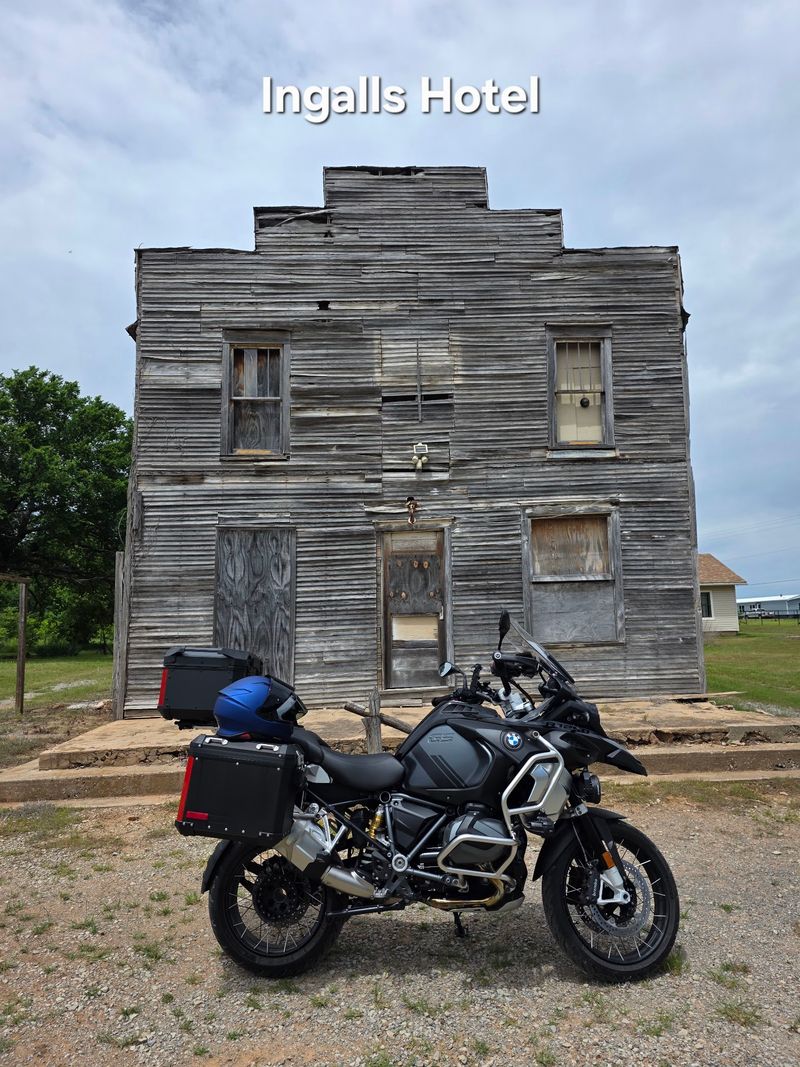
Oklahoma history lovers are the clear primary audience for Ingalls, full stop. Anyone who has spent time reading about the territorial period, the outlaw gangs that roamed the plains, or the deputy marshals who chased them will feel an immediate and personal connection to standing in this spot.
The sense of being present at a real location tied to a real historical moment is hard to manufacture, and Ingalls delivers it authentically.
Motorcycle riders also show up fairly often, with visitors noting that it makes for a satisfying stop on a scenic country ride through Payne County. The roads leading to Ingalls pass through pleasant rural Oklahoma landscape, and the site itself gives riders a reason to pause, stretch, and soak in some local flavor.
Ghost town enthusiasts and people who collect offbeat roadside experiences tend to find it rewarding as well.
Families with kids who are at the right age to appreciate frontier history can make a meaningful educational stop here, though younger children may not find much to hold their attention without prior storytelling. Photographers chasing rustic textures and weathered architectural details will find plenty of material.
Casual tourists looking for a polished attraction with amenities will likely feel the distance wasn’t worth the journey, so honest self-assessment before the drive is the best preparation.
Getting There from Stillwater
Reaching Ingalls from Stillwater is a straightforward drive that takes roughly fifteen to twenty minutes depending on your exact starting point in the city. Head east out of Stillwater and follow the roads toward East 19th Avenue in Payne County, where the site sits at coordinates near 36.10 north and 96.88 west.
Plugging the address directly into a navigation app is the most reliable approach, as the surrounding roads offer limited landmarks for casual wayfinding.
Two routes lead to the property: one follows a paved road and the other comes in on a dirt road. Both are manageable for standard vehicles, and visitors report being able to pull right up to the buildings without any complicated maneuvering.
Larger vehicles should have no trouble, though muddy conditions after heavy rain could make the dirt road option a bit more adventurous than intended.
Stillwater itself offers a natural home base for the trip, with plenty of dining options, fuel stops, and other points of interest to round out a full day of exploration. Pairing the Ingalls visit with other Payne County stops makes the drive feel more purposeful.
Several visitors mention heading into Stillwater for a meal after the stop, turning a simple historical detour into a satisfying half-day Oklahoma road trip.
Final Thoughts on Ingalls Hotel as a Destination
Ingalls Hotel is not the kind of destination that impresses everyone equally, and that honesty is worth holding onto before you make the trip. Visitors who arrive expecting a fully developed historic site with interpretive exhibits and well-maintained grounds may leave feeling like the drive wasn’t worth the effort.
The condition of the buildings has fluctuated over the years, and the limited signage leaves a lot of the storytelling work to the visitor.
For a specific kind of traveler, though, Ingalls delivers something genuinely rare. Standing in a place where a legendary 1893 confrontation between outlaws and lawmen actually unfolded, surrounded by structures that have been part of the land for a century, carries a weight that no museum replica can fully replicate.
The free admission and always-open access make it an easy addition to any Stillwater-area itinerary without much commitment required.
Come with context, come with respect for the private property, and come with reasonable expectations, and Ingalls will reward you. Skip the deep research and drive two hours on a whim, and you might just see some old boards in a field.
The difference between those two experiences is entirely in the preparation, which is honestly true of most of Oklahoma’s best-kept historical secrets.
Share this story