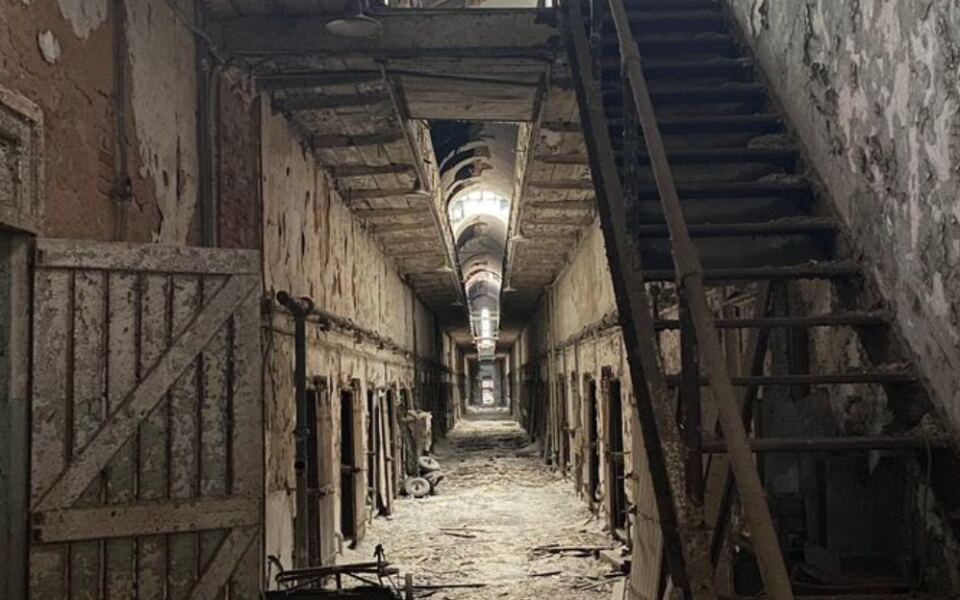
Some places carry a weight that no ghost story could ever manufacture on its own. The events that happened there, documented, verified, and in many cases deliberately preserved, are what make them genuinely unsettling.
From underground bone chambers to abandoned nuclear cities, these locations remind us that reality can be far stranger and more chilling than fiction. Each place on this list earned its reputation the hard way, through real history.
Paris Catacombs, France
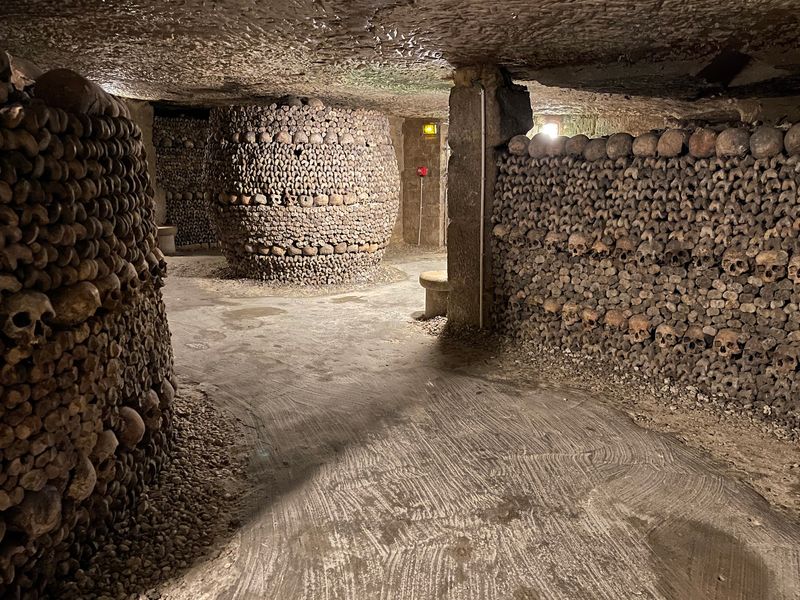
Six million people rest beneath the streets of Paris, and most of them never had a say in the arrangement. The Catacombs were not built for atmosphere.
They were a public health solution, created after overcrowded city cemeteries began contaminating wells and spreading disease in the late 1700s.
Beginning in 1785, bones were transferred at night into abandoned limestone quarries below the city. The former Saints-Innocents cemetery was among the first to be cleared.
The site officially became the Paris Municipal Ossuary in 1786 and opened to visitors by appointment just over two decades later.
Skulls and femurs were later arranged into deliberate walls and decorative patterns, giving the tunnels their theatrical look. But nothing down there is a prop.
Every bone belonged to a real person. The Catacombs stretch roughly 300 kilometers beneath the city, though only a small section is open to the public.
Unauthorized explorers called cataphiles still sneak into the restricted zones regularly. The effect on visitors is hard to shake, not because the place is spooky by design, but because the sheer scale of human remains makes mortality feel impossible to sidestep.
Alcatraz Island, California
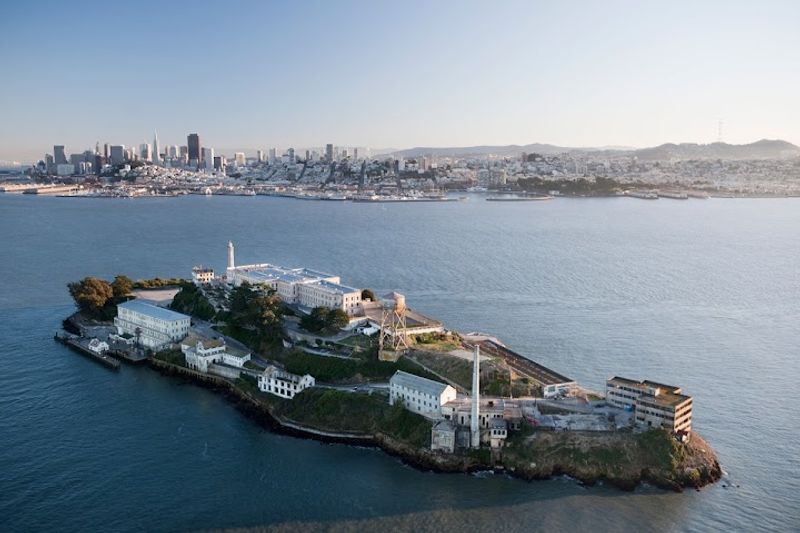
Before Hollywood got hold of it, Alcatraz was already doing a fine job of being terrifying on its own. The island sits in San Francisco Bay surrounded by freezing, fast-moving water, and that was entirely the point.
Officials chose the location precisely because escape felt impossible.
Alcatraz served as a military fortress before becoming a federal penitentiary in 1934. It held men considered too dangerous or difficult to manage elsewhere in the federal prison system.
Al Capone and Robert Stroud were among its most famous residents. The facility operated until 1963, when maintenance costs and deteriorating infrastructure finally forced its closure.
Walking through the preserved cellblocks today, the physical isolation hits immediately. Cells measure roughly 1.5 by 2.7 meters.
The sounds of San Francisco drifting across the water on quiet evenings reportedly made isolation even more psychologically difficult for inmates. Rangers now lead tours through D Block, where inmates in solitary could go days without seeing daylight.
No supernatural explanation is needed here. The island was engineered from the ground up to break people down, and that engineering is still completely intact for anyone willing to take the ferry out.
Eastern State Penitentiary, Pennsylvania
Charles Dickens visited Eastern State Penitentiary in 1842 and walked out horrified. That reaction tells you quite a lot about what the place was built to do.
When it opened in Philadelphia in 1829, its designers genuinely believed that total isolation from other human beings could reform criminals.
Prisoners lived, worked, ate, and exercised alone. They were hooded when moved through the facility so they could not make eye contact with other inmates.
The radial design, with cellblocks fanning out from a central hub, was copied by prisons across Europe and beyond. It looked impressive on paper and felt crushing in practice.
The population eventually swelled to around 1,700 people during the 1920s, far beyond the 250 the building was designed to hold. Eastern State closed in 1970 and was left largely untouched.
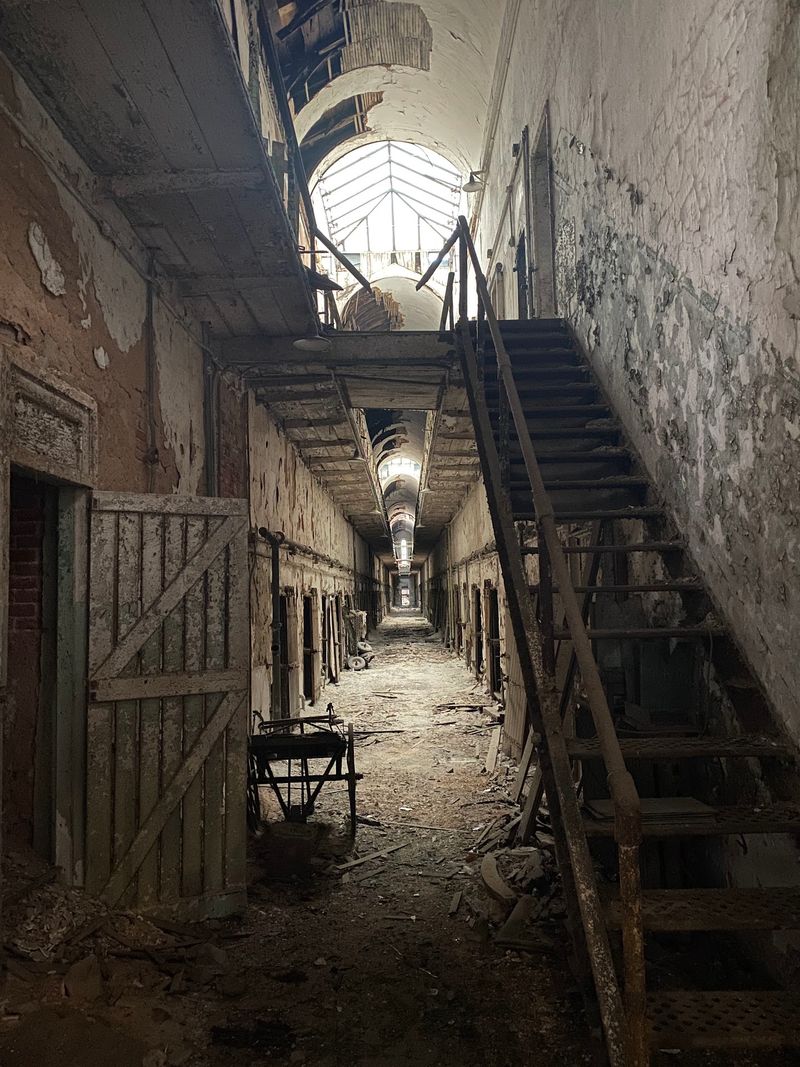
Today visitors walk through cellblocks where paint peels in long strips, vegetation pushes through cracked ceilings, and the original architecture still communicates its intended message with uncomfortable clarity. The ruin is not dressed up.
The deterioration is part of what makes the place so affecting. You can read exactly what the system was designed to do just by looking at the layout.
Tower of London, England
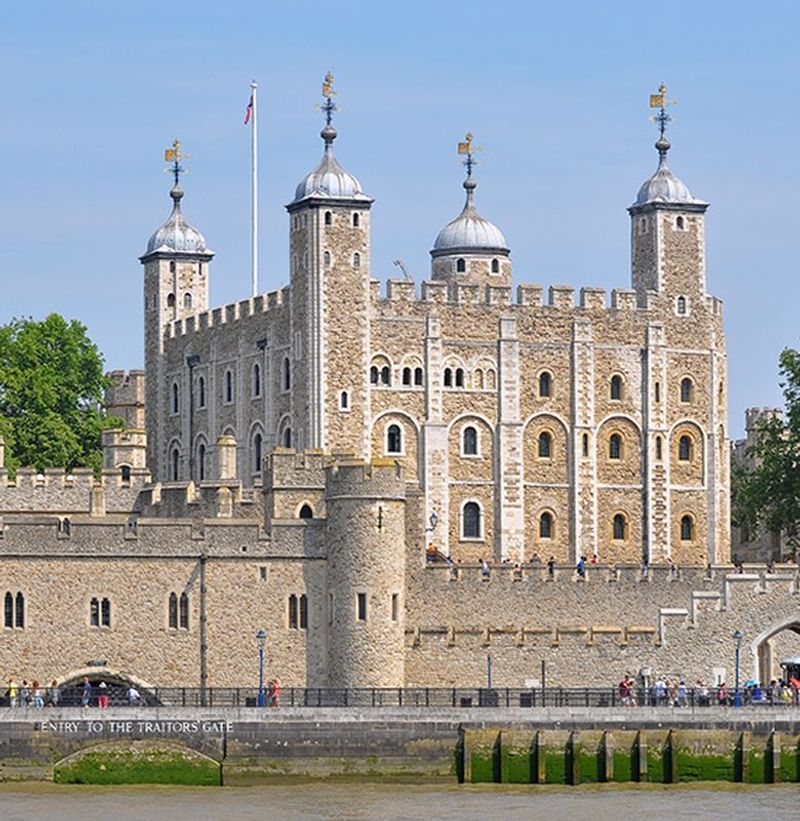
Royalty, religious opponents, political rivals, and inconvenient relatives all ended up inside the Tower of London at one point or another. The fortress was not originally built as a prison, but incarceration became one of its most consistent functions over the centuries.
Historic Royal Palaces records that hundreds of prisoners were held within its walls.
Anne Boleyn was imprisoned and executed here. So was Lady Jane Grey, who held the English crown for just nine days before losing both it and her head.
A young Elizabeth I was held in the Tower before she became queen, which must have made her later visits feel extraordinarily strange. Executions inside the Tower were actually fairly rare and generally reserved for high-status prisoners.
The larger public execution site was nearby Tower Hill, where an estimated 125 people died.
The castle has been a royal residence, a treasury, an armory, a zoo, and a mint over its long history. The Crown Jewels are still kept there.
What makes the Tower genuinely unsettling is that its intimidating reputation is built entirely on documented state power. Kings and queens decided who went in and whether they came out.
That is not folklore. That is the historical record.
Sedlec Ossuary, Czechia
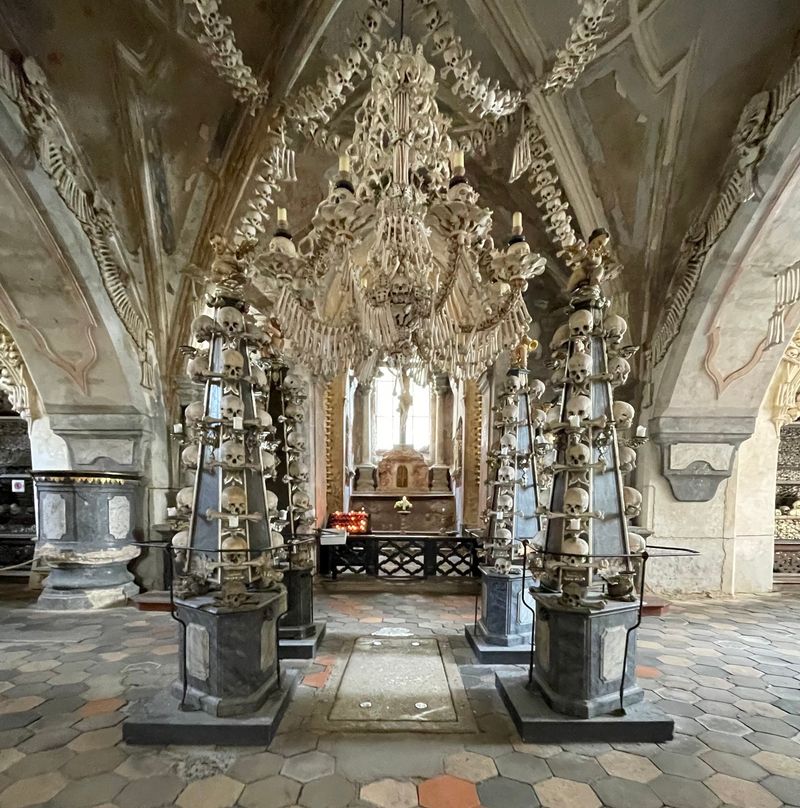
Somewhere in Kutna Hora, a woodcarver named Frantisek Rint spent the year 1870 arranging human bones into chandeliers, coats of arms, and garlands. The result is one of the most extraordinary and quietly philosophical spaces in Europe.
The Sedlec Ossuary was not designed to shock. It was designed to remind.
The surrounding cemetery grew severely overcrowded over the centuries following waves of plague, famine, and war. When graves were cleared to make space, the bones were moved into the underground chapel rather than discarded.
The Catholic concept of memento mori, a reminder that death comes for everyone, was the guiding principle behind the decoration.
Roughly 40,000 to 70,000 people are represented in the ossuary’s arrangements. The Schwarzenberg coat of arms, made entirely from bones, includes a raven pecking at the eye socket of a skull.
A chandelier near the center reportedly contains at least one of every bone in the human body. The chapel draws visitors from around the world, many expecting something macabre and finding something closer to meditative.
The bones were never intended as horror props. They were placed there to say something true about mortality, and that message lands harder for being made of real people.
Port Arthur Historic Site, Tasmania
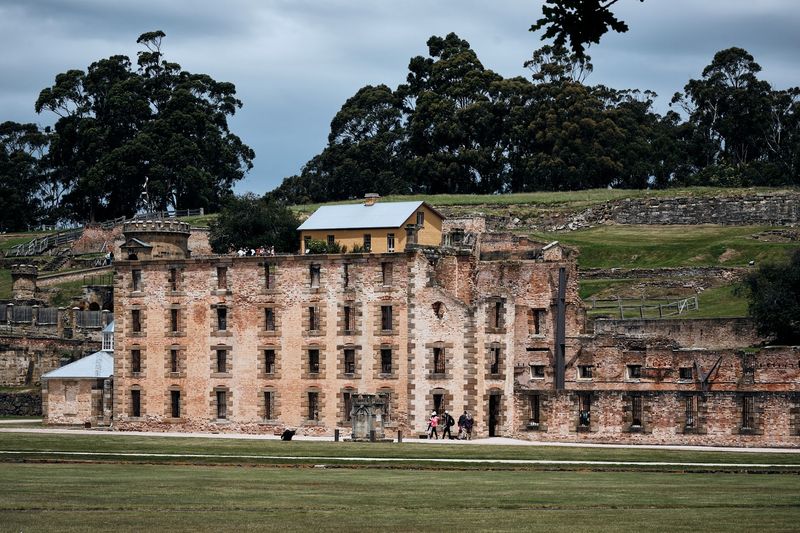
Port Arthur started as a timber station in 1830 and grew into one of the British Empire’s most significant penal settlements. The progression was not accidental.
The remote Tasman Peninsula location made escape genuinely difficult, with land access controlled at a narrow strip called Eaglehawk Neck where guards and dogs were stationed.
Convicts performed forced labor, faced physical punishment, and later endured the psychological experiment of the Separate Prison, where silence was enforced and prisoners wore hoods to prevent recognition. The main penitentiary building had originally been constructed as a flour mill, and treadmills were used to power operations when water levels dropped.
The settlement held thousands of convicts before closing in 1877.
Today the ruins, preserved cells, church, and cemetery form part of the UNESCO-listed Australian Convict Sites. Walking the grounds, you encounter the remains of an entire institutional world, hospital, church, asylum, guard quarters, and prisoner housing all within a short distance of each other.
Port Arthur is also the site of a 1996 mass shooting that killed 35 people, adding a more recent layer of grief to the location. The site holds multiple histories, and none of them are comfortable to sit with.
Bran Castle, Romania
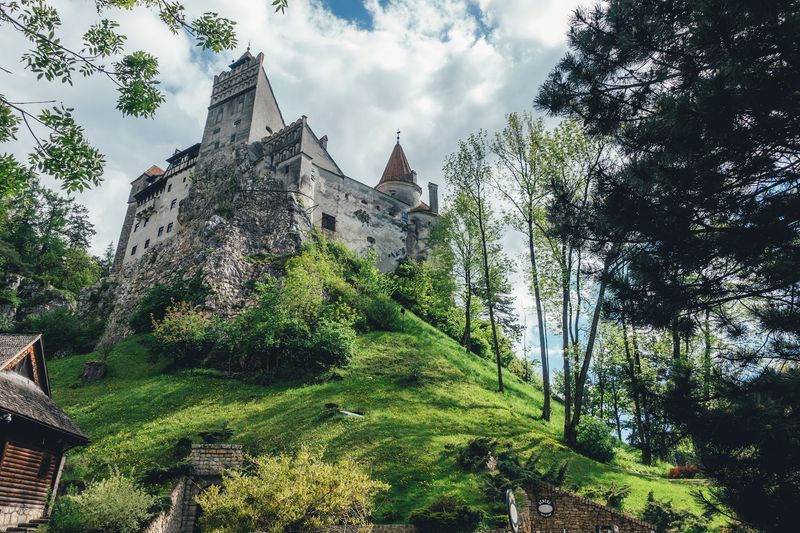
Bran Castle’s reputation arrived partly by accident. The fortress was built in the late 14th century to guard a mountain pass between Transylvania and Wallachia, functioning as a military stronghold, customs post, and eventually a royal residence.
None of those roles had anything to do with vampires.
The Dracula connection is tangled and largely literary. Bram Stoker wrote his 1897 novel without ever visiting Romania.
The castle became associated with the story primarily because its appearance matched Stoker’s description of the fictional Count’s Transylvanian home. Vlad the Impaler, the 15th-century Wallachian ruler whose brutal tactics inspired parts of the Dracula legend, had a complicated relationship with the castle at best.
Bran Castle’s own official materials clarify that the association is more visual than historical.
The real history of the region involves genuine medieval warfare, shifting political borders, and centuries of contested territory between empires. The castle itself is remarkably well-preserved and genuinely dramatic in person, sitting high on a rocky outcrop above the surrounding forest.
Tourists arrive expecting Dracula and find instead a medieval fortress with a complicated Balkan history that is, in its own way, far more interesting than the vampire mythology layered on top of it.
Hashima Island, Japan
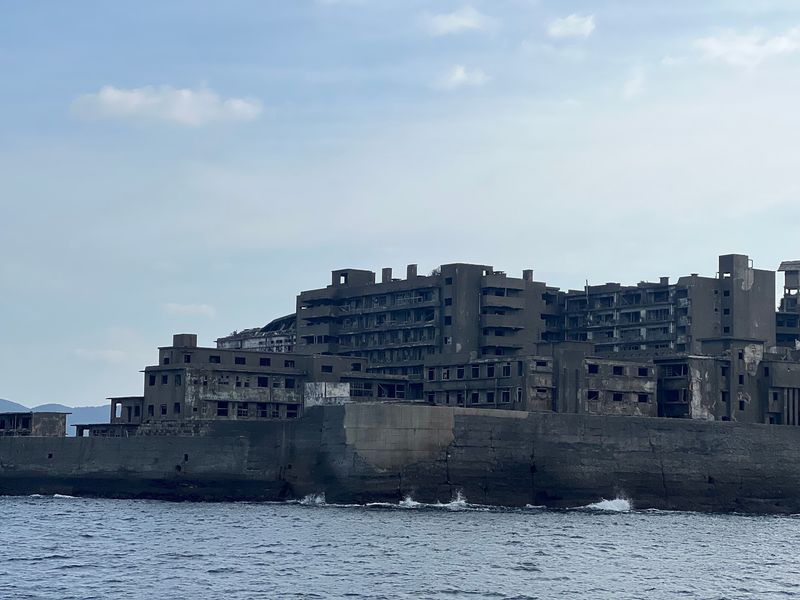
Seen from a boat, Hashima Island looks like a warship riding low in the water. That resemblance gave it the nickname Gunkanjima, meaning Battleship Island.
Up close, the concrete apartment towers and rusted industrial structures reveal something stranger: an entire community frozen at the moment everyone left.
Coal mining began on the island in 1890, and Mitsubishi gradually built it into a densely packed residential and industrial settlement. By 1959, roughly 5,267 people lived on an island measuring just over six hectares.
That density made it one of the most populated places on Earth at the time. Schools, a cinema, shops, a hospital, and pachinko parlors all operated within the concrete seawall that protected the island from typhoons.
When Japan shifted away from coal in the early 1970s, the mine became uneconomical. The facility closed in January 1974, and residents departed within three months.
The island sat completely off-limits for decades. Organized tours began in 2009, though visitors can only access a small portion of the grounds because of structural instability.
The buildings have been deteriorating in salt air ever since. The unsettling part is not decay itself but the speed of abandonment, an entire working community simply switched off.
Pripyat, Ukraine
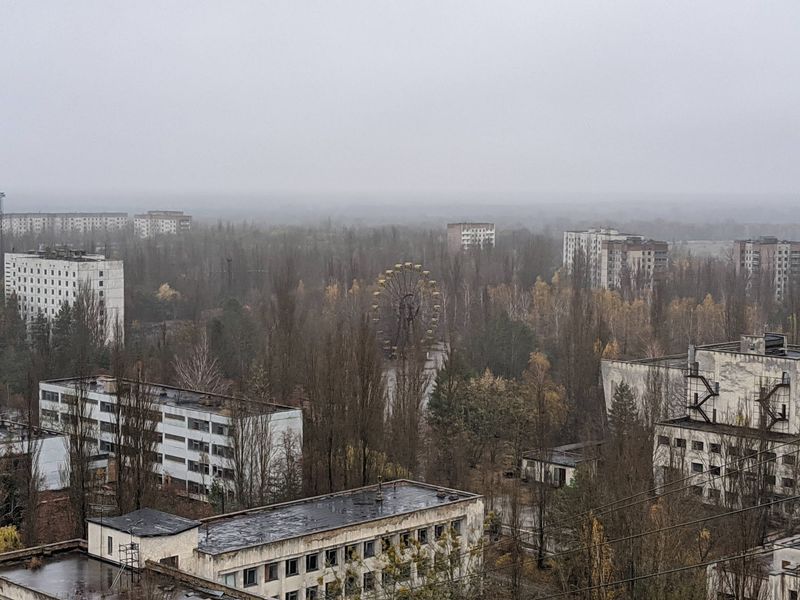
Pripyat’s famous fairground ferris wheel was installed just days before the evacuation. It never officially opened.
That detail captures something essential about the city: it was a place interrupted mid-sentence, a modern Soviet city with 49,000 residents that became a ghost town in under 36 hours.
Reactor number four at the Chernobyl Nuclear Power Plant exploded on April 26, 1986. Radiation monitoring in Pripyat increased through the following day.
The decision to evacuate was made and executed quickly. Residents were told to pack for three days and board buses.
Most never returned. The International Atomic Energy Agency confirms the full population had been removed by the evening of April 27.
Apartment blocks, schools, a supermarket, a swimming pool, and the amusement park have stood empty since. Nature has been steadily reclaiming the buildings for decades.
Trees grow through floors, moss covers gymnasium equipment, and textbooks remain scattered across classroom desks. Organized tours now operate from Kyiv, and visitor numbers have risen significantly in recent years.
The emptiness in Pripyat is not a creative choice. It is the direct physical consequence of a real nuclear disaster, and the city remains one of the most powerful arguments for taking industrial safety seriously that exists anywhere on Earth.
Pompeii, Italy
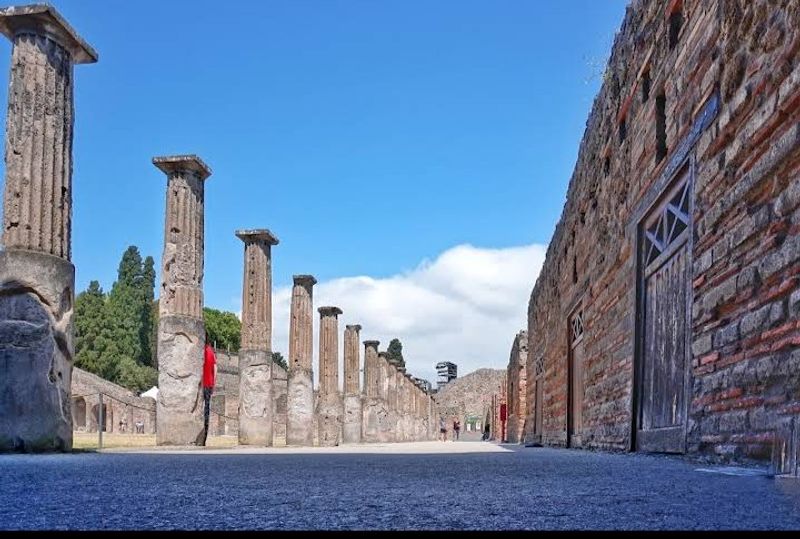
Walking through Pompeii, you pass bakeries that still have bread molds on their counters, walls covered in election graffiti, and taverns with menus painted directly onto stone. Then you turn a corner and encounter a plaster cast of a person curled on the ground, and the ordinariness of everything surrounding that figure becomes genuinely difficult to process.
Mount Vesuvius erupted in 79 CE, burying parts of the city under meters of volcanic debris. Pyroclastic flows, superheated gas and rock moving at extreme speeds, swept through areas where people were still sheltering or attempting to flee.
Archaeologists have found the remains of more than 1,000 victims so far, and excavations are ongoing. Giuseppe Fiorelli developed the plaster casting technique in 1863, filling the voids left by decomposed bodies in hardened ash to preserve their final positions.
The casts show people covering their faces, shielding children, and huddling in groups. Some died alone in rooms.
The surrounding city makes those moments feel immediate in a way that skeletal remains in a museum rarely achieve. Pompeii works as a historical site because the evidence of everyday life and the evidence of sudden death exist in the same space, separated by about two thousand years and almost no emotional distance.
Tuol Sleng Genocide Museum, Cambodia
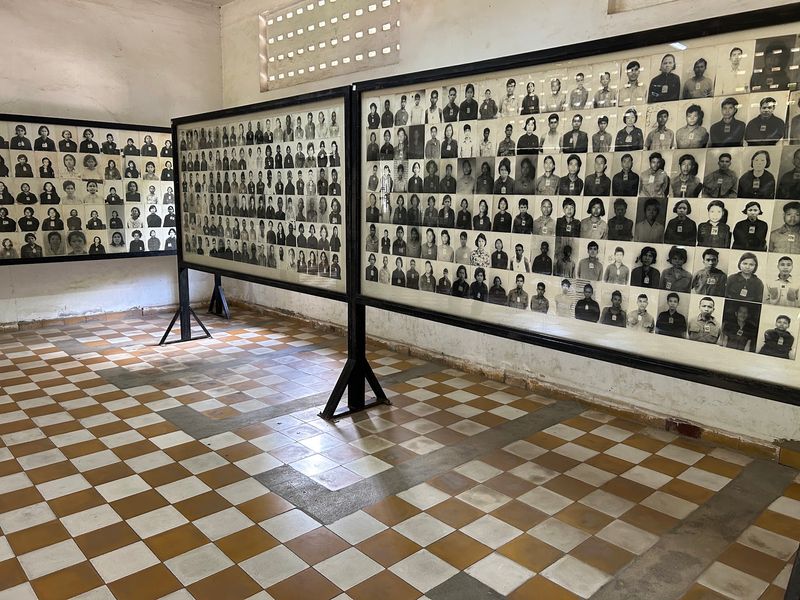
Before 1975, the buildings at Tuol Sleng were a high school. Within months of the Khmer Rouge taking power in Cambodia, classrooms had been divided into small brick cells, corridors enclosed with barbed wire, and a systematic detention operation was fully underway.
The transformation was rapid and methodical.
Security Prison 21, known as S-21, held an estimated 15,000 to 20,000 people between 1975 and 1979. Every prisoner was photographed on arrival.
Detailed records were kept. The documentation was thorough enough that researchers have been able to piece together extensive evidence of what happened inside.
The vast majority of people who entered S-21 did not leave alive. Survivors numbered in the single digits when Vietnamese forces liberated Phnom Penh in January 1979.
The museum today preserves cells, restraints, interrogation equipment, and thousands of photographs of prisoners. Survivor testimonies are included throughout.
The site is presented as evidence and memorial rather than attraction. What makes Tuol Sleng so deeply disturbing is not mystery or ambiguity.
The Khmer Rouge documented their own actions in considerable detail, which means the horror at Tuol Sleng is supported by paperwork. Bureaucratic records of systematic violence carry a particular weight that purely physical evidence rarely matches.
Salem, Massachusetts
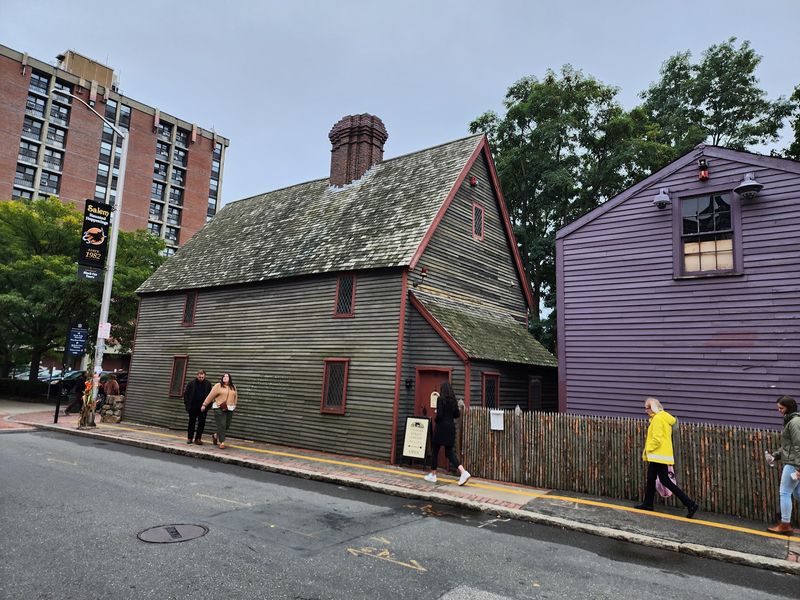
Salem sells witch hats, crystal balls, and haunted walking tours year-round, and the tourism economy is thriving. Underneath all of that, the actual events of 1692 were neither playful nor remotely supernatural.
They were a community collapse driven by fear, accusation, and a legal system that offered the accused almost no way out.
Between 150 and 200 people were jailed on witchcraft charges during the panic. Nineteen were convicted and hanged.
Giles Corey refused to enter a plea and was pressed to death over two days with heavy stones, a legal tactic used to force compliance. Others died while imprisoned awaiting trial.
One persistent myth insists people were burned at the stake in Salem. Nobody was.
The executions were hangings.
For centuries, the exact location of those hangings was uncertain. Researchers confirmed in 2016 that they occurred at Proctor’s Ledge, a modest rocky outcrop now surrounded by a residential neighborhood.
A memorial was dedicated there in 2017. Standing at Proctor’s Ledge today, with ordinary houses on all sides, is a genuinely sobering experience.
Salem’s history is ultimately about what communities do when fear overrides reason, and the 17th century version of that story has lost none of its relevance.
Edinburgh’s Underground Vaults, Scotland
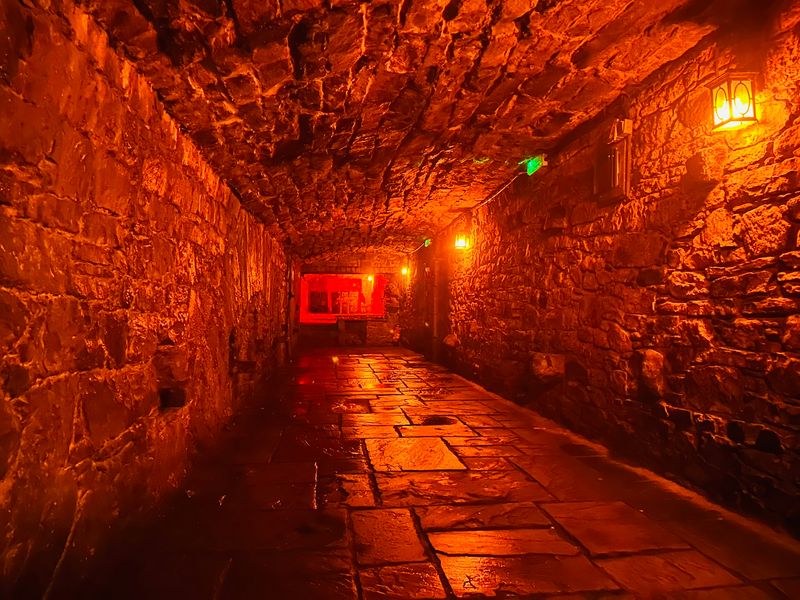
South Bridge in Edinburgh looks like a single structure from street level. Beneath it are 19 arches, and inside those arches are chambers that once housed workshops, cobblers, wine merchants, and eventually the city’s most desperate residents.
The bridge opened in 1788, and the vaults were in use within years. They were abandoned by the mid-1800s and sealed, then rediscovered in the 1980s.
The history attached to these spaces reflects the wider story of Edinburgh’s Old Town, one of the most overcrowded urban environments in 18th-century Europe. Disease moved quickly through densely packed tenements.
Poverty was severe. The city also had a documented history of body snatching, with criminals supplying medical schools with cadavers.
William Burke and William Hare operated in this city, murdering at least 16 people to sell their bodies for dissection in 1828.
Tour operators now run regular visits through the vaults, mixing verified history with ghost stories that have accumulated over the decades. Not every supernatural claim holds up to scrutiny, but the enclosed stone chambers are genuinely oppressive, and the social history connected to them is real.
Edinburgh built its genteel Georgian reputation on top of a much grimmer Old Town reality, and the vaults are one place where that older layer is still physically accessible.
Share this story