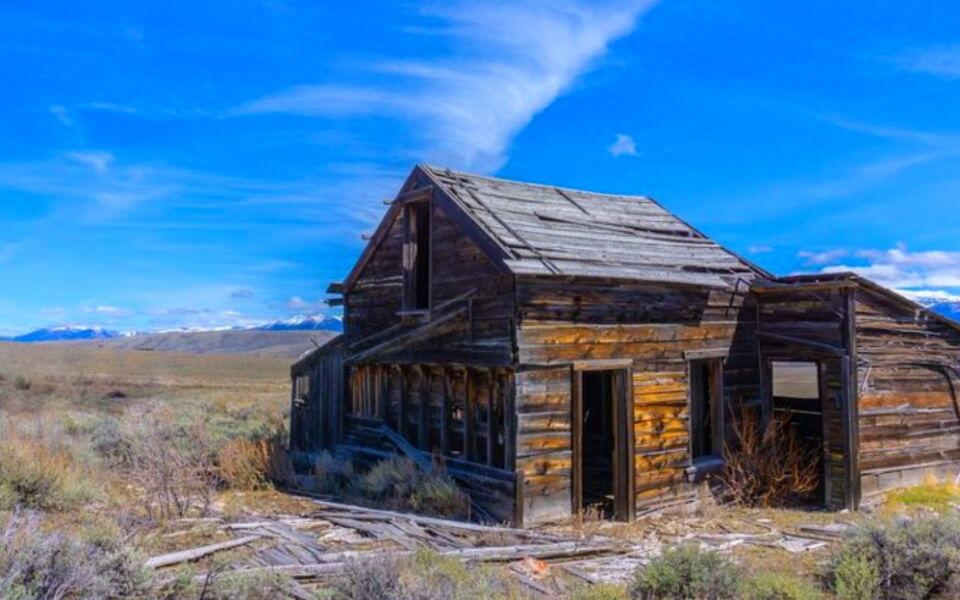
Idaho’s mountains hold a secret that most road maps won’t tell you about. Scattered across remote valleys and high canyon walls are the crumbling remains of towns that once roared with ambition, ambition fueled by gold and silver pulled straight from the earth.
These settlements went from tent camps to full communities in months, complete with hotels, newspapers, schools, and all the trappings of civilization. Then the ore ran thin, fires tore through wooden buildings, and people packed up and moved on almost as fast as they had arrived.
What got left behind is genuinely remarkable. Old log cabins lean against hillsides, stone kilns stand in mountain clearings, and cemetery markers quietly record names that history nearly forgot.
Some of these places are easy to visit, while others require serious effort just to reach. All ten of them have stories worth knowing, and each one offers a different window into the remarkable, restless era when Idaho was still being invented.
1. Bayhorse Ghost Town, Challis, Idaho
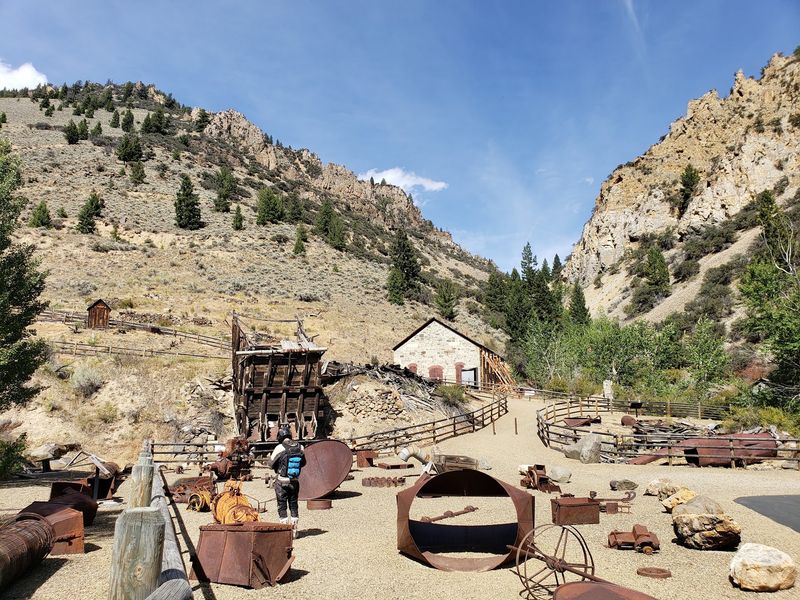
Back in 1877, the mountain canyon outside Challis became home to one of Idaho’s most productive silver operations, and Bayhorse grew fast enough to make people believe it would last forever.
At its peak, the town supported between 300 and 500 residents, a post office, multiple stores, boarding houses, and a water-powered smelter that produced silver valued at $300,000 in 1882, roughly equivalent to $10 million today.
A fire in 1889 started the decline, followed by an unfavorable government ruling on silver-lead ores and a water shortage that shut the smelter down. The town was practically deserted within weeks.
Mining limped along in smaller forms until 1968, but Bayhorse never recovered its earlier energy. Added to the National Register of Historic Places in 1976, it is now managed as part of Land of the Yankee Fork State Park.
Visitors can walk through original log cabins, inspect the mill site, and examine the intact beehive charcoal kilns, making Bayhorse one of Idaho’s most tangible connections to the silver rush era.
2. Custer, Custer County, Idaho
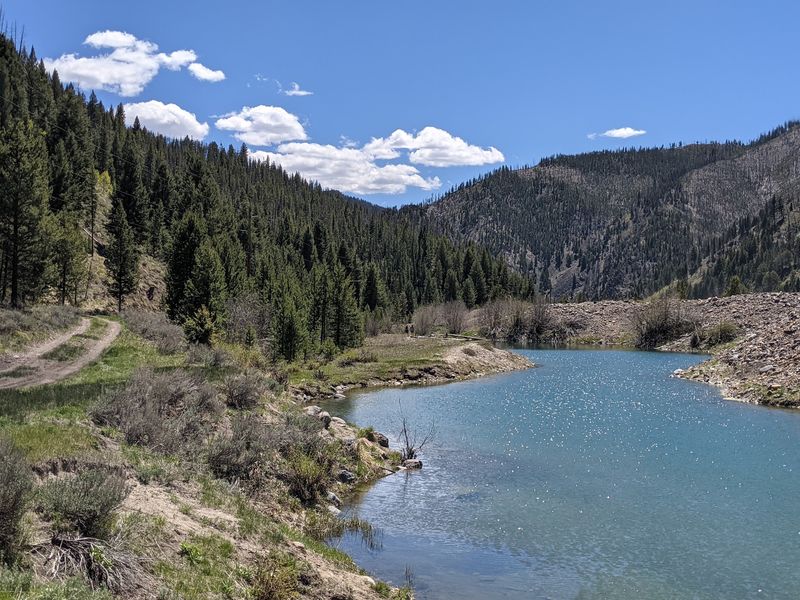
Gold speculation brought the first settlers to Custer in early 1879, and the community wasted no time building itself into a proper town beneath the General Custer mill site on the Yankee Fork.
By 1896, roughly 600 residents called Custer home, supported by the Lucky Boy and Black Mines, a general store, a boarding house, restaurants, the Nevada House Hotel, and a school that kept the community functioning year-round.
The mines eventually played out, gold prices dropped, and by 1911 the last major operation closed. Within a decade, Custer had transitioned from a working community into a quiet relic.
Preservation efforts began in 1966 when the Challis National Forest took ownership of the site. Custer earned a spot on the National Register of Historic Places in 1981, covering 29 acres of historic buildings and grounds.
Today, visitors can tour a preserved saloon, a jail, and several residences, with a schoolhouse museum open during summer months offering a clear picture of daily mining-era life.
3. Bonanza, Custer County, Idaho
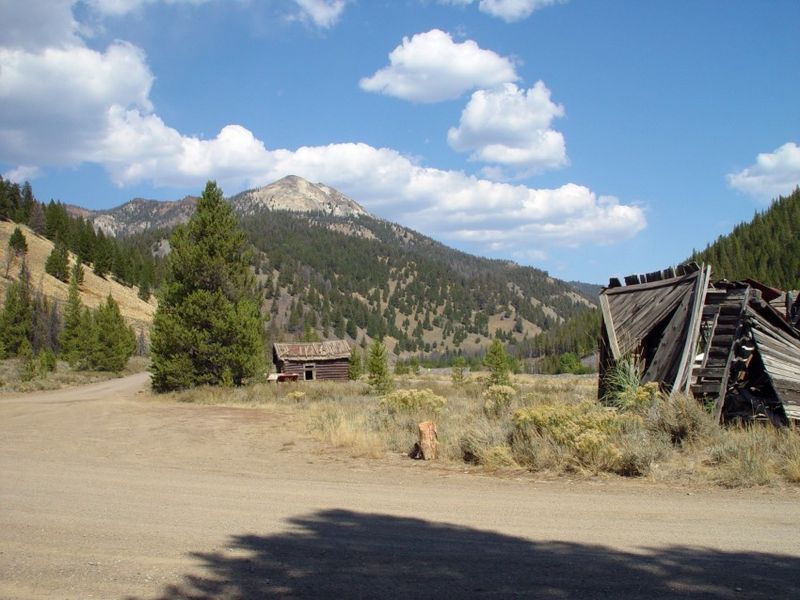
A short drive down the road from Custer, Bonanza once held the social and commercial heart of the entire Yankee Fork gold rush district during the 1880s, drawing prospectors and merchants alike into its rapidly expanding streets.
Two fires, one in 1889 and another in 1897, stripped away much of what Bonanza had built, pushing businesses and residents toward neighboring Custer and accelerating a decline that the exhausted ore deposits only made worse.
Unlike Custer, which benefited from organized preservation, Bonanza was left to fade on its own terms. Fewer structures survived, and the townsite today carries a noticeably quieter and more genuinely abandoned character.
The historic cemetery remains one of the most compelling features of the site, offering a direct and sobering record of the people who lived and worked in this remote mountain district.
Bonanza works best as a companion stop to Custer, giving visitors a fuller picture of how quickly prosperity could arrive and how completely it could disappear from Idaho’s gold country.
4. Silver City, Owyhee County, Idaho
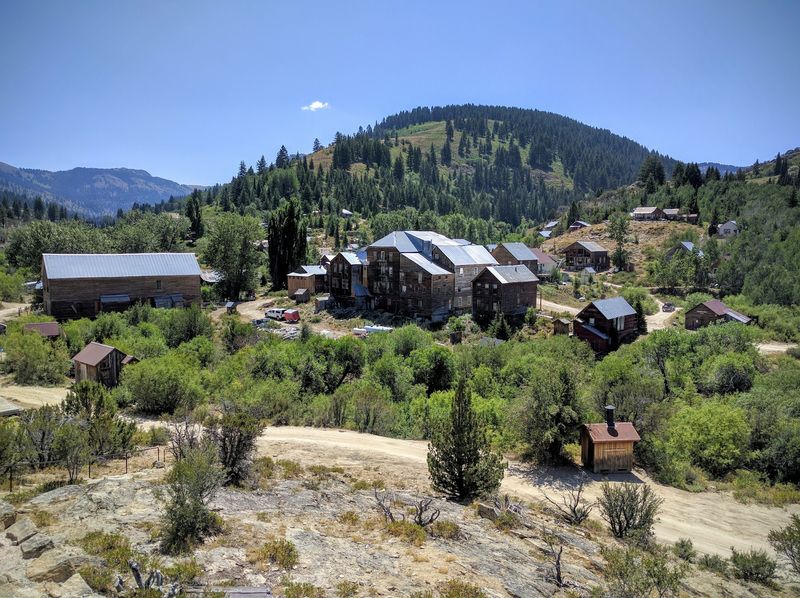
Silver City is the kind of place that makes you do a double take, because roughly 75 historic structures from the 1860s through the early 1900s are still standing in the Owyhee Mountains, waiting to be explored.
Gold and silver discoveries on War Eagle Mountain brought the first settlers in the 1860s, and the community grew to approximately 2,500 residents by the 1880s, complete with Idaho’s first telegraph line and a daily newspaper during the territorial era.
The Idaho Hotel, originally built in nearby Ruby City in 1863, was physically dismantled and relocated to Silver City in 1866. It was restored and reopened in 1972 and still welcomes seasonal guests without conventional electricity.
Silver City served as the Owyhee County seat from 1866 to 1934, a stretch of institutional importance that few other ghost towns can match. Local ordinances prohibit new construction, preserving its authentic 19th-century layout.
Technically a semi-ghost town rather than a fully abandoned site, Silver City remains one of the most rewarding historic destinations in all of Idaho for anyone curious about the mining era.
5. De Lamar, Owyhee County, Idaho
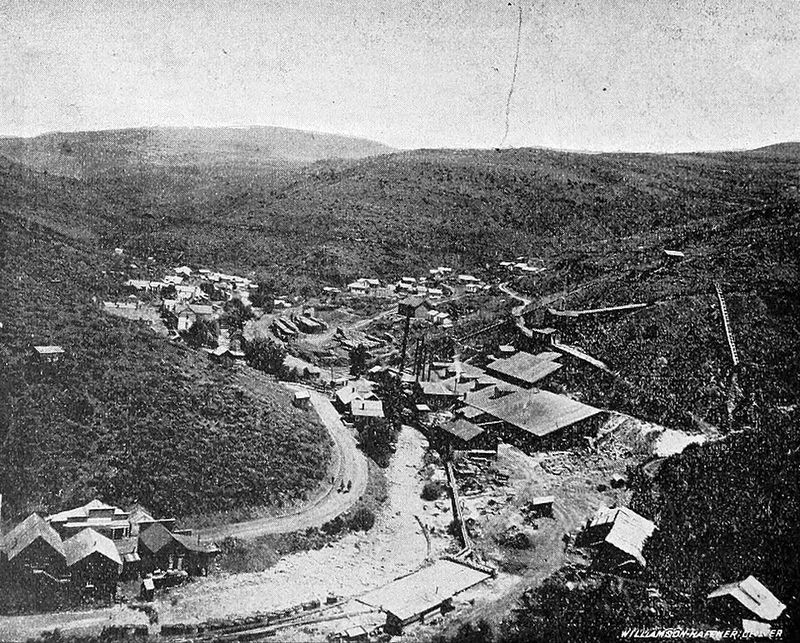
Joseph Raphael De Lamar put his name on a silver mine and an entire town when he established operations in the isolated Owyhee Mountains in 1888, and for a brief window the settlement looked like it had a real future ahead of it.
That future proved surprisingly short. The first boom had already begun to fade by 1890, just two years after the town took shape, making De Lamar one of Idaho’s more compressed examples of a mining community that rose and fell within a single decade.
Only a modest number of historic structures survived well enough to contribute to the town’s National Register historic district designation. The rest of the original settlement has largely returned to the surrounding landscape.
Modern complications add another layer to visiting De Lamar. Private property boundaries and active mining interests intersect with the historic townsite, limiting how freely visitors can move through the area.
De Lamar rewards those who approach it as a remote historic landscape rather than an open-air museum, offering a quiet and somewhat melancholy window into a silver rush that burned out almost before it began.
6. Rocky Bar, Elmore County, Idaho
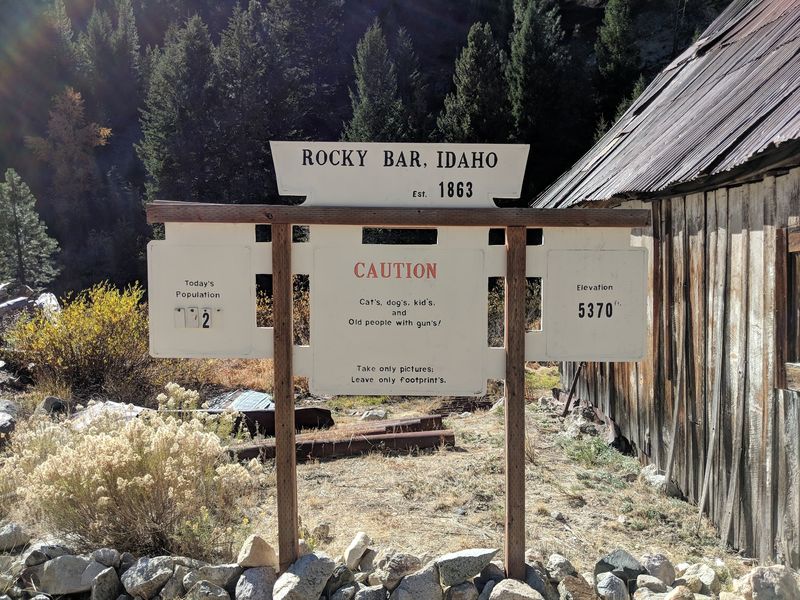
Gold found along the Feather River in 1863 turned a quiet stretch of South Boise country into one of the most talked-about places in the Idaho Territory almost overnight, and Rocky Bar was the town that grew up around all that excitement.
Within two years of the initial discovery, the settlement had swelled to over 2,500 residents. It served as the county seat of Alturas County from 1864 to 1882 and even entered early conversations as a candidate for the Idaho Territory capital.
At its peak, Rocky Bar supported stores, hotels, blacksmith shops, and the Elmore Bulletin newspaper, published between 1889 and 1892. The town had real institutional weight for a remote mountain community.
A fire on September 1, 1892 destroyed most of the existing structures, and declining mineral production made large-scale rebuilding an unattractive proposition. The town never fully recovered from that combination.
Today, the surrounding ten-square-mile area is listed on the National Register of Historic Places as the South Boise Historic Mining District, with historic buildings, mining remnants, and a cemetery scattered across the isolated mountain setting.
7. Leesburg, Lemhi County, Idaho
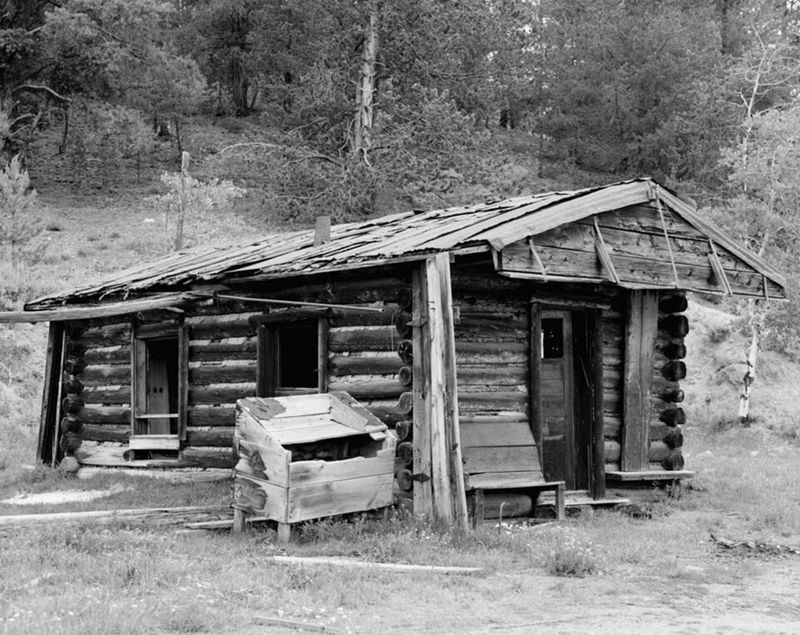
A gold rush that ignited in 1866 pulled prospectors deep into the mountains west of Salmon, and Leesburg was the settlement that took root in that remote forest, far enough from civilization to feel like a world apart even today.
The community developed into a self-sufficient frontier operation, eventually supporting general stores, a schoolhouse, blacksmithing facilities, and the various other services that a working mining camp needed to keep going through long mountain winters.
Decades of heavy snow have pressed down on Leesburg’s structures over the years, and many did not survive the weight. Still, a collection of original log cabins continues to stand among the trees, and the historic town cemetery remains largely intact.
The forest has been gradually reclaiming the edges of the townsite for well over a century, giving Leesburg a quality that more accessible ghost towns rarely achieve. The sense of genuine abandonment here is hard to manufacture.
For travelers willing to navigate the mountain road required to reach it, Leesburg offers one of the most authentically remote ghost town experiences available anywhere in Idaho’s gold rush country.
8. Gilmore, Lemhi County, Idaho
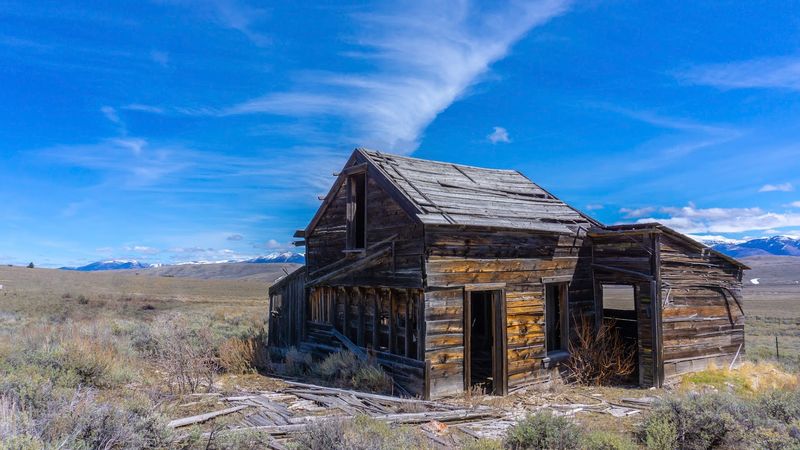
Unlike many Idaho ghost towns that peaked in the 1860s or 1880s, Gilmore belonged to the early 20th century, a period when railroad connections made remote mountain mining operations more viable than they had ever been before.
The community built itself into a genuine town, complete with a hotel, multiple churches, a school, a post office, and a general store. The railroad connection was central to everything, moving ore out and supplies in across terrain that would otherwise have been prohibitively difficult.
When the ore ran thin and mining activity declined, the economic foundation holding Gilmore together simply disappeared. There was no alternative industry to step in, and the population followed the work out of the mountains.
Ruined structures and mining remnants still mark the townsite today, but Gilmore carries an important modern warning. Idaho environmental officials have documented elevated concentrations of lead and arsenic in soil and dust across portions of the site.
Visitors should treat Gilmore as a place to observe carefully from established paths rather than explore freely. The history is worth seeing, but the environmental conditions require a cautious and informed approach.
9. Burke, Shoshone County, Idaho
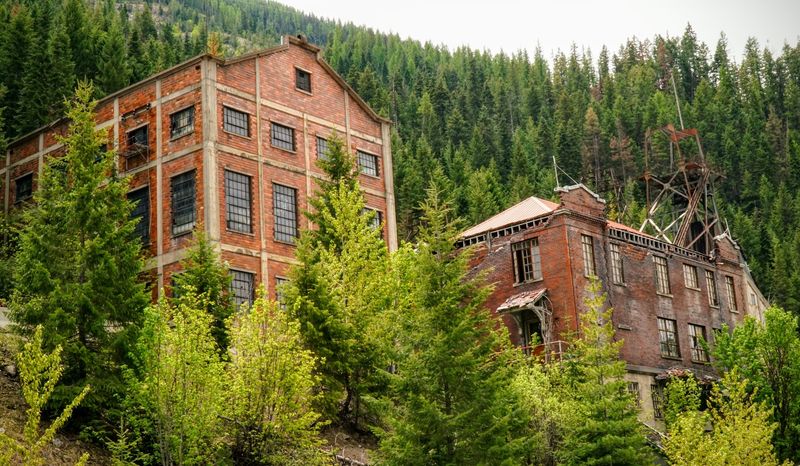
Geography alone makes Burke one of the most unusual ghost towns in the American West, because the silver, lead, and zinc mining settlement was built inside a canyon so narrow that there was barely room for the town to exist at all.
Canyon walls pressed everything together in Burke’s Coeur d’Alene district layout. Houses sat alongside railroad tracks, some structures were built directly over the creek, and the entire community ran in a tight linear corridor with almost no room to spread sideways.
Burke developed rapidly in the late 1880s and quickly established itself as a significant producer in the broader Coeur d’Alene mining district, one of the most productive silver-mining regions in American history.
Declining ore yields and changing economic conditions in the 20th century gradually reduced the town’s population until Burke was effectively abandoned. The canyon walls that once defined its character now frame a striking collection of deteriorating structures and mining infrastructure.
No other Idaho ghost town offers quite the same visual combination of industrial ruins and dramatic natural geography, making Burke a genuinely distinctive stop for anyone exploring the history of the state’s mining past.
10. Florence, Idaho County, Idaho
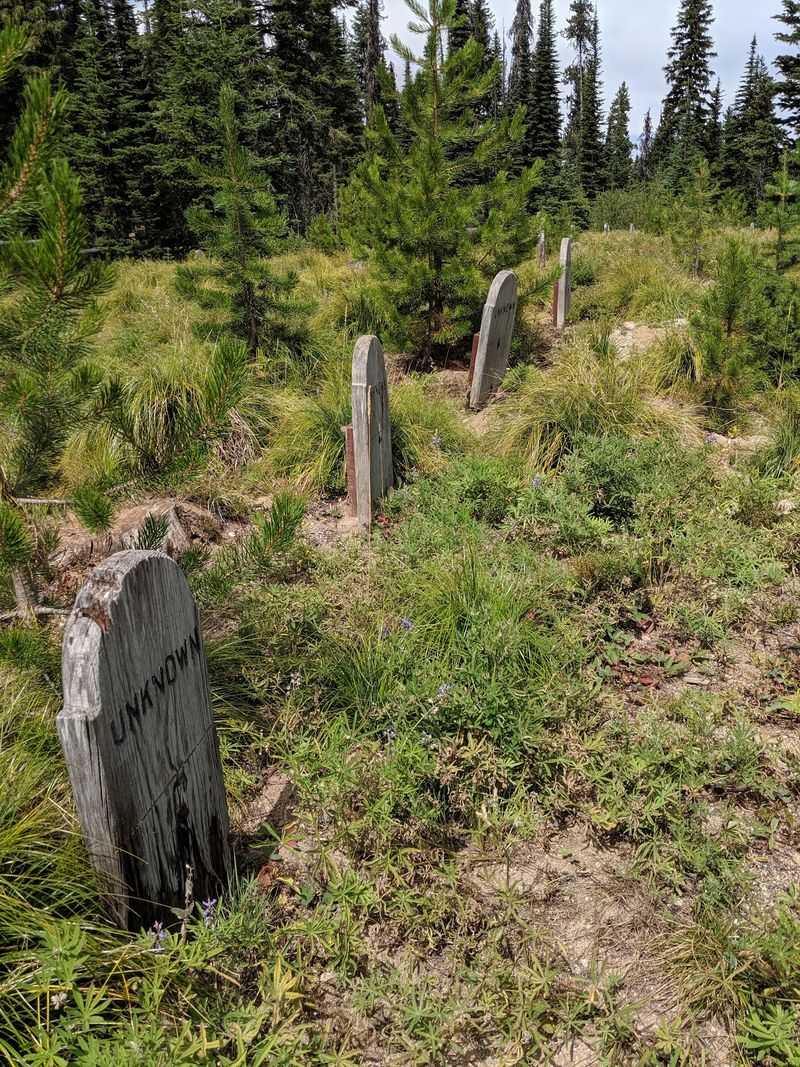
No other town on this list went from a 50-person tent camp to a settlement of 9,000 residents in a single year, but that is exactly what happened at Florence after gold was discovered in the remote Florence Basin in August 1861.
The rush was extraordinary by any measure. Florence yielded an estimated $6 to $7 million in gold during its first year alone, earned the county seat designation for Idaho County in December 1861, and supported ten butcher shops, seven bakeries, eight lawyers, a Masonic Hall, and a dance house all at once.
The winter of 1861-62 introduced a harsh reality check, bringing 113 consecutive days of snow and conditions that tested the community severely. The most accessible gold deposits were exhausted quickly, and the population dropped from 9,000 to 575 by 1863.
A smaller revival between 1895 and 1900 focused on lode mining brought brief renewed activity, but Florence never recaptured its original scale. By 1940, only ten residents remained, and the town was fully abandoned after 1951.
Little physical evidence survives from the bustling 1860s peak, making Florence one of Idaho’s most evocative ghost town sites precisely because the contrast between what it was and what remains is so complete.
Share this story