Some buildings are so massive and so old that they have outlasted entire civilizations. The temples on this list have survived earthquakes, invasions, floods, political collapse, and even modern warfare.
Built by rulers who wanted to leave a permanent mark on history, these sacred structures have done exactly that. From the jungles of Cambodia to the deserts of Egypt, these 15 colossal temples are among the most astonishing things humans have ever built.
Karnak Temple Complex, Egypt
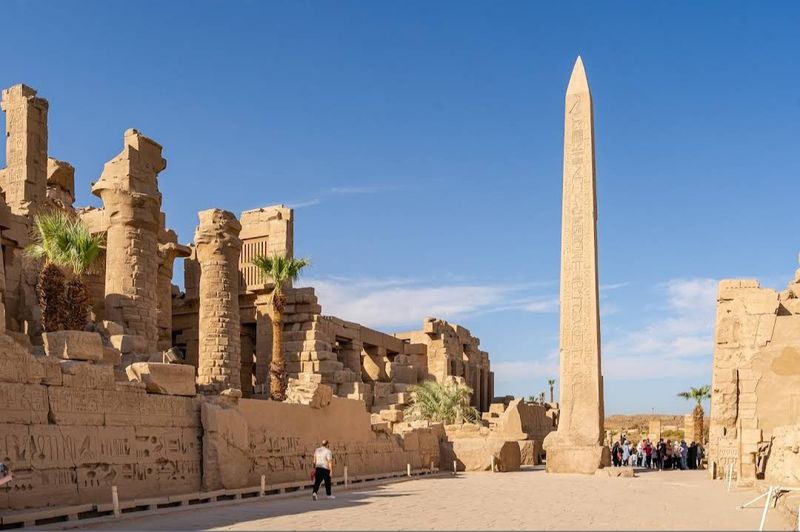
Walking into Karnak’s Great Hypostyle Hall feels like stepping into a forest made entirely of stone. The hall contains 134 enormous columns, with the tallest rising about 21 meters high.
Every surface is covered in carved hieroglyphics and colorful paintings that have survived thousands of years of sun, wind, and sand.
Karnak was not built all at once. Pharaoh after pharaoh added new sections, obelisks, and courtyards over more than a thousand years.
Hatshepsut’s surviving obelisk stands nearly 30 meters tall and weighs over 300 tons, which is a staggering achievement even by modern standards.
Egypt passed through conquest, foreign rule, and eventually became part of the Roman Empire. Through all of that, Karnak’s stone walls kept standing.
Ancient Egyptian religion eventually disappeared, but the architecture it left behind never did. Today, Karnak is less a single temple and more an architectural diary, recording the ambitions of rulers who lived across dozens of generations.
Visiting it feels less like tourism and more like time travel.
Angkor Wat, Cambodia
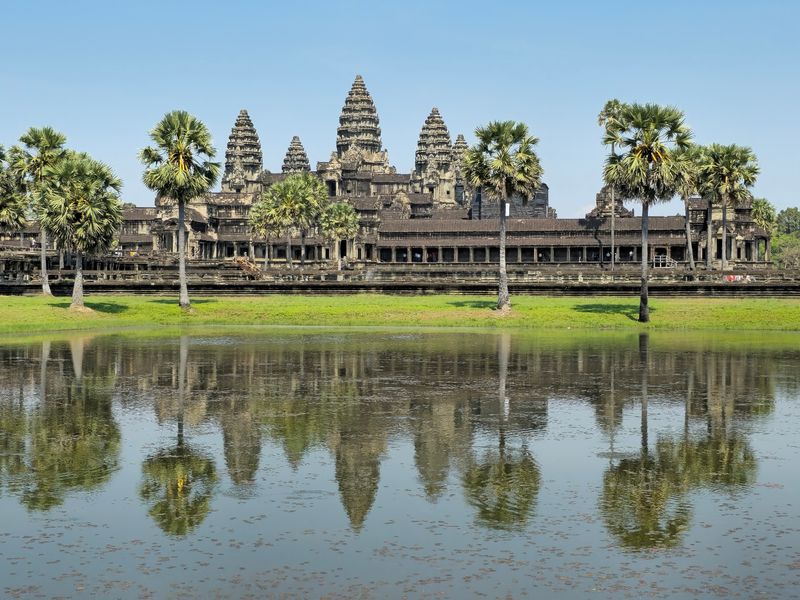
Angkor Wat is so large that early European visitors refused to believe it was built by humans. Constructed in the 12th century by the Khmer Empire, it sits within an archaeological landscape stretching across roughly 400 square kilometers.
The complex originally served as a Hindu temple before gradually shifting toward Buddhist use over the following centuries.
Political power moved away from Angkor, but the temple never fully lost its religious importance. That quiet continuity of worship probably helped protect it from complete ruin.
When UNESCO listed Angkor as a World Heritage site in Danger in 1992, international conservation teams accelerated their efforts to stabilize and restore what centuries of neglect and conflict had damaged.
Cambodia’s 20th-century wars brought looting and deterioration to the wider site. Somehow, Angkor Wat’s central towers kept rising above the jungle canopy.
Cambodians today consider the temple a powerful symbol of national identity, which is why its silhouette appears on the country’s flag. Few monuments anywhere on Earth carry that kind of living cultural weight alongside such breathtaking architectural scale.
Borobudur, Indonesia
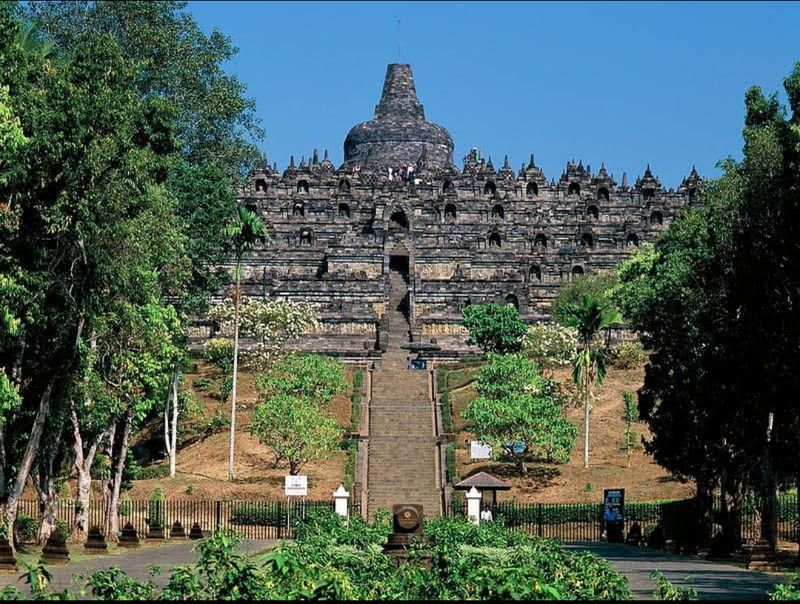
Borobudur looks like a giant stone wedding cake, except every tier is covered in some of the most detailed Buddhist carvings ever created. Built during the eighth and ninth centuries under the Sailendra dynasty, it rises through five square terraces and three circular platforms toward a single central stupa.
Around 2,500 square meters of relief carvings wrap around its walls and balustrades.
Tropical Java was not kind to the monument over the centuries. Volcanic ash, heavy rainfall, and jungle vegetation all worked to break down the structure after it fell out of regular use as a major religious center.
By the time serious attention returned to Borobudur, significant structural damage had already accumulated beneath the surface.
UNESCO helped oversee a massive restoration campaign during the 1970s and early 1980s that involved literally taking parts of the monument apart and rebuilding them with improved drainage systems underneath. The 72 perforated stupas on the upper circular terraces each contain a seated Buddha statue, visible through the carved lattice.
Watching morning mist roll in from the surrounding volcanoes while standing at the summit is an experience that very few places on Earth can match.
Brihadisvara Temple, Thanjavur, India
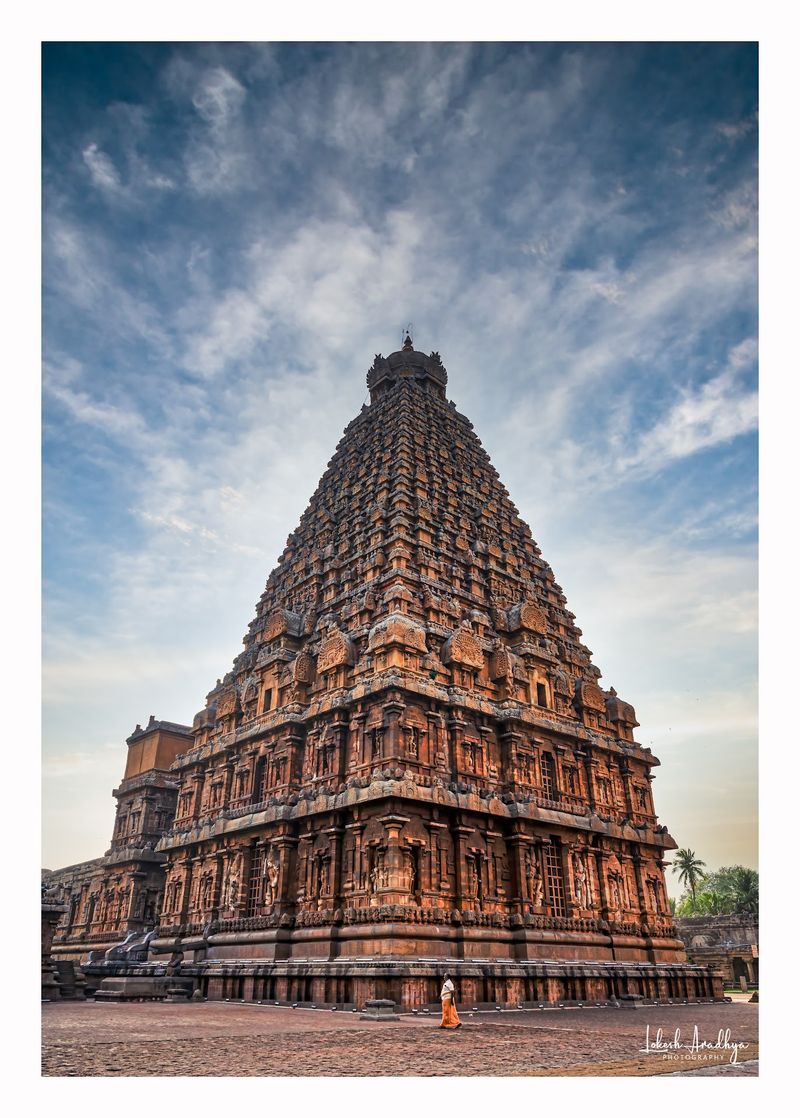
King Rajaraja I built the Brihadisvara Temple to show the world exactly how powerful the Chola Empire had become. Consecrated around 1009-1010 CE, its granite tower rises approximately 59.8 meters, which was a jaw-dropping engineering achievement for its time.
The capstone at the top is believed to weigh around 80 tons and was somehow placed there without modern machinery.
The Chola Empire eventually broke apart, and Thanjavur changed hands many times, passing through Pandya, Vijayanagara, Nayak, Maratha, and finally British colonial rule. Each era brought new political realities, but worship at the Brihadisvara Temple never stopped.
That continuous religious activity helped protect the structure from the neglect that destroyed so many other ancient sites.
UNESCO specifically calls Brihadisvara and the other Great Living Chola Temples functioning temples where ritual traditions established roughly a thousand years ago continue today. The temple is not a relic behind a rope barrier but an active sacred space where priests perform daily ceremonies using ancient procedures.
Hearing temple bells echo off those thousand-year-old granite walls gives visitors an immediate sense of just how long this place has been alive.
Prambanan, Indonesia
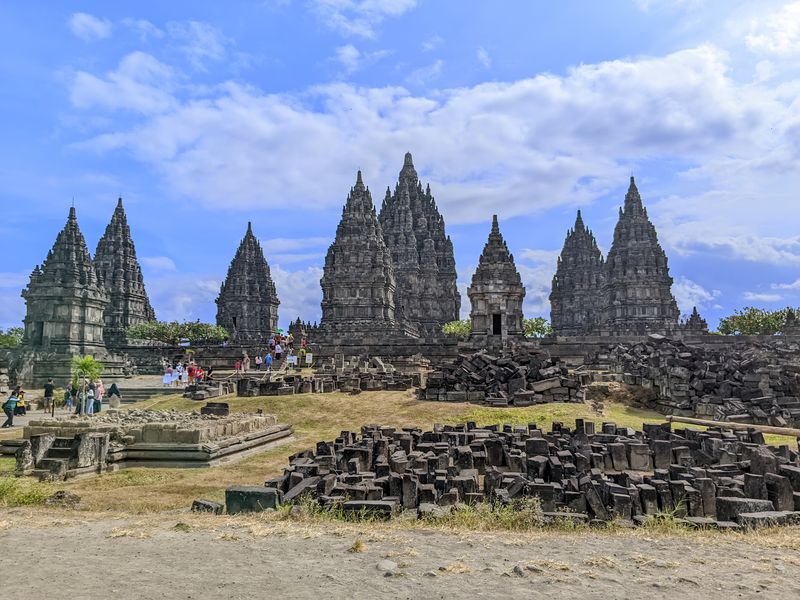
Prambanan’s towers shoot upward with such sharp, aggressive elegance that they look almost like stone rockets aimed at the sky. Built in the ninth and tenth centuries by powerful Javanese kingdoms, the complex dedicated its three tallest temples to Shiva, Vishnu, and Brahma.
The archaeological zone contains 508 stone temples and temple remains in various states of preservation.
Prambanan’s survival story has a few dramatic chapters. A shift in political power during the early 11th century, combined with earthquakes and volcanic activity, caused significant sections to collapse.
The ruins sat largely forgotten for centuries before systematic restoration began in 1918, slowly piecing the complex back together like an enormous stone puzzle.
Natural threats never really went away. The 2006 Yogyakarta earthquake caused serious damage to structures that restorers had already worked hard to stabilize.
Repair teams went back to work again, carefully reassembling fallen stones. The Prambanan visitors see today reflects both the original genius of its ancient builders and the stubborn dedication of generations of conservators who refused to let it disappear.
Standing inside the main compound as the sun sets behind the towers is genuinely spectacular.
Abu Simbel, Egypt
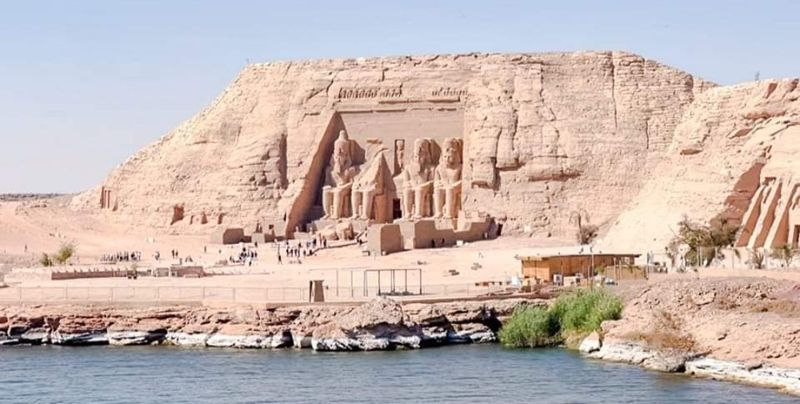
Abu Simbel might be the only ancient monument ever saved by being cut into more than a thousand pieces. Ramesses II ordered these rock-cut temples built in Nubia during the 13th century BCE, with four enormous seated statues of himself dominating the main entrance.
Each statue stands about 20 meters tall, making them some of the most imposing royal portraits ever carved.
Thousands of years later, construction of the Aswan High Dam threatened to drown the entire complex beneath Lake Nasser. UNESCO organized an international rescue campaign starting in 1960.
Workers carefully sliced the temples into blocks, some weighing around 30 tons each, and transported them up the cliff to a new location 64 meters higher and 180 meters inland.
The relocated complex reopened in 1968, and an artificial hill was built above it to recreate the original rock-cut appearance. Engineers even preserved the famous solar alignment: twice a year, sunlight still reaches deep into the inner sanctuary to illuminate the statues inside, just as Ramesses intended.
Saving a 3,000-year-old temple by dismantling and rebuilding it is the kind of story that makes modern engineering genuinely impressive.
Temple of Heaven, Beijing, China
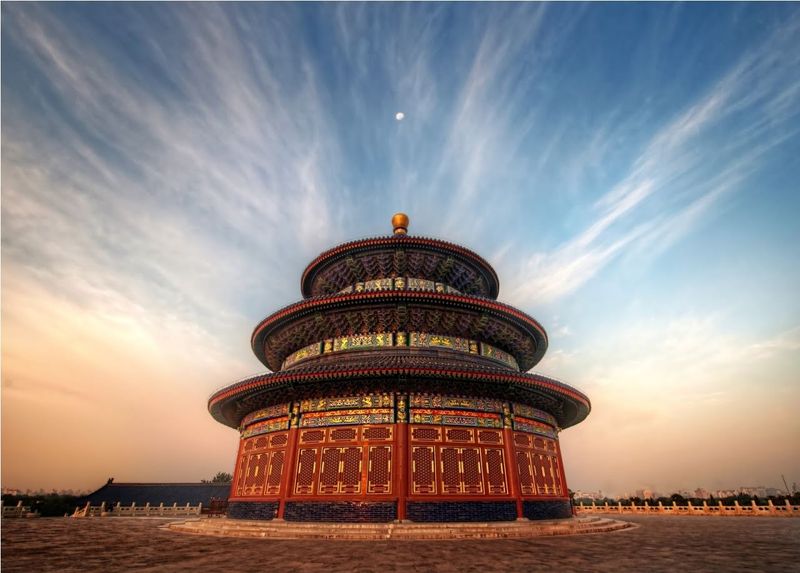
Every year for nearly five centuries, Chinese emperors traveled to the Temple of Heaven to perform rituals they believed kept the universe in order. Founded during the Ming dynasty in the early 15th century, this enormous ceremonial complex eventually covered hundreds of hectares and contained 92 historic buildings with around 600 rooms.
The math alone is staggering.
Ming and Qing emperors used the complex to offer sacrifices to heaven and pray for good harvests, connecting their political authority directly to cosmic responsibility. The circular Hall of Prayer for Good Harvests, with its three-tiered blue roof and triple marble terrace, is one of the most photographed buildings in China.
Its geometry was carefully planned to represent the relationship between heaven and earth.
Dynastic rule collapsed in the early 20th century, but the Temple of Heaven survived the enormous political changes that followed. UNESCO calls it the world’s largest surviving architectural complex dedicated to heavenly sacrifices.
Ancient pine trees that emperors once walked beneath still shade the pathways today. The combination of mathematical precision, cosmic symbolism, and extraordinary scale makes this complex one of the most thoughtfully designed sacred spaces ever built.
Baalbek Temple Complex, Lebanon
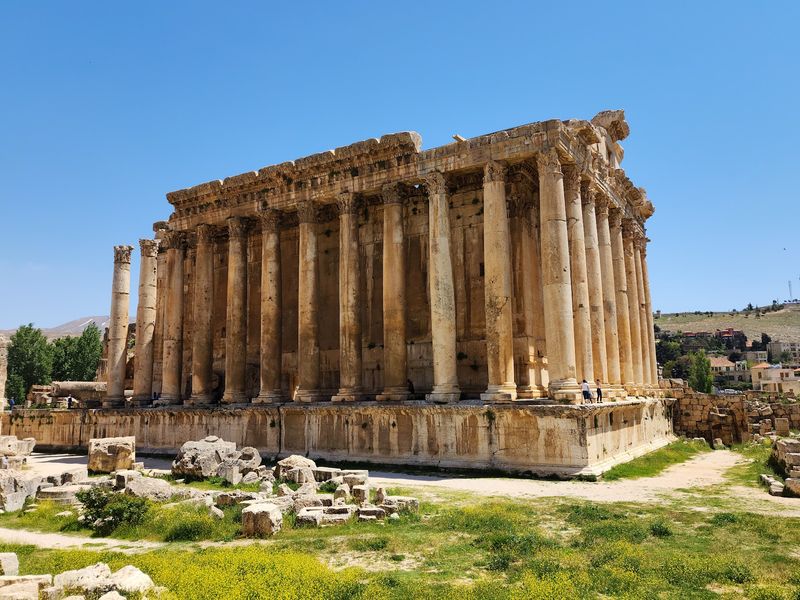
The Romans built large, but at Baalbek they built on a scale that still baffles engineers today. Known as Heliopolis during the Roman period, the sanctuary developed over more than two centuries and included temples dedicated to Jupiter, Bacchus, Venus, and other deities.
The elevated platform beneath the Jupiter temple incorporates individual stone blocks weighing more than 800 tons each.
The Temple of Jupiter once featured columns approximately 20 meters tall, making it one of the grandest religious structures in the entire Roman world. The Temple of Bacchus, though smaller, is extraordinarily well preserved, with its carved friezes and decorated doorways still largely intact after nearly two thousand years.
Walking through its entrance feels genuinely surreal.
Baalbek passed through Byzantine, Islamic, Crusader, Mamluk, and Ottoman control over the following centuries. Modern conflict also affected the site and its surrounding region, adding yet another difficult chapter to an already complicated history.
UNESCO documents years of armed conflict and development pressure threatening the complex. Yet the stones kept standing.
The sheer mass of Roman construction, using blocks so heavy that moving them even today would challenge modern cranes, turns out to be excellent long-term preservation strategy.
Mahabodhi Temple, Bodh Gaya, India
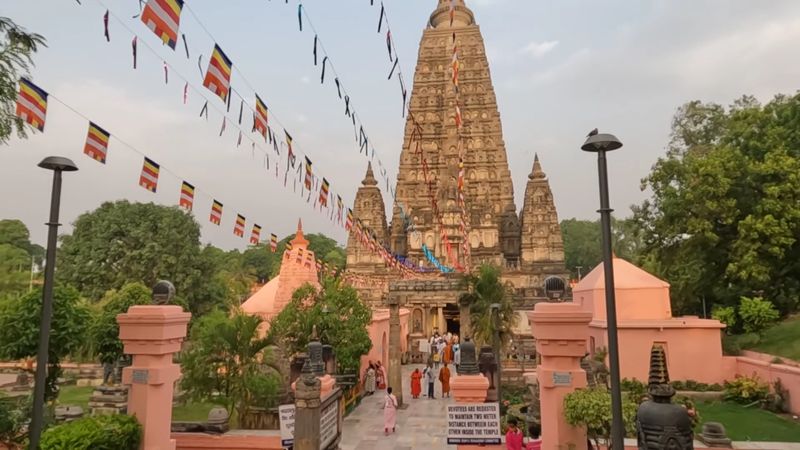
The Mahabodhi Temple marks the spot where, according to Buddhist tradition, the Buddha sat under a fig tree and achieved enlightenment roughly 2,500 years ago. That makes this one of the most spiritually charged pieces of ground on Earth for hundreds of millions of people.
Emperor Ashoka established an early shrine here in the third century BCE, though much of the surviving brick tower dates from around the fifth and sixth centuries CE.
The site went through a long and painful period of decline, particularly between the 13th and 18th centuries, as the religious landscape around it shifted dramatically. Extensive restoration followed during the 19th century, with conservation work continuing well into the modern era.
UNESCO considers the temple the oldest and best-preserved major example of brick architecture from its period in India.
Pilgrims from across Asia have been traveling to Bodh Gaya for centuries, and that continuous flow of visitors and worshippers helped keep attention on the site even during its most difficult periods. The sacred Bodhi tree growing near the temple is considered a descendant of the original tree.
Monks chanting in multiple languages while circumambulating the ancient tower creates an atmosphere that is genuinely unlike anywhere else.
Temple of Hatshepsut, Luxor, Egypt
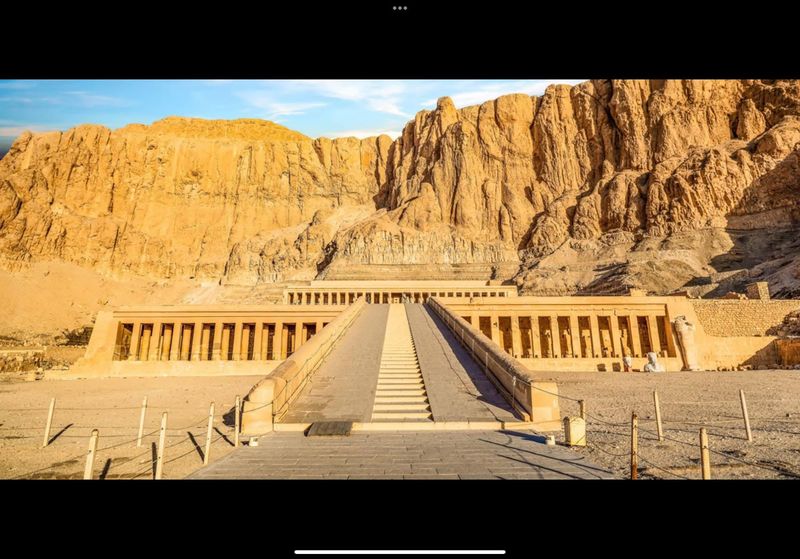
Queen Hatshepsut’s mortuary temple at Deir el-Bahari looks like it grew directly out of the limestone cliffs behind it. Built during her reign in the 15th century BCE and designed under the supervision of her architect Senenmut, the complex rises through three enormous terraces lined with elegant colonnades.
The setting is so dramatic that it feels deliberately theatrical, which it probably was.
After Hatshepsut died, later rulers attempted to erase her from history by damaging or removing images and inscriptions associated with her name. It was a systematic effort to eliminate a powerful woman from the official record.
Despite that deliberate damage, the temple itself survived, and its remaining reliefs still preserve scenes of religious rituals and the famous trading expedition to the land of Punt.
Modern archaeology eventually recovered enough evidence to reconstruct Hatshepsut’s story in considerable detail, turning an attempted erasure into one of history’s most fascinating detective stories. The temple sits directly opposite Karnak across the Nile, a placement that was almost certainly intentional.
Standing on its upper terrace while looking across the river toward the Karnak complex gives a powerful sense of how carefully ancient Egyptians organized their sacred landscape.
Luxor Temple, Egypt
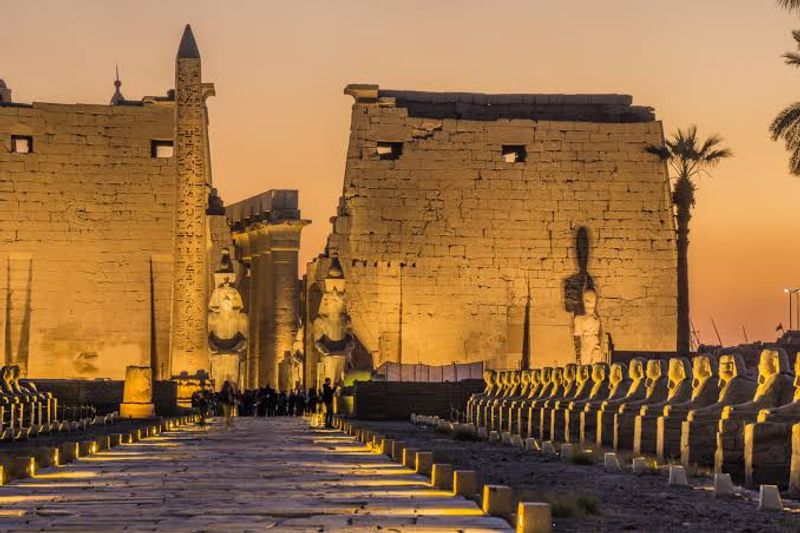
Luxor Temple is not the story of one ruler or one civilization. It is the story of everyone who passed through and decided to leave their mark.
The oldest surviving shrine dates to Hatshepsut, while Amenhotep III built the principal core in the 14th century BCE. Tutankhamun, Horemheb, and Ramesses II all added their own contributions, including a massive pylon and a pair of obelisks about 25 meters tall.
Then history kept arriving. Persian, Greek, Roman, Christian, and Islamic eras each found the temple still standing and each interacted with it differently.
Roman soldiers built a fort around it. Part of the interior became an imperial sanctuary.
Later, a mosque was constructed inside the ancient precinct, and it is still active today.
Instead of replacing what came before, each era added another layer, turning Luxor Temple into an extraordinary compressed record of over three thousand years of changing power and worship. One of Ramesses II’s obelisks now stands in the Place de la Concorde in Paris, taken by France in the 19th century.
The remaining obelisk still stands at the temple entrance, which gives the site a slightly lopsided but historically fascinating appearance that no restoration could ever fully correct.
Sri Ranganathaswamy Temple, Srirangam, India
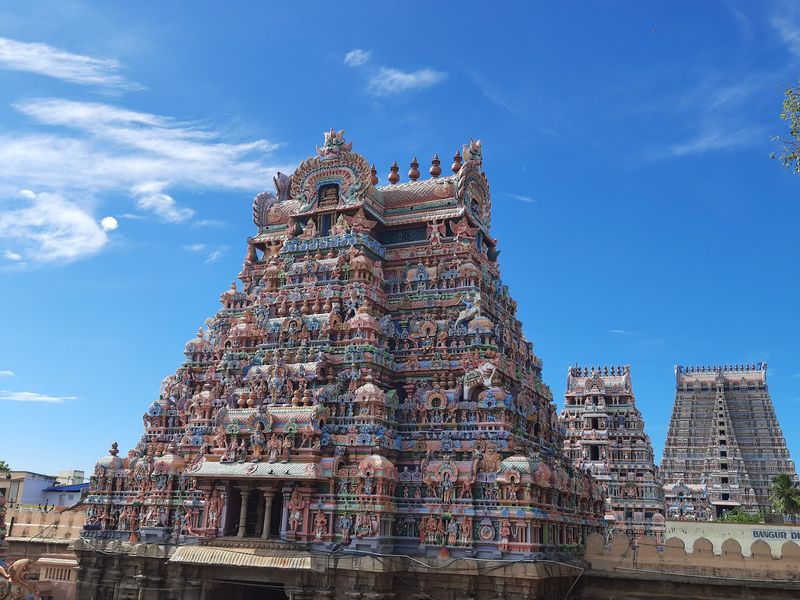
Sri Ranganathaswamy Temple at Srirangam is not exactly a temple. It is more accurate to call it a sacred city.
Covering approximately 156 acres and enclosed by seven concentric walls, the complex contains 21 monumental gateway towers and enough internal streets, shops, and residences to qualify as its own urban neighborhood. The tallest gateway tower, the Rajagopuram, reaches around 72 meters.
References to this sacred site appear deep in Tamil literary history, and successive South Indian dynasties spent centuries enlarging and rebuilding it. The region passed through Chola, Pandya, Vijayanagara, Nayak, and later periods of Muslim and colonial control, each bringing different political pressures.
Military upheaval occasionally threatened the complex, but worship centered on Vishnu as Ranganatha never permanently stopped.
The gateway towers are covered in thousands of painted and sculpted figures, creating an almost overwhelming visual experience up close. Colors are refreshed regularly, which means the gopurams look brilliantly vivid rather than faded and ancient.
Tens of thousands of pilgrims visit every day, making Srirangam one of the most actively used religious complexes anywhere in Asia. The combination of ancient history and daily living activity gives the temple an energy that purely archaeological sites simply cannot replicate.
Meenakshi Amman Temple, Madurai, India
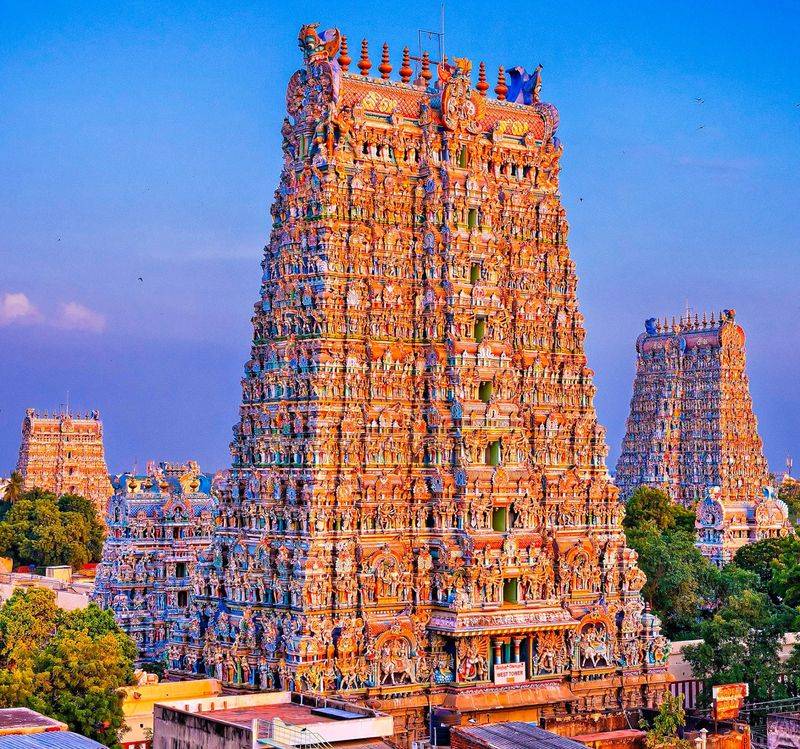
Meenakshi Amman Temple in Madurai is loud, colorful, crowded, and completely alive in a way that many ancient monuments are not. Its 14 towering gopurams, standing approximately 45 to 50 meters high, are covered from base to tip in thousands of painted sculptures of gods, demons, animals, and mythological scenes.
The visual density is almost overwhelming, and that is very much the point.
The temple’s history includes a painful chapter of destruction. Official records note that armies under Malik Kafur attacked in 1310, severely damaging parts of the complex and its artistic heritage.
Devotees rebuilt it. Later Nayak rulers expanded and transformed the complex into much of the monumental form that visitors encounter today, adding layers of ambition onto the ruins of what came before.
Unlike an archaeological site frozen at a single moment in history, Meenakshi operates as the beating heart of Madurai’s civic and religious life. Thousands of worshippers pass through its corridors daily, and major festivals draw enormous crowds.
The temple maintains its own elephant, named Lakshmi, who participates in religious ceremonies and has become something of a celebrity in her own right. Few ancient temples anywhere in the world feel quite this energetically present.
Bagan Temple Landscape, Myanmar
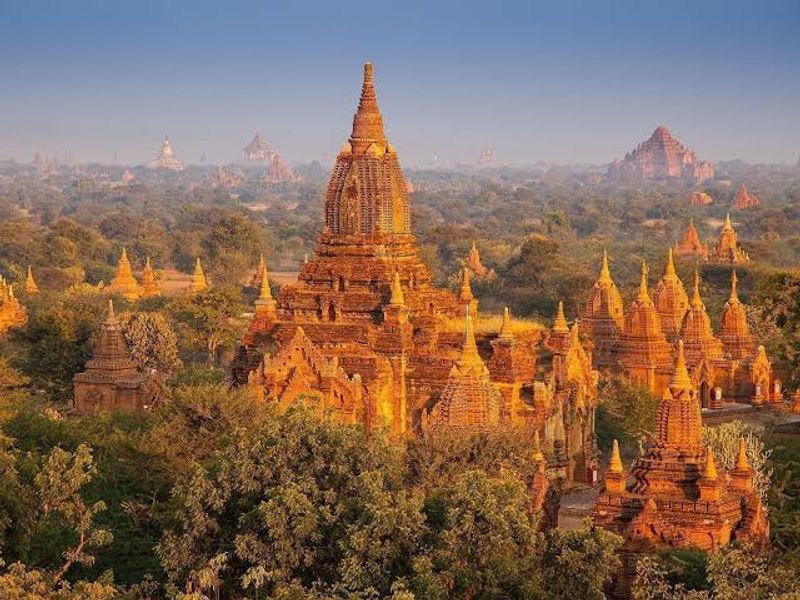
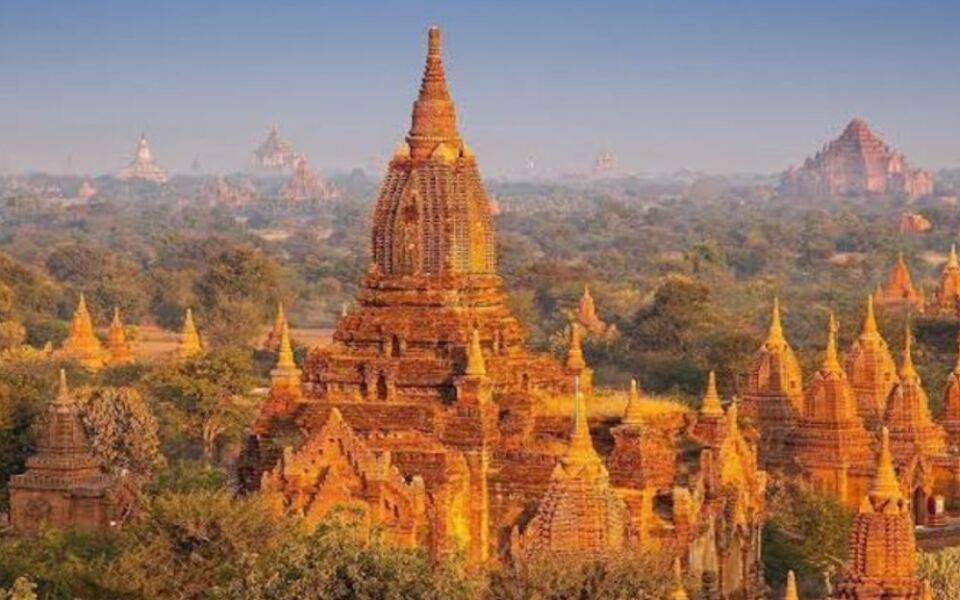
Bagan is what happens when an entire empire decides that building Buddhist temples is the most important thing it can do. Between the 11th and 13th centuries, rulers and wealthy patrons sponsored a wave of religious construction so intense that UNESCO records 3,595 monuments within the World Heritage property today.
Temples, stupas, monasteries, inscriptions, and murals cover a plain stretching along the Ayeyarwady River.
The Bagan Empire eventually declined, and invasions, weathering, and repeated earthquakes damaged many structures over the following centuries. A powerful earthquake in 2016 alone damaged hundreds of monuments, sending conservation teams scrambling once again.
Yet thousands of structures survive, and Buddhist worship continues at important sites across the plain.
Hot air balloons now drift above Bagan at sunrise, giving visitors a birds-eye view of the sheer density of ancient construction below. Seen from the ground on a bicycle, riding between temples in the early morning mist, the scale becomes even more personal and astonishing.
No single temple at Bagan rivals Angkor Wat or Borobudur for individual architectural drama, but the collective effect of thousands of ancient religious structures spread across an open landscape is something genuinely without equal anywhere else on the planet.
Temple of Kukulcan at Chichen Itza, Mexico
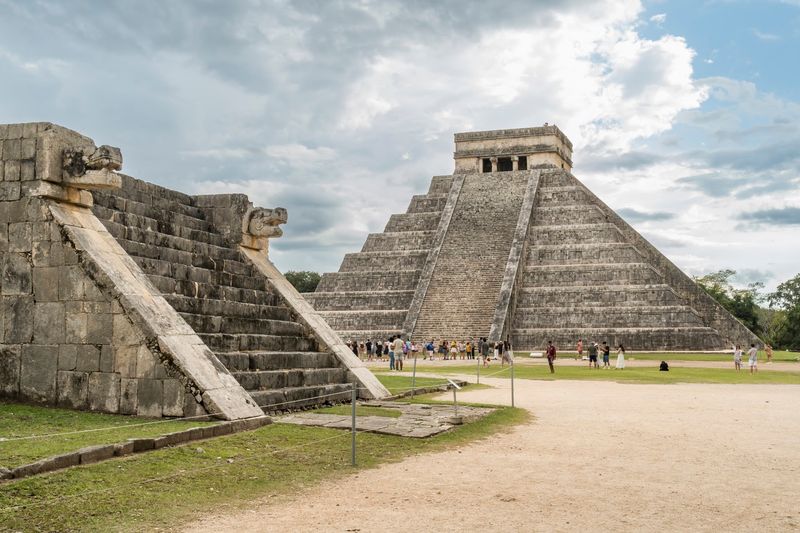
Twice a year, at the spring and autumn equinoxes, the late afternoon sun casts a shadow along the northern staircase of El Castillo that looks exactly like a serpent slithering down from the summit. The Maya engineers who designed this pyramid built that astronomical event directly into the architecture.
The structure rises roughly 30 meters including its summit temple, and its four staircases each have 91 steps, totaling 364 with the top platform adding one more for a full 365-day year.
Chichen Itza developed over centuries as Maya traditions mixed with influences from central Mexico, creating a cultural blend visible in both the architecture and the sculpture. The wider site contains the Great Ball Court, the Temple of the Warriors, astronomical observatories, and ceremonial platforms.
Major construction declined after the 13th century, and the city was largely abandoned by the time Spanish observers recorded it in the 16th century.
High-quality stone construction helped preserve the architectural character of the monuments through centuries of jungle growth and tropical weathering before modern excavation began. Chichen Itza was named one of the New Seven Wonders of the World in 2007 following a global vote.
The serpent shadow event still draws massive crowds every equinox, which means an ancient astronomical trick continues pulling people in roughly a thousand years after the builders intended it to.
Share this story