
Millions of Americans have packed their bags and built new lives far beyond U.S. borders, from sunny Mexican beach towns to bustling European capitals. The Association of Americans Resident Overseas (AARO) estimates around 4.4 million U.S. citizens live outside the country, and the reasons range from retirement and romance to remote work and family roots.
Some destinations might surprise you, while others make perfect sense once you see the numbers. Here is a look at the top 10 countries where Americans have truly made themselves at home.
Mexico

No other country on Earth comes close to hosting as many Americans as Mexico, with roughly 1.18 million U.S. citizens calling it home. The nearly 2,000-mile shared border makes weekend trips back to the States completely realistic, which is a huge selling point for anyone nervous about moving abroad.
That easy access removes one of the biggest fears people have about leaving the country.
Americans are spread across a surprisingly wide range of places in Mexico. You will find tight-knit communities in San Miguel de Allende, Lake Chapala, Puerto Vallarta, Baja California, and Mexico City.
Each spot has its own personality, so there is genuinely something for every type of American transplant.
Retirees love the lower cost of living and warm weather. Entrepreneurs appreciate the growing business scene.
Binational families, remote workers, and people with deep Mexican roots also make up a big chunk of this population. Mexico is not just a retirement destination anymore.
It is a full-spectrum expat hub that keeps growing every year.
Canada

Canada sneaks into second place with approximately 1.05 million Americans living there, and honestly, the surprise is that the number is not even higher. Sharing the world’s longest undefended border with the United States makes moving north feel less like relocating abroad and more like switching neighborhoods.
Many Americans barely notice the transition at first.
Toronto and Vancouver are the biggest magnets, but Americans also cluster in cities like Victoria and Windsor. Statistics Canada confirms that U.S.-born residents are spread across nearly every province, reflecting generations of back-and-forth migration that has quietly blended the two populations together over decades.
Shared language across most of Canada removes a major adjustment hurdle. Family ties, university enrollment, job opportunities, and corporate transfers all feed the flow of Americans heading north.
Many eventually pick up Canadian citizenship without giving up their U.S. passports, creating a large dual-national population that complicates any attempt to count exactly how many Americans are actually there at any given moment.
United Kingdom

London has been pulling Americans across the Atlantic for centuries, and the numbers prove it still works. About 325,000 Americans currently live in the United Kingdom, making it the largest American community anywhere in Europe.
Finance, technology, media, and higher education are the big draws, particularly in London where global companies cluster.
What makes the UK stand out is how naturally Americans tend to settle in. The shared language smooths over most of the early friction that comes with living somewhere new.
Americans also live well beyond London, with communities spread through England, Scotland, Wales, and Northern Ireland, each offering a very different lifestyle from the capital.
Cultural and academic ties between the U.S. and UK have been reinforcing each other for generations. Many Americans arrive for university or a short work posting and simply never leave.
A significant portion of the community includes dual nationals and people married to British citizens, which is exactly why counting Americans by embassy registration alone would miss a huge slice of the real population.
Israel

Israel’s American community of around 281,000 people looks very different from a typical expat crowd, and that distinction matters. Most people who move to Israel from the United States are not on temporary corporate assignments.
They come for deeply personal reasons rooted in family, faith, and a desire for permanent relocation rather than a two-year overseas posting.
Israel’s Law of Return creates a legal immigration pathway for eligible Jewish immigrants and certain family members, which has made aliyah, the Hebrew word for immigration to Israel, a lifelong goal for many American Jewish families. Jerusalem, Tel Aviv, and surrounding suburbs hold the largest concentrations of American arrivals.
A large proportion of the community eventually takes Israeli citizenship while keeping their U.S. passports, creating one of the world’s most prominent dual-national populations. That reality also explains why estimates of Americans in Israel can swing wildly depending on whether researchers count birthplace, citizenship, voter eligibility, or official registered residence.
The AARO figure of 281,137 captures a broader slice than many other methods would.
Germany
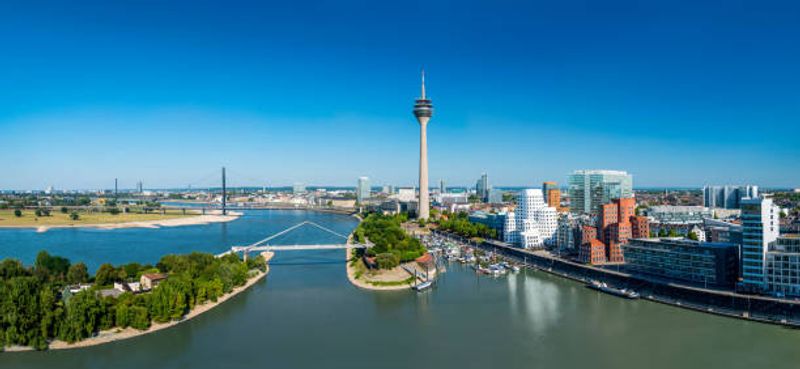
Germany might not be the first country that pops into your head when you think about American expats, but roughly 239,000 Americans have quietly made it one of Europe’s most popular destinations. The AARO figure specifically excludes U.S. military personnel and their families, which means this is a purely civilian community built around business, academia, and personal ties.
Berlin attracts the creative and tech crowd with its international energy and relatively affordable urban lifestyle. Frankfurt pulls in finance and logistics professionals because of its role as a major European banking hub.
Munich offers a booming corporate and technology economy alongside a famously high quality of life, even if the beer garden culture is just a bonus.
Germany’s position inside the European Union makes it strategically attractive for Americans whose jobs involve working across multiple European markets rather than just Germany alone. Many in the community are spouses of German citizens, dual nationals, or people who came for graduate school and built careers there.
The postwar connection between the U.S. and Germany also left decades of cultural familiarity that still shapes how Americans experience the country today.
Australia

Flying from the U.S. to Australia takes somewhere between 15 and 22 hours depending on your route, yet about 218,000 Americans have decided the distance is absolutely worth it. That kind of commitment says a lot about what Australia offers: a familiar language, a strong job market, excellent universities, and a lifestyle that genuinely competes with anywhere else on the planet.
Sydney and Melbourne handle the biggest share of American arrivals, but Brisbane, Perth, Canberra, and Adelaide all have their own American communities. The country’s university sector is internationally respected, and U.S.-Australia corporate connections create a reliable pipeline of executives, researchers, and skilled workers moving in both directions every year.
Australia is one of the few destinations where long-distance migration frequently becomes permanent rather than temporary. Many Americans eventually apply for Australian citizenship while holding onto their U.S. passports, a move that reflects genuine long-term commitment to the country.
The warm climate in many regions, outdoor culture, and strong social safety net are recurring reasons Americans give when explaining why they stayed far longer than they originally planned.
South Korea

South Korea might raise a few eyebrows on this list, but 129,499 Americans call it home according to AARO estimates, and that number excludes military personnel entirely. The civilian community built itself around business connections, English-language teaching, Korean-American family ties, and a technology sector that has made Seoul one of Asia’s most dynamic cities.
Seoul is the clear center of American life in Korea, but communities also exist near major industrial and economic regions throughout the country. English teaching has historically been one of the most common entry points for young Americans, and many who arrived with a one-year contract eventually found reasons to stay much longer than they expected.
Here is a fact that illustrates how tricky expat counting gets: UN migration data recorded just over 53,000 U.S.-born residents in South Korea in 2024, while AARO’s citizenship-based estimate lands at nearly 130,000. That enormous gap comes entirely from methodology.
AARO captures naturalized Americans and citizens born outside the U.S., while UN data focuses narrowly on birthplace. Both numbers are real, but they are measuring slightly different things.
France

France has been romanticizing Americans since at least the 1920s, and the feeling is clearly mutual. About 117,000 Americans currently live in France, continuing a tradition that stretches from Hemingway’s Paris days all the way to today’s generation of remote workers setting up laptops in Bordeaux apartments.
The country has a long memory for its American guests.
Paris remains the hub, attracting students, diplomats, academics, finance professionals, and people who simply fell in love with the city and refused to leave. But the American footprint extends well beyond the capital.
Provence, Brittany, the Dordogne, and the Basque Country have all become popular with retirees and families looking for a quieter version of French life.
Counting Americans in France is trickier than it sounds. UN data based on birthplace produces a smaller figure than AARO’s citizenship-oriented estimate because naturalized Americans and U.S. citizens born outside the country get classified differently depending on the method used.
That gap is a reminder that every expat statistic comes with a methodology attached, and the fine print genuinely changes the headline number.
Japan

Tokyo is one of the most organized, safe, and fascinating cities on Earth, so it should come as no surprise that approximately 111,000 Americans have settled across Japan. Corporate assignments, technology partnerships, finance roles, and university positions draw professionals, while English-language teaching and a deep cultural fascination with Japan bring in a younger crowd every year.
Tokyo holds the largest concentration, but Americans also live in Osaka, Yokohama, Nagoya, and Kyoto. Japan’s longstanding commercial relationship with the United States creates a steady stream of executives and specialists rotating through on multi-year assignments, and a good number of them end up staying well beyond their original contracts.
Marriage to Japanese citizens accounts for a meaningful slice of the permanent American population, and children of those marriages often hold dual nationality under specific conditions. Like South Korea, Japan also hosts U.S. military personnel, but AARO’s estimate strips them out to focus on civilians only.
The gap between citizenship-based estimates and UN birthplace data is again significant here, underscoring how much the counting method shapes the final number you see reported.
Spain

Spain rounds out the top 10 with around 109,000 Americans scattered across a country that seems almost designed to make long-term stays feel effortless. Madrid and Barcelona anchor the professional and student population, but the real growth story over the past decade has been in southern and coastal regions.
Valencia, Malaga, and Alicante have all seen noticeable increases in international residents, Americans included.
Spain’s relatively low cost of living compared to other Western European countries makes it especially attractive for retirees and remote workers who can earn U.S. dollars while spending euros. The country also introduced a digital nomad visa in 2023, which opened a formal legal pathway that did not exist before and has already attracted attention from location-independent American professionals.
The methodological gap between datasets is particularly visible with Spain. AARO’s broader citizenship-based figure pushes past 100,000, while UN migrant-stock data focused on U.S.-born residents produces a much smaller count.
Neither number is wrong. They just measure different populations.
For anyone thinking about joining the American community in Spain, the practical takeaway is simple: you would have plenty of company no matter which city you choose.
Share this story