Some museums are worth a detour. Others are worth booking flights for.
The 15 museums on this list fall into that second category, offering so much hands-on action, jaw-dropping scale, and genuine wow-factor that they can anchor an entire family vacation. From a five-story slide in St. Louis to a pitch-black crawl tunnel in New Jersey, these places turn learning into something kids actually beg to do again.
The Strong National Museum of Play – Rochester, New York
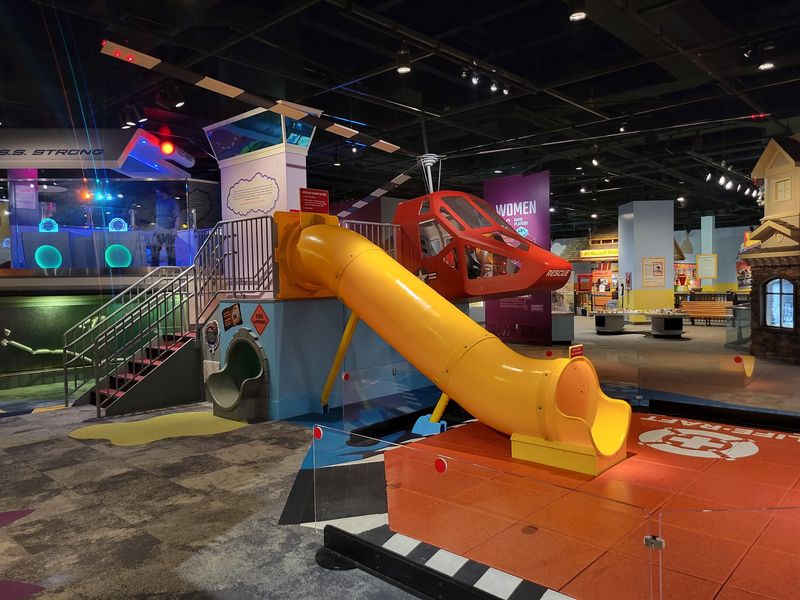
Play is the subject, and the Strong takes it seriously enough to house the world’s largest collection of toys, games, and playthings. Spanning roughly 150,000 square feet, this Rochester institution is part children’s museum, part cultural archive, and entirely entertaining for every age in the family.
The moment you walk in, it becomes clear this is not a place for quiet contemplation.
Reading Adventureland transforms books into environments kids can physically enter. A kid-sized Wegmans supermarket lets little ones practice shopping and cooperation.
Superhero activities, immersive video game galleries, and vehicle-themed play areas keep older children engaged without forcing them to hover near the toddler zones.
The year-round Dancing Wings Butterfly Garden adds a surprisingly peaceful moment to an otherwise high-energy visit. Adults often find themselves recognizing toys from their own childhoods and disappearing into nostalgia while kids sprint ahead to the next exhibit.
Few museums genuinely work this well for grandparents, parents, and children all at once. Budget a full day, wear comfortable shoes, and seriously consider a return visit before you even leave the parking lot.
Exploratorium – San Francisco, California

Peer pressure is usually a bad thing, but at the Exploratorium, watching another kid create a giant bubble or fool their own senses with a perception exhibit makes everyone want to try immediately. More than 650 hands-on exhibits fill Pier 15 on San Francisco’s Embarcadero, covering light, sound, motion, biology, engineering, and the wonderfully strange science of human behavior.
Nothing here is behind glass.
Children are expected to touch, push, twist, and experiment their way through the building. The Tactile Dome is the museum’s most talked-about experience: participants crawl and slide through total darkness, navigating entirely by touch.
It sounds terrifying to some adults and absolutely thrilling to most kids.
The waterfront location means families can step outside for fresh air and bay views between exhibits, making the visit feel less overwhelming than indoor-only museums of similar size. Combine it with the Ferry Building or a bay cruise for a full San Francisco day.
The Exploratorium works for a wide age range, though children roughly six and older tend to get the most out of the experiments. Younger siblings still find plenty to do near the entrance galleries.
City Museum – St. Louis, Missouri
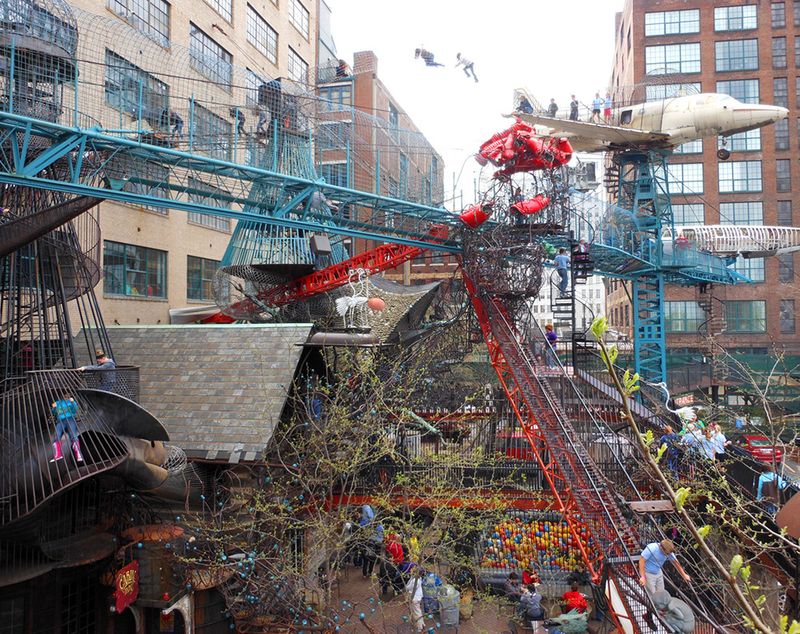
Calling City Museum a museum is technically accurate and also slightly misleading. Built inside a former shoe warehouse in St. Louis, it is more accurately described as a giant, chaotic, spectacular playground built from salvaged industrial materials.
Airplane fuselages, repurposed architectural pieces, miles of tunnels, and more than 30 slides are arranged into something that defies any simple category.
The five-story spiral slide descends through the Enchanted Caves in a way that makes adults giggle involuntarily. MonstroCity rises outside the building as a multi-story climbing structure made from cranes, bridges, and other reclaimed objects.
A rooftop Ferris wheel and additional slides add another layer to a visit that already feels impossible to fully describe to someone who hasn’t been.
Younger visitors have Toddler Town, a dedicated space scaled to smaller adventurers. Families should bring snacks, wear clothes they don’t mind getting dusty, and prepare for children who will absolutely refuse to leave.
This is the rare attraction that genuinely exhausts kids in the best possible way. St. Louis has plenty of other family-friendly stops nearby, but City Museum alone can justify the trip.
Smithsonian National Air and Space Museum – Washington, D.C.
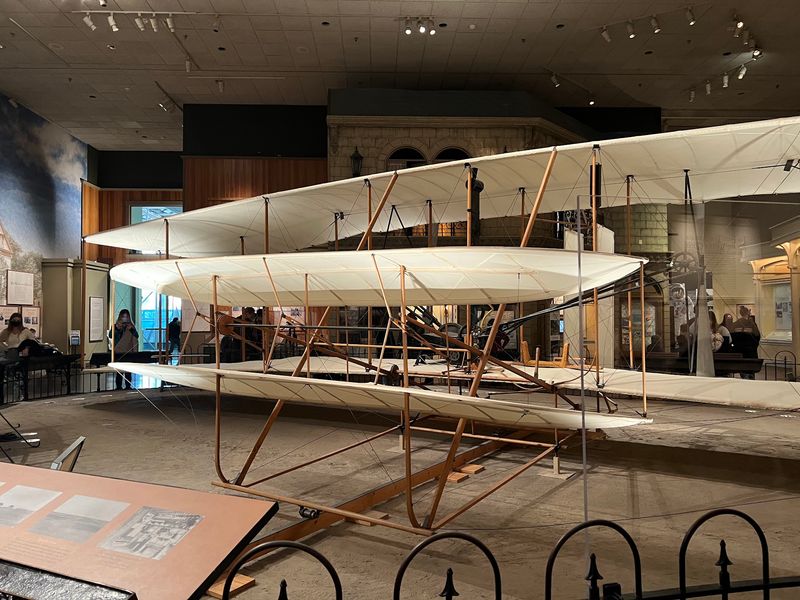
Standing next to the actual Wright Flyer from 1903 is one of those moments that makes history feel suddenly very real and very small. The plane that changed everything is surprisingly compact, which somehow makes it more impressive, not less.
The Smithsonian’s National Air and Space Museum on the National Mall houses that flyer alongside the Apollo 11 Command Module Columbia, Neil Armstrong’s spacesuit, and dozens of other objects that genuinely shaped the modern world.
Recent renovations have added updated galleries on space exploration and flight technology, making the museum feel current alongside its historic collections. Family programming includes discovery stations, science demonstrations, and planetarium-style shows that give younger children something structured to anchor their visit.
Older kids and teenagers tend to self-guide through the aerospace and astronomy sections with very little prompting.
Admission is free, though timed-entry passes are required for the National Mall location. That combination of no admission cost and world-class content makes it one of the strongest family museum values anywhere in the country.
Pair it with other free Smithsonian institutions nearby for a Washington weekend that costs far less than most family trips of comparable quality.
The Children’s Museum of Indianapolis – Indianapolis, Indiana
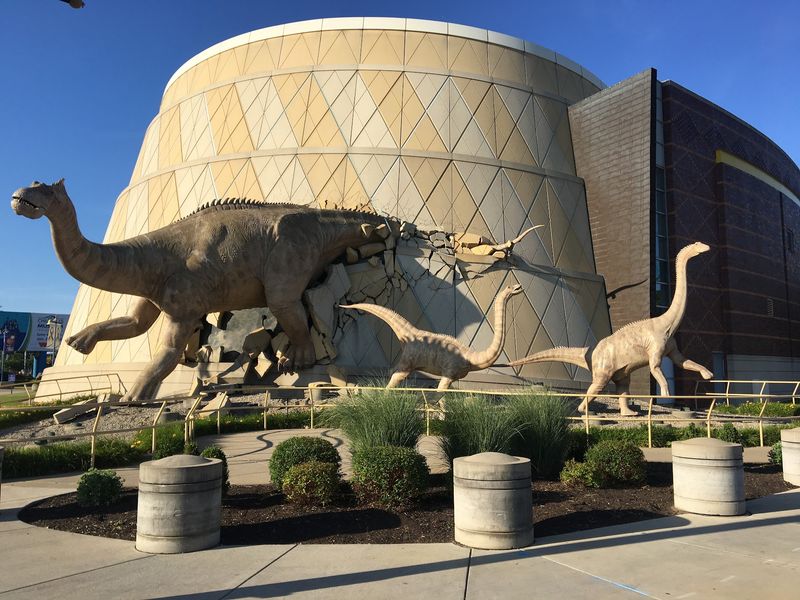
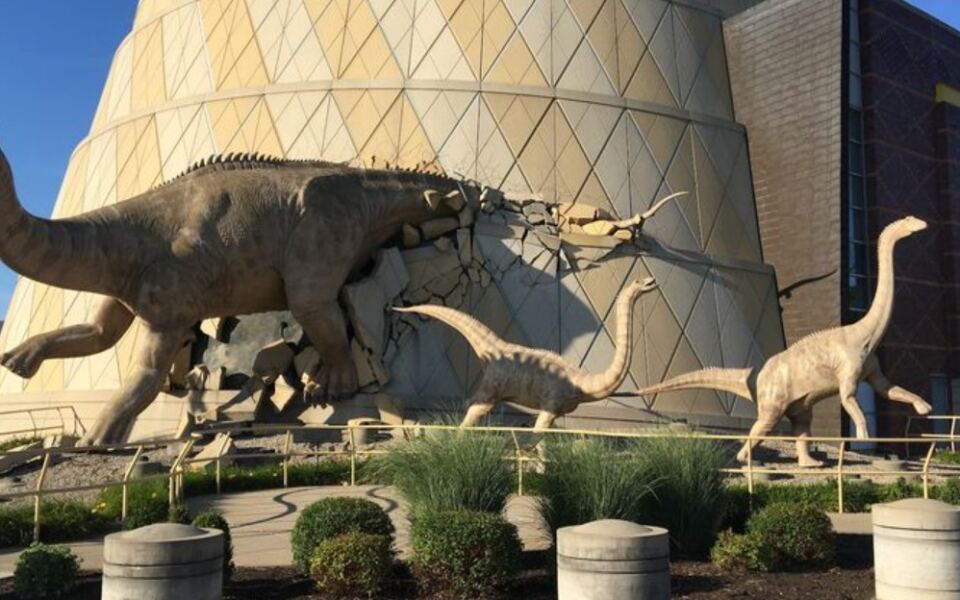
Five floors of exhibits, 7.5 acres of outdoor space, and a dinosaur hall that makes grown adults stop mid-sentence to stare. The Children’s Museum of Indianapolis is the largest children’s museum on the planet, and it earns that title every square foot of the way.
Dinosphere places visitors right inside a Cretaceous environment, complete with fossils and paleontology activities that feel more like fieldwork than a field trip.
Beyond Spaceship Earth explores astronaut life with enough detail to satisfy genuinely curious kids, while ScienceWorks puts real experimentation into small hands. Outside, the Riley Children’s Health Sports Legends Experience adds running, climbing, and athletic challenges to the mix.
Preschoolers have dedicated spaces, older kids have science and history galleries, and teenagers rarely complain here.
Planning tip: arrive early and prioritize two or three must-see exhibits rather than rushing through everything. Families who try to see it all often leave exhausted and only halfway done.
A full day is the right commitment, and most families find they still wish they had more time when closing hour rolls around.
Museum of Science and Industry – Chicago, Illinois
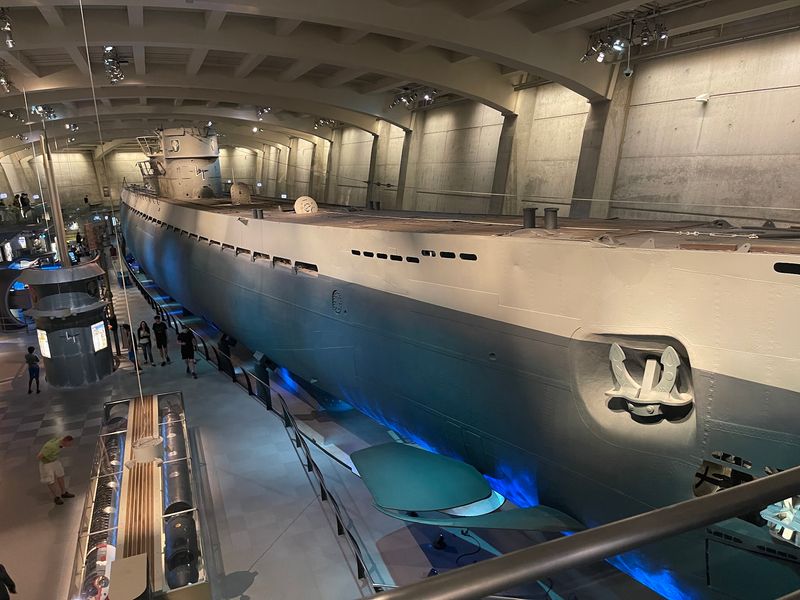
Very few museums let you walk around a real German submarine captured during World War II, and none of them also have a 40-foot indoor tornado in the same building. Chicago’s Museum of Science and Industry is the kind of place where children drag their parents from one impossible exhibit to the next, genuinely unable to decide which thing is the coolest.
The U-505 submarine sits in its own underground gallery, and the experience of circling it is genuinely striking.
Science Storms is the crowd-pleasing centerpiece for most families: visitors can manipulate a tornado, experiment with wave behavior, and watch high-voltage electricity crackle through the air. The Coal Mine experience takes families underground into a recreated mining environment that surprises kids who assumed coal was just something adults mentioned during history class.
Younger children have the Idea Factory, a dedicated space for creative building and sensory exploration. Older kids and teens find plenty in the aviation, transportation, and engineering galleries.
The museum covers roughly 14 acres of floor space, so attempting everything in one visit is genuinely unrealistic. Pick three or four anchor experiences, leave room to wander, and plan on staying most of the day.
Museum of Science – Boston, Massachusetts
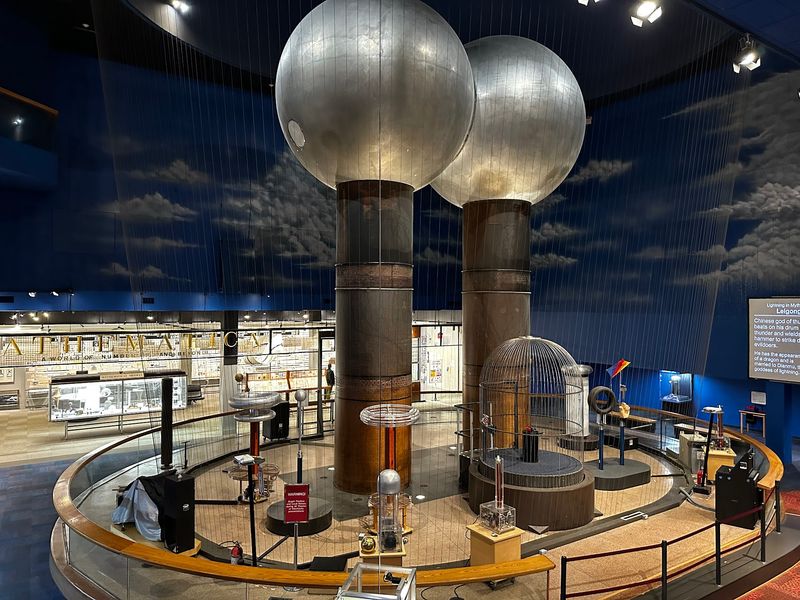
Few science museum moments hit quite like watching two enormous Van de Graaff generators fire artificial lightning bolts across a darkened theater while an audience of children screams with delight. The Theater of Electricity at Boston’s Museum of Science has been doing exactly that for decades, and it still draws gasps from first-timers every single time.
That show alone earns the museum a spot on any serious family itinerary in New England.
Beyond the lightning, families encounter a 65-million-year-old Triceratops skeleton, live animal presentations, robotics demonstrations, and interactive galleries covering engineering, earth science, and human biology. The combination of real specimens, live programming, and hands-on exhibits means different age groups stay genuinely engaged without needing to split up.
The museum sits on the Charles River between Boston and Cambridge, making it an easy anchor for a broader city itinerary. A planetarium and large-format theater add ticketed experiences that extend the visit into the evening if families want them.
Children who lean toward science tend to find it hard to leave. Even kids who consider themselves more artistic tend to get pulled in by the live demonstrations, which have a theatrical quality that goes well beyond a standard classroom experiment.
Please Touch Museum – Philadelphia, Pennsylvania

The name is essentially a policy statement. At Philadelphia’s Please Touch Museum, touching is not just allowed but expected, and the entire space is designed around the idea that children learn best when their hands are involved.
Housed inside the stunning historic Memorial Hall in Fairmount Park, the building itself is worth a moment of appreciation before families disappear into the exhibits.
The Food and Family exhibit covers 3,650 square feet and lets kids explore a market, neighborhood kitchens, and a community festival setting while thinking about food, culture, and how communities work. It manages to be educational without feeling like school, which is a harder balance to strike than it sounds.
Role-playing opportunities are woven throughout, encouraging imaginative and cooperative play rather than passive observation.
The beautifully restored Woodside Park Dentzel Carousel is more than a century old and still gives rides inside the museum. Watching a child’s face on that carousel, surrounded by hand-carved horses in a 19th-century hall, is one of those unexpectedly lovely family travel moments.
The museum is designed primarily for children up to age seven, so families with older kids may want to pair it with another Philadelphia attraction for a balanced day.
COSI – Columbus, Ohio

Rat Basketball sounds like something a child invented on a dare, but at COSI in Columbus it is an actual live demonstration that consistently ranks among visitor favorites. The rats really do play basketball, and the experience is as entertaining as it is oddly educational.
That quirky combination of serious science and completely unexpected fun is what makes COSI stand out among Midwestern science centers.
Visitors can explore an American Museum of Natural History dinosaur gallery, climb into a space capsule, operate an underwater remotely operated vehicle, and investigate Ohio’s largest planetarium. The Electrostatic Generator Show adds another crowd-pleasing live demonstration for families who enjoy watching electricity do dramatic things in front of an audience.
Little Kidspace gives younger children a farm setting, an ambulance, a climbable tree, and other imaginative environments designed for ages five and under. Big Science Park moves some of the experimentation outdoors when weather permits.
The breadth of subjects at COSI is genuinely useful for families where one child is obsessed with dinosaurs and another only wants to talk about space. Both can find their favorite corner without anyone feeling dragged to the wrong exhibit all day.
Children’s Museum Houston – Houston, Texas
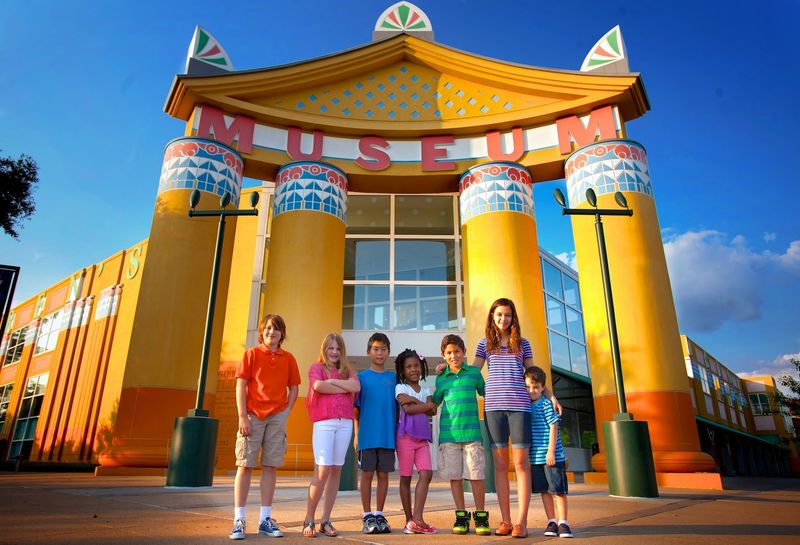
Handing a seven-year-old a job in a miniature city and watching them immediately take it extremely seriously is one of the quiet joys of visiting Children’s Museum Houston. Kidtropolis USA functions as a kid-run community where children take on roles, earn currency, cooperate with neighbors, and keep the whole operation running.
It is part economics lesson, part theater production, and entirely entertaining to watch from the sidelines.
FlowWorks is the museum’s water-focused gallery, where waves, vortices, rapids, and hydropower systems let children explore fluid dynamics without anyone using that phrase out loud. Invention Convention supplies materials and gadgets for building and designing, while older children can tackle coding challenges, laboratory experiments, and a museum-wide spy game that sends them exploring every corner of the building.
Toddlers have dedicated sensory and physical play environments so younger siblings are not simply dragged along on someone else’s adventure. The age range this museum serves effectively is unusually broad: a five-year-old and a ten-year-old can spend the same day there and both feel like the visit was designed specifically for them.
Houston has plenty of family attractions nearby, but Children’s Museum Houston earns a full dedicated day on its own merits.
Perot Museum of Nature and Science – Dallas, Texas
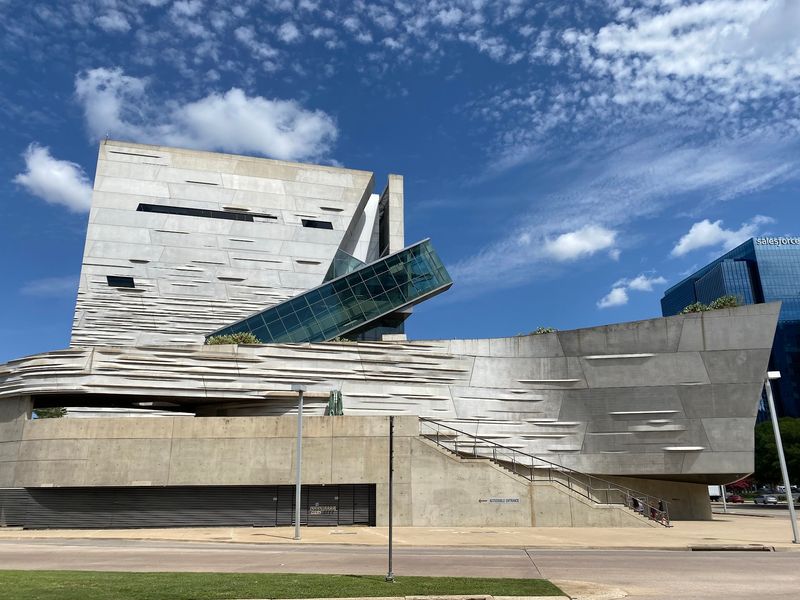
The Perot Museum arrives with a striking architectural statement before families even reach the entrance: a massive geometric building that rises above Uptown Dallas like something designed to make children ask questions before they are even inside. That curiosity carries right through the front doors into one of the best natural science and children’s museum combinations in the South.
Dinosaurs, space, animals, engineering, and early childhood play share the same building without any of them feeling shortchanged.
The T. Boone Pickens Life Then and Now Hall traces life from ancient fossils through modern ecosystems with enough visual drama to hold attention across a wide age range.
The Expanding Universe Hall covers stars, galaxies, and planetary science in a way that tends to produce a lot of quiet, wide-eyed staring. Films in the 3D theater offer a natural pacing break between high-energy hands-on galleries.
The redesigned Moody Family Children’s Museum serves children seven and under with a toddler area, maker activities, a multisensory immersive environment, and outdoor play. Crucially, older siblings have genuinely compelling things to do elsewhere in the building at the same time.
That parallel programming for different ages makes the Perot an unusually stress-free option for families with a wide spread of children’s ages.
Liberty Science Center – Jersey City, New Jersey
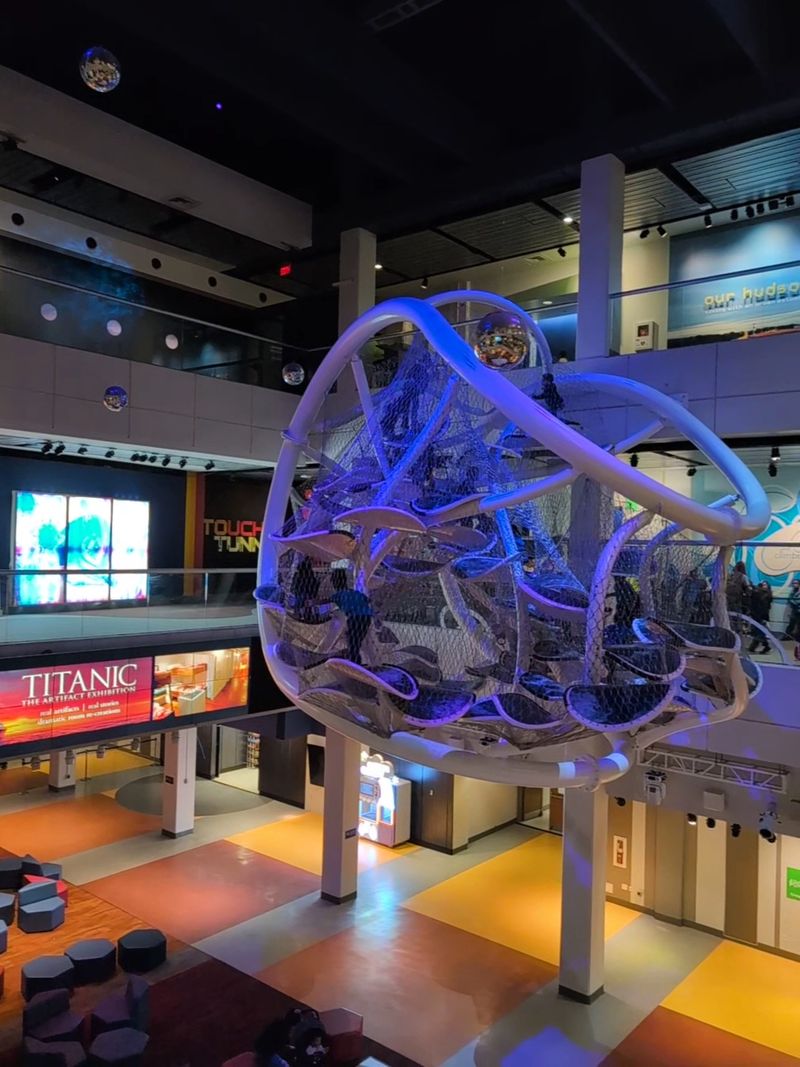
Crawling through 80 feet of complete darkness while relying entirely on your sense of touch is not something most children expect to do at a science museum, and yet the Touch Tunnel at Liberty Science Center is consistently one of the most requested repeat experiences at the entire facility. Kids come out the other end genuinely proud of themselves, which is exactly the kind of confidence-building moment that makes a museum visit memorable long after the day ends.
The Infinity Climber is a suspended structure that lets children move through the air above the museum floor, providing a physical challenge alongside the intellectual ones. Fossil excavation involves digging through more than 60 tons of sand to uncover replica specimens, which gives young paleontologists something satisfyingly hands-on to do for extended stretches.
More than 100 animal species live at the center, adding a wildlife encounter element that most pure science museums lack.
The Jennifer Chalsty Planetarium is promoted as the nation’s largest and adds a major ticketed experience to the visit. Liberty Science Center sits in Liberty State Park directly across the Hudson from Manhattan, making it an easy addition to a New York area family trip or a worthy destination for a standalone New Jersey day with views that are genuinely hard to beat.
Science Museum of Minnesota – St. Paul, Minnesota
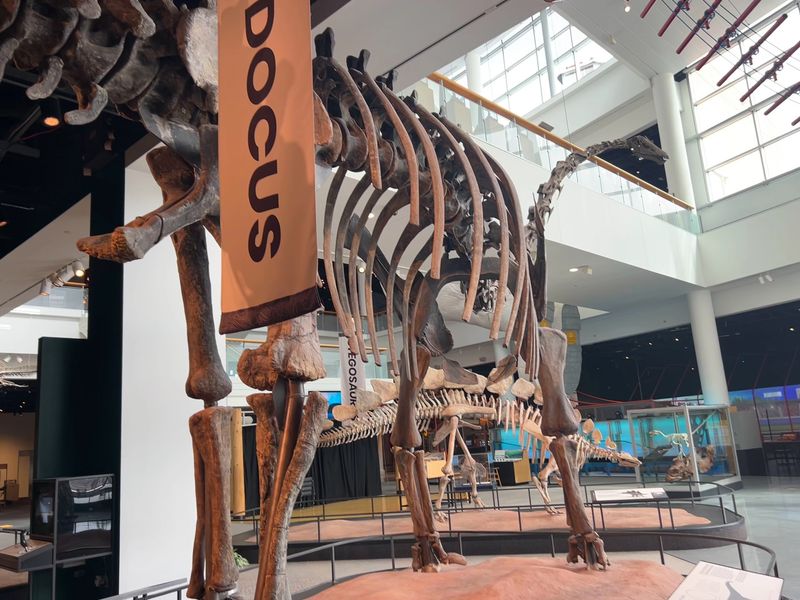
Mounted Diplodocus, Triceratops, and Allosaurus skeletons have a way of stopping foot traffic completely, and the Science Museum of Minnesota knows this, positioning its prehistoric giants where families encounter them at full, slightly overwhelming scale. The fossil galleries go well beyond the mounted specimens, incorporating amber, petrified wood, ancient marine animals, and hundreds of individual fossils that reward the children who slow down long enough to look closely.
The Experiment Gallery is where the museum shifts from spectacular display to active participation. Families can generate an indoor tornado, control a wave tank, manipulate rushing air, and build working electrical circuits.
Those activities hit a sweet spot for elementary and middle school children who have grown past purely imaginative play but still want something physical to do with their hands.
Other museum levels explore the human body, the Mississippi River ecosystem, mathematics, and environmental science, giving the building enough variety that a single visit rarely covers everything. The museum sits in downtown St. Paul with parking and light rail access, making logistics straightforward for families arriving from across the Twin Cities metro.
St. Paul’s broader riverfront area offers good options for extending the day after the museum closes, including parks and walking paths along the Mississippi.
Denver Museum of Nature and Science – Denver, Colorado
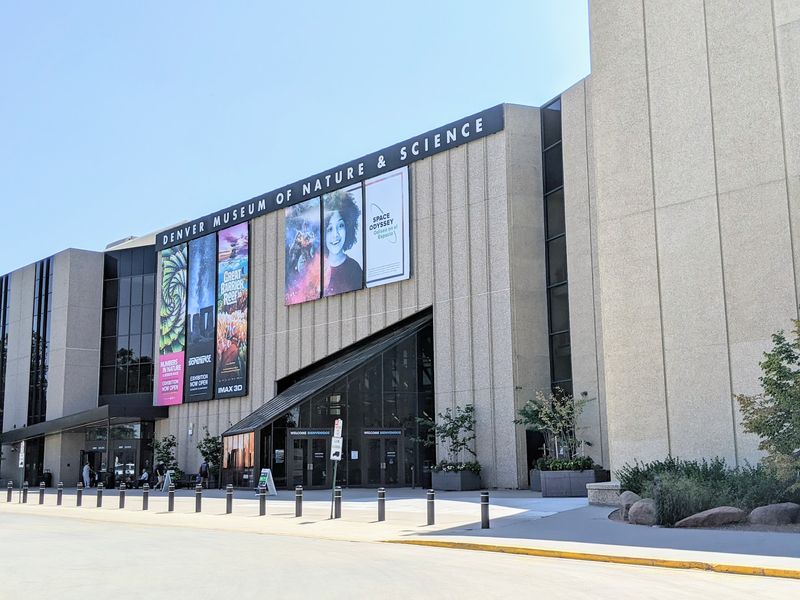
More than 90 wildlife and habitat dioramas sounds like a lot until you are actually standing in front of a scene so detailed and lifelike that a child reaches out to touch it before remembering the glass is there. The Denver Museum of Nature and Science fills its galleries with African savannas, Australian ecosystems, Alaskan tundra, and South American rainforests, each one rendered with enough accuracy that the scenes feel more like windows than displays.
That sense of immersion is rare in natural history settings.
Interactive elements throughout the galleries let children build bird nests, test predator-and-prey movement patterns, and experiment with augmented reality overlays. The Discovery Zone, designed for ages eight and under, includes a Colorado-themed water area, a Science Kitchen, a construction space, and a toddler play area that gives younger visitors their own corner without isolating them from the broader museum.
Outside, the four-acre Nature Play experience in City Park extends the visit with landscapes inspired by Colorado environments from alpine tundra to shortgrass prairie. The Rocky Mountain setting means the museum can serve as a natural anchor for a Denver family trip that also includes mountain hikes, wildlife watching, and other outdoor activities.
The combination of indoor exhibits and outdoor programming makes it particularly flexible across seasons and weather conditions.
Discovery Place Science – Charlotte, North Carolina

A bed of nails that children can actually lie on is not a standard science center offering, and yet Discovery Place Science in Uptown Charlotte makes it look completely normal. The Cool Stuff gallery packs in hands-on physics experiences including the nail bed, a vortex cannon, and other demonstrations that make abstract concepts feel immediate and slightly theatrical.
Science stops feeling like a subject and starts feeling like a collection of excellent tricks.
World Alive brings reptiles, amphibians, and aquarium species into close proximity with visitors, adding a living animal element that breaks up the technology-heavy sections of the museum. Thinker Space gives older children access to real tools and materials for designing and building projects, while KidScience creates dedicated nature, water, and construction experiences for children seven and under.
The separation of age-appropriate spaces means older and younger siblings can both be somewhere genuinely suited to them.
Daily science shows featuring chemical reactions and live demonstrations keep the energy high throughout the visit and give families a natural schedule to build around. The IMAX Dome Theatre adds a large-format film experience for families who want to extend their time in the building.
Discovery Place Science sits in Uptown Charlotte, making it easy to combine with other city attractions for a full family weekend in one of the Southeast’s fastest-growing family destinations.
Share this story