Asia is home to some of the world’s most breathtaking temples, each one telling a story that stretches back hundreds or even thousands of years. These sacred places are not just beautiful buildings.
They are living records of faith, culture, and human creativity, shaped by generations of worshippers, rulers, and pilgrims. From Cambodia’s jungle-wrapped towers to Japan’s vermilion mountain gates, each temple offers a window into a spiritual world that continues to inspire people today.
Angkor Wat, Cambodia
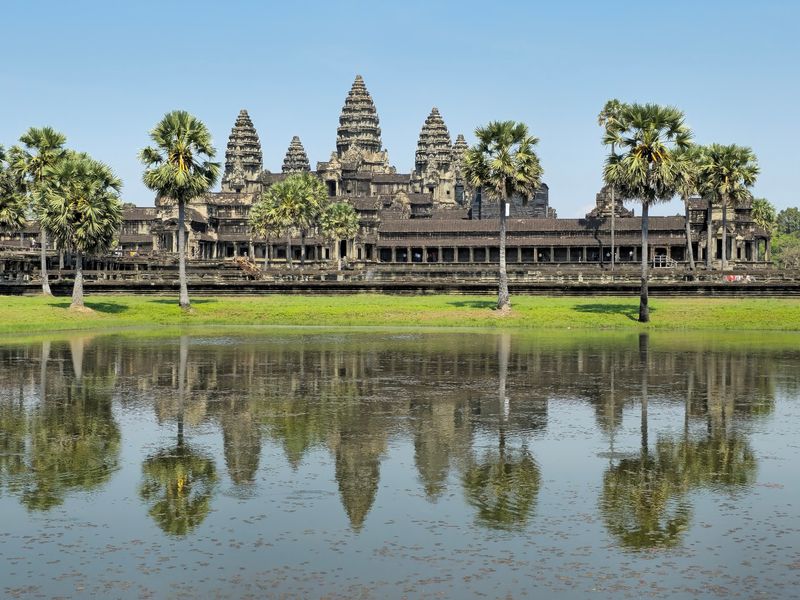
Standing at the heart of Cambodia’s jungle, Angkor Wat is so massive that it has its own zip code of sacred symbolism built right into its stones. Built in the 12th century under King Suryavarman II, this temple was originally dedicated to the Hindu god Vishnu before shifting into a Buddhist sanctuary.
Its five towering spires represent Mount Meru, the cosmic mountain at the center of Hindu and Buddhist belief.
The temple sits inside the enormous Angkor Archaeological Park, a roughly 400-square-kilometer landscape packed with reservoirs, roads, canals, and the ruins of royal capitals. More than 800 meters of stone reliefs wrap around its walls, depicting battles, myths, and royal ceremonies in stunning detail.
Every carved surface tells a story worth reading slowly.
Angkor Wat never fully fell out of use, even as Khmer political power shifted elsewhere. Buddhist monks kept its spirit alive through centuries of change.
Today, it draws millions of visitors who come not just to photograph its silhouette at dawn, but to feel the weight of a civilization that built something this extraordinary over 900 years ago.
Borobudur, Indonesia
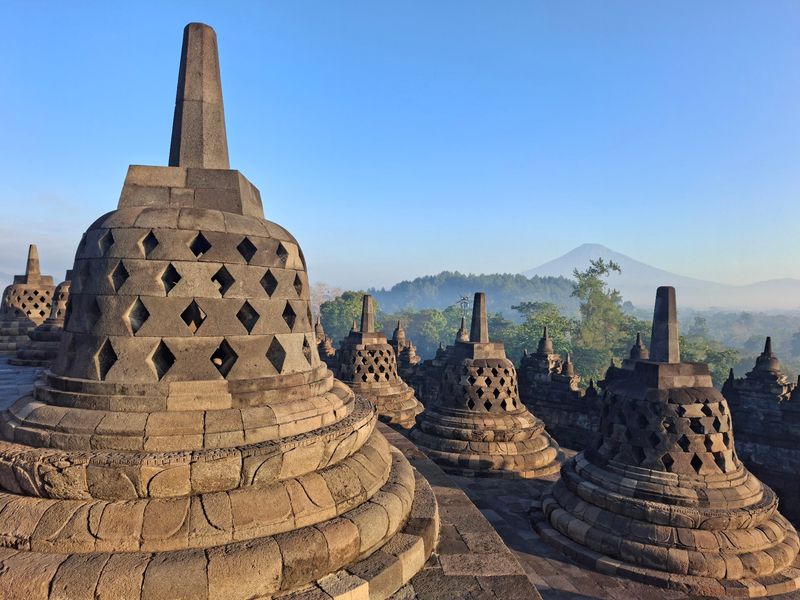
Imagine climbing a mountain made entirely of carved stone, where every step upward represents a stage in the journey toward enlightenment. That is basically what Borobudur is.
Built in Java during the eighth and ninth centuries, this massive Buddhist monument was designed as a walk-through experience, not just a building to admire from the outside.
The structure rises through five square terraces and three circular platforms, topped by a central stupa. Over 2,500 square meters of relief panels cover the walls, illustrating Buddhist teachings, everyday life, and stories from sacred texts.
Seventy-two perforated stupas on the upper levels each contain a seated Buddha statue, partially visible through the stone lattice like a secret waiting to be discovered.
After centuries of abandonment under volcanic ash and jungle overgrowth, Borobudur was painstakingly restored and now stands as one of Indonesia’s most recognized landmarks. UNESCO has classified it as a World Heritage Site, and Buddhist pilgrims from across Asia gather here again, especially during Vesak, the celebration of the Buddha’s birth and enlightenment.
Walking its circular paths at sunrise, with mist rolling off the surrounding hills, is genuinely unforgettable.
Mahabodhi Temple, Bodh Gaya, India
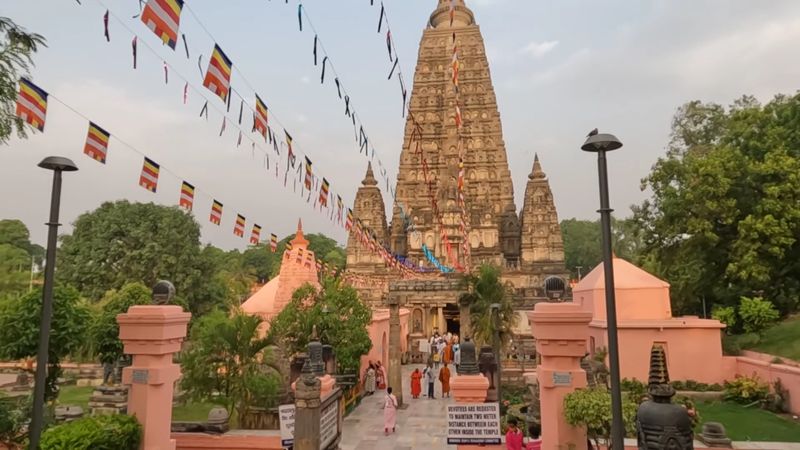
Right here, under a descendant of the original Bodhi Tree, a man sat down one evening around 2,500 years ago and changed the course of world history. Buddhist tradition holds that this is exactly where Siddhartha Gautama attained enlightenment and became the Buddha.
Few places on Earth carry that kind of weight.
Emperor Ashoka built an early temple at Bodh Gaya in the third century BCE to honor the site. The soaring main structure that stands today, rising about 50 meters, largely dates from the fifth and sixth centuries.
Near its base sits the Vajrasana, or Diamond Throne, marking the precise spot associated with the enlightenment experience. The sacred Bodhi Tree still grows beside it, its branches heavy with prayer flags tied by pilgrims from dozens of countries.
UNESCO calls Bodh Gaya the holiest Buddhist pilgrimage site in the world, and the energy there reflects that status. Monks in maroon and saffron robes chant through the night.
Pilgrims prostrate themselves on wooden boards. Candles and incense smoke drift upward in the warm air.
Visiting Bodh Gaya is less like touring a monument and more like stepping into a continuously unfolding act of devotion that has never really stopped.
Golden Temple, Amritsar, India
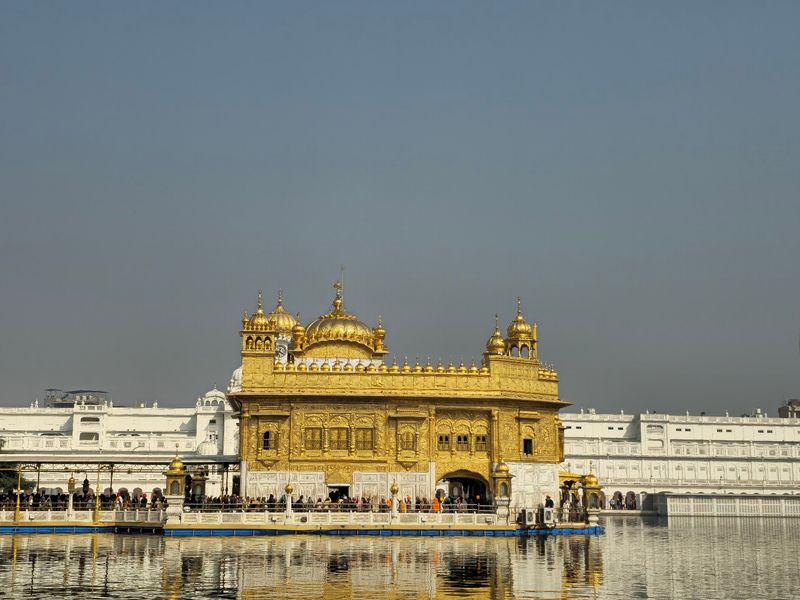
Every day, regardless of weather, background, or belief, roughly 100,000 people pass through the Golden Temple complex in Amritsar and receive a free meal. That single fact says more about Sikhism’s values than almost anything else could.
Known formally as Sri Harmandir Sahib, this shrine is both a sacred sanctuary and a daily demonstration of equality in action.
Construction of the shrine and its surrounding sacred pool developed under the Sikh Gurus in the late 16th century, with Guru Arjan completing what Guru Ram Das had begun. The upper portions of the sanctuary are now covered with approximately 400 kilograms of gold leaf, which shimmers dramatically in the water of the Amrit Sarovar pool surrounding it.
The visual impact, especially at dawn and dusk, is genuinely stunning.
The temple’s famous langar kitchen operates around the clock, serving simple vegetarian food to anyone who walks through the doors. No reservations, no payment, no questions asked.
Volunteers chop vegetables, roll flatbreads, and wash dishes in a constant rotating effort that embodies the Sikh principle of seva, or selfless service. For many visitors, watching that kitchen run smoothly is just as moving as the golden shrine itself.
Fushimi Inari Taisha, Kyoto, Japan
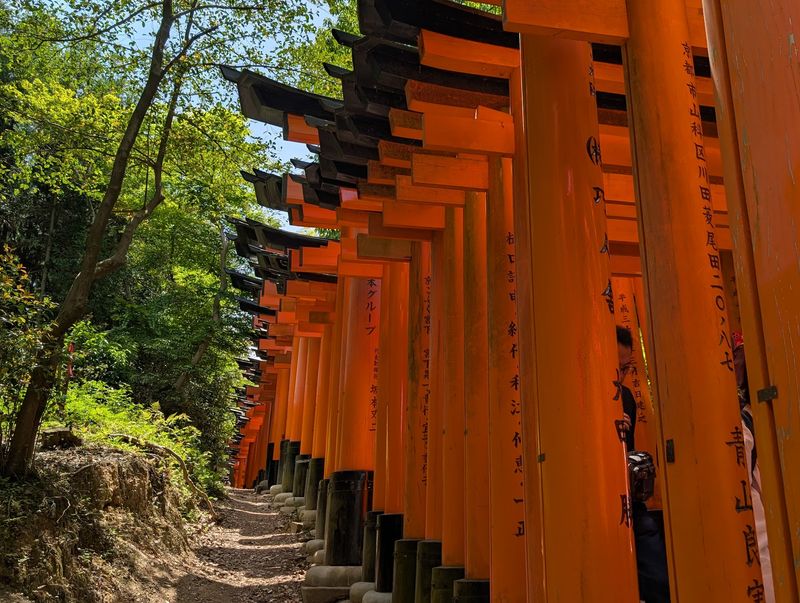
Walking through the torii gate tunnels at Fushimi Inari Taisha feels like stepping into a painting that keeps going forever. More than 5,000 vermilion gates line the trails winding up the wooded slopes of Mount Inari, donated over centuries by businesses and individuals seeking good fortune.
The effect is both eerie and beautiful, especially in the early morning before the crowds arrive.
Kyoto’s tourism records trace this Shinto shrine back to the eighth century, when it was dedicated to Inari, the deity associated with rice, agriculture, and later with business prosperity. Fox statues appear throughout the complex because foxes are considered sacred messengers of Inari in Shinto belief.
Some foxes hold keys in their mouths, symbolizing access to the rice granary.
Fushimi Inari serves as the head shrine for tens of thousands of Inari shrines scattered across Japan, giving it a spiritual authority that goes well beyond its Instagram fame. The full hike to the summit of Mount Inari takes about two hours and passes through smaller shrines, stone lanterns, and quiet forested sections far removed from the tourist buzz below.
Reaching the top feels like earning something, which is probably the point.
Brihadisvara Temple, Thanjavur, India
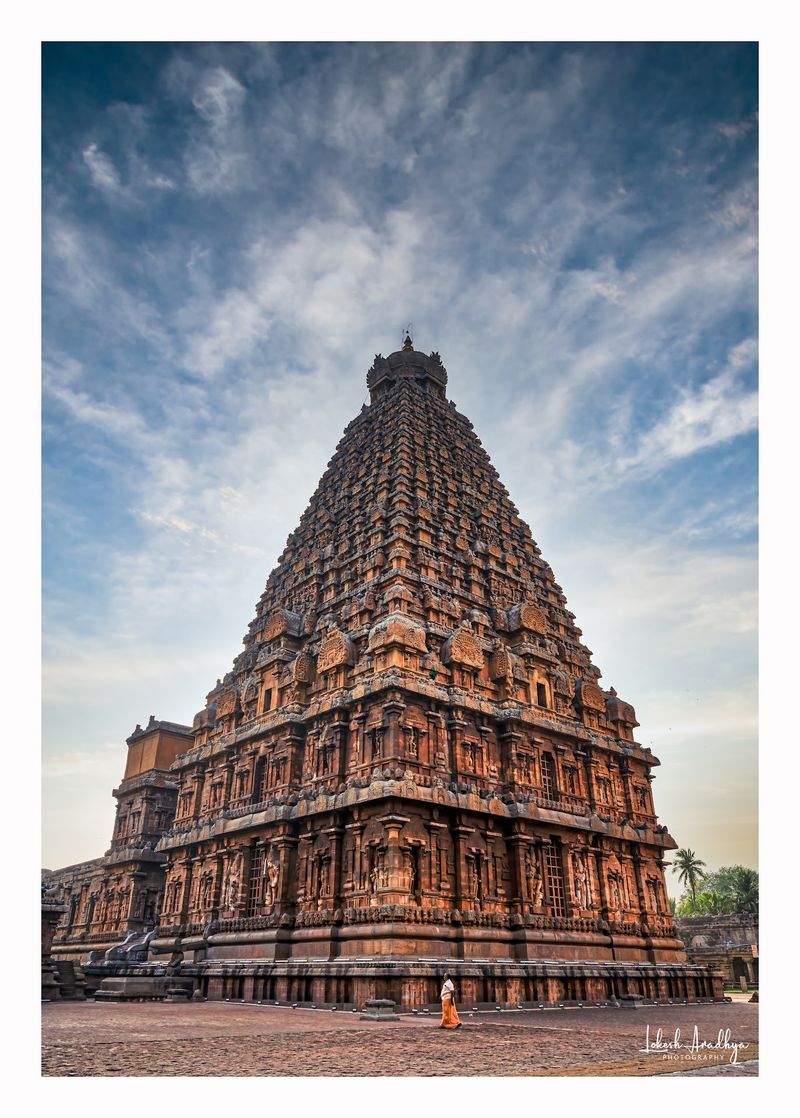
Over a thousand years old and still hosting daily worship, the Brihadisvara Temple in Thanjavur is basically proof that great architecture ages better than almost anything else. Chola ruler Rajaraja I commissioned this grand Shiva temple around the year 1000 CE, and it was consecrated around 1009 to 1010.
The result was one of the most ambitious building projects in medieval Indian history.
Its central tower, known as the vimana, rises approximately 59.8 meters above the sanctuary floor, making it one of the tallest temple towers built during the Chola period. Intricate stone carvings, royal inscriptions, historic paintings, and dozens of surrounding shrines fill the wide courtyard.
The sheer density of artistic detail across the complex reflects the cultural confidence of the Chola Empire at its height.
UNESCO has recognized Brihadisvara as part of the Great Living Chola Temples World Heritage Site, and the word living is key. This is not a frozen museum piece.
Priests carry out rituals rooted in traditions established over a millennium ago, temple elephants greet visitors at the entrance, and festival celebrations draw enormous crowds. The ancient and the everyday coexist here in a way that feels completely natural and quietly extraordinary.
Haeinsa Temple, South Korea
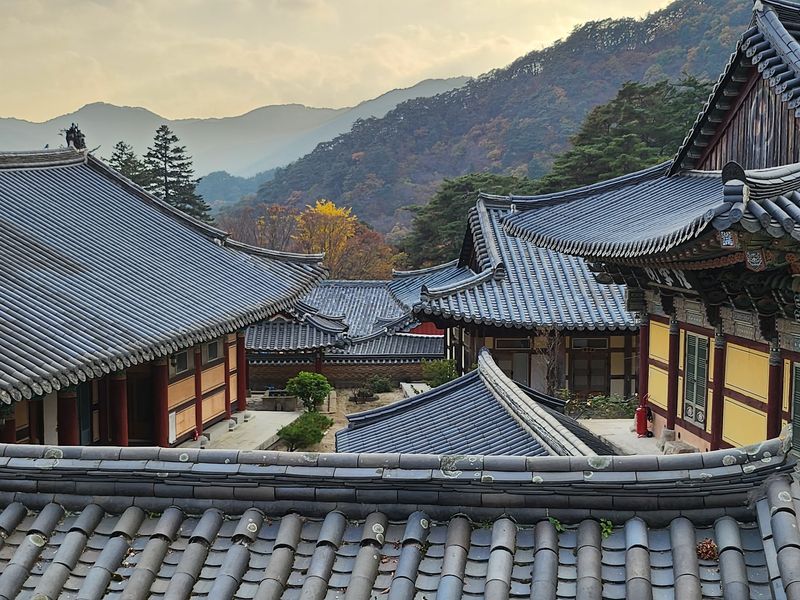
Hidden inside Haeinsa Temple on South Korea’s Mount Gayasan is one of the most remarkable libraries in human history, and almost nobody talks about it enough. The Tripitaka Koreana consists of approximately 80,000 wooden printing blocks, each one hand-carved between 1237 and 1248 with Buddhist texts, laws, and commentaries.
Together, they form one of the most complete and accurate collections of Buddhist scripture ever assembled.
The blocks are stored in the Janggyeong Panjeon buildings, which were designed with a ventilation and humidity-control system so clever that it has kept the wood in excellent condition for centuries without modern technology. The buildings face different directions, have different-sized windows at top and bottom, and use the mountain air itself to regulate temperature and moisture.
Engineers today still study the design with genuine admiration.
UNESCO has recognized both the temple complex and the Tripitaka Koreana as World Heritage Sites, acknowledging their importance to both religious scholarship and architectural ingenuity. Visiting Haeinsa means walking through a forested mountain setting that feels deliberately removed from the modern world.
The combination of carved knowledge, ancient wood, mountain air, and quiet devotion creates an atmosphere that is hard to describe but easy to remember.
Kiyomizu-dera, Kyoto, Japan
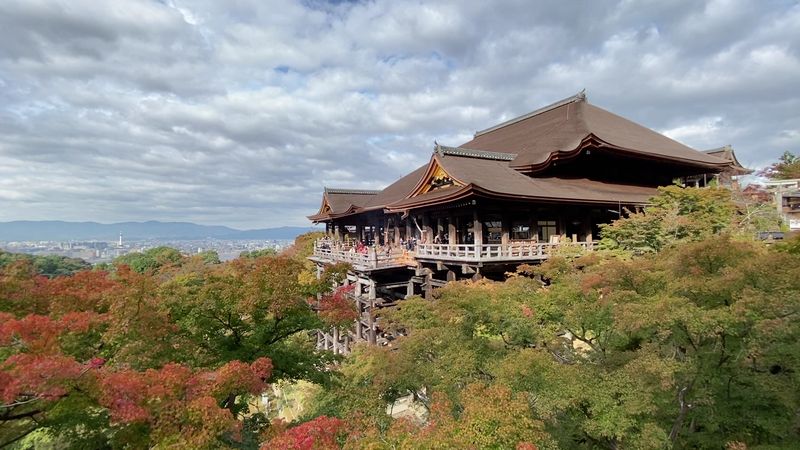
Not a single nail was used in the construction of Kiyomizu-dera’s famous wooden veranda, which juts out over a steep hillside on columns roughly 13 meters tall. That fact alone makes the temple worth visiting, but there is far more going on here than impressive carpentry.
Founded in 780, this Buddhist temple has been rebuilt nine times due to fires, with most of its major buildings dating from the 1630s reconstruction.
The main hall enshrines Kannon, the bodhisattva of compassion and mercy, and draws worshippers seeking help with relationships, health, and life decisions. Below the veranda, the Otowa waterfall splits into three streams, each associated with a different blessing: longevity, success in studies, and fortunate love.
Visitors line up to drink from one stream using long-handled cups, carefully choosing which blessing they want most.
Kiyomizu-dera’s location on Mount Otowa was not chosen by accident. Japanese sacred architecture has long honored the idea that natural settings carry spiritual power, and the temple’s placement within forested hills, with sweeping views over Kyoto, reflects that philosophy beautifully.
Autumn turns the hillside into a blaze of red and orange. Cherry blossoms transform spring visits into something close to magical.
The mountain is as much a part of the temple as the buildings themselves.
Itsukushima Shrine, Miyajima, Japan
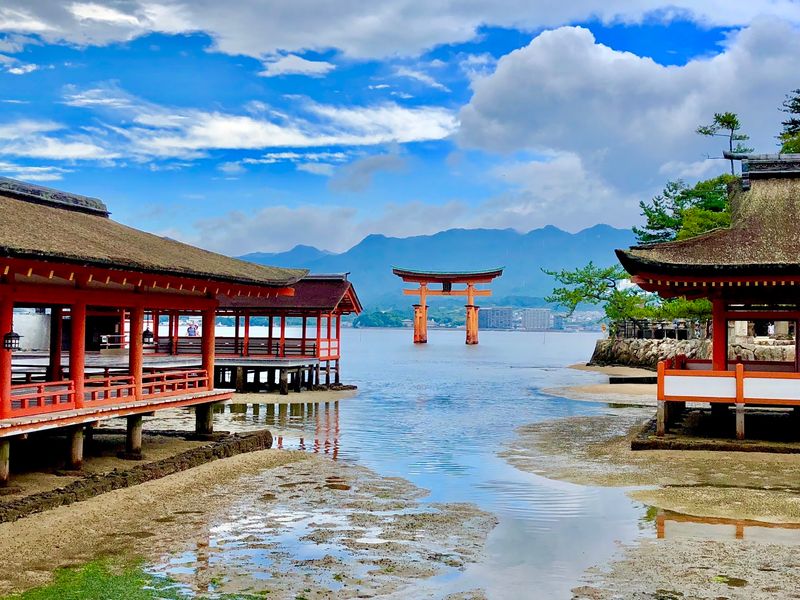
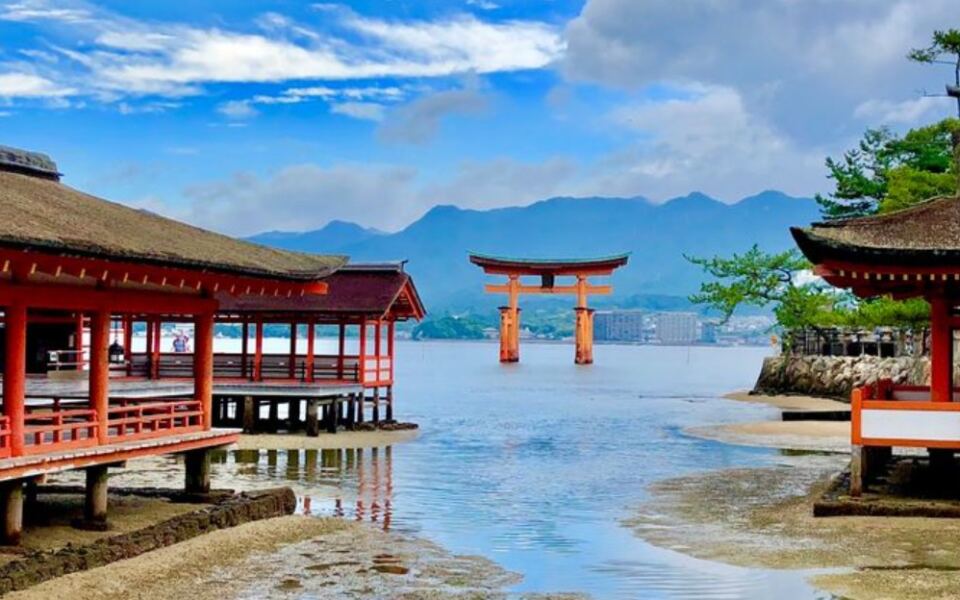
At high tide, the buildings of Itsukushima Shrine appear to float on the surface of the Seto Inland Sea, as if the entire complex is gently drifting between the world of humans and something much older. This is not an accident.
The shrine was deliberately built over the water to honor the sacred nature of the island itself, which Shinto tradition long considered too holy for ordinary human habitation.
Shrine buildings probably existed on Miyajima Island as early as the sixth century, but the grand architectural complex associated with Taira no Kiyomori gave the site its current form in the 12th century. The famous offshore torii gate marks the boundary between the mundane world and sacred territory, a visual cue that visitors are crossing into a different kind of space.
At low tide, people can walk right up to its base.
Behind the shrine, the forested slopes of Mount Misen rise steeply, adding another layer to the site’s spiritual geography. UNESCO recognized Itsukushima for its outstanding expression of Japanese scenic beauty and Shinto religious concepts, specifically the way architecture, sea, and mountain have been woven into a single sacred composition.
Deer wander freely around the island, adding an almost dreamlike quality to an already otherworldly place.
Temple of Heaven, Beijing, China
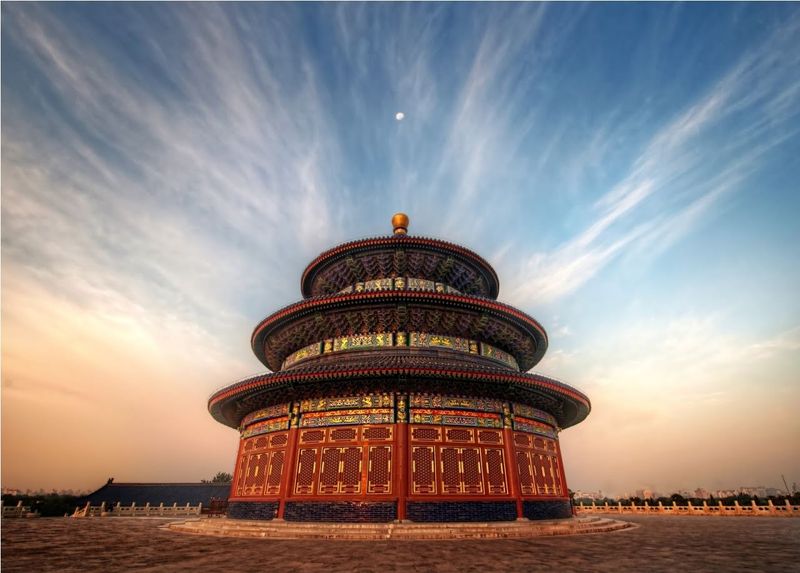
For nearly 500 years, Chinese emperors walked a sacred pathway through Beijing’s Temple of Heaven complex to perform rituals they believed held the entire harvest and the cosmic order together. The complex was completed in 1420 under the Ming Dynasty and later expanded by Qing emperors, eventually covering approximately 273 hectares, making it larger than the Forbidden City itself.
Its most photographed structure, the circular Hall of Prayer for Good Harvests, sits on a triple-tiered white marble terrace and is built entirely without nails, relying on complex interlocking wooden joinery. The blue-tiled roof represents heaven, while the circular shape contrasts with the square southern altar, reflecting ancient Chinese cosmological ideas about the relationship between heaven and earth.
Every measurement, color, and alignment in the complex was chosen with precise symbolic intention.
Emperors performed animal sacrifices at the Circular Mound Altar and prayed for successful harvests at the Hall of Prayer, acting as the intermediary between heaven and humanity. Missing or botching these rituals was considered a serious problem, potentially inviting disaster.
Today, the park surrounding the temple fills every morning with Beijing residents doing tai chi, playing instruments, and practicing calligraphy, giving this ancient ritual space a wonderfully lively second life.
Share this story