Ireland is one of those places that gets under your skin in the best possible way. From ancient stone towers rising out of misty hillsides to wild Atlantic coastlines that stretch as far as your eyes can see, this small island packs an extraordinary amount of beauty, history, and character into every corner.
Whether you are planning your first trip or your fifth, there is always something new to discover here. This list covers 23 places across the island that make a strong case for booking that flight sooner rather than later.
Cliffs of Moher, County Clare
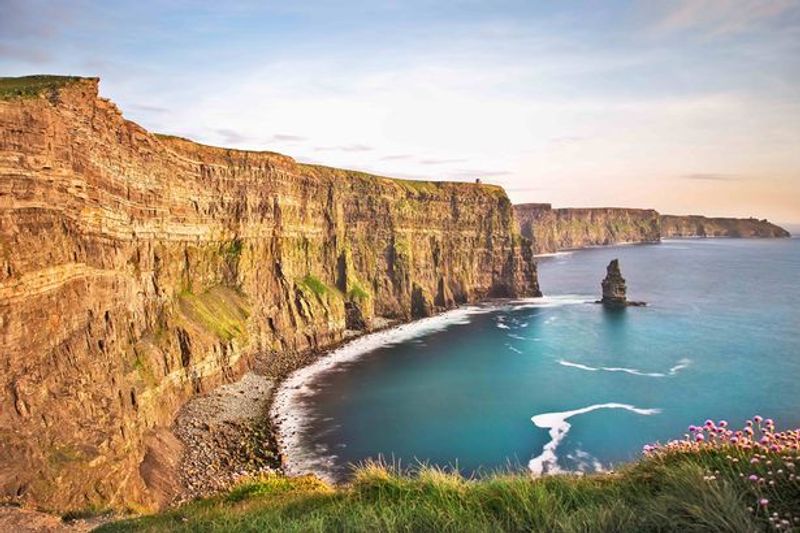
Standing at the edge of the Cliffs of Moher puts the scale of the Atlantic into sharp perspective. The cliffs rise up to 214 meters at their highest point, stretching roughly 14 kilometers along the Clare coastline.
On a clear day, the Aran Islands are visible from the viewing platforms, and the view in every direction is genuinely hard to describe.
The visitor experience includes an underground exhibition that explains the geology and wildlife of the area. Puffins and other seabirds nest in the cliff face during spring and summer, which adds a natural history angle to the visit.
The site is open year-round, with brief closures around Christmas.
Walking paths run along the cliff edge in both directions from the main visitor center. Comfortable footwear is strongly recommended because the terrain can be uneven and wind conditions change quickly.
Booking tickets online in advance avoids queues, especially during peak summer months.
Giant’s Causeway, County Antrim
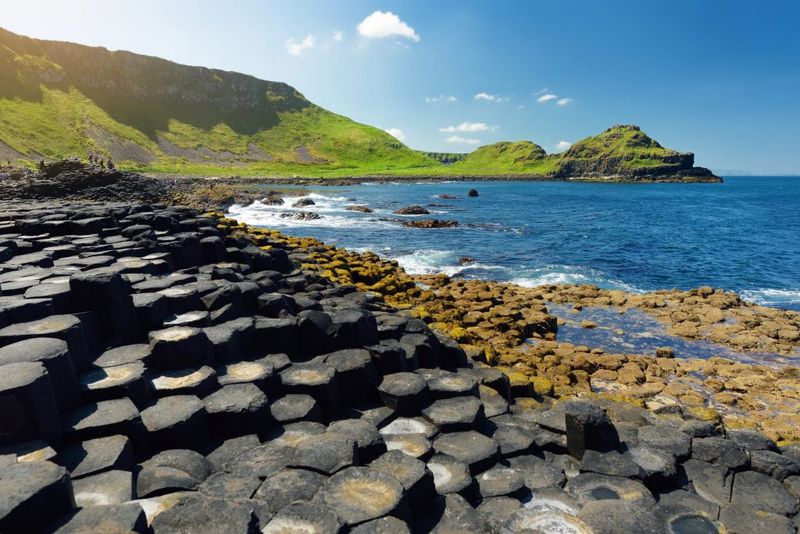
About 40,000 interlocking basalt columns cover the coastline at Giant’s Causeway, and no photograph fully prepares you for how strange and impressive the formation looks in person. The columns formed from ancient volcanic activity around 60 million years ago, though local legend tells a much more entertaining story involving the giant Finn McCool building a bridge to Scotland.
The National Trust manages the site and operates a visitor center with exhibitions covering both the geology and the mythology. Guided tours are available and worth considering if you want context beyond what the displays offer.
The site itself is open year-round, though the visitor center has seasonal hours.
The walk from the visitor center to the main causeway columns takes about 15 to 20 minutes along a coastal path. Sturdy shoes are useful here because the basalt surface is uneven.
Arriving early in the morning gives you a better chance of exploring without large crowds around you.
Ring of Kerry, County Kerry
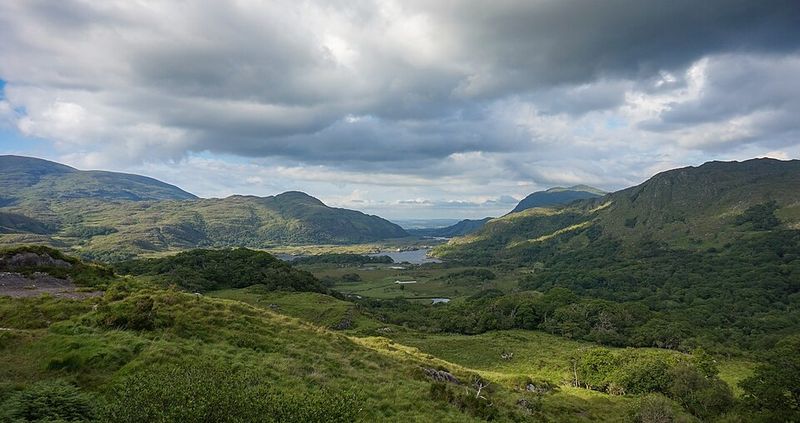
The Ring of Kerry is a roughly 179-kilometer circular route that loops around the Iveragh Peninsula, and it earns its reputation as one of Ireland’s great drives. Mountains, coastal inlets, small villages, and sweeping Atlantic views appear in sequence as you work your way around the route.
It is the kind of road trip where stopping frequently is not optional but necessary.
Killarney National Park sits near the start of the route and is worth building extra time around. The town of Kenmare offers a good base for exploring the southern stretch.
Viewpoints overlooking the Skellig Islands and the wider Atlantic give the drive some of its most memorable moments.
The route is popular with tour buses, so driving it counterclockwise is often recommended to reduce head-on traffic on narrow sections. Late spring and early autumn tend to offer a good balance of decent weather and fewer crowds than the height of summer brings.
Blarney Castle, County Cork
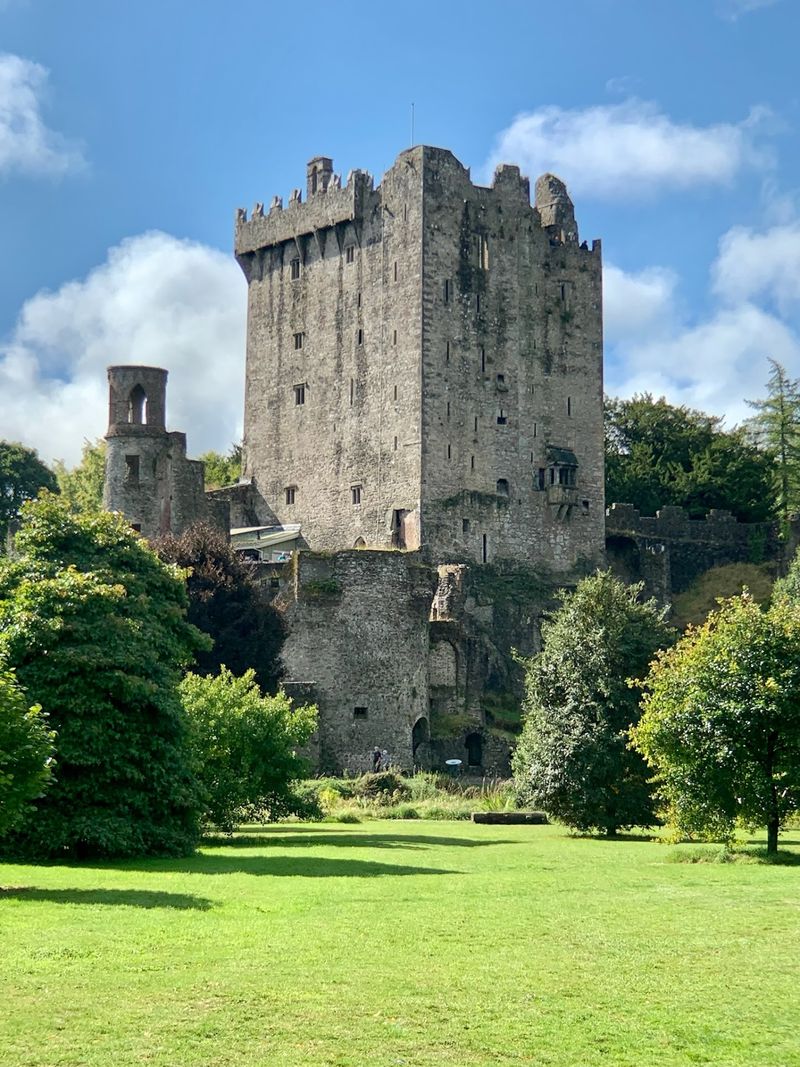
Blarney Castle has been drawing visitors for centuries, and not just for the famous stone. The medieval tower house dates to around 1446 and stands in remarkably good condition.
The surrounding grounds include rock formations, a poison garden, woodland walks, and a fern garden that together make the estate feel much larger than most visitors expect.
The Blarney Stone sits at the top of the castle tower, and reaching it requires lying on your back and leaning over a gap in the battlements with staff assistance. The tradition is said to grant the gift of eloquent speech, which explains its enduring popularity with visitors from around the world.
The castle and gardens are open year-round with adjusted seasonal hours. Arriving early is a practical idea because the queue for the stone can grow long by midmorning during busy periods.
The gardens alone justify a visit even for travelers who skip the stone-kissing tradition entirely.
The Burren, County Clare
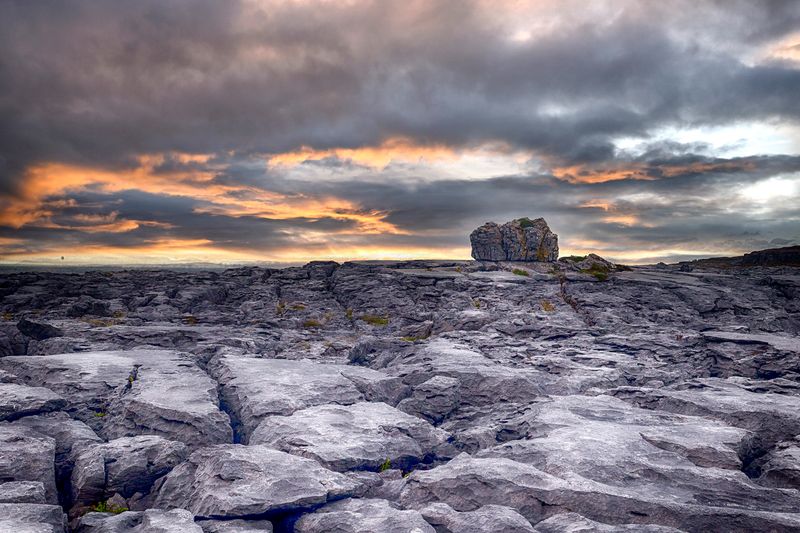
The Burren covers roughly 250 square kilometers of County Clare with one of Europe’s most distinctive landscapes. Exposed limestone pavement stretches across the terrain in flat, cracked sheets, and yet hundreds of plant species manage to grow in the gaps between the rocks.
Arctic, Mediterranean, and Alpine plants coexist here in a combination that botanists still find remarkable.
Beyond the plants, the Burren contains portal tombs, ring forts, monastic ruins, and cave systems that tell thousands of years of human and natural history. The Aillwee Caves and the Poulnabrone Dolmen are among the most visited specific sites within the broader landscape.
Walking routes of varying lengths cross the area, from short loops near the coast to longer treks into the higher limestone plateau. The Burren National Park has a visitor center at Mullaghmore that provides useful orientation for first-time visitors.
The landscape looks different across each season, making it genuinely rewarding to visit more than once.
Trinity College Dublin, Dublin
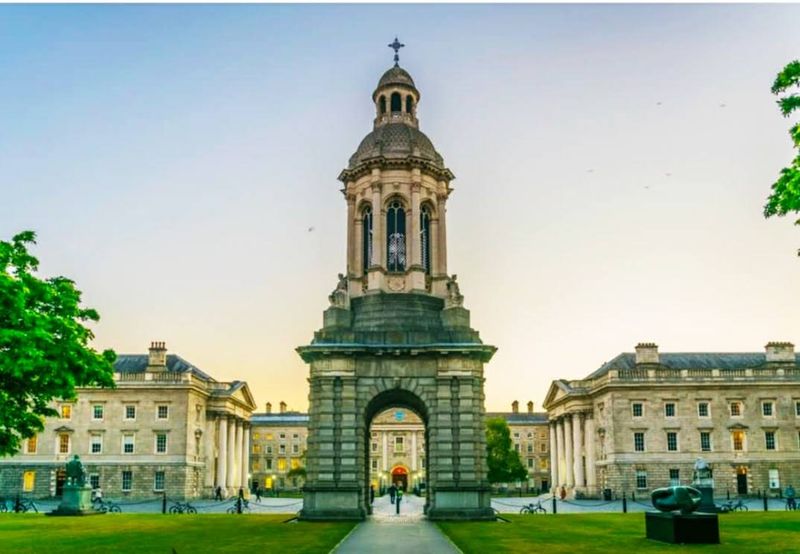
Trinity College Dublin was founded in 1592, making it Ireland’s oldest university and one of the oldest in the English-speaking world. The campus sits right in the center of Dublin and feels like a separate world from the busy streets outside its gates.
Walking through the main entrance onto the cobblestone grounds is a shift in atmosphere that most visitors notice immediately.
The main draw for many tourists is the Book of Kells Experience in the Old Library. The Book of Kells is an elaborately illustrated manuscript created by Celtic monks around 800 AD, and it is displayed alongside other early medieval texts.
The Long Room, a barrel-vaulted library housing around 200,000 of the college’s oldest books, is part of the same exhibition.
Booking tickets in advance is strongly recommended because the exhibition is one of Dublin’s most popular attractions and regularly sells out. Campus tours are also available and provide useful context about the university’s long history and notable alumni.
Dingle Peninsula, County Kerry
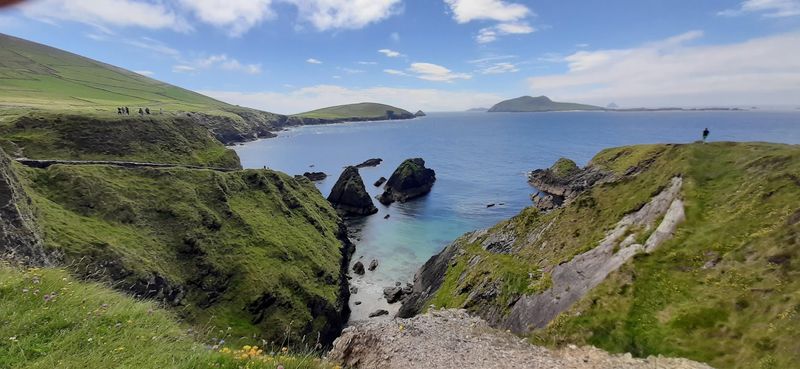
The Dingle Peninsula stretches about 48 kilometers into the Atlantic from the Kerry mainland, and the landscape gets progressively more dramatic the further west you travel. The Slea Head Drive is the peninsula’s signature route, looping past ancient beehive huts, stone forts, sea stacks, and some of the most striking coastal scenery in Ireland.
Dingle town itself is small but lively, with a strong traditional music scene and a fishing harbor that remains active. The town has a range of restaurants focused on locally caught seafood, and the surrounding waters are also home to Fungie, the dolphin who famously inhabited the bay for decades before disappearing in 2020.
Archaeological sites on the peninsula include the Gallarus Oratory, an early Christian dry-stone structure that has stood intact for over a thousand years. The peninsula is accessible year-round, though some of the smaller roads require careful driving.
Spring and early summer offer particularly good light and fewer tour buses on the narrow routes.
Connemara National Park, County Galway
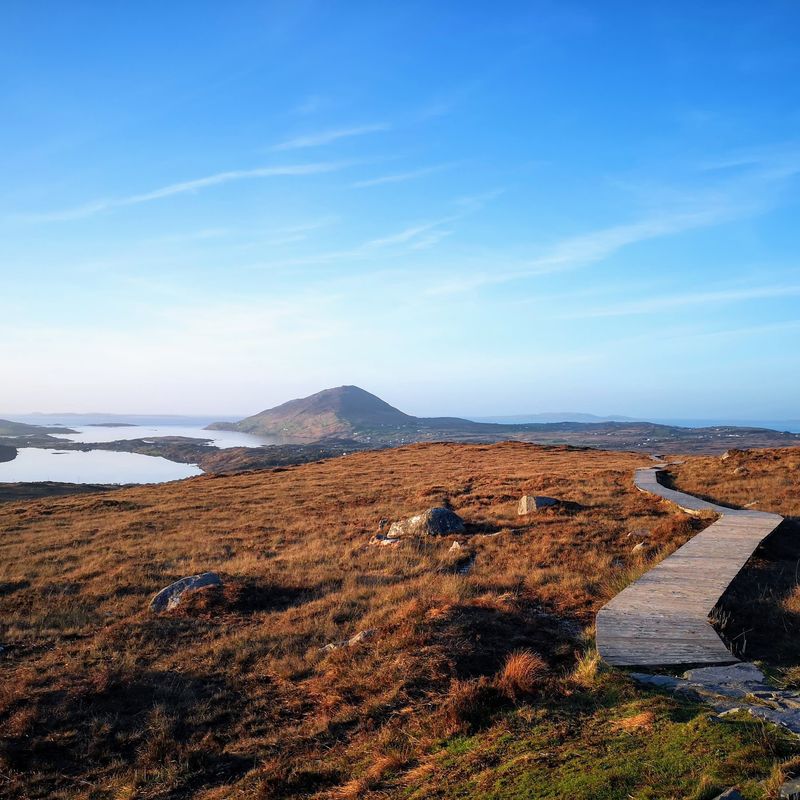
Connemara National Park covers around 2,000 hectares of western Galway and contains some of the most genuinely wild terrain in Ireland. The landscape is a mix of mountains, blanket bogs, heath, and grasslands, with the Twelve Bens mountain range forming the park’s dramatic backdrop.
The area has a raw, open quality that feels far removed from the more manicured countryside found in other parts of the country.
Diamond Hill is the park’s most popular hiking route, a loop of roughly 7 kilometers that takes walkers up to panoramic views across the bogs and coastline. The summit is accessible to reasonably fit hikers and does not require specialist equipment in good weather conditions.
The visitor center is currently open Wednesday through Sunday and provides maps, natural history displays, and practical trail information. Some individual trails may close temporarily for maintenance, so checking the park’s official resources before visiting is a sensible step.
The park is open year-round and admission to the grounds is free.
Kilmainham Gaol, Dublin
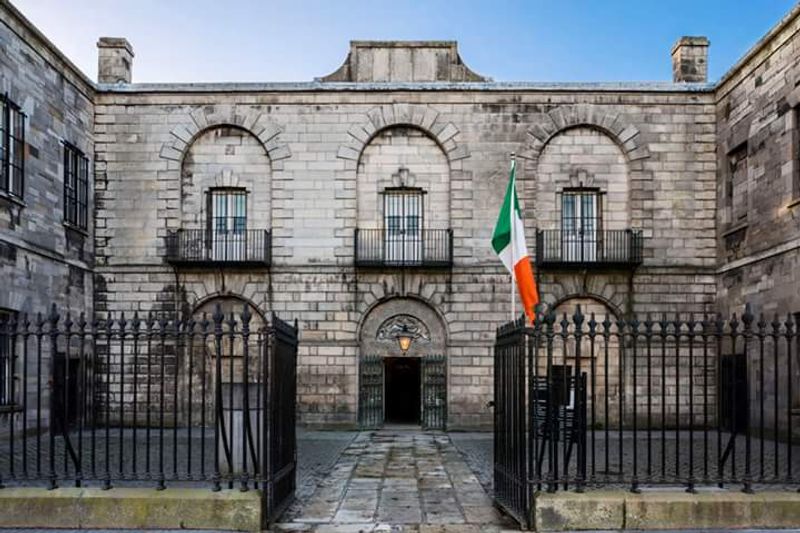
Kilmainham Gaol operated as a prison from 1796 to 1924, and the names associated with its cells read like a roll call of Irish revolutionary history. Leaders of the 1798 rebellion, the 1803 uprising, the 1848 rising, and the 1916 Easter Rising were all held here.
The leaders of the 1916 Easter Rising were executed in the stone-breakers yard, and that fact gives the site a weight that stays with you long after the tour ends.
Entry is by guided tour only, and the tours are thorough, covering the prison’s history, its architecture, and the stories of those who were held there. The guides consistently draw strong feedback for making complex historical events accessible and engaging.
Advance booking is not just recommended here, it is essential. Tours sell out regularly, especially during summer months and around significant Irish historical anniversaries.
The gaol is managed by the Office of Public Works and remains one of the most visited heritage sites in Ireland.
Glendalough, County Wicklow
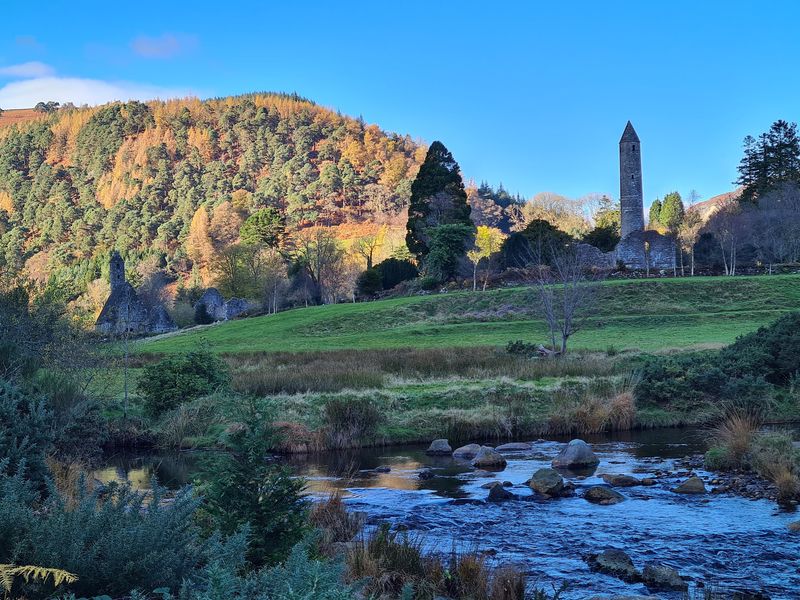
Glendalough sits in a glacial valley in the Wicklow Mountains about an hour south of Dublin, and the combination of monastic history and natural scenery makes it one of the most rewarding day trips from the capital. St. Kevin founded a monastery here in the 6th century, and the remains of that settlement, including a well-preserved round tower, ruined cathedral, and carved stone crosses, are still standing in the valley.
Two lakes, the Upper and Lower Lough, are central to the valley’s appeal for walkers. A network of trails ranges from short lakeside routes to longer mountain hikes that climb into the surrounding Wicklow uplands.
The Green Road walk along the Upper Lake is one of the more popular options for visitors who want a manageable but scenic route.
The site is accessible year-round and free to enter, though parking fees apply. A visitor center near the monastic ruins provides historical context and is worth a stop before exploring the valley.
Weekday visits tend to be quieter than weekends throughout the year.
Killarney National Park, County Kerry
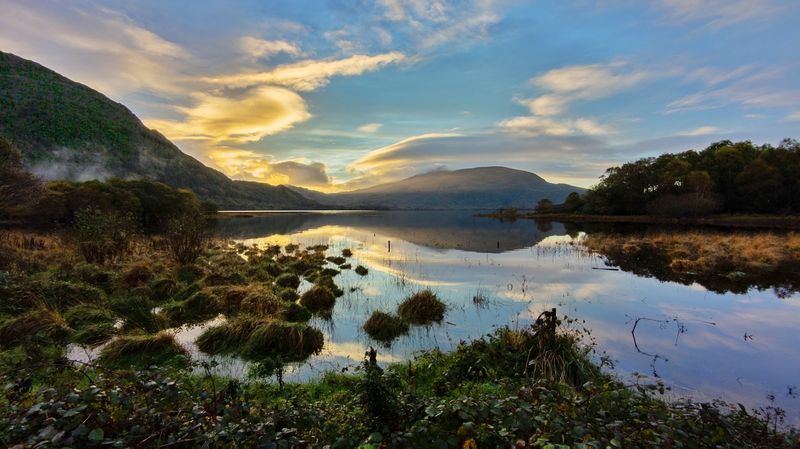
Designated in 1932, Killarney National Park was Ireland’s first national park and covers over 10,000 hectares of lakes, mountains, oak woodland, and moorland. The three lakes at its center, Lough Leane, Muckross Lake, and the Upper Lake, are connected by rivers and surrounded by some of the country’s most scenic terrain.
The park is also home to a free-ranging herd of native red deer, which is the only wild population of the species in Ireland.
Muckross House is a Victorian mansion within the park that offers guided tours of its furnished interior. The Muckross Traditional Farms nearby provide a look at rural Irish life from the early 20th century.
Killarney House and Gardens, located at the edge of Killarney town, are also part of the park and are free to enter.
Jaunting cars, the traditional horse-drawn carriages of Killarney, operate within the park and remain a popular way to cover ground between sites. Walking and cycling routes are extensive, and maps are available at the visitor facilities near the Muckross entrance.
Newgrange, County Meath
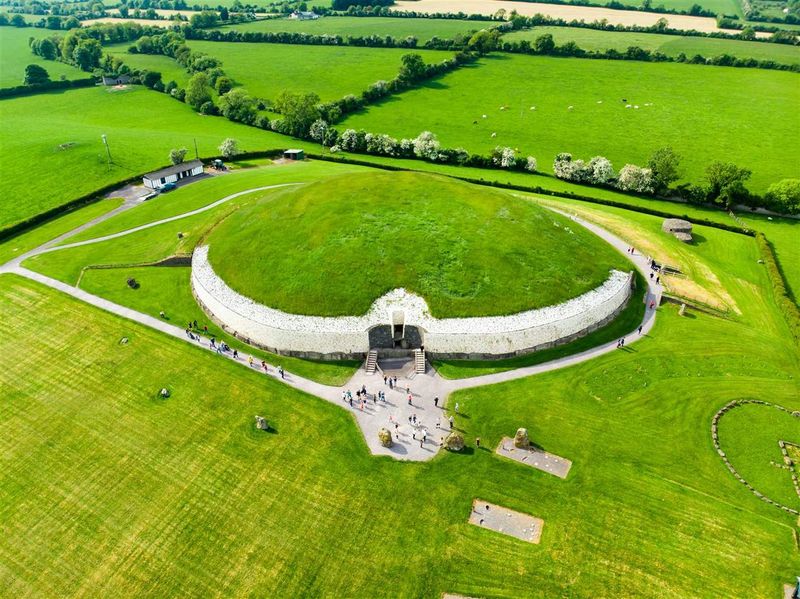
Newgrange is older than Stonehenge and older than the Egyptian pyramids, built around 3200 BC by Neolithic farming communities whose names and language are completely unknown to us. The large circular mound covers a passage tomb that stretches 19 meters into its center, and the whole structure was engineered so that sunlight enters the chamber precisely at sunrise around the winter solstice each year.
That solar alignment was not accidental. The roof box above the entrance is positioned to capture the rising sun on the shortest days of the year, flooding the inner chamber with light for roughly 17 minutes.
A lottery determines who gets to experience this inside the chamber each December, and thousands of people enter annually.
Visits to Newgrange are managed through the Brú na Bóinne Visitor Centre, from which shuttle buses transport visitors to the monument. The site is part of a UNESCO World Heritage Area that also includes the nearby passage tombs at Knowth and Dowth.
Booking in advance is strongly advised, particularly during summer.
Rock of Cashel, County Tipperary
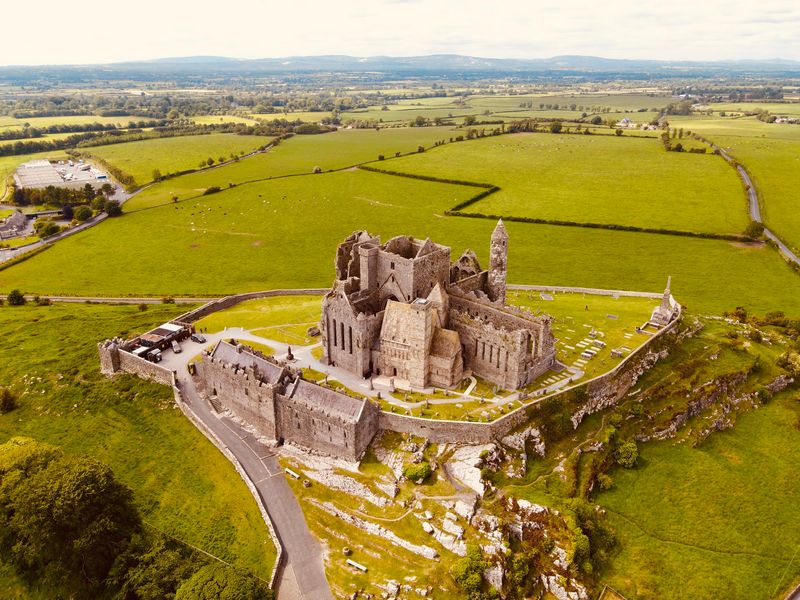
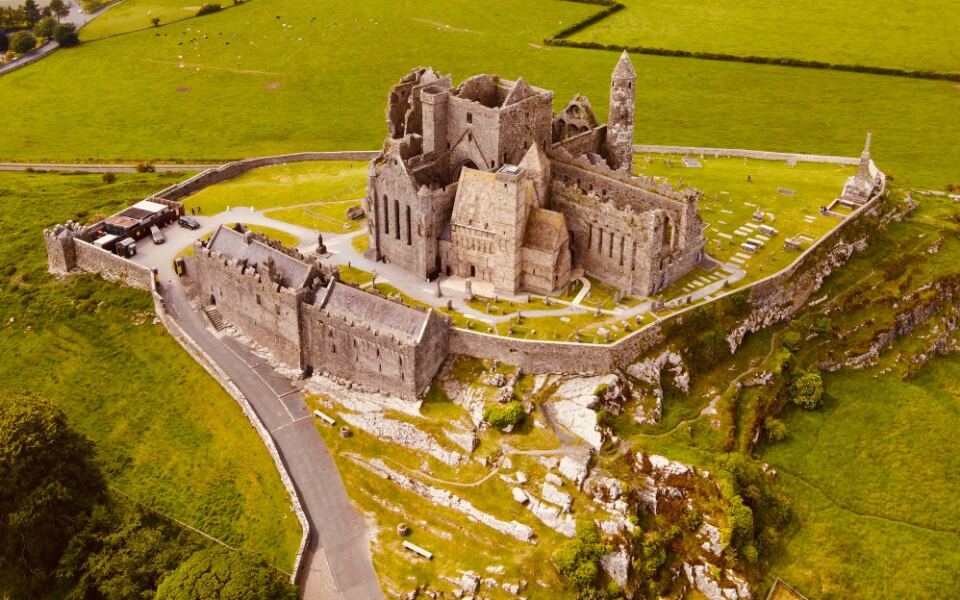
The Rock of Cashel is one of Ireland’s most striking medieval complexes, a cluster of stone buildings perched on a limestone outcrop that rises abruptly from the Tipperary plain. The site was a seat of the Kings of Munster for centuries before it became an ecclesiastical center in the 12th century.
Cormac’s Chapel, built in 1134, is considered one of the finest examples of Romanesque architecture in Ireland.
The cathedral, round tower, and High Cross of St. Patrick are also on the rock, and the combination of structures on a single elevated site gives the complex an impressive visual presence from any direction. The views from the top of the rock across the surrounding countryside are equally worthwhile.
The site operates daily with seasonal hours and occasional closures during extreme weather. An audio guide is available at the entrance and adds useful detail to what you see on the rock.
The town of Cashel at the base of the rock has cafes and accommodation for those planning to stay overnight.
Benbulben, County Sligo
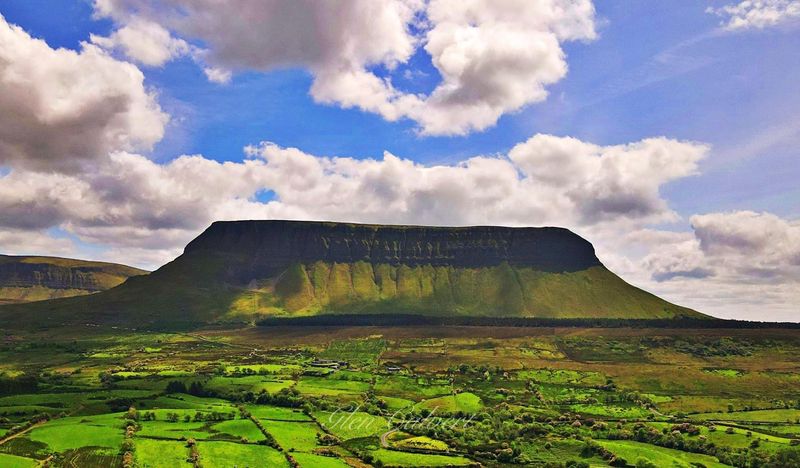
Benbulben is one of those landforms that looks almost constructed rather than natural. Its flat plateau and steep sides rise to 526 meters above the Sligo countryside, creating a silhouette that is immediately recognizable across the region.
The mountain is made of layered carboniferous limestone and shale, and its appearance changes noticeably depending on the light and weather conditions.
The mountain is closely linked to the mythology of the Fianna, particularly the legend of Diarmuid and Grainne, which is set partly on its slopes. W.B.
Yeats, who spent much of his life in Sligo, referenced Benbulben in his poetry and is buried within sight of it at Drumcliff Churchyard nearby.
Walking routes in the area allow visitors to appreciate the mountain’s scale from the surrounding farmland without needing to tackle its most exposed terrain. The summit plateau can be reached via established routes, but the ascent involves some steep and potentially slippery sections that require care.
Drumcliff and Glencar Waterfall are natural companion stops for a day in this part of Sligo.
Galway City, County Galway
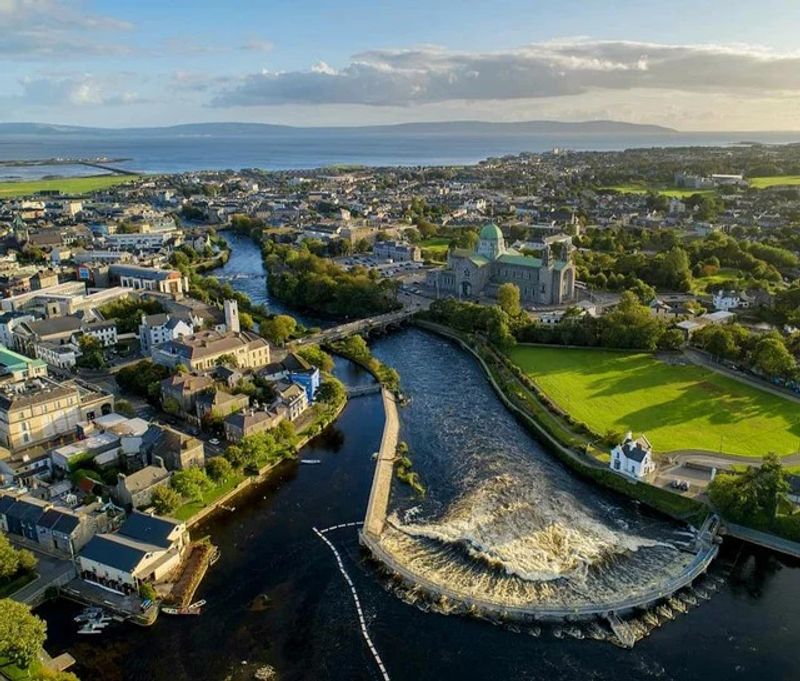
Galway has a reputation as one of Ireland’s most enjoyable cities to spend time in, and it earns that reputation through a combination of compact geography, strong traditional music culture, and a food scene that punches well above its size. Shop Street and Quay Street in the Latin Quarter form the lively core of the city, lined with independent shops, cafes, and pubs where live sessions happen throughout the week.
The Spanish Arch, a remnant of the old city walls, sits at the edge of the River Corrib near the waterfront and is a popular gathering spot. Galway Market operates on Saturdays and Sundays near the cathedral and draws a mix of local produce, crafts, and street food.
The Galway Arts Festival in July and the Galway Races in late July and early August draw significant crowds.
The city is compact enough to cover on foot in a day, but most visitors find that two or three days allows for a more relaxed experience. Salthill, a coastal suburb a short walk from the city center, adds a seafront dimension to any stay in Galway.
Skellig Michael, County Kerry
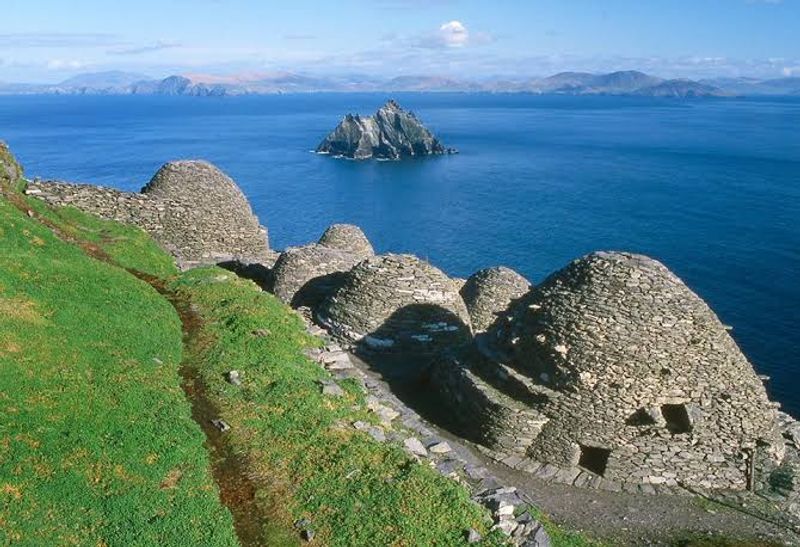
Skellig Michael sits about 12 kilometers off the Kerry coast and rises to 218 meters above the Atlantic. Early Christian monks chose this extraordinarily remote rock as a place of prayer and built a monastery there that still stands.
The stone beehive huts, oratories, and terraces cling to the island’s upper slopes and represent one of the most remarkable feats of early medieval construction in Europe.
The island is a UNESCO World Heritage Site and a Special Area of Conservation. Landing is permitted from May to October, subject to weather, and is managed through a system of licensed boat operators who depart from ports including Portmagee, Ballinskelligs, and Cahersiveen.
Sea conditions on the Atlantic frequently make landings impossible, so building flexibility into your schedule is essential.
Around 600 steps cut into the rock lead from the landing point up to the monastery. The climb is steep and exposed, and the site is not suitable for visitors with limited mobility.
Even when landings are not possible, boat trips around the island provide impressive views of the cliffs and the large seabird colonies that nest there.
Aran Islands, County Galway
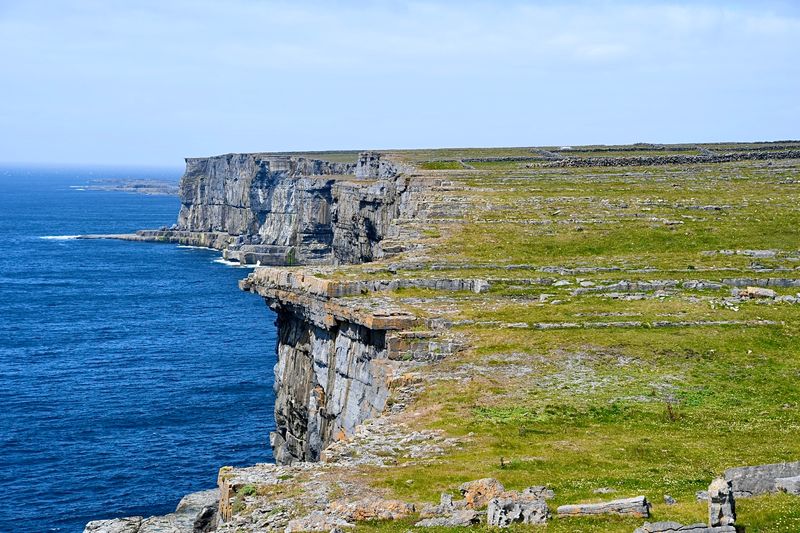
The three Aran Islands sit at the mouth of Galway Bay and offer a version of Ireland that feels genuinely different from the mainland. Inis Mor is the largest and most visited, home to Dun Aonghasa, a prehistoric stone fort that sits on the edge of a 90-meter cliff with no barrier between visitors and the drop.
The combination of ancient archaeology and raw Atlantic scenery makes it one of the most striking sites in the country.
Inis Meain and Inis Oirr are quieter and smaller, attracting visitors who want a slower pace and a closer look at everyday island life. All three islands have communities where Irish is the primary spoken language, and the traditional culture here is not a performance for tourists but an ongoing way of life.
Ferries to the islands operate from Rossaveal in Galway and from Doolin in Clare, with the crossing time varying by island and departure point. Bicycles can be rented on Inis Mor and provide the most practical way to cover the island’s scattered sites and coastal roads.
Cork City, County Cork
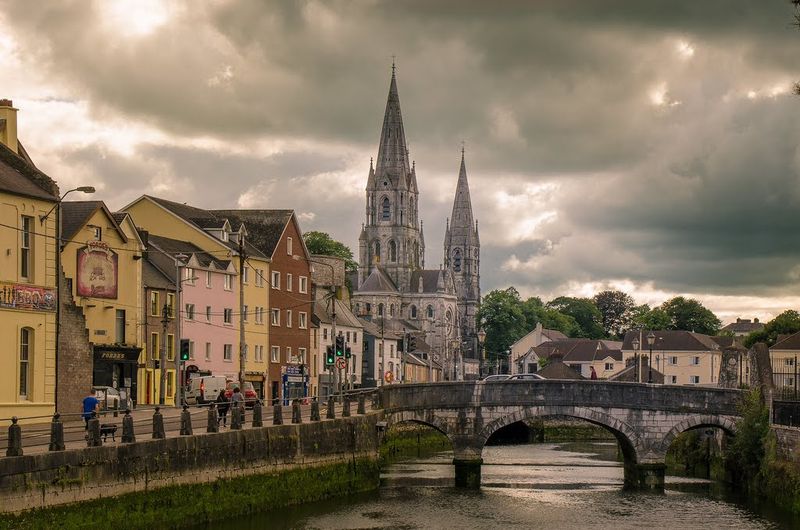
Cork is Ireland’s second-largest city and has a personality that is distinctly its own. The city center sits on an island between two channels of the River Lee, and the combination of hilly streets, Victorian architecture, and a strong independent food culture gives it a character that differs noticeably from Dublin.
Locals refer to Cork as the real capital, and the pride behind that phrase is genuine.
The English Market is one of Cork’s most celebrated landmarks, a covered food market operating since 1788 that sells fresh produce, artisan cheeses, meats, fish, and baked goods from a mix of long-established and newer vendors. St. Fin Barre’s Cathedral, completed in 1879, is an elaborate Gothic Revival building worth visiting for its architecture and interior detail.
The Shandon area on the north side of the city offers views over the rooftops and houses the famous Shandon Bells, which visitors can ring themselves from inside the tower. Cork’s restaurant scene has grown considerably in recent years, with a particular strength in locally sourced seafood and produce-driven cooking.
Temple Bar, Dublin
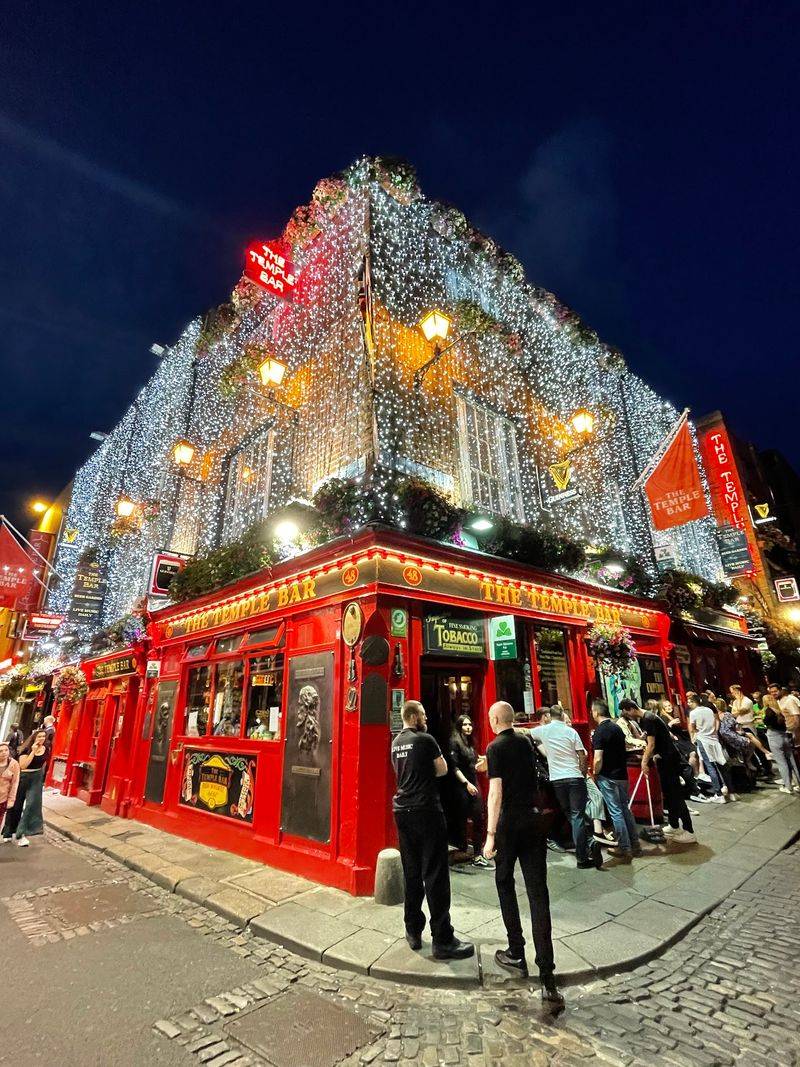
Temple Bar occupies a compact area on the south bank of the River Liffey in central Dublin and serves as the city’s main cultural and entertainment quarter. Its narrow cobblestone streets contain a mix of pubs, restaurants, galleries, independent shops, and cultural venues that collectively make it one of the busiest parts of the city on any given evening.
The Irish Film Institute, the Gallery of Photography, and the Project Arts Centre are all located within the district, giving it a cultural dimension beyond its reputation as a nightlife area. Temple Bar Square hosts regular outdoor events, markets, and performances that add to the street-level energy of the neighborhood.
The area is at its most lively from Thursday through Sunday evenings, when the pubs fill up and street performers work the cobbled lanes. Daytime visits have their own appeal, particularly for browsing the weekend market stalls or visiting the cultural institutions without the evening crowds.
The area is walkable from most central Dublin accommodation and is close to several major city attractions.
Westport House, County Mayo
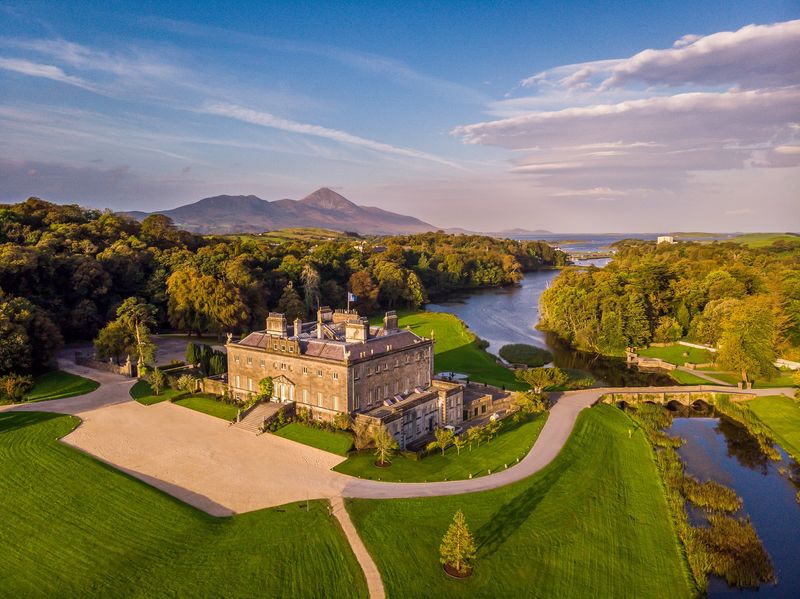
Westport House is a Georgian country house set on the shores of Clew Bay in County Mayo, with a history that connects directly to one of Ireland’s most famous historical figures. The estate stands on land that was once controlled by the family of Grace O’Malley, the 16th-century seafarer and chieftain known in Irish as Grainne Mhaol, whose story has become one of the most compelling in Irish history.
The house itself was built in stages during the 18th century and contains period furniture, family portraits, and decorative items that reflect its long history of occupation. The surrounding grounds include formal gardens, woodland walks, and direct access to the bay.
The estate also operates a range of family-oriented outdoor activities on its grounds.
Westport town, a short distance from the house, is consistently rated as one of Ireland’s most attractive and livable towns. The combination of the estate visit and time spent in the town makes for a well-rounded stop in the west of Ireland.
Opening hours and activity availability vary by season, so checking ahead before visiting is worthwhile.
King John’s Castle, Limerick
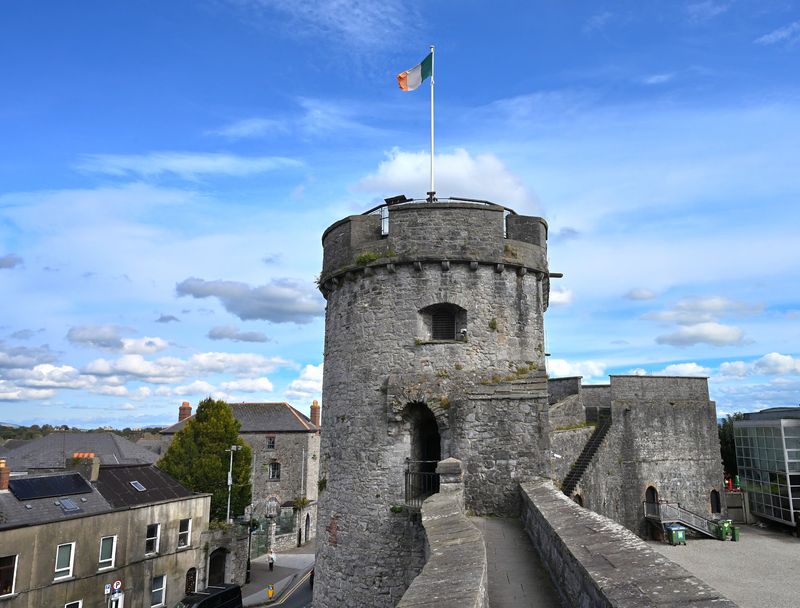
King John’s Castle has occupied its position on the banks of the River Shannon in Limerick since the early 13th century, making it one of the best-preserved Norman castles in Ireland. The castle was built on the orders of King John of England around 1200 and has served various functions over the centuries, including as a military garrison and an administrative center.
The current visitor experience includes indoor exhibitions covering the castle’s history from its Viking-era foundations through to the present day. Reconstructed medieval siege equipment, archaeological remains visible within the courtyard, and interactive displays give the visit a range of entry points for different ages and interests.
The towers offer elevated views over the River Shannon and the surrounding city.
King John’s Castle is open seven days a week with seasonal hours and is located in Limerick’s historic King’s Island area, close to St. Mary’s Cathedral. Combining a visit to the castle with a walk along the riverfront and through the surrounding medieval quarter makes for a full half-day of exploration in the city.
The Dark Hedges, County Antrim
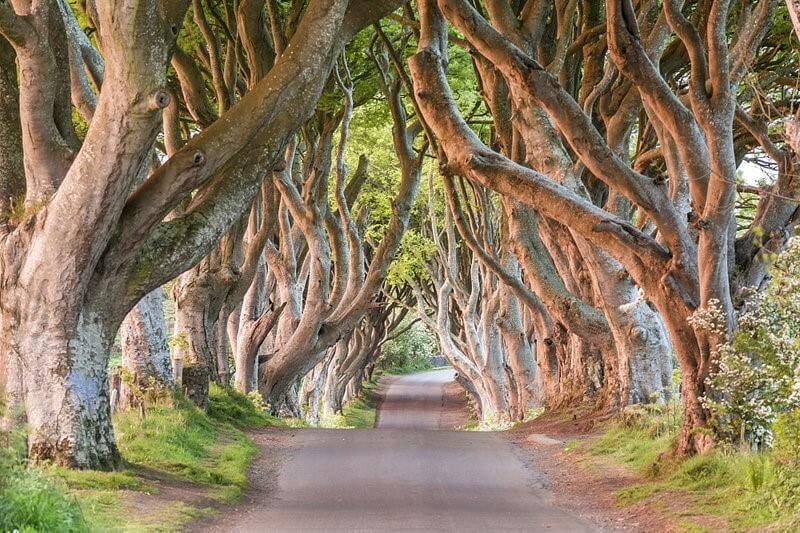
The Dark Hedges is a stretch of road near Armoy in County Antrim lined on both sides by beech trees that were planted in the 18th century by the Stuart family to create an impressive approach to their nearby Gracehill House. Over time, the trees grew toward each other overhead, forming a natural archway of intertwining branches that now extends along several hundred meters of road.
The location gained international attention after appearing as the Kingsroad in the television series Game of Thrones, and it has remained one of Northern Ireland’s most photographed spots since. The trees are most atmospheric in winter and early spring before the leaf canopy fills in, when the bare branches create a denser and more dramatic visual effect.
Visiting early in the morning on a weekday gives the best chance of experiencing the avenue without large numbers of other visitors and their vehicles. A small car park is available nearby.
The location is free to visit and sits within easy driving distance of other north Antrim attractions including the Giant’s Causeway and Carrick-a-Rede Rope Bridge.
Guinness Storehouse, Dublin
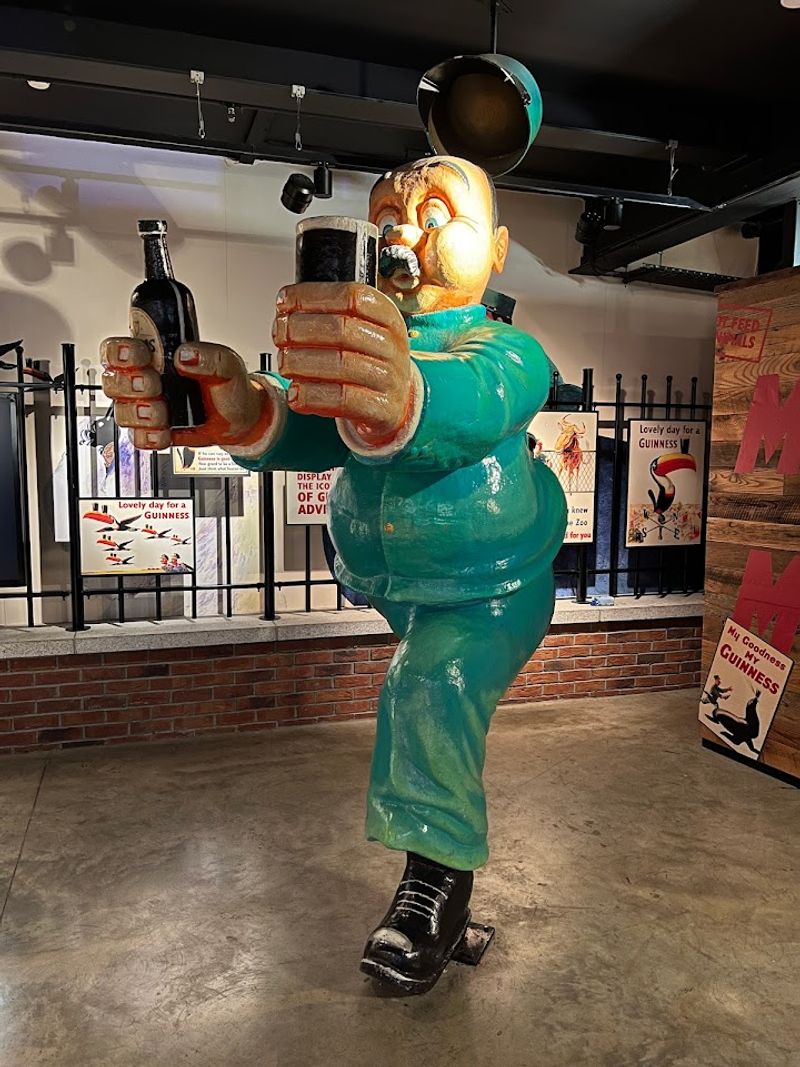
The Guinness Storehouse sits within the St. James’s Gate Brewery complex in Dublin, where Guinness has been brewed since Arthur Guinness signed his famous 9,000-year lease in 1759. The building itself is a converted fermentation plant from 1904, and its seven floors are designed around a giant pint glass shape that runs through the center of the structure from floor to ceiling.
Each floor covers a different aspect of the Guinness story, from the raw ingredients and brewing process to advertising history and the global reach of the brand. Interactive elements are distributed throughout, making the experience more engaging than a straightforward museum walk.
The tour culminates at the Gravity Bar on the top floor, a circular glass-walled space that offers 360-degree panoramic views across Dublin.
The Storehouse is open throughout the week and is one of Ireland’s most visited paid attractions. Booking online in advance is recommended to avoid queuing at the entrance.
The experience typically takes between 90 minutes and two hours to complete at a comfortable pace.
Share this story